Artwork for Daybreak
News

Daybreak

The Ken

Business news is complex and overwhelming. It doesn’t have to be. Every day of the week, from Monday to Friday, Daybreak tells one business story that’s significant, simple and powerful.

Hosted from The Ken’s newsroom by Snigdha Sharma and Rachel Varghese, Daybreak relies on years of original reporting and analysis by some of India’s most experienced and talented business journalists.

  • 804 episodes
  • Updated Yesterday

Episodes804

  • April 14 · 13 min

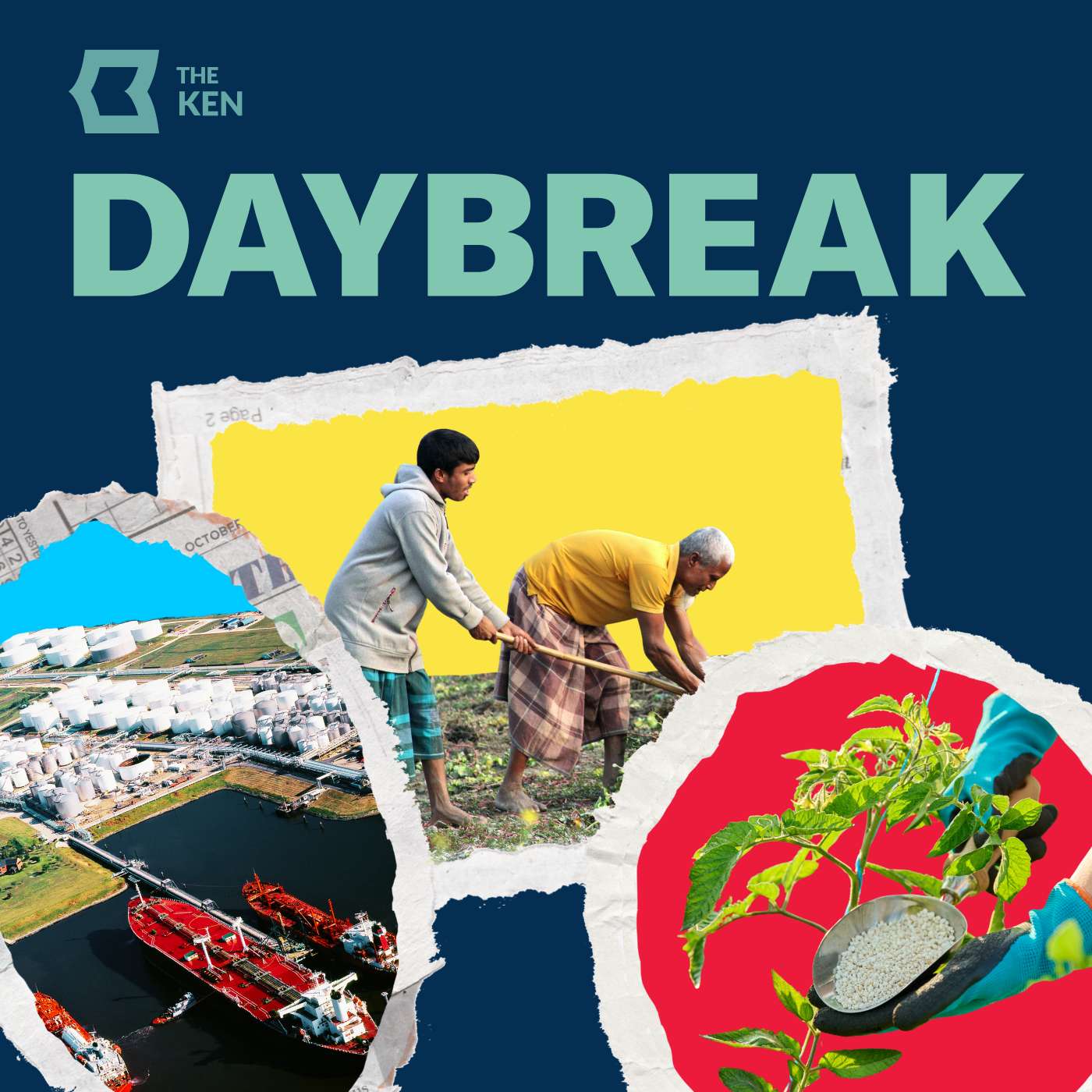
    Can India's $22 billion fertiliser subsidy keep the Gulf War off your plate?

    The Indian government approved a ₹41,534 crore fertiliser subsidy for the upcoming kharif season last week, a 12% increase from last year. The move comes as the Gulf War has severely disrupted India's fertiliser supply chains, with urea prices jumping 65% in just 40 days. India is the world's second largest fertiliser importer, and the Strait of Hormuz carries a significant share of both the finished fertilisers and the gas needed to make them domestically. The kharif season, which produces roughly 100 million tonnes of rice, begins in June. In this episode, host Snigdha Sharma looks at India's fertiliser subsidy policy and what its really doing for farmers during this crisis. Tune in. Daybreak is produced from the newsroom of The Ken, India’s first subscriber-only business news platform. Subscribe for more exclusive, deeply-reported, and analytical business stories.
  • April 13 · 12 min

    India's data centre boom is a bet on water it doesn't have

    India is building data centres at unprecedented speed to support cloud services, AI, and digital growth. At the same time, cities across the country are struggling with water shortages and repeated contamination of drinking-water supplies. A United Nations report describes this condition as water bankruptcy. It is the stage where water systems continue to function, but only by drawing down reserves that cannot recover fast enough. In this episode, host Snigdha Sharma looks at how India’s data centre push fits into that reality, drawing lessons from cities abroad where similar tensions have already surfaced. So as India builds for a digital future, the question is simple: who decides how much water that future can afford? **This episode was originally published on 22 Jan, 2026 Daybreak is produced from the newsroom of The Ken, India’s first subscriber-only business news platform. Subscribe for more exclusive, deeply-reported, and analytical business stories.
  • April 13 · 12 min

    Yoga over Python: how India’s new college curriculum rewards the easiest skills

    India's new undergraduate framework was supposed to fix a broken system — where only 8% of graduates land jobs that match their degrees. The fix? Give students hundreds of courses to choose from, blend formal education with vocational training, and make them more employable. But when every course carries the same two credits, students do the math quickly and the easier course wins. Now universities are scrambling, edtechs are stepping in to teach core curriculum, no one's quite sure who's in charge and it's not really clear if this reform is fixing employability yet. Tune in. Daybreak is produced from the newsroom of The Ken, India’s first subscriber-only business news platform. Subscribe for more exclusive, deeply-reported, and analytical business stories.
  • April 9 · 34 min

    If Razorpay is right about AI, you may never open a payment app again

    At a fintech conference in February, Razorpay showed a demo. A user ordered food on Zomato by voice and paid — without opening a checkout page or a UPI app. No friction and no redirects. Just a job done end-from-end. The same week, OpenAI quietly rolled back its own in-chat shopping agent. Razorpay is calling this the biggest disruption to payments since UPI. But agentic commerce raises questions that a demo can't answer — around trust, fraud, consent, and who's liable when an AI spends your money. Is India ready for that? Is anyone? Hosts Snigdha Sharma and Rachel Varghese, speak to The Ken reporter Mutasim Khan. Tune in. Buy your tickets for the Zero Shot event here. Daybreak is produced from the newsroom of The Ken, India’s first subscriber-only business news platform. Subscribe for more exclusive, deeply-reported, and analytical business stories.
  • April 8 · 16 min

    India's new IT rules could turn every content creator into a publisher. Without the protections

    A cartoon reposted. An account restricted. A takedown notice with no warning and no appeal. India's new IT rules give platforms three hours to remove flagged content — the shortest window anywhere in the world. But a draft amendment published last month could go even further, potentially treating anyone who posts about current affairs as a publisher. Without the protections that come with it. For millions of creators, anonymous users, and global tech platforms, the stakes just got harder to ignore. The deadline to push back is April 14th. Tune in. Find the IFF email template here. Buy your tickets for the Zero Shot event here. Daybreak is produced from the newsroom of The Ken, India’s first subscriber-only business news platform. Subscribe for more exclusive, deeply-reported, and analytical business stories.
  • April 8 · 13 min

    The flight refund problem is fixed. The jet fuel problem is just getting started

    India's civil aviation ministry issued two directives this March that pulled in opposite directions. First, it mandated full refunds for cancelled flights. Three days later, it removed all caps on airfares. The trigger for the second move: the US-Israeli war against Iran has sent jet fuel prices soaring, up nearly 60% in the US, and India is bracing for the impact. Airlines, already running on thin margins, are warning that fares will rise. For Indian flyers, the net result is this: cancellations just got free but flights just got more expensive. How did we get here? Tune in. Get your tickets for the first Zero Shot live event here. Daybreak is produced from the newsroom of The Ken, India’s first subscriber-only business news platform. Subscribe for more exclusive, deeply-reported, and analytical business stories.
  • April 6 · 14 min

    India wants a chip-design hub—without the founders who can make it happen

    India wants to design its own semiconductor chips. To help, the government launched a scheme with money and tools for startups that do exactly that. But there's a catch — and it's keeping out the very people best placed to build this industry. The engineers who spent decades in Silicon Valley, built the chips inside your devices, and are now coming home. A regulator that's also a competitor. And a factory that was supposed to be for Indian startups — but probably won't be. Tune in. Daybreak is produced from the newsroom of The Ken, India’s first subscriber-only business news platform. Subscribe for more exclusive, deeply-reported, and analytical business stories.

  • April 5 · 12 min

    Why your health insurance works great — until you need it

    Imagine paying insurance premiums for years and then one day you actually need it. You're in a hospital, or someone you love is. And the insurer says: no. In the last financial year, Indian health insurers rejected claims worth ₹30,000 crore. Nearly one in eight claims were denied or left pending. And what's wild is how far back the problem starts. There are agents filling out forms incorrectly to earn a faster commission. Hospitals that know exactly what a surgery costs but keep the number vague on purpose. And insurers operating on margins so thin that scrutinising every claim is more about survival than greed. The Ken reporter Sudeshna Ray dived into this for The Ken’s Make India Competitive Again newsletter. Host Snigdha Sharma reads it for you in this episode. Apply for The Ken's Event Manager role here Daybreak is produced from the newsroom of The Ken, India’s first subscriber-only business news platform. Subscribe for more exclusive, deeply-reported, and analytical business stories.

  • April 2 · 19 min

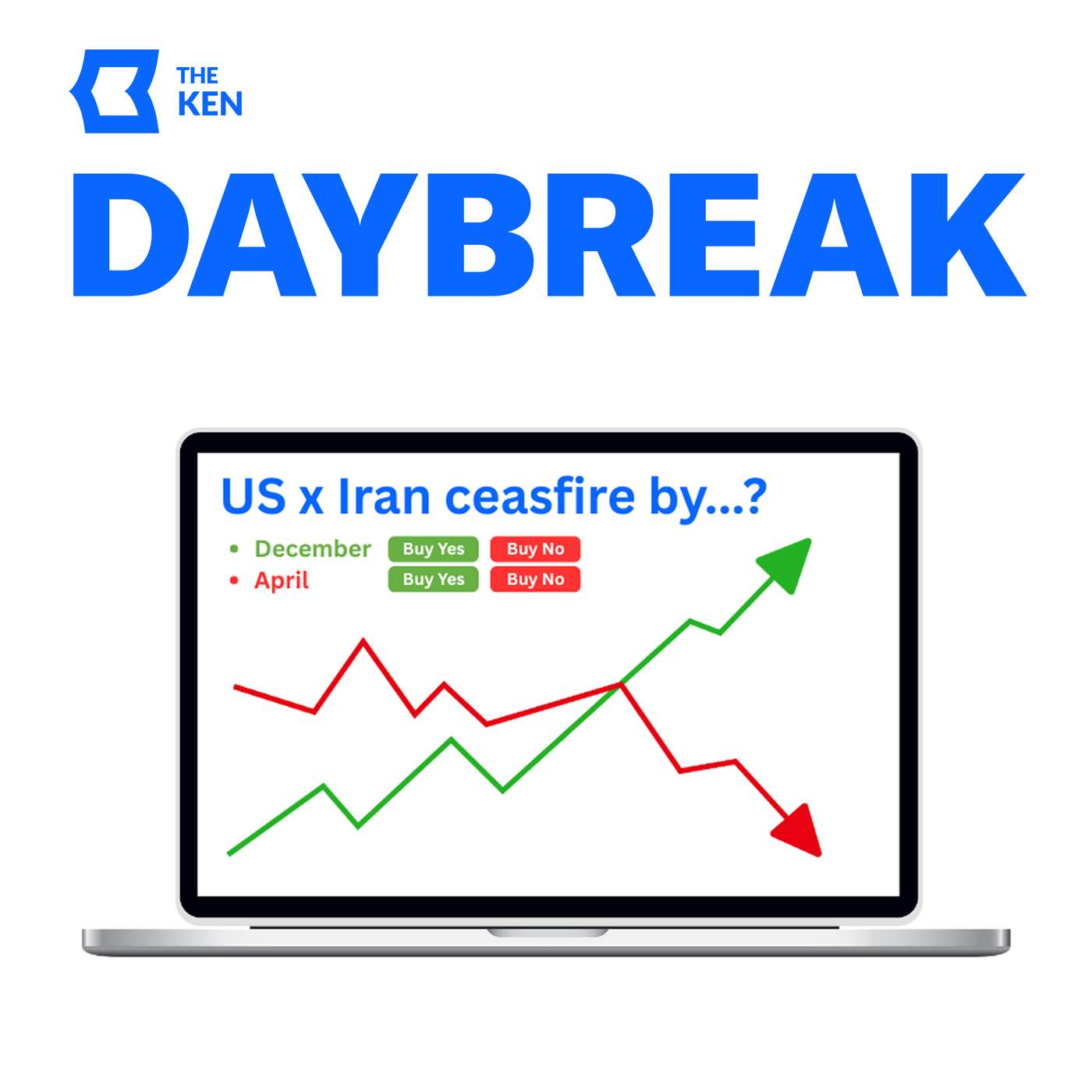
    India banned online betting. Polymarket is wagering on our elections anyway

    Polymarket and Kalshi are two New York-founded prediction market platforms now valued in the billions. While both let users bet real money on elections and political events in real time, it is Polymarket — the larger, offshore, largely unregulated one — where someone made nearly a million dollars predicting US military strikes on Iran before they happened. Together, the two platforms processed over $44 billion in bets last year. In this episode, host Snigdha Sharma explores how two New York startups turned opinion into a tradeable asset — and what happens when the people placing the biggest bets already know the answer. India banned online money gaming last year. These platforms are taking bets on our elections anyway. Tune in. Apply for The Ken's Event Manager role here Daybreak is produced from the newsroom of The Ken, India’s first subscriber-only business news platform. Subscribe for more exclusive, deeply-reported, and analytical business stories.

  • April 1 · 10 min

    The click is dead. Long live the answer

    For a decade, digital advertising ran on one idea: get to the top of Google. Buy the keywords and earn the clicks. That was the game. But AI just changed the rules. ChatGPT and Gemini now have over a billion and a half users between them, growing at nearly 200% year on year. People have stopped searching for links. Instead,nthey're asking questions and expecting answers. And those answers mention three brands, maybe four. For the rest who don't make it to these answers, it's like they don't even exist. What will those brands do? Tune in. Daybreak is produced from the newsroom of The Ken, India’s first subscriber-only business news platform. Subscribe for more exclusive, deeply-reported, and analytical business stories.

  • April 1 · 17 min

    Why Open AI's flirtation with an "adult mode" never landed a date

    In 1965, Yoko Ono sat on a stage at Carnegie Hall and handed a pair of scissors to strangers. What they did next was entirely up to them. It was a performance about agency — and about what happens when you give an audience too much of it. Sixty years later, Sam Altman made a promise: OpenAI would treat adults like adults, and roll out an erotic mode for verified users. The market was there. Other players in the intimate AI companion space were raking in dollars. But after multiple delays, the Open AI plan was eventually shelved. So, why is a company known for burning cash, saying no to a revenue making avenue it already considered? Tune in. Daybreak is produced from the newsroom of The Ken, India’s first subscriber-only business news platform. Subscribe for more exclusive, deeply-reported, and analytical business stories.

  • March 31 · 10 min

    India commoditised Novo's blockbuster obesity drug. Novo's not flinching

    Semaglutide's patent just expired in India. The molecule behind Novo Nordisk's blockbuster obesity drugs, Ozempic and Wegovy, is now fair game for generic manufacturers. An 85 to 90% price drop is expected. Eli Lilly's Mounjaro had already been outselling Wegovy. For most companies, this would be the beginning of an exit. But Novo is doing the opposite. Why? Tune in. Daybreak is produced from the newsroom of The Ken, India’s first subscriber-only business news platform. Subscribe for more exclusive, deeply-reported, and analytical business stories.

  • March 29 · 11 min

    India is training doctors in AI. Can they build what tech bros can’t?

    India's hospitals have been slow to adopt AI. Its government, however, has not. A new programme aims to train 50,000 doctors in artificial intelligence. And not just to use it, but to help build it. The argument is simple: engineers understand disease like an algorithm. Doctors know it's never that clean. So what happens when clinicians become co-builders? Tune in. Daybreak is produced from the newsroom of The Ken, India’s first subscriber-only business news platform. Subscribe for more exclusive, deeply-reported, and analytical business stories.

  • March 27 · 27 min

    Why Bengaluru’s apartment complexes would rather rely on the “tanker mafia” than subsidised water

    Bengaluru's water utility loses a third of everything it pumps. It owes Tokyo Rs 10,000 crore. It bleeds Rs 80 crore every month. Its answer to all of this was an app — GPS-tracked tankers, government-backed, 40% cheaper than the market. But nine months later the all the app has to show is 10,000 downloads and a 2.8 rating in a city of 14 million. So why are Bangalore's residents saying no to the state's efforts? Tune in. Daybreak is produced from the newsroom of The Ken, India’s first subscriber-only business news platform. Subscribe for more exclusive, deeply-reported, and analytical business stories.

  • March 25 · 9 min

    Would you trust AI to be your money-whisperer?

    From platforms like Cred, Zerodha, and Groww integrating AI assistants, to Sebi-registered advisors now using AI to generate personalised investment recommendations, the shift is already underway. And with nearly 140 million investors and fewer than a thousand registered advisors to serve them, the math alone might make AI advice not just convenient, but necessary. Tune in. Daybreak is produced from the newsroom of The Ken, India’s first subscriber-only business news platform. Subscribe for more exclusive, deeply-reported, and analytical business stories.

  • March 25 · 20 min

    A thorium fuel made for India's nuclear reactors is here. India didn't make it

    Seventy years ago, Homi Bhabha designed a three-stage nuclear plan built around one idea: that India's future was thorium, not uranium. The science was proven, the reactors were built, and by 1996, India had already demonstrated a thorium fuel cycle at an experimental reactor in Kalpakkam. What it never did was take it to commercial scale. In 2025, an eight-year-old American startup did exactly that — with a fuel designed specifically for Indian reactors, and a former chairman of India's Atomic Energy Commission on its board of advisors. So what happened in between? Tune in. Daybreak is produced from the newsroom of The Ken, India’s first subscriber-only business news platform. Subscribe for more exclusive, deeply-reported, and analytical business stories.

  • March 23 · 10 min

    How are companies with no spectrum winning India's 5G game?

    India's telecom operators have spent decades controlling how signals reach customers indoors but that arrangement is now under serious pressure. A new breed of infrastructure companies, ones that do not own a spectrum and hold no licence, are taking control of how 5G reaches you inside airports, metro lines, malls, and office towers. The fight over who builds and who pays has drawn in regulators, sovereign wealth funds, and the Supreme Court. And it points to a much larger shift in who really owns the network. Tune in.

  • March 22 · 12 min

    India's Northeast millionaires have BS detectors. Wealth managers are learning that the hard way

    India's Northeast has always had money. Wealth managers are only now showing up to court it, and finding the welcome chillier than expected. Post-GST, a wave of newly banked business wealth is looking for a home. Sophisticated products like AIFs, PMS, bonds, are finding takers. But Northeastern millionaires play by different rules. They don't respond to cold calls. They don't trust outsiders easily. And they have little patience for managers who can't answer basic questions. So what does it actually take to win a client here — and why are so many wealth managers still getting it wrong? Tune in. Daybreak is produced from the newsroom of The Ken, India’s first subscriber-only business news platform. Subscribe for more exclusive, deeply-reported, and analytical business stories.

  • March 19 · 15 min

    China's raising OpenClaw lobsters. India's testing the waters first

    Last Friday, Razorpay CEO Harshil Mathur hosted 150 founders at Razorpay's Koramangala headquarters — not to talk payments but to let them showcase what they'd built with OpenClaw, the open-source AI agent taking the world by storm. The same week, thousands were queuing outside Baidu and Tencent offices in China just to get the software installed. The open source agent AI platform is the same but the two approaches are quite different. China is deploying OpenClaw at a scale and speed no other country is matching. India, meanwhile, is moving carefully, deliberately, problem-first. So here's the question: is India behind China on OpenClaw? And is speed is the only thing that matters in the AI race? Read Inc42's report here: The New Garage: OpenClaw And India’s DIY AI Agent Boom Daybreak is produced from the newsroom of The Ken, India’s first subscriber-only business news platform. Subscribe for more exclusive, deeply-reported, and analytical business stories.

  • March 18 · 16 min

    Wake up, Neo. There’s a glitch in the pharma matrix

    The next time you pick up a strip of tablets at your neighbourhood pharmacy, consider this: the drug you just bought for Rs 170 may have left the factory for Rs 14. That's a markup of over a 1000%. And, it's completely legal. In this piece, The Ken's Mutasim Khan traces how India's drug pricing system works, and why the pharmacist, the doctor, and the manufacturer are all optimising for something, while the patient simply pays. This is a read aloud of Mutasim's original story, by Snigdha Sharma, on Daybreak. 📖 Read the full story on The Ken: Wake up, Neo. There’s a glitch in the pharma matrix Daybreak is produced from the newsroom of The Ken, India’s first subscriber-only business news platform. Subscribe for more exclusive, deeply-reported, and analytical business stories.