Artwork for Daybreak
News

Daybreak

The Ken

Business news is complex and overwhelming. It doesn’t have to be. Every day of the week, from Monday to Friday, Daybreak tells one business story that’s significant, simple and powerful.

Hosted from The Ken’s newsroom by Snigdha Sharma and Rachel Varghese, Daybreak relies on years of original reporting and analysis by some of India’s most experienced and talented business journalists.

  • 804 episodes
  • Updated Yesterday

Episodes804

  • May 12 · 9 min

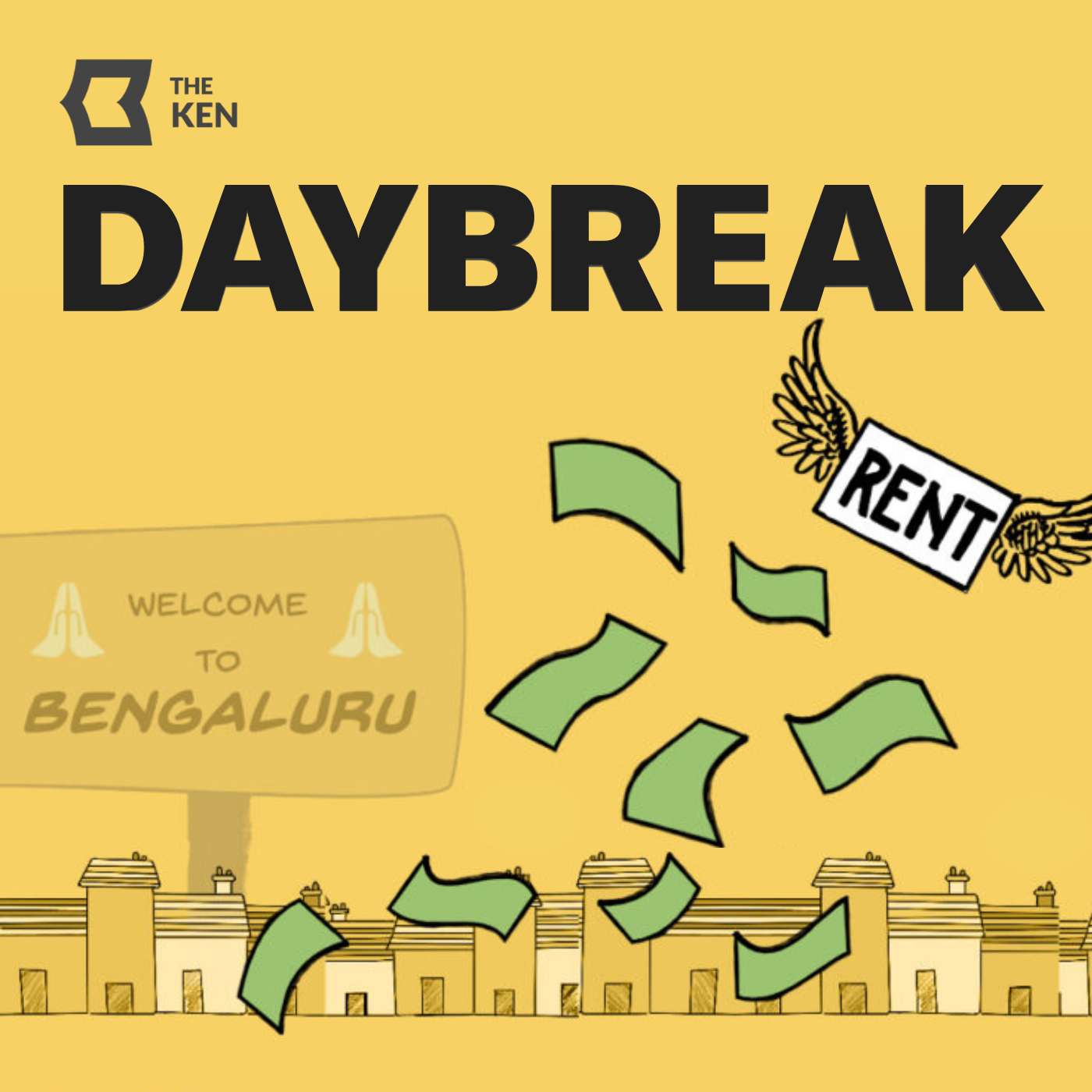
    The jet fuel crisis is only the most convenient explanation for what’s happening to Air India

    Air India’s board met in Mumbai last week to discuss cost cuts, CEO succession, and whether to start charging business class passengers separately for meals and lounge access. The airline is projecting losses exceeding ₹22,000 crore for the financial year just ended, nearly double the year before. Campbell Wilson is stepping down as CEO. International flights are being cut by over 20%. Jet fuel costs are up 63% since the war on Iran began. But the crisis arrived at an airline already deep in trouble. In today’s episode, we look at what was happening inside the Tata turnaround long before the war on Iran began. Daybreak is produced from the newsroom of The Ken, India’s first subscriber-only business news platform. Subscribe for more exclusive, deeply-reported, and analytical business stories.
  • May 11 · 26 min

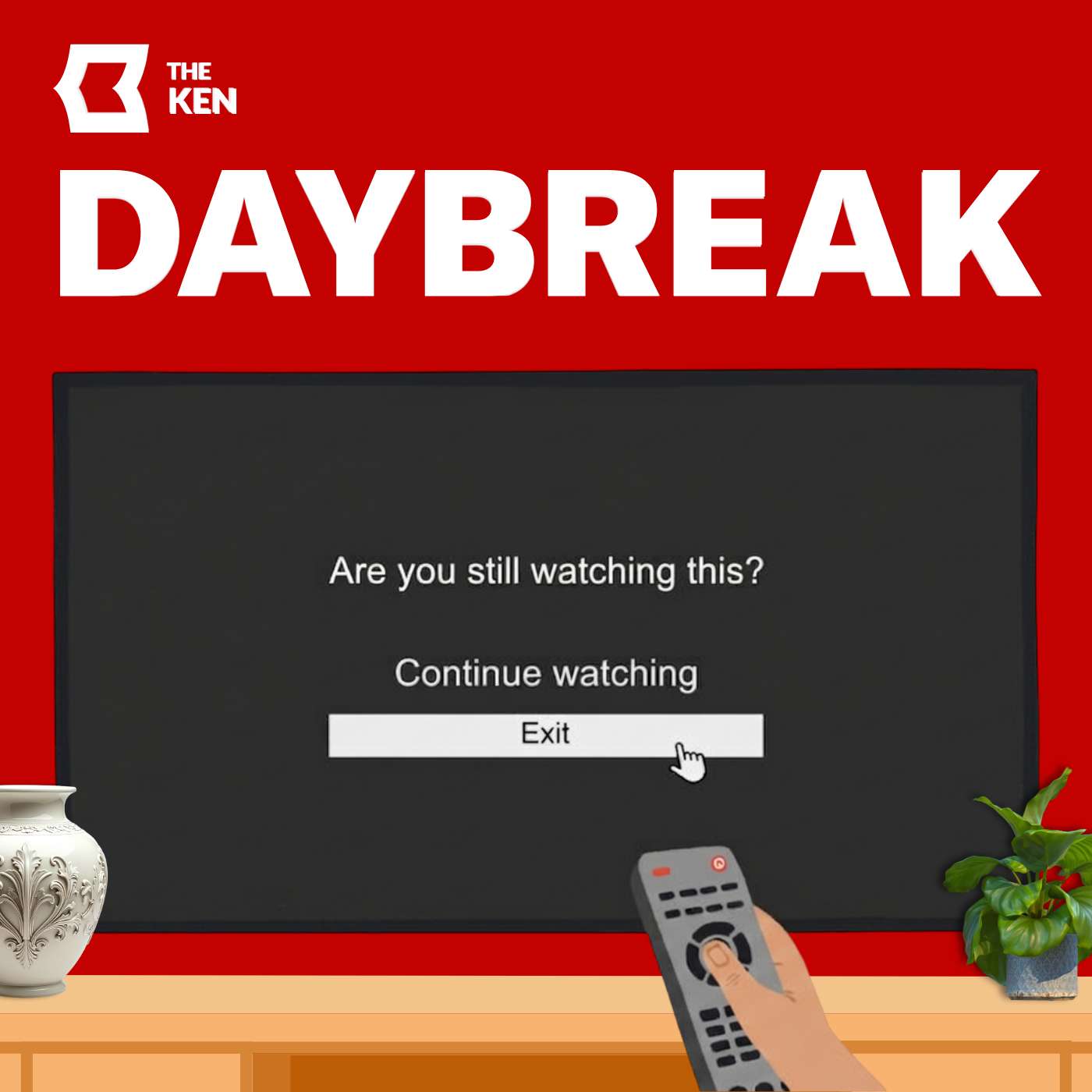
    Meta to get the world’s longest internet cable to India. It’s 100% exposed

    On a Wednesday morning in April, The Ken's Mrunmayee Kulkarni went to Rushikonda beach in Visakhapatnam looking for a manhole. She found it — a concrete chamber with a reinforced lid, no armed guard, no exclusion zone, no legal protection. In a few years, it will be one of the landing points for the world's longest undersea cable. 95% of India's internet — every payment, every message, a $341 billion services economy — runs through cables like this. The nearest repair ship is in Singapore. There is no protection law. And 60% of that traffic runs through a war zone. What happens if something goes wrong? Tune in. Read Mrunmayee's story here. Daybreak is produced from the newsroom of The Ken, India’s first subscriber-only business news platform. Subscribe for more exclusive, deeply-reported, and analytical business stories.
  • May 10 · 11 min

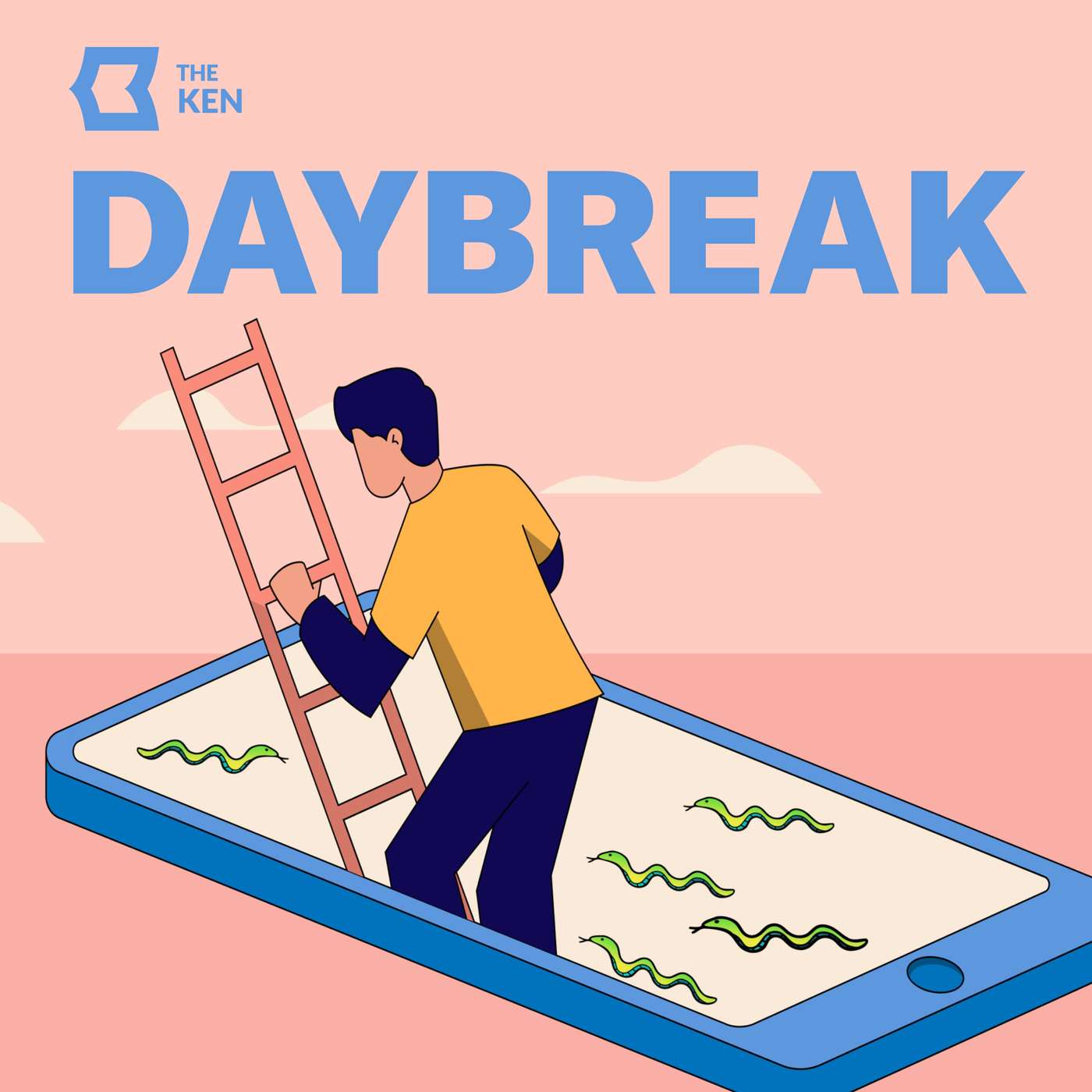
    Maruti, Tata are caught between conflict, EV delays, and emission rules. They found an unlikely fix

    India's carmakers are staring down a deadline. In less than a year, new emission norms will require them to dramatically cut their carbon output — or pay hundreds of millions of dollars in fines. Electric vehicles were supposed to be the answer. But the batteries aren't ready, the infrastructure isn't there, and adoption has been slower than anyone predicted. So the industry has quietly pivoted to an unlikely stopgap: CNG. Tata, Maruti, and Hyundai are all betting on it. In fact, two in every five Maruti cars sold last year ran on the fuel. But a stopgap is still just a stopgap. Tune in. Daybreak is produced from the newsroom of The Ken, India’s first subscriber-only business news platform. Subscribe for more exclusive, deeply-reported, and analytical business stories.
  • May 7 · 12 min

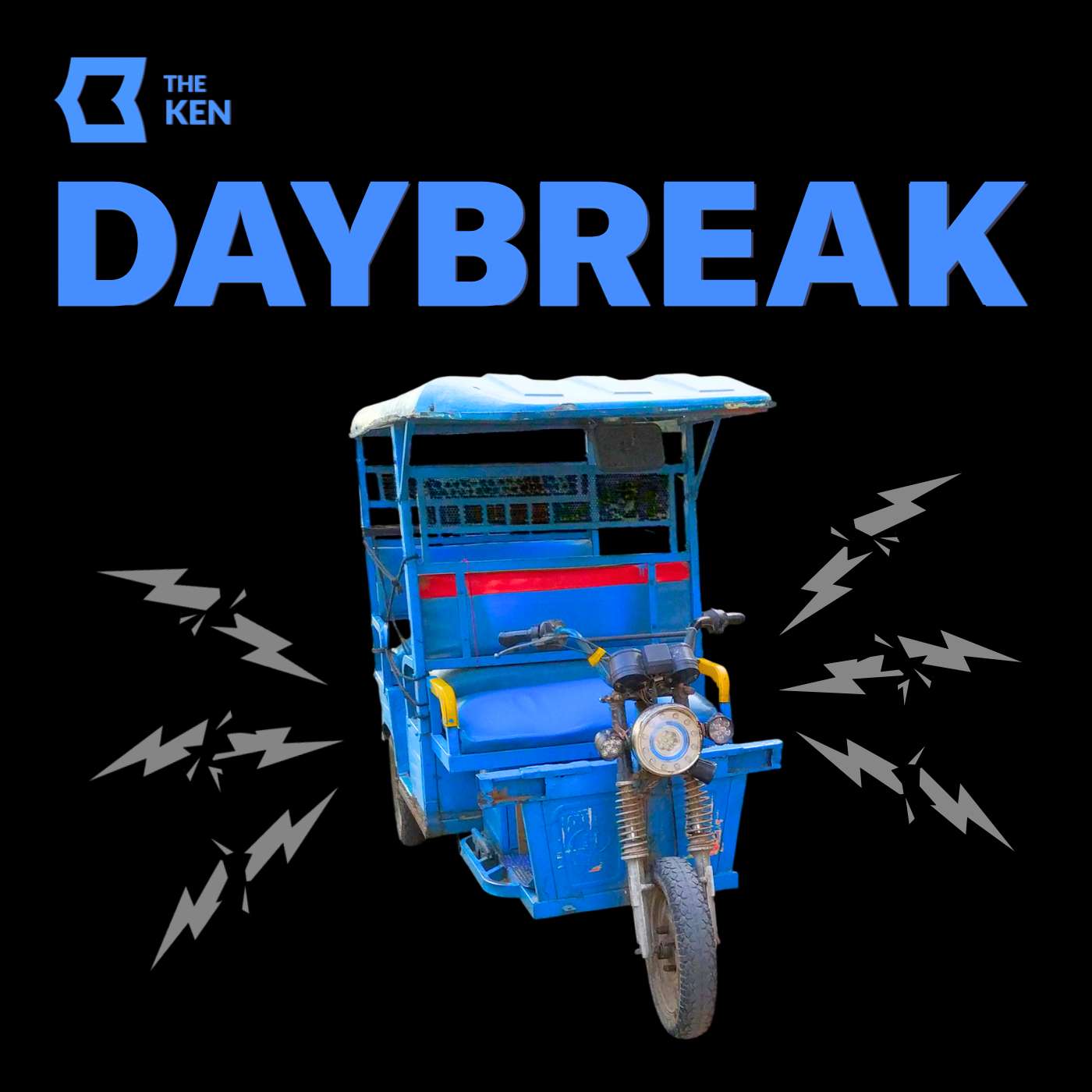
    This startup ranked AI models. They all landed in the danger zone

    India's best AI models are confidently wrong. Not occasionally — structurally. If you put two unrelated ideas into a prompt, the model will usually invent a connection rather than admit that none exists. In this piece, The Ken's Debanjali Biswas traces what a five-month study of leading AI models — from OpenAI, Anthropic, and Google — actually found about how they reason. The results landed almost every model in what researchers are calling the "danger zone", which shows high confidence and low accuracy. This is a read aloud of Debanjali's original story, by Rachel Varghese, on Daybreak. 📖 Read the full story on The Ken: This startup ranked AI models. They all landed in the danger zone

  • May 6 · 10 min

    India's newest think tank has Adani's money and the government's ear

    A two-year-old think tank backed by Adani just got 14 of its suggestions, some of them word for word, written into a law passed by Parliament. That law opened India's nuclear sector to private players for the first time in history. Months later, Adani floated a new subsidiary to enter the same field. The think tank is called Chintan Research Foundation. It started in a South Delhi cafe. It calls itself independent. And it's now one of the more visible and contested players in Delhi's policy world. So what exactly does Rs 100 crore buy you in India's policy ecosystem? Also listen to: Friday Roundup: Adani goes nuclear and AI's talent exit

  • May 5 · 10 min

    Your grocery bill is soon going to get more expensive. But the spike might not be in the price tag

    The Parle-G packet has cost five rupees since the 1990s. Once, when the company tried raising it by 50 paise, consumers switched to Britannia's Tiger within weeks. The price was rolled back. That's how sensitive this market is. But something else has been changing — quietly, and without announcement. The packet that was once 100 grams is now 45. And Parle-G isn't alone. Dabur, Britannia, Nestlé, Godrej — all cutting weight, all in the same quarter, all for the same reason. A war in West Asia has sent packaging costs up by 40 to 75%. The buffer won't last. What comes next? Tune in. Daybreak is produced from the newsroom of The Ken, India’s first subscriber-only business news platform. Subscribe for more exclusive, deeply-reported, and analytical business stories.

  • May 4 · 12 min

    Prediction markets are a $150 billion industry. And they had money on Bengal and Tamil Nadu

    West Bengal and Tamil Nadu declared their results yesterday. BJP swept Bengal after fifteen years of TMC rule. In Tamil Nadu, Vijay's TVK won, upending the DMK return almost everyone had predicted, including the platforms that had money on it. Prediction markets are now a $150 billion industry. And they were taking live bets on India's assembly elections, on a platform India officially banned last year. In a recent edition of The Ken's Make In India Competitive Again, Seema Singh wrote about an interesting research paper. While most assume the trading volumes were not high enough for concern, this peer-reviewed paper in Science says otherwise. In fact, this it says, it matters even when the volumes are thin, or maybe especially then. So what is India's ban actually achieving? Tune in. Also listen to: India banned online betting. Polymarket is wagering on our elections anyway.

  • May 4 · 9 min

    Your retirement may not survive its first bad year. This number could help

    Market shocks hit retirees harder than anyone else. For those just retired or on the verge of it, a sharp early drop in portfolio value can cause damage that compounds quietly over decades, long after markets recover. The American war in Iran is the latest trigger. And it may not be the last. The good news: careful planning can offset the risk. A concept called the safe withdrawal rate, used correctly, can be the difference between a corpus that lasts 30 years and one that runs out in 20. Tune in. Daybreak is produced from the newsroom of The Ken, India’s first subscriber-only business news platform. Subscribe for more exclusive, deeply-reported, and analytical business stories.

  • April 30 · 17 min

    How one FMCG giant's complaint changed how IPL advertising works

    In November 2024, one of India's biggest FMCG companies, Hindustan Unilever, started getting a barrage of complaints from its consumers, who said they were seeing the same Dove and Surf Excel ads repeatedly on OTT platforms during a single watch session. Some of them were shown the same ads as many as 150 times within a week. With IPL around the corner, HUL — which spends nearly Rs 4,000 crore on ads annually — couldn't afford to ignore these complaints. So what followed was a series of investigations. And what they discovered has opened a real can of worms for not just JioHotstar, the platform streaming the IPL, but OTT platforms in general. The big issue is a serious mismatch between what was promised and what's actually being delivered for ad campaigns, according to seven insiders from HUL, Disney, and other industry rivals who spoke to The Ken. So what happens when a big spender starts feeling like it's not getting what it signed up for during the biggest streaming event of the year? The Ken reporter Rounak Kumar Gunjan speaks to Daybreak hosts Snigdha and Rahel. This episode was first published in February 2025. We're re-airing it now because IPL 2026 is live, and the underlying issue the episode raises has not been publicly confirmed as resolved. Here's what has changed after we first published: ahead of IPL 2025, JioHotstar partnered with Nielsen to introduce third-party verified ad measurement for the first time in Indian OTT. It was a direct response to the advertiser pressure this episode describes. But the Nielsen study that followed measured cross-screen duplication: whether the same viewer was being counted differently across TV, mobile, and connected TV. It didn't address the specific complaint HUL raised, which was about a single user being shown the same ad repeatedly within one platform. JioStar has not publicly confirmed that the problem has been fixed. What has changed though, for IPL 2026: connected TV ad rates are up 25%, with the base cost of a 10-second ad rising from ₹480 to ₹600 CPM. The money is bigger. And the question of whether advertisers are getting what they pay for remains the same. Tune in. Daybreak is produced from the newsroom of The Ken, India’s first subscriber-only business news platform. Subscribe for more exclusive, deeply-reported, and analytical business stories.

  • April 29 · 10 min

    India's instant home help startups have a product people love and a business model people are breaking

    Investors are calling India's home-services market quick commerce's next big moment. Instahelp, Snabbit, and Pronto are betting big on it. They're sending trained workers to your door in under 10 minutes, at prices cheaper than a coffee. Orders, naturally, are in the millions. But the difference is that quick commerce eventually figured out how to make money. Here, on the other hand, 82% of consumers have already said they won't pay more than Rs 200 an hour. And on every order placed today, the market leader is losing twice what it earns. So who exactly is this boom working for? Tune in.

  • April 28 · 9 min

    Diet Coke disappeared from shelves. For many factory workers across India, so did their work

    Diet Coke disappeared from Bangalore's shelves, and a teenager's frustrated Reddit post accidentally explained why: the Strait of Hormuz. When the US-Israel war on Iran began in February, fuel shipments slowed. Aluminium furnaces went cold. PET resin prices jumped 75%. At least 25 plants shut completely. In one Odisha industrial belt alone, 700 of 1,500 workers lost their jobs. But the war only made an existing problem worse — India had already tightened import rules on aluminium cans, leaving beverage companies dangerously dependent on West Asian buffer stock. The shortage was always coming. The war just decided that it was now. Tune in. Daybreak is produced from the newsroom of The Ken, India’s first subscriber-only business news platform. Subscribe for more exclusive, deeply-reported, and analytical business stories.

  • April 27 · 13 min

    Rihanna said she'd never be a sellout. Then Reliance bought Sephora India

    Last week, Rihanna was all over our social media feeds as she flew to Mumbai for the official India launch of Fenty Beauty. Now it is exclusively available through Reliance Retail's beauty company, Tira. This was the popstar's second visit to India in two years; the first being a private performance at Anant Ambani's pre-wedding celebrations in 2024, her first paid show in eight years. For a woman who built her entire brand on never showing up on anyone else's terms, there's something worth examining here. Fenty is valued at nearly $3 billion and India's premium beauty market is heading towards $4 billion by 2035. But the real story starts in November 2023, when Reliance spent ₹99 crore acquiring Sephora India. In this episode, host Snigdha Sharma examines if any of this was really Rihanna's choice. Tune in Daybreak is produced from the newsroom of The Ken, India’s first subscriber-only business news platform. Subscribe for more exclusive, deeply-reported, and analytical business stories.

  • April 26 · 12 min

    IBM, Infosys, and Wipro entered Kochi. Only one emerged unscathed

    At Kochi's Infopark, two models of the IT industry sit 500 metres apart. Infosys and Wipro: sprawling campuses, thousands of engineers, margins built on scale. IBM: a smaller hub, senior-heavy teams, focused on enterprise AI. Same city, completely different bets on the future. India's IT giants are expanding into tier-2 cities because they're cheaper. But AI is quietly making the old logic — hire more, deliver at scale — look like the wrong answer. Infosys and Wipro's stocks have nearly halved since 2021. IBM's has doubled. So what does Kochi reveal about where Indian IT is actually headed? Daybreak is produced from the newsroom of The Ken, India’s first subscriber-only business news platform. Subscribe for more exclusive, deeply-reported, and analytical business stories.

  • April 24 · 9 min

    A European royal family walked into India’s startup boom with a billion dollars…

    Lightrock arrived in India with nearly a billion dollars and royal backing — the Liechtenstein dynasty's centuries-old fortune funding bets on around 40 growth-stage startups. The firm moved fast, doubled down on existing investments more aggressively than most peers, and scaled hard during the zero-interest-rate boom. Then the cycle turned. Its portfolio — Waycool, Pharmeasy, Dunzo — ran into trouble. New cheques dried up. Lightrock shifted from investor to caretaker, managing what it had rather than building what came next. A royal wager on Indian tech, still waiting for a payoff. Tune in. Daybreak is produced from the newsroom of The Ken, India’s first subscriber-only business news platform. Subscribe for more exclusive, deeply-reported, and analytical business stories.

  • April 22 · 23 min

    The future of telecalling in India is automated. And complicated

    You pick up an unknown number. A bubbly voice starts selling you a credit card. You hang up in seconds. Except now, that voice may not be human. AI voice agents are already live across banks, e-commerce and healthcare platforms in India, with startups in the space raising over Rs 280 crore. But behind that perfectly polite pitch is a more complex rollout — from pilots and script tuning to adapting across languages and dialects. So, what’s driving this sudden funding spree, and how are companies actually deploying these AI callers in India? Tune in. Daybreak is produced from the newsroom of The Ken, India’s first subscriber-only business news platform. Subscribe for more exclusive, deeply-reported, and analytical business stories.

  • April 22 · 19 min

    AI is writing more code in India. Fewer eyes are checking it

    A study gave 16 experienced developers the best AI coding tools available. They predicted they'd be 24% faster. They felt 20% faster. They were actually 19% slower — and still didn't believe it when told. That gap between belief and reality is now being deployed at enterprise scale. TCS, Infosys, Wipro, and Cognizant have committed to over 50,000 AI coding licences each. Bugs per developer are up 50%. Code is reaching production without any human review. And the senior engineers who could catch the mistakes are buried too deep in the flood to look up. Is India's IT sector selling a productivity story it hasn't actually earned yet? Tune in. *With inputs from Mrunmayee Kulkarni. Read her piece here: Engineers gag as Amazon, TCS, and Cognizant ram ‘mandatory AI’ into everyday work Read the NYT article: The Big Bang: A.I. Has Created a Code Overload Read Luciano Nooijen's blog post: Why I stopped using AI code editors Daybreak is produced from the newsroom of The Ken, India’s first subscriber-only business news platform. Subscribe for more exclusive, deeply-reported, and analytical business stories.

  • April 20 · 13 min

    Reliance's broken promise is India's energy crisis

    Seventeen years ago, Reliance Industries made a promise that was supposed to change India's energy future. It didn't. Today, with a war raging in the Middle East, the Strait of Hormuz mostly closed, and Qatar — India's single largest gas supplier — unable to guarantee supplies, that broken promise has become a full-blown crisis. India finds itself caught between Trump, Tehran, and its own structural failures. The IEA calls it the worst energy crisis in history. For India, it may be the moment that finally forces a reckoning. Tune in. Daybreak is produced from the newsroom of The Ken, India’s first subscriber-only business news platform. Subscribe for more exclusive, deeply-reported, and analytical business stories.

  • April 19 · 17 min

    Your missed SIP could be making banks tens of crores every month

    When your SIP bounces, your bank charges you Rs 500. The mutual fund that missed the investment? Charges you nothing. That gap is not an accident. In this piece, The Ken's Mutasim Khan traces how India's banks have quietly turned missed SIP debits into a revenue line — one that costs them roughly Rs 25 to process, and nets them hundreds of crores a month. The people paying most are first-time investors in smaller cities, often unaware the charge even happened. This is a read aloud of Mutasim's original story, by Snigdha Sharma, on Daybreak. 📖 Read the full story on The Ken: Your missed SIP could be making banks tens of crores every month

  • April 17 · 11 min

    Why the man who built Practo to find doctors is now using AI to find disease first

    India's life expectancy has doubled since 1950. But 65% of deaths are still from diseases caught too late. Cent, the new startup from Practo's founder, thinks it has an answer: full-body AI scans that find risks before they become diagnoses. At Rs 20,000–30,000 a scan, it's already found critical findings in hundreds of patients — with zero false positives, it claims. But Cent doesn't diagnose. It doesn't refer. And it has no proprietary technology. So what exactly are you paying for — and what happens after it finds something? Daybreak is produced from the newsroom of The Ken, India’s first subscriber-only business news platform. Subscribe for more exclusive, deeply-reported, and analytical business stories.

  • April 15 · 17 min

    Anthropic built an AI that can supposedly break into anything. Then it forgot to lock its own door

    Anthropic has spent years building a reputation as the AI company that actually cares about safety. Then, in the span of two weeks, it leaked an unannounced model, exposed its own source code, and accidentally handed hackers a blueprint of its most widely-used product. The fix came in 24 hours. The blueprint can't be unlearned. And the companies that trusted Claude Code with their deepest systems are still running on publicly documented defences. If the most careful AI company couldn't prevent this, what does that mean for everyone else? Tune in. Daybreak is produced from the newsroom of The Ken, India’s first subscriber-only business news platform. Subscribe for more exclusive, deeply-reported, and analytical business stories.