Skip to content
Artwork for CrashCourse
EducationScienceSociety & CultureDocumentary

CrashCourse

CrashCourse

At Crash Course, we believe that high-quality educational videos should be available to everyone for free! Subscribe for weekly videos from our current courses! The Crash Course team has produced more than 60 courses on a wide variety of subjects, ranging from the humanities to sciences and so much more! We also recently teamed up with Arizona State University to bring you more courses on the Study Hall channel.

Links:
Support us on Patreon!: http://patreon.com/crashcourse
Instagram: https://www.instagram.com/crashcourse
Bluesky: https://bsky.app/profile/thecrashcourse.bsky.social
TikTok: https://www.tiktok.com/@crashcourse
Facebook: http://www.facebook.com/YouTubeCrashCourse

Play
  • 123 episodes
  • Avg 19 min
  • English
Counted on this page — what you have heard stays on this device, so it is not something the list can be paged by.
  • Sunday · 15 min

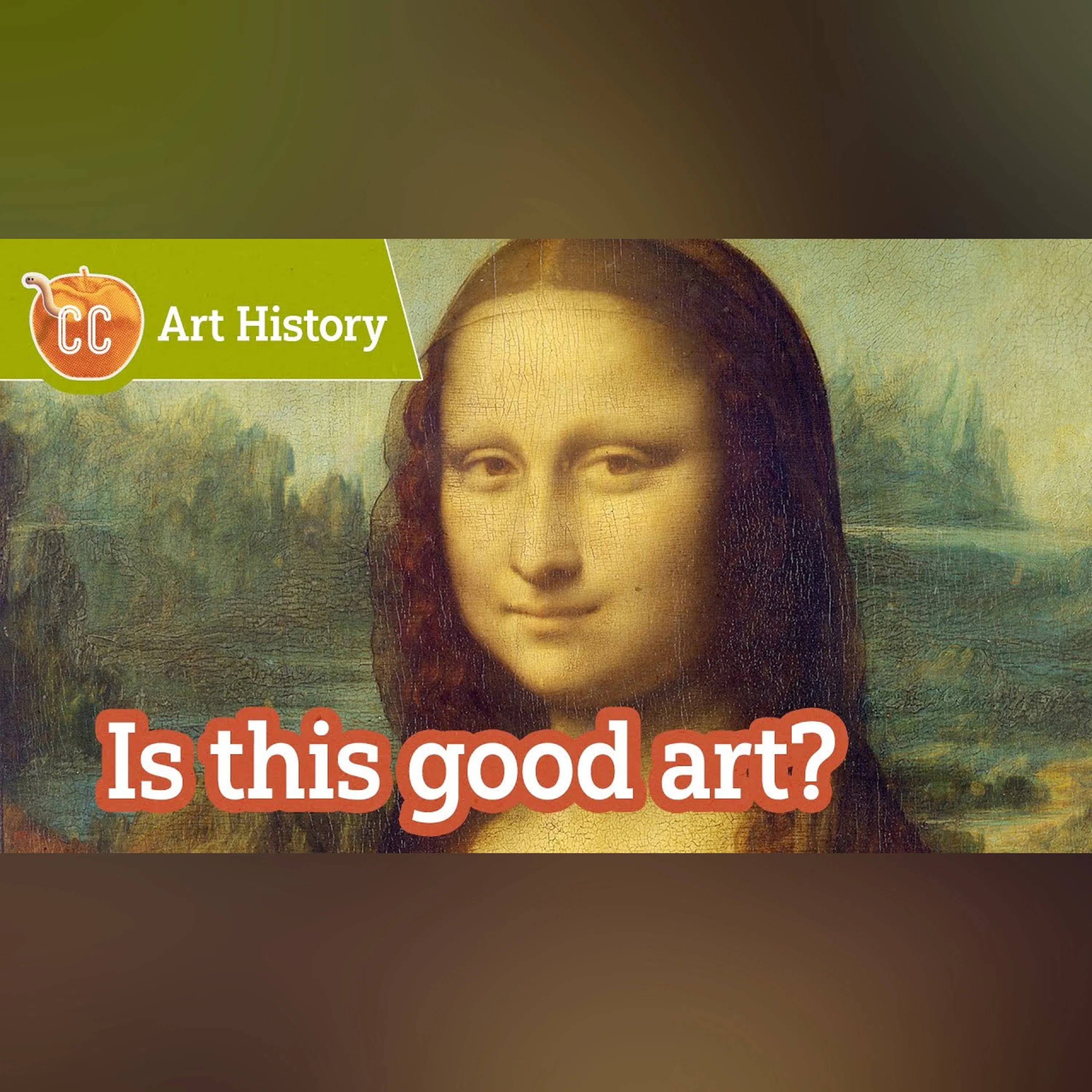
    What Is Good Art? : Crash Course Art History #6

    What makes some art valuable enough to hang in museums? In this episode of Crash Course Art History, we’ll look at different ways we can figure out the value of art beyond the number on the price tag, and we’ll examine how culture, society, history, and storytelling influence how we evaluate artwork. Introduction: What Is "Good" Art? 00:00 Art & Beauty 00:57 Art & Innovation 02:09 Art & Lore: The Mona Lisa 04:27 Art Criticism 05:48 Clement Greenberg 07:26 Art & Museums 08:31 Review & Credits 10:23 Image Descriptions: https://docs.google.com/document/d/1ETiCxe4GrVzFii7dBhF42oHx1EUCCh5y12wbtUjsH8A/edit Sources: https://docs.google.com/document/d/1GW2NKzhpMNMmRyAFJVhFJG9cSfUOMRL-QrcWuHcWcIA/edit?usp=sharing *** Crash Course is on Patreon! You can support us directly by signing up at http://www.patreon.com/crashcourse Thanks to the following patrons for their generous monthly contributions that help keep Crash Course free for everyone forever: Leah H., David Fanska, Andrew Woods, DL Singfield, Ken Davidian, Stephen Akuffo, Toni Miles, Steve Segreto, Kyle & Katherine Callahan, Laurel Stevens, Burt Humburg, Perry Joyce, Scott Harrison, Mark & Susan Billian, Alan Bridgeman, Breanna Bosso, Matt Curls, Jennifer Killen, Jon Allen, Sarah & Nathan Catchings, team dorsey, Bernardo Garza, Trevin Beattie, Eric Koslow, Indija-ka Siriwardena, Jason Rostoker, Siobhán, Ken Penttinen, Nathan Taylor, Barrett & Laura Nuzum, Les Aker, William McGraw, Vaso, ClareG, Rizwan Kassim, Constance Urist, Alex Hackman, Pineapples of Solidarity, Katie Dean, Stephen McCandless, Wai Jack Sin, Ian Dundore, Caleb Weeks __ Want to find Crash Course elsewhere on the internet? Instagram - https://www.instagram.com/thecrashcourse/ Facebook - http://www.facebook.com/YouTubeCrashCourse Twitter - http://www.twitter.com/TheCrashCourse CC Kids: http://www.youtube.com/crashcoursekids Learn more about your ad choices. Visit megaphone.fm/adchoices

  • Sunday · 14 min

    Polar and Non-Polar Molecules: Crash Course Chemistry #23

    Molecules come in infinite varieties, so in order to help the complicated chemical world make a little more sense, we classify and categorize them. One of the most important of those classifications is whether a molecule is polar or non-polar, which describes a kind of symmetry - not just of the molecule, but of the charge. In this edition of Crash Course Chemistry, Hank comes out for Team Polar and describes why these molecules are so interesting to him. You'll learn that molecules need to have both charge asymmetry and geometric asymmetry to be polar, and that charge asymmetry is caused by a difference in electronegativities. You'll also learn how to notate a dipole moment (or charge separation) of a molecule, the physical mechanism behind like dissolves like, and why water is so dang good at fostering life on Earth. Pssst... we made flashcards to help you review the content in this episode! Find them on the free Crash Course App! Download it here for Apple Devices: https://apple.co/3d4eyZo Download it here for Android Devices: https://bit.ly/2SrDulJ -- Table of Contents Charge Asymmetry & Geometric Asymmetry 01:33 Difference in Electronegatives 01:49 Hank is Team Polar 00:33 Dipole Moment 03:49 Charge Separation of a Molecule 04:12 Like Dissolves Like 04:41 Water is Awesome 05:10 Crash Course is on Patreon! You can support us directly by signing up at http://www.patreon.com/crashcourse Want to find Crash Course elsewhere on the internet? Facebook - http://www.facebook.com/YouTubeCrashCourse Twitter - http://www.twitter.com/TheCrashCourse Instagram - https://www.instagram.com/thecrashcourse/ CC Kids: http://www.youtube.com/crashcoursekids Learn more about your ad choices. Visit megaphone.fm/adchoices
  • Sunday · 16 min

    Animal Defense Systems: How Skin, Snot, and Cells Keep Us Healthy: Crash Course Biology #45

    The world is full of microbes and viruses that can get us sick, but we’ve got an Avengers-style defense system ready to take them on. In this episode of Crash Course Biology, we’ll learn about an animal’s immune system, from their skin to inflammatory responses, to the adaptive immune system and all the special cells and antibodies that come with it. Introduction: Defending Against Pathogens 00:00 The Integumentary System 01:09 Internal Defenses 02:29 Asymptomatic Infections 05:52 Healing 06:31 Adaptive Immunity & Vaccines 07:05 The Lymphatic System 09:25 Review & Credits 10:32 This series was produced in collaboration with HHMI BioInteractive, committed to empowering educators and inspiring students with engaging, accessible, and quality classroom resources. Visit https://BioInteractive.org/CrashCourse for more information. Are you an educator looking for what NGSS Standards are covered in this episode? Check out our Educator Standards Database for Biology here: https://www.thecrashcourse.com/biologystandards Check out our Biology playlist here: https://www.youtube.com/playlist?list=PL8dPuuaLjXtPW_ofbxdHNciuLoTRLPMgB Watch this series in Spanish on our Crash Course en Español channel here: https://www.youtube.com/playlist?list=PLkcbA0DkuFjWQZzjwF6w_gUrE_5_d3vd3 Sources: https://docs.google.com/document/d/1GLDtAXE6ekg4Chk2qN3TYbNt0pJbyaHqTqRd6QY8pd4/edit?usp=sharing *** Crash Course is on Patreon! You can support us directly by signing up at http://www.patreon.com/crashcourse Thanks to the following patrons for their generous monthly contributions that help keep Crash Course free for everyone forever: Leah H., David Fanska, Andrew Woods, DL Singfield, Ken Davidian, Stephen Akuffo, Toni Miles, Steve Segreto, Kyle & Katherine Callahan, Laurel Stevens, Burt Humburg, Perry Joyce, Scott Harrison, Mark & Susan Billian, Alan Bridgeman, Breanna Bosso, Matt Curls, Jennifer Killen, Jon Allen, Sarah & Nathan Catchings, team dorsey, Bernardo Garza, Trevin Beattie, Eric Koslow, Indija-ka Siriwardena, Jason Rostoker, Siobhán, Ken Penttinen, Nathan Taylor, Barrett & Laura Nuzum, Les Aker, William McGraw, Vaso, ClareG, Rizwan Kassim, Constance Urist, Alex Hackman, Pineapples of Solidarity, Katie Dean, Stephen McCandless, Wai Jack Sin, Ian Dundore, Caleb Weeks __ Want to find Crash Course elsewhere on the internet? Instagram - https://www.instagram.com/thecrashcourse/ Facebook - http://www.facebook.com/YouTubeCrashCourse Twitter - http://www.twitter.com/TheCrashCourse CC Kids: http://www.youtube.com/crashcoursekids Learn more about your ad choices. Visit megaphone.fm/adchoices
  • Sunday · 16 min

    What are the Patterns of Border Conflicts? Crash Course Geography #37

    Today, we’re going to take a closer look at borders and the stories they tell. When we look at a map, the shapes we’re seeing can seem so permanent, but a map is just a snapshot of the Earth at a particular time, and by looking a countries shape (and how it has changed across time) we can learn so much about how power moves and the ebb and flow of conflict. We’ll talk about the different types of borders, and power dynamics at play in Armenia and Azerbaijan and even look to the oceans as we explore conflict in the South China Sea. SOURCES General CIA Factbook: https://www.cia.gov/library/publications/resources/the-world-factbook/docs/one_page_summaries.html Getis, Bjelland, and Getis. Introduction to Geography, 15 ed. McGraw-Hill Education. 2017. ISBN: 978-1-259-57000-1 Gregory, Derek, Ron Johnston, Geraldine Pratt, Michael Watts, and Sarah Whatmore, eds. 2009. The Dictionary of Human Geography. 5th ed. Willey-Blackwell. ISBN: 978-1-4051-3288-6 For a free and open source option for Intro to Human Geography, see: https://humangeography.pressbooks.com/ For a free and open source option for World Regional Geography, see: https://worldgeography.pressbooks.com/front-matter/introduction/ Cracking the AP Human Geography Exam: 2020 edition. The Princeton Review. https://www.cia.gov/the-world-factbook/field/disputes-international South China Sea https://www.nytimes.com/2016/07/15/world/asia/south-china-sea-dispute-arbitration-explained.html https://www.cfr.org/global-conflict-tracker/conflict/territorial-disputes-south-china-sea https://en.wikipedia.org/wiki/South_China_Sea Armenian/Azerbaijan Conflicts https://www.youtube.com/watch?v=YU2v38hRRbg https://www.cia.gov/the-world-factbook/countries/azerbaijan/ https://www.cia.gov/the-world-factbook/countries/armenia/ https://pulitzercenter.org/stories/how-azerbaijan-won-karabakh-war https://www.mei.edu/publications/diplomacy-attrition-how-will-russia-turkey-stand-nagorno-karabakh-play-out https://www.bbc.com/travel/article/20200721-nakhchivan-the-worlds-most-sustainable-nation https://en.wikipedia.org/wiki/Nakhchivan_Autonomous_Republic#Nakhchivan_in_the_post-Soviet_era https://www.youtube.com/watch?v=YU2v38hRRbg Watch our videos and review your learning with the Crash Course App! Download here for Apple Devices: https://apple.co/3d4eyZo Download here for Android Devices: https://bit.ly/2SrDulJ Crash Course is on Patreon! You can support us directly by signing up at http://www.patreon.com/crashcourse Thanks to the following patrons for their generous monthly contributions that help keep Crash Course free for everyone forever: Dave Freeman, Hasan Jamal, DL Singfield, Jeremy Mysliwiec, Shannon McCone, Amelia Ryczek, Ken Davidian, Stephen Akuffo, Toni Miles, Erin Switzer, Steve Segreto, Michael M. Varughese, Kyle & Katherine Callahan, Laurel A Stevens, Vincent, Michael Wang, Stacey Gillespie, Jaime Willis, Krystle Young, Michael Dowling, Alexis B, Burt Humburg, Aziz Y, DAVID MORTON HUDSON, Perry Joyce, Scott Harrison, Mark & Susan Billian, Junrong Eric Zhu, Alan Bridgeman, Rachel Creager, Jennifer Smith, Matt Curls, Tim Kwist, Jonathan Zbikowski, Jennifer Killen, Sarah & Nathan Catchings, Brandon Westmoreland, team dorsey, Trevin Beattie, Divonne Holmes à Court, Eric Koslow, Jennifer Dineen, Indika Siriwardena, Khaled El Shalakany, Jason Rostoker, Shawn Arnold, Siobhán, Ken Penttinen, Nathan Taylor, Les Aker, William McGraw, Andrei Krishkevich, ThatAmericanClare, Rizwan Kassim, Sam Ferguson, Alex Hackman, Jirat, Katie Dean, NileMatotle, Wai Jack Sin, Ian Dundore, Justin, Jessica Wode, Mark, Caleb Weeks __ Want to find Crash Course elsewhere on the internet? Facebook - http://www.facebook.com/YouTubeCrashCourse Twitter - http://www.twitter.com/TheCrashCourse Tumblr - http://thecrashcourse.tumblr.com Support Crash Course on Patreon: http://patreon.com/crashcourse CC Kids: http:// Learn more about your ad choices. Visit megaphone.fm/adchoices

  • Sunday · 17 min

    Reconstruction and 1876: Crash Course US History #22

    In which John Green teaches you about Reconstruction. After the divisive, destructive Civil War, Abraham Lincoln had a plan to reconcile the country and make it whole again. Then he was shot, Andrew Johnson took over, and the disagreements between Johnson and Congress ensured that Reconstruction would fail. The election of 1876 made the whole thing even more of a mess, and the country called it off, leaving the nation still very divided. John will talk about the gains made by African-Americans in the years after the Civil War, and how they lost those gains almost immediately when Reconstruction stopped. You'll learn about the Freedman's Bureau, the 14th and 15th amendments, and the disastrous election of 1876. John will explore the goals of Reconstruction, the successes and ultimate failures, and why his alma mater Kenyon College is better than Raoul's alma mater NYU. Hey teachers and students - Check out CommonLit's free collection of reading passages and curriculum resources to learn more about the events of this episode. The period of Reconstruction that followed the Civil War was imperfect and failed to create lasting change after 1876: https://www.commonlit.org/texts/reconstruction Following the end of the Civil War, many African Americans found themselves turning from slavery to sharecropping, an unfair system that would last until World War II and the Civil Rights Movement: https://www.commonlit.org/texts/from-slaves-to-sharecroppers Learn more about Reconstruction in episode #19 of Crash Course Black American History: https://www.youtube.com/watch?v=NGPAnLDzQYY Chapters: Introduction 00:00 Johnson & the Reconstruction Era 0:33 The Freedman's Bureau 1:32 Sharecropping 2:14 The Civil Rights Act 3:04 The 14th Amendment 3:55 Mystery Document 4:20 The Reconstruction Act 5:18 The Election of 1868 & the 15th Amendment 5:38 African Americans in Office 6:32 Republican Governments in the South 7:52 Why did Reconstruction End? 8:23 White Violence Against Former Slaves 8:46 Northern Support Retreats 9:33 The Election of 1876 9:52 President Hayes and the Bargain of 1877 10:55 The Legacy of Reconstruction 12:03 Credits 12:29 Crash Course is on Patreon! You can support us directly by signing up at http://www.patreon.com/crashcourse Want to find Crash Course elsewhere on the internet? Facebook - http://www.facebook.com/YouTubeCrashCourse Twitter - http://www.twitter.com/TheCrashCourse Instagram - https://www.instagram.com/thecrashcourse/ CC Kids: http://www.youtube.com/crashcoursekids Learn more about your ad choices. Visit megaphone.fm/adchoices

  • Sunday · 1 hr 5 min

    When The Stars Turned On | Crash Course Pods: The Universe #4

    "Is free will still in the equation?" In this episode, the universe begins to become visible to itself. Dr. Katie Mack teaches John Green about the moment the stars turned on, while John seeks to answer one question... do humans matter to the universe? Head to https://policygenius.com/crashcourse to get your free life insurance quotes and see how much you could save. 0:00 - Introduction 0:55 - Do humans matter to the universe? 12:52 - The Stars Turned On 19:28 - Reionization 38:35 - Redshift and Radio Telescopes 48:10 - Katie expands on her work 53:01 - Being Suitably Small 56:22 - Conclusion *** Crash Course is on Patreon! You can support us directly by signing up at http://www.patreon.com/crashcourse Thanks to the following patrons for their generous monthly contributions that help keep Crash Course free for everyone forever: Leah H., David Fanska, Andrew Woods, DL Singfield, Ken Davidian, Stephen Akuffo, Toni Miles, Steve Segreto, Kyle & Katherine Callahan, Laurel Stevens, Burt Humburg, Perry Joyce, Scott Harrison, Mark & Susan Billian, Alan Bridgeman, Breanna Bosso, Matt Curls, Jennifer Killen, Jon Allen, Sarah & Nathan Catchings, team dorsey, Bernardo Garza, Trevin Beattie, Eric Koslow, Indija-ka Siriwardena, Jason Rostoker, Siobhán, Ken Penttinen, Nathan Taylor, Barrett & Laura Nuzum, Les Aker, William McGraw, Vaso, ClareG, Rizwan Kassim, Constance Urist, Alex Hackman, Pineapples of Solidarity, Katie Dean, Stephen McCandless, Wai Jack Sin, Ian Dundore, Caleb Weeks __ Want to find Crash Course elsewhere on the internet? Instagram - https://www.instagram.com/thecrashcourse/ Facebook - http://www.facebook.com/YouTubeCrashCourse Twitter - http://www.twitter.com/TheCrashCourse CC Kids: http://www.youtube.com/crashcoursekids Learn more about your ad choices. Visit megaphone.fm/adchoices
  • Sunday · 13 min

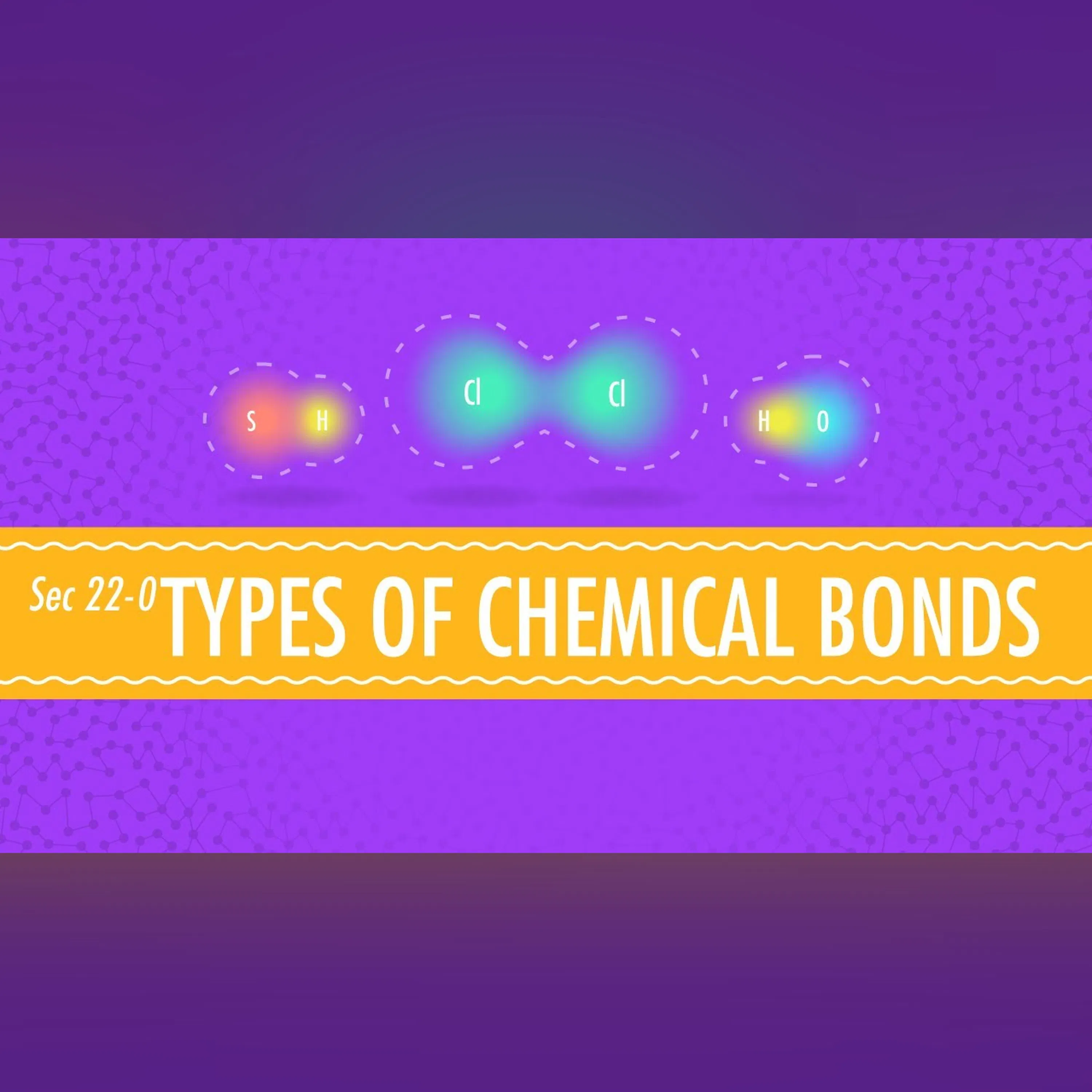
    Atomic Hook-Ups - Types of Chemical Bonds: Crash Course Chemistry #22

    Atoms are a lot like us - we call their relationships "bonds," and there are many different types. Each kind of atomic relationship requires a different type of energy, but they all do best when they settle into the lowest stress situation possible. The nature of the bond between atoms is related to the distance between them and, like people, it also depends on how positive or negative they are. Unlike human relationships, we can analyze exactly what makes chemical relationships work, and that's what this episode is all about. If you are paying attention, you will learn that chemical bonds form in order to minimize the energy difference between two atoms or ions; that those chemical bonds may be covalent if atoms share electrons, and that covalent bonds can share those electrons evenly or unevenly; that bonds can also be ionic if the electrons are transferred instead of shared: and how to calculate the energy transferred in an ionic bond using Coulomb's Law. Pssst... we made flashcards to help you review the content in this episode! Find them on the free Crash Course App! Download it here for Apple Devices: https://apple.co/3d4eyZo Download it here for Android Devices: https://bit.ly/2SrDulJ -- Table of Contents Bonds Minimize Energy 01:38 Covalent Bonds 03:18 Ionic Bonds 05:37 Coulomb's Law 05:51 Crash Course is on Patreon! You can support us directly by signing up at http://www.patreon.com/crashcourse Want to find Crash Course elsewhere on the internet? Facebook - http://www.facebook.com/YouTubeCrashCourse Twitter - http://www.twitter.com/TheCrashCourse Instagram - https://www.instagram.com/thecrashcourse/ CC Kids: http://www.youtube.com/crashcoursekids Learn more about your ad choices. Visit megaphone.fm/adchoices
  • Sunday · 13 min

    How Does Art Tell Stories? : Crash Course Art History #7

    From cave paintings to public murals, humans have told stories with art for thousands of years. In this episode of Crash Course Art History, we discover that visual storytelling is elementally human — and so is competing over whose story is told. Introduction: Narrative Art 00:00 History as Story 00:55 Contradictory Stories 04:10 Official & Unofficial Stories 07:01 Review & Credits 08:51 Image Descriptions: https://docs.google.com/document/d/1ETiCxe4GrVzFii7dBhF42oHx1EUCCh5y12wbtUjsH8A/edit Sources: https://docs.google.com/document/d/1GW2NKzhpMNMmRyAFJVhFJG9cSfUOMRL-QrcWuHcWcIA/edit?usp=sharing *** Crash Course is on Patreon! You can support us directly by signing up at http://www.patreon.com/crashcourse Thanks to the following patrons for their generous monthly contributions that help keep Crash Course free for everyone forever: Leah H., David Fanska, Andrew Woods, DL Singfield, Ken Davidian, Stephen Akuffo, Toni Miles, Steve Segreto, Kyle & Katherine Callahan, Laurel Stevens, Burt Humburg, Perry Joyce, Scott Harrison, Mark & Susan Billian, Alan Bridgeman, Breanna Bosso, Matt Curls, Jennifer Killen, Jon Allen, Sarah & Nathan Catchings, team dorsey, Bernardo Garza, Trevin Beattie, Eric Koslow, Indija-ka Siriwardena, Jason Rostoker, Siobhán, Ken Penttinen, Nathan Taylor, Barrett & Laura Nuzum, Les Aker, William McGraw, Vaso, ClareG, Rizwan Kassim, Constance Urist, Alex Hackman, Pineapples of Solidarity, Katie Dean, Stephen McCandless, Wai Jack Sin, Ian Dundore, Caleb Weeks __ Want to find Crash Course elsewhere on the internet? Instagram - https://www.instagram.com/thecrashcourse/ Facebook - http://www.facebook.com/YouTubeCrashCourse Twitter - http://www.twitter.com/TheCrashCourse CC Kids: http://www.youtube.com/crashcoursekids Learn more about your ad choices. Visit megaphone.fm/adchoices

  • Sunday · 14 min

    The Civil War Part 2: Crash Course US History #21

    In which John Green teaches you how the Civil War played a large part in making the United States the country that it is today. He covers some of the key ways in which Abraham Lincoln influenced the outcome of the war, and how the lack of foreign intervention also helped the Union win the war. John also covers the technology that made the Civil War different than previous wars. New weapons helped to influence the outcomes of battles, but photography influenced how the public at large perceived the war. In addition, John gets into the long-term effects of the war, including the federalization and unification of the United States. All this plus homesteading, land grant universities, railroads, federal currency, and taxes. Check out the US National Archives Flickr. They have an awesome collection of Matthew Brady Civil War photography here: http://www.flickr.com/photos/usnationalarchives/collections/72157622495226723/ Hey teachers and students - Check out CommonLit's free collection of reading passages and curriculum resources to learn more about the events of this episode. One of the most influential moments of the Civil War was when President Lincoln issued the Emancipation Proclamation: https://www.commonlit.org/texts/the-emancipation-proclamation However, Lincoln faced a long and difficult road before abolishing slavery, as seen in his relationship with Frederick Douglass: https://www.commonlit.org/texts/abolishing-slavery-the-efforts-of-frederick-douglass-and-abraham-lincoln When President Lincoln was assassinated, the nation grieved and pondered how it would recover from the Civil War: https://www.commonlit.org/texts/o-captain-my-captain Learn more about the Civil War, Frederick Douglass, and more in Crash Course Black American History: Frederick Douglass (#17): https://www.youtube.com/watch?v=7QOTexnD-NE Black Americans in the Civil War (#18): https://www.youtube.com/watch?v=_NgdnsjPFNE Chapters: Introduction 00:00 Did Lincoln Free the Slaves? 0:59 How Some Slaves Freed Themselves 1:55 Why Lincoln Signed the Emancipation Proclamation 2:41 The Gettysburg Address 4:20 The First Modern War 5:01 Mystery Document 6:04 Matthew Brady - Civil War Photographer 6:26 A New Nation 7:01 The Homestead Act, Morrill Land Grant Act, and Pacific Railway Act 8:16 Financing the Civil War 8:54 Post-War Industrialization 9:37 Credits 10:21 Crash Course is on Patreon! You can support us directly by signing up at http://www.patreon.com/crashcourse Want to find Crash Course elsewhere on the internet? Facebook - http://www.facebook.com/YouTubeCrashCourse Twitter - http://www.twitter.com/TheCrashCourse Instagram - https://www.instagram.com/thecrashcourse/ CC Kids: http://www.youtube.com/crashcoursekids Learn more about your ad choices. Visit megaphone.fm/adchoices
  • Sunday · 13 min

    Nervous and Endocrine Systems: What Really Happens When You Step on a Lego: Crash Course Biology #46

    If cells and organs never talked to each other, an animal would fall apart faster than a boy band after the popular one goes solo. Thankfully, that’s where the nervous and endocrine systems come in! In this episode of Crash Course Biology, we’ll learn how they use neurons, hormones, and more to keep animals’ bodies coordinated. Introduction: Internal communication in animals 00:00 Why communication matters 01:01 The nervous system 01:58 What happens when you step on a Lego? 03:48 Hormones 06:19 Fight or Flight 08:01 Review & Credits 09:07 This series was produced in collaboration with HHMI BioInteractive, committed to empowering educators and inspiring students with engaging, accessible, and quality classroom resources. Visit https://BioInteractive.org/CrashCourse for more information. Are you an educator looking for what NGSS Standards are covered in this episode? Check out our Educator Standards Database for Biology here: https://www.thecrashcourse.com/biologystandards Check out our Biology playlist here: https://www.youtube.com/playlist?list=PL8dPuuaLjXtPW_ofbxdHNciuLoTRLPMgB Watch this series in Spanish on our Crash Course en Español channel here: https://www.youtube.com/playlist?list=PLkcbA0DkuFjWQZzjwF6w_gUrE_5_d3vd3 Sources: https://docs.google.com/document/d/1GLDtAXE6ekg4Chk2qN3TYbNt0pJbyaHqTqRd6QY8pd4/edit?usp=sharing *** Crash Course is on Patreon! You can support us directly by signing up at http://www.patreon.com/crashcourse Thanks to the following patrons for their generous monthly contributions that help keep Crash Course free for everyone forever: Leah H., David Fanska, Andrew Woods, DL Singfield, Ken Davidian, Stephen Akuffo, Toni Miles, Steve Segreto, Kyle & Katherine Callahan, Laurel Stevens, Burt Humburg, Perry Joyce, Scott Harrison, Mark & Susan Billian, Alan Bridgeman, Breanna Bosso, Matt Curls, Jennifer Killen, Jon Allen, Sarah & Nathan Catchings, team dorsey, Bernardo Garza, Trevin Beattie, Eric Koslow, Indija-ka Siriwardena, Jason Rostoker, Siobhán, Ken Penttinen, Nathan Taylor, Barrett & Laura Nuzum, Les Aker, William McGraw, Vaso, ClareG, Rizwan Kassim, Constance Urist, Alex Hackman, Pineapples of Solidarity, Katie Dean, Stephen McCandless, Wai Jack Sin, Ian Dundore, Caleb Weeks __ Want to find Crash Course elsewhere on the internet? Instagram - https://www.instagram.com/thecrashcourse/ Facebook - http://www.facebook.com/YouTubeCrashCourse Twitter - http://www.twitter.com/TheCrashCourse CC Kids: http://www.youtube.com/crashcoursekids Learn more about your ad choices. Visit megaphone.fm/adchoices

  • Sunday · 15 min

    The Vikings! - Crash Course World History 224

    In which John Green teaches you about Vikings! That's right, one of our most requested subjects, the Vikings, right here on Crash Course. So what's the deal with Vikings? Well, the stuff you've heard about them may not be true. The Vikings weren't just pagan raiders striking terror into the hearts of defenseless European Christendom. They were some of the greatest travelers of their time, and they weren't always traveling to steal. In a lot of cases, they were traveling to trade. John will teach you about Viking trade goods, Norse Mythology, and yes, there will be blood, guts, and dragons. OK? Crash Course is on Patreon! You can support us directly by signing up at http://www.patreon.com/crashcourse Want to find Crash Course elsewhere on the internet? Facebook - http://www.facebook.com/YouTubeCrashCourse Twitter - http://www.twitter.com/TheCrashCourse Instagram - https://www.instagram.com/thecrashcourse/ CC Kids: http://www.youtube.com/crashcoursekids Learn more about your ad choices. Visit megaphone.fm/adchoices

  • Sunday · 12 min

    Lab Techniques and Safety: Crash Course Chemistry #21

    Hank takes a break from the desk to bring you to the lab in order to demonstrate some important points about the practical side of chemistry - experimentation in the laboratory. You'll learn what to wear in the lab, how to dispose of chemicals safely, how to avoid the most common accidents, how to pour solutions properly, what the HazMat diamond means, what an MSDS is, and how to use a fume hood. And as a reward for sticking with him through this maybe less-than-thrilling lecture, you'll see Hank subject himself to an exciting piece of safety apparatus. Pssst... we made flashcards to help you review the content in this episode! Find them on the free Crash Course App! Download it here for Apple Devices: https://apple.co/3d4eyZo Download it here for Android Devices: https://bit.ly/2SrDulJ -- Table of Contents Proper Lab Attire 0:51 Disposing Chemicals Safely 6:30 Avoiding Common Lab Accidents 5:40 Proper Pouring 5:19 Hazmat Diamond 2:26 MSDS 3:05 How to use Fume Hoods 3:38 Crash Course is on Patreon! You can support us directly by signing up at http://www.patreon.com/crashcourse Want to find Crash Course elsewhere on the internet? Facebook - http://www.facebook.com/YouTubeCrashCourse Twitter - http://www.twitter.com/TheCrashCourse Instagram - https://www.instagram.com/thecrashcourse/ CC Kids: http://www.youtube.com/crashcoursekids Learn more about your ad choices. Visit megaphone.fm/adchoices

  • Sunday · 15 min

    How Do Religions Use Art?: Crash Course Art History #8

    From the Egyptian Book of the Dead to Tibetan Buddhist sand mandalas, humans have always reached for art to express religious ideas and impulses. In this episode, we’ll explore how concepts of the divine and spirituality intersect with the history of art. Introduction: James Hampton 00:00 The Book of the Dead 01:07 Art & Spiritual Feelings 02:57 Sacred Spaces 05:38 Art as Prayer & Ritual 07:40 Review & Credits 09:49 Image Descriptions: https://docs.google.com/document/d/1ETiCxe4GrVzFii7dBhF42oHx1EUCCh5y12wbtUjsH8A/edit Sources: https://docs.google.com/document/d/1GW2NKzhpMNMmRyAFJVhFJG9cSfUOMRL-QrcWuHcWcIA/edit?usp=sharing *** Crash Course is on Patreon! You can support us directly by signing up at http://www.patreon.com/crashcourse Thanks to the following patrons for their generous monthly contributions that help keep Crash Course free for everyone forever: Leah H., David Fanska, Andrew Woods, DL Singfield, Ken Davidian, Stephen Akuffo, Toni Miles, Steve Segreto, Kyle & Katherine Callahan, Laurel Stevens, Burt Humburg, Perry Joyce, Scott Harrison, Mark & Susan Billian, Alan Bridgeman, Breanna Bosso, Matt Curls, Jennifer Killen, Jon Allen, Sarah & Nathan Catchings, team dorsey, Bernardo Garza, Trevin Beattie, Eric Koslow, Indija-ka Siriwardena, Jason Rostoker, Siobhán, Ken Penttinen, Nathan Taylor, Barrett & Laura Nuzum, Les Aker, William McGraw, Vaso, ClareG, Rizwan Kassim, Constance Urist, Alex Hackman, Pineapples of Solidarity, Katie Dean, Stephen McCandless, Wai Jack Sin, Ian Dundore, Caleb Weeks __ Want to find Crash Course elsewhere on the internet? Instagram - https://www.instagram.com/thecrashcourse/ Facebook - http://www.facebook.com/YouTubeCrashCourse Twitter - http://www.twitter.com/TheCrashCourse CC Kids: http://www.youtube.com/crashcoursekids Learn more about your ad choices. Visit megaphone.fm/adchoices

  • Sunday · 7 min

    History of the 4th of July: Crash Course US History Special

    In which John Green teaches you a bit about the 4th of July. In this special short Crash Course, John celebrates American Independence Day by teaching you how the holiday came to be on the 4th of July, and the many ways that Americans celebrate the day. This is a little different than the normal Crash Course episode, so be prepared. Hey teachers and students - Check out CommonLit's free collection of reading passages and curriculum resources to learn more about the events of this episode. Famous abolitionist and freed slave Frederick Douglass ponders the history of the Fourth of July in the context of ongoing slavery in his famous "What to the Slave is the Fourth of July?” Speech: https://www.commonlit.org/texts/what-to-the-slave-is-the-fourth-of-july Chapters: Introduction 00:00 The Declaration of Independence 0:29 July 4, 1776 1:25 How Americans Celebrate Independence Day 1:43 July 4: When Presidents Die 3:56 Americans Love Eating! 4:15 Happy Fourth of July from Crash Course! 4:45 Credits 4:59 Crash Course is on Patreon! You can support us directly by signing up at http://www.patreon.com/crashcourse Want to find Crash Course elsewhere on the internet? Facebook - http://www.facebook.com/YouTubeCrashCourse Twitter - http://www.twitter.com/TheCrashCourse Instagram - https://www.instagram.com/thecrashcourse/ CC Kids: http://www.youtube.com/crashcoursekids Learn more about your ad choices. Visit megaphone.fm/adchoices

  • Sunday · 16 min

    Sexual and Asexual Reproduction: How Animals Do It: Crash Course Biology #47

    When it comes to animal reproduction, there’s no one-size-fits-all strategy. Some animals need a mate, others don’t, and for some, it depends! In this episode, we’ll learn about sexual and asexual reproduction, internal and external fertilization, and all the ways that life, uh… finds a way. Introduction: Reproduction 00:00 Asexual reproduction 01:33 Sexual Reproduction 04:48 Fertilization 05:58 Sexes 08:01 Review & Credits 11:11 This series was produced in collaboration with HHMI BioInteractive, committed to empowering educators and inspiring students with engaging, accessible, and quality classroom resources. Visit https://BioInteractive.org/CrashCourse for more information. Are you an educator looking for what NGSS Standards are covered in this episode? Check out our Educator Standards Database for Biology here: https://www.thecrashcourse.com/biologystandards Check out our Biology playlist here: https://www.youtube.com/playlist?list=PL8dPuuaLjXtPW_ofbxdHNciuLoTRLPMgB Watch this series in Spanish on our Crash Course en Español channel here: https://www.youtube.com/playlist?list=PLkcbA0DkuFjWQZzjwF6w_gUrE_5_d3vd3 Sources: https://docs.google.com/document/d/1GLDtAXE6ekg4Chk2qN3TYbNt0pJbyaHqTqRd6QY8pd4/edit?usp=sharing *** Crash Course is on Patreon! You can support us directly by signing up at http://www.patreon.com/crashcourse Thanks to the following patrons for their generous monthly contributions that help keep Crash Course free for everyone forever: Leah H., David Fanska, Andrew Woods, DL Singfield, Ken Davidian, Stephen Akuffo, Toni Miles, Steve Segreto, Kyle & Katherine Callahan, Laurel Stevens, Burt Humburg, Perry Joyce, Scott Harrison, Mark & Susan Billian, Alan Bridgeman, Breanna Bosso, Matt Curls, Jennifer Killen, Jon Allen, Sarah & Nathan Catchings, team dorsey, Bernardo Garza, Trevin Beattie, Eric Koslow, Indija-ka Siriwardena, Jason Rostoker, Siobhán, Ken Penttinen, Nathan Taylor, Barrett & Laura Nuzum, Les Aker, William McGraw, Vaso, ClareG, Rizwan Kassim, Constance Urist, Alex Hackman, Pineapples of Solidarity, Katie Dean, Stephen McCandless, Wai Jack Sin, Ian Dundore, Caleb Weeks __ Want to find Crash Course elsewhere on the internet? Instagram - https://www.instagram.com/thecrashcourse/ Facebook - http://www.facebook.com/YouTubeCrashCourse Twitter - http://www.twitter.com/TheCrashCourse CC Kids: http://www.youtube.com/crashcoursekids Learn more about your ad choices. Visit megaphone.fm/adchoices
  • Sunday · 17 min

    Entropy: Embrace the Chaos! Crash Course Chemistry #20

    Life is chaos and the universe tends toward disorder. But why? If you think about it, there are only a few ways for things to be arranged in an organized manner, but there are nearly infinite other ways for those same things to be arranged. Simple rules of probability dictate that it's much more likely for stuff to be in one of the many disorganized states than in one of the few organized states. This tendency is so unavoidable that it's known as the 2nd Law of Thermodynamics. Obviously, disorder is a pretty big deal in the universe and that makes it a pretty big deal in chemistry - it's such a big deal that scientists have a special name for it: entropy. In chemistry, entropy is the measure of molecular randomness or disorder. For the next thirteen minutes, Hank hopes you will embrace the chaos as he teaches you about entropy. Pssst... we made flashcards to help you review the content in this episode! Find them on the free Crash Course App! Download it here for Apple Devices: https://apple.co/3d4eyZo Download it here for Android Devices: https://bit.ly/2SrDulJ -- Table of Contents Second Law of Thermodynamics 0:45 Entropy 2:01 DEMONSTRATION! 4:28 BA(OH)2•8H2O+NH4Ci 10:25 J.W. Gibbs & Gibbs Free Energy 7:23 Crash Course is on Patreon! You can support us directly by signing up at http://www.patreon.com/crashcourse Want to find Crash Course elsewhere on the internet? Facebook - http://www.facebook.com/YouTubeCrashCourse Twitter - http://www.twitter.com/TheCrashCourse Instagram - https://www.instagram.com/thecrashcourse/ CC Kids: http://www.youtube.com/crashcoursekids Learn more about your ad choices. Visit megaphone.fm/adchoices
  • Sunday · 15 min

    How do Outbreaks End? Vaccines and Recovery: Crash Course Outbreak Science #14

    Throughout this series, and in our real lives, we've seen the chaos and devastation that outbreaks can cause. But there's good news! Eventually, outbreaks come to an end. In this episode, we'll look at some of the important tools of outbreak response, particularly vaccines, and also discuss the important work that happens in the aftermath of an outbreak. This episode of Crash Course Outbreak Science was produced by Complexly in partnership with Operation Outbreak and the Sabeti Lab at the Broad Institute of MIT and Harvard—with generous support from the Gordon and Betty Moore Foundation. Episode Sources: https://www.cdc.gov/foodsafety/outbreaks/investigating-outbreaks/investigations/decision.html#:~:text=An%20outbreak%20is%20over%20when,the%20investigation%20continues%20or%20restarts. https://ourworldindata.org/hiv-aids https://vk.ovg.ox.ac.uk/vk/types-of-vaccine https://www.cdc.gov/sepsis/life-after-sepsis/index.html https://www.cdc.gov/sepsis/what-is-sepsis.html https://www.microbiologyresearch.org/content/journal/jmm/10.1099/jmm.0.039180-0?crawler=true https://link.springer.com/chapter/10.1007/978-3-030-15346-5_11 https://www.ncbi.nlm.nih.gov/pmc/articles/PMC5662448/ https://www.ncbi.nlm.nih.gov/pmc/articles/PMC7166819/ https://www.who.int/news-room/facts-in-pictures/detail/immunization https://jamanetwork.com/journals/jamanetworkopen/fullarticle/2776562) https://www.ncbi.nlm.nih.gov/pmc/articles/PMC5662448/ https://www.lung.org/lung-health-diseases/lung-disease-lookup/severe-acute-respiratory-syndrome-sars#:~:text=Impact%20of%20SARS%20Epidemic&text=A%20small%20percentage%20of%20patients,However%2C%20most%20patients%20fully%20recovered. *** Watch our videos and review your learning with the Crash Course App! Download here for Apple Devices: https://apple.co/3d4eyZo Download here for Android Devices: https://bit.ly/2SrDulJ Crash Course is on Patreon! You can support us directly by signing up at http://www.patreon.com/crashcourse Thanks to the following patrons for their generous monthly contributions that help keep Crash Course free for everyone forever: Dave Freeman, Hasan Jamal, DL Singfield, Jeremy Mysliwiec, Shannon McCone, Amelia Ryczek, Ken Davidian, Stephen Akuffo, Toni Miles, Erin Switzer, Steve Segreto, Michael M. Varughese, Kyle & Katherine Callahan, Laurel A Stevens, Vincent, Michael Wang, Stacey Gillespie, Jaime Willis, Krystle Young, Michael Dowling, Alexis B, Burt Humburg, Aziz Y, DAVID MORTON HUDSON, Perry Joyce, Scott Harrison, Mark & Susan Billian, Junrong Eric Zhu, Alan Bridgeman, Rachel Creager, Jennifer Smith, Matt Curls, Tim Kwist, Jonathan Zbikowski, Jennifer Killen, Sarah & Nathan Catchings, Brandon Westmoreland, team dorsey, Trevin Beattie, Divonne Holmes à Court, Eric Koslow, Jennifer Dineen, Indika Siriwardena, Khaled El Shalakany, Jason Rostoker, Shawn Arnold, Siobhán, Ken Penttinen, Nathan Taylor, Les Aker, William McGraw, Andrei Krishkevich, ThatAmericanClare, Rizwan Kassim, Sam Ferguson, Alex Hackman, Jirat, Katie Dean, NileMatotle, Wai Jack Sin, Ian Dundore, Justin, Jessica Wode, Mark, Caleb Weeks __ Want to find Crash Course elsewhere on the internet? Facebook - http://www.facebook.com/YouTubeCrashCourse Twitter - http://www.twitter.com/TheCrashCourse Tumblr - http://thecrashcourse.tumblr.com Support Crash Course on Patreon: http://patreon.com/crashcourse CC Kids: http://www.youtube.com/crashcoursekids Learn more about your ad choices. Visit megaphone.fm/adchoices

  • Sunday · 1 hr 12 min

    Black Holes | Crash Course Pods: The Universe #5

    "The Big Sink" In this episode, John and Katie take a break from talking through the universe's timeline to focus on a mystery of our cosmos: black holes. Head to https://policygenius.com/crashcourse to get your free life insurance quotes and see how much you could save. *** Support us for $5/month on Patreon to keep Crash Course free for everyone forever! https://www.patreon.com/crashcourse Or support us directly: https://complexly.com/support Join our Crash Course email list to get the latest news and highlights: https://mailchi.mp/crashcourse/email Get our special Crash Course Educators newsletter: http://eepurl.com/iBgMhY Thanks to the following patrons for their generous monthly contributions that help keep Crash Course free for everyone forever: Forrest Langseth, Emily Beazley, Neeloy Gomes, oranjeez, Rie Ohta, Jack Hart, UwU, Leah H., David Fanska, Andrew Woods, Stephen Akuffo, Ken Davidian, Toni Miles, AmyL, Steve Segreto, Kyle & Katherine Callahan, Laurel Stevens, Krystle Young, Burt Humburg, Perry Joyce, Scott Harrison, Alan Bridgeman, Mark & Susan Billian, Breanna Bosso, Matt Curls, Jennifer Killen, Jon Allen, Sarah & Nathan Catchings, Bernardo Garza, team dorsey, Trevin Beattie, Indija-ka Siriwardena, Jason Rostoker, Siobhán, Ken Penttinen, Barrett Nuzum, Nathan Taylor, Les Aker, William McGraw, Rizwan Kassim, Vaso , ClareG, Alex Hackman, Constance Urist, kelsey warren, Katie Dean, Stephen McCandless, Wai Jack Sin, Ian Dundore, Caleb Weeks __ Want to find Crash Course elsewhere on the internet? Instagram - https://www.instagram.com/thecrashcourse/ Facebook - http://www.facebook.com/YouTubeCrashCourse Twitter - http://www.twitter.com/TheCrashCourse CC Kids: http://www.youtube.com/crashcoursekids Learn more about your ad choices. Visit megaphone.fm/adchoices
  • Sunday · 16 min

    The Civil War, Part I: Crash Course US History #20

    In which John Green ACTUALLY teaches about the Civil War. In part one of our two-part look at the US Civil War, John looks into the causes of the war, and the motivations of the individuals who went to war. The overarching causes and the individual motivations were not always the same, you see. John also looks into why the North won, and whether that outcome was inevitable. The North's industrial and population advantages are examined, as are the problems of the Confederacy, including its need to build a nation at the same time it was fighting a war. As usual, John doesn't get much into the actual battle-by-battle breakdown. He does talk a little about the overarching strategy that won the war, and Grant's plan to just overwhelm the South with numbers. Grant took a lot of losses in the latter days of the war, but in the end, it did lead to the surrender of the South. If you want to learn more about the Civil War, we recommend these books: Battle Cry of Freedom by James McPherson: https://bit.ly/3jAtBzo The Civil War by Shelby Foote: https://bit.ly/38VXTKZ Hey teachers and students - Check out CommonLit's free collection of reading passages and curriculum resources to learn more about the events of this episode. There were many causes of the American Civil War and events that led to disunion: https://www.commonlit.org/texts/causes-of-the-american-civil-war Once the war started, its outcome was determined by the different abilities and resources of the divided North and South: https://www.commonlit.org/texts/a-nation-divided-north-vs-south Learn more about Black Americans in the Civil War in episode #18 of Crash Course Black American History: https://www.youtube.com/watch?v=_NgdnsjPFNE Chapters: Introduction 00:00 Basic Facts of the Civil War 1:21 Free and Slave States 1:46 Causes of the Civil War 2:15 Religion and the Civil War 3:19 Union Advantages in the Civil War 4:24 Confederate Advantages in the Civil War 5:11 Was the Union's Victory Inevitable? 5:53 Mystery Document 6:43 Ulysses S. Grant 7:39 Union Weaknesses in the Civil War 8:18 Turning Points in the Civil War 9:20 Lincoln's Reelection 10:47 Credits 11:28 Crash Course is on Patreon! You can support us directly by signing up at http://www.patreon.com/crashcourse Want to find Crash Course elsewhere on the internet? Facebook - http://www.facebook.com/YouTubeCrashCourse Twitter - http://www.twitter.com/TheCrashCourse Instagram - https://www.instagram.com/thecrashcourse/ CC Kids: http://www.youtube.com/crashcoursekids Learn more about your ad choices. Visit megaphone.fm/adchoices

  • Sunday · 15 min

    The Hidden Meanings in Nature Art: Crash Course Art History #9

    From sunsets to double rainbows, nature’s full of beautiful things. So it’s not surprising that artists have found inspiration in Mother Nature for millennia. What is surprising is the wide variety of human concerns that nature art has been used to convey. In this episode of Crash Course Art History, we’ll learn about the ways artists use nature to make arguments about the world around us, and our place within it. Introduction: The Nazca Plateau 00:00 The Hidden Meanings in Nature Art 01:04 Social Issues in Nature Art 03:39 Humans & the Environment 07:33 Review & Credits 10:16 Image Descriptions: https://docs.google.com/document/d/1ETiCxe4GrVzFii7dBhF42oHx1EUCCh5y12wbtUjsH8A/edit Sources: https://docs.google.com/document/d/1GW2NKzhpMNMmRyAFJVhFJG9cSfUOMRL-QrcWuHcWcIA/edit?usp=sharing *** Support us for $5/month on Patreon to keep Crash Course free for everyone forever! https://www.patreon.com/crashcourse Or support us directly: https://complexly.com/support Join our Crash Course email list to get the latest news and highlights: https://mailchi.mp/crashcourse/email Get our special Crash Course Educators newsletter: http://eepurl.com/iBgMhY Thanks to the following patrons for their generous monthly contributions that help keep Crash Course free for everyone forever: Forrest Langseth, Emily Beazley, Neeloy Gomes, oranjeez, Rie Ohta, Jack Hart, UwU, Leah H., David Fanska, Andrew Woods, Stephen Akuffo, Ken Davidian, Toni Miles, AmyL, Steve Segreto, Kyle & Katherine Callahan, Laurel Stevens, Krystle Young, Burt Humburg, Perry Joyce, Scott Harrison, Alan Bridgeman, Mark & Susan Billian, Breanna Bosso, Matt Curls, Jennifer Killen, Jon Allen, Sarah & Nathan Catchings, Bernardo Garza, team dorsey, Trevin Beattie, Indija-ka Siriwardena, Jason Rostoker, Siobhán, Ken Penttinen, Barrett Nuzum, Nathan Taylor, Les Aker, William McGraw, Rizwan Kassim, Vaso , ClareG, Alex Hackman, Constance Urist, kelsey warren, Katie Dean, Stephen McCandless, Wai Jack Sin, Ian Dundore, Caleb Weeks __ Want to find Crash Course elsewhere on the internet? Instagram - https://www.instagram.com/thecrashcourse/ Facebook - http://www.facebook.com/YouTubeCrashCourse Twitter - http://www.twitter.com/TheCrashCourse CC Kids: http://www.youtube.com/crashcoursekids Learn more about your ad choices. Visit megaphone.fm/adchoices

Showing 81–100 of 123 episodes