Skip to content
Artwork for Click & Convert with Maria Sparagis
BusinessEntrepreneurshipEducationHow ToMarketing

Click & Convert with Maria Sparagis

Maria Sparagis

Maria Sparagis has spent 20+ years helping online businesses find the revenue they didn't know they were losing. As president of DirectPayNet and a payment solutions expert, she knows that the difference between a good business and a great one often comes down to how you handle payments and conversions.

On Click & Convert, Maria shares the strategies, tools, and insider knowledge that ecommerce founders and online entrepreneurs need to scale to 6 and 8 figures — from optimizing your checkout flow to maximizing what hits your bottom line.
Featured in American Banker, Vice, Coindesk, and Yahoo. Connect at mariasparagis.com or directpaynet.com.

Play
  • 21 episodes
  • weekly
  • Avg 12 min
  • English
Counted on this page — what you have heard stays on this device, so it is not something the list can be paged by.
  • #252
    Monday · 11 min

    #252 Shopify vs WooCommerce: Which Is Better as Your Business Grows?

    Shopify or WooCommerce—which is the better choice for your ecommerce business? Shopify offers an integrated, easy-to-manage ecommerce ecosystem, while WooCommerce gives you considerably more flexibility and control. But the differences become more important as your business grows. In this episode, I compare Shopify and WooCommerce from a business owner's perspective, including ease of use, customization, total operating costs and an area that's often overlooked: payments. I also explain why payment flexibility can become a financial decision at higher sales volumes, and what established ecommerce businesses should consider before deciding which platform makes the most sense as they scale. Learn more about DirectPayNet: https://directpaynet.com/contact-us/

    • Transcript
    • Chapters
  • #251
    September 5 · 12 min

    251 How I Increase ROAS 25% Without Touching Ads

    Your ROAS might look great—but your business could still be leaving serious money on the table. The problem may have nothing to do with your ads or traffic. In this episode, I reveal an overlooked way to increase ROAS without increasing ad spend by focusing on what happens after the customer decides to buy. We’ll look at checkout optimization, payment declines, approval rates, fraud settings and payment methods that can quietly impact your eCommerce conversion rate and profitability. If you're spending money on ads to drive more traffic, make sure you're not losing the customers you've already paid to acquire. #ROAS #eCommerce #ConversionRateOptimization #DigitalMarketing #eCommerceMarketing ____________________________________________ 👇 Need help with your payment processing? DirectPayNet helps ecommerce businesses improve payment approvals, reduce payment issues, and build payment systems that scale. 👉 https://directpaynet.com/contact-us/

    • Chapters
  • #250
    August 31 · 11 min

    #250 Best Stripe Alternative for a Non-Resident US LLC

    If you're a non-US resident with a US LLC and Stripe suddenly puts your funds on reserve, holds your payouts, or shuts down your account, finding another US payment processor may be harder than you expect. In this episode, I explain why finding a Stripe alternative for a non-resident US LLC can be challenging; and what you can do before a Stripe problem leaves you scrambling for another payment processing option. I also share the story of an established e-commerce merchant processing $2–$3 million a month through Stripe who suddenly had a 25% reserve imposed after a temporary increase in chargebacks; potentially tying up hundreds of thousands of dollars in cash flow. We’ll look at why non-resident owners can face additional challenges qualifying for a US merchant account, even with a US LLC, EIN, ITIN and US bank account. I’ll also explain how building a strong processing history, maintaining low chargebacks, establishing legitimate US presence where possible, and understanding reserves can help improve your options. The biggest takeaway: using Stripe isn't necessarily the mistake. Waiting until Stripe becomes a problem before exploring another processing option can be. If you're a non-resident owner of a US company consistently processing $50,000+ per month with at least six months of processing history, my team at DirectPayNet can review your business and help you set up a US merchant account. CHAPTERS Stripe Reserve: What Happens When 25% of Your Funds Are Held Why US Merchant Accounts Are Harder for Non-Residents Why Stripe Is Easier to Start With 05:51 How to Build Your US Processing History Does Having a US Presence Help? Why a Merchant Account Reserve Isn't Always Bad When to Look for a Stripe Alternative #Stripe #MerchantAccount #PaymentProcessing ____________________________________________ 👇 Need help with your payment processing? DirectPayNet helps ecommerce businesses improve payment approvals, reduce payment issues, and build payment systems that scale. 👉 https://directpaynet.com/contact-us/ ━━━━━━━━━━━━━━━━━━━━━━ 📣 Connect with Maria LinkedIn: https://linkedin.com/in/mariasparagis Facebook: https://www.facebook.com/mariasparagis.directpaynet/ Instagram: https://www.instagram.com/mariasparagis/ ━━━━━━━━━━━━━━━━━━━━━━ Subscribe for weekly videos on ecommerce payments, merchant accounts, fraud prevention, and checkout optimization. https://www.youtube.com/@clickandconvertwithmaria

  • #249
    August 20 · 8 min

    #249 I Helped Build a 9-Figure Business... Here’s What Actually Helped Us Grow

    What happens to your business when you step away? If every important decision still needs your approval, growth eventually becomes harder — no matter how talented your team is. In this episode, I share what I learned helping grow a company from roughly 10 employees into a 9-figure business, where I helped hire the first 90 employees — and what I later learned when I became a founder myself. I break down why capable teams can become overly dependent on the founder, how we unintentionally train employees to bring us problems instead of solutions, and the simple shift I use to encourage independent thinking and better decision-making. We’ll cover how to: Build a team that can make good decisions without you Hire for judgment and problem-solving, not just task completion Stop becoming the approval point for every decision Develop employees who bring solutions instead of problems Create the leverage you need to scale without working more The goal isn't to make yourself unnecessary. It's to build a stronger business that can keep growing even when you step away.

    • Transcript
    • Chapters
  • #248
    August 15 · 10 min

    #248 The Real Reason Some Businesses Generate 10x More Revenue

    Same product. Same customer. A $900 difference. Two businesses can sell almost identical products to almost identical customers, yet see completely different business revenue growth. One generates $100 from that customer. The other generates $1,000. That's not a 10% difference. That's a 10X difference in customer value. I've spent the last 17 years working with online businesses through my payment processing company, DirectPayNet. Most founders assume that revenue difference comes down to traffic, conversion rates, or ad spend. I get to see patterns across entire industries, and the businesses generating the highest customer value are almost always running a smarter problem solving business, not just a better-optimized one. In this episode, I break down the 5 patterns I consistently see among businesses built for real business scaling, including a payment mistake most merchants never catch, one that quietly kills upsells even when the offer is working perfectly. 👉 Need help optimizing payments, approval rates, or building a payment strategy that captures more revenue per customer? Contact us now! 🎯 Key Concepts Covered 🟩 LTV (Customer Lifetime Value) — the total revenue a business can expect from a single customer over the full length of the relationship, not just their first purchase. 🟩 Upsell vs Cross-sell — an upsell offers a higher-value version of the same product, while a cross-sell offers a complementary add-on; both increase average order value. 🟩 Credit Card Decline Codes — the specific reason a transaction failed, often misread by merchants as lost interest when it's actually a payment processing issue. 🟩 Duplicate Transaction Decline — when a bank flags two same-amount charges from the same merchant within seconds as a potential duplicate and blocks the second one, even when the customer intended both purchases. 🟩 Payment Cascading — automatically retrying a declined transaction through a second processor or acquiring bank, recovering 3–5% of otherwise-lost sales.

    • Chapters
  • #247
    August 7 · 9 min

    #247 The Real Reason Your Business Stopped Growing

    Every month, I see which businesses are about to stop growing before they even notice it. Most founders blame marketing first. More ads, a new funnel, a better website. But because my company processes payments for thousands of online businesses, I see something most consultants and coaches never do: the actual numbers behind who's growing, who's flat, and who's declining. And marketing is almost never the real reason. In this episode, I break down 5 patterns I consistently see in businesses that stop growing, and what the fastest-growing companies do differently instead. 👉 Not sure which of these is holding your business back? We help online businesses fix the payment processing and cash flow issues that quietly cap growth: Contact us today! 🎯 Key Concepts Covered 🟩 Profit vs Revenue — why revenue can nearly double while profit stays flat, and why founders who track cash flow and margins scale more sustainably than those chasing top-line sales. 🟩 Customer Retention Strategies — listening to support tickets and customer calls to uncover the real problem behind stalled growth, rather than relying on analytics alone. 🟩 Downsell vs Upsell — offering a lower-priced alternative to a hesitant customer as a retention tool, distinct from an upsell aimed at increasing order value. 🟩 Marketing ROI — measuring whether ad spend is actually driving qualified growth, versus assuming more traffic automatically fixes a stall. 🟩 Business Bottlenecks — the limiting factors holding back growth at any given stage, which shift over time from leads to fulfillment to hiring to retention.

    • Chapters
  • #246
    July 31 · 14 min

    #246 7 Settings Stopping Card Testing Attacks (Turn These on NOW)

    Someone could be testing stolen credit cards on your website right now — and your payment processor isn't going to stop it. It's called a card testing attack. Fraudsters get their hands on stolen card numbers and run them through checkout pages with weak fraud controls to find out which ones are still active. Most merchants don't know it's happening until the damage is already done — chargebacks, fraud alerts, processor warnings, or a Visa monitoring program flag. And here's the part most business owners get wrong: fraud prevention isn't your processor's job. It's yours. In this episode, I show you exactly how fraudsters test stolen cards on ecommerce sites and the fraud prevention tools every online business should have turned on to protect their merchant account — including several settings most merchants don't even know exist. 👉 Not sure if your fraud settings are actually protecting you? We help ecommerce businesses lock down their payment gateway and reduce chargebacks before they hit your merchant account. Contact us today! ____________________________________________ 🎯 Key Concepts Covered 🟩 Card Testing Attack — when fraudsters run stolen credit card numbers through a website with weak fraud controls to find out which cards are still active, often in small, rapid transactions before a larger fraudulent purchase. 🟩 Velocity Filters — fraud prevention rules that limit how many times an action (like the same card, IP address, or email) can occur within a set time window, used to catch card testing before it escalates. 🟩 Credit Card Decline Code 59 — the suspected-fraud decline code merchants see when a processor flags a transaction, often one of the first visible signs a card testing attack is underway. 🟩 Visa VAMP — Visa's monitoring program that flags merchants for enumeration attacks like card testing, with new thresholds merchants are actively trying to understand and prepare for. 🟩 BIN Monitoring — tracking the first six digits of a card number (the Bank Identification Number) to detect when multiple stolen cards from the same source are being tested against your site.

    • Chapters
  • #245
    July 24 · 8 min

    #245 She Had 48 Hours to Save Her Business (Shopify Did This)

    Shopify shut off her Shopify Payments entirely — with less than 48 hours' notice before she'd lose the ability to take payments at all. They flagged her account as high risk, disabled her processing as of June 21, and held roughly $100,000 of her funds in reserve until October. Losing the reserve hurt — but it wasn't the emergency. The emergency was that she was about to have no way to get paid, period, with nothing set up to fall back on. In this video, I use this real business case to break down what actually happens when Shopify shuts you down — and exactly how we got her business back online in time. 👉 Relying on Shopify Payments alone? We help ecommerce businesses set up backup payment processing so a shutdown never stops your revenue: Contact us! 🎯 Key Concepts Covered 🟩 Shopify Account Suspended — when Shopify restricts or disables a merchant's store access, often tied to chargeback ratio, rapid sales growth, or risk flags. Merchants searching "Shopify shut down my store" are usually dealing with this exact scenario. 🟩 Shopify Flagged as High Risk — when Shopify's risk algorithms tag a merchant's account as high risk, frequently resulting in disabled payments processing with little to no warning. 🟩 Shopify Reserves — a percentage of a merchant's revenue that Shopify withholds for 30 to 180+ days as protection against chargebacks and disputes. 🟩 Shopify Payment Hold — when Shopify Payments withholds or delays a merchant's payout, often triggered by chargeback ratio, rapid sales growth, or an internal risk review, and can last anywhere from a few days to several months. 🟩 Backup Merchant Account — a secondary payment processor or merchant account a business keeps active so it can continue accepting payments if Shopify Payments shuts down or holds funds. 🟩 Shopify Holding Funds — when Shopify Payments freezes or delays a merchant's payout, typically triggered by rising chargebacks, sudden sales spikes, or account risk review.

    • Chapters
  • #244
    July 17 · 12 min

    #244 Why Your Payment Processor Treats You as High‑Risk (Even If You’re Legit)

    Are Stripe, Shopify Payments, PayPal, or another processor delaying payouts, adding reserves, or asking a ton of questions about your business? In this episode, Maria explains why your payment processor treats you as high-risk — even if you're a legit online merchant — and how that affects your cash flow and shutdown risk. You'll learn a simple checklist to see how processors really see your business and a 3-step action plan to protect your accounts and keep more of every sale. Maria breaks down the three things processors actually look at — your product category and billing model, your chargeback and refund numbers, and your checkout and support experience — and why you can feel like a completely normal business while still ticking every box their systems flag as high-risk. 👉 Getting flagged as high-risk and not sure why? We help merchants stabilize their processing, fix chargeback issues, and set up accounts built for high-risk industries: Contact us today! 🎯 Key Concepts Covered 🟩 High-Risk Merchant Classification — how processors like Stripe, Shopify, and PayPal quietly categorize businesses as high-risk based on product category, billing model, and dispute history, regardless of legitimacy. 🟩 Payment Processor Reserve — a percentage of revenue a processor holds back for a set period as protection against chargebacks and refunds, often triggered without warning. 🟩 Stripe Payout Hold — when Stripe delays or withholds a merchant's funds, typically due to elevated chargeback rates, sudden volume spikes, or industry risk. 🟩 Chargeback Ratio — the percentage of transactions disputed by customers, monitored by processors and card networks to determine account risk and fees. 🟩 Billing Descriptor — the business name and details that appear on a customer's card statement, directly influencing whether they recognize a charge or dispute it. 🟩 High-Risk Merchant Account — a merchant account structured for businesses facing elevated dispute or fraud risk, offering more stability than standard payment aggregators.

    • Chapters
  • #243
    July 10 · 7 min

    #243 The Revenue Leaks Most Businesses Never Find

    You could be losing thousands of dollars a month — and your marketing dashboard would never show it. Most founders respond to slow growth by launching new campaigns, testing new creatives, and tweaking landing pages. But money is disappearing somewhere else entirely: a declined card your customer never mentioned, a processing fee you never negotiated, a chargeback that quietly limits which processors will work with you next. None of it shows up in your marketing dashboard, so it never gets fixed. In this episode, Maria breaks down 5 hidden revenue leaks costing online businesses money right now — from overpaying for payment processing, to relying on a single processor with no backup, to the Merchant Category Code most business owners have never even heard of that's quietly killing their approval rate. She also covers why these leaks compound over time — a high chargeback ratio doesn't just cost you a dispute, it raises your processing costs and shrinks which processors will even work with you going forward. 👉 Not sure where your business is losing revenue? We help ecommerce businesses lower processing costs, reduce chargebacks, and build a payment setup that protects revenue as you scale. Contact us today! 🎯 Key Concepts Covered 🟩 Business Growth Stall — when a company's revenue stops increasing despite working marketing and traffic, often caused by internal, non-marketing factors rather than a lack of demand. 🟩 Lack of Business Growth — the financial and operational causes behind stalled revenue, including payment processing costs, declined transactions, and processor risk rather than funnel or ad performance. 🟩 Business Growth Audit — a review of a company's internal operations and payment infrastructure, rather than only its marketing, to identify where revenue is being lost. 🟩 Merchant Category Code (MCC) — the four-digit code that classifies your business and directly affects your approval rate and processing costs. 🟩 Chargeback Ratio — the percentage of transactions disputed by customers, monitored by processors to determine account risk and fees. 🟩 Payment Processing Costs — the fees deducted from every transaction, often reduced through better rate structures or renegotiation.

    • Chapters
  • #242
    July 3 · 15 min

    #242 Is Your Checkout Scaring Customers Away? 7 Trust Fixes That Increase Sales

    If customers are reaching checkout but not completing payment, your checkout page may be missing the trust signals, payment options, and clarity buyers need before entering their card. Your ads are working. People are clicking. They're adding to cart. But at checkout, something feels off — the page doesn't match your site, there's no contact info, the refund policy is buried, or the payment options are limited — and they bounce. You blame the offer. The problem is the page. In this episode, Maria walks through seven checkout page fixes that reduce cart abandonment and increase completed purchases — from matching your branding through checkout to fixing the billing descriptor that customers don't recognize on their statement. She also covers why an unclear checkout doesn't just lose the sale — it creates the chargebacks and processor problems that put your merchant account at risk. 👉 Losing sales at checkout and not sure why? We help ecommerce businesses fix checkout friction, reduce chargebacks, and build a payment setup that scales with you. Contact us today! 🎯 Key Concepts Covered 🟩 Cart Abandonment — When a customer adds items to their cart but leaves before completing payment, often caused by checkout friction rather than the offer itself. 🟩 Billing Descriptor — The business name and details that appear on a customer's card statement, directly influencing whether they recognize a charge or dispute it. 🟩 Checkout Page Optimization — Improvements made to a checkout page's design, trust signals, and payment options to reduce abandonment and increase completed purchases. 🟩 Chargeback Ratio — The percentage of transactions disputed by customers, monitored by processors and card networks to determine account risk and fees. 🟩 Increase Sales Conversion — Turning more of your existing checkout traffic into completed purchases, without needing more visitors or ad spend.

    • Chapters
  • #241
    June 26 · 10 min

    #241 Is Your AI Agent Quietly Increasing Chargebacks?

    You added AI support agents to save money. It might be why your chargebacks are climbing. For ecommerce brands, AI support chatbots are an easy sell — fewer tickets, lower headcount, faster response times. But there's a failure mode most operators don't catch until their processor is already asking questions: when a customer hits a wall with your chatbot — a scripted refund denial, no escalation path, or a bot that loops instead of resolves — they don't push back. They call their bank. And that payment dispute lands on your chargeback ratio whether your team ever knew the support interaction failed. In this episode, Maria breaks down three specific ways AI customer support triggers chargebacks for ecommerce businesses, how to audit your own chatbot using the dispute data you already have, and the exact fixes you can make this week — without adding headcount. She also covers the metric every ecommerce operator tracks instead of the right one, and why your ticket deflection numbers are masking a much more expensive problem. 👉 Chargeback rate climbing since you launched AI support? We work with ecommerce businesses to identify dispute triggers, fix support flows, and build a payment setup that processors want to work with. Contact us today! ____________________________________________ 🎯 Key Concepts Covered 🟩 AI Support Agent — A software layer ecommerce businesses use to handle customer support automatically across chat, email, and messaging. Without clear boundaries around refunds and cancellations, AI support agents and customer service chatbots can quietly drive chargeback rates up by blocking resolutions before customers escalate to their bank. 🟩 Customer Service Automation — The use of AI tools to handle customer inquiries and returns without human involvement. Introduces chargeback risk when customer support automation flows fail to resolve refund requests. 🟩 Chargeback Prevention — Strategies merchants use to reduce payment disputes before they're filed. For ecommerce businesses running AI support, it starts with identifying where automated flows are pushing customers to their bank instead of resolving the issue. 🟩 Chargeback Rates / Chargeback Ratio — The percentage of transactions that result in a dispute. Visa and Mastercard enforce thresholds around 1% — exceeding it triggers processor reviews, fines, reserve requirements, and account termination risk. 🟩 Friendly Fraud — A chargeback filed on a legitimate transaction, often because the customer couldn't get a resolution through the merchant's support channel. 🟩 Payment Dispute — A formal challenge raised by a cardholder through their bank. Disputes rooted in unresolved AI support interactions are among the easiest for banks to win.

    • Chapters
  • #240
    June 19 · 14 min

    #240 Stripe Withheld Your Funds – 4 Steps That Actually Work

    Your Stripe account closed and Stripe is still holding your funds? Here's what's actually happening and how to recover Stripe money faster. When Stripe shuts down your account, your remaining balance doesn't get sent to your bank automatically. Instead, Stripe moves those funds into a reserve and holds them — typically 90 to 180 days, sometimes longer — to cover any refunds or chargebacks that come in on past transactions. For high-risk businesses or accounts with messy chargeback history, that hold period can extend even further. In this episode, Maria walks through what happens to your money after a Stripe account shutdown, why the reason you were shut down directly affects your chances of getting paid out, and the exact steps you can take to push for a faster fund release. She also covers one critical mistake founders make with their company and bank account that creates serious delays — and how to avoid it. 👉 Stripe shut you down and you're still waiting on your money? We can help you understand your risk profile, your options, and how to build a payment stack that isn't this fragile. Contact us today! 🎯 Key Concepts Covered 🟩 Stripe Withheld Funds — When Stripe withholds your remaining balance after an account shutdown, typically for 90 to 180 days, to cover potential chargebacks and refunds on past transactions. Fund holds can extend beyond 180 days for merchants flagged as high-risk. 🟩 Termination Reserve — A freeze on your full remaining balance applied specifically after Stripe closes your account. Unlike a rolling reserve, a termination reserve locks the entire balance and can last 180 days or more after closure. 🟩 Rolling Reserve — An ongoing hold where Stripe withholds a percentage of each transaction — typically 10 to 30% — for 30 to 90 days before releasing it. Common for high-risk merchants and often applied before a shutdown occurs. 🟩 Chargeback Ratio — The percentage of transactions that result in a dispute. Stripe flags accounts exceeding a 1% chargeback ratio, often triggering reserves, holds, or full account termination. 🟩 High-Risk Merchant — A business classification applied to sellers of digital products, supplements, subscriptions, coaching, and other flagged verticals. High-risk merchants face stricter fund hold policies and higher likelihood of Stripe account termination. 🟩 KYC Compliance — Know Your Customer verification that processors use to confirm merchant identity. Missing or mismatched KYC documentation is a common trigger for Stripe account reviews and shutdowns.

    • Chapters
  • #239
    June 12 · 11 min

    #239 The Silent Revenue Killer: Fixing 'Do Not Honor' Declines

    Your customers are trying to buy. Their cards are valid. Yet the transaction still gets declined. Do Not Honor is one of the most misunderstood credit card decline codes, and for many businesses it's quietly costing thousands in lost revenue every month. Most merchants assume these sales are gone for good when, in reality, many of them can be recovered. In this episode, Maria explains what Do Not Honor declines actually mean, why banks issue them, and how to determine whether your decline rate is normal or a sign of a bigger problem. She also walks through the strategies merchants use to improve issuer confidence, increase approval rates, and recover revenue without spending more on advertising. 👉 Need help improving approval rates, reducing declines, or optimizing your payment stack? Contact us here! ____________________________________________ 🎯 Key Concepts Covered 🟩 Stripe Account Terminated — Why Stripe closes merchant accounts, what a Stripe account suspension means for your business, and what to do if Stripe holds your funds or shuts you down with no warning. 🟩 How to Switch from Stripe — Step-by-step process for migrating off Stripe to a new payment processor without losing customers, breaking checkout, or interrupting recurring revenue. 🟩 Stripe Data Migration — How to export customer payment methods, saved cards, and billing history from Stripe — and what Stripe won't let you take with you. 🟩 Migrate Subscriptions to a New Processor — How to move recurring billing, subscription plans, and automated invoicing from Stripe to another payment gateway without failed charges or churn. 🟩 Best Stripe Alternatives for Business — Payment processors and merchant account providers that offer more control, better support, and fewer surprise shutdowns than Stripe. 🟩 Dedicated Merchant Account vs Stripe — Why a direct merchant account gives you more stability, lower risk of holds, and more negotiating power than a payment aggregator like Stripe. 🟩 Payment Processing Backup Plan — How to set up a secondary payment processor, failover gateway, or backup merchant account so one provider shutting you down doesn't kill your business.

    • Chapters
  • #238
    June 4 · 11 min

    #238 What Happens If Stripe Shuts You Down Tomorrow?

    Take back control of your payments before Stripe, Shopify Payments, PayPal, or Square take control of your business. Many ecommerce brands build their entire payment infrastructure around a single payment service provider. While platforms like Stripe, Shopify Payments, PayPal, and Square are great for getting started, they shouldn't be the foundation of your business as you scale. The biggest risk isn't just an account review or shutdown. It's discovering too late that your processor controls the customer payment data you need to make a smooth transition. In this episode, Maria walks through a step-by-step roadmap for moving away from Stripe and other PSPs safely — without disrupting your customers, subscriptions, or revenue. This isn’t theory; it’s a practical migration framework designed to help you rebuild your payment stack with redundancy and control. She breaks down the exact process of how to leave Stripe safely without disrupting subscriptions or payment flow: Secure your backup solution Decouple your billing Migrate your data Gradually move sales volume Build your payment stack 👉 Need help building a scalable payment stack or planning a processor migration? Contact us here! ____________________________________________ 🎯 Key Concepts Covered 🟩 Stripe Account Terminated — Why Stripe closes merchant accounts, what a Stripe account suspension means for your business, and what to do if Stripe holds your funds or shuts you down with no warning. 🟩 How to Switch from Stripe — Step-by-step process for migrating off Stripe to a new payment processor without losing customers, breaking checkout, or interrupting recurring revenue. 🟩 Stripe Data Migration — How to export customer payment methods, saved cards, and billing history from Stripe — and what Stripe won't let you take with you. 🟩 Migrate Subscriptions to a New Processor — How to move recurring billing, subscription plans, and automated invoicing from Stripe to another payment gateway without failed charges or churn. 🟩 Best Stripe Alternatives for Business — Payment processors and merchant account providers that offer more control, better support, and fewer surprise shutdowns than Stripe. 🟩 Dedicated Merchant Account vs Stripe — Why a direct merchant account gives you more stability, lower risk of holds, and more negotiating power than a payment aggregator like Stripe. 🟩 Payment Processing Backup Plan — How to set up a secondary payment processor, failover gateway, or backup merchant account so one provider shutting you down doesn't kill your business.

    • Chapters
  • #237
    May 28 · 15 min

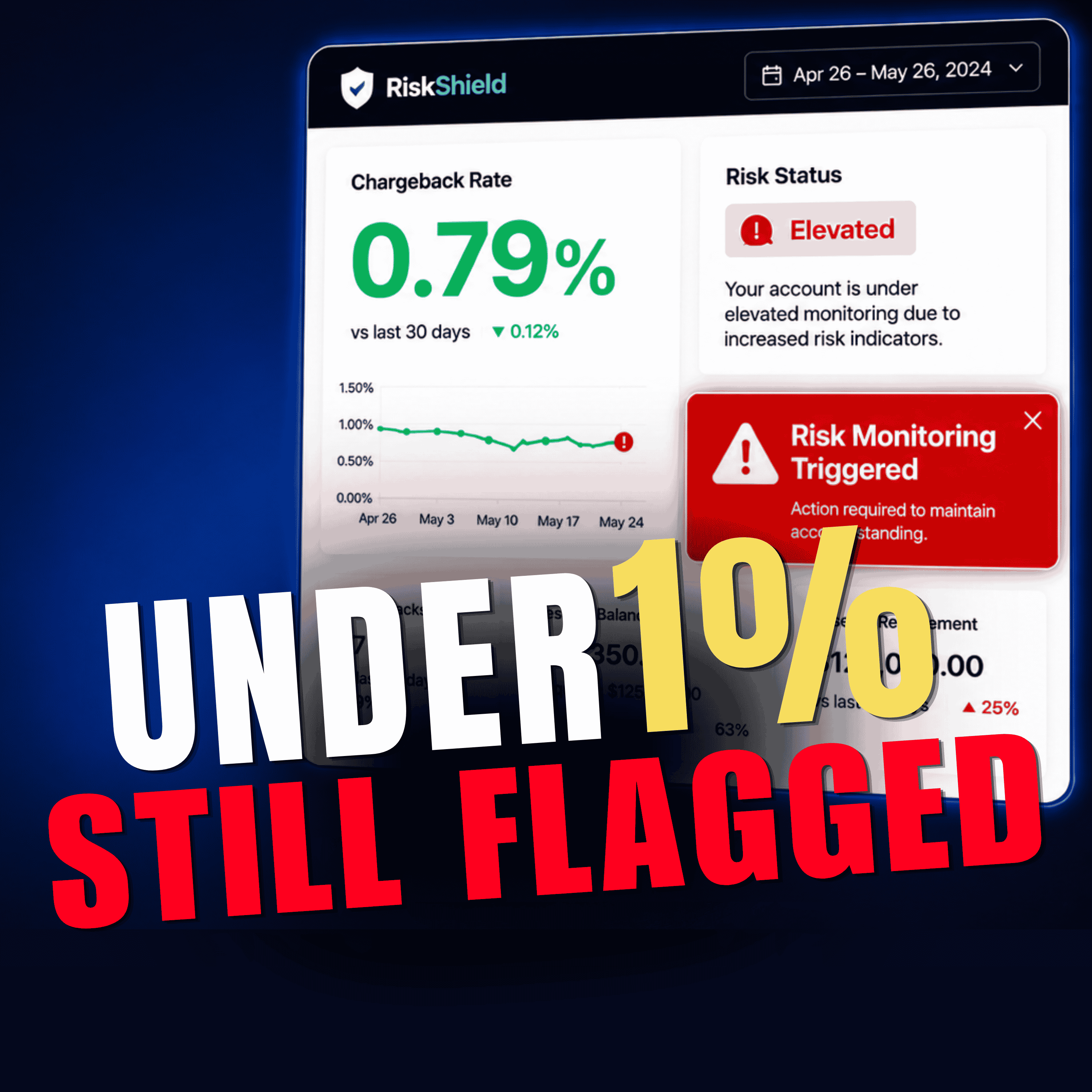
    #237 Why Having Low Chargebacks Is No Longer Enough to Keep Your Account Safe

    Your account can get flagged long before you ever hit a 1% chargeback rate. For years, 1% was treated like the magical chargeback threshold. As long as your business stayed under it, most merchants assumed their account was safe. But a lot of ecommerce brands are now finding out that low chargebacks alone won’t protect you from reserves, payout holds, or account reviews anymore. Payment processors are looking at a much broader picture of risk today — including refund rates, dispute activity, customer complaints, sudden spikes in volume, and overall account behavior. Even a small shift in your metrics can increase scrutiny, despite having a “healthy” chargeback ratio on paper. In this episode, Maria breaks down why the old 1% rule no longer tells the full story, what payment processors are actually monitoring behind the scenes, and why some businesses with low chargebacks still get flagged. She also covers the key risk metrics merchants should be tracking every month to reduce the chances of reserves, payment holds, or shutdowns. What metrics processors look at Early warning signs your account is at risk How to minimize chargebacks How to avoid account closures How to protect your business If you use Stripe, Shopify Payments, PayPal, or another payment processor, understanding how modern risk monitoring works is becoming essential for protecting your payouts and keeping your account stable. 👉 Need help reducing payment risk or stabilizing your merchant account? Contact us! ____________________________________________ 🎯 Key Concepts Covered 🟩 Chargeback Ratio — The percentage of transactions that turn into chargebacks. One of the main metrics payment processors use to assess merchant risk. 🟩 Payment Processor Risk Monitoring — The automated systems used by Stripe, Shopify Payments, PayPal, etc. to evaluate merchant behavior and flag potential risk. 🟩 Payment Holds — Temporary freezes or delays on payouts triggered by risk reviews, dispute spikes, or unusual transaction activity. 🟩 Merchant Account Reserves — Funds held back by a payment processor to cover potential chargebacks or financial risk exposure. 🟩 Merchant Account Shutdowns — The suspension or termination of a payment account due to elevated risk signals or compliance concerns. 🟩 VAMP Ratio — Visa’s monitoring metric used to track fraud and dispute levels across merchant accounts. 🟩 Refund Rate — The percentage of orders refunded, often used by processors as an indirect signal of customer dissatisfaction or risk.

    • Chapters
  • #236
    May 21 · 13 min

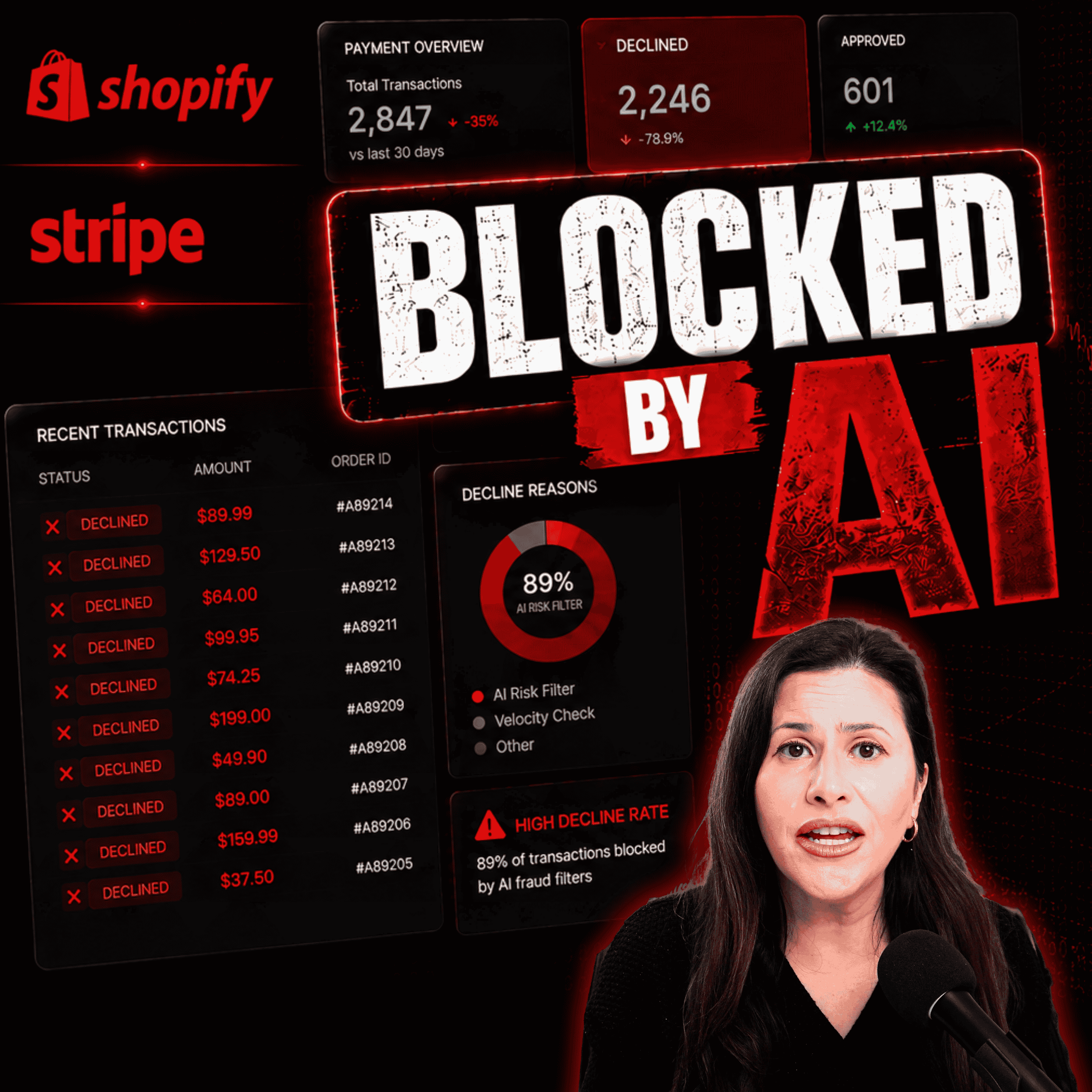
    #236 Your Payment Processor Is Silently Blocking Sales

    AI fraud scoring systems may be silently declining your transactions without you realizing it. Most online businesses see higher failed payments or lower conversion rates and assume it’s ads, checkout, or pricing — but have you checked if an AI fraud scoring system is to blame? Risk engine and automated payment gateway settings may be blocking legitimate customer orders. These systems are designed to prevent losses, not maximize revenue, which leads to false declines. In this episode, Maria breaks down how to spot when AI fraud tools are impacting your payments, and shows you which fraud settings to adjust so they actually fit your business model instead of generic default rules. You’ll learn how to recognize false decline patterns, what’s triggering them, and how to improve approval rates without increasing fraud risk: How to identify which Fraud AI mechanisms are active in your gateway How to know if Fraud AI is working against you How to adjust your Fraud AI scoring filters How to test your new settings Top fixes every merchant needs to know If you’re using Stripe, Shopify, or any payment gateway and seeing unexplained declines or high payment failure rates, this is likely where the problem is coming from — and what you can do to fix it. 👉 Need help with payment processing, fraud settings, or reducing false declines? Contact us!

    • Chapters
  • #235
    May 14 · 9 min

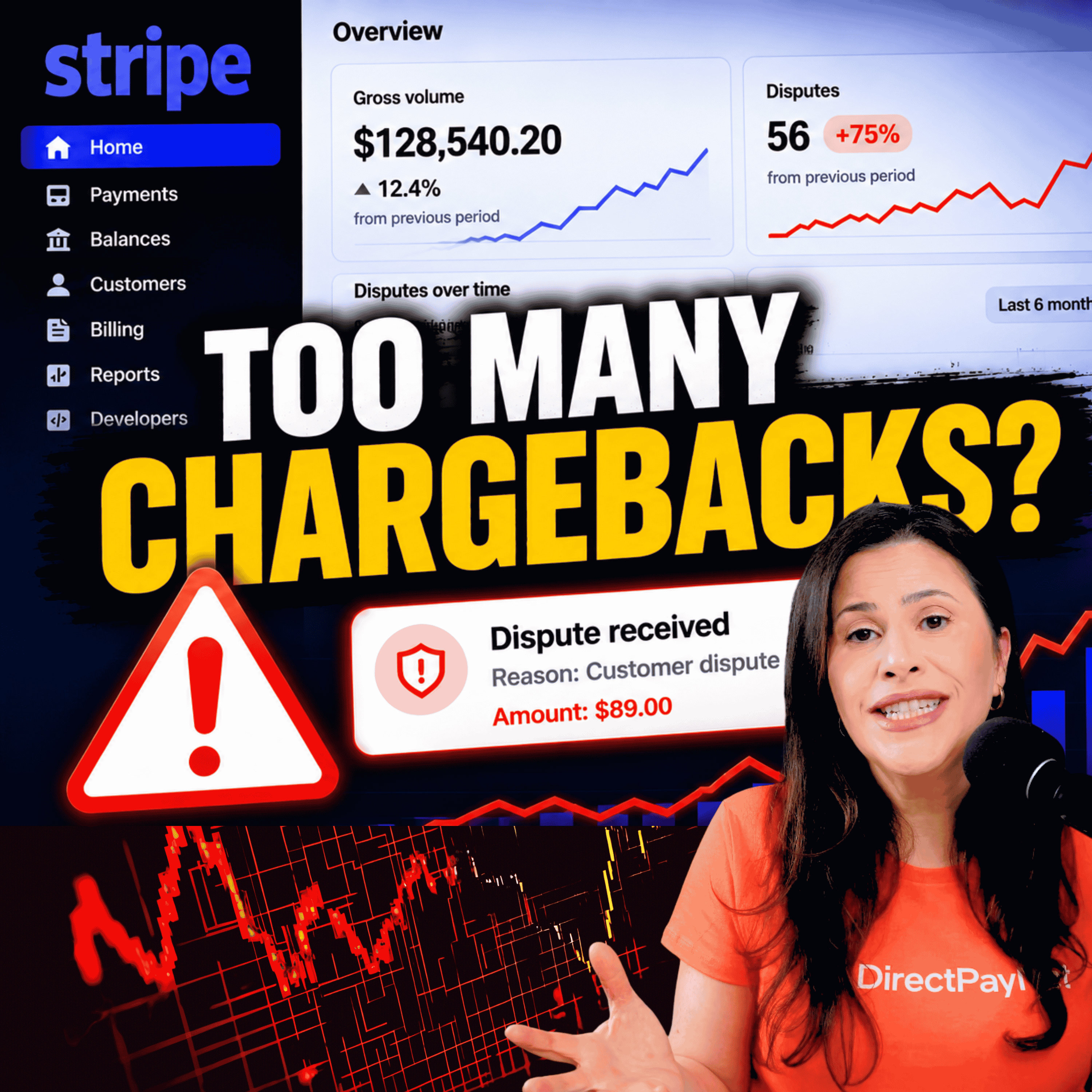
    #235 How to Reduce Stripe Chargebacks in 3 Steps

    Stripe chargebacks are not just costing you money — too many disputes can put your entire account at risk. If customers are filing disputes, calling their bank, or not recognizing your charges, the problem is not always fraud — often it’s avoidable friction, unclear communication, and weak checkout or billing practices. Maria breaks down 3 simple ways to reduce Stripe chargebacks, improve customer trust, and protect your Stripe account from excessive dispute rates. Learn how to make your charges more recognizable, reduce customer confusion, and create a better post-purchase experience that prevents disputes before they happen: Create a “what is this charge” page Update your billing descriptor Set up chargeback alerts Your chargeback prevention checklist If you are using Stripe and struggling with chargebacks, these are some of the fastest and easiest fixes you can implement to lower disputes and keep more revenue. 👉 Need help with payment processing, Stripe risk issues, or reducing chargebacks? Contact us now! ____________________________________________ 🎯 Key Concepts Covered 🟩 Stripe Chargebacks — Payment disputes filed by customers through their bank that reverse a transaction and can increase processing risk for your Stripe account. 🟩 Friendly Fraud — Chargebacks caused by customer confusion, forgotten purchases, or unrecognized billing descriptors rather than true fraud or stolen card activity. 🟩 Billing Descriptor — The business name or transaction label customers see on their credit card statement that helps them recognize a purchase and avoid chargebacks. 🟩 Chargeback Prevention — Strategies used to reduce customer disputes before they happen, including clear communication, recognizable charges, and accessible customer support. 🟩 Stripe Dispute Fee — The non-refundable fee Stripe charges merchants each time a customer initiates a chargeback, regardless of whether the dispute is won or lost. 🟩 Stripe Dispute Rate — The percentage of Stripe transactions that become chargebacks, which Stripe monitors closely when evaluating merchant account risk. 🟩 Stripe Account Suspended — When Stripe restricts or disables a merchant's account due to excessive disputes, high chargeback rates, or elevated payment processing risk.

    • Chapters
  • #234
    May 7 · 10 min

    #234 5 Checkout Fixes That Will Grow Your Shopify Sales

    More traffic will not grow your Shopify business if your checkout is costing you sales. If you’re running ads, getting traffic, but not seeing revenue, the issue is not demand — it’s your checkout. Most Shopify stores are leaking sales at the final step due to avoidable settings and unnecessary friction. Maria breaks down 5 Shopify checkout changes that grow your store by improving conversion rates, reducing abandoned carts, and turning more of your existing traffic into revenue. Learn what to enable, what to disable, and how to streamline your checkout so more customers actually complete their purchase: Enable express checkout options Reduce customer friction Build customer trust Have clear pricing Optimize your payment setup If your Shopify store isn’t converting, this is what needs to be done before scaling traffic. 👉 Need help with payment processing, failed transactions, or building a more reliable checkout setup? Contact us here. ____________________________________________ 🎯 Key Concepts Covered 🟩 Shopify Checkout — The final step in a Shopify store where customers complete their purchase and payment is processed. 🟩 Shopify Conversion Rate — The percentage of store visitors who complete a purchase, directly reflecting how effective your checkout is at turning traffic into revenue. 🟩 Cart Abandonment — When a customer adds products to their cart but leaves before completing checkout, often due to friction, payment issues, or distractions. 🟩 Shopify Checkout Settings — The core settings inside Shopify that control payment methods, checkout flow, and customer restrictions that can impact sales. 🟩 Express Checkout (Shop Pay, Apple Pay, Google Pay) — Fast payment options that allow customers to complete purchases in fewer steps, reducing drop-off at checkout. 🟩 Payment Methods — The options customers can use to pay at checkout, including credit cards, wallets, and accelerated checkout options. 🟩 Checkout Friction — Any unnecessary step or restriction in the checkout process that reduces the likelihood of a completed purchase. 🟩 Abandoned Checkout Recovery — The process of recovering lost sales from customers who initiated checkout but did not complete their purchase.

  • #233
    April 30 · 19 min

    #233 Stripe Payout On Hold? Fastest Way To Get Paid

    Stripe holding your money? This video shows you how to speed up the process and get your funds released. Stop making the common mistakes that delay Stripe payouts, and follow this guide instead to handle a Stripe account on hold correctly and move things forward. If your Stripe payouts are stuck, frozen, or on hold, this is the process to follow. Maria covers what to do when Stripe holds funds, why Stripe places payouts on hold, and how to deal with a frozen Stripe account without making the situation worse: Why Stripe freezes funds How to recover your Stripe funds What to do if Stripe denies your request to release How to prevent future holds on Stripe and Beyond Whether your Stripe payout is pending, your account is restricted, or your funds are stuck on hold, follow these steps to speed up the process and get your money back. 👉 If you’re dealing with ongoing Stripe holds or want a more stable payment setup outside their risk system, you can contact us here: https://directpaynet.com/contact-us/ ____________________________________________ 📍 Stripe Headquarters (USA) 354 Oyster Point Boulevard South San Francisco, CA 94080 United States 📍 Stripe Technology Company Limited (Europe) One Wilton Park Wilton Place Dublin 2 D02 FX04 Ireland ____________________________________________ 🎯 Key Concepts Covered 🟩 Stripe Payout On Hold — A temporary pause on your funds before they are released to your bank account, usually triggered by risk signals, account activity changes, or verification requirements. 🟩 Stripe Risk System — Stripe’s internal system that evaluates merchant activity to determine whether funds can be released, delayed, or held for review. 🟩 Stripe Account Review — A review process triggered when Stripe detects unusual activity, which can result in payout delays or temporary restrictions. 🟩 Stripe Support Ticket — A formal request submitted to Stripe Support to provide clarification, respond to a hold, or supply additional information needed for payout release. 🟩 Stripe Payout Delay — A delay in transferring processed funds to your bank account, often caused by risk reviews, verification checks, or account flags. 🟩 Stripe Reserve — A portion of funds temporarily held by Stripe as protection against potential issues, released later on a scheduled basis. 🟩 High-Risk Business — A business model more likely to trigger Stripe’s risk controls due to industry type, transaction behavior, or perceived financial risk (common in ecommerce, subscriptions, and digital products).

    • Chapters
Showing 1–20 of 21 episodes