Skip to content
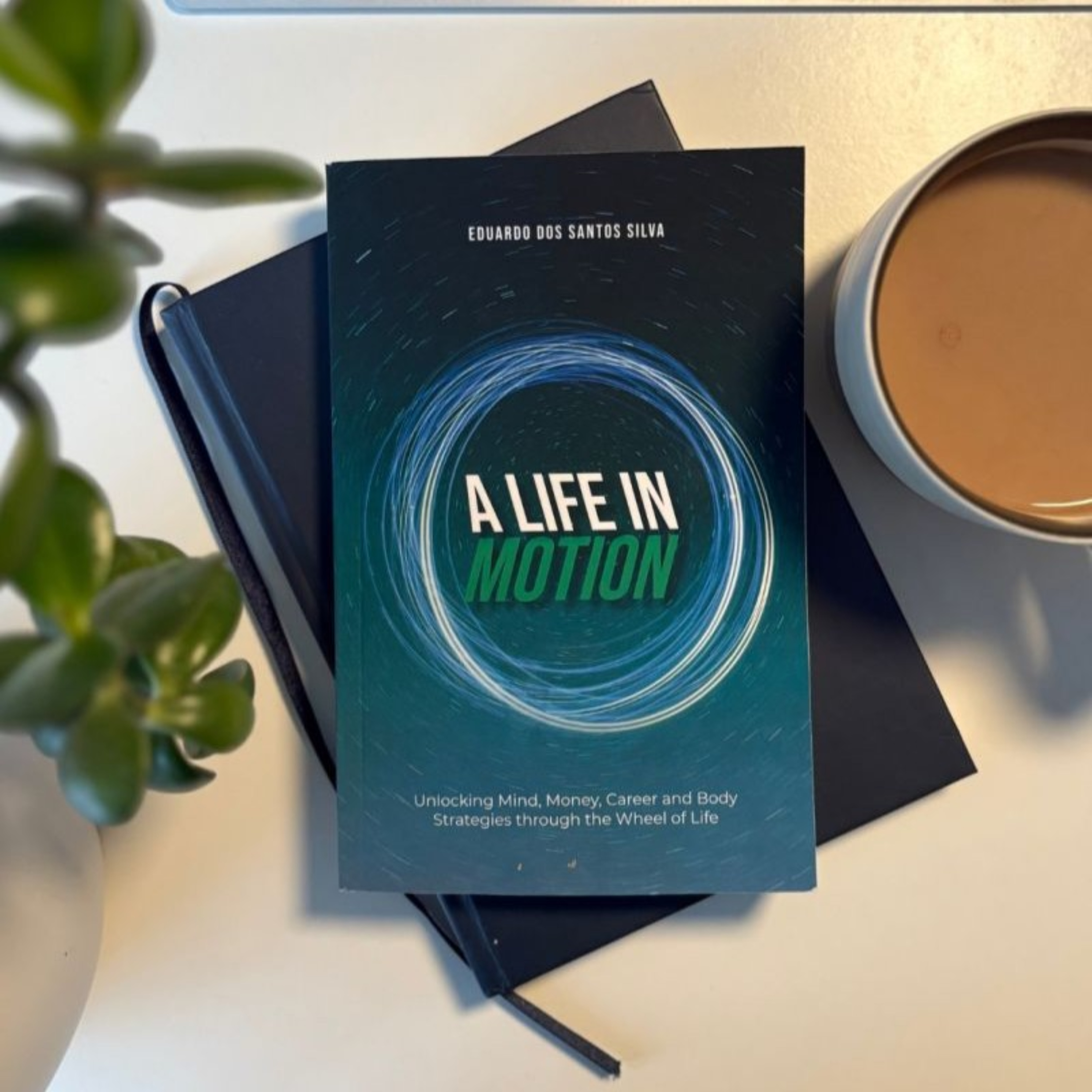
Artwork for A Life in Motion By Eduardo Silva
BusinessCareers

A Life in Motion By Eduardo Silva

Eduardo dos Santos Silva

A Life in Motion, my first published book, is a platform I created to share simple and practical insights about how to:

🚀 Develop our inner self and become more balanced
💰 Create a new relationship with money and attract more of it
💼 Structure career plans that were previously only pipeline dreams
❤️‍🩹 Unlock insights about how to aid a healthy body during a busy life

Extending the book, here I bring insights from successful professionals, entrepreneurs and extraordinary human beings who also got their lives in great motion. ❤️‍🔥

📗 here: https://mybook.to/AV5w

Play
  • 14 episodes
  • Avg 55 min
  • English
  • S1 · E14
    June 2 · 55 min

    Beyond Titles: Redefining Leadership Through Authenticity

    🎙️ Episode SummaryIn this episode of A Life in Motion, Eduardo is joined by Andreea Stanescu, Rob McPhillips, and Rona Steinberg to explore one of the most misunderstood concepts in professional life: leadership.Moving beyond titles, hierarchy, and organizational charts, the conversation examines leadership as a deeply personal practice rooted in authenticity, self-awareness, and human connection. Through personal stories and professional experiences, the panel challenges the traditional notion that leadership begins with authority, arguing instead that leadership emerges from how we show up, how we relate to others, and the values we choose to embody.The discussion explores the difference between management and leadership, the importance of trust and relationships, and the role authenticity plays in inspiring others. The speakers reflect on how leadership often starts long before receiving a formal title and how influence can be exercised regardless of position.Ultimately, the episode invites listeners to rethink leadership not as a destination or promotion, but as a daily choice to lead oneself and serve others with integrity.🔑 TakeawaysLeadership is not defined by a title or position.Authenticity creates trust and credibility.Influence often matters more than authority.Strong leadership starts with self-awareness.Relationships are at the heart of effective leadership.Leadership can be practiced at every level of an organization.Trust is built through consistency and integrity.Great leaders help others grow.Authentic leadership requires courage and vulnerability.Leadership is a choice we make every day.🎧 Sound Bites"Leadership starts long before anyone gives you a title.""People follow authenticity before they follow authority.""Leadership is not about being in charge. It's about taking responsibility.""Trust is built in the small moments.""The strongest leaders are often the most human."🕒 Chapters00:00 Introduction to Leadership04:15 Leadership vs Management10:40 Beyond Titles and Hierarchies17:30 The Role of Authenticity24:50 Building Trust Through Relationships31:20 Leadership and Self-Awareness38:10 Influence Without Authority45:05 Courage, Vulnerability, and Growth52:15 Final Reflections on Leadership🏷️ Keywordsleadership, authentic leadership, self-awareness, influence, trust, management, personal growth, career development, coaching, vulnerability, relationships, emotional intelligenceHashtags#Leadership #AuthenticLeadership #PersonalGrowth #SelfAwareness #Trust #Influence #CareerDevelopment #EmotionalIntelligence #Coaching #LeadershipDevelopment #GrowthMindset #ALifeInMotion📗 Want the book that started this podcast? A Life in Motion is available here: https://mybook.to/AV5wConnect with us: Andreea Stanescu - https://www.linkedin.com/in/andreeastanescu-change/Rob McPhillips - https://www.linkedin.com/in/robmcphillips/Rona Steinberg - https://www.linkedin.com/in/ronasteinberg/Eduardo Silva: https://www.linkedin.com/in/eduardodossantossilva/

  • S1 · E13
    April 2 · 54 min

    Courage Before Confidence: Redefining Public Speaking

    🎙️ SummaryIn this episode of A Life in Motion, Eduardo is joined by Josefine Wanner, Leon Roos, and Sylvia Keijzer to explore public speaking as a deeply personal journey of self-awareness, courage, and growth.Moving beyond techniques and performance tips, the conversation reframes public speaking as a reflection of one’s relationship with oneself. The panel shares personal stories of fear, stage fright, and self-doubt—highlighting that none of them started as confident speakers, and that public speaking is a skill developed through experience, not personality.The discussion dives into the psychology behind fear, including the natural human instinct to avoid standing out, and how practices like breathing, preparation, and mindset shifts can help manage anxiety. Practical tools are shared, from Sylvia’s breathing techniques to Leon’s “CAT framework” (Courage, Authenticity, Trust), and Josefine’s insights on energy, feedback, and presence.A key theme is authenticity: rather than performing or pretending, great public speaking comes from choosing which version of yourself to bring forward. In a world increasingly shaped by AI and automation, the panel emphasizes that authentic human communication—your voice, your presence—is becoming more valuable than ever.Ultimately, public speaking is not about perfection, but about being seen, sharing value, and daring to show up.🔑 Takeaways Public speaking is a skill, not a personality traitFear is natural — it’s part of being humanYou are already a public speaker in everyday lifeAuthenticity matters more than performanceBreathing and body awareness can regulate anxietyFeedback helps — but not all criticism should be taken equallyPreparation includes both technical and emotional readinessPublic speaking is increasingly important in an AI-driven worldYou don’t need to be extroverted to be impactfulGrowth comes from doing, not waiting🎧 Sound Bites“You are already a public speaker — the moment you speak.”“Perfect silence protects your ego. Speaking builds connection.”“Public speaking is a relationship with yourself.”“It’s not about being someone else — it’s about choosing which version of you shows up.”“Your voice is what will differentiate you in a world of AI.”🕒 Chapters 00:00 Introduction to Public Speaking and Career Growth04:30 Early Experiences with Fear and Stage Fright10:20 Public Speaking as a Skill (Not a Trait)16:45 Managing Fear: Psychology and Breathing23:10 Authenticity vs Performance30:15 Feedback, Energy, and Presence37:40 Practical Tools: CAT Framework & Preparation45:20 Public Speaking in the Age of AI52:00 Final Reflections and Growth Advice🏷️ Keywords public speaking, communication, leadership, personal growth, confidence, authenticity, storytelling, career development, mindset, coaching, visibility, emotional intelligence#PublicSpeaking #Leadership #PersonalGrowth #CommunicationSkills #Confidence #Authenticity #CareerDevelopment #Mindset #Coaching #Storytelling #Visibility #EmotionalIntelligence📗 Want the book that started this podcast? A Life in Motion is available here: https://mybook.to/AV5wConnect with us: Josefine Wanner - https://www.linkedin.com/in/josefine-wanner/Leon Roos - https://www.linkedin.com/in/leon-roos-6208b114/Sylvia Keijzer - https://www.linkedin.com/in/sylvia-keijzer/Eduardo Silva: https://www.linkedin.com/in/eduardodossantossilva/

  • S1 · E12
    March 12 · 41 min

    Curiosity Is Courage If You’re Willing to Explore the Unknown

    Enhanced SummaryIn this episode of A Life in Motion, Eduardo is joined by Annika John, and Pinar to explore curiosity as one of the most powerful drivers of growth, learning, and leadership.The conversation moves beyond the simplistic idea of curiosity as a personality trait. Instead, the panel reflects on curiosity as a skill, an attitude, and a way of engaging with the world. Through personal stories—from childhood questions and Lego explorations to career transitions and coaching practices—the speakers highlight how curiosity shapes identity, careers, and relationships.The discussion also explores how curiosity functions inside organizations. When leaders cultivate psychological safety and openness, curiosity becomes a catalyst for innovation, experimentation, and continuous learning. However, curiosity must be balanced with execution and intention; without direction, exploration alone can become distraction.A particularly powerful theme in the episode is curiosity about people. Genuine curiosity—combined with active and global listening—allows leaders and coaches to understand not only what others say but also what remains unspoken. This deeper form of listening creates trust, insight, and stronger collaboration.Ultimately, the panel concludes that curiosity is both a mindset and a practice: a willingness to explore the unknown, question assumptions, and approach the world with the openness of a child discovering it for the first time. 🔑 Key TakeawaysCuriosity can be a trait, a skill, and an attitude toward life.Asking “why” is one of the most powerful ways to deepen understanding.Genuine curiosity goes beyond gathering information—it seeks deeper meaning.Curiosity requires courage, because exploration always involves uncertainty.Curiosity about people can transform leadership and collaboration.Active listening is essential to curiosity; listening to understand is different from listening to respond.“Global listening” allows us to notice what is not being said.Organizations that value curiosity must create psychological safety and tolerance for failure.Curiosity fuels learning, experimentation, and innovation.Maintaining a childlike sense of wonder can help reconnect us with genuine curiositySound bites"Curiosity is a skill that can be developed.""Genuine curiosity leads to deeper insights.""Curiosity is the catalyst for innovation."Chapters00:00 Introduction to Curiosity in Career Development08:08 The Nature of Curiosity: Trait vs. Skill15:41 Personal Stories: How Curiosity Shapes Us21:02 Curiosity in Leadership and Organizational Culture26:47 Active Listening: A Key to Curiosity33:34 The Balance of Curiosity and ExecutionKeywordspublic speaking, anxiety, self-improvement, communication skills, personal growthConnect with us: Annika Mohlin - https://www.linkedin.com/in/annika-mohlin-/John Todorovic - https://www.linkedin.com/in/johntodorovic/Pinarwennerberg - https://www.linkedin.com/in/pinarwennerberg/Eduardo Silva: https://www.linkedin.com/in/eduardodossantossilva/

  • S1 · E11
    February 12 · 52 min

    The Courage to Speak Imperfectly

    Chapter: Learning LanguagesIn this episode, Eduardo and guests Carlinde Kallianiotis, Lidia Zabala, and Vaclav Sulista explore language learning as far more than a technical skill — it is a gateway to identity, empathy, and deeper human connection. The conversation examines how speaking another person’s mother tongue can instantly transform relationships, foster trust, and create emotional bridges that transcend professional boundaries.The panel reflects on personal experiences of learning and working across languages, highlighting how language shapes not only communication but also thinking patterns, cultural understanding, and leadership style. They discuss the courage required to speak imperfectly, the humility embedded in language learning, and the power of curiosity in expanding one’s worldview.Rather than focusing on fluency as a destination, the episode reframes language learning as a lifelong practice of openness and growth. Even small efforts — a few sincere words in another language — can open doors, strengthen collaboration, and signal respect. Ultimately, the discussion positions multilingualism as a powerful tool for modern careers: a way to build trust, navigate diverse environments, and connect more authentically with others.🔑 Enhanced TakeawaysSpeaking someone’s mother tongue creates instant emotional connection and trust.Language learning is an exercise in humility and vulnerability.Imperfect communication is often more powerful than perfect silence.Language shapes how we think, not just how we speak.Curiosity is the engine behind successful language learning.Cultural understanding deepens when we engage with language.Even small linguistic efforts can dramatically improve collaboration.Multilingual environments strengthen empathy and leadership.Language learning is a lifelong journey, not a checklist item.Respect is often communicated through effort more than mastery.🎧 Sound Bites “To reach someone’s heart, speak their language — even imperfectly.”“A few sincere words can open doors that fluency alone cannot.”“Language learning is an act of humility and curiosity.”🕒 Chapters 00:00 Language as Identity and Connection05:30 The Courage to Speak Imperfectly12:10 Cultural Understanding Through Language18:45 Language and Professional Relationships25:20 Curiosity as a Learning Engine31:40 Leadership in Multilingual Environments38:15 Practical Approaches to Language Learning44:30 Language as a Lifelong Journey🏷️ Keywords language learning, multilingual communication, career development, leadership, cultural intelligence, curiosity, empathy, personal growth, professional skills, identity, cross-cultural collaboration

  • S1 · E10
    January 22 · 57 min

    Stop Optimizing Your Resume — Start Clarifying Your Story

    Summary In this episode, the panel (Aytuna Otto, Eduardo Silva, Emily Rappitt and Vaclav Sulista) explores resumes not as administrative documents, but as narratives of identity, intention, and transition. The conversation challenges the common belief that resumes are about listing responsibilities, emphasizing instead that they should communicate value, clarity, and direction. Drawing from real hiring experiences, career transitions, and coaching conversations, the speakers discuss how resumes often fail—not because of formatting, but because they lack focus, honesty, and self-awareness. The episode highlights the importance of understanding what story you are telling, who you are telling it to, and why now. The panel also addresses the role of AI and tools in resume writing, warning against generic optimization and over-engineering. Instead, they advocate for starting from a blank page, reflecting deeply on experience, and making intentional choices about what to include—and what to leave out. Ultimately, the episode reframes the resume as a byproduct of clarity, not a shortcut to opportunity. A strong resume, the panel argues, emerges when people know themselves, their direction, and the value they want to bring next. Takeaways Self-reflection can be a challenging process. Creating a CV can feel like an archaeological dig. Time changes our perception of ourselves. Career transitions often require revisiting past experiences. The pressure of deadlines can hinder self-assessment. Recognizing personal growth is essential for career development. Memories can be fragmented and hard to piece together. It's important to acknowledge the journey of one's career. Self-identity evolves with time and experiences. Navigating change requires both introspection and action. Sound bites "It was like an archaeological dig trying to find it." "I just didn't sort of recognise it." Keywords resume, cv, tools, language, communication, cultural understanding, emotional connection, multilingualism

  • S1 · E9
    Dec 18, 2025 · 1 hr

    Choose Your Manager Like Your Career Depends on It — Because It Does

    Season 1: Awakening. Part 2: Career Development. Chapter 8: Choosing Your ManagerIn this conversation, Antonio Tramontano, Tatiana Rueff and Sarah Gruneisen discuss the significant impact that managers have on career progression. They explore how a good manager can create opportunities and accelerate growth, while a bad manager can lead to anxiety and hinder progress. The discussion also touches on the importance of learning from past mistakes in choosing managers and the lessons that can be drawn from these experiences.TakeawaysManagers influence your career more than the company does.A good manager can accelerate your progress.A bad manager can create anxiety.It's important to choose the right manager.Learning from past mistakes is crucial.Avoid working for managers you don't respect.Opportunities can arise from good management.Career growth is often tied to management quality.Reflect on your management experiences.Seek out positive leadership in your career.Sound bites"A bad manager can create anxiety""A good manager can accelerate your progress""I hope we can give hints about avoiding mistakes"Keywordscareer, self-reflection, CV, transitions, personal growthConnect with us: Antonio Tramontano: https://www.linkedin.com/in/antonio-tramontano-mba-ascm-cscp-aa03892/Sarah Gruneisen: https://www.linkedin.com/in/sgruneisen/Tatiana Rueff: https://www.linkedin.com/in/ruefftatiana/Eduardo Silva: https://www.linkedin.com/in/eduardodossantossilva/

  • S1 · E8
    Dec 11, 2025 · 55 min

    Ikigai Is Not Found — It’s Built Through Courage and Curiosity

    Season 1: Awakening. Part 2: Career Development. Chapter 7: MindsetIn this episode, Eduardo Dos Santos Silva engages with Katia Vlachos, Lidia Zabala and Ekaterina Breous to explore the concept of Ikigai and its relevance to career development and personal growth. The conversation delves into personal definitions of Ikigai, the role of money in finding purpose, practical applications of Ikigai in life, and how to navigate career transitions. The speakers share insights on overcoming limiting beliefs and emphasize the importance of self-discovery and community building in the journey towards finding one's purpose.TakeawaysIkigai is a personal journey of self-discovery.Money should not be the sole motivator in finding purpose.Purpose can be found in both career and everyday life.Exploration and experimentation are key to discovering Ikigai.Limiting beliefs can hinder the pursuit of purpose.You can have multiple purposes throughout your life.Trusting the process is essential in career transitions.Self-reflection is a powerful tool for understanding one's desires.Community support can enhance the journey of finding purpose.Purpose generates energy that can fuel other areas of life.TitlesUnlocking Your Ikigai: A Journey to PurposeFinding Your Path: The Role of Ikigai in Career DevelopmentSound bites"Dream big and think uncaged.""What do you love?""You are enough just as you are."Chapters00:00 Introduction to Ikigai and Its Importance07:02 Personal Interpretations of Ikigai14:02 Exploring the Relationship Between Ikigai and Money20:36 Practical Applications of Ikigai in Everyday Life27:56 Ikigai as a Tool for Career Transition30:01 Finding Energy Through Purpose30:40 Reflection and Experimentation in Career Development32:14 Exploring Multiple Career Paths33:53 Building Bridges to Future Paths35:36 The Role of Small Inspired Actions37:10 Navigating Limiting Beliefs37:46 The Possibility of Multiple Purposes40:41 Demystifying Purpose Anxiety42:02 The Importance of Shadow Work47:24 Connecting to Authentic Self Before Ikigai49:09 Practical Insights for Discovering IkigaiTakeawaysManagers influence your career more than the company does.A good manager can accelerate your progress.A bad manager can create anxiety.It's important to choose the right manager.Learning from past mistakes is crucial.Avoid working for managers you don't respect.Opportunities can arise from good management.Career growth is often tied to management quality.Reflect on your management experiences.Seek out positive leadership in your career.Connect with us: Ekaterina Breous: https://www.linkedin.com/in/ekaterinabreous/Katia Vlachos: https://www.linkedin.com/in/katiavlachos/Lidia Zabala: https://www.linkedin.com/in/lidiazabala/Eduardo Silva: https://www.linkedin.com/in/eduardodossantossilva/

  • S1 · E7
    Dec 4, 2025 · 1 hr 7 min

    Mindset Is Motion: Redefining Growth Through Self-Discovery

    Season 1: Awakening. Part 1: Adjusting the Self. Chapter 7: Mindset In this episode of 'A Life in Motion,' the panel discusses the concept of mindset, exploring its definitions, the impact of circumstances, and the journey of self-discovery. Each panelist shares personal experiences and insights on how mindset shapes our lives, emphasizing the importance of vulnerability, empathy, and self-awareness. Practical steps for shifting mindset are also provided, encouraging listeners to dig deeper into their beliefs and emotions to foster personal growth. Takeaways Mindset is a collection of beliefs and attitudes that shape our interactions. Circumstances can influence our mindset, but we have the power to choose how we respond. Vulnerability is essential for personal growth and self-discovery. Empathy can be both a strength and a potential source of burnout. Self-awareness is the first step towards changing limiting beliefs. Practical steps, like journaling, can help shift mindset. Mindset is not fixed; it can evolve over time. We all have 'dragons' or inner challenges that we must confront. Positive thinking alone is not enough; deeper emotional work is necessary. The limits of our mindset can define the limits of our lives. Sound bites "Mindset is a choice we can make." "We all have dragons that live with us." "Mindset is digging deeper." Chapters 00:00 Introduction to Mindset and Its Importance 06:10 Defining Mindset: Perspectives from the Panel 13:17 The Evolution of Mindset Through Personal Experiences 20:02 The Role of Vulnerability in Shaping Mindset 28:13 Uncovering Self-Limiting Beliefs 30:31 The Power of Resilience and Creativity 36:17 Mindset vs. Core Beliefs 40:06 Breaking Free from Positive Thinking 44:25 Practical Steps for Self-Awareness and Growth Keywords mindset, self-discovery, empathy, personal growth, coaching, vulnerability, self-awareness, beliefs, mindset shift, emotional intelligence Connect with us: Sarah - https://www.linkedin.com/in/sgruneisen/ John - https://www.linkedin.com/in/johntodorovic/ Ekaterina - https://www.linkedin.com/in/ekaterinabreous/ Eduardo - https://www.linkedin.com/in/eduardodossantossilva/

  • S1 · E4
    Nov 12, 2025 · 57 min

    Bias Is Inevitable. But Blindness Isn’t

    Season 1: Awakening. Part 1: Adjusting the Self. Chapter 4: BiasesIn this engaging conversation, the panelists explore the multifaceted nature of biases, their impact on decision-making, and the importance of understanding and addressing them in both personal and professional contexts. They discuss the role of leaders in creating psychological safety and fostering an environment where biases can be recognized and managed effectively. The conversation emphasizes the need for awareness, trust, and communication in navigating biases and highlights practical strategies for individuals and organizations to mitigate their effects.TakeawaysBiases influence our daily decisions and perceptions.Understanding biases requires awareness of our lived experiences.Leaders play a crucial role in creating psychological safety.Group dynamics can amplify biases in decision-making.Cultural backgrounds shape our biases and perspectives.Disruption is necessary to challenge existing biases.Communication is key to addressing biases in teams.Trust is foundational for effective leadership and bias management.Awareness of biases can lead to better decision-making.Creating a culture of openness helps mitigate biases.Sound bites"Creating trust is key to addressing biases.""We need unifiers to bring us together.""What evidence do I have that this is true?"Connect with us!Rob - https://www.linkedin.com/in/robmcphillips/Leon - https://www.linkedin.com/in/leon-roos-6208b114/Andreea - https://www.linkedin.com/in/andreeastanescu-change/Eduardo - https://www.linkedin.com/in/eduardodossantossilva/Buy "A Life in Motion": https://mybook.to/AV5w

  • S1 · E6
    Nov 12, 2025 · 1 hr 3 min

    Beyond Burnout: Redefining Gratification as the Fuel for Fulfillment

    Season 1: Awakening. Part 1: Adjusting the Self. Chapter 6: Gratification In this episode, the hosts and guests explore the concept of gratification, its definitions, and personal experiences related to it. They discuss the importance of understanding gratification in the context of burnout and how it can serve as an antidote. The conversation emphasizes the need for self-awareness, listening to one's body, and the significance of intrinsic versus extrinsic gratification. The guests share their insights and tips for finding long-term gratification in life and work, encouraging listeners to dream big and connect with their true selves. Takeaways Gratification is a pleasurable emotional reaction to fulfillment. Delayed gratification can lead to long-term satisfaction. Listening to your body is crucial for self-awareness. Gratification can help combat burnout by encouraging pauses. Dreaming big is essential for achieving true fulfillment. Burnout can occur even in jobs we love if we lose sight of our purpose. Self-compassion is important when navigating personal challenges. Intrinsic gratification comes from within and is more fulfilling than extrinsic rewards. Regularly check in with your emotions and physical sensations. Gratification is a lifelong journey of self-discovery and growth. Sound bites "Listen to your body, it’s very wise." "You are not alone in your feelings." "Dream big or even bigger." Keywords gratification, burnout, personal growth, emotional well-being, coaching, self-awareness, leadership, life purpose, happiness, fulfillment Connect with us! Pinar - https://www.linkedin.com/in/pinarwennerberg/ Rona - https://www.linkedin.com/in/ronasteinberg/ Romana - https://www.linkedin.com/in/romanaprochazkova/ Eduardo - https://www.linkedin.com/in/eduardodossantossilva/

  • S1 · E5
    Nov 6, 2025 · 50 min

    Joy Before Achievement: Redefining Success Through Playfulness

    Season 1: Awakening. Part 1: Adjusting the Self. Chapter 5: Having Fun In this episode of the Life in Motion podcast, Eduardo Dos Santos Silva, Chloe Myers, and Josefine Wanner explore the significance of fun in our lives and workplaces. They discuss how integrating fun can enhance productivity, creativity, and overall well-being. The conversation delves into the subjective nature of fun, the importance of creating safe spaces for enjoyment, and practical tips for incorporating fun into daily routines. The hosts share personal experiences and insights on how to balance work, rest, and play, emphasizing that fun should be an integral part of our lives rather than an afterthought. Takeaways Fun is essential for productivity and well-being. Integrating fun into work can enhance performance. Fun is subjective and varies from person to person. Creating a safe environment is crucial for fun to thrive. Gamification can make learning more engaging and enjoyable. Fun should be prioritized alongside work and rest. Writing down fun activities increases the likelihood of doing them. Fun can coexist with seriousness in the workplace. Reflection on daily activities can enhance creativity and fun. Personal experiences can inspire others to incorporate fun into their lives. Sound bites "We need to have fun doing that too." "Challenge plus fun equals growth." "Create your funtastic list." Connect with Eduardo, Chloe and Josefine: https://www.linkedin.com/in/eduardodossantossilva/ https://www.linkedin.com/in/josefine-wanner/ https://www.linkedin.com/in/chloe-myers-coach/

  • S1 · E3
    Oct 23, 2025 · 51 min

    Vision Before Victory: Redefining Success Through Imagination

    Season 1: Awakening. Part 1: Adjusting the Self. Chapter 3: Visualization In this episode of the Life Emotion Podcast, the panelists discuss the concept of visualization, its definitions, and its applications in personal and professional contexts. They explore the relationship between visualization and manifestation, emphasizing the importance of emotions in the visualization process. The conversation also addresses potential pitfalls of visualization and offers practical tips for effective visualization practices. Takeaways Visualization is a mental process that can vary for each individual. Emotions play a crucial role in effective visualization. Visualization can help in preparing for specific situations, like interviews. There is a difference between visualization and manifestation. Visualization should be personalized to fit individual needs and preferences. Acknowledging and processing emotions is important before visualizing positive outcomes. Visualization can be a tool for both personal and professional development. Setting realistic and exciting goals is key to effective visualization. Visualization can help filter experiences to align with personal goals. Using visualization without emotional connection can lead to ineffective outcomes. Sound bites "You need to give space for things to evolve." "What do I expect by using this tool?" "You can visualize the details of your goals."

  • S1 · E2
    Oct 16, 2025 · 46 min

    Gratitude and Growth: Redefining Ambition Through Connection

    Season 1: Awakening. Part 1: Adjusting the Self. Chapter 2: Thankfulness In this enlightening episode, Eduardo Dos Santos Silva, Christi Byerly, and Nora Rösch delve into the profound themes of thankfulness and gratitude. They explore the definitions of these concepts, the science behind them, and their impact on ambition and personal growth. The conversation emphasizes the importance of relationships in cultivating thankfulness and offers practical steps for listeners to integrate gratitude into their daily lives. Through personal anecdotes and insights, the speakers highlight how thankfulness can enhance emotional well-being and foster a sense of community.TakeawaysThankfulness is the first step towards being grateful.Thankfulness feels like a fullness, enriching our lives.Gratefulness is often more focused on external factors.Practicing gratitude can fuel ambition and personal growth.Deepening joy by sharing experiences with others is vital.Ambition can be driven by mastery and recognition.The joy of learning is pure when it is ungraded.Celebrating the process is more important than the outcome.Thankfulness encourages being present in the moment.Relationships play a crucial role in cultivating thankfulness.Sound bites"Thankfulness feels like a fullness.""Practicing gratitude fuels your ambition.""Deepening joy by sharing it with others."

  • S1 · E1
    Oct 12, 2025 · 1 hr 2 min

    Mindfulness Is Freedom — If You’re Ready to See It

    Season 1: Awakening. Part 1: Adjusting the Self. Chapter 1: Mindfulness In this episode of the Life in Motion podcast, the panel discusses the concept of mindfulness, its definitions, and its practical applications in daily life. The conversation explores the relationship between mindfulness and freedom, the role of mindfulness in enhancing performance, and the importance of inner abundance. The panelists share personal experiences and insights, emphasizing the significance of being present and aware in various aspects of life. They also provide practical steps for integrating mindfulness into everyday routines, highlighting the transformative power of mindfulness in fostering well-being and connection with oneself and others.TakeawaysMindfulness is the core of my life.Mindfulness is about noticing without judgment.Freedom can be scary, but it's essential for growth.Mindfulness can be a tool for peak performance.Inner abundance is connected to self-awareness and mindfulness.Life is built from tiny moments of connection.Breathing techniques can enhance mindfulness.Mindfulness helps us respond rather than react.Chronic stress can be alleviated through mindfulness practices.Mindfulness allows us to own our attention and energy.Connect with the speakers:Nics - / nicsjohnson Niki - / nikivinogradoff Sylvia - / sylvia-keijzer Eduardo - / eduardodossantossilva Buy "A Life in Motion": https://mybook.to/AV5w

Showing 1–14 of 14 episodes