Skip to content
Artwork for YaleCourses
EducationSociety & CulturePhilosophy

YaleCourses

YaleCourses

Yale's philosophy of teaching and learning begins with the aim of training a broadly based, highly disciplined intellect without specifying in advance how that intellect will be used. The Yale Courses channel provides entry into the core of the University--its classrooms and academic programs--including complete sets of lectures from the Open Yale Courses initiative. Complementary syllabi, transcripts, and other resources may also be accessed from the Open Yale Courses website listed below.

Links:
online.yale.edu: http://online.yale.edu

Play
  • 624 episodes
  • daily
  • Avg 42 min
  • English
Counted on this page — what you have heard stays on this device, so it is not something the list can be paged by.
  • September 18 · 48 min

    21. Democratic Statecraft: Tocqueville's Democracy in America

    Introduction to Political Philosophy (PLSC 114) With the emergence of democracies in Europe and the New World at the beginning of the nineteenth century, political philosophers began to re-evaluate the relationship between freedom and equality. Tocqueville, in particular, saw the creation of new forms of social power that presented threats to human liberty. His most famous work, Democracy in America, was written for his French countrymen who were still devoted to the restoration of the monarchy and whom Tocqueville wanted to convince that the democratic social revolution he had witnessed in America was equally representative of France's future. 00:00 - Chapter 1. Tocqueville's Problem 08:36 - Chapter 2. Who Was Alexis de Tocqueville? 14:04 - Chapter 3. Democracy in America and the Letter to Kergolay 35:46 - Chapter 4. The CharacterIstics of American Democracy: Importance of Local Government Complete course materials are available at the Open Yale Courses website: http://open.yale.edu/courses This course was recorded in Fall 2006. Learn more about your ad choices. Visit megaphone.fm/adchoices

  • September 18 · 57 min

    23. Democratic Statecraft: Tocqueville's Democracy in America

    Introduction to Political Philosophy (PLSC 114) Professor Smith discusses the moral and psychological components of the democratic state in the context of Tocqueville's Democracy in America. He goes on to explore the institutional development of the democratic state, the qualities of the democratic individual, and the psychological determinants of the democratic character. The ethic of self-interest is addressed, understood as an antidote to an ethic of fame and glory. Finally, Tocqueville is presented as a political educator and his views on the role of statesmen in a democratic age are expounded. 00:00 - Chapter 1. Moral and Psychological Features of the Democratic State 04:32 - Chapter 2. Moral and Psychological Features of the Democratic State: Compassion 15:17 - Chapter 3. Moral and Psychological Features of the Democratic State: Anxiety 22:19 - Chapter 4. Moral and Psychological Features of the Democratic State: Self-Interest 33:44 - Chapter 5. Democratic Statecraft Complete course materials are available at the Open Yale Courses website: http://open.yale.edu/courses This course was recorded in Fall 2006. Learn more about your ad choices. Visit megaphone.fm/adchoices
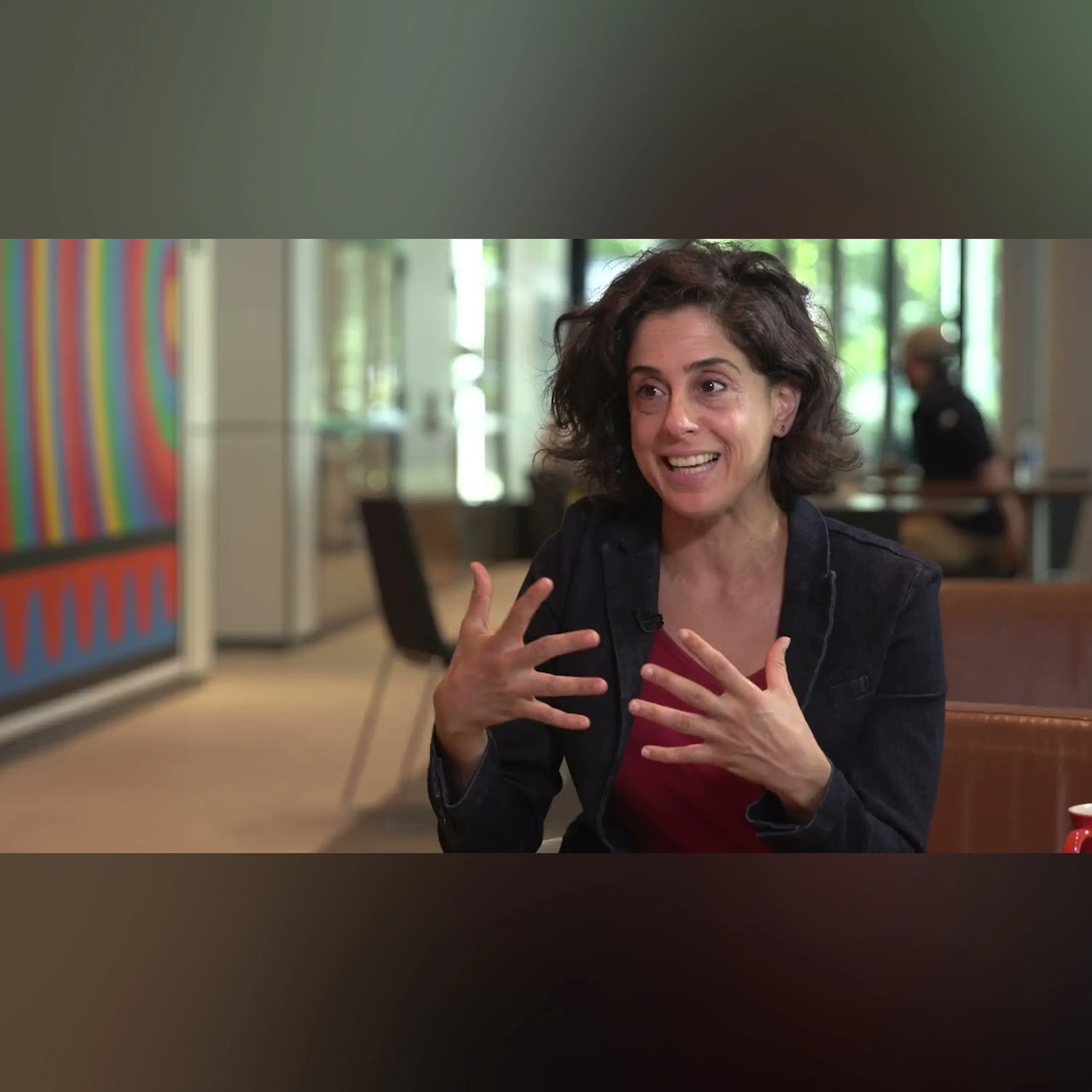
  • September 18 · 10 min

    System Purpose Through Iceberg and Inference | Connected Leadership with Peter Boyd

    Why does your system exist, and what really drives it? Apply the ladder of inference and the iceberg model to climb above assumptions and descend below the surface events to reveal patterns, structures, and the deepest beliefs that shape your system. Key topics: - The ladder of inference and bringing other voices in - The iceberg model: events, patterns, structure, mental models - Mapping your system across the four iceberg layers - A common cold example of going deeper - Causal loops and the chicken-crossing-the-road system 📚 About the Course: This course is designed to maximize your ability to create change at the individual, team and system levels. Through study, reflection, and deploying practical tools, you will establish a firm connection between your clearly articulated Purpose, effective Priorities, visualized Potential for success, and pathway to maximized Progress. But, what does that mean in practice? When you take this course, you will: Improve your ability to get the most out of life: Learn a simple practice to reflect on your purpose, clarify priorities, visualize your potential, and maximize your effectiveness at progressing towards your goals. Strengthen your leadership toolkit: Tap into your unique leadership style and strengths and join or create a community of others to maximize your potential as a team. Create change through systems thinking: Become a more effective agent of positive change and appreciate the power and complexity of system thinking. Course Takeaways: Improve your ability to get the most out of life Strengthen your leadership toolkit Practice and apply systems thinking to plan for change 📺 Watch the full playlist on YouTube: https://www.youtube.com/playlist?list=PLh9mgdi4rNezZEnhZC8dS3AvTnzOiB0Ij 🎓 Enroll on Coursera for assessments and a certificate: https://www.coursera.org/learn/connected-leadership 🌐 Explore more learning opportunities on Yale Online: https://online.yale.edu/courses/connected-leadership Learn more about your ad choices. Visit megaphone.fm/adchoices

  • September 8 · 18 min

    Module 2 | Erik Clemons on Building Trust and Bridging Divides – Social Entrepreneurship Interview

    In this interview, social entrepreneur Erik Clemons shares his profound insights on identifying and researching societal challenges, emphasizing the critical role of self-interrogation and deep listening to diverse community voices. He discusses how his impactful work, including the redevelopment of Dixwell Plaza, stems from transforming initial research into authentic relationships, enabling him to credibly bridge socio-economic divides and drive meaningful community development. Clemons offers invaluable lessons on the power of personal connection and trust in leading social change. Parnell and Clemons' conversation provides a foundational understanding for aspiring social entrepreneurs. 🎯 Learning Objectives • Understand the initial steps of identifying and researching societal challenges. • Explore how personal introspection and understanding your role contribute to effective social entrepreneurship. • Learn the importance of listening to diverse perspectives to uncover root causes and build bridges. • Discover how research translates into authentic relationships crucial for community development. • Recognize the significance of building trust and leading with personal integrity in social impact initiatives. 📚 About the Course Have you ever wondered what it would be like to create real change? You don't have to start your own organization to make a difference in the world. Everyone can learn the social entrepreneurship mindset and skillset to build social impact. In this course, you will immerse yourself in a social or environmental challenge you want to tackle. You'll start by researching your topic of choice, talking to people, and ideating a potential solution that you can contribute. Then, you'll build a business model around that solution, understanding concepts like measuring social change, ensuring financial viability, funding and pitching. This course is a safe space to experiment and explore. You'll be guided by a ten stage framework to help structure your journey. Along the way, you'll hear from social entrepreneurs around the world through case studies and campus conversations. These include Yale alumni, members of the New Haven community, and global changemakers. Everyone is welcome to join this course! You can apply your lived, learned, or professional experience to discover how you're going to make a difference. #SocialEntrepreneurship #YaleCourse #Impact #Changemakers #BusinessPlan #DesignThinking Learn more about your ad choices. Visit megaphone.fm/adchoices

Showing 621–624 of 624 episodes