Skip to content
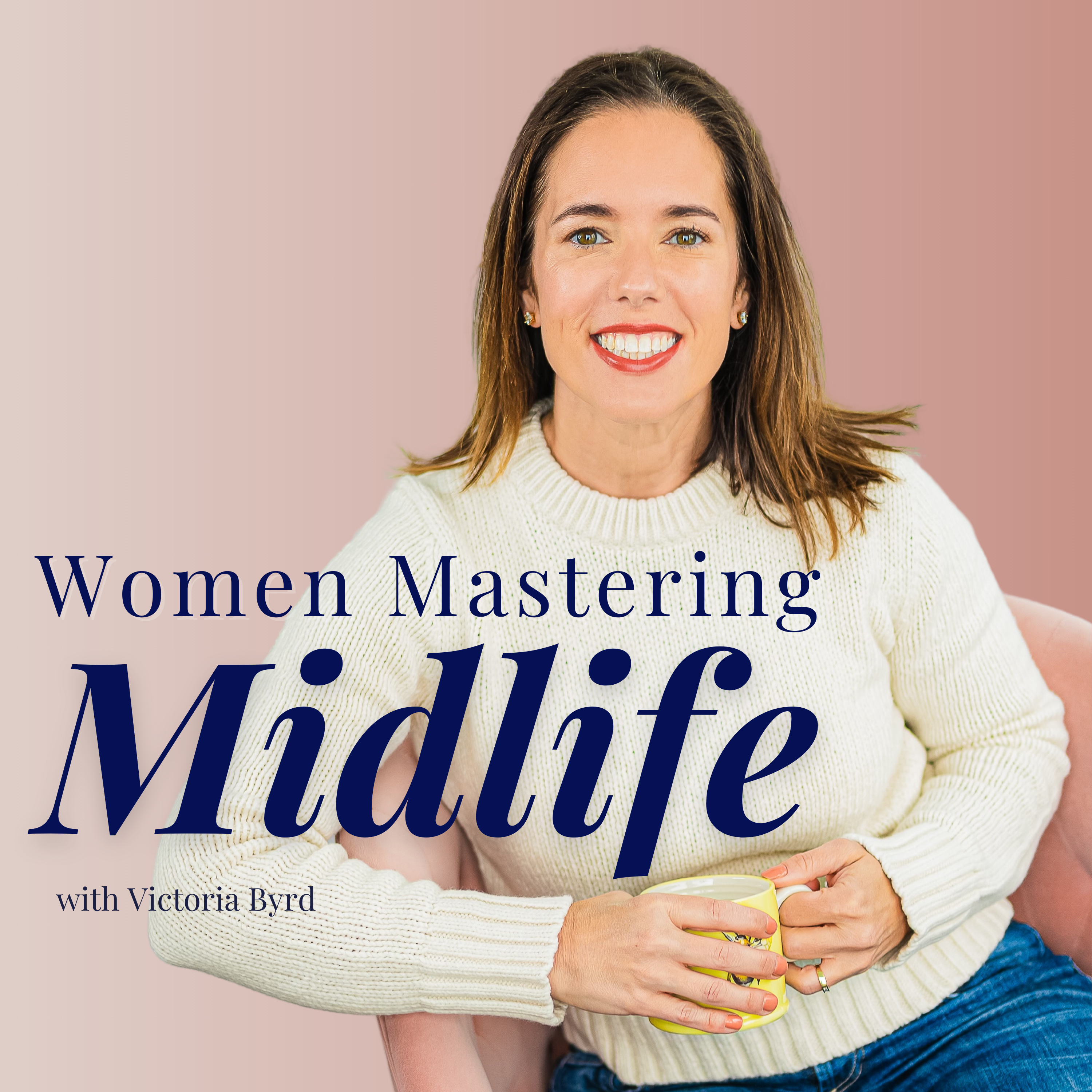
Artwork for Women Mastering Midlife
Health & FitnessMedicineSociety & CultureRelationshipsSexuality

Women Mastering Midlife

Victoria Byrd

Women Mastering Midlife is the podcast for women in their 40s and 50s who want real answers about what is happening inside their bodies, and the confidence to advocate for themselves in every room they walk into.
Hosted by Victoria Byrd, a licensed pharmacist, certified menopause practitioner, and integrative health and wellness coach, this show bridges the gap between clinical medicine and lived experience. Victoria brings 20 years of pharmacy training alongside a deep commitment to integrative, evidence-based care for women navigating perimenopause, menopause, and the full arc of midlife transition.
Each week, you will hear expert conversations and honest discussions covering:

Hormones and HRT — what the evidence actually says about estrogen, progesterone, testosterone, and the pharmacology of hormone therapy options
Brain fog, cognition, and mood — the neuroscience of menopause and why your thinking and emotional life are changing
Metabolism, weight, and body composition — how shifting hormones affect insulin sensitivity, cortisol, and fat distribution, and what to do about it with nutrition and movement that respects your midlife body
Sleep — why it breaks down during perimenopause, what restores it, and why it matters for everything else
Gut health and the estrobolome — the emerging science connecting your microbiome to hormone metabolism and inflammation
Bone, cardiovascular, and long-term health — the conditions that accelerate after menopause, and the prevention strategies that actually make a difference
Stress, nervous system regulation, and burnout — why high-achieving women in midlife are running on empty, and what sustainable recovery looks like
Supplements, peptides, and emerging therapies — clear, unbiased clinical context so you can evaluate your options with a discerning eye
Identity, relationships, and purpose — because midlife is not only a physiological transition; it is a reorientation of how you see yourself and what you want

Guests have included functional medicine physicians, nurse practitioners, registered dietitians, strength coaches, pharmacists, psychologists, and women who are simply in the thick of it, offering perspectives as varied as the experience of midlife itself.
This podcast does not traffic in fear, wellness hype, or quick fixes. The goal is for you to leave every episode feeling more informed, less alone, and more capable of making decisions that are right for your body, your history, and your life.
Women Mastering Midlife is proud to be ranked in the Goodpods Top 100 in both Medicine and Health & Fitness. New episodes release biweekly.
Subscribe on Apple Podcasts, Spotify, or wherever you listen. Visit womenmasteringmidlife.com for free guides, coaching, and community.
This podcast is for educational purposes only and does not constitute personalized medical advice. Always consult a qualified healthcare professional for decisions related to your health.

Play
  • 24 episodes
  • fortnightly
  • Avg 50 min
  • English
Counted on this page — what you have heard stays on this device, so it is not something the list can be paged by.
  • Yesterday · 1 hr 6 min

    117. Menopause Awareness Month: Policy, Testosterone, & Advocacy with Dr Sarah Berg

    October is Menopause Awareness Month, and Dr. Sara Berg, an OB-GYN who stepped out of the exam room to build an education and advocacy platform, joins Victoria for a second conversation about where menopause care and policy stand right now. They begin with the FDA panel on testosterone for women. Dr. Berg explains that the research supports use for low sexual desire once other contributing factors have been sorted out, and Victoria raises the pharmacist concerns about cost and controlled substance scheduling. From there they turn to the long estrogen patch shortage, what it took for it to be acknowledged, and why letters to legislators and agencies can move things faster than most of us expect. Dr. Berg also talks about preparing for the first Perimenopause and Menopause Hill Day, and previews The Appointment, her new short-form podcast that gives patients the wording to bring hard questions to their doctors, starting with brain fog. Also in this episode: the difference between brain fog and a mental load that never lets up, adding menopause symptom questions to routine intake forms, Victoria's public comment to CMS on pharmacists and remote patient monitoring, why peptides and unregulated supplements call for caution, cultural attitudes that keep women whispering the word menopause, and how to raise menopause at work without it feeling like a liability. Timestamps 01:38 Dr. Berg's path from OB-GYN to advocate 05:49 How to read health claims on social media 09:36 The FDA testosterone panel 14:27 The estrogen patch shortage 17:30 Hill Day and writing to your legislators 23:31 Brain fog versus overload 28:38 The Appointment podcast 33:55 Asking your doctor about symptoms 42:01 CMS and pharmacist remote monitoring 48:16 Peptides and supplement marketing 54:08 Menopause Awareness Month 1:02:22 Menopause in the workplace Links and where to find Dr. Berg: www.selfority.com Let's Keep the Conversation Going If this episode resonated with you, please rate, review, and share it with someone who needs to hear it. Subscribe to Women Mastering Midlife on your favorite podcast platform to receive weekly conversations that help you navigate perimenopause, menopause, and midlife health with clarity and confidence. Join the Women Mastering Midlife Community and let's grow stronger together. Get your FREE guides HERE: www.womenmasteringmidlife.com/freeguides Share your thoughts and stories on our social channels and tag us @women_mastering_midlife . Let's rewrite the narrative together! Find more information on our website: www.womenmasteringmidlife.com Book a FREE 1:1 discovery call to learn more about coaching programs and courses. Disclaimer This podcast is for entertainment, educational, and informational purposes only. The hosts, guests, and experts featured are not your personal healthcare providers or advisors. The content should not be considered as professional, personalized medical, psychological, or prescriptive advice. Always consult qualified professionals such as your physician, therapist, pharmacist, or coach for specific concerns and decisions related to your health or lifestyle. Women Mastering Midlife is not responsible for any undesired outcomes resulting from actions taken based on the content of this podcast.

  • September 28 · 43 min

    116. Why Eat Less, Move More Stops Working in Perimenopause: Metabolic Health, Protein, and Gut Health with Kristi Bowlby

    Many women reach perimenopause doing what has always worked and find that it no longer does. Kristi Bowlby (physical therapist, holistic nutritionist, Pilates instructor, and certified perimenopause and menopause women's health specialist) explains what changes with food and metabolism in midlife, why calories in and calories out are only one piece, and how to build a way of eating that fits a real week. We also talk about her free Thrive Through Perimenopause and Beyond Virtual Summit, where I am a speaker in October. What We Talk About When your numbers shift despite doing everything right Kristi shares her own blood work and continuous glucose monitor data. Her LDL cholesterol, inflammatory markers, and glucose swings changed even though every value stayed in the standard range, and she connects them to falling estrogen and progesterone and a long stretch of stress. What eat less, move more leaves out Gut health, liver function, nervous system state, and muscle mass all influence whether food is used to build hormones, muscle, and bone or stored as fat. Breakfast, protein, and blood sugar A protein and fiber breakfast can shape cravings, afternoon energy, and 3 a.m. wake-ups. Kristi's starting point is about 0.8 grams of protein per pound of body weight, with 30 to 40 grams per meal. She suggests building up slowly, since digestion and absorption change with age and extra protein can crowd out fiber. Estrogen, the gut, and hormone therapy We cover the estrobiome, the gut bacteria that influence estrogen metabolism, and why she describes the research as promising but early. Fiber diversity and a calm nervous system support digestion, and she suggests watching symptoms if you use hormone therapy. Nutrition on GLP-1 medications With a smaller appetite, nutrient density, enough carbohydrate, protein, and strength training matter more. The summit More than 25 women's health experts, free to attend, with an optional VIP upgrade. About Kristi Bowlby Kristi is the founder of This Meal by Design, creator of the Metabolic Health Reboot Program, and host of the Thrive Through Perimenopause and Beyond Virtual Summit. She holds a BS in Human Physiology and a master's in physical therapy, and has more than 20 years of experience coaching patients and clients. Connect with Kristi • Register for the free summit: thrivethroughperimenopauseevent.com • Website: thismealbydesign.com • Instagram: @thismealbydesign Let's Keep the Conversation Going If this episode resonated with you, please rate, review, and share it with someone who needs to hear it. Subscribe to Women Mastering Midlife on your favorite podcast platform to receive weekly conversations that help you navigate perimenopause, menopause, and midlife health with clarity and confidence. Join the Women Mastering Midlife Community and let's grow stronger together. Get your FREE guides HERE: www.womenmasteringmidlife.com/freeguides Share your thoughts and stories on our social channels and tag us @women_mastering_midlife . Let's rewrite the narrative together! Find more information on our website: www.womenmasteringmidlife.com Book a FREE 1:1 discovery call to learn more about coaching programs and courses. Disclaimer This podcast is for entertainment, educational, and informational purposes only. The hosts, guests, and experts featured are not your personal healthcare providers or advisors. The content should not be considered as professional, personalized medical, psychological, or prescriptive advice. Always consult qualified professionals such as your physician, therapist, pharmacist, or coach for specific concerns and decisions related to your health or lifestyle. Women Mastering Midlife is not responsible for any undesired outcomes resulting from actions taken based on the content of this podcast.
  • September 21 · 43 min

    115. Simon Salt on Menopause From the Other Side of the Bed: How Men Can Become True Allies at Home and at Work

    Menopause doesn't happen in isolation. It ripples out to the partners who love us, and for many women, that partner is a man with no roadmap for what she's going through. Victoria talks with Simon Salt, a writer, speaker, and certified menopause coach whose work, The Quiet Transition, looks at menopause from the other side of the bed. Simon shares how it took four years and multiple misdiagnoses before his wife's symptoms were correctly identified as perimenopause, and how that experience shaped the evidence-based approach he now brings to couples and workplaces. In this episode: Why 72% of men say they're part of the menopause conversation, while 72% of women say they had to start it themselves Moving from "fixing" to acceptance and grace as a partner Building curiosity and vocabulary instead of relying on a partner to educate you Why joining OB-GYN appointments matters, and how to do it well Andropause, and why men's midlife health deserves attention too A University of Michigan study on the emotional and physical labor gap in long-term relationships What the "meno-divorce" statistics actually show, and what they don't The story behind the name The Quiet Transition A simple "easy win" strategy for partners who resist the conversation What real allyship looks like in the workplace, from policy to locker-room talk Why education about women's health needs to start with our sons Connect with Simon Salt: www.thequiettransition.com Let's Keep the Conversation Going If this episode resonated with you, please rate, review, and share it with someone who needs to hear it. Subscribe to Women Mastering Midlife on your favorite podcast platform to receive weekly conversations that help you navigate perimenopause, menopause, and midlife health with clarity and confidence. Join the Women Mastering Midlife Community and let's grow stronger together. Get your FREE guides HERE: www.womenmasteringmidlife.com/freeguides Share your thoughts and stories on our social channels and tag us @women_mastering_midlife . Let's rewrite the narrative together! Find more information on our website: www.womenmasteringmidlife.com Book a FREE 1:1 discovery call to learn more about coaching programs and courses. Disclaimer This podcast is for entertainment, educational, and informational purposes only. The hosts, guests, and experts featured are not your personal healthcare providers or advisors. The content should not be considered as professional, personalized medical, psychological, or prescriptive advice. Always consult qualified professionals such as your physician, therapist, pharmacist, or coach for specific concerns and decisions related to your health or lifestyle. Women Mastering Midlife is not responsible for any undesired outcomes resulting from actions taken based on the content of this podcast.

  • September 14 · 1 hr

    114. Lipedema and Menopause: What Every Woman Needs to Know with Andrea Giancontieri (The Whiny GYNie)

    Vicky talks with Andrea Giancontieri, known online as The Whiny GYNie, about a condition that affects an estimated one in nine women and still takes most doctors by surprise: lipedema. Andrea was diagnosed with lipedema after years of being told to eat less and exercise more, even as she trained multiple times a day and tracked every calorie. In this conversation, she explains what lipedema actually is, how it differs from ordinary weight gain and cellulite, why hormonal transitions like puberty, pregnancy, and perimenopause tend to trigger progression, and what conservative treatment (compression, low-impact movement, anti-inflammatory habits) can look like before surgery ever enters the conversation. The conversation moves beyond the clinical picture into the systems that make care harder to access: insurance companies that classify medically necessary surgery as cosmetic, the ongoing estrogen patch shortage, PBM practices that squeeze independent pharmacies, and the mid-year formulary changes that can strip coverage from a prescription that was already approved. Andrea also shares how she turned a dismissive nickname into a trademarked platform for advocacy, what it's like to testify at a statehouse, and why she believes non-clinicians have a critical role to play in moving women's health legislation forward. In this episode: What lipedema is, how common it is, and why it takes an average of decades to get attention or research funding How lipedema differs from cellulite and ordinary weight gain, including the symmetry, texture, and "cuffing" that can signal it Why hormonal transitions (puberty, pregnancy, perimenopause, menopause) tend to trigger progression Why conventional weight-loss advice can actually worsen lipedema-related inflammation The conservative treatment path: compression, dry brushing, low-impact movement, a Mediterranean-style approach to eating, and where GLP-1 medications fit in Why plastic surgery is typically framed as a later step, and why insurance so often refuses to cover it The estrogen patch shortage: why it isn't showing up on the FDA's official shortage list, and what women can ask about instead Oral versus transdermal estradiol, and who is (and isn't) a good candidate for oral options What "bioidentical" actually means as a marketing term, and where the confusion started The downstream health consequences researchers are now connecting to the post-WHI drop in hormone therapy use How Andrea turned a dismissive nickname into a trademarked advocacy platform What it's like to testify at a statehouse, and how non-clinicians can move health policy forward Andrea's upcoming work on Capitol Hill and what listeners can do to support it Andrea's upcoming advocacy Andrea will be on Capitol Hill on September 22, 2026, lobbying for menopause legislation, and again on September 23 for breast cancer legislation and funding. She encourages listeners to write to their legislators and to make time to meet with the advocates who will be there. Change.org petition link Connect with Andrea Website: thewhinygynie.com Instagram & TikTok: @the_whiny_gynie LinkedIn: Andrea Giancontieri — for her political and social advocacy content, including a webinar on preparing written and oral legislative testimony Let's Keep the Conversation Going If this episode resonated with you, please rate, review, and share it with someone who needs to hear it. Subscribe to Women Mastering Midlife on your favorite podcast platform to receive weekly conversations that help you navigate perimenopause, menopause, and midlife health with clarity and confidence. Join the Women Mastering Midlife Community and let's grow stronger together. Get your FREE guides HERE: www.womenmasteringmidlife.com/freeguides Share your thoughts and stories on our social channels and tag us @misvictoriabyrd. Let's rewrite the narrative together! Find more information on our website: www.womenmasteringmidlife.com Book a FREE 1:1 discovery call to learn more about coaching programs and courses. Disclaimer This podcast is for entertainment, educational, and informational purposes only. The hosts, guests, and experts featured are not your personal healthcare providers or advisors. The content should not be considered as professional, personalized medical, psychological, or prescriptive advice. Always consult qualified professionals such as your physician, therapist, pharmacist, or coach for specific concerns and decisions related to your health or lifestyle. Women Mastering Midlife is not responsible for any undesired outcomes resulting from actions taken based on the content of this podcast.
  • September 7 · 1 hr 2 min

    113. Parenting Teenagers Without Losing the Relationship, a Conversation with the Teenage Guide, Ashley Chandler

    Vicky sits down with Ashley Chandler, founder of The Teenage Guide, for a conversation about the shift every parent faces once their child hits middle school: moving from "boss" to "guide." Ashley draws on nearly two decades in education and coaching, along with her own teenage years in the 90s, to explain why the teen years don't have to be something families just survive. They talk about the real skill behind getting a teenager to listen (hint: it starts with listening to them first), why a mother's identity often goes through its own reconstruction right alongside her teenager's, and how to build a friendship-shaped relationship that lasts long after the kids move out. If you've ever wondered why your once-easy elementary schooler suddenly feels unreachable, or found yourself grieving a version of parenting you're not ready to let go of, this one is for you. What You'll Hear Ashley's path to this work (03:33) — A dual-credentialed educator with 18 years in schools and coaching, Ashley shares what led her to found The Teenage Guide, including her own experience of feeling under-guided as a teenager in the 80s and 90s. From boss to guide (08:04) — The invisible shift that happens around middle school, why parents feel like they're losing control, and what actually changes underneath that feeling. Midlife as adolescence in reverse (12:20) — Ashley's framework for understanding why so many women's mental health dips right as their kids hit adolescence, and why the loss of the "PTA mom" identity deserves more attention than it gets. Redefining self-care and permission (16:00) — Why self-care isn't about bubble baths, and the very Gen X habit of waiting for someone else's permission to rest. The one move that gets a teenager to actually listen (32:14) — Ashley's approach to validating a teen's opinion before offering your own, even when you strongly disagree, and why "you shouldn't believe that" backfires every time. What you actually control as a parent (40:00) — With friend groups and outside influences largely out of a parent's hands, Ashley walks through what's left to work with: how you show up, what you allow in your home, and the example you set. Building perspective and resilience (43:11) — Why exposure to different ways of living matters for teens' emotional intelligence, and Ashley's take on letting kids struggle enough to find out what they're made of. The sandwich generation, reconsidered (50:23) — A conversation about the parents' side of adolescence: aging parents, kids preparing to launch, and the identity work happening for women in midlife at the same time. A generational thread (54:19) — Vicky and Ashley trace the throughline from their grandmothers' limited options to their own "you can be anything" upbringing, and what they hope changes for their daughters' generation. About Ashley Chandler Ashley Chandler is the founder of The Teenage Guide, where she coaches parents to become guides rather than bosses inside their own homes. A dual-credentialed educator with 18 years of experience across public and private education and adult and teen coaching, Ashley blends neuroscience, behavior change, and communication strategy into practical tools for families navigating the middle and high school years. Connect with Ashley: Website: theteenageguide.com Resources Mentioned The Confident Connected Blueprint (Ashley's live class) Have a question about navigating the teen years, or a topic you'd like covered on the podcast? Reach out through Women Mastering Midlife. Let's Keep the Conversation Going If this episode resonated with you, please rate, review, and share it with someone who needs to hear it. Subscribe to Women Mastering Midlife on your favorite podcast platform to receive weekly conversations that help you navigate perimenopause, menopause, and midlife health with clarity and confidence. Join the Women Mastering Midlife Community and let's grow stronger together. Get your FREE guides HERE: www.womenmasteringmidlife.com/freeguides Share your thoughts and stories on our social channels and tag us @misvictoriabyrd. Let's rewrite the narrative together! Find more information on our website: www.womenmasteringmidlife.com Book a FREE 1:1 discovery call to learn more about coaching programs and courses. Disclaimer This podcast is for entertainment, educational, and informational purposes only. The hosts, guests, and experts featured are not your personal healthcare providers or advisors. The content should not be considered as professional, personalized medical, psychological, or prescriptive advice. Always consult qualified professionals such as your physician, therapist, pharmacist, or coach for specific concerns and decisions related to your health or lifestyle. Women Mastering Midlife is not responsible for any undesired outcomes resulting from actions taken based on the content of this podcast.
  • August 31 · 46 min

    112. Why Women Make Up 75% of Dementia Cases: A Brain Health Coach on Prevention in Midlife

    Most women don't think about their brains until something catastrophic happens. A stroke. A diagnosis. A parent who no longer recognizes them. But your brain is quietly sending signals long before that, and in perimenopause, those signals get louder. In this episode, Victoria talks with Christine Despres, a registered nurse with more than 30 years in healthcare and a certified dementia practitioner who spent much of her career working in hospice and dementia care. That work, combined with losing her mother at 57 and learning she carries the APOE4 gene, is what pulled her toward brain health as the starting point for her coaching practice. Christine and Victoria talk through what is actually happening to the brain during perimenopause, including research suggesting women can lose up to 30 percent of brain function during this transition, and why symptoms like brain fog, word-finding trouble, and forgetfulness are common but not something to dismiss as normal aging. They walk through the four lifestyle areas the Alzheimer's Association and the US POINTER study identified as having the greatest impact on cognitive decline: exercise, the MIND diet, cognitive engagement, and knowing your numbers. The conversation also covers genetic testing for Alzheimer's risk, where alcohol fits into a brain-healthy lifestyle, why hormone therapy and brain health is such a contested topic online, and why willpower is not the answer for lasting change. Christine's core message is a practical one: brain health does not require a complicated program. It requires small, consistent shifts that fit into a life you already have. What You'll Learn Why women account for roughly 75 percent of memory care residents, and what that statistic actually reflects The four lifestyle factors the US POINTER study found move the needle most for cognitive decline: exercise, nutrition, cognitive engagement, and knowing your numbers What the MIND diet is, how it differs from the Mediterranean and DASH diets, and what a 2025 study found about its impact on cognitive decline Why brain fog and forgetfulness in perimenopause are signals worth listening to rather than symptoms to push through What genetic testing for the APOE4 gene and P-Tau involve, and how to think about whether testing is right for you Where alcohol fits into a brain-healthy lifestyle, and how to think about risk versus reward instead of an all-or-nothing rule Why hormone therapy and cognitive health is such a divided conversation online, and what the evidence currently supports How cognitive engagement works, including specific ways to build novelty into a life that is already full Why willpower is not a reliable strategy for long-term change, and what to focus on instead Timestamps 00:00 Introduction to Christine Despres and her path from dementia and hospice nursing to brain health coaching 05:10 Why 75 percent of memory care residents are women 12:13 What brain fog and forgetfulness actually signal in perimenopause 13:24 The US POINTER study and the four habits that move the needle most for cognitive decline 16:39 Where alcohol fits into brain health, and the concept of joy span 21:18 The difference between telling someone what to do and coaching them toward lasting change 25:37 How to build cognitive engagement into a life that already feels full 31:22 The MIND diet explained: what to eat, what to limit, and why consistency matters more than perfection 35:38 Genetic testing for Alzheimer's risk, including the APOE4 gene and P-Tau testing 38:27 Hormone therapy and brain health: why the research feels contradictory and how to navigate it 43:01 Christine's closing thoughts on shifting from willpower to identity-based habits Guest Bio Christine Despres is a registered nurse with more than 30 years of experience in healthcare and the founder of The Wellness Navigator. She is a board-certified health and wellness coach and a certified dementia practitioner. Christine spent much of her nursing career working in dementia and hospice care, including 15 years as director of nursing at a skilled nursing facility. After losing her mother at 57 and learning she carries the APOE4 gene, which raises Alzheimer's risk, Christine shifted her focus toward helping midlife women protect and strengthen brain function through lifestyle change. Resources Mentioned US POINTER study, Alzheimer's Association Dr. Lisa Mosconi's research on the perimenopausal brain The MIND diet BrainHQ (cognitive training platform used in the POINTER study) Recode program, Dr. Heather Sandison and Dr. Bresnan Amen University brain coaching program Dr. Kerry Burnight's concept of "joy span" Let's Keep the Conversation Going If this episode resonated with you, please rate, review, and share it with someone who needs to hear it. Subscribe to Women Mastering Midlife on your favorite podcast platform to receive weekly conversations that help you navigate perimenopause, menopause, and midlife health with clarity and confidence. Join the Women Mastering Midlife Community and let's grow stronger together. Get your FREE guides HERE: www.womenmasteringmidlife.com/freeguides Share your thoughts and stories on our social channels and tag us @misvictoriabyrd. Let's rewrite the narrative together! Find more information on our website: www.womenmasteringmidlife.com Book a FREE 1:1 discovery call to learn more about coaching programs and courses. Disclaimer This podcast is for entertainment, educational, and informational purposes only. The hosts, guests, and experts featured are not your personal healthcare providers or advisors. The content should not be considered as professional, personalized medical, psychological, or prescriptive advice. Always consult qualified professionals such as your physician, therapist, pharmacist, or coach for specific concerns and decisions related to your health or lifestyle. Women Mastering Midlife is not responsible for any undesired outcomes resulting from actions taken based on the content of this podcast.
  • August 17 · 31 min

    111. Back to Pharmacy School at 46: A Solo Episode on Career Reinvention in Midlife

    In this solo episode, Victoria steps away from interviews to share something personal: at 46, after 15 years out of the workforce, she is heading back to school for a non-traditional PharmD. She talks openly about how a change in her marriage made returning to work a financial necessity rather than a choice, what it has felt like to job hunt after over a decade at home, and why credentialing has become the missing piece between her pharmacy license and the clinical women's health practice she has been building through Women Mastering Midlife. This one is unscripted and a little winding by design. Vicky wanted to document the process in real time, doubts included, in case it helps someone else who is standing at the edge of their own reinvention. In This Episode Why Victoria is enrolling in a non-traditional, asynchronous PharmD program for already-licensed pharmacists The financial and personal circumstances that made returning to work necessary at this stage of life What job searching looked like after 15 years out of an employer setting, including the ageism and sexism she encountered along the way Why she leaned into health coaching and integrative wellness rather than practicing pharmacy after stepping away in 2011 How her path through the Institute for Integrative Nutrition and the Integrative Women's Health Institute shaped her coaching philosophy, particularly around behavior change and disordered eating patterns What credentialing could open up: working alongside cash-pay physicians, supporting between-visit care, and building toward a clinical women's health pharmacist role How two decades of guideline changes, new technology, and a completely different testing and onboarding process make this a different kind of pharmacy school than the one she left Balancing school with parenting two daughters, ages 15 and 17, without giving up the availability she has valued as a stay-at-home parent An update on her upcoming book, Women Mastering Midlife, which blends podcast guest wisdom with her own experience and closes with guided reflection questions Why she is choosing to see this stage as building on who she already is rather than starting over or reinventing herself A Line Worth Sitting With Victoria reflects that this chapter is not a rebirth or a reinvention. It is simply the next version of who she already is, built on the same intelligence that got her through pharmacy school the first time. Resources & Links Learn more about Women Mastering Midlife: womenmasteringmidlife.com Women Mastering Midlife, the book (coming soon) Connect with Vicky on LinkedIn A Note on This Episode This episode includes personal reflections on divorce, financial pressure, and career transition. It is not intended as financial, legal, or medical advice. If you are navigating a similar transition, individual circumstances vary, and it may help to talk it through with a trusted financial advisor, attorney, or healthcare provider. Let's Keep the Conversation Going If this episode resonated with you, please rate, review, and share it with someone who needs to hear it. Subscribe to Women Mastering Midlife on your favorite podcast platform to receive weekly conversations that help you navigate perimenopause, menopause, and midlife health with clarity and confidence. Join the Women Mastering Midlife Community and let's grow stronger together. Get your FREE guides HERE: www.womenmasteringmidlife.com/freeguides Share your thoughts and stories on our social channels and tag us @misvictoriabyrd. Let's rewrite the narrative together! Find more information on our website: www.womenmasteringmidlife.com Book a FREE 1:1 discovery call to learn more about coaching programs and courses. Disclaimer This podcast is for entertainment, educational, and informational purposes only. The hosts, guests, and experts featured are not your personal healthcare providers or advisors. The content should not be considered as professional, personalized medical, psychological, or prescriptive advice. Always consult qualified professionals such as your physician, therapist, pharmacist, or coach for specific concerns and decisions related to your health or lifestyle. Women Mastering Midlife is not responsible for any undesired outcomes resulting from actions taken based on the content of this podcast.

  • August 3 · 53 min

    110. Menopause and Eye Health: Dry Eye, Reading Glasses, and Glaucoma Risk with Dr. Neda Gioia

    Most of us associate menopause with hot flashes, sleep disruption, and mood changes, but rarely with our eyes. If you've noticed your vision blurring at the edges, your eyes feeling drier than they used to, or found yourself holding the menu a little further away, there may be a real physiological explanation, and it's one that almost never comes up in menopause care. In this episode, I'm joined by Dr. Neda Gioia, OD, CNS, FMCP, an optometrist and certified nutrition specialist who founded Integrative Vision, a practice built around treating eye health through a whole-body lens. She is a fellow and former president of the Ocular Wellness and Nutrition Society and trained in functional medicine through the Institute for Functional Medicine. Dr. Gioia brings both a research background and personal experience to this conversation. Like many of us, she has navigated her own perimenopause transition while working to bring more awareness to a topic she feels has been left out of the menopause conversation for far too long. We talk through what's actually happening with dry eye in midlife, the role estrogen, progesterone, and testosterone play in different parts of the eye, why so many women suddenly need reading glasses in their 40s, and what the current evidence does and doesn't support when it comes to hormones and vision. Dr. Gioia is candid about where the research is strong and where it's still catching up, and she offers a grounded, non-alarmist way to think about being proactive with your eye health at this stage of life. In This Episode, We Cover Why hormone receptors exist throughout the eye, from the cornea to the retina, and what estrogen, progesterone, and testosterone each appear to do in ocular tissue The difference between correlation and proof when it comes to hormones and eye symptoms, and why the research gaps in women's health extend into ocular health as well Why hormone therapy is not a guaranteed fix for eye conditions, and why some data suggests certain forms of estrogen may worsen dry eye What dry eye disease actually is, according to the current clinical definition from the Tear Film and Ocular Surface Society (TFOS), and why it's considered more than an annoyance The role of the meibomian glands, tear film composition, and why untreated gland dysfunction can become permanent The nutrients most connected to eye health, including omega-3 status (and why estrogen affects your body's ability to convert plant-based omega-3s into the DHA your eyes need), B vitamins, taurine, and the carotenoids lutein and zeaxanthin Why sleep, including undiagnosed sleep apnea in women, is an underappreciated risk factor for both dry eye and glaucoma What presbyopia actually is (it is not the same as near or farsightedness), why it happens, and why it can feel sudden even though it develops gradually The research connecting a shorter lifetime duration of estrogen exposure to increased glaucoma risk, and why Dr. Gioia believes eye screening guidelines should be more personalized for women Why she believes eye complaints deserve a place on standard menopause symptom checklists and intake forms One practical takeaway for advocating for your own eye health, starting now Key Takeaway Your eyes are not separate from the rest of your body. Hormonal shifts, nutritional status, inflammation, and vascular health can all affect your eyes from front to back. Being proactive with routine eye care, even without complaints, is not about fear. It's about staying in the driver's seat of your own long-term health. Connect with Dr. Neda Gioia Website: integrativevision.com Instagram (practice): @integrativevision Instagram (education): @drnedagioia Let's Keep the Conversation Going If this episode resonated with you, please rate, review, and share it with someone who needs to hear it. Subscribe to Women Mastering Midlife on your favorite podcast platform to receive weekly conversations that help you navigate perimenopause, menopause, and midlife health with clarity and confidence. Join the Women Mastering Midlife Community and let's grow stronger together. Get your FREE guides HERE: www.womenmasteringmidlife.com/freeguides Share your thoughts and stories on our social channels and tag us @misvictoriabyrd. Let's rewrite the narrative together! Find more information on our website: www.womenmasteringmidlife.com Book a FREE 1:1 discovery call to learn more about coaching programs and courses. Disclaimer This podcast is for entertainment, educational, and informational purposes only. The hosts, guests, and experts featured are not your personal healthcare providers or advisors. The content should not be considered as professional, personalized medical, psychological, or prescriptive advice. Always consult qualified professionals such as your physician, therapist, pharmacist, or coach for specific concerns and decisions related to your health or lifestyle. Women Mastering Midlife is not responsible for any undesired outcomes resulting from actions taken based on the content of this podcast.

  • July 20 · 51 min

    109. Financial Independence in Midlife: A Life Planning Conversation with Phil Weiss

    Money is one of the topics women are least prepared for and most affected by, especially during the transitions that tend to cluster in midlife: divorce, widowhood, career changes, and retirement planning that suddenly feels urgent. On this episode of Women Mastering Midlife, Victoria talks with Phil Weiss, CFA, CPA, and founder of Apprise Wealth Management, about building financial independence before a crisis forces the issue. Phil's path into this work started long before his CFA or CPA credentials. When his mother was diagnosed with stage four breast cancer, he discovered that his father had never handled the family's finances, and he stepped in to negotiate with creditors, catch up on bills, and make sure his mother's care was covered. That experience shaped the practice he has built since: helping women understand and manage their money well before a health or life crisis makes it unavoidable. This conversation covers the practical and the emotional sides of money: how retirement income actually works, what gets overlooked when parents age or a marriage ends, and how a values-based planning process called life planning can change the way you think about both your money and your time. In This Episode Why money is treated like a taboo subject, and how that silence shapes women's financial confidence The shift from accumulating money to spending it in retirement, and why that shift is harder than it sounds Asset allocation versus tax location, and how account type affects what you actually keep The retirement expenses most people don't plan for: healthcare, housing modifications, and long-term care Financial and emotional considerations for women navigating divorce or widowhood The sandwich generation squeeze: caring for aging parents while raising your own kids A simple framework for budgeting that doesn't require obsessive tracking Life planning: a process that starts with your values, not your account balances How childhood experiences with money shape financial decisions decades laterl Key Takeaways Spending money you saved can feel harder than saving it. Phil describes this as a "retirement paycheck." After decades of saving, many people freeze when it's time to draw that money down, even when the numbers clearly support spending more. Account type matters as much as account balance. A traditional 401(k), a Roth IRA, and a taxable brokerage account are all taxed differently. Understanding what Phil calls "tax location," not just asset allocation, can meaningfully change what you keep in retirement. Divorce has a tax dimension that's easy to miss. Splitting retirement accounts evenly by dollar amount can leave one spouse with a much larger future tax bill if the accounts are different types (Roth versus traditional). This is worth raising with an advisor before assets are divided. A written plan protects against the moments no one wants to think about. Access to accounts, passwords, wills, and care preferences for aging parents are logistical details that become urgent and stressful without preparation. Life planning starts with values, not numbers. Through a process built on three reflective questions, Phil helps clients identify what actually matters to them before building the financial plan around it. The goal, in his words, is to help people avoid regret, not sit in it. About Phil Weiss Phil Weiss is a Chartered Financial Analyst (CFA), Certified Public Accountant (CPA), and Registered Life Planner, and the founder of Apprise Wealth Management. He began his career in 1987 as a tax professional at Deloitte and Touche, later worked as an equity research analyst covering oil and gas stocks, and built a practice centered on long-term investment strategy paired with values-based life planning. A significant portion of his client base is women navigating major life and financial transitions. Connect with Phil Weiss Apprise Wealth Management: apprisewealth.com Let's Keep the Conversation Going If this episode resonated with you, please rate, review, and share it with someone who needs to hear it. Subscribe to Women Mastering Midlife on your favorite podcast platform to receive weekly conversations that help you navigate perimenopause, menopause, and midlife health with clarity and confidence. Join the Women Mastering Midlife Community and let's grow stronger together. Get your FREE guides HERE: www.womenmasteringmidlife.com/freeguides Share your thoughts and stories on our social channels and tag us @misvictoriabyrd. Let's rewrite the narrative together! Find more information on our website: www.womenmasteringmidlife.com Book a FREE 1:1 discovery call to learn more about coaching programs and courses. Disclaimer This podcast is for entertainment, educational, and informational purposes only. The hosts, guests, and experts featured are not your personal healthcare providers or advisors. The content should not be considered as professional, personalized medical, psychological, or prescriptive advice. Always consult qualified professionals such as your physician, therapist, pharmacist, or coach for specific concerns and decisions related to your health or lifestyle. Women Mastering Midlife is not responsible for any undesired outcomes resulting from actions taken based on the content of this podcast.

  • July 6 · 44 min

    108. Menopause in the Workplace: Washington State's Executive Order and What It Means for Women Everywhere with April Haberman, CEO and Co-Founder Midovia

    What does it actually look like to support women through menopause at work, and who is responsible for making that happen? In this episode, I sit down with April Haberman, CEO and co-founder of MiDOViA, a workplace menopause support organization working with employers across the United States and drawing on best practices developed in the UK and Australia over the past decade. April was in the room when Washington Governor Bob Ferguson signed an executive order directing state agencies to develop menopause workplace accommodations, and she gives us a clear-eyed breakdown of what that order actually requires, who it covers, and why the for-profit sector should be paying close attention. We cover a lot of ground in this conversation, from the practical (what do workplace accommodations look like in a road construction crew versus a corporate headquarters?) to the systemic (why are women visiting seven or more doctors before getting care that should be straightforward?). We also talk about the barriers that keep women from speaking up at work, the role of pharmacists like me in closing the access-to-care gap, and why April believes broad organizational training is more important than any single policy change. If you have ever minimized your symptoms at work, wondered whether your employer is legally required to support you, or felt like the healthcare system is making menopause harder than it has to be, this one is for you. In This Episode: What MiDOViA does and why April and her co-founder Kim Hart saw an unmet need in the workplace four years ago A breakdown of Washington State's executive order on menopause workplace accommodations: what it mandates, who it applies to, and what comes next Why accommodations look different across industries, from office environments to construction sites to research labs The connection between access to care, workplace support, and women's long-term financial stability Why pharmacists are positioned to bridge the menopause care gap and what billing barriers stand in the way The role of symptom-tracking apps and wearable data in helping women advocate for themselves at medical appointments Practical steps women can take right now to plant seeds for menopause support within their own organizations What is happening legislatively across the country, including Philadelphia, Illinois, Rhode Island, Massachusetts, Maryland, and California About April Haberman: April Haberman is the CEO and co-founder of MiDOViA, a menopause-in-the-workplace organization partnered with accredited menopause-friendly workplace programs in the UK and Australia. With a background in PR, marketing, nonprofit health education, and sexual and reproductive health, April brings a uniquely cross-sector perspective to organizational culture change. MiDOViA has worked with more than 600 menopause-friendly member organizations and nearly 200 accredited employers. Learn more at midovia.com. Resources Mentioned: MiDOViA: midovia.com Washington State Women's Commission Washington State Governor Ferguson's Executive Order on Menopause Workplace Accommodations Natural Cycles app (perimenopause tracking feature) Oura Ring (wearable health tracking) The Balance docuseries Let's Keep the Conversation Going If this episode resonated with you, please rate, review, and share it with someone who needs to hear it. Subscribe to Women Mastering Midlife on your favorite podcast platform to receive weekly conversations that help you navigate perimenopause, menopause, and midlife health with clarity and confidence. Join the Women Mastering Midlife Community and let's grow stronger together. Get your FREE guides HERE: www.womenmasteringmidlife.com/freeguides Share your thoughts and stories on our social channels and tag us @misvictoriabyrd. Let's rewrite the narrative together! Find more information on our website: www.womenmasteringmidlife.com Book a FREE 1:1 discovery call to learn more about coaching programs and courses. menopause in the workplace, perimenopause workplace accommodations, Washington state executive order menopause, menopause policy employers, MiDOViA April Haberman, menopause friendly workplace, women's health at work, midlife women workforce, menopause legislation United States, pharmacist menopause care, perimenopause symptoms at work, women mastering midlife podcast Disclaimer This podcast is for entertainment, educational, and informational purposes only. The hosts, guests, and experts featured are not your personal healthcare providers or advisors. The content should not be considered as professional, personalized medical, psychological, or prescriptive advice. Always consult qualified professionals such as your physician, therapist, pharmacist, or coach for specific concerns and decisions related to your health or lifestyle. Women Mastering Midlife is not responsible for any undesired outcomes resulting from actions taken based on the content of this podcast.

  • June 22 · 36 min

    107. Your Nervous System Doesn't Care About Your Workout Plan: Movement in Hard Seasons

    I haven’t lifted a weight in almost a year. And I’m the person who tells women that strength training matters in midlife. In this solo episode, I sit honestly in that tension, because I think a lot of you are living in it too. You know you should be working out, you believe it, and right now, while moving through something hard, you cannot find the way in. We talk about what is actually happening in your body when you are navigating trauma, grief, separation, or sustained stress, why standard fitness advice can backfire in these seasons, and how to fold in gentle movement that protects you instead of depleting you. I also share a change I am making in how I show up online, because I have come to see how daily workout posts and progress pictures feed the same comparison machine that leaves women feeling like they are failing at one more thing. This is not permission to opt out of your health. It is permission to do it differently, for the season you are actually in. What We Cover: Why intense training on an already-stressed nervous system adds load instead of building strength Allostatic load, and the physiology that gives you real permission to ease off in a hard season The difference between applying exercise research to an ideal life versus a real one Two valid responses to stress: movement as medicine, and rest as medicine, with no shame in either Why an off-the-shelf workout program often becomes one more thing to fail at The case for a responsive, one-on-one approach that meets you where you actually are, week to week Gentle movement as a menu, not a prescription: walking outside, yoga, mobility, ten minutes after a meal Protecting your body while your mind heals: stretching, pain signals, and coming back from injury Why nutrition and sleep matter more in a hard season, not less Why I chose not to drink alcohol through this chapter, and what it did for my sleep and recovery The change I am making in how I show up on social media, in real time Chapters & Timestamps 00:00 The tension I haven’t shared 01:57 Why summer and social media make this harder 04:33 Your nervous system doesn’t care about your workout plan 05:30 Allostatic load: the science that gives you permission 07:00 Two valid responses: movement as medicine vs. rest as medicine 10:42 Why an off-the-shelf program isn’t the answer right now 14:11 The case for a responsive, one-on-one approach 17:18 Showing up with a real life, not a fantasy 17:40 Practical, gentle movement: a menu, not a prescription 21:38 Protecting your body: stretching, pain signals, injury recovery 23:55 Don’t compare your chapter one to someone else’s chapter twenty 26:27 What we forget when we’re surviving: nutrition 29:18 Why I’m not drinking through this season 31:01 The change I’m making in how I show up online 33:18 Permission to rest, and the goal that’s still waiting for you Moments Worth Sharing: Your nervous system doesn’t know the difference between a real predator and a divorce attorney’s email. Sometimes structure isn’t support. It’s one more thing we’re failing at. The woman on your feed who swears her 5 a.m. lift saved her life isn’t lying. She’s just not you. We need to start with the truth of life, not the fantasy of it. Don’t compare your chapter one to someone else’s chapter twenty. The walk is enough. The rest is enough. Showing up, even quietly, is enough. Mentioned in This Episode: The five pillars of midlife health: nutrition, movement, sleep, stress mitigation, lifestyle Allostatic load and the physiology of chronic stress Protein as the building block for recovery and strength Coming back from injury with slow reps and good form Work With Vicky: If you’re in a hard chapter and you want someone to help you build something that fits your real life, not a fantasy version of it, my DMs are always open. That’s where this kind of work starts. CONNECT ● Website: womenmasteringmidlife.com ● Substack: Victoriabyrd.substack.com ● Instagram: https://www.instagram.com/msvictoriabyrd ● Email: victoria@womenmasteringmidlife.com This podcast is for educational purposes and is not a substitute for individualized medical care. Always consult your provider before making changes to medication, exercise, or supplements. Replacing an SSRI or any prescription with exercise should only be done under the supervision of a licensed provider.

  • June 8 · 1 hr

    106. What Midlife Women Need to Know About Psychedelics: Safety, Science, and Informed Choice with Linden Schaffer

    This is a conversation that deserves more nuance than a seven-second social media clip. Victoria sits down with Linden Schaffer, psychedelic wellness educator, author, and founder of Reveal, for an honest, evidence-informed discussion on what psychedelics actually are, what the current research says, and how midlife women can think critically about whether any of this belongs in their own wellness journey. Linden is not a hype machine. She has spent more than two decades at the intersection of wellness, transformation, and psychedelic harm reduction, and she brings that same rigor to this conversation. What emerges is a grounded, thoughtful exchange that honors both the science and the complexity, including the parts the headlines leave out. What You'll Hear in This Episode A plain-language overview of psychedelics, from classic compounds like psilocybin and LSD to lesser-known substances like ibogaine and MDMA The history of psychedelic research, from Albert Hofmann's synthesis of LSD in the 1940s to the Nixon-era criminalization that halted decades of promising clinical work Why the pandemic became an inflection point for renewed interest in these compounds The current legal landscape in the U.S., including Oregon and Colorado's regulated frameworks, decriminalization efforts in cities nationwide, and what federal scheduling still means for your personal risk profile How midlife women in particular are being underserved by a medical system that too often defaults to SSRIs without exploring root causes What microdosing is, how it differs from larger dose experiences, and why Linden chose it herself when perimenopause symptoms arrived before she could get a hormone therapy appointment The critical importance of preparation, integration, and what Linden calls the "wellness toolbox" — and why the compound alone is never the whole story How to evaluate a retreat, a facilitator, or an experience using Linden's five-part Reveal Method: screening, set, setting, support, and sustainability The intersection of psychedelics and GLP-1 medications, including what is and is not yet known about interactions and timing The ethical and cultural concerns around ibogaine, biopiracy, and what happens when pharmaceutical companies enter sacred spaces Red flags to watch for in a commercializing marketplace, from Instagram-polished retreat brochures to untested compounds sold in smoke shops A Note from Victoria As a licensed pharmacist and certified menopause practitioner, I brought a lot of questions to this conversation, including ones about drug interactions, scheduling law, and what informed consent actually looks like in practice. Linden met every one of them with honesty. This episode is not medical advice, and we are both clear on that throughout. But it is the kind of informed, grounded conversation that I believe midlife women deserve access to, especially as the research and policy landscape continues to shift. Resources and Links Linden Schaffer's website and one-to-one coaching: revealcommunity.world Reveal Community on TikTok (live education, Q&A, and community building) Linden's online courses: microdosing and large-dose experience preparation Global Psychedelic Society MAPS (Multidisciplinary Association for Psychedelic Studies) Let's Keep the Conversation Going If this episode resonated with you, please rate, review, and share it with someone who needs to hear it. Subscribe to Women Mastering Midlife on your favorite podcast platform to receive weekly conversations that help you navigate perimenopause, menopause, and midlife health with clarity and confidence. Join the Women Mastering Midlife Community and let's grow stronger together. Get your FREE guides HERE: www.womenmasteringmidlife.com/freeguides Share your thoughts and stories on our social channels and tag us @misvictoriabyrd. Let's rewrite the narrative together! Find more information on our website: www.womenmasteringmidlife.com Book a FREE 1:1 discovery call to learn more about coaching programs and courses. Disclaimer This podcast is for entertainment, educational, and informational purposes only. The hosts, guests, and experts featured are not your personal healthcare providers or advisors. The content should not be considered as professional, personalized medical, psychological, or prescriptive advice. Always consult qualified professionals such as your physician, therapist, pharmacist, or coach for specific concerns and decisions related to your health or lifestyle. Women Mastering Midlife is not responsible for any undesired outcomes resulting from actions taken based on the content of this podcast.

  • May 25 · 53 min

    105. Peptides Explained: What Midlife Women Need to Know About GLP-1s, Compounding, and Clinical Safety with Dr. Jill White, PharmD

    The word "peptides" is everywhere right now, from your Instagram feed to your doctor's waiting room. But for most women, the information circulating online ranges from genuinely promising science to marketing that moves well ahead of the evidence. In this episode, Victoria sits down with Dr. Jill White, PharmD, a pharmacist with deep expertise in peptide therapy, to have the kind of grounded, evidence-based conversation the topic actually deserves. This is not a conversation about quick fixes or anti-aging trends. It is a conversation about biology, clinical decision-making, and how to ask the right questions of the people who are caring for you. What You'll Learn in This Episode: The basics of peptide science Why peptides are not new The GLP-1 story Compounded vs. FDA-approved medications Who is and is not a good candidate for GLP-1 therapy Why muscle preservation matters more than the number on the scale Injectable vs. oral peptides Other peptides worth knowing about How to vet a provider Why prescription-sourced compounds matter About Dr. Jill White, PharmD Dr. Jill White is a licensed pharmacist and peptide educator who works with both healthcare practitioners and individual clients. She offers a high-touch, one-on-one GLP-1 mentorship program for women and a group-based peptide membership that helps clients build personalized peptide protocols using prescription-sourced compounds. She also provides dedicated pharmacist training in this emerging space. Connect with Dr. Jill White: GLP-1 mentorship for women (one-on-one): www.JillWhiteCoaching.com Personalized peptide protocol membership: www.peptidemembership.com Use promo code VICTORIA25 at peptidemembership.com to save 25% on your membership fee. Let's Keep the Conversation Going If this episode resonated with you, please rate, review, and share it with someone who needs to hear it. Subscribe to Women Mastering Midlife on your favorite podcast platform to receive weekly conversations that help you navigate perimenopause, menopause, and midlife health with clarity and confidence. Join the Women Mastering Midlife Community and let's grow stronger together. Get your FREE guides HERE: www.womenmasteringmidlife.com/freeguides Share your thoughts and stories on our social channels and tag us @misvictoriabyrd. Let's rewrite the narrative together! Find more information on our website: www.womenmasteringmidlife.com Book a FREE 1:1 discovery call to learn more about coaching programs and courses. Disclaimer This podcast is for entertainment, educational, and informational purposes only. The hosts, guests, and experts featured are not your personal healthcare providers or advisors. The content should not be considered as professional, personalized medical, psychological, or prescriptive advice. Always consult qualified professionals such as your physician, therapist, pharmacist, or coach for specific concerns and decisions related to your health or lifestyle. Women Mastering Midlife is not responsible for any undesired outcomes resulting from actions taken based on the content of this podcast.

  • May 18 · 41 min

    104. Why High-Performing Women Feel Exhausted: The Hidden Systems Failing Midlife Women

    What if the problem isn’t you? In this powerful conversation, Victoria sits down with clinical psychologist and founder of Risewell Performance Consulting, Dr. Sachi Horback, to unpack why so many high-performing women in midlife feel exhausted, overwhelmed, disconnected from themselves, and unable to “push through” the way they once could. Together, they explore the hidden systems failing women in midlife — from workplace expectations and invisible labor to hormonal transitions, decision fatigue, identity shifts, and chronic over-capacity living. Dr. Horback explains why burnout is often misidentified, why “mindset” and productivity hacks are not enough, and how high-achieving women have been conditioned to internalize structural problems as personal failures. This episode is for the woman who feels like she is doing everything right and still feels depleted. Inside this episode, we discuss: Why high-performing women are not failing — the systems around them are The difference between burnout and chronic capacity overload How identity suppression impacts women’s performance and well-being Why midlife creates a “perfect storm” of hormonal, emotional, cognitive, and professional demands The hidden effects of decision fatigue and invisible labor Why women often mistake capacity depletion for imposter syndrome The concept of “pressure loading” and how it silently drains energy reserves How structured recovery differs from traditional “self-care” Why pushing harder is not the solution for midlife women What sustainable performance actually looks like for women in this season of life Key Takeaway: “You are not broken. Your system is overloaded.” This conversation offers a deeply validating and practical reframe for women navigating career demands, caregiving, hormonal changes, leadership roles, and the invisible emotional labor that often comes with midlife. Connect with Dr. Sachi Horback: Website: Risewell Performance Consulting Let’s Keep the Conversation Going: If this episode resonated with you, please rate, review, and share it with someone who needs to hear it. Subscribe to Women Mastering Midlife on your favorite podcast platform to receive weekly conversations that help you navigate perimenopause, menopause, and midlife health with clarity and confidence. Join the Women Mastering Midlife Community and let’s grow stronger together. Get your FREE guides HERE: www.womenmasteringmidlife.com/freeguides Share your thoughts and stories on our social channels and tag us @misvictoriabyrd Let’s rewrite the narrative together! Find more information on our website: www.womenmasteringmidlife.com Book a FREE 1:1 discovery call to learn more about coaching programs and courses Disclaimer This podcast is for entertainment, educational, and informational purposes only. The hosts, guests, and experts featured are not your personal healthcare providers or advisors. The content should not be considered as professional, personalized medical, psychological, or prescriptive advice. Always consult qualified professionals such as your physician, therapist, pharmacist, or coach for specific concerns and decisions related to your health or lifestyle. *Women Mastering Midlife* is not responsible for any undesired outcomes resulting from actions taken based on the content of this podcast.

  • May 11 · 48 min

    103. The Menopause Industrial Complex: How to Navigate Misinformation, Supplements, and Midlife Health with Confidence

    Menopause is finally getting the attention it deserves—but with increased visibility comes a new challenge: navigating a rapidly growing industry filled with conflicting advice, products, and voices competing for your trust. In this episode of Women Mastering Midlife, Victoria Byrd, Pharmacist Consultant, Integrative Women’s Health Coach, and Certified Menopause Educator, takes a thoughtful and evidence-informed look at what she calls the “menopause industrial complex.” She breaks down how this evolving landscape impacts midlife women—and how to move through it with clarity, confidence, and discernment. Drawing from her clinical background and years of experience in women’s health, Victoria explores the intersection of social media, supplements, physician influencers, and modern healthcare systems. She also offers a grounded framework to help you filter information, avoid unnecessary spending, and focus on what truly supports your health during perimenopause and menopause. In This Episode, You’ll Learn: What the “menopause industrial complex” is and why it matters Why increased awareness does not always equal accurate information How social media algorithms influence the health advice you see The truth about menopause supplements, hormone “balance,” and product marketing How to evaluate influencers, clinicians, and medical advice online The hidden costs of traditional insurance-based menopause care When cash-pay menopause care may offer value—and when it may not A practical framework to assess credibility, research, and bias Why nuance, not absolutes, is essential in menopause care The foundational role of hormone therapy, including when it is appropriate The Five Pillars of Midlife Health Resources & Next Steps Subscribe to Women Mastering Midlife on Substack for deeper clinical insights and ongoing conversations Book a Midlife Mastery Clarity Session for a personalized, one-on-one approach to your menopause journey Let’s Keep the Conversation Going: If this episode resonated with you, please rate, review, and share it with someone who needs to hear it. Subscribe to Women Mastering Midlife on your favorite podcast platform to receive weekly conversations that help you navigate perimenopause, menopause, and midlife health with clarity and confidence. Join the Women Mastering Midlife Community and let’s grow stronger together. Get your FREE guides HERE: www.womenmasteringmidlife.com/freeguides Share your thoughts and stories on our social channels and tag us @misvictoriabyrd Let’s rewrite the narrative together! Find more information on our website: www.womenmasteringmidlife.com Book a FREE 1:1 discovery call to learn more about coaching programs and courses Disclaimer This podcast is for entertainment, educational, and informational purposes only. The hosts, guests, and experts featured are not your personal healthcare providers or advisors. The content should not be considered as professional, personalized medical, psychological, or prescriptive advice. Always consult qualified professionals such as your physician, therapist, pharmacist, or coach for specific concerns and decisions related to your health or lifestyle. *Women Mastering Midlife* is not responsible for any undesired outcomes resulting from actions taken based on the content of this podcast.

  • May 4 · 51 min

    102. Menopause in the Workplace: Why Women Are Leaving Careers and What Needs to Change with Karissa Pfeffer

    What if the reason so many high-performing women are burning out, stepping back, or leaving their careers has nothing to do with ambition and everything to do with hormones? In this powerful and deeply honest conversation, Victoria Byrd sits down with menopause-in-the-workplace advocate Karissa Pfeffer to unpack the real impact of perimenopause and menopause on women’s careers, leadership, and well-being. Together, they explore the invisible challenges women face in corporate environments, why menopause is still overlooked in workplace policy, and how education, not overhaul, is the first step toward meaningful change. This episode goes far beyond hot flashes. It dives into brain fog, burnout, anxiety, performance issues, and the systemic gaps that are quietly costing companies talent, money, and leadership. What You’ll Learn in This Episode: Why 1 in 10 women leave the workforce due to menopause symptoms The connection between perimenopause, burnout, and misdiagnosis How hormonal changes impact focus, leadership, and productivity Why menopause is not a “wellness perk” but a critical HR and retention issue The financial cost to companies when experienced women leave Why women hesitate to speak up about symptoms at work The difference between perimenopause vs. menopause awareness How workplace culture can either support or silence midlife women Simple, low-cost ways companies can start supporting women now The role of education in reducing healthcare costs and improving retention Why This Conversation Matters: We are the first generation openly talking about perimenopause while still actively building careers, raising families, and leading organizations. And as Victoria shares, this is about more than us, it is about changing the experience for the next generation of women. Connect with Karissa Pfeffer: Learn more about workplace menopause education and how to bring this conversation into your organization: LinkedIn Instagram Website Let’s Keep the Conversation Going: If this episode resonated with you, please rate, review, and share it with someone who needs to hear it. Subscribe to Women Mastering Midlife on your favorite podcast platform to receive weekly conversations that help you navigate perimenopause, menopause, and midlife health with clarity and confidence. Join the Women Mastering Midlife Community and let’s grow stronger together. Get your FREE guides HERE: www.womenmasteringmidlife.com/freeguides Share your thoughts and stories on our social channels and tag us @misvictoriabyrd Let’s rewrite the narrative together! Find more information on our website: www.womenmasteringmidlife.com Book a FREE 1:1 discovery call to learn more about coaching programs and courses Disclaimer This podcast is for entertainment, educational, and informational purposes only. The hosts, guests, and experts featured are not your personal healthcare providers or advisors. The content should not be considered as professional, personalized medical, psychological, or prescriptive advice. Always consult qualified professionals such as your physician, therapist, pharmacist, or coach for specific concerns and decisions related to your health or lifestyle. *Women Mastering Midlife* is not responsible for any undesired outcomes resulting from actions taken based on the content of this podcast.

  • April 27 · 1 hr

    101.Perimenopause Symptoms, Hormone Therapy, and the Care Gap for Women | Jackie Piasta (REPLAY)

    If you have ever been told you are “too young” for perimenopause, dismissed with a quick prescription, or left feeling confused about hormone therapy, this conversation will help you understand why. In this episode of Women Mastering Midlife, I sit down with women’s health nurse practitioner and menopause specialist Jackie Piasta to unpack what is really happening during perimenopause and menopause—and why so many women are not getting the care they need. We discuss the major gaps in menopause education across healthcare, the lasting impact of the Women’s Health Initiative (WHI), and how misinformation continues to influence treatment decisions today. You will also learn how hormone therapy actually works, why symptoms can begin years earlier than expected, and what options are available if you have been told “everything is normal.” If you are navigating brain fog, sleep disruption, mood changes, weight fluctuations, or simply feel like your body has changed without clear answers, this episode will help you start connecting the dots. What We Cover in This Episode Why perimenopause symptoms are often missed or misdiagnosed The reality of hormone therapy and what the research actually shows The lasting impact of the Women’s Health Initiative (WHI) study on care decisions Why many clinicians feel unprepared to treat menopause patients The difference between bioidentical and synthetic hormones Common symptoms of perimenopause, including brain fog, sleep disruption, and mood changes Why menopause care requires more time and individualized attention How telehealth is expanding access to menopause care The role of lab testing in perimenopause and menopause Why women are often prescribed multiple medications instead of addressing root hormonal changes Testosterone therapy in women and the current limitations in access and research The importance of self-advocacy and trusting your intuition in midlife health About Jackie Piasta Jackie Piasta is a women’s health nurse practitioner and nationally certified menopause practitioner with over 15 years of clinical experience. She is the founder of Monarch Health, a midlife and menopause clinic, and has educated practitioners nationwide on menopause care. She is a recognized voice in the menopause space, known for translating complex clinical information into accessible, practical guidance for women navigating midlife. Resources & Links Follow Jackie Piasta on Instagram Learn more about Monarch Health (telehealth available in select states) Explore additional menopause care providers if you are outside her service area Let’s Keep the Conversation Going: If this episode resonated with you, please rate, review, and share it with someone who needs to hear it. Subscribe to Women Mastering Midlife on your favorite podcast platform to receive weekly conversations that help you navigate perimenopause, menopause, and midlife health with clarity and confidence. Join the Women Mastering Midlife Community and let’s grow stronger together. Get your FREE guides HERE: www.womenmasteringmidlife.com/freeguides Share your thoughts and stories on our social channels and tag us @misvictoriabyrd Let’s rewrite the narrative together! Find more information on our website: www.womenmasteringmidlife.com Book a FREE 1:1 discovery call to learn more about coaching programs and courses Disclaimer This podcast is for entertainment, educational, and informational purposes only. The hosts, guests, and experts featured are not your personal healthcare providers or advisors. The content should not be considered as professional, personalized medical, psychological, or prescriptive advice. Always consult qualified professionals such as your physician, therapist, pharmacist, or coach for specific concerns and decisions related to your health or lifestyle. *Women Mastering Midlife* is not responsible for any undesired outcomes resulting from actions taken based on the content of this podcast.

  • April 20 · 26 min

    100. One Hundred Episodes Later: The Real Story of Midlife, Perimenopause, Divorce, and Finding Your Voice

    Episode 100 of Women Mastering Midlife is not a highlight reel it is an honest reflection of what it truly takes to keep showing up in midlife while everything around you is changing. In this deeply personal milestone episode, Victoria Byrd shares what was happening behind the microphone during the first 100 episodes of the podcast—from navigating perimenopause and parenting teenagers to experiencing a major life transition that reshaped everything. Rather than celebrating with a polished recap, this episode explores the reality of building something meaningful while living through uncertainty, identity shifts, and the emotional weight that often defines midlife. This conversation speaks directly to women who are in the middle of their own transition not at the beginning, not at the end, but in the messy, complicated, and often unseen middle. In This Episode, We Cover: What it actually took to record 100 podcast episodes during a major life transition The intersection of perimenopause, divorce, parenting, and career reinvention How personal hardship changed the way conversations were held and experienced The shift from “performing wellness” to living it in real time Why midlife clarity often leads women to make different, and sometimes difficult choices The evolution of voice, confidence, and boundaries in midlife Behind-the-scenes reflections on key episodes, including: Trauma bonding and coercive control Sexual wellness, intimacy, and pelvic health The “messy middle” of midlife The concept of the “D.U.N. divorce” The reality of building a podcast, business, and community from the ground up Why midlife is about more than hormones—it is about identity, autonomy, and expansion Key Takeaways Midlife is not a clean transformation it is an ongoing process of becoming You do not need to have everything figured out to keep moving forward Growth often happens quietly, through consistency rather than breakthrough moments Women in midlife are navigating layered responsibilities career, caregiving, health, and identity, all at once There is power in continuing to show up, even when life feels uncertain What’s Next for Women Mastering Midlife Victoria shares her vision for the next 100 episodes, including: More unfiltered conversations about real midlife experiences A deeper blend of clinical insight and lived experience Expanded topics: hormone therapy, sexual wellness, finances, relationships, and mental health Continued advocacy for women navigating healthcare systems that often overlook them Let’s Keep the Conversation Going: If this episode resonated with you, please rate, review, and share it with someone who needs to hear it. Subscribe to Women Mastering Midlife on your favorite podcast platform to receive weekly conversations that help you navigate perimenopause, menopause, and midlife health with clarity and confidence. Join the Women Mastering Midlife Community and let’s grow stronger together. Get your FREE guides HERE: www.womenmasteringmidlife.com/freeguides Share your thoughts and stories on our social channels and tag us @misvictoriabyrd Let’s rewrite the narrative together! Find more information on our website: www.womenmasteringmidlife.com Book a FREE 1:1 discovery call to learn more about coaching programs and courses Disclaimer This podcast is for entertainment, educational, and informational purposes only. The hosts, guests, and experts featured are not your personal healthcare providers or advisors. The content should not be considered as professional, personalized medical, psychological, or prescriptive advice. Always consult qualified professionals such as your physician, therapist, pharmacist, or coach for specific concerns and decisions related to your health or lifestyle. *Women Mastering Midlife* is not responsible for any undesired outcomes resulting from actions taken based on the content of this podcast.

  • April 13 · 51 min

    99. The Gut–Hormone Connection: How Your Microbiome Drives Perimenopause, Weight Gain, and Brain Fog with Cynthia Thurlow

    If you’ve been struggling with brain fog, weight gain, poor sleep, or feeling like your body has completely changed in midlife, this episode will help you understand why. In this powerful conversation, I sit down with nurse practitioner and bestselling author Cynthia Thurlow to break down the critical connection between your gut microbiome and your hormones during perimenopause and menopause. What most women (and even many clinicians) don’t realize is that your gut is not just about digestion. It is deeply involved in estrogen metabolism, inflammation, immune function, and even how your body responds to stress and weight changes. With over 40 trillion microorganisms living in your gut, this system influences nearly every function in your body, especially during the menopause transition. We dive into the concept of the estrobolome, the part of your microbiome responsible for processing estrogen, and how imbalances here can lead to worsening symptoms like: Brain fog Weight loss resistance Bloating and constipation Breast tenderness Skin changes You’ll also hear why many women are unknowingly recirculating estrogen in the body and how that can amplify symptoms during perimenopause. What You’ll Learn in This Episode Why the gut microbiome is central to hormone health and longevity The estrobolome and how your body detoxifies estrogen How poor gut health can worsen perimenopause symptoms The real reason constipation matters more than you think How stress, sleep, and lifestyle directly impact your gut Why ultra-processed foods and artificial sweeteners disrupt the microbiome The truth about supplements vs. food-based nutrition What “bio-individual” care really means in menopause treatment Why high-achieving women often hit a wall in perimenopause The Lifestyle Shift Most Women Avoid (But Need) One of the most important takeaways from this episode is this: You cannot keep doing what worked in your 20s and 30s and expect your body to respond the same way in midlife. Chronic stress, poor sleep, over-exercising, and under-eating create the perfect storm for hormone disruption, gut dysfunction, and metabolic resistance. This episode walks through the foundational pillars that actually move the needle: Sleep quality Stress management Fiber and whole-food nutrition Balanced movement (not overtraining) Connect with Cynthia Thurlow Cynthia shares her groundbreaking work on the gut–hormone connection in her new book, offering both science-backed education and practical strategies for women and clinicians alike. Let’s Keep the Conversation Going: If this episode resonated with you, please rate, review, and share it with someone who needs to hear it. Subscribe to Women Mastering Midlife on your favorite podcast platform to receive weekly conversations that help you navigate perimenopause, menopause, and midlife health with clarity and confidence. Join the Women Mastering Midlife Community and let’s grow stronger together. Get your FREE guides HERE: www.womenmasteringmidlife.com/freeguides Share your thoughts and stories on our social channels and tag us @misvictoriabyrd Let’s rewrite the narrative together! Find more information on our website: www.womenmasteringmidlife.com Book a FREE 1:1 discovery call to learn more about coaching programs and courses Disclaimer This podcast is for entertainment, educational, and informational purposes only. The hosts, guests, and experts featured are not your personal healthcare providers or advisors. The content should not be considered as professional, personalized medical, psychological, or prescriptive advice. Always consult qualified professionals such as your physician, therapist, pharmacist, or coach for specific concerns and decisions related to your health or lifestyle. *Women Mastering Midlife* is not responsible for any undesired outcomes resulting from actions taken based on the content of this podcast.

  • April 6 · 59 min

    98. CBD for Pelvic Pain, Sex, and Menopause: What Midlife Women Need to Know About Vaginal Suppositories with Tamar Hill

    If you’ve ever been told to “just use lubricant” or “this is normal in menopause,” this conversation will challenge everything you thought you knew about pelvic health. In this episode of Women Mastering Midlife, I sit down with Tamar Hill, CEO of MedRoots, to explore an emerging and often misunderstood option in women’s health: CBD vaginal and rectal suppositories for pelvic pain, painful sex, and menopause symptoms. We discuss what clinicians are seeing in real practice, why patients are quietly turning to these products, and the gap between what is happening in women’s bodies and what is currently included in medical guidelines. This is not about trends. This is about options. What We Cover in This Episode What pelvic pain really looks like in midlife women Why painful sex (dyspareunia), vaginismus, and vulvodynia are often underdiagnosed How CBD interacts with the body’s endocannabinoid system and why that matters The difference between CBD vs THC and what “microdosing” actually means Why some women are choosing CBD over medications like benzodiazepines for pelvic floor therapy The role of inflammation, nervous system dysregulation, and the pelvic pain cycle Vaginal dryness in perimenopause and menopause and how it impacts intimacy The reality of stigma, lack of research funding, and why providers are hesitant to recommend CBD How clinicians are navigating documentation and conversations around CBD with patients What to look for in a safe, high-quality CBD product (this is critical) Learn more about Tamar Hill and MedRoots Final Thought Women deserve more than silence, dismissal, or one-size-fits-all solutions. This conversation is an invitation to stay curious, ask better questions, and advocate for your body, because small changes can make a big difference. Let’s Keep the Conversation Going: If this episode resonated with you, please rate, review, and share it with someone who needs to hear it. Subscribe to Women Mastering Midlife on your favorite podcast platform to receive weekly conversations that help you navigate perimenopause, menopause, and midlife health with clarity and confidence. Join the Women Mastering Midlife Community and let’s grow stronger together. Get your FREE guides HERE: www.womenmasteringmidlife.com/freeguides Share your thoughts and stories on our social channels and tag us @misvictoriabyrd Let’s rewrite the narrative together! Find more information on our website: www.womenmasteringmidlife.com Book a FREE 1:1 discovery call to learn more about coaching programs and courses Disclaimer This podcast is for entertainment, educational, and informational purposes only. The hosts, guests, and experts featured are not your personal healthcare providers or advisors. The content should not be considered as professional, personalized medical, psychological, or prescriptive advice. Always consult qualified professionals such as your physician, therapist, pharmacist, or coach for specific concerns and decisions related to your health or lifestyle. *Women Mastering Midlife* is not responsible for any undesired outcomes resulting from actions taken based on the content of this podcast.

Showing 1–20 of 24 episodes