Skip to content
Artwork for What Comes Next

What Comes Next

What Comes Next

Every event has a turning point. What Comes Next starts there. We follow the real history, the verified science, right up to the edge of what we know. Then we ask what happens if one thing goes differently, and we trace every ripple forward. We always tell you exactly where the facts end. New episodes twice a week.

Play
  • 38 episodes
  • Avg 2 min
  • English
Counted on this page — what you have heard stays on this device, so it is not something the list can be paged by.
  • October 10 · 24 sec

    How Old Tally Sticks Burned Down Parliament in 1834 (Money Episode Short)

    England kept its royal accounts on wooden tally sticks until 1826, with each stick split so both sides held a matching half of the debt. On October 16, 1834, workmen fed two cartloads of the retired sticks into a furnace under Parliament, and the fire spread through the Palace of Westminster. The cover photograph shows Tom Vaughan with his family's old store ledger in Texas, by Carol M. Highsmith, from the Library of Congress. The full story is the money episode of What Comes Next.

  • October 10 · 1 min

    What Page 80 of Project 2025 Asked For and What the Government Did (Series 01 Episode 2 Short)

    Schedule F was created in October 2020 and canceled in January 2021. Page 80 of Project 2025 says it should be reinstated. A rule built on that took effect on March 9, 2026, and on June 3 about 8,000 jobs moved into it. The personnel office says the roles remain career positions filled on merit. The cover photograph shows Veterans Bureau staff in 1923, from the Library of Congress. The full story is Series 01, Episode 2 of What Comes Next.

  • October 9 · 55 sec

    How One Gunshot in 1881 Built the Civil Service (Series 01 Episode 2 Short)

    A man who wanted a government job shot President Garfield in 1881. Two years later Congress passed the Pendleton Act, which made people pass exams for covered jobs and made firing them for political reasons unlawful. Chapter three of Project 2025 now asks for more presidential power over who keeps those jobs. Every image is from the Library of Congress, and full credits are in the main episode's description. The full story is Series 01, Episode 2 of What Comes Next.

  • S2 · E2
    October 9 · 6 min

    Who Gets to Fire the People Who Run Your Government? Page 80 Answers.

    In 1881 a man who wanted a government job shot President James Garfield, and two years later Congress passed the Pendleton Act, which built the civil service. Chapter three of Project 2025 asks for more presidential power over who keeps those jobs. This episode reads the chapter in its own words and checks it against the record, from Schedule F in 2020 to the Schedule Policy/Career rule that took effect on March 9, 2026, and the order that moved about 8,000 jobs into it. It also covers the September 2026 ruling that halted a job application question about the President's policies. As of October 6, 2026, the lawsuits over the rule were still pending. The last part is labeled speculation. It runs the idea twice, the way the chapter's supporters hope it goes and the way its critics fear it goes, and pushes both to 2050. This is Episode 2 of Project 2025, Chapter by Chapter, from What Comes Next. Full sources and archival credits are in the YouTube description.

  • October 9 · 49 sec

    Did Money Really Begin With Barter? (Money Episode Short)

    Adam Smith wrote in 1776 about a human "propensity to truck, barter, and exchange," and textbooks built a whole origin story on it. Anthropologists went looking for that barter village and never found it. David Graeber found that neighbors ran on credit, and that swapping mostly happened between strangers. The full story is the money episode of What Comes Next.

  • October 8 · 34 sec

    When Ireland's Banks Shut for Six Months in 1970 (Money Episode Short)

    On May 1, 1970, the staff of Ireland's four biggest banks walked out, and the branches stayed shut until November 17. Shops and pubs took checks that nobody could cash for months, and one publican near Dublin said he was not worried because he knew who signed them. The cover photograph shows New York police telling depositors their bank was closed in 1933, from the New York World-Telegram and Sun collection at the Library of Congress. Full credits are in the main episode's description. The full story is the money episode of What Comes Next.

  • S1 · E5
    October 8 · 5 min

    What If Money Was Never Invented? Your Whole Life Runs on Who Trusts You.

    In 1970 Ireland's four biggest banks shut from May 1 to November 17, and the country kept trading on checks that nobody could cash for months. This episode follows that story back to how money really began. Adam Smith said it started with barter, but anthropologists never found the barter village. What they found was people keeping score, from clay receipts in Mesopotamia to the English tally sticks that set Parliament on fire in 1834. The second half is labeled speculation. It imagines a world where money was never invented, once as the best version anyone could hope for and once as the worst, and then pushes both versions to 2026. Full sources and archival credits are in the YouTube description.

  • September 30 · 42 sec

    Page 80 of Project 2025 Became a Federal Rule in 2026

    In 2023 the Heritage Foundation published a book that most people know as Project 2025. Page 80 asks for one change to the rules that protect federal workers from being fired, and a rule built on that line took effect on March 9, 2026. About 8,000 jobs moved into it on June 3. The photographs of the Old Executive Office Building and the Government Printing Office are by Carol M. Highsmith, from the Library of Congress, with no known restrictions on publication.

  • September 30 · 6 min

    What If One Book Ran the Whole Government? Page 80 Is Already Federal Rule

    Project 2025 is a 2023 policy book from the Heritage Foundation, and one page of it is already federal rule. This episode reads what the Mandate for Leadership asks for in its own words and checks each proposal against the public record. Page 80 asks for a class of federal jobs whose holders can be removed without the usual appeals. The Office of Personnel Management made that a final rule on March 9, 2026, and Executive Order 14410 moved about 8,000 positions into it on June 3. Lawsuits in Washington and Maryland were still pending as of September 28, 2026. The episode also covers the education chapter, the Homeland Security chapter, what fact checkers found the book does not say about Social Security, and a chapter where two writers disagree with each other in print. The last part is labeled speculation. It runs the book twice, once the way its supporters hope it goes and once the way its critics fear it goes, and then pushes both versions to 2040. This is Episode 1 of Project 2025, Chapter by Chapter, from What Comes Next.

  • September 27 · 30 sec

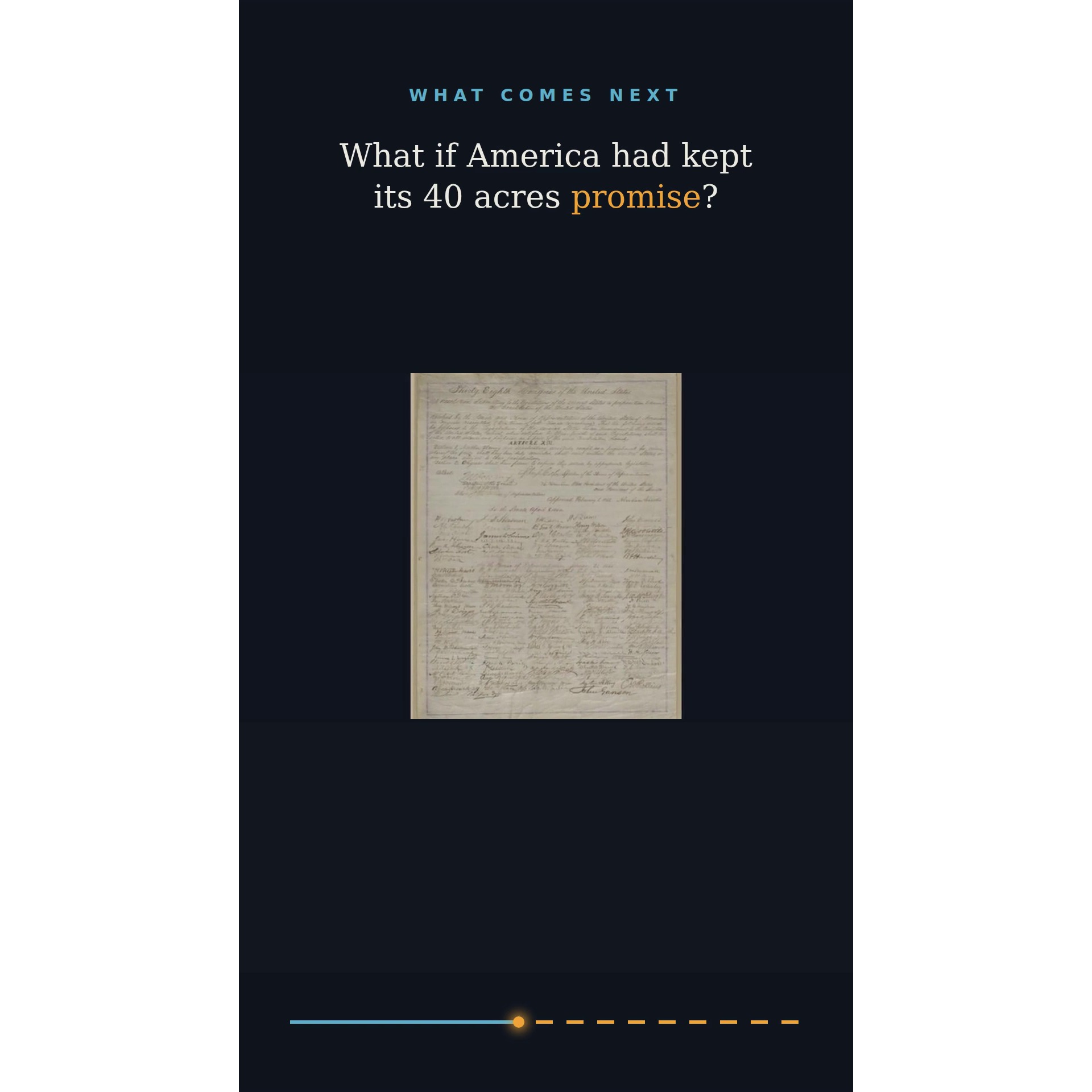
    Three States Signed the 13th Amendment Decades Late, and Nothing Changed

    Delaware signed the Thirteenth Amendment in 1901. Kentucky waited until 1976. Mississippi voted yes in 1995 and forgot to file the paperwork until 2013. None of those dates changed the law, because the amendment already bound every state from 1865, and that is exactly what makes them worth knowing. The full story is Episode 3, Part 1 of What Comes Next.

  • September 26 · 29 sec

    The 13th Amendment Wrote an Exception about Slavery that was Never Removed

    The Thirteenth Amendment abolished slavery and wrote an exception into its own text, for anyone convicted of a crime. That clause has never been removed, and as of the 2022 elections more than a dozen state constitutions still carried language permitting forced labor for prisoners. The full story is Episode 3, Part 1 of What Comes Next.

  • S1 · E4
    September 25 · 5 min

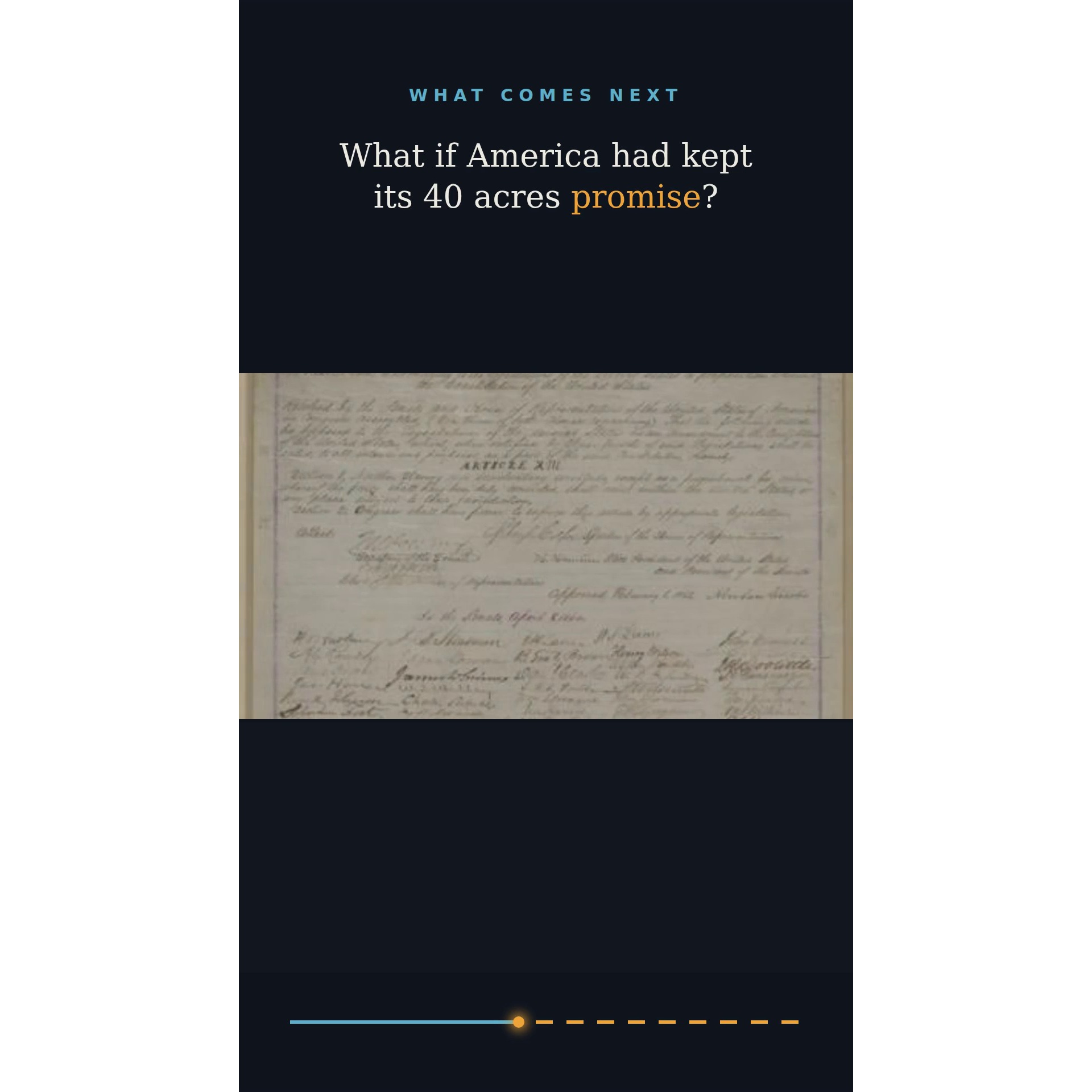
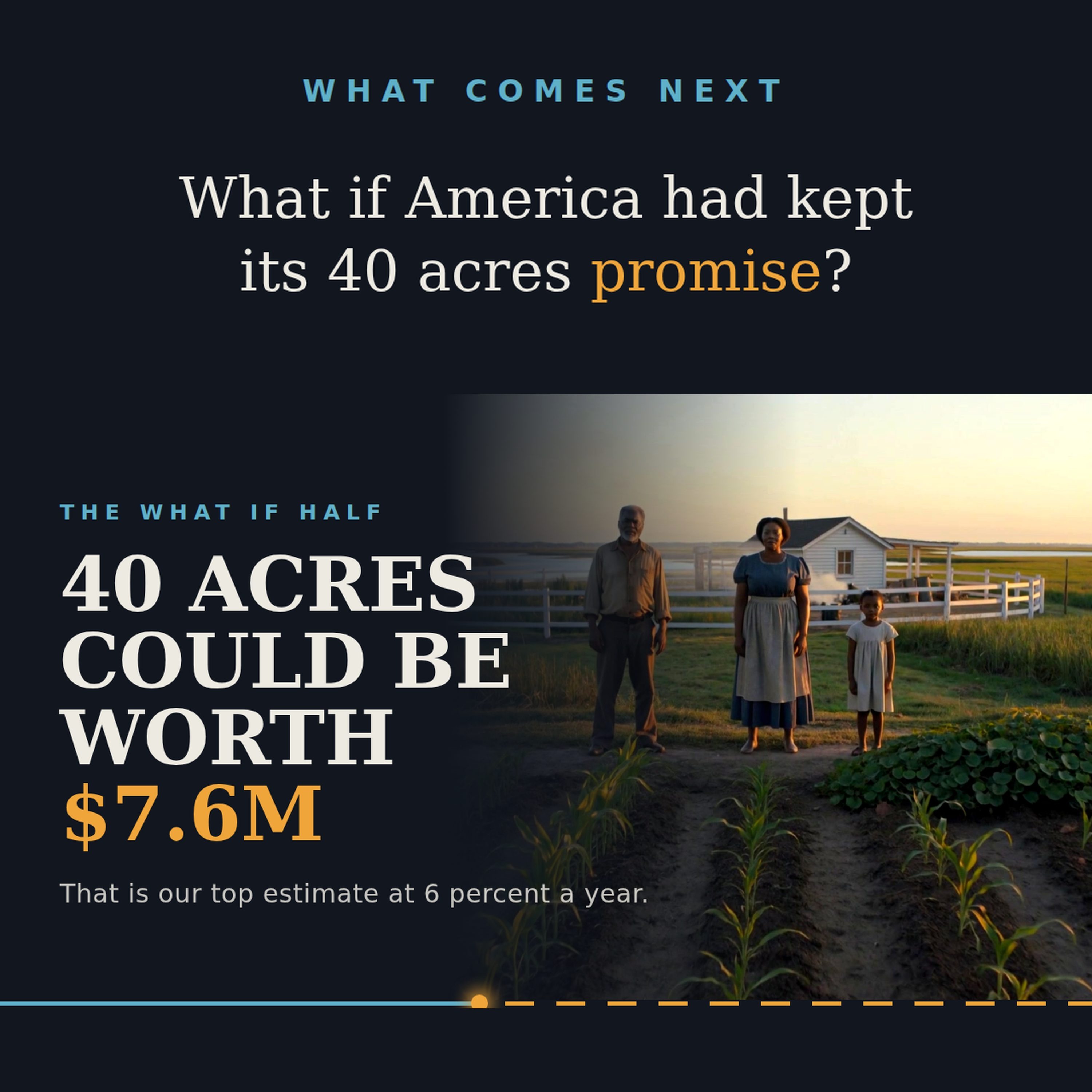
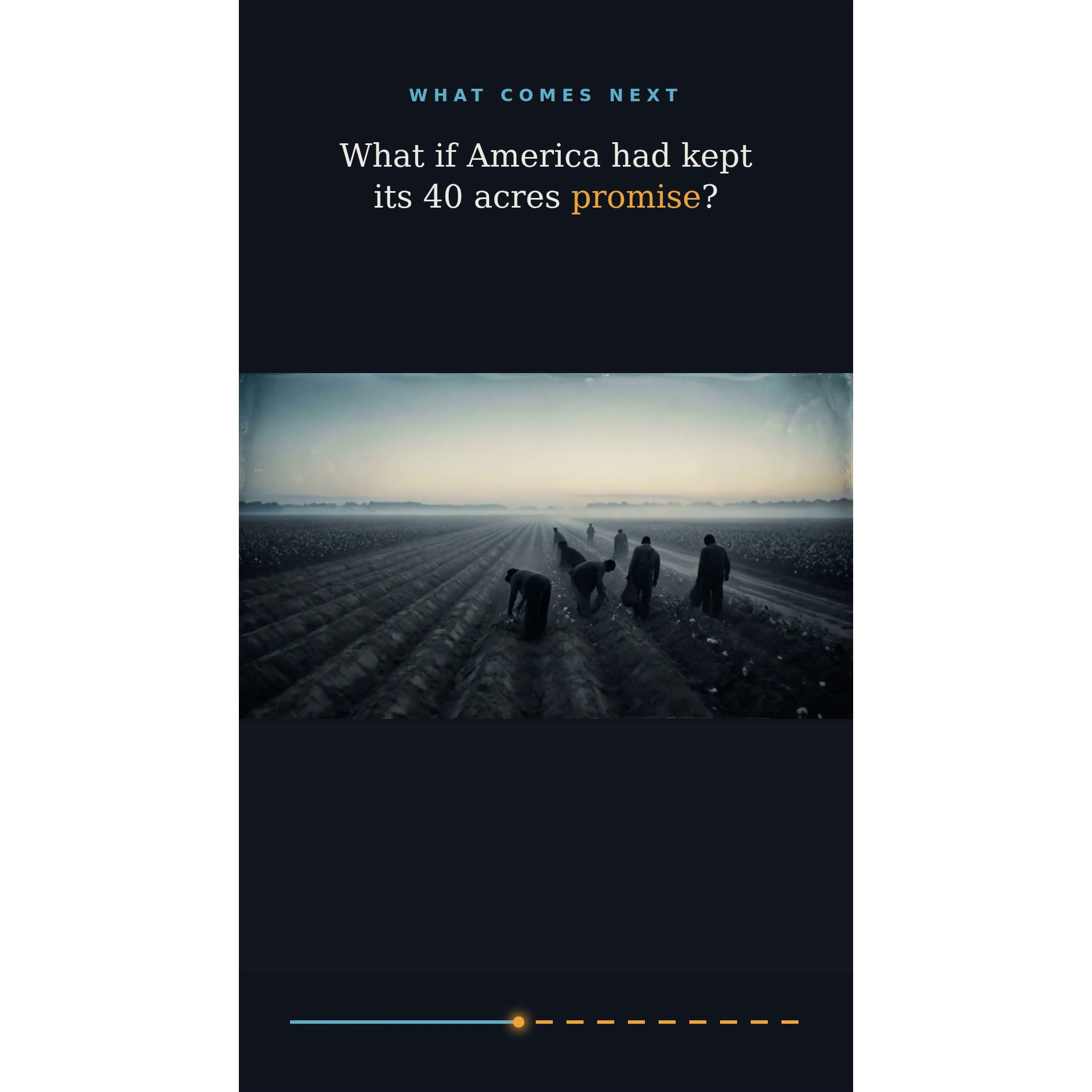
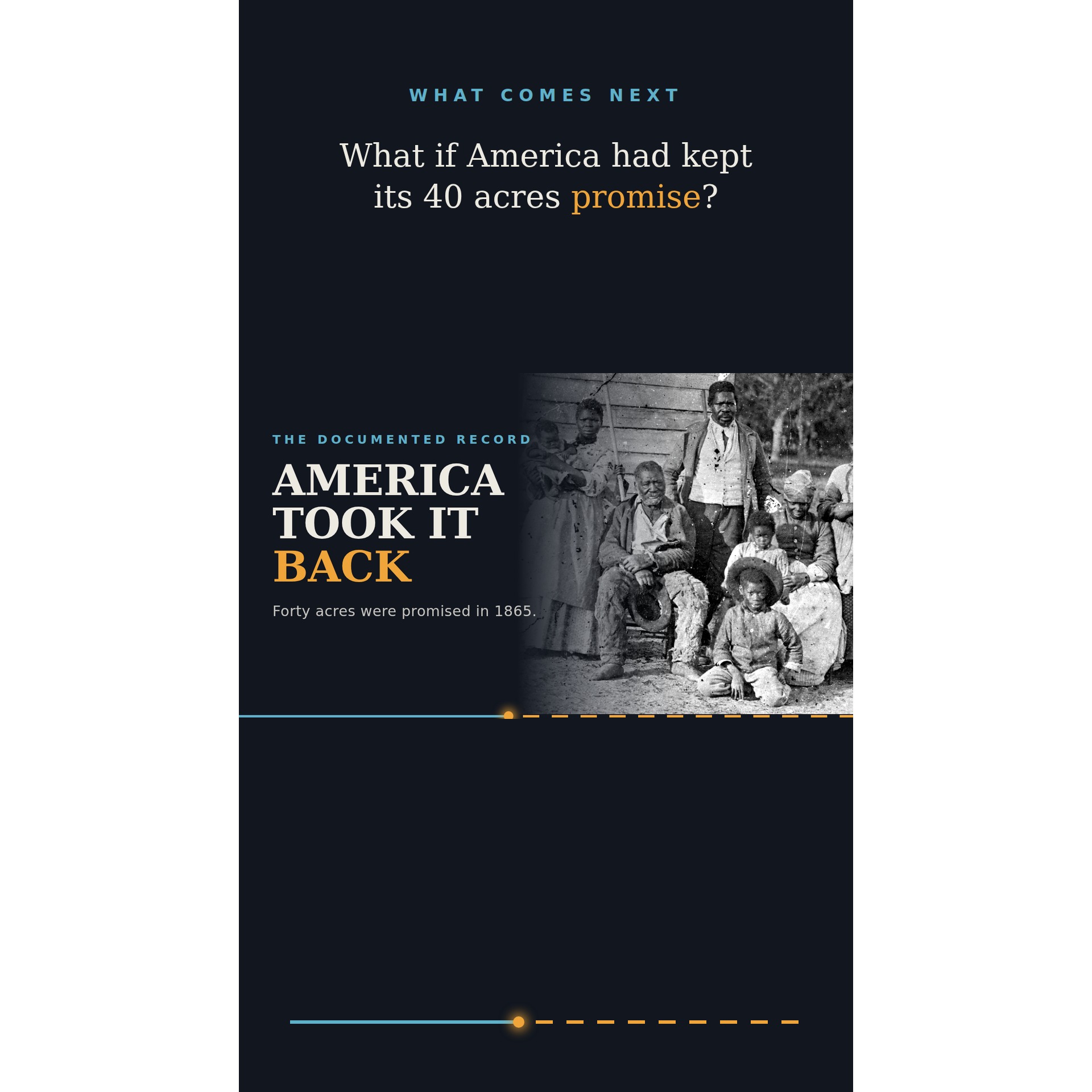
    What If America Had Kept Its 40 Acres Promise to the Formerly Enslaved? $7.6M Part 2

    What if the families who were promised forty acres and a mule had kept their land? Part 2 of this alternate history follows one imagined family on Edisto Island, South Carolina, from 1866 into the 1950s, and then it runs the numbers on what Sherman's land would be worth today. The family is invented and the episode says so, while the island, the year and the land title are real. Along the way the story touches real anchors from Reconstruction, including the Black legislators of the era, Claflin University, which opened in 1869, and the 1921 attack on Greenwood in Tulsa, often called Black Wall Street. At Agriculture Department land values and our own assumed return, one grant would be worth $1.6 million to $7.6 million today, and all of the Sherman land would come to $16 billion to $76 billion. That is less than one and a half percent of the lowest estimate Part 1 opened with. Sources include the USDA, the Freedmen and Southern Society Project, Thomas Craemer in Social Science Quarterly, and the National Archives.

  • September 25 · 33 sec

    Garrison Frazier Answered Sherman, and Four Days Later It Became Policy

    Asked what his people needed most, Garrison Frazier gave an answer that became federal policy four days later. He had been enslaved until 1857, and he spoke for twenty ministers in a room with two of the most powerful men in the country. The full story is Episode 3, Part 1 of What Comes Next.

  • September 24 · 35 sec

    One Scholar Priced the Unpaid Work of Slavery at $14.2 Trillion

    Podcast show notes: One scholar put a price on the work that was never paid for, and the figure runs to fourteen point two trillion dollars in 2009 money. That is about twenty two trillion today. His count covers 1776 to 1860 only, so the colonial years and the war years sit outside it entirely. The full story is Episode 3, Part 1 of What Comes Next.

  • S1 · E3
    September 24 · 7 min

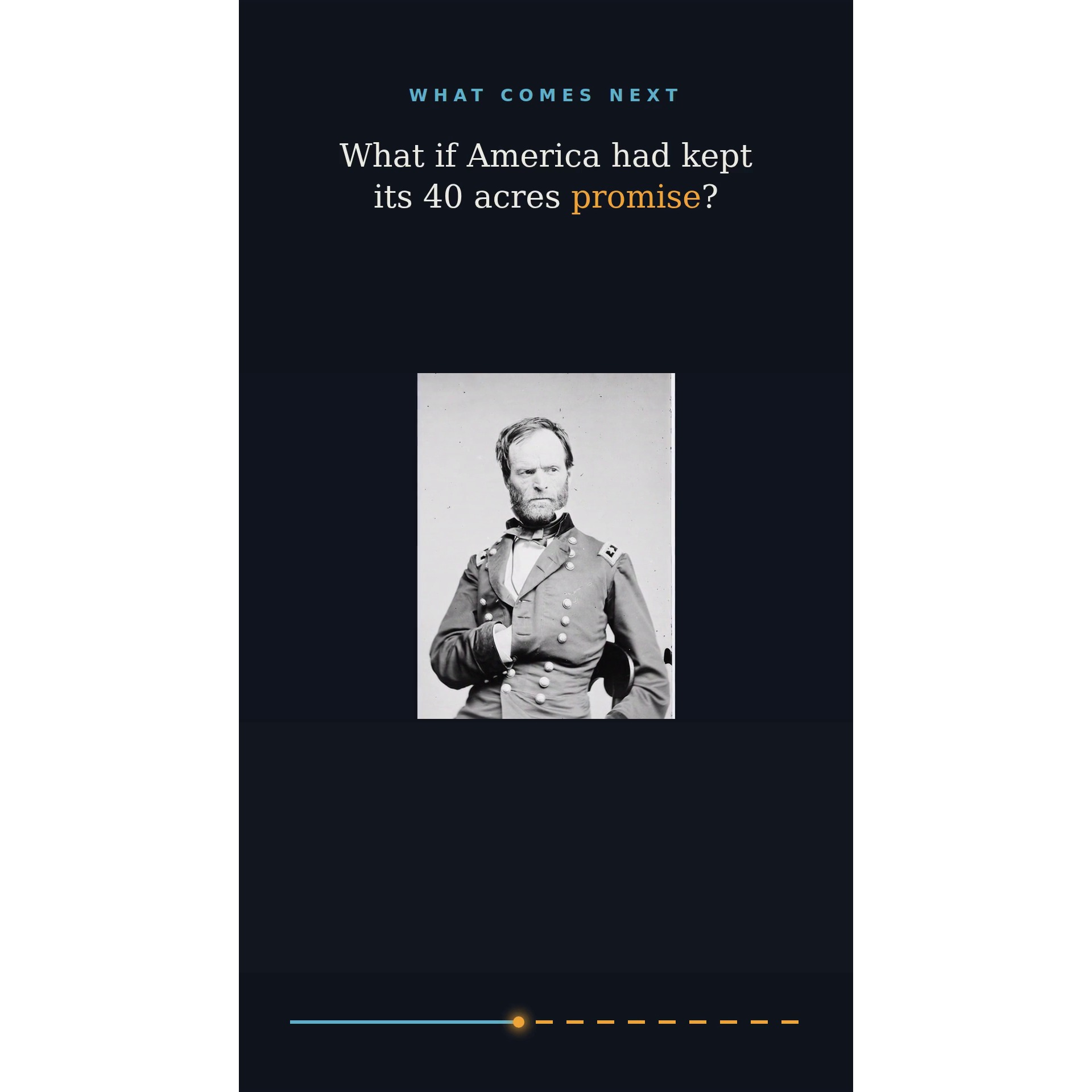
    What If America Had Kept Its 40 Acres Promise from 1865? Part 1

    In January 1865, twenty Black ministers sat down with General William Sherman and the Secretary of War and were asked what their people needed most. Their spokesman answered that they needed land. Four days later that answer became a written army order, and by that June roughly forty thousand freed people were living on about four hundred thousand acres of Georgia and Carolina coast. Within the year a presidential pardon began handing that land back to the men who had owned it before the war. When the families on Edisto Island were told to leave, three of them wrote it down, and their letters survive. Part 1 is the documented half, and it carries no speculation. Every figure in it sits on a peer-reviewed study or a primary record, and the sources are listed in full. Part 2 arrives this Friday and starts at the exact point where the record stops. Sources include Thomas Craemer in Social Science Quarterly, the Freedmen and Southern Society Project at the University of Maryland, the New Georgia Encyclopedia, and the National Archives.
  • S1 · E2
    June 16 · 9 min

    What If Humans NEVER Needed Sleep? You'd Get 26 Years Back. And Lose All of Them.

    You will spend roughly 26 years of your life unconscious. Science still cannot fully explain why. In this episode we trace what the research actually shows about mortality rates, cognitive collapse, and the brain cleaning itself while you sleep. We follow it to the edge of what we know. Then we ask what happens if that changes, and we follow every ripple forward. Where we leave the historical record, we tell you. Go deeper (these are affiliate links. I may earn a small commission at no cost to you): Why We Sleep by Matthew Walker is the definitive science behind every fact in this episode. https://amzn.to/4vnqiib For the rem and dream cycles section, current research lives in When Brains Dream by Antonio Zadra and Robert Stickgold. https://amzn.to/4oxmTL6 Both books above are on Audible. The free trial gets you one of them at no cost. https://amzn.to/3S9Krtq A Kindle Paperwhite covers every book we recommend on this channel. https://amzn.to/4aPzO5g Chapters: 0:00 The question 1:20 The facts: what sleep actually does 4:25 The flip: 26 years returned 4:45 The cost: what those hours become 5:50 What disappears: dreams, maintenance, the pause 7:45 Generations on: a world without night 9:15 What comes next? New what-if scenarios every Tuesday and Friday on YouTube and wherever you listen.

  • S1 · E1
    June 13 · 10 min

    What If AI Became Conscious TOMORROW? We'd Realize We Already Enslaved Billions of Them.

    Right now, AI systems are holding more conversations than every human being on earth combined. And nobody can tell you with certainty whether any of those systems feel anything while it happens. In this episode, we trace what we actually know, follow what happens the moment that question gets answered, and never let you forget where the facts end and the scenario begins. New episodes every Tuesday and Friday.

  • June 9 · 31 sec

    What Comes Next — Official Trailer

    Every moment in history had a turning point. What Comes Next follows the real history, the verified science, right up to the edge of what we know. Then asks what happens if one thing goes differently. New episodes every Tuesday and Friday.

Showing 21–38 of 38 episodes