Skip to content
Artwork for VoxTalks Economics
ScienceSocial SciencesEducationBusinessBusiness News

VoxTalks Economics

VoxTalks

Learn about groundbreaking new research, commentary and policy ideas from the world's leading economists. Presented by Tim Phillips.

Play
  • 38 episodes
  • weekly
  • Avg 23 min
  • English
Counted on this page — what you have heard stays on this device, so it is not something the list can be paged by.
  • S9 · E44
    July 29 · 15 min

    S9 Ep44: How superpowers shape trade

    Recorded at the PSE-CEPR Policy Forum, Paris School of Economics. Tariffs move trade around, but so does economic power. When one economy dominates, other countries fall into step with it. They trade with the dominant economy, and also with each other. Alberto Martin (Barcelona School of Economics, CEPR) is one of a team that has tracked the influence of hegemons, large dominant economies, on trade from the start of the 19th century. In our latest VoxTalk he tells Tim Phillips about how they used treaties (not necessarily about trade) as a proxy for alignment, and built a database of 77,000 of them signed between 1800 and 2020 to test their theory. Hegemons sign a disproportionate share of these international agreements. After treaty-signing, trade links become stronger. But treaty-signing has fallen sharply over the past 15 years, as much as it did during the two world wars. If we are heading towards a multipolar world, might what will the absence of a global hegemony do to trade? The research behind this episode: Broner, Fernando, Alberto Martin, Josefin Meyer, and Christoph Trebesch. 2025. "Hegemonic Globalization." CEPR Discussion Paper 20339 (gated). To cite this episode: Phillips, Tim, and Alberto Martin. 2025. "How superpowers shape trade." VoxTalks Economics (podcast). About the guest Alberto Martin is a Senior Researcher at the Center for Research in International Economics (CREI), an Adjunct Professor at Universitat Pompeu Fabra, a Research Professor at the Barcelona School of Economics, and a Research Fellow at the Centre for Economic Policy Research, where he directs the International Macroeconomics and Finance programme. His research spans macroeconomics, finance, and international economics, including asset bubbles, credit cycles, sovereign debt, and the political economy of trade. Research cited in this episode Global Treaty Database. The dataset at the heart of the paper, assembled by the authors from the United Nations Treaty Collection, the League of Nations archive, and country-specific historical sources. It records roughly 77,000 international agreements signed between 1800 and 2020, most of them bilateral, sorted into economic and non-economic categories such as trade, taxation, migration, borders, and military cooperation. Hegemonic stability. The idea, introduced by Charles Kindleberger in 1973, that an open and stable world economy needs a single dominant power to underwrite it. This paper builds a formal model of the mechanism Kindleberger described, and asks what happens to openness when dominance is contested. Alignment and UN voting. The most common existing proxy for how closely two countries are aligned is whether they vote together at the United Nations. The authors' treaty measure correlates with UN voting in some periods and less in others, partly because many UN votes turn on narrow questions; treaties cover more policy areas and reach back 200 years, which UN voting cannot. The recent decline in treaty-signing. Since 1800 treaty-signing has trended upward, interrupted by three sharp falls: the First World War, the Second World War, and a decline over the last 15 years that is proportionally comparable to the first two. The authors checked large-country sources directly to rule out a reporting lag, and the fall appears real. More VoxTalks Economics episodes The safety paradox. Isabelle Méjean on how, when countries impose trade restriction to protect themselves, it also makes conflict more likely. Related reading on VoxEU.org Why globalisation needs a leader: Hegemons, alignment, and trade, the authors' own VoxEU column setting out the theory of hegemonic globalisation and what a shift from a unipolar to a multipolar world might mean for trade. From bilateralism to a system: Europe's early trade treaties and lessons for EU trade policy in a contested world, a VoxEU column by Laura Panza and Maria Ptashkina drawing on nearly 900 commercial treaties from 1815 to 1919 to argue for expanding networks of agreements even without universal multilateralism.


  • S9 · E43
    July 24 · 21 min

    S9 Ep43: Navigating industrial policy

    Recorded at the PSE-CEPR Policy Forum, Paris. In 2019 the IMF called the increasing adoption of industrial policy: "The return of the policy that shall not be named". No one is scared to name it in 2026. Governments in rich and poor economies alike are intervening to change what their countries produce, and the pace has picked up sharply. Zsóka Kóczán (EBRD) was one of the leads on the Transition Report 2024-25, which draws on a database of more than 31,000 industrial policies in 150 economies. She talks to Tim Phillips about who is using these policies, and the mistakes that happen when they aren't managed well. They multiply before elections, they discriminate against foreign interests, many are firm-specific - and until recently few had an end date, whether they worked or not. Picking winners is hard. Letting go of losers is even harder, she warns. The research behind this episode: EBRD. 2024. "Transition Report 2024-25: Navigating Industrial Policy." London: European Bank for Reconstruction and Development. The digital edition, with country assessments and interactive charts, is at 2024.tr-ebrd.com. To cite this episode: Phillips, Tim, and Zsoka Koczan. 2026. "Navigating industrial policy." VoxTalks Economics (podcast). About the guest Zsoka Koczan is Associate Director and Lead Economist in the Office of the Chief Economist at the European Bank for Reconstruction and Development, where she works on the Transition Report, edits the Regional Economic Prospects and runs the Life in Transition Survey. Before joining the EBRD she was an economist at the International Monetary Fund. She holds a PhD in economics from the University of Cambridge, and her research spans income disparities within countries, migration and inequality. Research cited in this episode Moving the goalposts. The analysis of industrial policy objectives in the report is developed in Koczan, Zsoka, Victoria Marino, and Alexander Plekhanov. 2025. "Moving the Goalposts: The Changing Objectives of Industrial Policy." EBRD Working Paper No. 311. It codifies the stated objectives of more than 31,000 industrial policies using large language model processing; in the EBRD regions and other emerging markets, around 75% of policies pursue multiple objectives, and more than 10% pursue three or more. The Juhász, Lane, Oehlsen and Pérez dataset. The report builds on the industrial policy dataset assembled by Réka Juhász, Nathan Lane, Emily Oehlsen, and Verónica C. Pérez in "The Who, What, When, and How of Industrial Policy: A Text-Based Approach" (STEG Working Paper No. WP050, 2023), which uses natural language processing to identify industrial policies in the Global Trade Alert repository; the EBRD team extended its coverage of emerging markets. The Global Trade Alert. An independent monitoring initiative that has documented policy interventions affecting international commerce since 2009; it is the underlying source for both datasets above. The policy that shall not be named. Cherif, Reda, and Fuad Hasanov. 2019. "The Return of the Policy That Shall Not Be Named: Principles of Industrial Policy." IMF Working Paper No. 19/74. The title captures how unfashionable the subject was among economists before its recent revival, which is Koczan's point in raising it; the interventions themselves never went away. Reagan's nine words. In 1986 President Ronald Reagan remarked that the nine most terrifying words in the English language were "I'm from the government and I'm here to help." Koczan cites the line as a marker of the era when industrial policy fell out of favour, and as a reminder that government failures can replace the market failures these policies are meant to correct. The Industrial Accelerator Act. The European Commission's proposal, presented in March 2026, would introduce "Made in EU" and low-carbon requirements for public procurement and support schemes in strategic sectors. Koczan cites it as evidence that the upward trend in industrial policy adoption is continuing. More VoxTalks Economics episodes Europe in the Middle, recorded at the same forum, in which Pol Antras and Beata Javorcik ask how Europe should make policy when it is caught between the US and China in a realigning world trade system. Addressing Global Imbalances, also from the forum, in which Gita Gopinath and Philip Lane discuss the third wave of global imbalances and what central banks can and cannot do about it. Related reading on VoxEU The visible hand of the state: Industrial policies in emerging markets, a VoxEU column by the EBRD team presenting the Transition Report's findings on how emerging markets use industrial policy. The new economics of industrial policy, a VoxEU column by Réka Juhász, Nathan Lane and Dani Rodrik summarising the recent empirical literature on when these policies work. The return of industrial policy in data, a VoxEU column introducing the New Industrial Policy Observatory and documenting the recent wave of interventions.

  • S9 · E42
    July 22 · 20 min

    S9 Ep42: The Safety Paradox

    Recorded at the PSE-CEPR Policy Forum, Paris School of Economics, June 2026. In 1941 the United States banned oil exports to Japan, to punish aggression without fighting a war. Historians now argue the embargo did the opposite, and hastened Japan's entry into the war. Isabelle Méjean (Sciences Po, CEPR) calls this "The safety paradox". Trade between rivals makes war more expensive. Cut that trade to protect your interests, and you make conflict cheaper, for your rival as well as for you. In a new VoxTalk she talks to Tim Phillips about economic coercion, decoupling, and why Europe should treat its trade agreements as insurance. Méjean and her co-authors simulated the US decoupling from China. Raising tariffs by 20 percentage points, roughly what the first Trump administration did, raises the probability of war by 2%, she estimates. That sounds small until you consider what a war between the US and China would mean. The research behind this episode: Mayer, Thierry, Isabelle Méjean, and Mathias Thoenig. 2025. "The Fragmentation Paradox: De-risking Trade and Global Safety." CEPR Discussion Paper 20564 (gated). To cite this episode: Phillips, Tim, and Isabelle Méjean. 2026. "The Safety Paradox." VoxTalks Economics (podcast). About the guest Isabelle Méjean is Professor of Economics at Sciences Po and a Research Fellow of the Centre for Economic Policy Research, where she directs the International Trade and Regional Economics programme and is a member of the Research Policy Network on Geoeconomics and Security. She is a scientific advisor at CEPII and a member of the French Conseil d'Analyse Économique, with research spanning international trade, firm-to-firm networks, and how shocks to individual firms move whole economies. In 2020 she was named Best Young Economist of France. Research cited in this episode Make Trade Not War? Philippe Martin, Thierry Mayer, and Mathias Thoenig's 2008 paper in the Review of Economic Studies (75(3): 865-900) provided the first quantitative evidence that bilateral trade integration reduces the probability of interstate conflict; the diplomatic game in the new paper builds directly on it. Montesquieu, De l'esprit des lois (1748). The earliest statement of the idea, Méjean notes, that interdependence between nations raises the cost of conflict and strengthens the hand of diplomacy; what was trade dependence in the 18th century now includes finance and technology. The US oil embargo on Japan, 1941. Méjean's historical example of the safety paradox in action; a policy designed to impose costs on Japan is widely credited by historians with accelerating its entry into the Second World War. China's trade ban on Lithuania. After Lithuania allowed a Taiwanese representative office to open in Vilnius in 2021, China blocked Lithuanian products from its market; the episode's example of open economic coercion, and one that prompted the EU's Anti-Coercion Instrument, in force since 2023. Liberation Day tariffs. The US tariffs announced in April 2025; Méjean points to the tariff on Brazil, justified by the treatment of former president Jair Bolsonaro, as a tariff with an explicitly geopolitical rather than economic purpose. Rare earths. China holds a near monopoly across mining, refining, and magnet production; Méjean's example of where future trade agreements could act as insurance, because deposits outside China offer more scope for diversification than mining in Europe. More VoxTalks Economics episodes Europe in the Middle. Pol Antras and Beata Javorcik, recorded at the same forum, on what the US-China realignment means for European producers and consumers. World War Trade. Richard Baldwin on how world trade was weaponised, and where the trading order goes from here. Trading Around Geopolitics. Giancarlo Corsetti, Banu Demir, and Beata Javorcik on why trade sanctions can be like squeezing a balloon. Related reading on VoxEU Why 'de-risking' may not deliver a large peace dividend, a VoxEU column estimating that a doubling of bilateral trade reduces the probability of militarised conflict by roughly 30%. How geopolitics is changing trade, a VoxEU column documenting the fragmentation of trade flows along geopolitical lines. Geopolitical risk and supply chain diversification, a VoxEU column on how firms respond to geopolitical risk in their sourcing decisions.

  • S9 · E41
    July 17 · 20 min

    S9 Ep41: Making teenagers read newspapers

    French teenagers carry a smartphone with access to almost anything, but few of them have been using it to read the news. Julia Cagé (Sciences Po, CEPR) ran an experiment to test the one barrier everyone assumes matters most: the price of a newspaper. She and her co-authors gave free digital subscriptions to Le Monde and media education to thousands of French high school students for a year, and then tracked what the students actually read. It's a bit like persuading kids to eat vegetables when there are fries on the table, she tells Tim Phillips. Can a free subscription persuade France's teens to use their phones differently and eat their media greens, and what changes when they do? The research behind this episode: Briole, Simon, Julia Cagé, and Andrea Prat. 2026. "Making Teenagers Read Newspapers: A Nationwide Experiment in French High Schools." CEPR Discussion Paper 21706. Gated. To cite this episode: Phillips, Tim, and Julia Cagé. 2026. “Making teenagers read newspapers”. VoxTalks Economics (podcast). About the guest Julia Cagé is Professor of Economics at Sciences Po Paris and a Research Fellow at the Centre for Economic Policy Research (CEPR), where she leads the CEPR Research and Policy Network on Media Plurality. Her research spans media economics, political participation, and the economics of information, with a particular focus on how news markets shape political knowledge and democratic engagement. She is the author of several books on the media, including Saving the Media and The Price of Democracy. Research cited in this episode Reuters Institute Digital News Report is an annual global survey that tracks how people find, consume, and pay for news across dozens of countries. Cagé cites its long-running data on declining time spent reading news online, a trend she says is sharpest among the young. Post-Broadcast Democracy, a book by the political scientist Markus Prior, argues that the shift from a small number of broadcast TV channels to an environment of unlimited media choice let people who were never especially interested in news opt out of it entirely. Cagé uses Prior's framework to argue that the internet did not create this problem; television did, and the internet simply deepened it. Information inequality describes the finding that lower-income, less-educated citizens draw on fewer sources of political information than wealthier, better-educated ones, widening gaps in political knowledge. The concept draws on earlier work by Cagé's co-author Andrea Prat, and it motivates the experiment's focus on whether free access to quality journalism narrows that gap for teenagers from poorer backgrounds. More VoxTalks Economics episodes Misinformation and trust in news, in which Ruben Durante discusses a field experiment testing how AI-generated misinformation changes readers' trust in, and demand for, credible journalism. Related reading on VoxEU Information inequality, a VoxEU column by Paul Kennedy and Andrea Prat setting out the cross-country evidence that poorer, less-educated voters consume fewer sources of political news, the pattern this episode's experiment sets out to address.

  • S9 · E40
    July 15 · 24 min

    S9 Ep40: Are net zero commitments greenwash?

    Sixty-three percent of large companies worldwide had made a net zero commitment by 2023, up from close to none in 2018. But if the target date is 2050, that's several corporate lifetimes away, and the planet needs emission reductions today. What actually changes in the boardroom when a pledge is signed? Simon Dietz (LSE, CEPR) has tracked climate management practices and emissions at nearly 2,000 companies to find out. He tells Tim Phillips that the picture is not the one that either side of the debate might expect. A net zero pledge doesn't usually signify an immediate cut in emissions, but there is a clear and early shift in how companies plan for net zero that has often started before the announcement. What is left is something is harder to spot: firms making a strategic pivot, of which the public commitment is only one part. The research behind this episode: Dietz, Simon, and Nikolaus Hastreiter. 2026. "Corporate Net Zero Targets: Have They Achieved Anything?" CEPR Discussion Paper 21441 (gated). To cite this episode: Phillips, Tim, and Simon Dietz. 2026. "Are net zero commitments greenwash?" VoxTalks Economics (podcast). About the guest Simon Dietz is Professor of Environmental Policy at the London School of Economics and Political Science, Research Director of the Grantham Research Institute on Climate Change and the Environment, and Research Director of the LSE Transition Pathway Initiative Global Climate Transition Centre. He is a Research Fellow of the Centre for Economic Policy Research. His research spans climate change economics, corporate sustainability, decision-making under uncertainty, and climate finance. Research cited in this episode The Paris Agreement and the 1.5°C target. The 2015 UN Paris Agreement on Climate Change set a goal of limiting global warming to well below 2°C, with a stretch target of 1.5°C. The Intergovernmental Panel on Climate Change subsequently concluded that meeting the 1.5°C goal requires global emissions to reach net zero by around mid-century, giving corporate net zero pledges their scientific rationale. Science Based Targets initiative, UN Race to Zero, and the Glasgow Financial Alliance for Net Zero. These are among the organisations that encouraged corporations to adopt long-term net zero commitments following the Paris Agreement, helping drive the rapid diffusion of pledges that Dietz and Hastreiter document. Trucost and the Transition Pathway Initiative (TPI). Dietz and Hastreiter combine two emissions datasets to overcome measurement problems in this area. Trucost provides broad coverage of around 1,600 large listed firms, combining self-reported data with modelled estimates. TPI provides sector-specific, physically normalised emissions intensity data for a smaller sample of roughly 200 companies in the highest-emitting sectors; Dietz is Research Director of the TPI Global Climate Transition Centre, which is based at LSE. Difference-in-differences with matching. To separate the effect of a net zero pledge from the fact that greener firms are more likely to make one in the first place, the authors compare firms before and after adoption against similar firms that have not yet adopted, using propensity score matching to build a comparable control group. The Task Force on Climate-related Financial Disclosures framework. The paper groups management practices into four pillars from this framework: governance, strategy, risk management, and metrics and targets. It finds no significant effect of net zero pledges on governance, risk management, or metrics and targets, but a significant and positive effect on strategy, including climate scenario planning and internal carbon pricing. More VoxTalks Economics episodes A big push for climate policy, in which Rick van der Ploeg argues that gradual policy change risks backsliding, and sets out what a genuinely transformative climate push would require. Related reading on VoxEU.org Corporate net zero targets: Neither greenwashing nor a gamechanger, in which Dietz and Hastreiter set out the findings behind this episode in their own words. Corporate climate commitments: A profit-driven strategy, not just empty promises, in which Viral Acharya, Robert Engle, and Olivier Wang model when large firms and their investors have a financial incentive to follow through on climate pledges. Business as usual: Bank net zero commitments, lending, and engagement, in which Parinitha Sastry, Emil Verner, and David Marques-Ibanez find that banks' net zero pledges predict decarbonisation of their loan portfolios, but not reduced lending to high-carbon sectors.

  • S9 · E39
    July 10 · 20 min

    S9 Ep39: Europe in 2050

    Recorded at the Paris School of Economics-CEPR Policy Forum 2026. Europe is under attack from the US, and under a different kind of attack from China. That is Olivier Blanchard's diagnosis. Blanchard (MIT, Paris School of Economics, Peterson Institute) is one of four economists leading Europe 2050, a new CEPR initiative asking where Europe wants to be in 25 years, and how it gets there. Blanchard's overriding principle: a vision without plumbing goes nowhere, and plumbing without vision is just reacting to the next tweet. Who can combine the vision and the plumbing, and produce ideas that we haven't seen before? Europe might be short of solutions to its current malaise, but it is not short of people with ideas: the project sent out 50 invitations for policy papers. Blanchard expected 30 replies. He got 48. The research behind this episode: Blanchard, Olivier, Pascal Lamy, Enrico Letta, and Beatrice Weder di Mauro. 2026. "Europe 2050: Geometries of Peace, Power, and Prosperity." VoxEU column, CEPR, 16 March 2026. The CEPR Europe 2050 initiative launched by Blanchard, Lamy, Letta and Weder di Mauro is generating a rolling series of commissioned policy papers and shorter open call submissions. The full set of contributions can be found at cepr.org/europe-2050-geometries-peace-power-and-prosperity. To cite this episode: Phillips, Tim, and Olivier Blanchard. 2026. "Europe in 2050." VoxTalks Economics (podcast). About the guest Olivier Blanchard is the Robert M. Solow Professor of Economics emeritus at MIT, Professor of Economics at the Paris School of Economics, and Senior Fellow at the Peterson Institute for International Economics. He is a CEPR Distinguished Fellow. Blanchard's research spans macroeconomics, monetary and fiscal policy, and the economics of European integration; he was chief economist and director of research at the IMF from 2008 to 2015. Research cited in this episode Europe 2050: Geometries of Peace, Power, and Prosperity is the CEPR initiative behind this episode, launched by Blanchard, Lamy, Letta and Weder di Mauro. It commissions longer policy papers and runs an open call for shorter pieces, five to fifteen pages, on what Europe should aspire to become by 2050. Blanchard describes it as a box of tools rather than a single blueprint, deliberately open to contributors who disagree on fundamentals, including whether Europe should become a federation. The Draghi report refers to Mario Draghi's 2024 report for the European Commission, The Future of European Competitiveness. It diagnosed Europe's weak productivity growth, fragmented capital markets and insufficient scale financing for innovative firms. Blanchard contrasts it with Europe 2050, which he says is not trying to produce a similarly prescriptive plan. The Letta report refers to Enrico Letta's 2024 report Much More Than a Market, commissioned by the European Council, which set out proposals for deepening the EU single market. Letta is one of the four leaders of Europe 2050. "Getting to Denmark" is a concept popularised by the political scientist Francis Fukuyama in his 2011 book The Origins of Political Order, describing the temptation to picture a distant, well governed destination without a plan for the institutional steps needed to reach it. Is this a risk for Europe 2050? Schengen is raised by Blanchard as a working example of a "coalition of the willing": a group of countries, not all of them EU members, that agreed to abolish border controls between themselves without waiting for unanimous agreement across the whole Union. He points to it as a template for how Europe might make progress on other issues where full consensus is unlikely. More VoxTalks Economics episodes This episode was recorded at the Paris School of Economics-CEPR Policy Forum 2026, alongside a series of conversations with forum speakers. Europe in the Middle, the previous episode, features Pol Antràs and Beata Javorcik on how the US-China trade war is reshaping trade flows into Europe, and who wins and loses from it. Related reading on VoxEU Europe's challenge and opportunity: Building coalitions of the willing, a VoxEU column by Blanchard and Jean Pisani-Ferry, sets out the coalition of the willing idea in more detail, working through how it might apply to climate, trade and tax policy. Capitalising on Europe's strengths, a VoxEU column by Debora Revoltella and colleagues at the European Investment Bank, looks at what Europe already does well and how policy can build on it rather than only cataloguing weaknesses. Addressing European competitiveness: Investment, integration, and simplification, another VoxEU column from the European Investment Bank, sets out the scale of Europe's investment gap and where past bursts of EU investment have come from. EU capital markets reform should focus on innovation investment, a VoxEU column, argues that capital markets union, a project Blanchard mentions in the episode, should be judged by whether it gets money to innovative firms, not just by market integration for its own sake.

  • S9 · E38
    July 8 · 20 min

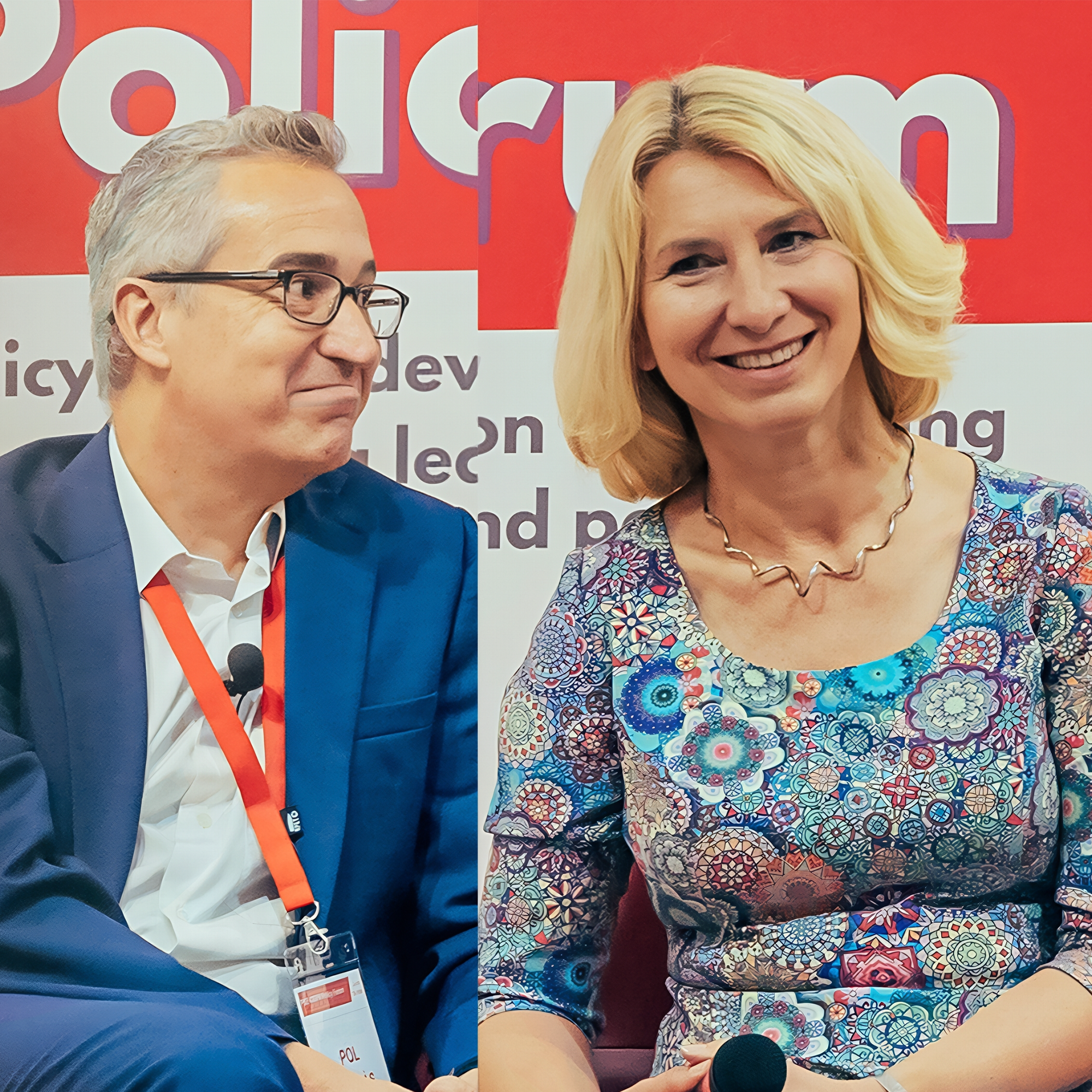
    S9 Ep38: Europe in the Middle

    China cannot sell as much as it used to in the United States. That trade has to go somewhere, and somewhere might be Europe. In this week's VoxTalk, Tim Phillips asks Pol Antràs (Harvard) and Beata Javorcik (EBRD, Oxford) what this means for European producers and consumers. Antràs and Andrea Presbitero have mapped which countries and sectors face the sharpest competition from redirected Chinese exports, and which stand to gain. Does cheap Chinese tech ease Europe's energy cost crisis, or squeeze European manufacturers of wind turbines and electric cars? If Europe decides to take the gains where consumers and firms can get them, and compensate the producers who are legitimately hurt, how do they go about it? And can raising tariffs in a world of global value chains protecting one sector without damaging others? New episode, recorded at the PSE-CEPR Policy Forum 2026 in Paris. The research behind this episode: Antràs, Pol, and Andrea F. Presbitero. 2026. "The Remains of the Trade: The U.S.-China Trade War and its Aftermath." Preliminary version To cite this episode: Phillips, Tim, Pol Antràs, and Beata Javorcik. 2026. "Europe in the Middle." VoxTalks Economics (podcast). About the guests: Pol Antras is Robert G. Ory Professor of Economics at Harvard University, a Research Associate at the National Bureau of Economic Research, and a Research Affiliate at the Centre for Economic Policy Research. His research spans global value chains, the organisation of multinational firms, and, most recently, the intersection of trade policy and geopolitics. Beata Javorcik is Chief Economist of the European Bank for Reconstruction and Development, on leave from her position as Professor of Economics at the University of Oxford and Fellow of All Souls College. She is Director of the International Trade Programme at the Centre for Economic Policy Research. Her research spans foreign direct investment, industrial policy, and, increasingly, the economics of geopolitical fragmentation. Research cited in this episode: The Great Reallocation is the term coined by Laura Alfaro and Davin Chor for the reorganisation of United States sourcing away from direct imports from China and toward alternative suppliers such as Vietnam, Mexico, and Taiwan. Antrà s and Presbitero's paper extends this idea to third countries, showing that Chinese exports displaced from the American market are increasingly landing in Europe and Asia rather than disappearing. Geopolitical externality is a concept developed by Laura Alfaro, Maggie Chen, and Beata Javorcik in their working paper "The Battle over Knowledge: Multinationals, Diffusion, and Governance." It describes how knowledge transferred abroad by multinational firms can strengthen a rival state's strategic capability in ways the firm never intended and the market never prices, which is why governments increasingly restrict flows of codified, tacit, and organisational knowledge that would once have passed unremarked. Voluntary export restraints were the mechanism used to defuse the United States' trade conflict with Japanese carmakers in the 1980s. Rather than imposing tariffs, Japan agreed to limit its car exports, and Japanese manufacturers responded by building plants directly in the United States. Javorcik cites this as the precedent for how the current standoff over Chinese electric vehicles and knowledge transfer might eventually be resolved. The Draghi report on European competitiveness, published by the European Commission in September 2024, recommended conditioning Chinese investment in the European electric vehicle sector on mandatory knowledge transfer. Javorcik notes the difficulty of calibrating such requirements: demand too little and Europe gains nothing from the technology; demand too much and Chinese investors have no reason to come at all. "Industrial Policies for Multi-stage Production: The Battle for Battery-powered Vehicles," by Keith Head, Thierry Mayer, Marc Melitz, and Chenying Yang, models how tariffs and subsidies reshape the location of battery and vehicle assembly plants across a multi-stage supply chain. Antrà s cites the paper's finding that protecting the electric vehicle sector through tariffs can produce worse outcomes than the problem it was meant to solve. Export controls and innovation, discussed by Javorcik with reference to Chinese firms such as DeepSeek and Huawei, illustrate a pattern in which restricting a country's access to a technology, in this case advanced semiconductors, can accelerate that country's innovation in adjacent areas rather than simply constraining it. She draws a parallel with rare earth export restrictions, which have historically spurred substitute technologies rather than suppressing them. More VoxTalks Economics episodes: In a conversation recorded at the CEPR Annual Forum in Paris called "What should Europe do about Trump?" Tim Phillips spoke to Beatrice Weder di Mauro and Ugo Panizza of the Graduate Institute Geneva, about how Europe should respond to the second Trump administration's trade policies. Listeners interested in how firms navigate geopolitical trade disruption should also hear "Trading around geopolitics," in which Giancarlo Corsetti, Banu Demir, and Beata Javorcik discuss how Turkish exporters filled the gap left by sanctions on Russia. Related reading on VoxEU: "An update on the great reallocation in US supply chain trade" uses detailed United States import data through 2025 to track the scope and pace of the reallocation discussed in this episode. "From tariffs to trade flows: Diversion effects and China's exports to the EU" examines the evidence for and against the trade deflection story that Antras and Javorcik discuss, and finds the picture more mixed than a simple diversion narrative suggests. "China shock 2.0 and the euro area: Cheaper imports, tougher competition" decomposes the recent surge in Chinese exports to the euro area and argues that structural forces within China, rather than diversion from the American market, explain most of it. "The impact of trade wars on firms in third countries" proposes a model of how bilateral trade shocks spill over to bystander economies, applying it to Italian firms during the 2018 to 2019 trade war.

  • S9 · E37
    July 3 · 24 min

    S9 Ep37: Addressing Global Imbalances

    Episode recorded on 19 June 2026 at the PSE-CEPR Policy Forum in Paris. Twice before, the world's savings and debts have piled up in the wrong places, and twice the imbalance broke something. The first time it took the Plaza Accord to fix it. The second time it took a global financial crisis. Now we are in a third wave. Gita Gopinath (Harvard, former IMF Chief Economist and First Deputy Managing Director) and Philip Lane (European Central Bank, CEPR) join Tim Phillips to ask what is different this time. Household and bank balance sheets are stronger than before 2008. But the fragility has moved to governments carrying much higher debt, and to non-bank financial institutions whose exposures and links to banks are only partly visible. Foreign investors hold US$40.7 trillion of US equities, 44% of world GDP outside the US, much of it riding on the AI boom. Lane's overriding principle: central banks can calm bond markets under stress, but they must be just as clear about what they will not do if debt is unsustainable. The research behind this episode: Bai, Chong-En, Gita Gopinath, Hélène Rey, and Axel Weber. 2026. "G7 Economists Memo on Global Imbalances." Prepared for the French Presidency of the G7, 28 March. The panel also draws on the fourth CEPR/Bruegel Paris Report, Paris Report 4: The New Global Imbalances, edited by Hélène Rey, Beatrice Weder di Mauro and Jeromin Zettelmeyer (CEPR Press and Bruegel, 2026), free to download at cepr.org. Gopinath made the keynote presentation “The Third Wave: Addressing Global Imbalances” on 19 June at PSE. To cite this episode: Phillips, Tim, Gita Gopinath, and Philip Lane. 2026. "Addressing Global Imbalances." VoxTalks Economics (podcast). About the guests Gita Gopinath is the Gregory and Ania Coffey Professor of Economics at Harvard University, where her research spans international finance and macroeconomics, dollar dominance, exchange rates and sovereign debt. She was First Deputy Managing Director of the International Monetary Fund from 2022 to 2025, and the Fund's Chief Economist from 2019 to 2022. Philip Lane is Chief Economist and a member of the Executive Board of the European Central Bank, and a Fellow of CEPR's International Macroeconomics and Finance programme. He was Governor of the Central Bank of Ireland from 2015 to 2019, and remains an honorary professor of economics at Trinity College Dublin, where his research covered financial globalisation and European monetary integration. Research cited in this episode The three waves of global imbalances. Gopinath frames today's imbalances as the third episode since the 1970s in which national savings and investment have pulled badly out of line, a framing she titled "The Third Wave" in her Atlanta Fed presentation. The first, in the early 1980s, produced the 1985 Plaza Accord, when the US and its G5 partners agreed to talk the dollar down after years of a strong currency and a widening trade deficit. The second built through the 2000s and unwound in the 2008 global financial crisis. In both, the US was the deficit country; the surplus moved from Japan to China. Foreign holdings of US equities. Gross foreign holdings of US equities stood at US$40.7 trillion, 44% of world GDP excluding the US (Gopinath 2026, citing US Treasury data). Gopinath's slides show 54% of gross foreign inflows into US government debt since 2007 and estimate that 61% of the deterioration in the US net international investment position since the global financial crisis has been driven by valuation effects rather than trade deficits. Non-bank financial institutions (NBFIs). Hedge funds, private credit funds, insurers and other institutions outside the regulated banking system now intermediate a large and growing share of global finance. Gopinath's slides show leveraged intermediation migrating from households and banks before the 2008 crisis toward government and non-bank financial institutions today, echoing the concerns set out in the G7 memo and the CEPR Paris Report. The 2020 "dash for cash." In March 2020, US Treasury yields rose sharply even as investors would normally be expected to flee to safety, a sign that market functioning, not just prices, can break down under stress. Gopinath cites the episode as evidence that hedge funds, now bigger players in Treasury market-making, can amplify rather than absorb shocks. ECB crisis tools: PEPP, OMT and TPI. Lane describes three instruments built since 2012 to separate monetary policy from market functioning: the Outright Monetary Transactions programme (2012), designed to backstop governments already in an ESM assistance programme; the Pandemic Emergency Purchase Programme (2020), the ECB's flexible, country-varying response to Covid-19; and the Transmission Protection Instrument (2022), intended to calm unwarranted bond market panic without financing unsustainable debt. US federal debt and the fiscal deficit. Gopinath's slides put federal debt at 108% of GDP in 2025, up from 41% in 2007 and 39% in 2000 (source: Federal Reserve, FRED). In conversation she cites the US fiscal deficit at close to 7% of GDP, at a point in the cycle when the economy is strong. Note this is federal debt specifically; the G7 memo cites a broader measure, US general government debt, at around 120% of GDP, projected to reach around 140% by 2031. The two figures are not directly comparable and should not be conflated in the notes or on air. More VoxTalks Economics episodes This episode sits alongside three earlier VoxTalks Economics conversations built around the CEPR/Bruegel Paris Report 4, The New Global Imbalances. Global Imbalances Redux, in which Maurice Obstfeld sets out the history of the three waves of imbalances and what today's policymakers can learn from how the first two were resolved. Rebalancing the Chinese Economy, in which Yiping Huang explains why decades of investment-led growth suppressed Chinese household consumption, and what it would take to reverse that. Stablecoins and Global Imbalances, in which Gilles Moec examines how dollar-backed stablecoins help fund the US deficit, and the regulatory gaps that leaves behind. Related reading on VoxEU Why global imbalances matter again, and what to do about them, a VoxEU column drawn from Chapter 1 of Paris Report 4, setting out why imbalances have widened since 2018 and the risks of a disorderly unwind. Industrial policy, tariffs, and the return of global imbalances, which finds that tariffs are a weak tool for correcting current account imbalances and that industrial policy's effects run mainly through its impact on domestic saving and consumption.

  • S9 · E36
    July 1 · 19 min

    S9 Ep36: Helping the over-50s find work

    Lose your job at 25 and someone will help you find another. Lose it at 55 and the talk quietly turns to how you might wind down towards retirement. Policymakers tend to assume job search training works for the young and not the old, so they rarely spend money trying. Bas van der Klaauw (Tinbergen Institute) thinks they got that wrong. In this week's VoxTalks Economics, he tells Tim Phillips about a Dutch experiment that put older unemployed workers through an intensive programme built on one idea: teach people over 50 to find work the way younger workers already do, by working their social network. Participants left unemployment faster, there was a 10% increase in job finding, and the savings in benefits more than covered the cost. The catch: it helped the better educated most and was tested in a recession. Will it work just as well in today's labour market, where even the young and well-educated are struggling to find good jobs? The research behind this episode: de Groot, Nynke, and Bas van der Klaauw. 2026. "A Randomized Experiment on Improving Job Search Skills of Older Unemployed Workers." CEPR Discussion Paper 21464. (Gated) To cite this episode: Phillips, Tim, and Bas van der Klaauw. 2026. “Helping the over-50s find work.” VoxTalks Economics (podcast). About the guest Bas van der Klaauw is professor of economics at Vrije Universiteit Amsterdam and director of the Tinbergen Institute. An applied microeconometrician, he uses causal methods to study labour markets, education and health, and is a research fellow of CEPR and IZA. His work on unemployment insurance, active labour market programmes and job search includes several field experiments run with the Dutch benefits administration. The paper is co-authored with Nynke de Groot, an economist at the National Health Care Institute (Zorginstituut Nederland) who took her PhD at Vrije Universiteit Amsterdam. Her earlier work with van der Klaauw includes a study of how cutting the unemployment insurance entitlement period affects job finding. Research and concepts discussed in this episode Older workers and long-term unemployment. Older unemployed workers tend to have job finding rates around half those of younger workers, and during the recession the study covers, more than half of older job seekers risked becoming long-term unemployed. Van der Klaauw attributes the gap to a combination of factors rather than any single cause: more generous and longer benefit entitlements that weaken the incentive to take a lower-paid job quickly, and employers who favour younger hires expected to grow with the firm over a longer horizon. STEP (Successfully to Employment Program). A Dutch job search assistance programme developed during the post-2008 recession for unemployed workers aged 50 and above who had not found work within a few months of claiming unemployment insurance. It ran to 10 group sessions of around four hours each plus two individual meetings, covering interview practice, CV writing and social media, with a particular emphasis on activating the participant's social network. Participants were encouraged to have at least one conversation a week with a contact about possible work. The programme cost roughly 470 euros per participant. The experiment. The study covers everyone aged 50 to 63 who entered unemployment insurance in the Netherlands between November 2014 and July 2015 and remained unemployed for three months, about 50,000 people. Assignment to treatment or control was based on the last digit of the social security number, putting roughly 20% in the control group. Because participation was voluntary (an encouragement design), the authors report both the effect of being offered the programme and, using random assignment as an instrument, the effect of actually taking part. Around 54% of those in the treatment group took up STEP. What it did to job search behaviour. The job application register lets the authors watch how people searched. Participants made fewer applications to posted vacancies and did more networking, exactly the shift the programme was designed to produce. The change in method did not raise the number of job interviews, but it was accompanied by faster exits from unemployment. Cost effectiveness. Participation cut cumulative benefit payments by about 715 euros within 18 months, comfortably above the 470 euro cost, making STEP cost effective for the benefits administration. For participants, the lost benefits were almost fully offset by higher earnings from working sooner, so there was no large income gain to the individual, but no loss either. Who it helped. Effects were strongest for the better educated, those with higher pre-unemployment earnings and those not previously working through a temporary work agency. There was little or no effect on the lowest educated, who also had the lowest take-up. The authors find no significant difference by gender or by age band within the 50 to 63 range. Trainers and group composition. Effectiveness varied significantly across trainers, but no observed characteristic (gender, age, experience, contract type) explained which trainers did better. Group composition mattered too: participants did better when their group contained some lower-educated members, which argues for mixed rather than streamed training groups. One reading is that trainers may concentrate their attention on the more employable members of a group. Does it generalise? Two caveats. The programme was evaluated in a recession, when people were losing jobs through no fault of their own (frictional unemployment), and it may do less when work is easier to find. And it was designed for that kind of unemployment, not for the structural problem of workers whose skills no longer match available jobs, where van der Klaauw suggests training or retraining, rather than job search help, is the relevant tool.

  • S9 · E35
    June 26 · 20 min

    S9 Ep35: The success of the embedded state

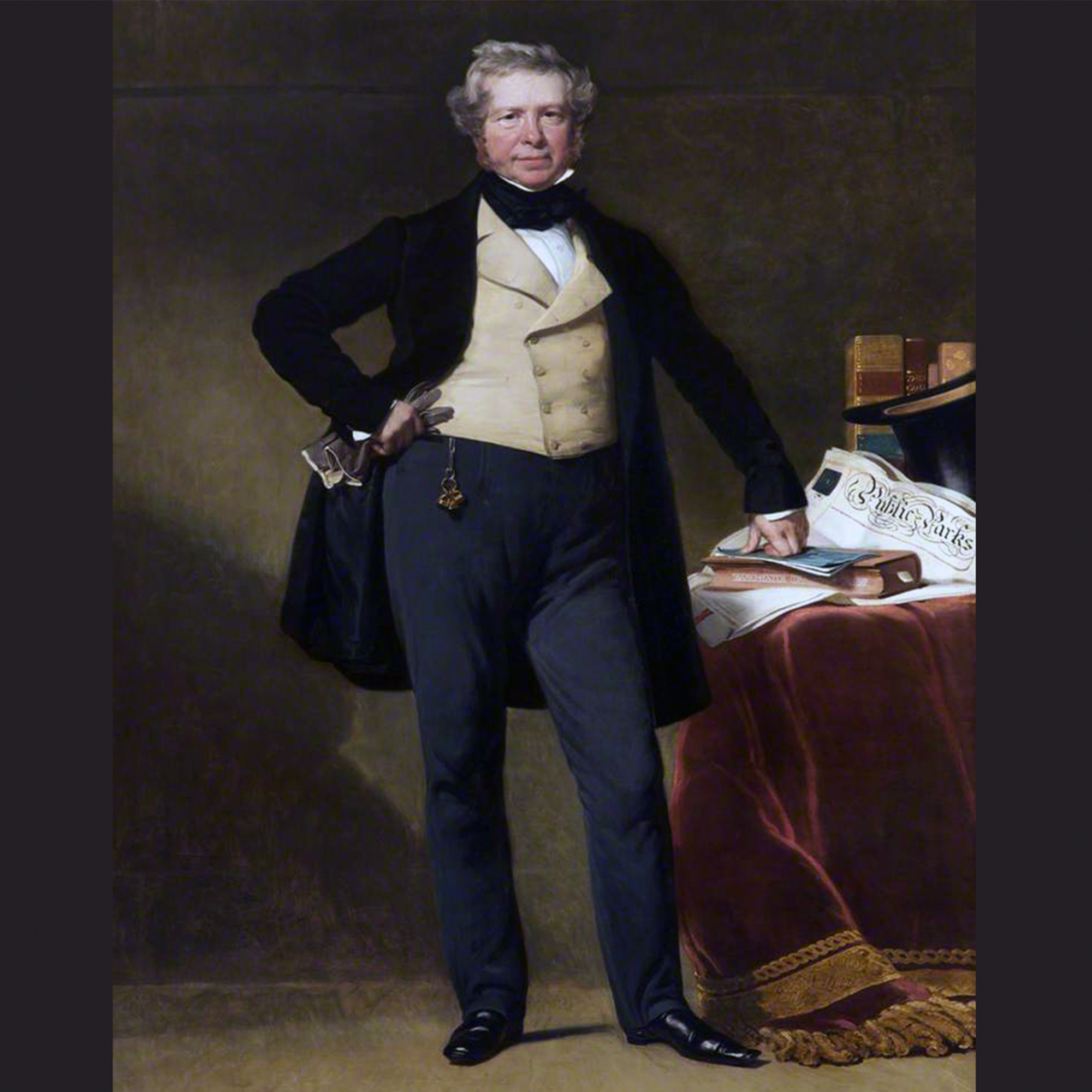
    Who kept the courts sitting and the streetlights lit when the state had almost no money to pay anyone? Two hundred years ago, British local government ran on unpaid labour. In a parliamentary survey of the boroughs from 1835, two in three of the people doing local government work were not paid at all. James Robinson (University of Chicago, CEPR) explains how this succeeded in this week's episode of VoxTalks Economics. Robinson and his co-authors call this the "embedded state". Members of the elite willingly took the unpaid jobs because the postings carried prestige and led to Parliament, promotion or a paid post. Less glamorous or dead-end postings -- the jailer for example -- had to be paid But the unpaid officers were more productive than the paid ones. Robinson argues this is not a quirk of England at that time. Rwanda runs a high-capacity state today on much the same basis, without ever raising the taxes the IMF says a proper government needs. The lesson for anyone trying to make government work: start with the society, not the tax code. New episode of VoxTalks Economics. Link in bio. Image: William Benjamin Watkins by George Patten / Manchester Town Hall. The research behind this episode: Heldring, Leander, Davis Kedrosky, James A. Robinson, and Matthias Weigand. 2026. "The Success of the Embedded State in England." CEPR Discussion Paper No. 21460. Centre for Economic Policy Research, London. To cite this episode: Phillips, Tim, and James A. Robinson. 2026. "The success of the embedded state." VoxTalks Economics (podcast). Assign this as extra listening. The citation above is formatted and ready for a reading list or VLE. About the guest James A. Robinson is University Professor at the Harris School of Public Policy and the Department of Political Science, University of Chicago, and a Research Fellow at the Centre for Economic Policy Research. His research spans comparative political and economic development, state capacity, and the long-run relationship between institutions and prosperity, with fieldwork across sub-Saharan Africa and Latin America. He shared the 2024 Nobel Memorial Prize in Economic Sciences with Daron Acemoglu and Simon Johnson. Research cited in this episode The 1835 parliamentary report. After the 1832 Reform Act, Parliament sent lawyers to roughly three hundred of the largest boroughs to record who worked for each borough government, what they did, whether they were paid, how much, and how well the job was done. The commissioners graded public goods directly; whether a jail existed, and if so whether its condition was satisfactory. The 3,500-page report is the factual basis for the paper, and it survives because Parliament itself did not know how these idiosyncratic, often medieval borough governments worked. The fiscal-military state. The dominant account of British state formation comes from John Brewer's The Sinews of Power (1989), which traces the rise of a tax-raising, salaried fiscal state after the Glorious Revolution of 1688. Robinson's point is that this describes 20,000 officials in London; across the rest of the country, where fiscal resources were thin, most government work was done for free. Mark Goldie and the unpaid office-holder. The historian and political theorist Mark Goldie documented the scale of unpaid local office-holding in earlier work; Robinson and his co-authors took that observation and asked how to study it systematically, which led them to the 1835 report. The embedded state. A state has high capacity when it can implement policy and provide public goods. The embedded state does this without the fiscal resources to fund a modern bureaucracy, by drawing on the social structure of the society it governs to motivate people to do government work unpaid. Because that social structure differs from place to place, embedding looks different in 1830s Britain, in modern Rwanda, and in 1970s South Korea; understanding the state means understanding the sociology beneath it. Rwanda's state capacity. Robinson and Leander Heldring also study the organisation of the state in Rwanda, where most government workers are unpaid and the country has never raised the 15% of national income in taxes that the International Monetary Fund treats as the threshold for a functioning state, yet implements policy effectively. Elinor Ostrom and the commons. Elinor Ostrom won the 2009 Nobel Memorial Prize for showing that communities can organise to provide and govern shared resources without the state. Robinson's argument is that the interface between such collective provision and the state is productive rather than antagonistic. Somaliland and the Guurti. Somaliland has an elaborate clan structure, and its upper house, the Guurti, represents the clans. Robinson offers it as a case where anyone trying to improve public good provision should start from the existing social structure rather than from tax reform. The History of British Local Government. Beatrice and Sidney Webb's nine-volume history of English local government documents the medieval charters, inherited land and bequests that determined how much fiscal capacity each borough had. That historically determined variation in whether a borough could afford to pay its officers is what the paper uses to identify the effect of pay on performance. More VoxTalks Economics episodes Nobel Special - James Robinson on antisocial norms. The saying “don’t be a toad” in Colombia tells people to mind their own business and not to tell on others. The warning that “snitches get stitches” is common to many societies. It’s easy to imagine why groups adopt prosocial norms like sharing and volunteering. But what sustains an “antisocial” norm?

  • S9 · E34
    June 19 · 26 min

    S9 Ep34: Making defence spending pay

    Defence spending is rising whether voters like it or not. The UK has committed to 2.5% of national income and aims for nearer 3.5% over the next decade, £30bn a year for each percentage point. What does the country get back? Can defence spending be pro-growth? In this week's VoxTalk, John Van Reenen (LSE) argues that getting a return on investment based on innovation need not be left to luck. For example nuclear power, GPS and the internet all began as military projects. The spillovers can be planned for; the trick is to make defence spending innovation-rich, and make procurement work better. Traditional top-down procurement mostly produces lock-in: the same firms winning over and over. Van Reenen's study of a project at the US Air Force shows the difference: when it asked firms what they could build, rather than telling them what to make, the competitions brought in startups, generated more original patents, and spilled ideas into the civilian economy. The research behind this episode: Moretti, Enrico, Claudia Steinwender, and John Van Reenen. 2025. "The Intellectual Spoils of War? Defense R&D, Productivity, and International Spillovers." The Review of Economics and Statistics 107 (1). An ungated version is available as NBER Working Paper No. 26483. Howell, Sabrina T., Jason Rathje, John Van Reenen, and Jun Wong. 2025. "Opening Up Military Innovation: Causal Effects of Reforms to US Defense Research." Journal of Political Economy 133 (11). An ungated version is available as NBER Working Paper No. 28700. To cite this episode: Phillips, Tim, and John Van Reenen. 2026. “Making defence spending pay.” VoxTalks Economics (podcast). Assign this as extra listening. The citation above is formatted and ready for a reading list or VLE. About the guest John Van Reenen is the Ronald Coase School Professor at the London School of Economics and Director of the Programme on Innovation and Diffusion at the Centre for Economic Performance. He chairs the Council of Economic Advisors to the Chancellor of the Exchequer and is a Research Fellow of the Centre for Economic Policy Research and the NBER. His research spans innovation, productivity, industrial organisation, and the public policies that shape them. Research cited in this episode Crowding in, not crowding out. Moretti, Steinwender and Van Reenen tracked industries across twenty-three economies over several decades and found that higher defence R&D spending raised private R&D rather than displacing it, with knock-on gains for productivity growth in the following decades. The SBIR Open Topics reform. The US Air Force Small Business Innovation Research programme traditionally ran "conventional" competitions specifying the technology wanted; from 2018 it added "open" competitions inviting firms to propose any idea useful to the Air Force. Howell, Rathje, Van Reenen and Wong compared near-winners with near-losers and found the open awards produced new military technology, more original patents, and civilian spillovers such as venture capital funding; the conventional awards mostly produced lock-in. Spin-offs from military research. Nuclear power, GPS and the internet each began as military projects before becoming civilian technologies; Van Reenen reaches back further to the claw of Archimedes, built to fend off the Roman fleet at Syracuse, as an early example of defence invention finding a wider use. The Draghi report. Van Reenen worked with Mario Draghi on his 2024 report on European competitiveness; he draws on it to argue that fragmented standards and duplicated procurement across Europe waste money, and that common standards and joint procurement would let countries specialise where they hold a comparative advantage. More VoxTalks Economics episodes In January, Tim spoke to Moritz Schularick of the Kiel Institute for the World Economy about whether Europe can convert its industrial base into credible deterrence. Listen to Can Europe Defend Itself?

  • S9 · E33
    June 12 · 19 min

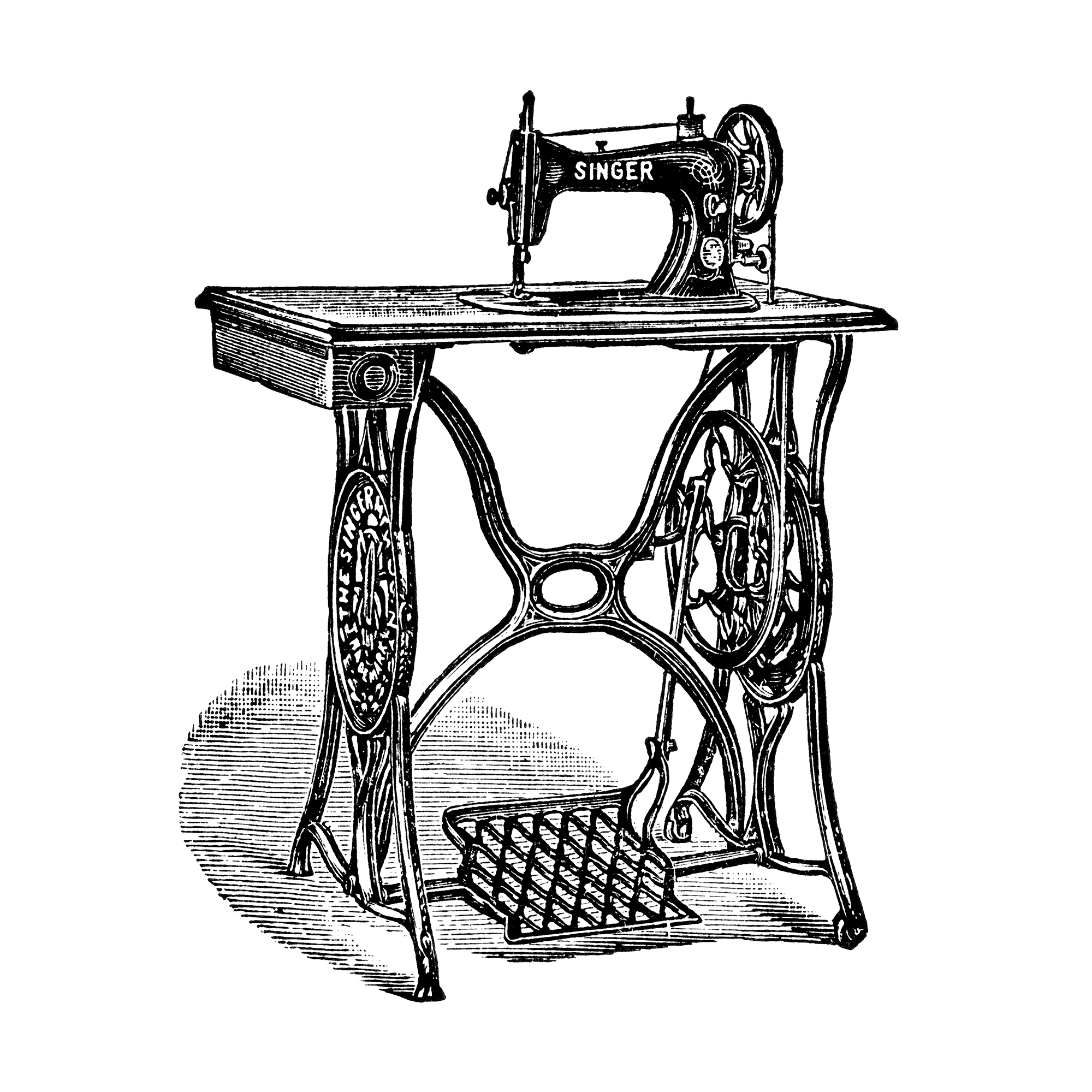
    S9 Ep33: Did the sewing machine liberate women?

    In January 1860 the New York Times gave its blessing to a new machine: the sewing machine. These "iron needle-women", it wrote, were the only invention that could be claimed “chiefly for women's benefit”. Sewing was women's work in the nineteenth century, rich or poor, and a machine could now do it in a fraction of the time. So did it set women free? Philipp Ager and Davide Coluccia have traced the adoption of the sewing machine in Massachusetts between 1850 and 1900, using census records and digitised business directories to work out who was exposed to it, in the factory and in the home. For poorer women the machine meant work, in garment factories and in boot and shoe production; they married later, had fewer children, and many never married at all. For wealthier women, who had few acceptable jobs open to them, the hours it saved went into earlier marriage and earlier motherhood. Philipp tells Tim Phillips the story of a machine that had very different impacts in different social classes. The research behind this episode: Ager, Philipp, and Davide Coluccia. 2026. "Liberation Technology? The Impact of the Sewing Machine on Women." CEPR Discussion Paper No. 21496. CEPR Press, Paris and London. CEPR Discussion Papers are gated; CEPR members and subscribing institutions can download the paper at the link. To cite this episode: Phillips, Tim, and Philipp Ager. 2026. "Did the Sewing Machine Liberate Women?" VoxTalks Economics (podcast). Assign this as extra listening. The citation above is formatted and ready for a reading list or VLE. About the guests Philipp Ager is professor of economics at the University of Mannheim, a Research Fellow of the Centre for Economic Policy Research, and an editorial board member at Explorations in Economic History. His research spans the economic history of the United States, technological change, and the long-run effects of crises and disasters; his work on the Great Fire of London of 1666 featured in an earlier episode of VoxTalks Economics. Research and sources cited in this episode The Song of the Shirt. Thomas Hood's poem about a destitute seamstress was first published anonymously in Punch in December 1843. Hood based it on the case of Mrs Biddell, a London widow prosecuted after pawning clothes she had been given to sew. Godey's Lady's Book. The most widely read women's magazine in the US at the time crowned the sewing machine "the queen of inventions" in 1860, having calculated that a man's shirt took 20,620 stitches and 14 hours to sew by hand, against an hour and a quarter by machine. Singer and the Sewing Machine: A Capitalist Romance. Ruth Brandon's 1977 biography of Isaac Singer (Google Books) is the source for both Singer quotations read in this episode. . How the Other Half Lives. Jacob Riis, a Danish-born police reporter in New York, published his account of tenement and sweatshop life in 1890 (free at Project Gutenberg). The shirtmaker's testimony read in this episode was given to the State Board of Arbitration during the shirtmakers' strike and reported by Riis in his chapter on the working girls of New York. The household appliance revolution. Philipp contrasts the sewing machine with the washing machines and vacuum cleaners that arrived two generations later, which economists have credited with freeing women to join the workforce; "Engines of Liberation" by Jeremy Greenwood, Ananth Seshadri and Mehmet Yorukoglu, Review of Economic Studies, 2005, covers this topic. The sewing machine saved time in the same way, but in the 1860s far fewer acceptable jobs awaited the women whose time it saved. More VoxTalks Economics episodes The economic effect of the Great Fire of London. Philipp Ager's previous visit to VoxTalks Economics, with Paul Sharp, on what contemporary records reveal about London's uneven recovery after 1666. Related reading on VoxEU Gender norms and the labour market, a VoxEU column on how norms, both internalised and enforced by peers, constrain women's labour market outcomes; the modern counterpart of the stigma that kept married women in Massachusetts out of paid work.

  • S9 · E32
    June 5 · 27 min

    S9 Ep32: The digital money supply

    Every day, billions of transactions settle between strangers who have no idea which bank the other uses. That lack of friction is not automatic. Nine-tenths of the money in daily circulation has been created by commercial banks, but it stays trustworthy only because central banks stand behind it, and keep the system in balance. In this week’s episode Tim Phillips talks to Stephen Cecchetti (Brandeis University, CEPR) about what happens when new forms of digital money test that architecture. Cecchetti is one of the authors of the eighth Barcelona Report in The Future of Banking series, part of the Banking Initiative at IESE Business School, just published by CEPR as a free download. Will retail central bank digital currencies, tokenised deposits, and stablecoins upset the delicate balance of system that has been running for decades? Stablecoins, for example, do not create money, but they claim the status of money without the institutional guarantee that makes money trustworthy. Three jurisdictions — the US, the EU, and the UK — are each resolving the same underlying contradiction in different ways. None has fully resolved it. The research behind this episode: Niepelt, Dirk, Stephen G. Cecchetti, Hélène Rey, and Xavier Vives. 2026. Digital Money: The Future of Banking 8. London: CEPR Press. Available as a free download from CEPR. To cite this episode: Phillips, Tim, and Stephen G. Cecchetti. 2026. “The digital money supply.” VoxTalks Economics (podcast). Assign this as extra listening. The citation above is formatted and ready for a reading list or VLE. About the guest Stephen Cecchetti is the Rosen Family Chair in International Finance at Brandeis University, a Research Fellow of the Centre for Economic Policy Research (CEPR), and a Research Associate at the NBER. He was previously Economic Adviser and Head of the Monetary and Economic Department at the Bank for International Settlements, and Director of Research at the Federal Reserve Bank of New York. His research spanning monetary policy, financial stability, and banking regulation has shaped both academic and policy debate over three decades. He blogs at moneyandbanking.com. Research cited in this episode Walter Bagehot's lender of last resort doctrine. In Lombard Street: A Description of the Money Market (1873), Bagehot argued that a central bank under stress should lend freely against good collateral at a penalty rate. The prescription remains the intellectual foundation for how central banks manage runs and systemic crises. Cecchetti invokes it to make the point that no private substitute for a central bank backstop has ever proved durable, and that the doctrine is now, one hundred and fifty years on, being tested by instruments its author could not have imagined. Monetary uniformity, mobility, and elasticity. The three institutional conditions underpinning general acceptance of money, developed in analysis by the Bank for International Settlements and discussed extensively in the report. Uniformity means a pound is a pound regardless of which bank holds it. Mobility means claims move between users and institutions at low cost and settle with finality. Elasticity means the supply of money can expand when it is under stress. Together they explain why we accept a deposit at face value without doing any analysis of the bank that issued it; and together they identify exactly where new forms of digital money create institutional gaps. Silicon Valley Bank failure, March 2023. SVB's collapse illustrates both the lender of last resort functioning and the limits of no-bailout commitments. Cecchetti notes that SVB's liabilities were still trading at par on the Thursday before its Friday failure because the Federal Reserve stood behind them. He also notes that Circle, the issuer of USDC, held $3.3 billion of its reserves at SVB and was effectively bailed out in the resolution. The episode is one of two occasions in the past twenty years where money market fund-like instruments have been backstopped by the Federal Reserve under stress. Genius Act (United States). Principle-based stablecoin regulation expected to come into effect in the US around 2027. Under its provisions, only stablecoins issued by bank-affiliated issuers will have access to the Federal Reserve; only those will therefore have the institutional backing needed to function as money. Stablecoins issued by non-bank entities will not. Markets in Crypto Assets Regulation (MiCA), European Union. The EU framework for crypto assets, which entered into force in 2024. For stablecoins, MiCA requires issuers to hold 30 to 60% of their reserves in bank deposits, with no provision for central bank backing. The stated rationale is to keep deposits within the banking system; Cecchetti notes this creates a different category of vulnerability and leaves the question of what happens under stress unresolved. Bank of England stablecoin proposal (United Kingdom). The Bank of England's approach differs from both US and EU frameworks by explicitly requiring large stablecoin issuers to hold significant reserve deposits at the Bank of England, making them in effect narrow banks with a direct central bank backstop. Cecchetti regards this as the most coherent of the three approaches in terms of institutional logic, though the same fundamental question applies: whether holding to that design under stress would be politically sustainable. Tether and the jurisdictional challenge. Tether, the largest stablecoin issuer, is registered in El Salvador having previously operated out of the British Virgin Islands. Its tokens are held by users in multiple countries, traded on exchanges in multiple jurisdictions, and backed by US Treasury securities. Cecchetti uses this to illustrate why local regulation, however well-designed, is necessary but not sufficient; effective oversight of instruments that are genuinely global requires international standards and coordination. Fractional reserve banking and the goldsmith model. The institutional structure described in the episode has roots in mid-seventeenth century England, when goldsmiths began issuing more paper receipts than they had gold in their vaults. The goldsmiths became bankers; the paper became money; the vulnerability to runs became a structural feature of private money creation that persists today. Cecchetti uses the history to make the point that while technology changes how we store and transmit information, the underlying architecture of trust in private money is as old as Newtonian physics. More VoxTalks Economics episodes Making banking safe, Stephen Cecchetti and Kermit Schoenholtz. Our financial system is supposed to be more resilient than before the global financial crisis, but that didn’t save Silicon Valley Bank, Signature Bank or First Republic. So what went wrong? Related reading on VoxEU New coins on the block: Digital currencies and the financial system. The authors of the Barcelona Report warn that “Digital money will be reliable only where sound institutions and robust technology come together.”

  • S9 · E31
    May 29 · 32 min

    S9 Ep31: How well does patent screening work?

    Someone once held a patent on the swing. A piece of wood. Two ropes. The US Patent Office granted it. How often does that actually happen, and what does it cost when the system gets it wrong? Or, how often is a valid patent claim rejected? Until now, no one knew. Tim Phillips talks to Mark Schankerman of LSE and CEPR, who with co-authors William Matcham spent eight years building the tools to find out. Using natural language processing across a dataset of around one million patent applications, twenty million claims, and fifty-five million examiner decisions, they measure how similar each incoming claim is to the hundred million claims that preceded it, going back to 1976. They find that 81% of initial patent claims fall below the patentability threshold; examiners must negotiate that figure down round by round. And they do a pretty good job. But around a third of all abandoned applications contain at least one valid claim the system failed to protect. You don’t see patents that aren’t awarded, so those errors have, until now, been invisible. The research behind this episode: Matcham, William, and Mark Schankerman. Forthcoming. "Screening Property Rights for Innovation." Econometrica. Available as CEPR Discussion Paper DP18334 (gated). Current version dated January 2026. To cite this episode: Phillips, Tim, and Mark Schankerman. 2026. “How “well does patent screening work? VoxTalks Economics (podcast). Assign this as extra listening. The citation above is formatted and ready for a reading list or VLE. About the guest Mark Schankerman is Professor of Economics at the London School of Economics, where his research spans innovation, intellectual property, and the economics of technology. His work has examined how patent rights shape R&D incentives, the market for technology, and the behaviour of innovative firms, with particular attention to the institutions that govern how property rights are allocated and enforced. Research cited in this episode Prior art. In patent law, prior art is any publicly available knowledge that predates a patent application. Examiners are required to search prior art and reject claims insufficiently distinct from it. The concept defines the outer boundary of what can be granted protection; the closer a claim is to prior art, the weaker the case for granting it. Type I and Type II errors in patent screening. A Type I error occurs when an examiner grants a claim that should have been rejected, typically because it is too similar to prior art. This allows the holder to charge royalties and, in the US context especially, to bring litigation. A Type II error occurs when a valid claim is refused or abandoned, depriving the applicant of protection they deserve and reducing future incentives to innovate. Schankerman argues that Type II error is systematically under-discussed in public debate: you can point to a patent that should not have been granted; you cannot point to the invention that was never protected. Structural model. The paper uses a dynamic structural model, meaning it models the actual institutional rules, incentives, and decision sequences that govern patent prosecution at the USPTO. Structural models allow researchers to run counterfactual experiments, asking what would happen if specific rules or incentives were changed, without running those experiments for real. This is the methodological basis for the paper's policy analysis. Patent distance measure. The paper's key methodological innovation is a quantitative measure of how similar a patent claim is to existing claims, constructed using natural language processing. The algorithm is trained on existing patent documents and compares the textual content of each incoming claim against all prior claims, covering roughly a hundred million filings going back to 1976. This produces a scalar distance figure that can be compared against an estimated patentability threshold. Deadweight loss. The standard economic term for the welfare cost created when prices are raised above competitive levels. In the patent context, a wrongly granted claim allows its holder to charge higher licensing fees than the market would otherwise bear, generating a cost for users without a corresponding social benefit. Request for Continued Examination (RCE). A procedural mechanism in the US patent system that allows applicants to re-open a finally rejected application in exchange for a fee. Unlike the European Patent Office or China's patent system, the USPTO places no hard limit on how many times an applicant can return. Schankerman's counterfactual analysis finds that restricting rounds to one substantially reduces screening costs and discourages strategic padding of claims. Unified Patent Court (UPC). A specialised European court that began operating in June 2023. Its remit covers the enforcement of patent rights across participating EU member states; it does not conduct patentability examinations. Schankerman argues that by reducing the cost of enforcement, the UPC raises the stakes of the upstream screening process: a wrongly granted patent becomes cheaper and easier to assert. Amazon one-click patent. Amazon received a US patent on the one-click online purchasing process. Schankerman uses the case to illustrate the core economic argument: the relevant question is not whether an invention is valuable, but whether patent protection was necessary to induce its development. If the invention would have occurred regardless, the grant creates costs without providing the intended innovation incentive. Intrinsic motivation. The tendency for individuals to pursue a task for its own sake rather than for external rewards. Schankerman's model estimates that USPTO examiners exhibit substantial intrinsic motivation and that this is the primary driver of screening quality. In counterfactual simulations, removing intrinsic motivation causes outcomes to deteriorate markedly; removing the credit-based extrinsic incentive system has a much smaller effect. Padding. Schankerman's term for the strategic behaviour in which patent applicants include claims that are broader than what is strictly novel, hoping some will survive examiner scrutiny and expand the scope of their eventual property right. The paper measures the extent of padding directly from the distance data and confirms it is widespread. More VoxTalks Economics episodes Patent pools for generic drugs, Mark Schankerman talks about how diffusion of new drugs is painfully slow in low-income countries. Do patent pools accelerate the process, and how we could still do a better job of licensing life-saving medicines? Related reading on VoxEU Patent screening, innovation, and welfare, Florian Schuett and Mark Schankerman, 6 Nov 2020. Critics of the patent system claim that patent rights are becoming an impediment to innovation, and an instrument to extract rents through patent litigation. This column develops a framework to quantitatively assess the effectiveness of the current US patent system and the welfare impact of reforms.

  • S9 · E30
    May 22 · 26 min

    S9 Ep30: Redefining the monetary standard

    The fiat money system has survived the Great Inflation, the global financial crisis, and a pandemic. But can it survive digital currencies? Bitcoin and the blockchain solved a genuine problem in computer science: how to stop people spending the same money twice. Forty years of successful inflation control means central bank money is stable; that is the stability in stablecoins, attempting to solve the volatility problem. What's next? What if the unit of account itself were indexed to consumer prices? Digitalisation might finally make that approach viable at scale. Price stability, by design. Will we still need cash? Maybe not now, But if you never use it, it may not be there if the blackout comes. The research behind this episode: Stracca, Livio. 2025. Redefining the Monetary Standard in the Digital Age: Digital Innovations and the Future of Monetary Policy. Springer Nature. To cite this episode: Phillips, Tim, and Livio Stracca. 2026. "Redefining the monetary standard." VoxTalks Economics (podcast). Assign this as extra listening. The citation above is formatted and ready for a reading list or VLE. About the guest Livio Stracca is Deputy Director General for International and European Relations at the European Central Bank, where he has worked for more than two decades. His research spans monetary economics, international finance, and the implications of digitalisation for central banking, with extensive work on exchange rates, capital flows, and the architecture of the international monetary system. Research cited in this episode The double-spend problem. The fundamental challenge in any decentralised digital payment system: how to prevent a participant from spending the same unit of money twice when there is no trusted central authority to verify transactions. Bitcoin's 2008 white paper offered an innovative solution by making the transaction ledger public, cumulative, and computationally expensive to rewrite. The trade-off is that transparency sacrifices privacy; every transaction is visible to all participants in the network. The blockchain. A distributed ledger in which transactions are grouped into sequential blocks, each cryptographically linked to the one before. Reversing any transaction requires rewriting every subsequent block, which demands enormous computational effort. This design solves the double-spend problem in a decentralised network but makes the system slow and costly to operate at scale. The payment trilemma. A framework discussed in the episode and in Stracca's book: any digital payment system can optimise for at most two of three properties simultaneously (universal access, security against fraudulent transactions, and privacy). Cash is the only instrument that escapes the trilemma; digital systems must accept a trade-off among the three, and the choice is often made implicitly by the designer of the system rather than through democratic deliberation. Hayek, Friedrich A. 1976. Denationalisation of Money. London: Institute of Economic Affairs. The classic argument for currency competition: let currencies compete freely and the one providing the most stable prices will win. Economists, including Milton Friedman, largely rejected the proposal on the grounds that money exhibits strong network externalities; the more people use a currency, the more attractive it becomes to the next user, producing a natural tendency towards monopoly. A formal modern revisitation, finding similar conclusions, is Fernández-Villaverde, Jesús, and Daniel Sanches. 2019. "Can Currency Competition Work?" Journal of Political Economy 127 (3): 1017 to 1058. Irving Fisher's compensated dollar. A proposal published in Fisher, Irving. 1913. "A Compensated Dollar." Quarterly Journal of Economics 27 (2): 213–235 (the same year the Federal Reserve was created). Fisher argued for a dollar whose purchasing power was held constant by adjusting its gold content in line with prices. The mechanical details of his proposal are no longer relevant, but its animating idea (indexing the unit of account to a price level) has gained new plausibility in a digital context. The Unidad de Fomento. Chile's inflation-indexed unit of account, in operation since 1967 and updated daily against the consumer price index. It is used widely in long-term contracts, including mortgages, and functions as a security that can be traded. Stracca cites it as evidence that an indexed monetary standard is operationally feasible, and as a prototype for what a digital equivalent might look like at larger scale. The Great Moderation. The period of low and stable inflation in advanced economies running roughly from the mid-1980s until the inflation episode of 2021 to 2023. Economists attribute it to improved monetary policy frameworks, particularly central bank independence, inflation targeting, and (crucially, in Stracca's account) the introduction of interest on reserves, which gave central banks precise control over the short-term interest rate without draining liquidity. Stracca treats the Great Moderation as the benchmark against which any proposed reform of the monetary standard must be judged. Programmable money. A form of digital money in which payment is conditional on an independently verifiable event, potentially confirmed by a machine rather than a human intermediary. Example: a payment that executes automatically when a delivery is confirmed by a sensor. Decentralised ledgers make such conditional payments technically straightforward; traditional banking systems can approximate them but with far greater friction. Stracca notes significant enthusiasm for programmable money but also real scepticism about whether the benefits outweigh the complexity in practice. More VoxTalks Economics episodes Stablecoins and Global Imbalances, Gilles Moëc explains why we can think of stablecoins as a radical macroeconomic experiment that has arrived at exactly the moment the US external position is showing signs of stress. Can blockchain decentralise money, contracts, and finance? Bruno Biais on blockchain’s potential, its flaws, and its future. Do stablecoins threaten financial stability? Richard Portes thinks so.

  • S9 · E29
    May 15 · 21 min

    S9 Ep29: Guns and Butter

    Europe's NATO members have pledged 3.5% of GDP to rearmament. The political argument is already about which social programmes will be sacrificed to pay for this, when the government chooses guns instead of butter. What does history tell us about what politicians will do? Christoph Trebesch and Johannes Marzian spent four years assembling the Global Budget Database: 150 years of primary government budget documents from 20 countries, with 116 identified military spending booms in peace and war. They find that governments almost never cut social spending when they rearm; they expand both military and welfare budgets simultaneously. The bill arrives later, as higher taxes. Top income rates typically rise by 10 to 15 percentage points in the decade following a military boom, funded mainly through broad-based income and value-added taxes. With rearmament underway, will history repeat itself? The research behind this episode: Marzian, Johannes, and Christoph Trebesch. 2026. "Guns and Butter: The Fiscal Consequences of Rearmament and War." CEPR Discussion Paper 21193. [Gated] To cite this episode: Phillips, Tim, and Christoph Trebesch. 2026. "Guns and Butter." VoxTalks Economics (podcast). Assign this as extra listening. The citation above is formatted and ready for a reading list or VLE. About the guest Christoph Trebesch is Director of the Research Center on International Finance at the Kiel Institute for the World Economy and Professor of Macroeconomics at Kiel University. His research spans sovereign debt, financial crises, China's role in global finance, the economics of populism, and the long-run fiscal history of military spending. He is a Research Fellow of the Centre for Economic Policy Research (CEPR). In 2024 he received the Hermann Heinrich Gossen Award, Germany's leading economics prize for economists under 45. Research cited in this episode The Global Budget Database is the primary dataset introduced in this paper. Marzian and Trebesch constructed it from primary archival sources, including national parliamentary budget documents, for 20 countries from 1870 to 2022. Unlike existing datasets that rely on planned rather than realised expenditures, it records what governments actually spent, broken down by ministry and purpose. The Switzerland case illustrates the stakes: standard sources record Swiss military spending at around 2% of GDP during the World Wars. The archival record shows actual spending reached 10% once off-budget items are included; five times the apparent figure. The Correlates of War (COW) Military Expenditures Dataset is one of the most widely used secondary-source datasets for historical military spending, maintained by the Correlates of War Project. Trebesch uses the Swiss case to illustrate the limitations of secondary-source data: the COW series misses off-budget military items that primary archival documents capture, producing a significantly distorted picture of wartime mobilisation in a number of countries. Credit booms methodology provided the template for identifying military spending booms. Trebesch and Marzian define a boom as an increase of at least 6.5 percentage points of military spending as a share of GDP over two consecutive years, ending when spending growth falls to zero. This approach, adapted from the literature on financial credit expansions and their economic consequences, allows systematic cross-country and cross-period identification without relying on retrospective classification alone. Each algorithmically flagged episode was then verified against historical sources. Local projections are the main statistical technique used to trace the long-run fiscal path following military booms. The method estimates how a variable (here, tax revenues and top income rates) evolves over time following an identified shock. It is well suited to the protracted dynamics Trebesch and Marzian observe: tax rates rising over a decade or more after a military buildup and, critically, not returning to pre-boom levels once the spending episode ends. Exogenous military shocks are the basis of the paper's causal identification strategy. To separate the fiscal effects of military spending from broader economic conditions, the authors distinguish episodes triggered by external geopolitical events from those driven by domestic factors. France's rearmament in the mid-1930s, forced by Nazi Germany's military expansion regardless of French domestic politics, is used as an example of an exogenous peacetime boom. Germany's own rearmament in the same period would not qualify as exogenous, since Germany initiated the shock. The same logic applies to wars: a country attacked faces an exogenous event; the attacker does not. More VoxTalks Economics episodes In Can Europe Defend Itself?, featuring Moritz Schularick, Christoph’s colleague from the Kiel Institute, we examine whether Europe has the industrial and strategic capacity to convert its rearmament commitment into credible deterrence, and what European rearmament could mean in practice. Related reading on VoxEU Defence spending: no free lunch, a VoxEU column arguing that increased military expenditure adds modestly to near-term economic activity while adding to fiscal pressure; lasting economic benefits from rearmament are far from guaranteed. Macroeconomic impacts of defence spending, a VoxEU column modelling the EU-wide effects of raising NATO members' defence spending to 5% of GDP by 2035; projected GDP gains are modest and come at the cost of higher debt-to-GDP ratios. Converging military spending and its fiscal consequences, a VoxEU column examining long-run trends in military expenditure across countries and the fiscal footprint they leave behind. The economic effects of military support for Ukraine: evidence from fiscal multipliers in donor countries, a VoxEU column finding that spending multipliers for military expenditure can exceed those for other categories of public spending.

  • S9 · E28
    May 8 · 25 min

    S9 Ep28: Immigration and integration in Europe

    More than one in eight people living in the EU today was born in another country. In fourteen of the bloc's largest economies, it is closer to one in six. For ten years, the same team of researchers has asked what happens to those people next: do they find work, close the gap with their native-born neighbours, and build a settled life? The tenth Migration Observatory report is about to be published, and the decade-long picture it paints is not what the political debate might lead you to expect. Tommaso Frattini of the University of Milan, one of the report's editors, joins Tim Phillips to examine what a decade of consistent, comparable data actually reveals about immigrant integration across Europe. Who are Europe's immigrants, and has that changed? Is the employment gap between migrants and natives closing, stable, or widening? And does it matter whether a migrant arrives from inside the EU or out? The politics of migration is often poisonous, but the data tells a different story. The research behind this episode Frattini, Tommaso, and Anissa Bouchlaghem. 2026. "Immigrant Integration in Europe." Migration Observatory Annual Report, 10th edition. Collegio Carlo Alberto / LdA / CEPR Press. Free download from CEPR Press, forthcoming on 18 May. To cite this episode Phillips, Tim, and Tommaso Frattini. 2026. "Immigration and integration in Europe." VoxTalks Economics (podcast). Assign this as extra listening. The citation above is formatted and ready for a reading list or VLE. About the guest Tommaso Frattini is Professor of Economics at the University of Milan and a member of the CEPR Research Policy Network on the Political Economy of Migration. His research spans labour markets, immigration economics, and the long-run integration of migrant populations in Europe. He is one of the founding editors of the Migration Observatory Annual Report series, now in its tenth year, and a co-author of the Collegio Carlo Alberto / LdA reports that underpin this episode. Research cited in this episode European Union Labour Force Survey (EU-LFS). Eurostat, collected annually by national statistical offices and harmonised across EU member states. The EU-LFS is the primary source for the Migration Observatory's comparative analysis of employment outcomes across countries and over time. The figures cited in this episode are drawn from the 2024 edition, the most recent available at the time of publication. The employment gap. A measure of labour market integration defined as the percentage-point difference in the probability of being employed between migrants and native-born residents of the same country. A gap of zero would indicate full employment parity. The Migration Observatory computes the gap both raw and adjusted for observable characteristics such as age, education, and gender; the adjusted figure isolates the portion of the gap that cannot be explained by differences in workforce composition between the two groups. Migration Observatory Annual Report series. Published annually since 2016 by the Collegio Carlo Alberto and the LdA (Laboratorio di Economia Applicata), in partnership with CEPR. Each edition uses the EU-LFS to benchmark migrant labour market outcomes against those of natives across EU member states. The tenth edition, published in 2026, is the first to offer a consistent decade-long comparison across the full series. The EU Pact on Migration and Asylum. Agreed by EU member states in 2024, the Pact is the EU's most significant attempt to harmonise migration and asylum policy across member states. Frattini describes it as a step forward on harmonisation; he also notes that European policy continues to prioritise border control over integration, a balance he argues the data does not support. More VoxTalks Economics episodes Immigration and Public Goods (June 2023). Do immigrants put pressure on local schools, hospitals, and public finances? Research from the United States tests the most common fears directly. The findings have only become more relevant since the episode aired.

  • S9 · E27
    May 1 · 23 min

    S9 Ep27: The right to choose to die

    Content note: this episode discusses assisted dying, end-of-life choices, and suicide. Some listeners may find the content distressing. In April 2024, Daniel Kahneman — one of the most influential psychologists of the twentieth century — emailed his close friends to say goodbye. He was 90 years old, his kidneys were failing, his mental lapses were increasing, and he had decided it was time to go. He flew to Switzerland to end his life at an assisted dying clinic there, because New York, where he lived, did not permit it. Thirteen American states currently allow medical assistance in dying; most require a terminal diagnosis with death expected within six months. Canada, Belgium, and Switzerland allow it on broader terms. The UK introduced a bill to parliament, but it failed to pass. The debate on whether we have the right to end our own lives has not been resolved. This week Tim Phillips talks to Al Roth of Stanford University about how economics can contribute to the debate on medical aid in dying (MAID). Roth, a Nobel Prize laureate, has written a new book that argues this, and similar debates, often miss the key insight: the binary choice of “allow” versus “ban” rarely reflects reality. For example, in the United States, he explains that physicians in jurisdictions where assisted dying is illegal are familiar with the practice of administering doses of drugs that will relieve pain, but also end life. Roth's argument is not that assisted dying is always right. It is that a moral position that ignores the costs of a ban is not more ethical — it is less honest. Economists, he says, bring one specific thing to this debate: the insistence that trade-offs be made explicit. The book discussed in this episode: Roth, Alvin E. 2026. Moral Economics: What Controversial Transactions Reveal about How Markets Work. Basic Books. Published 21 May 2026. To cite this episode: Phillips, Tim, and Alvin Roth. 2026. “The right to choose to die." VoxTalks Economics (podcast). Assign this as extra listening. The citation above is formatted and ready for a reading list or VLE. About the guest Alvin Roth is the Craig and Susan McCaw Professor of Economics at Stanford University. He was awarded the Nobel Prize in Economics in 2012, shared with Lloyd Shapley, for the theory of stable allocations and the practice of market design. He is one of the architects of modern matching market design, having redesigned the systems used in the United States to match medical residents to hospitals and students to schools. A previous book, Who Gets What — and Why, was published in 2014. Research cited in this episode Repugnant transactions is Alvin Roth's term for a class of transactions that are controversial not because no one wants to engage in them — that would be disgust — but because some people do want to engage in them and others believe they should not be allowed to, typically on moral or religious grounds. The key feature is that the objectors suffer no direct externality from the transaction; their objection is to the thing happening at all, regardless of whether it affects them. Roth's examples across the book include medical aid in dying, kidney sales, paid blood plasma donation, surrogacy, and access to certain drugs. The policy implication is that repugnant transactions, unlike ordinary market failures, cannot be resolved by standard economic tools; they require explicit engagement with the moral contest and careful mechanism design to decide what is permitted, to whom, under what conditions. Oregon's Death with Dignity Act (1997) was the first US state law permitting physician-assisted dying. It requires a terminal diagnosis with death expected within six months, confirmation from two physicians, a waiting period, and self-administration of the medication by the patient. According to the 2024 report of the Oregon Health Authority, assisted dying accounts for roughly 0.9% of all deaths in Oregon; many patients who obtain a prescription never use it. Oregon's 27 years of data make it the most-studied model for the policy, and its take-up rates and population demographics have informed both advocates and critics in other jurisdictions. Ezekiel Emanuel and vulnerable populations: A 2016 paper by physician and bioethicist Ezekiel Emanuel and co-authors examined the demographics of patients who access assisted dying in jurisdictions where it is legal and found no evidence that vulnerable populations — defined by disability, age, mental illness, or socioeconomic status — accessed it at higher rates than the broader population of dying patients. Roth cites this as evidence against the argument that legalisation creates pressure on the vulnerable to choose death, while noting that this population-level finding does not rule out individual cases of pressure. The Hippocratic Oath is the earliest recorded professional commitment by physicians not to participate in assisted dying. Roth notes that Hippocrates formulated the oath in the fifth century CE, and that the very inclusion of a prohibition on helping patients die implies the practice was already occurring — physicians were being asked to do it. The religious objection — that decisions about life and death belong to God — and the medical objection — that a physician's role is to save life, not end it — have both been consistent features of opposition to assisted dying across more than two millennia. The Canadian Supreme Court decision (Carter v. Canada, 2015) struck down Canada's criminal prohibition on physician-assisted dying on the grounds that it infringed Canadians' constitutional rights to life and to security of the person. The court's reasoning included the counterintuitive argument that denying access to assisted dying could cause people to end their lives earlier and less safely — while still capable of doing so — out of fear of being unable to later. The Canadian framework that followed is more permissive than US state laws: it does not require a terminal diagnosis but instead an irremediable condition causing intolerable suffering. Canada has since debated, and repeatedly delayed, extending the framework to mental illness as a sole underlying condition. Mechanism design is the field of economics concerned with designing rules, institutions, and processes to achieve desired outcomes, particularly in settings where participants have private information or conflicting interests. Roth is one of its leading practitioners. In the context of assisted dying, mechanism design asks: who can apply, through what process, verified by whom, with what waiting periods, and with what safeguards against coercion or mistaken diagnosis? The differences between Oregon's model (terminal diagnosis, self-administration, annual reporting), Canada's model (irremediable suffering, physician or nurse practitioner administration permitted), and Switzerland's model (available to non-residents) are, in Roth's framing, different mechanism designs with measurably different outcomes. More VoxTalks Economics episodes In February, Tim spoke to Martin Ellison and Julian Ashwin about what decisions seniors will take about their later years and whether policy can accommodate both their abilities and their needs. Listen to The Economic Consequences of Living Longer.

Showing 21–38 of 38 episodes