
Skip to content
Artwork for Two Buddhas

Two Buddhas

MarkWhiteLotus

Two Buddhas is a fresh take on Nichiren Buddhism for the 21st century—warm, curious, and free of dogma. Hosted by author and teacher Mark Herrick, this podcast explores Ren Buddhism, a contemporary path rooted in the chanting of Namu Myoho Renge Kyo, the wisdom of the Lotus Sutra, and the power of personal awakening. Two Buddhas blends deep Buddhist insight with everyday relevance, spiritual questioning, and the courage to let go of rigid systems. Real stories, real practice, real life—this is the Lotus without the walls

Play
  • 22 episodes
  • Avg 17 min
  • English
Counted on this page — what you have heard stays on this device, so it is not something the list can be paged by.
  • S2 · E14
    June 13 · 25 min

    Original Fear

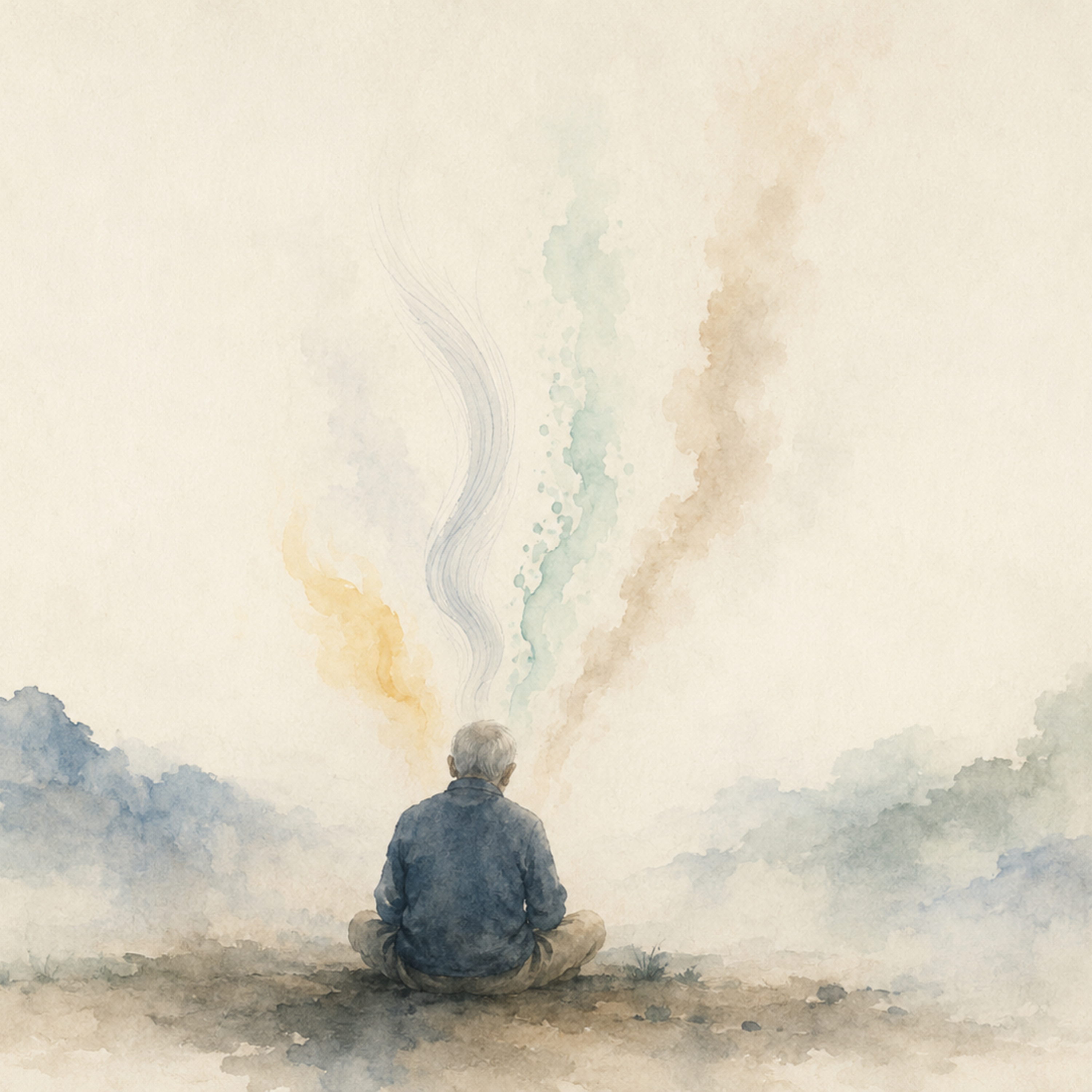
    This episode of The Explainer that original fear is the foundational root of human suffering, preceding even the classic Buddhist "three poisons" of greed, anger, and ignorance. This primal anxiety begins with the first breath at birth and is inherited from billions of years of biological evolution centered on survival. Rather than a flaw to be suppressed, fear is presented as a natural condition that requires gentle acknowledgment and "tending" rather than intellectual reasoning. The source suggests that by recognizing our fundamental interconnectedness, we can loosen the grip of this ancient defensive machinery. Ultimately, spiritual maturity involves transforming this energy into the four divine abodes, shifting from a state of self-protection to one of compassion and equanimity.
  • S2 · E13
    June 10 · 22 min

    Compassion Comes from within

    This podcast explores the Bodhisattvas of the Earth from the Lotus Sutra, reinterpreting them as internal human virtues rather than literal cosmic figures. The author argues that Nichiren Buddhism has often strayed into fundamentalism by personifying these archetypes, specifically by labeling Nichiren as the exclusive reincarnation of the leader Jogyo. Instead, the text maps the four primary bodhisattvas to the four divine abodes: loving-kindness, compassion, sympathetic joy, and equanimity. By viewing these figures as metaphors for ethical conduct, the author suggests that anyone can embody their qualities through ordinary acts of kindnessand emotional stability. Ultimately, the text presents these teachings as a practical guide for developing wholesome habits and improving one's character in daily life.

Showing 21–22 of 22 episodes