Skip to content
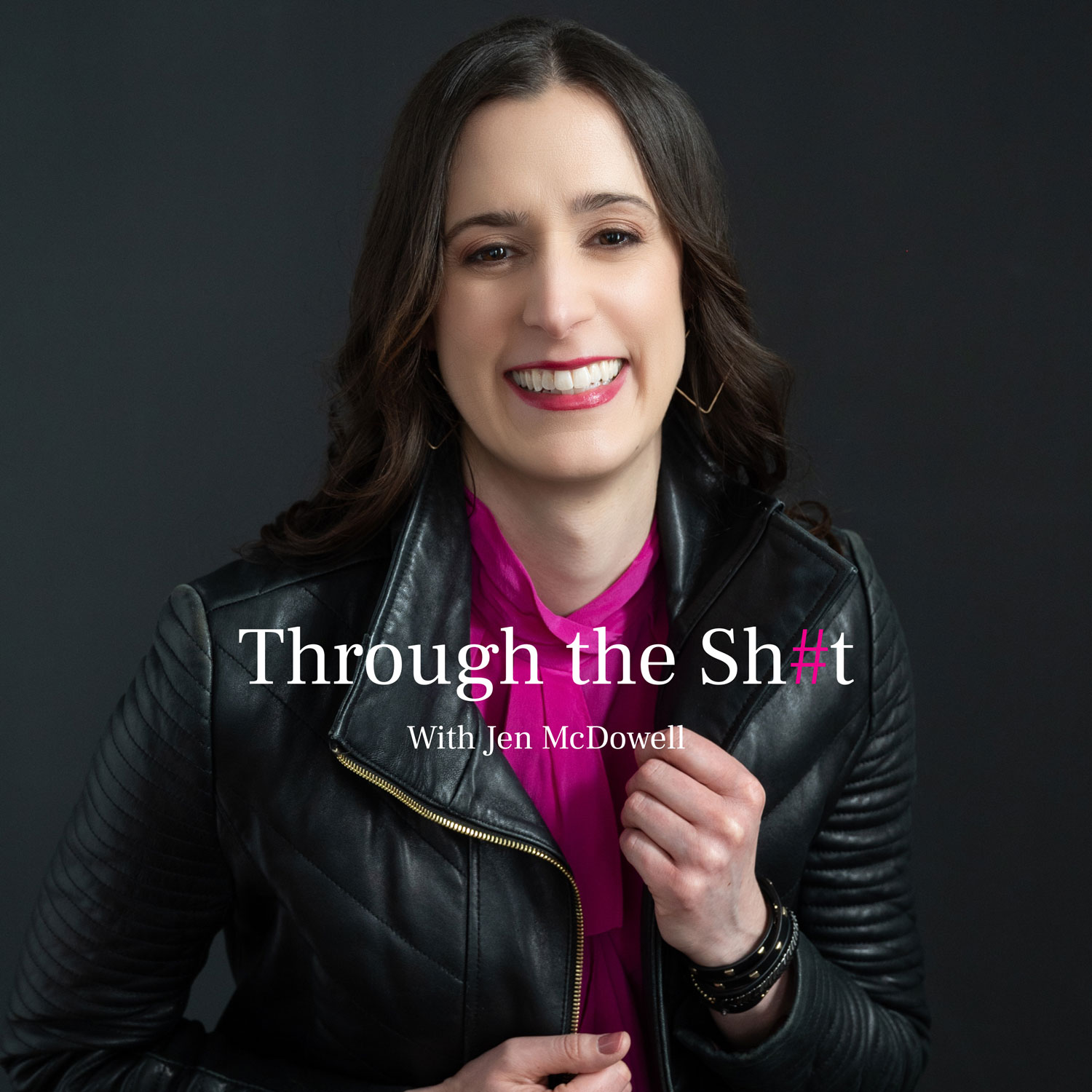
Artwork for Through the Sh#t with Jen McDowell
EducationSelf-ImprovementHealth & FitnessMental HealthExplicit

Through the Sh#t with Jen McDowell

Jen McDowell

Welcome to Through the Sh#t! A podcast for anyone who's going through the shit and the people who love them. In every episode we hear a new story of loss, hope, and resilience, and how going through the shit led to something greater.

This podcast was born out of host Jen McDowell's personal experience going through a series of life-altering losses in rapid succession, followed by a period of deep, unshakeable fear. Through her own journey, Jen learned how unresolved trauma can impede one's ability to recover from personal and professional setbacks and that there are lessons to be learned from even the most terrible of experiences.

Each episode focuses on a new guest who shares their own tragic or traumatic experience that affected them personally or professionally (or both). With equal parts brutal honesty and gratitude, we'll explore topics such as grief, loss, hope, resilience, motivation, regret, wisdom, mental health, and healing.

A new episode drops every other week.

Play
  • 20 episodes
  • fortnightly
  • Avg 39 min
  • English
  • #20
    Tuesday · 51 min

    Erin Briley | When Your Body Becomes the Thing You Can’t Ignore

    What happens when the body you’ve always relied on suddenly becomes the thing you can’t ignore? On this week's episode of Through the Sh#t, certified functional nutrition counselor Erin Briley takes listeners on her decades long health journey with debilitating back pain that transformed her outlook on what our bodies can do when given the support they need. For Erin, the chronic pain started when she was young. Her first back surgery came at 17. Two more surgeries followed—including a spinal fusion that failed—before a rollover accident left her with even more injuries. But eventually, Erin realized that continuing to focus only on what was structurally wrong with her spine wasn’t going to be enough. Her recovery took her somewhere she never expected: a deeper exploration of nutrition, movement, stress, sleep, and the relationship between all of them. But this isn't really a story about finding the right diet or fixing your back. It's a story about what happens when the rules change. In this episode, we talk about: * What it's like when chronic pain changes your relationship with your body * The unglamorous reality of recovery * The impact of medical trauma and its unanticipated consequences * Why recovery rarely happens as quickly—or as neatly—as we want it to * The surprising role nutrition played in Erin's pain and recovery * Learning to trust yourself and recognize the signals your body is sending you * Why small, consistent changes can matter more than dramatic transformations * Rebuilding a life while accepting that your body may always have limitations * Finding gratitude and possibility without pretending everything is fixed While Erin's journey ultimately led her to a career in functional nutrition, her bigger message is one that extends far beyond chronic pain: Sometimes rebuilding doesn't mean getting your old life—or your old body—back. Sometimes it means learning the new rules and figuring out what is possible from here. https://www.alerafunctionalhealth.com/ https://www.linkedin.com/in/erin-briley-168682273/

    • Transcript
  • #19
    September 15 · 21 min

    Suzanne Blaising | Part 2: What Does a Psychedelic Experience Actually Feel Like?

    What does it actually feel like to take a psychedelic? And what happens when the experience becomes emotional, uncomfortable—or downright terrifying? In this episode of Through the Sh#t, Dr. Suzanne Blazing takes us inside the psychedelic experience itself, sharing what happens during a ketamine or psilocybin medicine session, what can surface when our usual defenses are lowered, and why a difficult experience isn't necessarily a bad one. Suzanne also gets deeply personal, sharing her own experience with psilocybin while grieving the death of her daughter—and the realization that alcohol had become a way of avoiding emotions she didn't know how to face. We talk about what people fear most when considering psychedelic-assisted therapy: What if I lose my mind? What if something comes up that I can't handle? What if I want it to stop? And we explore why the person sitting beside you matters so much when you're doing this work. For people actively considering psychedelic therapy, as well as anyone navigating trauma, grief, depression, anxiety, or a major life transition, this conversation offers a candid look at what the experience can actually be like—and why the goal isn't necessarily to have a beautiful or blissful journey. Sometimes the work is learning to stay with what we've spent years trying to escape. In this episode, we explore: * What happens during a psychedelic-assisted therapy session * What psilocybin and ketamine experiences can feel like * Why psychedelic experiences can become emotionally or physically difficult * Suzanne's personal experience with psilocybin and grief * What can happen when trauma, memories, or avoided emotions surface * Why a “bad trip” may be an oversimplification * The importance of having a trained therapist or facilitator present * Why psychedelic therapy isn't a magic bullet or a shortcut around the work Note: This conversation is intended for education and discussion, and does not constitute medical advice. Psychedelic treatments are not appropriate for everyone, carry psychological and medical risks, and should only be considered following careful screening within applicable legal and professional guidelines. https://www.planbtherapy.com/ https://askp.org/directory/ https://wholeness.com/meet-our-team/ https://pmc.ncbi.nlm.nih.gov/articles/PMC8715255/ https://pmc.ncbi.nlm.nih.gov/articles/PMC4782448/

    • Transcript
  • #18
    September 1 · 34 min

    Suzanne Blaising | What is Psychedelic-Assisted Therapy? And Why Preparation Matters.

    #psychedelictherapy #mentalhealth #trauma #traumahealing What if the most important part of psychedelic-assisted therapy isn't the actual medicine, but the work you do before and after the journey? Psychedelics are getting increasing attention as a potential treatment for depression, anxiety, PTSD, substance use disorders, and other mental health challenges. But psychedelic therapy isn't simply about taking a psychedelic and waiting for a breakthrough. In this episode of Through the Sh#t, host Jen McDowell talks with Dr. Suzanne Blazing, a psychotherapist, psychedelic medicine therapist, and educator with more than 25 years of clinical experience—and hundreds of psychedelic medicine sessions. During our conversation, Suzanne shares: * How she went from being skeptical of psychedelics to to becoming deeply immersed in the field. * The difference between ketamine and psilocybin. * How psychedelic therapy may help people access emotions, memories, and perspectives that have been difficult to reach through traditional approaches. * Who may—and may not—be a good candidate for psychedelic-assisted therapy. * What happens during the preparation process before a medicine session. * The importance of intention- and expectation-setting. * Why the psychedelic experience isn't the finish line—it's the beginning; and * The critical role of integration in turning insight into actual behavioral change. This is Part 1 of a special conversation about psychedelic-assisted therapy. Be sure to subscribe so you don't miss Part 2, where Suzanne and I explore what actually happens when you take the medicine. Note: This conversation is intended for education and discussion, and does not constitute medical advice. Psychedelic treatments are not appropriate for everyone, carry psychological and medical risks, and should only be considered following careful screening within applicable legal and professional guidelines. https://www.planbtherapy.com/ https://wholeness.com/doctors/dr-suzanne-blaising/

    • Transcript
  • #17
    August 18 · 42 min

    Michelle DeCola | Moving Forward After Grief

    What if the solution to your grief isn't about working harder? If you're a high-achieving person who's used to solving problems, pushing through hard things, and getting on with it, grief can be particularly frustrating. You may understand that you've experienced a loss—and still wonder why you can't seem to get yourself back to "normal." In this episode of Through the Sh#t host Jen McDowell continues her conversation with licensed psychotherapist Michelle DeCola about grief, loss, and what it really takes to heal. Together, they explore: * How our family of origin and gender stereotypes can inform our attitudes about grief, * Why grief isn't just about death, * Why grief doesn't follow a timeline, * How to support someone who is grieving, including what to say, what not to say, and why simply being present can sometimes be more powerful than trying to fix someone's pain, * How to recognize the difference between honoring your grief and being genuinely stuck, * How grief protects us, * Why shame, self-blame, and the pressure to "get over it" can keep us from moving forward, * How to take healthy risks when you're ready to move forward; and * How acceptance of your grief and hope for the future can coexist. For anyone rebuilding their life after a major loss, they talk about something that often gets overlooked: rebuilding trust in yourself. Whether you're considering a new relationship, changing careers, going back to school, or simply trying to figure out who you are now, healing doesn't necessarily require one giant leap. Sometimes, it's about taking small, manageable risks and learning that you can trust yourself again. You don't have to rush your grief. You don't have to judge yourself for still hurting. And you don't have to know exactly what comes next. Sometimes healing begins with compassion, curiosity, and trusting that you will find your way. This is Part 2 of a two-part conversation with Michelle DeCola. The episodes can be watched or listened to in either order, but together they offer a fuller conversation about grief, resilience, and healing. Book mentioned by Michelle: Finding the Words Michelle's website

    • Transcript
  • #16
    August 4 · 41 min

    Michelle DeCola | Why We Chase Happiness Instead of Healing

    We tend to think grief only happens after the death of someone we love. But what if that's only part of the story? Sometimes, the reason we're unable to move forward has less to do with motiviation--and more to do with grief we've never been taught to recognize. In this episode of Through the Sh#t, host Jen McDowell sits down with licensed psychotherapist Michelle DeCola to unpack why our culture is so uncomfortable with grief and how that discomfort quietly shapes our lives. Together, they explore why so many high-achieving individuals become experts at chasing success while knowingly (or unknowingly) avoiding the emotions that actually create healing. You'll hear why perfectionism, achievement, people-pleasing, and even staying in unfulfilling careers or relationships can become protective coping strategies. More importantly, you'll discover why curiosity—not judgment—is often the first step toward lasting change. Whether you're navigating a career transition, divorce, empty nest, burnout, the loss of someone you love, or simply questioning who you're becoming, this conversation offers a compassionate new way to understand why moving forward can feel so difficult. If you've ever wondered, "Why do I feel stuck when everything looks fine on the outside?" this episode is for you. This is Part 1 of a special conversation about grief, resilience, and healing. Be sure to subscribe so you don't miss Part 2, where we continue exploring how understanding grief can transform the way you lead, connect, and live. @michelledecola226 Sue Johnson (emotionally focused therapy): https://drsuejohnson.com/ Michelle's website: https://lifecounselinginc.com/

    • Transcript
  • #15
    July 21 · 49 min

    My Trauma is Not My Identity

    What if the hardest part of healing isn't surviving your past… What if it's letting go of the identity your past created? In this episode of Through the Sh#t host Jen McDowell talks with Anna, a consultant who works alongside young people and communities fighting for racial and social justice to build movements and drive youth-led systems change. Anna shares how the death of her mother at a young age and her experience navigating the juvenile justice system created deeply ingrained narratives about her worth and the safety of the world around her. These narratives led to a years-long addiction and a belief that she was fundamentally broken. But this isn't a story about addiction or Anna's sobriety. It's a story about identity. Anna shares how grief shaped the way she saw herself and the world, why getting sober wasn't the end of her healing journey, and a pivotal realization: trauma is something she's lived through—not who she is. Together, Jen and Anna explore what it means to rewrite deeply ingrained narratives, rebuild trust, take risks before you feel ready, and discover that joy can sometimes feel more uncomfortable than pain. If you've ever wondered who you might become without the stories you've carried for years, this conversation will challenge you to imagine something different. In this episode, you'll discover: Why trauma often becomes mistaken for identity How community helps us heal what isolation cannot Why happiness isn't the goal—but purpose can be What "learning to tolerate joy" really means How one small step can completely change the direction of your life If this conversation resonates with you, subscribe to Through the Sh#t, share this episode with someone who needs to hear it, and visit ThroughTheShit.com to learn more about working with Jen.

    • Transcript
  • #14
    July 7 · 32 min

    11 Stories, One Truth: What Going TTS Teaches Us About Losing Ourselves and Finding a Truer Version

    In this episode of Through the Sh#t, host Jen McDowell, reflects on the episodes that have aired to-date, drawing on an unexpected theme that's emerged from every guest's story. Jen discusses the idea of reinvention and how "going through the sh#t" often leads to a reconstruction of one's identity. In each guest's story, there is a natural arc, where lives of certainty and careful planning are disrupted by a rupture or significant life experience. What follows are periods of disorientation and self-preservation while recovering from the event. Eventually, the guests begin wrestling with self-doubt and the difficult questions: Who am I? How has this experience changed me? To what extent did I contribute to this mess? And, who do I want to become now? Guests talk about destruction as a necessary precursor to transformation, and how time facilitates healing and growth. To conclude, guests offer perspective on how they have been shaped by their experiences and the ways in which it has changed their relationships with themselves and with others.

    • Transcript
  • #13
    June 23 · 38 min

    Bryan White | Breaking the Stigma of Addiction

    In this episode of "Through the Sh#t," Jen McDowell and Bryan White explore the complexities of addiction, recovery, and the stigma surrounding mental health. Bryan shares his personal journey through addiction, the challenges he faced as an HR professional, and the importance of spirituality and community in his recovery process. For Bryan, the phrase "going through the shit" represents a journey of introspection and truth. He emphasizes the importance of disrupting the narratives we've been told, and those we tell ourselves. Following one's truth serves as a pathway toward healing and clarity. As a gay man in the 80s and 90s, Bryan navigated a world that often felt isolating. His desire to fit into the gay community led him to clubs where he unwittingly began experimenting with drugs. What started as a quest for connection quickly spiraled into a struggle with addiction that would define a significant part of his life. He reveals the shame that accompanied his hidden addiction, especially as an HR professional who preached against substance use. Jen and Bryan discuss the stigma surrounding mental health and substance use. Brian shares his fears about revealing his struggles, expressing a hope that by sharing his story, he can help others understand the complexities of addiction. He urges leaders in the workplace to recognize that addiction can touch anyone, regardless of their professional success, and that compassion is key to addressing these challenges. Bryan also reflects on his suicide attempt as his darkest hour that ultimately forced him to confront the reality of his situation. After this harrowing experience, he began to explore spirituality and seek a deeper meaning in life, demonstrating his resilience and the human capacity for growth amidst adversity. Bryan's journey through the shit serves as a powerful reminder that vulnerability is a strength, and sharing our stories can lead to healing. By breaking the stigma surrounding addiction and mental health, we can create a more compassionate world where individuals feel empowered to seek help, embrace their truth, and refrain from imposing expectations on themselves and others. The key takeaways from Brian's story are clear: introspection, authenticity, and the courage to confront our struggles are vital in the journey of self-discovery. https://na.org/ https://www.calm.com/blog/the-feelings-wheel https://www.linkedin.com/in/bryanlwhitehr/

    • Transcript
  • #12
    June 9 · 39 min

    Sue Eyres | Life and Death Sh#t

    In this episode of 'Through the Shit', host Jen McDowell speaks with Susan Eyres about her harrowing journey through a life-threatening health crisis. Susan shares her experience of battling a mysterious illness that left her unable to breathe, the emotional toll it took on her and her family, and the eventual diagnosis of a rare liver condition that required a transplant. Susan's story begins at the start of the global COVID-19 pandemic when she woke up on her couch, disoriented and unable to recognize her surroundings. After being rushed to the emergency room and treated for the flu, she is discharged from the hospital, only to have her health continue to deteoriate over the course of several months, leaving her in a state of fear and confusion. She faced the harsh reality of being isolated from loved ones and missing significant family events, while doctors all across the country were unable to find a cause for her illness. For months, Susan navigated the labyrinth of medical opinions and tests, seeking explanations for her declining health, yet answers eluded her. Finally a breakthrough: doctors diagnosed her with a rare liver condition that hindered oxygenation to her lungs and required a transplant. This revelation brought both relief and uncertainty about her future because diagnosis was merely the first step. Susan then faced the daunting task of getting on the transplant list and preparing for surgery, which involved numerous medical procedures while managing the emotional toll of waiting for a donor. With a story that highlights resilience, connection, and the beauty of human spirit, Susan takes us through her challenging experiences and the lessons learned along the way. Throughout her journey, Susan emphasizes the importance of community support, resilience, and finding joy in small moments, even in the face of adversity. She offers valuable insights and advice for others going through similar struggles, highlighting the power of connection and the necessity of asking for help.

    • Transcript
  • #11
    May 26 · 10 min

    Lessons Learned So Far...

    In this episode of "Through the Sh#t," host Jen McDowell reflects on the stories shared by recent guests and distills their experiences into ten key lessons that can help others navigate their own difficult times. Topics include: * The inescapable truth that everyone will go through sh#t. * The cumulative effect of multiple sh#tty circumstances. * The paradox of both loneliness and connection that can occur when going through the sh#t. * The importance of finding support and comforting resources. * The benefits of getting clarity after going through the sh#t. * Ways to feel more empowered. * The blessing of impermanence. To conclude the episode, Jen reflects on her own growth and offers a teaser for upcoming episodes.

    • Transcript
  • #10
    May 12 · 52 min

    Sh#t in Three Acts | Kimberly Zimmerman-Rand

    In the latest episode of "Through the Shit," host Jen McDowell welcomes Kimberly Zimmerman-Rand, financial counselor, consultant and coach, who shares her experience of professional growth after experiencing the same setback on three separate occasions. From rejection letters to unexpected firings, Kimberly's story is a testament to resilience and the strength of the human spirit. Kimberly relays her story of being forced to make a hard career pivot in her early 20’s, only to face the all-too-common experience of working for a micromanager who undermines her abilities. Her enthusiasm for her role was met with hostility that escalated to intimidation and eventually culminated in a shocking confrontation where he chased her across a parking lot and fired her on the spot. While the experience was disorienting, Kimberly quickly moved on to other roles only to have the same experience occur again and again over the course of decade. Through these experiences, Kimberly learned the importance of resilience in overcoming workplace challenges. She urges listeners to recognize their own strength and to understand that overcoming adversity is part of the professional journey. Her experiences serve as a reminder that setbacks can often lead to new opportunities and personal growth, emphasizing that we can indeed rise from the ashes of our trials. Discussion highlights include: - Making sense of the misalignment between your self-image and how others see you (and having the self-compassion not to let others shape your perspective) - Looking beyond our jobs as a source of identity - The consequences of ignoring your intuition - The importance of building both subject matter expertise and relational skills like self-regulation, seeing the big picture and getting yourself out of bad situations. - The importance of managing your own career trajectory and maintaining strong professional networks - How to navigate age/gender dynamics and have candid workplace conversations about expectations - How to identify red flags during the interview process - Finding clients who are values aligned and setting boundaries along the way Website: https://www.dragonflyfinancialsolutions.com/ LinkedIn page: https://www.linkedin.com/in/kimberlyzrand/

    • Transcript
  • #9
    April 28 · 1 hr

    When Sh#t Strikes Twice | Monika Demel and Matthew Sommerfeldt

    In this episode of Through the Sh#t, host Jen McDowell sits down with award-winning photographer Monika Demel and her husband, Matthew Sommerfeldt, as they reflect on Monika's two-time experience with breast cancer. Monika relays the ups and downs of her experience: receiving her first diagnosis right before Christmas, the difficult decisions regarding her treatment plan, and the parts of cancer recovery that no one talks about. Just as Monika thinks she's in the clear, she learns she needs to have additional surgery to remove the marker placed during her biopsy, followed by the discovery of new, fast-growing tumors and an extensive second surgery and grueling radiation protocol. Monika and Matthew reflect on the ways that people react to and process difficult news, comparing Monika's preference to work through her diagnosis privately with Matthew's preference to be surrounded by supportive people during his own cancer journey several decades prior. Given their differences in preference, they share tips for how they navigated the experience together, ensuring that they both had outlets to process what was happening. Monika also reflects on the impact of her diagnosis on her life and work, and the creation of the Brave Pink Warrior project to empower other women facing similar challenges. https://www.demelportraits.com/ https://www.linkedin.com/in/monikademel/ https://www.linkedin.com/in/matthew-sommerfeldt-858ab315/

    • Transcript
  • #8
    April 14 · 38 min

    Ioana Bazavan | When Your "Best" is a Moving Target

    In this episode of Through the Sh#t, host Jen McDowell sits down with Ioana Bazavan, a seasoned cybersecurity professional and coach as she reflects on her journey of "chosen sh#t" leading teams through major security breach recovery efforts. Between the grueling hours, strained relationships and the high-stress environments, Ioana emphasizes the importance of staying grounded and nurturing resilience when navigating turbulent waters. Ioana shares her experience leading back-to-back breach recovery efforts for Fortune 500 companies, noting that these situations demanded both technical expertise and emotional fortitude. Arriving at a client site to find executives in panic mode, she quickly learns that trust and communication are paramount. As a consultant, she must navigate the delicate balance of offering guidance while being perceived as an outsider, highlighting the necessity of emotional intelligence in leadership, especially during crises. Ioana reflects on the importance of corporate culture and basic kindness as people are navigating the worst days of their professional lives. She also talks about the importance of expectation setting--at home and at work--and learning how to indirectly influence others by maintaining a calm, consistent presence. Jen and Ioana discuss parallels between the challenges that occur at work and those that occur in our personal lives, noting that bad things can happen even when preventive measures have been taken. They also discuss the importance of recognizing that "doing one's best" is a moving target and that self-recrimination is a waste of energy. Ultimately, Ioana's journey through challenging cybersecurity breach recovery projects is a testament to the power of resilience. In sharing her experiences, she demonstrates the breadth and profundity of learning opportunities that can result from choosing to do hard things. Key takeaways include the importance of building relationships, maintaining consistency, having patience and restraint, and recognizing that resilience is forged through adversity. https://www.linkedin.com/in/ioanavb www.oceanswellopps.com

    • Transcript
  • #7
    March 31 · 49 min

    Shira | The Darkness is No Longer My Existence

    In the latest episode of "Through the Sh#t," host Jen McDowell engages in a heartfelt conversation with Shira, whose journey of recovery from sobriety, an eating disorder, undiagnosed health conditions, and toxic relationships has become a powerful narrative of hope and authenticity. Now 23 years sober, Shira emphasizes that achieving sobriety did not automatically lead to a life filled with happiness; rather, it was the beginning of a series of challenges that required continuous introspection and healing. Hers is an ongoing journey of dealing with pain, finding strength in vulnerability and the power of self-worth to break free from cycles of toxicity. As part of their conversation, Shira reflects on how each challenge prepared her for the next and the small moments--like interventions from friends and her doctor--that played a pivotal role in her recovery. Jen and Shira also discuss the tools that have been important to Shira's recovery, including, self-reflection, boundary-setting, self-advocacy, and surrounding oneself with positive influences. Throughout her journey, Shira has learned to embrace her voice and authenticity. Now, as a Swiftie influencer, Shira connects with her audience through shared joy, kindness, and music. Her passion for Taylor Swift has not only brought her happiness but has also created a community where she can share her story and inspire others. Shira's journey from addiction and toxic relationships to embracing her true self is a powerful reminder that resilience and authenticity can lead to profound transformation. Her story illustrates that while life may present challenges, it is possible to rise above them and find joy in community and self-expression. Key takeaways include: 1. Healing is a continuous journey that requires confronting uncomfortable truths. 2. Surrounding yourself with positive influences is crucial for growth. 3. Embracing your authenticity can lead to genuine connections and fulfillment. 4. It’s never too late to pursue your passions and reinvent your life. sherahice.com shira.taylorsversion@gmail.com https://www.tiktok.com/discover/shira-taylors-version https://www.tiktok.com/@shiras.version?_r=1&_t=ZP-94f7ZVpGk1P https://www.facebook.com/share/1DxRWntdYZ/?mibextid=wwXIfr

    • Transcript
  • #6
    March 17 · 40 min

    Ursula Taylor | From Righteous Rage to Self-Forgiveness

    In this episode of "Through the Sh#t", host Jen McDowell engages in a thoughtful conversation with consultant and former litigator Ursula Taylor. Together, they explore the complexities of conflict and the often-overlooked power of communication, through Ursula's recent experience of feeling betrayed by her partner. Ursula reflects on her holistic approach to conflict resolution and how her significant emotional response in the moment unearthed valuable insights on self-forgiveness, self-awareness and personal growth. Ursula opines on the fact that life is filled with both big and small challenges that can knock us down. She advises against the common impulse to power through difficulties. Instead, she emphasizes the importance of pausing and reflecting inward and that consistent grounding practices, like meditation or exercise, can have a positive impact our daily well-being. She also stresses the importance of learning from these experiences, otherwise they can become recurring patterns in our lives. Jen and Ursula also discuss how miscommunication can create and perpetuate emotional turmoil, particularly when our true feelings are masked by anger or frustration. Ursula’s rage texting reflects a common reaction to emotional distress, reminding listeners that even those skilled in conflict resolution have opportunities to improve. A pivotal lesson from Ursula’s experience is the necessity of self-forgiveness in order to achieve inner peace. She urges listeners to express their emotions openly, stating the feelings aloud to create distance from guilt or shame and connect with the underlying need. This practice not only helps in processing emotions but also fosters healthier relationships with others. Ursula also shares lessons about the importance of allowing and channeling rage, apologizing from a place of authenticity rather than shame, and boundary setting, particularly when engaging with narcissists. Through Ursula's experience, we are reminded that we can transform our struggles into lessons for growth. By prioritizing ourselves and creating space for our emotions, we can resolve conflicts with grace and understanding. Remember, it’s not just about getting through the shit; it’s about learning and growing from it. https://conflictreimagined.com/ https://www.linkedin.com/in/ursula-taylor-b0ba4729/ https://www.psychologytoday.com/us/basics/narcissism

    • Transcript
  • #5
    March 3 · 40 min

    Laurie Oswald | Climbing the Mountain of Sh#t

    In this episode of "Through the Shit," host Jen McDowell talks with Laurie Oswald, whose life was turned upside down during the tumultuous year of 2020. Her journey offers invaluable insights into resilience, community, and the power of human connection. As the founder of InteraWorks, a global learning company, Laurie found herself facing unprecedented challenges when her business evaporated after the world shut down. Suddenly, the business she had nurtured for three years was facing an existential threat. As if the pandemic wasn't enough, Laurie also faced a series of unexpected trials in her personal life. First was the move from Tennessee to Florida to live in her deceased mother's home as a way to reduce expenses. Then came the hurricane that significantly damaged her mother's home, followed by the sudden loss of her father-in-law the week Laurie and her family moved into temporary lodging accommodations. Theses personal losses compounded the stress of the pandemic and the upheaval in her professional life, showcasing how personal and professional challenges can intersect. Laurie described this period as a "piling on" of events that forced her to confront not only the immediate chaos but also her deeper emotional scars from the loss of her mother 2 decades earlier. Despite the overwhelming circumstances, Laurie and her work team chose to adapt rather than succumb to despair. They pivoted quickly, offering free programs focused on resilience to support individuals and organizations navigating the crisis. This proactive approach not only helped others but also fostered a sense of unity and purpose within her team. Through this journey, Laurie discovered resilience in the face of overwhelming odds. She emphasized that going through the shit often calls forth a strength one may not know they possess. It is about finding joy in simplicity, reaching into new depths and finding a way to climb that daunting mountain of challenges. Her experience illustrates that while the journey may be fraught with difficulties, it is also a path toward personal growth and transformation. Key takeaways from her experience include the importance of community support, the need for resilience in the face of challenges, and the realization that even in our darkest moments, we can find a way to rise. InteraWorks website Laurie Oswald LinkedIn

  • #4
    February 17 · 47 min

    Crystal Duke | Turning Sh#t Into Manure

    In this episode of "Through the Sh#t," host Jen McDowell speaks with Crystal Duke, a multi-certified health coach and fitness trainer and the founder of CLifeFit. Crystal shares her deeply personal journey of navigating the loss of her father to colon cancer, a tragic event that forced her to confront her beliefs about faith, identity, and purpose. This episode is a powerful reminder that even in the darkest times, there is potential for growth and transformation. During the episode, Jen and Crystal reflect on the origins of their friendship, bonding over memories of a double date and how their connection deepened during the isolating days of the COVID-19 pandemic. Crystal recalls how a simple gesture of kindness helped them forge a bond that would support them through their entrepreneurial journeys. Crystal then reflects on her own experiences with pain and loss, stating that these moments often leave us feeling unprepared and questioning our life choices. She emphasizes that it's during these pivotal times that we must make critical decisions that determine our path forward. In Crystal's telling of her story, she speaks of her father's unexpected and devastating health diagnosis and how she struggled to reconcile her faith with the reality of her father’s deteriorating condition. Despite her fervent prayers and hopes for a miracle, the moment her father took his last breath shattered her beliefs and left her feeling lost and angry. In the aftermath of her father’s death, Crystal faced a long and arduous journey of rebuilding her faith and sense of self. She emphasizes the importance of surrounding oneself with supportive people during times of grief. Crystal stresses the need for honesty and grace in healing, acknowledging that it is vital to allow oneself to feel anger and pain. She encourages listeners to embrace their emotions and sit with them until they are ready to move forward. Despite the darkness of her experience, Crystal’s story is one of resilience. She illustrates how stepping into vulnerability and allowing herself to grieve ultimately led to personal growth and transformation. Through her work with CLifeFit, she empowers others to find balance in their lives, integrating faith and wellness to support holistic healing. Crystal Duke Website Crystal Duke LinkedIn CLifeFit Instagram 988 helpline Find mental health treatment Tags: #Grief #Resilience #Faith #Loss #PersonalGrowth #HealthAndWellness #Entrepreneurship #Support #Transformation

  • #3
    February 3 · 51 min

    Kate Ayre | After the Brushfire, New Seeds Can Grow

    In the latest episode of "Through the Shit," host Jen McDowell sits down with Katherine Ayre, an aviation executive and attorney, to discuss her profound journey of transformation following a series of devastating life events. This engaging conversation explores the meaning of resilience and the lessons that emerge when we confront our deepest challenges. Kate shares her story, beginning with her premonition in 2021 that foreshadowed a series of challenging events. She explains how she faced multiple significant losses, including her job, stability, important relationships, and a moral injury, which left her feeling unsupported by the systems and people she once relied on. In the telling of her story, Kate vividly describes a moment of feeling utterly untethered while driving on a busy highway, capturing the essence of feeling lost and overwhelmed experienced by many individuals facing life's trials. Throughout the conversation, Kate emphasizes that the journey through such experiences is not merely about surviving but about emerging stronger and more authentic than ever. She also speaks of the importance of support systems during difficult times and the the disillusionment that can result from the realization that failure of support systems is a painful but crucial part of the journey. Despite the darkness, Katherine reassures listeners that it is possible to not only survive but to find meaning and growth in hardship. She likens this transformation to a garden that must endure a brush fire to regrow, illustrating that the end of one chapter often leads to the beginning of another. One of the most powerful messages Kate shares is the idea that there is power and peace that comes from living a life that is aligned with your moral compass, and it’s okay to mourn the loss of who you were and what you thought life would be. Through her experiences, she has learned that by embracing vulnerability, we can cultivate strength and resilience. Kate encourages listeners to trust the process and to have faith that brighter days will follow the darkest moments. Tags: #Transformation #Resilience #PersonalGrowth #LifeLessons #OvercomingAdversity #Authenticity #KatherineAyre #ThroughTheShit

  • #2
    January 19 · 36 min

    Mallory Roth | That's Not Shit, Girl

    In this episode, Jen talks with Mallory Roth, an executive coach who works with thoughtful founders, leaders, and coaches who’ve hit an inflection point in their work. Mallory shares her experience of choosing to follow the "right on paper path," only to learn that path was not right after all. After experiencing a significant health setback, Mallory abandoned her chosen path to explore the world of specialty coffee and the Pacific Northwest, which was the first step on her path to becoming a coach. Through this experience, Mallory learned the importance of using values as a decision-making compass and the power of boldness regret. Their conversation delves into the subjective nature of trauma and adversity, defining the concept of 'going through the shit,' the impact of chosen change, coping mechanisms and support systems, and the importance of rituals to as a way to move forward after a transition. Mallory Roth website Mallory Roth LinkedIn Bruce Feiler book: Life is in the Transitions Dan Pink book: The Power of Regret

  • #1
    January 18 · 12 min

    The Sh#t that Started it All

    In this episode, Jen McDowell introduces her podcast 'Through the Sh#t,' which focuses on personal stories of loss, hope, and resilience. She shares her own transformative journey through significant life events, including the loss of her mother, marriage struggles, and the impact of trauma. The podcast aims to create a space for connection, healing, and hope for those experiencing their own challenges.

Showing 1–20 of 20 episodes