Skip to content
Artwork for The Space Advisory Podcast
ScienceSocial Sciences

The Space Advisory Podcast

Wanyana Racheal

The Space Advisory podcast is one of the signature activities of the Space Law and Security Advisory (SLSA). The podcast, hosted by Wanyana Racheal, delivers authoritative and incisive commentary on space law and security. The Space Advisory podcast is hosted monthly, and is tailored to space law and (inter)national security professionals, government and inter-governmental space actors, defence and security agencies, and the industry.

Play
  • 4 episodes
  • Avg 48 min
  • English
  • August 25 · 1 hr 9 min

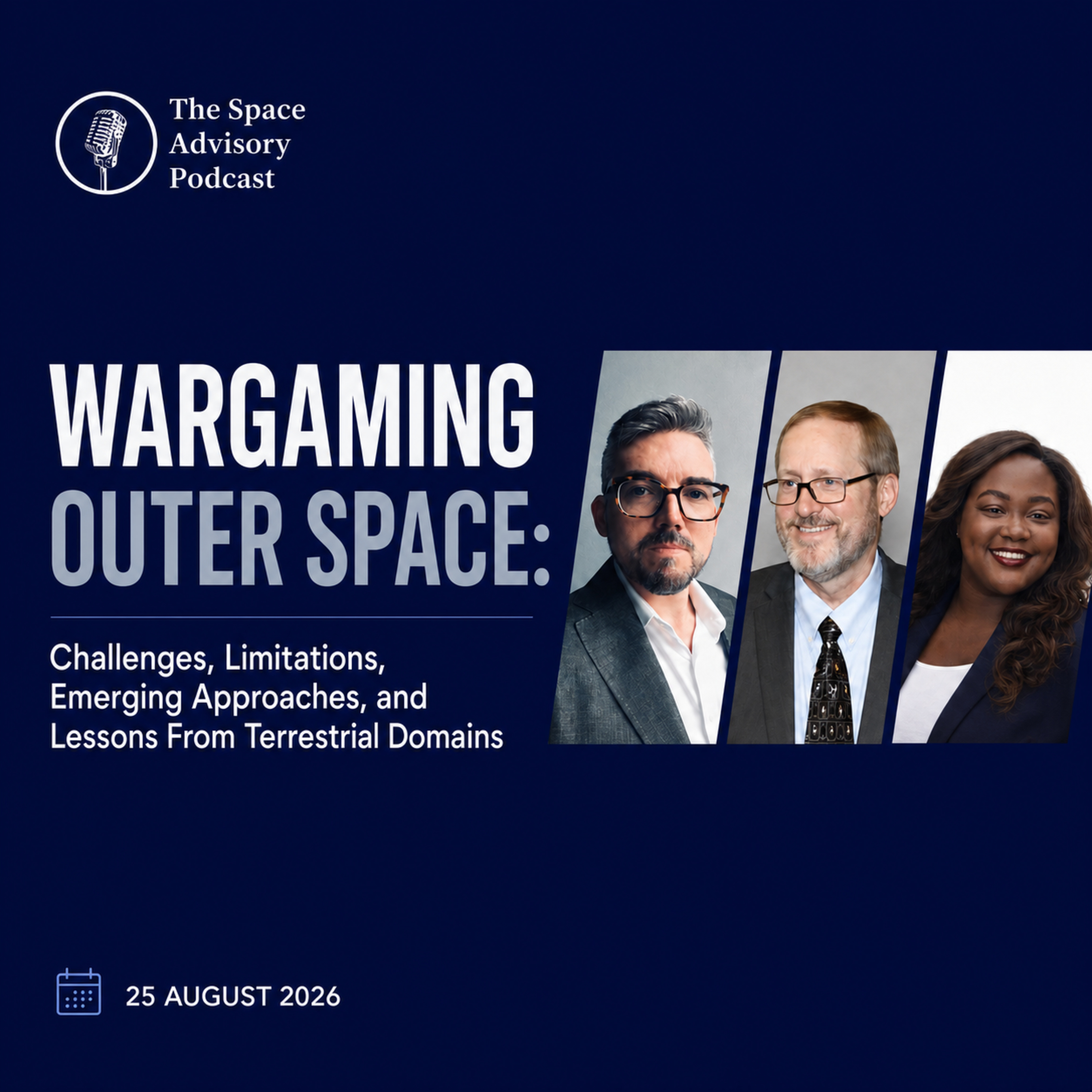
    Wargaming Outer Space

    Wargames have long been used by military leaders to improve decision making. They are a highly effective pedagogical tool to explore and reinforce legal and ethical decision making, especially in contested operational environments. In the context of space where the rules of warfare remain largely untested, wargaming presents a viable tool for the development of a professional warfighting ethos and the combat readiness required to avoid operational surprises, in a safe-to-fail environment. Planners trying to build wargaming and experimentation infrastructure, however, must contend with a scarcity of empirical data on how conflict might unfold in space. In this episode, Ms. Wanyana Racheal hosts Dr. ⁠David Banks⁠, a senior lecturer in Wargaming at the Department of War Studies, King’s College London, and Mr. ⁠Paul Szymanski⁠, a noted expert in space defence theory, policy, doctrine, strategies, and tactics, and president, Space Strategies Center to discuss wargaming conflict in space. They explore the challenges, limitations, emerging approaches, and lessons from terrestrial domains, for wargaming space.
  • #3
    March 31 · 53 min

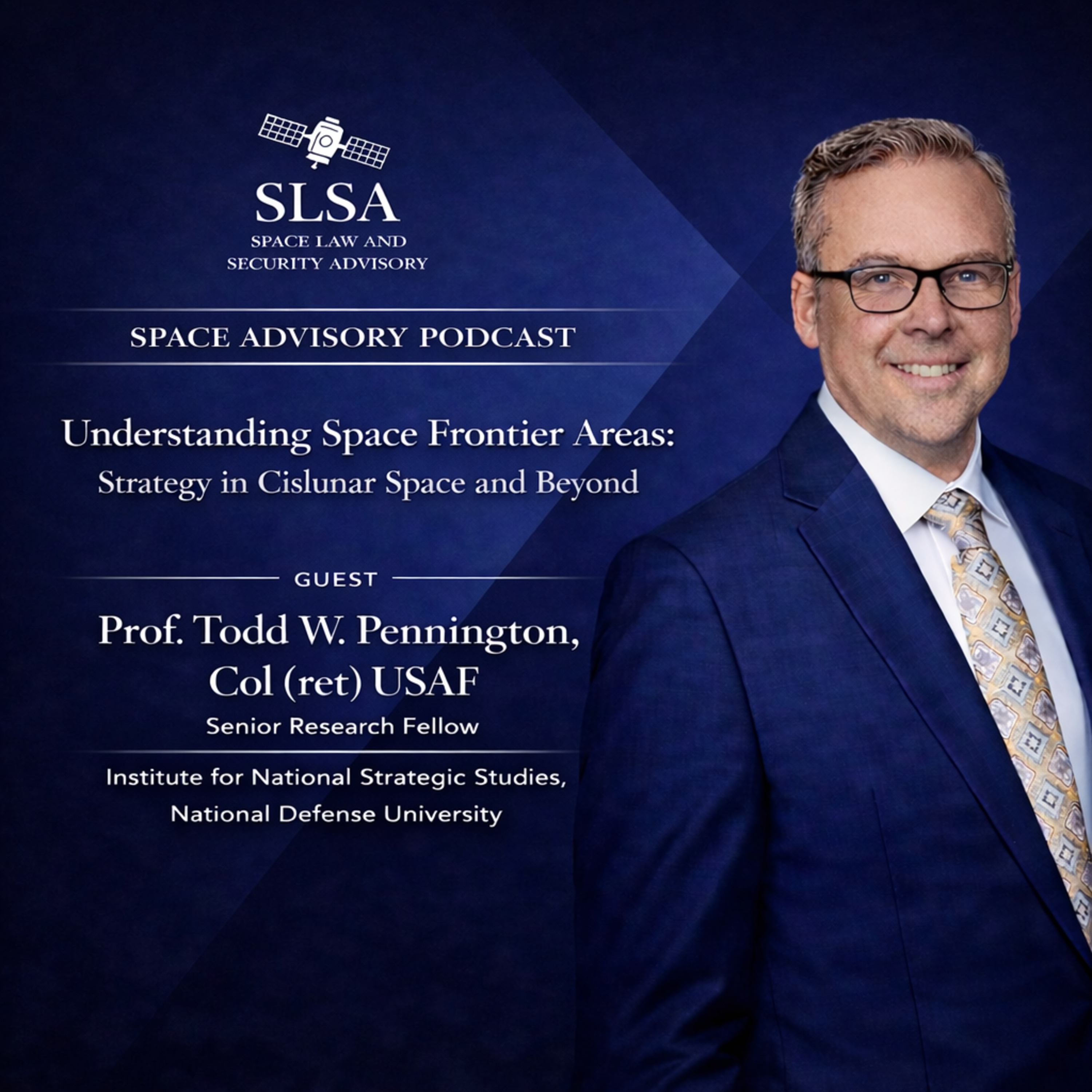
    Strategy in Cislunar Space and Beyond

    The vast majority of space operations have, so far, been limited to a few families of near-Earth orbits (LEO, MEO, HEO, & GEO). However, the vast region of space beyond geostationary earth orbit, or xGEO, is projected to become important for strategic purposes in the near future. This is especially true of cislunar space, the region of space in which the gravity of Earth and moon is significant. There are well over 40 cislunar missions planned by various national space agencies and private companies between 2018 and 2030. At the same time, this region remains conceptually ambiguous. It lacks a single, globally accepted definition particularly regarding its precise boundaries and the rules governing its use, and its strategic importance is as much contested as it is defended. In this episode, Wanyana Racheal, Principal Advisor at the Space Law and Security Advisory hosted Prof. Todd Pennington, Col (ret) USAF, on the Space Advisory podcast to discuss the strategic importance and governance of the space beyond the geostationary Earth orbit (GEO), which he theorises as ‘Space Frontier Areas’(SFA), in his recent paper, “Understanding Space Frontier Areas: Strategy in Cislunar Space and Beyond". They discussed, among other things; - The concept of Space Frontier Areas and its utility in space strategy and decision making. - The potential operational challenges, benefits, and risks of operating in cislunar space and beyond, as compared to legacy orbital regimes (LEO, MEO, GEO, HEO); - Whether the three body problem dynamics in these regions, exclusion zones, and lagrange points offer any strategic or operational opportunities. - How the SFA might individually impact deterrence or strategic positioning; - Which regions of the SFA are likely to have greater strategic utility in the nearest future. - How the current space law regime approaches Space Frontier Areas; what aspects of operating therein does it address and what does it not?; - What Governance challenges are likely to emerge in an increasingly active cislunar domain?

  • Dec 17, 2025 · 40 min

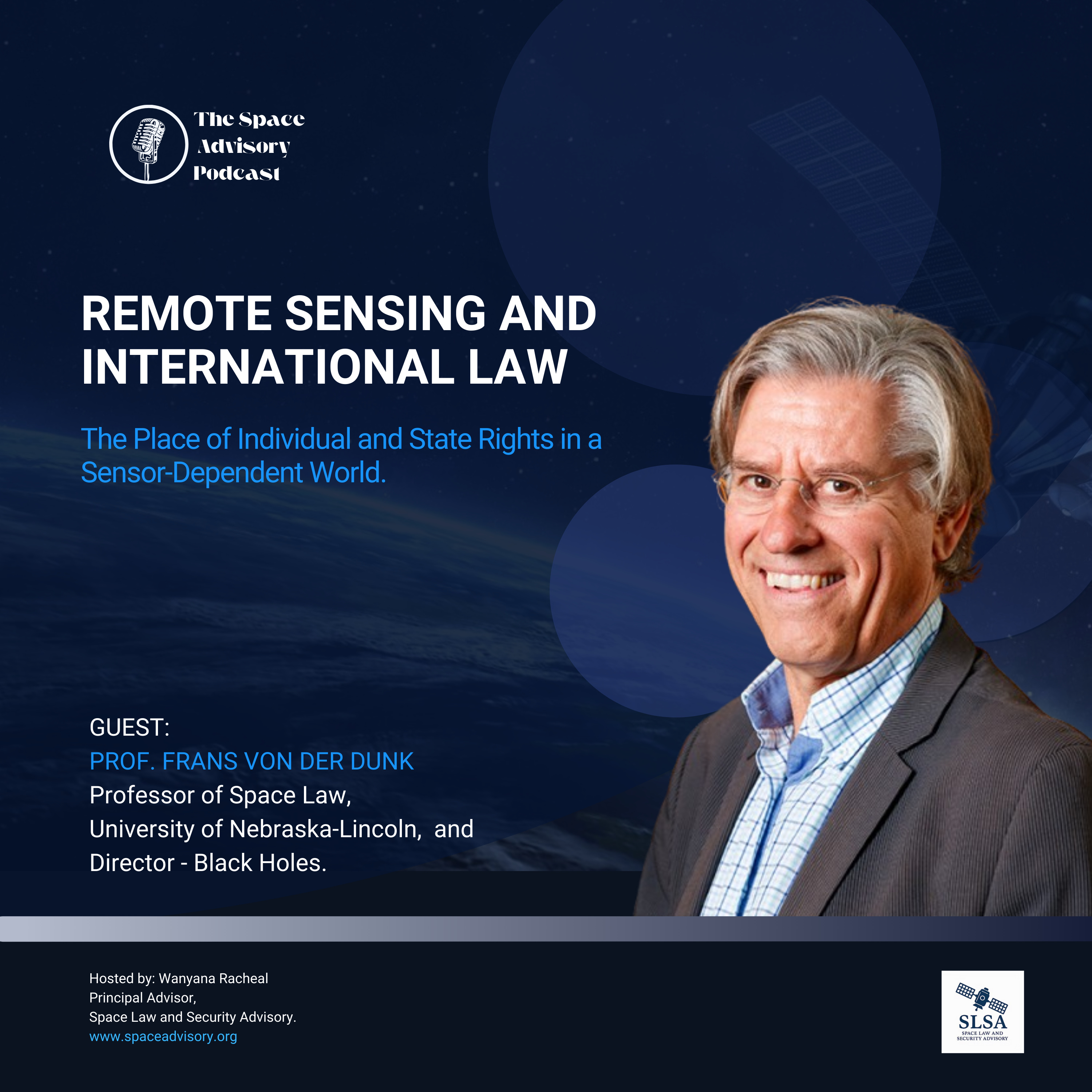
    Remote Sensing and International Law.

    In this episode, Wanyana Racheal of the Space Law and Security Advisory hosts Prof. Frans von der Dunk to analyse the evolving relationship between remote sensing practices and international law, with particular attention to how international law can or should mediate the tension between technological capability, legitimate public interest, and the protection of state and individual rights. They analyse, among other things, how remote sensing impacts individual and state rights; the scope and limitations of international law governing remote sensing, particularly as it relates to state and individual rights, the trends in national and international regulation, and discuss potential regulatory pathways, including soft law, national legislation, and international cooperation.

  • Nov 4, 2025 · 29 min

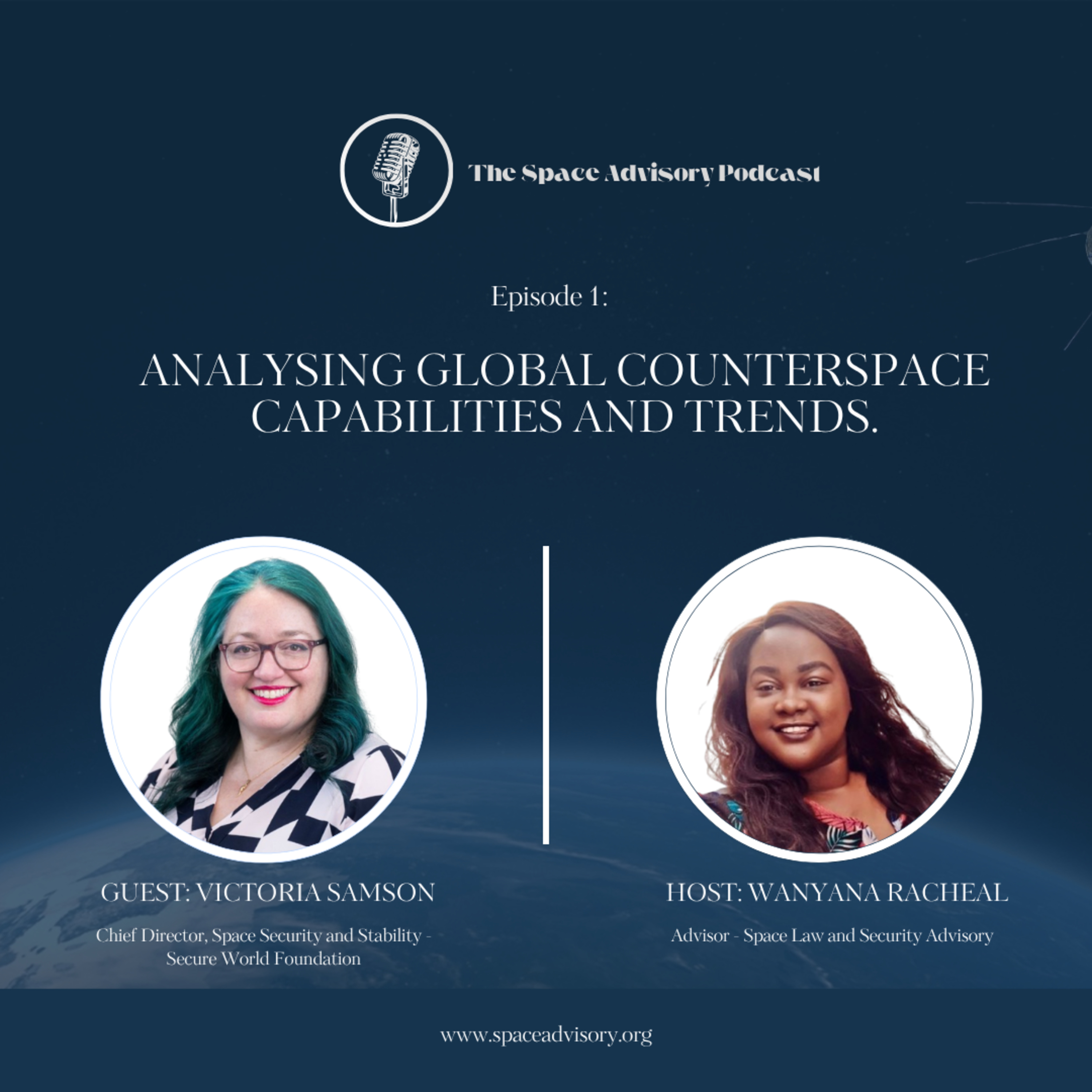
    Counterspace Capabilities And Trends

    In this episode of the Space Advisory Podcast, Wanyana Racheal, the Principal Advisor at the Space Law and Security Advisory (SLSA), features Victoria Samson, the Chief Director of Space Security and Stability for Secure World Foundation (SWF). They; Analyse the key findings of the 2025 Global Counterspace Capabilities report by the Secure World Foundation. Discuss the trends in counterspace R&D, testing, and operational use across major spacefaring nations. Examine how dual-use technologies are redefining counterspace capabilities and the emerging legal challenges/questions. Analyse the current state of multilateral efforts for space security and how they shape counterspace capabilities. Discuss implications of the emerging trends for both space security and security on earth.

Showing 1–4 of 4 episodes