Skip to content
Artwork for The Reading Symphony
Kids & FamilyParenting

The Reading Symphony

Katie Megrian

Hosted by Katie Megrian - literacy leader, former principal, and mom of two young readers - The Reading Symphony brings the science of reading to life for parents, teachers, and school leaders who want clarity, not confusion. Each episode blends research-based insight with real-world strategies for helping children thrive in reading, writing, and comprehension.

From phonemic awareness and decoding to fluency, vocabulary, and background knowledge, Katie demystifies what great instruction looks like and how families can support it at home. You’ll hear from expert guests in literacy education, cognitive science, and classroom practice - along with relatable stories from parents navigating the journey right beside their kids.

Whether you’re an educator implementing the Science of Reading, a school leader designing literacy PD, or a parent decoding report cards and assessments, this podcast is your roadmap to evidence-based reading success.

Topics include:

  • How children learn to read and why some struggle

  • What to look for in a strong school literacy program

  • The truth about reading assessments and progress reports

  • Strategies to build fluency, vocabulary, and comprehension

  • The role of knowledge building and background knowledge

  • Advocacy tips for parents and educators

  • Inspiring stories from classrooms and homes that got reading right

Play
  • 22 episodes
  • weekly
  • Avg 38 min
  • English
Counted on this page — what you have heard stays on this device, so it is not something the list can be paged by.
  • #9
    February 20 · 49 min

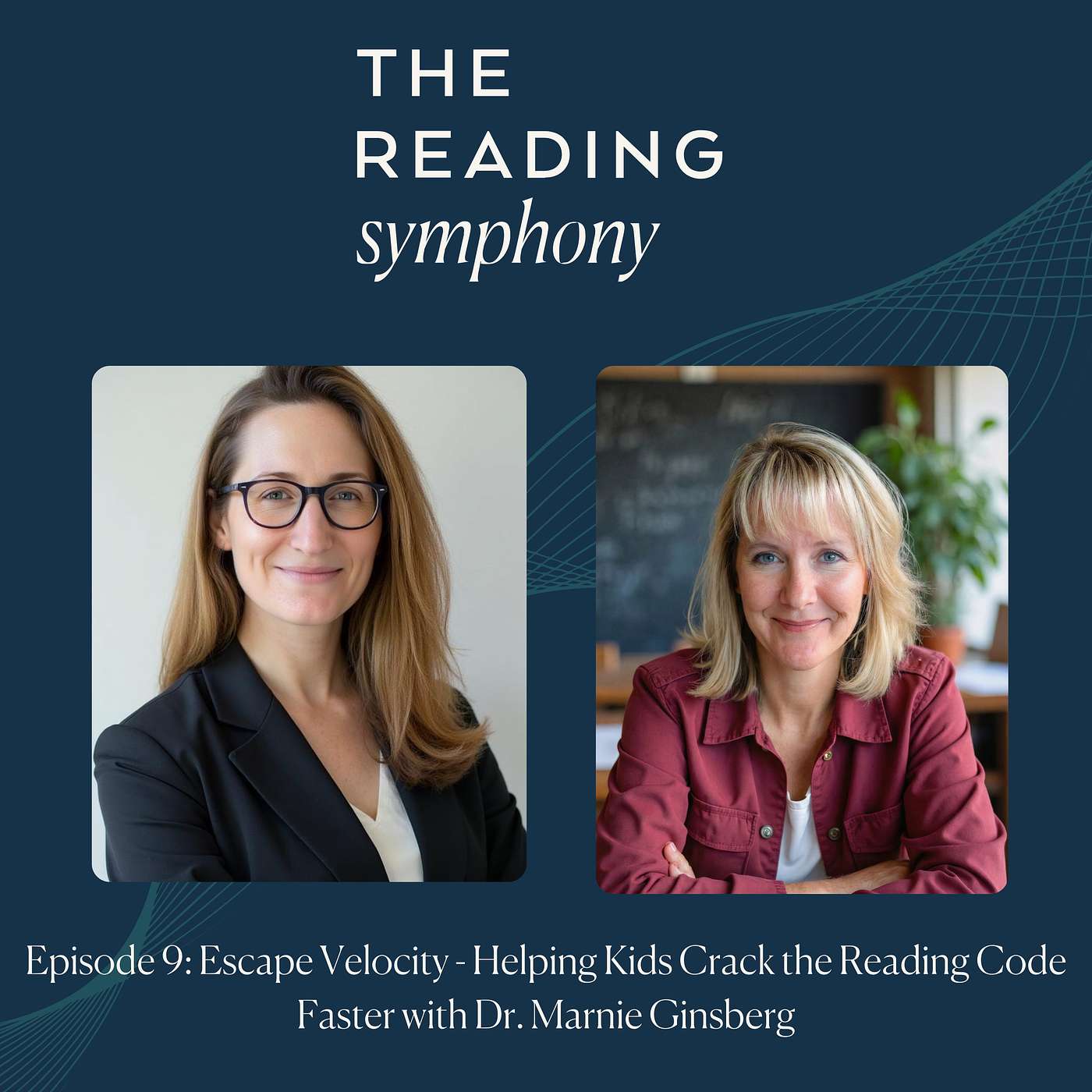
    Escape Velocity: Helping Kids Crack the Reading Code Faster with Dr. Marnie Ginsberg

    Episode Summary In this episode, Katie talks with Dr. Marnie Ginsberg about what helps kids learn to read and why so many teachers were never given the tools to fix word-reading problems. Dr. Ginsberg shares the story that launched her career: sixth-grade students reading years below grade level and a breakthrough approach that helped them make dramatic gains in a single spring. Together they unpack the research-to-practice gap (and why effective interventions still “sit on a shelf”), and then get very practical: Marnie explains how Reading Simplified teaches phonics without over-relying on rules, using the brain’s pattern detection (statistical learning) plus carefully designed contrast (sit/sat, mat/map/mop) to accelerate decoding. You’ll also hear a clear explanation of phonemic awareness vs. phonics, why separating them often creates inefficiency, and how Marnie integrates them through simple routines like Build It and Switch It—activities that feel like games but powerfully build the alphabetic principle. Finally, Marnie and Katie talk state curriculum lists, why implementation details matter, and what parents can advocate for during literacy reform—plus Marnie’s direct call to limit screens and protect attention. Key Takeaways Many struggling readers don’t need “more exposure”—they need explicit instruction that helps them attend to the inside parts of words. The research-to-practice gap isn’t only about evidence. It’s also about incentives, funding streams, and the skillset of dissemination. “Good phonics” doesn’t have to mean a heavy diet of rules. Pattern-based learning can be explicit and still leverage kids’ natural ability to detect patterns. Keeping kids in “short-vowel land” too long can starve them of the data they need to reach reading “escape velocity.” Integrating phonemic awareness and phonics—rather than teaching them in separate lanes—can unlock the alphabetic principle faster. Parents should push for early identification and support (including dyslexia screening and services) and for true expertise in curriculum decision-making. Reading grows in a home environment that protects attention: limit screens, read aloud longer than you think, and listen to kids read longer than you think. Topics We Cover Marnie’s path from sixth-grade teacher → tutor → researcher → founder of Reading Simplified Why whole language/balanced literacy didn’t solve decoding struggles What TRI is and how it connects to Reading Simplified The “17-year research-to-practice gap” and why it persists Linguistic phonics / speech-to-print and organizing the code by sound Statistical learning, contrast, and “set for variability” (without turning into guessing) Why context is part of reading—but print must be primary for beginners Phonemic awareness vs phonics: what they are, why both matter Try This at Home / In the Classroom Switch It (5 minutes, feels like a game): Use letter tiles/cards to build a simple word (mop). Then “switch” one sound at a time to make a new word (mop → map → sap → sip). The magic is in the contrast and the attention to each sound position. Free resources and demo videos: readingsimplified.com/switch-it Connect with Dr. Marnie Ginsberg Website: ReadingSimplified.com Free Switch It resources: ReadingSimplified.com/switch-it Instagram: @readingsimplified Connect with Katie / The Reading Symphony Substack: katiemegrian.substack.com Instagram: @thereadingsymphony
  • #8
    February 11 · 40 min

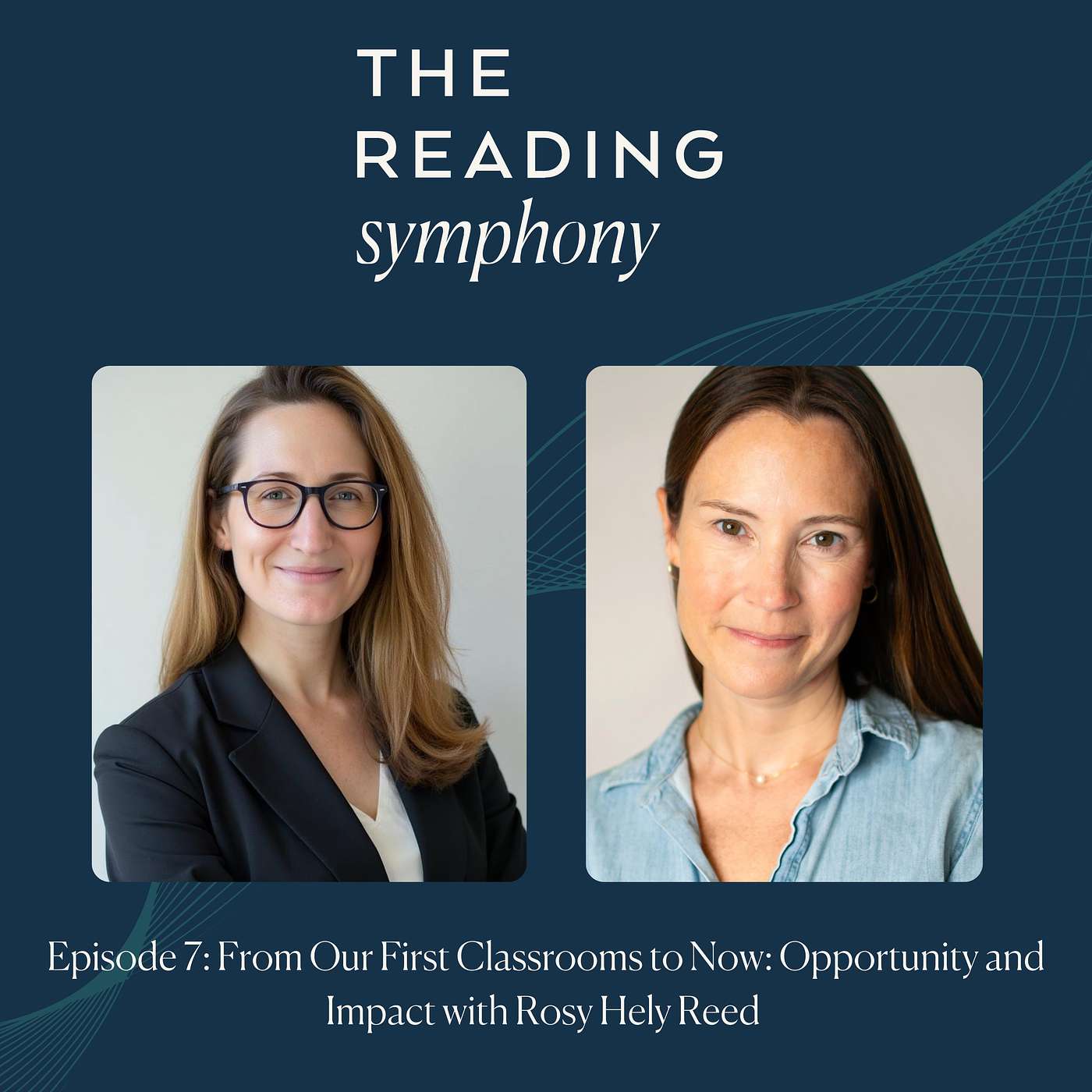
    From Our First Classrooms to Now: Opportunity and Impact with Rosy Hely Reed

    Rosy Hely Reed. Rosy is a Director, Academics at TNTP - a non-profit organization that brings research, policy, and consulting together to reimagine America's K-12 public education system. She has been at TNTP since 2016, and currently leads the execution of academic reviews in schools and districts across the country, providing data and insights on students' and teachers' access to the resources that matter most. Prior to TNTP, Rosy was a literacy teacher and instructional coach in New York City and Washington, D.C., public schools, and then oversaw district-wide teacher-leader and instructional-coaching programs for Pittsburgh Public Schools. She loves driving change-making work within (usually messy) school systems at all levels. About This Episode In this conversation, Katie sits down with one of her closest friends and longtime education thought partner, Rosy Reed, a Director of Academics at TNTP. We trace our shared beginnings as brand-new teachers in the South Bronx and explore how those early classroom experiences shaped our understanding of curriculum, instruction, and equity. Rosie shares what she has learned through her work at TNTP about the conditions that most powerfully drive student achievement, drawing on insights from The Opportunity Myth and the Opportunity Makers research. We also talk candidly about dyslexia, advocacy, and how parents can partner with schools to build coherent, research-aligned reading instruction. This episode is both a deep dive into literacy and a personal conversation about teaching, friendship, and the long arc of learning. In This Episode We Discuss TNTP’s research: What actually drives student achievement Rosy explains the findings from TNTP’s landmark research, based on 4,000+ students across diverse schools and districts. Four key resources that dramatically impact achievement: Grade-appropriate assignments Strong instruction Deep student engagement High teacher expectations We also discuss: Three core practices of “trajectory-changing” schools: A strong culture of belonging Consistent access to grade-level instruction A coherent instructional program We explore: Alignment across grades, classrooms, and interventions The importance of knowledge-building curriculum Why teacher planning time and professional learning matter How schools can better align instruction between general education and intervention

Showing 21–22 of 22 episodes