Oct 14, 2021 · 25 min

Learning Scientists
A podcast for teachers, students, and parents about evidence based practice and learning.
Episode 58 - Bite-Size Research on Delayed and Immediate Feedback in the Classroom Learning Scientists This episode was funded by listeners like you. For more details on how to help support our podcast and gain access to exclusive content, please see our Patreon page. Show Notes: In this bite-size research episode, Megan discusses research on delayed vs. immediate feedback in the classroom. Like with many effective learning strategies, what students think is helping them learn is not what actually helps them learn. In two experiments presented by Mullet and colleagues (2014), University engineering students received relatively immediate feedback or delayed feedback on homework assignments. Students reported that they liked immediate feedback better and that it helped them learn more. In reality, the delayed feedback led to better performance on their course exams. References: Mullet, H. G., Butler, A. C., Verdin, B., von Borries, R., & Marsh, E. J. (2014). Delaying feedback promotes transfer of knowledge despite student preferences to receive feedback immediately. Journal of Applied Research in Memory and Cognition, 3, 222-229. DOI: http://dx.doi.org/10.1016/j.jarmac.2014.05.001
Episode 57 - Using the Science of Learning in Organizations Learning Scientists This episode was funded by listeners like you. For more details on how to help support our podcast and gain access to exclusive content, please see our Patreon page. Show Notes: In Episode 57, Cindy interviews Kathryn Desmarais, a Senior Director of Global Education Solutions at Johnson & Johnson. (You can check out her LinkedIn profile here.) In Kathryn’s line of work, she is less concerned with what an individual can look up or figure out. Her reps need to be confident and know a great deal on the spot in high-pressure situations. So, she has been implementing strategies from the science of learning into her training!
Episode 56 - A Conversation on Researchers and Teachers Working Together Learning Scientists This episode was funded by listeners like you. For more details on how to help support our podcast and gain access to exclusive content, please see our Patreon page. Show Notes: In Episode 56, Cindy interviews Andrew Watson (@AndrewWatsonTTB), author of The Goldilocks Map and founder of Translate the Brain. If you are interested in ordering a copy of The Goldilocks Map, you can enter code SCIENTISTS25 here to receive 25% off your order.
Episode 55 - An Interview with Two Students Focused on Inclusivity in Education Learning Scientists This episode was funded by listeners like you. For more details on how to help support our podcast and gain access to exclusive content, please see our Patreon page. Show Notes: In episode 55, Carolina interviews two students who have been heavily involved in inclusivity in education, Ally Lloyd and Anna Gallagher. Together, they co-lead The Luna Project. Their goal is to increase awareness and support of young people with chronic illnesses disabilities and long-term health conditions.
Episode 54 - An Interview with the Co-Founders of Podsie Learning Scientists This episode was funded by listeners like you. For more details on how to help support our podcast and gain access to exclusive content, please see our Patreon page. In today's episode, we feature one of our patrons, Bob Reuter. Show Notes: In Episode 54, Megan interviews Josh Ling and Jesse Mao, the co-founders of Podsie. Podsie is a nonprofit organization, and its mission is to empower teachers and improve student learning by providing free access to evidence-based learning techniques. Check out podsie.org for access to their free platform for teachers to use with their students all based on the science of learning. If you’re interested in getting involved with Podsie Beta, you can sign up at podsie.org using the form at the bottom of the website.
Episode 53 - An interview with Applied Linguist and Author Alex Poole Learning Scientists This episode was funded by listeners like you. For more details on how to help support our podcast and gain access to exclusive content, please see our Patreon page. Show Notes: In Episode 53, Althea interviews applied linguist and author of Learning a Foreign Language: Understanding the Fundamentals of Linguistics, Alex Poole. You can pick up a copy of his book on Amazon, through the publisher, or wherever you buy your books! References Krashen, S. (2000). What does it take to acquire language? ESL Magazine, 3(3), 22–23. Retrieved from http://www.sdkrashen.com/content/articles/what_does_it_take.pdf Oxford, R. (2016). Teaching and researching language learning strategies: Self-regulation in context. New York: Oxford University Press.
Episode 52 - Two University Students Share Their Experiences with Online Learning During A Pandemic Learning Scientists This episode was funded by listeners like you. For more details on how to help support our podcast and gain access to exclusive content, please see our Patreon page. Show Notes: In Episode 52, Carolina interviews two of her students, Ellie Brownlie and Alicja Turek, about their experiences with online learning since the global COVID-19 pandemic changed our way of teaching. The students share some positive outcomes and some things they wish were done differently or happened more.
Episode 51 - An Interview with Memory Expert Boris Konrad Learning Scientists This episode was funded by listeners like you. For more details on how to help support our podcast and gain access to exclusive content, please see our Patreon page. Show Notes: In Episode 51, Cindy interviews memory expert Boris Konrad (@borisnkonrad). Boris is an eight-time world memory champion, he has four entries in the Guinness Book of World Records, and he is the current president of MemoryXL. Cindy and Boris discuss memory techniques. Importantly, Boris discusses differences between memory techniques and learning techniques, the underlying neuroscience, and why they are both important for students.
Episode 50 - Metacognitive Monitoring of Adolescents and Young Adults Learning Scientists This episode was funded by listeners like you. For more details on how to help support our podcast and gain access to exclusive content, please see our Patreon page. Show Notes: In today’s episode, Althea covers a paper about metacognitive monitoring and differences between adolescents (ages 11-12) and traditional university-aged adults (ages 18-25) when using different learning strategies. Students learned word pairs (moon - galaxy). Then, they either just restudied them, engaged in elaborative encoding by coming up with a third word that connected the two words (like space), or practiced retrieval (given the word moon, and asked to retrieve galaxy). During learning, the students made judgments of learning (or JOLs) about how well they thought they would do on an upcoming test. The researchers tested the students’ memories to see how well they learned the pairs. The pattern of performance on the final test was generally the same. Retrieval practice led to the best performance, followed by elaborative encoding, and then the worst performance was restudying. However, this isn’t new. The researchers are most interested in how well the students were able to monitor their own learning and predict how well they had learned the pairs. For the adolescents, their ability to judge how well they would do on a later test was not very accurate when they restudied or engaged in elaborative encoding. Their relative accuracy at judging how well they would perform was better for retrieval practice. So, the strategy that worked best also produced the best relative accuracy at predicting The young adults showed the same relative accuracy as the adolescents in the restudy and the retrieval conditions. Their ability to predict was very poor after restudying and was better after retrieval practice. Interestingly, the young adults had the best relative accuracy after elaborative encoding, meaning that this was the condition where they were best able to predict how well they would perform on the test later. When young adults in College (University) are utilizing a strategy that helps them learn more, like elaborative encoding or retrieval practice, they are better able to predict their own learning. However, this was not always true for adolescents in middle school. When using elaborative encoding, a strategy that helped them compared to just restudying, their predictions were not very accurate at all. References: Hughes, G. I, Taylor, H. A., & Thomas, A. K. (2018). Study techniques differentially influence the delayed judgment of learning accuracy of adolescent children and college-aged adults. Metacognition Learning, 13, 109-126.
Episode 49 - Learning Styles and Dual Coding Learning Scientists This episode was funded by listeners like you. For more details on how to help support our podcast and gain access to exclusive content, please see our Patreon page. In today’s episode, we feature Peter Horneffer. Peter has been heavily involved in making medical education accessible, and one way has been through lecturio.com. You can learn more about his efforts by watching his TEDx talk. Show Notes: In today’s episode, Megan and Althea cover a paper that tests learning styles and dual coding theories within one experiment. The paper was written by Cuevas and Dawson (2018) and you can see the paper here. References: Cuevas, J., & Dawson, B. L. (2018). A test of two alternative cognitive processing models: Learning styles and dual coding. Theory and Research in Education, 16(1), 40-64.
Episode 48 - Prevalence-Induced Concept Change Learning Scientists This episode was funded by listeners like you. For more details on how to help support our podcast and gain access to exclusive content, please see our Patreon page. Show Notes: In today’s episode, Cindy talks about prevalence-induced concept change and implications for society and the classroom! References: Levari, D. E., Gilbert, D. T., Wilson, T. D., Sievers, B., Amodio, D. M., & Wheatley, T. (2018). Prevalence-induced concept change in human judgment. Science, 360(6396), 1465-1467.
Episode 47 - Emergency Distance Learning Learning Scientists This episode was funded by listeners like you. In today's episode, we feature one of our patrons, Cynthia Bandet from Bow Valley College. We also want to say thank you to all of our patrons. We would not be able to produce this podcast or maintain the free resources on the website without you. If you aren’t a supporter and are able, please consider donating. Even $1 per month can make a difference, and if you donate at least $5 per month you’ll gain access to exclusive content. Visit our Patreon page at www.patreon.com/learningscientists. Show Notes: In today’s episode, Megan shares her current thoughts about the pivot to distance learning during the COVID-19 pandemic. She mentions a lot of resources throughout the podcast, and these links along with a few others are below! Open Science Framework entry from Kim Weeden and Benjamin Cornwell “The Small World Network of College Classes: Implications for Epidemic Spread on a University Campus” Twitter thread by @WeedenKim covering the above work Learning Scientists digest on self-regulated learning Pandemic Metacognition blog by Jennifer McCabe Chronicle of Higher Education article on 5 time-saving ways to teach online Learning Scientists digest of resources during COVID-19 Learning Scientists blog on technology in the classroom (note specifically the section on online quizzing) Learning Scientists blog on learning from video Learning Scientists blog on dual coding and overload
Episode 46 - The Application of Research with Pooja Agarwal Learning Scientists This episode was funded by listeners like you. In today's episode, we feature one of our patrons, David Handel and his flashcard app iDoRecall.com. We also want to say thank you to all of our patrons. We would not be able to produce this podcast or maintain the free resources on the website without you. If you aren’t a supporter and are able, please consider donating. Even $1 per month can make a difference, and if you donate at least $5 per month you’ll gain access to exclusive content. Visit our Patreon page at www.patreon.com/learningscientists. Show Notes: In today’s episode, Cindy interviews Pooja Agarwal (@PoojaAgarwal). Pooja is a Cognitive Scientist and now teachers Science, Psychological Science, and Neuroscience at Berklee College of Music in Boston. Pooja founded retrievalpractice.org. There, you can find resources like practice guides for teachers.
Episode 45 - Bite-Size Research on Seductive Details Learning Scientists This episode was funded by listeners like you. For more details on how to help support our podcast and gain access to exclusive content, please see our Patreon page. Listening on the web? You can subscribe to our podcast to get new episodes each month! Go to our show on iTunes or wherever you get your podcasts. We’re also on Stitcher! Show Notes: In this bite-size research episode, Carolina discusses research on seductive details—the details we include in our teaching that are not necessarily relevant for understanding the topic but make the lesson more interesting. To read about seductive details, check out this guest blot post! References: Fries, L., DeCaro, M. S., & Ramirez, G. (2019). The lure of seductive details during lecture learning. Journal of Educational Psychology, 111(4), 736–749. Rey, G. D. (2012). A review of research and a meta-analysis of the seductive detail effect. Educational Research Review, 7, 216-237. RSS feed: http://www.learningscientists.org/learning-scientists-podcast/?format=rss
Episode 44 - Literacy and Making Mistakes with Kristen McQuillan Learning Scientists This episode was funded by listeners like you. For more details on how to help support our podcast and gain access to exclusive content, please see our Patreon page. Listening on the web? You can subscribe to our podcast to get new episodes each month! Go to our show on iTunes or wherever you get your podcasts. We’re also on Stitcher! Show Notes: In this episode, Cindy Nebel interviews Kristen McQuillan (@mcglynn3), her student in the Vanderbilt EdD program in Leadership and Learning in Organization. Kristen is a director at TNTP (@TNTP), a non-profit organization that helps schools reach goals for students. Cindy and Kristen talk about learning mistakes in literacy. You can find the blog that Cindy mentions in the episode about learning from errors here.
In this episode, Megan and Althea discuss a listener question about the focus on evidence-based strategies and other important aspects of the whole learning process.
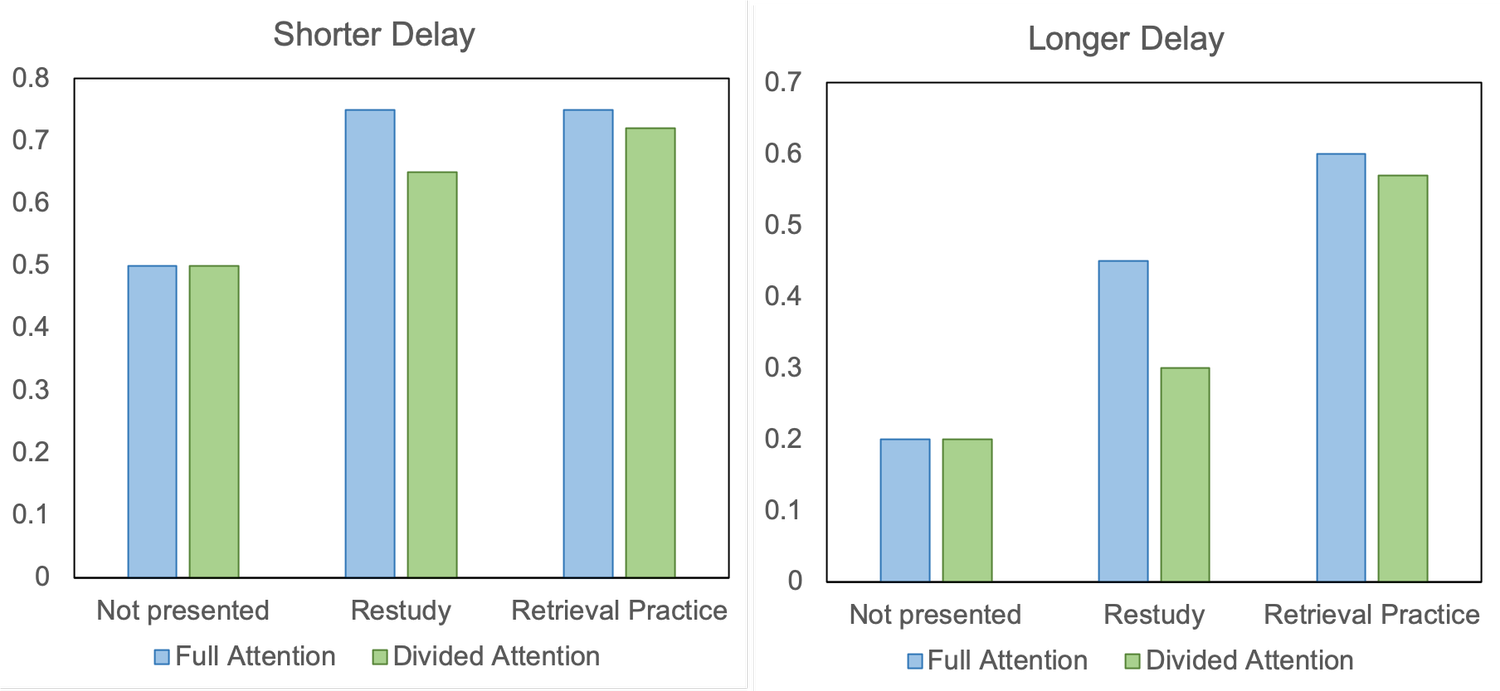
Episode 42 - Bite-Size Research on Attention and Retrieval Practice Learning Scientists This episode was funded by listeners like you. For more details on how to help support our podcast and gain access to exclusive content, please see our Patreon page. Listening on the web? You can subscribe to our podcast to get new episodes each month! Go to our show on iTunes or wherever you get your podcasts. We’re also on Stitcher! Show Notes: In this bite-size research episode, Althea describes a study about how attention affects learning with retrieval practice when students are studying on their own by Neil Mulligan and Milton Picklesimer (2016). Generally, they found students tend to forget after a delay, but retrieval practice improves memory after a delay. It is better not to be distracted (divided attention) when rereading. However, the students’ learning was not as affected by divided attention when they practiced retrieval. Retrieval practice seems to be a particularly resilient strategy! Re-created figure from Mullican & Picklesimer (2016) study 2. References: Mulligan, N. W., & Picklesimer, M. (2016). Attention and the testing effect. Journal of Experimental Psychology: Learning, Memory, and Cognition, 42(6), 938-950. RSS feed: http://www.learningscientists.org/learning-scientists-podcast/?format=rss
Episode 41 - Feedback with Dr. Naomi Winstone Learning Scientists This episode was funded by listeners like you. For more details on how to help support our podcast and gain access to exclusive content, please see our Patreon page. Listening on the web? You can subscribe to our podcast to get new episodes each month! Go to our show on iTunes or wherever you get your podcasts. RSS feed: http://www.learningscientists.org/learning-scientists-podcast/?format=rss Show Notes: In this episode, Carolina Kuepper-Tetzel interviews Dr. Naomi Winstone (@DocWinstone) an expert in assessment and feedback. Naomi is the Head of the Department of Higher Education and a Senior Lecturer at the University of Surrey. You can read more about feedback on our blog, where Naomi has co-authored guest posts: Is Your Feedback Carefully Used, or Barely Perused? When Feedback is Forgettable
Episode 40 - Memorizing Facts vs Using Information with Dr. Jared Cooney Horvath Learning Scientists This episode was funded by listeners like you. For more details on how to help support our podcast and gain access to exclusive content, please see our Patreon page. Listening on the web? You can subscribe to our podcast to get new episodes each month! Go to our show on iTunes or wherever you get your podcasts. RSS feed: http://www.learningscientists.org/learning-scientists-podcast/?format=rss Show Notes: In this episode, Cindy Nebel interviews Dr. Jared Cooney Horvath (@JCHorvath), neuroscientist and educator affiliated with University of Melbourne and author of Stop Talking Start Influencing: 12 Insights From Brain Science to Make Your Message Stick. During the interview, they discuss how we take information in, and how do we use it, or transfer it to new situations. Jared Cooney Horvath is a cognitive neuroscientist with expertise in human learning, memory, and brain stimulation. In 2018, Dr. Horvath co-founded LME Global, a mission-driven company serving teachers, students and schools through applied learning sciences. To learn more, visit www.lmeglobal.net.