Skip to content
Artwork for The Kosher Terroir
Society & CultureArtsFoodReligion & SpiritualityJudaism

The Kosher Terroir

Solomon Simon Jacob

We are enjoying incredible global growth in Kosher wine. From here in Jerusalem, Israel, we will uncover the latest trends, speak to the industry's movers and shakers, and point out ways to quickly improve your wine-tasting experience. Please tune in for some serious fun while we explore and experience The Kosher Terroir...

www.TheKosherTerroir.com
+972-58-731-1567
+1212-999-4444
TheKosherTerroir@gmail.com
Link to Join “The Kosher Terroir” WhatsApp Chat

https://chat.whatsapp.com/EHmgm2u5lQW9VMzhnoM7C9

Thursdays 6:30pm Eastern Time on the NSN Network 
and the NSN App

Play
  • 20 episodes
  • weekly
  • Avg 59 min
  • English

Support the show

Goes straight to the publisher. podnod takes nothing.

  • S4 · E39
    Thursday · 1 hr 28 min

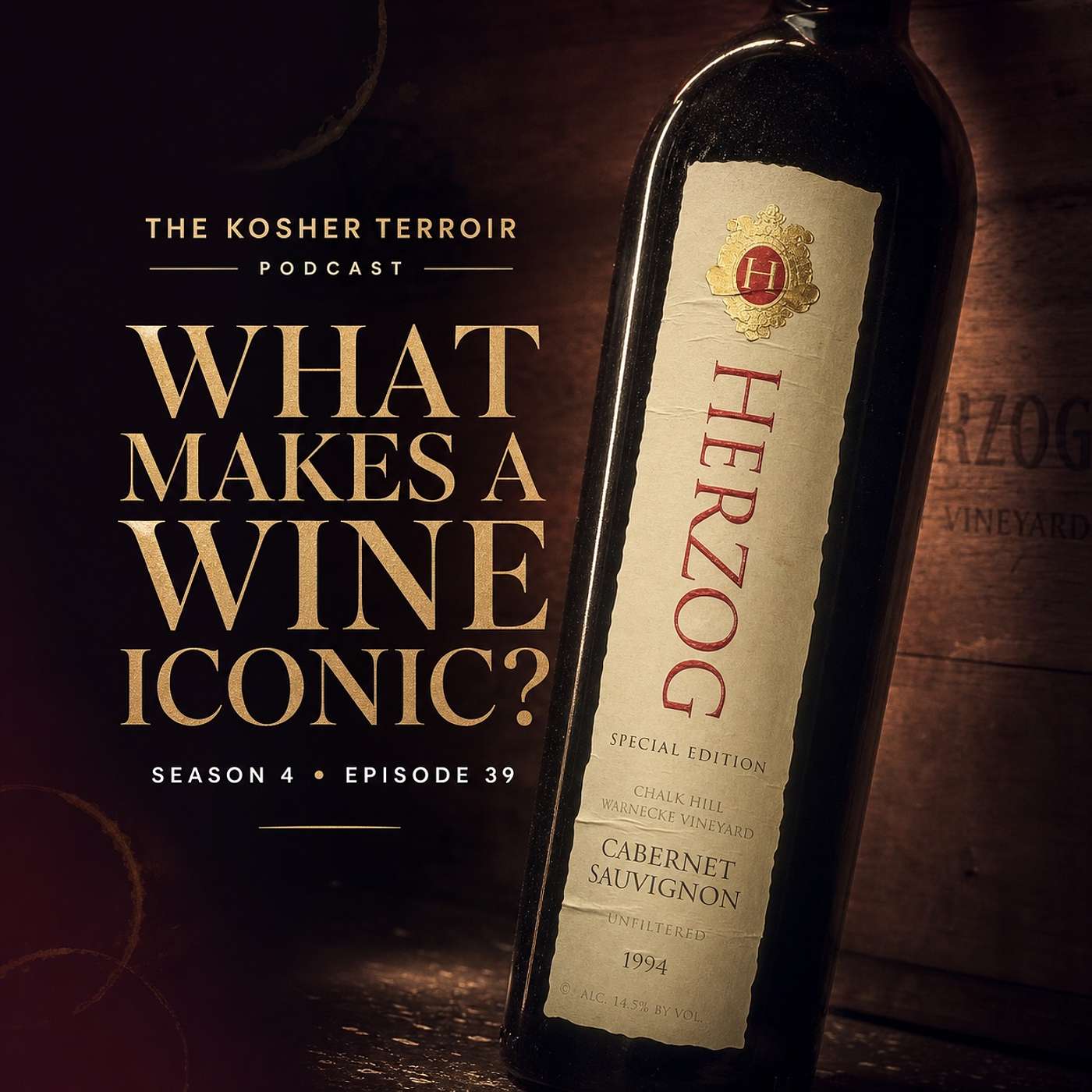
    What Makes A Wine Iconic?

    Send a Text Message to The Kosher Terroir What makes a wine iconic? I’m not asking about the bottle that impressed a critic or the one that cost so much your kids stared at you. I mean the wine you can still describe decades later, with your hands moving, because it welded itself to a moment in your life. Tonight I open my own cellar and my family’s stories to chase the answer, starting with a case that survived a basement flood and still poured like a powerhouse. Along the way, I make the best case I can for wine scores and why they mattered for kosher wine, then I show you the limit: a number can be honest and still be blind. We get into what makes a wine age-worthy in real terms, from acidity and tannin to concentration, clean winemaking, and proper storage, plus the strange miracle of botrytis and kosher Sauternes that can outlive the people who buy them. From there, the lens widens to the Jewish table, where wine marks time from Kiddush to Havdalah and carries one generation into the next. Then come the bottles that refuse to stay “just wine”: a 1986 Rothschild kosher Bordeaux that quietly walks into its own anniversary dinner, a Sancerre Sauvignon Blanc that tastes like lychee and redraws my map in ten seconds, and an Israeli red from Recanati with a clear nana mint signature that gets crushed by one major score and crowned best in Israel by a Bordeaux jury. The conclusion I can’t unsee is simple: a wine becomes iconic when it stops being separable from the people you drank it with. If you’ve got a bottle like that, I want to hear it. Subscribe, share this with someone who saves bottles on purpose, and leave a review so more listeners find the stories that keep time by the bottle. Support the show www.TheKosherTerroir.com +972-58-731-1567 +1212-999-4444 TheKosherTerroir@gmail.com Link to Join “The Kosher Terroir” WhatsApp Chat https://chat.whatsapp.com/EHmgm2u5lQW9VMzhnoM7C9 Thursdays 6:30pm Eastern Time on the NSN Network and the NSN App

    • Transcript
    • Chapters
  • S4 · E38
    August 20 · 1 hr 15 min

    The Wine on Trial

    Send a Text Message to The Kosher Terroir I did something to a bottle of red wine that would horrify a marketing department: I took away its name. No grape. No country. No vintage. Just a covered bottle and an honest glass, because I want to see what happens when we stop tasting labels and start tasting wine. We move through five structured wine tasting frameworks, each one sharper than the last. First comes the three-step table method you can do quietly at a Shabbat meal: look, smell, taste. Then we get serious about the mechanics of swirl, sniff, sip, and savor, including what swirling actually changes in the glass, why “legs” are mostly alcohol and physics, and why a quick slurp can turn vague fruit into clear red cherry. From there, we open a notebook and use the WSET Systematic Approach to Tasting to translate impressions into consistent tasting notes that your future self can trust. Then we go full detective, treating acidity, color, tannin, and oak like courtroom testimony that can point to climate, age, and grape. Finally, we put sentiment on the bench with the UC Davis 20 point scale, hunting for faults and scoring what the wine is worth in cold points. Only after that do we pay the entrance fee to the last box and commit to an identity, followed by a reveal that lands with real weight. And a deeper idea I keep coming back to: kavod, giving full attention before you let status speak. Taste along, then share this with a friend who loves wine talk, and please subscribe and leave a review so more listeners can find the show. What’s one bottle you want to taste blind next? Support the show www.TheKosherTerroir.com +972-58-731-1567 +1212-999-4444 TheKosherTerroir@gmail.com Link to Join “The Kosher Terroir” WhatsApp Chat https://chat.whatsapp.com/EHmgm2u5lQW9VMzhnoM7C9 Thursdays 6:30pm Eastern Time on the NSN Network and the NSN App

    • Transcript
    • Chapters
  • S4 · E37
    August 13 · 43 min

    Whose Wine Was the Holy Land's?

    Send a Text Message to The Kosher Terroir A bulldozer pauses outside Tel Aviv, and the ground opens up into a buried industrial city of wine. Under a soccer field in Yavne, archaeologists uncover five massive wine presses, warehouses, kilns, and tens of thousands of amphorae, pointing to an output of two to three million liters a year around 500 CE. It’s the kind of scale we associate with modern wineries, except it ran on sandaled feet, gravity, and an export machine that reached across the Mediterranean. From there we follow the most famous wine you’ve never tasted: Gaza wine, a luxury white that functioned like an early appellation, branded by the ports of Gaza and Ashkelon and shipped as far as France and Britain. We talk about how pilgrims and churches made “Wine of the Holy Land” a devotional product, how the Negev Desert terraces turned runoff into vineyards, and why a place like Yavne sat perfectly between grape country and the harbors. Then we ask the question that gets buried in the retellings: where are the Jews? Archaeology often can’t identify an owner when stone and plaster bear no cross, menorah, or inscription, but Halakha is clear on this point. Kiddush, Havdalah, weddings, brit milah, festivals, and the Passover four cups make wine non-optional, and the detailed laws of Stam Yeanam read like the fossil record of a working Jewish wine industry. The clincher comes at Mayumas, Gaza’s port district, where a stunning synagogue mosaic of King David and a dated donor inscription place Jewish merchants at the export gate during the boom years. Subscribe, share this with a friend who loves history or wine, and leave a review with your take: when the labels disappear, who gets written out of the story? Support the show www.TheKosherTerroir.com +972-58-731-1567 +1212-999-4444 TheKosherTerroir@gmail.com Link to Join “The Kosher Terroir” WhatsApp Chat https://chat.whatsapp.com/EHmgm2u5lQW9VMzhnoM7C9 Thursdays 6:30pm Eastern Time on the NSN Network and the NSN App

    • Transcript
    • Chapters
  • S4 · E36
    August 6 · 1 hr 13 min

    From Two Bottles For Five Dollars to 100 Points

    Send a Text Message to The Kosher Terroir Two bottles for five dollars used to be the whole story of kosher wine in America and for many of us, it was the taste of Friday night. Then a Berkeley winery released a kosher Cabernet Sauvignon that Decanter scored at a perfect 100 points, no polite caveats, no “for a kosher wine,” full stop. That single number forces a bigger question: how did we get from Concord sweetness on newsprint to a bottle that can stand with the world’s best? We trace the real mechanics behind the shift: the Halachic rules about who can handle wine, why mevushal became the default for catering, and how that “asterisk” got baked into the category for generations. From there, the map explodes. Israel’s modern renaissance pushes quality and identity forward, Bordeaux châteaux quietly prove that kosher and non-kosher can be "Remarkably Similar" in the same cellar, and a French Jewish winemaker becomes a thread connecting decades of breakthroughs. Meanwhile, the most visible kosher bottle on earth turns out to be sweet, fizzy, blue, and wildly popular far beyond the Jewish world. The surprise ending is that the revolution is not only about big red trophies. Kosher white wine comes roaring back, new technology reframes mevushal, and a classic blessing emerges as the perfect capstone for a moment when the “second cup” can finally be better. If you care about kosher wine, Israeli wine, Bordeaux, or how tradition and craft collide, listen through to the last pour, then subscribe, share the episode, and leave a review so more people find the story. Support the show www.TheKosherTerroir.com +972-58-731-1567 +1212-999-4444 TheKosherTerroir@gmail.com Link to Join “The Kosher Terroir” WhatsApp Chat https://chat.whatsapp.com/EHmgm2u5lQW9VMzhnoM7C9 Thursdays 6:30pm Eastern Time on the NSN Network and the NSN App

    • Transcript
    • Chapters
  • S4 · E35
    July 29 · 1 hr 9 min

    Is the Wine Ready for the Third Temple

    Send a Text Message to The Kosher Terroir A week after Tisha B’Av, I’m holding a glass of wine and asking the question you’re not “supposed” to ask out loud: are we ready for the Third Temple? Not because I want a political brawl about red heifers or headlines, but because the very fact that the question triggers a fight is already a clue. Our sages pin the Second Temple’s fall on sinat chinam, baseless hatred, which means the real obstacle was never engineering. It was relationship failure, and it can happen even in a generation that learns, gives, and keeps mitzvot. So I do something strange and, honestly: I ask the wine. The Beit HaMikdash had a standing wine order poured every morning and afternoon, plus the added offerings of Shabbat and the festivals, totaling thousands of liters a year. Serious demand requires a serious spec, and the rabbis preserved one in Mishnah Menachot and the Gemara. When you read it like a modern producer, it sounds eerily familiar: ranked vineyard sites, dry-farmed hillsides, no pumped-up vines, no shortcuts in the cellar, clean dry wine only. Here’s the twist, vintage by vintage, parts of the Israeli wine revival are drifting back into compliance without even aiming for it. Then the episode turns from vineyards to people. I share what I keep hearing across the kosher wine and spirits world when I ask about “competition”: equipment gets loaned mid-harvest, yeast gets shipped to a rival in a pinch, and the same line keeps repeating, “a rising tide lifts all boats.” We connect that to positive-sum thinking, to Yoma 38’s claim that no one can touch what’s prepared for another, and to the Torah’s grape story of the spies, scarcity, and self-image. We land in the vineyards again on Tu B’Av, a festival built to erase shame through borrowed dresses and borrowed abundance, and I leave you with a Shabbat challenge that makes the idea real. If this moves you, subscribe, share it with one person you’d like to share a glass with, and leave a review to help more people find the show. What bottle would you put on your table to practice baseless love? Support the show www.TheKosherTerroir.com +972-58-731-1567 +1212-999-4444 TheKosherTerroir@gmail.com Link to Join “The Kosher Terroir” WhatsApp Chat https://chat.whatsapp.com/EHmgm2u5lQW9VMzhnoM7C9 Thursdays 6:30pm Eastern Time on the NSN Network and the NSN App

    • Transcript
    • Chapters
  • S4 · E34
    July 20 · 1 hr 8 min

    The Glass We Send to the Wilderness

    Send a Text Message to The Kosher Terroir The loudest moment at a Jewish wedding isn’t the music. It’s the crack of a glass and the cheer that detonates right on top of it. From Jerusalem, I slow that moment down until it finally makes sense, especially during the Nine Days leading to Tisha B’Av, when Jewish mourning strips away the very tools we use to build connection: weddings, wine, and even the greeting of shalom. Under the chuppah, we count three vessels. Two cups of wine create union: Kiddushin, the act of being set apart, and Nisuin, the overflowing joy of Sheva Brachot that moves from Eden to a future Jerusalem filled with sound again. Along the way, I draw a line between the language of fine wine and the language of holiness, showing how terroir is its own kind of designation, and how a great bottle becomes “full” when many parts resolve into one seamless whole. Then we face the third glass, the one nobody drinks from: empty, wrapped, placed on the floor to be shattered. That emptiness is not a detail, it’s the point. We connect the broken glass to Yom Kippur’s scapegoat ritual, to a wedding day as a personal Day of Atonement, and to the churban as a tragedy of shattered unity caused by sinat chinam. The episode ends with an honest tension: we cheer as if the work is accepted, yet the shards remain, and the world is not yet whole. If this reframes the breaking glass for you, subscribe, share the episode with a friend, and leave a review. What do you hear in that crack now: sadness, comfort, or a vow to rebuild unity? Support the show www.TheKosherTerroir.com +972-58-731-1567 +1212-999-4444 TheKosherTerroir@gmail.com Link to Join “The Kosher Terroir” WhatsApp Chat https://chat.whatsapp.com/EHmgm2u5lQW9VMzhnoM7C9 Thursdays 6:30pm Eastern Time on the NSN Network and the NSN App

    • Transcript
    • Chapters
  • S4 · E33
    July 16 · 1 hr 9 min

    Tavlin Distillery - The Taste of Israeli Gin Terroir

    Send a Text Message to The Kosher Terroir Garlic in gin sounds like a mistake until you lean in, take a breath, and realize it smells like home cooking. From the Judean Hills, Tavlin Distillery is building a kosher craft gin that treats botanicals like a kitchen language and terroir like more than soil. I sit down with co-founders Eli and Amir to unpack how a Los Angeles finance guy and a Jerusalem educator with a sommelier-level nose turn a neighborly friendship into a serious Israeli distilling business. We start with the story that sets the tone: a tequila dream powered by wild agave plants, an improvised extraction attempt, and two founders covered in allergic rashes. That failure leads to a smarter choice: gin, a spirit that can be made quickly, shaped endlessly, and perfected through aroma. We talk about what “Tavlin” means, why spice is the heart of their brand, and how they build an Israeli flavor identity using local herbs and botanicals from their region and the broader Israeli cuisine. Then we get practical and nerdy: how they layer flavor through boiling botanicals, vapor baskets, and controlled maceration, plus how they approach safe, clean cuts on a pot still. You’ll also hear how their spicy gin earns a bronze medal at a major London competition, why their handmade ceramic bottles sourced in Hebron are part of the product’s soul, and where their experiments go next, from wine brandy collaborations to arak gin and even aquavit. If you care about Israeli craft spirits, kosher gin, Judean Hills terroir, or the new wave of boutique distilleries, this conversation will give you both story and substance. Subscribe, share this with a gin lover, and leave a review so more listeners can find us. Tavlin Distillery: Eli Kamionski CEO / Amir Master Distiller Head Office: Yahalom Street, Har Tov Industrial Zone, Plot 125 Telephone: +972-58-719-0318 Email: INFO@DRINKTAVLIN.COM https://www.DrinkTavlin.com Support the show www.TheKosherTerroir.com +972-58-731-1567 +1212-999-4444 TheKosherTerroir@gmail.com Link to Join “The Kosher Terroir” WhatsApp Chat https://chat.whatsapp.com/EHmgm2u5lQW9VMzhnoM7C9 Thursdays 6:30pm Eastern Time on the NSN Network and the NSN App

    • Transcript
    • Chapters
  • S4 · E32
    July 9 · 56 min

    Thinkers Distillery - Jerusalem’s First Distillery

    Send a Text Message to The Kosher Terroir A glass door on Agrippa Street hides two towering copper stills and a claim Jerusalem has never been able to make before: a working distillery in the heart of the city. I sit down with Michael Ginnosaur, CEO of Thinkers Distillery, to unpack how a brand can be unapologetically Jerusalem and still chase world-class standards in vodka, gin, and bourbon. We get concrete about what separates a premium spirit from a souvenir bottle. Michael lays out the three essentials: the liquid, the packaging, and the narrative, then shows how Thinkers tries to “further” all three through constant iteration. We talk distilling tech in plain language, including why they run both a column still for purity and a pot still for character, and how an urban distillery near Mahane Yehuda shapes visitor experience, cocktail culture, and brand identity. Then we follow the details that make their spirits unusual: sourcing soft winter wheat from Champagne for a naturally sweet sipping vodka, using a different wheat origin to keep gin botanicals in front, and capturing water from Jerusalem air to control flavor and consistency batch after batch. We also dive into the Dew of Badolach bourbon story, distilled in Ohio, aged while crossing the Atlantic, and matured by the Mediterranean in Haifa, plus questions around kosher certification, gluten, and where the US spirits market is actually heading. Subscribe, share this with a spirits loving friend, and leave a review so more people can find Kosher Terroir. For more information: Thinkers Distillery Located in: Agrippas Street Shukanyon Market Mall Address: Agripas St 88, Jerusalem Phone: 02-620-5550 ask for Anat Hours: Tuesday | 11 am–8 pm Wednesday | 11 am–8 pm Thursday | 11 am–8 pm Friday | 11 am–2 pm Saturday | Closed Sunday | 11 am–8 pm Monday | 11 am–8 pm Support the show www.TheKosherTerroir.com +972-58-731-1567 +1212-999-4444 TheKosherTerroir@gmail.com Link to Join “The Kosher Terroir” WhatsApp Chat https://chat.whatsapp.com/EHmgm2u5lQW9VMzhnoM7C9 Thursdays 6:30pm Eastern Time on the NSN Network and the NSN App

    • Transcript
    • Chapters
  • S4 · E31
    July 1 · 55 min

    The Seventeenth Of Tammuz : The Wine Makers Fast

    Send a Text Message to The Kosher Terroir The strangest release date for a wine podcast might be a fast day and that’s exactly the point. I start with the sound of wine meeting the bottom of a glass, then I ask you to leave the glass empty as the Seventeenth of Tammuz arrives. Not as a gimmick, but as a way to remember the day Jerusalem’s daily Temple offering broke, when the lambs could no longer come and the wine libation, the nesachim, went dry. When the wine stopped, the singing stopped too, and a steady heartbeat of worship went silent. From that courtyard in ancient Jerusalem, we move to the way wine works in Jewish life now: kiddush, weddings, brit milah, Passover, havdalah. If wine is the clearest instrument of joy, then removing it during the Three Weeks and the Nine Days becomes a precise, physical way to grieve. We talk about the tenderness inside the customs, including what some families do with havdalah wine during the Nine Days, and why the empty glass says something a full one never can. Then we step into a July vineyard in Israel and watch the surprise hiding in plain sight: veraison. Grapes begin to soften and blush, sugars start to rise, and the vine turns from growing bigger to making fruit worth giving. While the calendar sinks toward Tisha B’Av, the future is ripening anyway. That arc carries us to Tu B’Av, the vineyard’s day of dancing and beginnings, and even a technical planting deadline that starts the vine’s clock toward permitted fruit. We close with Orlah and what every grower knows: the years that look empty are often the years the roots go deep. If this gave you a new way to think about mourning, hope, Israeli wine, or the Jewish calendar, subscribe, share the episode with someone who’d appreciate it, and leave a review so more listeners can find the show. Support the show www.TheKosherTerroir.com +972-58-731-1567 +1212-999-4444 TheKosherTerroir@gmail.com Link to Join “The Kosher Terroir” WhatsApp Chat https://chat.whatsapp.com/EHmgm2u5lQW9VMzhnoM7C9 Thursdays 6:30pm Eastern Time on the NSN Network and the NSN App

    • Transcript
    • Chapters
  • S4 · E30
    June 25 · 1 hr 1 min

    An Intimate Spanish Wine Tasting with Viña Memorias

    Send a Text Message to The Kosher Terroir Old vines. High altitude. Native Spanish grapes. If those words grab you, pour a glass and come with us to Valencia, where winemaker Armando from Viña Memorias walks us through a kosher wine tasting that’s equal parts sensory and deeply practical. We’re chasing a specific style: kosher wines that stay light on their feet without losing structure, and wines that make sense in hot weather because they’re built for it. We get into why Bobal from older vineyards tends toward larger clusters, greater ripeness, and a more elegant feel, plus how climate and large day-night temperature swings in Utiel-Requena can preserve acidity and help keep alcohol levels in check. On the white side, we explore Macabeo and its many identities across Spain, how blending choices change with the vintage, and why stainless steel “inox” is a deliberate move to protect fruit and freshness. We also talk about release timing and why letting wines rest in the bottle can be the difference between sharp and seamless. Then we go deeper into technique and tradition: clay tinajas versus oak, micro-oxygenation without wood flavors, lees aging and batonnage for texture, and why some Spanish wine classifications like crianza and reserva often communicate aging time more than quality. We finish with traditional-method sparkling Macabeo and a surprisingly useful tasting ritual that starts with bubble quality before you even chase aromas. If you care about Spanish kosher wine, terroir, old vines, and the real decisions behind “minimal intervention,” this one is for you. Subscribe, share it with a wine-loving friend, and leave a review so more people can find the show. Support the show www.TheKosherTerroir.com +972-58-731-1567 +1212-999-4444 TheKosherTerroir@gmail.com Link to Join “The Kosher Terroir” WhatsApp Chat https://chat.whatsapp.com/EHmgm2u5lQW9VMzhnoM7C9 Thursdays 6:30pm Eastern Time on the NSN Network and the NSN App

    • Transcript
    • Chapters
  • S4 · E29
    June 18 · 1 hr 7 min

    Mevushal - Boiled not Spoiled

    Send a Text Message to The Kosher Terroir We boil wine on purpose and then argue about whether it’s ruined. That tension sits at the heart of mevushal, the “cooked” kosher wine category that some drinkers dismiss, some skeptics call a loophole, and every caterer quietly relies on to make a wedding run. From Jerusalem, I walk you through why Jewish law treats wine differently from almost every other food: a bottle can be perfectly kosher by ingredients and still change status based only on who touches it. We put the law and the wine on the same table. I trace the Talmudic roots of the handling restriction, then unpack three competing explanations for why cooked wine is exempt. Those “whys” lead straight into the modern fight over what cooked even means, from boiling reduction to Rav Moshe Feinstein’s yad soledet bo threshold around 175°F, and the objections that demand a noticeable change in taste, aroma, or color. Once flash pasteurization enters the picture, one sealed machine can produce three very different halachic outcomes. Then we go to the cellar and ask what heat actually does. Pasteurization can deliver microbial stability, protein stability, and consistency for shipping and events, which matters for kosher wine at scale. But there’s a bill: aromatic compounds like terpenes can drop, ester profiles can shift, and aging potential may narrow, especially for serious whites and cellar-worthy reds. A final curveball using brandy and distillation shows what cooking can protect going forward and what it can never “fix” after the fact. If you’ve ever wondered whether mevushal is lesser or simply different, you’ll leave with a clearer framework for choosing the right bottle for the right job. Subscribe, share this with a friend who refuses to drink cooked wine, and leave a review so more people find Kosher Terroir. Support the show www.TheKosherTerroir.com +972-58-731-1567 +1212-999-4444 TheKosherTerroir@gmail.com Link to Join “The Kosher Terroir” WhatsApp Chat https://chat.whatsapp.com/EHmgm2u5lQW9VMzhnoM7C9 Thursdays 6:30pm Eastern Time on the NSN Network and the NSN App

    • Transcript
    • Chapters
  • S4 · E28
    June 10 · 53 min

    Summer Wine Heresies

    Send a Text Message to The Kosher Terroir You’re about to watch a wine snob inside your head lose the argument, one delicious “heresy” at a time. From Jerusalem, I’m Simon Jacob, and I’m making the case that the most respectful way to love wine is to use the right bottle for the right moment, including the messy, loud, sun-soaked moments where pitchers and ice belong on the table. Yes, we even go straight at the taboo: cola in red wine, and why it’s technically defensible. We start by drawing a clean line between ageworthy “library bottles” and bright, cheerful wines that are built to be mixed. Then I give you a simple shopping checklist for the best summer wine cocktails: high acidity, fruit-forward flavor, low oak, modest alcohol, soft tannins for reds, and a price that keeps the whole thing honest. If you drink kosher, this is a golden era. Crisp, high-acid kosher rosé and unoaked whites are everywhere, and we talk about why Mavushal wine can be a real advantage when the pitcher is getting passed around at a party. Then we taste four styles of wine as foundations and build five drinks you can actually host with: an honest spritz where the wine leads, a white peach and thyme sangria that gets better overnight, the Basque classic Kalimotxo, a real-deal frose with the food science that makes it silky, and a low-alcohol wine highball for long afternoons. I tie it together with one formula you can memorize so you can invent endlessly without clinging to recipes. Make your own house sangria and tell me what you built, then subscribe, share the episode with your summer-host friend, and leave a review so more people find the show. Support the show www.TheKosherTerroir.com +972-58-731-1567 +1212-999-4444 TheKosherTerroir@gmail.com Link to Join “The Kosher Terroir” WhatsApp Chat https://chat.whatsapp.com/EHmgm2u5lQW9VMzhnoM7C9 Thursdays 6:30pm Eastern Time on the NSN Network and the NSN App

    • Transcript
    • Chapters
  • S4 · E27
    June 4 · 1 hr 17 min

    Whats in a Nickname?

    Send a Text Message to The Kosher Terroir A masked man on the cover of Wine Spectator helps spark a revolution, and that single image becomes our doorway into a bigger claim: every famous wine rebellion has a kosher twin, and sometimes the kosher world gets there first. From Jerusalem, I take you on a guided tour through the nicknames that built modern wine culture and use each one to ask the question nobody seems to ask out loud: where is the kosher version of this story? We start with California’s Rhone Rangers and the permission structure they created beyond Cabernet Sauvignon and Chardonnay, then follow the kosher trail to Paso Robles and Napa through producers like Shirah, Jonathan Hajdu, and Covenant. We zoom out to Cal Ital and the under-told kosher workarounds: Sangiovese and the stubborn, rare beauty of kosher Nebbiolo. Then we head to Italy, where Super Tuscans and Barolo modernists rewrote the rules, and we meet Dr. Ralph Medeb, the Brooklyn “Wine Doctor” whose commissioning model helps bring serious kosher Barbera, Aglianico, Nebbiolo, and even top-tier Brunello di Montalcino into the conversation. I also spotlight Jewish-owned Tuscan estates proving kosher can be built from the ground up. From there, we connect kosher wine to the global engine of flying winemakers, the gritty genius of the garagiste model, and the quiet miracle of kosher Bordeaux, including the kind of bottles collectors whisper about. Spain rounds out the European arc with a Catalan cooperative’s leap into kosher production and the rise of Elvi Wines across multiple Spanish appellations. Finally, we come home to Israel, where Mediterranean varieties and revived indigenous grapes like Marawi and Bittuni point to something new, a movement I name the Sabraistas. If you’ve ever wondered whether kosher wine can be truly world-class, this story is your map. Subscribe, share this with a wine friend, and leave a review so more people find the kosher wine world that’s been hiding in plain sight. Support the show www.TheKosherTerroir.com +972-58-731-1567 +1212-999-4444 TheKosherTerroir@gmail.com Link to Join “The Kosher Terroir” WhatsApp Chat https://chat.whatsapp.com/EHmgm2u5lQW9VMzhnoM7C9 Thursdays 6:30pm Eastern Time on the NSN Network and the NSN App

    • Transcript
    • Chapters
  • S4 · E26
    May 27 · 1 hr 18 min

    The Dual Cradles of Wines Birth

    Send a Text Message to The Kosher Terroir A friend brings me a heavy bottle from Georgia, and the first thing it teaches us is that weight can be a message. When I pour the wine, the color is almost opaque, purple-black with a stained magenta rim, and it becomes a clue that leads straight into one of the oldest winemaking traditions on Earth: Georgian qvevri wine, fermented and aged in an egg-shaped clay vessel buried in the ground. From there, I take you back to archaeology and scripture, because Georgia and the land of Israel are both ancient wine civilizations with receipts. We look at the evidence for Georgia as the cradle of wine, then travel south to Israel’s rock-carved winepresses, the Tel Kabri royal wine cellar, and the amphora economy that turned wine into a Mediterranean export. One culture buries its clay and lets the earth act as a thermostat. The other puts handles on clay, seals it, labels it, and sends it out to sea. Then we put the two approaches head to head: heat and oxygen, preservation with resins and sweetness, and the difference between oxidation as a flaw and oxidative style as a choice. Finally, we bring it home through a kosher lens, where wine is holy in Jewish life and kashrut depends on who handles it. I also tackle the real history behind sweet Kiddush wine, including what’s ancient, what’s American, and what’s myth. If you like wine history, natural wine, Georgian Saperavi, ancient Israel, amphora aging, or kosher wine, you’ll leave with a new way to taste what’s in your glass. Subscribe, share this with a friend who would love it, and if you can, leave a rating or review so more people can find the show. Support the show www.TheKosherTerroir.com +972-58-731-1567 +1212-999-4444 TheKosherTerroir@gmail.com Link to Join “The Kosher Terroir” WhatsApp Chat https://chat.whatsapp.com/EHmgm2u5lQW9VMzhnoM7C9 Thursdays 6:30pm Eastern Time on the NSN Network and the NSN App

    • Transcript
    • Chapters
  • S4 · E25
    May 20 · 43 min

    The Dirt Behind Great Kosher Wine

    Send a Text Message to The Kosher Terroir You can watch a winemaker in a vineyard for five minutes and learn the real secret: they don’t spend most of their time looking at the grapes. They look down at the dirt. From Jerusalem, I’m taking you underground to the place where kosher wine is actually made, in the topsoil, subsoil, bedrock, and the living microbiome that turns geology into something you can feel on your tongue. We walk through the vineyard’s layers, then travel across the three rock families. Volcanic igneous soils like the basalt of the Golan Heights. Sedimentary limestone and chalk, like what you find in the Judean Hill, and Metamorphic slate and schist in Spain and Germany. To make it practical, I give you a simple side by side tasting to try on Shabbat so you can learn to taste terroir as texture and structure, not just flavor notes. If this opened your eyes to looking down at the dirt the next time you pour a glass of wine, please subscribe, share with a fellow wine geek, and leave a review so more people can find Kosher Terroir. Support the show www.TheKosherTerroir.com +972-58-731-1567 +1212-999-4444 TheKosherTerroir@gmail.com Link to Join “The Kosher Terroir” WhatsApp Chat https://chat.whatsapp.com/EHmgm2u5lQW9VMzhnoM7C9 Thursdays 6:30pm Eastern Time on the NSN Network and the NSN App

    • Transcript
    • Chapters
  • S4 · E24
    May 14 · 36 min

    KFWE Tel Aviv 2026

    Send a Text Message to The Kosher Terroir Most people have a “kosher wine” picture stuck in their head: sweet, syrupy, and only for ritual use. From the floor of a live kosher wine tasting, we go straight at that stereotype by asking winemakers, importers, and wine pros to name the one myth they’d love to kill and then proving the point with specific bottles, regions, and real production details. We talk about what actually drives quality: where the grapes come from, how the vintner works, and why a great kosher wine can be every bit as compelling as a great non-kosher wine. Along the way we pour a rich Chardonnay with serious California pedigree and use it as a reminder that “kosher” is a certification, not a flavor. Several guests also tackle the debates people argue about most, especially Mevushal: what it is today, what it might do to aging, and why modern methods are nothing like the scary “boiled wine” shorthand. The myths get more practical and more human as the microphones move: kosher wine doesn’t have to be expensive, supervision isn’t a constant obstacle to winemaking, and you don’t need a rabbi to bless your bottle. We even get one of the best pieces of drinking advice you’ll hear all week: you shouldn’t feel pressured to finish an opened bottle the same day, and some wines reward patience. Finally, we zoom out to what’s changing fast such as rising Israeli wine quality, greater attention to appellation and winery story, and the outdated idea that women can’t be winemakers in the kosher wine world. If you like wine education without the snobbery, hit subscribe, share this with a friend who still thinks kosher means sweet, and leave a review so more people can find the show. Which kosher wine myth have you heard most often? Support the show www.TheKosherTerroir.com +972-58-731-1567 +1212-999-4444 TheKosherTerroir@gmail.com Link to Join “The Kosher Terroir” WhatsApp Chat https://chat.whatsapp.com/EHmgm2u5lQW9VMzhnoM7C9 Thursdays 6:30pm Eastern Time on the NSN Network and the NSN App

    • Transcript
    • Chapters
  • S4 · E23
    May 7 · 45 min

    The ABC's of Chardonnay Reconsidered

    Send a Text Message to The Kosher Terroir Chardonnay has been mislabeled as predictable for so long that a lot of wine lovers stopped tasting it with fresh eyes. We’re changing that by treating Chardonnay like what it really is: a translator for place and a scoreboard for decisions in the cellar. From my window in Jerusalem, we trace how limestone, clay, and volcanic basalt can reshape the same grape into radically different expressions, whether it’s a mineral-driven Judean Hills white or a fog-cooled California bottle from Russian River Valley or Chalk Hill. We dig into the story behind the grape, from its surprising DNA parentage to the way Burgundy’s monks “mapped” terroir long before modern lab tools. Then we step into the winery to unpack the real mechanics behind Chardonnay style: malolactic fermentation and the buttery diacetyl debate, French vs American oak, the rise of unoaked “naked Chardonnay,” and bâtonnage for that savory, leesy weight. If you’ve ever wondered why one Chardonnay tastes like flint and another like popcorn, you’ll leave with a clear framework and practical shopping cues. The kosher wine journey is front and center. We talk about the cold-tech revolution that helped kosher Chardonnay leap in quality, from the Golan Heights’ high-altitude vineyards and stainless steel fermentation control to California pioneers who refused to treat “kosher” as a compromise. Along the way we revisit the Judgment of Paris and the 1990s butter-bomb backlash, then reveal Chardonnay’s secret superpower in Blanc de Blancs sparkling wine, where acidity and patience create some of the most age-worthy bottles on earth. If you care about terroir, kosher wine, Israeli wine, California Chardonnay, or simply drinking smarter, press play and taste Chardonnay as a living narrative again. Subscribe, share this with your biggest ABC friend, and leave a review with your go-to style: flinty and lean, creamy and layered, or sparkling Blanc de Blancs? Support the show www.TheKosherTerroir.com +972-58-731-1567 +1212-999-4444 TheKosherTerroir@gmail.com Link to Join “The Kosher Terroir” WhatsApp Chat https://chat.whatsapp.com/EHmgm2u5lQW9VMzhnoM7C9 Thursdays 6:30pm Eastern Time on the NSN Network and the NSN App

    • Transcript
    • Chapters
  • S4 · E22
    April 30 · 37 min

    Inside Amphora’s First Premium Kosher Wines Under The Samuel Label

    Send a Text Message to The Kosher Terroir Amphora has been one of those names that instantly signals ultra-premium Israeli wine. For kosher wine lovers, it has also been the ultimate “so close, yet so far” winery, respected from a distance but missing from the Shabbat table. That gap finally closes as Amphora launches its first kosher lineup: four new wines released under the Samuel label, and we get the rare chance to visit the estate, tour the facilities, and taste all four. We talk through what it actually takes to make serious kosher wine without turning it into a compromise or a side project. That means years of planning from the ground up, making vineyards kosher, choosing the right parcels, and working within the realities of certification while protecting the winemaker’s ability to stay deeply involved. We also zoom out to the bigger story of Israeli wine right now: a clear shift from only heavy, oak-forward classics to fresher, more drinkable styles that make sense in Israel’s heat, powered by grapes like Cinsault, Counoise, Mourvèdre, Grenache Noir, and Grenache Blanc. Then we get specific in the glass. You’ll hear why Amphora’s “terroir” mindset creates soft, silky, summer-friendly reds, and why Ofek stands out as a uniquely bold kosher blend of Grenache Noir, Cabernet Franc, and Syrah that doesn’t neatly resemble anything else in their portfolio. We also go into cellar details that wine geeks love: sur lie aging, torpedo or cigar barrels, the impact of different coopers and forests, and the archive library that keeps a winery honest across decades. If you care about kosher wine, Israeli terroir, or how a world-class producer protects its identity through change, press play. After you listen, subscribe, share it with a wine friend, and leave a review so more people can find the show. For more Information: Amphorae Winery https://amphoraewines.com/ Call or Message via WhatsApp +972 54-984-0728 Support the show www.TheKosherTerroir.com +972-58-731-1567 +1212-999-4444 TheKosherTerroir@gmail.com Link to Join “The Kosher Terroir” WhatsApp Chat https://chat.whatsapp.com/EHmgm2u5lQW9VMzhnoM7C9 Thursdays 6:30pm Eastern Time on the NSN Network and the NSN App

    • Transcript
    • Chapters
  • S4 · E21
    April 23 · 50 min

    The Invisible Ingredient: Michel Rolland

    Send a Text Message to The Kosher Terroir A giant has fallen, and we’ve been tasting his influence for years without always knowing his name. From Bordeaux to Napa to the Upper Galilee, Michel Rolland helped define the modern red wine profile so many of us now treat as “normal” — deep color, lush fruit, and tannins that feel like velvet instead of sandpaper. If you’ve ever opened a premium kosher Cabernet or a kosher Bordeaux run and wondered why it’s so polished right out of the gate, the answer often lives in the cellar’s quiet relationship with oxygen. We walk through Rolland’s most important ideas in plain language: physiological ripeness (why sugar isn’t the whole story), ruthless sorting tables that strip out anything imperfect, micro-oxygenation that softens tannins before bottling, and malolactic fermentation in barrel that weaves oak and fruit into one seamless texture. Then we zoom out to the big controversy. Critics claimed these tools “Parkerized” wine, flattened terroir, and turned place into a repeatable formula. Supporters argued terroir only matters if the wine is clean and drinkable. Finally, we bring it home to kosher wine and Israel’s wine revolution, where hot climates and big tannins made Rolland’s playbook feel less like ideology and more like survival. We also look at the pendulum swing toward lower intervention and ask what the next era of premium kosher wine should taste like. If this made you rethink what’s in your glass, share the episode with a wine friend, subscribe, and leave a review so more listeners can find the show. Support the show www.TheKosherTerroir.com +972-58-731-1567 +1212-999-4444 TheKosherTerroir@gmail.com Link to Join “The Kosher Terroir” WhatsApp Chat https://chat.whatsapp.com/EHmgm2u5lQW9VMzhnoM7C9 Thursdays 6:30pm Eastern Time on the NSN Network and the NSN App

    • Transcript
    • Chapters
  • S4 · E20
    April 16 · 36 min

    To Breathe or Not To Breathe?

    Send a Text Message to The Kosher Terroir We dig into the art and science of wine aeration, including the two chemical forces that change everything: evaporation and controlled oxidation. We break down “bottle stink” and why reduced sulfur aromas blow off fast, then explain how oxygen helps tannins polymerize so astringency softens and fruit and floral esters finally show up. We also draw a clear line between aerating wine and decanting wine, since one is about oxygen exposure and the other is often about separating sediment. Because this is kosher wine, we tackle the Mavushal factor too, and I share why Mavushal bottles often respond even better to a big glass, a proper decanter, or a quick Venturi aerator. Then we talk about the danger zone: older vintages, delicate Pinot Noir, crisp whites, and especially sparkling wine, where too much air can flatten the magic. Finally, we get practical with methods from swirling and double decanting to the controversial hyperdecanting blender trick, plus an “interval test” you can run at your Shabbat table to find a wine’s perfect window. If this helps you rescue even one special bottle, subscribe, share the show with a wine-loving friend, and leave a quick review so more listeners can find Kosher Terroir. Support the show www.TheKosherTerroir.com +972-58-731-1567 +1212-999-4444 TheKosherTerroir@gmail.com Link to Join “The Kosher Terroir” WhatsApp Chat https://chat.whatsapp.com/EHmgm2u5lQW9VMzhnoM7C9 Thursdays 6:30pm Eastern Time on the NSN Network and the NSN App

    • Transcript
    • Chapters
Showing 1–20 of 20 episodes