Skip to content
Artwork for The Intersection with Dr. J + Friends
Religion & SpiritualityChristianitySociety & Culture

The Intersection with Dr. J + Friends

Justin Detmers

Intersections are high-traffic areas, with people coming from and heading in all sorts of directions. While intersections are places of potential collision and calamity, they are also the very places where we can find direction and learn where to go. The Intersection is a podcast where faith engages the complexities of our modern world. Though intersections sometimes feel risky, they are where real dialogue happens, they are where we find direction and discover where to go next.

Play
  • 20 episodes
  • Avg 50 min
  • English
  • #47
    Friday · 47 min

    How to (Not) be Happy w Griffin Gooch

    Dr. J talks with (soon to be Dr.) Griffin Gooch about something we all want but often struggle to define, and get: happiness. In a culture that equates the good life with pleasure, personal fulfillment, and getting what we want, what does it mean for Christians to understand happiness? Drawing on theology, philosophy, and the social sciences, Griffin explores the historic vision of true happiness. The conversation considers why pursuing happiness directly can leave us disappointed, and why genuine joy often emerges when we orient our lives toward something greater than ourselves. Justin and Griffin explore the difference between happiness and hedonism, the role of spiritual disciplines in shaping our desires, and how habits and communities form as people. What if the good life isn't about maximizing pleasure, but becoming the kind of person who can experience joy more deeply? From the power of love, kindness, delight, and goodwill in evangelism to the liturgical practices that shape our deepest desires, the conversation asks how Christian faith can help us flourish in everyday life. Rather than offering a formula for happiness, this episode invites us to reconsider what the good life looks like—and how faith might help us discover it. Perhaps the path to greater happiness isn't making happiness the goal, but cultivating a life rooted in God, shaped by community, and attentive to the ordinary moments where joy takes hold. LINKS: Reality Theology on Substack (Forthcoming) Book: How to (Not) Pursue Happiness: Why We Get It Wrong, Why It Matters, and What to Do About It Instagram
  • #46
    October 9 · 51 min

    Honest Art, True Worship with Joshua Leventhal

    Dr. J talks with musician Joshua Leventhal about something Christian often struggles to make room for: honesty. What happens when our songs and subculture leaves little room for anger, grief, doubt, or disappointment? Drawing on Scripture, the Psalms, and his experience as a musician, Joshua explores why honest artistic expression matters—not just for making better art, but for being human and growing in faith. The conversation considers how church culture can subtly sanitize our emotional lives, rewarding certainty and celebration while leaving lament, confession, and vulnerability at the margins. Justin and Joshua explore the biblical case for bringing the full range of human emotion before God, asking what we lose when worship prioritizes what’s smooth and positive. They also examine the influence of market forces on Christian music and the pressure to produce art that fits familiar expectations. What happens when the demands of an industry—or the preferences of a congregation—begin to shape what we're willing to sing, say, and feel? Rather than treating art as a decorative addition to spiritual life, Joshua argues that it can be one of our most formative influences, shaping the stories we tell about God and ourselves. Fortunately, hope doesn't require us to rush past grief; we often have to sit with sorrow before we can discover what hope actually means. For anyone who has struggled to find their own emotional life reflected in Christian worship, wondered whether doubt has a place in faith, or grown weary of spirituality that always seems to put on a happy face, this conversation offers an invitation to embrace a more honest faith—and to make room for the kind of art that helps us get there. LINKS: Website: joshualeventhal.com (New) Album: Tapiseri Spotify YouTube Insta

  • #45
    September 25 · 55 min

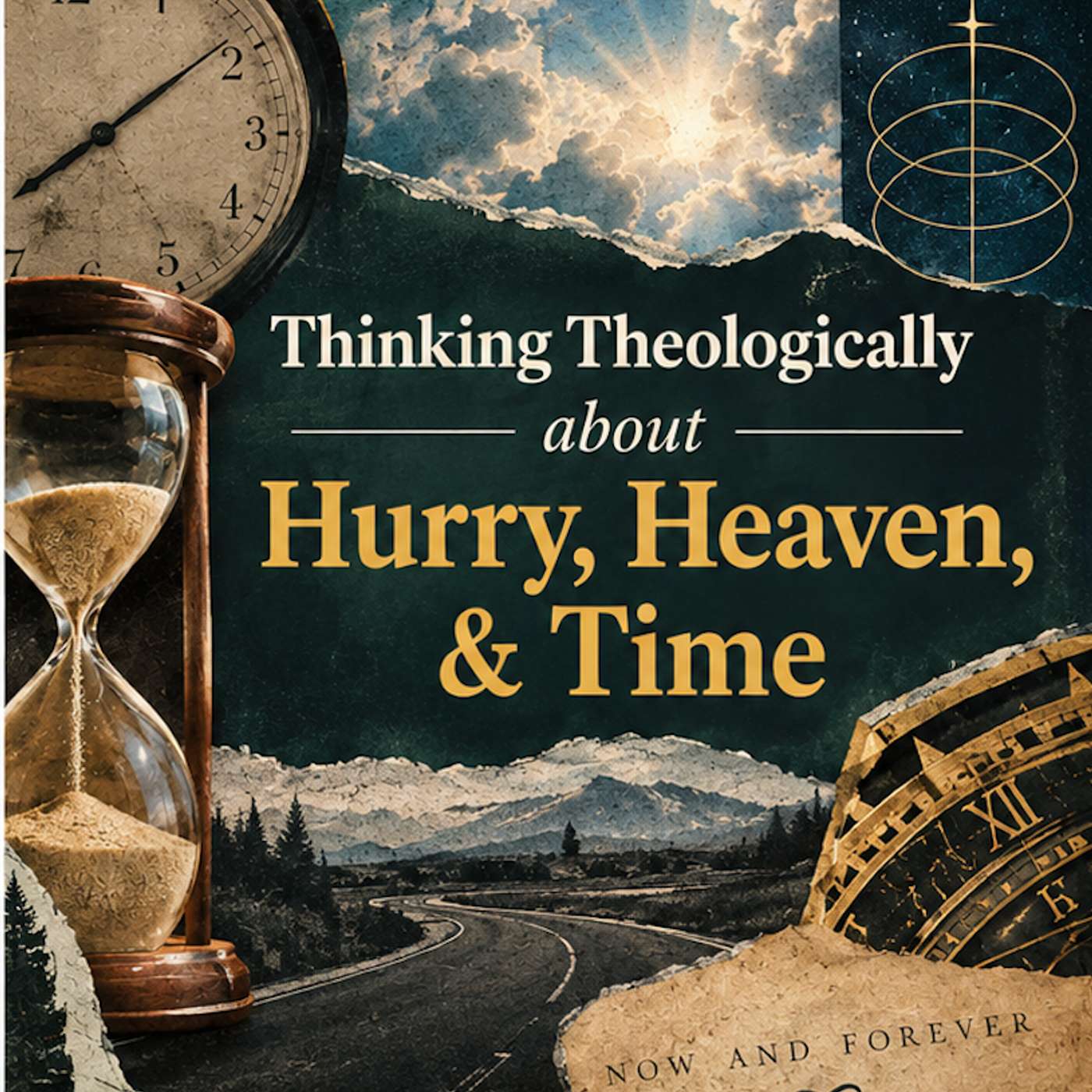
    Thinking Theologically about Hurry, Heaven, & Time w Dr. Trevor A. Sutton

    Dr. J talks with Pastor Trevor Sutton about something we all have in equal measure but increasingly seem unable to control: time. In an age of notifications, deadlines, endless feeds, and constant availability, what does it mean for Christians to think theologically about time? Drawing on biblical theology, the history of timekeeping, and the realities of modern technology, Trevor explores whether our problem is simply that we have too much to do—or whether we've lost sight of what time is actually for. The conversation considers how technologies have shaped not only how we measure time but how we experience it, training us for speed, efficiency, and perpetual distraction. Justin and Trevor explore the biblical vision of time, including its horizontal and vertical dimensions, and ask what changes when we understand our lives as moving toward a God-given telos. If we know where we're ultimately going, how should that shape the way we spend the hours we've been given? We may profess that our lives belong to God while structuring them around productivity, achievement, and constant availability. Rather than offering another set of productivity hacks, Trevor points toward practices like prayer, gratitude, community, reflection, and intentional presence as ways of recovering a healthier relationship with time. For anyone whose calendar feels perpetually full, whose phone constantly demands attention, or who has wondered where the last six months went, this conversation offers an invitation to stop merely managing time—and start receiving it as a gift. LINKS: Website (Forthcoming) Book: Between Hurry & Heaven by Dr. Trevor Sutton & Jeff Bilbro Church: St. Luke Lutheran Church Other Writing Faith & Leadership

  • #44
    August 28 · 55 min

    A Theology of Sports with Phil Gillespie

    Dr. J talks with Phil Gillespie of Athletes in Action for a conversation about something many of us treat as mere entertainment but may reveal something much deeper about what it means to be human. With more than three decades in sports ministry, Phil brings a theological lens to our fascination with competition, asking why we care so much about who wins, who loses, who gets remembered, and who gets to stand on top. Drawing on C.S. Lewis and the idea that we were made with a deep desire to be desired and approved of, the conversation explores sports as an “iceberg”—with the visible excitement of competition revealing deeper longings for glory, identity, connection, and transcendence. Because beneath our obsession with the scoreboard may be a much more fundamental question: what are we actually longing for? Rather than treating sports as a distraction from discipleship, Justin and Phil consider what happens when we see athletics as a genuine site of spiritual formation. The church has often treated sports as secular territory—something Christians participate in but rarely think theologically about. Phil challenges that assumption, arguing that the fields, courts, locker rooms, teams, rivalries, victories, and defeats of everyday athletic life can become places where relationships are formed, character is revealed, and faith is lived out organically. Along the way, they explore why competition can be both deeply compelling and spiritually dangerous, how our pursuit of glory can become an attempt to secure an identity that only God can give, and why the church may be overlooking one of the most significant discipleship environments in contemporary culture. At the center of it all is a distinctly Christian vision of play: sports aren’t simply about winning, and play isn't simply wasted time. If human beings were made for glory, joy, creativity, community, and delight, then our impulse to play may itself be a clue to the goodness for which we were created. Even in the renewed creation, Phil argues, play will have a place—because the Christian hope isn’t the escape from embodied life but its restoration. For anyone who loves sports, has ever wondered why competition feels euphoric, or suspects that our obsession with athletics is about more than games, this episode offers a different way to see the field: a window into our theology of glory, a laboratory for discipleship, and a surprisingly glimpse of what we were made for. LINKS: MSU Athletes in Action Book: Away Game: A Christian Parent's Guide to Navigating Youth Sports by Brian Smith and Ed Uszynski Miracle: Herb Brooks' Speech on YouTube

  • #43
    August 14 · 46 min

    The Wisdom of Sleep with Brett McCracken

    Dr. J talks with author and cultural commentator Brett McCracken for a conversation about something most of us treat as an inconvenience, but Scripture treats as a gift: sleep. Rather than framing rest as a productivity hack or a wellness trend, Brett resists the impulse to treat sleep as merely biological maintenance. From the strange, fascinating facts of what our brains do while we're unconscious to what he calls the deeper trouble with a culture that prizes hustle over rest, the conversation explores how our discomfort with sleep often reveals a deeper discomfort with dependence. The result? We treat rest as a weakness to manage rather than a truth to receive. Viewing sleep not as downtime but as doxology, Dr. J and Brett draw on Scripture, theology, and everyday habits to explore how sleep mirrors God's own design—his rest, his sustaining care while we're unaware, even Jesus asleep in the boat during a storm. Because if trust in God's provision is at the heart of the gospel, why wouldn't our nightly surrender to sleep be an embodied rehearsal of that same trust? Along the way, they tackle the pride and overwork baked into modern culture, the way technology and constant attention erode our capacity for rest, and practical habits for reclaiming healthier sleep in a distracted age. At the center of it all is a distinctly Christian claim: creation matters, embodiment matters, and because God meets us in our weakness and unconsciousness alike, sleep can become a physical, embodied ritual of faith. As Brett puts it, "entering God's rest is the point of life"—and sleep, far from a wasted third of our days, is a nightly invitation to practice it. For anyone running on empty, suspicious of hustle culture, or longing for a faith that meets them even in their most vulnerable, unconscious hours, this episode offers both a diagnosis and an invitation: recover a vision of rest as worship. LINKS: New Book: The Wisdom of Sleep by Brett McCracken BrettMcCracken.com || Twitter The Wisdom Pyramid Scrolling Ourselves to Death The Gospel Coalition

  • #42
    July 24 · 1 hr 2 min

    Beauty Healing a Divided World w Chris Richards

    Dr. J sits down with Chris Richards to explore a provocative question: What if our divisions are rooted in something deeper than politics, and what if beauty is part of the cure? Rather than reducing polarization to bad ideas or bad actors, this conversation examines the broader economic forces that have reshaped modern life. Chris argues that self-interested economics and the attention economy have not simply changed our politics—they have altered how we understand identity, community, and even ourselves. As wealth, power, and influence become increasingly concentrated, many experience a growing sense of dislocation, making outrage, consumerism, and politics attractive substitutes for belonging. Yet this episode is not an exercise in cynicism. Instead, it offers a hopeful vision rooted in the Christian imagination. Beauty, hospitality, music, and the shared experience of creation can cultivate deeper forms of love, community, and spiritual formation. They also consider how Christians can recover the practice of discerning authentic beauty in an age where nearly everything is commodified. How might recovering wonder and pursuing the common good become acts of resistance against outrage and consumption? And what would it look like for Christians to become people who don't merely criticize, but create? For listeners interested in public theology, polarization, sociology, and the relationship between beauty and discipleship, this episode offers a thoughtful and hopeful vision for healing a divided world. LINKS: The Secular Age by Charles Taylor Citizens United Supreme Court Case

  • July 20 · 2 min

    Quick Episode: Updates & Feedback Request

    In this short bonus episode, Justin gives some insight about the podcast’s journey and desire to create meaningful dialogue between society and Christian faith centered around thought leadership. Highlights: The Intersection now has over 40 episodes and thousands of downloads from over 40 countries. Ask: Holler with topic and guest suggestions for future episodes by emailing: podcast@RivChurch.com. Thanks for listening and sharing!

  • #41
    June 26 · 47 min

    When the Old Maps Stop Working: Rethinking Apologetics with Luke Cawley

    In a moment marked by declining church attendance and religious affiliation, competing truth claims, and growing scepticism toward institutions, Dr. J chats with Luke Cawley to explore a pressing question: How should Christians think about evangelism and apologetics in a post-Christian world? Far from merely winning arguments or using urgent emotional appeals, this conversation examines the deeper currents shaping the foundations of un/belief today. Drawing from his extensive study and ministry experience across Europe and beyond, Luke argues that faith is never found in a vacuum. Every culture creates conditions that make certain beliefs seem plausible or difficult to imagine. As traditional assumptions lose their cultural footing, Christians must learn to engage the environments, stories, and social realities that shape how people make sense of the world. Globalization, technological change, and generational shifts have transformed the landscape of not just faith conversations but also the plausibility structures that contain them. As such, the conversation explores why storytelling often matters as much as argumentation, and how apologetics must adapt to a fragmented secular age. The conversation also challenges some of the assumptions that have shaped modern evangelism, particularly in how American Evangelicalism relates to cosmopolitan post-Christian settings. What if the goal is not merely to provide stock answers but to help people see Christ in a way that is more fitting and compelling? How can Christians create spaces where honest questions are welcomed, and the gospel can be heard within contemporary realities? And what opportunities might exist for Christian witness in a culture where inherited faith can no longer be taken for granted? For listeners interested in evangelism, apologetics, cultural engagement, and the future of faith in the West, this episode offers a thoughtful reexamination of how Christians can be more faithfully present in a rapidly changing world. LINKS: The Invisible Castle Podcast (Spotify) (Apple) (Amazon) Substack: @invisiblecastle Website: lukecawley.org Book(s): Somethingism: Exploring Our Sense of More | The Myth of the Non-Christian | other books

  • #40
    June 12 · 57 min

    Developing a Theology of Politics w Dr. Michael Giles

    In a political culture overflowing with opinions but often lacking deeper reflection, Dr. J sits down with Dr. Michael Giles to explore a deceptively simple question: What is political theology, and why does it matter? Far more than partisan preferences or ideological instincts, political theology asks how our understanding of God, human nature, authority, and the common good shapes the way we think about politics. Drawing from Augustine and various intellectual traditions, Dr. Mike argues that every political vision rests upon deeper assumptions about reality, whether we recognize them or not. Along the way, Justin and Mike trace the historical roots of modern democracy, examining the influences of ancient Athens, the Roman Republic, Christianity, and the humanism of the Enlightenment. They discuss how Christian ideas of human dignity helped transform political thought and why understanding these historical foundations remains essential for navigating contemporary debates. The conversation also confronts a challenge unique to every generation: our tendency to become prisoners of our own moment. As Dr. Giles observes, we often swim in cultural waters we scarcely notice, making it difficult to recognize the assumptions and narratives shaping our political imaginations. How have Christian, Enlightenment, and other philosophical ideas shaped democratic institutions? And how can historical awareness help us better understand the opportunities and tensions of our present age? For listeners interested in faith, politics, history, and public life, this episode offers an introduction to political theology and a compelling invitation to think more deeply about the ideas that shape our civic lives. LINKS: Website: michaeltgiles.com City of God by Augustine Augustine & the Limits of Politics by Bethke A Common Wealth of Hope by Michael Lamb

  • #39
    May 22 · 41 min

    Victorian Ghosts in the Evangelical Machine with Dr. Karen Swallow Prior

    Dr. J sits down with Karen Swallow Prior for an incisive conversation about the evangelical imagination. In a moment where many seem more discipled by the trappings of a subculture and internet tribalism than by wisdom, beauty, or truth, Karen argues that the crisis facing evangelicalism is not merely theological or political, but imaginative. Drawing from history, literature, theology, and cultural criticism, Justin and Karen explore the powerful but often invisible forces that shape how evangelicals engage the world. From Victorian moralism and sentimentalism to modern consumerism and culture war reflexes, they unpack the “social imaginary” that forms contemporary faith long before believers ever articulate doctrine. As Karen points out, our water is imbued with the Victorian era. In other words, many have inherited a cultural mood they mistake for Christianity itself. The conversation makes a case for recovering art, literature, beauty, and moral imagination as essential components of formation. Along the way, they wrestle with evangelicalism’s credibility crisis, the fallout of deconstruction, generational disillusionment, shallow conversion practices, and the difficulty of cultivating discipleship in an age increasingly allergic to nuance. The episode also explores the unique role stories play in shaping culture and belief. Rather than offering simplistic nostalgia or culture-war panic, Justin and Karen cast a hopeful vision for faithful presence in a pluralistic world. The task, they argue, is not merely to condemn culture nor mindlessly reproduce it, but to help cultivate healthier cultural ecosystems rooted in wisdom, humility, creativity, and love of neighbor. LINKS: Substack: @karenswallowprior Website: karenswallowprior.com Book(s):The Evangelical Imagination: How Stories, Images, and Metaphors Created a Culture in Crisis || other books & articles The Trinity Forum Modern Social Imaginaries by Charles Taylor

  • #38
    May 15 · 52 min

    Talking about Gender, Like Christians with Jamie Carlson

    Dr. J chats with seminarian and writer Jamie Carlson for a candid and humanized conversation about the state of evangelical gender discourse—and why so much of it feels simultaneously overheated and unserious. In a cultural moment shaped by tribalism, suspicion, and outrage, Jamie argues that many Christian conversations about gender have become less about seeking truth together and more about protecting camps and caricatures. The result is a discourse that often forgets the humanity of the people involved. Rather than reducing the conversation to slogans or talking points, Justin and Jamie explore what it might look like to recover genuinely Christian dialogue marked by humility, charity, patience, and love in truth. Along the way, they wrestle with the emotional and spiritual cost of divisive church culture, the ways mistrust corrodes Christian community, and why so many believers feel exhausted by debates that seem designed more to win than to understand. As Jamie bluntly puts it, “Mistrust is the opposite of love.” Amen. The episode also moves beyond abstract theology into lived experience—examining how institutional failures, personal wounds, church dynamics, and differing Christian traditions shape the way people approach questions surrounding gender, leadership, and authority. Rather than pretending these conversations are easy, the case is made for faithful dialogue without abandoning conviction or complexity. Goodwill, they argue, is not compromise. It is discipleship. Can Christians disagree meaningfully without dehumanizing one another? Can theological conviction coexist with gentleness, curiosity, and honest self-examination? And what might happen if believers became known less for outrage and more for wisdom, compassion, and spiritual maturity? For listeners weary of endlessly polarized debates, this episode offers something increasingly rare: a serious conversation about difficult issues that refuses to sacrifice either truth or love. LINKS: Article: Why Evangelical Discourse is Unserious via Mere Orthodoxy, on Substack Substack: https://jamiecarlson.substack.com/ Kierkegaard, Works of Love The Nicene Creed The Apostles' Creed Henri Nouwen on Silence

  • #37
    April 10 · 45 min

    Good Christians, Bad Art with Nicholas McDonald

    Justin talks with author and cultural sage Nicholas McDonald for a theologically rich and aesthetically grounded conversation about what it looks like to create—and engage—art that tells the truth. Rather than treating art as a delivery system for simplistic messages, Nicholas resists the impulse to reduce creativity to propaganda. From the failures of Christian film to what he provocatively calls “Godsploitation,” the conversation explores how much of what passes for “Christian art” trades honesty for certainty. The result? Stories are thin, forced, and disconnected from the texture of real life. Viewing art not as explanation but as revelation, the conversation draws on Scripture, theology, and examples (such as The Tree of Life) to explore how good art embraces ambiguity, beauty, and even discomfort—not to confuse, but to illuminate. Because if the biblical story is complex, embodied, and often mysterious, why wouldn’t faithful art be the same? Along the way, they tackle the danger of “anti-creational” theology that downplays the physical world. They also make the case that engaging so-called “secular” art isn’t a compromise—it’s often where truth breaks through in unexpected ways. At the center of it all is a distinctly Christian claim: creation matters. The incarnation matters. And because God meets us in the material, messy reality, art that is honest about how that reality can become a site of encounter—convicting, clarifying, and even drawing us to worship or repentance. For anyone tired of clichés, suspicious of easy answers, or longing for a faith that can withstand the full weight of reality, this episode offers both a critique and an invitation: recover a vision of art that is as truthful, complex, and beautiful as the Gospel itself. LINKS: Book: The Light in Our Eyes: Rediscovering the Love, Beauty, and Freedom of Jesus in an Age of Disillusionment by Nicholas McDonald Nicholas McDonald on Substack: @TheBardOwl The Music of Nathan Partain; new album, Phroneo

  • #36
    March 27 · 58 min

    Won’t You Be a Neighbor? With Pastor Tony Pyle

    Justin sits down with his co-pastor (and relational strategist) Tony Pyle for a conversation that is deeply theological and disarmingly practical: what does it actually mean to be a neighbor in an age of distraction and relational drift? Rather than treating “neighbor” as a noun or static label, Tony reframes it as a verb—something lived out. Drawing from data, best practices, and the Parable of the Good Samaritan, the conversation presses into a simple but uncomfortable question: are we just living near people, or are we truly loving them? Think less grand gestures, more faithful consistency. The episode moves from conviction to real life, offering a range of grounded, doable practices—learning names, hosting low-stakes gatherings, borrowing tools (and yes, even dealing with mole problems)—that push back against the isolation baked into modern life. The conversation explores how neighboring requires more than proximity; it demands presence, intentionality, and a willingness to “go first” in vulnerability, even when it’s awkward or inefficient. Along the way, Justin and Tony take on the irony of our moment: we’ve never been more connected, yet loneliness continues to spike. They discuss how neighboring habits don’t just fulfill biblical commands—they actively combat anxiety, fragmentation, and the slow erosion of community life. Neighboring isn’t just a nice add-on for extroverts; it’s central to what it means to follow Jesus. And while the vision is big—renewed communities, deeper trust, resilient local networks—the invitation is refreshingly small: start with a name, a conversation, a moment of presence. For anyone who suspects that something essential has been lost in the way we relate to the people right outside our doors, this episode offers both a challenge and a way forward: build community, one relationship at a time. LINKS: Book: The Art of Neighborhing by Pathak & Runyon Paul in Athens The Parable of the Good Samaritan

  • #35
    March 13 · 57 min

    Digital Mission in the Brave New World of Web3

    Justin chops it up with entrepreneur and technologist John Knox about faith, technology, and the rapidly changing digital frontier. From AI to blockchain to the emerging world of Web3, the discussion explores what it might mean for Christians to cultivate a faithful presence in spaces that shape how information is disseminated, how authority is distributed, and how influence flows. Rather than treating new technology as either a savior or a threat, Knox invites listeners to think with careful and holy optimism about the moral and spiritual opportunities embedded in our tools. The conversation examines the promise and complexity of decentralization, the rise of online communities, and the generational shifts shaping how people encounter both faith and information. Along the way, they wrestle with a central question: if technology is reorganizing public life, what role do Christians have in responsibly shaping it? Knox argues that the tech sector should not be ceded to purely commercial or ideological interests. Instead, Christians working in technology—and those simply navigating it—have an opportunity to engage these spaces with imagination, ethical clarity, and a sense of mission. From practical steps for “digital missionaries” to broader reflections on how faith and vocation intersect in the modern economy, the episode offers a hopeful but clear-eyed look at the possibilities before us. For anyone curious about the forces shaping our (digital) lives, this conversation offers a thoughtful invitation: don’t just consume or avoid technology—help shape it. ~LINKS~ Christians in Web 3 (CW3) FaithTech.com Podcast: What Would Jesus Tech Book: Debugging Discipleship: Flowing the Church out as Liquid to Bear Fruit that Lasts by Joanna Ng Book: Generations: The Real Differences Between Gen Z, Millennials, Gen X, Boomers, and Silents―and What They Mean for America's Future by Dr. Jean Twenge John’s Firm: MedranoPartners.com

  • #34
    February 27 · 49 min

    Civil Rights & The Black Church w Rachel Smith

    Dr. J talks with Rachel Smith for a biblically grounded, historically rich, and honest conversation about the Black Church, the Civil Rights Movement, and the long shadow cast over American life. This is not nostalgia or a highlight reel of famous speeches; it’s grappling with how faith formed communities, confronted injustice, and generated real social and economic opportunity. Beginning with the Great Migration, the conversation traces how Black communities reshaped cities like Flint and how the Black Church emerged not merely as a spiritual refuge but as an organizing engine that cultivated leadership, promoted dignity, and created pathways for education, economic opportunity, and collective action when no one else would. Smith presses back against the reduction of the Black Church to a single moment or function, highlighting its theological sophistication, cultural depth, and adaptive resilience. Together, they explore racism not just as personal prejudice but as a systemic force that structured neighborhoods, schools, wealth, and opportunity—and how the legacy of segregation and white flight still constrains mobility today. Along the way, the conversation highlights how churches filled civic gaps, formed supportive communities, and carried a vision of justice rooted in God’s love. This episode also asks what it means for the church now; how history should interrogate contemporary beliefs, practices, and complacency. Against the temptation to flatten faith into private spirituality or symbolic gestures, the Black Church offers a model of cultural engagement sturdy enough to sustain hope, dignity, and action in the real world. If you’re interested in how faith worked itself out in history and what that history leads us into today, this conversation offers a path forward. Book: The Warmth of Other Suns by Wilkerson Letter from Birmingham Jail by MLK Redling in Lansing

  • #33
    February 20 · 54 min

    The Triangle in the Secular Age with Dr. Andrew Root

    Dr. J chats with Dr. Andrew Root for a searching conversation about secularism, belief, and what it means to live faithfully in what we often (too imprecisely) call a “secular age.” Rather than treating secularism as a settled idea or a simple threat to faith, the conversation probes its complexity—how it emerged, how it affects us, and how it quietly reshapes our understanding of meaning, identity, and hope. Together, they explore how belief is not optional but unavoidable, even in a world that imagines it has moved past faith. Root introduces the idea of navigating belief through competing frameworks—what he describes as a triangle of belief systems—and introduces the “Beyonder,” someone who transcends reductive options, refusing nihilism, escapism, or thin optimism. Along the way, they examine how cultural narratives—especially those embedded in media, comedy, memoirs, and political discourse—form us long before we realize it. The conversation reflects on transformation stories, funerals, and the ways community and tradition hold us inside a larger story when individualism runs out of gas. Against the modern temptation to reduce faith to self-expression, therapy, or fodder for conquest, this episode insists that Christianity offers something sturdy enough to carry grief, sin, and hope. Rather than offering quick fixes or easy slogans, this conversation invites us to ‘learn our shapes’ by recognizing the forces that shape our beliefs, and to recover a vision of reality that transcends isolated selves and reconnects us to God, our neighbor, and a story worth living in. If you sense that modern life promises freedom but delivers fragmentation, this episode offers a deeper way of naming what’s going on—and where hope still breaks in. Website: AndrewRoot.org (books, podcast, etc.)

  • #32
    February 6 · 47 min

    Punching Blind into Culture with Dr. Robert Joustra

    In this episode of The Intersection, Dr. J is joined by Dr. Rob Joustra—political theorist, scholar, and thoughtful guide through the thicket of modern public life—for a wide-ranging conversation at the crossroads of Christian faith, tribal narratives, and political theology. It seeks to untangle cluttered half-truths, moral panic, and the temptation to reduce complex issues to simple talking points. Rather than offering tidy answers, the conversation lingers on self-aware considerations that shape how we see the world—stories about power, justice, identity, and belonging. Together, Justin and Rob explore how cultural narratives both form and deform Christian imagination, often smuggling in assumptions that go unexamined. They press the need for humility and perspective, especially in a moment when “what about…?” questions dominate moral and political debate, distracting from the harder work of faithful discernment. Drawing from Scripture, history, and political theology, the episode wrestles with how Christians might understand power, current events, and interconnectedness without naïve idealism. Dr. Rob offers a robust vision of God’s sovereignty over nations and powers, situating modern Western politics within a uniquely Christian moral inheritance—one that still echoes hope even when it forgets or contradicts its source. This conversation resists both reactionary certainty and detached cynicism. It calls listeners toward humility, tenderness, and truth as marks of discipleship in public life, while underscoring the importance of history, tradition, and church renewal for faithful cultural engagement. If you’re weary of hot takes, allergic to moral shortcuts, or hungry for a deeper framework for navigating faith in a polarized world, this episode offers clarity without caricature—and a steadier way forward. LINKS: Bio Punching Blind article in Comment Magazine Books The Belgic Confession

  • #31
    January 23 · 50 min

    A Scandalous Witness to National Myth-Making with Dr. Lee C. Camp

    In this episode of The Intersection, Dr. J is joined by Dr. Lee C. Camp—author of Scandalous Witness: A Little Political Manifesto for Christians, professor, speaker, and host of the No Small Endeavor podcast—for an honest conversation at the crossroads of Christian faith, nationalism, and public life—a crossroads often crowded with slogans, pride, and selective memory. Rather than treating Christian nationalism as a new cultural outbreak, the conversation situates it as an old reflex with deep historical roots. Together, Justin and Lee explore the persistent tension between the gospel and the nation-state, probing how faith becomes distorted when it is conscripted into political projects. Along the way, they challenge the myth of America as a “Christian nation,” arguing that honest historical accountability is not an act of disloyalty but a form of love; one that refuses nostalgia in favor of truth-telling. Drawing from theology, history, and social ethics, the episode presses toward a nonpartisan Christianity shaped by orthodoxy rather than fallen ideology. Lee makes the case that the gospel is not merely publicly relevant but inherently political in its demands for justice, mercy, and love of neighbor—especially when those demands unsettle myths and arbitrary boundaries of belonging. This conversation resists both culture-war outrage and disengaged piety. It calls listeners to historical awareness, civic humility, and faithful presence, reminding us that the past is never past—and that Christian witness becomes most compelling when it refuses power grabs in favor of costly truth. If you’re tired of syncetism, shallow patriotism, or faith reduced to tribalized stories, this episode offers clarity, conviction, and a more honest way forward. Podcast: No Small Endeavor https://www.nosmallendeavor.com/ Website: https://www.leeccamp.com/ Book: Scandalous Witness: A Little Political Manifesto for Christians: https://www.amazon.com/Scandalous-Witness-Political-Manifesto-Christians/dp/0802877354 Books: https://www.leeccamp.com/books

  • #30
    January 9 · 58 min

    Created Creators: Discerning AI

    In this episode of The Intersection, Dr. J talks with Dr. Michael Shi, a Silicon Valley AI researcher, for a clear-eyed conversation at the crossroads of artificial intelligence, faith, and human responsibility—a crossroads typically crowded with hype, fear, and hot air. Rather than treating AI as either savior or saboteur, the conversation frames it as a powerful tool that inevitably reflects the values, intentions, and limits of its creators. Drawing from technology, ethics, and theology, the episode traces AI’s evolution from rigid rules to data-driven models, addressing common anxieties around hallucinations, plagiarism, creativity, and education. Justin and Michael press listeners toward discernment over panic, emphasizing integrity, verification, and wisdom—especially for leaders, educators, and people of faith navigating a rapidly changing landscape. AI may extend our capacities, but it cannot replace conscience, relational presence, or moral responsibility. Framed by the Christian vision of humans as co-creators under God, the episode resists both techno-utopianism and reactionary fear, calling for faithful, humble engagement. If you’re curious about AI but allergic to panic, hype, or shortcuts—and interested in what thoughtful engagement actually looks like—this episode offers clarity, balance, and just enough details to be productive.

  • #29
    Dec 27, 2025 · 58 min

    Troubling Dominionism: Faithfulness in Exile Without Hunger for Power

    In this episode of The Intersection, Dr. J sits down with Colleen Davenport for a thoughtful, clear-eyed conversation at the crossroads of Christianity, culture, and power—an intersection often cluttered with bad history, louder opinions, and the assumption that faith is most faithful when it’s in charge. Together, they bring historical depth and wisdom to a topic many Christians lean on confidently, but define poorly: dominionism. The talk explores how certain visions of cultural “victory” can quietly distort the gospel, especially when political influence begins to masquerade as spiritual faithfulness. Drawing from Scripture, church history, and lived experience, the episode unpacks the biblical idea of exile—what it means to follow Jesus faithfully in a world that does not share our assumptions, priorities, or allegiances. Rather than defaulting to fear, withdrawal, or conquest, the conversation presses toward a Christ-centered posture marked by humility, discernment, and love of neighbor. Justin and Colleen wrestle honestly with wonky syncretism, cultural engagement, and the temptation to place misplaced hope in politics, naming how easily tribalism can eclipse discipleship. Along the way, they return again (and again), to Jesus—not as a mascot for ideology, but as the crucified and risen King whose cause advances through peacemaking, service, and faithfulness rather than domination. The result is a conversation that challenges easy answers without collapsing into cynicism, reminding listeners that Christians are called to be ambassadors, not conquerors—and that the church’s credibility is most compelling when it is rooted in love for the marginalized rather than proximity to power. If you’re weary of cable-news-shaped theology, suspicious of baptized political ambition, and curious about what faithful presence actually looks like in a polarized age, this episode offers clarity, conviction, and just enough discomfort to be spiritually productive. LINKS: Jake Meador, Mere Orthodoxy: Four Types of Christian Cultural Engagement (Shameless) Plug: ColleenDavenportPhoto.com Abortion Statistics, Pew Research

Showing 1–20 of 20 episodes