Skip to content
Artwork for The Emergency Management Network Podcast
GovernmentBusinessNon-Profit

The Emergency Management Network Podcast

Todd T. De Voe

This podcast features strategies and advice from today’s leaders and experts in emergency management. Its purpose is to empower and enrich current and future leaders.

emnetwork.substack.com
Play
  • 34 episodes
  • Avg 19 min
  • English
Counted on this page — what you have heard stays on this device, so it is not something the list can be paged by.
  • Thursday · 6 min

    Flood watches across Texas and Oklahoma; FY27 starts on a CR

    THE EMN DAILY NEWS | Thursday, 1 October 2026 The Overview Flood watches across Texas and Oklahoma; FY27 starts on a CR Flood watches cover southern Oklahoma and much of north and central Texas today as the remnants of Hurricane Polo move across the region, with flash flood warnings overnight around Wichita Falls and a watch running through Friday evening over the Hill Country counties still in Public Assistance recovery from the July floods. Fiscal year 2027 opens on a continuing resolution that runs through December 11, holding agencies at fiscal 2026 levels and permitting up to $26.37 billion for the Disaster Relief Fund. The national preparedness level holds at 2 with 58 incidents and 4,826 personnel, down 574 in a day, with no new large fires. Year-to-date fire counts were adjusted sharply upward to 62,218, moving the season from 124 to 134 percent of the ten-year average. Dome in Yosemite National Park reached 39 percent contained as a second California team mobilizes. For great insight from leading emergency managment professionals, visit EM Network on Substack. KEY TAKEAWAYS Oklahoma and north Texas: The Norman forecast office holds a flood watch until 1 p.m. today for 25 Oklahoma counties and five northern Texas counties, with 2 to 4 inches likely and local amounts to 6 inches. Flash flood warnings ran overnight for Wichita Falls, Burkburnett, Iowa Park and Sheppard Air Force Base after 1 to 3 inches fell in short order. Central Texas: The Fort Worth office carries a flood watch through Friday morning across north central Texas, including Dallas, Denton, Collin and McLennan counties, with 2 to 3 inches widespread and localized totals to 5 inches. The Austin and San Antonio office holds a watch until 7 p.m. Friday for Hill Country counties including Kerr, Bandera, Uvalde, Real, Edwards, Gillespie and Kendall, all of which carry open Public Assistance from the July declaration. Fiscal year: Agencies begin fiscal 2027 under the Continuing Appropriations and Extensions Act, signed September 2, which funds the government through December 11 at prior-year levels. The measure permits up to $26.37 billion for the Disaster Relief Fund, with obligations charged against fiscal 2027 appropriations rather than treated as supplemental. Under a continuing resolution, agencies cannot start programs, projects or activities that were not already funded and active, which constrains new grant starts until a full-year bill passes. Get ready, Long Beach! Join emergency management professionals from across the country and around the world for the IAEM 74th Annual Conference & EMEX, November 9-11, 2026, and experience three incredible days of big ideas, new connections, innovation, and the people shaping the future of emergency management. We’ll see you in Long Beach! Wildfire posture: Preparedness Level 2 with 58 incidents, 14 uncontained large fires, 1,641,606 acres and 4,826 personnel, a drop of 574, per the Wednesday situation report. Initial attack was light, with 91 fires and no new large incidents; one large fire was contained, and five complex teams were committed. The Northwest, Northern California and Southern Area each released more than 220 people in a single operational period. Reporting adjustment: Year-to-date fires rose from 57,521 to 62,218 in one reporting cycle, almost entirely in the Southern Area, which moved from 28,661 to 33,302. That shifts the season from 124 to 134 percent of the ten-year average for fire counts. The situation report attributes such changes to mapping or reporting adjustments rather than new activity, and a similar acreage swing last week reversed within days. California: Dome in Yosemite National Park grew 151 acres to 5,410 and jumped to 39 percent contained, up from 31, with 932 personnel and California Team 4 mobilizing. Costs stand at $24 million. Plaskett on the Los Padres National Forest is fully contained, and Timber holds at 88 percent with numerous structures still threatened. Northwest: Eight uncontained large fires and 2,186 personnel, down 239. Command on Little Giant transfers from Northwest Team 13 to Northwest Team 12 today, with the fire at 93 percent contained and structures still threatened. Sisi near Stehekin nearly doubled containment to 29 percent, with residences threatened. Recovery calendar: SBA physical damage deadlines for the September 1 public assistance declarations close November 1 in Colorado and South Dakota and November 2 in Missouri and Texas, with economic injury applications open to June 1, 2027. Texas recently added Grimes, Live Oak, McMullen and Schleicher counties for Public Assistance, and its Individual Assistance request covering 30 counties remains pending. Fire weather: Breezy northerly winds in the Sacramento Valley and southern California ease this morning, but relative humidity of 10 to 15 percent persists with above-normal temperatures. In the southern Plains, breezy south winds of 10 to 18 miles per hour and minimum humidity of 25 to 35 percent create locally elevated conditions. SOURCES Texas and Oklahoma flooding NWS Norman: Flood Watch for 25 Oklahoma counties and five northern Texas counties, issued Oct 1 at 1:41 a.m. CDT until 1 p.m. CDT https://govonestop.com/nws/oklahoma-texas-severe-flood-watch-effective-09302026-2341 NWS Norman: Flash Flood Warning for Wichita County, Texas, issued Oct 1 at 2:57 a.m. CDT https://govonestop.com/nws/texas-severe-flash-flood-warning-effective-10012026-0057 NWS Norman: Flash Flood Warning for southeastern Archer and southern Clay counties, issued Oct 1 at 1:45 a.m. CDT https://www.defconlevel.com/alert/2026-10-01-nws-noaa-weather-flash-flood-warning-issued-october-1-at-1-45am-cdt-until-october-1-at-4-45am-cdt-by-nws-norman-ok NWS Fort Worth: Flood Watch through Friday morning for north central Texas, issued Sept 30 at 2:26 p.m. CDT https://govonestop.com/nws/texas-severe-flood-watch-effective-09302026-1226 NWS Austin/San Antonio: Flood Watch until 7 p.m. Oct 2 for Hill Country counties, issued Sept 30 at 9:52 p.m. CDT https://govonestop.com/nws/texas-severe-flood-watch-effective-09302026-1952 Federal funding White House: H.R. 6500, Continuing Appropriations and Extensions Act, 2027, signed Sept 2, funding agencies through Dec 11 https://www.whitehouse.gov/briefings-statements/2026/09/congressional-bill-h-r-6500-signed-into-law/ Congressional Research Service summary via Legis1: $26.37 billion permitted for the Disaster Relief Fund under the continuing resolution https://legis1.com/news/fy2027-continuing-resolution-funds-agencies Office of the Texas Governor: four additional counties approved for Public Assistance, Individual Assistance request pending https://gov.texas.gov/news/post/governor-abbott-announces-approval-of-federal-disaster-assistance-for-four-additional-counties-following-summer-storms-and-flooding Wildfire, national NICC Incident Management Situation Report and Predictive Services discussion: Wednesday, Sept 30, 2026, 0730 MDT (live PDF, overwritten daily). Source for all fire figures and the California, Northwest and fire weather items. https://www.nifc.gov/nicc-files/sitreprt.pdf IMSR archive https://www.nifc.gov/nicc/incident-information/imsr This is a public episode. If you'd like to discuss this with other subscribers or get access to bonus episodes, visit emnetwork.substack.com/subscribe
  • Wednesday · 6 min

    Assistance caps rise to $44,800 as FEMA redefines the field

    FEMA has issued a formal definition of emergency management, calling it the strategic coordination of emergency services to protect life, property, and continuity of operations, and paired it with 12 coordination responsibilities that every FEMA component must now align its doctrine, training and publications to. Three Federal Register notices published yesterday reset the annual assistance numbers: Individuals and Households Program maximums rise to $44,800 each for housing and other needs, Serious Needs Assistance goes to $790, and the Public Assistance simplified procedures threshold moves to $1,093,800. Texas added four more counties for Public Assistance, while its Individual Assistance request for 30 counties remains pending. The national preparedness level holds at 2 with 62 incidents and 5,400 personnel, down 297, and three new large fires in the Southern Area. Moisture from decaying Hurricane Polo brings wetting rain and localized flooding to the Southwest and Colorado today. The EMN Daily NEWS is your concise daily update on national and state-by-state emergency management news. For more detailed analysis of issues facing emergency management, subscribe to EM Network on Substack. KEY TAKEAWAYS FEMA doctrine: The definition came in a September memorandum from Administrator Cameron Hamilton, released September 22 during National Preparedness Month. It sets 12 coordination responsibilities running from capacity building through continuous improvement, alongside professional skills covering command and coordination, consequence analysis, planning, decision-making under pressure, technical writing and after-action analysis. FEMA says the standard applies regardless of sector, and all components will update doctrine, policy, guidance, training, workforce materials and exercise products to match. Assistance thresholds: The new figures took effect with yesterday’s Federal Register notices and are indexed to a 2.9 percent increase in the Consumer Price Index for the 12 months ending August 2025. The Individuals and Households Program caps at $44,800 for housing assistance and $44,800 for other needs assistance. Serious Needs Assistance is set at $790. The Public Assistance simplified procedures threshold rises to $1,093,800. Texas: The major disaster declaration for the July storms and flooding now includes Grimes, Live Oak, McMullen and Schleicher counties for Public Assistance, in addition to the 19 counties approved earlier. The state’s request for Individual Assistance covering 30 counties remains pending. Get ready, Long Beach! Join emergency management professionals from across the country and around the world for the IAEM 74th Annual Conference & EMEX, November 9-11, 2026, and experience three incredible days of big ideas, new connections, innovation, and the people shaping the future of emergency management. We’ll see you in Long Beach! Wildfire posture: Preparedness Level 2 with 62 incidents, 15 uncontained large fires, 1,690,313 acres and 5,400 personnel, a drop of 297, per the Tuesday situation report. Initial attack was light, with 90 fires, three new large incidents, two large fires contained and five complex teams committed. Year to date, the country is at 57,521 fires and 8,565,689 acres, 124 and 141 percent of the ten-year averages. Southern Area: Fifty-five new fires and three new large incidents. Honey, nine miles southwest of Okmulgee, Oklahoma, on Bureau of Indian Affairs protection, is 333 acres and 80 percent contained, with active fire behavior and structures threatened. 3 Alpha Sierra, five miles west of Weston, Florida, is 330 acres and 16 percent contained. Stone Bridge near Wilburton, Oklahoma, grew to 45 acres with residences threatened. California: Timber on the Los Padres National Forest jumped to 88 percent contained, up from 77, with numerous structures still threatened and costs at $171.6 million. Dome in Yosemite National Park grew 178 acres to 5,259 acres, at 31 percent contained. Command on Plaskett transfers back to the local unit today. Northwest: Eight uncontained large fires and 2,425 personnel, down 163. Little Giant on the Okanogan-Wenatchee National Forest rose to 91 percent contained with structures still threatened, and Northwest Team 12 is mobilizing. Three Queens holds at 33 percent contained with numerous residences and critical infrastructure threatened. Recovery calendar: SBA physical damage deadlines for the September 1 declarations close November 1 in Colorado and South Dakota and November 2 in Missouri and Texas, with economic injury applications open to June 1, 2027. Fire weather: Breezy northerly winds develop in parts of the Sacramento Valley and southern California with relative humidity of 10 to 15 percent, creating elevated conditions. Downslope westerly winds are expected in north-central Montana east of the Divide. Moisture from decaying Hurricane Polo persists over the Southwest and Colorado with widespread wetting rain and local amounts near 3 inches, bringing areas of flooding. SOURCES FEMA doctrine FEMA, Administrator’s Corner: We Must Return to the Basics, A Definition of Emergency Management and Professional Framework, released Sept 22 (page could not be retrieved in this sweep; text supplied by the editor) https://www.fema.gov/about/administrators-corner/emergency-management-framework Federal assistance Federal Register: Notice of Maximum Amount of Assistance Under the Individuals and Households Program, published Sept 29 https://www.federalregister.gov/documents/2026/09/29/2026-19854/notice-of-maximum-amount-of-assistance-under-the-individuals-and-households-program Federal Register: Notice of Award Amount Adjustment for Serious Needs Assistance, published Sept 29 https://www.federalregister.gov/documents/2026/09/29/2026-19856/notice-of-award-amount-adjustment-for-serious-needs-assistance Federal Register: Notice of Adjustment of Disaster Grant Amounts, published Sept 29 https://www.federalregister.gov/documents/2026/09/29/2026-19898/notice-of-adjustment-of-disaster-grant-amounts Federal Register: Notices of Emergency and Major Disaster Declarations and Related Amendments, March through August 2026, published Sept 29 https://www.federalregister.gov/documents/2026/09/29/2026-19857/notices-of-emergency-and-major-disaster-declarations-and-related-amendments Office of the Texas Governor: federal disaster assistance approved for four additional counties, Individual Assistance request pending https://gov.texas.gov/news/post/governor-abbott-announces-approval-of-federal-disaster-assistance-for-four-additional-counties-following-summer-storms-and-flooding Wildfire, national NICC Incident Management Situation Report and Predictive Services discussion: Tuesday, Sept 29, 2026, 0730 MDT (live PDF, overwritten daily). Source for all fire figures and the Southern Area, California and Northwest items. https://www.nifc.gov/nicc-files/sitreprt.pdf IMSR archive https://www.nifc.gov/nicc/incident-information/imsr This is a public episode. If you'd like to discuss this with other subscribers or get access to bonus episodes, visit emnetwork.substack.com/subscribe
  • September 29 · 6 min

    Hawaii shifts to damage assessment; Northeast power restored

    THE EMN NEWS DAILY BRIEF | Tuesday, 29 September 2026 Hawaii County has shifted from response to damage assessment after Hurricane Nolo and is asking residents and businesses to file damage reports through separate residential and commercial forms. Governor Josh Green has identified roughly $686 million in damage and recovery costs from the state’s first four disasters of 2026, before Nolo, which was the season’s seventh tropical cyclone. In the Northeast, Rhode Island Energy restored all 50,000 customers it lost in under 48 hours, and PSEG Long Island reported more than 128,000 cumulative outages, with more than 99 percent restored by late Monday. The nor’easter produced an 81-mile-per-hour gust at Montauk Point and 6.3 inches of rain in southeastern Massachusetts. The national preparedness level holds at 2 with 64 incidents and 5,697 personnel, down 306, while the Southern Area reported 63 new fires. CISA released nine industrial control system advisories last week. The EMN NEWS Daily Brief is your concise daily update on national and state-by-state emergency management news. KEY TAKEAWAYS Hawaii assessment: Mayor Kimo Alameda said flooding remains the county’s biggest concern, particularly in Kau, where roads closed after overnight rain. Naalehu, Waiohinu and Pahala took the brunt of the rain and wind, the same communities Hurricane Lala hit in August. The three shelters opened in Naalehu, Pahala and Ocean View held 10 people Sunday morning and have since closed. Hawaii water system: Department of Water Supply crews are assessing the system for damage and connecting backup generators, and will notify customers when normal use may resume. Customers may see low pressure or intermittent service while conditions stabilize. The essential-use request remains in effect. Kauai deadlines: Hurricane Lowell recovery continues, with the Koloa hurricane resource center open today and Thursday from 9 a.m. to 3 p.m. Households that lost food to power outages may be eligible for replacement SNAP benefits. Real property tax exemption applications close tomorrow with no extensions. Owners of storm-damaged property have until June 30, 2027, to file for disaster tax relief. Get ready, Long Beach! Join emergency management professionals from across the country and around the world for the IAEM 74th Annual Conference & EMEX, November 9-11, 2026, and experience three incredible days of big ideas, new connections, innovation, and the people shaping the future of emergency management. We’ll see you in Long Beach! Nor’easter restoration: Rhode Island Energy deployed more than 270 crew members and field personnel, responded to more than 270 vegetation-related outages and over 150 wires-down 911 calls, and replaced 20 broken poles. Scituate, South Kingstown, Cumberland and Coventry were hardest hit. PSEG Long Island ran 16-hour shifts against more than 1,000 downed trees and 530 large branches. Coastal damage: Long Island is assessing steep erosion at Gilgo Beach, where the Army Corps of Engineers was already mobilized for sand replenishment. The stairs to the surf at Smith Point Park were destroyed, part of the Jones Beach fishing pier was knocked down, and the Jones Beach theater took significant damage with water reaching the orchestra seats. In Lindenhurst, floodwater surrounded homes for three days. Measured coastal inundation in New York City topped 2.6 feet. Wildfire posture: Preparedness Level 2 with 64 incidents, 17 uncontained large fires, 1,681,161 acres and 5,697 personnel, a drop of 306, per the Monday situation report. Initial attack was light at 89 fires, with one new large incident and five complex teams committed. Year to date, the country is at 57,339 fires and 8,563,287 acres, 124 and 142 percent of the ten-year averages. Southern Area: Sixty-three new fires, the most of any region by a wide margin, and one new large incident. Rafter 4B southeast of Eldorado, Texas grew 850 acres to 2,100 and rose to 50 percent contained, adding 114 personnel. Grover Bend, southeast of Benjamin, Texas, is 320 acres and 60 percent contained. California: Dome in Yosemite National Park grew 475 acres to 5,081, holding at 30 percent contained with costs at $19.9 million. Timber on the Los Padres National Forest rose to 77 percent contained, with numerous structures still threatened. Command on Plaskett, at 99 percent contained, transfers back to the local unit today. Cyber: CISA released nine industrial control system advisories on September 22, ICSA-26-265-01 through 09. The set covers the lwIP TCP/IP stack, Siemens Siveillance Control, Desigo CC, Industrial Edge Management, and OpenPLC Runtime v3. Fire weather: Abundant moisture from Hurricane Polo moves into the Southwest with widespread showers, scattered thunderstorms and localized flooding. Dry conditions and below-normal temperatures return to California, the western Great Basin, the Northwest and the northern Rockies. For more, visit emnetwork.substack.com and share this with a friend. SOURCES Wildfire, national NICC Incident Management Situation Report and Predictive Services discussion: Monday, Sept 28, 2026, 0730 MDT (live PDF, overwritten daily). Source for all fire figures, the Southern Area and California items. https://www.nifc.gov/nicc-files/sitreprt.pdf IMSR archive https://www.nifc.gov/nicc/incident-information/imsr Hawaii Hawaii News Now: Hawaii County shifts to damage assessment, Mayor Alameda comments, shelter counts, Sept 27 https://www.hawaiinewsnow.com/2026/09/27/hawaii-county-shifts-damage-assessment-hurricane-nolo-moves-away/ Hawaii News Now: county asking residents and businesses to report storm damage, separate residential and commercial forms, Sept 29 https://www.hawaiinewsnow.com/2026/09/29/hawaii-island-residents-businesses-urged-report-storm-damage-hurricane-nolo/ Big Island Now: Department of Water Supply assessment and generators, shelter closures, Sept 28 https://bigislandnow.com/2026/09/28/what-big-island-residents-need-to-know-wednesday-about-tropical-storm-nolo/ Honolulu Star-Advertiser: Governor Green’s $686 million accounting across the first four 2026 disasters, Sept 24 https://www.staradvertiser.com/2026/09/24/hawaii-news/new-storm-threat-to-isles-projected-to-become-a-hurricane/ Honolulu Star-Advertiser: federal assistance approved, Nolo as the season’s seventh tropical cyclone, Sept 26 https://www.staradvertiser.com/2026/09/26/hawaii-news/federal-assistance-approved-as-hurricane-nolo-nears-hawaii/ The Garden Island: Kauai County Lowell recovery, resource center hours, SNAP replacement, tax deadlines, Sept 27 https://www.thegardenisland.com/2026/09/27/hawaii-news/county-update-nolo-next/ East Coast Rhode Island Energy: restoration complete, crew counts, outage and pole figures, Sept 28 https://news.pplweb.com/Rhode-Island-Energy-restores-power-to-all-customers-following-September-noreaster The Watchers: PSEG Long Island cumulative outages and restoration, Montauk gust, southeastern Massachusetts rainfall, New York City inundation, storm position Monday, Sept 29 https://watchers.news/2026/09/29/noreaster-exits-after-days-of-heavy-rain-and-coastal-flooding-across-u-s-northeast/ CBS New York: Long Island damage assessment, Gilgo Beach erosion, Smith Point, Jones Beach and Lindenhurst, Sept 28 https://www.cbsnews.com/newyork/news/noreaster-long-island-south-shore-lindenhurst-flooding/ ABC7 New York: PSEG Long Island crew shifts, downed trees and branches, Sept 27 https://abc7ny.com/live-updates/developing-noreaster-threatens-jersey-shore-long-island-coastal-flooding-rough-surf-strong-winds-accuweather-alert/19861959/entry/19880585/ CISA CISA Releases Nine Industrial Control Systems Advisories: ICSA-26-265-01 through 09, Sept 22 https://content.govdelivery.com/accounts/USDHSCISA/bulletins/42bfaa9 CISA Adds One Known Exploited Vulnerability to Catalog: CVE-2026-7273, Sept 21; no later additions located in this sweep https://www.cisa.gov/news-events/alerts/2026/09/21/cisa-adds-one-known-exploited-vulnerability-catalog This is a public episode. If you'd like to discuss this with other subscribers or get access to bonus episodes, visit emnetwork.substack.com/subscribe
  • September 28 · 6 min

    Federal declaration for Hawaii as Nolo passes; deadly nor'easter floods the Northeast

    Hurricane Nolo passed farther south than forecast and spared Hawaii Island the worst case, but flooded roads on the Big Island, prompted five high-water rescues Sunday and knocked out power on Oahu and Maui. A pre-landfall Presidential Emergency Declaration approved Friday covers four counties at a 75 percent federal cost share. On the East Coast, the nor’easter killed a New York City Housing Authority worker struck by a falling tree Saturday in Brooklyn, drove outages past 100,000 customers at their peak, and produced the worst coastal flooding since Sandy at two Jersey Shore tide gauges. New Jersey and New York both declared states of emergency before landfall. The national preparedness level holds at 2 with 69 incidents and 6,003 personnel, down 305, and three new large fires, including one near Benton City, Washington, that destroyed seven structures. The EMN NEWS Daily Brief is your concise daily update on national and state-by-state emergency management news. KEY TAKEAWAYS Hawaii outcome: Nolo tracked south of the main islands, with rainfall above 14 inches at the Big Island's highest elevations. Crews worked through Sunday on flooding, debris, high surf and wind. Highway 11 in Kau closed in multiple locations between Pahala and Waiohinu. Hawaii County Civil Defense is asking residents and businesses to report storm damage so agencies and nonprofit partners can assess unmet needs. Hawaii infrastructure: The Hawaii County Department of Water Supply asked customers in affected service areas to limit water to essential health and safety needs, citing power outages and possible damage to water system infrastructure. County solid waste transfer stations in Kauai stayed closed, and the Hele-On Route 90 run to Kona was canceled. Federal declaration: The pre-landfall declaration approved September 25 provides federal assistance for emergency protective measures in the City and County of Honolulu and Hawaii, Maui and Kauai counties, including direct federal assistance, at a 75 percent federal cost share. The State Emergency Operations Center remains at Level 1 full activation with 24-hour staffing, coordinating with FEMA Region IX, the counties and utilities. Get ready, Long Beach! Join emergency management professionals from across the country and around the world for the IAEM 74th Annual Conference & EMEX, November 9-11, 2026, and experience three incredible days of big ideas, new connections, innovation, and the people shaping the future of emergency management. We’ll see you in Long Beach! Nor’easter toll: Outages ran past 100,000 customers across the Northeast at times Sunday, concentrated from New Jersey through Long Island and coastal Connecticut, and were down to roughly 40,000 by this morning. Major coastal flooding was reported at tide gauges from Delaware to Long Island, with two Jersey Shore locations reaching their highest levels since Hurricane Sandy. State declarations: New Jersey Executive Order 25 declared a state of emergency effective 5 p.m. Friday for Atlantic, Burlington, Cape May, Cumberland, Middlesex, Monmouth, Ocean and Salem counties, activating the State Emergency Operations Center. New York declared a state of emergency for the Bronx, Brooklyn, Manhattan, Queens, Staten Island, Nassau, Suffolk and Westchester. Federal posture: FEMA reported that response coordination centers in the affected regions operated at an enhanced posture through the weekend, with teams on standby in New England in case of widespread outages. Wildfire posture: Preparedness Level 2 with 69 incidents, 16 uncontained large fires, 1,707,048 acres and 6,003 personnel, a drop of 305, per the Sunday situation report. Initial attack was light at 55 fires, with three new large incidents and five complex teams committed. Year to date, the country is at 57,223 fires and 8,562,096 acres, 124 and 142 percent of the ten-year averages. New large fires: Second Street, one mile southeast of Benton City, Washington, is 1,151 acres and 60 percent contained, with seven structures lost, extreme fire behavior and wind-driven runs, and threatened residences and energy infrastructure. Rafter 4B, southeast of Eldorado, Texas, is 1,250 acres with no containment. Stone Bridge, northeast of Wilburton, Oklahoma, is 130 acres and 60 percent contained with one structure lost. California: Dome in Yosemite National Park grew 245 acres to 4,606 but nearly doubled containment to 30 percent, with estimated containment pushed to October 17. Timber on the Los Padres National Forest rose to 71 percent contained, with numerous structures still threatened. Fire weather: Scattered showers and isolated thunderstorms develop across the Southwest as moisture from Hurricane Polo moves north from off the Mexican coast. Heavy rain continues today in much of southern and eastern New England with strong northeast winds and coastal flooding. Winds slowly weaken in Hawaii as Nolo moves west away from the islands. SOURCES Wildfire, national NICC Incident Management Situation Report and Predictive Services discussion: Sunday, Sept 27, 2026, 0730 MDT (live PDF, overwritten daily). Source for all fire figures, the new large fires and the California items. https://www.nifc.gov/nicc-files/sitreprt.pdf IMSR archive https://www.nifc.gov/nicc/incident-information/imsr Hawaii Office of the Governor: approval of pre-landfall Presidential Declaration for Hurricane Nolo, 75 percent cost share, State EOC at Level 1, Sept 25 https://governor.hawaii.gov/newsroom/office-of-the-governor-news-release-gov-green-announces-approval-of-pre-landfall-presidential-declaration-for-hurricane-nolo/ Honolulu Star-Advertiser: Nolo spares Big Island, outages on Oahu and Maui, five high-water rescues, damage reporting through Hawaii County Civil Defense, Sept 28 https://www.staradvertiser.com/2026/09/28/hawaii-news/nolo-spares-big-island-but-outages-hit-oahu-and-maui/ Big Island Now: Department of Water Supply essential-use request, Highway 11 closure, transfer stations and Hele-On Route 90, Sept 27 https://bigislandnow.com/2026/09/27/what-big-island-residents-need-to-know-wednesday-about-tropical-storm-nolo/ The Weather Channel: Nolo intensity west of the islands and Big Island rainfall totals, Sept 28 https://weather.com/2026/09/28/storms/hurricane/hawaii-hurricane-nolo-flooding-wind-forecast Maui News: federal declaration detail and Maui County emergency proclamation, Sept 26 https://www.mauinews.com/news/local-news/2026/09/federal-emergency-declaration-approved-ahead-of-hurricane-nolo/ East Coast Office of the Governor of New Jersey: Executive Order 25, state of emergency for eight counties effective 5 p.m. Sept 25 https://www.nj.gov/governor/news/2026/20260925a.shtml New Jersey Executive Order No. 25 (full text) https://nj.gov/infobank/eo/057sherrill/pdf/EO-25.pdf Associated Press via NBC News: storm death, outage totals, FEMA enhanced posture and standby teams, updated Sept 28 https://www.nbcnews.com/weather/storms/noreaster-flooding-death-toll-rcna600078 FOX Weather live updates: major coastal flooding gauges from Delaware to Long Island, two Jersey Shore locations at worst since Sandy, current outage count, Sept 28 https://www.foxweather.com/live-news/live-updates-deadly-nor-easter-floods-the-coast-as-dangerous-winds-whip-through-the-northeast The Hill: New York and New Jersey emergency declarations, Hochul counties, Sept 25 https://thehill.com/homenews/state-watch/6112822-ny-nj-noreaster-declare-emergency/ CISA CISA Adds One Known Exploited Vulnerability to Catalog: CVE-2026-7273, Sept 21; no later additions located in this sweep https://www.cisa.gov/news-events/alerts/2026/09/21/cisa-adds-one-known-exploited-vulnerability-catalog This is a public episode. If you'd like to discuss this with other subscribers or get access to bonus episodes, visit emnetwork.substack.com/subscribe
  • September 25 · 6 min

    Hurricane Nolo nears Hawaii Island; nor'easter warnings from Virginia to Massachusetts

    THE EMN DAILY NEWS BRIEF | Friday, 25 September 2026 Nolo became a hurricane Thursday night and is closing on Hawaii Island with 80-mile-per-hour winds, a tropical storm warning and hurricane watch for Hawaii County, a tropical storm watch for Maui County, and forecast rainfall of 15 to 30 inches on the eastern and southern Big Island. Hawaii County opens five more shelters this morning, and state and county offices, public schools and University of Hawaii facilities on the island are closed today. High wind warnings took effect at 8 a.m. for coastal Massachusetts and most of Rhode Island as the nor’easter strengthens, with coastal flood warnings up in southeastern Virginia. The national preparedness level holds at 2 with 74 incidents and 6,824 personnel, down 520, and Northern California now reports no uncontained large fires. Correction: Thursday’s issue reported year-to-date acreage revised down to 8,096,338; today’s report puts it at 8,559,888, or 145 percent of average, so that drop was a reporting lag rather than a revision. The EMN NEWS Daily Brief is your concise daily update on national and state-by-state emergency management news. KEY TAKEAWAYS Hurricane Nolo: The Central Pacific Hurricane Center put Nolo at 80 miles per hour at 11 p.m. Thursday, centered 240 miles south of South Point and moving north-northeast at 5 miles per hour. Hurricane-force winds extend 40 miles from the center. Forecasters expect rapid intensification to a major hurricane Saturday, with a sharp turn west near the Big Island. Tropical storm conditions begin late Friday in the warning area, with hurricane conditions possible early Saturday. Hawaii operations: Hawaii County is opening five additional shelters this morning. Governor Josh Green closed state and county offices, Department of Education schools and University of Hawaii campuses on Hawaii Island Thursday and Friday. This is the state’s fourth tropical system of the season, after Lala in August and Lowell earlier this month, and Green put combined damage and planned resilience costs from the run of disasters above $1 billion. Get ready, Long Beach! Join emergency management professionals from across the country and around the world for the IAEM 74th Annual Conference & EMEX, November 9-11, 2026, and experience three incredible days of big ideas, new connections, innovation, and the people shaping the future of emergency management. We’ll see you in Long Beach! Nor’easter: The Boston forecast office issued high wind warnings for coastal and southeastern Massachusetts and all of Rhode Island except northwestern Providence County, running from 8 a.m. today to 2 a.m. Sunday, with northeast gusts of 45 to 60 miles per hour and 65 to 70 possible on the islands. Coastal flood warnings remain in southeastern Virginia with 2 to 3 feet of inundation forecast. Reporting from Norfolk describes repeated high tide cycles flooding roads and disrupting city operations, and Saturday’s full moon raises each successive tide. Wildfire posture: Preparedness Level 2 with 74 incidents, 26 uncontained large fires, 1,783,567 acres and 6,824 personnel, a drop of 520, per the Friday situation report. Initial attack was light, with 70 fires, one new large incident, two large fires contained and six complex teams committed. Year to date, the country is at 57,087 fires and 8,559,888 acres, 125 and 145 percent of the ten-year averages. California: Floriston near Truckee is fully contained, leaving Northern California with no uncontained large fires. Timber on the Los Padres National Forest gained 241 personnel to 920 with moderate fire behavior and uphill runs, and numerous structures and communication infrastructure remain threatened. Dome in Yosemite National Park grew 144 acres to 4,133 at 16 percent contained, with costs now at $13.8 million. Northwest: Thirteen uncontained large fires and 3,115 personnel, down 209, with precipitation over most of the Oregon and Washington incidents yesterday. Three Queens hold 9,551 acres and are 31 percent contained, with numerous residences and critical infrastructure threatened. Southern Area: Thirty-one new fires and one new large incident. Lake Ranch, northwest of McAlester, Oklahoma, is 390 acres and 74 percent contained after wind-driven runs and torching. Fire weather: Southwesterly gusts to 40 miles per hour develop across northeast California, the northern Great Basin and southwest to central Montana, with minimum humidity of 10 to 20 percent from northern Nevada into central Montana and areas of elevated conditions. Wetting rain is expected from northern Idaho into western Montana. Federal assistance: SBA physical damage deadlines for the September 1 public assistance declarations close November 1 in Colorado and South Dakota and November 2 in Missouri and Texas. Economic injury applications stay open to June 1, 2027. Cyber: No Known Exploited Vulnerabilities additions were located after Monday’s Zyxel GS1900 switch entry, CVE-2026-7273. SOURCES Wildfire, national NICC Incident Management Situation Report and Predictive Services discussion: Friday, Sept 25, 2026, 0730 MDT (live PDF, overwritten daily). Source for all fire figures, the Northwest, California and Southern Area items. https://www.nifc.gov/nicc-files/sitreprt.pdf IMSR archive https://www.nifc.gov/nicc/incident-information/imsr Hawaii Hawaii News Now: Nolo now a hurricane, CPHC 11 p.m. Thursday position and intensity, warnings and watches, Sept 25 https://www.hawaiinewsnow.com/2026/09/25/hurricane-nolo-strengthening-it-moves-slowly-toward-hawaii-island/ Hawaii Tribune-Herald: Hawaii County to open five more shelters, Sept 25 https://www.hawaiitribune-herald.com/2026/09/25/hawaii-news/nolo-strengthens-as-it-nears-big-island-county-to-open-five-more-shelters-this-morning/ The Garden Island: Governor Green closures for Hawaii Island, NWS Bravender comments, combined damage figure, Sept 25 https://www.thegardenisland.com/2026/09/25/hawaii-news/tropical-storm-nolo-poses-hurricane-threat/ Honolulu Star-Advertiser: watches, warnings and offshore hurricane warning, Sept 25 https://www.staradvertiser.com/2026/09/24/breaking-news/tropical-storm-nolo-strengthens-as-hurricane-warning-looms/ CBS News: rainfall forecast and major hurricane timing, Sept 25 https://www.cbsnews.com/news/storm-nolo-hurricane-hawaii/ East Coast The Watchers: NWS Boston/Norton high wind warnings 0800 EDT Sept 25 to 0200 EDT Sept 27, southeastern Virginia coastal flood warnings, Norfolk impacts, Sept 25 https://watchers.news/2026/09/25/long-duration-noreaster-brings-coastal-flooding-to-virginia-threatens-northeast-us-with-damaging-winds-and-heavy-rain/ The Weather Channel: nor’easter timeline and wind detail, Sept 25 https://weather.com/2026/09/25/forecast/regional/noreaster-forecast-coastal-flooding-rain-wind-boston-mid-atlantic NBC News: coastal flooding 1 to 3 feet above high tide, wave heights, full moon Saturday, Sept 25 https://www.nbcnews.com/weather/storms/rare-september-noreaster-set-to-slam-east-coast-rcna599592 AccuWeather: mid-Atlantic to New England outlook, updated Sept 25 https://www.accuweather.com/en/weather-forecasts/noreaster-to-bring-major-coastal-flooding-potential-for-hurricane-force-gusts-in-new-england/1937400 CISA CISA Adds One Known Exploited Vulnerability to Catalog: CVE-2026-7273, Sept 21; no later additions located in this sweep https://www.cisa.gov/news-events/alerts/2026/09/21/cisa-adds-one-known-exploited-vulnerability-catalog Federal assistance Federal Register: SBA notice, Texas, FEMA-4935-DR amendment, published Sept 14 https://www.federalregister.gov/documents/2026/09/14/2026-18756/presidential-declaration-amendment-of-a-major-disaster-for-public-assistance-only-for-the-state-of This is a public episode. If you'd like to discuss this with other subscribers or get access to bonus episodes, visit emnetwork.substack.com/subscribe
  • September 24 · 6 min

    Hurricane watch for Hawaii Island; nor'easter floods the East Coast

    THE EMN NEWS DAILY BRIEF | Thursday, 24 September 2026 Tropical Storm Nolo formed south of Hawaii on Wednesday, and a hurricane watch is in effect for Hawaii County, with a flood watch covering the Big Island and Maui County through Saturday evening. Forecast rainfall is 15 to 20 inches on Hawaii Island, with isolated totals to 35 inches, on ground already damaged by Hurricane Lala in August. A strengthening nor’easter is driving coastal flooding and gale-force marine winds from North Carolina to southern New England, with a wind advisory posted for the Atlantic coasts of New Jersey and Delaware through Friday evening. Ohio Governor Mike DeWine declared a state of emergency Tuesday for 19 counties hit by flooding. The national preparedness level holds at 2 with 87 incidents and 8,523 personnel, down 1,178 in a day. Year-to-date acreage was revised down to 8,096,338, or 137 percent of average, from 146 percent. The EMN NEWS Daily Brief is your concise daily update on national and state-by-state emergency management news. KEY TAKEAWAYS Hawaii: Nolo was centered about 285 miles south of South Point late Wednesday with 50-mile-per-hour winds, crawling north at 2 miles per hour. The Central Pacific Hurricane Center forecasts hurricane strength by Thursday night and possibly a major hurricane by the weekend, with the closest approach to the Big Island Friday into Saturday. A hurricane watch means hurricane conditions are possible within 48 hours. Hawaii impacts: The state emergency management agency forecasts widespread totals of 15 to 20 inches on Hawaii Island, with isolated totals of 35 inches in the southeast; catastrophic flooding is possible Friday and Saturday, with life-threatening landslides in steep terrain. Maui could see 5 to 10 inches, with isolated totals of 20. Molokai, Lanai and Oahu could see up to 4 inches and Kauai up to 2. Peak storm surge of 1 to 3 feet above ground is possible on Hawaii Island at high tide. Nor’easter: The Mount Holly forecast office reports persistent northeast winds through at least Friday, sustained 25 to 35 miles per hour with gusts to 50 on the New Jersey and Delaware Atlantic coasts, inland gusts to 35, gale-force winds across all coastal waters, and seas of 8 to 15 feet. A coastal flood advisory runs through tonight and a wind advisory through 6 p.m. Friday. The storm coincides with the full moon this weekend, which raises tide levels through successive cycles. Ohio: The state of emergency signed September 22 covers Athens, Clermont, Gallia, Greene, Highland, Hocking, Jackson, Meigs, Mercer, Montgomery, Morgan, Muskingum, Perry, Pickaway, Pike, Preble, Ross, Van Wert and Vinton counties. The proclamation directs state departments to provide services, equipment, supplies and personnel for cleanup. Wildfire posture: Preparedness Level 2 with 87 incidents, 30 uncontained large fires, 1,824,164 acres and 8,523 personnel, a drop of 1,178, per the Wednesday situation report. Initial attack was light, with 93 fires, one new large incident and six complex teams committed. The Northwest dropped to Preparedness Level 2. Acreage revision: Year-to-date acres fell from 8,554,955 to 8,096,338 in one reporting cycle, moving the season from 146 to 137 percent of the ten-year average. The change is a mapping and reporting adjustment, concentrated in Northwest Bureau of Land Management acres, not a correction to any single fire. Northwest: Thirteen uncontained large fires and 4,290 personnel, down 366, with no new fires. Wednesday’s report lists only area, road and trail closures on Three Queens, without the evacuations carried Monday and Tuesday. Sisi near Stehekin added 85 acres at 15 percent contained, with residences and energy infrastructure threatened. California: Northern California released 701 people in a day. Floriston near Truckee reached 96 percent contained, and Chileno in Marin County 85 percent. Dome in Yosemite National Park grew 263 acres to 3,683, holds at 15 percent contained, and carries 840 personnel and $8.4 million in costs. Southwest: Deep tropical moisture continues over eastern Arizona, New Mexico and southern Colorado with widespread showers and scattered thunderstorms. Predictive Services expects flooding near and east of the New Mexico central mountains today. Fire weather: Above-normal temperatures continue from the southern Plains to the lower Mississippi Valley, less extreme than recent weeks, with humidity near 30 percent in northeast Texas. A weak cold front brings scattered showers and thunderstorms to the northern Plains. Federal assistance: SBA physical damage deadlines for the September 1 public assistance declarations close November 1 in Colorado and South Dakota and November 2 in Missouri and Texas. Economic injury applications stay open to June 1, 2027. Cyber: No Known Exploited Vulnerabilities additions were located after Monday’s Zyxel GS1900 switch entry, CVE-2026-7273. The most recent industrial control system batch remains the eight advisories of September 17. SOURCES Wildfire, national NICC Incident Management Situation Report and Predictive Services discussion: Wednesday, Sept 23, 2026, 0730 MDT (live PDF, overwritten daily) https://www.nifc.gov/nicc-files/sitreprt.pdf IMSR archive https://www.nifc.gov/nicc/incident-information/imsr Hawaii Hawaii Emergency Management Agency, Tropical Storm Nolo updates: key messages and recommended actions, Sept 23 https://dod.hawaii.gov/hiema/tropical-storm-nolo-updates/ Hawaii News Now: hurricane watch for Hawaii County, flood watch through 6 p.m. Saturday, CPHC 8 p.m. HST position, Sept 24 https://www.hawaiinewsnow.com/2026/09/24/tropical-storm-nolo-holds-expected-turn-northward-hawaii-county-under-hurricane-watch/ Honolulu Star-Advertiser: CPHC forecast track and intensity, Sept 24 https://www.staradvertiser.com/2026/09/23/breaking-news/tropical-depression-may-grow-into-major-hurricane-near-hawaii-island/ CBS News: Nolo forms, Big Island under hurricane watch, Sept 24 https://www.cbsnews.com/news/storm-nolo-hurricane-hawaii/ East Coast NWS Philadelphia/Mount Holly briefing: coastal flood advisory, wind advisory, marine conditions, 6:30 AM EDT Sept 24 (live PDF) https://www.weather.gov/media/phi/current_briefing.pdf The Weather Channel: nor’easter timeline from North Carolina to New England, Sept 24 https://weather.com/2026/09/24/forecast/regional/noreaster-forecast-coastal-flooding-rain-wind-boston-mid-atlantic AccuWeather: full moon tide amplification and New England wind threat, updated Sept 24 https://www.accuweather.com/en/weather-forecasts/noreaster-to-bring-major-coastal-flooding-hurricane-force-gusts-in-new-england/1937400 Ohio Office of Governor Mike DeWine: state of emergency for 19 counties, signed Sept 22 https://governor.ohio.gov/media/news-and-media/governor-dewine-declares-state-of-emergency-for-several-ohio-counties CISA CISA Adds One Known Exploited Vulnerability to Catalog: CVE-2026-7273, Sept 21; no later additions located in this sweep https://www.cisa.gov/news-events/alerts/2026/09/21/cisa-adds-one-known-exploited-vulnerability-catalog CISA Releases Eight Industrial Control Systems Advisories: ICSA-26-260-01 through 07, Sept 17 https://content.govdelivery.com/accounts/USDHSCISA/bulletins/42b3c27 Federal assistance Federal Register: SBA notice, Texas, FEMA-4935-DR amendment, published Sept 14 https://www.federalregister.gov/documents/2026/09/14/2026-18756/presidential-declaration-amendment-of-a-major-disaster-for-public-assistance-only-for-the-state-of Washington, California, New Mexico and Colorado NICC situation report: Three Queens, Sisi, Dome, Floriston, Chileno and the Predictive Services discussion, Sept 23 This is a public episode. If you'd like to discuss this with other subscribers or get access to bonus episodes, visit emnetwork.substack.com/subscribe
  • September 23 · 6 min

    Two pilots killed on the Dome fire; Hawaii flood watch

    THE EMN NEWS DAILY BRIEF | Wednesday, 23 September 2026 Two pilots were killed Sunday when a helicopter under contract to the Forest Service crashed on the Dome fire in Yosemite National Park. The national preparedness level dropped to 2 with 92 incidents, 31 uncontained large fires and 9,701 personnel, down 588 in a day. A flood watch runs from this afternoon through Saturday afternoon for Maui, Lanai, Molokai, Kahoolawe and Hawaii Island as the remnants of Tropical Depression Fifteen-E organize southeast of the state; the next central Pacific name is Nolo. Hurricane Polo is a Category 4 off southwestern Mexico with 150-mile-per-hour winds and outer rainbands reaching the coast. The Southern Area reported 43 new fires and one new large incident near Bastrop, Louisiana. Two to five inches of rain is forecast today across New Mexico and eastern Arizona. The EMN NEWS Daily Brief is your concise daily update on national and state-by-state emergency management news. KEY TAKEAWAYS Yosemite: The situation report opened with notice that both pilots aboard a Forest Service contract helicopter were fatally injured in an accident on the Dome fire on September 20. The fire grew from 373 acres to 3,420, remains 15 percent contained, and personnel rose by 203 to 784, with a California team assigned. Hawaii watch: The National Weather Service flood watch covers Maui, Lanai, Molokai, Kahoolawe and Hawaii Island from Wednesday afternoon through Saturday afternoon. Forecast totals vary widely by outlet, with the Fox Forecast Center putting localized amounts on the eastern Big Island at 12 to 18 inches and gusts of 30 to 40 miles per hour on a close approach. The system is still a remnant low, and the track will not settle until it closes off. Hurricane Polo: The 1200 UTC intermediate advisory put Polo at 150 miles per hour and 922 millibars, drifting north at 2 miles per hour about 165 miles off Zihuatanejo. Winds peaked near 180 miles per hour Tuesday. Hurricane-force winds extend 40 miles from the center and tropical storm-force winds 105 miles. The core is forecast to stay offshore while turning northwest. Wildfire posture: National Preparedness Level 2, down from 3, with 92 incidents, 31 uncontained large fires, 1,923,544 acres and 9,701 personnel, a drop of 588, per the Tuesday situation report. Six complex incident management teams remain committed, down from nine on Saturday. Year to date, the country is at 56,794 fires and 8,554,955 acres, 125 and 146 percent of the ten-year averages. Northwest: Thirteen uncontained large fires and 4,656 personnel, down 352. Three Queens near Snoqualmie Pass moved to 31 percent contained and released 110 people, and evacuations remain in effect with numerous residences and critical infrastructure threatened. Border 2 in North Cascades National Park grew to 401 acres, reaching 9,108, and Sisi near Stehekin added 177 acres at 15 percent contained, with residences and energy infrastructure threatened. California: Floriston near Truckee is 85 percent contained, and 283 people were released. Chileno in Marin County is 75 percent contained at 341 acres, with structures threatened and estimated containment today. Timber, in the Los Padres National Forest, is 59 percent contained, with numerous structures and communication infrastructure threatened and $171.6 million in costs. Southern Area: Forty-three new fires, the most of any region. Round Prairie, eight miles northwest of Bastrop, Louisiana, is a new large incident at 739 acres and 60 percent contained after wind-driven and short crown runs. Gracemont in Oklahoma reached 90 percent contained with 31 structures lost. Mud Bayou in Texas is fully contained. Southwest monsoon: Southerly flow around the repositioned ridge draws another round of monsoonal moisture into New Mexico and eastern Arizona, with 2 to 5 inches of rain expected today. Burn scar drainages are exposed. Federal assistance: SBA physical damage deadlines for the September 1 public assistance declarations close November 1 in Colorado and South Dakota and November 2 in Missouri and Texas. Economic injury applications stay open to June 1, 2027. Water systems: West Columbia, South Carolina, lifted its main break boil water advisory Tuesday evening. The Mississippi State Department of Health lists boil water notices issued September 21 in Lamar and Forrest counties, with several others rescinded September 22. Fire weather: Relative humidity falls to 35 to 40 percent across the lower Mississippi Valley with temperatures back into the low to mid 90s. West winds gust to 35 miles per hour through the Cascade gaps and the Columbia Gorge this afternoon. Northern California drops to 10 to 20 percent with poor overnight recovery. Cyber: No Known Exploited Vulnerabilities additions were located after Monday’s Zyxel GS1900 switch entry, CVE-2026-7273. The most recent industrial control system batch remains the eight advisories of September 17. SOURCES Wildfire, national NICC Incident Management Situation Report and Predictive Services discussion: Tuesday, Sept 22, 2026, 0730 MDT (live PDF, overwritten daily). Source for the Yosemite helicopter accident notice and all fire figures. https://www.nifc.gov/nicc-files/sitreprt.pdf IMSR archive https://www.nifc.gov/nicc/incident-information/imsr Hawaii Hawaii Emergency Management Agency flood watch, quoted by FOX Weather: Maui, Lanai, Molokai, Kahoolawe and Hawaii Island, Wednesday afternoon through Saturday afternoon, Sept 23 https://www.foxweather.com/weather-news/flood-watches-issued-tropical-depression-fifteen-e-redevelops-threatens-hawaii-rare-direct-landfall Honolulu Star-Advertiser: Hawaii island and Maui County under flood watch as system nears, Sept 23 https://www.staradvertiser.com/2026/09/23/hawaii-news/hawaii-island-maui-county-under-flood-watch-as-growing-storm-nears/ The Garden Island: news briefs, formation chances and the name Nolo, Sept 23 https://www.thegardenisland.com/2026/09/23/hawaii-news/news-briefs-for-wednesday-september-23-2026/ Eastern Pacific Hurricane Polo Intermediate Advisory Number 11A: NHC, 1200 UTC Sept 23, NHC text via Cape Weather mirror https://capeweather.com/hurricane-polo-public-advisory-number-11a/ Hurricane Polo Advisory Number 11: NHC, 0900 UTC Sept 23 https://www.nhc.noaa.gov/mobile/text/refresh/MIATCPEP2+html/212339.shtml CBS News: Polo peak intensity near 180 mph, tropical storm warning Tecpan de Galeana to Punta San Telmo, Sept 23 https://www.cbsnews.com/news/hurricane-polo-category-5-mexico-life-threatening-flooding/ CISA CISA Adds One Known Exploited Vulnerability to Catalog: CVE-2026-7273, Sept 21 https://www.cisa.gov/news-events/alerts/2026/09/21/cisa-adds-one-known-exploited-vulnerability-catalog CISA Releases Eight Industrial Control Systems Advisories: ICSA-26-260-01 through 07, Sept 17 https://content.govdelivery.com/accounts/USDHSCISA/bulletins/42b3c27 Federal assistance Federal Register: SBA notice, Texas, FEMA-4935-DR amendment, published Sept 14 https://www.federalregister.gov/documents/2026/09/14/2026-18756/presidential-declaration-amendment-of-a-major-disaster-for-public-assistance-only-for-the-state-of South Carolina City of West Columbia: boil water advisory lifted, Sept 22 https://westcolumbiasc.gov/boil-water-advisory-9-22-2026-lifted/ Mississippi Mississippi State Department of Health water safety notices: Lamar and Forrest counties issued Sept 21, several rescinded Sept 22 https://msdh.ms.gov/page/23,0,148.html This is a public episode. If you'd like to discuss this with other subscribers or get access to bonus episodes, visit emnetwork.substack.com/subscribe

  • September 22 · 6 min

    THE EMN DAILY NEWS | Monday, 21 September 2026

    THE EMN DAILY NEWS | Monday, 21 September 2026 Tropical Storm Fay peaked at 70 miles per hour overnight, just short of hurricane strength, and is now weakening about 405 miles southwest of the Azores with no hazards to land. The Central Pacific Hurricane Center gives the remnants of Tropical Depression Fifteen-E a 60 percent chance of becoming a depression within seven days, possibly south or southeast of Hawaii later this week. National Preparedness Level 3 holds with 96 incidents and 10,886 personnel, down 437 in a day, and uncontained large fires fell from 46 to 34. The Southern Area carries more incidents than any other region, 36, as hot and dry conditions persist across the Lower Mississippi Valley. Boil water advisories are in effect in three states, including all of Monroe County, Indiana, and most of Kalamazoo, Michigan. The EMN NEWS Daily Brief is your concise daily update on national and state-by-state emergency management news. KEY TAKEAWAYS Hawai’i watch: As of Sunday’s outlook, the Central Pacific Hurricane Center puts formation chances for the remnants of Tropical Depression Fifteen-E near zero through 48 hours and at 60 percent over seven days as the system moves west to west-southwest. A depression could form south or southeast of the Hawaiian Islands once conditions improve. No watches are posted, keeping the first half of the week as the preparation window. Atlantic: Fay reached 70 miles per hour at the 0300 UTC advisory, then weakened to 65 miles per hour and 997 millibars by 0900 UTC, drifting south-southeast at 2 miles per hour. The National Hurricane Center expects Fay to become post-tropical in a day or two and to dissipate by Saturday. No hazards affect land. Wildfire posture: Preparedness Level 3 holds with 96 incidents, 34 uncontained large fires, 1,999,381 acres and 10,886 personnel, a drop of 437, per the Sunday situation report. Initial attack was light, with 60 fires and no new large incidents, and eight complex incident management teams remain committed. Year to date, the country is at 56,525 fires and 8,541,715 acres, 125 percent and 146 percent of the ten-year averages. Southern Area: Thirty-six incidents and 1,038 personnel, down 157, after 26 new fires. Dry River near Sonora, Texas, is 8,939 acres and 85 percent contained, with energy infrastructure threatened. Gracemont near Binger, Oklahoma, has destroyed 31 structures on 2,665 acres and is 60 percent contained. Relative humidity of 20 to 30 percent persists across the Lower Mississippi Valley. Northwest: Fourteen uncontained large fires, 5,050 personnel and five complex teams. The situation report no longer lists evacuations on Three Queens or Goat; Three Queens, near Snoqualmie Pass, is 9,566 acres and 23 percent contained, with numerous residences and critical infrastructure threatened. Border 2 in North Cascades National Park grew 345 acres, and Sisi near Stehekin is 15 percent contained, with residences and energy infrastructure threatened. California: The dome in Yosemite National Park grew 198 acres to 2,384 and remains 15 percent contained, with 525 personnel. Command on Timber was set to pass Sunday from Southwest Team 1 to California Team 6, with the fire at 25,435 acres, 59 percent contained and $169.9 million in costs. Floriston near Truckee moved from 25 to 45 percent contained and released 100 personnel. Rocky Mountains: Moonshine near Wheatland, Wyoming, is 7,325 acres and 61 percent contained, with residences threatened. Swiss Roll near Pagosa Springs, Colorado, is 36 percent contained, with energy infrastructure threatened. Rain fell Saturday over Davis Coulee and Sand Creek in Montana, where Sand Creek is 58 percent contained. Water systems: City of Bloomington Utilities issued a precautionary boil water advisory for all of Monroe County, Indiana, early Sunday after turbidity exceeded the permitted maximum, running through 3 p.m. today. Kalamazoo, Michigan, expects to lift its advisory today if Monday samples come back clean; it covers 19 of 22 city neighborhoods and Portage north of Interstate 94. Salemburg, North Carolina, restored service Saturday evening, but its advisory remains in effect. Federal assistance: SBA physical damage deadlines for the September 1 public assistance declarations close November 1 in Colorado and South Dakota and November 2 in Missouri and Texas. Economic injury applications stay open to June 1, 2027. Cyber: The most recent Known Exploited Vulnerabilities additions, posted this morning, are Friday’s three Linux kernel entries, remediated by federal civilian agencies under Binding Operational Directive 26-04. Fire weather: Wet thunderstorms bring up to about an inch of rain to eastern Montana, Wyoming and the High Plains. Relative humidity drops to 7 to 18 percent across Nevada, the Mojave Desert and the Central Valley, with light winds; gusts of 25 to 30 miles per hour are likely along the Front Range and eastern Sierra. Tropical weather Tropical Storm Fay Public Advisory Number 7: NHC, 0300 UTC Sept 21 Tropical Storm Fay Public Advisory Number 8: NHC, 0900 UTC Sept 21 Tropical Storm Fay Forecast/Advisory Number 8: NHC, 0900 UTC Sept 21 Central Pacific Tropical Weather Outlook: CPHC, 200 AM HST Sept 20, formation chance 60 percent in 7 days Central Pacific Tropical Weather Outlook: CPHC, 800 AM HST Sept 20 Wildfire, national NICC Incident Management Situation Report: Sunday, Sept 20, 2026, 0730 MDT NICC Predictive Services discussion: Sept 20 CISA Known Exploited Vulnerabilities catalog: CVE-2025-39682, CVE-2025-39964 and CVE-2026-53266 added Sept 18; no later additions located in this sweep Binding Operational Directive 26-04: Prioritizing Security Updates Based on Risk Federal assistance Federal Register: SBA notice, Texas, FEMA-4935-DR, amended incident period July 12 through August 4, published Sept 14 Federal Register: SBA notices for Colorado FEMA-4944-DR, South Dakota FEMA-4938-DR and Missouri FEMA-4939-DR, published Sept 9 to Sept 14 Texas and Oklahoma NICC situation report: Dry River, Hydra, Gracemont and Calvary Creek, Sept 20 Washington and Oregon NICC situation report: Three Queens, Goat, Sisi, Border 2 and Little Giant, Sept 20 California NICC situation report: Dome, Timber, Plaskett and Floriston, Sept 20 Wyoming, Colorado and Montana NICC situation report: Moonshine, Swiss Roll, Davis Coulee and Sand Creek, Sept 20 Indiana The Bloomingtonian: City of Bloomington Utilities countywide boil water advisory, Sept 20 Indiana Public Media: precautionary boil advisory for Monroe County, Sept 20 Michigan The Detroit News: Kalamazoo boil water advisory could end Monday, Sept. 20 North Carolina WRAL: Salemburg boil water advisory remains in effect, updated Sept. 20 Links that need a note: * Advisory 8 has no NHC link. Both Fay advisory 8 products came through news-site mirrors of the NHC bulletin text, not nhc.noaa.gov, so I’ve marked them. * Two links are live pages. The situation report and one Central Pacific outlook link are overwritten with each new issue. After today they will show newer content than what the brief cites. * The CISA links are lost. I pulled the September 18 CISA alerts yesterday, but those links didn’t carry over. A search just now couldn’t recover them. * Three Federal Register links are lost. The same happened to the Colorado, South Dakota and Missouri notices. I’ve marked all of these as missing rather than rebuild addresses from memory. Tropical weather * Fay Public Advisory 7, NHC: https://www.nhc.noaa.gov/text/refresh/MIATCPAT1+shtml/200841.shtml * Fay Public Advisory 8, NHC text via Index-Journal mirror: https://www.indexjournal.com/news/hurricane/tropical-storm-fay-public-advisory-number-8/article_9a48d4f1-d16c-5f75-923d-febd44f298cf.html * Fay Forecast/Advisory 8, NHC text via Cape Weather mirror: https://capeweather.com/tropical-storm-fay-forecast-advisory-number-8/ * Central Pacific outlook, 200 AM HST Sept 20 (live page, overwritten): https://www.nhc.noaa.gov/text/HFOTWOCP.shtml * Central Pacific outlook, 800 AM HST Sept 20: https://www.nhc.noaa.gov/mobile/text/refresh/HFOTWOCP+html/171133_HFOTWOCP.html Wildfire, national (covers every NICC line in the state sections too) * Situation report and Predictive Services discussion (live PDF, overwritten daily): https://www.nifc.gov/nicc-files/sitreprt.pdf * Archive page for past situation reports: https://www.nifc.gov/nicc/incident-information/imsr CISA * KEV additions, Sept 18: link not recovered * Binding Operational Directive 26-04: link not recovered Federal assistance * Texas, FEMA-4935-DR amendment, published Sept 14: https://www.federalregister.gov/documents/2026/09/14/2026-18756/presidential-declaration-amendment-of-a-major-disaster-for-public-assistance-only-for-the-state-of * Texas, FEMA-4935-DR original notice, published Sept 9: https://www.federalregister.gov/documents/2026/09/09/2026-18354/presidential-declaration-of-a-major-disaster-for-public-assistance-only-for-the-state-of-texas * Colorado, South Dakota and Missouri notices: links not recovered Indiana * The Bloomingtonian: https://bloomingtonian.com/2026/09/20/bloomington-utilities-issues-countywide-boil-water-advisory-after-turbidity-spike/ * Indiana Public Media: https://www.ipm.org/news/2026-09-20/precautionary-boil-advisory-issued-for-monroe-county Michigan * The Detroit News: https://www.detroitnews.com/story/news/local/michigan/2026/09/20/kalamazoo-boil-water-advisory-could-end-monday/91781476007/ North Carolina * WRAL: https://www.wral.com/news/local/boil-water-advisory-salemburg-september-2026/ This is a public episode. If you'd like to discuss this with other subscribers or get access to bonus episodes, visit emnetwork.substack.com/subscribe
  • September 22 · 6 min

    THE EMN NEWS DAILY BRIEF | Tuesday, 22 September 2026

    THE EMN NEWS DAILY | Tuesday, 22 September 2026 The remnants of Tropical Depression Fifteen-E southeast of Hawaii are now likely to become a tropical depression within a day or two, up from a medium chance over the weekend. In the eastern Pacific, Hurricane Polo reached Category 4 overnight with 130-mile-per-hour winds, and the Associated Press reports it reached Category 5 Tuesday, with a tropical storm watch posted from Tecpan de Galeana to Manzanillo, Mexico. Fay has lost its deep convection 570 miles southwest of the Azores and is expected to become post-tropical today. National Preparedness Level 3 holds with 95 incidents and 10,289 personnel, down 597, and three new large fires, including Chileno in Marin County with structures threatened. Evacuations are again listed as in effect for the Three Queens fire in Washington. The EMN NEWS Daily Brief is your concise daily update on national and state-by-state emergency management news. KEY TAKEAWAYS Hawaii watch: The Central Pacific Hurricane Center’s 0200 HST outlook says the remnants of Fifteen-E, several hundred miles southeast of the islands, produced an increase in showers and thunderstorms overnight, and a depression is likely in the next day or two as the system moves west-northwest or northwest slowly. Sunday’s outlook carried a 60 percent chance over seven days. The system is not yet under advisories. Hurricane Polo: The 0600 UTC intermediate advisory put Polo at 130 miles per hour and 955 millibars, 330 miles south-southeast of Manzanillo. The National Hurricane Center forecasts 4 to 8 inches of rain, with isolated totals of 12 inches, across coastal Guerrero and Michoacán through Thursday, with life-threatening flooding and mudslides possible. The core is forecast to stay offshore. Atlantic: Fay weakened to 40 miles per hour and 1009 millibars at the 0900 UTC advisory, moving southwest at 9 miles per hour. It peaked at 70 miles per hour Sunday night without reaching hurricane strength and has no hazards to land. Wildfire posture: Preparedness Level 3 holds with 95 incidents, 33 uncontained large fires, 1,968,316 acres and 10,289 personnel, a drop of 597, per the Monday situation report. Initial attack was light, with 46 fires, three new large incidents and seven complex incident management teams committed. Northern California dropped to Preparedness Level 2. Year to date: 56,651 fires and 8,542,800 acres, 125 and 146 percent of the ten-year averages. New large fires: Chileno, nine miles east of Tomales in Marin County, California, is 341 acres and 5 percent contained, with structures threatened and 110 personnel. Mud Bayou on McFaddin National Wildlife Refuge near High Island, Texas, is 10,550 acres and 80 percent contained. Tabor on the Mark Twain National Forest near Pomona, Missouri, is 130 acres and 4 percent contained. Northwest, clarification: Monday’s issue noted that Sunday’s situation report did not list evacuations on Three Queens. Monday’s report lists evacuations in effect again, along with numerous residences and critical infrastructure threatened. The fire is 9,566 acres and 23 percent contained, and command transfers from Northwest Team 2 back to the local unit today. California: Dome in Yosemite National Park grew 663 acres to 3,047 and holds at 15 percent contained with 581 personnel. Floriston near Truckee rose to 65 percent contained and released 338 personnel. Lucas is fully contained, and California Team 6 now manages both Timber and Plaskett. Water systems: Kalamazoo, Michigan, lifted its boil water advisory at 7 a.m. Monday after negative tests for E. coli and coliform. Western Michigan University and Kalamazoo Public Schools are staying on bottled water while flushing systems. At Monday’s council meeting, the public services director said the city received many comments on its communications and is working with the state on its public alert systems. Cyber: CISA added one vulnerability to the Known Exploited Vulnerabilities catalog Monday, CVE-2026-7273, a stack-based buffer overflow in Zyxel GS1900 series switches, remediated by federal civilian agencies under Binding Operational Directive 26-04. Federal assistance: SBA physical damage deadlines for the September 1 declarations close November 1 in Colorado and South Dakota and November 2 in Missouri and Texas. Economic injury applications stay open to June 1, 2027. Fire weather: Highs in the mid to upper 90s from the lower Mississippi Valley through Tennessee with relative humidity near 25 to 30 percent. East of the Cascades, humidity falls to 15 to 30 percent with gusts to 25 miles per hour in the gaps, and northern California drops to 10 to 20 percent with poor overnight recovery. Isolated wet and dry thunderstorms in southern and western Nevada and along the Sierra Front. Today is the driest day of the week on the southern Front Range, with humidity in the teens. SOURCES Tropical weather Central Pacific Tropical Weather Outlook: CPHC, 200 AM HST Sept 22 https://www.nhc.noaa.gov/mobile/text/refresh/HFOTWOCP+html/082337_HFOTWOCP.html Central Pacific Tropical Weather Outlook: CPHC, 200 PM HST Sept 21 https://www.nhc.noaa.gov/text/refresh/HFOTWOCP+shtml/211137_HFOTWOCP.shtml Hurricane Polo Intermediate Advisory Number 6A: NHC, 0600 UTC Sept 22 https://www.nhc.noaa.gov/text/refresh/MIATCPEP2+shtml/220540.shtml Associated Press via KSAT: Polo strengthens to Category 5, Sept 22 https://www.ksat.com/news/2026/09/22/hurricane-polo-grows-into-a-category-4-storm-in-the-pacific-off-mexico/ Tropical Storm Fay Discussion Number 11: NHC, 0300 UTC Sept 22 https://www.nhc.noaa.gov/mobile/text/refresh/MIATCDAT1+html/212036.shtml Tropical Storm Fay Public Advisory Number 12: NHC text via Cape Weather mirror, 0900 UTC Sept 22 https://capeweather.com/tropical-storm-fay-public-advisory-number-12/ Wildfire, national NICC Incident Management Situation Report and Predictive Services discussion: Monday, Sept 21, 2026, 0730 MDT (live PDF, overwritten daily) https://www.nifc.gov/nicc-files/sitreprt.pdf IMSR archive https://www.nifc.gov/nicc/incident-information/imsr CISA CISA Adds One Known Exploited Vulnerability to Catalog: CVE-2026-7273, Sept 21 https://www.cisa.gov/news-events/alerts/2026/09/21/cisa-adds-one-known-exploited-vulnerability-catalog Binding Operational Directive 26-04: Prioritizing Security Updates Based on Risk https://www.cisa.gov/news-events/directives/bod-26-04-prioritizing-security-updates-based-risk Federal assistance Federal Register: SBA notice, Texas, FEMA-4935-DR amendment, published Sept 14 https://www.federalregister.gov/documents/2026/09/14/2026-18756/presidential-declaration-amendment-of-a-major-disaster-for-public-assistance-only-for-the-state-of Federal Register: SBA notices for Colorado FEMA-4944-DR, South Dakota FEMA-4938-DR and Missouri FEMA-4939-DR, published Sept 9 to Sept 14 (links not recovered) California, Texas and Missouri NICC situation report: Chileno, Mud Bayou, Tabor, Dome, Floriston, Lucas, Timber and Plaskett, Sept 21 Washington NICC situation report: Three Queens, evacuations in effect, Sept 21 Michigan WMUK: boil water advisory lifted for affected Kalamazoo customers, Sept 21 https://www.wmuk.org/wmuk-news/2026-09-21/boil-water-advisory-lifted-for-affected-kalamazoo-customers WOOD TV: Kalamazoo lifts citywide boil water advisory, Sept 21 https://www.woodtv.com/news/kalamazoo-county/kalamazoo-lifts-citywide-boil-water-advisory/ WOOD TV via Yahoo: Kalamazoo schools still using bottled water; council comments on communications, Sept 22 https://www.yahoo.com/news/articles/kalamazoo-schools-still-using-bottled-005006449.html This is a public episode. If you'd like to discuss this with other subscribers or get access to bonus episodes, visit emnetwork.substack.com/subscribe

  • September 14 · 31 min

    September 11: The Recovery That Never Really Ended

    Episode Description September 11: The Recovery That Never Really Ended Twenty-five years after the attacks of September 11, 2001, the skyline of Lower Manhattan has been rebuilt—but recovery is about far more than buildings. In this episode of Emergency Management Network, Todd DeVoe examines the long aftermath of 9/11: rebuilding Ground Zero, caring for responders and survivors, confronting World Trade Center-related illnesses, preserving memory, and understanding why the emotional wounds of that morning remain so powerful a quarter-century later. Recent confrontations near Ground Zero during the 25th anniversary observances remind us that disaster memory does not follow an emergency manager’s recovery timeline. Places become symbols. Grief becomes generational. Anger can survive long after debris has been removed. The episode also explores a sobering reality of long-term recovery: more FDNY members have now died from World Trade Center-related illnesses than were killed in the attacks themselves. Thousands of responders and survivors continue to receive monitoring and treatment, while researchers are still examining health consequences that may span generations. September 11 challenges the way emergency managers think about recovery. Infrastructure can be restored. Businesses can reopen. Memorials can be built. But how do we measure the recovery of people? Perhaps the lesson 25 years later is that we need to add something to “Never Forget.” Never stop recovering. Show Notes Emergency Management Network Episode: September 11: The Recovery That Never Really EndedSubtitle: 25 Years of Rebuilding, Recovery, Memory, and HealingHost: Todd DeVoe Twenty-five years after September 11, 2001, this episode looks beyond the attacks themselves and examines what happened afterward. The World Trade Center site has been rebuilt. Lower Manhattan has transformed. Transportation, businesses, residences, and public spaces returned. The 9/11 Memorial and Museum now preserve the physical memory of what happened there. But rebuilding a place and recovering from a disaster are not necessarily the same thing. In This Episode Todd examines September 11 through the lens of long-term disaster recovery, including the physical reconstruction of Lower Manhattan and the much longer process of human recovery. The episode explores the continuing health consequences facing firefighters, police officers, construction workers, volunteers, survivors, residents, and others exposed to the World Trade Center disaster environment. It also considers the idea of the long disaster—that deaths and consequences associated with a catastrophic event may continue years or even decades after the response phase has ended. The 25th anniversary also demonstrated how powerful disaster memory remains. Confrontations near Ground Zero during anniversary demonstrations showed that the site is more than a geographic location. For many Americans, responders, survivors, and families, it remains sacred ground connected to grief, sacrifice, anger, and national memory. That raises an important question for emergency managers: When does recovery actually end? Key Themes Recovery is not reconstruction.Rebuilding roads, buildings, transportation systems, businesses, and infrastructure is essential, but physical reconstruction represents only one dimension of recovery. Disaster mortality can continue for decades.World Trade Center-related illnesses demonstrate that the human consequences of a disaster may emerge long after debris removal and official recovery operations have ended. Responder health is a recovery responsibility.The obligation to responders cannot end when an incident is demobilized. Occupational exposure monitoring, healthcare, mental health support, and long-term research must be considered part of catastrophic-disaster planning. Memory has geography.Places such as Ground Zero, Pearl Harbor, Gettysburg, Oklahoma City, Shanksville, and the Pentagon become connected to collective memory. Emergency managers should recognize that communities may attach meaning, grief, identity, and trauma to physical locations for generations. Social recovery matters.Disasters can create fear, anger, mistrust, discrimination, and division. Restoring social cohesion can be every bit as important—and considerably more difficult—than restoring infrastructure. Recovery belongs to survivors, not our planning calendar.Emergency managers work with recovery frameworks, timelines, objectives, and milestones. Human beings do not necessarily recover according to those schedules. The Question for Emergency Managers September 11 forces us to reconsider what we mean when we say a community has “recovered.” Is recovery complete when the debris is removed? When businesses reopen? When infrastructure is restored? When a replacement building opens? Or does recovery continue as long as responders are becoming sick, families are grieving, survivors are seeking treatment, and another generation is learning what happened? Twenty-five years after September 11, perhaps the answer is clear: The response ended. The recovery did not. Final Thought Every September we say: Never Forget. Perhaps the emergency management profession should add another promise: Never stop recovering. Never stop studying what happened. Never stop caring for responders. Never stop supporting survivors and families. Never stop examining the long-term consequences. Never stop learning. Because rebuilding a skyline is difficult. Rebuilding people is harder. This is a public episode. If you'd like to discuss this with other subscribers or get access to bonus episodes, visit emnetwork.substack.com/subscribe
  • S6 · E1000
    September 2 · 35 min

    You’re It: Character, Trust, and Leading When It Matters Most

    Show Description A crisis reveals the character of the people leading through it. Have they earned trust? Can they hear uncomfortable truths? Have they taken care of the team they are about to ask everything of? In this episode of the Emergency Management Network Podcast, Todd DeVoe welcomes Eric McNulty, co-author of You’re It: Crisis, Change, and How to Lead When It Matters Most, for a conversation about character, meta-leadership, and the human side of emergency management. They explore the new edition’s emphasis on character, balancing workforce expectations with disaster demands, and creating teams where people can speak honestly and support one another. The conversation also tackles one of the profession’s toughest challenges: making consequential decisions with incomplete information while maintaining public trust. From protecting downtime on blue-sky days to explaining evacuation decisions, this episode examines the everyday leadership practices that prepare people to perform when their communities need them most. Show Notes Podcast: Emergency Management NetworkHost: Todd DeVoeGuest: Eric McNulty, co-author of You’re It: Crisis, Change, and How to Lead When It Matters Most In This Episode Todd and Eric discuss why effective crisis leadership begins long before an emergency. Character, honest communication, and relationships shape whether teams and communities will trust a leader when decisions become difficult. Their conversation explores: * Character before crisis: Integrity, listening, and putting the mission and people first. * Leading across generations: Setting clear expectations while respecting boundaries, family responsibilities, and time away. * Team resilience: Creating a workplace where colleagues support each other and can ask for help. * Hearing truth to power: Why leaders need to welcome difficult information to avoid operational blind spots. * Perspective and shared understanding: Bringing together what agencies, frontline personnel, and community members see. * Public trust and transparency: Explaining what is known, what remains uncertain, and why decisions are being made. * Evacuation decisions: Balancing competing risks and documenting the information available at the time. * Community engagement: Building relationships and understanding public expectations before disaster strikes. Episode Chapters 00:00 — Welcome to the EMN Podcast00:21 — Introducing Eric McNulty and You’re It01:47 — The new edition’s focus on character04:01 — Workforce expectations, boundaries, and the mission09:02 — Supporting team well-being and resilience11:25 — Truth, trust, and listening as a leader15:58 — Transparency and the Boston Marathon bombing response17:11 — Different perspectives and a shared understanding20:04 — Deepwater Horizon: uncertainty and response decisions21:21 — Evacuations, public criticism, and leadership23:56 — Explaining and documenting decisions under uncertainty26:16 — Community participation in emergency planning27:30 — Evacuation behavior and competing risks29:11 — How people interpret emergency messages31:30 — The new edition and supporting future emergency managers33:00 — A closing message of appreciation for the profession Key Takeaway The work of crisis leadership starts on ordinary days: earn trust, welcome difficult conversations, care for your team, and help the community understand how decisions are made. Featured Resource (this is not associated with any affiliate program) You’re It: Crisis, Change, and How to Lead When It Matters Most — book information This is a public episode. If you'd like to discuss this with other subscribers or get access to bonus episodes, visit emnetwork.substack.com/subscribe
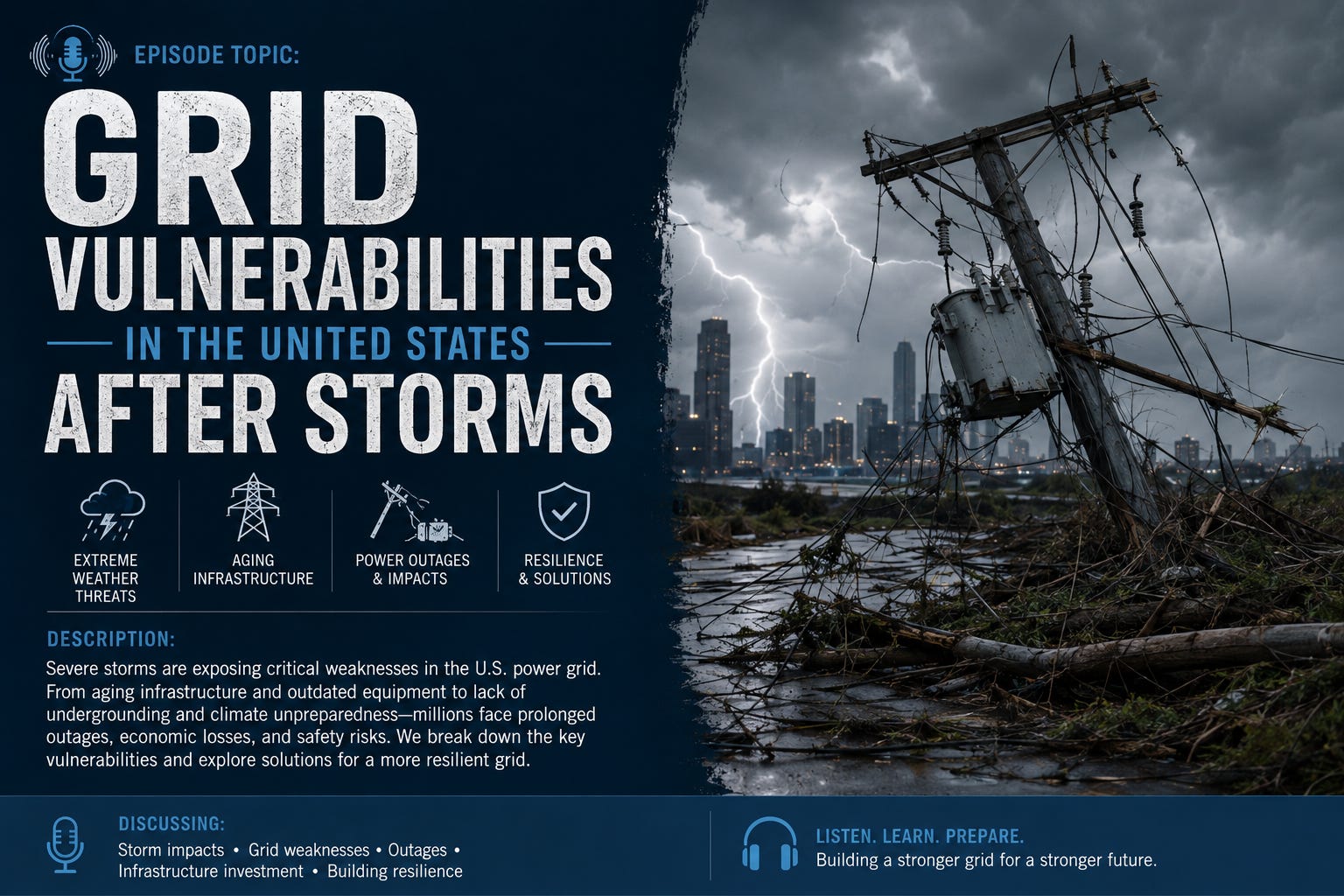
  • August 31 · 37 min

    Nepal’s Flood Disaster:

    Show Description When a disaster begins high in the mountains, its consequences can reach communities far downstream before people understand what is coming. In this episode of the Emergency Management Network podcast, we examine Nepal’s devastating August 26 flash flood and debris flow, the unfolding humanitarian emergency, and the operational challenges facing responders. Preliminary USGS findings describe a rapid slope failure involving a glacier that sent destructive debris and floodwaters nearly 100 kilometers downstream. USGS Amid the destruction, a last-minute warning helped a school leader evacuate more than 900 students—a powerful starting point for discussing warning systems, decision authority, and protective action. Reuters We explore the immediate response priorities, the consequences of damaged infrastructure, and the responsibilities that continue long after the initial flood. For emergency management professionals, this episode asks: What does this disaster reveal about our own readiness, and what should we do with those lessons? Show Notes Briefing Script — Situation as of August 31, 2026 Nepal is confronting a major flash-flood and debris-flow disaster along its northern border with Tibet. The event began on August 26, when a rapid slope failure involving a glacier in Langtang National Park likely sent rock, mud, ice, and water into the Lende Khola and Trishuli river systems. The destructive flow traveled nearly 100 kilometers downstream. The precise initiating mechanism remains preliminary and requires continued scientific assessment. USGS The humanitarian consequences are severe. According to the cited reporting, Nepalese authorities have reported more than 900 deaths, over 4,200 people missing—including hundreds of foreign nationals—and more than 10,000 rescues. The Nepal Red Cross estimates that more than 90,000 people have been affected. These figures are provisional; access constraints, debris burial, displacement, and disrupted communications complicate accountability. NBC News This is a compound mountain disaster, with flooding, debris movement, isolation, and infrastructure failures creating overlapping response challenges. Buildings and a vital highway connecting Nepal and China have reportedly been buried or destroyed. USGS Reports also indicate that hundreds of workers may be trapped or unaccounted for at damaged hydropower projects in Rasuwa and Nuwakot. Associated Press So What? Now What for the Emergency Management Professional? The following priorities frame our operational discussion: * Sustain lifesaving operations. Support search and rescue, missing-person accounting, and family reunification, particularly in isolated valleys and at damaged hydropower sites. * Restore safe access. Assess and establish ground and air access to communities isolated by road and bridge failures, while accounting for responder safety and changing conditions. * Meet immediate humanitarian needs. Coordinate emergency shelter, safe water, food, trauma care, and continuity of essential health services. * Rebuild situational awareness. Restore communications and conduct rapid damage, needs, and infrastructure assessments. * Monitor secondary hazards. Maintain downstream monitoring and public warning while assessing unstable slopes, river blockages, rainfall, and glacial hazards. * Plan for sustained displacement and recovery. Incorporate education, protection, psychosocial support, and safer reconstruction into early recovery discussions. According to the cited UN report, the United Nations has released an initial $2 million in emergency funding, while WHO has deployed emergency health supplies sufficient to support basic health services for up to 10,000 people. UNICEF reports that at least 17,000 children have been affected, facing risks associated with disease, malnutrition, disrupted education, violence, and exploitation. UN News Nepal’s emergency requires simultaneous attention to immediate life safety and prolonged needs involving access, shelter, health, infrastructure, and recovery. Our discussion considers how government-led coordination, local capacity, and international support can address those demands while continuing to monitor cascading hazards. Lifesaving Warnings: The School Evacuation Reuters reports that a last-minute warning helped save more than 900 students at Tribhuvan Trishuli Secondary School. We use that account to examine the connection between receiving information and initiating protective action. Reuters Discussion questions include: * Who can authorize an immediate evacuation without waiting for additional approval? * Can warnings reach schools through multiple, trusted communication channels? * Do evacuation plans address arriving buses, accessible transportation, accountability, and family reunification? * How do local emergency managers receive information about threats originating upstream or across borders? * How can recovery decisions reduce exposure to future disasters? Additional Reading NPR: Nepal floods, climate change, and the Himalayas Information reflects reporting available as of August 31, 2026. Casualty figures, missing-person totals, humanitarian estimates, and scientific findings are provisional and should be checked before recording or publication. Nepal Flash Flood: Top-Rated Charities Providing Relief https://blog.charitywatch.org/nepal-flash-flood-top-rated-charities-providing-relief/ This is a public episode. If you'd like to discuss this with other subscribers or get access to bonus episodes, visit emnetwork.substack.com/subscribe
  • August 24 · 33 min

    Grid Vulnerabilities

    Episode Description The storm passes. The rain stops. The winds die down. And sometimes, that is when the real emergency begins. Electricity is the backbone of nearly every system modern communities depend upon. Communications, water and wastewater systems, hospitals, fuel distribution, traffic control, grocery stores, banking, transportation, emergency operations, and even our ability to receive warnings depend in some way on reliable power. In this episode of the Emergency Management Network Podcast, we examine the vulnerability of the American electrical grid following major storms and extreme weather events. The problem is bigger than a few downed power lines. Hurricanes, tornadoes, derechos, ice storms, flooding, wildfires, and extreme temperatures can damage generation, transmission, substations, and local distribution systems simultaneously. More importantly, we explore what happens next. What does a 24-hour outage mean for a community? What changes at 72 hours? What happens when backup generators begin running low on fuel, cellular sites lose power, medically vulnerable residents need assistance, grocery stores cannot refrigerate food, traffic signals stop working, and public safety agencies are operating on emergency power? For emergency managers, the electrical grid isn’t simply another piece of critical infrastructure. It is the infrastructure upon which much of the rest of our response system depends. We discuss where the vulnerabilities exist, why severe storms continue to expose them, and what emergency managers should be doing now to prepare for prolonged and cascading power failures. The question isn’t simply whether the lights will come back on. The question is: What can your community continue to do until they do? Show Notes This episode explores the intersection between extreme weather, electrical-grid reliability, critical infrastructure, and emergency management. We examine how severe storms can damage transmission and distribution infrastructure and why the consequences extend far beyond homes losing electricity. Major outages can quickly become cascading incidents affecting communications, healthcare, transportation, water systems, fuel supplies, businesses, food distribution, and government operations. Topics include: * Why severe weather remains one of the greatest threats to electrical reliability * The difference between generation, transmission, and distribution failures * How damaged substations, transmission lines, poles, transformers, and vegetation can complicate restoration * Why undergrounding electrical lines can help in some circumstances but is not a universal solution * The growing importance of microgrids, distributed generation, battery storage, and backup power * Generator dependence and the challenge of maintaining fuel supplies during prolonged outages * Telecommunications and cellular-system vulnerabilities when commercial power fails * The consequences of simultaneous power and communications failures * Impacts on hospitals, skilled nursing facilities, pharmacies, dialysis centers, and medically dependent populations * Water and wastewater system dependencies on electricity * Traffic signals, transportation networks, fuel stations, and supply-chain disruptions * The role of utilities inside the Emergency Operations Center * Identifying critical facilities and prioritizing restoration * Community Lifelines and cascading infrastructure failures * Planning for outages lasting 24, 48, 72 hours—or longer * Why continuity planning must assume that commercial electricity may not be immediately available after a major disaster The Emergency Management Question Emergency managers cannot rebuild the nation’s electrical grid, but we can understand our dependencies on it. Every jurisdiction should be asking: What stops working when the power goes out? Then: What stops working when it stays out for three days? Those two questions can reveal vulnerabilities that may never appear in a traditional hazard assessment. Electrical resilience isn’t simply a utility problem. It is a community resilience problem. This is a public episode. If you'd like to discuss this with other subscribers or get access to bonus episodes, visit emnetwork.substack.com/subscribe
  • August 21 · 32 min

    Island Math: What Hawai’i’ Storm season Teaches Every Emergency Manager

    Episode Description What can emergency managers learn when disasters strike very different communities at nearly the same time? In this episode of the Emergency Management Network Podcast, Todd DeVoe and Andrew Boyarsky return from the IAEM Region 9 Symposium in Honolulu with a fresh perspective on preparedness, logistics, resilience, and the power of community. The conversation begins in Hawaii, where geography changes nearly every assumption emergency managers make about mutual aid and logistics. When help, equipment, food, and personnel may be thousands of miles away, “leaning forward” isn’t simply good practice—it can be essential. Todd and Andrew then turn to the severe storms, flooding, and tornadoes affecting Indiana and other parts of the country. Different hazards. Different geography. But many of the same lessons. Emergency managers cannot afford to plan only for what happened last time. Wildfires can create tomorrow’s debris-flow problem. Extreme rainfall can overwhelm places that have never flooded before. And communities that wait until disaster strikes to build relationships have already lost valuable time. The most important lesson may also be the simplest: preparedness begins with people. From involving residents in emergency planning to knowing the people who live next door, resilience is built long before the EOC activates. Government can facilitate the process, but it cannot create resilient communities by itself. Two storms. Two very different places. One lesson: know your community, understand your vulnerabilities, build relationships before the disaster, and prepare for the events everyone says could never happen here. Two Storms, One Lesson Community, Preparedness, and the Paradox of Paradise Hosts: Todd DeVoe and Andrew BoyarskyPodcast: Emergency Management Network Podcast In This Episode Todd and Andrew reflect on their time at the IAEM Region 9 Symposium in Honolulu and the lessons that Hawaii offers emergency managers everywhere. Hawaii’s beauty comes with significant vulnerabilities. Distance from the mainland, separation between islands, limited transportation routes, and dependence on imported resources mean emergency managers must think differently about logistics and mutual aid. The discussion then moves to severe weather affecting Indiana and other parts of the United States, including flooding, tornadoes, high winds, and the challenge of preparing for hazards in places where people may believe, “That doesn’t happen here.” Todd and Andrew explore what these events mean for emergency managers preparing for the next disaster—and why yesterday’s assumptions may no longer be enough. Topics Discussed * Lessons from the IAEM Region 9 Symposium in Honolulu * Hawaii’s unique emergency management challenges * The logistics of supporting remote and island communities * The importance of pre-positioning resources and leaning forward * Severe storms, tornadoes, flooding, and changing hazard conditions * Wildfires and the secondary threat of debris flows and land movement * Normalcy bias and the danger of saying, “That never happens here” * Thinking about the unthinkable * Community Lifelines and community preparedness * Bringing residents into the emergency planning process * Building relationships before disaster strikes * Knowing your neighbors as a preparedness strategy * CERT, VOAD, COAD, nonprofits, and volunteer organizations as force multipliers * Government’s role as a facilitator rather than the sole source of solutions * Hawaii’s “paradox of paradise” * The spirit of Ohana and what it can teach emergency managers about resilience Two Storms, One Lesson The hazards may be different, but the lesson is remarkably similar. Emergency managers must understand the communities they serve—not simply their hazards, infrastructure, and response capabilities, but their people, relationships, vulnerabilities, strengths, and culture. Preparedness cannot begin when the warning is issued. It begins when neighbors meet one another. It happens when residents participate in emergency planning. It grows when government, nonprofits, volunteers, businesses, and community organizations build relationships before anyone needs them. As Todd observes in the episode, government doesn’t always have the answer to every problem. But it can help create the conversations, partnerships, and conditions that allow a community to become stronger. Key Takeaway Understand where you live. Know your vulnerabilities. Listen to your community. Build relationships before the emergency. Because when disaster strikes, resilience isn’t something we suddenly create. It’s something we discover we have already built. Stay safe. Stay hydrated. This is a public episode. If you'd like to discuss this with other subscribers or get access to bonus episodes, visit emnetwork.substack.com/subscribe
  • August 10 · 12 min

    Manufacturing Quiet Tuesdays

    Manufacturing Quiet Tuesdays National Emergency Management Awareness Month, and a Confirmed Administrator at Last Host: Todd T. DeVoe, CEM Runtime: 11:45 Recorded: August 8, 2026 SHOW NOTES August is National Emergency Management Awareness Month, and this year it arrives alongside news the field has waited two years to hear. On Friday, August 7, the Senate confirmed Cameron Hamilton as Administrator of FEMA, part of a block of 74 nominations. After two years of acting titles and senior officials performing the duties of, there is a name on the door that stays there. Todd DeVoe uses the occasion for something other than policy analysis. This one is a thank you. Not the conference kind. The real one. He works through the profession person by person. The one-person department that also serves as the planning section, the logistics section, and the PIO. The planner who has read the same evacuation annex forty times, looking for the change that will matter, and who will never be told it worked. The duty officer at two in the morning, with the full picture assembled by four. The recovery specialist is still sitting at a kitchen table over a three-year-old declaration. The exercise designer who wrote a scenario meant enough to embarrass people, because an exercise that everybody passes taught nobody anything. The FEMA staff who stayed through the uncertainty. And the twenty-six-year-old, at their first activation, convinced everyone else in the room that they knew something they did not. They do not. Everybody is reading the same situation report. Then the harder part. This profession’s best work is invisible by design. The evacuation goes smoothly, and there is no story. The warning goes out early and the numbers stay low. Success is indistinguishable from a quiet Tuesday. Todd reaches for Marcus Aurelius on the vine that produces grapes and does not go looking for applause, and lands on what Awareness Month is actually for: not asking for credit, but explaining what the quiet costs and who pays for it, so the October budget conversation goes a little easier. The last thank you goes to the families. The empty chair at dinner. The eleven-word activation text that reorganizes a week. The skill of falling back asleep after the duty phone rings at three. And the thing most people miss entirely is being the first responder to the responder who came home from a bad one and could not yet talk about it. There is no ICS position for that. Maybe there should be. CHAPTERS 00:51 The Senate confirms Cameron Hamilton as FEMA Administrator 02:56 Doc, welcome back. Why a permanent name on the door matters 03:07 Awareness Month, year two, and the traction it has built 04:08 Thank you, department by department 06:13 To the ones who are new: stay 06:40 When you do your best work, nothing happens 07:05 Marcus Aurelius and the business of manufacturing quiet Tuesdays 07:58 To the spouses, partners, and kids 09:26 A wildland firefighter son, and both sides of that door 09:42 Not a profession in decline. A profession that took a hit and stayed on its feet 10:52 Your assignment for the rest of August YOUR ASSIGNMENT It takes about four minutes. Find one person in this field whose work you have benefited from and tell them. Not on social media. Call them, and name the specific thing they did. Then find one family member, yours or someone else’s, and thank them for the hours that got taken from them. MENTIONED IN THIS EPISODE IAEM launched National Emergency Management Awareness Month in August 2025. Auburn, Washington signed its proclamation on August 3. San Bernardino County is running a campaign called Behind the Ready. Senate confirmation of Cameron Hamilton, August 7, 2026, in a block of 74 nominations, 51 to 47. This is a public episode. If you'd like to discuss this with other subscribers or get access to bonus episodes, visit emnetwork.substack.com/subscribe

  • July 27 · 40 min

    National Emergency Management Advocacy Month: Why Our Voice Matters

    Episode Description August is National Emergency Management Advocacy Month, a time to recognize the importance of speaking up for the emergency management profession and the communities we serve. In this episode, Todd DeVoe and Andrew Boyarsky discuss why advocacy is essential to the future of emergency management. From educating elected officials and building partnerships to securing resources and strengthening community resilience, advocacy isn’t about politics—it’s about ensuring emergency managers have a seat at the table before decisions are made. Todd and Andrew share practical ways emergency managers at every level can become advocates, explain the difference between advocacy and lobbying, and discuss how small conversations can lead to meaningful change. Whether you’re a student, practitioner, volunteer, or executive, this episode will inspire you to help advance the profession and better prepare the communities you serve. Show Notes In This Episode Emergency management has never been more important, yet many people—including policymakers—still don’t fully understand what emergency managers do. National Emergency Management Advocacy Month provides an opportunity to change that. Todd and Andrew discuss: * What National Emergency Management Advocacy Month is and why it exists * Why advocacy is a professional responsibility * The difference between advocacy and lobbying * How emergency managers can educate elected officials and community leaders * Why relationships built before disasters matter * The importance of telling the emergency management story * How advocacy can improve funding, staffing, planning, and preparedness * The role of professional organizations like IAEM and NEMA * Practical advocacy ideas for emergency managers at the local, state, tribal, territorial, federal, private-sector, and nonprofit levels * How every emergency manager can make a difference—even without holding a leadership position Key Takeaways * Advocacy is about education, not politics. * Emergency management deserves a voice wherever public policy is discussed. * Strong relationships built today strengthen disaster response tomorrow. * Every emergency manager is an ambassador for the profession. * Advocacy helps build safer, more resilient communities. Challenge for Listeners During National Emergency Management Advocacy Month: * Schedule a meeting with a local elected official. * Invite community leaders to tour your Emergency Operations Center. * Share your emergency management story on social media. * Mentor someone entering the profession. * Participate in advocacy efforts through your professional association. * Take time to explain what emergency management really does to someone outside the field. Quote of the Episode “Advocacy isn’t about asking for more. It’s about helping people understand the value emergency management brings before, during, and after disaster.” Connect With Us Follow the Emergency Management Network for more conversations with leaders from across the emergency management profession. Subscribe wherever you get your podcasts and share this episode with a colleague who is passionate about building more resilient communities. This is a public episode. If you'd like to discuss this with other subscribers or get access to bonus episodes, visit emnetwork.substack.com/subscribe

  • July 13 · 42 min

    The Most Beautiful Game: Managing the FIFA World Cup 2026 from the JTOC

    EMN Podcast Episode Description The Most Beautiful Game: Managing the FIFA World Cup 2026 from the JTOC What does it take to keep one of the largest sporting events in history running safely behind the scenes? In this special episode of the Emergency Management Network Podcast, host Todd DeVoe takes listeners inside the Joint Tournament Operations Center (JTOC) during the FIFA World Cup 2026, offering a rare, first-hand look at the emergency management professionals who worked around the clock to support one of the world’s most complex events. While billions of fans watched the action unfold on the pitch, another team was monitoring weather, coordinating intelligence, tracking team movements, managing rumors, preparing for protests, supporting public safety, and solving problems before the public ever knew they existed. From the Planning Section to logistics, communications, technology, and multi-agency coordination, this episode explores what it really means to operate at the center of a global event. Todd shares stories from more than a month inside the JTOC, lessons learned from building an interagency team under pressure, and the leadership principles that transformed a room full of professionals into a family. You’ll hear about the challenges no one saw, the victories no one celebrated on television, and why success in emergency management is often measured by what doesn’t happen. Whether you’re an emergency manager, first responder, public safety professional, or simply curious about what happens behind the curtain of a mega-event, this episode provides an inside look at the planning, coordination, and resilience required to support the most beautiful game. In this episode, you’ll learn: * How a Joint Tournament Operations Center functions during a global sporting event. * The role of emergency management in supporting FIFA World Cup operations. * Lessons in leadership, planning, and multi-agency coordination. * How situational awareness, information sharing, and decision-making work in real time. * Why relationships—not technology—remain the most important resource during complex incidents. Join us as we pull back the curtain on one of the most ambitious emergency management operations ever undertaken and discover how thousands of hours of preparation made the extraordinary look effortless. The FIFA Tournament Operations Center serves as the central hub connecting host cities, venue operations, security, communications, and tournament leadership to ensure seamless coordination across the competition. Because in emergency management, the best stories are often the ones the public never hears. This is a public episode. If you'd like to discuss this with other subscribers or get access to bonus episodes, visit emnetwork.substack.com/subscribe

  • S1 · E187
    June 8 · 7 min

    Magnitude 7.8 Philippines quake triggers tsunami advisory for Guam and the CNMI; NIFC holds at PL 2 with ten uncontained large fires and evacuations near Chelan

    Today’s brief leads with a magnitude 7.8 earthquake off the southern Philippines that prompted a Pacific Tsunami Warning Center advisory for Guam and the Northern Mariana Islands, with no threat to Hawaii or the U.S. West Coast. We cover national wildfire operations at Preparedness Level 2, including active fires threatening structures and infrastructure in Washington, Oregon, Idaho, California, New Mexico, Florida, North Carolina, and Alaska, plus a multi-day Storm Prediction Center severe weather threat, two Pacific tropical depressions, a paused Kilauea eruption, and approaching FEMA assistance deadlines in Washington and Hawaii. EM Morning Brief is your concise daily update on national and state-by-state emergency management news. Produced by Sitch Radio, an EOC Voices podcast. Key Takeaways · Tsunami advisory (Guam and CNMI): A magnitude 7.8 Philippines earthquake prompted a Pacific Tsunami Warning Center advisory for hazardous currents and sea level fluctuations; effects expected from about 12:45 p.m. ChST Monday, no full-scale evacuation called. · No threat to Hawaii or the West Coast: The Warning Center assessed no tsunami threat to Hawaii or the U.S. mainland Pacific coast. · Wildfire posture: NIFC remains at Preparedness Level 2 with ten uncontained large fires; the Chestnut Fire near Chelan, Washington has evacuations in effect, and the Michaud Creek Fire near Pocatello, Idaho shows extreme behavior threatening structures and energy infrastructure. · Seven Cabins Fire (New Mexico): Largest active incident at 31,870 acres, now 90 percent contained, with closures still in effect. · Severe weather: A multi-day SPC threat spans the Northern High Plains, Central Plains, Mississippi and Ohio Valleys, Mid-Atlantic, and Northeast, with damaging wind, large hail, and isolated tornadoes possible. · FEMA deadlines: Washington December-storm applicants have until June 10; Maui and Honolulu Kona Low applicants have until June 14. · Kilauea: Summit eruption paused at ADVISORY; next fountaining episode forecast June 12 to 15. Sponsors The NIMS Store - https://thenimsstore.com/ Sources Seismic and tsunami · Guam Homeland Security: Tsunami Advisory Remains in Effect for Guam and CNMI, 11:00 a.m. update, June 8, 2026 · U.S. Tsunami Warning Centers: official tsunami messaging portal · USGS: Significant earthquakes, 2026 · Hawaii News Now: M7.8 earthquake strikes Philippines, no tsunami threat to Hawaii Wildfire operations · NIFC: Incident Management Situation Report, Sunday June 7, 2026, 0730 MDT (source for all state fire incidents and acreage) · NIFC: National Fire News Severe weather · NWS Storm Prediction Center: Day 1 Convective Outlook · The Watchers: SPC issues Enhanced Risk for severe thunderstorms across Montana, Wyoming, North Dakota, and South Dakota Tropical weather · NHC: Graphical Tropical Weather Outlook · NOAA: NOAA predicts below-normal 2026 Atlantic hurricane season Volcano · USGS: Kilauea volcano updates FEMA assistance deadlines · FEMA: One month remains to apply for FEMA assistance in Washington (deadline June 10) · FEMA: Deadline to apply for FEMA assistance extended to June 14 for Maui, Hawaii, and Honolulu counties This is a public episode. If you'd like to discuss this with other subscribers or get access to bonus episodes, visit emnetwork.substack.com/subscribe

  • S1 · E186
    June 5 · 5 min

    Seven Cabins Fire evacuations rescinded at 64% containment; central Plains brace for severe weather

    Today’s brief leads with Orange County, where Garden Grove’s GKN Aerospace hazmat emergency de-escalates and all evacuation orders lift, returning the final 16,000 residents home with no injuries. New Mexico’s Seven Cabins Fire reaches 64 percent containment and Lincoln County rescinds all evacuations. CISA adds an actively exploited vulnerability to its KEV catalog, the central United States faces a multi-day severe-weather threat, Kilauea holds at ADVISORY, and FEMA assistance deadlines approach in Washington and Hawaii. EM Morning Brief is your concise daily update on national and state-by-state emergency management news. Produced by Sitch Radio, an EOC Voices podcast. Key Takeaways • California hazmat: All Garden Grove GKN Aerospace evacuation orders lifted June 4; about 16,000 residents returned, no injuries, but tank cleanup remains delayed. • New Mexico wildfire: Seven Cabins Fire at ~31,867 acres and 64% contained; all evacuations rescinded June 4; Capitan Mountain forest closure still in effect. • Cyber / CISA: CISA added CVE-2026-45247 (Mirasvit) to the KEV catalog June 3 with an active-exploitation flag and a federal remediation deadline. • Severe weather: NWS and SPC flag a multi-day large-hail, wind, tornado, and flash-flood threat across the central Plains and mid-Mississippi Valley through the weekend. • Volcano: Kilauea remains at ADVISORY / Aviation Color Code YELLOW; eruption paused, episode 49 possible within ~10 to 15 days of June 1. • FEMA deadlines: Washington December-storm applications close June 10; Hawaii Kona Low Individual Assistance closes June 14. • Lifelines: City of Aiken, SC water main break June 4 affected ~60 connections; precautionary boil-water advisory to follow restoration. Sponsors The NIMS Store - https://thenimsstore.com/ Sources NIFC / Wildfire • NIFC Incident Management Situation Report — National daily wildfire situation report and preparedness level • NIFC National Fire News — National wildland fire activity summary CISA • CISA Adds One Known Exploited Vulnerability to Catalog (June 3, 2026) — CVE-2026-45247 Mirasvit deserialization flaw added to KEV • CISA Known Exploited Vulnerabilities Catalog — Authoritative KEV catalog and remediation deadlines USGS — Volcano • USGS Kilauea Volcano Updates — Hawaiian Volcano Observatory status and alert level for Kilauea Severe Weather • NWS National Forecast — National Weather Service hazards and severe-weather summary • SPC Day 1 Convective Outlook — Storm Prediction Center severe-weather outlook for the central U.S. Tropical / NHC • National Hurricane Center — Atlantic and Eastern Pacific tropical weather outlooks FEMA • FEMA — Hawaii Kona Low deadline extended to June 14 — Individual Assistance deadline for Maui and Honolulu counties • FEMA — One month remains to apply in Washington — June 10 deadline for December storms and flooding USGS — Earthquakes • USGS Significant Earthquakes — 2026 — No significant U.S. seismic events in the last 24 hours California • ABC7 — Garden Grove chemical tank updates — OCFA lifts all evacuation orders June 4; residents return • City of Garden Grove — Hazardous Materials Incident — Official municipal incident information page New Mexico • NM Fire Info — Lincoln County rescinds Seven Cabins evacuations (June 4) — Evacuation orders rescinded; acreage and containment update • Lincoln National Forest — Fire — Forest Service fire and closure information South Carolina • City of Aiken — Water Main Break Advisory (June 4) — York Street NE main break affecting ~60 connections This is a public episode. If you'd like to discuss this with other subscribers or get access to bonus episodes, visit emnetwork.substack.com/subscribe

  • S1 · E183
    June 2 · 7 min

    Kilauea Episode 48 ends after nine hours; Seven Cabins Fire grows to 29,531 acres in New Mexico

    The Atlantic hurricane season officially opened June 1 as FEMA reaffirmed readiness and the National Hurricane Center continued to watch a high-probability disturbance in the Eastern Pacific. In New Mexico, the Seven Cabins Fire pushed past 29,000 acres with evacuations in Lincoln County and a Type 1 team transition. Hawaii’s Kīlauea ended Episode 48 of the Halemaʻumaʻu eruption after nine hours of fountaining, leaving the alert level at advisory. President Trump approved a Major Disaster Declaration for Delaware tied to February’s severe winter storm, and the Storm Prediction Center flagged severe thunderstorm risk across the Ozarks, Mid-South, and Central Plains. EM Morning Brief is your concise daily update on national and state-by-state emergency management news. Produced by Sitch Radio, an EOC Voices podcast. Key Takeaways • Atlantic hurricane season opens June 1: FEMA states it is prepared, with NHC expecting no Atlantic formation in seven days. Operational focus turns to readiness messaging and posture verification. • Eastern Pacific watch: A disturbance southwest of Baja California carries a 70 percent 48-hour and 90 percent 7-day formation chance; a second system is expected off Central America later this week. • NIFC June 1 IMSR: 14 large fires under suppression, two new large fires, 2,825 personnel committed, roughly 2.4 million acres burned year to date. • Seven Cabins Fire, New Mexico: 29,531 acres in Lincoln County, evacuations north of the Capitan Mountains, command transferred to Southwest Area IMT 2 on June 1. • Kīlauea Episode 48 ends: Lava fountaining stopped at 1:37 p.m. HST June 1 after nine hours; alert ADVISORY, aviation YELLOW; eruption paused. • Delaware Major Disaster Declaration: Public Assistance available statewide for the February 22 to 23 severe winter storm in Kent and Sussex counties. • Severe weather today: Slight Risk across Ozarks/Mid-South and Central Plains; severe wind gust potential in eastern Montana and western North Dakota. • FEMA deadlines: King County, Washington Individual Assistance applications close June 10; Hawaii Kona Low applications close June 14. • Alaska volcano status: Great Sitkin remains WATCH/ORANGE with slow summit lava effusion; Mount Spurr remains NORMAL/GREEN. • New Jersey, Delaney Hall: State plans protected protest zones in Newark; federal staffing posture at Newark Liberty under public dispute. Sources FEMA • FEMA: Major Disaster Declaration for Delaware (June 1, 2026) • FEMA: As Hurricane Season Begins, FEMA Stands Ready (June 1, 2026) • FEMA: New Dates and Locations Added for FEMA and SBA In-Person Support (May 28, 2026) NIFC and InciWeb • NIFC: Incident Management Situation Report, June 1, 2026 • NIFC: IMSR archive • InciWeb: Incident Information System NOAA NWS and SPC • NHC: Atlantic and Eastern Pacific Tropical Weather Outlook • SPC: Day 1 Convective Outlook • Climate Prediction Center: Probabilistic Hazards Outlook USGS • USGS HVO: Kīlauea Volcano Updates • USGS HVO: Newest Kīlauea volcano notice (June 1, 2026) • USGS AVO: Great Sitkin volcano page • USGS AVO: Mount Spurr volcano page • USGS: Latest Earthquakes map Alaska • USGS AVO: Great Sitkin status (ongoing WATCH/ORANGE) California • CAL FIRE: Incidents • CPUC: Public Safety Power Shutoffs (PSPS) Delaware • FEMA: Major Disaster Declaration for Delaware (June 1, 2026) Hawaii • USGS HVO: Newest Kīlauea volcano notice (June 1, 2026) • Spectrum News: Kīlauea kicks off 48th episode (June 1, 2026) Montana • InciWeb: Mthlf Jericho Creek incident • SPC: Day 1 Convective Outlook (eastern MT severe wind risk) New Jersey • Just Security: Early Edition, June 1, 2026 (Delaney Hall, Newark customs staffing) New Mexico • KRQE: Officials provide update on Seven Cabins Fire (May 31 to June 1, 2026) • NIFC IMSR: June 1, 2026 (Seven Cabins listed under Southwest Area) Washington • FEMA: Disaster Recovery Center Locator • FEMA: 2026 Disasters news index Travel advisories and public health • U.S. Department of State: Travel Advisories • CDC: Health Alert Network This is a public episode. If you'd like to discuss this with other subscribers or get access to bonus episodes, visit emnetwork.substack.com/subscribe

Showing 1–20 of 34 episodes