Artwork for The Creative Process · Arts, Culture & Society: Books, Film, Music, TV, Art, Writing, Creativity, Education, Environment, Theatre, Dance, LGBTQ, Climate Change, Social Justice, Spirituality, Feminism, Tech, Sustainability
Arts

The Creative Process · Arts, Culture & Society: Books, Film, Music, TV, Art, Writing, Creativity, Education, Environment, Theatre, Dance, LGBTQ, Climate Change, Social Justice, Spirituality, Feminism, Tech, Sustainability

Mia Funk

Exploring the fascinating minds of creative people. Conversations with writers, artists and creative thinkers across the Arts and STEM. We discuss their life, work and artistic practice. Winners of Oscar, Emmy, Tony, Pulitzer, Nobel Prize, leaders and public figures share real experiences and offer valuable insights. Notable guests and participating museums and organizations include: Academy of Motion Picture Arts and Sciences, Neil Patrick Harris, Smithsonian, Roxane Gay, Musée Picasso, EARTHDAY-ORG, Neil Gaiman, UNESCO, Joyce Carol Oates, Mark Seliger, Acropolis Museum, Hilary Mantel, Songwriters Hall of Fame, George Saunders, The New Museum, Lemony Snicket, Pritzker Architecture Prize, Hans-Ulrich Obrist, Serpentine Galleries, Joe Mantegna, PETA, Greenpeace, EPA, Morgan Library and Museum, and many others.

The interviews are hosted by founder and creative educator Mia Funk with the participation of students, universities, and collaborators from around the world. These conversations are also part of our traveling exhibition.

  • 1,264 episodes
  • Updated July 25

Episodes1264

  • Apr 30, 2025 · 49 min

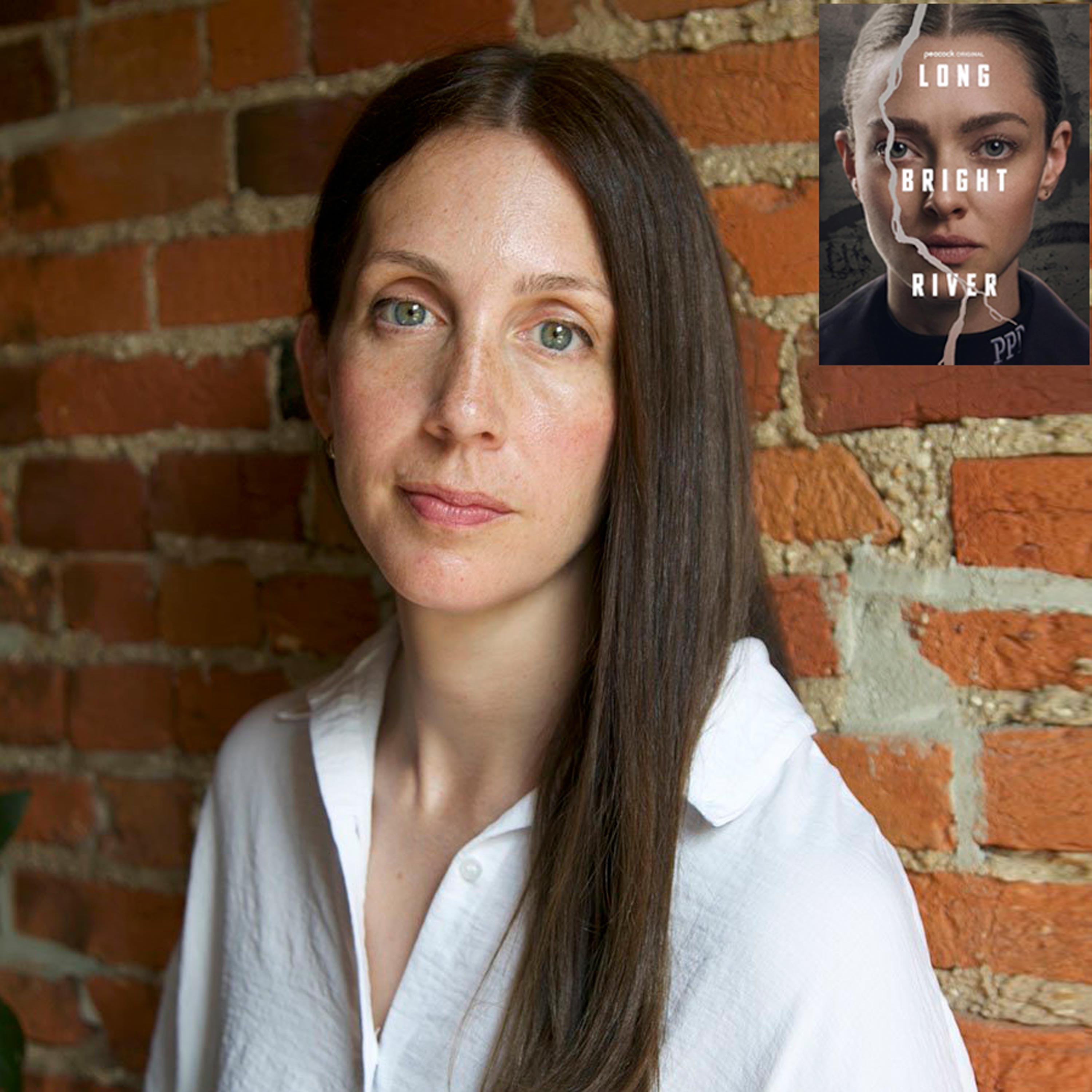
    Family, Addiction & Overcoming Trauma - LIZ MOORE on Long Bright River starring AMANDA SEYFRIED

    “ I've lived in Philadelphia for about 16 years.  The book itself was inspired by my time spent in the Kensington neighborhood of Philadelphia interviewing a lot of the people that I met there, both longtime residents of the neighborhood and also people who were transient,  a lot of people struggling with addiction and a lot of women doing sex work to fund their  physical addiction to opioids. You find out about their past,  their road into addiction, their aspirations, their fears.  I began to lead free writing workshops at an organization named St. Francis Inn, which is a longstanding food service organization in the community. They had a women's day shelter where I taught.  I was really able to connect with people within the community on a quite personal level and loved my experiences in Kensington. And I still go, I'm still quite close with a number of the community workers, people who run free healthcare clinics. All of it ultimately informed the writing of Long Bright River.” Liz Moore is the author of the New York Times bestselling novel Long Bright River, which was one of Barack Obama’s favorite books of the year, and has been made into a Peacock series starring Amanda Seyfried. Set against the opioid crisis and a string of mysterious murders, it’s a love story between two very different sisters and their path to recovery. Moore is winner of the 2014-2015 Rome Prize in Literature. Her other books include The God of the Woods, Heft, and The Unseen World. Episode Website www.creativeprocess.info/pod Instagram:@creativeprocesspodcast

  • Apr 24, 2025 · 18 min

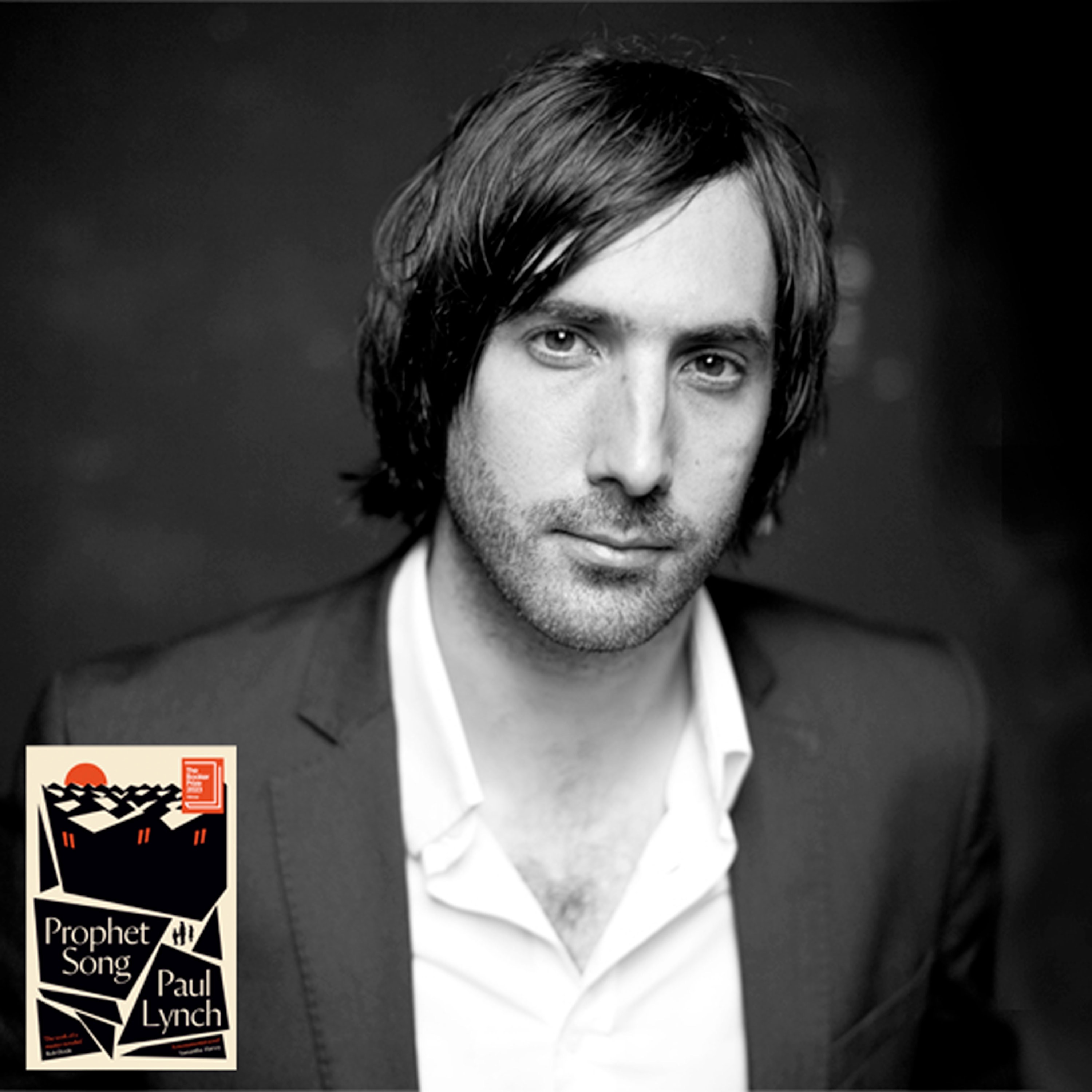
    PAUL LYNCH discusses Prophet Song, Beyond the Sea & his Creative Process - Highlights

    "The country spoke Irish largely before it spoke English. Grammatically, the structure of Irish is different from English. As Ireland adopted the English language, this sort of hybridization started to occur, where the English language was placed on top of Irish grammatical constructions. You get this slipperiness, this ability to move sentences, to place words in interesting places, and to use constructions that you just wouldn't find in England, for example. The thing about being an Irish writer is there isn't a reverence. There’s a sort of implicit freedom to use the language however we like. So long as you have mastery and command of the language, you can push it to the edges." Paul Lynch is the author of five novels. His most recent novel, Prophet Song, won the 2023 Booker Prize and the Dayton Literary Peace Peace Prize for Fiction, and other prizes. Prophet Song presents a dystopian vision of Ireland and a mother’s determination to protect her family as her country slides towards totalitarianism. The Booker Prize Jury said, “It’s a remarkable accomplishment for a novelist to capture the social and political anxieties of our moment so compellingly.“ In 2024, Lynch was elected to Aosdána, the Irish academy for the arts, honoring distinguished artists. He was the chief film critic of Ireland’s Sunday Tribune newspaper. His novels have been translated into 35 languages. Episode Website www.creativeprocess.info/pod Instagram:@creativeprocesspodcast Paul Lynch is the author of five novels. His most recent novel, Prophet Song, won the 2023 Booker Prize and the Dayton Literary Peace Peace Prize for Fiction, and other prizes. Prophet Song presents a dystopian vision of Ireland and a mother’s determination to protect her family as her country slides towards totalitarianism. The Booker Prize Jury said, “It’s a remarkable accomplishment for a novelist to capture the social and political anxieties of our moment so compellingly.“ In 2024, Lynch was elected to Aosdána, the Irish academy for the arts, honoring distinguished artists. He was the chief film critic of Ireland’s Sunday Tribune newspaper. His novels have been translated into 35 languages. Episode Website www.creativeprocess.info/pod Instagram:@creativeprocesspodcast

  • Apr 23, 2025 · 48 min

    On Storytelling & The Human Condition with Booker Prize Winner PAUL LYNCH

     “We narrate the story of our lives to ourselves. We narrate it in linear fashion. And I know many writers have played with time in all sorts of amazing ways, but we're storytellers. This is what we do. And if you give the brain a story, a prepackaged story, you're giving a cheesecake. That's what it wants. That's why it loves stories. That's why our society is just built on stories. Politics is nothing but stories. Everything you do in the evenings – we sit down, we're watching Netflix – just stories. We consume them all the time. We are just machines for belief.” Paul Lynch is the author of five novels. His most recent novel, Prophet Song, won the 2023 Booker Prize and the Dayton Literary Peace Peace Prize for Fiction, and other prizes. Prophet Song presents a dystopian vision of Ireland and a mother’s determination to protect her family as her country slides towards totalitarianism. The Booker Prize Jury said, “It’s a remarkable accomplishment for a novelist to capture the social and political anxieties of our moment so compellingly.“ In 2024, Lynch was elected to Aosdána, the Irish academy for the arts, honoring distinguished artists. He was the chief film critic of Ireland’s Sunday Tribune newspaper. His novels have been translated into 35 languages. Episode Website www.creativeprocess.info/pod Instagram:@creativeprocesspodcast
  • Apr 22, 2025 · 18 min

    OUR PLANET, OUR FUTURE - Environmentalists, Artists, Scientists & Earth Defenders Share their Stories

    We are privileged to present the voices of individuals dedicated to effecting change and mitigating the harm inflicted upon our precious planet. These are individuals deeply committed to the core values that drive positive transformation. Thank you for tuning in to our episodes and for your ongoing dedication to stewarding our planet, not just on Earth Day but throughout the year. We can’t save the planet overnight, but by acting mindfully, we can create a better future. Let’s make Every Day, Earth Day! Composer MAX  RICHTER on Nature's Sonic Landscape Founder of PETA INGRID NEWKIRK on the Shared Traits  between Humans and Animals JULIAN LENNON (Musician and Founder of  White Feather Foundation) on Balancing Our Relationship with Mother Earth  BERTRAND PICCARD (Explorer, Aviator of 1st Round-the-World  Solar-Powered Flight) discusses his adventures and how climate change will change our quality of life CARL SAFINA (Author and environmentalist)  on the Miracle of Life on Earth  NAN HAUSER (Whale Researcher, President, Center for Cetacean  Research & Conservation) on How a Whale Saved her Life U.S. Poet Laureate ADA LIMÓN on Embracing  Hope Amid Environmental Uncertainty Environmental Writer DAVID FARRIER on Evaluating Our Environmental Legacy Grammy & Emmy Award-winning Sound Engineer CYNTHIA DANIELS  on The Role of Art and Compassion in Transforming Society Economist ODED GALOR on Education's Role in Addressing Climate Change  President of EarthDay.ORG KATHLEEN ROGERS  on Advocating for Global Environmental Education  Lead Author of IPCC 6th Assessment Report JOELLE GERGIS  on Learning from Historical Climate Data Fmr. Prime Minister’s Strategy Unit Director SIR GEOFF MULGAN  on Imagining a Circular Future for Society Free Solo Climber of 200+ of the World’s Tallest Skyscrapers ALAIN   ROBERT on The Consequences of   Overproduction on the  Planet Director of Climate Hazards Center, UC Santa Barbara  CHRIS FUNK on Adapting to a Two-Degree World Environmental Writer DAVID FARRIER Stretching Time and Empathy for Future Generations Author of Finding the Mother Tree DR. SUZANNE SIMARD on  Trees: Advanced Communicators of the Natural World “Most Influential Living Philosopher” PETER SINGER on the Ethical Imperative to Respect Animal Life Fmr. Exec. Director, Greenpeace Int'l, Special Envoy for Int'l Climate Action,  German Foreign Ministry JENNIFER MORGAN on the   Importance of Resilience  in Advocacy To hear more from each guest, listen to their full interviews. Episode Website www.creativeprocess.info/pod Instagram:@creativeprocesspodcast
  • Apr 18, 2025 · 12 min

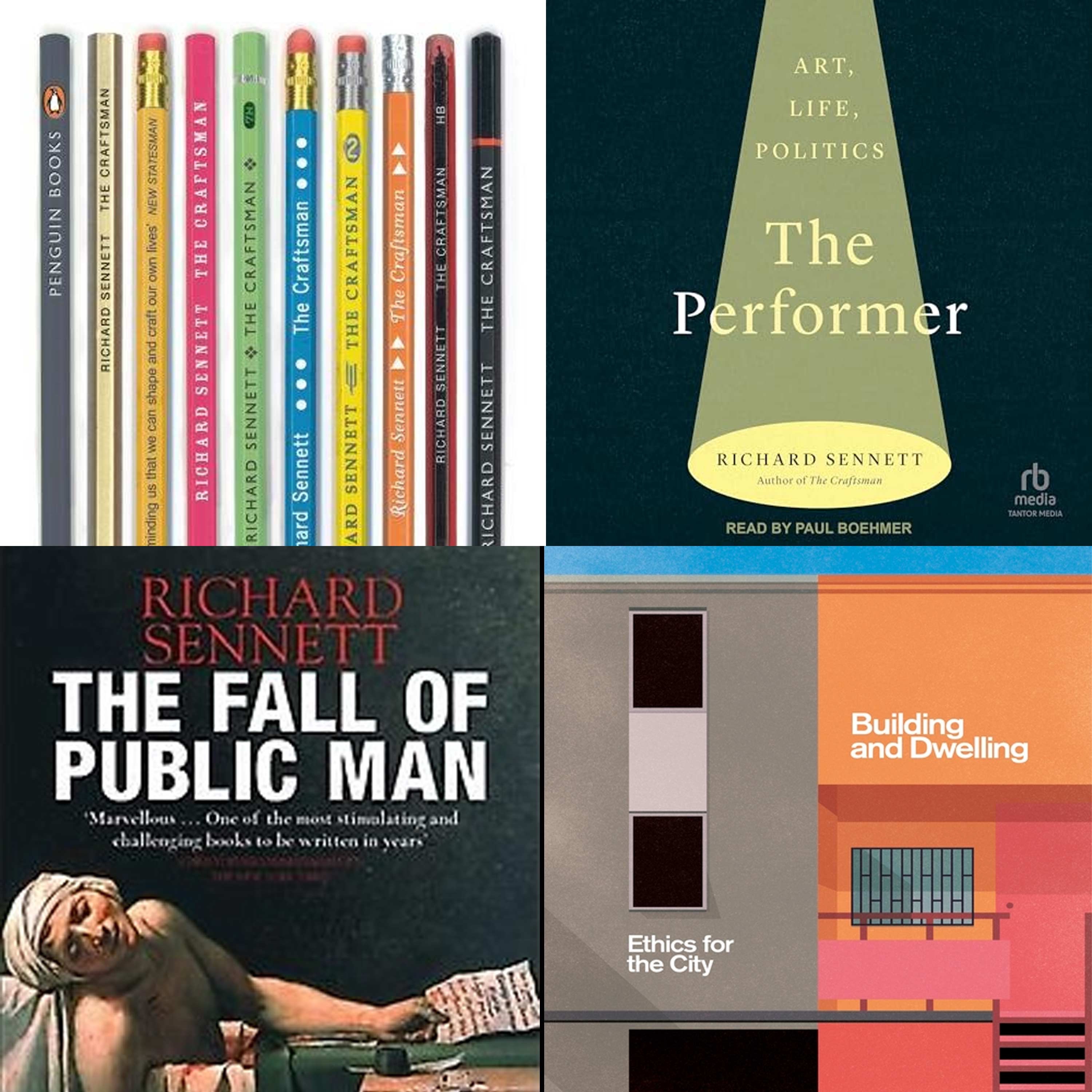
    Performance, Politics, Art & Society w/ Sociologist RICHARD SENNETT - Highlights

    “I'm really interested in the relation between performance and ritual. Where do those two separate?” Richard Sennett grew up in the Cabrini Green housing project in Chicago, attended the Juilliard School in New York, and then studied social relations at Harvard. Over the last five decades, he has written about social life in cities, changes in labour, and social theory. His books include The Performer: Art, Life, Politics, The Hidden Injuries of Class, The Fall of Public Man, The Corrosion of Character, The Culture of the New Capitalism, The Craftsman, and Building and Dwelling. Sennett has advised the United Nations on urban issues for the past thirty years and currently serves as member of the UN Committee on Urban Initiatives. He is the Centennial Professor of Sociology at the London School of Economics and former University Professor of the Humanities at New York University. “I want to show what is kind of the basic DNA that people use for good or for ill. What are the tools they use, if you like, of expression that they use in the creative process?” Episode Website www.creativeprocess.info/pod Instagram:@creativeprocesspodcast
  • Apr 17, 2025 · 31 min

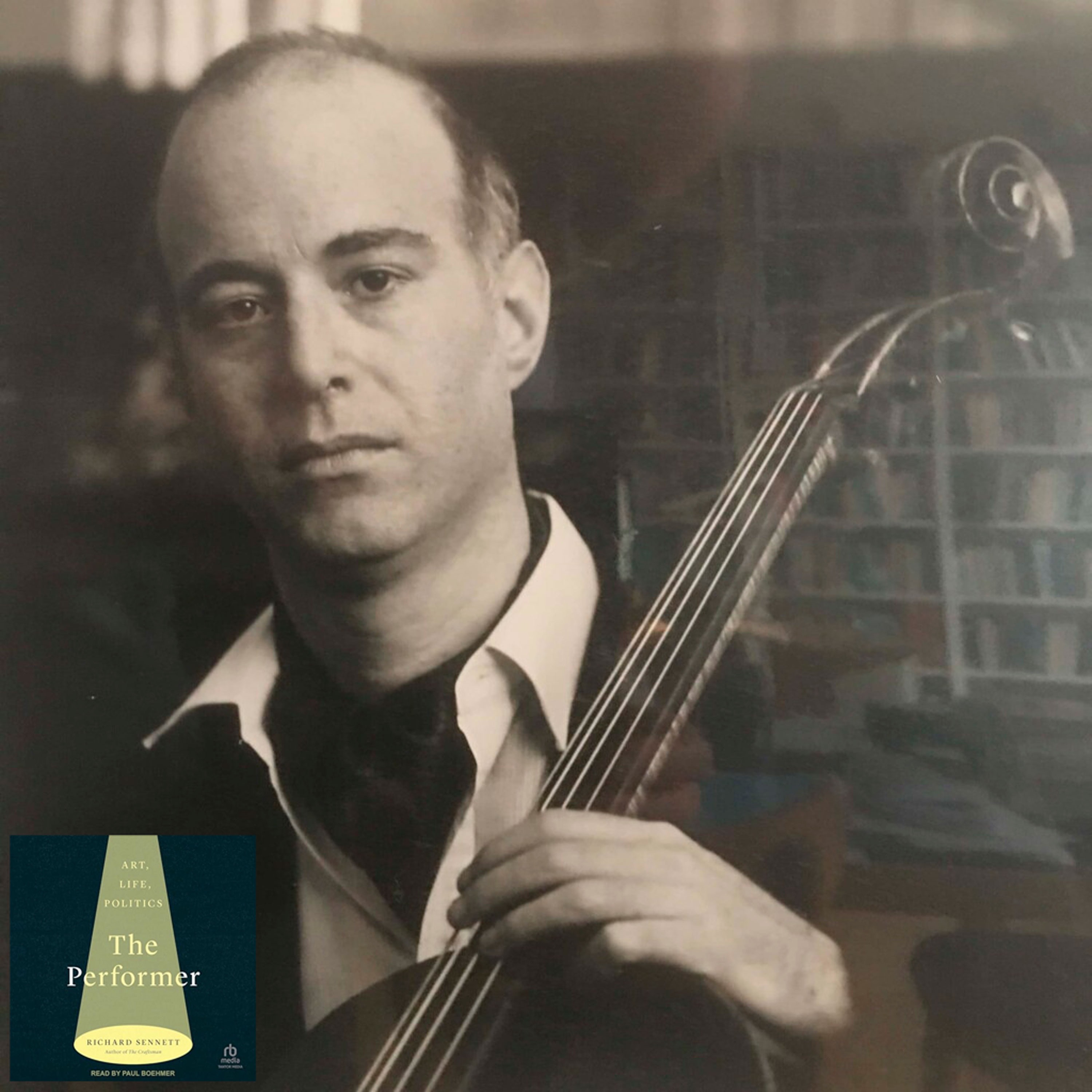
    The Performer: Art, Life, Politics with RICHARD SENNETT, Sociologist & Author

    “We look at creative work as though the very creative process itself is something good. These are tools of expression, and like any tool, you can use them to damage something or to make something. They can be turned to very malign purposes, for instance, in the operas of Wagner. So I wanted to do this set of books, I want to show what is kind of the basic DNA that people use for good or for ill. What are the tools they use, if you like, of expression that they use in the creative process?” Richard Sennettgrew up in the Cabrini Green housing project in Chicago, attended the Juilliard School in New York, and then studied social relations at Harvard. Over the last five decades, he has written about social life in cities, changes in labour, and social theory. His books include The Performer: Art, Life, Politics, The Hidden Injuries of Class, The Fall of Public Man, The Corrosion of Character, The Culture of the New Capitalism, The Craftsman, and Building and Dwelling. Sennett has advised the United Nations on urban issues for the past thirty years and currently serves as member of the UN Committee on Urban Initiatives. He is the Centennial Professor of Sociology at the London School of Economics and former University Professor of the Humanities at New York University. Episode Website www.creativeprocess.info/pod Instagram:@creativeprocesspodcast
  • Apr 16, 2025 · 14 min

    Exploring the Extremes of the Human Experience with Neurologist DR. GUY LESCHZINER - Highlights

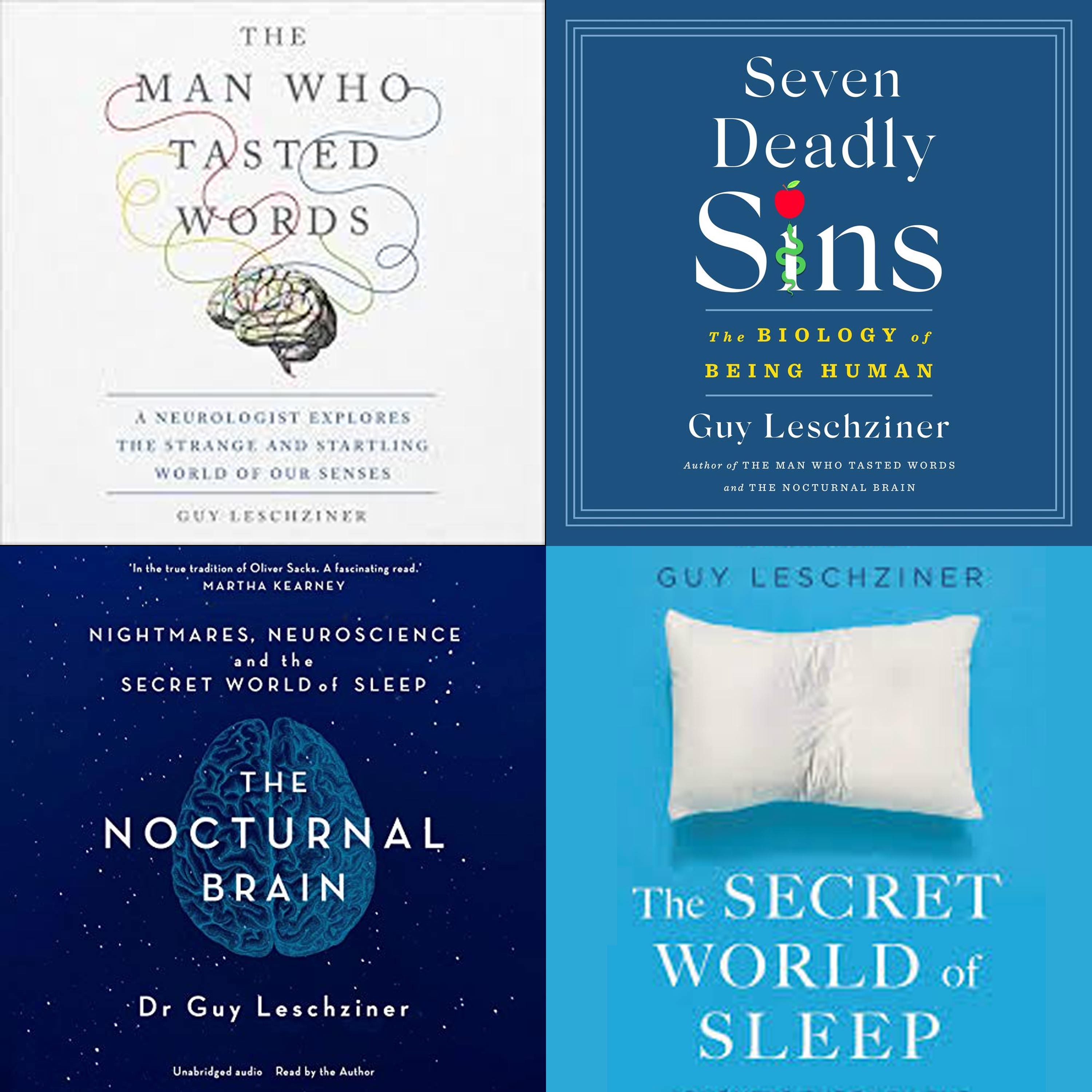
    “One of the things that hopefully my books illustrate is that everybody's mind is different. And one of the amazing things about the human experience–and indeed that manifests in terms of art and creativity–is that when we have such different minds, that is why all this creativity, all this art is possible.” Dr. Guy Leschziner is the author of The Nocturnal Brain, The Man Who Tasted Words, and other books. He is a consultant neurologist and a Professor of Neurology and Sleep Medicine at the Institute of Psychiatry, Psychology and Neuroscience, King's College London. He sees patients with a range of neurological and sleep disorders, and is actively involved in research and teaching. He has presented series on sleep and neurology for BBC World Service and Radio 4. His latest book is Seven Deadly Sins: The Biology of Being Human. Episode Website www.creativeprocess.info/pod Instagram:@creativeprocesspodcast

  • Apr 16, 2025 · 50 min

    Sleep, The Nocturnal Brain & The Biology of Being Human w/ DR. GUY LESCHZINER, Neurologist

    “ I'm fascinated by the extremes of the human experience, partly because it is so far removed from our own experience of life. In another way, when you look at people who have neurological disorders or diseases, these are really nature's experiments. They are ways of trying to understand how the brain works for all of us. By extrapolation from looking at these extremes, we can learn about the workings of our own brains. That's very much the case across all the areas of my work, whether it be sleep disorders, neurology, or epilepsy—how we regulate our emotions, how we move, how we experience the world. I never intended to be a storyteller; I intended to be a story listener, which is what we do daily in our clinics. Telling these stories generates empathy, creates understanding, and hopefully inspires the next generation to pursue careers as doctors, psychologists, and healthcare professionals, fostering a fascination with the brain similar to what Oliver Sacks did for me.” Dr. Guy Leschziner is the author of The Nocturnal Brain, The Man Who Tasted Words, and other books. He is a consultant neurologist and a Professor of Neurology and Sleep Medicine at the Institute of Psychiatry, Psychology and Neuroscience, King's College London. He sees patients with a range of neurological and sleep disorders, and is actively involved in research and teaching. He has presented series on sleep and neurology for BBC World Service and Radio 4. His latest book is Seven Deadly Sins: The Biology of Being Human. Episode Website www.creativeprocess.info/pod Instagram:@creativeprocesspodcast
  • Apr 14, 2025 · 14 min

    ADAM MOSS - Fmr. Editor of New York Magazine, Author, Artist on Creativity as a Process - Highlights

    “When I was working at the Times and the Times Magazine, on one Tuesday morning, the towers fell. September 11, 2001. The magazine had a 10-day lead time, so it was a weekly that was essentially 10 days old by the time it came out. We came to work and realized the world had changed, and the entire process, the magazine had been made for over a hundred years, had to be thrown out the window. We had to create a new magazine in 36 hours that would in some way speak to this very different, scary, and interesting world we were now in. In those 36 hours, we usually would take months to produce a magazine. If you take all of its aspects, it’s a long journey. However, we made a magazine in 36 hours that, in some ways, was the best magazine I ever made because of the urgency of the moment.” Adam Moss was the editor of New York magazine, The New York Times Magazine, and 7 Days. As editor of New York, he also oversaw the creation of five digital magazines: Vulture, The Cut, Daily Intelligencer, Grub Street, and The Strategist. During his tenure, New York won forty-one National Magazine Awards, including Magazine of the Year. He was an assistant managing editor of The New York Times with oversight of the Magazine, the Book Review, and the Culture, and Style sections, as well as managing editor of Esquire. He was elected to the Magazine Editors’ Hall of Fame in 2019. He is the Author of The Work of Art: How Something Comes from Nothing. Episode Website www.creativeprocess.info/pod Instagram:@creativeprocesspodcast
  • Apr 12, 2025 · 52 min

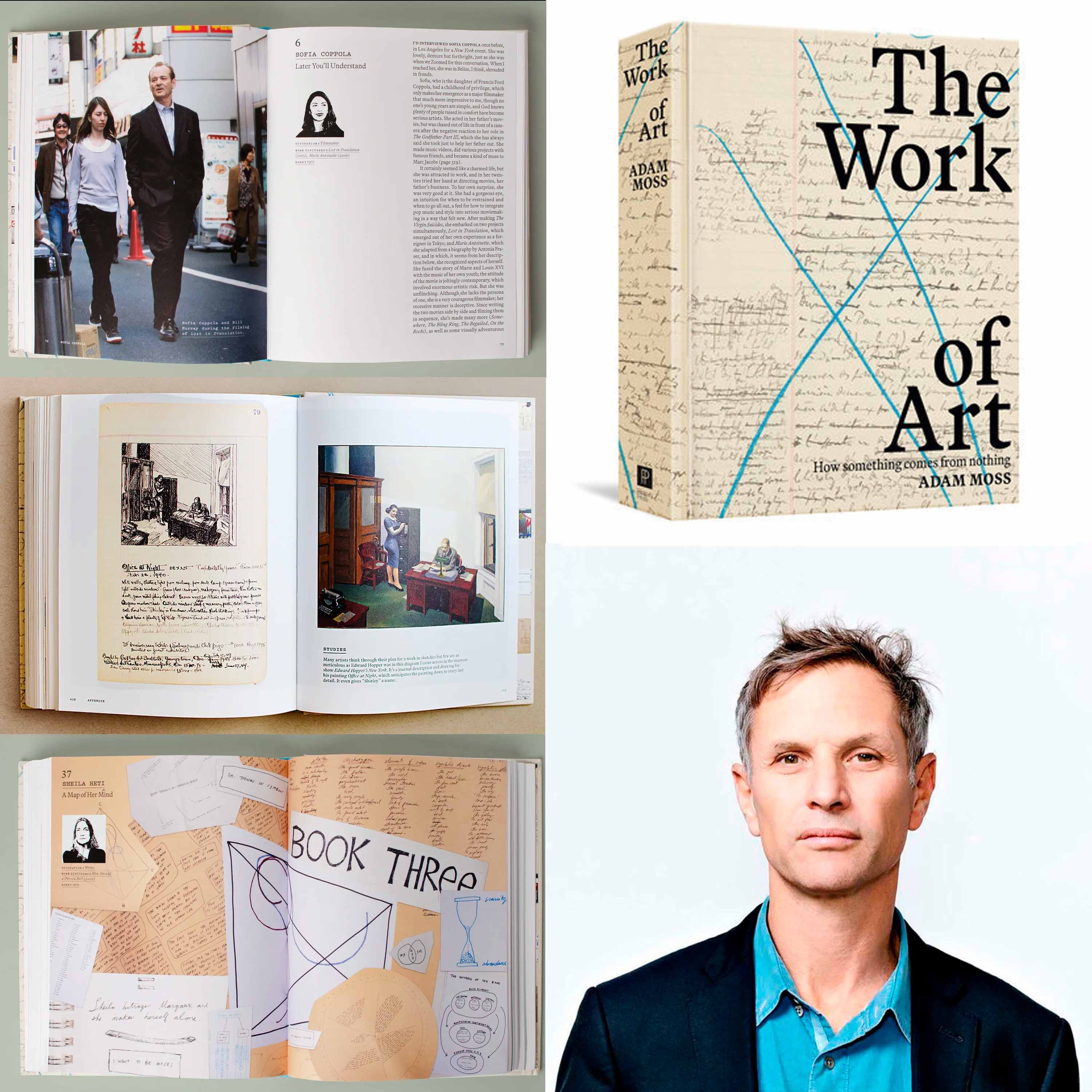
    The Work of Art: How Something Comes from Nothing w/ ADAM MOSS Fmr. Editor of New York Magazine

    “ I was very interested in the state of mind of an artist as he or she goes about making. I think one of the things that artists have is not just an interest in their own subconscious, but also an ability to find ways, tricks, and hacks to access their subconscious. Over time, they understand how to make productive use of what they find there. We all have subconsciousness; we all dream and daydream. We all have disassociated thoughts that float through our head, but we don't generally know what to do with them. One of the traits that successful artists seem to have is this ability to cross borders into recesses of their own minds.” Adam Moss was the editor of New York magazine, The New York Times Magazine, and 7 Days. As editor of New York, he also oversaw the creation of five digital magazines: Vulture, The Cut, Daily Intelligencer, Grub Street, and The Strategist. During his tenure, New York won forty-one National Magazine Awards, including Magazine of the Year. He was an assistant managing editor of The New York Times with oversight of the Magazine, the Book Review, and the Culture, and Style sections, as well as managing editor of Esquire. He was elected to the Magazine Editors’ Hall of Fame in 2019. He is the Author of The Work of Art: How Something Comes from Nothing. Episode Website www.creativeprocess.info/pod Instagram:@creativeprocesspodcast
  • Apr 11, 2025 · 10 min

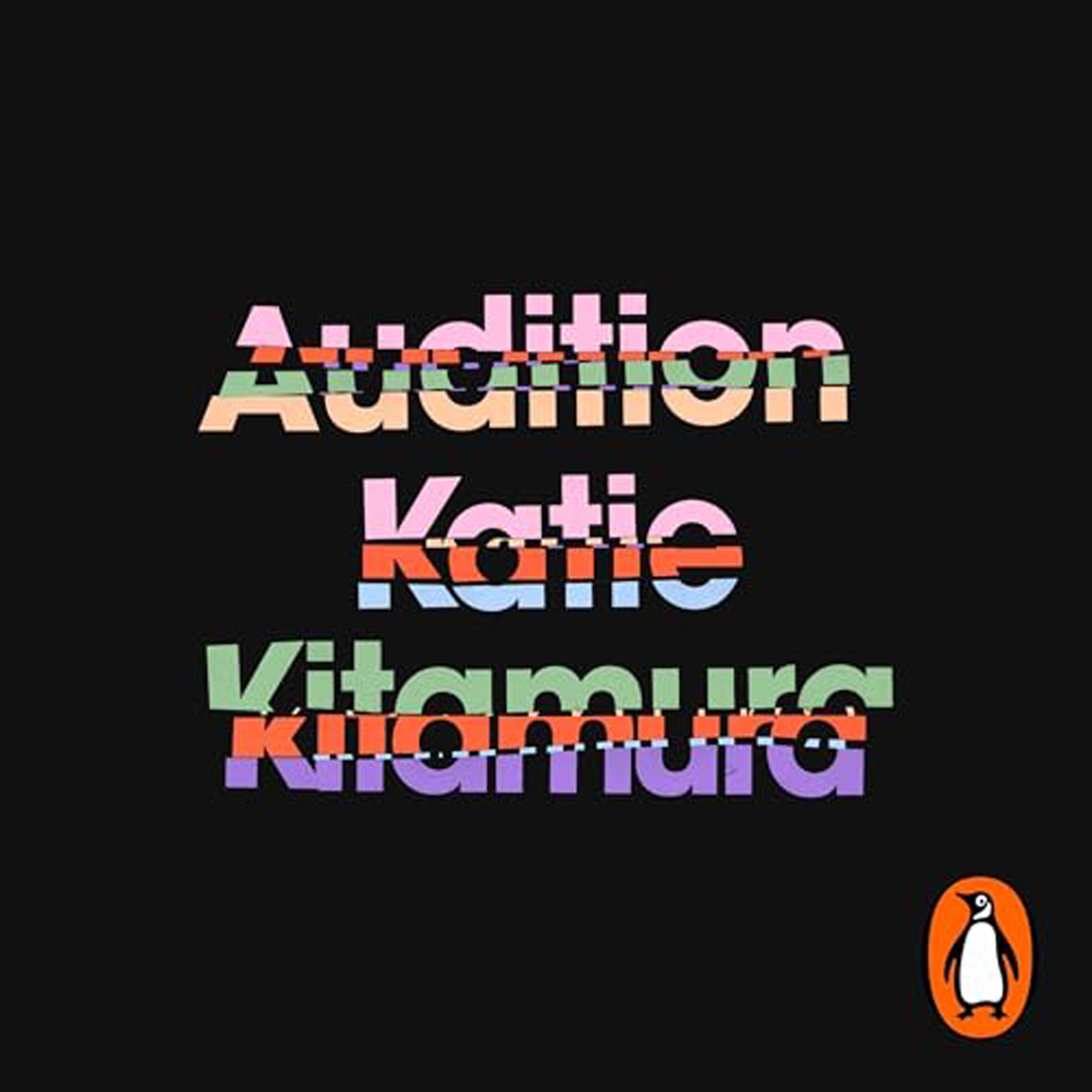
    On Postactivism, Justice & Decolonization with BAYO AKOMOLAFE - Highlights

    “So, post-activism is not ‘post-activism’ in the sense of being after activism. It is not supposed to be a through line to results or resolutions or solutions.” Dr. Bayo Akomolafe is a philosopher, psychologist, writer, public intellectual, and the founder of the Emergence Network. His work, which he names post-activism, marks an earth-wide effort to sensitize bodies towards new response-abilities and other places of power – a project framed within a material feminist/post-humanist/post-activist ethos and inspired by Yoruba indigenous cosmologies. He is the author of These Wilds Beyond Our Fences: Letters to My Daughter on Humanity's Search for Home. “Post-activism is instead a noticing that the ways we care for ourselves and our causes and our worlds could actually be incarcerated. Another way to put that is to notice that care can often become carceral. I often suggest that we like to embrace things, but sometimes in the squeeze of embrace, it could quickly become asphyxiation, where we choke the air out of each other in trying to care for each other.” Episode Website www.creativeprocess.info/pod Instagram:@creativeprocesspodcast
  • Apr 11, 2025 · 41 min

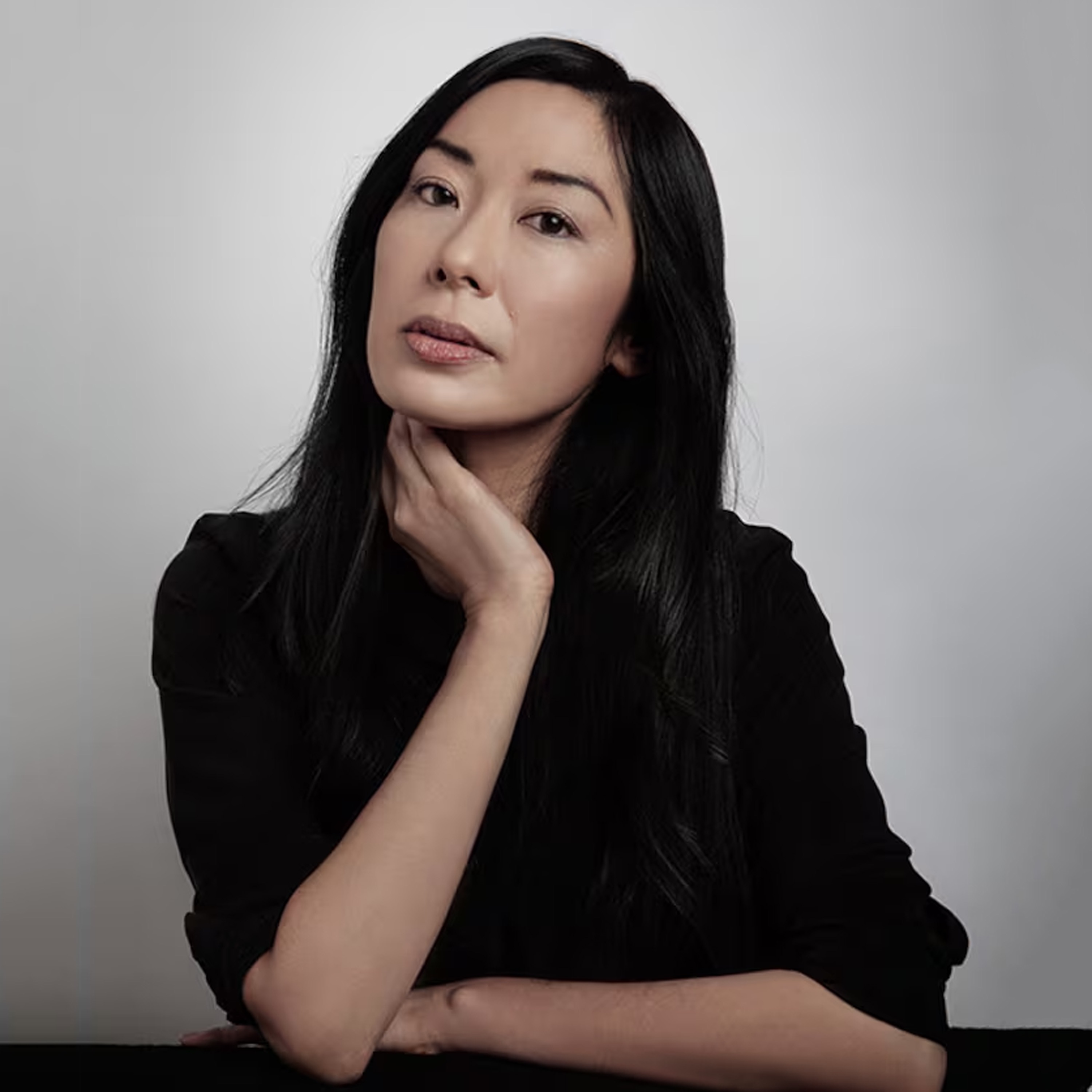
    The Future of Activism: When Solutions Become Problems w/ BAYO AKOMOLAFE

    “I learn more than anything else from my children. My son, he's seven, he's autistic, and I call him my prophet for a reason. He teaches me to meet myself in ways that are usually very stunning. I can get information from other people; I can read a book here and there, but it's very rare to come across such an embodiment of grace, possibility, and futurity, all wrapped up in a tiny seven-year-old boy's body. My son has given me lots of gifts.” Dr. Bayo Akomolafe is a philosopher, psychologist, writer, public intellectual, and the founder of the Emergence Network. His work, which he names post-activism, marks an earth-wide effort to sensitize bodies towards new response-abilities and other places of power – a project framed within a material feminist/post-humanist/post-activist ethos and inspired by Yoruba indigenous cosmologies. He is the author of These Wilds Beyond Our Fences: Letters to My Daughter on Humanity's Search for Home. Episode Website www.creativeprocess.info/pod Instagram:@creativeprocesspodcast
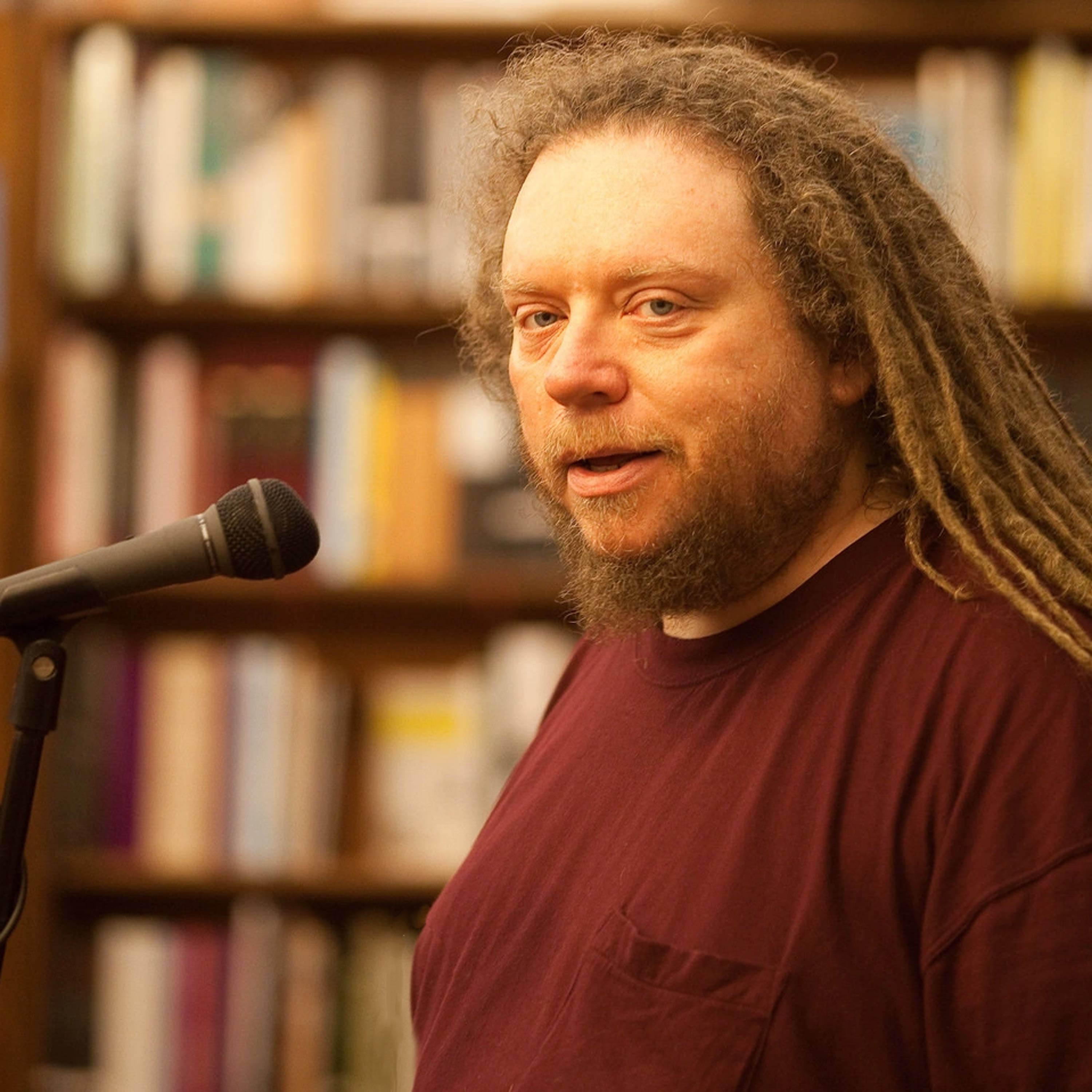
  • Apr 8, 2025 · 10 min

    KATIE KITAMURA on Language, Identity & the Search for Agency - Highlights

    “This novel is the third in what I see as a little set of books that all feature unnamed female protagonists who have experienced varying degrees of passivity and agency in their lives. They're all women who speak the words of other people.” Katie Kitamura is the author five novels, most recently Audition and Intimacies, which was named one of the New York Times 10 Best Books of 2021, longlisted for the National Book Award and the PEN/Faulkner Award, and a finalist for a Joyce Carol Oates Prize. She is a recipient of the Rome Prize in Literature, fellowships from the Cullman Center and the Lannan Foundation, and many other honors. Her work has been translated into twenty-one languages. She teaches in the creative writing program at New York University. Episode Website www.creativeprocess.info/pod Instagram:@creativeprocesspodcast
  • Apr 8, 2025 · 32 min

    Art, Performance & the Illusion of Agency - KATIE KITAMURA on her new novel AUDITION

    “I'm really interested in the formal aspect of characters who are channeling language, who are speaking the words of other people, and in characters who are aware of how little agency they actually have, who have passivity forced upon them, who perhaps even embrace their passivity to a certain extent but eventually seek out where they can enact their agency.” Katie Kitamura is the author five novels, most recently Audition and Intimacies, which was named one of the New York Times 10 Best Books of 2021, longlisted for the National Book Award and the PEN/Faulkner Award, and a finalist for a Joyce Carol Oates Prize. She is a recipient of the Rome Prize in Literature, fellowships from the Cullman Center and the Lannan Foundation, and many other honors. Her work has been translated into twenty-one languages. She teaches in the creative writing program at New York University. Episode Website www.creativeprocess.info/pod Instagram:@creativeprocesspodcast
  • Apr 5, 2025 · 13 min

    JARON LANIER on Tech, Music, Creativity & Who Owns the Future - Highlights

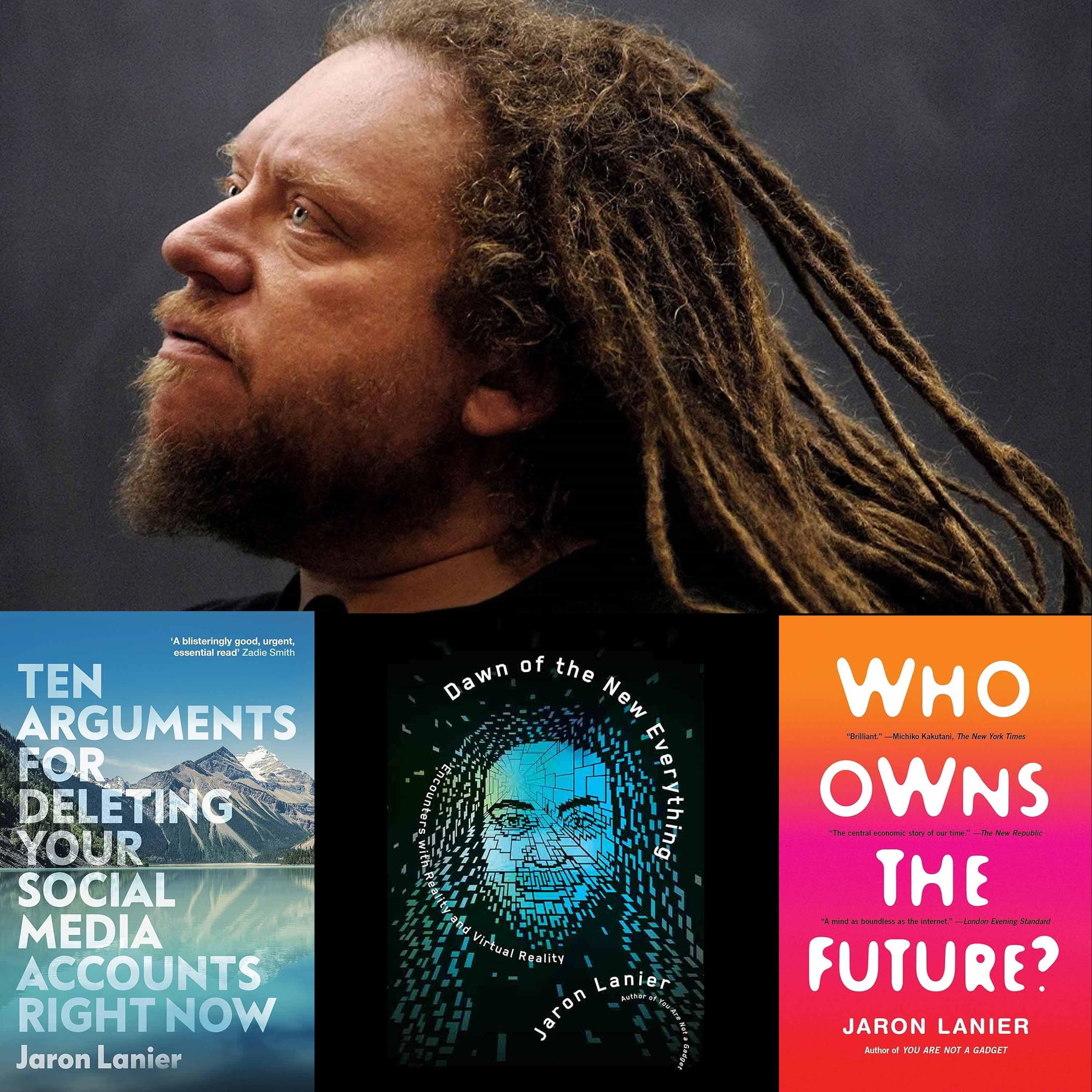
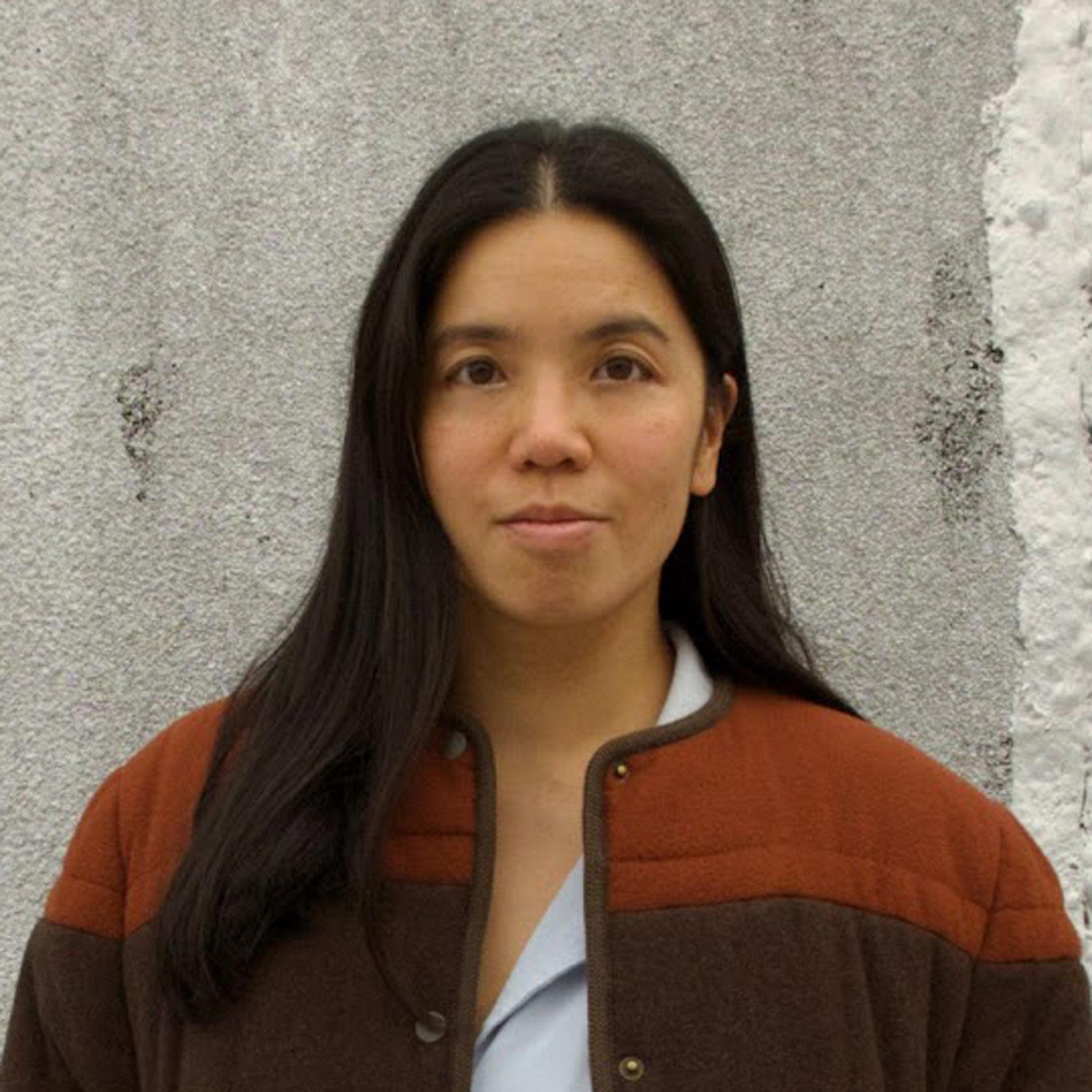
    “What I meant when I said there is no AI is that I don't think we serve ourselves well when we put our own technology up as if it were a new God that we created. I think we confuse ourselves too easily. This goes back to Alan Turing, the main founder of computer science, who had this idea of the Turing test. In the test, you can't tell whether the computer has gotten more human-like or the human has gotten more computer-like. People are very prone to becoming more computer-like. When we're on social media, we let ourselves be guided by the algorithms, so we start to become dumb in the way the algorithms want us to. You see that all the time. It's really degraded our psychologies and our society.” Jaron Lanier is a pioneering technologist, writer, and musician, best known for coining the term “Virtual Reality” and founding VPL Research, the first company to sell VR products. He led early breakthroughs in virtual worlds, avatars, and VR applications in fields like surgery and media. Lanier writes on the philosophy and economics of technology in his bestselling book Who Owns the Future? and You Are Not a Gadget. His book Dawn of the New Everything: Encounters with Reality and Virtual Reality is an inventive blend of autobiography, science writing, and philosophy. Lanier has been named one of TIME’s 100 most influential people and serves as Prime Unifying Scientist at Microsoft’s Office of the CTO—aka “Octopus.” As a musician, he’s performed with Sara Bareilles, Philip Glass, T Bone Burnett, Laurie Anderson, Jon Batiste, and others. Episode Website www.creativeprocess.info/pod Instagram:@creativeprocesspodcast Episode Website www.creativeprocess.info/pod Instagram:@creativeprocesspodcast
  • Apr 4, 2025 · 49 min

    AI, Virtual Reality & Dawn of the New Everything w/ JARON LANIER, VR Pioneer, Musician, Author

    “AI is obviously the dominant topic in tech lately, and I think occasionally there's AI that's nonsense, and occasionally there's AI that's great. I love finding new proteins for medicine and so on. I don't think we serve ourselves well when we put our own technology up as if it were a new God that we created. I think we're really getting a little too full of ourselves to think that. This goes back to Alan Turing, the main founder of computer science, who had this idea of the Turing test. In the test, you can't tell whether the computer has gotten more human-like or the human has gotten more computer-like. People are very prone to becoming more computer-like. When we're on social media, we let ourselves be guided by the algorithms, so we start to become dumb in the way the algorithms want us to. You see that all the time. It's really degraded our psychologies and our society.” Jaron Lanier is a pioneering technologist, writer, and musician, best known for coining the term “Virtual Reality” and founding VPL Research, the first company to sell VR products. He led early breakthroughs in virtual worlds, avatars, and VR applications in fields like surgery and media. Lanier writes on the philosophy and economics of technology in his bestselling book Who Owns the Future? and You Are Not a Gadget. His book Dawn of the New Everything: Encounters with Reality and Virtual Reality is an inventive blend of autobiography, science writing, and philosophy. Lanier has been named one of TIME’s 100 most influential people and serves as Prime Unifying Scientist at Microsoft’s Office of the CTO—aka “Octopus.” As a musician, he’s performed with Sara Bareilles, Philip Glass, T Bone Burnett, Laurie Anderson, Jon Batiste, and others. Episode Website www.creativeprocess.info/pod Instagram:@creativeprocesspodcast Photo credit: Michael Springer
  • Mar 29, 2025 · 11 min

    Why is there so much conflict over people, land and resources? AUDREA LIM - Highlights

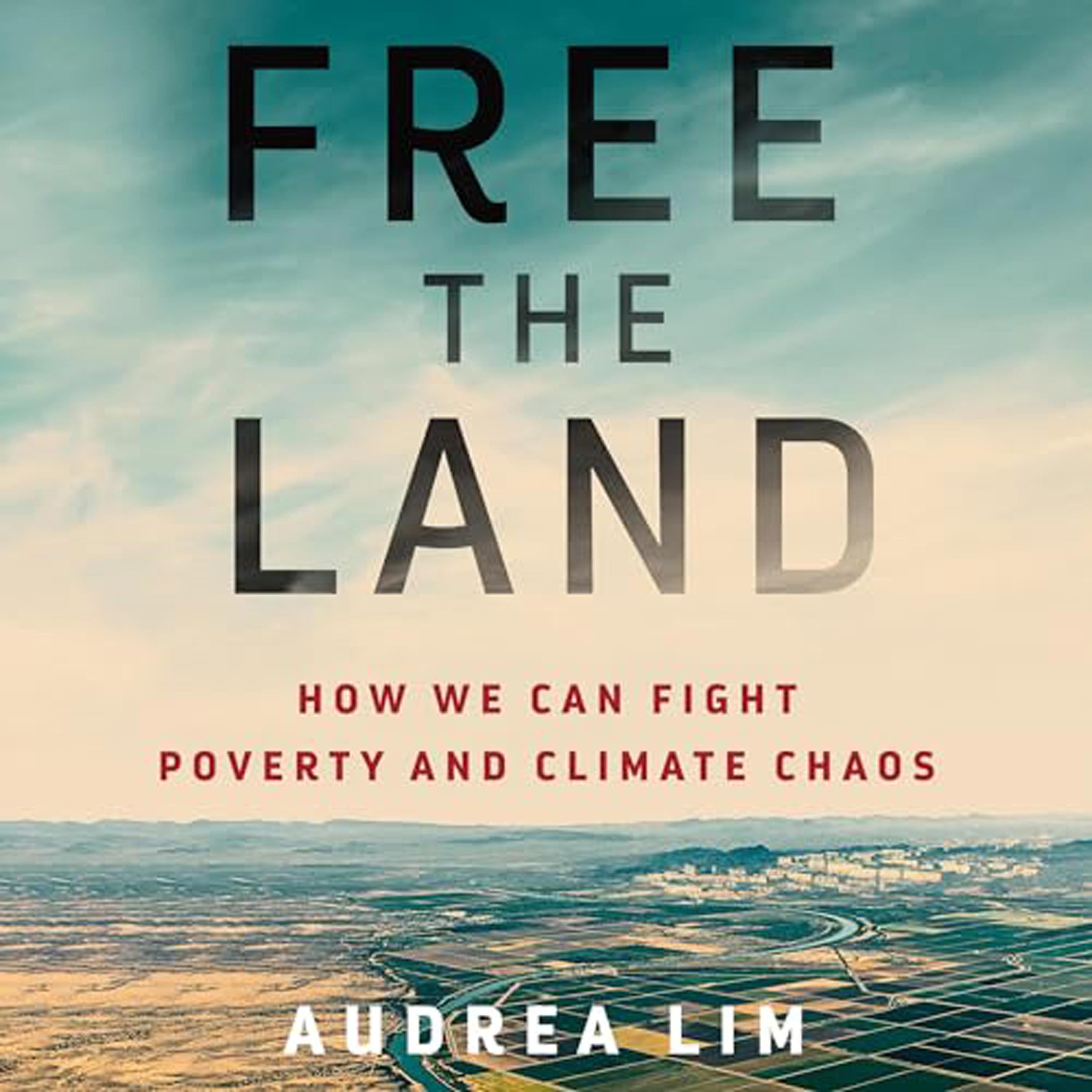
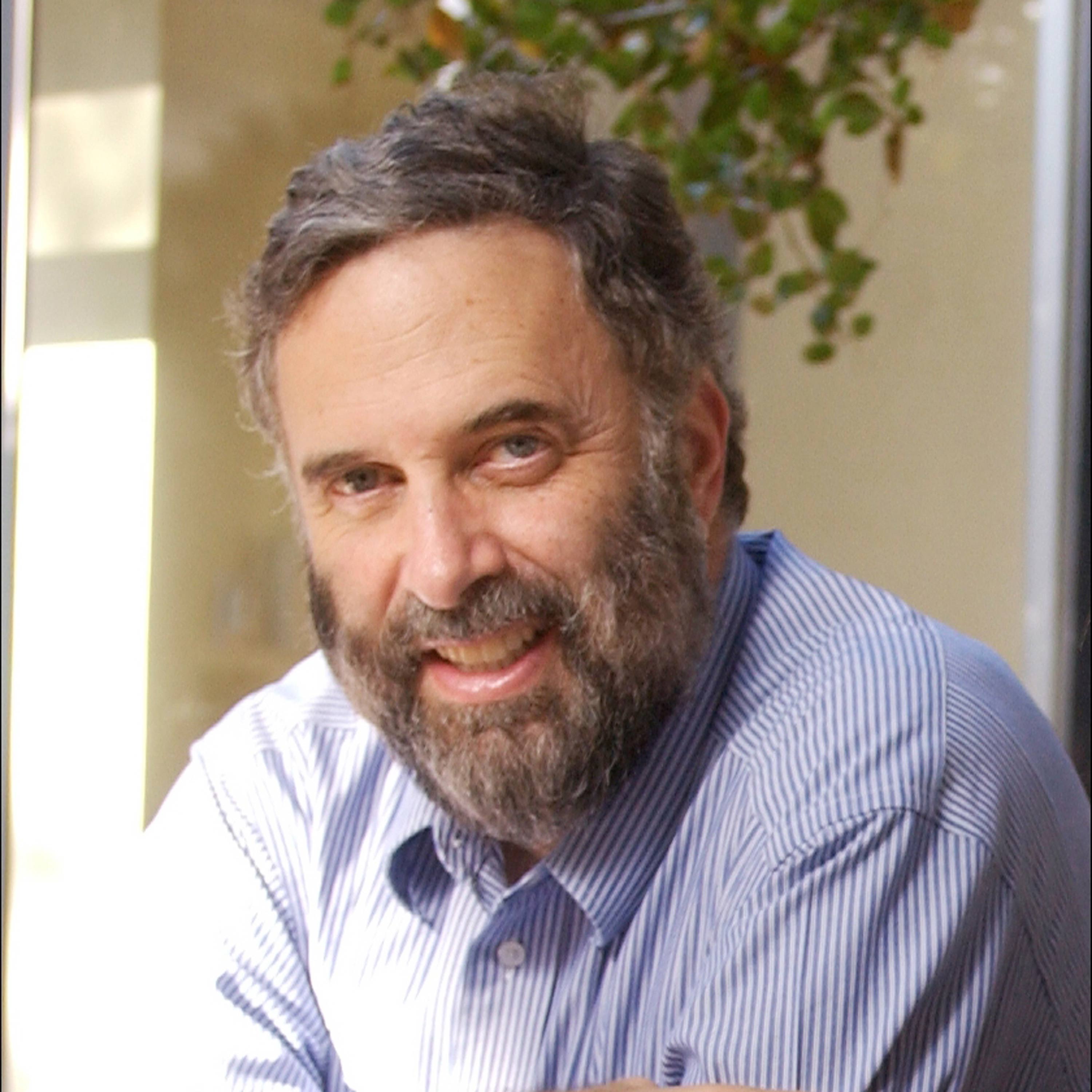
    “When I first started writing this book, it really foregrounded the problems within our land ownership system, which treats land as a commodity. The way we talk about land and issues like racial and food justice reflects this. We tend to focus on the problems, attaching big concepts to them, such as racial justice or environmental justice. I realized that my job primarily consists of going around and talking to activists and community groups about their work. I’m interested not just in the very big problems we face as a society, economy, and political system, but also in how people are trying to think through solutions or approaches to those problems. Audrea Lim is a Brooklyn-based freelance writer and journalist whose work focuses on land, energy, and the environment. Her writing has appeared in TheNew Yorker, Harper’s, Rolling Stone, the New York Times, the Guardian, the New Republic, and The Nation. Lim is the editor of The World We Need and the author of Free The Land: How We Can Fight Poverty and Climate Chaos. She is a visiting scholar at the Asian/Pacific/American Institute at New York University and was a 2022 Macdowell fellow. Episode Website www.creativeprocess.info/pod Instagram:@creativeprocesspodcast @audrea_lim The music on this episode is “Snowball” from the album Sunken Cities, performed by Audrea Lim and her band Odd Rumblings.

  • Mar 29, 2025 · 14 min

    Can Deliberation Cure the Ills of Democracy? JAMES FISHKIN - Highlights

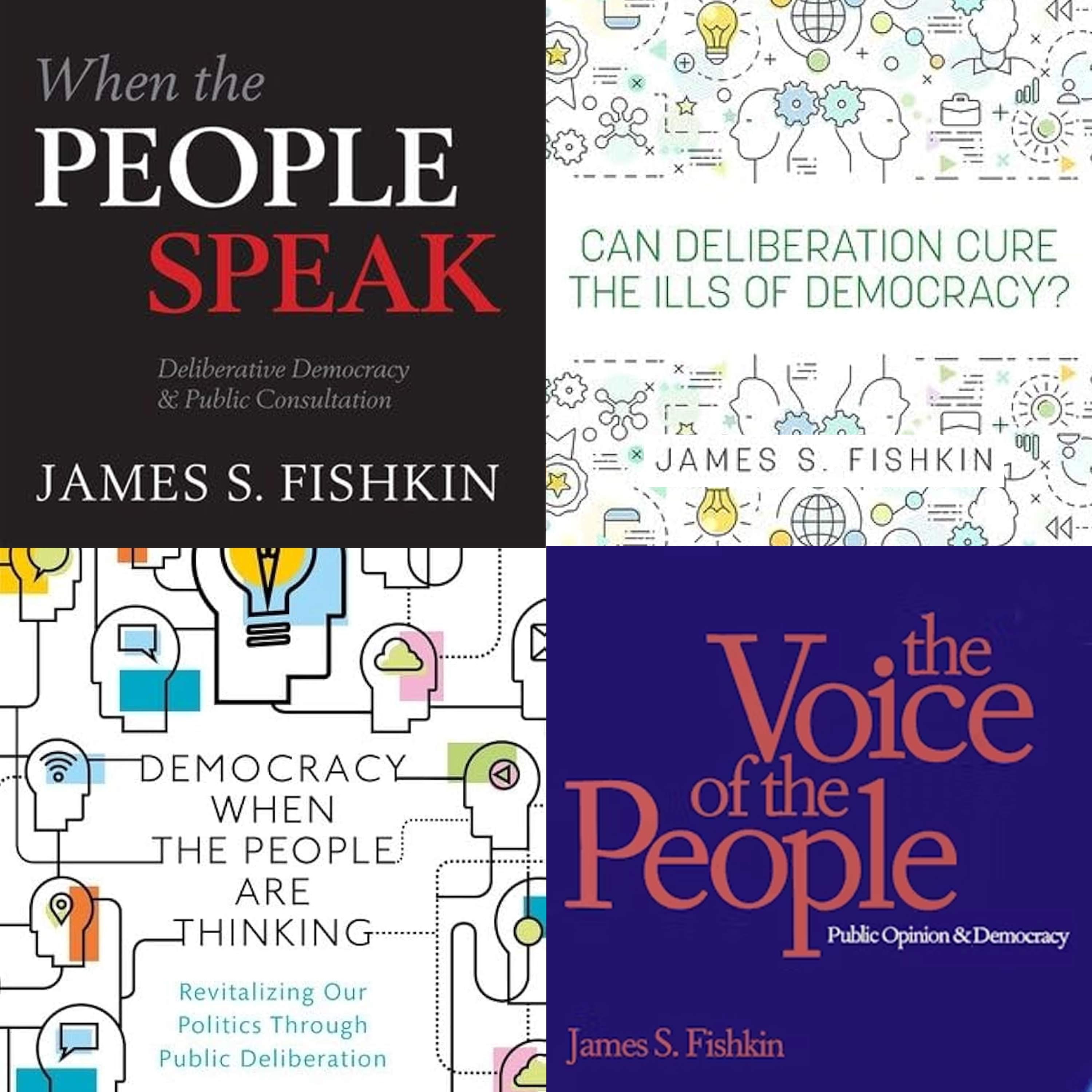
    “The three ills of democracy that I propose to address with this method, which we've perfected over the last several decades. Democracy is supposed to make some connection with the "will of the people." But how can we estimate the will of the people when everyone is trying to manipulate it?” James S. Fishkin holds the Janet M. Peck Chair in International Communication at Stanford University where he is Professor of Communication, Professor of Political Science (by courtesy), Senior Fellow of the Freeman Spogli Institute for International Studies, and Director of the Deliberative Democracy Lab. He is also a Fellow of the American Academy of Arts and Sciences, a Guggenheim Fellow, and a Fellow of the Center for Advanced Study in the Behavioral Sciences. His work focuses on Deliberative Polling, a process of deliberative public consultation that has been conducted more than 150 times around the world. He is the author of Can Deliberation Cure the Ills of Democracy?, Democracy When the People Are Thinking (OUP) and other books. “Deliberative democracy is itself, when properly done, a kind of democracy that can speak to the interests of a community. And we need that all over the world.” Episode Website www.creativeprocess.info/pod Instagram:@creativeprocesspodcast

  • Mar 28, 2025 · 50 min

    Free the Land: How We Can Fight Poverty & Climate Chaos with AUDREA LIM

    Why is there so much conflict over people, land, and resources? How can we rethink capitalism and land ownership to create a fairer, more equitable society? Audrea Lim is a Brooklyn-based freelance writer and journalist whose work focuses on land, energy, and the environment. Her writing has appeared in TheNew Yorker, Harper’s, Rolling Stone, the New York Times, the Guardian, the New Republic, and The Nation. Lim is the editor of The World We Need and the author of Free The Land: How We Can Fight Poverty and Climate Chaos. She is a visiting scholar at the Asian/Pacific/American Institute at New York University and was a 2022 Macdowell fellow. Episode Website www.creativeprocess.info/pod Instagram:@creativeprocesspodcast @audrea_lim The music on this episode is “Snowball” from the album Sunken Cities, performed by Audrea Lim and her band Odd Rumblings.

  • Mar 20, 2025 · 49 min

    What is Deliberative Democracy & How Can it Serve Society? w/ JAMES S. FISHKIN

    “Deliberative democracy is itself, when properly done, a kind of democracy that can speak to the interests of a community. And we need that all over the world.” James S. Fishkin holds the Janet M. Peck Chair in International Communication at Stanford University where he is Professor of Communication, Professor of Political Science (by courtesy), Senior Fellow of the Freeman Spogli Institute for International Studies, and Director of the Deliberative Democracy Lab. He is also a Fellow of the American Academy of Arts and Sciences, a Guggenheim Fellow, and a Fellow of the Center for Advanced Study in the Behavioral Sciences. His work focuses on Deliberative Polling, a process of deliberative public consultation that has been conducted more than 150 times around the world. He is the author of Can Deliberation Cure the Ills of Democracy?, Democracy When the People Are Thinking (OUP) and other books. “The three ills of democracy that I propose to address with this method, which we've perfected over the last several decades. Democracy is supposed to make some connection with the "will of the people." But how can we estimate the will of the people when everyone is trying to manipulate it?” Episode Website www.creativeprocess.info/pod Instagram:@creativeprocesspodcast