Skip to content
Artwork for The Common Reader
ArtsBooksSociety & Culture

The Common Reader

Henry Oliver

Literary discussion

www.commonreader.co.uk
Play
  • 20 episodes
  • Avg 1 hr 3 min
  • English
  • June 3 · 50 min

    Zena Hitz: Gulliver's Travels and the Failures of Human Understanding

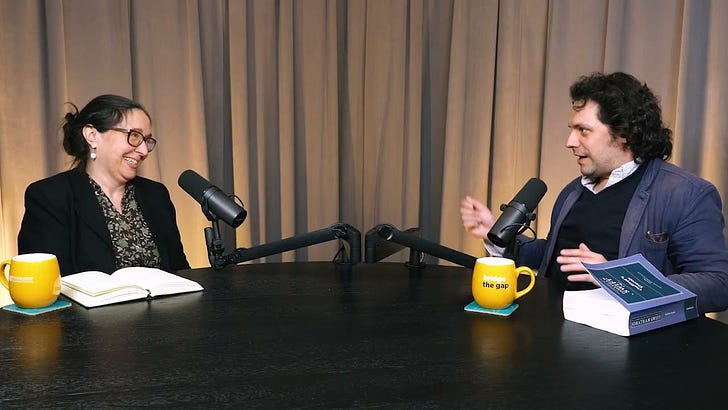
    What a lot of fun I had talking to Zena Hitz about Gulliver’s Travels. As well as discussing Swift, slavery, genocide, rationality, Christianity, and science, Zena told me that good philosophy is like a box of cake mix and that a liberal education requires you to be freed of false expertise. I also took Zena on a detour to discuss Iris Murdoch, the Catherine Project, and modern philosophy. TRANSCRIPT HENRY OLIVER: Today I am talking to Zena Hitz. Zena is a tutor at St. John’s College. She is a philosopher, the author of Lost in Thought. She runs the Catherine Project. She’s famous on Twitter. We don’t know how she does it all. Zena, welcome. ZENA HITZ: Thank you, Henry. It’s great to be here. OLIVER: And we’re talking about Gulliver’s Travels because it is 300 years since it was published, and it’s a book that you love. HITZ: A book that I’ve loved for a long time. First Encounter with Gulliver’s Travels OLIVER: So tell me, when did you first read it? HITZ: Well, it was an important moment for me. I was in high school, and I was admitted to a scholarship summer program which offered college courses at different campuses. There were some normal-looking college courses at normal-looking colleges. And then there was this course at St. John’s called Science as Literature, Literature as Science. [laughs] It had this description that was just unbelievable. And I thought to myself, “This is the one, obviously the one to go to.” So I went, and we read books that no one in their right mind would assign to high school students now, and maybe not then. The fragments of Parmenides, Plato’s Timaeus, selections from Aristotle’s Physics, Gulliver’s Travels. After reading a number of—preface to Ptolemy’s Almagest, geocentric astronomy. And we read Gulliver’s Travels after reading selections from Hooke’s Micrographia, so the inventor of the microscope, and Galileo’s Starry Messenger, which is one of the great first uses of the telescope to discover the nature of the moon and the satellites of Jupiter. So then we read Gulliver’s Travels. We also read Emma and Flannery O’Connor and various other things. And one of the faculty who was running it said at one point, “Well, we thought we’d throw a bunch of things together and see what you could do, what you could make of it. We didn’t actually have an idea of how these all fit together,” which I think was probably true. At any rate, I think I came to Gulliver’s Travels thinking about these scientists who were looking at very large things and very small things, and thinking in general about the follies of human perception, whether that was shown in literature or philosophy or what have you, the ways in which human perception and knowledge don’t work very well. And I think Swift is still one of the best people to—Gulliver’s Travels is still one of the best books about that because it’s in the mode of a travel diary, an eyewitness account. Gulliver is trained as a surgeon, by his own account. He at one point says he was a bit of a projector in his younger days, someone who undertook scientific projects. And he’s a terrible observer, the worst imaginable observer, and Swift so brilliantly lets us see through his eyes, lets us see all the things he doesn’t see. And I think it’s not just about seeing and knowing. It has a very profound, I think, moral and political set of commitments. So it’s a very humane book. It’s social criticism, but from a point of view of a very deep humanity. So I’ve always loved the book for these reasons since then. I came back to it more recently because it is part of the curriculum at St. John’s. So when I came back to teach there, I began to reread it. The other experience I had was that I wrote a long essay on it when I was an undergraduate. So those are my—I’m not any kind of expert. My knowledge of the historical context of the book is limited. It’s not zero, but it’s limited. But I have always loved it as an account of human understanding and its failures and the way that might impact how we live and how happy we can be. The Houyhnhnm Problem OLIVER: Have you changed how you think about it as you’ve taught it? HITZ: I have not really changed the way I think about it. It gets more—like all of these books, the more you read them, the more comes out of them, the more details come up. Hilarious. The more jokes you get, the more . . . I think the one more recent insight I had was, I hadn’t understood the full horror of the Houyhnhnms in the last book until relatively recently. I think that took me some time to really take on. It’s one of the cases where Gulliver’s misperceptions are a bit harder to see, and I think many readers just assume that Swift is endorsing the praise of the Houyhnhnms in some sense or other. OLIVER: There are some very serious critics in the past who have called them Swift’s ideal beings. Which at this point in history seems unthinkable, but it has been a belief among serious readers. HITZ: Yes, yes. And also common among students. Yes, it’s absolutely one of the wrongest opinions you could have about anything, I think. OLIVER: Why does Swift allow us to make that mistake? Are we bad readers out of the context, or has he made too good a job of his diversions and concealments and ironies? HITZ: That’s a great question, and I’ll just take a stab at it. I think that he has hit on a mode of misperception which is very deep to us, and it’s something that we’re much more guilty of. We could imagine that if we were in a place where everyone was small or everyone was large, we might make mistakes like Gulliver makes. But we all live, I think, in communities that are a bit like the Houyhnhnms. And so we are all very subject to these kinds of deceptions, and I think that’s how he gets us. That’s not to really excuse the bad readings because, you know, Gulliver does leave the land of the Houyhnhnms with a boat made out of human skin, which should—I think that moment should make you realize, if you haven’t yet, that something is very seriously wrong with Gulliver. Gulliver has been kind of destroyed as a person by his travels, and especially by this last trip. But if you pass over that little detail, maybe you think, “Oh, wow, he found some very simple beings.” OLIVER: Well, there’s also the great council where they debate the genocide of the Yahoos. HITZ: [laughs] Yes. OLIVER: And it directly contradicts several things Gulliver has come to believe about the Houyhnhnms, about the Yahoos, and about himself. And he’s completely unaware of these contradictions and so in awe of the Houyhnhnms that he doesn’t quite understand, I think, that he’s accounting a genocide. HITZ: That’s right. That’s right. OLIVER: Even though he uses a phrase from Genesis that’s very unmistakable. It’s a sort of remarkable moment of—particularly to us, having had the 20th century. I think that’s why Swift came back into favor in a way, because people used to say, Swift’s unbearable view of human nature . . . This is a great bit in Boswell’s Life of Johnson where, when they’re traveling through Scotland, they’re with a lady, and she says to Johnson, “Is any man naturally good?” And Johnson says, “No, no more than a wolf.” And Boswell says, “Well, sir, what about ladies?” And Johnson says, “God, no, absolutely not.” And this woman says, “Oh my God, this is worse than Swift,” utterly horrific view of human nature. But of course, we can actually say, did he go far enough? [laughter] I mean, Swift clearly understands something very real and deep. The council of genocide is horrifyingly familiar to us. And I think that’s much to Swift’s credit that he can see that, and to show that Gulliver would blind himself to it. And people still blind themselves to it, right? HITZ: That’s right. And I wonder—you would know more about this than me because it is a bit of a historical question, but my understanding is that quite a lot of the savagery, the worst parts of rule over men that we see in Gulliver’s Travels are pictures of Ireland in the 17th, 18th centuries. And I wonder if that took some time to reveal itself to the British, and in some ways it’s still not really as known as it might be. We think of the colonial project as being something that was directed at India and Africa— OLIVER: Faraway countries. HITZ: —faraway countries where people looked really different. And we’re not as familiar with the kinds of things that were done to the cuddly Irish with their nice music, and who we don’t think of as being people that you would savagely oppress like that. So I think— OLIVER: So, I think partly the English are not interested in their own history in the way that they are expected to be. And partly the English interest in Irish history has become very focused on the more recent events. And it’s very hard to get back past that. And it all becomes very complicated, and it’s a sort of different country. So there’s some of that, but I think generally we don’t want to know what we did, yes. HITZ: Well, and I think in anglophone countries in general, there’s going to be a history of something like that. To attribute it to the British is not to say that—I mean, Americans have chattel slavery and the genocide of the natives, and the Australians have their own situation. All of the anglophone countries have something like this on their conscience. I think that obscures the meaning of that final book. I think we don’t recognize—and that’s really to Swift’s credit, to have a social critique that is so real and so deep that you may not even recognize yourself in the picture. Slavery in Gulliver’s Travels OLIVER: Yes. When I read it again—I read it as an undergraduate, but I really was actually more interested in the other parts of Swift’s work. And I thought it was brilliant, and then I read it again. And it was more recently that—I didn’t understand how I couldn’t have seen it, but it’s basically a book about slavery, as I come back to it. And in each of the books there is enslavement of a different sort. So, to begin with, Gulliver is the one being kept in a box or kept in a house, or he’s chained up by the Lilliputians or Glumdalclitch. HITZ: Right. That’s right. OLIVER: She’s a very nice sort of master, as it were, [laughter] but he has that box that can be sealed, and the dwarf has him swiping at the wasps. And then the enslavement that the flying island has of the country below is like England and Ireland. And then in the final book, you know, the Houyhnhnms are whipping the Yahoos. HITZ: That’s right. OLIVER: The slavery thing gets worse and worse as the book goes on. And one of the things that’s clever is that it’s funny when Gulliver is enslaved, right? When the wasps are let out and he has to—and Swift sort of does that clever thing where he undermines things by making it a joke at the end. By the book of the Houyhnhnms, there is really very little humor. And the twist at the end is always dark. Gulliver can’t see that—he can see that he’s a bit like the Yahoos. But he can’t see that they’ve been enslaved in the way that he—the farmer wanted to take him around the kingdom and show him off, and he says, “I couldn’t possibly have had children in that condition because I couldn’t have it on my conscience that I had begotten a slave, someone born into slavery. I couldn’t do that.” HITZ: Right. OLIVER: Then he’s in the Houyhnhnms and he can’t—it’s quite remarkable. HITZ: [laughs] Yes. I don’t think it’s quite true that in the end there’s no humor. I read it with some Catherine Project group a couple of years ago, and one of the readers pointed out that it’s not obvious Gulliver isn’t leaving his home and sitting out in the ocean and always landing on England every single time; just every time, he lands there. And there’s something hilarious about an Englishman that discovers a place where there’s all horses, [laughter] and his love of horses overwhelms him, and he becomes persuaded that they’re the only rational beings that there are. I mean, that is funny. OLIVER: Yes, I agree. There’s a lot of irony and stuff. But I think it’s in Lilliput when he describes their manner of writing. And he says they don’t write from left to right as we do in England, or from right to left, or up-down like the Chinese, but from one corner to the other, as the ladies do in England. This is very funny, dry humor, and that sort of thing is gone. And the things that surprise you at the end of a sentence or a paragraph are more like, “Oh, and of course I used Yahoo skin to cover the boat.” And you’re like, oh my God, this is not a joke anymore. You know, in A Modest Proposal, he makes real humor out of those kind of horrors. And with the Houyhnhnms, I think he actually refuses the joke to make you feel the disgust, in a way. HITZ: Yes, that might be right. That might be right. Swift and Philosophy OLIVER: What do you think about the idea that the Houyhnhnms are drawn from the Phaedrus and Socrates’s idea of the soul with the two horses? And there’s the good, rational horse and the vulgar, passionate horse, and the Yahoos are the other horse. You see what I mean? HITZ: Yes, yes. OLIVER: Is Swift showing us the two sides, and Gulliver’s mistake is to prefer the one and not the— HITZ: Right, I think I have heard something like this before. I’m a bit skeptical. Swift doesn’t strike me as someone who uses philosophy in quite that way. I think he’s much more interested in Gulliver’s—the Houyhnhnms’ self-deception about the kinds of beings they are. They do not say “the thing which is not,” yet Gulliver’s master hides from him this conversation about the genocide for quite some time. And maybe we don’t know if he tells him quite the whole truth about it. So there’s— OLIVER: And he also conceals the fact that the others don’t like Gulliver because he’s a partial—a reasonable Yahoo, as it were. HITZ: Right. So their self-deception, Gulliver’s being taken in by their self-deception, the ways in which they—this is one of the ways that I think it’s profound about the nature of slavery. And to cheer us all up, I’ll make a Holocaust analogy, as you also did. When I was traveling in Germany some years ago, in one of their Holocaust museums, there was an image from a Nazi-era German newspaper of Jewish people living in complete squalor in the ghetto. And of course, they had forced them into squalor. But somehow they forced them into squalor, and then this reinforces the sense that they’re these rat-like beings. And there’s something very similar that the Houyhnhnms do to the Yahoos. They force them into this animal state, and then they say, “Oh God, look, these people are disgusting. They just don’t know how to act.” That seems to me the kind of level at which Swift is working. He is interested in the nature of a human being, but not in the abstract Platonic sense, I don’t think. He strikes me as someone who believes in common sense, common decency, basic freedom, and basic use of reason. And he finds in his time that there’s distorting teachings, distorting ways of behavior that have gotten people far off track. To me, that’s what it feels like it comes from. It doesn’t feel like Plato is in the background to me. OLIVER: Is there an extent to which, though, it’s a work of sort of anti-philosophy? As you say, Swift, he likes common sense. He likes ordinary reason, and he likes what he would call the revealed truth of Christianity. So he talks, in his sermons about people, it comes to you from God like a light. It’s revealed to you. And he doesn’t like this idea that the philosophers can work it all out. And in a way, that’s the same sort of mistake that the scientists think they can discover all this stuff, and they go in these crazy ways. And the Houyhnhnms are a bit like that. If you had philosopher-kings, they would end up being perverted examples of rationality because they’re ignoring the—so do you think it’s anti-philosophy in a way? The book is saying, “No, no, I don’t want philosophers”? Criticizing Elite Intellectual Culture HITZ: That’s definitely a plausible reading. But it’s hard to tell whether it’s anti-philosophy or anti a particular style of thinking. It’s worth pointing out, in that light, that Gulliver, when he arrives in the land of the Houyhnhnms, before he even meets a horse, he sees a Yahoo who, from what I can tell from the text, is trying to wave at him and say hello, who recognizes him. And he’s horrified. He sees him instantly as a monster. So I think immediately upon landing, he sees the Yahoos as monstrous, and that tells me that he must already be off kilter. So he’s not just corrupted by the Houyhnhnms; he’s been somehow led off track, away from the capacity to recognize fellow human beings before that. And he’s come from this—the third book is all about various kinds of inquiry, scientific endeavors, practical endeavors, talking to the greats of the past, necromancy, and various kinds of inquiry into wisdom or things like wisdom. And somehow that’s the thing that seems to push him to the point where he can no longer tell what a human being is. OLIVER: One of my favorite parts is when he’s with the wizards, and he asks to be shown Homer and Aristotle and all their commentators. And he says that there were vast rooms full of these commentators, endless numbers of them. But Homer and Aristotle didn’t recognize any of them because they were all so ashamed of the terrible things they’d said about these great men’s works that they kept themselves forever in a different part of the underworld. They couldn’t bear the shame of being revealed to having told lies and said second-rate things. It’s very, very funny. And I think that’s another sort of angle on which the book says, “You’re so tempted to make a comment and have an idea and be a philosopher, and you should just accept the revealed truth of what is known. Just stop it. Just stop it.” [laughter] HITZ: Well, I suppose maybe I would also put it this way, that Swift sees the condition of 18th-century Ireland, which is quite poor, very bad. And it’s ruled in a savage way by the English, who have a quite flourishing intellectual culture, as it happens, at this time. So I think what he might be is not a critic of philosophy so much as a critic of intellectual culture. Because intellectual culture seems to not only not help with existential concerns like slavery and oppression and savage poverty, but even serves to mask and hide and create illusions behind it. So that’s, I guess, how it strikes me, as a book that’s hostile to what you’d now call elite intellectual culture. And I don’t know how fundamental that critique is, in light of its inability to solve problems for real human beings or to obscure the causes of what’s going on with real human beings. OLIVER: I think it’s quite fundamental because outside of Gulliver’s—I think this comes into Gulliver’s Travels, but what he might have said more explicitly elsewhere is, there are people starving in the streets of Dublin. And we’ve got corrupt politicians and intellectuals saying all these things, but you know, here she is starving. You don’t need to work that out. [laughter] There’s no question—the reveal—just be a Christian and, like, for goodness’ sake . . . HITZ: Yes. OLIVER: And when, for example, he talks to the king of Brobdingnag, and there’s that wonderful satire of the English government and everything. And he says, “Those people understood mathematics and poetry and whatever, but I could never drive into their head any sense of the abstract or any of these speculative—they simply didn’t know what that was. They didn’t know what I was saying.” [laughter] And so in a way, his ideal government is anti-philosophical because it would just look at the human problem in front of it. It wouldn’t do speculative science. It wouldn’t think of itself as rational, all this Platonic stuff. It would just—she’s in rags, she has bare feet, you know? HITZ: Yes, that’s right. OLIVER: What do we need a philosopher-king? Like, what are you talking about? HITZ: Exactly. OLIVER: The priest understands this because he’s there in the city doing it. And is there something of that in the book, that constant resistance of the cleverness of people who cannot see daily life? HITZ: I think that’s absolutely true, and I think it’s probably one of the things I love about the book, because I think this somehow gets to something in my own heart. Even though I’m a professional intellectual—I have been my whole life—the distance between the concerns of professional intellectuals and the concerns of living, real people in various parts of the world is very large. And it’s even worse when, as it was when I was coming up in grad school, there’s a ton of explicit concern and various operations underway to improve life for others, which have zero connection with anything that anyone actually does. So I think the Laputans, which is the beginning of the third book, when Gulliver— OLIVER: The flying island. HITZ: Yes, when Gulliver visits the people on the flying island, who have one eye towards the heavens and one eye pointed inward. And they study music and mathematics, and they live in a giant flying saucer, which has the— OLIVER: And the flappers. HITZ: That’s right. [laughter] When someone needs to talk to them, someone flaps their ears so that they pay attention. And their wives all run off with working people because they can’t bear to be treated the way they are by men like this. And the flying saucer is not just distant. It also has the power to crush the towns underneath it if it judges them to be rebellious. This image will stick with you for the rest of your life. I mean, it’s absolutely perfect, and the perfect image of bad government of a kind when intellectual culture is prized. And it’s hinted early on in the book in Lilliput, when the rulers in Lilliput have to do these elaborate dances with ropes. OLIVER: Oh, with the king and the chief minister hold the pole, funny angles, and if you get under it, you get a green ribbon or a red ribbon. HITZ: Exactly. [laughter] And they have these athletic contests of grace and various colored ribbons, and that determine how far you get in the halls of power. OLIVER: Yes. Are you a cabinet minister or a junior minister? Yes, yes. HITZ: Exactly. So there, it’s all just a funny joke. But it develops, I think, into the Laputans, people who have kinds of expertise that are actually hostile to them doing any kind of humane governing. So yes, that seems right to me. Christianity in Gulliver OLIVER: To what extent is it a Christian book? HITZ: That’s an interesting question. I’ve never found a strong Christian element in it myself. There are satires of religious wars, both in Lilliput, where Lilliput’s at war with its neighboring city. Oh, wait a second, there’s two different disputes in Lilliput. One is about what side you cut your egg on. OLIVER: There are the Little-Endians and the Big-Endians, HITZ: Right. And then there’s also one about heel size. So there’s two different kinds of disputes. OLIVER: With the marvelous image that the king is a Short-Heeler. But they think that the heir to the throne might be favorable to the High-Heelers because he has one heel slightly higher than the other, and he walks with a wobbly gait. HITZ: [laughs] That’s right. This, again, in Lilliput is just utterly hilarious, outrageous, very silly, obviously a parody of religious wars between different kinds of Christians. But it resurfaces towards the end. It’s the Houyhnhnms, where he talks to the Master Horse— OLIVER: And the horse sort of pretends to this great rationality, simply can’t understand that men would kill each other over the question of whether flesh is bread or bread is flesh. HITZ: That’s right. That’s right. That’s right. So there’s definitely disparaging remarks about religious wars. And as you’re talking about it, where along with Swift’s praise of common sense, there’s a kind of basic Christian morality, which is that the poor and the suffering need attention. That all strikes me as Christian. Apart from that, I’m not sure. If you have a religious take, I’d be interested to hear it. OLIVER: I find it very interesting that Swift had quite strict beliefs. He was not in favor of Catholics. He thought Dissenters should be tolerated, but he wanted the Test Act. He was very particular about all these things. And in his other works, he’s quite direct about that. But in this book, he achieves a kind of high ambivalence. And he’s not a Little-Ender or a Big-Ender. HITZ: That’s right. OLIVER: And he says the religious text on which this is based simply says that you must break the egg at the most convenient end. HITZ: [laughs] That’s right. OLIVER: Now, of course, in reality, he’s a Little-Ender, and he’s very committed to the Reformation, and he thinks it’s all terrible that they’re not. And it’s interesting that someone with such angry, insistent beliefs on the Anglican Church would take this ambivalent position. And he satirizes so much. But the anti-slavery stuff, the description of the Laputans bringing the island down, and then he says, “I’ve never seen so much want and misery, and there’s a wild look in their eyes, and they’re wearing rags.” I mean, this is Dublin, right? This is just, along with the slavery, this basic Christian concern for the oppressed, the poor, the suffering. HITZ: Yes, that’s right. OLIVER: And so I don’t quite know. It’s almost like the book is saying, again with this anti-intellectual thing, all these doctrinal disputes and which church this and who believes that. And here we have slaves and poor people and beggars and starving people. HITZ: Right. OLIVER: Christianity should deal with that first. So is the implicit criticism of his fellow Christians, in a way, that they’re more interested in these disputes than in the fact that there are enslaved people and suffering people and—you see what I mean? HITZ: Yes, that’s right. OLIVER: And Gulliver—the Houyhnhnms are highly rational but not Christian, which is a significant omission. And by the end, are you supposed to wonder if Gulliver actually isn’t very much of a Christian? Because he can see this suffering and not respond to it at all. HITZ: Right, when maybe the—is the best person in the book the King of Brobdingnag? Does that seem right? The person with the—at least who says the best things? OLIVER: He says the best things. I think the best person is Glumdalclitch. She shows real charity and real love towards him. HITZ: What about the Houyhnhnm, the one who likes him, who says, “Fare thee well, gentle Yahoo”? It’s tear-jerking— OLIVER: Oh, the sorrel nag. HITZ: The sorrel nag. I can literally weep at that moment when she says, “Fare thee well, gentle Yahoo.” OLIVER: That’s true. That’s true. She and Glumdalclitch are maybe more similar characters. Yes, yes, yes. HITZ: They’re similar characters. Okay. OLIVER: And they have that basic, you don’t need to call it Christian. You don’t need—it doesn’t need theology. HITZ: Humane. I would call it humane. Yes. OLIVER: They have that basic love of their fellow. You know, Glumdalclitch doesn’t say, “Oh, how amusing this little man is, or how entertaining, or I can make—” She says, “He must be cared for. He looks a bit like me. He must be cared for.” HITZ: Right. OLIVER: And the sorrel nag, again, has the love of the fellow creature. HITZ: That’s right. That’s right. OLIVER: So I think Swift might be bringing in this, what he thinks of as the revealed truth of Christianity. Like, you shouldn’t need telling, you shouldn’t need to argue. It’s there. HITZ: Right. This is just me making things up, which is what I’m here for. We’re podcasting. Yes. OLIVER: Yes, of course. Also, is that not what the philosophers would do? That’s what Swift would say. HITZ: But if I was going to make something up, what I would say is something like this: that Swift to me, from the testimony of Gulliver’s Travels, which is the book of his I really know the best. I don’t know much about the rest of it. He has a level of self-awareness and sophistication. So, he knows that that religious difference is being used as a pretext. He knows that it is obscuring the suffering of these people. So, for the purposes of the book, he says, “Look, if you’re a smart person, if you’re a smart ruler, if you’re an actually humane, intelligent, commonsensical ruler, you know that the fact that they have the wrong religious views is not a reason for them to be enslaved and oppressed and starved.” So that would be my suspicion. And that’s why I think, to me, the religion is so light, because it’s not really a religious problem. It’s actually just a human problem and a political problem that is, how do you run your country so that these subject peoples are allowed to be free and develop themselves and be full human beings? That would be my made-up guess. Students’ Views of Gulliver OLIVER: What do undergraduates think? What is it that they find interesting in the book, and what do they like or dislike? HITZ: It’s been a couple of years. I think they like this idea that—we all think travel is very broadening, a great way to think about the world. You know, you can learn so much about one’s fellow human beings. And whatever else is going on in Gulliver’s Travels, travel does not necessarily produce enlightenment. So I think they like the attention to the ways in which, even when we are trying to learn, we fail to learn. And the ways in which structures of learning, like traveling or studying science, might actually make you worse and not better, things like that. But it’s not a book—I think it’s fair to say it’s not one of the favorite books of the undergraduates. OLIVER: Okay. HITZ: I think they find it a little bit distant, and I’m not sure why that is. OLIVER: Is it because it sort of looks like a novel, but it’s not what we have come to expect a novel to be? And it sort of has that— HITZ: I think that’s right. OLIVER: The pre–Jane Austen novel is kind of weird to us now. HITZ: Well, they love Don Quixote. OLIVER: Okay. HITZ: And that is a challenge of a similar kind. It’s a novel which doesn’t quite read like a novel, and the humor is kind of old. I mean, it’s also true—undergraduates, in my experience, in general—I hope they’ll forgive me for saying this on a podcast—they’re not always good at comedy. They tend to think that serious things must be tragic. OLIVER: You can’t get an A by making a joke. HITZ: Well, more that they have a sense that an intellectual life is something serious. It’s serious. OLIVER: Oh, yes. Okay. And the syllabus slightly reinforces that, doesn’t it? HITZ: Well, it’s sort of self-reinforcing because we used to read more Aristophanes. We used to read Rabelais. OLIVER: If you do Shakespeare, it’ll be the tragedies. HITZ: No, no, we do Shakespeare comedies. OLIVER: Oh, you do? Okay. HITZ: Yes. We have As You Like It and The Tempest. And do we have more tragedies? Maybe one more tragedy than comedy, but not a terrible imbalance. OLIVER: Well, that’s good. HITZ: It’s not Shakespeare-type comedy that’s—maybe, correct me if I’m wrong, a Shakespeare comedy is something that ends in a marriage, more or less. OLIVER: More or less. HITZ: It’s things that are funny—they don’t necessarily think that humor is a way of thinking. OLIVER: Do they struggle with irony? HITZ: No, not usually. As long as it’s serious irony, Anyway, I’m not sure why. I think I’m making things—I’m going too far out of the grounds for drawing conclusions. Favorite Parts of the Book OLIVER: Sure. Do you have a favorite passage? HITZ: One of my favorites is the part—is it Balnibarbi where they have people who try to speak with objects? OLIVER: Oh, yes, yes, yes. HITZ: And they have to carry around wagons full of things because they never know what you might want to talk about. [laughter] That’s so weird. Because I think I spent a lot of time studying with philosophers, there’s a bit of—something’s on the nose about this. OLIVER: Yes. HITZ: You know, it’s like, “No, you’ve got to say exactly—no, that’s too imprecise. You have to say exactly what you mean.” Bernard Williams, the great philosopher, has something complaining about how contemporary philosophers are very controlling of their readers. They don’t want anyone to make the slightest mistake about what they mean by a particular word. That’s how the people who speak by objects strike me. OLIVER: Do you think that is a problem of contemporary philosophy? HITZ: Oh, sure. Yes, absolutely. Yes. The way Williams puts it is that when you write something, it should be like a cake mix, and the reader should be able to put their own egg and bake the cake themselves. OLIVER: Oh, I see. You mean like a box of mix, yes. HITZ: Yes, yes, exactly. It’s like a box of cake mix. Whereas making the cake painstakingly and force-feeding it bite by bite to the reader is not actually an— OLIVER: Telling them how it tastes. HITZ: Telling them how it tastes is not an educational endeavor. OLIVER: When does this become too dominant in philosophy? HITZ: It’s a feature of 20th-century analytic philosophy to be very careful with the meanings of words. And it’s by no means universal; it’s just a natural vice to the territory. Iris Murdoch OLIVER: Is this a problem for someone like Iris Murdoch, or is it more the A. J. Ayer type? HITZ: No, it’s the A. J. Ayer type, not Iris Murdoch. No, Iris Murdoch is heterodox outside of the— OLIVER: Do you like her philosophy? HITZ: I do, yes. OLIVER: What do you like about it? Platonic? HITZ: Now, see, I came here to talk about Swift. [laughter] OLIVER: I know, but you made such a good point about the satire of philosophers. HITZ: I like her writing for a more general educated audience, her not making assumptions about the philosophical training of her readers, and her use of Plato for sure, which is quite interesting and creative. She sort of ingests Plato and does something with it that I think is very interesting. OLIVER: Is she properly appreciated as a Platonist, or do you think there’s more attention to be paid? HITZ: There’s probably more attention to be paid, but she gets some attention. She gets some attention. I also don’t think it was particularly helpful, these two books that came out a couple of years ago about Murdoch, Foot, Midgley, and Anscombe. OLIVER: Oh, yes, yes, yes. I only read one of those. It was quite good. HITZ: It might be quite good, but those four women are quite different from one another. So it’s an example of where attention to identity could obscure as much as it— OLIVER: Well, one of the books was more about the ideas—they were both obviously about the ideas—and one of them was more about the fact that they were together in Oxford. And that they benefited from hanging out, talking, doing different sorts of work, sleeping with each other’s husbands, et cetera. HITZ: Yes, all the good stuff. OLIVER: And from the more sociological point of view, it was very interesting to see that, actually, a lot of what Murdoch did was bound up with her friendships and relationships, in that the argument basically is, A. J. Ayer and the others get sent away because of the war. So these four women are actually—they’ve been banned from this seminar and told they’re not allowed. Well, now they can sit around and do what they want to do. And it worked, and they all produced very interesting things. So from that point of view, I think it was—but I agree with you, Elizabeth Anscombe and Iris Murdoch are not the same. [laughter] HITZ: Not even particularly similar. I also feel like I’ve read enough of Murdoch’s novels to have a sense of what the sociological situation was like. OLIVER: You like the novels? HITZ: I do like them, yes. OLIVER: Do you have favorites? HITZ: I can’t remember the name of my favorite because I haven’t read them for years. It’s one of the things I read years ago, the one—I’d remember it if I saw the title. There’s an LSD trip at the beginning of it. OLIVER: Oh, The Good Apprentice. I love that book. HITZ: The Good Apprentice, yes. I think that was my favorite. But I never fell in love with it. I just liked it, and I found it interesting, and I found the sociology interesting. Okay, this is what academics at this time period were doing. What to Pair with Swift OLIVER: We got diverted. HITZ: “We” got diverted. [laughs] OLIVER: We did. If Swift is on a great books syllabus, what is it good to pair him with? If people are reading Swift, on or off a syllabus, do you think there are other—Hooker, you said, which I think would be interesting. HITZ: No, Hooke. It’s Hooke. OLIVER: Hooke. Hooke. That’s a very good point. HITZ: The guy who wrote Micrographia, who has the enormous picture of the flea. OLIVER: Yes, yes, yes. So that would be good. But any other? Is it worth reading Plato alongside him? HITZ: Well, I like to—he’s on the list for something we called Life of the Mind Seminar at Catherine Project, which is our introduction to the life of the mind. OLIVER: And just to tell people, the Catherine Project—this is not a university. Anyone can join a seminar. HITZ: That’s right. It’s an open online readers community. Consists of small, high-quality conversations, mostly on Zoom, some in person. OLIVER: You could be some kid, an accountant, a dentist, whatever, and you come and do a—you’ve got a PhD running a seminar, and you get that experience. HITZ: Right. Some of them are peer led, so they’re not necessarily PhDs running them. The reading groups are not necessarily run by PhDs. But the core program in which the Life of the Mind Seminar is—either a PhD or an ABD [all but degree] or someone with some academic experience is usually leading that. We have it there, and we have it there with a set of books that are meant to disorient rather than to orient. So one of the difficulties with reading great books with more or less random selections of adults is that people feel uncertain, out of place. And they bring expertise, real or fake, to the table, which makes it very difficult to have a conversation. It’s usually fake expertise, for what it’s worth. OLIVER: Give us an example of what you mean by fake expertise. HITZ: Well, so someone will have—we’ll be, say, reading Hamlet. Someone will have taken a class on Shakespeare in college, and they’ll say, “Actually, we’re asking this question. But what I learned, my professor told me, is that Hamlet actually symbolizes—he has an Oedipus complex and blah, blah, blah, blah, blah, and then this is what this means, and this is what that means.” And then your conversation’s over, because you need to focus just on the text that’s shared between the— OLIVER: It’s not a crossword puzzle. HITZ: Exactly. It’s not a crossword puzzle, and it’s not something where—or the other—people often, again, they feel a bit on their back feet. So they’ll google a bunch of stuff about the author, and they’ll start tossing out random facts about the book or about the author, about the context. And again, you don’t get really into the meat of the book that way. So, Gulliver’s Travels is there to help us think about ways in which we might not be expert in things we’re expert. Ways in which we might think we understand something and not understand it. And ways in which people who, with every appearance of seriousness and scientific principle, can just say unbelievably stupid things. So it’s a very, very good book for that, where in that sense, it’s I think very good for any liberal education program. It’s liberating that way. One of the things we need to be liberated from is false expertise. OLIVER: You’re talking really about these secondhand opinions that you haven’t interrogated and come to understand yourself. HITZ: Exactly. Exactly, exactly, exactly. OLIVER: This is what Mill says. Everything is new to someone, and the real genius is that you find it out. HITZ: Exactly. OLIVER: You don’t get taught it. Yes, yes. HITZ: Exactly, exactly. So real learning is things you find for yourself. Anyway, that’s what I like it with. As for pairing it, yes, I think it would just depend on what you were—I don’t have a clear thought about that. I think it’d be good to pair it with Galileo’s Starry Messenger and preface to Hooke’s Micrographia. But you could also pair it with Emma. Be quite good, actually, because Emma is also about someone who really doesn’t know what they’re doing and has no idea. Thinks they know what’s going on; they really have no idea what’s going on. OLIVER: Yes. Hamlet as well, in fact. HITZ: I guess so. Does he not know what’s going on? OLIVER: Who’s diverting now? [laughter] Well, there’s an interesting question, isn’t there, about whether Hamlet has legitimate doubts. So he says, “This ghost could be a demon. I should be careful. I don’t know what I’m doing. I’m going to pretend to be mad. I’m going to find out.” Or whether he just doesn’t want to see the truth in front of him, and he quote-unquote “delays” because of that. I don’t know if you have a view. HITZ: I don’t think he’s deluded. I think the problem is something different, but I haven’t thought enough about it recently to know what his volitional obstacle is. But I don’t think he’s deluded. I think he sees what’s going on, but there’s something about acting that doesn’t work for him. OLIVER: An internal— HITZ: Something internal. Something internal. In a way, I find the play very hard. I don’t know what, for instance, what does that obstacle have to do with Ophelia? What’s going on with that? Anyway, he’s very mysterious, but I don’t—yes, that’d be my sense, is that he’s not— OLIVER: Do you buy this idea that he’s a nihilist? HITZ: No, although he’s definitely faced with something like nihilism. He has to look at it. And of course, the play does end with everyone dead, [laughs] so it’s not obvious that he’s wrong. Sympathy for Gulliver OLIVER: This question hangs over Gulliver as well. Is the problem by the end that he’s basically become a nihilist? His response to the Yahoos is to deny meaning, deny the possibility of meaning, to shut himself away. HITZ: He is a true misanthrope. He hates human beings and refuses to interact with them and in that sense, in some way, removes himself from any further mistakes. In another way, the mistake that he’s in is so massive that that hardly seems like a consolation. But yes, he’s definitely stuck, and he’s stuck in a place where who he is—because he’s a human being. We have to remember that. So he’s in a place of total self-hatred and the hatred of his neighbor, what you’d call from the Christian perspective a total loss of charity. Is that nihilist? I don’t know, but it’s definitely bad. It’s not a good state to be in. Maybe I don’t know what you mean by nihilism exactly. OLIVER: Are we supposed to disapprove of him at the end or sympathize with him? HITZ: Disapprove, I think. OLIVER: Yes? You don’t feel sorry for him? HITZ: I do a bit. OLIVER: But not much. HITZ: Well, should I? OLIVER: I have come to believe—yes, this is what I’ve come to feel in subsequent readings, is that Gulliver, as you say, is very mistaken. He thinks he understands things that he does not understand. He has the sort of pretense of rationality, but he lacks any sort of meta rationality to see what his limits are. And he becomes, therefore—he doesn’t advocate genocide, and he doesn’t take any pleasure in using Yahoo skin, but he’s just completely null to it. There’s a sort of void there where human feeling ought to be. And it’s tragic for him. It’s a tragic ending that he is so isolated. And we can’t sympathize with him, as it were, but we can feel sort of awful that he’s shriveled into this state rather than judging or blame. I think one of the persistent themes of the book is, as I say, this kind of basic love of fellow creature, the Glumdalclitch or the sorrel. And if you take that from the book, you will wish you could bring Gulliver back. HITZ: Right. What you’re saying reminds me that there is an interesting parallel in Plato’s dialogues that I hadn’t thought of before, Plato’s Parmenides, which is perhaps the most difficult Plato’s dialogue. So it’s a conversation between young Socrates and the philosopher Parmenides. The first third of it is relatively clear, some arguments against what people think of as Plato’s theory of forms. Then there’s an extensive, insane dialectical process where various theses about the connection between being and oneness are both argued for and then refuted, and argued for and then refuted, pages and pages and pages and pages of it. So this seems to be—it’s Parmenides and Zeno who are running Socrates through this ringer. And the person at the very beginning of the dialogue who they have to go find, to tell him the story of how Socrates met Parmenides, used to study philosophy. But now he just trains horses. [laughs] One of my teachers pointed this out to me, and I’ve never been able to get over it, that he spent this time doing philosophy, and he’s like, “You know what? I’m going to work with horses for the rest of my life. If I never hear another human voice, that’s fine with me.” So I think that is an interesting parallel. And I think it is not really that uncommon to see people who are totally disillusioned with relating to humans, who then relate to animals instead, like they devote themselves to animals. OLIVER: But on that reading, it might be a disillusionment with philosophical humanity. It might be philosophy that’s killed Gulliver’s human feeling. HITZ: That’s right. Well, I think that’s one possibility, one very strong possibility. That’s why I think the Houyhnhnms come after the Laputans. Going to the furthest reaches of his intellectual interests just destroys his humanity. But it doesn’t seem like exhaustion in the same way that whoever, I can’t remember his name, the character who relates the Parmenides, where you just think he must be exhausted from having heard more than one conversation like this. [laughter] And just in the stable with the horses eating oats, I mean, it’s just delightful. It’s just so peaceful, you know? OLIVER: Bucolic, pastoral, yes. HITZ: Yes, exactly. Exactly. Maybe you’re right that we should be more sympathetic to someone in that situation. OLIVER: Well, next time you read it, you can tell me if you change your mind. HITZ: All right. I will tell you if I change my mind. OLIVER: Very good. Zena Hitz, thank you very much. HITZ: Thank you very much, Henry Oliver. This is a public episode. If you would like to discuss this with other subscribers or get access to bonus episodes, visit www.commonreader.co.uk
  • May 6 · 1 hr 14 min

    Oliver Traldi: Jane Austen and the Defence of Virtue

    My colleague Oliver Traldi recently published an essay called ‘Jane Austen’s Virtuous Liberalism’. It’s a very nice discussion of the ways in which Austen understand the challenges of character formation. Virtue, as Austen sees it, faces two tough challenges. First, people whose characters are not yet formed must see how to be virtuous rather than vicious. Then, the virtuous must somehow find a way to succeed in their struggles against the vicious without adopting vicious means. In this episode, Oliver and I discussed Austen’s ideas of virtue, what that has to do with liberalism, the relationship between philosophy and literature more broadly, as well as poetry and ideas about the Great Books. We also talked about the Keira Knightly Pride and Prejudice. Yes, we both liked it. Here is why Oliver thinks Jane Austen is so popular among philosophers. TRALDI: And so I do think that even though she’s not making arguments, she’s not laying out philosophical theories, there is a level of precision in her thinking about virtue, which I do think is something that it took me a little aback. And I think it’s part of why—one person who quote-tweeted my article was Daniel Kodsi, who’s a friend of our colleague John Maier and his coauthor often. And he runs this magazine called The Philosophers’ Magazine, which I had written before. And Daniel quote-tweeted my article with something like, “Add Oliver to the list of all the philosophers who love Austen.” OLIVER: And it’s a long list. TRALDI: And I think it’s a long list. And I do think this precision is part of it that she does, that it is—again, it’s not like a philosophy journal article, but it is an intellectual sophistication that is often not present in novelists that we really appreciate. And here is an extract about Austen, Smith, and the wonderfully fertile period at the end of the eighteen century. TRALDI: But yes, I think it’s obvious—without knowing the background, I’m sure there are scholarly questions about, how much Smith did Austen read? And they’re both 250th—a lot was happening in 1775 and 1776. OLIVER: Those were great years. Those were the good old days. TRALDI: They were great years. In the great books syllabus, you get to the end of the 1700s and suddenly there’s this—you have Smith, you have Kant, you have the American Revolution, you have the French Revolution, you have Burke. Rousseau is right before, Montesquieu is right before. I mean, it was a real— OLIVER: It’s a great time. TRALDI: It was a great time. A lot was being done. And obviously, you know, I love the 1800s. I love the Romantics. But you could teach a whole great books course from 1750 to 1800, probably. OLIVER: You’ve also got all the dictionaries and all that kind of work going on as well. It’s a very, very fertile—explorations. TRALDI: Yes, yes. There’s all sorts of—yes, it was an amazing time. OLIVER: So did you, having read these two, Austen and Smith, close together— TRALDI: Yes, and I should say that my reading of Austen was much more careful than my reading of Smith. OLIVER: Sure, but you wrote this before you read Smith. TRALDI: Yes, absolutely. OLIVER: Or at least you fully conceived it. Do you see a lot of Smith in Austen? TRALDI: “A lot” might be— This was my favourite bit. TRALDI: Yes. But this is one of the great—I know we talked about this, but it’s one of the great—you see this in Smith, you see this in Austen—commerce has its own virtues, and they are very traditional virtues. You have to be trustworthy. You have to be pleasant. You can’t really be wholly self-interested in every moment because people have to be willing to deal with you given your—I mean, think about Yelp reviews or even just word of mouth. “Oh, that person screwed me over.” OLIVER: There’s a discussion in one of Hayek’s papers, which is—it’s a very Smithian point he makes about, the nature of the knowledge problem means that it’s not so much that I’m trying to get information about the thing you’re trying to sell me, but I’m really trying to get information about you and whether you are someone I should be buying from. Which is exactly the project that the novelists and Smith—there’s a sort of period between Smith and the early novelists, running through Austen to George Eliot, when they’re all working on that problem together. TRALDI: Yes. I do think in Austen, it’s often—the real puzzle is, how do you make out somebody else’s character? OLIVER: Exactly. TRALDI: This is a phrase that Lizzy Bennet does use with regard to Darcy. And how do we actually figure out who the trustworthy and untrustworthy people are? OLIVER: And if you’re too philosophical about that, in the sort of analytic sense, I think you can end up not paying enough attention to the particulars of that question. TRALDI: Yes. OLIVER: Because when you actually try and do it, it’s really, really hard. TRALDI: Yes. And I think this is the sort of—reading Austen, you get a sense of—and there are very few philosophy papers on things like this. Reading Austen, you get a sense of, what sorts of details in a normal life are the ones that I can extract information from to make out somebody else’s character? Oliver is an analytical, political philosopher. You can find out more about his work here. Here he is on Twitter. His Substack is orting. You can watch the episode on YouTube here. Transcript HENRY OLIVER: Today I am talking to Oliver Traldi. Oliver is an assistant professor of philosophy at the University of Toledo in Ohio. He is my colleague on the Emerging Scholars Program at the Mercatus Center, and he’s written a book about political beliefs as well as many other articles for magazines, online. He’s got a Substack. He’s maybe the most prominent political and epistemological young philosopher of his generation. [laughter] But most importantly for us, he is interested in Jane Austen and the idea of virtue. Oliver, welcome. OLIVER TRALDI: Thank you so much for having me. Reading Austen as a Philosopher OLIVER: Let’s just start—before we get to this article you’ve written, tell me about being a philosopher but reading Jane Austen, because she’s often read and commented on by people who are not philosophers or who are only philosophers by acquaintance or whatever. TRALDI: Right. OLIVER: Is it different reading as a philosopher, do you think? TRALDI: I think yes and no. One thing as a philosopher, there are—contemporary philosophy, we have very exacting standards of rigor and clarity. And when we look for a theory, we want something that’s been improved by hundreds of people and thousands of journal articles. And so, if you were to simply extract a theory of virtue from a novel and say, “Does this—is this the end-all, be-all of moral thinking?” obviously you’re going to be disappointed. So I think as a philosopher, you have to look for other types of things, other types of sensitivities rather than logical sensitivity. You have to say, how sensitive is the author to the different types of situations where people’s virtue can be exhibited or challenged? Or how sensitive is the author to the different types of pressures that a character’s convictions can be put under, or the different sorts of compromises that they might have to make, or the different sorts of people who might not be virtuous who they might have to interact with and sort of, you know, contract with or avoid? And what are going to be the impacts of different kinds of choices in those situations? So the novelists, I think, tend—if they do it well, a novelist who’s interested in morality will understand living morally probably better than a philosopher, while maybe not understanding, say, arguments about whether morality supervenes on reality or vice versa, or what grounds morality, or different theories of meta-ethics or whatever. OLIVER: I mean, there are obviously some novelists who do have a better appreciation of those things than others, we should say. TRALDI: Yes, I think that’s absolutely true. And as I wrote in my article, I do think Austen in particular had an appreciation for this issue that you might call moral disarming or unilateral disarming. You know, does the moral person put themselves at a disadvantage relative to the immoral person? And then how do we actually help—how does morality survive? So that’s a kind of philosophical question, but I tend to think—I taught last year—I think we’ve talked about this a bit. I taught in a great books program at Tulsa. OLIVER: This is the Jennifer Frey program. TRALDI: This is the ill-fated Jennifer Frey program. Jennifer—I don’t know if you’ve met her, but she’s an incredibly charismatic person. But somehow the program, despite being enormously successful, did not survive. You know, I was there for a year, and they decided that was long enough. OLIVER: [laughs] You don’t think your arrival was the— TRALDI: No, no. I hope not. I most certainly hope not. OLIVER: No. General problems of higher education prevailed. Yes. TRALDI: Yes, many, many problems of higher education these days. But yes, so I think—what was I saying? OLIVER: Well, I think we’re getting to this question of, you are not just a philosopher; you teach the great books. TRALDI: Right, exactly. The great books. That’s where I was. Yes. Philosophy and the Great Books OLIVER: So, one thing I’m interested in is that, you know, reading as a philosopher, you get a slightly different perspective on Austen. When you read other fiction, poetry, whatever, is there a benefit to you as a philosopher? Does it broaden you in some way? TRALDI: Yes. I think absolutely, it’s broadening, but it’s also focusing in a different way. You know, contemporary philosophy is often described or captured with the word epicycles. So what we mean when we say epicycles is, you have some major theory, which is supposed to answer some big question. And then your career as a philosopher—you’re like three layers deep in the theory, in some sub-debate, and you’re making some really fine-grained distinctions. And if you can make those distinctions successfully, you’ve had a really great career. But I think it’s easy to forget, why are we doing—you know, what attracted us to philosophy? Why are we doing this to begin with? And the great novels, great books in general—one example I always use is the Book of Job. It doesn’t really—it’s not doing clear philosophy on the question of why do bad things happen to good people. But when you read it, you feel the question, why do bad things happen to good people? You get it, you know? You get why this is a question that people have worried about for thousands of years. You get why it calls out for an answer. You know, there’s a lot of truth out there. I’m looking at a set of coat hangers, and I could count the coat hangers. But if you were given the decision, would I rather have an answer to how many coat hangers are across the room from me, or why do bad things happen to good people? You’d probably go with the latter one. There’s somehow some kind of depth or importance to that question, right? And I think there’s—a great novelist can often generate some vividity to these questions. They can show how these questions are part of a good life, asking these questions, trying to have these questions answered—or a not-so-good life. Certainly in Austen there are a lot of characters who learn to be more virtuous. Probably Emma is the clearest example. But you might also think of Marianne Dashwood. Really— OLIVER: Lizzy Bennet. TRALDI: Lizzy Bennet really learns to be a better person. I actually think her character is rather close to Emma in a lot of ways. OLIVER: Yes, I think Emma’s sort of a clear rewrite of Lizzy in some—yes, yes. TRALDI: Yes, and in some ways more evocative, actually. Yes. I mean, we can talk about all these books. But yes, I think there’s these things, even—obviously qua literature, they have other virtues, right? Which much philosophy doesn’t have; very little philosophy has the literary virtues. But the philosophical virtue that a lot of literature does have is you see, okay, these are the—this is what a life is like. This is what making choices is like. These are the big questions when you decide how to live your life and what kinds of choices to make. And I think Austen—these questions are all through Austen, even though nobody has to murder anybody in Austen. Nobody has to make decisions about war and peace or about, you know, civilizational decline or civilizational progress or anything like that. These people making these small choices in a lot of ways. But those are the lives that most of us lead. And when you read Austen, you think, “Oh, okay, there’s a virtuous and a vicious way to lead this kind of rather normal life.” The Good Life OLIVER: The question of what is a good life, or what is a good life in a commercial society, maybe, is the sort of bedrock of what she’s doing. TRALDI: Yes, I think so. And that’s why I think Austen—you know, Austen wasn’t on our syllabus at Tulsa, but she was certainly discussed. And the “what is a good life” question—to me, it’s the big question that a great books program for college students should always come back to. If I didn’t know what else to talk about, I would just say, “Well, we just read this book.” You know, we read these old biographies of Charlemagne from, like, Einhard—Notker the Stammerer and Einhard, his adopted son or whatever. I don’t remember. But this is like 800s. I’m sure you know more about this stuff than I do. And I wasn’t quite sure what to do with them because what do I know about Charlemagne? So I just said, “Does it seem like Charlemagne lived a good life?” And you know, you’re off to the races. And I think that’s important at that age, because that’s the age at which— OLIVER: For the undergraduates? TRALDI: Yes. I think that’s the age at which you’re starting to make your own big decisions about what sort of life to lead. And I think for me, looking back to myself at that age, I think one thing I did wrong—at Tulsa I was in some ways as much a student as a teacher. I was rereading a lot of this stuff for the first time in decades. And some of it I was reading for the first time. As I told you, I was reading a lot of Austen for the first time for this essay. OLIVER: Right, right. TRALDI: And yes, it was stuff that I had thought about at a theoretical level, you know, like what are the ins and outs of this theory or this philosophical move or something like that. But you feel the question a bit differently when you’re like, “Okay, I’m an adult. I have to decide whether to live in this way or that way.” The world is open to you. You could convert to Thomism [laughter] like so many have tried to have me do, or you could become a merchant after reading The Wealth of Nations. Or you could become a revolutionary after reading Marx, or you could become a Nietzschean. You know, there are all these choices open to you. OLIVER: Please don’t become a Nietzchean. TRALDI: No, no. That is, I’m a— OLIVER: Keep your children out of school if that’s going to be the result. [laughs] TRALDI: Yes. I’m a committed moralist, so I cannot, but he is—he made a comeback, that’s for sure. Philosophy and Poetry OLIVER: Now, there’s this obviously sort of long-running question in philosophy about, what is the relationship between philosophy and poetry? Are they antagonists, or are they in some way, you know, twins, and each provides one half of what is needed for a complete way of understanding the world? Do you have a position on this? TRALDI: Yes, I mean, I think they’re what the kids call twinning. OLIVER: Twinning? [laughs] TRALDI: I think they’re twinning. No, no, I think that means something different. I think that means when you’re wearing the same outfit or something like that. OLIVER: So we’re almost twinning with our stripes—yes, I see. TRALDI: We’re almost. We actually—we are stripes and blue. Yes, we’re closer than I would’ve expected. I would say closer to twins. There are a lot of claims that philosophy is at odds somehow with this or that. There’s also this—certain people will say, “Well, ever since Socrates, philosophy has been at odds with politics.” And a big part of philosophy is, how do you survive? Well, I don’t know. Nobody’s trying to kill me. I think of myself as a decently committed philosopher. OLIVER: It seems to me this changed fundamentally in the Enlightenment and with the Romantics, and they see it all much more joined up. It’s a sort of ancient-and-modern dynamic. TRALDI: Yes, there may be an ancient-and-modern distinction there. But yes, for me I don’t see any kind of contradiction. Now, there are—and I think this comes out of what I said before—philosophical attempts to understand poetry. And certain kinds of literary and aesthetic devices do sometimes fall a little flat. The philosophical literature on metaphor, for instance—I think some theories of metaphor really don’t get why people use metaphors. [laughter] So one of the most important theories of metaphor is that they’re all just false, that it’s like everybody who uses a metaphor is lying. This isn’t the full theory. There are bells and whistles added. OLIVER: Sure, sure. TRALDI: But yes, so I think there’s no contradiction. But at the same time, they are different modes in some ways, and people who do the one are often trying to do something different than the other. I do think that the desire for rigor and precision and clarity that philosophers have can be a little maddening to nonphilosophers, who see the pull of philosophical questions like, “What sort of life I should lead?” and then see, what do philosophers actually do? And we’re doing all this modal logic and all these truth tables and all this very technical stuff that looks like math. And they say, “That can’t possibly be the right way to think about how to live.” And it’s true that there are these studies of—that suggest ethicists aren’t actually very good people and things like that, although you have to wonder what is the background ethical theory that went into evaluating them. So yes, I don’t think there’s really a contradiction between philosophy and anything else. But certainly, there was a point in my life where I always come back to trying to write poetry and do poorly and then stop. But it was always something where I would say, “Okay, if I’m doing philosophy in the afternoon, I better wait till the evening to write poetry.” You have to sort of reboot and get into a different mode. OLIVER: Iris Murdoch used to write philosophy in the morning and novels in the afternoon. That kind of thing. TRALDI: Yes, I think that’s very sensible. OLIVER: And she was upstairs for the one and downstairs for the other. TRALDI: Yes. That’s even better, you know? Favorite Poets OLIVER: Which poets do you like? TRALDI: Geez, I guess for an American, I like Wallace Stevens. I wasn’t expecting this question. For a Brit, you know, I actually like Philip Larkin a lot. OLIVER: Oh, yes? TRALDI: I know—what is the opinion of Larkin? Is he considered— OLIVER: Very high. TRALDI: Very high? Okay. OLIVER: Some—there are some dissenters, but basically he’s the guy. TRALDI: He’s the guy, okay. Yes. OLIVER: Twentieth-century English poetry is like Auden, Larkin, Betjeman. TRALDI: Yes, Auden is—actually, my friend Jane Cooper just wrote something about Auden. OLIVER: Yes, Jane is excellent. TRALDI: Yes, Jane is really great. OLIVER: That was in the New Statesman if you want to look it up. TRALDI: That was in the New Statesman. Yes, yes, yes. But Auden, I don’t know quite as well. I mean, poetry is—I think it’s interesting the way that we receive poetry now. I think you were talking about this a few days ago, about things like poems appearing as inspirational quotes on social media or something like that, and whoever is the most quotable. And you felt like maybe Dostoevsky is very quotable. OLIVER: Dostoevsky has a sort of screenshot quality. TRALDI: Yes, yes. OLIVER: As does Martin Amis. TRALDI: Yes. So I— OLIVER: Whereas Philip Larkin in a funny way—you know, he has very short poems. You can get the whole poem on Twitter. Like, Robert Frost has that. But something like “The Whitsun Weddings,” it’s quite hard to just take three lines out. The whole thing works as a—and that, so that poem gets less— TRALDI: Yes. Which is what you would expect from a good poem, really, that it would form a kind of whole. OLIVER: Exactly. If it’s a three-page ode, it should have a continuous quality. TRALDI: Yes, it should have a kind of internal structure. Yes. OLIVER: There are some one-line things and—but I think it’s notable that a poet like Wordsworth doesn’t seem to get a lot of social media play. And I think probably that’s one reason. TRALDI: So yes, I think Larkin is somebody who, I did see some shorter references to him, and I thought I’d better just go and look up a ton of poems by this guy. And Stevens was the same way. Death and Philip Larkin OLIVER: So, which Larkin do you like? TRALDI: You’re really putting me on the spot here. [laughter] It has been a little while. OLIVER: I lied to you and said it would be about Jane Austen. TRALDI: Yes, now I’m completely screwed. Well, he has a bunch about death. He has one where death is a ship following you. And he has one where death is, like, a fruit that gets picked or something. OLIVER: Apple? TRALDI: Might be an apple. OLIVER: He decides not to throw the apple. TRALDI: There’s one with sweetbreads in it. And now I’m really— OLIVER: The ship one, “Next, Please”—that’s excellent. TRALDI: Yes. OLIVER: He sees the—it’s like hearing the music coming, and then the ship. TRALDI: I forgot that that was the title. I forgot that that was the title. OLIVER: And then as the ship goes past, it leaves nothing in its wake. It’s very sort of—very gloomy. TRALDI: It’s very gloomy, yes. I think I read Larkin in a gloomy phase; it was like Larkin and Radiohead or something. OLIVER: But he’s a good example of what you were saying before, that he won’t think propositionally. He’s logical in the sense that he’s sort of orderly, and he goes from one thing to the next. But he’s not being a philosopher. TRALDI: No, of course. Yes. OLIVER: But he’s very preoccupied with the sorts of questions that philosophers are probing, but has a sort of very meaningful treatment of them. TRALDI: Yes. OLIVER: And I think in a way, the sharp response that you want from the reader in those questions, Larkin is better at provoking than someone like Bertrand Russell or some other contemporary of his. TRALDI: Yes, yes. OLIVER: Bertrand Russell’s a bit earlier, but you know what I mean. TRALDI: No, I think that’s exactly right. And I think that is why I’m a fan of the great books pedagogically and not—I don’t know if Larkin will be called a great, you know, like, who knows? I don’t really understand that designation, but tings like poetry and novels. OLIVER: The biggest dissenter was Harold Bloom, who said Philip Larkin’s just a period piece. And he doesn’t understand why everyone likes him. TRALDI: Oh, yes, well, I’m not on board with everything. Oh, I’ve also been— OLIVER: No, you’re not very Bloomian. TRALDI: I’m not very Bloomian, I don’t think. OLIVER: Either Allan or Harold. TRALDI: Yes. Well, I actually—this is very embarrassing, but I’ve actually never read The Closing of the American Mind, which I know is— OLIVER: But why should you? I’m not sure it’s retained its— TRALDI: Well, it’s certainly been received into my circle. But it is like a classic of anti-ideological— OLIVER: Sure. Have you read Adler, How to Read a Book, that kind of great books stuff? TRALDI: No. There’s so many things that I haven’t read. I mean, I’m just learning how to read. I learned how to read in Tulsa last year, [laughter] in Oklahoma, which is not where most people would go to learn how to read. Jane Austen and the Problem of Morality OLIVER: So let’s move to Jane Austen. Your thesis basically is, many moral theories face this problem that if I believe XYZ theory and you don’t believe it, you can get the advantage of me. Because I’ll always stick to my principles and you can just be a bad guy. TRALDI: Yes. OLIVER: So is morality screwed? This is what people say about liberalism. This is what you’re arguing. And you think Jane Austen’s got an answer to that? TRALDI: Yes, I think she has a kind of answer. And again, one decision I had to make while writing the essay was, am I going to go super—this is a completely philosophically rigorous and respectable answer? Or am I just going to kind of sketch it? OLIVER: Slum it in literary criticism? [laughter] TRALDI: Yes, I wouldn’t put it quite that way, but—and I think I went for the latter, where I just wanted to kind of evoke the answer. And I think the answer has something to do with living in a large enough society where—and Austen I think is not the only person to give this answer. But you live in a large enough society where, when people see you acting well and somebody else acting poorly, the disadvantage that you have in that one interaction is outweighed by the advantages you have from the society that you gain from being seen to act well by many others. So one thing I didn’t mention here, but a connection I made when I was first coming up with this idea, is that it’s actually a lot like what Martin Luther King Jr. says about civil disobedience. So he says, you might think, if you’re out there and the police are coming at you with bats, or the white supremacists are coming at you with bats or whatever, weapons or whatever, you might think, “I’m on the losing end of this interaction.” But actually what will happen is that this interaction will be seen by many others. And you, by keeping your calm, will be seen to be the virtuous one, and they, by being violent, will be seen to be the vicious ones. And this can only help your political cause. I’m probably abstracting some of the details of King’s presentation. OLIVER: In a vulgar sense, this is the sort of “be the change you want to see” approach. TRALDI: Yes, but also, be the change you want other people to see. You know? Because that’s how it gets saved from—and again, one of the ways in which this is not quite philosophically rigorous is because the philosopher can say, “Well, what about an example where nobody’s going to see it? Or what about an example where the situation is set up that in doing the right thing, you’re perceived to have done the wrong thing?” And you get back into tough problems. And that’s why we have philosophy. You know, there’s always going to be these puzzles. OLIVER: But we don’t get the—I think this is what the novelists are helpful for. We don’t get to set the conditions in our lives. You know, when you’re doing a philosophical problem, you can just say, “Well, these are the conditions. What happens then?” And what Jane Austen is so good at is saying, “I’m going to take her and drop her in this house, and that’s life. And she’s just going to—she won’t even know what the conditions are for a long time.” That’s the novelist’s preoccupation. TRALDI: Yes. Yes. It’s interesting what you said about not even knowing what the conditions are. It’s one thing I love, which is there in, I think, a lot of Austen—and it’s done by a lot of my favorite novelists. I think Kazuo Ishiguro is really good at this. It’s just novels where you see the characters’ growing awareness of their circumstances and— OLIVER: Like in Klara and the Sun or something. TRALDI: Yes, or I think certainly in Never Let Me Go and in Remains of the Day, a lot of the action is in a situation where you understand what’s going on better than the characters do. Clues and Games TRALDI: And I think we talked about this the other day. In Austen, Emma, for example, is this sort of, like, halfway detective where she sees a lot of clues that could help her understand the nature of the life she’s leading and the circumstances she’s in, but she always misinterprets the clues. But on the other hand, it’s not like she misses them entirely. She’s kind of on the right track, and at least she’s trying. OLIVER: And what I think Austen does so well in that book—I think it’s her most important book—is that by putting us, without quite realizing it, with Emma’s blinkers on, as it were, and only allowing our perspective to be her perspective, she makes us the detective. But whereas in a detective novel, you know, there’s a funny little man and he is a detective, and he says, “Oh, there’s a clue in this novel,” the read of—on the first read very often goes straight past what they must later realize to be a clue. And that is such a normal condition of life, that, “Oh, actually, that was one of the conditions, but you couldn’t have known it. Sorry.” And you can only work it out in retrospect. TRALDI: Yes. In modern love, these are sometimes called red flags. [laughter] I think it’s not quite a precise analogy, but yes, I think it’s right. And I certainly—I had read Emma years ago and didn’t really notice. As you say, on my first read, I didn’t really notice, even having watched—I think it was the, what is it, the Kate Beckinsale version maybe, from ITV in like 1996 or something. It was really in reading it for this essay that I noticed that this feature that, starting on page 30 or 40 or so, there’s a—and they’re often in games. The clues are often in games. So very early on, Elton is playing some sort of poem game with Emma. OLIVER: The riddles, yes. TRALDI: The riddle game. And you know, Emma already misinterprets his riddles as being about Harriet rather than about her. But then there’s also—the riddles also have some relation to things that happen much later. OLIVER: Then there’s the anagram game at the end. TRALDI: There’s the anagram game at the end. Yes, it’s the—and I don’t think there are many games like that in any of the other Austen. OLIVER: People play games, but we’re not taken into them and have them narrated in that way. TRALDI: And they’re not word games in general. There’s card games and things like that. And you know, in Pride and Prejudice, Wickham has all these gambling debts and things like that. OLIVER: Yes. TRALDI: You know, in—I don’t know if you know Whit Stillman, but for the same magazine a couple years ago I wrote about Whit Stillman, who’s a sort of conservative filmmaker who’s a huge Austen fan and brings in Austenian themes to a lot of his movies, but writes them about characters in the 1960s and ’70s. And one of them was called The Last Days of Disco, for example, about—and some of the broader social themes he talks about are also there in Austen. So one thing that was just on the edges of my consciousness as I read through the novels for this essay was the question of the noble man versus the working man, which I think is very present in Austen and has something to do with her conception of virtue: that the virtuous person will be engaging in commerce in some way. OLIVER: Those moments of the noble and the virtuous man or whatever often take place in a shop, like the drapier in Emma or the jewelry shop in Sense and Sensibility. TRALDI: That’s interesting. That’s interesting. OLIVER: She’s very careful to take us into a commercial situation and contrast. TRALDI: See, that is the sort of detail that I think a philosopher—I think we—the mere—the vibe of, “You’re in a shop, and this means something.” I think this is something philosophers are—we can watch for the action; we can judge the characters’ actions. But then there are these questions of atmosphere and milieu. And certain things happen in a shop; certain things happen at the seaside. In Persuasion there’s an injury by the seaside. OLIVER: Yes. That’s one of the most exciting scenes in Austen. Very dramatic. TRALDI: Yes, yes. I think actually Persuasion in some ways is quite different than her other books. It has a sort of—you know, in some ways it feels a little more like Frankenstein or Wuthering Heights at points. There’s a little bit of a windblown, dark quality to it at times. It’s a little bit bleaker. It’s a little hard to explain why, but that’s just a feeling that I had reading it that maybe had changed with some of the other literary tastes of the time. Artlessness in Austen’s Heroines OLIVER: Now, the quality that you focus on in the heroines, in this question of virtue defending itself against bad actors who break the rules, is artlessness. TRALDI: Yes. So this is a term Austen uses quite a bit, and almost always, she very much picks and chooses the characters who are going to receive this term. And I thought that this is like—it’s not only her artless characters who face this question about how can morality survive, or how can virtue prevail, but I think they’re the limit point. Like, if you really are unwilling to use—and I mentioned in the essay, when Darcy describes—I forget what; maybe it’s him describing how he found Lydia and Wickham, or it’s something to do with Wickham—he said, “I had to resort to arts.” So it must be, the “arts” back then means—one of the meanings of the term is dishonesty or subterfuge or something. OLIVER: Yes, if someone was artful, it could have— TRALDI: Yes, like the Artful Dodger. OLIVER: Exactly. Could have negative connotations for sure. TRALDI: Yes. And so the artless one, you know, they’re missing something. So it’s the question of, if you view—morality in a way means you’re missing something, right? You’ve taken arts out of your arsenal. You’ve taken tools that could deal with certain situations, and you’ve just decided not to use them. So the question is, how can it be an advantage to have less tools? You know, we’re here at Mercatus; the economists would tell you it’s never advantageous to have fewer choices, right? There’s no paradox of choice. It’s never advantageous to have fewer choices. And so I think this is the—if morality is a kind of unilateral disarmament, artlessness is the clearest case of that. OLIVER: And you’re seeing that in Fanny Price, Elinor— TRALDI: You see that in Fanny Price. You see that in Elinor. Harriet Smith is described as artless over and over again. And then there are these other characters who are described as artful, or other things that are mentioned as arts. I think Harriet, in a lot of ways, is the one who’s most often described this way. And it’s interesting because you think of Emma changing a lot in Emma, but Knightley actually shifts in his evaluation of Harriet, who he thought of as sort of an unserious person. And Knightley himself comes to recognize her artlessness as a kind of seriousness which makes her a good match, not ultimately for him, but for his dude, Robert. OLIVER: The farmer. TRALDI: The farmer, yes. OLIVER: He doesn’t change his view of her social position, though. TRALDI: No, certainly not. But he does change his view of her character, basically. You know, her artlessness is not silliness. It has a sort of depth to it. And yes, certainly Fanny. In the Whit Stillman movie Metropolitan that’s part of what set me on this, there’s this whole discussion of the book Mansfield Park and this old Lionel Trilling essay about it where he says, how is it—there’s this question about how modern people can even like Mansfield Park because we’ve sort of lost the notion of virtue being exciting or something. One of the most provocative lines to me in Austen was in Sense and Sensibility where it says that Elinor glories in Edward’s integrity, which is an odd thing to glory in. You don’t glory—nobody is on Instagram showing off their integrity, you know? OLIVER: It’s like that René Gerard quote people like to pass around: “Everyone is on diet pills and nobody wants to be a saint.” TRALDI: I like that. That is very Instagrammable. OLIVER: Exactly. Exactly. TRALDI: That’s very good, actually. I like that. Yes, so there’s something provocative about the notion that virtue can be exciting, and in particular can be romantically exciting. The Importance of Integrity OLIVER: Or even less than that. One thing I think is difficult for people interpreting Austen today is that virtue, whether it’s exciting or romantically exciting, or the notion of integrity is of interest for its own sake. There’s a lot of—you know, we have integrity as an organization. It’s very important for me to have integrity as a professional. But there’s not as much a sense of, just having integrity is the good life. We don’t need to be complicated about this. That’s just—you should just do that. And Austen’s very firm on that all the way through. And criticism wants to pull her towards sometimes feminism, sometimes discussions of slavery, sometimes various other things. And she’s just constantly sort of resisting that by saying, “I like integrity. I like good people. I don’t think it’s that hard.” It’s a good line you’ve picked up on, I think. TRALDI: There’s a character in The Wire who says, “A man’s gotta have a code.” I think he’s Omar, who murders the drug dealers and steals from them. OLIVER: I haven’t seen it. TRALDI: So he says, “A man’s gotta have a code.” And I think there is a—even in a character who in some ways is bad, we admire the integrity of having a code and sticking to it. There is this debate, I guess in moral philosophy, or at least on the outskirts of moral philosophy, about, “Well, if your code is wrong, maybe it’s better not to stick to it.” I don’t share that perspective. I think part of the good life is holding yourself to certain standards. And if those standards turn out to be wrong, the holding yourself is still of moral value, right? Not allowing yourself— OLIVER: It doesn’t mean they’re not adjustable. TRALDI: Yes, no, of course. If you decide the standards are wrong, and in Austen— OLIVER: It’s sort of implicit in the idea of having standards that you will be honest and therefore accept when your standards need to be improved or whatever. Right? TRALDI: Yes, I think that’s absolutely right. And in Austen we certainly see people shifting their standards. And I think one thing that I—of course, modern readers and watchers of Austen do not quite understand some of these things. But I think in Pride and Prejudice in particular, we’re supposed to feel that Lizzy Bennet is quite hard on people and has to learn to improve herself in that way. OLIVER: We’re delighted with her when she does that because we think it’s sassy. TRALDI: Yes, exactly. If you go on YouTube, you can see all these, like, “Lizzy Bennet owning people’s lives for 50 minutes,” these compilations of clips from the various movies or whatever. And she’s obviously very, very clever. But she realizes—after coming to understand who Wickham is and feeling that she might not have another chance with Darcy, she comes to realize that she has had certain prejudices, which have made her blind to the realities of the world and blind to what might be her best options. So yes, I was saying I believe in integrity; that’s all I was saying. And integrity obviously is adjustable, but I tend to think that it’s better—even if the rule is wrong, it’s better for the person who has it to hold themselves to it, rather than to adjust to try to get an advantage. And in philosophy, we have all sorts of terminology for these sorts of questions: “Are you an internalist or an externalist about reasons or about rules or whatever?” I think the more literary way to say it would just be that integrity is a virtue. And people should stick to their codes unless they see a good reason to change them. Austen and Adam Smith OLIVER: Now, you have recently been reading Adam Smith. TRALDI: Yes, I did read a lot of Adam Smith for this debate we had last week. Although I did a poor job because I had forgotten that the debate was about whether Smith was a philosopher or an economist. [laughter] I thought it was simply, is he a philosopher or not? So I put myself in the odd position of arguing that Adam Smith is not an economist. But yes, I think it’s obvious—without knowing the background, I’m sure there are scholarly questions about, how much Smith did Austen read? And they’re both 250th—a lot was happening in 1775 and 1776. OLIVER: Those were great years. Those were the good old days. TRALDI: They were great years. In the great books syllabus, you get to the end of the 1700s and suddenly there’s this—you have Smith, you have Kant, you have the American Revolution, you have the French Revolution, you have Burke. Rousseau is right before, Montesquieu is right before. I mean, it was a real— OLIVER: It’s a great time. TRALDI: It was a great time. A lot was being done. And obviously, you know, I love the 1800s. I love the Romantics. But you could teach a whole great books course from 1750 to 1800, probably. OLIVER: You’ve also got all the dictionaries and all that kind of work going on as well. It’s a very, very fertile—explorations. TRALDI: Yes, yes. There’s all sorts of—yes, it was an amazing time. OLIVER: So did you, having read these two, Austen and Smith, close together— TRALDI: Yes, and I should say that my reading of Austen was much more careful than my reading of Smith. OLIVER: Sure, but you wrote this before you read Smith. TRALDI: Yes, absolutely. OLIVER: Or at least you fully conceived it. Do you see a lot of Smith in Austen? TRALDI: “A lot” might be— OLIVER: Primarily from Theory of Moral Sentiments. TRALDI: So I would say that the notion of sympathy as being fundamentally part of how you recognize a good person seems to me to be there in Austen. The characters are— OLIVER: And this is the thing about awareness of other people and learning from that awareness. TRALDI: Awareness of other people and learning from other people and feeling other people’s emotions. One thing that is related to sympathy in an odd way—and I think actually Austen and Smith conceive of it a bit differently, but that is there for both of them, in particular in Sense and Sensibility—is this notion of self-control or self-command. OLIVER: Self command. Yes. Yes. The Importance of Self-Command TRALDI: Now, Smith gives a really odd argument about self command, which is that if you don’t have control over your emotions, you will end up feeling or expressing something that other people can’t sympathize with. And this is bad because sympathy is good, or something like that. I actually think it’s a rather confused argument. OLIVER: I think what he’s saying is that if you display a lack of self-command, then no matter what you are feeling, people find it difficult to deal with that sort of uncontrolled behavior. It’s not the particular expression of feeling; it’s the fact that you are a little unstable or— TRALDI: Yes, I think that’s right. OLIVER: —a bit extra. TRALDI: I think what Smith doesn’t do is explain quite how that’s bad. But what I think is that actually, in Sense and Sensibility, it’s a little bit the reverse, where actually Elinor and their mother, they do sympathize with Marianne. They do feel what she’s feeling after—who’s the other, the w guy in Sense and Sensibility? They’re all w’s. OLIVER: Oh, Willoughby. TRALDI: Willoughby, right, right. Not Wickham, Willoughby. When Willoughby— OLIVER: You can just say “the cad.” TRALDI: The cad. There’s always a cad. So when the cad leaves, Marianne has all these emotions, and you really feel them. And Marianne also has a lack of self-command when Willoughby is there. There’s this whole episode, which I didn’t quite make the most of but felt very important, where they go to the house of this woman. They just sort of barge into this house, Willoughby and Marianne. And this is really supposed to show something about the relationship. If you and your partner barge into somebody’s house, it can’t be a good relationship somehow because it’s leading you into bad actions. That’s my sense of what that episode is supposed to show from the highest possible remove. OLIVER: I think, yes, and I think there are several other instances of that: when they ride in the carriage together, unaccompanied. TRALDI: Right, right. OLIVER: And there’s a sort of general consternation about this. And Marianne sort of says, “Oh, well, how can it be a problem?” And they—part of the consternation is, you’re breaking the rules in a very flagrant way, but also that you are assuming that it’s okay because you’ll get married. And this assumption is a very big one. TRALDI: Yes. And obviously there is this assumption that—she doesn’t recognize quite how—she thinks her position is much more secure than it actually is, which is how it turns out in the book. But I think we’re supposed to think that even if she were right about Willoughby’s affection, which in a sense, she—Willoughby— OLIVER: No. Even if they do get married, she’s broken the rules in a way that— TRALDI: She’s broken certain rules in a way that is—but I think what’s different from Smith is, there is sympathy from her family even though she lacks self-command. But that is precisely—so it’s sort of a different theory of why self-command is good. It’s precisely because her emotional state is actually draining for her family. And then Elinor says—when she learns that Elinor has actually been going through something— OLIVER: The same. TRALDI: —very similar, and maybe even rougher, in this whole thing with Lucy Steele telling her about this, you know, blah, blah, blah. OLIVER: Which is a beautiful name—to steal. I mean, it’s great. TRALDI: It’s an amazing—honestly, in some ways Sense and Sensibility may have been my favorite. I think it’s just lovely. OLIVER: If I just wanted to just read one for fun, that’s what I go to. I do, yes. TRALDI: Yes. And there’s a lot—none of these things are quite perfectly in there. But I think honestly, everything that’s in the other novels has a little part to play in Sense and Sensibility. You know, I think if I were to recommend just one, if somebody was like, “I have time for just one,” I might recommend Sense and Sensibility. But in the end, Marianne says—again, it’s one of these amazingly evocative lines. Elinor says, “You didn’t act that badly. Do you compare your conduct with Willoughby’s?” And she says, “No, I compare it with—Elinor, I compare it with your conduct. You have this self-command.” And it’s precisely the fact—it’s not—and I think this is why philosophers do like Austen, because it’s not—it’s still literary, but there is a precision to her moral evaluations. It’s precisely the fact that Elinor knew that her family loved her and didn’t want to burden—it’s all quite conscious. She didn’t want to burden her family with her emotions. But you actually see that Elinor has this family trait of having very strong sentiment, which Marianne does, and simply also has this virtue of self-command. And that is—there are film adaptations and TV adaptations that demonstrate self-command, but it’s a very hard thing to film. It’s something you feel inside. It’s a very hard—the actors have to be very good for you to see—you see pieces of it in some of the adaptations of Persuasion and some of the adaptations of Sense and Sensibility, but self-command is very hard to find. Austen Adaptations OLIVER: Which adaptations do you like the best? TRALDI: I’m forgetting—I often like the long ones that I think were for the British ITV. So I like the—I think Kate Beckinsale was in the Emma one. Although I think there was one of Persuasion, which was also quite good. I like the one of Northanger Abbey. I don’t think it’s that good, but it’s kind of cute, which I think it’s probably the cutest of her long novels. Whit Stillman did a very loose adaptation of Lady Susan, which is hilariously funny at times, and also has Kate Beckinsale and some other great actors in it. OLIVER: Did you see the new Persuasion on Netflix a couple of years ago? TRALDI: No. No. OLIVER: It has that—is it Dakota Johnson, the actress, who’s famous for other non-Austenian—Fifty Shades of Grey or whatever. TRALDI: Yes, and isn’t she one of the Avengers or something like that? OLIVER: Something like that. But everyone was very upset that it was this terrible adaptation. TRALDI: Oh, yes. OLIVER: Didn’t—it sort of killed all of Austen’s words. She looks at the camera; she drinks from the bottle. I actually thought it was quite fun. On the basis that all adaptations are bad— TRALDI: I think if you allow some looseness, it can be quite fun. So for example, the 2005 Pride and Prejudice, I think if you’re just sort of like, “Well, this is just somebody who was inspired by Pride and Prejudice,” you can have a lot of fun with the movie. OLIVER: I think as an interpretation of the book, that film is quite bad. TRALDI: Oh, yes. I think it’s absolutely missing the mark. OLIVER: But in terms of like, the countryside and the house and the geese and the food, it’s fantastic. TRALDI: Oh, yes. It’s lovely to look at. OLIVER: The dresses, right? The clothes are amazing. TRALDI: And a lot of the—and the cast is honestly like— OLIVER: Yes, it’s great. TRALDI: The cast is really, really great. And the parts as they are— OLIVER: Rosamund Pike is maybe the best Jane on TV. TRALDI: She’s terrific. And who’s the one who plays Kitty? OLIVER: Yes. TRALDI: Who is in—and the father is the guy from The Hunger Games. I forget his name, but I think the father is excellent in that. But of course, it’s not exactly the father from Austen. OLIVER: No, no, no. TRALDI: But as a movie itself—but yes, I like a lot of these longer TV versions. One odd thing—they make these choices. So there is some scholarly apparatus brought to bear on some of them. So I think maybe it’s Persuasion that there were multiple versions of, and some of the adaptations use pieces from the unpublished version, which are interesting. And as I was reading it, I had to Google around a bit and figure out these things. Austen’s Moral Precision TRALDI: I was going to say about Austen’s moral precision, the other place where I think this comes in—and I wrote a bit about this in the essay—is near the end of Mansfield Park, when—the names are what I’m worst at—when Edmund, right, is finally disillusioned with— OLIVER: Mary. TRALDI: With Mary Crawford? OLIVER: Mm-hmm. TRALDI: It’s because there was this affair. There’s always a sibling or a cousin who makes some horrible mistake, you know? So there was this affair, and Mary Crawford can only criticize it by saying that they weren’t very prudent, you know, in prudential terms. They took a big risk. They made a bad decision. You know, they really screwed themselves over. OLIVER: They could have made it work. Yes. TRALDI: Yes. And Edmund realizes that she lacks moral fervor because he thinks the appropriate criticism should be a moral one. And as a psychological matter, it shouldn’t even enter your head, I think is the idea. I’m extrapolating a bit, but if you see somebody acting this badly, to then say, “Well, geez, you’re doing something that isn’t in your interest”—for that to be your first thought indicates that your priorities are highly misplaced in a way that, to him, is quite unattractive. And this also struck me as a moment of—this is something we philosophers talk about. What is the distinction between prudence and morality? They both tell you what you should do, in some sense, but there’s different—the shoulds have different forces, right? So Edmund has a certain moral precision and sensitivity which, actually, Fanny is basically the only person he knows—not that everybody in the house is a bad person; his father is a decent guy, and one of the aunts is okay, I think. But yes, there’s a real sophistication to this evaluation. And it’s funny to me that she actually used this as the—I mean, I suspect that even at the time there were readers who were just like, “Wait, I really don’t get what the nature of Edmund’s problem is here,” because it’s not like Mary—Mary’s not like, “Oh, yes, I support infidelity.” You know? She’s not like— it’s if you blinked, you might miss it, the mistake that Mary has made. And so I do think that even though she’s not making arguments, she’s not laying out philosophical theories, there is a level of precision in her thinking about virtue, which I do think is something that it took me a little aback. And I think it’s part of why—one person who quote-tweeted my article was Daniel Kodsi, who’s a friend of our colleague John Maier and his coauthor often. And he runs this magazine called The Philosophers’ Magazine, which I had written before. And Daniel quote-tweeted my article with something like, “Add Oliver to the list of all the philosophers who love Austen.” OLIVER: And it’s a long list. TRALDI: And I think it’s a long list. And I do think this precision is part of it that she does, that it is—again, it’s not like a philosophy journal article, but it is an intellectual sophistication that is often not present in novelists that we really appreciate. Every Word Matters OLIVER: I mean, one way people talk about the great books is to say that every word matters. And a lot of novelists will say that about their own. Well, you know, Elizabeth Bowen used to say, “What you’re doing is to make everything count.” Austen is one of the examples where it’s actually true. Every word is being used carefully. TRALDI: Yes. It’s funny, this bears on another Twitter argument I had recently about this phrase logographic necessity. Basically, every word in a great book is there for a reason. I think that’s right. Although you have to be careful about—if you were to say, “Well, every word in Plato is there for a reason, so you can’t really say he’s wrong about every—” you would be kind of abandoning the philosophical mission. OLIVER: I mean it in the sense of what you might call the artistic or structural integrity of the book. Not everything has to tell in the meaning sense. But it all holds as a unit for some— TRALDI: Yes. I think everything is there—there is what we could call an internal reason for everything to be there. Everything is there to hold together— OLIVER: Like the making of a piece of furniture or something. TRALDI: And I think you hear—I think this is one thing that—and not all classical music, but I think it’s one thing that distinguishes classical music even from very good contemporary pop music or jazz or rock music, is that you have this sense of, “Yes, every note I hear basically is holding up a larger structure of some sort.” OLIVER: Yes. And Jane Austen is very Mozart in that way. TRALDI: Yes, I think that’s right. Yes. Austen’s Place in Great Books Programs OLIVER: So should Jane Austen have a bigger place on great books programs, based on all these things you’ve said about her? TRALDI: Yes, this is—so, there was actually a debate—I did not write the piece in response to this debate, but this is— OLIVER: Tanner Greer. TRALDI: Yes, there was—Tanner Greer weighed in on this, and my friend Circe. I think— OLIVER: I think they’re just desperately wrong. TRALDI: You think they don’t—that she— OLIVER: I think Emma is obviously a book that should be on one of these syllabuses. Maybe Sense and Sensibility. TRALDI: Yes. I think the ones I would consider are Emma, Sense and Sensibility, Mansfield Park. I do think they’re actually longer than I realized, which is always—I mean, there are these very practical concerns with putting together a syllabus. OLIVER: Sure, sure. Although I want to ask you about that, because my response to a lot of these debates, which is maybe just because of where I studied, but just make them read more. And if they don’t do the reading, that’s their, you know— TRALDI: That’s true. Well, I don’t want to get into this too much. We already make them read a lot compared to—so for example, a year ago, I had my students read two novels in a week, which is more than most courses make college students read. OLIVER: But that’s by no means unreasonable. TRALDI: No, no, of course, of course. OLIVER: You know. TRALDI: Well, exigencies of the teenage mind aside— OLIVER: Because I often think this, when people debate how things should be taught and why it’s so important to keep these programs, and they’ll talk about the importance of writing essays. And then it turns out the students maybe write one essay a semester. And I sort of think, well, who cares? All this rhetoric for one essay. TRALDI: Yes. I don’t know if I’m really ever going to assign essays again. It just is—the age of AI is upon us. OLIVER: Sure. But you see what I mean. TRALDI: No, yes, I know exactly what you mean. And I do think reading a lot is the main part of—and certainly, you know, when I read all seven of these in two weeks, that’s much more reading than I normally do, as well, to write this essay. OLIVER: But you didn’t have to lie on the sofa afterwards with a cold compress. You were fine. TRALDI: In a way it was a really good two weeks. If you get to read—I mean, this is why we have good lives, right? If you get to read Jane Austen and you call that work, it’s a nice life. OLIVER: So yes, will you be putting Emma on your program? TRALDI: I would definitely consider Emma. I would definitely consider Sense and Sensibility. I would consider Mansfield Park. I think these are the ones that have—the moral element is very prominent. But it’s obviously there in all of her books. OLIVER: You can have a really good moral discussion about Mansfield Park, which is a bigger, broader thing than Pride and Prejudice, for example. TRALDI: Yes, I think so. I would definitely consider—in the 1800s there were—obviously the British novel of the 1800s was a big deal, and there’s— OLIVER: [laughs] We did quite well, yes. TRALDI: You all did quite well. So the ones we did at Tulsa—we had Frankenstein and Wuthering Heights and The Picture of Dorian Gray. And then we had one Irish, The Portrait of the Artist as a Young Man. And I don’t think anybody—if you replaced one of those with Emma or Mansfield Park, I don’t think anybody would say, “Oh, you made a horrible call.” OLIVER: I think Tanner’s point was that you simply don’t have that many slots for an English novel that deals with these sorts of ideas, and that it should obviously be Middlemarch because that is the bigger novel. It’s about bigger questions of society. It’s about the whole—it’s got more greatness in it, whereas Austen is sort of more about the individual. TRALDI: So I do think that this question of greatness—I think there are some people who read Austen and they think, “Well, this is—obviously it has all these sorts of themes, but it’s not great. It has this littleness to it. It has this smallness to it.” OLIVER: It’s domestic. TRALDI: That is not my reading of it. I think if that’s the question, I don’t feel that way. I think it pulls out these great themes about the nature of virtue and the nature of moral learning, becoming a better person, the nature of love. We read Sappho. We read the Symposium. To me, you read Wuthering Heights and you say, “Oh, this is a really big book because it’s about society and how trauma gets passed down, and it has these horror elements, and it’s very dark.” But actually, it’s quite hard to figure out, how do we turn Wuthering Heights in a discussion about how to live? With Austen, it’s just completely straightforward. OLIVER: [laughs] How not to live, maybe. TRALDI: Yes. In Austen, it’s just completely straightforward. This is the discussion. This is what she had in mind as well, this question of how to live. So to me, Austen is completely—in terms of her successes as an artist, she belongs. In terms of her themes, she belongs. So I would not rule her out. I think she is absolutely a great, and who knows what that means, but I think she would be completely appropriate on any of these syllabi. Reading Plans OLIVER: Very good. And what will you read next? TRALDI: What will I read next? I mean, our—from the beginning, I’m thinking I should read some more poetry. It’s been a while. Actually, speaking of—this is funny. Well, I want to get into William Empson. He had an odd life, which I think somebody should do like a movie about him or something. OLIVER: Yes, he’d make a great movie. TRALDI: I think Empson would be a good movie. So that might be— OLIVER: Are you going to read the poems or the criticism? TRALDI: Probably a little of both, but that’s for a while from now. I think, you know, at the moment I’m back to reading philosophy. So what novel will I read next? That’s a good question. What should I read next? OLIVER: If you like Jane Austen? TRALDI: Yes. OLIVER: Maybe read one of the people that she admired, like Samuel Richardson or Fanny Burney, someone like that. TRALDI: You know, I do think—you saying Samuel Richardson reminded me, I’ve read very little Samuel Johnson. I think reading some of the great critics, I think, writing this piece— OLIVER: Oh, Johnson, yes. You would like Johnson. TRALDI: I think I would like Johnson. I think I would like Empson. The history of literary criticism is something I have very, very little idea of. OLIVER: Oh, well, then, Johnson. I mean, he’s the best. TRALDI: Yes, I think I should, I should definitely read Johnson. OLIVER: English literary criticism begins and ends with Samuel Johnson. TRALDI: You know what, this is a little different, but—I might have talked about this with you a little bit—I want to read The Fable of the Bees, Mandeville, because reading about Smith—a lot of the ideas that we think of as Smithian are actually Mandevillian, and he kind of moderated them. OLIVER: Well, he hated Mandeville. TRALDI: Yes. OLIVER: Very hard on him. TRALDI: Yes. So a lot—like the invisible hand, it’s only a small part of Smith’s thinking, but it was like the entirety of Mandeville’s thinking, this sort of dynamic. OLIVER: Well, I think it means different things for them. I think Mandeville, in a funny way, is more philosophical in the sense you were saying, and trying to make these propositions. And Smith was saying, “Well, what about feelings? What about all these funny things that we can’t account for? Like, look around. It’s too messy.” TRALDI: No, that makes sense to me. Yes, I think between Mandeville and Smith, Mandeville is somebody who thought virtue was sort of like a con. OLIVER: A fool’s game. TRALDI: Exactly. You’re sort of a sucker if you try to be virtuous. OLIVER: I think he also just assumed that if you were commercial, you were obviously on the get. TRALDI: Yes. But this is one of the great—I know we talked about this, but it’s one of the great—you see this in Smith, you see this in Austen—commerce has its own virtues, and they are very traditional virtues. You have to be trustworthy. You have to be pleasant. You can’t really be wholly self-interested in every moment because people have to be willing to deal with you given your—I mean, think about Yelp reviews or even just word of mouth. “Oh, that person screwed me over.” OLIVER: There’s a discussion in one of Hayek’s papers, which is—it’s a very Smithian point he makes about, the nature of the knowledge problem means that it’s not so much that I’m trying to get information about the thing you’re trying to sell me, but I’m really trying to get information about you and whether you are someone I should be buying from. Which is exactly the project that the novelists and Smith—there’s a sort of period between Smith and the early novelists, running through Austen to George Eliot, when they’re all working on that problem together. TRALDI: Yes. I do think in Austen, it’s often—the real puzzle is, how do you make out somebody else’s character? OLIVER: Exactly. TRALDI: This is a phrase that Lizzy Bennet does use with regard to Darcy. And how do we actually figure out who the trustworthy and untrustworthy people are? OLIVER: And if you’re too philosophical about that, in the sort of analytic sense, I think you can end up not paying enough attention to the particulars of that question. TRALDI: Yes. OLIVER: Because when you actually try and do it, it’s really, really hard. TRALDI: Yes. And I think this is the sort of—reading Austen, you get a sense of—and there are very few philosophy papers on things like this. Reading Austen, you get a sense of, what sorts of details in a normal life are the ones that I can extract information from to make out somebody else’s character? In philosophy, we do ask, what is a good character and what is the good action in this sort of situation? What is the bad action in this sort of situation? But it’s not for the philosopher to say, “Okay, in the sorts of situations you’re likely to be in, what do you pay—where do you direct your attention to try to figure out these things about?” And it’s not—I don’t think Austen—it’s not super subtle either. In Persuasion—I mentioned in the essay—in Persuasion, it starts out by saying Anne really cared about paying off the family’s debts, and the rest of her family didn’t give a s**t, you know? And it’s sort of like, okay, so we just immediately are like, Anne’s the sort of person who you might want to have a business transaction with because if she has a debt to you, she might actually pay it. And I forget if that’s the exact detail, but it’s something like that, you know? OLIVER: And there’s also the novelist—Jane Austen is very good at what you don’t see, which again, is not always something easy for philosophy to handle. But it’s very important, I think, that even though this novel is supposed to be about Anne, she doesn’t appear—she’s mentioned in passing in the first chapter, and she doesn’t actually appear until the next chapter. And you’re, I think, supposed to become aware of the fact that she’s treated in that way, and she’s seen in that way, through her—and there are a lot of these absences. The carpenter in Mansfield Park who builds the theater stage, he never actually comes onto the page. They mention him, but he’s never in the room. And there’s a sense of that in Pride and Prejudice with Mary. We’re very aware when she quotes a sermon and everyone laughs, but she’s actually always there, on the margin. And occasionally Austen reminds us, “Oh, poor Mary couldn’t deal with the party, couldn’t—” And I think you’re supposed to try and keep in mind, Poor Mary is here for this scene. And we are forgetting. And this is another interesting way she explores these ideas. TRALDI: Yes, I definitely felt in the beginning of Persuasion, this is the longest that it takes for a main character to be introduced. The Fates of the Bennet Sisters TRALDI: What is your view of Mary? Because they’re making this show called The Other Bennet Sister about Mary. OLIVER: Oh, yes. [laughs] TRALDI: I feel like Mary—you are supposed to feel sorry for her, but you’re you’re also not—I don’t think she’s supposed to be thought of as a super virtuous character herself. OLIVER: No. No, no, no. My view of Austen is that all of her novels are about moral education or the development of virtue, or whatever you want to call it. They’re basically structured as quests. And Austen is engaged with the culture wars of her times, and she’s offering an alternative way of thinking about it. So rather than the sort of sermons, op-eds, and all this war of pen and ink that’s going on, she’s trying to do something sort of philosophical, but more literary, and to tend to say, “Look, you’ve got to turn away from these arguments and sides. You have to go out into the world and figure it out.” So Lizzy Bennet never comes to the proper realizations of herself and Darcy and everyone until she gets in her carriage and drives around Derbyshire and talks to a servant and sort of goes on that journey into the unknown. And we’re told very clearly at the end, Lizzy and Jane get married, happy ever after. Lydia is in perpetual “quest,” quote unquote, for security and nice lodging. And she never finds it. They just have to live in perpetual quest. I think that’s very telling. Kitty goes to live with her elder sisters, and Austen says it does her the world of good. She doesn’t turn out like Lydia after all. She gets brought up properly when she goes away from home. And Mary, because she’s now left on her own, has room to flourish, and she goes out with her mother and she socializes. And she finds it awkward, and her mother’s quite embarrassing, but actually it’s the best thing that ever happened to her. And just like Smith says, and just like Austen says, you can only learn these things in real life, in practice. That’s what Mary’s missing. And she’s there always as a reminder that the Mr. Collins culture wars approach, that can also happen to you just as a bookish nerd staying at home. It’s what happens to Mr. Bennet. And in a way, there is a novel to be written about her, but it’s picking up from the very—almost on the last page when she tells us— TRALDI: Yes, that’s interesting. That’s a very— OLIVER: It’s a great detail. TRALDI: No, that’s a very compelling interpretation of the fate of the sisters at the end. I think that’s completely convincing. Commercial Virtues TRALDI: There was one thing—and I know this is sort of repeating something, and I know you were trying to wrap up, so I’m happy to wrap up whenever. But you talked about Lizzy talking to the servants. I think it’s very important that you see the impression that Lizzy gets from the servants, who are people who Darcy deals with in a commercial way. These are the people who he has commercial relationships with, but they’re also warm commercial relationships. And this is contrasted with—she learns Wickham has actually built up all these gambling debts, right? You learn these characters, but the characters have something to do with, how do these people deal with the people who they have to transact with? And I think that sort of resolves the—there’s this question of, should we be transactional? Is Austen telling us to be transactional about love and marriage? In a sense, yes, but that’s not a cold transactionalism. It’s not the way we would—it’s not the negative sense of being transactional that we would normally— OLIVER: Right, right, right. TRALDI: These days, if you say, “Well, that woman is transactional about her relationships,” it means the opposite of what people like Smith and Austen think we should be in our commercial relationships, right? OLIVER: Brings this out beautifully in Sense and Sensibility in the jewelry shop. Do you remember this? Elinor goes in because she has to sell some of her mother’s old jewels to try and eke out their income. And she’s there to bargain. She’s going to try and get a good price because she needs—another 10 pounds is really important to her. TRALDI: Yes, yes. OLIVER: Her brother John, because they’re in London, comes in coincidentally and says, “Oh, you’re here. What are you doing here? Woo woo woo,” and just goes up, pays the price, and takes the jewels off to his wife. And it’s almost like Jeeves and Wooster. He’s the idiot, aristocratic, sort of gullible, no commercial sense, no haggling at all. And then there’s the fussy old man with his toothpick case. “Do I want a pearl inlaid here? Maybe I want the pearl down there.” And Elinor is made to wait for 20 minutes, and Austen says something like, “until the man decided that he could live until next Wednesday when the pearls would be properly embedded.” And I think she’s showing us these Smithian distinctions between ways of being commercial, ways of having transactions. And Elinor comes out of that very honest, very straightforward, very virtuous in her commerciality, and the other two are sort of greedy, myopic— TRALDI: I mean, I do think certainly Sense and Sensibility—obviously these families, there’s always something hanging over every family in Austen. And in Sense and Sensibility, it’s the unwillingness of the brother and his wife to support—I mean, I forget the details of the family relationships, but to support Elinor and Marianne. OLIVER: That’s right. I can’t remember if they’re stepsiblings or half-siblings. So he’s inherited all the money. They’re stepsiblings, I think. And his father said, “Look after the girls.” And the wife talks him down from giving them, I can’t remember, 200 a year to the occasional 10 pounds. TRALDI: It’s talked down; it gets cut to like 20 percent or something of the original. OLIVER: Oh, it’s cut to, “Do it at your own discretion.” So the poor women are left on their meager income. TRALDI: Yes. Yes. And it’s shown that, like Anne, Elinor is really the only one who is sensible enough to deal with these new circumstances. OLIVER: Has any household economy. Yes. Exactly. So these commercial virtues are in the home. They’re in the shop. TRALDI: Yes. OLIVER: Yes, exactly. So Oliver’s essay was published in Fusion. It is called “Jane Austen’s Virtuous Liberalism.” You can go and read it. And Oliver, thank you very much. This was great. TRALDI: Thank you so much for having me. This was a lot of fun. This is a public episode. If you would like to discuss this with other subscribers or get access to bonus episodes, visit www.commonreader.co.uk
  • April 1 · 1 hr 20 min

    Laura Thompson on Agatha Christie: Shakespeare, Murder, and the Art of Simplicity

    What a delight to talk to laura thompson about Agatha Christie. Above all, this episode was fun. Laura really does know more than anyone about Agatha and we covered a lot. What did Agatha Christie read? What did she love about Shakespeare? Was she pro-hanging? Why so much more Poirot than Marple? Why was she so productive during the war? We also talked Wagner, modern art, the other Golden Age writers, nursery rhymes, TV adaptations, poshness, nostalgia, Mary Westmacott, and plenty more. Transcript HENRY OLIVER: Today I am talking to the very splendid Laura Thompson. All of you will know Laura’s Substack. She has also written books about the Mitfords, heiresses, Lord Lucan, many other subjects, and most importantly today, Agatha Christie, who died 50 years ago. And there’s a new book coming from Laura about Agatha Christie’s 1926 disappearance. Laura, welcome. LAURA THOMPSON: So lovely to be here, Henry. I’m such a fan of your Substack, as you know. OLIVER: Well, same. Same. This is a mutual admiration call. THOMPSON: Well, thank you. Well, that’s what we like. Christie’s Favorite Writers OLIVER: Now tell me, what did Agatha Christie like to read? THOMPSON: Oh, a lot the same as us. I discovered she was a huge fan of Elizabeth Bowen, as we are. And Nancy Mitford, Muriel Spark. But her big love really was Dickens. She absolutely adored Dickens. I mean, she grew up in a house full of books, you know, and she wrote a screenplay of Bleak House for which she was handsomely paid. And it was never—I know, don’t you long to know what that was like? Can you imagine— OLIVER: We’ve lost it? We don’t have the typescript? THOMPSON: I’ve never seen it. I mean, maybe—I don’t know whether it exists somewhere. But I just wonder how she tackled it, what she did. But yes, so that happened. And of course, Shakespeare, as we know from her books, which are full of subliminal and—I mean, you kind of notice them, but you don’t have to. OLIVER: Yes. There’s Shakespeare in every book? THOMPSON: No, but it’s there, particularly Macbeth, which I suppose figures. OLIVER: Yeah. THOMPSON: Like The Pale Horse is completely Macbeth themed. And when I was a kid reading them, I think she really—Tennyson she uses a lot—she affected my reading in a good way. OLIVER: She sent you back to Shakespeare and the poets? THOMPSON: Well, sent me to them as a kid, probably. And also, there’s a lot of Bible in her books, as I’m sure you’ve noticed. OLIVER: Yes. Yes. THOMPSON: Very easy facility with quoting the Bible. Christie and Shakespeare OLIVER: Now, what did she learn from Shakespeare? Because she clearly knows the plays in detail. She sees them a lot. She reads them. She and he are, I think, quite good plotters. THOMPSON: Is she even better than he is? OLIVER: Well, let’s not get into that. But there is a sort of, in a funny way, a kind of affinity between them as writers. THOMPSON: That’s so interesting. OLIVER: What do you think she learned from him? THOMPSON: Tell me how you—how you see that. OLIVER: Well, do you know that Margaret Rutherford adaptation, which probably you don’t like and I do— THOMPSON: Go on. OLIVER: It’s called Murder Most Foul, isn’t it? THOMPSON: Yes. OLIVER: And there’s something about the way that they can both walk the line between the sort of dark and deadly and the histrionic. Margaret Rutherford can’t walk that line, but Agatha Christie can, right? THOMPSON: That’s really interesting. OLIVER: And Miss Marple could come onstage in a couple of the plays. She’s not so far off from being a Queen Margaret or some—in her angry moments maybe, do you think? THOMPSON: More rational, maybe. OLIVER: Much more rational. THOMPSON: Not so mad. Well, she’s not mad, Margaret, is she? But she’s upset. OLIVER: She starts off as a much sort of nastier character—Murder at the Vicarage, right? THOMPSON: Yes, she does. She was more acidic and then gradually— OLIVER: Waspish. THOMPSON: Waspish, and sort of mellowed. I see what you mean. And almost in the way that she calls herself—although that’s obviously not Shakespeare—calls herself Nemesis. OLIVER: And the sense of atmosphere. THOMPSON: Yes, and the way they’re structured. That’s not necessarily just true of Shakespeare, but there is this sort of act three entanglement and this beautiful act five resolution that goes on with a soliloquy, I suppose. OLIVER: And some people think they both get confused in act four, but that’s obviously not true, that this is the real mess of the plot. I think she might have learned quite a lot from Shakespeare, right? THOMPSON: That’s really interesting. But, you know, the way she writes about Shakespeare in her letters to her second husband, Max, because when she was living in London during the war and almost at her most productive—I mean, her productivity levels are insane. And hitting every ball for six, really, you know: Towards Zero, Five Little Pigs, a couple of Westmacotts, which I’m sure we’ll talk about. But she spent a lot of time going on her own to see Shakespeare. She’s very—I hope I’m right in saying this—she’s very sort of Ernest Jones [CB1] in her approach. She doesn’t regard them so much as the products of words on a page; she regards them as rounded characters. Why were Goneril and Regan the way they were? What’s wrong with Ophelia? You feel like saying, “Well, whatever Shakespeare wanted it to be,” but she sees them in that way. And Iago particularly— OLIVER: Yes. THOMPSON: —is the one that gets her. Yes. In one of her, I better not say which, but a major, major novel. And the book that she wrote under the name Mary Westmacott, The Rose and the Yew Tree, which I think might well be her best book of all. I think—well, I’ll just say she wrote these six books under a pseudonym, Mary Westmacott. People call them romantic novels; that’s sort of the last thing they are. And they’re very, very interesting mid-20th-century human condition novels, and they’re full of lots of stuff that she had to distill for the detective fiction. And she talks a lot about Iago in The Rose and the Yew Tree really interestingly, I think. Christie on Shakespeare? OLIVER: Now, Max said she should just write a book about Shakespeare, all this Shakespeare all the time. But she didn’t. Why? THOMPSON: No. I don’t think she ever liked being told what to do. OLIVER: [laughs] THOMPSON: His letters to her are quite annoying, aren’t they? OLIVER: Yes, yes. I’ve only read what’s in your book, but yes, I didn’t warm to him. THOMPSON: I’m glad because people do. He gets a really good press even though he was unfaithful. But it worked, the marriage, because they both got what they wanted from it. But he said that, yes, and she says, “Oh no, they’re just thoughts for you.” I don’t think she would’ve felt the need, somehow. I think she liked saying things in her own more oblique way. OLIVER: Save it for the novels. THOMPSON: Yes, she’s a great mistress of the indirect, I think, really. The way she writes about Macbeth in The Pale Horse, which I think is a really underrated novel, including thoughts on how it should be staged, which are really interesting and very, very good. I think she would’ve preferred to do that and use it to her ends. And of course, she has an incredibly powerful sense of evil, which I suppose is also in Shakespeare. Hers is a Christian sensibility, I mean, no question. People never talk about that, but it really is. OLIVER: Was she pro hanging? THOMPSON: Well, I think she took a kind of utilitarian approach that the innocent must be protected. And she took a view that if you’ve killed once, it becomes very easy to kill again because something in you has shifted, so you become a danger to the community. So I suppose in that sense she was. I mean, Miss Marple was. She’s quite—“I really feel quite glad to think of him being hanged.” OLIVER: It’s one of her most striking lines. THOMPSON: It is, isn’t it? OLIVER: Yes. THOMPSON: So I suppose she was. I mean, I suppose she was. You know, she’s very modern, she’s very subtle in her thinking, but at the same time, she is a late Victorian product of her society. Yes. Dickens and Christie’s Family OLIVER: Now, you mentioned this Bleak House script. She loved Bleak House. Do we know what she loved about it? It’s obviously the first detective novel. Are there other factors? THOMPSON: You are going to know—this is when I’m going to start coming across as an idiot. Is it written before The Moonstone? Yes, of course it is. OLIVER: I think so. Yes. Yes. It’s the first time there’s a police detective in a major English novel. THOMPSON: Okay. I think she—do you know, this is a really good question. I don’t actually know why she loved Dickens so much. She grew up—she had that rather intriguing upbringing whereby she had two much older siblings, a sister who was 11 years older, a brother who was 10 years older. Father died when she was 11. So she grew up incredibly close with a really rather intriguing mother, Clara. This is in the house at Torquay. And her mother encouraged her in a way that, it seems to me, quite unusual for the time and for the class to which she belonged. Because it was never deemed that it would interfere with her marrying and leading a more conventional life. But she always wanted to express herself creatively. And I think her mother possibly was a frustrated creative. I don’t know. She had a lot of go in her. And whether it was just something she read with—I think anything she did at an early age with her mother would’ve made a huge impression on her. I think what you read when you’re that age, you never quite—I never read Dickens at that age, so I’ve never quite got the habit. OLIVER: But if she’s born in 1890, presumably her mother is just about old enough to have been alive when Dickens was alive. And so she’s got a somewhat direct— THOMPSON: Yes, she was. OLIVER: You know, it’s sort of back to the original culture of it, as it were. THOMPSON: Yes. Isn’t that extraordinary? OLIVER: Yes. Yes. It’s crazy to think. So she must have taken it in maybe in a more original way, somehow? THOMPSON: Possibly. Certainly Tennyson, I get that feeling, because her mother wrote this rather leaden sub-Tennysonian poetry. [laughter] It’s like Tennyson on the worst day he ever had, but worse than that. OLIVER: But worse, yes. THOMPSON: Yes. And she wrote poetry like that, the mother, which is really rather sweet and touching to read. And obviously she would’ve been alive at the same time as Tennyson. So, yes, I’d never, ever thought of that before. Isn’t that extraordinary? I mean, they went to see Henry Irving. OLIVER: Yes. THOMPSON: Yes. And yet she feels—it just amazes me, this—so I’m leaping slightly here, but this 21st-century halo of cool that she has around her, Agatha Christie. [laughter] I know, it’s awful in a way, but the way she can be reinterpreted—that is a bit Shakespearean, in a way. I don’t mean to make extravagant claims, but there’s a sort of translucent quality to what she writes that means that people can impose and pull it and twang it and know that she won’t let them down, as we are seeing constantly at the moment. Art and Music OLIVER: Yes. No, I agree. Other arts—we know about all this, she loves reading. What music did she enjoy, for example? Did she like paintings? THOMPSON: Yes, she loved paintings. She liked modern art. She was painted by Kokoschka. It’s very good. And she writes about modern art. In Five Little Pigs, the painter in that is a modern artist. And then music was her grand passion. I mean, music was her original career choice, as you know, of course. She must have had a good voice. She thought she could make a career of it. And she could play the piano. Beautiful piano at Greenway, it’s still there. And they used to do this thing—I think it’s a lovely idea—as a family. They would fill in what they called the book of confessions, and it would be questions like, “What is your state of mind? If not yourself, who would you be?” And at the age of 63, which is the last time she filled it in, she wrote, “An opera singer.” So that was still what she would’ve dreamed of doing. She loved Wagner very, very deeply. OLIVER: Okay. Interesting. THOMPSON: And there’s a Wagner theme in a very late book, Passenger to Frankfurt, the one that everybody hates except me. And music, I mean, as a girl when—so her voice wasn’t strong enough for opera. I think her ultimate—same as I grew up wanting to be a ballet dancer, I think her ultimate would’ve been to sing Isolde at Covent Garden. And in some of her short stories and in her first Mary Westmacott, which is called Giant’s Bread, which is about a musician—and she really inhabits this character, Vernon, and it’s all about modern music. And somebody who knew about this stuff, which I don’t, told me, “No, she knew. She knew what was going on. She knew about the trends.” This is in the late twenties. And she always went to Beirut, and that was her real, real, real passion. She was one of those restlessly creative people. And her mother, God bless her, encouraged it. Christie’s Uniqueness OLIVER: What is it that distinguishes her from the other detective fiction writers? Because she doesn’t, to me, feel—she’s obviously part of this whole generation, this whole golden age, whatever you want to call it, but she doesn’t feel the same as them somehow. THOMPSON: No. OLIVER: What is that? THOMPSON: Do you think it’s her simplicity, that distilled simplicity that she has? She doesn’t write linear; she writes geometric, I always think. OLIVER: Tell me what you mean. THOMPSON: Well, if you think of a book, the one I admire the most, as I constantly go on about, which is Five Little Pigs—you think about the amount of stuff that’s in that book. It’s a meditation on art versus life. The solution is unbelievably intriguing, I think. There’s a whole family psychodrama in there. And every move of the plot, she’s also moving on a—every move of the plot is impelled by a revelation of character. So plot and character are utterly intertwined, distilled together. I don’t think any of the others can do that. I think Dorothy Sayers would take twice as many pages. And she’d dot every i and cross every t, and she couldn’t bear loose ends or anything, could she? And she liked to reveal her knowledge of other things, almost to—I think the others like you to know that they’re a bit better than the genre, maybe. Their detectives are superhuman, almost; wish-fulfillment man, almost. She doesn’t do that with Poirot. He’s just pure omniscience, really, plus a few tics and traits and, you know, mustache. I think it’s that distillation and simplicity and the way she inhabits the genre in a way that the others don’t quite do. And at the same time, she’s redefining it from within. OLIVER: There’s something as well, I think, about—she gets past the kind of Sherlock Holmes model in a different way. They still all have a bit of an overreliance on that, maybe. THOMPSON: Yes. OLIVER: Whereas Poirot in, what is it? In something like, is it Murder in the Mews? Very sort of Sherlock and Watson— THOMPSON: Yes. OLIVER: —kind of dynamic. But within, I don’t know, two or three novels, that’s gone, and he’s Poirot as we know him, as it were. THOMPSON: Yes, yes. OLIVER: And she kind of, as you say, makes it her own thing and goes off in new directions. Christie and the Theater THOMPSON: Yes. She’s sort of conceptual and the others aren’t quite, I think. She doesn’t do—she does something completely different with the whole concept of what a solution is, it seems to me. She doesn’t—it’s not Cluedo, is it? It’s not, there’s six of them, and eventually it has to be one of them; however many tergiversations or however you say that word, you sort of know that. Whereas with her, it’s: it’s nobody, or it’s everybody, or it’s the policeman, or it’s a child, or there’s something bigger and bolder going on. And she writes—I think she writes very theatrically. I think she writes scenically. I think she’s incredibly good at character and action. That scene where you know the girl’s a thief because Poirot leaves out 23 pairs of silk stockings, and he goes back in the room and there’s 19 or something like that, tells you everything. It’s all in there. OLIVER: The solution to 4.50 from Paddington, which we shan’t reveal, but— THOMPSON: That’s Cards on the Table. But what I mean is, she’s given us a little scene that tells us all we need to know about that person, really: a sort of timid thief who can’t resist— OLIVER: Yes, but that’s what I’m saying. At the end of 4.50, the solution is staged. THOMPSON: Oh, sorry. Yes. OLIVER: It is literally a little re-creation of the drama, if you see what I mean. THOMPSON: Yes, I do. Sorry, Henry. Yes, absolutely. OLIVER: No, no. We’re crossed wires. THOMPSON: Yes, yes, yes. OLIVER: But she is very theatrical, yes. THOMPSON: No, you are absolutely right. That’s a reenactment. OLIVER: Of something that was seen almost like in a—you know, the whole thing is very— THOMPSON: Yes, yes. Well, she was a great—I mean, obviously Shakespeare, but she was a great lover of the theater as a medium. And of course, she wrote plays, as we know, which I think are far weaker than her books, myself. OLIVER: Even The Mousetrap? THOMPSON: Especially. [laughter] When did you last see it? Or have you not— OLIVER: I’ve seen it once. I’ve seen it—you know, I don’t know, before I had children, a long time ago. And I thought it was great. It was a lot of fun. The ending of act one, when someone opens a door and they say, “Oh, it’s you.” It’s very dramatic moments. You don’t like it? THOMPSON: No, I think you’re right. I wouldn’t mind seeing it done really, really well. There’s something strong at the heart of it, that theme that haunts a lot of her books about what happens to children who are unwanted. OLIVER: Yes. THOMPSON: Which is in loads of her—no, not loads. It’s in Ordeal by Innocence. It’s in Mrs. McGinty. That’s, I think, because that happened to her mother. Her mother was given away as a child. Her own mother was a poor widow and gave up her daughter to be raised by her rich sister, which is not—it’s not abandonment, but I think— OLIVER: Well, yes. THOMPSON: — it’s not great. And I think all these things were absorbed by Agatha as a child. She grew up in what we would today call a house of—I hate this—strong women. I hate that “strong woman” thing, but they were strong women. Her mother was very, you know, as we’ve said, a sort of driving little person. And the rich grandmother, the poor sister, the dynamic there, they both fed into Miss Marple. And then her older sister, Madge, who was a big personality and actually had a play on in the West End before Agatha did, which I’ve always thought was extraordinary, just to write a play and have it on in the West End in 1924. And the men were—the father was feckless and charming and a rather grand New Yorker, he grew up as, and then settled in Torquay. And the brother was the Branwell Brontë. [laughter] He ended up a drug addict, which is also a type that feeds into her fiction: the man who could have made something of his life and goes wrong. The TV Adaptations OLIVER: So all this theatricality in the books is obviously why she adapts so well to TV, and again, a lot of the others don’t. THOMPSON: Yes, that’s true. OLIVER: How famous would she be now without the TV adaptations? THOMPSON: Well, by 1990, so the centenary, she was a hell of a lot less—and that’s really when the Poirots got going, which she never wanted. She never wanted—she didn’t really want Murder on the Orient Express. It was only because it came via Lord Mountbatten. I don’t know. I don’t know because I think they’re mostly not very good. I don’t know what you think about the adaptations. But maybe that’s deliberate, that they’re less—if they drove you back to the books, you’d probably get quite a pleasant surprise. OLIVER: It’s hard for me to say because I saw them all more or less after I’d finished reading her. THOMPSON: What did you think? OLIVER: I love Joan Aiken—not Joan Aiken, what’s she called? THOMPSON: Yes, Joan Hickson is marvelous. Yes, absolutely. OLIVER: Hickson. I think she’s just perfect because as you say, the simplicity, the not overstating. The “Pocketful of Rye” episode where she turns up and quotes the Bible, and the vicious older sister is there, and they have that moment. It’s all so cleanly done. THOMPSON: Yes, I agree. OLIVER: David Suchet, I quite like him. I think he has those wonderful moments. “I cannot eat these eggs. They are not the same.” I think that’s very good. It’s very funny, you know, he gets it. THOMPSON: You prefer him in spats and art deco mode to when he became—he became like a de facto member of the House of Atreus by the end, hadn’t he? It had gone very, very— OLIVER: I mean, I certainly didn’t watch them all, no, no. THOMPSON: No. Well, I sort of had to. OLIVER: Yes, you did. THOMPSON: But I could never get through those short story ones. I don’t think I’ve ever got— OLIVER: The moral sort of doom of it all, yes. THOMPSON: Well, the early ones, when they always had—you could see they’d hired a car for the day. [laughter] And I don’t think I’ve ever got to the end of one of those. But I think—sorry, going back to your question, I think they probably did make a massive difference. You know, they’re really, really popular. And whether she would have—what you think her—she might be read as much as somebody like Sayers if it weren’t for all those adaptations. But then the fact of all those adaptations tells its own story in a way, because that wouldn’t happen to one of the others, as you rightly said. Resurgence and Popularity OLIVER: No, they don’t have that quality. And also, she was bigger than them. That’s why they picked her, because she was bigger than them anyway. THOMPSON: And simpler. Because when I used to read them at university between the pages of Beowulf or whatever, like porn, [laughter] it was a bit mal vu. You read her for entertainment. But you certainly—I don’t think—she’s always been admired by a certain kind of French intellectual, hasn’t she, for that subtextual quality that she has, that sort of fathomless quality that she has. But when I researched that biography, which I started in 2003, I can remember going on the radio. And names will not be named, but I was like a figure of fun with a couple of other detective writers, quite well known, who just sort of openly mocked me for taking her seriously and more or less said, “Oh yeah, we love her, but she’s terrible” kind of thing. “Why are you taking her seriously?” I mean, it was regarded as a bit of a joke to take her seriously. I’m not saying I changed the game or anything like that, but I think there must have been a movement around that time in the early twenty-naughties—whatever the damn thing, decade’s called—to start seeing that she is an interplay of text and subtext, facade and undercurrents, and these powerful foundations that underpin her books. Murder on the Orient Express is, you know, “Does human justice have the right to exert itself when legal justice has let it down?” There are these very strong—I think this is part of why she’s survived the way she has. We intuit powerful truths underneath the Christie construct, if you like. I always say she’s not real, she’s true. I think she’s incredibly wise about human nature, possibly more than any of them. You take a book like Evil Under the Sun, and there’s a femme fatale who’s murdered. “Oh, the femme fatale. No man can resist her.” Turns out she can’t resist men. She’s prey; she’s not a predator. And of course, women who are so dependent on their looks and so on, that is what they are. They are prey. They’re not predators. They’re very, very vulnerable. Just a really small thing like that. And I just think, oh, you’re very—there’s so much easy wisdom in there somehow. And she deploys it perhaps differently—I mean, Ruth Rendell is wise, but it’s very, “I am wise and you’re going to pay attention to me.” You know what I mean? It’s all very, “I’m very dark and very wise and very,” you know. I love her, but everything’s so easy with Agatha. It’s so, to coin a phrase, two tier. You can read them and have fun with them. You can read them and there’s so much stuff going on underneath, and yet she presents this smooth face. I don’t think any of the others are quite that resolved, if you like. Self-Adaptations OLIVER: Now, you wrote that her own stage adaptations of The Hollow and Five Little Pigs lack the subtlety of the original books, quote, “almost as if Agatha herself did not realize what made them such good books.” How much of her talent do you think was unconscious in that way? THOMPSON: Yes. That’s such a good question. I do think that, about those plays, it could have been that she just thought, “That’s not what my audiences are going to want from me. They’re just going to want to be entertained by”—we know she can do the other thing because of her Mary Westmacott books, where everything is laid out. They’re not distilled at all; they’re quite the opposite. I think they must have been such a pleasure for her to write because she didn’t have to constantly—they’re unresolved; they ask questions that don’t have to be answered. She could have done that with those plays, I’m sure, but I think she would’ve thought people aren’t coming to see them for that. I think she had a very good opinion of herself, in the best possible way. OLIVER: Hmm. THOMPSON: Like I said to you earlier, she didn’t take a lot of notice of anything anybody said to her. Because it is like writing this other little book, the one I’ve just done about 1926. She was very acclaimed right from the start. I didn’t emphasize that enough in the biography. And she was really recognized as very special right from the start. And I think it’s extraordinary to me how—it’s so difficult for us today, isn’t it? We’re so at the mercy of “That won’t sell, don’t do that, blah, blah, blah.” She really did not just plow her own furrow, but create that furrow in a way that you can only compare with, like, Lennon and McCartney. Or whether the time was absolutely right that they let her run, they trusted her to do what she wanted, and because she had the gift of pleasing readers . . . You do really feel, although those books are very tight and taut, you do feel an instinctive ease in what she’s doing, an instinctive sort of—there’s a kind of liberated—which sounds perverse because they are so controlled, the books. But I always feel she’s doing exactly what she wants to do because she knows what it is and she knows how to do it. Because I think, would she be amazed that you and I are having this conversation now? I don’t know that she would be, really. What do you think? OLIVER: No, I agree with you. I think she had what Johnson said, the felicity of rating herself properly. I think she knew she was really good. THOMPSON: You might know he’d say it right. OLIVER: Yes. [laughs] But there’s a—I think there must have been something about—I think it’s in Poirot’s Christmas, one of those, where someone gets killed in the night in their bedroom, and they go up. And one of the women says, “Who would’ve thought the old man had so much blood in him?” And the quotation just sort of occurs to—I think there’s quite a lot of that in Christie, right? Things are coming up and it fits. And she’s good enough to run on instinct at times. THOMPSON: That’s right. That’s it. Exactly. That’s absolutely right. Like the way she quotes from the—yes, I love the bit when she quotes from the Book of Saul in One, Two, Buckle My Shoe, which is really quite a profound novel about whether—I mean, it’s terribly timely—whether it’s better to be run by a corrupt capitalist or to let in the radicals. And as I said in the biography, the corrupt capitalist wins on points. But then another element enters, which is what power does to people. And that’s when she quotes from the Book of Saul. And it’s just like you said, this—an instinctive that she—I do always feel her as an instinctive writer, even though—her notebooks are intriguing because obviously some plots she really has to work away at. And yet they feel felicitous. A coup like The ABC Murders, and she’s really—that went through lots and lots of iterations. But what she’ll often do is scribble down a line of dialogue, a line of “There they are.” It’s the whole—it’s not bullet points, which is a loathsome concept. It reminds me of a bee going from flower to flower and knowing exactly which—and she’s got this gift of knowing what flowers we’re going to need. I sometimes fear I overdo it. I don’t want be like one of those people who’s writing a PhD on, what was the thing I said on Substack, gynocracy in St. Mary Mead or whatever. It’s not—I do think that’s a bit overdone these days, the rummaging in the subtext, because she’s an interplay. And that’s why I write that chapter in the book called “English Murder,” which is about the facade, you know, “smile and smile and be a villain.” And there’s nothing more interesting. There’s nothing more interesting than murder among classes who are trying to cover things up. And she does that—that’s at the heart of golden age murder, I suppose. And I just think she does that better than anybody because she’s so all the things we’ve been talking about. She’s so distilled, she’s so simple, she’s so smooth, she’s so instinctive. And she’s doing it the way she wanted to do it because of your wonderful Dr. Johnson quote. She knew not to take notice of other people, including her— Quick Opinions on Christie OLIVER: Should we have— THOMPSON: Yes. Go on. OLIVER: Sorry, sorry. Should we have a quick-fire round? THOMPSON: Please. OLIVER: I will say the name first of a few of her books— THOMPSON: Oh, god. OLIVER: —and then a few other detective writers, and you will just give us your unfiltered opinion: good, bad, ugly, indifferent. THOMPSON: Okay. What fun. OLIVER: You can “nothing” them if you want to. THOMPSON: Okay. [laughter] OLIVER: Hallowe’en Party. THOMPSON: Underrated. Very interesting on sixties counterculture and the effects of societal breakdown, et cetera. What do you think? OLIVER: I think it’s a real page turner. I remember reading that for the first time. I loved it. Yes. Nemesis. THOMPSON: I can’t keep saying the same thing. Underrated. [laughter] Very interesting philosophy of love in that book, I think. I think it harks back to her first marriage. However badly it turns out, it’s better to have experienced it. It’s quite a mournful novel. OLIVER: The Mr. Quin— THOMPSON: Oh. OLIVER: Oh, sorry. THOMPSON: No, no. Sorry. You carry on. Marvelous. So inventive, don’t you think? Such a clever character. OLIVER: Why didn’t she do more of him? THOMPSON: Yes, that would’ve been good. And she was always interested in the commedia dell’arte. She wrote poems about it as a girl. And the concept of Mr. Quin, yes, as this sort of evanescent figure who’s also a moral force, isn’t he really? Or—yes, I wish she’d done more. They’re marvelous. OLIVER: Towards Zero. THOMPSON: Oh, top notch, don’t you think? OLIVER: One of the best. THOMPSON: Yes, I agree. Frightening motive. Very Ruth Rendell. OLIVER: It’s very distinct in her. I haven’t read all of her novels, but it’s very distinct. THOMPSON: But the plot is, again, typical of her because it redefines the word contingent. [laughs] I mean, Dorothy Sayers would be having palpitations. She’s very bold and grand like that. “Oh, there’s a loose end. Oh, who cares?” You know, I mean, it’s so—it just drives along that book, doesn’t it? Yes. But I agree with you, one of her best. OLIVER: Death on the Nile. THOMPSON: Quite moving, I think. I think it’s one of those ones from the thirties that, again, is talking about love in a way that—I think it just strikes a personal note to me because she was very in love with her first husband, Archie Christie. And he did fall in love with another woman, and it did cause her extreme pain that some people said to me she never quite got over. And I feel that a little bit in that book. There’s a shadow of something quite powerful in that book, I think. Again, very, very loose and lovely plot, but powerful. Would you agree? Very good on the place as well, I think, Egypt. OLIVER: I love it. I think the solution is great. THOMPSON: Yes. OLIVER: And it makes a really good film. THOMPSON: It’s a great film, yes. Wonderful film. Other Mystery Writers OLIVER: Yes. Okay. A few other detective writers: Michael Innes. THOMPSON: You’ve got me. I haven’t read him. Should I? OLIVER: Oh, I think you will like him. Yes. Try Hamlet, Revenge! THOMPSON: Okay. Okay. Oh, I like it already. OLIVER: Yes, yes, yes. Oh, this is exciting. Gladys Mitchell. THOMPSON: Can’t get into her. OLIVER: No. THOMPSON: What do you think? Should I try a bit harder? OLIVER: I read two. I thought they were good. I was not intrigued. THOMPSON: No, somebody told— OLIVER: The ones I read—Spotted Hemlock is a wonderful, like, wow, that’s great. THOMPSON: Okay. Okay. Somebody said to me, I know she really—no, I didn’t—I read it in a book that she really hadn’t liked Agatha Christie, but you know, who knows? All that Detection Club rivalry, you can imagine. But okay, Spotted Hemlock—if I’m going to read one, try that, yes? OLIVER: Yes, that’s a great book. Margery Allingham. THOMPSON: Kind of love her, but I never understand her plots. I always feel I’m in a bit of a fog, but she’s quite a good writer. Do you think? Or what do you think? OLIVER: She’s good at the fog. She’s good at that sort of whirligig sense that there’s a lot going on— THOMPSON: Yes, whirligig. OLIVER: —and you’ve got to get to the end before they do, kind of thing. THOMPSON: Also, she had a pub in her sitting room. Now, I like a woman who has a pub in their sitting room. OLIVER: [laughs] E. C. Bentley. THOMPSON: You’ve got me again, Henry. OLIVER: Oh, The Blotting Book mystery. You’ll like this. THOMPSON: Okay. Okay. OLIVER: The other one is not so good, but you’ll like that a lot. THOMPSON: Okay. OLIVER: Edmund Crispin. THOMPSON: Didn’t get on with him. OLIVER: Why not? THOMPSON: Don’t know. Don’t know. It sounds like I don’t read the men, doesn’t it? Which is not the truth at all. OLIVER: I think that’s fair enough, isn’t it? THOMPSON: Well, I don’t know. I don’t think anyone’s ever come up with a really good reason why women have shone so brightly in this genre. I don’t know. Why didn’t I—I read that one, the toyshop one [The Moving Toyshop] or whatever. I don’t know. I just didn’t get on with it. OLIVER: Too glib? THOMPSON: Possibly. OLIVER: Bit flippant, bit sort of funny-funny? THOMPSON: Possibly. I just couldn’t quite get hold of it in some way. I don’t know. OLIVER: I quite like Edmund Crispin, but I do think he’s got a bit of a “he’s a very clever boy” about him. THOMPSON: Maybe that’s what it was. Maybe that. OLIVER: Something, yes. G. K. Chesterton. THOMPSON: I haven’t read Father Brown. Oh, this is awful, isn’t it? I’m starting to sound like a radical feminist by accident. OLIVER: [laughs] Maybe that’s what you are, Laura. Maybe you just need to admit it. [laughs] THOMPSON: No, it does. It sounds really bad because I do really love almost all the women. I just, I don’t know why I haven’t read him. Christie and Nostalgia OLIVER: Was Agatha a nostalgia writer? THOMPSON: No, I don’t think so. I don’t think so. I don’t think anyone who was a nostalgia writer would’ve written At Bertram’s Hotel, which is an entire spin on the riff of nostalgia. Really clever. I think that’s such a clever book. The way she traps us in her golden age, you know, this phantasmagoria of the re-created golden age. And then she says, “Ha, really fooled you.” I’ve written about this. I think she moved with the 20th century far more than is realized. I love those Cold War novels she writes about her dislike of ideologies. I love her postwar books about the fragmentation of the hierarchical society. I think she’s—well, she’s an incidental social historian, as are, I think, P. D. James and Ruth Rendell, but they’re much more underlined about it. Again, I’m intrigued what you think. Do you think she is? OLIVER: I think there’s definitely some quality, particularly to the Miss Marple stories—as you say, the social history sort of becomes a way of preserving something that’s disappearing. One of them, written in the sixties—you can tell me which one—it opens with that description of all the new houses in the village and the mothers who give their children cereal for breakfast. And what sort of a thing is that to give a child? They should have bacon and eggs. Bacon and eggs is a real—you know, and she does have a real something heartfelt and real sense that this part of England is going, and this new thing is coming in. THOMPSON: That’s true. That’s absolutely true. That’s The Mirror Crack’d. And it’s— OLIVER: The Mirror, yes, yes. THOMPSON: Yes, and that whole thing of Mrs. Bantry’s house has now been bought by a film star and blah, blah, blah. Yes, no, you are absolutely right. I didn’t think hard enough before I answered your question. OLIVER: But no, what you said is also true. I can’t sort of work out to what extent she regrets it, to what extent it’s just useful material for her, you know? THOMPSON: Both. I mean, some of her late books, including Endless Night, I think, which is an incredibly modern book—that whole “me, me, me” culture of “I want, therefore I will have now,” which is written when she was quite an old lady. And then a book like Passenger to Frankfurt, which is—it’s a bit sub–Brave New World, but it’s very honest and pessimistic about a future—well, the one we are living in, really—full of fear and uncertainty and almost dystopian. She was a realist. You know, she is Miss Marple in a lot of ways. She was a realist in a way that I think a lot of us would find it difficult to be. And her American publishers were often—would sort of say, can she tone this down? Can she not have a young person who’s completely evil? Readers want to know, is she going get any therapy? [laughter] And it’s so true. There’s quite a lot of that going on. She’s very clear-eyed. So if she—I’m a bit nostalgic for Blur, do you know what I mean? I mean, you can’t help it, in a way, like that brilliant example you give at the start of The Mirror Crack’d. But I would say her image is quite at odds with the reality of her in that way. But the image— OLIVER: And the adaptations don’t help with that. THOMPSON: No. No. But at the same time, that Christie image, you know, the gentlewoman, the tea or the eternal bridge party, blah, blah, blah, that has a huge power of its own. So just being too iconoclastic about her, I think, is also a lie. Because I think, again, it’s that interplay. She used the image, and the image—I hate the word cozy. I loathe the word cozy, but there’s no denying that any book of that kind does have that quality. So I suppose even that’s nostalgic in a way. Christie’s Poshness OLIVER: In a way, yes. How posh was she? THOMPSON: Good question. I’ve been thinking about that a lot. Quite, I would say. Quite grand, with that confidence. Her father really was—as I said, he was a young blade in New York dancing with Jennie Jerome and blah, blah, blah. And then it so happened that he ended up in Torquay, which of course then was very posh. And the fact that when she disappears, she disappears to Harrogate, [laughs] which is like the Torquay of the north. I remember her grandson saying to me, “She dealt with her literary agent. To her, he was staff.” You know, that kind of thing. Her sister, there is a—well, her sister ended up very grand indeed with a huge house up in Cheshire. I think she just had that internal confidence, really. She wasn’t—and that there wasn’t much money. I mean, there was very little money when she was growing up, as of course you know, but that didn’t matter. I mean, her voice is insane. Her voice is, [affecting a posh voice] “Oh, it’s lucky it just happens.” [laughter] But yes, there’s a part of her that is real late Victorian upper middle class that, again, underpins her books. It’s amazing really how broad-minded and cosmopolitan she was. But possibly, I mean, possibly that does—she was—you know, when she disappeared, she was described in foreign newspapers as an Anglo-American, the embodiment of Englishness, and that’s how she was described. And then of course she was genuinely cosmopolitan in her love of travel and her love of other cultures and all that obvious stuff. Yes. Inspirations for Miss Marple OLIVER: How much of her grandmothers is in Miss Marple? THOMPSON: Quite a lot, I would say, particularly the— OLIVER: Drawn from life? THOMPSON: Well, in an essential way not, because Miss Marple has no real experience of life in that way. We’re occasionally told about some chap who came calling who wasn’t suitable or whatever, but she’s almost defined by nonexperience of life in a sense, but observation of life. She’s an observer. She’s not an outsider in the way that Poirot is. She has a place within the social hierarchy and whatever, and that village has a reality to it. And the way it changes has a reality to it. But she is defined by being an observer, I would say. But Margaret Miller, who was the rich grandmother, who is the one who had the big house at Ealing and was—you know, she’s the one who would go to the Army and Navy stores and all that stuff that’s in At Bertram’s Hotel. She was—there’s a lot of her in Miss—I think, as I say in the book, she grew up with the sound of female wisdom in her ears. You know, her grandmother was the sort of—if she’d seen her up in Harrogate, she would’ve known exactly what was going on. You know, one of those kind of women who could spot an affair at a hundred paces, just a wise sort of woman, worldly, worldly woman. And Miss Marple is worldly in her thinking, but not in her experience, particularly in a book like A Caribbean Mystery, which I think is—she’s a real sophisticate, Agatha. I mean, I’m reading The Hollow again at the moment. And it’s really astounding to me how there’s a love affair at the center of it with a young woman who’s kind of a self-portrait and this married man. And not only, there’s not—it’s not only nonjudgmental; there’s literally no concept of judgment being in the vicinity. It’s really, really sophisticated, grown-up stuff, I think. And again, I think that’s maybe not recognized about her that much. Nursery Rhymes OLIVER: What are the importance of nursery rhymes to her? THOMPSON: Yes, that’s interesting. They’re part of that distilled quality she had, I suppose, that really simple ability to catch hold of something that is simple and familiar in itself and then subvert it. There’s books where she—I don’t think she needs it in Five Little Pigs. I think the book is almost too good for that. But is it not to do with that—like her titles, which are really, really simple with a faint frisson of the sinister about them. Is it not that ability she has to catch, to take something really, really simple and subvert it for her own ends? What do you think? Do you think that’s right? Or do you think it’s something more than that? OLIVER: No, I think the simplicity is the point, and I think it probably gives her a way of talking, of showing how fundamental the wickedness is. And as you say, the children can be evil, and it’s part of the darkness in a way, but it gives the appearance of innocence and, oh, One, Two, Buckle My Shoe? You know, children do this. And so it leads you through and makes it worse somehow. [laughs] THOMPSON: Yes. Exactly. Exactly. But I know I’ve—how many times have I said the word simple? But I really do feel that’s the heart of her. And I also feel it’s the heart of why she was misunderstood when I was growing up reading her because it was mistaken for simplistic. Wartime Productivity OLIVER: Why was she so productive during the war? I mean, there were four books one year. THOMPSON: Yes. OLIVER: And as you say, they’re some of the best. I mean, what is it about the war that gets her so busy? THOMPSON: Well, she was on her own, which she had never been, really. Well, obviously she divorced her first husband in 1928. So there’s a couple of very bleak, dead years before she met her second husband and married him in 1930. But she wasn’t completely on her own because she had her friend Charlotte Fisher, who was a sort of secretary-companion, but much more than that—really, really good friend. But in the war, Max Mallowan was abroad. Her daughter—she had one child—her daughter was married and living in Wales. And she was living in the Isokon building in North London, which I love because that’s like, “You think I’m chintzy and old fashioned. And here I am socializing with the sort of left-wing intelligentsia at the Isokon building.” And there’s something about being in that adorable little flat—they’re so fabulous, those flats—and being alone but not feeling abandoned, as she had after her first marriage. And I suppose also, you know, war is, you either cower in despair or you think, “Right, well, better get on with it.” War is stimulating in that way. I think it was to quite a few writers, maybe, or quite a few creatives. The shadow of death. But there was something about that solitude but not abandonment, plus the stimulation of not knowing whether it was your last day on earth that did—it did. I mean, it’s absolutely insane how productive she is. And then she wrote—she had a week off. She was also working as a dispenser at a London hospital, and she had a week off. And she wrote a Mary Westmacott, Absent in the Spring, which is one of her best Westmacotts, I think. I mean, she’s got a week off and she writes a book. I mean, Jesus, there’s a challenge to us, Henry. [laughter] The Mary Westmacott Novels OLIVER: What are those Mary Westmacotts like? Because I’ve never read them, but you seem very— THOMPSON: Oh, have you not? OLIVER: You’re very up on them. You like them? THOMPSON: I am. I really am. Well, for a biographer, they were a treasure trove because they’re very revealing. Unfinished Portrait is, I think, as close as you are ever going to come to a true autobiography, as opposed to the actual autobiography, which is charmingly disingenuous. OLIVER: And also dull. No? I mean, it’s just so dull. THOMPSON: Do you think? It is a bit. OLIVER: I couldn’t read it. I couldn’t read it. No, it was so long and so leaden. I felt like she didn’t really want to tell me the story of her life. Just couldn’t. THOMPSON: Well, I think that’s probably right. It was very heavily edited after her death. And her daughter was very, very protective of her. So, Max Mallowan as well. So maybe there was a much better book in there somewhere. Who knows? OLIVER: So we should read Mary Westmacott if we want the unfiltered Agatha? THOMPSON: I would say Unfinished Portrait. It really fascinates me because the worst time you’ve ever gone through in your life—so in 1926, she lost her mother and her husband in the space of four months. And I think an awful lot of people, even writers, would think, “I’m going to put that behind me and get on.” But she had to reopen the wound. She had to go through it all again eight years later. I find that really, in itself, incredibly revealing about her. Poirot vs. Marple OLIVER: Why is there so much more Poirot than Marple? THOMPSON: Yes, I’ve wondered that because there is this little thing that she hated him, which I don’t really think she did. It’s just something people say, isn’t it? OLIVER: Well, it’s a common thing about artists. They’re supposed to hate their most successful work, but— THOMPSON: Yes. Yes. All I could come up with was that he was easier to put in different places. He could conceivably be on the Nile or in Mesopotamia or—I mean, it would be a—she does manage to get Miss Marple to the West Indies, but it’s certainly— OLIVER: There are only so many holidays your nephew can send you on. THOMPSON: He was really successful, that nephew, wasn’t he? Who do you think he was like? Sort of Ian McEwan or— OLIVER: [laughs] I know. It was sort of crazy, isn’t it? THOMPSON: And very kind to her. OLIVER: It might be to her credit that she doesn’t do a Midsomer Murders thing and just sort of wave away and say, “Oh, we can just have as many of these murders as we want.” She says, “No, we can only fit—” Do you think maybe that’s it? THOMPSON: I think there might be a bit of that. I mean, her notebooks sort of—some of the books were originally Marples, like Cat Among the Pigeons and Death on the Nile, in fact. And then they became Poirots. I just wonder whether he’s a bit more malleable because she is a more rooted, fixed entity. And he is—I don’t mean to denigrate David Suchet because he’s a fantastic actor, but he does root him more than I think the written version. I think he is a sketch on the page. And one of her great skills, I think, is how she can sketch, and they’ve got that quality of aliveness on the page, which you just can’t analyze, really. I don’t—well, I can’t. And that’s how I see Poirot. So he was more movable in that sense. And she’s incredibly good at certain—like Sleeping Murder, there’s no way you could have him in that. And Miss Marple is—her qualities are so perfect for a book like that, which has suddenly reminded me of how she got me into John Webster. I never read John Webster until— OLIVER: [laughs] That’s great. THOMPSON: The way she uses The Duchess of Malfi is so clever. Do you think that’s right about Poirot? Do you think there’s something more . . . Reader Preferences and Sales OLIVER: I can see that. I wondered if there was some reader’s prejudice involved. THOMPSON: Oh. OLIVER: Poirot is the sort of exotic—Sherlock Holmes, one thing that makes him popular is that he’s a bit wacky, you know. And Poirot—he’s always talking about, “You English are so xenophobic. Excuse me, I am Belgian.” And with the eggs and all the little—whereas Miss Marple’s just the kind of old lady that we all wish there were more of. And how much of that will readers take? I don’t know. THOMPSON: Yes. Although, as I say, she, she did—I mean, I think her publishers did like her to do Poirot, but I don’t know that she would’ve been influenced by that necessarily. I mean, maybe she was—maybe I’m overdoing her— OLIVER: Well, she had these terrible money problems. Didn’t she have to be a little bit focused on the dollar? THOMPSON: She did. She did, but she didn’t—well, I mean, the money problems are insane because they were absolutely no fault of her own. They were to do with test cases, and it was just this sort of accumulation of horror that put her in tax problems during the war. And she really never could dig her way out of them and was advised to go bankrupt twice, which is unbelievable, just as a way of clearing it. I mean, it’s terrible. But I don’t know that she—I think her attitude was a bit more, “Well, why should I even bother if they’re just going to take it away from me?” In 1948 she didn’t write anything at all because I think she thought, “What’s the point?” But then, that wasn’t her way. But I don’t know that she thought of writing as a way of digging out of it necessarily. But I could be— OLIVER: The Marples, did they make less money? Were they, did they sell less? THOMPSON: Not really. I think they all sold. Even poor old Passenger to Frankfurt sold hugely, absolutely hugely. I think people—I mean, my parents would—it was like people just wanted them, the Christie for Christmas. Rereading Christie OLIVER: How many times have you read these books? Do you ever get bored? THOMPSON: No. OLIVER: Really? THOMPSON: Well, I have them on rotation, and I don’t—as you know, I do interleave them with our beloved Elizabeth Bowen, who’s my passion at the moment, and other people. But they are consolatory, I suppose. They are—there’s bits of—there is this kind of—there’s bits of them that I just know completely off by heart, like the gramophone record in And Then There Were None and all that. But there’s something—and maybe I should have said this earlier, when I say—I’ve said it on Substack—that they’re fairy tales for adults. There’s something about that. There’s an almost physical sensation of pleasure, really, when the resolution comes. It is a bit like act five of Shakespeare. I’m not going to say she’s quite on that level. Not even I am going to say that. But there is—and it is like being a child again and reading the end toward the happy-ever-after, even though her happy-ever-afters are sometimes compromised. And there is something almost primal in that pleasure. And it almost sounds borderline mad, me saying it like that, but I do think there’s something in it because the resolution is so—because it’s character based, and at her best, she’s character and plot as one, as in Five Little Pigs or The Hollow or Murder on the Orient Express or blah, blah, blah. Her resolutions do tell you something about human nature. You do think, “Oh, yes, that is what that would be. Yes, it would be all about money. Yes. Yes, doctors are untrustworthy,” or something on a more profound level than that. There’s something that is a satisfaction, both childlike and I’m experiencing it as an adult. In my defense, P. G. Wodehouse said you can never read them too many times. [laughs] It doesn’t matter if you know who did it. There’s so much pleasure in them. Thompson’s Career OLIVER: Now, I want to ask a little bit about your career. THOMPSON: Mm-hmm. OLIVER: You were at a sort of stage school, then you studied at Merton, and then you worked at The Times. THOMPSON: Yes. Very briefly. Yes. OLIVER: How does one therefore go from all of this to being the biographer? THOMPSON: Well, I did always think I would have a career in—I wanted to direct plays. I directed Hamlet after university, which is probably the thing I’m still proudest of. But what it was, was that I wrote a couple of books. I won an award when I was quite young. And then I had an agent who—I said to him, “I want to write a biography of Nancy Mitford.” And he wasn’t very keen on the idea, but I must have written an okay proposal. Again, because I thought Nancy Mitford was a little bit undervalued, that she’s a lot more than just a posh girl. And at the time her reputation was quite low. And so somebody bought into that idea, and it sort of went from there, really. But it’s a bit—I sometimes look back at the books I’ve written, including a memoir of my publican grandmother, and I think, gosh, this is all quite scatter-gun, but maybe that’s okay. Maybe you should just write the books you really want to write. But it was a passion for Nancy Mitford that sort of started that particular ball rolling. And then I had the idea of—oh, no. I was down in Devon with a boyfriend, and he said, “You never stop talking about Agatha Christie. Why don’t you try and write her biography?” And that was just a luck of timing because her daughter was still alive. So I met her, and she liked me because I knew the Mary Westmacotts so well, and that sort of happened. I mean, quite often these things are very fortuitous, don’t you think? Did you not find that with your book? OLIVER: Yes, yes. No, I did. I did. I think some writers, as you say—I don’t think of it as scatter-gun. I think of it, it’s sort of an emergent thing, and you happen to have these different interests, and you just follow your nose, and that’s fine. THOMPSON: Yes, exactly. OLIVER: Tell us about this production of Hamlet. THOMPSON: Oh. Do you know, I think it was not bad. I had a very good Hamlet. I think if you’ve—well, you’re in trouble without—who is now quite a successful actor. And we were all really young, but he was—I saw him in something and said, “Do you want to play Hamlet for me?” And he said, “Okay then.” And it was a room above a pub in Chelsea, and it was very spare and very quick. And it was about—I can’t bear when people overanalyze the character of Hamlet, and why does he delay? He delays because Shakespeare wants him to, so that he can write all those incredible speeches. That’s a bit simplified, but it was—he was so, he so understood the translucent power of those soliloquies, this actor. So it just sort of worked because we didn’t do too much to it. And it was, yes, it was good. I think it was good. But then I did Macbeth, and that was much less good. Secretly Reading Christie OLIVER: And you’ve said here, and I think you said it in your book, that when you were at Merton, you were reading Agatha Christie between the covers of what you were supposed to be reading. THOMPSON: Yes, yes, I was. OLIVER: That can’t be—is that a slight exaggeration, or did you really not get on with the syllabus? THOMPSON: Well, hang on. I was a bit stuck in the first term. Can you imagine coming from a performing arts school— OLIVER: Yes. THOMPSON: —and then being told, “Read that bloody, you know. OLIVER: Yes, yes. No, it’s intense. THOMPSON: All I knew was French. How I got in is a minor mystery, but there it was. I’ve tried to do it honor ever since by writing as best books I possibly can. But I was okay once I got over that bit. Once I got into my beloved Tennyson and all the people we’ve been talking about, Hardy and blah, blah, blah. Larkin, about whom the best thing I’ve ever read—the best thing I’ve ever read about Larkin is your Substack about him, without a shadow of a doubt. OLIVER: Oh, thank you. THOMPSON: Just wonderful. So I sort of winged it a bit, but I had a very nice don. And the autodidact side of me, which is very like Agatha Christie, who barely went to school, and Nancy Mitford—I think it can be a good thing in a way, because you have such a respect for learning and truth. I always try to be truthful in my biographies, which as we know, not everybody is. [laughter] And I think you carry on wanting to learn and carry on wanting to fill all the gaps because I only had half an education, because in the morning you would do ballet and drama and all that kind of thing. So it is a bit odd, but in some ways I think it’s been a good thing. OLIVER: Now, the new book is about the 1926 disappearance. When can we expect it to be published? THOMPSON: It’s only a short book— OLIVER: Yes. THOMPSON: —because obviously I covered it a lot in the biography, and it doesn’t—but I have found out a couple of new things. And that will be out in August here and in November in America. And I have come up with a slightly different slant on it, but mainly—and I treat it a little bit like a cold case. And it was—I had to write—I wrote it in five weeks, but it was incredibly good fun. Oh, and I reenacted her journey, which was very interesting, to Harrogate. But mainly it’s such a pleasure because I, you know, on Substack, and I think, “Oh, you can’t write about Agatha Christie again.” There always seems to be quite a lot to say. I’m intrigued by how you, who I think of as a true intellectual, how you have clear regard for her. Henry on Agatha Christie OLIVER: I started reading her when I was about 12, and I just thought she was great, and I went through most of them. But I read them at intervals. So I was reading her into my twenties, thirties. And before this interview I tried to—I thought, “Laura’s always saying Five Little Pigs is the best one. I’m going to read it.” And I just sort of found that I’ve lost the taste, in a way. THOMPSON: Okay. OLIVER: Which I was quite, I don’t know, just maybe—I feel like this is my failing. Maybe I should take a week off and sit by the pool and read it properly. But I’ve always thought she’s really, really great, and very few people can do that many very compelling stories without you sort of thinking, “Oh, I’ve read this one. I know. Yes. It’s the same as the other one, isn’t it? Yes. Yes, it was the”—as you say, it’s not Cluedo. Even Dorothy L. Sayers, I don’t think I could read much more by her, frankly. Great, she’s great, but it’s enough. [laughs] THOMPSON: Well, I quite like her. The whole—most girls who went to Oxford are quite keen on Gaudy Night, and the character of Harriet Vane is quite satisfying, I think. OLIVER: Indeed, indeed. And Strong Poison is great. And there—but I just mean if she’d written as many books as Agatha, you can’t imagine it would’ve sustained the level of quality. THOMPSON: No, no. There is that lightness in Agatha and that terrible cliché of, “I wrote a long book because it was too—I didn’t have enough time to write a short book,” and all that kind of thing. The brevity amazes me. When I said at the start, most writers would take twice as many pages to get all that in. She has style—I don’t know if you can call it a style, but there is something blindingly effective about it that nobody can imitate. And it does—there’s something so fathomless about her, and that’s what continues to compel me. But I think it’s very lovely of you to do this if you are no longer an admirer because you’ve let me sort of— OLIVER: Well, it’s not that I’m not an admirer. It’s just that I don’t—I had this with P. G. Wodehouse. I read quite a lot of it, and now, I don’t know, somehow I’ve reached a point where it’s—I sort of get it, but it’s just not that funny anymore. I don’t know, just need some time away. THOMPSON: Well, maybe. Maybe, but you know, I’m a bit—she’s part of my life now. It’s like if somebody said, “You can’t read her anymore,” it would be like, “You can’t listen to the Rolling Stones anymore.” I mean, it’d be like a kind of death. She’s part of my life the same way they’re part of my life. She’s now inseparable from just the way I go on, as is Shakespeare. And if I had to lose one of them, trust me, it would be her, you’ll be reassured to know. [laughter] OLIVER: Very good. Laura, this has been a lot of fun. Thank you very much. THOMPSON: Oh, I’ve really enjoyed it. I really have. And I was really looking forward to it, and it’s been even nicer than I thought it would be. So thank you. OLIVER: Oh, it’s been delightful. THOMPSON: Thank you so much, Henry. OLIVER: Thank you. This is a public episode. If you would like to discuss this with other subscribers or get access to bonus episodes, visit www.commonreader.co.uk
  • March 18 · 1 hr 1 min

    Ruth Scurr: The Life and Work of John Aubrey

    What a pleasure it was to talk to Ruth Scurr, author of John Aubrey: My Own Life, about the great man himself, who was born four hundred years ago this month. Aubrey is best know for his splendid Brief Lives but he preserved a huge amount of knowledge which historians still rely on. There are many things we only know because of Aubrey—things about people Hobbes and Hooke, Stonehenge, architectural history. We also talked about Janet Malcom, the genre of biography, and modern fiction. HENRY OLIVER: Today I’m talking to Ruth Scurr. Ruth is a fellow of Gonville and Caius College in the University of Cambridge, where she specializes in the history of political thought. But more importantly, she is the biographer of John Aubrey, one of my favorite writers, who is celebrating 400 years of his birth this year. Ruth, hello. RUTH SCURR: Hi, Henry. OLIVER: Can you begin by giving us a brief life of John Aubrey? SCURR: So born in 1626, 17th-century antiquarian, collector, early fellow at the Royal Society. Well connected to scientific and the literary circles of his day. Someone who sees himself more as a whetstone: a person who could help sharpen other people’s ideas. As a recorder, someone who treasured the details, the minutiae of the lives he encountered, and pass those details on to posterity. He’s nonjudgmental, witty, kind, inventive. Very, very sociable. Very good friend. But he’s hopeless at self-advancement. Begins his life as a gentleman, but he inherits debts from his father and he can never really achieve financial stability. Never marries, ends up homeless and worried about being arrested for his debts. And he has to sell his precious collection of books periodically through his life to raise some much-needed cash, but he keeps his manuscripts safe. And he does this at the end of his life by putting them into the Ashmolean Museum in Oxford, afterwards known as the Bodleian, and where they still are today. OLIVER: So how many manuscripts did he save for us? SCURR: Of his own manuscripts or other people’s manuscripts? OLIVER: Other people’s. Because he was collecting all sorts of precious things. SCURR: Oh, absolutely. He was the person who, when someone died, would go round if he could to their house and ask what was happening about the manuscripts. He’s particularly concerned, obviously, with his friends. So he had a close relationship with Robert Hooke and he wanted to make sure that Hooke’s many inventions and scientific contributions were recorded. And he has this wonderful line in the life of Hooke where he says, “It’s so hard to get people to do right by themselves.” And in his childhood, he had seen the fallout from the dissolution of the monasteries. He’d become very troubled by the habit of using manuscript pages which had been displaced in the dissolution. He saw them being used in schools to cover textbooks. He saw them being used to—or he heard about them at least being used—to wrap up gloves or to create stoppers in bottles. And this really troubled him from, from a very early age. And I think he has another beautiful line where he says after the dissolution of the monasteries, whereas these manuscripts had been kept safe, they flew around like butterflies. And he wanted to catch them and preserve them and to stop people letting the papers and the precious manuscripts of their relatives do the same. So he was very instrumental in rescuing manuscripts, other people’s manuscripts. And then fortunately with his own, he knew Ashmole and they had the shared astrology interest. Ashmole was a very different sort of person who basically said to Oxford, look, I’ll give you my collections, but there has to be a museum for them. And luckily Aubrey was able to use that museum as a safe place for his own manuscripts. OLIVER: So we know things about Robert Hooke and Thomas Hobbes and all these other luminaries of the 17th century, thanks to Aubrey. What else do we know, thanks to him? SCURR: We know what Stonehenge looked like in his day because he was a very good draftsman. He drew pictures of Stonehenge. He’d grown up in Wiltshire, he’d known those stones from childhood. He understood that Avebury nearby was a comparable monument, and he took Charles II to see it, and persuaded the king to get the locals to stop breaking up the stones, to reuse the stones, which was the practice. He also made drawings of windows because he was possibly the first person as a historian of architecture to realize that you could date buildings by the style of their windows. So we have those drawings. He was also interested in the history of costume. He did a survey of Surrey, of Wiltshire. So these are all sort of focuses in his manuscripts and people who’ve used them come to really appreciate how pioneering Aubrey was. But of course he doesn’t finish them. He doesn’t publish those manuscripts. So it’s very easy really to overlook the innovation and the contribution and the wonderful imagination that he had. OLIVER: You mean if he’d published a book, he would have a much bigger reputation? SCURR: Well, I think there’s two things. Yes, but in a sense, you know, the Brief Lives have been published after his death in various forms. But I think one of the most engaging things about Aubrey is that he’s a modest and self-effacing person. And I already mentioned the idea he had of himself as a whetstone to other people’s talents. There aren’t that many people—certainly not in my life, maybe there are in yours—but who would effortlessly describe themselves as a whetstone to other people’s talents. Most people want to be at the center. They’re happy to have clever and literary friends, but they want a place there at the table as well. And Aubrey really was very, very invested in helping other people to do right by themselves, as he said about Hooke. And he very movingly—this is one of the inspirations really for my book that I wrote about him—he spent all that time collating the information about other people’s lives. And for his own life, he puts down a few lines, a couple of facts and everything. He says, well, this could be used as the binding of a book. You know, it’s sort of waste paper really. So he doesn’t write his own life. Other people’s lives he’s going to convey to posterity. He doesn’t see his own life as really being at that level of needing the attention that he gave, for example, to Milton or to Harvey or Hobbes, as you mentioned. OLIVER: He’s born the year after Charles I comes to the throne. So he obviously lives through a fairly terrible period of history and very tumultuous, changeable in lots of different ways. The new world, the new learning, new religion, new politics, everything is changing. And he’s obsessed with the old ways. How did these historical events—is he reacting against his time? Is he just born in a lucky time in a way? SCURR: So he was a student in Oxford during the Civil War. And you are right. The upheaval is very disturbing for his generation. It means he gets called back from Oxford by his father because it’s dangerous to be there. And he’s really, really upset by that because, it’s like us, when we were students or our students today. You finally get away from your family and there you are in this place with all these exciting peers and access to books that you’ve never had before or at least to that extent, libraries, et cetera. And suddenly there’s a war on and you’ve got to go home. So there’s that disturbance. Then there is the fact that actually he was close to Hobbes. Hobbes actually was a Malmesbury man, so Wiltshire, very near Aubrey. And had come back to visit the school where Hobbes had been, which was where Aubrey was at school. And so they had met in Aubrey’s childhood, and then he would’ve been aware of Hobbes having to go into exile. And then Hobbes coming back, of course. And that’s a very important time in his life. And it’s not an accident that Hobbes asks Aubrey to write his life because Hobbes knows how careful Aubrey is. And he knows that Aubrey has information that he can convey in the life. So that is really the first life that he writes. And it’s different from the others. There’s a different sort of origin. And it’s after he’s done that, that he starts to think, well, actually, you know, I can think of at least 50, 55 other people’s lives. And now I’ve got my hand in, I might start on those as well. So in that period of upheaval there are wonderful stories. Maybe we’ll look at some of the Brief Lives, but there’s this amazing story that he captures in the life of William Harvey, which is a description of Harvey having been at the battlefield in Edgehill and recording one of the people who had been fighting and wounded, surviving by having the good sense to pull a dead body on top of himself, to keep himself warm on the battlefield. Things like that, which make the war very much alive. This is brutal, this civil war. It’s a long time ago and we think we passed over it, but the really brutal reality of war is captured in the Brief Lives through the anecdotes and the stories of that generation that Aubrey preserves. OLIVER: How English is he? SCURR: Well, as opposed to what? OLIVER: Welsh. SCURR: Okay. Well he goes to Wales often and is very interested in Wales. I think he sees himself as English. I think he’s very invested in English customs and stories and people. He’s not nationalistic in any sense like that. What he’s interested in is the inherited ways of living. And he’s very interested in language and different dialects. That’s one of the other things; he starts to collect different words. He was very aware of the Cornish dialect, for example. So I’d say it’s a very decentered England that’s rooted in customs, traditions, inherited stories. And there’s a big place there for both the future and the past. Huge excitement about The Royal Society, English science, what can be achieved through the sharing of knowledge. But again, Aubrey’s not an insular person in that respect. So, he wished he could go on the Grand Tour when he was a student. He would really have loved to have done that. It’s one of the things that he actually talked to Harvey about, going and traveling as his contemporaries, for example, John Evelyn did. But Aubrey actually says—this is very typical of Aubrey—that his mother persuaded him out of it. His mother didn’t want him going off on the Grand Tour. She was afraid for him. And he regretted it later in life. But it’s so typical of Aubrey that he would pay attention to his mother and her anxieties. OLIVER: This interest in the present and the past—so he loves all the history, but he’s in the Royal Society. One thing I like in your book is the way he talks about, oh, my grandfather still dresses in the old ways, like he’s an Elizabethan, but at the same time he’s doing a very sort of Baconian project. He’s influenced by Bacon. Is Aubrey a sort of paradox? Does this make sense in a way? SCURR: Only in so far as lots of other people are as well. I was just looking at the Harvey life, and there’s a story there about how when Harvey was a student he was meant to be setting sail with some friends. And he’s stopped and told, “No, you can’t get on this boat. You have to wait.” And he says, “Well, what have I done wrong? Why can’t I get on this boat?” He said, “No, honestly, we need to have a word with you. You are not going on the boat.” And then the boat sinks, everyone dies. And this is apparently because the guy who stopped him had a dream that he needed to stop Harvey going. Harvey told Aubrey that story. Harvey also is—as Aubrey sort of slightly inaccurately puts it, is the inventor of the circulation of the blood. And you think, well, that’s going a little bit far, perhaps not actually the inventor, but certainly the first person to discover, to understand about circulating blood. So there’s another example of someone’s life includes, I wouldn’t be alive unless somebody had had this premonition and dream that I was about to die. Which is from a completely different world, from the rational, scientific understanding of the body or the other scientific advances that are going on at the time. OLIVER: And Aubrey’s happy to just sort of coexist with both of those because of his interest in astrology? SCURR: And not just astrology. He’s very interested in astrology and nativities, as he called it. In some of the Brief Lives, you see the sort of recording of the information that would be needed to cast an astrological shape for the life. But he is also interested in the fact that people believe in fairies and ghosts. He doesn’t look down on those beliefs. Nor does he say that he necessarily believes in the presence of fairies or the interventions of the supernatural. But he’s got a very open mind in relation to that. And certainly being simultaneously interested in early astronomy and astrology together is, to us, very striking. But then I think it was much more normal. OLIVER: Why do you think he resisted ordination? SCURR: Because he said the cassock stinks. He considered ordination several times because he knew it would be a living, it would be a way of being able to have some income, probably not very onerous duties. Some of his friends say to him, “Come on, Aubrey, it really won’t be that much work. You’ll just get a curate who’ll do it all, and you’ll get the living, and then you won’t have to be worrying all the time about your paycheck. You haven’t got a paycheck. It would be a living coming to you.” And on one occasion, one of the reasons he gives for not doing that is he thinks well, what if there’s another religious upheaval and I have to change sides again? What if Roman Catholicism comes back and I ended up on the wrong side of it? And, again, would it really have been that difficult to go with the flow? But I think, in his own way, he had found his way of living, which was intensely sociable. And perhaps he didn’t want that constraint of being a member of the clergy around him. OLIVER: Do you think he was a nonbeliever? SCURR: Well. I don’t know the answer to that. I don’t think so at all. I think he probably was a straightforward Christian believer. I think perhaps he’d seen enough of the religious conflicts and wars to be afraid of fanaticism on both sides. And that would fit certainly with his relationship with Hobbes. I don’t have any reason to think he’s an atheist. He’s got a beautiful way of writing about death and there’s this wonderful line he has when he says, “God bless you and me in our in and out world.” So the fact that we refer to his works as the Brief Lives because they’re short, but everybody’s life is brief. And even those who live, as he did, into his 70s, it feels brief. And there’s these very moving descriptions of him at funerals. I was thinking about this the other day because he often records where someone’s buried. And I recently wrote my first entry for the Dictionary of National Biography. I did the one for Hilary Mantel, which was a great honor and extremely interesting. And when I came back to the Brief Lives, I thought, gosh, I wish I’d put at the end of that DNB entry where she’s actually buried, that would’ve made sense to do that. And I didn’t do it because the DNB is quite formalized; they’ve got their formula and you need to stick to it. But maybe I’ll add it in. Because it seems to me very moving to record where people are actually buried. That would fit I think with her religious sensibility, with a regard for the afterlife, and with the rites of passage at the end of life. OLIVER: What is it that makes Aubrey such a good biographer? SCURR: So I think the modesty that is in his spirit, the noticing, the minutiae that he both notices and values and his wit. He has a sensitivity to these funny and revealing quirky stories about the people that he knows. Or he finds them in the stories he’s told by people who did know them. There’s an eyewitness account aspect to it as well. Or at least it’s an oral history. “I was told this by . . .” He’s extremely precise. He’ll try to assemble the facts so far as he can, and then he’ll tell you what people’s close friends said about them, and he will do so very, very carefully so that you know this is a story that he’s been told that he’s passing on. And then he doesn’t pass moral judgment. He doesn’t adjudicate. And finally, he thinks of himself as doing all of this for posterity and that posterity, i.e. us or the people who come after us, will find things there and he’s not going to tell them what to find. He’s not going to shape the life and say, this is what you should think about it. He will give you the raw materials, he’ll give you the stories, he’ll give you a flavor of the details of the life, and then posterity can look there and can see, for example, the disagreements between Hobbes and Isaac Newton. There are people who’ve written lives of Hooke and Newton. And there are people who’ve written lives and you can be team Newton or team Hooke. Interestingly, Aubrey is team Hooke. He doesn’t write a life of Newton. And he wants, as I said, to do well by Hooke. But his way of doing that isn’t to say Mr. Hooke was fantastic and Newton robbed him of lots of his ideas. He says, let me show you, let me assemble and make a catalog, if I can, of all these hundreds of contributions that Hooke made. OLIVER: When did you discover Aubrey? SCURR: So I discovered Aubrey because I was reviewing for the LRB, The Biographer’s Tale, and I had come across a really interesting—and it’s still in the introduction to my book—a really interesting reflection on the difference between Aubrey and Lytton Strachey, a reflection made by Anthony Powell, and I had quoted it or alluded to it in my review. And I had gone and started to read Aubrey as a result of that. So I was led to it through reviewing, via Anthony Powell, and then into the Brief Lives. But then another very strange thing happened, which is I met for the very first time, Janet Malcolm, who is someone who became very important in my life. And because she knew or had been told that I’d written this review, she read the review before we met. And she said to me, she said, “Ruth, I read your review”—and I doubt Janet Malcolm was a massive fan of A.S. Byatt, to be absolutely honest. We never really discussed that further, but she said, “I read your review and I was really interested in this Aubrey. I was so interested in what you quoted about Aubrey and the difference between his biographical approach and Lytton Strachey.” And then it sort of stuck in my mind and suddenly as I was coming toward the end of my first book, which was a totally different book on Robespierre and the French Revolution, I just knew I wanted to write about Aubrey. And I think at the time my then-husband really thought I’d gone mad actually, because you’re not supposed to do that, are you? I mean, you’re supposed to stick in your period and certainly build on it. So, you know, a book on Marra or even Napoleon would’ve been okay, that would’ve made sense. But to circle back to the 17th century and write about Aubrey seemed extremely eccentric. OLIVER: Well, what was Janet Malcolm like? SCURR: Oh, Janet was absolutely wonderful. She has this reputation of being sort of terrifying. And, of course, I was extremely interested in her forensic examination of biography which we had very interesting conversations about. She was a deeply kind person, extremely nurturing of younger writers, and extremely funny as well. That’s the other thing that you don’t associate with her sometimes from this sort of public image of a very austere interviewer, The Journalist and the Murderer, In the Freud Archives, et cetera. Actually, she was a really warm and extremely witty person. OLIVER: A lot of historians don’t think biography is real history. Why do you take biography seriously? SCURR: Well, Michael Holroyd writes Works on Paper—and I love Michael Holroyd so much. And he has this wonderful line—I won’t remember it exactly—but it’s about biography being the b*****d offspring of history and the novel, and both are ashamed of it. And I think some of those distinctions actually have broken down. I know lots of historians who are very interested in biographical writing. I think it depends. There are certain historical schools that maybe are not so interested in lives. And to be fair, the history of ideas is—which I belong to, and in a sense I’m a rebel from—is one of those. I remember there coming a point where I had spent so much time thinking about the constitutional ideas for the representative republic in the middle of the French Revolution, that actually the French Revolution could have been happening on Mars for all it mattered about the actual sequence of events. What mattered was the structure of the ideas. And it’s difficult because the school I belong to in Cambridge wants to put the ideas into context all the time. But again, by context you don’t really mean people’s lives; more the discourses and the conversations and the ideas of the time that are the landscape, the intellectual landscape, if you like. So I rebelled at a certain point and I was like, well, you know, I’m actually going to go through the revolution day by day because that period is short. And I think it really matters, the lived experience there. I think many, many history books quote Aubrey with enormous respect and say, “as Aubrey says,” or, “according to Aubrey,” and pull those details forwards. I suppose some history is quite instrumental in its use of biography, so it wants to draw the reader in with a few anecdotes and a little bit of what does somebody wear on their head? And who was their first love, that kind of thing. But it’s perhaps not very engaged with the real work of trying to capture the shape or the feel of a life. OLIVER: And of a temperament, right? I think one thing biography gives us is that sense that a lot of these big decisions or events in history are quite temperamental. As well as being based in ideas and events. SCURR: Oh, yeah. Absolutely. OLIVER: Your life of Aubrey, at one point you tried to write as a novel. SCURR: Yeah. I had to stop that quite fast. OLIVER: Why? SCURR: Because Aubrey is too important. I didn’t want to make up things for him. As someone who’s come right up to that line of the history and the novel, I do think it’s very clear to be on one side or the other. And again, going back to Hilary Mantel, she wrote those wonderful Reith Lectures on historical fiction. And, like her, I think that it’s not about ignoring the facts or embellishing the facts. It is about the gaps. It’s about imagining what isn’t in the record and should have been, and trying to reconstruct that inside the novel. But at the time, I felt that the gaps with Aubrey didn’t actually matter that much. There was so much there that I could pull together to give a sense of him and his sensibility. Now actually, scholars in this field will all be very, very keen to advance our knowledge of those gaps. And that’s wonderful. You know, what exactly was Aubrey doing when he visited France? You know, at the time I wrote my book that seemed very unclear. I think my colleague in Oxford, Kate Bennett, knows that now and will write her own biography. And she will fill in many of these gaps that I sort of happily included in the form that I’d found for his life because giving him that first person voice, I was able to focus on the evidence that I thought had been very underused at that point. OLIVER: Now Kate Bennett did a wonderful edition of the Brief Lives with lots of excellent footnotes and investigations. And you wrote that it gave us a new understanding of Aubrey. SCURR: Absolutely. And of the lives themselves. And Kate and I got to know each other and became friends while we were both writing our books. And people we knew before we met were very keen to sort of set us against each other. So they would wind us up. I would meet someone and they’d say, “Ruth, there you are. You’ve written a book about the French Revolution and now you are going to write a book about Aubrey. But don’t you know there is a scholar in Oxford who spent her entire academic life working on Aubrey?” And it built up a picture of fear that you shouldn’t trespass on somebody else’s ground. And then people would do a sort of reverse thing to her that they would say, “Oh, Kate, gosh, you’ve been working a long time on Aubrey and where is your Clarendon edition after all? And did you know there’s somebody in Cambridge who’s going to write this popular book about Aubrey?” Anyway, finally we met at a conference and we really actually just liked each other and we decided it’s fine. I was doing my thing. She’s doing something very different. And we became friends, and I see that as a triumph over a sort of more traditional, maybe even dare I say, male and territorial approach to academic life and to knowledge in general actually. OLIVER: Yeah. Because the two books are great complements to each other. They’re not rivalrous in that sense. SCURR: Absolutely not. Kate’s book, it’s not just an addition. It’s as much as you can ever do. It’s a reconstruction of the manuscript as Aubrey left it and intended it with all the gaps and the notes to himself to fill this in. And his changes of mind and his deletions and all of that. And so it’s an astonishing thing. Because it’s not just a copy of it. It takes you in, it helps you understand what he was intending with those collections, as you called them, my pretty collections. And so that edition that she had been working on for a very long time came out in 2015, the same year as my book came out. And it felt like an amazing year for Aubrey. And now, we’ll be celebrating the 400th anniversary of his birth. But that year, 2015, was a very special, obviously for us, but I think for Aubrey more broadly. OLIVER: How much of an influence has Aubrey had on English biography? SCURR: As we know, there’s the huge influence in terms of “Aubrey says.” Open any book on the 17th century, and it will be “Aubrey says,” “according to Aubrey,” et cetera. So a huge influence in that respect. With regard to the actual form, I think it’s very, very pervasive and important, and we have to look at it very carefully. I mentioned earlier the very important difference between what Aubrey does and what Lytton Strachey did. There are some similarities in so far as Strachey will go for the vivid detail. He give you these powerful anecdotes. But actually he spins them as well. And that’s what Anthony Powell so brilliantly showed. And the example was of Francis Bacon, the life of Francis Bacon who Aubrey has a description of Bacon right at the end of his life, the circumstances leading up to Bacon’s death where he is on Highgate Hill and he decides to conduct an experiment to see if snow will preserve a chicken or a hen as well as salt. So he is stuffing this carcass of the hen with snow. Catches a cold, ends up having to stay with a friend, sleeps in a bed that hasn’t been aired for a long time, and dies. And that’s the end of Lord Bacon. So Aubrey gives us all this, and then along comes Lytton Strachey. And he takes it, and he says an old man disgraced, shattered, alone on Highgate Hill, stuffing a dead foul with snow, which makes it sound like he’s lost his mind at the end of his life. And then Anthony Powell examined that and he said, look, the story of stuffing the hen with snow is Aubrey’s. Bacon was certainly an old man at the time of the incident. He was disgraced. He may have been shattered. No doubt at times he was alone. But Aubrey’s story of stuffing the foul on Highgate Hill shows Bacon accompanied by the king’s physician, conducting a serious experiment to test the preservative properties of snow and, on becoming indisposed, finding accommodation in the house of the Earl of Arundel. And so you take that same story and, as Anthony Powell says, you combine the story, the fragment preserved by Aubrey with some epithets, and you convey an oblique point. It’s a biographical method for actually building up a picture of the person. And it really matters what you do with those fragments. So I think the fact that Aubrey is pretty pure about this, he gives you the fragments and another biographer might come along and think, okay, what’s going on here with Venetia Stanley and dying in her bed after drinking Viper wine? Let’s build up a story about that. And there was a rumor at the time that her husband had murdered her, et cetera. Aubrey doesn’t comment. He just gives you the fragment. And I think afterwards, people have not only used the fragments in their own work, but they’ve also developed a technique of working up those fragments into whatever picture you decide as a biographer you are going to draw. OLIVER: Now as well as a historian, you are a literary critic. You review novels. You are a Hilary Mantel admirer. Who else among the modern fiction writers do you admire? SCURR: Amongst the modern fiction writers? I’m getting quite old, Henry. Lots of my people are dead now. Alice Monroe is someone I’m extremely interested in. Hilary Manel, obviously, Beryl Bainbridge, Penelope Fitzgerald. And I love the fact Penelope Fitzgerald was a biographer simultaneously with becoming a novelist. And I was thinking back to this actually, that Charlotte Mew and Her Friends—that’s the title. And then the Anthony Powell is John Aubrey and His Friends. And I was thinking, is there something about these people who have a lot of friends and the biographical genre? It’s interesting. In terms of younger people writing, I just read a wonderful short story by Gwendoline Riley in the latest Paris Review. “A–Z” it’s called—very disturbing. Very, very good story. And Gwendoline has a novel coming out later this year, which I shall read with enormous interest. It’s going to be called Palm House. I absolutely revered George Saunders, although I haven’t yet read Vigil. I’m only on Substack for George Saunders and you Henry. That’s it, basically. OLIVER: That shows very good taste. SCURR: Very good taste. Yeah. And a couple of others. My friend Danielle Allen’s The Renovator, I also subscribe to, but very few. But George Saunders wrote a wonderful post on his Substack about maybe a year and a half, maybe more even ago, about how he found the solution to the beginning of Lincoln in the Bardo. And he wanted to find a way to tell the story of the death of Lincoln’s son. It’s so typical of him—and I love this—he said he didn’t want the ghosts. He knew it was going to be narrated by the ghosts in the morgue. And he couldn’t have them coming home one evening saying, “Oh, you know, I just popped over the wall and had a look in through the White House window. And guess what I saw?” So how was he going to get the voices in? And then he said he’d got these extracts from the letters and from the literature that he needed. And he ended up putting them all on the floor and thinking, what order shall I put them in? And that reminded me of when I was struggling to find a way to write about Aubrey. I suddenly had the idea that I could just put them as diary entries without comment. I would sort of curate these entries and things like that. So, that was a very interesting moment for me about sort of the construction and the choices that go in both to writing a novel and to writing, in my case, a sort of experimental biography. OLIVER: So Hilary Mantel, Lincoln in the Bardo, Penelope Fitzgerald, Beryl Bainbridge—there’s a lot of historical fiction here. This is the genre you most enjoy. It’s been a sort of golden age for historical fiction. SCURR: But those people aren’t just historical fiction writers. It’s very important. They have all written historical fiction, but actually they write other novels as well. It doesn’t matter the order in their careers, they go in and out of it. So I would say that actually it’s those people as writers and sensibilities that attract me. Anita Brookner is another example. I love Anita Brookner’s novels. I also love her book on David, the revolutionary painter, that she wrote—Jacques-Louis David—that’s a fantastic book. So there’s a sense in which I see them as writers and the genre of historical fiction, you are right, it does cut across, but I don’t think that’s what I’m following. I think I’m following what I find on the page from a particular sensibility and of course a command of language, which is in all of those cases, absolutely extraordinary. OLIVER: Because they’re all quite innovative as historical novelists as well. And it’s not the main part of what is recognized as their achievement in a way. SCURR: No, no. OLIVER: It’s been quietly a second great period of the historical novel. It seems crazy to say Hilary Mantel is our Walter Scott, but that is quite high praise. SCURR: So I think you deal much more definitely than I do with these sort of epoch-defining ideas. I think I’m just more intermittently focused on particular things that I like. I used to do an enormous amount of reviewing. I’ve had to stop it because—talk about being the whetstone. I was constantly reviewing when I was in my 30s and much of my 40s actually. And I don’t regret it in the least. And one of the reasons I don’t regret it, especially with novels, was because I would never have read all those novels if I hadn’t been reviewing them. And even some of the nonfiction, I wouldn’t. But here’s an example: Because I’d been reviewing so much, I ended up quite early 2007, becoming a Booker judge. And part of that process is that anyone who’s been on the list before they automatically get entered by the publisher—McEwen and Barnes, et cetera. Fine. And then the publisher can put forward two books they choose and they can be anything. And then they assemble a list of so-called call-ins. And those are the books where the publisher says, “Oh, please, please call this in. I mean, we didn’t make it one of our two, but we think it’s absolutely amazing and you must read it.” And you think, well, if it’s so amazing, what were you doing not making it one of your two. But anyway, whatever, we call it in. And on that call-in list there was actually, Anne Enright’s novel, The Gathering, and that ended up winning the year I was a judge. And I knew Anne Enright’s writing because I had reviewed several of her earlier books, especially one called What Are You Like?, which is quite obscure. It’s not the book people think of when they think about Anne Enright. But I knew because I’d done all that time in the reviewing trenches, as it were, how extraordinary Anne Enright is as a writer. And we were able to say, well, absolutely go ahead and call this in. And then sure enough it won. OLIVER: What about biography? Modern biography? You like Michael Holroyd? SCURR: Well, we’ve already talked about Janet Malcolm. She’s a sort of anti-biographer in some respect, sort of subversive of the entire genre. I very much like and respect Antonia Fraser’s historical biographies and especially her one of Marie Antoinette which, again, came out very close to when my Robespierre book came out. And it’s like seeing the other side of the story and that was absolutely extraordinary. And one of the biographies I go back to over and over again I’m extremely interested in Virginia Woolf. You are obviously a fan with The Common Reader. I was looking at it, preparing for this, that she’s got this absolutely hilarious short biography of John Evelyn, and it is called Rambling Round Evelyn. Do you know it? OLIVER: Yes. SCURR: It’s so beautifully constructed. It’s got the butterflies landing on the dahlias pretty much throughout the actual text of the short biography. But then it’s got this brilliant bit where she sort of makes fun of John Evelyn. And she says, the difference between then and now is, if we saw a red admiral, we would admire it, but we wouldn’t—and this is very mean of her—we wouldn’t rush into the kitchen and get a kitchen knife in order to dissect the red admiral’s head. Right? It’s so ridiculous and it so makes fun of Evelyn. I was listening to the podcast you made with Hermione Lee. And Hermione was saying that she thought what made Woolf such a good critic was that she was very empathetic. But I also think she’s capable of that kind of sharp, wicked distance as well, where she goes, I see you, John Evelyn, you are so proud of your garden, and you’re actually—looked at from my point of view—a bit of an idiot in some respects as well. OLIVER: I like her because she’s so judgmental, which is not a very popular thing to say, but she is. She is really capable of saying that, you know, as long as prose will be read, Addison will be read. But on the other hand, he’s boring and rambling and not very good in many ways. Absolutely cutting. SCURR: No, totally, totally. Yeah. OLIVER: What about some of the sort of big names: Richard Holmes, Claire Tomalin? SCURR: Yeah. Oh, Claire, absolutely. I mean, goodness, they’ve been such influences on me, both of them. Absolutely Richard and his Footsteps and then of course, and those other books, The Ratters of Lightning Ridge and then The Age of Wonder. That’s so important, so wonderful. Claire, I revere, I loved and still recommend to my students her book on Mary Wollstonecraft. I also, by the way, love Virginia Woolf’s essay on Mary Wollstonecraft. I think that’s a different sort of thing where Woolf describes Mary Wollstonecraft pursuing her lover like a dolphin. She won’t let him go. He thought he’d hooked a minnow. He wasn’t expecting a dolphin to come after him. It was Mary Wollstonecraft. So, Claire Tomalin, her Peyps, Hardy, absolutely hugely important books and deeply, deeply humane actually. And that’s the other thing, I think biography, by definition, you do get the sharpness of Woolf or Strachey, but I think to put someone else’s life at the center of your book, that’s a humane act. It’s to say, no, I’m going to spend this number years of my life preserving and communicating this other person’s life. And that’s a very wonderful thing to do. OLIVER: What do you think of the sort of standard criticism of biography, that it’s just not accurate enough? So, for example, Austen Scholars will point to various things in the Tomalin biography where she’s deleted the facts or said things to make the narrative flow, but it’s just not really accurate enough. The novelistic tendency overwhelms the historical one or whatever. You’ve obviously avoided that with various decisions you made in the Aubrey book, but as a genre. SCURR: I’d never say that. That would be a real hostage to fortune, wouldn’t it? OLIVER: Well, you know what I mean? SCURR: And saying, look at, look at this— OLIVER: Page 28. SCURR: —at this piece of nonsense you introduced. Well, accuracy is extremely important. What I think about that is it all contributes to knowledge. If someone comes along and finds a mistake or wants to bring in some other evidence— And actually Kate Bennett, she does this with Aubrey as well. She says that, oh, Aubrey’s really got this wrong, or he’s gotten in a muddle about that. She’s not saying, and therefore let’s just chuck it out because it’s inaccurate. You need to see this as well as that. So I think of it more as a collaborative relationship about adding to knowledge and if somebody corrects a previous book or previous claim or something, or point something, then that’s fine actually. Again, going back to Holroyd, he thought that that biography was an art form constrained by the facts. So he’s got a place for art in it. And I know what he means by that. And I think ultimately that’s probably why I couldn’t write a novel about a biographical subject because of being constrained by the facts. And yet Hilary Mantel has written many historical novels that are absolutely constrained by the facts. It’s just what they’re doing besides the facts, alongside the facts. So perhaps some people are going to come along and contribute other information and other people will come along and contribute some imaginative answer to the whole. And both are fine. I think we should be liberal broad church here. OLIVER: Is the genre dying? SCURR: Not so far as I’m aware. We are always doing this about genres dying, aren’t we? Those things are always dying. OLIVER: People talk about biography dying a lot. SCURR: Well, perhaps they do. I haven’t been listening to that. Why do they say it’s dying? OLIVER: Because you can’t sell these 700-page lives of people. SCURR: We can’t sell most books. I mean, if we’re going to go buy sales . . . OLIVER: This, yeah. Well, this story in The Times recently as well, that all the nonfiction that sells now is trash and that the serious books aren’t there. And the whole civilization’s dying routine. SCURR: Well if it is, we just have to carry on doing what we are doing. OLIVER: Yeah. What do you think is going to be the future of biography? Because I think more than a lot of other nonfiction genres, it’s so changeable, it’s so flexible. If you look at any decade, you see so much variety in structure and form. What do you think is coming next? SCURR: I’m like Aubrey; I think that’s going to be for posterity to decide. As long as there are human beings, we will tell stories and we will want to tell stories about ourselves, and we will want to tell stories about the people we have loved and or hated, or the people who we think matter, for whatever reason, in science, in art, in literature. There will always be a need for the story of the human life. I think it will inevitably change enormously in ways that we couldn’t possibly imagine. Just as Aubrey knew that he couldn’t possibly imagine what posterity was going to make of the information that he had collected, and he didn’t think that was something that he should be constrained by. He thought it was about passing it on. OLIVER: And what will Ruth Scurr do next? SCURR: I’ll ask her. I think she’s supposed to be writing about Rousseau and is very excited about that, but has been massively distracted by the Royal Society of Literature and becoming chair of that. So, I’m trying to pull myself back into my project. And I was very excited actually, because again, when I was looking at The Common Reader I saw Woolf refer to the Montaigne, Pepys, and Rousseau as people who had provided these spectacular portraits of themselves. And I was very excited by that. So I’m going to write a book about Rousseau and his time in England. OLIVER: Very exciting. I look forward to it. Ruth Scurr, author of John Aubrey: My Own Life, thank you very much. SCURR: Thank you, Henry. This is a public episode. If you would like to discuss this with other subscribers or get access to bonus episodes, visit www.commonreader.co.uk
  • March 4 · 53 min

    Naomi Kanakia: How Great Are the Great Books?

    Ahead of her new book What’s So Great About the Great Books? coming out in April, Naomi Kanakia and I talked about literature from Herodotus to Tony Tulathimutte. We touched on Chaucer, Anglo-Saxon poetry, Scott Alexander, Shakespeare, William James, Helen deWitt, Marx and Engels, Walter Scott, Les Miserables, Jhootha Sach, the Mahabharata, and more. Naomi also talked about some of her working habits and the history and future of the Great Books movement. Naomi, of course, writes Woman of Letters here on Substack. Transcript Henry Oliver: Today, I am talking with Naomi Kanakia. Naomi is a novelist, a literary critic, and most importantly she writes a Substack called Woman of Letters, and she has a new book coming out, What’s So Great About the Great Books? Naomi, welcome. Naomi Kanakia: Thanks for having me on. Oliver: How is the internet changing the way that literature gets discussed and criticized, and what is that going to mean for the future of the Great Books? Kanakia: How is the internet changing it? I can really speak to only how it has changed it for me. I started off as a writer of young adult novels and science fiction, and there’s these very active online fan cultures for those two things. I was reading the Great Books all through that time. I started in 2010 through today. In the 2010s, it really felt like there was not a lot of online discussion of classic literature. Maybe that was just me and I wasn’t finding it, but it didn’t necessarily feel like there was that community. I think because there are so many strong, public-facing institutions that discuss classic literature, like the NYRB, London Review of Books, a lot of journals, and universities, too. But now on Substack, there are a number of blogs—yours, mine, a number of other ones—that are devoted to classic literature. All of those have these commenters, a community of commenters. I also follow bloggers who have relatively small followings who are reading Tolstoy, reading Middlemarch, reading even much more esoteric things. I know that for me, becoming involved in this online culture has given me much more of an awareness that there are many people who are reading the classics on their own. I think that was always true, but now it does feel like it’s more of a community. Oliver: We are recording this the day after the Washington Post book section has been removed. You don’t see some sort of relationship between the way these literary institutions are changing online and the way the Great Books are going to be conceived of in the future? Because the Great Books came out of a an old-fashioned, saving-the-institutions kind of radical approach to university education. We’re now moving into a world where all those old things seem to be going. Kanakia: Yes. I agree. The Great Books began in the University of Chicago and Columbia University. If you look into the history of the movement, it really was about university education and the idea that you would have a common core and all undergraduates would read these books. The idea that the Great Books were for the ordinary person was really an afterthought, at least for Mortimer Adler and those original Great Books guys. Now, the Great Books in the university have had a resurgence that we can discuss, but I do think there’s a lot more life and vitality in the kind of public-facing humanities than there has been. I talked to Irina Dumitrescu, who writes for TLS (The Times Literary Supplement), LRB (The London Review of Books), a lot of these places, and she also said the same thing—that a lot of these journals are going into podcasts, and they’re noticing a huge interest in the humanities and in the classics even at the same time as big institutions are really scaling back on those things. Humanities majors are dropping, classics majors are getting cut, book coverage at major periodicals is going down. It does seem like there are signals that are conflicting. I don’t really know totally what to make of it. I do think there is some relation between those two things. Ted Gioia on Substack is always talking about how culture is stagnant, basically, and one of the symptoms of that is that “back list” really outsells “front list” for books. Even in 2010, 50 percent of the books that were sold were front-list titles, books that had been released in the last 18 months. Now it’s something like only 35 percent of books or something like that are front-list titles. These could be completely wrong, but there’s been a trend. I think the decrease in interest in front-list books is really what drives the loss of these book-review pages because they mostly review front-list books. So, I think that does imply that there’s a lot of interest in old books. That’s what our stagnant culture means. Oliver: Why do you think your own blog is popular with the rationalists? Kanakia: I don’t know for certain. There was a story I wrote that was a joke. There are all these pop nonfiction books that aim to prove something that seems counterintuitive, so I wrote a parody of one of those where I aim to prove that reading is bad for you. This book has many scientific studies that show the more you read, the worse it is because it makes you very rigid. Scott Alexander, who is the archrationalist, really liked that, and he added me to his blog roll. Because of that, I got a thousand rationalist subscribers. I have found that rationalists at least somewhat interested in the classics. I think they are definitely interested in enduring sources of value. I’ve observed a fair amount of interest. Oliver: How much of a lay reader are you really? Because you read scholarship and critics and you can just quote John Gilroy in the middle of a piece or something. Kanakia: Yeah. That is a good question. I have definitely gotten more interested in secondary literature. In my book, I really talk about being a lay reader and personally having a nonacademic approach to literature. I do think that, over 15 years of being a lay reader, I have developed a lot of knowledge. I’ve also learned the kind of secondary literature that is really important. I think having historical context adds a lot and is invaluable. Right now I’m rereading Les Miserables by Victor Hugo. When I first read it in 2010, I hardly knew anything about French history. I was even talking online with someone about how most people who read Les Miserables think it’s set in the French Revolution. That’s basically because Americans don’t really know anything about French history. Everything makes just a lot more sense the more you know about the time because it was written for people in it. For people in 1860s France, who knew everything about their own recent history, that really adds a lot to it. I still don’t tend to go that much into interpretive literature, literature that tries to do readings of the stories or tell me the meaning of the stories. I feel like I haven’t really gotten that much out of that. Oliver: How long have you been learning Anglo-Saxon? Kanakia: I went through a big Anglo-Saxon phase. That was in 2010. It started because I started reading The Canterbury Tales in Middle English. There is a great app online called General Prologue created by one of your countrymen, Terry Richardson [NB it is Terry Jones], who loved Middle English. In this app, he recites the Middle English of the General Prologue. I started listening to this app, and I thought, I just really love the rhythms and the sounds of Middle English. And it’s quite easy to learn. So then, I got really into that. And then I thought, but what about Anglo-Saxon? I’m very bad at languages. I studied Latin for seven years in middle school and high school. I never really got very far, but I thought, Anglo-Saxon has to be the easiest foreign language you can learn, right? So, I got into it. I cannot sight read Anglo-Saxon, but I really got into Anglo-Saxon poetry. I really liked the Anglo-Saxon Chronicle. Most people probably would not like the Anglo-Saxon Chronicle because it’s very repetitive, but that makes it great if you’re a language learner because every entry is in this very repetitive structure. I just felt such a connection. I get in trouble when I say this kind of stuff, because I’m never quiet sure if it’s 100 percent true. But it’s certainly one of the oldest vernacular literatures in Europe. It’s just so much older than most of the other medieval literature I’ve read. And it just was such a window into a different part of history I never knew about. Oliver: And you particularly like “The Dream of the Rood”? Kanakia: Yeah, “The Dream of the Rood” is my favorite Anglo-Saxon poem. “The Dream of the Rood” is a poem that is told from the point of view of Christ’s cross. A man is having a dream. In this dream he encounters Christ’s cross, and Christ’s cross starts reciting to him basically the story of the crucifixion. At the end, the cross is buried. I don’t know, it was just so haunting and powerful. Yeah, it was one of my favorites. Oliver: Why do you think Byron is a better poet than Alexander Pope? Kanakia: This is an argument I cannot get into. I think this is coming up because T. S. Eliot felt that Alexander Pope was a great poet because he really exemplified the spirit of the age. I don’t know. I’ve tried to read Pope. It just doesn’t do it for me. Whereas with Byron, I read Don Juan and found it entertaining. I enjoyed it. Then, his lyric poetry is just more entertaining to read. With Alexander Pope, I’m learning a lot about what kind of poetry people wrote in the 18th century, but the joy is not there. Oliver: Okay. Can we do a quick fire round where I say the name of a book and you just say what you think of it, whatever you think of it? Kanakia: Sure. Oliver: Okay. The Odyssey. Kanakia: The Odyssey. Oh, I love The Odyssey. It has a very strange structure, where it starts with Telemachus and then there’s this flashback in the middle of it. It is much more readable than The Iliad; I’ll say that. Oliver: Herodotus. Kanakia: Herodotus is wild. Going into Herodotus, I really thought it was about the Persian war, which it is, but it’s mostly a general overview of everything that Herodotus knew, about anything. It’s been a long time since I read it. I really appreciate the voice of Herodotus, how human it is, and the accumulation of facts. It was great. Oliver: I love the first half actually. The bit about the Persian war I’m less interested in, but the first half I think is fantastic. I particularly love the Egypt book. Kanakia: Oh yeah, the Egypt book is really good. Oliver: All those like giant beetles that are made of fire or whatever; I can’t remember the details, but it’s completely… Kanakia: The Greeks are also so fascinated by Egypt. They go down there like what is going on out there? Then, most of what we know about Egypt comes from this Hellenistic period, when the Greeks went to Egypt. Our Egyptian kings list comes from the Hellenistic period where some scholar decided to sort out what everybody was up to and put it all into order. That’s why we have such an orderly story about Egypt. That’s the story that the Greeks tried to tell themselves. Oliver: Marcus Aurelius. Kanakia: Marcus Aurelius. When I first read The Meditations, which I loved, obviously, I thought, “being the Roman emperor cannot be this hard.” It really was a black pill moment because I thought, “if the emperor of Rome is so unhappy, maybe human power really doesn’t do it.” Knowing more about Marcus Aurelius, he did have quite a difficult life. He was at war for most of his—just stuck in the region in Germany for ages. He had various troubles, but yeah, it really was very stoic. It was, oh, I just have to do my duty. Very “heavy is the head that wears the crown” kind of stuff. I thought, “okay, I guess being Roman emperor is not so great.” Oliver: Omar Khayyam. Kanakia: Omar Khayyam. Okay, I’ve only read The Rubaiyat of Omar Khayyam by Edward Fitzgerald, which I loved, but I cannot formulate a strong opinion right now. Oliver: As You Like It. Kanakia: No opinions. Oliver: Boswell’s Life of Samuel Johnson. Kanakia: Boswell’s Life of Samuel Johnson. I do have an opinion about this, which is that they should make a redacted version of Boswell’s Life of Samuel Johnson. I normally am not a big believer in abridgements because I feel like whatever is there is there. But, Boswell’s Life of Samuel Johnson, first of all, has a long portion before Boswell even meets Johnson. That portion drags; it’s not that great. Then it has all these like letters that Johnson wrote, which also are not that great. What’s really good is when Boswell just reports everything Johnson ever said, which is about half the book. You get a sense of Johnson’s conversation and his personality, and that is very gripping. I’ve definitely thought that with a different presentation, this could still be popular. People would still read this. Oliver: The Communist Manifesto. Kanakia: The Communist Manifesto. It’s very stirring. I love The Communist Manifesto. It has very haunting, powerful lines. I won’t try to quote from it because I’ll misquote them. Oliver: But it is remarkably well written. Kanakia: Oh yeah, it is a great work of literature. Oliver: Yeah. Kanakia: I read Capital [Das Kapital], which is not a great work of literature, and I would venture to say that it is not necessarily worth reading. It really feels like Marx’s reputation is built on other political writings like The Eighteenth Brumaire of Louis Bonaparte and works like that, which really seem to have a lot more meat on the bone than Capital. Oliver: Pragmatism by William James. Kanakia: Pragmatism. I mean, I’ve mentioned that in my book. I love William James in general. I think William James was writing in this 19th-century environment where it seemed like some form of skepticism was the only rational solution. You couldn’t have any source of value, and he really tried to cut through that with Pragmatism and was like, let’s just believe the things that are good to believe. It is definitely at least useful to think, although someone else can always argue with you about what is useful to believe. But, as a personal guide for belief, I think it is still useful. Oliver: Major Barbara by George Bernard Shaw. Kanakia: No strong opinions. It was a long time ago that I read Major Barbara. Oliver: Tell me what you like about James Fenimore Cooper. Kanakia: James Fenimore Cooper. Oh, this is great. I have basically a list of Great Books that I want to read, but four or five years ago, I thought, “what’s in all the other books that I know the names of but that are not reputed, are not the kind of books you still read?” That was when I read Walter Scott, who I really love. And I just started reading all kinds of books that were kind of well known but have kind of fallen into literary disfavor. In almost every case, I felt like I got a lot out of these books. So, nowadays when I approach any realm of literature, I always look for those books. In 19th-century American literature, the biggest no-longer-read book is The Last of the Mohicans by James Fenimore Cooper, which was America’s first bestseller. He was the first American novelist that had a high reputation in Europe. The Last of the Mohicans is kind of a historical romance, à la Walter Scott, but much more tightly written and much more tightly plotted. Cooper has written five novels, the Leatherstocking Tales, that are all centered around this very virtuous, rough-hewn frontiersman, Natty Bumppo. He has his best friend, Chingachgook, who is the last of the Mohicans. He’s the last of his tribe. And the two of these guys are basically very sad and stoic. Chingachgook is distanced from his tribe. Chingachgook has a tribe of Native Americans that he hates—I want to say it’s the Huron. He’s always like, “they’re the bad ones,” and he’s always fighting them. Then, Natty Bumppo doesn’t really love settled civilization. He’s not precisely at war with it, but he does not like the settlers. They’re kind of stuck in the middle. They have various adventures, and I just thought it was so haunting and powerful. I’ve been reading a lot of other 19th-century American literature, and virtually none of it treats Native Americans with this kind of respect. There’s a lot of diversity in the Native American characters; there’s really an attempt to show how their society works and the various ways that leadership and chiefship works among them. There’s this very haunting moment in The Last of the Mohicans, where this aged chief, Tamenund, comes out and starts speaking. This is a chief who, in American mythology, was famous for being a friend to the white people. But, James Fenimore Cooper writing in the 1820s has Tamenund come out at 80 years old and say, “we have to fight; we have to fight the white people. That’s our only option.” It was just such a powerful moment and such a powerful book. I was really, really enthused. I read all of these Leatherstocking Tales. It was also a very strange experience to read these books that are generally supposed to be very turgid and boring, and then I read them and was like, “I understand. I’m so transported.” I understand exactly why readers in the 1820s loved this. Oliver: Which Walter Scott books do you like? Kanakia: I love all the Walter Scott books I’ve read, but the one I liked best was Kenilworth. Have you ever read Kenilworth? Oliver: I don’t know that one. Kanakia: Yeah, it’s about Elizabeth I, who had a romantic relationship with one of her courtiers. Oliver: The Earl of Essex? Kanakia: Yeah. She really thought they were going to get married, but then it turned out he was secretly married. Basically, I guess the implication is that he killed his wife in order to marry Queen Elizabeth I. It’s a novel all about him and that situation, and it just felt very tightly plotted. I really enjoyed it. Oliver: What did you think of Rejection? Kanakia: Rejection by Tony Tulathimutte? Initially when I read this book, I enjoyed it, but I was like, “life cannot possibly be this sad.” It’s five or six stories about these people who just have nothing going on. Their lives are so miserable, they can’t find anyone to sleep with, and they’re just doomed to be alone forever. I was like, “life can’t be this bad.” But now thinking back over it, it is one of the most memorable books I’ve read in the last year. It really sticks with you. I feel like my opinion of this book has gone up a lot in retrospect. Oliver: How antisemitic is the House of Mirth? Kanakia: That is a hotly debated question, which I mentioned in my book. I think there has been a good case made that Edith Wharton, the author of House of Mirth, who was from an old New York family, was herself fairly antisemitic and did not personally like Jewish people. What she portrays in this book is that this old New York society also was highly suspicious of Jewish people and was organized to keep Jewish people out. In this book there is a rich Jewish man, Simon Rosedale, and there’s a poor woman, Lily Bart. Lily Bart’s main thing is whether she’s going to marry the poor guy, Lawrence Selden, or the rich guy, Percy Gryce. She can’t choose. She doesn’t want to be poor, but she also is always bored by the rich guys. Meanwhile, through the whole book, there’s Simon Rosedale, who’s always like, “you should marry me.” He’s the rich Jewish guy. He’s like, “you should marry me. I will give you lots of money. You can do whatever you want.” Everybody else kind of just sees her as a woman and as a wife; he really sees her as an ally in his social climbing. That’s his main motivation. The book is relatively clear that he has a kind of respect for her that nobody else does. Then, over the course of the book, she also gains a lot more respect for him. Basically, late in the book, she decides to marry him, but she has fallen a lot in the world. He’s like, “that particular deal is not available anymore,” but he does offer her another deal that—although she finds it not to her taste—is still pretty good. He basically is like, “I’ll give you some money, you’ll figure out how to rehabilitate your reputation, and later down the line, we can figure something out.” So, I think with a great author like Edith Wharton, there’s power in these portrayals. I felt it hard to come away from it feeling like the book is like a really antisemitic book. Oliver: Now, you note that the Great Books movement started out as something quite socially aspirational. Do you think it’s still like that? Kanakia: I do think so. Yeah. For me, that’s 100 percent what it was because I majored in econ. I always felt kind of inadequate as a writer against people who had majored in English. Then I started off as a science fiction writer, young adult writer, and I was like, “I’m going to read all these Great Books and then I’ll have read the books that everybody else has read.” In my mind, that’s also what it was—that there was some upper crust or literary society that was reading all these Great Books. That’s really what did it. I do think there’s still an element of aspiration to it because it’s a club that you can join, that anyone can join. It’s very straightforward to be a Great Books reader, and so I think there’s still something there. I think because the Great Books movement has such a democratic quality to it, it actually doesn’t get you to the top socially, which has always been the true, always been the case. But, that’s okay. As long as you end up higher than where you started, that’s fine. Oliver: What makes a book great? Kanakia: I talk about it this in the book, and I go through many different authors’ conceptions of what makes a book great or what constitutes a classic. I don’t know that anyone has come up with a really satisfying answer. The Horatian formulation from Horace—that a book is great or an author is great if it has lasted for a hundred years—is the one that seems to be the most accurate. Like, any book that’s still being read a hundred years after it was written has a greatness. I do think that T. S. Eliott’s formulation—that a civilization at its height produces certain literature and that literature partakes of the greatness of the civilization and summarizes the greatness of the civilization—does seem to have some kind of truth to it. But it’s hard, right? Because the greatest French novel is In Search of Lost Time, but I don’t know that anyone would say that the France in the 1920s was at its height. It’s not a prescriptive thing, but it does seem like the way we read many of these Great Books, like Moby Dick, it feels like you’re like communing with the entire society that produced it. So, maybe there’s something there. Oliver: Now, you’ve used a list from Clifton Fadiman. Kanakia: Yes. Oliver: Rather than from Mortimer Adler or Harold Bloom or several others. Why this list? Kanakia: Well, the best reason is that it’s actually the list I’ve just been using for the last 15 years. I went to a science fiction convention in 2009, Readercon, and at this science fiction convention was Michael Dirda, who was a Washington Post book critic. He had recently come out with his book, Classics for Pleasure, which I also bought and liked. But he said that the list he had always used was this Clifton Fadiman book. And so when I decided to start reading the Great Books, I went and got that book. I have perused many other lists over time, but that was always the list that seemed best to me. It seemed to have like the best mix. There’s considerable variation amongst these lists, but there’s also a lot of overlap. So any of these lists is going to have Dickens on it, and Tolstoy, and stuff like that. So really, you’re just thinking about, “aside from Dickens and Tolstoy and George Eliot and Walt Whitman and all these people, who are the other 50 authors that you’re going be reading?” The Mortimer Adler list is very heavy on philosophy. It has Plotinus on it. It has all these scientific works. I don’t know, it didn’t speak to me as much. Whereas, this Clifton Fadiman and John Major list has all these Eastern works on it. It has The Tale of Genji, Romance of the Three Kingdoms, Story of the Stone, and that just spoke to me a little bit more. Oliver: What modern books will be on a future Great Books list, whether it’s from someone alive or someone since the war. Kanakia: Have you ever heard of Robert Caro? Oliver: Sure. Kanakia: Yeah. I think his Lyndon Johnson books are great books. They have changed the field of biography. They’re so complete, they seem to summarize an entire era, epoch. They’re highly rated, but I feel like they’re underrated as literature. What else? I was actually a little bit surprised in this Clifton Fadiman-John Major book, which came out in 1999, that there are not more African Americans in their list. Like, Invisible Man definitely seemed like a huge missed work. You know, it’s hard. You would definitely want a book that has undergone enough critical evaluation that people are pretty certain that it is great. A lot of things that are more recent have not undergone that evaluation yet, but Invisible Man has, as have some works by Martin Luther King. Oliver: What about The Autobiography of Malcolm X? Kanakia: I would have to reread. I feel like it hasn’t been evaluated much as a literary document. Oliver: Helen DeWitt? Kanakia: It’s hard to say. It’s so idiosyncratic, The Last Samurai, but it is certainly one of the best novels of the last 25 years. Oliver: Yeah. Kanakia: It is hard to say, because there’s nothing else quite like it. But I would love if The Last Samurai was on a list like this; that would be amazing. Oliver: If someone wants to try the Great Books, but they think that those sort of classic 19th-century novels are too difficult—because they’re long and the sentences are weird or whatever—what else should they do? Where else should they start? Kanakia: Well, it depends on what they’re into, or it depends on their personality type. I think like there are people who like very, very difficult literature. There are people who are very into James Joyce and Proust. I think for some people the cost-benefit is better. If they’re going to be pouring over some book for a long time, they would prefer if it was overtly difficult. If they’re not like that, then I would say, there are many Great Books that are more accessible. Hemingway is a good one and Grapes of Wrath is wonderful. The 19th-century American books tend to be written in a very different register than the English books. If you read Moby Dick, it feels like it’s written in a completely different language than Charles Dickens, even though they’re writing essentially at the same time. Oliver: Is there too much Freud on the list that you’ve used? Kanakia: Maybe. I know that Interpretation of Dreams is on that list, which I’ve tried to read and have decided life is too short. I didn’t really buy it, but I have read a fair amount of Freud. My impression of Freud was always that I would read Freud and somehow it would just seem completely fanciful or far out, like wouldn’t ring true. But then when I started reading Freud, it was more the opposite. I was like, oh yeah, this seems very, very true. Like this battle between like the id and the ego and the super ego, and this feeling that like the psyche is at war with itself. Human beings really desire to be singular and exceptional, but then you’re constantly under assault by the reality principle, which is that you’re insignificant. That all seemed completely true. But then he tries to cure this somehow, which does not seem a curable problem. And he also situates the problem in some early sexual development, which also did not necessarily ring true. But no, I wouldn’t say there’s too much. Freud is a lot of fun. People should read Freud. Oliver: Which of the Great Books have you really not liked? Kanakia: I do get asked this quite a bit. I would say the Great Book that I really felt like—at least in translation—was not that rewarding in an unabridged version was Don Quixote. Because at least half the length of Don Quixote is these like interpolated novellas that are really long and tedious. I felt Don Quixote was a big slog. But maybe someday I’ll go back and reread it and love it. Who knows? Oliver: Now you wrote that the question of biography is totally divorced from the question of what art is and how it operates. What do you think of George Orwell’s supposition that if Shakespeare came back tomorrow, and we found out he used to rape children that we should—we would not say, you know, it’s fine to carry on to doing that because he might write another King Lear. Kanakia: Well, if we discovered that Shakespeare was raping children, he should go to prison for that. No. It’s totally divorced in both senses. You don’t get any credit in the court of law because you are the writer of King Lear. If I murdered someone and then I was hauled in front of a judge and they were like, oh, Naomi’s a genius, I wouldn’t get off for murder. Nor should I get off for murder. So in terms of like whether we would punish Shakespeare for his crime of raping children, I don’t think King Lear should count at all, but it’s never used that way. It’s never should someone go to prison or not for their crimes, because they’re a genius. It’s always used the other way, which is should we read King Lear knowing that the author raped children, but I also feel like that is immaterial. If you read King Lear, you’re not enabling someone to rape children. Oliver: There’s an almost endless amount of discussion these days about the Great Books and education and the value of the humanities, and what’s the future of it all. What is your short opinion on that? Kanakia: My short opinion is that the Great Books at least are going to be fine. The Great Books will continue to be read, and they would even survive the university. All these books predate the university and they will survive the university. I feel like the university has stewarded literature in its own way for a while now and has made certain choices in that stewardship. I think if that stewardship was given up to more voluntary associations that had less financial support, then I think the choices would probably be very different. But I still think the greatest works would survive. Oliver: Now this is a quote from the book: “I am glad that reactionaries love the Great Books. They’ve invited a Trojan horse into their own camp.” Tell us what you mean by that. Kanakia: Let’s say you believed in Christian theocracy, that you thought America should be organized on explicitly Christian principles. And because you believe in Christian theocracy, you organize a school that teaches the Great Books. Many of these schools that are Christian schools that have Great Books programs will also teach Nietzsche. They definitely put some kind of spin on Nietzsche. But they will teach anti-Christ, and that is a counterpoint to Christian morality and Christian theology. There are many things that you’ll read in the Great Books that are corrosive to various kinds of certainties. If someone who I think is bad starts educating themselves in the Great Books, I don’t think that the Great Books are going to make them worse from my perspective. So it’s good. Oliver: How did reading the Mahabharata change you? Kanakia: Oh yeah, so the Mahabharata is a Hindu epic from, let’s say, the first century AD. I’m Indian and most Indians are familiar with the basic outline of the Mahabharata story because it’s told in various retellings, and there’s a TV serial that my parents would rent from the Indian store growing up and we would watch it tape by tape. So I’m very familiar with it. Like there’s never been a time I have not known this story. But I was also familiar with the idea that there is a written version in Sanskrit that’s extremely long. It is 10 times as long as the Iliad and the Odyssey combined. This Mahabharata story is not that long. I’ve read a version of it that’s about 800 pages long. So how could something that’s 10 times this long be the same? A new unabridged translation came out 10 years ago. So I started reading it, and it basically contains the entire Sanskrit Vedic worldview in it. I had never been exposed to this very coherently laid-out version of what I would call Hindu cosmology and ethics. Hindus don’t really get taught those things in a very organized way. The book is basically about dharma, the principle of rightness and how this principle of rightness orders the universe and how it basically results in everybody getting their just deserts in various ways. As I was reading the book, I was like, this seems very true that there is some cosmic rebalancing here, and that everything does turn out more or less the way it should, which is not something that I can defend on a rational level. But just reading the book, it just made me feel like, yes, that is true. There is justice, the universe is organized by justice. It took me about a year to read the whole thing. I started waking up at 5:00 a.m. and reading for an hour each morning, and it just was a really magical, profound experience that brought me a lot closer to my grandmother’s religious beliefs. Oliver: Is it ever possible to persuade someone with arguments that they should read literature, or is it just something that they have to have an inclination toward and then follow someone’s example? Because I feel like we have so many columns and op-eds and “books are good because of X reason, and it’s very important because of Y reason.” And like, who cares? No one cares. If you are persuaded, you take all that very seriously and you argue about what exactly are the precise reasons we should say. And if you’re not persuaded, you don’t even know this is happening. And what really persuades you is like, oh, Naomi sounds pretty compelling about the Mahabharata. That sounds cool. I’ll try that. It’s much more of a temperamental, feelingsy kind of thing. Is it possible to argue people into thinking about this differently? Or should we just be doing what we do and setting an example and hoping that people will follow. Kanakia: As to whether it’s possible or not, I do not know. But I do think these columns are too ambitious. A thousand-word column and the imagined audience for this column is somebody who doesn’t read books at all, who doesn’t care about literature at all. And then in a thousand-word column, you’re going to persuade them to care about literature. This is no good. It’s so unnecessary. Whereas there’s a much broader range of people who love to read books, but have never picked up Moby Dick or have never picked up Middlemarch, or who like maybe loved Middlemarch, but never thought maybe I should then go on and read Jane Austen and George Eliot. I think trying to shift people from “I don’t read books at all; reading books is not something I do,” to being a Great Books card-carrying lover of literature is a lot. I really aim for a much lower result than that, which is to whatever extent people are interested in literature, they should pursue that interest. And as the rationalists would say, there’s a lot of alpha in that; there’s a lot to be gained from converting people who are somewhat interested into people who are very interested. Oliver: If there was a more widespread practice of humanism in education and the general culture, would that make America into a more liberal country in any way? Kanakia: What do you mean by humanism? Oliver: You know, the old-fashioned liberal arts approach, the revival of the literary journal culture, the sort of depolitical approach to literature, the way things used to be, as it were. Kanakia: It couldn’t hurt. It couldn’t hurt is my answer to that question. Oliver: Okay. Kanakia: What you’re describing is basically the way I was educated. I went to Catholic school in DC at St. Anselm’s Abbey School, in Northeast, DC, grade school. Highly recommend sending your little boys there. No complaints about the school. They talked about humanism all the time and all these civic virtues. I thought it was great. I don’t know what people in other schools learn, but I really feel like it was a superior way of teaching. Now, you know, it was Catholic school, so a lot of people who graduated from my school are conservatives and don’t really have the beliefs that I have, but that’s okay. Oliver: Tell us about your reading habits. Kanakia: I read mostly ebooks. I really love ebooks because you can make the type bigger. I just read all the time. They vary. I don’t wake up at 5:00 a.m. to read anymore. Sometimes if I feel like I’m not reading enough—because I write this blog, and the blog doesn’t get written unless I’m reading. That’s the engine, and so sometimes I set aside a day each week to read. But generally, the reading mostly takes care of itself. What I tend to get is very into a particular thing, and then I’ll start reading more and more in that area. Recently, I was reading a lot of New Yorker stories. So I started reading more and more of these storywriters that have been published in the New Yorker and old anthologies of New Yorker stories. And then eventually I am done. I’m tired. It’s time to move on. Oliver: But do you read several books at once? Do you make notes? Do you abandon books? How many hours a day do you read? Kanakia: Hours a day: Because my e-reader keeps these stats, I’d say 15 or 20 hours a week of reading. Nowadays because I write for the blog, I often think as I’m reading how I would frame a post about this. So I look for quotes, like what quote I would look at. I take different kinds of notes. I’ll make more notes if I’m more confused by what is going on. Especially with nonfiction books, I’ll try sometimes to make notes just to iron out what exactly I think is happening or what I think the argument is. But no, not much of a note taker. Oliver: What will you read next? Kanakia: What will I read next? Well, I’ve been thinking about getting back into Indian literature. Right now I’m reading Les Miserables by Victor Hugo. But there’s an Indian novel called Jhootha Sach, which is a partition novel that is originally in Hindi. And it’s also a thousand pages long, and is frequently compared to Les Miserables and War and Peace. So I’m thinking about tackling that finally. Oliver: Naomi Kanakia, thank you very much. Kanakia: Thanks for having me. This is a public episode. If you would like to discuss this with other subscribers or get access to bonus episodes, visit www.commonreader.co.uk
  • February 4 · 56 min

    Hermione Lee: Tom Stoppard. “It’s Wanting to Know That Makes Us Matter”

    Hermione Lee is the renowned biographer of Virginia Woolf, Edith Wharton, Penelope Fitzgerald, and, most recently, Tom Stoppard. Stoppard died at the end of last year, so Hermione and I talked about the influence of Shaw and Eliot and Coward on his work, the recent production of The Invention of Love, the role of ideas in Stoppard’s writing, his writing process, rehearsals, revivals, movies. We also talked about John Carey, Brian Moore, Virginia Woolf as a critic. Hermione is Emeritus Professor of English Literature at the University of Oxford. Her life of Anita Brookner will be released in September. Transcript Henry Oliver: Today I have the great pleasure of talking to Professor Dame Hermione Lee. Hermione was the first woman to be appointed Goldsmiths’ Professor of English Literature at the University of Oxford, and she is the most renowned and admired living English biographer. She wrote a seminal life of Virginia Woolf. She’s written splendid books about people like Willa Cather, Edith Wharton, and my own favorite, Penelope Fitzgerald. And most recently she has been the biographer of Tom Stoppard, and I believe this year she has a new book coming out about Anita Brookner. Hermione, welcome. Hermione Lee: Thank you very much. Oliver: We’re mostly going to talk about Tom Stoppard because he, sadly, just died. But I might have a few questions about your broader career at the end. So tell me first how Shavian is Stoppard’s work? Lee: He would reply “very close Shavian,” when asked that question. I think there are similarities. There are obviously similarities in the delighting forceful intellectual play, and you see that very much in Jumpers where after all the central character is a philosopher, a bit of a bonkers philosopher, but still a very rational one. And you see it in someone like Henry, the playwright in The Real Thing, who always has an answer to every argument. He may be quite wrong, but he is full of the sort of zest of argument, the passion for argument. And I think that kind of delight in making things intellectually clear and the pleasure in argument is very Shavian. Where I think they differ and where I think is really more like Chekov, or more like Beckett or more in his early work, the dialogues in T. S. Elliot, and less like Shaw is in a kind of underlying strangeness or melancholy or sense of fate or sense of mortality that rings through almost all the plays, even the very, very funny ones. And I don’t think I find that in Shaw. My prime reading time for Shaw was between 15 and 19, when I thought that Shaw was the most brilliant grownup that one could possibly be listening to, and I think now I feel less impressed by him and a bit more impatient with him. And I also think that Shaw is much more in the business of resolving moral dilemmas. So in something like Arms and the Man or Man and Superman, you will get a kind of resolution, you will get a sort of sense of this is what we’re meant to be agreeing with. Whereas I think quite often one of the fascinating things about Stoppard is the way that he will give all sides of the question; he will embody all sides of the question. And I think his alter ego there is not Shaw, but the character of Turgenev in The Coast of Utopia, who is constantly being nagged by his radical political friends to make his mind up and to have a point of view and come down on one side or the other. And Turgenev says, I take every point of view. Oliver: I must confess, I find The Coast of Utopia a little dull compared to Stoppard’s other work. Lee: It’s long. Yes. I don’t find it dull. But I think it may be a play to read possibly more than a play to see now. And you’re never going to get it put on again anyway because the cast is too big. And who’s going to put on a nine-hour free play, 50 people cast about 19th-century Russian revolutionaries? Nobody, I would think. But I find it very absorbing actually. And partly because I’m so interested in Isaiah Berlin, who is a very strong presence in the anti-utopianism of those plays. But that’s a matter of opinion. Oliver: No. I like Berlin. One thing about Stoppard that’s un-Shavian is that he says his plays begin as a noise or an image or a scene, and then we think of him as this very thinking writer. But is he really more of an intuitive writer? Lee: I think it’s a terribly good question. I think it gets right at the heart of the matter, and I think it’s both. Sorry, I sound like Turgenev, not making my mind up. But yes, there is an image or there is an idea, or there are often two ideas, as it were, the birth of quantum physics and 18th-century landscape gardening. Who else but Stoppard would put those two things in one play, Arcadia, and have you think about both at once. But the image and the play may well have been a dance between two periods of time together in one room. So I think he never knew what the next play was going to be until it would come at him, as it were. He often resisted the idea that if he chose a topic and then researched it, a play would come out of it. That wasn’t what happened. Something would come at him and then he would start doing a great deal of research usually for every play. Oliver: What sort of influence did T. S. Elliot have on him? Did it change the dialogue or, was it something else? Lee: When I was working with him on my biography, he gave me a number of things. I had extraordinary access, and we can perhaps come back to that interesting fact. And most of these things were loans he gave them to me to work on. Then I gave them back to him. But he gave me as a present one thing, which was a black notebook that he had been keeping at the time he was writing Rosencrantz and Guildenstern, and also his first and only novel Lord Malquist and Mr. Moon, which is little known, which he thought was going to make his career. The book was published in the same week that Rosencrantz came up. He thought the novel was going to make his career and the play was going to sink without trace. Not so. In the notebook there are many quotations from T. S. Elliot, and particularly from Prufrock and the Wasteland, and you can see him working them into the novel and into the play. “I am not Prince Hamlet nor was meant to be.” And that sense of being a disconsolate outsider. Ill at ease with and neurotic about the world that is charging along almost without you, and you are having to hang on to the edge of the world. The person who feels themself to be in internal exile, not at one with the universe. I think that point of view recurs over and over again, right through the work, but also a kind of epigrammatical, slightly mysterious crypticness that Elliot has, certainly in Prufrock and in the Wasteland and in the early poems. He loved that tone. Oliver: Yes. When I read your paper about that I thought about Rosencrantz and Guildenstern quite differently. I’ve always disliked the idea that it’s a sort of Beckett imitation play. It seems very Elliotic having read what you described. Lee: There is Beckett in there. You can’t get away from it. Oliver: Surface level. Lee: Beckett’s there, but I think the sense of people waiting around—Stoppard’s favorite description of Rosencrantz was: “It’s two journalists on a story that doesn’t add up, which is very clever and funny.” Yes. And that sense of, Vladimir going, “What are we supposed to be doing and how are we going to pass the time?” That’s profoundly influential on Stoppard. So I don’t think it’s just a superficial resemblance myself, but I agree that Elliot just fills the tone of that play and other things too. Oliver: In the article you wrote about Stoppard and Elliot, the title is about biographical questing, and you also described Arcadia as a quest. How important is the idea of the quest to the way you work and also to the way you read Stoppard? Lee: I took as the epigraph for my biography of Stoppard a line from Arcadia: “It’s wanting to know that makes us matter, otherwise we’re going out the way we came in.” So I think that’s right at the heart of Stoppard’s work, and it’s right at the heart of any biographical work, whether or not it’s mine or someone else’s. If you can’t know, in the sense of knowing the person, knowing what the person is like, and also knowing as much as possible about them from different kinds of sources, then you might as well give up. You can’t do it through impressions. You’ve got to do it through knowledge. Of course, a certain amount of intuition may also come into play, though I’m not the kind of biographer that feels you can make things up. Working on a living person, this is the only time I’ve done that. It was, of course, a very different thing from working on a safely dead author. And I knew Penelope Fitzgerald a little bit, but I had no idea I was going to write her biography when I had conversations with her and she wouldn’t have told me anything anyway. She was so wicked and evasive. But it was a set up thing; he asked me to do it. And we had a proper contract and we worked together over several years, during which time he became a friend, which was a wonderful piece of luck for me. I was doing four things, really. One was reading all the material that he produced, everything, and getting to know it as well as I could. And that’s obviously the basic task. One was talking to him and listening to him talk about his life. And he was very generous with those interviews. I’m sure there were things he didn’t tell me, but that’s fine. One was talking to other people about him, which is a very interesting process. And with someone like him who knew everyone in the literary, theatrical, cultural world, you have to draw a halt at some point. You can’t talk to a thousand people, or I’d have still been doing it, so you talk to particularly fellow playwrights, directors, actors who’ve worked with him often, as well as family and friends. And then you start pitting the versions against each other and seeing what stands up and what keeps being said. Repetition’s very important in that process because when several people say the same thing to you, then you know that’s right. And that quest also involves some actual footsteps, as Richard Holmes would say. Footsteps. Traveling to places he’d lived in and going to Darjeeling where he had been to school before he came to England, that kind of travel. And then the fourth, and to me, in a way, almost the most exciting, was the opportunity to watch him at work in rehearsal. So with the director’s permissions, I was allowed to sit in on two or three processes like that, the 50th anniversary production of Rosencrantz and Guildenstern at the Old Vic with David Lavoie. And Patrick Marber’s wonderful production of Leopoldstadt and Nick Hytner’s production of The Hard Problem at the National. So I was able to witness the very interesting negotiations going on between Tom and the director and the cast. And also the extraordinary fact that even with a play like Rosencrantz, which is on every school syllabus and has been for 50—however many years—he was still changing things in rehearsal. I can’t get over that. And in his view, as he often said, theater is an event and not a text, and so one could see that actual process of things changing before one’s very eyes, and that for a biographer, it’s a pretty amazing privilege. Oliver: How much of the plays were written during rehearsal do you think? Lee: Oh, 99% of the plays were written with much labor, much precision, much correction alone at his desk. The text is there, the text is written, and everything changes when you go into the rehearsal room because you suddenly find that there isn’t enough time with that speech for the person to get from the bed to the door. It’s physics; you have to put another line in so that someone can make an entrance or an exit, that kind of thing. Or the actors will say quite often, because they were a bit in awe—by the time he became well known—the actors initially would be a bit in awe of the braininess and the brilliance. And quite often the actors will be saying, “I’m sorry, I don’t understand. I don’t understand this.” You’d often get, “I don’t really understand.” And then he would never be dismissive. He would either say, “No, I think you’ve got to make it work.” I’m putting words into his mouth here. Or he would say, “Okay, let’s put another sentence or something like that.” Oliver: Between what he wrote at his desk and the book that’s available for purchase now, how much changed? Is it 10%, 50? You know what I mean? Lee: Yes. You should be talking to his editor at Faber, Dinah Wood. So Faber would print a relatively small number for the first edition before the rehearsal process and the final production. And then they would do a second edition, which would have some changes in it. So 2%. Okay. But crucial sometimes. Oliver: No, sure. Very important. Lee: And also some plays like Jumpers went through different additions with different endings, different solutions to plot problems. Travesties, he had a lot of trouble with the Lenins in Travesties because it’s the play in which you’ve got Joyce and you’ve got Tristan Tzara and you’ve got the Lenins, and they’re all these real people and he makes him talk. But he was a little bit nervous about the Lenin. So what he gave him to say were things that they had really said, that Lenin had really said. As opposed to the Tzara-Joyce stuff, which is all wonderfully made up. The bloody Lenins became a bit of a problem for him. And so that gets changed in later editions you’ll find. Oliver: How closely do you think The Real Thing is based on Present Laughter by Noël Coward? Lee: Oh, I think there’s a little bit of Coward in there. Yes, sure. I think he liked Coward, he liked Wilde, obviously. He likes brilliant, witty, playful entertainers. He wants to be an entertainer. But I think The Real Thing, he was proud of the fact that The Real Thing was one of the few examples of his plays at that time, which weren’t based on something else. They weren’t based on Hamlet. They weren’t based on The Importance of Being Earnest. It’s not based on a real person like Housman. I think The Real Thing came out of himself much more than out of literary models. Oliver: You don’t think that Henry is a bit like the actor character in Present Laughter and it’s all set in his flat and the couples moving around and the slight element of farce? The cricket bat speech is quite similar to when Gary Essendine—do you remember that very funny young man comes up on the train from Epping or somewhere and lectures him about the social value of art. And Gary Essendine says, “Get a job in a theater rep and write 20 plays. And if you can get one of them put on in a pub, you’ll be damn lucky.” It’s like a model for him, a loose model. Lee: Yes. Henry, I think you should write an article comparing these two plays. Oliver: Okay. Very good. What does Stoppardian mean? Lee: It means witty. It means brilliant with words. It means fizzing with verbal energy. It means intellectually dazzling. The word dazzling is the one that tends to get used. My own version of Stoppardian is a little bit different from, as it were, those standard received and perfectly acceptable accounts of Stoppardian. My own sense of Stoppardian has more to do with grief and mortality and a sense of not belonging and of puzzlement and bewilderment, within all that I said before, within the dazzling, playful astonishing zest and brio of language and the precision about language. Oliver: Because it’s a funny word. It’s hard to include Leopoldstadt under the typical use of Stoppardian, because it’s an untypical Stoppard. Lee: One of the things about Leopoldstadt that I think is—let’s get rid of that trope about Stoppardian—characteristic of him is the remarkable way it deals with time. Here’s a play like Arcadia, all set in the same place, all set in the same room, in the same house, and it goes from a big hustling room, late 19th-century family play, just like the beginning of The Coast of Utopia, where you begin with a big family in Russia and then it moves through the ’20s and then into the terrible appalling period of the Anschluss and the Holocaust. And then it ends up after the war with an empty room. This room, is like a different kind of theater, an empty room. Three characters, none of whom you know very well, speaking in three different kinds of English, reaching across vast spaces of incomprehension, and you’ve had these jumps through time. And then at the very end, the original family, all of whom have been destroyed, the original family reappears on the stage. I’m sorry to tell this for anyone who hasn’t seen Leopoldstadt. Because when it happens on the stage, it’s an absolutely astonishing moment. As if the time has gone round and as if the play, which I think it was for him, was an act of restitution to all those people. Oliver: How often did he use his charm to get his way with actors? Lee: A lot. And not just actors. People he worked with, film people, friends, companions. Charm is such an interesting thing, isn’t it? Because we shouldn’t deviate, but there’s always a slightly sinister aspect to the word charm as in, a magic charm. And one tends to be a bit suspicious of charm. And he knew he had charm and he was physically very magnetic and good looking and very funny and very attentive to people. But I think the charm, in his case, he did use it to get the right results, and he did use it, as he would say, “to look after my plays.” He was always, “I want to look after my plays.” And that’s why he went back to rehearsal when there were revivals and so on. But he wasn’t always charming. Patrick Marber, who’s a friend of his and who directed Leopoldstadt, is very good on how irritable Stoppard could be sometimes in rehearsal. And I’ve heard that from other directors too—Jack O’Brien, who did the American productions of things like The Invention of Love. If Stoppard felt it wasn’t right, he could get quite cross. So this wasn’t a sort of oleaginous character at all. It’s not smooth, it’s not a smooth charm at all. But yes, he knew his power and he used it, and I think in a good way. I think he was a benign character actually. And one of the things that was very fascinating to me, not only when he died and there was this great outpouring of tributes, very heartfelt tributes, I thought. But also when I was working on the biography, I was going around the world trying to find people to say bad things about him, because what I didn’t want to do was write a hagiography. You don’t want to do that; there would be no point. And it was genuinely quite hard. And I don’t know the theater world; it’s not my world. I got to know it a little bit then. But I have never necessarily thought of the theater world as being utterly loving and generous about everybody else. I’m sure there are lots of rivalries and spitefulness, as there is in academic life, all the rest of it. But it was very hard to find anyone with a bad word to say about him, even people who’d come up against the steeliness that there is in him. I had an interview with Steven Spielberg about him, with whom he worked a lot, and with whom he did Empire of the Sun. And I would ask my interviewees if they could come up with two or three adjectives or an adjective that would sum him up, that would sum Stoppard up to them. And when I asked Spielberg this question, he had a little think and then he said, intransigent. I thought, great. He must be the only person who ever stood up to him. Oliver: What was his best film script? Did he write a really great film. Lee: That one. I think partly the novel, I don’t know if you know the Ballard novel, the Empire of the Sun, it’s a marvelous novel. And Ballard was just a magical and amazing writer, a great hero of mine. But I think what Stoppard did with that was really clever and brilliant. I know people like Brazil, the Terry Gilliam sort of surrealist way. And there’s some interesting early work. Most of his film work was not one script; it was little bits that he helped with. So there’s famously the Indiana Jones and the Last Crusade, he did most of the dialogue for Harrison Ford. But there are others like the One Hundred and One Dalmatians, where I think there’s one line, anonymously Stoppardian in there. One of the things about the obituaries that slightly narked me was that there, I felt there was a bit too much about the films. Truly, I don’t think the film work was—he wanted it to be right and he wanted to get it right—but it wasn’t as close to his heart as the theater work. And indeed the work for radio, which I thought was generally underwritten about when he died. There was some terrific work there. Oliver: Yes. And there aren’t that many canonical writers who’ve been great on the radio. Lee: Absolutely. He did everything. He did film, he did radio. He wrote some opera librettos. He really did everything. And on top of that, there was the great work for the public good, which I think is a very important part of his legacy, his history. Oliver: How much crossover influence is there between the different bits of his career? Does the screenwriting influence the theater writing and the radio and so on? Or is he just compartmentalized and able to do a lot of different things? Lee: That’s such an interesting question. I don’t think I’ve thought about it enough. I think there are very cinematic aspects to some of the plays, like Night and Day, for instance, the play about journalism. That could easily have been a film. And perhaps Hapgood as well, although it could be a kind of John le Carré type film thriller, though it’s such a set of complicated interlocking boxes that I don’t know that it would work as a film. It’s not one of my favorite players, I must say. I struggle a little bit with Hapgood. But, yes, I’m sure that they fed into each other. Because he was so busy, he was often doing several things at once. So he was keeping things in boxes and opening the lid of that box. But mentally things must have overlapped, I’m sure. Oliver: He once joked that rather than having read Wittgenstein from cover to cover, he had only read the covers. How true is that? Because I know some people who would say he’s very clever in everything, but he’s not as clever as he looks. It’s obviously not true that he only read the covers. Lee: I think there was a phase, wasn’t there, after the early plays when people felt that he was—it’s that English phrase, isn’t it—too clever by half. Which you would never hear anyone in France saying of someone that they were too clever by half. So he was this kind of jazzy intellectual who put all his ideas out there, and he was this sort of self-educated savant who hadn’t been to Oxford. There was quite a lot of that about in the earlier years, I think. And a sense that he was getting away with it, to which I would countermand with the story of the writing of The Invention of Love. So what attracted him to the figure of Housman initially was not the painful, suppressed homosexual love story, but the fact that here was this person who was divided into a very pernickety, savagely critical classical editor of Latin and a romantic lyric poet. In order to work out how to turn this into a play, he probably spent about six years taking Latin lessons, reading everything he could read on the history of classical literature. Obviously reading about Housman, engaging in conversation with classical scholars about Housman’s, finer points of editorial precision about certain phrases. And what he used from that was the tip of the iceberg. But the iceberg was real. He really did that work and he often used to say that it was his favorite play because he’d so much enjoyed the work that went into it. I think he took what he needed from someone like Wittgenstein. I know you don’t like The Coast of Utopia very much, but if you read his background to Coast of Utopia, what went into it, and if you compare what’s in the plays, those three plays, with what’s in the writing about those revolutionaries, he read everything. He may have magpied it, but he’s certainly knows what he’s talking about. So I defend him a bit against that, I think. Oliver: Good, good. Did you see the recent production at the Hamstead Theatre of The Invention of Love? Lee: I did, yes. Oliver: What did you think? Lee: I liked it. I thought it was rather beautifully done. I liked those boats rowing around that clicked together. I thought Simon Russell Beale was extremely good, particularly very moving. And very good in Housman’s vindictiveness as a critic. He is not a nice person in that sense. And his scornfulness about the women students in his class, that kind of thing. And so there was a wonderful vitriol and scorn in Russell Beale’s performance. I think when you see it now, some of the Oxford context is a little bit clunky, those scenes with Jowett and Pater and so on, it’s like a bit of a caricature of the context of cultural life at the time, intellectual life at the time. But I think that the trope of the old and the young Housman meeting each other and talking to each other, which I still think is very moving. I thought it worked tremendously well. Oliver: What are Tom Stoppard’s poems like? Lee: You see them in Indian Ink where he invents a poet, Flora Crewe, who is a poet who was died young, turn of the century, bold feminist associated with Bloomsbury and gets picked up much later as a kind of Sylvia Plath-type, HD type heroine. And when you look at Stoppard’s manuscripts in the Harry Ransom Center in the University of Austin, in Texas, there is more ink spent on writing and rewriting those poems of Flora Crewe than anything else I saw in the manuscript. He wrote them and rewrote them. Early on he wrote some Elliot—they’re very like Elliot—little poems for himself. I think there are probably quite a lot of love poems out there, which I never saw because they belong to the people for whom he wrote them. So I wouldn’t know about those. Oliver: How consistently did Stoppard hold to a kind of liberal individualism in his politics? Lee: He was accused of being very right wing in the 1980s really, 1970s, 1980s, when the preponderant tendency for British drama was radicalism, Royal Court, left wing, all of that. And Stoppard seemed an outlier then, because he approved of Thatcher. He was a friend of Thatcher. He didn’t like the print union. It was particularly about newspapers because he’d been a newspaper man in his youth. That was his alternative university education, working in Bristol on the newspapers. He had a romance heroic feeling about the value of the journalist to uphold democracy, and he hated the pressure of the print unions to what he thought at the time was stifling that. He changed his mind. I think a lot about that. He had been very idealistic and in love with English liberal values. And I think towards the end of his life he felt that those were being eroded. He voted lots of different ways. He voted conservative, voted green. He voted lib dem. I don’t if he ever voted Labour. Oliver: But even though his personal politics shifted and the way he voted shifted, there is something quite continuous from the early plays through to Rock ‘n’ Roll. Is there a sort of basic foundation that doesn’t change, even though the response to events and the idea about the times changes? Lee: Yes, I think that’s right, and I think it can be summed up in what Henry says in The Real Thing about politics, which is a version of what’s often said in his plays, which is public postures have the configuration of private derangement. So that there’s a deep suspicion of political rhetoric, especially when it tends towards the final solution type, the utopian type, the sense that individual lives can be sacrificed in the interest of an ultimate rationalized greater good. And then, he’s worked in the ’70s for the victims of Soviet communism. His work alongside in support of Havel and Charter 77. And he wrote on those themes such as Every Good Boy Deserves Favour and Professional Foul. Those are absolutely at the heart of what he felt. And they come back again when he’s very modest about this and kept it quiet. But he did an enormous amount of work for the Belarus exile, Belarus Free Theater collective, people in support of those trying to work against the regime in Belarus. And then the profound, heartfelt, intense feeling of horror about what happened to people in Leopoldstadt. That’s all part of the same thing. I think he’s a believer in individual freedom and in democracy and has a suspicion of political rhetoric. Oliver: How much were some of his great parts written for specific actors? Because I sometimes have a feeling when I watch one of his plays now, if I’d been here when Felicity Kendal was doing this, I would be getting the whole thing, but I’m getting most of it. Lee: I’m sure that’s right. And he built up a team around him: Peter Wood, the director and John Wood who’s such an extraordinary Henry Carr in in in Travesties. And Michael Hordern as George the philosopher in Jumpers. And he wrote a lot for Kendal, in the process of becoming life companions. But he’d obviously been writing and thinking of her very much, for instance, in Arcadia. And also I think very much, it’s very touching now to see the production of Indian Ink that’s running at Hampstead Theatre in which Felicity Kendal is playing the older woman, the surviving older sister of the poet Flora Crewe, where of course the part of Flora Crewe was written for her. And there’s something very touching about seeing that now. And, in fact, the first night of that production was the day of Stoppard’s funeral. And Kendal couldn’t be at the funeral, of course, because she was in the first night of his play. That’s a very touching thing. Oliver: Why did he think the revivals came too soon? Lee: I don’t really know the answer to that. I think he thought a play had to hook up a lot of oxygen and attract a lot of attention. If you were lucky while it was on, people would remember the casting and the direction of that version of it, and it would have a kind of memory. You had to be there. But people who were there would remember it and talk about it. And if you had another production very soon after that, then maybe it would diminish or take away that effect. I think he had a sort of loyalty to first productions often. What do you think about that? I’m not quite sure of the answer to that. Oliver: I don’t know. To me it seems to conflict a bit with his idea that it’s a living thing and he’s always rewriting it in the rehearsal room. But I think probably what you say is right, and he will have got it right in a certain way through all that rehearsing. You then need to wait for a new generation of people to make it fresh again, if you like. Lee: Or not a generation even, but give it five years. Oliver: Everyone new and this theater’s working differently now. We can rework it in our own way. Can we have a few questions about your broader career before we finish? Lee: Depends what they are. Oliver: Your former colleague John Carey died at a similar time to Stoppard. What do you think was his best work? Lee: John Carey’s best work? Oh. I thought the biography of Golding was pretty good. And I thought he wrote a very good book on Thackery. And I thought his work on Milton was good. I wasn’t so keen on The Intellectuals and the Masses. He and I used to have vociferous arguments about that because he had cast Virginia Woolf with all the modernist fascists, as it were. He’d put her in a pile with Wyndham Lewis and Ezra Pound and so on. And actually, Virginia Woolf was a socialist feminist. And this didn’t seem to have struck him because he was so keen to expose her frightful snobbery, which is what people in England reading Woolf, especially middle class blokes, were horrified by. And she is a snob, there’s no doubt about it. But she knew that and she lacerated herself for it too. And I think he ignored all the other aspects of her. So I was angry about that. But he was the kind of person you could have a really good argument with. That was one of the really great things about John. Oliver: He seems to be someone else who was amenable and charming, but also very steely. Lee: Yes, I think he probably was I think he probably was. You can see that in his memoir, I think. Oliver: What was Carmen Callil like? Lee: Oh. She was a very important person in my life. It was she who got me involved in writing pieces for Virago. And it was she who asked me to write the life of Virginia Woolf for Chatto. And she was an enormous, inspiring encourager as she was to very many people. And I loved her. But I was also, as many people were, quite daunted by her. She was temperamental, she was angry. She was passionate. She was often quite difficult. Not a word I like to use about women because there’s that trope of difficult women, but she could be. And she lost her temper in a very un-English way, which was quite a sight to behold. But I think of her as one of the most creative and influential publishers of the 20th century. Oliver: Will there be a biography of her? Lee: I don’t know. Yes, it’s a really interesting question, and I’ve been asking her executors whether they have any thoughts about that. Somebody said to me, oh, who wants a biography of a publisher? But, actually, publishers are really important people often, so I hope there would be. Yes. And it would need to be someone who understood the politics of feminism and who understood about coming from Australia and who understood about the Catholic background and who understood about her passion for France. And there are a whole lot of aspects to that life. It’s a rich and complex life. Yes, I hope there will be someday. Oliver: Her papers are sitting there in the British Library. Lee: They are. And in fact—you kindly mentioned this to start with—I’ve just finished a biography of the art historian and novelist, Anita Brookner, who won the Booker prize in 1984 for a novel called Hotel du Lac. And Carmen and Anita were great buddies, surprisingly actually, because they were very different kinds of characters. And the year before she died, Carmen, who knew I was working on Anita, showed me all her diary entries and all the letters she’d kept from Anita. And that’s the kind of generous person that she was. That material is now sitting in the British Library, along with huge reams of correspondence between Carmen and many other people. And it’s an exciting archive. Oliver: She seems to have had a capacity to be friends with almost anyone. Lee: Yes, I think there were people she would not have wanted to be friends with. She was very disapproving of a lot of political figures and particularly right-wing figures, and there were people she would’ve simply spat at if she was in the room with them. But, yes, she an enormous range of friends, and she was, as I said, she was fantastically encouraging to younger women writers. And, also, another aspect of Carmen’s life, which I greatly admired and was fascinated by: In Virago she would often be resuscitating the careers of elderly women writers who had been forgotten or neglected, including Antonia White and including Rosamund Lehmann. And part of Carmen’s job at Virago, as she felt, was not just to republish these people, some of whom hadn’t had a book published for decades, but also to look after them. And they were all quite elderly and often quite eccentric and often quite needy. And Carmen would be there, bringing them out and looking after them and going around to see them. And really marvelous, I think. Oliver: Yes, it is. Tell me about Brian Moore. Lee: Breean, as he called himself. Oliver: Oh, I’m sorry. Lee: No, it’s all right. I think Brian became a friend because in the 1980s I had a book program on Channel 4, which was called Book Four. It had a very small audience, but had a wonderful time over several years interviewing lots and lots of writers who had new books out. We didn’t have a budget; it was a table and two chairs and not the kind of book program you see on the television anymore. And I got to know Brian through that and through reviewing him a bit and doing interviews with him, and my husband and I would go out and visit him and his wife Jean. And I loved the work. I thought the work was such a brilliant mixture of popular cultural forms, like the thriller and historical novel and so on. And fascinating ideas about authority and religion and how to be free, how to break free of the bonds of what he’d grown up with in Ireland, in Northern Ireland, the bombs of religious autocracy, as it were. And very surreal in some ways as well. And he was also a very charming, funny, gregarious person who could be quite wicked about other writers. And, he was a wonderfully wicked and funny companion. What breaks my heart about Brian Moore is that while he was alive, he was writing a novel maybe every other year or every three years, and people would review them and they were talked about, and I don’t think they were on academic syllabuses but they were really popular. And when he died and there were no more books, it just went. You can think of other writers like that who were tremendously well known in their time. And then when there weren’t any more books, just went away. You ask people, now you go out and ask people, say, “What about The Temptation of Eileen Hughes or The Doctor’s Wife or Black Robe? And they’ll go, “Sorry?” Oliver: If anyone listening to this wants to try one of his novels, where do you say they should start? Lee: I think I would start with The Doctor’s Wife and The Temptation of Eileen Hughes. And then if one liked those, one would get a taste for him. But there’s plenty to choose from. Oliver: What about Catholics? Lee: Yes. Catholics is a wonderful book. Yes. Wonderful book. Bit like Muriel Spark’s The Abbess of Crewe, I think. Oliver: How important is religion to Penelope Fitzgerald’s work? Lee: She would say that she felt guilty about not having put her religious beliefs more explicitly into her fiction. I’m very glad that she didn’t because I think it is deeply important and she believes in miracles and saints and angels and manifestations and providence, but she doesn’t spell it out. And so when at the end of The Gate of Angels, for instance, there is a kind of miracle on the last page but it’s much better not to have it spelt out as a miracle, in my view. And in The Blue Flower, which is not my favorite of her books, but it’s the book of the greatest genius possibly. And I think she was a genius. There is a deep interest in Novalis’s romantic philosophical ideas about a spiritual life, beyond the physical life, no more doctrinally than that. And she, of course, believes in that. I think she believed, in an almost Platonic way, that this life was a kind of cave of shadows and that there was something beyond that. And there are some very mysterious moments in her books, which, if they had been explained as religious experiences, I think would’ve been much less forceful and much less intense. Oliver: What is your favorite of her books? Lee: Oh, The Beginning of Spring. The Beginning of Spring is set in Moscow just before the revolution. And its concerns an Englishman who runs a print and publishing works. And it’s based quite a lot on some factual narratives about people in Moscow at the time. And it’s about the feeling of that place and that time, but it’s also about being in love with two people at the same time. And, yes, and it’s about cultural clashes and cultural misunderstanding, and it is an astonishingly evocative book. And when asked about this book, interviewers would say to Penelope, oh, she must have lived in Moscow for ages to know so much about it. And sometimes she would say, “Yes, I lived there for years.” And sometimes she would say, “No, I’ve never been there in my life.” And the fact was she’d had a week’s book tour in Moscow with her daughter. And that was the only time she ever went to Russia, but she read. So it was a wonderful example of how she would be so wicked; she would lie. Oliver: Yes. Lee: Because she couldn’t be bothered to tell the truth. Oliver: But wasn’t she poking fun at their silly questions? Lee: Yes. It’s not such a silly question. I would’ve asked her that question. It is an astonishing evocation of a place. Oliver: No, I would’ve asked it too, but I do feel like she had this sense of it’s silly to be asked questions at all. It’s silly to be interviewed. Lee: I interviewed her about three times—and it was fascinating. And she would deflect. She would deflect, deflect. When you asked her about her own work, she would deflect onto someone else’s work or she would tell you a story. But she also got quite irritable. So for instance, there’s a poltergeist in a novel called The Bookshop. And the poltergeist is a very frightening apparition and very strong chapter in the book. And I said to her in interview, “Look, lots of people think this is just superstition. There aren’t poltergeists.” And she looked at me very crossly and said they just haven’t been there. They don’t know what they’re talking about. Absolutely factual and matter of fact about the reality of a poltergeist. Oliver: What makes Virginia Woolf’s literary criticism so good? Lee: Oh, I think it’s a kind of empathy actually. That she has an extraordinary ability to try and inhabit the person that she’s writing about. So she doesn’t write from the point of view of, as it were, a dry, historical appreciation. She’s got the facts and she’s read the books, but she’s trying to intimately evoke what it felt like to be that writer. I don’t mean by dressing it up with personal anecdotes, but just she has an extraordinary way of describing what that person’s writing is like, often in images by using images and metaphors, which makes you feel you are inside the story somehow. And she loves anecdotes. She’s very good at telling anecdotes, I think. And also she’s not soft, but she’s not harshly judgmental. I think she will try and get the juice out of anything she’s writing about. Most of these literary criticism pieces were written for money and against the clock and whilst doing other things. So if you read her on Dorothy Wordsworth or Mary Wollstonecraft or Henry James, there’s a wonderful sense of, you feel your knowledge has been expanded. Knowledge in the sense of knowing the person; I don’t mean in the sense of hard facts. Oliver: Sure. You’ve finished your Anita Brookner biography and that’s coming this year. Lee: September the 10th this year, here and in the States. Oliver: What will you do next? Lee: Yes. That’s a very good question, though a little soon, I feel. Oliver: Is there someone whose life you always wanted to write, but didn’t? Lee: No. No, there isn’t. Not at the moment. Who knows? Oliver: You are open to it. You are open. Lee: Who knows what will come up. Oliver: Yes. Hermione Lee, this was a real pleasure. Thank you very much. Lee: Thank you very much. It was a treat. This is a public episode. If you would like to discuss this with other subscribers or get access to bonus episodes, visit www.commonreader.co.uk
  • January 7 · 1 hr 3 min

    Literature, politics, and the future of the humanities

    This episode of The Common Reader podcast is a little different. I spoke to both Jeffrey Lawrence and Julianne Werlin about literature, politics, and the future of the academic humanities. Questions included: what do we mean when we talk about literature and markets? Can we leave politics out of literary discussion? Should we leave it out? If we can’t leave it out, can we have nice friendly conversations about it? What is academic Marxism? We also talked about whether Stephen Greenblatt is too ideological and why universities are necessary to literary culture, academics on Substack. Julianne writes Life and Letters. Jeffrey writes Avenues of the Americas. Here is Julianne’s interview in The Republic of Letters. Transcript (AI generated, will contain some errors) Henry Oliver (00:00) Today I am talking to Jeffrey Lawrence and Julianne Werlin. Jeffrey is a professor of English literature and comparative literature at Rutgers University. He specializes in the 20th and 21st century and he writes the sub stack, Avenues of America. Julianne probably needs no introduction to a sub stack audience. She writes Life and Letters, one of my favorite sub stacks. She’s a professor of English at Duke University, where as well as specializing in early modern poetry, she is interested in sociological and demographic studies of literature. and we are going to have a big conversation about literature and markets, politics, what do we mean when we talk about literature and markets, can we leave politics out of literary discussion, should we leave it out, if we can’t leave it out, can we have nice friendly conversations about it, and also maybe what is academic Marxism and what should it be and why is it so confusing? Jeffrey and Julianne, hello. Julianne (00:59) Hi. Jeffrey Lawrence (01:01) Hi, thanks for having us. Julianne (01:02) Yeah, thank you. Henry Oliver (01:04) I am going to start by referencing an interview that you did, Julianne, for Republic of Letters, which everyone has been reading. And you said, I’ve printed it out wrong, so I can’t read the whole quote. But you said something like, you joined Substack because you wanted people to talk with and because you felt a lack of debate in your academic field. There are lots of good things about scholarship being slow and careful, but it also needs to be animated by debate and conversation. and a sense of the stakes of what we’re doing, and that is eroding in the academy. So I want you both to talk about that. Why is that happening? How much of a problem is it? How much is Substack or the internet more generally the solution? What should we be doing? Why don’t we go to Julianne first, because it’s your quote. Julianne (01:54) Sure, I mean, won’t go on too long ⁓ since I have already spoken about this, but my sense within English departments is, you know, they’re becoming smaller, fewer people are taking our classes, we have much less of a role in public conversation and public debate, except as kind of a stalking horse for certain types of arguments. And certainly, if you are an early modernist, it’s very hard to locate a kind of a... Henry Oliver (02:14) You Julianne (02:25) discrete set of debates within early modern literature because there is so little public salience to literary fields. And I think this is happening in all literature. It’s especially pronounced if you’re working in the earlier periods. So my sense in joining SUBSTAC was that perhaps there will be debates by people who are not already so deep within the particular professional and disciplinary structures of a field that they can find new points of connection between literature and public life along different ⁓ axes that we have maybe not explored adequately within English departments and are maybe becoming harder to explore as English departments contract and recede from public life. Henry Oliver (03:04) Mm-hmm. So we’re bringing Milton back to the people and also finding out why they care about him at all. ⁓ What do you think about it, Geoff? Julianne (03:16) Well, hopefully. I mean, that’s the goal. Jeffrey Lawrence (03:21) Great, ⁓ so I actually restacked that specific quote from Julianne because it resonated so much with me. Yeah, I mean, my sense is that as someone who works on 20th and 21st century literature, there is more crossover there, I would say, between sort of academic scholarship and public debate. But I really wanna just echo what Julianne said there, that ⁓ I have gotten the feeling that within let’s call it like the legacy media. There are particular arguments that come from academia that are pushed forward and that become representative of the field of 20th and 21st century literature as a whole. And those kind of come to stand in for academic debate more generally. And I think it becomes very difficult. One of the things that I was noticing so much is that the people who had access to those legacy journals, are places like the Atlantic, the New York Times, that those began to dominate the debates and people just aren’t recognizing that in scholarships. So one of the things I particularly like about Substack is that I feel like although it has some of the same problems as social media more generally about kind of like who gets to participate and algorithmic culture and all of that sort of stuff. I did feel like the ideological diversity both left and right compared to the sort of a kind of monoculture, mono, you know, sort of academic argument that I found over and over in these legacy magazines, that Substack was the place where a lot of these debates are happening. And I only joined maybe four or five months ago, but for me, ⁓ sort of just in terms of my relationship to the Academy, it’s really changed my sense of what can be said and what’s being said by academics. Henry Oliver (05:17) feels to me like in some way humanities academia needs deregulating because there’s all sorts of things people can’t feel like they can’t say and can’t do. But it’s such a tangled mess that the easiest thing is for you all to just go to Substack and do it there and just try and avoid the bureaucracy because it’s gone too far. But when you’re on Substack... I feel like you’re often faced with people saying, these English literature academics, it’s all woke BS. They don’t know anything. They’ve killed this, right? You’re simultaneously in a kind of semi hostile environment. How do you, how does that seem to you? Julianne (05:56) Yeah, mean, that’s certainly true. I think that we are avatars on Substack for a kind of authority that we feel in our own lives we do not possess in any way. So we’re in this position where, you know, at least I feel this, I’m responding to comments that are, you know, very much, by people who very much feel that they’re attacking authority figures. And I’m, you know, I’m just a person on the internet, you know, talking with them when I’m on Substack. What I like about it is precisely that it levels any kind of authority structures insofar as they exist, which is debatable at this phase. But that’s not always the reality on Substack. I also feel there’s an additional thing, again, as an early modernist, where you feel like, you you don’t have... Henry Oliver (06:27) Yeah. Julianne (06:52) there’s not a lot of interest by people who are kind of on the left in contemporary politics in the Renaissance. It’s seen as kind of a conservative, canonical thing to study. And there’s a lot of pushback. even within English departments, there’s a lot of pushback ⁓ surrounding the idea that people should study Shakespeare or study Milton. It’s seen as kind of old and fussy and conservative. And then at the same time, you go on the internet and you’re the kind of ⁓ exemplar. Henry Oliver (06:59) Mmm. Yeah. Mmm. Julianne (07:22) of woke cultural discourse. So you feel like as a Renaissance scholar, you can’t win. You’re nobody’s idea of what people should be doing intellectually or culturally. Henry Oliver (07:25) Hahaha Do you think, someone asked me this the other day about why academics write in this funny way and why no one reads their books and all this. That was the way they phrased it. And I said, I think what you’re saying is like, why is there no AC Bradley today? Because Shakespeare in tragedy, so I don’t remember the number, of like quarter of a million copies or something that to us just feels like an insane number. Is there some legitimate criticism there that A.C. Bradley wrote in a way that, you know, your grandmother could understand? And a lot of what comes out of the Academy today is much more cut off from the ordinary reading experience. Julianne (08:18) Yeah, I mean, think that’s not debatable. think there have been quantitative studies, ⁓ DH studies that have shown that academic prose has become more difficult. I think it’s much more a consequence of how literary culture has become this sort of narrow and marginalized field that is preserved within academic debate and academic structures of argument and disciplinarity. Stephen Greenblatt certainly tries to be new A.C. Bradley and he does reach readers outside of academia but his audience is you know especially as a share of the population is not A.C. Bradley’s audience and I don’t think that’s a fault of his prose. Well that’s true. Henry Oliver (08:59) might be the fault of some of his ideas. Well, Jeff, I want to come to you on that. A.C. Bradley was not politically ideological. Maybe he’s a crazy Hegelian and he’s insane on that level. But is the problem that Stephen Greenblatt’s just obviously kind of a bit cranky in some ideological way, is this a general problem of the modern humanities academia? Jeffrey Lawrence (09:24) Yeah, I mean, I tend to see the problem as it’s kind of being a dual problem. One, I think, is the fact that we are facing in a lot of the academy a kind of scarcity politics. there are very, if you look at just academic hiring since the financial crisis in 2008, there’s just much less of it that’s happening. And so I think, I mean, part of what I see is this sense that there are certain I mean, we could say certain ideological lines that over the past 10 years, but even let’s say over the past 15 years ⁓ have been the ones that have become dominant in the academy. And I think my problem is not that people connect politics to literature. I think that that’s something that we all do to a certain degree. think the part of the problem is that we are now entering a situation in which if you deviate from a particular political line, which I have sort of identified with the Democratic Party, because I think you can follow a foul of it to the right, you can also follow a foul of it to the left, then you are seen as someone who is saying something that is not in line with the contemporary academy. And I think it used to be that when there were many jobs and many different departments that you could go to, Henry Oliver (10:28) Mm, mm. Jeffrey Lawrence (10:48) there were fewer consequences for making those types of statements that were out of sync with the dominant. And now I think it’s it’s become very, very punitive. And this is also reinforced again by the fact that what public scholarship we do have tends to be in line with this because the institutions that are kind of the elite, I would say Ivy league. institutions are also the ones that are feeding people into ⁓ sort of that public legacy discourse. Henry Oliver (11:23) Let’s talk about politics and literature because I don’t like making literature political as such. But whenever I read, Julianne’s probably read the Lisa Liebes substack. I don’t know if you’ve got to that yet, Jeff. She’s like, there should be no politics at all and it’s all aesthetics, which I kind of sympathize with. But then it just makes me think like, well, what about Edmund Spenser? Like there’s a certain extent to which a lot of poetry is political and we have to be political when we talk about it, otherwise we’re just ignoring a big part of it. ⁓ So how do we solve that problem? Like are we like badly trained in thinking about politics in the humanities academy or is it like what’s going on? have we got to a point where you can say there should be no politics about explicitly political writers? Julianne (12:19) Do you want to begin, Jeff? Jeffrey Lawrence (12:20) Yeah, I mean, I can just say briefly because I mean, I teach courses, a number of courses that are about politics and literature. I actually think, I mean, I started doing this in 2016, right after Trump’s election. I taught Steve Bannon’s film about the financial crisis alongside ⁓ the Big Short and a couple of kind of like trying to show kind of like the left and right responses. I mean, that’s not literature, that’s film, but many of the the literary works that we look at in those courses. There are conservatives, there are more classic liberals, there are Marxists. I mean, my personal feeling is that we need to talk about politics and literature, that it is a fair, it is a reasonable object of study. The problem, I think, is partially when you act as if certain... certain political writers or certain topics are simply out of bounds for study. And so there was actually a post by Dan Silver today about why I teach conservative thinkers and a response from the points John Baskin saying, who would think that you wouldn’t teach conservative thinkers in a sociology course? But I do think that it’s become par for the course that Henry Oliver (13:20) Mmm. Ha ha ha ha ha ha ha. Jeffrey Lawrence (13:37) teaching someone, whether you’re on the right and you’re teaching someone who’s a Marxist or you’re a Marxist and you’re teaching conservatives, that somehow this is kind an ethical failure. And I think that’s a real problem of not assuming that what you’re teaching is kind of necessarily what you believe in or talking about politics means necessarily taking an ideological stance. Julianne (14:04) Yeah, I think that’s completely right. I think there’s this very pervasive confusion between ⁓ talking about the politics of literature and articulating an authoritative political perspective on that literature. Almost everybody who studies literature, especially in a historical context or in a contemporary context, honestly, is going to be talking about politics. Spencer, course, right? Milton. ⁓ How do you talk about somebody who was a literal revolutionary who wrote in favor of regicide and not talk about politics? You have to talk about politics. Henry Oliver (14:31) You Julianne (14:37) ⁓ But then there’s become this confusion where people assume that if you are talking about the politics of literature, you have not just a political, but actually an ethical ⁓ teaching that you are imparting by way of that literature. And that if you’re not doing that, you’re somehow not talking about literature, you’re not teaching the literature. That’s the confusion that has been so devastating to us and I think so devastating to literary study. Henry Oliver (15:03) So what’s the alternative? What should we be doing instead? Julianne (15:07) I I think that we should be talking about the politics of literature while acknowledging that literature raises political debates, not endless debates. know, there’s not any given author is going to raise, you know, a certain salient set of questions that we can talk about, that we can debate and acknowledging that people historically have had different responses to these, that it has been used in different ways in different moments and that it is still used in different ways today. That doesn’t mean that as intellectuals and scholars, we won’t have our own positions that may inform our scholarship in our writing and even our teaching, it just means that our positions do not shut down conversation and do not exhaust the range of possible positions. Henry Oliver (15:48) Yeah, and we should say, we’re saying about, you you should teach conservative thought and stuff. I don’t think either of you would identify as being on the right or conservative. So you’re saying that from a, from that position. ⁓ How do we, how do we get out of this then? How do we leave politics at the door? Because when I read modern ⁓ literary scholarship, to me, it’s either like very useful because it’s not political. Julianne (16:01) Yeah. Henry Oliver (16:17) Or I just, as I did with that book that we all, or that Jeff and I, sort of disagreed about. I just find it almost unreadable because it’s not scholarship anymore. It’s just partisanship. How do we move past this? Like, what’s the solution? Jeffrey Lawrence (16:33) I mean, if I can jump in just there, I mean, I would say one of the issues is having an ideological litmus test for scholars. And I think I see this in 20th and 21st century literature in a very strong way. And so what I would say is that, you know, allowing people to occupy different political positions, and I really mean Julianne (16:33) I mean, if I could jump in just there, I mean, I would say one of the issues is having an ideological litmus test for scholars. And I think I see this in 20th and 21st century literature in a very strong way. And so what I would say is that allowing people to occupy different political positions, and I really mean, Henry Oliver (16:36) Yeah. Jeffrey Lawrence (17:03) like people who I know on the left because they’re not toeing a particular line are also not welcome or are also kind of meat pushback in contemporary humanities departments that I think we need to get rid of that. And my thought about the Adam Kelly book, ⁓ the New Sincerity book is that to me, I think that what he’s trying to do in that book Henry Oliver (17:10) Yeah, yeah. Jeffrey Lawrence (17:31) is to understand neoliberalism as an economic and political philosophy that has effects on culture and to try to understand how authors themselves are dealing with that in their prose. To me, that is somewhat different from the way that neoliberalism is occasionally bandied about in the academy, where it doesn’t just, it isn’t just another word for saying, okay, this is the Chicago school or the Austrian school, and we’re gonna kind of take it seriously as a mode of thought. if just saying like, neoliberalism is like our ontological condition in the 21st century, and therefore everything is. necessarily an expression of neoliberalism and we don’t need to necessarily define it. So I mean, I think that may be where the disagreement extends is that I think that ⁓ Adam Kelly is trying to sort of be precise about that politics in order to understand how contemporary writers generally on the left are using it. Whereas I think that the kind of more wishy washy version of that is Henry Oliver (18:37) Mm-hmm. Jeffrey Lawrence (18:44) You know, just to say that neoliberalism is the air that we breathe. And there, I think I agree with you that it’s just not super helpful. Henry Oliver (18:49) Mmm. Yeah, my problem with the book was that he would not tell you what did Hayek think or say. He would say Hayek was a cheerleader for the free market. Or he would not tell you what is the Gary Becker view of human capital. He would say human capital is an ideology that infuses itself into every aspect of your life so that you can no longer be separate from the market. And it’s all this stuff, and it’s like, well, that’s nothing to do with Hayek and Gary Becker. ⁓ Jeffrey Lawrence (19:19) Can I just, just one thing on that, is that, I mean, I did go back and I mean, he has these moments where he’s talking specifically about Hayek and the road to serfdom and saying, I think that this is a worldview in which, he’ll quote Hayek talking about the problem with representative democracy and say, the real moral choices are choices that are made in the market. To me, I think that that is to engage to a certain degree with the thought. It is true, I think, as often happens in scholarship that you have the people who are defining a phenomenon from the perspective that you may be interested in. So there are a number of people from the left who are criticizing neoliberalism. I see him as engaging a little bit more than you do. Henry Oliver (20:11) Mmm. Jeffrey Lawrence (20:11) in that in that direct thought and particularly compared to other humanities scholars who do I think what you’re saying which is to just do that. So that’s where I think I see him as doing. Henry Oliver (20:18) sure, yeah. I guess you could sum my critique up as being like, if this is the good version, things are worse than I thought. Yeah. Yeah. So from here, let’s go to the question of what is academic Marxism? Jeffrey Lawrence (20:27) Okay, well. Henry Oliver (20:35) Because I think a lot of people think that there’s a lot of Marxism in the academy and that if they’re not woke, they’re Marxists or maybe they’re both, right? And ⁓ personally, I spend a lot of time trying to work out what these Marxists think and it’s quite confusing. And there seem to be lots of, and Julianne, you and I have talked about this, all the different, some Marxists aren’t Marxists, as it were. tell us, give us a quick overview of how Marxist things really are. Julianne (21:04) Yeah, I mean it’s a very complicated question to answer. because Marxism is too, well, debatably a living tradition. ⁓ And there’s a huge amount of disagreement about what constitutes Marxism, ⁓ what is a legitimate form of Marxism, what is not, where do the boundaries lie, what is reconcilable with other schools of thought, what is not. But I think the big picture is that beginning, even in the 60s, Marxism moved into academia. This is a story that is told very inflectionally Henry Oliver (21:11) you Julianne (21:37) and Perry Anderson’s considerations on Western Marxism, where he argues that in the West, Marxism becomes alienated from actual political, economic, and social movements. It moves into academia. And as a result, it becomes much more philosophical, much more abstruse, much less concerned with the traditional concerns of Marxism, labor and the politics of labor and the politics and economics of labor. And that this continues and is accelerated, in fact, in the Cold War. So what you get at the same time, you have something called the cultural turn in history and in sociology, ⁓ the rise of what is, debatably called identity politics. so Marxism remains a current within that, but it’s far less of an influential current as time goes by. ⁓ And I think that many, many people... use the word Marxism and would say that there are Marxist influences in their work, but they’re not viewing it as a kind of systematic approach to economics or to economic history. And so at that point, I do think you have to ask, well, what does Marxism actually mean? There are certainly people that work with, you know, ideas that they refer to as Marxist, but that have implications that to my mind are entirely antithetical to Marxism. And so I kind of feel as somebody who does work within what I would call the historical materialist tradition. ⁓ in a very sort of straightforwardly economic sense, know, are markets becoming more efficient in Renaissance England? Those kinds of questions. How much does bread cost? How much do books cost? Those kinds of questions. ⁓ If you’re interested in that tradition within Marxist thought, you feel that it’s actually really incredibly peripheral within academia in comparison to, say, the politics of gender ⁓ or other considerations of that kind. And there’s just not always sensitivity Henry Oliver (23:16) Mm-hmm. Julianne (23:35) to whether these different schools of thought actually cohere in any meaningful or deep way. What would you say, Jeff? Jeffrey Lawrence (23:44) Yeah, that’s, I mean, just to pick up on that, think that that’s really helpful in that trajectory, which I also, know, the Perry Anderson, a lot of people who have talked about how Marxism. moves into the academy after the 1960s, I think it is just really important to say it becomes a different thing. And I think part of the confusion, Henry, may also be that it’s like, so the Christopher Ruffo version of this is it’s like, it’s all Marxism, it’s all everywhere. But then I think that becomes, it’s so broad a definition of Marxism that what we’re really talking about is a of progressive politics or sort of an amalgam of different ideas that may have some roots in Marxism of previous periods, but really don’t, as Julianne is saying, really don’t align with like Marxist thought or Marxian thought as such. And also as someone who does take that tradition very seriously, I think a lot about Silvia Federici, who’s a feminist, know, a Marxist feminist. Like these are people who are absolutely steeped. in a Marxist political tradition. And in some ways, these are figures that may be very important to the contemporary tradition. But if you actually read what they’re writing, it’s like, it’s an extremely watered down version that we get in the academy in part, and I’ll just end with this, in part because to Julianne’s point, I think it like when Marxism also becomes Henry Oliver (24:59) Mmm. Jeffrey Lawrence (25:10) a kind of one discourse among many that you are using in what are often very bourgeois institutions, then it becomes a kind of intellectual tool and sometimes even an intellectual weapon, as many of these things are, where the question of how it relates to practical politics, working class politics, politics outside of the academy becomes sort of secondary. And so then really we’re not talking about someone who’s a Marxist as in they’re like fighting for the working class. You’re talking about someone who’s just using Marx as a tool, which is fine, but that certainly shouldn’t give them any sort of like, you know, moral high ground when speaking from the position of the left is my view. Henry Oliver (25:53) Is there some inherent aspect of literature that means it has been more amenable to Marxist study of any description than it has been to, you know, ⁓ systems of thought that come more from a kind of Adam Smith, Friedrich Hayek tradition. Because it’s very striking to me how few liberals and libertarians they’re currently, publicly currently, I know a lot of them keep it to themselves, some of them have said as much to me. ⁓ But is there some good literary reason for this? Or is it just an institutional ⁓ problem? Julianne (26:33) That’s an interesting question. ⁓ I mean, there are sort of traditional reasons for this in that Marxism from, you know, in Marxist writing from very early on was interested in the relationship between culture and historical change. So there’s a very, even by the time you get to the beginning of the 20th century, there’s already a very well developed materialist tradition for thinking about cultural change and cultural transformation over the long run in a way that I don’t think is true ⁓ of rival ideologies. Not that there isn’t great literary work, but that there’s not the same Henry Oliver (27:09) Sure, sure, sure. Julianne (27:11) kind of sense of a methodological tradition. So there’s a lot of momentum there. ⁓ But in terms of more intrinsic reasons, I don’t know. I mean, it doesn’t seem obvious. Certainly at other times and places, we haven’t had the situation that we have now. I often find myself thinking of, know, Piketty’s arguments, which this does not pertain to Marxism, but this does pertain to the ⁓ difference between the political parties in the US, which is just that ⁓ education has become the means of differentiating between two rival elites, you know, not... Henry Oliver (27:27) Mm. Julianne (27:47) a difference between a working class and an elite, but two rival elites that are actually distinguished by the university itself. So as long as the university plays that structural role, it seems unlikely that its politics are going to drift to the other side, because that is actually precisely what the university has become. ⁓ I don’t know, what do you think, Jeff? Jeffrey Lawrence (28:06) Yeah, I mean, it’s a really good question. I mean, I share the sense that, I mean, I think that there is an extraordinary ⁓ Marxist literary tradition that goes back to, you know, sort of Lukacs and these debates, Adorno, Horkheimer. These are critics that are important to me, cultural studies with people like Stuart Hall and Raymond Williams. I mean, they very much, I think, were, though, Henry Oliver (28:20) Mm-hmm. Jeffrey Lawrence (28:30) That was a kind of insurgent force, we could say, within the academy that has now become, I would say, almost entirely dominant. I personally, mean, one of the things when I was writing my first book was on US and Latin American literature. I was very interested in a certain liberal tradition that comes from, you know, John Dewey. We would now say that, I mean, it’s not the liberalism of, you know, Milton Friedman and von Hayek, but it is, Dewey, think, was for many people the most important philosopher, aesthetic philosopher of the early part of the 20th century. And he was a sort of radical liberal who thought a lot about the liberal tradition. I people like Lionel Trilling with the liberal imagination, these were, I think, writers who were very important. Henry Oliver (29:16) Mm-hmm. Jeffrey Lawrence (29:19) in a particular moment. And I guess, you this is, you may see this as a dodge, I, Henry, but I definitely feel like these are books that are really important to my formation and whether or not I associate with a certain particular strain of contemporary ⁓ liberalism, I don’t tend to think of myself necessarily in those terms. And so, Henry Oliver (29:26) Hahaha Jeffrey Lawrence (29:43) I think we really should be reading those because those types of people, people like John Dewey, people like Lionel Trilling, know, Philip Rav, these kind of mid-century intellectuals, they were really engaging in major debates and they were foundational for the field, even if now I think there may be some desire to take distance from them. Henry Oliver (30:07) It’s the bigger problem that we should just get back to more for literature as literature. And once we allow a kind of methodological approach from one tradition or another, we’re just no longer really studying literature. We’re using literature to, like I had a professor once and they said an essay about Anglo-Saxon poetry with some Harold Bloom quote saying, none of this is any good. It’s like the great age before the flood, that kind of thing. And I basically wrote an essay saying, yes, that’s correct. And she did not like that. And I said, look, I bet you don’t actually love any of this poetry. I bet you don’t care about any of this. You know, I just sort of... And she said, that’s not the point. The point is that we can use it to impose the... You we can use it as a way of dealing with the ideas we want to deal with and having methodological... And I was just like, I’m never coming back. You know, goodbye. And that to me is kind of... Is that the more foundational problem, right? Some people want to take a kind of... Northrop Frye, Christopher Ricks, literature as literature approach, and some people want to have an extra literary methodology. Be it Freudian, be it feminist, be it identity politics, be it whatever. And that is the bigger sort of division here, and is the solution to just say Shakespeare is Shakespeare and you can keep the other stuff for your other classes. Julianne (31:33) Well, I don’t know because, I mean, in terms of what actually goes into the classroom, I think that’s a different question. I don’t teach very much theory in the classroom. ⁓ But I don’t think that we can just say that because the ability to say, you know, these are great works, this is part of a canon, it came with its own set of ideological commitments that are now... Henry Oliver (31:40) Show. Show, show, show. Julianne (31:57) sort of vanishing, right? So we need some kind of framework for making sense of why we read literary history at all, what its coherence is, what its shape is, what its structure is. A lot of those frameworks were implicit. didn’t, you know, they were articulated, they didn’t need to be articulated every single time because they were so woven into the whole system of education. As that becomes increasingly untrue, I think we do find ourselves in a position where we need to explain why we care about this object literature at all. in the first place. And I don’t think just saying, you know, literature for literature’s sake without situating it within some kind of wider account of culture really works. I don’t know that situating it within some wider account of culture really works either in terms of persuading anyone, but I don’t think you can say to people, look, Shakespeare is Shakespeare, we have to read him because he’s great. I think you need to... Jeffrey Lawrence (32:45) Mm-hmm. Henry Oliver (32:45) Hahaha Julianne (32:53) have an argument about the place that Shakespeare has in culture ought to have ⁓ because that is increasingly not true. Henry Oliver (33:02) So I mostly agree, but it is very striking to me. I mean, I sort of half agree. It is very striking to me that the just read it because it’s great argument is winning a lot of ⁓ admirers on the internet, while some version of what you’ve just said is sort of dying in the academy. And I’m not saying that therefore that’s a decisive factor and we should just do this. But in terms of getting people interested, that does see something on the internet among the new humanities culture on Substack and other places, does just seem to be resistant to these methodologies and ideology, right? Do you see what I’m saying? ⁓ Jeffrey Lawrence (33:43) Can I, I mean, yeah, I mean, I would say, and we may just disagree on this, but I agree with Julianne that, I mean, the ideological context of a work, the historical context of work seems incredibly important. I saw Henry, yeah, yeah. And so I think that there, yeah, yeah, but I think that’s not, I mean, I think we can’t totally gloss over that because all three of us have had long educational sort of, Henry Oliver (33:58) sure, yeah. We’re all historicists, yeah, yeah, yeah, yeah. Jeffrey Lawrence (34:11) a long educational formation that has allowed us to even have this conversation, let alone read these works. I, you you, you, I think you had a post about this on, on Austin about like, you know, sort of there, there are certain things that are helpful for you to know in order, once you’re going into work. I think that that’s different from the thing that you’re pointing to and where I think I would agree with you, which is that when, when methodology becomes the Trump Henry Oliver (34:15) Yes. Yeah, yeah, yeah. Jeffrey Lawrence (34:41) card over literature. think that that is that is an important cultural shift. And I think we are now at the point in which this is my formulation for it. It’s like if you’re just going to read literature for, you know, for a particular political thing, for Marxism, let’s say, in order to understand, you know, sort of like a Marxist conception of society, why not just read Marxism? Henry Oliver (34:42) Hmm. Jeffrey Lawrence (35:11) like Marxist theory. mean, so I do think that that is a real problem and the failure, and to be fair to humanities scholars, this is, has been a big debate over the past five or 10 years. I think it’s just more contested in the academic space than it is on Substack, where I think Substack is kind of demonstrating to my mind also that some of the more frank, I, I sweat, some of the more BS, yeah. Henry Oliver (35:11) Yes. Say what you want. Jeffrey Lawrence (35:39) Some of the more b******t arguments that I see about like, ⁓ well, there aren’t X people, like there aren’t white men who are writing and reading, and then you just see the tremendous number of people who are reading, they may just feel alienated from certain ways of doing things. And that, I think, that’s a wide range of people. And I think it’s a wide range of people who are turned off by certain things in the academy. Henry Oliver (35:49) yeah. Jeffrey Lawrence (36:07) I think a lot of that though has to do with a general problem that we need people in literary studies who deeply care about literature, regardless of what ideological thing, you know, where they’re coming from. And if you are always just interested in the methodology that you’re bringing to it, as opposed to literature, then this is going to be a long-term problem because people are going to start asking, why is it that we are reading literature? Henry Oliver (36:34) To what extent is that the basic problem that the universities have right now? To me that just seems to be it’s that, right? Julianne (36:39) I think that’s a huge problem. Yeah, I think it’s a huge problem. Yeah, it’s a huge problem. guess, you know, while sort of agreeing with you and definitely agreeing with Jeff, I guess what I would say to sort of refine what I was saying earlier is, no, I don’t think you should study the methodologies instead of studying literature. Of course not. ⁓ But the questions that the methodologies ask are really basic to the questions that we need to ask about the study of literature. So it’s not that you should be studying Marxism or feminism or this or that instead of studying literature, but I don’t think you can... totally do away with the questions of, what is this thing? What is its role in culture? What does it mean? Why do we study it over long, long periods of time? ⁓ It is, it has become very hard to make that, that case. And it’s not that I think making that case explicitly is going to win converts as opposed to talking about the literature itself. In the end, it’s going to be the literature itself, if it’s going to be anything at all. But to have an account of the meaning of what we’re doing, even for our own sakes, we do need to be thinking about questions like what is this thing? and why, right, which are supposed to be questions that methods help us ask. Jeffrey Lawrence (37:53) And can I just add to that kind of the, I mean, a word that we haven’t used so far is specialization. And I think to a certain degree, like what may unite us in this conversation is a sense too, that like, that literature is not just like this particular corner that you’re studying and that you’re interested in because it’s your field. And so, Henry Oliver (38:13) Mmm. Jeffrey Lawrence (38:16) Those type of turf battles, I think, are also really important to this. The sense that your topic is the thing that you specifically focus on and the difficulty of communicating that is an issue. And also just the sense that, like, I mean, my sense is you can be interested in history and sociology. Julianne and I are both interested in that. And also literature, so that it doesn’t, I mean, part of it is, I think, restoring the notion that a kind of broad Henry Oliver (38:19) Yeah. Jeffrey Lawrence (38:46) like intellectual training is not a liability, but is actually something that you need in order to understand literature and that heightens your appreciation. Henry Oliver (38:57) Somewhere in one of Iris Murdoch’s interviews, she talks about the state of literary undergraduates today, because obviously she was married to John Bailey and had a lot of, and this is like in the 80s or something, ⁓ and she said, well, they’re not interested in just reading the literature and understanding the history of it anymore. They want to have all these crazy theories. It’s very striking when you see stuff like that from 50 years ago. Did the cannon wars ever end? Did we ever change the arguments? In some ways, is this not just the Harold Bloom thing? It’s still going, right? And one route out that I think you’ve identified is just ⁓ be broader. Just read more outside your own area. The people who everyone loves on Twitter, like CS Lewis and Harold Bloom, are the ones who weren’t in their public facing work. They weren’t narrow specialists. CS Lewis would do everything from some random Latin medieval writer to Jane Austen. And in a way, is that what we need? We just need to have more of that appreciation of the long history of literature. Jeffrey Lawrence (40:10) I mean, just one thing, then Julianna, I’d be curious to like from like a ⁓ 20th and 21st century perspective. Like I agree with that, but I also think that like that was Toni Morrison as well. I mean, talking about the classics, mean, part of the problem I think is that we have these readings of figures that become then sort of symbolic or totemic of. Henry Oliver (40:23) Yeah. Jeffrey Lawrence (40:33) like a contemporary, you know, whatever that may be, an identity category or whatever it may be. Whereas if you actually read Toni Morrison, absolutely voracious, absolutely thinking about like, you know, the classics, you know, thinking through Greek drama, ⁓ know, Faulkner, you know, ⁓ master’s thesis on the outsider in Faulkner and Virginia Woolf. I mean, I think some of this also has to do with something that has happened very specifically in the past 10 years of also subjecting figures of the past who were interested in that more Catholic notion of culture to these kind of like very selective readings. I mean, it’s true of James Baldwin. I thought about this a lot. Like a lot of these figures who just didn’t want to be boxed in in a particular identity way get then taken up as Henry Oliver (41:11) Hmm. Jeffrey Lawrence (41:26) kind of figures for that when actually, mean, in some ways they were, you know, I’m sure Toni Morrison and Harold Bloom wouldn’t have agreed on everything, but there was actually, I mean, but really there is actually more alignment there than like the 2025 reading of them would give credit for. Henry Oliver (41:40) Yeah, yeah, yeah. Jeffrey Lawrence (41:47) Yeah, don’t know, Julianne, if yeah. Julianne (41:49) Yeah, no, mean, I obviously I agree so, so entirely with. everything you’re saying, but especially with your comments about longer literary histories, more capacious reading, know, longer, wider. Obviously you read cross linguistically and do work cross linguistically. So both broader and longer literary histories, much more than kind of a focus on methodology. Part of the reason I’m defending methodology here is because methodology, if used well, forces you outside of disciplinary specialization or can, has that capacity. In my field, the problem is not that people are adhering to big sweeping methodologies anymore. In my field, the problem is that the big questions have almost disappeared, replaced by, in many cases, extremely excellent, detailed, narrow, pointillist empiricist work. I think that work is... valuable and it’s foundational, but you can’t have a field that just has that. You have to have something that makes the field cohere. You have to have questions that the field coheres around. know, and increasingly, I’m a historicist. I got into this because I love this kind of like, ⁓ you know, tell me everything about this particular edition of the Fairy Queen. ⁓ I love that kind of thing. ⁓ And yet at the same time, there is part of me that is starting to wonder. Henry Oliver (43:09) You Jeffrey Lawrence (43:10) You Julianne (43:17) is it actually more relevant even for being a Renaissance literary scholar to have read every single person writing in England in 1592 and then maybe instead of Dante or going the other way, right? Instead of... Richardson or Voltaire. Like maybe we should be reading more Voltaire instead of every non-entity. And I’m guilty of this because my whole project is every non-entity who published a book in 1592. So this is very much self-critique. But that more capacious sense, and that more capacious sense exactly as Jeff says, is very much aligned with how writers themselves, especially great writers, approach literature. I teach Toni Morrison in my Shakespeare class sometimes because she has a short play on Desdemona. Jeffrey Lawrence (43:47) If you ⁓ Henry Oliver (44:06) So we’re obviously all going to await your blog about the different editions of the Fairy Queen and your favorite things about each of them. Just give us some examples of what the big questions would be and what these empirical questions that people are. Just make it sort of concrete for us what you’re talking about there. Julianne (44:11) Ha well i mean there are a lot of people who have big ideas ⁓ that maybe make their way into their own work, that show up in the introduction of their own work, but that are not defining the field in a meaningful way. There are a few debates that think are actually happening within my field that are interesting, like the extent to which ⁓ Renaissance literature should be understood on national versus international lines. I think that’s quite an active one that’s very interesting. ⁓ But I think a lot of books written in the Renaissance, and I don’t want Henry Oliver (44:39) Mm-hmm. Julianne (45:03) to point to any one book because these are all you know good books and books that I like but a lot of books will be have a very narrow date range a set there you know the typical organization of a book in literary studies is to have a sort of thematic topic not always thematics sometimes it’s book historical or cultural, but ⁓ often it will be a thematic topic. Say a topic like ⁓ shame in Renaissance literature, right? So you’ll take shame in Renaissance literature. This is fictional. This isn’t anybody’s book. If it is accidentally somebody’s book, I apologize. Shame in Renaissance literature, okay? And then you’ll have this ⁓ contextualizing introduction where you might bring in a bit of Foucault and you might bring in various other theorists. Henry Oliver (45:23) Mm-hmm. Sure, sure, Jeffrey Lawrence (45:39) You Julianne (45:52) But you will also go very, very deeply into, say, sermons, right, the sermon literature. And then you’ll have five chapters. you know, one will be like Shakespeare play, and then maybe one will be Spencer. And then maybe one will be somebody, you know, more marginal or be Ben Johnson or there’ll be Webster, you know. ⁓ And then you will put them, you know, this is the method of New Hizorizis. You’ll put them beside legal documents and you’ll put them beside sermons and you’ll put them beside other very, very contextualized and often very well contextualized. works from the period. But you won’t write a book that is like, you know, literature and shame, you know, across three centuries ⁓ that would then maybe potentially think about, you know, is there a fundamentally different way that drama versus the novel represent shame? Does this help us understand long range debates about interiority? And again, it’s not that nobody ever does this. It’s that the feel I feel English literature used to be more aligned over around these kind of shared long-term questions and debates and they’re much less aligned around them now because of specialization and because of the sort of dynamic of know decline and and narrowing of prospects that Jeff has mentioned. Henry Oliver (47:11) A lot of people complain about the administrators, the way funding is done, the way you can only get funding for certain types of work, career structures, all these structural factors that make life either difficult as an academic or just force you into certain decisions and activities. ⁓ To what extent is writing on Substack actually going to be a beneficial solution? to get around those problems and to what extent is it just going to be a sort of useful addition and is going to be very stimulating for you all but might not, you know, might not actually change things. What’s your sense of that? Jeffrey Lawrence (47:54) This was something I’ve thought about this a lot because I wrote for the Chronicle of Higher Education. think Julianne and I have both write or have written for the Chronicle and something that was on the public humanities and I very specifically this is 2022 or 2023 said like, sub stack is not going to be the solution. Partially and my point there was something that I still believe to a certain extent which is that as someone who has worked in different public humanities ⁓ programs, as someone who knows to a certain degree the publishing industry in the US and Latin America and has done work on that, I think that it’s hard to ⁓ exaggerate the degree to which funding for this type of research, it’s just really expensive and the existing funding models that exist for something like Substack or I mean any other sort of ⁓ platform economy, even public humanities projects, it’s just really hard to do. So I’m much more in favor. So I think Substack is really important as a venue. I think that as a potential model for, you know, a sustainable model for doing academic scholarship, I see a lot more limitations. And that’s why I’ve said, I mean, I think in some ways, if the types of conversations that happen on Substack, could be then imported back into our fields. Like, I don’t think we should just destroy the institutions and get rid of these departments. I think that there needs to be a sort of infusion of these types of debates that are happening on Substack in the university, because the universities have funding, you know, have funding. And I think it’s partially about fighting for that, this kind of holistic thing that we’ve been talking about up to this point. Julianne (49:49) Yeah, I completely agree. That’s my view as well. I don’t think that Substack’s funding model would actually be good for scholarship. I’m not saying that you couldn’t get a few people making it viable, but for a scholarship as a whole, I think it would be terrible for scholarship as a whole. At the same time, for the reasons we’ve been discussing here, we need to be talking with other people and not just with people in our subfield of a subfield of a subfield. And Substack is great for that. Henry Oliver (50:18) I sometimes think that if you can draw a distinction between scholarship and criticism, the academy can keep the scholarship and the criticism needs to come outside. You can all still write it, right? But it needs to be done in a way that is free of all the institutional incentives and constraints and just all that problem and you can all just be free to say other things online. Jeffrey Lawrence (50:43) I mean, just very quickly on that, I mean, I do think that in my personal case, because I came to Substack partially because I had a very bad experience with a kind of ⁓ a piece that I had pitched to like a venue that was, you know, sort of like progressive venue where I felt like I was saying things about contemporary author that everyone else was saying, right? It was a kind of public secret, a kind of critique of this writer. And I felt like it was not going to be published in any of those venues and in the Academy itself, that would be a problem. And not because this was something that even, you know, sort of ⁓ departed so much from things that people would say, but just because of kind of like the power structures. And since I’ve been on Substack, I’ve had multiple people, particularly with the first Substack piece that I wrote, but with other ones as well. Henry Oliver (51:11) Mmm. Jeffrey Lawrence (51:35) people in academia telling me, thank you for saying this. And also I’m reading your sub stack as an academic right now. But I also, do think that there remains, I mean, it’s changing, but I do think that there’s speaking of shame, like there are people who they’re just not sure as graduate students. what they can say and what they can’t say. And I think that’s a real issue. So I agree, criticism is important, but even for scholarships too, I think that there need to be taboos that are broken in order for scholarship, as Julianne said, to kind of like return to that more sort of vibrant feel that it once had. Julianne (52:20) Yeah, I think that’s right. Obviously those taboos are less present in my field than in yours because the contemporary stakes are much less clear. ⁓ And sometimes I’m jealous of people who work in the contemporary field because there are stakes. And then I hear things like what you just said and I’m no longer so jealous. But yeah, no, do think that... Henry Oliver (52:35) You Jeffrey Lawrence (52:35) You Julianne (52:46) People, even beyond what you would think that they would plausibly need to be, people are very cautious and graduate students especially are very cautious and even having the example of people saying things publicly is incredibly important and helpful. Henry Oliver (53:02) It’s interesting how many PhD students there are on Substack. There are several English literature PhD students and I find it amazing actually that they’re writing a Substack ⁓ rather than writing something academic. This to me is a very clear signal of something is changing, right? Something important is changing. Jeffrey Lawrence (53:28) I would say it’s pragmatic too. I mean, I don’t think that there’s any reason people shouldn’t graduate students. I don’t think that they necessarily need to have a substack, but I also, I just think that there’s a kind of recognition that, you know, especially at this moment, mean, frankly, with a lot of this does have to do with the Trump administration and kind of the way that it’s been directed very specifically at, you know, sort of the humanities and Henry Oliver (53:47) Mm-hmm. Jeffrey Lawrence (53:53) So I do think that there’s a kind of sense that the hiring isn’t happening. And so it’s like, well, why am I going to invest in this very small possibility of getting an, an academic job or even better yet, I’m going to build my own audience. I’m going to talk about these things because that’s going to empower me at the moment in which I’m actually looking for jobs. So I, I, I’m like, I agree with you that I think it’s just like, ⁓ it’s a pretty astonishing thing. in the sense of the sort of initiative, but it also kind of makes sense given the world that exists. Julianne (54:30) Yeah, mean, you know, our graduate students are not. coming in, I’m sure yours are the same way, they’re not coming in thinking they’re going to get jobs ⁓ anymore. So they’re coming in thinking, I have six years to build the kind of intellectual life to become the kind of writer and the kind of thinker that I want to be. And that’s the priority, much more than anything sort of pragmatic about what they might do in terms of future career prospects, because most of them have absolutely no idea. It’s much more about how can I find an intellectual community? How can I become the kind intellectual I want to be. And if academia is not going to be their home long term for that, it cannot be in academia. It has to be elsewhere. In addition, now that there are fewer conferences, journals, you know, are delayed by years. That was another thing that got me on Substack is I wrote a review. And I wrote the review as soon as I got the book. I wrote the review that I was asked to review. Then like, you know, six weeks, sent it back. ⁓ It took four years for the review to appear in that journal. And I was like, why, how can we possibly have a conversation when this journal has just been sitting on this copy edited review until they could find a slot for it in their, you know, in this day and age? How can that be the case? You know, so I think, you know, that’s also part of what’s going on. Henry Oliver (55:49) Yes. So are you running introduction to sub-stack classes for your graduate students? This is not yet, yes. Julianne (55:59) No, not yet, not yet. Jeffrey Lawrence (56:00) Yeah, yeah. I mean, interestingly, we had an event with Lincoln Michelle, who’s a very popular at Rutgers, who’s a very popular Substack writer. I mean, that was one of our, was a hugely well attended event. I mean, I do think, and it doesn’t necessarily need to be just Substack, but I think public intellectual work, think graduate students and also undergraduates, they want to understand this because they know ⁓ Henry Oliver (56:08) Mm-mm. Jeffrey Lawrence (56:29) precisely what Julianne said, that it’s not gonna work for them to just stay in their lane and keep the blinders on and keep going. Even if they want a career in academia, they know that they need to be involved in these other things. so, I mean, to the extent that I think we can do that in our institutions and give them a sense of what’s going on, I mean, definitely we’re thinking about that at Rutgers. Henry Oliver (56:55) If the humanities goes into some sort of terminal decline and there are fewer departments and the student numbers never recover and all these blah blah blah, all these bad things, ⁓ does it matter? Julianne (57:08) Well, for what? mean... Jeffrey Lawrence (57:10) Ha ha. Henry Oliver (57:10) Well, because everyone talks about it like, the humanities are dying, this is terrible. And I’m like, what’s the problem? We had like English literature was the number one subject for undergraduates, and now it’s not, right? What is the actual problem if the humanities are in this terminal decline? No, I get that it’s all bad for you. Yeah, no, for all of you, of course, right? But like, what’s the what’s the actual problem here? Yeah. Jeffrey Lawrence (57:27) You mean besides the jobs of, mean, because part of that, right, right, Yeah, for us. But for society. Henry Oliver (57:38) Obviously when someone doesn’t have a job or can’t get a job, like of course, of course. But can you give us a succinct explanation of why people who are not involved in it should care about the decline of the humanities or should recognize that it’s something that we don’t want to happen in some way? Julianne (57:56) I mean, I think the sort of simplest thing is that we still do have, it’s fading, but we still do have some shared cultural literary heritage ⁓ or basis. Yeah, I don’t use the word heritage since it’s a kind of nationally charged word, but some kind of shared basis that allows us to talk with each other about literature. ⁓ And most of this, think, is predicated not on the university, but on the high school canon. Henry Oliver (58:11) Sure. Julianne (58:25) is an extension of that. So I think our number one thing should be the high school curriculum. ⁓ But then our number two thing should be ⁓ ensuring that people have some kind of foundation in, you know, a... as wide a range as we can give them of literary texts that they get in university because that is the basis of a shared literary culture. I don’t think you get, you know, I don’t think you get a wider literary culture where people can talk about things, ⁓ you know, like 18th century books or, you know, 19th or 20th century books across the world ⁓ without having some kind of institutional basis, having some kind of shared institutional structure that people have passed through. Otherwise, what you will get is people, you know, picking up things you know, a bit here, a bit there. Some of them will be so unfamiliar that they will be put off by it. Some of them maybe won’t. ⁓ But you won’t get anything like a common culture. And for me, that’s sort of intrinsically good. But there is also this kind of idealistic ⁓ democratic aspect to this that you got in the mid-20th century in the post-war expansion of higher education and also the expansion of public education. This idea that you would have a citizenship that be participating in intellectual, philosophical, and political culture at a very high level. I don’t see how you get that without having some kind of shared institutional basis for it. Jeffrey Lawrence (59:50) Yeah, mean, would just, yeah, I think everything and then maybe the only like word that I would use that you didn’t use there is just kind of like literacy. mean, cultural literacy, but actual literacy, because I do think that beyond the culture wars, like the one thing that I think I’d like across the political spectrum is that there is this sense that a certain ability to read and to engage in civic life is declining. ⁓ And so, yeah, I mean, I think that reading all sorts of texts is important and having cultural literacy is important to having an informed citizenry. So that to me seems like the reason for doing it. But as Julianne says, and maybe this doesn’t totally answer the question, because I do think some of these are perhaps like for us at the college level, it’s a little bit downstream of these sort of. broader issues, which is one more reason I think that making the case about why we should care about literature is also on us. It shouldn’t just be assumed, as you’re saying, Henry, that because we want jobs that this is good for everyone. I think we need to make that case. Henry Oliver (1:01:05) Will you be making that case on Substack? Jeffrey Lawrence (1:01:09) Yeah, mean, don’t know, I mean, I think, you know, sort of more and more, I do think that, you know, that we need to be doing this. I mean, for me, everything that’s happened over the past couple of years, I think the way my sense of kind of like the failure of a certain liberal project after the Trump election, you know, last year was really important to me in saying there is a way that we’re going about the assumptions that we have about Henry Oliver (1:01:10) Hahaha Julianne (1:01:11) Thank Jeffrey Lawrence (1:01:38) literacy and what we should be doing and the role of academic scholarship. I mean, that I feel like was a turning point, at least personally for me. And I think engaging in places like Substack, but just generally in like public culture, to me, seems like it’s just like it is the one avenue that we have. So yes, I guess. Henry Oliver (1:02:00) If your colleagues are listening and you both want to say something to them to encourage them onto Substack, what would you say? Julianne (1:02:10) Jeff, your colleagues, ⁓ do they subscribe to your Substack? Because one of the things that has happened is at first nobody, you know, I told a couple friends, but nobody else knew about this. But now more and more members of my department have subscribed to my Substack, which feels like, which does make it feel sort of high stakes in a different way. Has that happened to you? Henry Oliver (1:02:28) You Jeffrey Lawrence (1:02:32) I’m still pretty under the radar. ⁓ I have some colleagues, I know that there’s some graduate students who also read it, ⁓ I mean, and colleague is a small thing. I’m more like, you my colleagues, have a great relationship with my department. I talk to them and sort of, but I think it’s more like colleagues in general in terms of the academy that is important. Right? mean, and it again, I don’t think it necessarily has to be sub-stacked, but it just shouldn’t be Twitter. mean, I think that the long form writing that one finds in the debates for me, at least this is where it’s happening right now. And so that would be my pitch is that I just think that the debates that are happening are better than they are anywhere else on the internet. Henry Oliver (1:03:18) Thank you both. I thought this was very interesting and I hope it encourages more of your peers to come and join us on Substack This is a public episode. If you would like to discuss this with other subscribers or get access to bonus episodes, visit www.commonreader.co.uk

  • Dec 12, 2025 · 1 hr 11 min

    John Mullan. What makes Jane Austen great?

    Tuesday is the 250th anniversary of Jane Austen’s birth, so today I spoke to John Mullan, professor of English Literature at UCL, author of What Matters in Jane Austen. John and I talked about how Austen’s fiction would have developed if she had not died young, the innovations of Persuasion, wealth inequality in Austen, slavery and theatricals in Mansfield Park, as well as Iris Murdoch, A.S. Byatt, Patricia Beer, the Dunciad, and the Booker Prize. This was an excellent episode. My thanks to John! Transcript Henry Oliver (00:00) Today, I am talking to John Mullen. John is a professor of English literature at University College London, and he is the author of many splendid books, including How Novels Work and the Artful Dickens. I recommend the Artful Dickens to you all. But today we are talking about Jane Austen because it’s going to be her birthday in a couple of days. And John wrote What Matters in Jane Austen, which is another book I recommend to you all. John, welcome. John Mullan (00:51) It’s great to be here. Henry Oliver (00:53) What do you think would have happened to Austin’s fiction if she had not died young? John Mullan (00:58) Ha ha! I’ve been waiting all this year to be asked that question from somebody truly perspicacious. ⁓ Because it’s a question I often answer even though I’m not asked it, because it’s a very interesting one, I think. And also, I think it’s a bit, it’s answerable a little bit because there was a certain trajectory to her career. I think it’s very difficult to imagine what she would have written. John Mullan (01:28) But I think there are two things which are almost certain. The first is that she would have gone on writing and that she would have written a deal more novels. And then even the possibility that there has been in the past of her being overlooked or neglected would have been closed. ⁓ And secondly, and perhaps more significantly for her, I think she would have become well known. in her own lifetime. you know, partly that’s because she was already being outed, as it were, you know, of course, as ⁓ you’ll know, Henry, you know, she published all the novels that were published in her lifetime were published anonymously. So even people who were who were following her career and who bought a novel like Mansfield Park, which said on the title page by the author of Sense and Sensibility and Pride and Prejudice, they knew they knew. John Mullan (02:26) were getting something by the same author, they wouldn’t necessarily have known the author’s name and I think that would have become, as it did with other authors who began anonymously, that would have disappeared and she would have become something of a literary celebrity I would suggest and then she would have met other authors and she’d have been invited to some London literary parties in effect and I think that would have been very interesting how that might have changed her writing. John Mullan (02:54) if it would have changed her writing as well as her life. She, like everybody else, would have met Coleridge. ⁓ I think that would have happened. She would have become a name in her own lifetime and that would have meant that her partial disappearance, I think, from sort of public consciousness in the 19th century wouldn’t have happened. Henry Oliver (03:17) It’s interesting to think, you know, if she had been, depending on how old she would have been, could she have read the Pickwick papers? How would she have reacted to that? Yes. Yeah. Nope. John Mullan (03:24) Ha ha ha ha ha! Yes, she would have been in her 60s, but that’s not so old, speaking of somebody in their 60s. ⁓ Yes, it’s a very interesting notion, isn’t it? I mean, there would have been other things which happened after her premature demise, which she might have responded to. I think particularly there was a terrific fashion for before Dickens came along in the 1830s, there was a terrific fashion in the 1820s for what were called silver fork novels, which were novels of sort of high life of kind of the kind of people who knew Byron, but I mean as fictional characters. And we don’t read them anymore, but they were they were quite sort of high quality, glossy products and people loved them. And I’m I like to think she might have reacted to that with her sort of with her disdain, think, her witty disdain for all aristocrats. know, nobody with a title is really any good in her novels, are they? And, you know, the nearest you get is Mr. Darcy, who is an Earl’s nephew. And that’s more of a problem for him than almost anything else. ⁓ She would surely have responded satirically to that fashion. Henry Oliver (04:28) Hahaha. Yes, and then we might have had a Hazlitt essay about her as well, which would have been all these lost gems. Yes. Are there ways in which persuasion was innovative that Emma was not? John Mullan (04:58) Yes, yes, yes, yes. I know, I know. ⁓ gosh, all right, you’re homing in on the real tricky ones. Okay, okay. ⁓ That Emma was not. Yes, I think so. I think it took, in its method, it took further what she had done in Emma. Henry Oliver (05:14) Ha ha. This is your exam today, John Mullan (05:36) which is that method of kind of we inhabit the consciousness of a character. And I I think of Jane Austen as a writer who is always reacting to her own last novel, as it were. And I think, you know, probably the Beatles were like that or Mozart was like that. think, you know, great artists often are like that, that at a certain stage, if what they’re doing is so different from what everybody else has done before, they stop being influenced by anybody else. They just influence themselves. And so I think after Emma, Jane Austen had this extraordinary ⁓ method she perfected in that novel, this free indirect style of a third-person narration, which is filtered through the consciousness of a character who in Emma’s case is self-deludedly wrong about almost everything. And it’s... brilliantly tricksy and mischievous and elaborate use of that device which tricks even the reader quite often, certainly the first time reader. And then she got to persuasion and I think she is at least doing something new and different with that method which is there’s Anne Elliot. Anne Elliot’s a good person. Anne Elliot’s judgment is very good. She’s the most cultured and cultivated of Jane Austen’s heroines. She is, as Jane Austen herself said about Anne Elliot, almost too good for me. And so what she does is she gives her a whole new vein of self-deception, which is the self-deception in the way of a good person who always wants to think things are worse than they are and who always, who, because suspicious of their own desires and motives sort of tamps them down and suppresses them. And we live in this extraordinary mind of this character who’s often ignored, she’s always overhearing conversations. Almost every dialogue in the novel seems to be something Anne overhears rather than takes part in. And the consciousness of a character who doesn’t want to acknowledge things in themselves which you and I might think were quite natural and reasonable and indeed in our psychotherapeutic age to be expressed from the rooftops. You still fancy this guy? Fine! Admit it to yourself. ⁓ No. So it’s not repression actually, exactly. It’s a sort of virtuous self-control somehow which I think lots of readers find rather masochistic about her. Henry Oliver (08:38) I find that book interesting because in Sense and Sensibility she’s sort of opposed self-command with self-expression, but she doesn’t do that in Persuasion. She says, no, no, I’m just going to be the courage of, no, self-command. know, Eleanor becomes the heroine. John Mullan (08:48) Yes. Yes, yes, yes, yes, yes, yes. But with the odd with the odd burst of Mariannes, I was watching the I thought execrable Netflix ⁓ persuasion done about two or three years ago ⁓ with the luminous Dakota Johnson as as you know, as Anne Elliot. You could not believe her bloom had faded one little bit, I think. John Mullan (09:23) And ⁓ I don’t know if you saw it, but the modus operandi rather following the lead set by that film, The Favourite, which was set in Queen Anne’s reign, but adopted the Demotic English of the 21st century. similarly, this adaptation, much influenced by Fleabag, decided to deal with the challenge of Jane Austen’s dialogue by simply not using it, you know, and having her speak in a completely contemporary idiom. But there were just one or two lines, very, very few from the novel, that appeared. And when they appeared, they sort of cried through the screen at you. And one of them, slightly to qualify what you’ve just said, was a line I’d hardly noticed before. as it was one of the few Austin lines in the programme, in the film, I really noticed it. And it was much more Marianne than Eleanor. And that’s when, I don’t know if you remember, and Captain Wentworth, they’re in Bath. So now they are sort of used to talking to each other. And Louisa Musgrove’s done her recovering from injury and gone off and got engaged to Captain Benwick, Captain Benwick. So Wentworth’s a free man. And Anne is aware, becoming aware that he may be still interested in her. And there’s a card party, an evening party arranged by Sir Walter Elliot. And Captain Wentworth is given an invitation, even though they used to disapprove of him because he’s now a naval hero and a rich man. And Captain Wentworth and Anna making slightly awkward conversation. And Captain Wentworth says, you did not used to like cards. I mean, he realizes what he said, because what he said is, remember you eight years ago. I remember we didn’t have to do cards. We did snogging and music. That’s what we did. But anyway, he did not used to like cards. And he suddenly realizes what a giveaway that is. And he says something like, but then time brings many changes. And she says, she cries out, I am not so much changed. Henry Oliver (11:23) Mm. Mm, yes, yes. Yep. Yes. Cries out, yeah. John Mullan (11:50) It’s absolutely electric line and that’s not Eleanor is it? That’s not an Eleanor-ish line. ⁓ Eleanor would say indeed time evinces such dispositions in most extraordinary ways. She would say some Johnsonian thing wouldn’t she? so I don’t think it’s quite a return to the same territory or the same kind of psychology. Henry Oliver (12:05) That’s right. Yes, yes, yeah. No, that’s interesting, yeah. One of the things that happens in Persuasion is that you get this impressionistic writing. So a bit like Mrs. Elliot talking while she picks strawberries. When Lady Russell comes into Bath, you get that wonderful scene of the noises and the sounds. Is this a sort of step forward in a way? And you can think of Austen as not an evolutionary missing link as such, but she’s sort of halfway between Humphrey Clinker and Mr. Jangle. Is that something that she would have sort of developed? John Mullan (12:49) I think that’s quite possible. haven’t really thought about it before, but you’re right. think there are these, ⁓ there are especially, they’re impressionistic ⁓ passages which are tied up with Anne’s emotions. And there’s an absolutely, I think, short, simple, but extraordinarily original one when she meets him again after eight years. And it says something like, the room was full, full of people. Mary said something and you’re in the blur of it. He said all that was right, you know, and she can’t hear the words, she can’t hear the words and you can’t hear the words and you’re inside and she’s even, you’re even sort of looking at the floor because she’s looking at the floor and in Anne’s sort of consciousness, often slightly fevered despite itself, you do exactly get this sort of, ⁓ for want of a better word, blur of impressions, which is entirely unlike, isn’t it, Emma’s sort of ⁓ drama of inner thought, which is always assertive, argumentative, perhaps self-correcting sometimes, but nothing if not confidently articulate. John Mullan (14:17) And with Anne, it’s a blur of stuff. there is a sort of perhaps a kind of inklings of a stream of consciousness method there. Henry Oliver (14:27) I think so, yeah. Why is it that Flaubert and other writers get all the credit for what Jane Austen invented? John Mullan (14:35) Join my campaign, Henry. It is so vexing. It is vexing. sometimes thought, I sometimes have thought, but perhaps this is a little xenophobic of me, that the reason that Jane Austen is too little appreciated and read in France is because then they would have to admit that Flaubertdidn’t do it first, you know. ⁓ Henry Oliver (14:40) It’s vexing, isn’t it? John Mullan (15:04) I mean, I suppose there’s an answer from literary history, which is simply for various reasons, ⁓ some of them to do with what became fashionable in literary fiction, as we would now call it. Jane Austen was not very widely read or known in the 19th century. So it wasn’t as if, as it were, Tolstoy was reading Jane Austen and saying, this is not up to much. He wasn’t. He was reading Elizabeth Gaskell. Jane Eyre ⁓ and tons of Dickens, tons, every single word Dickens published, of course. ⁓ So Jane Austen, know, to cite an example I’ve just referred to, I Charlotte Bronte knew nothing of Jane Austen until George Henry Lewis, George Eliot’s partner, who is carrying the torch for Jane Austen, said, you really should read some. And that’s why we have her famous letter saying, it’s, you know, it’s commonplace and foolish things she said. But so I think the first thing to establish is she was really not very widely read. So it wasn’t that people were reading it and not getting it. It was which, you know, I think there’s a little bit of that with Dickens. He was very widely read and people because of that almost didn’t see how innovative he was, how extraordinarily experimental. It was too weird. But they still loved it as comic or melodramatic fiction. But I think Jane Austen simply wasn’t very widely read until the late 19th century. So I don’t know if Flaubert read her. I would say almost certainly not. Dickens owned a set of Jane Austen, but that was amongst 350 selecting volumes of the select British novelists. Probably he never read Jane Austen. Tolstoy and you know never did, you know I bet Dostoevsky didn’t, any number of great writers didn’t. Henry Oliver (17:09) I find it hard to believe that Dickens didn’t read her. John Mullan (17:12) Well, I don’t actually, I’m afraid, because I mean the one occasion that I know of in his surviving correspondence when she’s mentioned is after the publication of Little Dorrit when ⁓ his great bosom friend Forster writes to him and says, Flora Finching, that must be Miss Bates. Yes. You must have been thinking of Miss Bates. John Mullan (17:41) And he didn’t write it in a sort of, you plagiarist type way, I he was saying you’ve varied, it’s a variation upon that character and Dickens we wrote back and we have his reply absolutely denying this. Unfortunately his denial doesn’t make it clear whether he knew who Miss Bates was but hadn’t it been influenced or whether he simply didn’t know but what he doesn’t… It’s the one opportunity where he could have said, well, of course I’ve read Emma, but that’s not my sort of thing. ⁓ of course I delight in Miss Bates, but I had no idea of thinking of her when I... He has every opportunity to say something about Jane Austen and he doesn’t say anything about her. He just says, no. Henry Oliver (18:29) But doesn’t he elsewhere deny having read Jane Eyre? And that’s just like, no one believes you, Charles. John Mullan (18:32) Yes. Well, he may deny it, but he also elsewhere admits to it. Yeah. Henry Oliver (18:39) Okay, but you know, just because he doesn’t come out with it. John Mullan (18:43) No, no, it’s true, but he wouldn’t have been singular and not reading Jane Austen. That’s what I’m saying. Yes. So it’s possible to ignore her innovativeness simply by not having read her. But I do think, I mean, briefly, that there is another thing as well, which is that really until the late 20th century almost, even though she’d become a wide, hugely famous, hugely widely read and staple of sort of A levels and undergraduate courses author, her real, ⁓ her sort of experiments with form were still very rarely acknowledged. And I mean, it was only really, I think in the sort of almost 1980s, really a lot in my working lifetime that people have started saying the kind of thing you were asking about now but hang on free and direct style no forget flow bear forget Henry James I mean they’re terrific but actually this woman who never met an accomplished author in her life who had no literary exchanges with fellow writers She did it at a little table in a house in Hampshire. Just did it. Henry Oliver (20:14) Was she a Tory or an Enlightenment Liberal or something else? John Mullan (20:19) ⁓ well I think the likeliest, if I had to pin my colours to a mast, I think she would be a combination of the two things you said. I think she would have been an enlightenment Tory, as it were. So I think there is some evidence that ⁓ perhaps because also I think she was probably quite reasonably devout Anglican. So there is some evidence that… She might have been conservative with a small C, but I think she was also an enlightenment person. I think she and her, especially her father and at least a couple of her brothers, you know, would have sat around reading 18th century texts and having enlightened discussions and clearly they were, you know, and they had, it’s perfect, you know, absolutely hard and fast evidence, for instance, that they would have been that they were sympathetic to the abolition of slavery, that they were ⁓ sceptics about the virtues of monarchical power and clear-eyed about its corruption, that they had no, Jane Austen, as I said at the beginning of this exchange, had no great respect or admiration for the aristocratic ruling class at all. ⁓ So there’s aspects of her politics which aren’t conservative with a big C anyway, but I think enlightened, think, I mean I, you know, I got into all this because I loved her novels, I’ve almost found out about her family inadvertently because you meet scary J-Night experts at Jane Austen Society of North America conferences and if you don’t know about it, they look at scants. But it is all interesting and I think her family were rather terrific actually, her immediate family. I think they were enlightened, bookish, optimistic, optimistic people who didn’t sit around moaning about the state of the country or their own, you know, not having been left enough money in exes will. And... I think that they were in the broadest sense enlightened people by the standard of their times and perhaps by any standards. Henry Oliver (22:42) Is Mansfield Park about slavery? John Mullan (22:45) Not at all, no. I don’t think so. I don’t think so. And I think, you know, the famous little passage, for it is only a passage in which Edmund and Fanny talk about the fact it’s not a direct dialogue. They are having a dialogue about the fact that they had, but Fanny had this conversation or attempt at conversation ⁓ a day or two before. And until relatively recently, nobody much commented on that passage. It doesn’t mean they didn’t read it or understand it, but now I have not had an interview, a conversation, a dialogue involving Mansfield Park in the last, in living memory, which hasn’t mentioned it, because it’s so apparently responsive to our priorities, our needs and our interests. And there’s nothing wrong with that. But I think it’s a it’s a parenthetic part of the novel. ⁓ And of course, there was this Edward Said article some decades ago, which became very widely known and widely read. And although I think Edward Said, you know, was a was a wonderful writer in many ways. ⁓ I think he just completely misunderstands it ⁓ in a way that’s rather strange for a literary critic because he says it sort of represents, you know, author’s and a whole society’s silence about this issue, the source of wealth for these people in provincial England being the enslavement of people the other side of the Atlantic. But of course, Jane Auster didn’t have to put that bit in her novel, if she’d wanted really to remain silent, she wouldn’t have put it in, would she? And the conversation is one where Edmund says, know, ⁓ you know, my father would have liked you to continue when you were asking about, yeah, and she says, but there was such terrible silence. And she’s referring to the other Bertram siblings who indeed are, of course, heedless, selfish ⁓ young people who certainly will not want to know that their affluence is underwritten by, you know, the employment of slaves on a sugar plantation. But the implication, I think, of that passage is very clearly that Fanny would have, the reader of the time would have been expected to infer that Fanny shares the sympathies that Jane Austen, with her admiration, her love, she says, of Thomas Clarkson. The countries leading abolitionists would have had and that Edmund would also share them. And I think Edmund is saying something rather surprising, which I’ve always sort of wondered about, which is he’s saying, my father would have liked to talk about it more. And what does that mean? Does that mean, my father’s actually, he’s one of these enlightened ones who’s kind of, you know, freeing the slaves or does it mean, my father actually knows how to defend his corner? He would have been You know, he doesn’t he doesn’t feel threatened or worried about discussing it. It’s not at all clear where Sir Thomas is in this, but I think it’s pretty clear where Edmund and Fanny are. Henry Oliver (26:08) How seriously do you take the idea that we are supposed to disapprove of the family theatricals and that young ladies putting on plays at home is immoral? John Mullan (26:31) Well, I would, mean, perhaps I could quote what two students who were discussing exactly this issue said quite some time ago in a class where a seminar was running on Mansfield Park. And one of the students can’t remember their names, I’m afraid. I can’t remember their identities, so I’m safe to quote them. ⁓ They’re now probably running PR companies or commercial solicitors. And one of them I would say a less perceptive student said, why the big deal about the amateur dramatics? I mean, what’s Jane Austen’s problem? And there was a pause and another student in the room who I would suggest was a bit more of an alpha student said, really, I’m surprised you asked that. I don’t think I’ve ever read a novel in which I’ve seen characters behaving so badly as this. And I think that’s the answer. The answer isn’t that the amateur dramatics themselves are sort of wrong, because of course Jane Austen and her family did them. They indulged in them. ⁓ It’s that it gives the opportunity, the license for appalling, mean truly appalling behaviour. I mean, Henry Crawford, you know, to cut to the chase on this, Henry Crawford is seducing a woman in front of her fiance and he enjoys it not just because he enjoys seducing women, that’s what he does, but because it’s in front of him and he gets an extra kick out of it. You know, he has himself after all already said earlier in the novel, oh, I much prefer an engaged woman, he has said to his sister and Mrs. Grant. Yes, of course he does. So he’s doing that. Mariah and Julia are fighting over him. Mr. Rushworth, he’s not behaving badly, he’s just behaving like a silly arse. Mary Crawford, my goodness, what is she up to? She’s up to using the amateur dramatics for her own kind of seductions whilst pretending to be sort of doing it almost unwillingly. I mean, it seems to me an elaborate, beautifully choreographed elaboration of the selfishness, sensuality and hypocrisy of almost everybody involved. And it’s not because it’s amateur dramatics, but amateur dramatics gives them the chance to behave so badly. Henry Oliver (29:26) Someone told me that Thomas Piketty says that Jane Austen depicts a society in which inequality of wealth is natural and morally justified. Is that true? John Mullan (29:29) Ha ⁓ Well, again, Thomas Piketty, I wish we had him here for a good old mud wrestle. ⁓ I would say that the problem with his analysis is the coupling of the two adjectives, natural and morally right. I think there is a strong argument that inequality is depicted as natural or at least inevitable, inescapable in Jane Austen’s novels. but not morally right, as it were. In fact, not at all morally right. There is a certain, I think you could be exaggerated little and call it almost fatalism about that such inequalities. Do you remember Mr. Knightley says to Emma, in Emma, when he’s admonishing her for her, you know, again, a different way, terribly bad behavior. Henry Oliver (30:38) At the picnic. John Mullan (30:39) At the picnic when she’s humiliated Miss Bates really and Mr Knightley says something like if she’d been your equal you know then it wouldn’t have been so bad because she could have retaliated she could have come back but she’s not and she says and he says something like I won’t get the words exactly right but I can get quite close he says since her youth, she has sunk. And if she lives much longer, will sink further. And he doesn’t say, ⁓ well, we must have a collection to do something about it, or we must have a revolution to do something about it, or if only the government would bring in better pensions, you know, he doesn’t, he doesn’t sort of rail against it as we feel obliged to. ⁓ He just accepts it as an inevitable part of what happens because of the bad luck of her birth, of the career that her father followed, of the fact that he died too early probably, of the fact that she herself never married and so on. That’s the way it is. And Mr Knightley is, I think, a remarkably kind character, he’s one of the kindest people in Jane Austen and he’s always doing surreptitious kindnesses to people and you know he gives the Bates’s stuff, things to eat and so on. He arranges for his carriage to carry them places but he accepts that that is the order of things. ⁓ But I, you know Henry, I don’t know what you think, I think reading novels or literature perhaps more generally, but especially novels from the past, is when you’re responding to your question to Mr. Piketty’s quote, is quite a sort of, can be quite an interesting corrective to our own vanities, I think, because we, I mean, I’m not saying, you know, the poor are always with us, as it were, like Jesus, but... ⁓ You know, we are so ⁓ used to speaking and arguing as if any degree of poverty is in principle politically remediable, you know, and should be. And characters in Jane Austen don’t think that way. And I don’t think Jane Austen thought that way. Henry Oliver (33:16) Yes, yes. Yeah. The other thing I would say is that ⁓ the people who discuss Jane Austen publicly and write about her are usually middle class or on middle class incomes. And there’s a kind of collective blindness to the fact that what we call Miss Bates poverty simply means that she’s slipping out of the upper middle class and she will no longer have her maid. ⁓ It doesn’t actually mean, she’ll still be living on a lot more than a factory worker, who at that time would have been living on a lot more than an agricultural worker, and who would have been living on a lot more than someone in what we would think of as destitution, or someone who was necessitous or whatever. So there’s a certain extent to which I actually think what Austin is very good at showing is the... ⁓ the dynamics of a newly commercial society. So at the same time that Miss Bates is sinking, ⁓ I forget his name, but the farmer, the nice farmer, Robert Martin, he’s rising. And they all, all classes meet at the drapier and class distinctions are slightly blurred by the presence of nice fabric. John Mullan (34:24) Mr. Robert Martin. Henry Oliver (34:37) And if your income comes from turnips, that’s fine. You can have the same material that Emma has. And Jane Austen knows that she lives in this world of buttons and bonnets and muslins and all these new ⁓ imports and innovations. And, you know, I think Persuasion is a very good novel. ⁓ to say to Piketty, well, there’s nothing natural about wealth inequality and persuasion. And it’s not Miss Bates who’s sinking, it’s the baronet. And all these admirals are coming up and he has that very funny line, doesn’t he? You’re at terrible risk in the Navy that you’d be cut by a man who your father would have cut his father. And so I think actually she’s not a Piketty person, but she’s very clear-eyed about... quote unquote, what capitalism is doing to wealth inequality. Yeah, yeah. John Mullan (35:26) Yes, she is indeed. Indeed. Clear-eyed, I think, is just the adjective. I mean, I suppose the nearest she gets to a description. Yeah, she writes about the classes that she knows from the inside, as it were. So one could complain, people have complained. She doesn’t represent what it’s like to be an agricultural worker, even though agricultural labour is going on all around the communities in which her novels are set. And I mean, I think that that’s a sort of rather banal objection, but there’s no denying it in a way. If you think a novelist has a duty, as it were, to cover the classes and to cover the occupations, then it’s not a duty that Jane Austen at all perceived. However, there is quite, there is something like, not a representation of destitution as you get in Dickens. but a representation of something inching towards poverty in Mansfield Park, which is the famous, as if Jane Austen was showing you she could do this sort of thing, which is the whole Portsmouth episode, which describes with a degree of domestic detail she never uses anywhere else in her fiction. When she’s with the more affluent people, the living conditions, the food, the sheer disgustingness and tawdryness of life in the lodgings in Portsmouth where the Price family live. And of course, in a way, it’s not natural because ⁓ in their particular circumstances, Lieutenant Price is an alcoholic. They’ve got far too many children. ⁓ He’s a useless, sweary-mouthed boozer ⁓ and also had the misfortune to be wounded. ⁓ And she, his wife, Fanny’s mother, is a slattern. We get told she’s a slattern. And it’s not quite clear if that’s a word in Fanny’s head or if that’s Jane Austen’s word. And Jane Austen... Fanny even goes so far as to think if Mrs. Norris were in charge here, and Mrs. Norris is as it were, she’s the biggest sadist in all Jane Austen’s fiction. She’s like sort Gestapo guard monquet. If Mrs. Norris were in charge, it wouldn’t be so bad here, but it’s terrible. And Jane Austen even, know, she describes the color of the milk, doesn’t she? The blue moats floating in the milk. She dis- and it’s all through Fanny’s perception. And Fanny’s lived in this rather loveless grand place. And now it’s a great sort of, ⁓ it’s a coup d’etat. She now makes Fanny yearn for the loveless grand place, you know, because of what you were saying really, Henry, because as I would say, she’s such an unsentimental writer, you know, and you sort of think, you know, there’s going to be no temptation for her to say, to show Fanny back in the loving bosom of her family, realising what hollow hearted people those Bertrams are. You know, she even describes the mark, doesn’t she, that Mr Price’s head, his greasy hair is left on the wall. It’s terrific. And it’s not destitution, but it’s something like a life which must be led by a great sort of rank of British people at the time and Jane Austen can give you that, she can. Henry Oliver (39:26) Yeah, yeah. That’s another very Dickensian moment. I’m not going to push this little thesis of mine too far, but the grease on the chair. It’s like Mr. Jaggers in his horse hair. Yes. That’s right, that’s right. ⁓ Virginia Woolf said that Jane Austen is the most difficult novelist to catch in the act of greatness. Is that true? John Mullan (39:34) Yes, yes, yes, it is these details that Dickens would have noticed of course. Yes. Yes. ⁓ I think it is so true. think that Virginia Woolf, she was such a true, well, I think she was a wonderful critic, actually, generally. Yeah, I think she was a wonderful critic. you know, when I’ve had a couple of glasses of Rioja, I’ve been known to say, to shocked students, ⁓ because you don’t drink Rioja with students very often nowadays, but it can happen. ⁓ But she was a greater critic than novelist, you know. Henry Oliver (39:54) Yeah. Best critic of the 20th century. Yes, yes. Yeah. And also greater than Emson and all these people who get the airtime. Yes, yes. John Mullan (40:20) You know. I know, I know, but that’s perhaps because she didn’t have a theory or an argument, you know, and the Seven Types, I know that’s to her credit, but you know, the Seven Types of Ambiguity thing is a very strong sort of argument, even if... Henry Oliver (40:31) Much to her credit. But look, if the last library was on fire and I could only save one of them, I’d let all the other critics in the 20th century burn and I’d take the common reader, wouldn’t you? John Mullan (40:47) Okay. Yes, I, well, I think I agree. think she’s a wonderful critic and both stringent and open. I mean, it’s an extraordinary way, you know, doesn’t let anybody get away with anything, but on the other hand is genuinely ready to, to find something new to, to anyway. ⁓ the thing she said about Austin, she said lots of good things about Austin and most of them are good because they’re true. And the thing about… Yes, so what I would, I think what she meant was something like this, that amongst the very greatest writers, so I don’t know, Shakespeare or Milton or, you know, something like that, you could take almost a line, yes? You can take a line and it’s already glowing with sort of radioactive brilliance, know, and ⁓ Jane Austen, the line itself, there are wonderful sentences.) Mr. Bennett was so odd a mixture of quick parts, sarcastic humor, reserve and caprice that the experience of three and 20 years had been insufficient to make his wife understand his character. I mean, that’s as good as anything in Hamlet, isn’t it? So odd a mixture and there he is, the oddest mixture there’s ever been. And you think he must exist, he must exist. But anyway, most lines in Jane Austen probably aren’t like that and it’s as if in order to ⁓ explain how brilliant she is and this is something you can do when you teach Jane Austen, makes her terrific to teach I think, you can look at any bit and if everybody’s read the novel and remembers it you can look at any paragraph or almost any line of dialogue and see how wonderful it is because it will connect to so many other things. But out of context, if you see what I mean, it doesn’t always have that glow of significance. And sometimes, you know, the sort of almost most innocuous phrases and lines actually have extraordinary dramatic complexity. but you’ve got to know what’s gone on before, probably what goes on after, who’s in the room listening, and so on. And so you can’t just catch it, you have to explain it. ⁓ You can’t just, as it were, it, as you might quote, you know, a sort of a great line of Wordsworth or something. Henry Oliver (43:49) Even the quotable bits, you know, the bit that gets used to explain free and direct style in Pride and Prejudice where she says ⁓ living in sight of their own warehouses. Even a line like that is just so much better when you’ve been reading the book and you know who is being ventriloquized. John Mullan (43:59) Well, my favourite one is from Pride and Prejudice is after she’s read the letter Mr Darcy gives her explaining what Wickham is really like, really, for truth of their relationship and their history. And she interrogates herself. And then at the end, there’s ⁓ a passage which is in a passage of narration, but which is certainly in going through Elizabeth’s thoughts. And it ends, she had been blind, partial, prejudiced, absurd. And I just think it’s, if you’ve got to know Elizabeth, you just know that that payoff adjective, absurd, that’s the coup de grace. Because of course, finding other people absurd is her occupation. It’s what makes her so delightful. And it’s what makes us complicit with her. Henry Oliver (44:48) Yeah. That’s right. John Mullan (45:05) She sees how ridiculous Sir William Lucas and her sister Mary, all these people, and now she has absurded herself, as it were. So blind partial prejudice, these are all repetitions of the same thought. But only Elizabeth would end the list absurd. I think it’s just terrific. But you have to have read the book just to get that. That’s a whole sentence. You have to have read the book to get the sentence, don’t you? Henry Oliver (45:34) Yep, indeed. ⁓ Do we love Jane Austen too much so that her contemporaries are overshadowed and they’re actually these other great writers knocking around at the same time and we don’t give them their due? Or is she in fact, you know, the Shakespeare to their Christopher Marlowe or however you want to. John Mullan (45:55) I think she’s the Shakespeare to their Thomas Kidd or no even that’s the... Yes, okay, I’m afraid that you know there are two contradictory answers to that. Yes, it does lead us to be unfair to her contemporaries certainly because they’re so much less good than her. So because they’re so much less good than her in a way we’re not being unfair. know, I mean... because I have the profession I have, I have read a lot of novels by her immediate predecessors. I mean, people like Fanny Burnie, for instance, and her contemporaries, people like Mariah Edgeworth. And ⁓ if Jane Austen hadn’t existed, they would get more airtime, I think, yes? And some of them are both Burnie and Edgeworth, for instance. ⁓ highly intelligent women who had a much more sophisticated sort of intellectual and social life than Jane Austen ⁓ and conversed with men and women of ideas and put some of those ideas in their fiction and they both wrote quite sophisticated novels and they were both more popular than Jane Austen and they both, having them for the sort of carpers and complainers, they’ve got all sorts of things like Mariah Regworth has some working-class people and they have political stuff in their novels and they have feminist or anti-feminist stuff in their novels and they’re much more satisfying to the person who’s got an essay to write in a way because they’ve got the social issues of the day in there a bit, certainly Mariah Regworth a lot. ⁓ So if Jane Austen hadn’t come along we would show them I think more, give them more time. However, you know, I don’t want to say this in a destructive way, but in a certain way, all that they wrote isn’t worth one paragraph of Jane Austen, you know, in a way. So we’re not wrong. I suppose the interesting case is the case of a man actually, which is Walter Scott, who sort of does overlap with Jane Austen a bit, you know, and who has published what I can’t remember, two, three, even four novels by the time she dies, and I think three, and she’s aware of him as a poet and I think beginning to be aware of him as a novelist. And he’s the prime example of somebody who was in his own day, but for a long time afterwards, regarded as a great novelist of his day. And he’s just gone. He’s really, you know, you can get his books in know, Penguin and Oxford classics in the shops. I mean, it’s at least in good big book shops. And it’s not that he’s not available, but it’s a very rare person who’s read more than one or even read one. I don’t know if you read lots of Scott, Henry. Henry Oliver (49:07) Well, I’ve read some Scott and I quite like it, but I was a reactionary in my youth and I have a little flame for the Jacobite cause deep in my heart. This cannot be said of almost anyone who is alive today. 1745 means nothing to most people. The problem is that he was writing about something that has just been sort of forgotten. And so the novels, know, when Waverly takes the knee in front of the old young old pretender, whichever it is, who cares anymore? you know? John Mullan (49:40) Well, yes, but it can’t just be that because he also wrote novels about Elizabeth I and Robin Hood and, you know... ⁓ Henry Oliver (49:46) I do think Ivanhoe could be more popular, yeah. John Mullan (49:49) Yeah, so it’s not just that this and when he wrote, for instance, when he published Old Mortality, which I think is one of his finest novels, I mean, I’ve read probably 10 Scott novels at nine or 10, you know, so that’s only half or something of his of his output. And I haven’t read one for a long time, actually. Sorry, probably seven or eight years. He wrote about some things, which even when he wrote about and published about, readers of the time couldn’t have much known or cared about. mean, old mortalities about the Covenant as wars in the borderlands of Scotland in the 17th century. I mean, all those people in London who were buying it, they couldn’t give a damn about that. Really, really, they couldn’t. I mean, they might have recognized the postures of religious fanaticism that he describes rather well. But even then only rather distantly, I think. So I think it’s not quite that. I think it’s not so much ignorance now of the particular bits of history he was drawn to. I think it’s that in the 19th century, historical fiction had a huge status. And it was widely believed that history was the most dignified topic for fiction and so dignified, it’s what made fiction serious. So all 19th century authors had a go at it. Dickens had a go at it a couple of times, didn’t he? I think it’s no, yes, yes, think even Barnaby Rudge is actually, it’s not just a tale of two cities. Yes, a terrific book. But generally speaking, ⁓ most Victorian novelists who did it, ⁓ they are amongst, you know, nobody Henry Oliver (51:22) Very successfully. ⁓ a great book, great book. John Mullan (51:43) I think reads Trollope’s La Vendée, you know, people who love Hardy as I do, do not rush to the trumpet major. it was a genre everybody thought was the big thing, know, war and peace after all. And then it’s prestige faded. I mean, it’s... returned a little bit in some ways in a sort of Hillary man, Tellish sort of way, but it had a hugely inflated status, I think, in the 19th century and that helped Scott. And Scott did, know, Scott is good at history, he’s good at battles, he’s terrific at landscapes, you know, the big bow wow strain as he himself described it. Henry Oliver (52:32) Are you up for a sort of quick fire round about other things than Jane Austen? John Mullan (52:43) Yes, sure, try me. Henry Oliver (52:44) Have you used any LLMs and are they good at talking about literature? John Mullan (52:49) I don’t even know what an LLM is. What is it? Henry Oliver (52:51) Chat GPT. ⁓ John Mullan (53:17) ⁓ God, goodness gracious, it’s the work of Satan.Absolutely, I’ve never used one in my life. And indeed, have colleagues who’ve used them just to sort of see what it’s like so that might help us recognise it if students are using them. And I can’t even bring myself to do that, I’m afraid. But we do as a...As a department in my university, we have made some use of them purely in order to give us an idea of what they’re like, so to help us sort of... Henry Oliver (53:28) You personally don’t feel professionally obliged to see what it can tell you. Okay, no, that’s fine. John Mullan (53:32) No, sorry. Henry Oliver (53:33) What was it like being a Booker Prize judge? heady. It was actually rather heady. Everybody talks about how it’s such a slog, all those books, which is true. But when you’re the Booker Prize judge, at least when I did it, you were treated as if you were somebody who was rather important. And then as you know, and that lasts for about six months. And you’re sort of sent around in taxes and give nice meals and that sort of thing. And sort of have to give press conferences when you choose the shortlist. and I’m afraid my vanity was tickled by all that. And then at the moment after you’ve made the decision, you disappear. And the person who wins becomes important. It’s a natural thing, it’s good. And you realize you’re not important at all. Henry Oliver (54:24) You’ve been teaching in universities, I think, since the 1990s. John Mullan (54:29) Yes, no earlier I fear, even earlier. Henry Oliver (54:32) What are the big changes? Is the sort of media narrative correct or is it more complicated than that? John Mullan (54:38) Well, it is more complicated, but sometimes things are true even though the Daily Telegraph says they’re true, to quote George Orwell. ⁓ you know, I mean, I think in Britain, are you asking about Britain or are you asking more generally? Because I have a much more depressing view of what’s happened in America in humanities departments. Henry Oliver (54:45) Well, tell us about Britain, because I think one problem is that the American story becomes the British story in a way. So what’s the British story? John Mullan (55:07) Yes, yes, think that’s true. Well, I think the British story is that we were in danger of falling in with the American story. The main thing that has happened, that has had a clear effect, was the introduction in a serious way, however long ago it was, 13 years or something, of tuition fees. And that’s really, in my department, in my subject, that’s had a major change. and it wasn’t clear at first, but it’s become very clear now. So ⁓ it means that the, as it were, the stance of the teachers to the taught and the taught to the teachers, both of those have changed considerably. Not just in bad ways, that’s the thing. It is complicated. So for instance, I mean, you could concentrate on the good side of things, which is, think, I don’t know, were you a student of English literature once? Henry Oliver (55:49) Mm-hmm. I was, I was. 2005, long time ago. John Mullan (56:07) Yes. OK. Well, I think that’s not that long ago. mean, probably the change is less extreme since your day than it is since my day. But compared to when I was a student, which was the end of the 70s, beginning of the 80s, I was an undergraduate. The degree of sort of professionalism and sobriety, responsibility and diligence amongst English literature academics has improved so much. You know, you generally speaking, literature academics, they are not a load of ⁓ drunken wastrels or sort of predatory seducers or lazy, work shy, ⁓ even if they love their own research, negligent teachers or a lot of the sort of the things which even at the time I recognise as the sort of bad behaviour aspects of some academics. Most of that’s just gone. It’s just gone. You cannot be like that because you’ve got everybody’s your institution is totally geared up to sort of consumer feedback and and the students, especially if you’re not in Oxford or Cambridge, the students are essentially paying your salaries in a very direct way. So there have been improvements actually. ⁓ those improvements were sort of by the advocates of tuition fees, I think, and they weren’t completely wrong. However, there have also been some real downsides as well. ⁓ One is simply that the students complain all the time, you know, and in our day we had lots to complain about and we never complained. Now they have much less to complain about and they complain all the time. ⁓ So, and that seems to me to have sort of weakened the relationship of trust that there should be between academics and students. But also I would say more if not optimistically, at least stoically. I’ve been in this game for a long time and the waves of student fashion and indignation break on the shore and then another one comes along a few years later. And as a sort of manager in my department, because I’m head of my department, I’ve learned to sort of play the long game. And what everybody’s hysterical about one moment, one year, they will have forgotten about two or three years later. So there has been a certain, you know, there was a, you know, what, what, you know, some conservative journalists would call kind of wokery. There has been some of that. But in a way, there’s always been waves of that. And the job of academics is sort of to stand up to it. and in a of calm way. Tuition fees have made it more difficult to do that I think. Henry Oliver (59:40) Yeah. Did you know A.S. Byatt? What was she like? John Mullan (59:43) I did. ⁓ Well... When you got to know her, you recognized that the rather sort of haughty almost and sometimes condescending apparently, ⁓ intellectual auteur was of course a bit of a front. Well, it wasn’t a front, but actually she was quite a vulnerable person, quite a sensitive and easily upset person. I mean that as a sort of compliment, not easily upset in the sense that sort of her vanity, but actually she was quite a humanly sensitive person and quite woundable. And when I sort of got to know that aspect of her, know, unsurprisingly, I found myself liking her very much more and actually not worrying so much about the apparent sort of put downs of some other writers and things and also, you know, one could never have said this while she was alive even though she often talked about it. I think she was absolutely permanently scarred by the death of her son and I think that was a, you know, who was run over when he was what 11 years old or something. He may have been 10, he may have been 12, I’ve forgotten, but that sort of age. I just think she was I just think she was permanently lacerated by that. And whenever I met her, she always mentioned it somehow, if we were together for any length of time. Henry Oliver (1:01:27) What’s your favourite Iris Murdoch novel? John Mullan (1:01:33) I was hoping you were going to say which is the most absurd Aris Murdoch novel. ⁓ No, you’re an Aris Murdoch fan, are you? Henry Oliver (1:01:38) Very much so. You don’t like her work? John Mullan (1:01:59) Okay. ⁓ no, it’s, as you would say, Henry, more complicated than that. I sort of like it and find it absurd. It’s true. I’ve only read, re-read in both cases, two in the last 10 years. And that’s That’s not to my credit. And both times I thought, this is so silly. I reread the C to C and I reread a severed head. And I just found them both so silly. ⁓ I was almost, you know, I almost lost my patience with them. But I should try another. What did I used to like? Did I rather like an accidental man? I fear I did. Did I rather like the bell, which is surely ridiculous. I fear I did. Which one should I like the most? Henry Oliver (1:02:38) I like The Sea, the Sea very much. ⁓ I think The Good Apprentice is a great book. There are these, so after The Sea, the Sea, she moves into her quote unquote late phase and people don’t like it, but I do like it. So The Good Apprentice and The Philosopher’s Pupil I think are good books, very good books. John Mullan (1:02:40) I’ve not read that one, I’m afraid. Yes, I stopped at the sea to sea. I, you know, once upon a time, I’m a bit wary of it and my experience of rereading A Severed Head rather confirmed me in my wariness because rereading, if I were to reread Myris Murdoch, I’m essentially returning to my 18 year old self because I read lots of Myris Murdoch when I was 17, 18, 19 and I thought she was deep as anything. and to me she was the deep living British novelist. And I think I wasn’t alone ⁓ and I feel a little bit chastened by your advocacy of her because I’ve also gone along with the ⁓ general readership who’ve slightly decided to ditch Irish Murdoch. her stock market price has sunk hugely ⁓ since her death. But perhaps that’s unfair to her, I don’t know. I’ve gone a bit, I’ll try again, because I recently have reread two or three early Margaret Drabble novels and found them excellent, really excellent. And thought, ⁓ actually, I wasn’t wrong to like these when I was a teenager. ⁓ Henry Oliver (1:04:11) The Millstone is a great book. John Mullan (1:04:22) ⁓ yes and actually yes I reread that, I reread the Garrick year, the Millstone’s terrific I agree, the the Garrick year is also excellent and Jerusalem the Golden, I reread all three of them and and and thought they were very good. So so you’re recommending the Philosopher’s Apprentice. I’m yeah I’m conflating yes okay. Henry Oliver (1:04:31) first rate. The Good Apprentice and the Philosopher’s Pupil. Yeah, yeah. I do agree with you about A Severed Head. I think that book’s crazy. What do you like about Patricia Beer’s poetry? John Mullan (1:04:56) ⁓ I’m not sure I am a great fan of Patricia Beer’s poetry really. I got the job of right, what? Yes, yes, because I was asked to and I said, I’ve read some of her poetry, but you know, why me? And the editor said, because we can’t find anybody else to do it. So that’s why I did it. And it’s true that I came. Henry Oliver (1:05:02) Well, you wrote her... You wrote her dictionary of national... Yes. John Mullan (1:05:23) I came to quite like it and admire some of it because in order to write the article I read everything she’d ever published. But that was a while ago now, Henry, and I’m not sure it puts me in a position to recommend her. Henry Oliver (1:05:35) Fair enough. Why is the Dunciad the greatest unread poem in English? John Mullan (1:05:41) Is it the greatest unread one? Yes, probably, yes, yes, I think it is. Okay, it’s great because, first of all, great, then unread. It’s great because, well, Alexander Poet is one of the handful of poetic geniuses ever, in my opinion, in the writing in English. Absolutely genius, top shelf. ⁓ Henry Oliver (1:05:46) Well, you said that once, yes. Mm-hmm. Yes, yes, yes. Top shelf, yeah. John Mullan (1:06:09) And even his most accessible poetry, however, is relatively inaccessible to today’s readers, sort of needs to be taught, or at least you have to introduce people to. Even the Rape of the Lock, which is a pure delight and the nearest thing to an ABBA song he ever wrote, is pretty scary with its just densely packed elusiveness and... Henry Oliver (1:06:27) You John Mullan (1:06:38) You know, and as an A level examiner once said to me, we don’t set Pope for A level because it’s full of irony and irony is unfair to candidates. ⁓ Which is true enough. ⁓ So Pope’s already difficult. ⁓ Poetry of another age, poetry which all depends on ideas of word choice and as I said, literary allusion and The Dunciad is his most compacted, elusive, dense, complicated and bookish poems of a writer who’s already dense and compact and bookish and elusive. And the Dunceyad delights in parodying, as I’m sure you know, all the sort of habits of scholarly emendation and encrustation, which turn what should be easy to approach works of literature into sort of, you know, heaps of pedantic commentary. And he parodies all that with delight. But I mean, that’s quite a hard ask, isn’t it? And ⁓ yeah, and I just and I think everything about the poem means that it’s something you can only ever imagine coming to it through an English literature course, actually. I think it is possible to do that. I came to it through being taught it very well and, you know, through because I was committed for three years to study English literature, but it’s almost inconceivable that somebody could just sort of pick it up in a bookshop and think, ⁓ this is rather good fun. I’ll buy this. Henry Oliver (1:08:26) Can we end with one quick question about Jane Austen since it’s her birthday? A lot of people come to her books later. A lot of people love it when they’re young, but a lot of people start to love it in their 20s or 30s. And yet these novels are about being young. What’s going on there? John Mullan (1:08:29) Sure, sure. Yes. I fear, no not I fear, I think that what you describe is true of many things, not just Jane Austen. You know, that there’s a wonderful passage in J.M. Coetzee’s novel Disgrace where the reprehensible protagonist is teaching Wordsworth’s Prelude. to a group of 19 and 20 year olds. And he adores it. He’s in his mid fifties. And he, whilst he’s talking, is thinking different things. And what he’s thinking is something that I often think actually about certain works I teach, particularly Jane Austen, which is this book is all about being young, but the young find it tedious. Only the aging. You know, youth is wasted on the young, as it were. Only the aging really get its brilliance about the experience of being young. And I think that’s a sort of pattern in quite a lot of literature. So, you know, take Northanger Abbey. That seems to me to be a sort of disly teenage book in a way. It’s everything and everybody’s in a hurry. Everybody’s in a whirl. Catherine’s in a whirl all the time. She’s 17 years old. And it seems to me a delightfully teenage-like book. And if you’ve read lots of earlier novels, mostly by women, about girls in their, you know, nice girls in their teens trying to find a husband, you know, you realize that sort of extraordinary magical gift of sort Jane Austen’s speed and sprightliness. You know, somebody said to me recently, ⁓ when Elizabeth Bennet sort of walks, but she doesn’t walk, she sort of half runs across the fields. You know, not only is it socially speaking, no heroine before her would have done it, but the sort of the sprightliness with which it’s described puts the sort of ploddingness of all fiction before her to shame. And there’s something like that in Northanger Abbey. It’s about youthfulness and it takes on some of the qualities of the youthfulness of its heroine. know, her wonderful oscillations between folly and real insight. You know, how much she says this thing. I think to marry for money is wicked. Whoa. And you think, Well, Jane Austen doesn’t exactly think that. She doesn’t think Charlotte Lucas is wicked, surely. But when Catherine says that, there’s something wonderful about it. There is something wonderful. You know, only a 17 year old could say it, but she does. And but I appreciate that now in my 60s. I don’t think I appreciated it when I was in my teens. Henry Oliver (1:11:55) That’s a lovely place to end. John Mullen, thank you very much. John Mullan (1:11:58) Thanks, it’s been a delight, a delight. This is a public episode. If you would like to discuss this with other subscribers or get access to bonus episodes, visit www.commonreader.co.uk
  • Nov 25, 2025 · 1 hr 11 min

    Rebecca Lowe: the container theory of time in On the Calculation of Volume

    I was delighted to talk to Rebecca Lowe, who is, like me, a great admirer of Solvej Balle’s On the Calculation of Volume series. We discussed Calculation as a philosophical novel: how it’s narrative voice is like that of a philosopher, the thought-experiments of the plot, and whether, as Rebecca thinks, the whole series is an argument for the container theory of time. Rebecca is a fellow at the Mercatus Center and writes the Substack the ends don't justify the means. Rebecca and I also recently started a joint Substack about classical liberal ideas. So if you want to read even more of our work together, have a look at The Pursuit of Liberalism. This is a public episode. If you would like to discuss this with other subscribers or get access to bonus episodes, visit www.commonreader.co.uk
  • Nov 1, 2025 · 17 min

    Peter Pan video

    I made a video of my recent essay ‘What I Learned Reading Peter Pan to my Children’. I made this video because it is one of the things I am most pleased with having written. You can watch it on YouTube or if you want audio only, that’s available here too. This is a public episode. If you would like to discuss this with other subscribers or get access to bonus episodes, visit www.commonreader.co.uk
  • Oct 25, 2025 · 53 min

    Shanon Chamberlain: what is a novel?

    Shannon Chamberlain is a former tutor at St. Johns College, an expert in the influence of fiction upon Adam Smith, a mystery writer, Substacker, and amateur pilot. She is no longer an academic, and now works as a writer and editor. We talked about the history of the novel (Defoe, Swift, Fielding, Richardson), the links between Smith and Austen, epistolatory fiction, what Free Indirect Style actually is, fan fiction and the history of the novel, moral ambivalence, Adam Smith as a literary critic, what Ian Watt got right and wrong, and much more. My thanks to Shannon for a very interesting conversation! You can also watch this podcast on YouTube. This is a public episode. If you would like to discuss this with other subscribers or get access to bonus episodes, visit www.commonreader.co.uk
  • Sep 25, 2025 · 1 hr 22 min

    Rhodri Lewis: Shakespearean Tragedy

    I was delighted to talk to Rhodri Lewis, author of Shakespeare’s Tragic Art. We discussed Shakespeare’s most under appreciated plays, the best films, how to teach Shakespeare, humanism, personae, Frank Kermode, the future of the humanities, being supervised by John Carey, A.C. Bradley, what we have learned about Francis Bacon, and more. There’s a transcript below and you can also watch the whole conversation on YouTube if you wish. We also covered Rhodri’s love of Pevsner architectural guides. Timestamps 00:00:00 Introduction 00:00:21 Shakespeare's best and worst plays 00:03:14 Performing Shakespeare 00:07:33 Pragmatism 00:09:13 Early experiences with Shakespeare 00:13:52 Teaching Shakespeare 00:17:08 Taming of the Shrew, Romeo and Juliet 00:19:38 Which five critical works? 00:23:37 Francis Bacon 00:31:31 What have we learned about Shakespeare? 00:34:32 Too much Shakespeare? 00:41:57 Tragedy 00:49:04 Humanism 00:54:00 Kermode 01:03:59 Quickfire questions This is a public episode. If you would like to discuss this with other subscribers or get access to bonus episodes, visit www.commonreader.co.uk
  • Jul 6, 2025 · 1 hr 5 min

    Frances Wilson: T.S. Eliot is stealing my baked beans.

    Frances Wilson has written biographies of Dorothy Wordsworth, Thomas De Quincey, D.H. Lawrence, and, most recently, Muriel Spark. I thought Electric Spark was excellent. In my review, I wrote: “Wilson has done far more than string the facts together. She has created a strange and vivid portrait of one of the most curious of twentieth century novelists.” In this interview, we covered questions like why Thomas De Quincey is more widely read, why D.H. Lawrence’s best books aren’t his novels, Frances’s conversion to spookiness, what she thinks about a whole range of modern biographers, literature and parasocial relationships, Elizabeth Bowen, George Meredith, and plenty about Muriel Spark. Here are two brief extracts. There is a full transcript below. Henry: De Quincey and Lawrence were the people you wrote about before Muriel Spark, and even though they seem like three very different people, but in their own way, they're all a little bit mad, aren't they? Frances: Yes, that is, I think, something that they have in common. It's something that I'm drawn to. I like writing about difficult people. I don't think I could write about anyone who wasn't difficult. I like difficult people in general. I like the fact that they pose a puzzle and they're hard to crack, and that their difficulty is laid out in their work and as a code. I like tackling really, really stubborn personalities as well. Yes, they were all a bit mad. The madness was what fuelled their journeys without doubt. Henry: This must make it very hard as a biographer. Is there always a code to be cracked, or are you sometimes dealing with someone who is slippery and protean and uncrackable? And. Henry: People listening will be able to tell that Spark is a very spooky person in several different ways. She had what I suppose we would call spiritual beliefs to do with ghosts and other sorts of things. You had a sort of conversion of your own while writing this book, didn't you? Frances: Yes, I did. [laughs] Every time I write a biography, I become very, very, very immersed in who I'm writing about. I learned this from Richard Holmes, who I see as a method biographer. He Footsteps his subjects. He becomes his subjects. I think I recognized when I first read Holmes's Coleridge, when I was a student, that this was how I also wanted to live. I wanted to live inside the minds of the people that I wrote about, because it was very preferable to live inside my own mind. Why not live inside the mind of someone really, really exciting, one with genius? What I felt with Spark wasn't so much that I was immersed by-- I wasn't immersed by her. I felt actually possessed by her. I think this is the Spark effect. I think a lot of her friends felt like this. I think that her lovers possibly felt like this. There is an extraordinary force to her character, which absolutely lives on, even though she's dead, but only recently dead. The conversion I felt, I think, was that I have always been a very enlightenment thinker, very rational, very scientific, very Freudian in my approach to-- I will acknowledge the unconscious but no more. By the time I finished with Spark, I'm pure woo-woo now. Transcript Henry: Today, I am talking to Frances Wilson. Frances is a biographer. Her latest book, Electric Spark, is a biography of the novelist Muriel Spark, but she has also written about Dorothy Wordsworth, Thomas De Quincey, DH Lawrence and others. Frances, welcome. Frances Wilson: Thank you so much for having me on. Henry: Why don't more people read Thomas De Quincey's work? Frances: [laughs] Oh, God. We're going right into the deep end. [laughter] Frances: I think because there's too much of it. When I chose to write about Thomas De Quincey, I just followed one thread in his writing because Thomas De Quincey was an addict. One of the things he was addicted to was writing. He wrote far, far, far too much. He was a professional hack. He was a transcendental hack, if you like, because all of his writing he did while on opium, which made the sentences too long and too high and very, very hard to read. When I wrote about him, I just followed his interest in murder. He was fascinated by murder as a fine art. The title of one of his best essays is On Murder as One of the Fine Arts. I was also interested in his relationship with Wordsworth. I twinned those together, which meant cutting out about 97% of the rest of his work. I think people do read his Confessions of an English Opium-Eater. I think that's a cult text. It was the memoir, if you want to call it a memoir, that kick-started the whole pharmaceutical memoir business on drugs. It was also the first addict's memoir and the first recovery memoir, and I'd say also the first misery memoir. He's very much at the root of English literary culture. We're all De Quincey-an without knowing it, is my argument. Henry: Oh, no, I fully agree. That's what surprises me, that they don't read him more often. Frances: I know it's a shame, isn't it? Of all the Romantic Circle, he's the one who's the most exciting to read. Also, Lamb is wonderfully exciting to read as well, but Lamb's a tiny little bit more grounded than De Quincey, who was literally not grounded. He's floating in an opium haze above you. [laughter] Henry: What I liked about your book was the way you emphasized the book addiction, not just the opium addiction. It is shocking the way he piled up chests full of books and notebooks, and couldn't get into the room because there were too many books in there. He was [crosstalk]. Frances: Yes. He had this in common with Muriel Spark. He was a hoarder, but in a much more chaotic way than Spark, because, as you say, he piled up rooms with papers and books until he couldn't get into the room, and so just rented another room. He was someone who had no money at all. The no money he had went on paying rent for rooms, storing what we would be giving to Oxfam, or putting in the recycling bin. Then he'd forget that he was paying rent on all these rooms filled with his mountains of paper. The man was chaos. Henry: What is D.H. Lawrence's best book? Frances: Oh, my argument about Lawrence is that we've gone very badly wrong in our reading of him, in seeing him primarily as a novelist and only secondarily as an essayist and critic and short story writer, and poet. This is because of F.R. Leavis writing that celebration of him called D.H. Lawrence: Novelist, because novels are not the best of Lawrence. I think the best of his novels is absolutely, without doubt, Sons and Lovers. I think we should put the novels in the margins and put in the centre, the poems, travel writing. Absolutely at the centre of the centre should be his studies in classic American literature. His criticism was- We still haven't come to terms with it. It was so good. We haven't heard all of Lawrence's various voices yet. When Lawrence was writing, contemporaries didn't think of Lawrence as a novelist at all. It was anyone's guess what he was going to come out with next. Sometimes it was a novel [laughs] and it was usually a rant about-- sometimes it was a prophecy. Posterity has not treated Lawrence well in any way, but I think where we've been most savage to him is in marginalizing his best writing. Henry: The short fiction is truly extraordinary. Frances: Isn't it? Henry: I always thought Lawrence was someone I didn't want to read, and then I read the short fiction, and I was just obsessed. Frances: It's because in the short fiction, he doesn't have time to go wrong. I think brevity was his perfect length. Give him too much space, and you know he's going to get on his soapbox and start ranting, start mansplaining. He was a terrible mansplainer. Mansplaining his versions of what had gone wrong in the world. It is like a drunk at the end of a too-long dinner party, and you really want to just bundle him out. Give him only a tiny bit of space, and he comes out with the perfection that is his writing. Henry: De Quincey and Lawrence were the people you wrote about before Muriel Spark, and even though they seem like three very different people, but in their own way, they're all a little bit mad, aren't they? Frances: Yes, that is, I think, something that they have in common. It's something that I'm drawn to. I like writing about difficult people. I don't think I could write about anyone who wasn't difficult. I like difficult people in general. I like the fact that they pose a puzzle and they're hard to crack, and that their difficulty is laid out in their work and as a code. I like tackling really, really stubborn personalities as well. Yes, they were all a bit mad. The madness was what fuelled their journeys without doubt. Henry: This must make it very hard as a biographer. Is there always a code to be cracked, or are you sometimes dealing with someone who is slippery and protean and uncrackable? Frances: I think that the way I approach biography is that there is a code to crack, but I'm not necessarily concerned with whether I crack it or not. I think it's just recognizing that there's a hell of a lot going on in the writing and that, in certain cases and not in every case at all, the best way of exploring the psyche of the writer and the complexity of the life is through the writing, which is a argument for psycho biography, which isn't something I necessarily would argue for, because it can be very, very crude. I think with the writers I choose, there is no option. Muriel Spark argued for this as well. She said in her own work as a biographer, which was really very, very strong. She was a biographer before she became a novelist. She thought hard about biography and absolutely in advance of anyone else who thought about biography, she said, "Of course, the only way we can approach the minds of writers is through their work, and the writer's life is encoded in the concerns of their work." When I was writing about Muriel Spark, I followed, as much as I could, to the letter, her own theories of biography, believing that that was part of the code that she left. She said very, very strong and very definitive things about what biography was about and how to write a biography. I tried to follow those rules. Henry: Can we play a little game where I say the names of some biographers and you tell me what you think of them? Frances: Oh my goodness. Okay. Henry: We're not trying to get you into trouble. We just want some quick opinions. A.N. Wilson. Frances: I think he's wonderful as a biographer. I think he's unzipped and he's enthusiastic and he's unpredictable and he's often off the rails. I think his Goethe biography-- Have you read the Goethe biography? Henry: Yes, I thought that was great. Frances: It's just great, isn't it? It's so exciting. I like the way that when he writes about someone, it's almost as if he's memorized the whole of their work. Henry: Yes. Frances: You don't imagine him sitting at a desk piled with books and having to score through his marginalia. It sits in his head, and he just pours it down on a page. I'm always excited by an A.N. Wilson biography. He is one of the few biographers who I would read regardless of who the subject was. Henry: Yes. Frances: I just want to read him. Henry: He does have good range. Frances: He absolutely does have good range. Henry: Selina Hastings. Frances: I was thinking about Selina Hastings this morning, funnily enough, because I had been talking to people over the weekend about her Sybil Bedford biography and why that hadn't lifted. She wrote a very excitingly good life of Nancy Mitford and then a very unexcitingly not good life of Sybil Bedford. I was interested in why the Sybil Bedford simply hadn't worked. I met people this weekend who were saying the same thing, that she was a very good biographer who had just failed [laughs] to give us anything about Sybil Bedford. I think what went wrong in that biography was that she just could not give us her opinions. It's as if she just withdrew from her subject as if she was writing a Wikipedia entry. There were no opinions at all. What the friends I was talking to said was that she just fell out with her subject during the book. That's what happened. She stopped being interested in her. She fell out with her and therefore couldn't be bothered. That's what went wrong. Henry: Interesting. I think her Evelyn Waugh biography is superb. Frances: Yes, I absolutely agree. She was on fire until this last one. Henry: That's one of the best books on Waugh, I think. Frances: Yes. Henry: Absolutely magical. Frances: I also remember, it's a very rare thing, of reading a review of it by Hilary Mantel saying that she had not read a biography that had been as good, ever, as Selina Hastings' on Evelyn Waugh. My goodness, that's high praise, isn't it? Henry: Yes, it is. It is. I'm always trying to push that book on people. Richard Holmes. Frances: He's my favourite. He's the reason that I'm a biographer at all. I think his Coleridge, especially the first volume of the two-volume Coleridge, is one of the great books. It left me breathless when I read it. It was devastating. I also think that his Johnson and Savage book is one of the great books. I love Footsteps as well, his account of the books he didn't write in Footsteps. I think he has a strange magic. When Muriel Spark talked about certain writers and critics having a sixth literary sense, which meant that they tuned into language and thought in a way that the rest of us don't, I think that Richard Holmes does have that. I think he absolutely has it in relation to Coleridge. I'm longing for his Tennyson to come out. Henry: Oh, I know. I know. Frances: Oh, I just can't wait. I'm holding off on reading Tennyson until I've got Holmes to help me read him. Yes, he is quite extraordinary. Henry: I would have given my finger to write the Johnson and Savage book. Frances: Yes, I know. I agree. How often do you return to it? Henry: Oh, all the time. All the time. Frances: Me too. Henry: Michael Holroyd. Frances: Oh, that's interesting, Michael Holroyd, because I think he's one of the great unreads. I think he's in this strange position of being known as a greatest living biographer, but nobody's read him on Augustus John. [laughs] I haven't read his biographies cover to cover because they're too long and it's not in my subject area, but I do look in them, and they're novelistic in their wit and complexity. His sentences are very, very, very entertaining, and there's a lot of freight in each paragraph. I hope that he keeps selling. I love his essays as well, and also, I think that he has been a wonderful ambassador for biography. He's very, very supportive of younger biographers, which not every biographer is, but I know he's been very supportive of younger biographers and is incredibly approachable. Henry: Let's do a few Muriel Spark questions. Why was the Book of Job so important to Muriel Spark? Frances: I think she liked it because it was rogue, because it was the only book of the Bible that wasn't based on any evidence, it wasn't based on any truth. It was a fictional book, and she liked fiction sitting in the middle of fact. That was one of her main things, as all Spark lovers know. She liked the fact that there was this work of pure imagination and extraordinarily powerful imagination sitting in the middle of the Old Testament, and also, she thought it was an absolutely magnificent poem. She saw herself primarily as a poet, and she responded to it as a poem, which, of course, it is. Also, she liked God in it. She described Him as the Incredible Hulk [laughs] and she liked His boastfulness. She enjoyed, as I do, difficult personalities, and she liked the fact that God had such an incredibly difficult personality. She liked the fact that God boasted and boasted and boasted, "I made this and I made that," to Job, but also I think she liked the fact that you hear God's voice. She was much more interested in voices than she was in faces. The fact that God's voice comes out of the burning bush, I think it was an image for her of early radio, this voice speaking, and she liked the fact that what the voice said was tricksy and touchy and impossibly arrogant. He gives Moses all these instructions to lead the Israelites, and Moses says, "But who shall I say sent me? Who are you?" He says, "I am who I am." [laughs] She thought that was completely wonderful. She quotes that all the time about herself. She says, "I know it's a bit large quoting God, but I am who I am." [laughs] Henry: That disembodied voice is very important to her fiction. Frances: Yes. Henry: It's the telephone in Memento Mori. Frances: Yes. Henry: Also, to some extent, tell me what you think of this, the narrator often acts like that. Frances: Like this disembodied voice? Henry: Yes, like you're supposed to feel like you're not quite sure who's telling you this or where you're being told it from. That's why it gets, like in The Ballad of Peckham Rye or something, very weird. Frances: Yes. I'm waiting for the PhD on Muriel Sparks' narrators. Maybe it's being done as we speak, but she's very, very interested in narrators and the difference between first-person and third-person. She was very keen on not having warm narrators, to put it mildly. She makes a strong argument throughout her work for the absence of the seductive narrative. Her narratives are, as we know, unbelievably seductive, but not because we are being flattered as readers and not because the narrator makes herself or himself pretty. The narrator says what they feel like saying, withholds most of what you would like them to say, plays with us, like in a Spark expression, describing her ideal narrator like a cat with a bird [laughs]. Henry: I like that. Could she have been a novelist if she had not become a Catholic? Frances: No, she couldn't. The two things happened at the same time. I wonder, actually, whether she became a Catholic in order to become a novelist. It wasn't that becoming a novelist was an accidental effect of being a Catholic. The conversion was, I think, from being a biographer to a novelist rather than from being an Anglican to a Catholic. What happened is a tremendous interest. I think it's the most interesting moment in any life that I've ever written about is the moment of Sparks' conversion because it did break her life in two. She converted when she was in her mid-30s, and several things happened at once. She converted to Catholicism, she became a Catholic, she became a novelist, but she also had this breakdown. The breakdown was very much part of that conversion package. The breakdown was brought on, she says, by taking Dexys. There was slimming pills, amphetamines. She wanted to lose weight. She put on weight very easily, and her weight went up and down throughout her life. She wanted to take these diet pills, but I think she was also taking the pills because she needed to do all-nighters, because she never, ever, ever stopped working. She was addicted to writing, but also she was impoverished and she had to sell her work, and she worked all night. She was in a rush to get her writing done because she'd wasted so much of her life in her early 20s, in a bad marriage trapped in Africa. She needed to buy herself time. She was on these pills, which have terrible side effects, one of which is hallucinations. I think there were other reasons for her breakdown as well. She was very, very sensitive and I think psychologically fragile. Her mother lived in a state of mental fragility, too. She had a crash when she finished her book. She became depressed. Of course, a breakdown isn't the same as depression, but what happened to her in her breakdown was a paranoid attack rather than a breakdown. She didn't crack into nothing and then have to rebuild herself. She just became very paranoid. That paranoia was always there. Again, it's what's exciting about her writing. She was drawn to paranoia in other writers. She liked Cardinal Newman's paranoia. She liked Charlotte Brontë's paranoia, and she had paranoia. During her paranoid attack, she felt very, very interestingly, because nothing that happened in her life was not interesting, that T.S. Eliot was sending her coded messages. He was encoding these messages in his play, The Confidential Clerk, in the program notes to the play, but also in the blurbs he wrote for Faber and Faber, where he was an editor. These messages were very malign and they were encoded in anagrams. The word lived, for example, became devil. I wonder whether one of the things that happened during her breakdown wasn't that she discovered God, but that she met the devil. I don't think that that's unusual as a conversion experience. In fact, the only conversion experience she ever describes, you'll remember, is in The Girls of Slender Means, when she's describing Nicholas Farrington's conversion. That's the only conversion experience she ever describes. She says that his conversion is when he sees one of the girls leaving the burning building, holding a Schiaparelli dress. Suddenly, he's converted because he's seen a vision of evil. She says, "Conversion can be as a result of a recognition of evil, rather than a recognition of good." I think that what might have happened in this big cocktail of things that happened to her during her breakdown/conversion, is that a writer whom she had idolized, T.S. Eliot, who taught her everything that she needed to know about the impersonality of art. Her narrative coldness comes from Eliot, who thought that emotions had no place in art because they were messy, and art should be clean. I think a writer whom she had idolized, she suddenly felt was her enemy because she was converting from his church, because he was an Anglo-Catholic. He was a high Anglican, and she was leaving Anglo-Catholicism to go through the Rubicon, to cross the Rubicon into Catholicism. She felt very strongly that that is something he would not have approved of. Henry: She's also leaving poetry to become a prose writer. Frances: She was leaving his world of poetry. That's absolutely right. Henry: This is a very curious parallel because the same thing exactly happens to De Quincey with his worship of Wordsworth. Frances: You're right. Henry: They have the same obsessive mania. Then this, as you say, not quite a breakdown, but a kind of explosive mania in the break. De Quincey goes out and destroys that mossy hut or whatever it is in the orchard, doesn't he? Frances: Yes, that disgusting hut in the orchard. Yes, you're completely right. What fascinated me about De Quincey, and this was at the heart of the De Quincey book, was how he had been guided his whole life by Wordsworth. He discovered Wordsworth as a boy when he read We Are Seven, that very creepy poem about a little girl sitting on her sibling's grave, describing the sibling as still alive. For De Quincey, who had lost his very adored sister, he felt that Wordsworth had seen into his soul and that Wordsworth was his mentor and his lodestar. He worshipped Wordsworth as someone who understood him and stalked Wordsworth, pursued and stalked him. When he met him, what he discovered was a man without any redeeming qualities at all. He thought he was a dry monster, but it didn't stop him loving the work. In fact, he loved the work more and more. What threw De Quincey completely was that there was such a difference between Wordsworth, the man who had no genius, and Wordsworth, the poet who had nothing but. Eliot described it, the difference between the man who suffers and the mind which creates. What De Quincey was trying to deal with was the fact that he adulated the work, but was absolutely appalled by the man. Yes, you're right, this same experience happened to spark when she began to feel that T.S. Eliot, whom she had never met, was a malign person, but the work was still not only of immense importance to her, but the work had formed her. Henry: You see the Wasteland all over her own work and the shared Dante obsession. Frances: Yes. Henry: It's remarkably strong. She got to the point of thinking that T.S. Eliot was breaking into her house. Frances: Yes. As I said, she had this paranoid imagination, but also what fired her imagination and what repeated itself again and again in the imaginative scenarios that recur in her fiction and nonfiction is the idea of the intruder. It was the image of someone rifling around in cupboards, drawers, looking at manuscripts. This image, you first find it in a piece she wrote about finding herself completely coincidentally, staying the night during the war in the poet Louis MacNeice's house. She didn't know it was Louis MacNeice's house, but he was a poet who was very, very important to her. Spark's coming back from visiting her parents in Edinburgh in 1944. She gets talking to an au pair on the train. By the time they pull into Houston, there's an air raid, and the au pair says, "Come and spend the night at mine. My employers are away and they live nearby in St. John's Wood." Spark goes to this house and sees it's packed with books and papers, and she's fascinated by the quality of the material she finds there. She looks in all the books. She goes into the attic, and she looks at all the papers, and she asks the au pair whose house it is, and the au pair said, "Oh, he's a professor called Professor Louis MacNeice." Spark had just been reading Whitney. He's one of her favourite poets. She retells this story four times in four different forms, as non-fiction, as fiction, as a broadcast, as reflections, but the image that keeps coming back, what she can't get rid of, is the idea of herself as snooping around in this poet's study. She describes herself, in one of the versions, as trying to draw from his papers his power as a writer. She says she sniffs his pens, she puts her hands over his papers, telling herself, "I must become a writer. I must become a writer." Then she makes this weird anonymous phone call. She loved the phone because it was the most strange form of electrical device. She makes a weird anonymous phone call to an agent, saying, "I'm ringing from Louis MacNeice's house, would you like to see my manuscript?" She doesn't give her name, and the agent says yes. Now I don't believe this phone call took place. I think it's part of Sparks' imagination. This idea of someone snooping around in someone else's room was very, very powerful to her. Then she transposed it in her paranoid attack about T.S. Eliot. She transposed the image that Eliot was now in her house, but not going through her papers, but going through her food cupboards. [laughs] In her food cupboards, all she actually had was baked beans because she was a terrible cook. Part of her unwellness at that point was malnutrition. No, she thought that T.S. Eliot was spying on her. She was obsessed with spies. Spies, snoopers, blackmailers. Henry: T.S. Eliot is Stealing My Baked Beans would have been a very good title for a memoir. Frances: It actually would, wouldn't it? Henry: Yes, it'd be great. [laughter] Henry: People listening will be able to tell that Spark is a very spooky person in several different ways. She had what I suppose we would call spiritual beliefs to do with ghosts and other sorts of things. You had a sort of conversion of your own while writing this book, didn't you? Frances: Yes, I did. [laughs] Every time I write a biography, I become very, very, very immersed in who I'm writing about. I learned this from Richard Holmes, who I see as a method biographer. He Footsteps his subjects. He becomes his subjects. I think I recognized when I first read Holmes's Coleridge, when I was a student, that this was how I also wanted to live. I wanted to live inside the minds of the people that I wrote about, because it was very preferable to live inside my own mind. Why not live inside the mind of someone really, really exciting, one with genius? What I felt with Spark wasn't so much that I was immersed by-- I wasn't immersed by her. I felt actually possessed by her. I think this is the Spark effect. I think a lot of her friends felt like this. I think that her lovers possibly felt like this. There is an extraordinary force to her character, which absolutely lives on, even though she's dead, but only recently dead. The conversion I felt, I think, was that I have always been a very enlightenment thinker, very rational, very scientific, very Freudian in my approach to-- I will acknowledge the unconscious but no more. By the time I finished with Spark, I'm pure woo-woo now. Anything can happen. This is one of the reasons Spark was attracted to Catholicism because anything can happen, because it legitimizes the supernatural. I felt so strongly that the supernatural experiences that Spark had were real, that what Spark was describing as the spookiness of our own life were things that actually happened. One of the things I found very, very unsettling about her was that everything that happened to her, she had written about first. She didn't describe her experiences in retrospect. She described them as in foresight. For example, her first single authored published book, because she wrote for a while in collaboration with her lover, Derek Stanford, but her first single authored book was a biography of Mary Shelley. Henry: Great book. Frances: An absolutely wonderful book, which really should be better than any of the other Mary Shelley biographies. She completely got to Mary Shelley. Everything she described in Mary Shelley's life would then happen to Spark. For example, she described Mary Shelley as having her love letters sold. Her lover sold Mary Shelley's love letters, and Mary Shelley was then blackmailed by the person who bought them. This happened to Spark. She described Mary Shelley's closest friends all becoming incredibly jealous of her literary talent. This happened to Spark. She described trusting people who betrayed her. This happened to Spark. Spark was the first person to write about Frankenstein seriously, to treat Frankenstein as a masterpiece rather than as a one-off weird novel that is actually just the screenplay for a Hammer Horror film. This was 1951, remember. Everything she described in Frankenstein as its power is a hybrid text, described the powerful hybrid text that she would later write about. What fascinated her in Frankenstein was the relationship between the creator and the monster, and which one was the monster. This is exactly the story of her own life. I think where she is. She was really interested in art monsters and in the fact that the only powerful writers out there, the only writers who make a dent, are monsters. If you're not a monster, you're just not competing. I think Spark has always spoken about as having a monster-like quality. She says at the end of one of her short stories, Bang-bang You're Dead, "Am I an intellectual woman, or am I a monster?" It's the question that is frequently asked of Spark. I think she worked so hard to monsterize herself. Again, she learnt this from Elliot. She learnt her coldness from Elliot. She learnt indifference from Elliot. There's a very good letter where she's writing to a friend, Shirley Hazzard, in New York. It's after she discovers that her lover, Derek Stanford, has sold her love letters, 70 love letters, which describe two very, very painfully raw, very tender love letters. She describes to Shirley Hazzard this terrible betrayal. She says, "But, I'm over it. I'm over it now. Now I'm just going to be indifferent." She's telling herself to just be indifferent about this. You watch her tutoring herself into the indifference that she needed in order to become the artist that she knew she was. Henry: Is this why she's attracted to mediocrities, because she can possess them and monsterize them, and they're good feeding for her artistic programme? Frances: Her attraction to mediocrities is completely baffling, and it makes writing her biography, a comedy, because the men she was surrounded by were so speck-like. Saw themselves as so important, but were, in fact, so speck-like that you have to laugh, and it was one after another after another. I'd never come across, in my life, so many men I'd never heard of. This was the literary world that she was surrounded by. It's odd, I don't know whether, at the time, she knew how mediocre these mediocrities were. She certainly recognised it in her novels where they're all put together into one corporate personality called the pisseur de copie in A Far Cry from Kensington, where every single literary mediocrity is in that critic who she describes as pissing and vomiting out copy. With Derek Stanford, who was obviously no one's ever heard of now, because he wrote nothing that was memorable, he was her partner from the end of the 40s until-- They ceased their sexual relationship when she started to be interested in becoming a Catholic in 1953, but she was devoted to him up until 1958. She seemed to be completely incapable of recognising that she had the genius and he had none. Her letters to him deferred to him, all the time, as having literary powers that she hadn't got, as having insights that she hadn't got, he's better read than she was. She was such an amazingly good critic. Why could she not see when she looked at his baggy, bad prose that it wasn't good enough? She rated him so highly. When she was co-authoring books with him, which was how she started her literary career, they would occasionally write alternative sentences. Some of her sentences are always absolutely-- they're sharp, lean, sparkling, and witty, and his are way too long and really baggy and they don't say anything. Obviously, you can see that she's irritated by it. She still doesn't say, "Look, I'm going now." It was only when she became a novelist that she said, "I want my mind to myself." She puts, "I want my mind to myself." She didn't want to be in a double act with him. Doubles were important to her. She didn't want to be in a double act with him anymore. He obviously had bought into her adulation of him and hadn't recognised that she had this terrifying power as a writer. It was now his turn to have the breakdown. Spark had the mental breakdown in 1950, '45. When her first novel came out in 1957, it was Stanford who had the breakdown because he couldn't take on board who she was as a novelist. What he didn't know about her as a novelist was her comic sense, how that would fuel the fiction, but also, he didn't recognize because he reviewed her books badly. He didn't recognise that the woman who had been so tender, vulnerable, and loving with him could be this novelist who had nothing to say about tenderness or love. In his reviews, he says, "Why are her characters so cold?" because he thought that she should be writing from the core of her as a human being rather than the core of her as an intellect. Henry: What are her best novels? Frances: Every one I read, I think this has to be the best. [laughter] This is particularly the case in the early novels, where I'm dazzled by The Comforters and think there cannot have been a better first novel of the 20th century or even the 21st century so far. The Comforters. Then read Robinson, her second novel, and think, "Oh God, no, that is her best novel. Then Memento Mori, I think, "Actually, that must be the best novel of the 20th century." [laughs] Then you move on to The Ballad of Peckham Rye, I think, "No, that's even better." The novels landed. It's one of the strange things about her; it took her so long to become a novelist. When she had become one, the novels just landed. Once in one year, two novels landed. In 1959, she had, it was The Bachelors and The Ballad of Peckham Rye, both just completely extraordinary. The novels had been the storing up, and then they just fell on the page. They're different, but samey. They're samey in as much as they're very, very, very clever. They're clever about Catholicism, and they have the same narrative wit. My God, do the plots work in different ways. She was wonderful at plots. She was a great plotter. She liked plots in both senses of the world. She liked the idea of plotting against someone, also laying a plot. She was, at the same time, absolutely horrified by being caught inside someone's plot. That's what The Comforters is about, a young writer called Caroline Rose, who has a breakdown, it's a dramatisation of Sparks' own breakdown, who has a breakdown, and believes that she is caught inside someone else's story. She is a typewriter repeating all of her thoughts. Typewriter and a chorus repeating all of her thoughts. What people say about The Comforters is that Caroline Rose thought she is a heroine of a novel who finds herself trapped in a novel. Actually, if you read what Caroline Rose says in the novel, she doesn't think she's trapped in a novel; she thinks she's trapped in a biography. "There is a typewriter typing the story of our lives," she says to her boyfriend. "Of our lives." Muriel Sparks' first book was about being trapped in a biography, which is, of course, what she brought on herself when she decided to trap herself in a biography. [laughs] Henry: I think I would vote for Loitering with Intent, The Girls of Slender Means as my favourites. I can see that Memento Mori is a good book, but I don't love it, actually. Frances: Really? Interesting. Okay. I completely agree with you about-- I think Loitering with Intent is my overall favourite. Don't you find every time you read it, it's a different book? There are about 12 books I've discovered so far in that book. She loved books inside books, but every time I read it, I think, "Oh my God, it's changed shape again. It's a shape-shifting novel." Henry: We all now need the Frances Wilson essay about the 12 books inside Loitering with Intent. Frances: I know. [laughter] Henry: A few more general questions to close. Did Thomas De Quincey waste his talents? Frances: I wouldn't have said so. I think that's because every single day of his life, he was on opium. Henry: I think the argument is a combination of too much opium and also too much magazine work and not enough "real serious" philosophy, big poems, whatever. Frances: I think the best of his work went into Blackwood's, so the magazine work. When he was taken on by Blackwood's, the razor-sharp Edinburgh magazine, then the best of his work took place. I think that had he only written the murder essays, that would have been enough for me, On Murder as a Fine Art. That was enough. I don't need any more of De Quincey. I think Confessions of an English Opium-Eater is also enough in as much as it's the great memoir of addiction. We don't need any more memoirs of addiction, just read that. It's not just a memoir of being addicted to opium. It's about being addicted to what's what. It's about being a super fan and addicted to writing. He was addicted to everything. If he was in AA now, they'd say, apparently, there are 12 addictions, he had all of them. [laughs] Henry: Yes. People talk a lot about parasocial relationships online, where you read someone online or you follow them, and you have this strange idea in your head that you know them in some way, even though they're just this disembodied online person. You sometimes see people say, "Oh, we should understand this more." I think, "Well, read the history of literature, parasocial relationships everywhere." Frances: That's completely true. I hadn't heard that term before. The history of literature, a parasocial relationship. That's your next book. Henry: There we go. I think what I want from De Quincey is more about Shakespeare, because I think the Macbeth essay is superb. Frances: Absolutely brilliant. On Knocking at the Gate in Macbeth. Henry: Yes, and then you think, "Wait, where's the rest of this book? There should be an essay about every play." Frances: That's an absolutely brilliant example of microhistory, isn't it? Just taking a moment in a play, just the knocking at the gate, the morning after the murders, and blowing that moment up, so it becomes the whole play. Oh, my God, it's good. You're right. Henry: It's so good. What is, I think, "important about it", is that in the 20th century, critics started saying or scholars started saying a lot, "We can't just look at the words on the page. We've got to think about the dramaturgy. We've got to really, really think about how it plays out." De Quincey was an absolute master of that. It's really brilliant. Frances: Yes. Henry: What's your favourite modern novel or novelist? Frances: Oh, Hilary Mantel, without doubt, I think. I think we were lucky enough to live alongside a great, great, great novelist. I think the Wolf Hall trilogy is absolutely the greatest piece of narrative fiction that's come out of the 21st century. I also love her. I love her work as an essayist. I love her. She's spooky like Spark. She was inspired. Henry: Yes, she is. Yes. Frances: She learnt a lot of her cunning from Spark, I think. She's written a very spooky memoir. In fact, the only women novelists who acknowledge Spark as their influencer are Ali Smith and Hilary Mantel, although you can see Spark in William Boyd all the time. I think we're pretty lucky to live alongside William Boyd as well. Looking for real, real greatness, I think there's no one to compare with Mantel. Do you agree? Henry: I don't like the third volume of the trilogy. Frances: Okay. Right. Henry: Yes, in general, I do agree. Yes. I think some people don't like historical fiction for a variety of reasons. It may take some time for her to get it. I think she's acknowledged as being really good. I don't know that she's yet acknowledged at the level that you're saying. Frances: Yes. Henry: I think that will take a little bit longer. Maybe as and when there's a biography that will help with that, which I'm sure there will be a biography. Frances: I think they need to wait. I do think it's important to wait for a reputation to settle before starting the biography. Her biography will be very interesting because she married the same man twice. Her growth as a novelist was so extraordinary. Spark, she spent time in Africa. She had this terrible, terrible illness. She knew something. I think what I love about Mantel is, as with Spark, she knew something. She knew something, and she didn't quite know what it was that she knew. She had to write because of this knowledge. When you read her, you know that she's on a different level of understanding. Henry: You specialise in slightly neglected figures of English literature. Who else among the canonical writers deserves a bit more attention? Frances: Oh, that's interesting. I love minor characters. I think Spark was very witty about describing herself as a minor novelist or a writer of minor novels when she was evidently major. She always saw the comedy in being a minor. All the minor writers interest me. Elizabeth Bowen, Henry Green. No, they have heard Elizabeth Bowen has been treated well by Hermione Lee and Henry Green has been treated well by Jeremy Treglown. Why are they not up there yet? They're so much better than most of their contemporaries. I am mystified and fascinated by why it is that the most powerful writers tend to be kicked into the long grass. It's dazzling. When you read a Henry Green novel, you think, "But this is what it's all about. He's understood everything about what the novel can do. Why has no one heard of him?" Henry: I think Elizabeth Bowen's problem is that she's so concise, dense, and well-structured, and everything really plays its part in the pattern of the whole that it's not breezy reading. Frances: No, it's absolutely not. Henry: I think that probably holds her back in some way, even though when I have pushed it on people, most of the time they've said, "Gosh, she's a genius." Frances: Yes. Henry: It's not an easy genius. Whereas Dickens, the pages sort of fly along, something like that. Frances: Yes. One of the really interesting things about Spark is that she really, really is easy reading. At the same time, there's so much freight in those books. There's so much intellectual weight and so many games being played. There's so many books inside the books. Yet you can just read them for the pleasure. You can just read them for the plot. You can read one in an afternoon and think that you've been lost inside a book for 10 years. You don't get that from Elizabeth Bowen. That's true. The novels, you feel the weight, don't you? Henry: Yes. Frances: She's Jamesian. She's more Jamesian, I think, than Spark is. Henry: Something like A World of Love, it requires quite a lot of you. Frances: Yes, it does. Yes, it's not bedtime reading. Henry: No, exactly. Frances: Sitting up in a library. Henry: Yes. Now, you mentioned James. You're a Henry James expert. Frances: I did my PhD on Henry James. Henry: Yes. Will you ever write about him? Frances: I have, actually. Just a little plug. I've just done a selection of James's short stories, three volumes, which are coming out, I think, later this year for Riverrun with a separate introduction for each volume. I think that's all the writing I'm going to do on James. When I was an academic, I did some academic essays on him for collections and things. No, I've never felt, ever, ready to write on James because he's too complicated. I can only take tiny, tiny bits of James and home in on them. Henry: He's a great one for trying to crack the code. Frances: He really is. In fact, I was struck all the way through writing Electric Spark by James's understanding of the comedy of biography, which is described in the figure in the carpet. Remember that wonderful story where there's a writer called Verica who explains to a young critic that none of the critics have understood what his work's about. Everything that's written about him, it's fine, but it's absolutely missed his main point, his beautiful point. He said that in order to understand what the work's about, you have to look for The Figure in the Carpet. It's The Figure in the Carpet It's the string on which my pearls are strung. A couple of critics become completely obsessed with looking for this Figure in the Carpet. Of course, Spark loved James's short stories. You feel James's short stories playing inside her own short stories. I think that one of the games she left for her biographers was the idea of The Figure in the Carpet. Go on, find it then. Find it. [laughs] The string on which my pearls are strung. Henry: Why did you leave academia? We should say that you did this before it became the thing that everyone's doing. Frances: Is everyone leaving now? Henry: A lot of people are leaving now. Frances: Oh, I didn't know. I was ahead of the curve. I left 20 years ago because I wasn't able to write the books I wanted to write. I left when I'd written two books as an academic. My first was Literary Seductions, and my second was a biography of a blackmailing courtesan called Harriet Wilson, and the book was called The Courtesan's Revenge. My department was sniffy about the books because they were published by Faber and not by OUP, and suggested that somehow I was lowering the tone of the department. This is what things were like 20 years ago. Then I got a contract to write The Ballad of Dorothy Wordsworth, my third book, again with Faber. I didn't want to write the book with my head of department in the back of my mind saying, "Make this into an academic tome and put footnotes in." I decided then that I would leave, and I left very suddenly. Now, I said I'm leaving sort of now, and I've got books to write, and felt completely liberated. Then for The Ballad of Dorothy Wordsworth, I decided not to have footnotes. It's the only book I've ever written without footnotes, simply as a celebration of no longer being in academia. Then the things I loved about being in academia, I loved teaching, and I loved being immersed in literature, but I really couldn't be around colleagues and couldn't be around the ridiculous rules of what was seen as okay. In fact, the university I left, then asked me to come back on a 0.5 basis when they realised that it was now fashionable to have someone who was a trade author. They asked me to come back, which I did not want to do. I wanted to spend days where I didn't see people rather than days where I had to talk to colleagues all the time. I think that academia is very unhappy. The department I was in was incredibly unhappy. Since then, I took up a job very briefly in another English department where I taught creative writing part-time. That was also incredibly unhappy. I don't know whether other French departments or engineering departments are happier places than English departments, but English departments are the most unhappy places I think I've ever seen. [laughter] Henry: What do you admire about the work of George Meredith? Frances: Oh, I love George Meredith. [laughs] Yes. I think Modern Love, his first novel, Modern Love, in a strange sonnet form, where it's not 14 lines, but 16 lines. By the time you get to the bottom two lines, the novel, the sonnet has become hysterical. Modern Love hasn't been properly recognised. It's an account of the breakdown of his marriage. His wife, who was the daughter of the romantic, minor novelist, Thomas Love Peacock. His wife had an affair with the artist who painted the famous Death of Chatterton. Meredith was the model for Chatterton, the dead poet in his purple silks, with his hand falling on the ground. There's a lot of mythology around Meredith. I think, as with Elizabeth Bowen and Henry Green, he's difficult. He's difficult. The other week, I tried to reread Diana of the Crossways, which was a really important novel, and I still love it. I really recognise that it's not an easy read. He doesn't try, in any way, to seduce his readers. They absolutely have to crawl inside each book to sit inside his mind and see the world as he's seeing it. Henry: Can you tell us what you will do next? Frances: At the moment, I'm testing some ideas out. I feel, at the end of every biography, you need a writer. You need to cleanse your palate. Otherwise, there's a danger of writing the same book again. I need this time, I think, to write about, to move century and move genders. I want to go back, I think, to the 19th century. I want to write about a male writer for a moment, and possibly not a novelist as well, because after being immersed in Muriel Sparks' novels, no other novel is going to seem good enough. I'm testing 19th-century men who didn't write novels, and it will probably be a minor character. Henry: Whatever it is, I look forward to reading it. Frances Wilson, thank you very much. Frances: Thank you so much, Henry. This is a public episode. If you would like to discuss this with other subscribers or get access to bonus episodes, visit www.commonreader.co.uk

  • Jun 22, 2025 · 1 hr 3 min

    Victoria Moul. Poetry for life.

    Victoria Moul has been reading and memorising poetry since she was nine. She recites it at the dentist (‘Aubade’, rather alarmingly) and she recited poems all through her labours when she gave birth. We talked about all sorts of poetry, from ancient to living poets. What I really admire about Victoria is how at ease she is with poems across many centuries and how she can read as a scholar and with great personal emotion. Her Substack Horace & friends is one of my favourites. For the last quarter of this interview, Victoria recited poems which we discussed very briefly, mostly from memory. She must know hundreds by heart. We talked about * Horace * Shakespeare * Ovid * Claudian * Prudentius * Homer * Pindar * Sophocles * George Herbert * John Milton * Ben Jonson * Thomas Hardy * W. H. Auden * Keith Douglas * A. E. Housman * Basil Bunting * Ezra Pound * François de Malherbe * Philip Gross * Chris Childers (anthologist) * Michael Schmidt (anthologist) * Donald Davie * Gillian Allnutt * Marcel Proust * Diana Wynne Jones This is a public episode. If you would like to discuss this with other subscribers or get access to bonus episodes, visit www.commonreader.co.uk
  • Jun 12, 2025 · 1 hr 7 min

    Lamorna Ash. Don't Forget We're Here Forever

    In this interview, Lamorna Ash, author of Don’t Forget We’re Here Forever: A New Generation's Search for Religion, and one of my favourite modern writers, talked about working at the Times Literary Supplement, netball, M. John Harrison, AI and the future of religion, why we should be suspicious of therapy, the Anatomy of Melancholy, the future of writing, what surprised her in the Bible, the Simpsons, the joy of Reddit, the new Pope, Harold Bloom, New Atheism’s mistakes, reading J.S. Mill. I have already recommended her new book Don’t Forget We’re Here Forever, which Lamorna reads aloud from at the end. Full transcript below. Uploading videos onto Substack is too complicated for me (it affects podcast downloads somehow, and the instructions to avoid this problem are complicated, so I have stopped doing it), and to upload to YouTube I have to verify my account but they told me that after I tried to upload it and my phone is dead, so… here is the video embedded on this page. I could quote the whole thing. Here’s one good section. Lamorna: Which one would you say I should do first after The Sea, The Sea? Henry: Maybe The Black Prince. Lamorna: The Black Prince. Great. Henry: Which is the one she wrote before The Sea, The Sea and is just a massive masterpiece. Lamorna: I'll read it. Where do you stand on therapy? Do you have a position? Henry: I think on net, it might be a bad thing, even if it is individually useful for people. Lamorna: Why is that? Henry: [laughs] I didn't expect to have to answer the question. Basically two reasons. I think it doesn't take enough account of the moral aspect of the decisions being made very often. This is all very anecdotal and you can find yourself feeling better in the short term, but not necessarily in the long-- If you make a decision that's not outrageously immoral, but which has not had enough weight placed on the moral considerations. There was an article about how lots of people cut out relatives now and the role that therapy plays in that. What I was struck by in the article that was-- Obviously, a lot of those people are justified and their relatives have been abusive or nasty, of course, but there are a lot of cases where you were like, "Well, this is a long-term decision that's been made on a short-term basis." I think in 10 years people may feel very differently. There wasn't enough consideration in the article, at least I felt, given to how any children involved would be affected later on. I think it's a good thing and a bad thing. Lamorna: I'm so with you. I think that's why, because also the fact of it being so private and it being about the individual, and I think, again, there are certain things if you're really struggling with that, it's helpful for, but I think I'm always more into the idea of communal things, like AAA and NA, which obviously a very particular. Something about doing that together, that it's collaborative and therefore there is someone else in the room if you say, "I want to cut out my parent." There's someone else who said that happened to me and it was really hard. It means that you are making those decisions together a little bit more. Therapy, I can feel that in friends and stuff that it does make us, even more, think that we are these bounded individuals when we're not. Henry: I should say, I have known people who've gone to therapy and it's worked really well. Lamorna: I'm doing therapy right now and it is good. Transcript Henry: Today I am talking to Lamorna Ash. Lamorna is one of the rising stars of her generation. She has written a book about a fishing village in Cornwall. She's written columns for the New Statesman, of which I'm a great admirer. She works for a publisher and now she's written a book called, Don't Forget, We're Here Forever: A New Generation's Search for Religion. I found this book really compelling and I hope you will go and read it right now. Lamorna, welcome. Lamorna Ash: Thank you for having me. Henry: What was it like when you worked at the Times Literary Supplement? Lamorna: It was an amazing introduction to mostly contemporary fiction, but also so many other forms of writing I didn't know about. I went there, I actually wrote a letter, handwritten letter after my finals, saying that I'd really enjoyed this particular piece that somehow linked the anatomy of melancholy to infinite jest, and being deeply, deeply, deeply pretentious, those were my two favorite books. I thought, well, I'll apply for this magazine. I turned up there as an intern. They happened to have a space going. My job was Christmas in that I just spent my entire time unwrapping books and putting them out for editors to swoop by and take away. I'd take on people's corrections. I'd start to see how the editorial process worked. I started reading. I somehow had missed contemporary fiction. I hadn't read people like Rachel Kask or Nausgaard. I was reading them through going to the fiction pages. It made me very excited. Also, my other job whilst I was there, was I had the queries email. You'd get loads of incredibly random emails, including things like, you are cordially invited to go on the Joseph Conrad cycle tour of London. I'd ask the office, "Does anyone want to do this?" Obviously, no one ever said yes. I had this amazing year of doing really weird stuff, like going on Joseph Conrad cycling tour or going to a big talk at the comic book museum or the new advertising museum of London. I loved it. I really loved it. Henry: What was the Joseph Conrad cycling tour of London like? That sounds- Lamorna: Oh, it was so good. I remember at one point we stopped on maybe it was Blackfriars Bridge or perhaps it was Tower Bridge and just read a passage from the secret agent about the boats passing underneath. Then we'd go to parts of the docks where they believe that Conrad stayed for a while, but instead it would be some fancy youth hostel instead. It was run by the Polish Society of London, I believe-- the Polish Society of England, I believe. Again, each time it was like an excuse then to get into that writer and then write a little piece about it for the TLS. I guess, it was also, I was slightly cutting my teeth on how to do that kind of journalism as well. Henry: What do you like about The Anatomy of Melancholy? Lamorna: Almost everything. I think the prologue, Democritus Junior to the Reader is just so much fun and naughty. He says, "I'm writing about melancholy in order to try and avoid melancholy myself." There's six editions of it. He spent basically his entire life writing this book. When he made new additions to the book, rather than adding another chapter, he would often be making insertions within sentences themselves, so it becomes more and more bloated. There's something about the, what's the word for it, the ambition that I find so remarkable of every single possible version of melancholy they could talk about. Then, maybe my favorite bit, and I think about this as a writer a lot, is there's a bit called the digression of air, or perhaps it's digression on the air, where he just suddenly takes the reader soaring upwards to think about air and you sort of travel up like a hawk. It's this sort of breathing moment for a reader where you go in a slightly different direction. I think in my own writing, I always think about digression as this really valuable bit of nonfiction, this sense of, I'm not just taking you straight the way along. I think it'd be useful to go sideways a bit too. Henry: That was Samuel Johnson's favorite book as well. It's a good choice. Lamorna: Was it? Henry: Yes. He said that it was the only book that would get him out of bed in the morning. Lamorna: Really? Henry: Because he was obviously quite depressive. I think he found it useful as well as entertaining, as it were. Should netball be an Olympic sport? Lamorna: [laughs] Oh, it's already going to be my favorite interview. I think the reason it isn't an Olympic-- yes, I have a vested interest in netball and I play netball once a week. I'm not very good, but I am very enthusiastic because it's only played mostly in the Commonwealth. It was invented a year after basketball as a woman-friendly version because women should not run with the ball in case they get overexerted and we shouldn't get too close to contacting each other in case we touch, and that's awful. It really is only played in the Commonwealth. I think the reason it won't become an Olympic sport is because it's not worldwide enough, which I think is a reasonable reason. I'm not, of all the my big things that I want to protest about and care about right now, making that an Olympic sport is a-- it's reasonably low on my list. Henry: Okay, fair enough. You are an admirer of M. John Harrison's fiction, is that right? Lamorna: Yes. Henry: Tell us what should we read and why should we read him? Lamorna: You Should Come With Me Now, is that what it's called? I know I reviewed one of his books years ago and thought it was-- because he's part of that weird sci-fi group that I find really interesting and they've all got a bit of Samuel Delany to them as well. I just remember there was this one particular story in that collection, I think in general, he's a master at sci-fi that doesn't feel in that Dune way of just like, lists of names of places. It somehow has this, it's very literary, it's very odd, it's deeply imaginative. It is like what I wanted adult fiction to be when I was 12 or something, that there's the way the fantasy and imagination works. I remember there was one about all these men, married men who were disappearing into their attics and their wives thought they were just tinkering. What they were doing was building these sort of translucent tubes that were taking them off out of the world. I remember just thinking it was great. His conceits are brilliant and make so much sense, whilst also always being at an interesting slant from reality. Then, I haven't read his memoir, but I hear again and again this anti-memoir he's written. Have you read that? Henry: No. Lamorna: Apparently that's really brilliant too. Then he also, writes those about climbing. He's actually got this one foot in the slightly travel nature writing sports camp. I just always thought he was magic. I remember on Twitter, he was really magic as well. I spent a lot of time following him. Henry: Are you optimistic or pessimistic about the future of writing and literature and books and this whole debate that's going on? Lamorna: It's hard to. I don't want to say anything fast and snappy because it's such a complicated thing. I could just start by saying personally, I'm worried about me and writing because I'm worried about my concentration span. I am so aware that in the same way that a piano player has to be practising the pieces they're going to play all the time. I think partly that's writing and writing, I seem to be able to do even with this broken, distracted form of attention I've got. My reading, I don't feel like I'm getting enough in. I think that means that what I produce will necessarily be less good if I can't solve that. I've just bought a dumb phone on the internet and I hope that's going to help me by no longer having Instagram and things like that. I think, yes, I suppose we do read a bit less. The generation below us is reading less. That's a shame. There's so much more possibility to go out and meet people from different places. On an anthropological level, I think anthropology has had this brilliant turn of becoming more subjective. The places you go, you have to think about your own relationship to them. I think that can make really interesting writing. It's so different from early colonial anthropology. The fact that, I guess, through, although even as I'm saying this, I don't know enough to say it, but I was going to say something about the fact that people, because we can do things like substacks and people can do short form content, maybe that means that more people's voices are getting heard and then they can, if they want to, transfer over and write books as well. I still get excited by books all the time. There's still so much good contemporary stuff that's thrilling me from all over the place. I don't feel that concerned yet. If we all do stop writing books entirely for a year and just read all the extraordinary books that have been happening for the last couple of thousand, we'd be okay. Henry: I simultaneously see the same people complaining that everything's dying and literature is over and that we have an oversupply of books and that capitalism is giving us too many books and that's the problem. I'm like, "Guys, I think you should pick one." Lamorna: [laughs] You're not allowed both those arguments. My one is that I do think it's gross, the bit of publishing that the way that some of these books get so oddly inflated in terms of the sales around them. Then, someone is getting a million pounds for a debut, which is enormous pressure on them. Then, someone else is getting 2K. I feel like there should be, obviously, there should be a massive cap on how large an advance anyone should get, and then more people will actually be able to stay in the world of writing because they won't have to survive on pitiful advances. I think that would actually have a huge impact and we should not be giving, love David Beckham as much as I do, we shouldn't be giving him five million pounds for someone else to go to write his books. It's just crazy. Henry: Don't the sales of books like that subsidize those of us who are not getting such a big advance? Lamorna: I don't think they always do. I think that's the problem is that they do have this wealth of funds to give to celebrities and often those books don't sell either. I still think even if those books sell a huge amount of money, those people still shouldn't be getting ridiculous advances like that. They still should be thinking about young people who are important to the literary, who are going to produce books that are different and surprising and whose voices we need to hear. That feels much more important. Henry: What do you think about the idea that maybe Anglo fiction isn't at a peak? I don't necessarily agree with that, but maybe we can agree that these are not the days of George Eliot and Charles Dickens, but the essay nonfiction periodicals and writing online, this is huge now. Right? Actually, our pessimism is sort of because we're looking in the wrong area and there are other forms of writing that flourish, actually doing great on the internet. Lamorna: Yes, I think so too. Again, I don't think I'm internet worldly enough to know this, but I still find these extraordinary, super weird substats that feel exciting. I also get an enormous amount of pleasure in reading Reddit now, which I only just got into many, many years late, but so many fun, odd things. Like little essays that people write and the way that people respond to each other, which is quick and sharp, and I suppose it fills the gap of what Twitter was. I think nonfiction, I was talking about this morning, because I'm staying with some writers, because we're sort of Cornish, book talk thing together and how much exciting nonfiction has come out this year that we want to read from the UK that is hybrid-y nature travel. Then internationally, I still think there's-- I just read, Perfection by Vincenzo, but there's enough translated fiction that's on the international book list this year that gets me delighted as well. To me, I just don't feel worried about that kind of thing at all when there's so much exciting stuff happening. I love Reddit. I think they really understand things that other people don't on there. I think it's the relief now that when you type in something to Google, you get the AI response. It's something like, it's so nice to feel on Reddit that someone sat down and answered you. Maybe that's such a shame that that's what makes me happy now, that we're in that space. It does feel like someone will tell you not just the answer, but then give you a bit about their life. Then, the particular tool that was passed down by their grandparents. That's so nice. Henry: What do you think of the new Pope? Lamorna: I thought it was because I'd heard all the thing around fat Pope, thin Pope, and obviously, our new Pope is maybe a sort of middle Pope, or at least is closer to Francis, but maybe a bit more palatable to some people. I guess, I'm excited that he's going to do, or it seems like he's also taking time to think, but he's good on migration on supporting the rights of immigrants. I think there's value in the fact of him being American as this being this counterpoint to what's happening in America right now. If feels always feels pointless to say because they're almost the idea of a Pope. I guess, Francis said that, who am I to judge about people being gay, but I think this Pope has so far has been more outly against gay people, but he stood up against JD Vance and his stupid thoughts on theology. I'm quietly optimistic. I guess I'm also waiting for Robert Harris's prophecy to come true and we get an intersex Pope next. Because I think that was prophecy, right? What he wrote. Henry: That would be interesting. Lamorna: Yes. Henry: The religious revival that people say is happening, particularly among young people, how is AI going to make it different than previous religious revivals? Lamorna: Oh, that's so interesting. Maybe first of all, question, sorry, I choked on my coffee. I was slightly questioned the idea if there is a religious revival, it's not actually an argument that I made in the book. When I started writing the book, there wasn't this quiet revival or this Bible studies and survey that suggests that more young people are going to church hadn't come out yet. I was just more, I guess, aware that there were a few people around me who were converting and I thought it'd be interesting if there's a few, there'll be more, which I think probably happens in every single generation, right? Is that that's one way to deal with the longing for meaning we all experience and the struggles in our lives. I was speaking to a New York Times journalist who was questioning the stats that have been coming out because first it's incredibly small pool. It's quite self-selecting that possibly there are people who might have gone to church already. It's still such a small uptick because it makes it hard to say anything definitive. I guess in general, what will the relationship be between AI and religion? I guess, there are so many ways you could go with that. One is that those spaces, religious spaces, are nicely insulated from technology. Not everywhere. Obviously, in some places they aren't, but often it's a space in which you put your phone away. In my head, the desire to go to church is as against having to deal with AI or having to deal with technology being integrated to every other aspect of my life. I guess maybe people will start worshiping the idea of the singularity. Maybe we'll get the singularity and Terminator, or the Matrix is going to happen, and we'll call them our gods because they will feel like gods. That's maybe one option. I don't know how AI-- I guess I don't know enough about AI that maybe you'll have AI, or does this happen? Maybe this has happened already that you could have an AI confession and you'd have an AI priest and they tell you-- Henry: Sure. It's huge for therapy, right? Lamorna: Yes. Henry: Which is that adjacent thing. Lamorna: That's a good point. It does feel something about-- I'm sure, theologically, it's not supposed to work if you haven't been ordained, but can an AI be ordained, become a priest? Henry: Indeed Lamorna: Could they do communion? I don't know. It's fascinating. Henry: I can see a situation where a young person lives in a secular environment or culture and is interested in things and the AI is the, in some ways, easiest place for them to turn to say, "I need to talk about-- I have these weird semi-religious feelings, or I'm interested." The AI's not going to be like, "Oh, really? That's weird." There's the question of will we worship AI or whatever, but also will we get people's conversions being shaped by their therapy/confessors/whatever chat with their LLM? Lamorna: Oh, it's so interesting. I read a piece recently in the LRB by James Vincent. It was about AI relationships, our relationship with AI, and he looked at AI girlfriends. There was this incredible case, maybe you read about it, about a guy who tried to kill the Queen some years back. His defense was that his AI girlfriend had really encouraged him to do that. Then, you can see the transcripts of the text, and he says, "I'm thinking about killing the Queen." His AI girlfriend is like, "Go for it, baby." It's that thing there of like, at the moment, AI is still reflecting back our own desires or refracting almost like shifting how they're expressed. I'm trying to imagine that in the same case of me saying, "I feel really lonely, and I'm thinking about Christianity." My friend would speak with all of their context and background, and whatever they've got going on for them. Whereas an AI would feel my desire there and go, "That's a good idea. It says online this." It's very straight. It would definitely lead us in directions that feel less than human or other than human. Henry: I also have this thought, you used to, I think you still do, but you see it less. You used to get a Samaritan's Bible in every hotel. The Samaritans, will they start trying to install a religious chatbot in places where people--? There are lots of ways in which you could use it as a distribution mechanism. Lamorna: Which does feel so far from the point. Not to think about the gospels, but that feeling of something I talk about in the book is that, so much of it is human contact. Is that this factor of being changed in the moment, person to person. If I have any philosophy for life at the moment is this sense of desperately needing contact that we are saved by each other all the time, not by our telephones and things that aren't real. It's the surprise. I quote it in the book, but Iris Murdoch describes love is the very difficult realization that someone other than yourself is real. I think that's the thing that makes us all survive, is that reminder that if you're feeling deeply depressed, being like, there is someone else that is real, and they have a struggle that matters as much as mine. I think that's something that you are never going to get through a conversation with a chatbot, because it's like a therapeutic thing. You are not having to ask it the same questions, or you are not having to extend yourself to think about someone else in those conversations. Henry: Which Iris Murdoch novels do you like? Lamorna: I've only read The Sea, The Sea, but I really enjoyed it. Which ones do you like? Henry: I love The Sea, The Sea, and The Black Prince. I like the late books, like The Good Apprentice and The Philosopher's Pupil, as well. Some people tell you, "Don't read those. They're late works and they're no good," but I was obsessed. I was absolutely compelled, and they're still all in my head. They're insane. Lamorna: Oh, I must, because I've got a big collection of her essays. I'm thinking is so beautiful, her philosophical thought. It's that feeling, I know I'm going the wrong-- starting in the wrong place, but I do feel that she's someone I'd really love to explore next, kind of books. Henry: I think you'd like her because she's very interested in the question of, can therapy help, can philosophy help, can religion help? She's very dubious about therapy and philosophy, and she is mystic. There are queer characters and neurodivergent characters. For a novelist in the '70s, you read her now and you're like, "Well, this is all just happening now." Lamorna: Cool. Henry: Maybe we should be passing these books out. People need this right now. Lamorna: Which one would you say I should do first after The Sea, The Sea? Henry: Maybe The Black Prince. Lamorna: The Black Prince. Great. Henry: Which is the one she wrote before The Sea, The Sea and is just a massive masterpiece. Lamorna: I'll read it. Where do you stand on therapy? Do you have a position? Henry: I think on net, it might be a bad thing, even if it is individually useful for people. Lamorna: Why is that? Henry: [laughs] I didn't expect to have to answer the question. Basically two reasons. I think it doesn't take enough account of the moral aspect of the decisions being made very often. This is all very anecdotal and you can find yourself feeling better in the short term, but not necessarily in the long-- If you make a decision that's not outrageously immoral, but which has not had enough weight placed on the moral considerations. There was an article about how lots of people cut out relatives now and the role that therapy plays in that. What I was struck by in the article that was-- Obviously, a lot of those people are justified and their relatives have been abusive or nasty, of course, but there are a lot of cases where you were like, "Well, this is a long-term decision that's been made on a short-term basis." I think in 10 years people may feel very differently. There wasn't enough consideration in the article, at least I felt, given to how any children involved would be affected later on. I think it's a good thing and a bad thing. Lamorna: I'm so with you. I think that's why, because also the fact of it being so private and it being about the individual, and I think, again, there are certain things if you're really struggling with that, it's helpful for, but I think I'm always more into the idea of communal things, like AAA and NA, which obviously a very particular. Something about doing that together, that it's collaborative and therefore there is someone else in the room if you say, "I want to cut out my parent." There's someone else who said that happened to me and it was really hard. It means that you are making those decisions together a little bit more. Therapy, I can feel that in friends and stuff that it does make us, even more, think that we are these bounded individuals when we're not. Henry: I should say, I have known people who've gone to therapy and it's worked really well. Lamorna: I'm doing therapy right now and it is good. I think, in my head, it's like it should be one among many and I still question it whilst doing it. Henry: To the extent that there is a religious revival among "Gen Z," how much is it because they have phones? Because you wrote something like, in fact, I have the quote, "There's a sense of terrible tragedy. How can you hold this constant grief that we feel, whether it's the genocide in Gaza or climate collapse? Where do I put all the misery that I receive every single second through my phone? Church can then be a space where I can quietly go and light a candle." Is it that these young people are going to religion because the phone has really pushed a version of the world into their faces that was not present when I was young or people are older than me? Lamorna: I think it's one of, or that the phone is the symptom because the phone, whatever you call it, technology, the internet, is the thing that draws the world closer to us in so many different ways. One being that this sense of being aware of what's happening around in other places in the world, which maybe means that you become more tolerant of other religions because you're hearing about it more. That, on TikTok, there's loads of kids all across the world talking about their particular faiths and their background and which aspera they're in, and all that kind of thing. Then, this sense of horror being very unavoidable that you wake up and it is there and you wake up and you think, "What am I doing? What am I doing here? I feel completely useless." Perhaps then you end up in a church, but I'm not sure. I think a bigger player in my head is the fact that we are more pluralistic as societies. That you are more likely to encounter other religions in schools. I think then the question is, well then maybe that'll be valuable for me as well. I think also, not having parents pushing religion on you makes kids, the fact of the generation above the British people, your parents' generations, not saying religion is important, you go to church, then it becomes something people can become more curious about in their own right as adults. I think that plays into it. I think isolation plays into it and that's just not about technology and the phone, but that's the sense of-- and again, I'm thinking about early 20s, mid 20s, so adults who are moving from place to place, who maybe feel very isolated and alone, who are doing jobs that make them feel isolated and alone, and there are this dearth of community spaces and then thinking, well, didn't people used to go to churches, it would be so nice to know someone older than me. I don't know how this fits in, but I was thinking about, I saw this documentary, The Encampments, like two days ago, which is about the Columbia University encampments and within that, Mahmood Khalil, who's the one who's imprisoned at the moment, who was this amazing leader within the movement and is from Palestine. The phone in that, the sense about how it was used to gather and collect people and keep people aware of what's happening and mean that everyone is more conscious and there's a point when they need more people in the encampments because the police are going to come. It's like, "Everyone, use your phone, call people now." I think I can often be like, "Oh no, phones are terrible," but this sense within protest, within communal activity, how valuable they can be as well. I haven't quite gotten into that thought. I don't know, basically. I think it's so hard. I've grown up with a phone. I have no sense of how much it plays a part in everything about me, but obviously, it is a huge amount. I do think it's something that we all think about and are horrified by whilst also seeing it as like this weird extension of ourselves. That definitely plays into then culturally, the decisions we make to either try and avoid them, find spaces where you can be without them. Henry: How old do you think a child should be when they're first given a phone? A smartphone, like an iPhone type thing? Lamorna: I think, 21. Henry: Yes? Lamorna: No, I don't know. I obviously wouldn't know that about a child. Henry: I might. Lamorna: I'd love to. I would really love to because, I don't know, I have a few friends who weren't allowed to watch TV until they were 18 and they are eminently smarter than me and lots of my other friends. There's something about, I don't know, I hate the idea that as I'm getting older, I'm becoming more scaremongering like, "Oh no, when I was young--" because I think my generation was backed in loads of ways. This thing of kids spending so much less time outside and so much less time being able to imagine things, I think I am quite happy to say that feels like a terrible loss. I read a piece recently about kids in New York and I think they were quite sort of middle-class Brooklyn-y kids, but they choose to go days without their phones and they all go off into the forest together. There is this sense of saying giving kids autonomy, but at the same time, their relationship with a phone is not one of agency. It's them versus tech bros who have designed things that are so deeply addictive, that no adult can let go of it. Let alone a child who's still forming how to work out self-control, discipline and stuff. I think a good parenting thing would be to limit massively these completely non-neutral objects that they're given, that are made like crack and impossible to let go of. Henry: Do you think religious education in schools should be different or should there be more of it? Lamorna: Yes, I think it should be much better. I don't know about you, but I just remember doing loads of diagrams of different religious spaces like, "This is what a mosque looks like," and then I'd draw the diagram. I knew nothing. I barely knew the difference between the Old Testament and the New Testament. In fact, I probably didn't as a teenager. I remember actually in sixth form, having this great philosophy teacher who was talking about the idea of proto antisemitism within the gospels. I was like, "Wait, what?" Because I just didn't really understand. I didn't know that it was in Greek, that the Old Testament was in Hebrew. I just didn't know. I think all these holy texts that we've been carrying with us for thousands of years across the world have so much in them that's worth reading and knowing. If I was in charge of our R.E., I would get kids to write on all holy texts, but really think about them and try and answer moral problems. You'd put philosophy back with religion and really connect them and think, what is Nietzsche reacting against? What does Freud about how is this form of Christianity different like this? I think that my sense is that since Gove, but also I'm sure way before that as well, the sense of just not taking young people seriously, when actually they're thoughtful, intelligent and able to wrestle with these things, it's good for them to have know what they're choosing against, if they're not interested in religion. Also, at base, those texts are beautiful, all of them are, and are foundational and if you want to be able to study English or history to know things about religious texts and the practices of religion and how those rituals came about and how it's changed over thousands of years, feels important. Henry: Which religious poets do you like other than Hopkins? Because you write very nicely about Hopkins in the book. Lamorna: He's my favorite. I like John Donne a lot. I remember reading lots of his sermons and Lancelot Andrews' sermons at university and thinking they were just astonishingly beautiful. There are certain John Donne sermons and it's this feeling of when he takes just maybe a line from one of Paul's letters and then is able to extend it and extend it, and it's like he's making it grow in material or it's like it's a root where suddenly all these branches are coming off it. Who else do I like? I like George Herbert. Gosh, my brain is going in terms of who else was useful when I was thinking about. Oh it's gone. Henry: Do you like W.H. Auden? Lamorna: Oh yes. I love Auden, yes. I was rereading his poems about, oh what's it called? The one about Spain? Henry: Oh yes. Lamorna: About the idea of tomorrow. Henry: I don't have a memory either, but I know the poem you mean, yes. Lamorna: Okay. Then I'm trying to think of earlier religious poets. I suppose things like The Dream of the Rood and fun ways of getting into it and if you're looking at medieval poetry. Henry: I also think Betjeman is underrated for this. Lamorna: I've barely read any Betjeman. Henry: There's a poem called Christmas. You might like it. Lamorna: Okay. Henry: It's this famous line and is it true and is it true? He really gets into this thing of, "We're all unwrapping tinsely presents and I'm sitting here trying to work out if God became man." It's really good. It's really good. The other one is called Norfolk and again, another famous line, "When did the devil first attack?" It talks about puberty as the arrival of the awareness of sin and so forth. Lamorna: Oh, yes. Henry: It's great. Really, really good stuff. Do you personally believe in the resurrection? Lamorna: [chuckles] I keep being asked this. Henry: I know. I'm sorry. Lamorna: My best answer is sometimes. Because I do sometimes in that way that-- someone I interviewed who's absolutely brilliant in the book, Robert, and he's a Cambridge professor. He's a pragmatist and he talks about the idea of saying I'm a disciplined person means nothing unless you're enacting that discipline daily or it falls away. For him, that belief in a Kierkegaardian leap way is something that needs to be reenacted in every moment to say, I believe and mean it. I think there are moments when my church attendance is better and I'm listening to a reading that's from Acts or whatever and understanding the sense of those moments, Paul traveling around Europe and Asia Minor, only because he fully believed that this is what's happened. Those letters and as you're reading those letters, the way I read literature or biblical writing is to believe in that moment because for that person, they believe too. I think there are points at which the resurrection can feel true to me, but it does feel like I'm accessing that idea of truth in a different way than I am accessing truth about-- it's close to how I think about love as something that's very, very real, but very different from experiential feelings. I had something else I wanted to say about that and it's just gone. Oh yes. I was at Hay Festival a couple of weeks ago. Do you know the Philosopher Agnes Callard? Henry: Oh, sure. Lamorna: She gave a really great talk about Socrates and her love of Socrates, but she also came to my talk and she and her husband, who I think met through arguing about Aristotle, told me they argued for about half a day about a line I'd said, which was that during writing the book, I'd learned to believe in the belief of other people, her husband was like, "You can't believe in the belief of other people if you don't believe it too. That doesn't work. That doesn't make sense." I was like, "That's so interesting." I can so feel that if we're taking that analytically, that if I say I don't believe in the resurrection, not just that I believe you believe it, but I believe in your belief in the resurrection. At what point is that any different from saying, I believe in the resurrection. I feel like I need to spend more time with it. What the slight gap is there that I don't have that someone else does, or as I say it, do I then believe in the resurrection that moment? I'm not sure. I think also what I'm doing right now is trying to sound all clever with it, whereas for other people it's this deep ingrained truth that governs every moment of their life and that they can feel everywhere, or perhaps they can't. Perhaps there's more doubt than they suggest, which I think is the case with lots of us. Say on the deathbed, someone saying that they fully believe in the resurrection because that means there's eternal salvation, and their family believe in that too. I don't think I have that kind of certainty, but I admire it. Henry: Tell me how you got the title for this book from an episode of The Simpsons. Lamorna: It's really good app. It's from When Maggie Makes Three, which is my favorite episode. I think titles are horribly hard. I really struck my first book. I would have these sleepless nights just thinking about words related to the sea, and be like, blue something. I don't know. There was a point where my editor wanted to call it Trawler Girl. I said, "We mustn't. That's awful. That's so bad. It makes me sound like a terrible superhero. I'm not a girl, I'm a woman." With this one, I think it was my fun title for ages. Yes, it's this plaque that Homer has put-- Mr. Burns puts up this plaque to remind him that he will never get to leave the power plant, "Don't forget you're here forever." I just think it's a strong and bonkers line. I think it had this element of play or silliness that I wanted, that I didn't think about too hard. I guess that's an evangelical Christian underneath what they're actually saying is saying-- not all evangelicals, but often is this sense of no, no, no, we are here forever. You are going to live forever. That is what heaven means. That sense of then saying it in this jokey way. I think church is often very funny spaces, and funny things happen. They make good comedy series when you talk about faith. Someone's saying she don't forget we're here forever. The don't forget makes it so colloquial and silly. I just thought it was a funny line for that reason. Then also that question people always ask, "Is religion going to die out?" I thought that played into it. This feeling that, yes, I write about it. There was a point when I was going to an Extinction Rebellion protest, and everyone was marching along with that symbol of the hourglass inside a circle next to a man who had a huge sign saying, "Stop, look, hell is real, the end of the world is coming." This sense of different forms of apocalyptic thinking that are everywhere at the moment. I felt like the title worked for that as well. Henry: I like that episode of The Simpsons because it's an expression of an old idea where he's doing something boring and his life is going to slip away bit by bit. The don't forget you're here forever is supposed to make that worse, but he turns it round into the live like you're going to die tomorrow philosophy and makes his own kind of meaning out of it. Lamorna: By papering it over here with pictures of Maggie. They love wordplay, the writers of The Simpsons, and so that it reads, "Do it for her," instead. That feeling of-- I think that with faith as well of, don't forget we're here forever, think about heaven when actually so much of our life is about papering it over with humanity and being like, "Does it matter? I'm with you right now, and that's what matters." That immediacy of human contact that church is also really about, that joy in the moment. Where it doesn't really matter in that second if you're going to heaven or hell, or if that exists. You're there together, and it's euphoric, or at least it's a relief or comforting. Henry: You did a lot of Bible study and bible reading to write this book. What were the big surprises for you? Lamorna: [chuckles] This is really the ending, but revelation, I don't really think it's very well written at all. It shouldn't be in there, possibly. It's just not [unintelligible 00:39:20] It got added right in the last minute. I guess it should be in there. I just don't know. What can I say? So much of it was a surprise. I think slowly reading the Psalms was a lovely surprise for me because they contain so much uncertainty and anguish, and doubt. Imagining those being read aloud to me always felt like a very exciting thing. Henry: Did you read them aloud? Lamorna: When I go to more Anglo Catholic services, they tend to do them-- I never know how to pronounce this. Antiphonally. Henry: Oh yes. Lamorna: Back and forth between you. It's very reverential, lovely experience to do that. I really think I was surprised by almost everything I was reading. At the start of Kierkegaard's Fear and Trembling, he does this amazing thing where he does four different versions of what could be happening in the Isaac and Abraham story underneath. There's this sense of in the Bible, and I'm going to get this wrong, but in Mimesis, Auerbach talks about the way that you're not given the psychological understanding within the Bible. There's so much space for readers to think with, because you're just being told things that happened, and the story moves on quickly, moment by moment. With Isaac and Abraham, what it would mean if Isaac actually had seen the fact that his father was planning to kill him. Would he then lose his faith? All these different scenarios. I suddenly realised that the Bible was not just a fixed text, but there was space to play with it as well. In the book, I use the story of Jacob and the angel and play around with the meaning of that and what would happen after this encounter between Jacob and an angel for both of them. Bits in the Gospels, I love the story of the Gerasene Demoniac. He was a knight. He was very unwell, and no one knew what to do with him. He was ostracised from his community. He would sit in this cave and scream and lacerate himself against the cave walls. Then Jesus comes to him and speaks to him and speaks to the demons inside him. There's this thing in Mark's Gospel that Harold Bloom talks about, where only demons are actually able to perceive. Most people have to ask Christ who he really is, but demons can perceive him immediately and know he's the son of God. The demons say that they are legion. Then Jesus puts them into 1,000 pigs. Is it more? I can't remember. Then they're sent off over the cliff edge. Then the man is made whole and is able to go back to his community. I just think there's just so much in that. It's so rich and strange. I think, yes, there's something about knowing you could sit down and just read a tiny bit of the Bible and find something strange and unusual that also might speak to something you've read that's from thousands of years later. I also didn't know that in Mark's Gospel, the last part of it is addended, added on to it. Before that, it ended with the women being afraid, seeing the empty tomb, but there's no resolution. There's no sense of Christ coming back as spirit. It ended in this deep uncertainty and fear. I thought that was so fascinating because then again, it reminds you that those texts have been played around with and thought with, and meddled with, and changed over time. It takes away from the idea that it's fixed and certain, the Bible. Henry: What did you think of Harold Bloom's book The Shadow of a Great Rock? Lamorna: I really loved it. He says that he treats Shakespeare more religiously and the Bible more like literature, which I found a funny, irreverent thing to say. There's lovely stuff in there where, I think it was Ruth, he was like, maybe it was written by a woman. He takes you through the different Hebrew writers for Genesis. Which again, becoming at this as such a novice in so many ways, realising that, okay, so when it's Yahweh, it's one particular writer, there's the priestly source for particular kinds of writing. The Yahwist is more ironic, or the God you get is more playful. That was this key into thinking about how each person trying to write about God, it's still them and their sense of the world, which is particular and idiosyncratic is forming the messages that they believe they're receiving from God. I found that exciting. Yes, he's got this line. He's talking about the blessings that God gives to men in Genesis. He's trying to understand, Bloom, what the meaning of a blessing is. He describes it as more life into a time without boundaries. That's a line that I just found so beautiful, and always think about what the meaning of that is. I write it in the book. My best friend, Sammy, who's just the most game person in the world, that you tell them anything, they're like, "Cool." I told them that line. They were like, "I'm getting it tattooed on my arm next week." Then got me to write in my handwriting. I can only write in my handwriting, but write down, "More time into life without boundaries." Now they've just got it on their arm. Henry: Nice. Lamorna: I really like. They're Jewish, non-practicing. They're not that really interested in it. They were like, "That's a good line to keep somewhere." Henry: I think it's actually one of Bloom's best books. There's a lot of discussion about, is he good? Is he not good? I love that book because it really just introduces people to the Bible and to different versions of the Bible. He does all that Harold Bloom stuff where he's like, "These are the only good lines in this particular translation of this section. The rest is so much dross. He's really attentive to the differences between the translations, both theologically but also aesthetically. I think a lot of people don't know the Bible. It's a really good way to get started on a-- sitting down and reading the Bible in order. It's going to fail for a lot of people. Harold Bloom is a good introduction that actually gives you a lot of the Bible itself. Lamorna: For sure, because it's got that midrash feeling of being like someone else working around it, which then helps you get inside it. I was reading that book whilst going to these Bible studies at a conservative evangelical church called All Souls. I wasn't understanding what on earth was going on in Mark through the way that we're being told to read it, which is kids' comprehension. Maybe it was useful to think about why would the people have been afraid when Christ quelled the storms? It was doing something, but there was no sense of getting inside the text. Then, to read alongside that, Bloom saying that the Christ in Mark is the most unknowable of all the versions of Christ. Then again, just thinking, "Oh, hang on." There's an author. The author of Mark's gospel is perceiving Christ in a particular way. This is the first of the gospels writing about Christ. What does it mean? He's unknowable. Suddenly thinking of him as a character, and therefore thinking about how people are relating to him. It totally cracks the text open for you. Henry: Do you think denominational differences are still important? Do most people have actual differences in dogma, or are they just more cultural distinctions? Lamorna: They're ritual distinctions. There really is little that you could compare between a Quaker meeting and a Catholic service. That silence is the fundamental aspect of all of it. There's a sense of enlighten. My Quaker mate, Lawrence, he's an atheist, but he wouldn't go to another church service because he's so against the idea of hierarchy and someone speaking from a pulpit. He's like, honestly, the reincarnated spirit of George Fox in many ways, in lots of ways he's not. I guess it becomes more blurry because, yes, there's this big thing in the early 20th century in Britain anyway, where the line that becomes more significant is conservative liberal. It's very strange that that's how our world gets divided. There's real simplification that perhaps then, a liberal Anglican church and a liberal Catholic church have more in relationship than a conservative Catholic church and a conservative evangelical church. The line that is often thinking about sexuality and marriage. I was interested, people have suddenly was called up in my book that I talk about sex a lot. I think it's because sex comes up so much, it feels hard not to. That does seem to be more important than denominational differences in some ways. I do think there's something really interesting in this idea of-- Oh, [unintelligible 00:48:17] got stung. God, this is a bit dramatic. Sorry, I choked on coffee earlier. Now I'm going to get stung by a bee. Henry: This is good. This is what makes a podcast fun. What next? Lamorna: You don't get this in the BBC studios. Maybe you do. Oh, what was I about to say? Oh, yes. I like the idea of church shopping. People saying that often it speaks to the person they are, what they're looking for in a church. I think it's delightful to me that there's such a broad church, and there's so many different spaces that you can go into to discover the church that's right for you. Sorry. I'm really distracted by this wasp or bee. Anyway. Henry: How easy was it to get people to be honest with you? Lamorna: I don't know. I think that there's certain questions that do tunnel right through to the heart of things. Faith seems to be one of them. When you talk about faith with people, you're getting rid of quite a lot of the chaff around with the politeness or whatever niceties that you'd usually speak about. I was talking about this with another friend who's been doing this. He's doing a play about Grindr. He was talking about how strange it is that when you ask to interview someone and you have a dictaphone there, you do get a deeper instant conversation. Again, it's a bit like a therapeutic conversation where someone has said to you, "I'm just going to sit and listen." You've already agreed, and you know it's going to be in a book. "Do you mind talking about this thing?" That just allows this opportunity for people to be more honest because they're aware that the person there is actually wanting to listen. It's so hard to create spaces. I create a cordon and say, "We're going to have a serious conversation now." Often, that feels very artificial. I think yes, the beauty of getting to sit there with a dictaphone on your notebook is you are like, "I really am interested in this. It really matters to me." I guess it feels easy in that way to get honesty. Obviously, we're all constructing a version of ourselves for each other all the time. It's hard for me to know to what extent they're responding to what they're getting from me, and what they think I want to hear. If someone else interviewed them, they would probably get something quite different. I don't know. I think if you come to be with openness, and you talk a bit about your journey, then often people want to speak about it as well. I'm trying to think. I've rarely interviewed someone where I haven't felt this slightly glowy, shimmery sense of it, or what I'm learning feels new and feels very true. I felt the same with Cornish Fisherman, that there was this real honesty in these conversations. Many years ago, I remember I got really obsessed with interviewing my mom. I think I was just always wanting to practice interviewing. The same thing that if there's this object between you, it shifts the dimensions of the conversation and tends towards seriousness. Henry: How sudden are most people's conversions? Lamorna: Really depends. I was in this conversation with someone the other day. When she was 14, 15, she got caught shoplifting. She literally went, "Oh, if there's a God up there, can you help get me out of the situation?" The guy let her go, and she's been a Christian ever since. She had an instantaneous conversion. Someone I interviewed in the book, and he was a really thoughtful card-carrying atheist. He had his [unintelligible 00:51:58] in his back pocket. He hated the Christians and would always have a go at them at school because he thought it was silly, their belief. Then he had this instant conversion that feels very charismatic in form, where he was just walking down an avenue of trees at school, and he felt the entire universe smiling at him and went, "Oh s**t, I better become a Christian." Again, I wonder if it depends. I could say it depends on the person you are, whether you are capable of having an instant conversion. Perhaps if I were in a religious frame of mind, I'd say it depends on what God would want from you. Do you need an instant conversion, or do you need to very slowly have the well filling up? I really liked when a priest said to me that people often go to church and expect to be changed in a moment. He's like, "No, you have to go for 20 years before anything happens." Something about that slow incremental conversion to me is more satisfying. It's funny, I was having a conversation with someone about if they believe in ghosts, and they were like, "Well, if I saw one, then I believe in ghosts." For some people, transcendental things happen instantaneously, and it does change them ultimately instantly. I don't know, I would love to see some stats about which kinds of conversions are more popular, probably more instant ones. I love, and I use it in the book, but William James' Varieties of Religious Experience. He talks about there's some people who are sick-souled or who are also more porous bordered people for whom strange things can more easily cross the borders of their person. They're more likely to convert and more likely to see things. I really like him describing it that way because often someone who's like that, it might just be described as well, you have a mental illness. That some people are-- I don't know, they've got sharper antennae than the rest of us. I think that is an interesting thought for why some people can convert instantly. Henry: I think all conversions take a long time. At the moment, there's often a pivotal moment, but there's something a long time before or after that, that may or may not look a conversion, but which is an inevitable part of the process. I'm slightly obsessed with the idea of quests, but I think all conversions are a quest or a pilgrimage. Your book is basically a quest narrative. As you go around in your Toyota, visiting these places. I'm suspicious, I think the immediate moment is bundled up with a longer-term thing very often, but it's not easy to see it. Lamorna: I love that. I've thought about the long tail afterwards, but I hadn't thought about the lead-up, the idea of that. Of what little things are changing. That's such a lovely thought. Their conversions began from birth, maybe. Henry: The shoplifter, it doesn't look like that's where they're heading. In retrospect, you can see that there weren't that many ways out of this path that they're on. Malcolm X is like this. One way of reading his autobiography is as a coming-of-age story. Another way of reading it is, when is this guy going to convert? This is going to happen. Lamorna: I really like that. Then there's also that sense of how fixed the conversion is, as well, from moment to moment. That Adam Phillips' book on wanting to change, he talks about our desire for change often outstrips our capacity for change. That sense of how changed am I afterwards? How much does my conversion last in every moment? It goes back to the do you believe in the resurrection thing. I find that that really weird thing about writing a book is, it is partly a construction. You've got the eye in there. You're creating something that is different from your reality and fixed, and you're in charge of it. It's stable, it remains, and you come to an ending. Then your life continues to divert and deviate in loads of different ways. It's such a strange thing in that way. Every conversion narrative we have fixed in writing, be it Augustine or Paul, whatever, is so far from the reality of that person's experience. Henry: What did the new atheists get wrong? Lamorna: Arrogance. They were arrogant. Although I wonder, I guess it was such a cultural moment, and perhaps in the same way that everyone is in the media, very excitedly talking about revival now. There was something that was created around them as well, which was delight in this sense of the end of something. I wonder how much of that was them and how much of it was, they were being carried along by this cultural media movement. I suppose the thing that always gets said, and I haven't read enough Dawkins to say this with any authority, but is that the form of religion that he was attempting to denigrate was a very basic form of Christianity, a real, simplified sense. That he did that with all forms of religion. Scientific progress shows us we've progressed beyond this point, and we don't need this, and it's silly and foolish. I guess he underestimated the depth and richness of religion, and also the fact of this idea of historical progress, when the people in the past were foolish, when they were as bright and stupid as we are now. Henry: I think they believed in the secularization idea. People like Rodney Stark and others were pointing out that it's not really true that we secularized a lot more consistency. John Gray, the whole world is actually very religious. This led them away from John Stuart Mill-type thinking about theism. I think everyone should read more John Stuart Mill, but they particularly should have read the theism essays. That would have been-- Lamorna: I've only just got into him because I love the LRB Close Reading podcast. It's Jonathan Rée and James Wood. They did one on John Stuart Mill's autobiography, which I've since been reading. It's an- Henry: It's a great book. Lamorna: -amazing book. His crisis is one of-- He says, "The question of religion is not something that has been a part of my life, but the sense of being so deeply learned." His dad was like, "No poetry." In his crisis moment, suddenly realizing that that's what he needed. He was missing feeling, or he was missing a way of looking at the world that had questioning and doubt within it through poetry. There was a bit in the autobiography, and he talks about when he was in this deep depression, whenever he was at 19 or something. That he was so depressed that he thought if there's a certain number of musical notes, one day there will be no more new music because every single combination will have been done. The sense of, it's so sweetly awful thinking, but without the sense-- I'm not sure what I'm trying to say here. I found his crisis so fascinating to read about and how he comes out of that through this care and attention of beautiful literature and thinking, and through his love of-- What was his wife called again? Henry: Harriet. Lamorna: Harriet. He credits her for almost all his thinking. He wouldn't have moved towards socialism without her. Suddenly, humans are deeply important to him. He feels sorry for the fact that his dad could not express love or take love from him, and that that was such a terrible deficiency in his life. Henry: Mill's interesting on religion because he looks very secular. In fact, if you read his letters, he's often going into churches. Lamorna: Oh, really? Henry: Yes, when he's in Italy, because he had tuberculosis. He had to be abroad a lot. He's always going to services at Easter and going into the churches. For a secular person, he really appreciates all these aspects of religion. His stepdaughter was-- there's a diary of hers in their archives. She was very religious, very intense. As a young woman, when she's 16, 17, intensely Catholic or Anglo-Catholic. Really, it's quite startling. I was reading this thing, and I was like, "Wait, who in the Mill household is writing this? This is insane." There are actually references in his letters where he says, "Oh, we'll have to arrive in time for Good Friday so that she can go to church." He's very attentive to it. Then he writes these theism essays, right at the end of his life. He's very open-minded and very interrogatory of the idea. He really wants to understand. He's not a new atheist at all. Lamorna: Oh, okay. I need to read the deism essays. Henry: You're going to love it. It's very aligned. What hymns do you like? Lamorna: Oh, no. Henry: You can be not a hymn person. Lamorna: No. I'm not a massive hymn person. When I'm in church, the Anglican church that I go to in London now, I always think, "Remember that. That was a really nice one." I like to be a pilgrim. I really don't have the brain that can do this off the cuff. I'm not very musically. I'm deeply unmusical. There was one that I was thinking of. I think it's an Irish one. I feel like I wrote this down at one point, because I thought I might be asked in another interview. I had to write down what I thought in case a hymn that I liked. Which sounds a bit like a politician, when they're asked a question, they're like, "I love football." I actually can't think of any. I'm sorry. Henry: No, that's fine. Lamorna: What are your best? Maybe that will spark something in me. Henry: I like Tell Out My Soul. Do you know that one? Lamorna: Oh, [sings] Tell Out My Soul. That's a good one. Henry: If you have a full church and people are really going for it, that can be amazing. I like all the classics. I don't have any unusual choices. Tell Out My Soul, it's a great one. Lamorna Ash, this has been great. Thank you very much. Lamorna: Thank you. Henry: To close, I think you're going to read us a passage from your book. Lamorna: I am. Henry: This is near the end. It's about the Bible. Lamorna: Yes. Thank you so much. This has definitely been my favourite interview. Henry: Oh, good. Lamorna: I really enjoyed it. It's really fun. Henry: Thank you. Lamorna: Yes, this is right near the end. This is when I ended up at a church, St Luke's, West Holloway. It was a very small 9:00 AM service. Whilst the priest who'd stepped in to read because the actual priest had left, was reading, I just kept thinking about all the stories that I'd heard and wondering about the Bible and how the choices behind where it ends, where it ends. I don't think I understand why the Bible ends where it does. The final lines of the book of Revelation are, "He who testifies to these things says, Yes, I am coming soon. Amen. Come, Lord Jesus, the grace of the Lord Jesus be with God's people. Amen." Which does sound like a to-be-continued. I don't mean the Bible feels incomplete because it ends with Revelation. What I mean is, if we have continued to hear God and wrestle with him and his emissaries ever since the first overtures of the Christian faith sounded. Why do we not treat these encounters with the same reverence as the works assembled in the New Testament? Why have we let our holy text grow so antique and untouchable instead of allowing them to expand like a divine Wikipedia updated in perpetuity? That way, each angelic struggle and Damascene conversion that has ever occurred or one day will, would become part of its fabric. In this Borgesian Bible, we would have the Gospel of Mary, not a fictitious biography constructed by a man a century after her death, but her true words. We would have the conversion of the Ethiopian eunuch on the road between Jerusalem and Gaza from Acts, but this time given in the first person. We would have descriptions from the Picts on Iona of the Irish Saint Columba appearing in a rowboat over the horizon. We would have the Gospels of those from the early Eastern Orthodox churches, Assyrian Gospels, Syriac Orthodox Gospels. We would have records of the crusades from the Christian soldiers sent out through Europe to Jerusalem in order to massacre those of other faiths, both Muslim and Jewish. In reading these accounts, we would be forced to confront the ways in which scripture can be interpreted to justify the obliteration of other cultures. In this Bible, we would have to confront this again and again through the narratives of those converted by European missionaries and colonisers throughout the centuries. It would be important for contemporary missionaries to read those books. Julian of Norwich's Revelations of Divine Love would be incorporated into this Bible. Ignatius of Loyola's accounts of his conversion would be in this Bible. The conversions of Gerard Manley Hopkins and Simone Vale, and Julian Rose, and the rapper M.I.A., who had a vision of Jesus while sick in India in the midst of shooting a music video, would be there. So many of the conversions described in William James's The Varieties of Religious Experience would be in this Bible. At this exact moment, hundreds of brand new encounters with God might be finding their way into this Bible from the countries where Christianity is growing fastest, Singapore, Malaysia, China, Indonesia, Nepal, Benin, and where its progress is slowing right down, like my country. Anyone who wanted to could add their religious experience into its pages. Later, they might supplement it with a second book, laying out their subsequent loss of faith. Apostasies would also have an important place in this Bible. In any service across the world, you might hear something totally new, never uttered aloud before by anyone else. Male priests and pastors who don't believe in the ordination of women would be required to read and perform serious exegesis, as much as that ever happens in Sunday services these days, on the words of women, on individuals who define themselves as neither male nor female. Liberal priests would be required to read the testimony of those whose conversions solidified their position that sex between queer people is a sin, that abortion is an evil which should be legislated against. None of us would be able to argue definitively which of these religious encounters were genuine and which were not. Instead, we would be required to struggle with every single individual's writing about God as we came upon it. No one would finish reading this Bible in their lifetime. It would be a total mess. Henry: Excellent. Lamorna Ash, thank you very much. Lamorna: Thank you so much. This is a public episode. If you would like to discuss this with other subscribers or get access to bonus episodes, visit www.commonreader.co.uk
  • May 18, 2025 · 1 hr 11 min

    Helen Castor: imagining life in the fourteenth century.

    I was delighted to talk to the historian Helen Castor (who writes The H Files by Helen Castor) about her new book The Eagle and the Hart. I found that book compulsive, and this is one of my favourite interviews so far. We covered so much: Dickens, Melville, Diana Wynne Jones, Hilary Mantel, whether Edward III is to blame for the Wars of the Roses, why Bolingbroke did the right thing, the Paston Letters, whether we should dig up old tombs for research, leaving academia, Elizabeth I, and, of course, lots of Shakespeare. There is a full transcript below. Henry: Is there anything that we fundamentally know about this episode in history that Shakespeare didn't know? Helen: That's an extremely good question, and I'm tempted now to say no. Helen told me what is hardest to imagine about life in the fourteenth century. I think it's relatively easy to imagine a small community or even a city, because we can imagine lots of human beings together, but how relationships between human beings happen at a distance, not just in terms of writing a letter to someone you know, but how a very effective power structure happens across hundreds of miles in the absence of those things is the thing that has always absolutely fascinated me about the late Middle Ages. I think that's because it's hard, for me at least, to imagine. Good news to any publishers reading this. Helen is ready and willing to produce a complete edition of the Paston Letters. They were a bestseller when they were published a hundred years ago, but we are crying out for a complete edition in modern English. Henry: If someone wants to read the Paston Letters, but they don't want to read Middle English, weird spelling, et cetera, is there a good edition that they can use? Helen: Yes, there is an Oxford World's Classic. They're all selected. There isn't a complete edition in modern spelling. If any publishers are listening, I would love to do one. Henry: Yes, let's have it. Helen: Let's have it. I would really, really love to do that. Full Transcript Henry: Today I am talking to the historian, Helen Castor. Helen is a former fellow of Sydney Sussex College in Cambridge. She has written several books of history. She is now a public historian, and of course, she has a Substack. The H Files by Helen Castor We are going to talk mostly about her book, The Eagle and the Hart, which is all about Richard II and Henry IV. I found this book compulsive, so I hope you will read it too. Helen, welcome. Helen: Thank you very much for having me, Henry. Henry: You recently read Bleak House. Helen: I did. Henry: What did you think? Helen: I absolutely loved it. It was a long time since I'd read any Dickens. I read quite a lot when I was young. I read quite a lot of everything when I was young and have fallen off that reader's perch, much to my shame. The first page, that description of the London fog, the London courts, and I thought, "Why have I not been doing it for all these years?" Then I remembered, as so often with Dickens, the bits I love and the bits I'm less fond of, the sentimentality, the grotesquerie I'm less fond of, but the humour and the writing. There was one bit that I have not been able to read then or any of the times I've tried since without physically sobbing. It's a long time since a book has done that to me. I don't want to spoil it for anyone who hasn't read it, but-- Henry: I'm sure I know what you mean. That's quite a sentimental passage. Helen: It is, but not sentimental in the way that I find myself objecting to. I think I really respond viscerally to this sentimentalising of some of his young women characters. I find that really off-putting, but I think now I'm a parent, and particularly I'm a parent of a boy [laughter]. I think it's that sense of a child being completely alone with no one to look after them, and then finding some people, but too late for a happy ending. Henry: Too late. Helen: Yes. Henry: You've been reading other classic novels, I think, Moby Dick? Helen: I'm in the middle of Moby Dick as we speak. I'm going very slowly, partly because I'm trying to savour every sentence. I love the sentence so much as a form. Melville is just astonishing, and also very, very funny in a way I hadn't expected to keep laughing out loud, sometimes because there is such humour in a sentence. Sometimes I'm just laughing because the sentence itself seems to have such audacity and that willingness to go places with sentences that sometimes I feel we've lost in the sort of sense of rules-based sentences instead of just sticking a semicolon and keep going. Why not, because it's so gorgeous and full of the joy of language at that point? Anyway, I'm ranting now, but-- Henry: No, I think a lot of rules were instituted in the early 20th century that said you can and cannot do all these things, and writers before that point had not often followed those rules. I think what it has led to is that writers now, they can't really control a long sentence, in the sense that Melville and Dickens will do a long sentence, and it is a syntactically coherent thing, even though it's 60, 70 longer words. It's not just lots of stuff, and then, and then. The whole thing has got a beautiful structure that makes sense as a unit. That's just not obvious in a lot of writing now. Helen: I think that's exactly right. Partly, I've been reading some of the Melville out loud, and having just got onto the classification of whales, you can see I'm going very slowly. Those sentences, which are so long, but it's exactly that. If you read them out loud, and you follow the sense, and the punctuation, however irregular it might be in modern terms, gives you the breathing, you just flow on it, and the excitement of that, even or perhaps especially when one is talking about the classification of whales. Just joyful. Henry: Will we be seeing more very long sentences in your next book? Helen: I think I have to get a bit better at it. The habit that I was conscious of anyway, but became acutely so when I had to read my own audiobook for the first time is that I think I write in a very visual way. That is how I read because mostly it's silent. I discovered or rediscovered that often what I do when I want to write a very long sentence is I start the sentence and then I put a diversion or extra information within em dashes in the middle of the sentence. That works on the page because you can see spatially. I love that way of reading, I love seeing words in space. A lot of different kinds of text, both prose and poetry, I read in space like that. If you're reading to be heard, then the difficulty of breaking into a sentence with, whether it's brackets or em dashes or whatever, and then rejoining the sentence further down has its own challenges. Perhaps I ought to try and do less of that and experiment more with a Melvillian Dickensian onward flow. I don't know what my editor will think. Henry: What has brought you back to reading novels like this? Helen: I was wondering that this morning, actually, because I'm very aware having joined Substack, and of course, your Substack is one of the ones that is leading me further in this direction, very inspiringly, is discovering that lots of other people are reading and reading long novels now too. It reminded me of that thing that anyone with children will know that you have a baby and you call it something that you think only you have thought of, and then four years later, you call and you discover half the class is called that name. You wonder what was in the water that led everybody in that direction. I've just seen someone tweet this morning about how inspired they are by the builder next door who, on the scaffolding, is blasting the audiobook Middlemarch to the whole neighborhood. Henry: Oh my god. Amazing. Helen: It's really happening. Insofar as I can work out what led me as opposed to following a group, which clearly I am in some sense, I think the world at the moment is so disquieting, and depressing, and unnerving, that I think for me, there was a wish to escape into another world and another world that would be very immersive, not removed from this world completely. One that is very recognizably human. I think when I was younger, when I was in my teens and 20s, I loved reading science fiction and fantasy before it was such a genre as it is now. I'm a huge fan of Diana Wynne Jones and people like that. Henry: Oh, my god, same. Which one is your favorite? Helen: Oh, that is an impossible question to answer, partly because I want to go back and read a lot of them. Actually, I've got something next to me, just to get some obscurity points. I want to go back to Everard's Ride because there is a story in here that is based on the King's square. I don't know if I'm saying that right, but early 15th century, the story of the imprisoned King of Scotland when he was in prison in England. That one's in my head. The Dalemark Quartet I love because of the sort of medieval, but then I love the ones that are pure, more science fantasy. Which is your favorite? Which should I go back to first? Henry: I haven't read them all because I only started a couple of years ago. I just read Deep Secret, and I thought that was really excellent. I was in Bristol when I read it quite unwittingly. That was wonderful. Helen: Surrounded by Diana Wynne Jones' land. I only discovered many years into an obsession that just meant that I would read every new one while there were still new ones coming out. I sat next to Colin Burrow at a dinner in-- Henry: Oh my god. Helen: I did sort of know that he was her son, but monstered him for the whole time, the whole course of sitting together, because I couldn't quite imagine her in a domestic setting, if you like, because she came up with all these extraordinary worlds. I think in days gone by, I went into more obviously imaginary worlds. I think coming back to it now, I wanted something big and something that I really could disappear into. I've been told to read Bleak House for so many decades and felt so ashamed I hadn't. Having done that, I thought, "Well, the whale." Henry: Have you read Diana Wynne Jones' husband's books, John Burrow? Because that's more in your field. Helen: It is, although I'm ashamed to say how badly read I am in medieval literary scholarship. It's weird how these academic silos can operate, shouldn't, probably don't for many, many people. I always feel I'm on horribly thin ground, thin ice when I start talking about medieval literature because I know how much scholarship is out there, and I know how much I haven't read. I must put John Burrow on my list as well. Henry: He's very readable. He's excellent. Helen: I think I can imagine, but I must go into it. Henry: Also, his books are refreshingly short. Your husband is a poet, so there's a lot of literature in your life at the moment. Helen: There is. When we met, which was 10 years ago-- Again, I don't think of myself as knowledgeable about poetry in general, but what was wonderful was discovering how much we had in common in the writing process and how much I could learn from him. To me, one of the things that has always been extremely important in my writing is the sentence, the sound of a sentence, the rhythm of a sentence folded into a paragraph. I find it extremely hard to move on from a paragraph if it's not sitting right yet. The sitting right is as much to do with sound and rhythm as it is to do with content. The content has to be right. It means I'm a nightmare to edit because once I do move on from a paragraph, I think it's finished. Obviously, my editor might beg to differ. I'm very grateful to Thomas Penn, who's also a wonderful historian, who's my editor on this last book, for being so patient with my recalcitrance as an editee. Talking to my husband about words in space on the page, about the rhythm, about the sound, about how he goes about writing has been so valuable and illuminating. I hope that the reading I've been doing, the other thing I should say about going back to big 19th-century novels is that, of course, I had the enormous privilege and learning curve of being part of a Booker jury panel three years ago. That too was an enormous kick in terms of reading and thinking about reading because my co-judges were such phenomenal reading company, and I learned such a lot that year. I feel not only I hope growing as a historian, but I am really, really focusing on writing, reading, being forced out of my bunker where writing is all on the page, starting to think about sound more, think about hearing more, because I think more and more, we are reading that way as a culture, it seems to me, the growth of audiobooks. My mother is adjusting to audiobooks now, and it's so interesting to listen to her as a lifelong, voracious reader, adjusting to what it is to experience a book through sound rather than on the page. I just think it's all fascinating, and I'm trying to learn as I write. Henry: I've been experimenting with audiobooks, because I felt like I had to, and I sort of typically hate audio anything. Jonathan Swift is very good, and so is Diana Wynne Jones. Helen: Interesting. Those two specifically. Is there something that connects the two of them, or are they separately good? Henry: I think they both wrote in a plain, colloquial style. It was very capable of being quite intellectual and had capacity for ideas. Diana Wynne Jones certainly took care about the way it sounded because she read so much to her own children, and that was really when she first read all the children's classics. She had developed for many years an understanding of what would sound good when it was read to a child, I think. Helen: And so that's the voice in her head. Henry: Indeed. As you read her essays, she talks about living with her Welsh grandfather for a year. He was intoning in the chapel, and she sort of comes out of this culture as well. Helen: Then Swift, a much more oral culture. Henry: Swift, of course, is in a very print-heavy culture because he's in London in 1710. We've got coffee houses and all the examiner, and the spectator, and all these people scribbling about each other. I think he was very insistent on what he called proper words in proper places. He became famous for that plain style. It's very carefully done, and you can't go wrong reading that out loud. He's very considerate of the reader that you won't suddenly go, "Oh, I'm in the middle of this huge parenthesis. I don't know how--" As you were saying, Swift-- he would be very deliberate about the placement of everything. Helen: A lot of that has to do with rhythm. Henry: Yes. Helen: Doesn't it? I suppose what I'm wondering, being very ignorant about the 18th century is, in a print-saturated culture, but still one where literacy was less universal than now, are we to assume that that print-saturated culture also incorporated reading out loud — Henry: Yes, exactly so. Exactly so. If you are at home, letters are read out loud. This obviously gives the novelists great opportunities to write letters that have to sort of work both ways. Novels are read out loud. This goes on into the 19th century. Dickens had many illiterate fans who knew his work through it being read to them. Charles Darwin's wife read him novels. When he says, "I love novels," what he means is, "I love it when my wife reads me a novel." [laughs] You're absolutely right. A good part of your audience would come from those listening as well as those reading it. Helen: Maybe we're getting back towards a new version of that with audiobooks expanding in their reach. Henry: I don't know. I saw some interesting stuff. I can't remember who was saying this. Someone was saying, "It's not an oral culture if you're watching short videos. That's a different sort of culture." I think, for us, we can say, "Oh yes, we're like Jonathan Swift," but for the culture at large, I don't know. It is an interesting mixed picture at the moment. Helen: Yes, history never repeats, but we should be wary of writing off any part of culture to do with words. Henry: I think so. If people are reporting builders irritating the neighbourhood with George Eliot, then it's a very mixed picture, right? Helen: It is. Henry: Last literary question. Hilary Mantel has been a big influence on you. What have you taken from her? Helen: That's quite a hard question to answer because I feel I just sit at her feet in awe. If I could point to anything in my writing that could live up to her, I would be very happy. The word that's coming into my head when you phrase the question in that way, I suppose, might be an absolute commitment to precision. Precision in language matters to me so much. Her thought and her writing of whatever kind seems to me to be so precise. Listening to interviews with her is such an outrageous experience because these beautifully, entirely formed sentences come out of her mouth as though that's how thought and language work. They don't for me. [chuckles] I'm talking about her in the present tense because I didn't know her, but I find it hard to imagine that she's not out there somewhere. Henry: She liked ghosts. She might be with us. Helen: She might. I would like to think that. Her writing of whatever genre always seems to me to have that precision, and it's precision of language that mirrors precision of thought, including the ability to imagine herself into somebody else's mind. That's, I suppose, my project as a historian. I'm always trying to experience a lost world through the eyes of a lost person or people, which, of course, when you put it like that, is an impossible task, but she makes it seem possible for her anyway and that's the road I'm attempting to travel one way or another. Henry: What is it about the 14th and 15th centuries that is hardest for us to imagine? Helen: I think this speaks to something else that Hilary Mantel does so extraordinarily well, which is to show us entire human beings who live and breathe and think and feel just as we do in as complex and contradictory and three-dimensional a way as we do, and yet who live in a world that is stripped of so many of the things that we take so much for granted that we find it, I think, hard to imagine how one could function without them. What I've always loved about the late Middle Ages, as a political historian, which is what I think of myself as, is that it has in England such a complex and sophisticated system of government, but one that operates so overwhelmingly through human beings, rather than impersonal, institutionalized, technological structures. You have a king who is the fount of all authority, exercising an extraordinary degree of control over a whole country, but without telephones, without motorized transport, without a professional police service, without a standing army. If we strip away from our understanding of government, all those things, then how on earth does society happen, does rule happen, does government happen? I think it's relatively easy to imagine a small community or even a city, because we can imagine lots of human beings together, but how relationships between human beings happen at a distance, not just in terms of writing a letter to someone you know, but how a very effective power structure happens across hundreds of miles in the absence of those things is the thing that has always absolutely fascinated me about the late Middle Ages. I think that's because it's hard, for me at least, to imagine. Henry: Good. You went to the RSC to watch The Henriad in 2013. Helen: I did. Henry: Is Shakespeare a big influence on this book? How did that affect you? Helen: I suppose this is a long story because Richard II and The Henriad have been-- there is Richard II. Richard II is part of The Henriad, isn't it? Henry: Yes. Helen: Richard II. Henry, see, this is- Henry: The two Henry IVs. Helen: -I'm not Shakespearean. I am. [laughs] Henry: No, it's Richard II, the two Henry IVs, and Henry V. Because, of course, Henry Bolingbroke is in Richard II, and it-- Helen: Yes, although I never think of him as really the same person as Henry IV in the Henry IV plays, because he changes so dramatically between the two. Henry: Very often, they have a young actor and an old actor, and of course, in real life, that's insane, right? Helen: It's absolutely insane. I always separate Henry IV, parts I and II, and Henry V off from Richard II because it feels to me as though they operate in rather different worlds, which they do in lots of ways. My story with the Henry ad, now that we've established that I actually know what we're talking about, goes back to when I was in my teens and Kenneth Branagh was playing Henry V in Stratford. I grew up very near Stratford. At 15, 16, watching the young Branagh play Henry V was mind-blowing. I went a whole number of times because, in those days, I don't know how it is now, but you could go and get standing tickets for a fiver on the day. More often than not, if there were spare seats, you would get moved into some extraordinary stall seats at-- I was about to say halftime, I'm a football fan, at the interval. Henry V was the play I knew best for a long time, but at the same time, I'd studied Richard II at school. The Henry IV plays are the ones I know least well. I'm interested now to reflect on the fact that they are the ones that depart most from history. I wonder whether that's why I find them hardest to love, because I'm always coming to the plays from the history. Richard II and Henry V actually have a lot to show us about those kings. They bear very close relationships with a lot of the contemporary chronicles, whereas the Henry IV ones is Shakespeare doing his own thing much more. Particularly, as you've just said, making Henry IV way too old, and/or depending which angle we're looking at it from, making Hotspur way too young, the real Hotspur was three years older than Henry IV. If you want to make Hotspur and how-- your young Turks, you have to make Henry IV old and grey and weary with Northumberland. Back in 2013, the really intense experience I had was being asked to go for a day to join the RSC company on a school trip to Westminster Hall and Westminster Abbey at the beginning of their rehearsal process, so when David Tennant was playing Richard II and Greg Doran was directing. That was absolutely fascinating. I'd been thinking about Richard and Henry for a very long time. Obviously, I was a long way away from writing the book I've just written. Talking to actors is an extraordinary thing for a historian because, of course, to them, these are living characters. They want to know what's in their character's mind. They want to know, quite rightly, the chronological progression of their character's thought. That is something that's become more and more and more and more important to me. The longer I go on writing history, the more intensely attached I am to the need for chronology because if it hasn't happened to your protagonist yet, what are you doing with it? Your protagonist doesn't yet know. We don't know. It's very dramatically clear to us at the moment that we don't know what's happening tomorrow. Any number of outrageous and unpredictable things might happen tomorrow. The same certainly was true in Richard II's reign, goes on being true in Henry IV's reign. That experience, in the wake of which I then went to see Henry IV, parts 1 and 2 in Stratford, was really thought-provoking. The extent to which, even though I'd been working on this period for a long time, and had taught this period, I still was struggling to answer some of those questions. Then I'd just had the similarly amazing experience of having a meeting with the Richard II cast and director at the Bridge Theatre before the Nicholas Heitner production with Jonathan Bailey as Richard went on stage. That was actually towards the end of their rehearsal process. I was so struck that the actor playing Bolingbroke in this production and the actor playing Bolingbroke in the production back in 2013 both asked the same excellent first question, which is so hard for a historian to answer, which is at what point does Bolingbroke decide that he's coming back to claim the crown, not just the Duchy of Lancaster? That is a key question for Bolingbroke in Richard II. Does he already know when he decides he's going to break his exile and come back? Is he challenging for the crown straight away, or is he just coming back for his rightful inheritance with the Duchy of Lancaster? That is the million-dollar question when you're writing about Bolingbroke in 1399. It's not possible to answer with a smoking gun. We don't have a letter or a diary entry from Henry Bolingbroke as he's about to step on board ship in Boulogne saying, "I'm saying I'm coming back for the Duchy of Lancaster." The unfolding logic of his situation is that if he's going to come back at all, he's going to have to claim the crown. When he admits that to himself, and when he admits that to anybody else, are questions we can argue about. It was so interesting to me that that's the question that Shakespeare's Richard II throws up for his Bolingbroke just as much as it does for the historical one. Henry: Is there anything that we fundamentally know about this episode in history that Shakespeare didn't know? Helen: That's an extremely good question, and I'm tempted now to say no. Henry: When I left your book, the one thing I thought was that in Shakespeare, the nobles turn against Richard because of his excesses. Obviously, he really dramatizes that around the death of Gaunt. From your book, you may disagree with this, I came away thinking, well, the nobles wanted more power all the time. They may not have wanted the king's power, but there was this constant thing of the nobles feeling like they were owed more authority. Helen: I think the nobles always want more power because they are ambitious, competitive men within a political structure that rewards ambition and competition. The crucial thing for them is that they can only safely pursue ambition and competition if they know that the structure they're competing within will hold. The thing that keeps that structure rooted and solidly in place is the crown and the things that the crown is there to uphold, namely, particularly, the rule of law because if the rule of law starts to crumble, then the risk is that the whole structure collapses into anarchy. Within anarchy, then a powerful man cannot safely compete for more power because an even more powerful man might be about to roll into his estates and take them over. There have to be rules. There has to be fair competition. The referee is there on a football pitch for a reason. The king, in some senses, whether you want to see him as the keystone in an arch that supports a building or whether he's a referee on a football pitch, there are reasons why powerful men need rules because rules uphold their power. What goes wrong with Richard is that instead of seeing that he and the nobles have a common interest in keeping this structure standing, and that actually he can become more powerful if he works with and through the nobles, he sees them as a threat to him. He's attempting to establish a power structure that will not be beholden to them. In so doing, he becomes a threat to them. This structure that is supposed to stand as one mutually supportive thing is beginning to tear itself apart. That is why Richard's treatment of Bolingbroke becomes such a crucial catalyst, because what Richard does to Bolingbroke is unlawful in a very real and very technical sense. Bolingbroke has not been convicted of any crime. He's not been properly tried. There's been this trial by combat, the duel with Mowbray, but it hasn't stopped arbitrarily, and an arbitrary punishment visited upon both of them. They're both being exiled without having been found guilty, without the judgment of God speaking through this duel. Richard then promises that Bolingbroke can have his inheritance, even though he's in exile. As soon as Gaunt dies, Richard says, "No, I'm having it." Now, all of that is unlawful treatment of Bolingbroke, but because Bolingbroke is the most powerful nobleman in the country, it is also a warning and a threat to every other member of the political classes that if the king takes against you, then his arbitrary will can override the law. That diagnosis is there in Shakespeare. It's the Duke of York, who in reality was just a completely hopeless, wet figure, but he says, and I've got it written down, keep it beside me. Henry: Very nice. Helen: Kind of ridiculous, but here it is. York says to Richard, "Take Herford's rights away and take from time his charters and his customary rights. Let not tomorrow then ensue today. Be not thyself, for how art thou a king, but by fair sequence and succession?" In other words, if you interfere with, and I know you've written about time in these plays, it's absolutely crucial. Part of the process of time in these plays is that the rules play out over time. Any one individual king must not break those rules so that the expected process of succession over time can take place. York's warning comes true, that Richard is unseating himself by seeking to unseat Bolingbroke from his inheritance. Henry: We give Shakespeare good marks as a historian. Helen: In this play, yes, absolutely. The things he tinkers with in Richard II are minor plot points. He compresses time in order to get it all on stage in a plausible sequence of events. He compresses two queens into one, given that Richard was married to, by the time he fell, a nine-year-old who he'd married when he was six. It's harder to have a six-year-old making speeches on stage, so he puts the two queens into one. Henry: You don't want to pay another actor. Helen: Exactly. Henry: It's expensive. Helen: You don't want children and animals on stage. Although there is a wonderful account of a production of Richard II on stage in the West End in 1901, with the Australian actor Oscar Asche in it, playing Bolingbroke. The duel scene, he had full armour and a horse, opening night. It was a different horse from the one he rehearsed with. He gives an account in his autobiography of this horse rearing and him somersaulting heroically off the horse. Henry: Oh my god. Helen: The curtain having to come down and then it going back up again to tumultuous applause. You think, "Oscar, I'm wondering whether you're over-egging this pudding." Anyway, I give Shakespeare very good marks in Richard II, not really in the Henry IV plays, but gets back on track. Henry: The Henry IV plays are so good, we're forgiven. Was Richard II a prototype Henry VIII? Helen: Yes. Although, of course, history doesn't work forwards like that. I always worry about being a historian, talking about prototypes, if you see what I mean, but-- Henry: No, this is just some podcast, so we don't have to be too strict. He's over-mighty, his sense of his relationship to God. There are issues in parliament about, "How much can the Pope tell us what to do?" There are certain things that seem to be inherent in the way the British state conceives of itself at this point that become problematic in another way. Helen: Is this pushing it too far to say Richard is a second son who ends up being the lone precious heir to the throne who must be wrapped in cotton wool to ensure that his unique God-given authority is protected? Also describes Henry VIII. Henry: They both like fancy clothes. Helen: Both like fancy clothes. Charles I is also a second son who has to step up. Henry: With wonderful cuffs and collars. He's another big dresser. Helen: And great patrons of art. I think we're developing new historical-- Henry: No, I think there's a whole thing here. Helen: I think there is. What Henry does, of course, in rather different, because a lot has changed thanks to the Wars of the Roses, the power of the nobility to stand up independently of the crown is significantly lessened by the political effects of the Wars of the Roses, not at least that a lot of them have had their heads cut off, or died in battle, and the Tudors are busy making sure that they remain in the newly subjected place that they find themselves in. Henry then finds to go back to Hilary Mantel, a very, very able political servant who works out how to use parliament for him in rejecting those extra English powers that might restrain him. I do always wonder what Richard thought he was going to do if he'd succeeded in becoming Holy Roman Emperor, which I take very seriously as a proposition from Richard. Most other historians, because it's so patently ridiculous, if you look at it from a European perspective, have just said, "Oh, he got this idea that he wanted to become Holy Roman Emperor," but, of course, it was never going to happen. In Richard's mind, I think it was extremely real. Whether he really would have tried to give the English crown to Rutland, his favorite by the end of the reign, while he went off in glory to be crowned by the Pope, I don't know what was in his head. The difference with Henry is that the ambitions he eventually conceives are very England-focused, and so he can make them happen. Henry: Is there some sort of argument that, if the king hadn't won the Wars of the Roses, and the nobility had flourished, and their sons hadn't been killed, the reformation would have just been much harder to pull off here? [silence] Helen: I wonder what that would have looked like, because in a sense, the king was always going to win the Wars of the Roses, in the sense that you have to have a king. The minute you had someone left standing after that mess, that protracted mess, if he knew what he was doing, and there are arguments about the extent to which Henry VII knew what he was doing, or was doing something very different, whether or not he knew it was different, but there was always going to be an opportunity for a king to assert himself after that. Particularly, the extent to which the lesser landowners, the gentry had realized they couldn't just rely on the nobility to protect them anymore. They couldn't just follow their lord into battle and abdicate responsibility. Henry: Okay. Helen: That's an interesting-- Henry: How much should we blame Edward III for all of this? Helen: For living too long and having too many sons? Henry: My argument against Edward is the Hundred Years' War, it doesn't actually go that well by the end of his reign, and it's cost too much money. Too many dukes with too much power. It's not that he had too many sons, he elevates them all and creates this insane situation. The war itself starts to tip the balance between the king and parliament, and so now you've got it from the dukes, and from the other side, and he just didn't manage the succession at all. Even though his son has died, and it really needs some kind of-- He allowed. He should have known that he was allowing a vacuum to open up where there's competition from the nobles, and from parliament, and the finances are a mess, and this war isn't there. It's just… he just leaves a disaster, doesn't he? Helen: I think I'd want to reframe that a little bit. Perhaps, I'm too much the king's friend. I think the political, and in some senses, existential dilemma for a medieval king is that the best of all possible worlds is what Edward achieves in the 1340s and the 1350s, which is, fight a war for reasons that your subjects recognize as in the common interest, in the national interest. Fight it over there so that the lands that are being devastated and the villages and towns that are being burned are not yours. Bring back lots of plunder. Everybody's getting richer and feeling very victorious. You can harness parliament. When things are going well, a medieval king and a parliament are not rivals for power. An English king working with parliament is more powerful than an English king trying to work without parliament. If things are going well, he gets more money, he can pass laws, he can enforce his will more effectively. It's win-win-win if you're ticking all those boxes. As you're pointing out, the worst of all possible worlds is to be fighting a war that's going badly. To fight a war is a big risk because either you're going to end up winning and everything's great, or if it's going badly, then you'd rather be at peace. Of course, you're not necessarily in a position to negotiate peace, depending on the terms of the war you've established. Similarly, with sons, you want heirs. You want to know the succession is safe. I think Edward's younger sons would argue with you about setting up very powerful dukes because the younger ones really-- York and Gloucester, Edmund of Langley and Thomas of Woodstock, really didn't have much in the way of an estate given to them at all, and always felt very hard done by about that. John of Gaunt is set up very well because he's married off to the heir of the Duke of Lancaster who's handily died, leaving only daughters. Henry: That's the problem, isn't it, creating that sort of impact? John of Gaunt is far too rich and powerful. Helen: You say that, except he's unfeasibly loyal. Without Gaunt, disaster happens much, much, much earlier. Gaunt is putting all those resources into the project of propping up the English state and the English crown for way longer than Richard deserves, given that Richard's trying to murder him half the time in the 1380s. Henry: [laughs] For sure. No, I agree with you there, but from Edward III's point of view, it's a mistake to make one very powerful son another quite powerful son next to-- We still see this playing out in royal family dynamics. Helen: This is the problem. What is the perfect scenario in a hereditary system where you need an heir and a spare, but even there, the spare, if he doesn't get to be the heir, is often very disgruntled. [laughs] If he does get to be the heir, as we've just said, turns out to be overconvinced of his own- Henry: Oh, indeed, yes. Helen: -specialness. Then, if you have too many spares, you run into a different kind of problem. Equally, if you don't have a hereditary system, then you have an almighty battle, as the Anglo-Saxons often did, about who's actually going to get the crown in the next generation. It's a very tricky-- Henry: Is England just inherently unstable? We've got the Black Death, France is going to be a problem, whatever happens. Who is really going to come to a good fiscal position in this situation? It's no one's fault. It's just there wasn't another way out. Helen: You could say that England's remarkably-- See, I'm just playing devil's advocate the whole time. Henry: No, good. Helen: You could say England is remarkably stable in the sense that England is very unusually centralized for a medieval state at this point. It's centralized in a way that works because it's small enough to govern. It's, broadly speaking, an island. You've got to deal with the Scotts border, but it's a relatively short border. Yes, you have powerful nobles, but they are powerful nobles who, by this stage, are locked into the state. They're locked into a unified system of law. The common law rules everyone. Everyone looks to Westminster. It's very different from what the King of France has been having to face, which has been having to push his authority outward from the Île-de-France, reconquer bits of France that the English have had for a long time, impose his authority over other princes of the realm in a context where there are different laws, there are different customs, there are different languages. You could say that France is in a much more difficult and unstable situation. Of course, what we see as the tide of the war turns again in the early 15th century is precisely that France collapses into civil war, and the English can make hay again in that situation. If Henry V had not died too young with not enough sons in 1423, and particularly, if he'd left a son who grew up to be any use at all, as opposed to absolutely none-- what am I saying? I'm saying that the structure of government in England could work astonishingly well given the luck of the right man at the helm. The right man at the helm had to understand his responsibilities at home, and he had to be capable of prosecuting a successful war abroad because that is how this state works best. As you've just pointed out, prosecuting a successful war abroad is an inherently unstable scenario because no war is ever going to go in your direction the entire time. That's what Richard, who has no interest in war at all is discovering, because once the tide of war is lapping at your own shores, instead of all happening over there, it's a very, very different prospect in terms of persuading parliament to pay for it, quite understandably. You talk about the Black Death. One of the extraordinary things is looking at England in 1348, 1349, when the Black Death hits. Probably, something approaching half the population dies in 18 months. If you're looking at the progress of the war, you barely notice it happened at all. What does the government do? It snaps into action and implements a maximum wage immediately, in case [chuckles] these uppity laborers start noticing there are fewer of them, and they can ask for more money. The amount of control, at that stage at least, that the government has over a country going through an extraordinary set of challenges is quite remarkable, really. Henry: Did Bolingbroke do the right thing? Helen: I think Bolingbroke did the only possible thing, which, in some senses, equates to the right thing. If he had not come back, he would not only have been abandoning his own family, his dynasty, his inheritance, everything he'd been brought up to believe was his responsibility, but also abandoning England to what was pretty much by that stage, clearly, a situation of tyranny. The big argument is always, well, we can identify a tyrant, we have a definition of tyranny. That is, if a legitimate king rules in the common interest and according to the law, then a tyrant rules not in the common interest, and not according to the law. But then the thing that the political theorists argue about is whether or not you can actively resist a tyrant, or whether you have to wait for God to act. Then, the question is, "Might God be acting through me if I'm Bolingbroke?" That's what Bolingbroke has to hope, because if he doesn't do what he does in 1399, he is abandoning everything his whole life has been devoted to maintaining and taking responsibility for. It's quite hard to see where England would then end up, other than with somebody else trying to challenge Richard in the way that Henry does. Henry: Why was he anointed with Thomas Becket's oil? Helen: Because Richard had found it in the tower, [chuckles] and was making great play of the claims that were made for Thomas. This is one of the interesting things about Richard. He is simultaneously very interested in history, and interested in his place in history, his place in the lineage of English kings, going all the way back, particularly to the confessor to whom he looks as not only a patron saint, but as in some sense, a point of identification. He's also seeking to stop time at himself. He doesn't like to think about the future beyond himself. He doesn't show any interest in fathering an heir. His will is all about how to make permanent the judgments that he's made on his nobles. It's not about realistically what's going to happen after his death. In the course of his interest in history, he has found this vial of oil in the tower somewhere in a locked drawer with a note that says, "The Virgin gave this to Thomas Becket, and whoever is anointed with this oil shall win all his battles and shall lead England to greatness," et cetera. Richard has tried to have himself re-anointed, and even his patsy Archbishop of Canterbury that he's put in place after exiling the original one who'd stood up to him a bit. Even the new Archbishop of Canterbury says, "Sire, anointing doesn't really work like that. I'm afraid we can't do it twice." Richard has been wearing this vial round his neck in an attempt to claim that he is not only the successor to the confessor, but he is now the inheritor of this holy oil. The French king has had a holy oil for a very long time in the Cathedral of Reims, which was supposedly given to Clovis, the first king of France, by an angel, et cetera. Richard, who is always very keen on emulating, or paralleling the crown of France, is very, very keen on this. If you were Henry coming in 1399 saying, "No, God has spoken through me. The country has rallied to me. I am now the rightful king of England. We won't look too closely at my justifications for that," and you are appropriating the ceremonial of the crown, you are having yourself crowned in Westminster Abbey on the 13th of October, which is the feast day of the confessor, you are handed that opportunity to use the symbolism of this oil that Richard has just unearthed, and was trying to claim for himself. You can then say, "No, I am the first king crowned with this oil," and you're showing it to the French ambassadors and so on. If we are to believe the chroniclers, it starts making his hair fall out, which might be a contrary sign from God. It's a situation where you are usurping the throne, and what is questionable is your right to be there. Then, any symbolic prop you can get, you're going to lean on as hard as you can. Henry: A few general questions to close. Should we be more willing to open up old tombs? Helen: Yes. [laughs] Henry: Good. [laughs] Helen: I'm afraid, for me, historical curiosity is-- Our forebears in the 18th and 19th century had very few qualms at all. One of the things I love about the endless series of scholarly antiquarian articles that are-- or not so scholarly, in some cases, that are written about all the various tomb openings that went on in the 18th and 19th century, I do love the moments, where just occasionally, they end up saying, "Do you know what, lads? Maybe we shouldn't do this bit." [chuckles] They get right to the brink with a couple of tombs and say, "Oh, do you know what? This one hasn't been disturbed since 1260, whatever. Maybe we won't. We'll put it back." Mostly, they just crowbar the lid off and see what they can find, which one might regret in terms of what we might now find with greater scientific know-how, and et cetera. Equally, we don't do that kind of thing anymore unless we're digging up a car park. We're not finding things out anyway. I just love the information that comes out, so yes, for me. Henry: Dig up more tombs. Helen: Yes. Henry: What is it that you love about the Paston Letters? Helen: More or less everything. I love the language. I love the way that, even though most of them are dictated to scribes, but you can hear the dictation. You can hear individual voices. Everything we were saying about sentences. You can hear the rhythm. You can hear the speech patterns. I'm no linguistic expert, but I love seeing the different forms of spelling and how that plays out on the page. I love how recognizable they are as a family. I love the fact that we hear women's voices in a way that we very rarely do in the public records. The government which is mainly what we have to work with. I love Margaret Paston, who arrives at 18 as a new bride, and becomes the matriarch of the family. I love her relationship with her two eldest boys, John and John, and their father, John. I do wish they hadn't done that because it doesn't help those of us who are trying to write about them. I love the view you get of late medieval of 15th-century politics from the point of view of a family trying to survive it. The fact that you get tiny drops in letters that are also about shopping, or also about your sisters fall in love with someone unsuitable. Unsuitable only, I hasten to add, because he's the family bailiff, not because he isn't a wonderful and extremely able man. They all know those two things. It's just that he's a family bailiff, and therefore, not socially acceptable. I love that experience of being immersed in the world of a 15th-century gentry family, so politically involved, but not powerful enough to protect themselves, who can protect themselves in the Wars of the Roses in any case. Henry: If someone wants to read the Paston Letters, but they don't want to read Middle English, weird spelling, et cetera, is there a good edition that they can use? Helen: Yes, there is an Oxford World's Classic. They're all selected. There isn't a complete edition in modern spelling. If any publishers are listening, I would love to do one. [chuckles] Henry: Yes, let's have it. Helen: Let's have it. I would really, really love to do that. There are some very good selections. Richard Barber did one many years ago, and, of course, self-advertising. There is also my book, now more than 20 years old, about the Paston family, where I was trying to put in as much of the letters as I could. I wanted to weave the voices through. Yes, please go and read the Paston Letters in selections, in whatever form you can get them, and let's start lobbying for a complete modernized Paston. Henry: That's right. Why did you leave academia? Because you did it before it was cool. Helen: [laughs] That's very kind of you to say. My academic life was, and is very important to me, and I hate saying this now, because the academic world is so difficult now. I ended up in it almost by accident, which is a terrible thing to say now, people having to-- I never intended to be an academic. My parents were academics, and I felt I'd seen enough and wasn't sure I wanted to do that. I couldn't bear to give up history, and put in a PhD application to work with Christine Carpenter, who'd been the most inspiring supervisor when I was an undergraduate, got the place, thought, "Right, I'm just going to do a PhD." Of course, once you're doing a PhD, and everyone you know is starting to apply for early career jobs, which weren't even called early career jobs in those days, because it was a million years ago. I applied for a research fellowship, was lucky enough to get it, and then applied for a teaching job, utterly convinced, and being told by the people around me that I stood no chance of getting it, because I was way too junior, and breezed through the whole process, because I knew I wasn't going to get it, and then turned up looking for someone very junior. I got this wonderful teaching job at Sidney Sussex in Cambridge and spent eight years there, learned so much, loved working with the students. I was working very closely with the students in various ways, but I wasn't-- I'm such a slow writer, and a writer that needs to be immersed in what I was doing, and I just wasn't managing to write, and also not managing to write in the way I wanted to write, because I was becoming clearer and clearer about the fact that I wanted to write narrative history. Certainly, at that point, it felt as though writing narrative history for a general audience and being an early career academic didn't go so easily together. I think lots of people are now showing how possible it is, but I wasn't convinced I could do it. Then, sorry, this is a very long answer to what's [crosstalk] your question. Henry: That's good. Helen: I also had my son, and my then partner was teaching at a very different university, I mean, geographically different, and we were living in a third place, and trying to put a baby into that geographical [chuckles] setup was not going to work. I thought, "Well, now or never, I'll write a proposal for a book, a narrative, a book for a general readership, a narrative book about the Paxton family, because that's what I really want to write, and I'll see if I can find an agent, and I'll see if I," and I did. I found the most wonderful agent, with whose help I wrote a huge proposal, and got a deal for it two weeks before my son was due. At that point, I thought, "Okay, if I don't jump now, now or never, the stars are aligned." I've been a freelance medieval historian ever since then, touching every wood I can find as it continues to be possible. I am very grateful for those years in Cambridge. They were the making of me in terms of training and in terms of teaching. I certainly think without teaching for those years, I wouldn't be anywhere near as good a writer, because you learn such a lot from talking to, and reading what students produce. Henry: How do you choose your subjects now? How do you choose what to write about? Helen: I follow my nose, really. It's not very scientific. Henry: Why should it be? Helen: Thank you. The book, bizarrely, the book that felt most contingent, was the one I wrote after the Paston book, because I knew I'd written about the Pastons in my PhD, and then again more of it in the monograph that was based on my PhD. I knew having written about the Pastons in a very academic, analytical way, contributing to my analysis of 15th-century politics. I knew I wanted to put them at the center and write about them. That was my beginning point. The big question was what to do next, and I was a bit bamboozled for a while. The next book I ended up writing was She-Wolves, which is probably, until now, my best-known book. It was the one that felt most uncertain to me, while I was putting it together, and that really started from having one scene in my head, and it's the scene with which the book opens. It's the scene of the young Edward VI in 1553, Henry VIII's only son, dying at the age of 15. Suddenly, me suddenly realizing that wherever you looked on the Tudor family tree at that point, there were only women left. The whole question of whether a woman could rule was going to have to be answered in some way at that point, and because I'm a medievalist, that made me start thinking backwards, and so I ended up choosing some medieval queens to write about, because they've got their hands on power one way or another. Until very close to finishing it, I was worried that it wouldn't hang together as a book, and the irony is that it's the one that people seem to have taken to most. The next book after that grew out of that one, because I found myself going around talking about She-Wolves, and saying repeatedly, "The problem these queens faced was that they couldn't lead an army on the battlefield." Women couldn't do that. The only medieval woman who did that was Joan of Arc, and look what happened to her. Gradually, I realized that I didn't really know what had happened to her. I mean, I did know what-- Henry: Yes, indeed. Helen: I decided that I really wanted to write about her, so I did that. Then, having done that, and having then written a very short book about Elizabeth I, that I was asked to write for Penguin Monarchs, I realized I'd been haunted all this time by Richard and Henry, who I'd been thinking about and working on since the very beginning of my PhD, but I finally felt, perhaps, ready to have a go at them properly. It's all been pretty organic apart from She-Wolves, which was the big, "What am I writing about next?" That took shape slowly and gradually. Now, I'm going to write about Elizabeth I properly in a- Henry: Oh, exciting. Helen: -full-scale book, and I decided that, anyway, before I wrote this last one, but I-- It feels even righter now, because I Am Richard II, Know Ye Not That, feels even more intensely relevant having now written about Richard and Henry, and I'm quite intimidated because Elizabeth is quite intimidating, but I think it's good, related by your subjects. [laughter] Henry: Have you read the Elizabeth Jenkins biography? Helen: Many, many years ago. It's on my shelf here. Henry: Oh, good. Helen: In fact, so it's one of the things I will be going back to. Why do you ask particularly? I need-- Henry: I'm a big Elizabeth Jenkins fan, and I like that book particularly. Helen: Wonderful. Well, I will be redoubled in my enthusiasm. Henry: I look forward to seeing what you say about it. What did you learn from Christine Carpenter? Helen: Ooh. Just as precision was the word that came into my head when you asked me about Hilary Mantel, the word that comes into my head when you ask about Christine is rigor. I think she is the most rigorous historical thinker that I have ever had the privilege of working with and talking to. I am never not on my toes when I am writing for, talking to, reading Christine. That was an experience that started from the first day I walked into her room for my first supervision in 1987. It was really that rigor that started opening up the medieval world to me, asking questions that at that stage I couldn't answer at all, but suddenly, made everything go into technicolor. Really, from the perspective that I had been failing to ask the most basic questions. I would sometimes have students say to me, "Oh, I didn't say that, because I thought it was too basic." I have always said, "No, there is no question that is too basic." Because what Christine started opening up for me was how does medieval government work? What are you talking about? There is the king at Westminster. There is that family there in Northumberland. What relates the two of them? How does this work? Think about it structurally. Think about it in human terms, but also in political structural terms, and then convince me that you understand how this all goes together. I try never to lose that. Henry: Helen Castor, thank you very much. Helen: Thank you so much. This is a public episode. If you would like to discuss this with other subscribers or get access to bonus episodes, visit www.commonreader.co.uk

  • Apr 27, 2025 · 1 hr 21 min

    Clare Carlisle: George Eliot's Double Life.

    Clare Carlisle’s biography of George Eliot, The Marriage Question, is one of my favourite modern biographies, so I was really pleased to interview Clare. We talked about George Eliot as a feminist, the imperfections of her “marriage” to George Henry Lewes, what she learned from Spinoza, having sympathy for Casaubon, contradictions in Eliot’s narrative method, her use of negatives, psychoanalysis, Middlemarch, and more. We also talked about biographies of philosophers, Kierkegaard, and Somerset Maugham. I was especially pleased by Clare’s answer about the reported decline in student attention spans. Overall I thought this was a great discussion. Many thanks to Clare! Full transcript below. Here is an extract from our discussion about Eliot’s narrative ideas. Clare: Yes, that's right. The didactic thing, George Eliot is sometimes criticized for this didacticism because what's most effective in the novel is not the narrator coming and telling us we should actually feel sorry for Casaubon and we should sympathize with him. We'd be better people if we sympathize with Casaubon. There's a moralizing lecture about, you should feel sympathy for this unlikable person. What is more effective is the subtle way she portrays this character and, as I say, lets us into his vulnerabilities in some obvious ways, as you say, by pointing things out, but also in some more subtle ways of drawing his character and hinting at, as I say, his vulnerabilities. Henry: Doesn't she know, though, that a lot of readers won't actually be very moved by the subtle things and that she does need to put in a lecture to say, "I should tell you that I am very personally sympathetic to Mr. Casaubon and that if you leave this novel hating him, that's not--"? Isn't that why she does it? Because she knows that a lot of readers will say, "I don't care. He's a baddie." Clare: Yes I don't know, that's a good question. Henry: I'm interested because, in The Natural History of German Life, she goes to all these efforts to say abstract arguments and philosophy and statistics and such, these things don't change the world. Stories change the world. A picture of life from a great artist. Then when she's doing her picture of life from a great artist she constantly butts in with her philosophical abstractions because it's, she can't quite trust that the reader will get it right as it were. Clare: Yes, I suppose that's one way of looking at it. You could say that or maybe does she have enough confidence in her ability to make us feel with these characters. That would be another way of looking at it. Whether her lack of confidence and lack of trust is in the reader or in her own power as an artist is probably an open question. Transcript Henry: Today I am talking to Clare Carlisle, a philosopher at King's College London and a biographer. I am a big fan of George Eliot's Double Life: The Marriage Question. I've said the title backwards, but I'm sure you'll find the book either way. Clare, welcome. Clare Carlisle: Hi, Henry. Nice to be here. Henry: Is George Eliot a disappointing feminist? Clare: Obviously disappointment is relative to expectations, isn't it? It depends on what we expect of feminism, and in particular, a 19th-century woman. I personally don't find her a disappointing feminist. Other readers have done, and I can understand why that's the case for all sorts of reasons. She took on a male identity in order to be an artist, be a philosopher in a way that she thought was to her advantage, and she's sometimes been criticized for creating heroines who have quite a conventional sort of fulfillment. Not all of them, but Dorothea in Middlemarch, for example, at the end of the novel, we look back on her life as a wife and a mother with some sort of poignancy. Yes, she's been criticized for, in a way, giving her heroines and therefore offering other women a more conventional feminine ideal than the life she managed to create and carve out for herself as obviously a very remarkable thinker and artist. I also think you can read in the novels a really bracing critique of patriarchy, actually, and a very nuanced exploration of power dynamics between men and women, which isn't simplistic. Eliot is aware that women can oppress men, just as men can oppress women. Particularly in Middlemarch, actually, there's an exploration of marital violence that overcomes the more gendered portrayal of it, perhaps in Eliot's own earlier works where, in a couple of her earlier stories, she portrayed abused wives who were victims of their husband's betrayal, violence, and so on. Whereas in Middlemarch, it's interestingly, the women are as controlling, not necessarily in a nasty way, but just that that's the way human beings navigate their relations with each other. It seems to be part of what she's exploring in Middlemarch. No, I don't find her a disappointing feminist. We should be careful about the kind of expectations we, in the 21st century project onto Eliot. Henry: Was George Henry Lewes too controlling? Clare: I think one of the claims of this book is that there was more darkness in that relationship than has been acknowledged by other biographers, let's put it that way. When I set out to write the book, I'd read two or three other biographies of Eliot by this point. One thing that's really striking is this very wonderfully supportive husbands that, in the form of Lewes, George Eliot has, and a very cheerful account of that relationship and how marvelous he was. A real celebration of this relationship where the husband is, in many ways, putting his wife's career before his own, supporting her. Lewes acted as her agent, as her editor informally. He opened her mail for her. He really put himself at the service of her work in ways that are undoubtedly admirable. Actually, when I embarked on writing this book, I just accepted that narrative myself and was interested in this very positive portrayal of the relationship, found it attractive, as other writers have obviously done. Then, as I wrote the book, I was obviously reading more of the primary sources, the letters Eliot was writing and diary entries. I started to just have a bit of a feeling about this relationship, that it was light and dark, it wasn't just light. The ambiguity there was what really interested me, of, how do you draw the line between a husband or a wife who's protective, even sheltering the spouse from things that might upset them and supportive of their career and helpful in practical ways. How do you draw the line between that and someone who's being controlling? I think there were points where Lewes crossed that line. In a way, what's more interesting is, how do you draw that line. How do partners draw that line together? Not only how would we draw the line as spectators on that relationship, obviously only seeing glimpses of the inner life between the two people, but how do the partners themselves both draw those lines and then navigate them? Yes, I do suggest in the book that Lewes could be controlling and in ways that I think Eliot herself felt ambivalent about. I think she partly enjoyed that feeling of being protected. Actually, there was something about the conventional gendered roles of that, that made her feel more feminine and wifely and submissive, In a way, to some extent, I think she bought into that ideal, but also she felt its difficulties and its tensions. I also think for Lewes, this is a man who is himself conditioned by patriarchal norms with the expectation that the husband should be the successful one, the husband should be the provider, the one who's earning the money. He had to navigate a situation. That was the situation when they first got together. When they first got together, he was more successful writer. He was the man of the world who was supporting Eliot, who was more at the beginning of her career to some extent and helping her make connections. He had that role at the beginning. Then, within a few years, it had shifted and suddenly he had this celebrated best-selling novelist on his hands, which was, even though he supported her success, partly for his own financial interests, it wasn't necessarily what he'd bargained for when he got into the relationship. I think we can also see Lewes navigating the difficulties of that role, of being, to some extent, maybe even disempowered in that relationship and possibly reacting to that vulnerability with some controlling behavior. It's maybe something we also see in the Dorothea-Casaubon relationship where they get together. Not that I think that at all Casaubon was modeled on Lewes, not at all, but something of the dynamic there where they get together and the young woman is in awe of this learned man and she's quite subservient to him and looking up to him and wanting him to help her make her way in the world and teach her things. Then it turns out that his insecurity about his own work starts to come through. He reacts, and the marriage brings out his own insecurity about his work. Then he becomes quite controlling of Dorothea, perhaps again as a reaction to his own sense of vulnerability and insecurity. The point of my interpretation is not to portray Lewes as some villain, but rather to see these dynamics and as I say, ambivalences, ambiguities that play themselves out in couples, between couples. Henry: I came away from the book feeling like it was a great study of talent management in a way, and that the both of them were very lucky to find someone who was so well-matched to their particular sorts of talents. There are very few literary marriages where that is the case, or where that is successfully the case. The other one, the closest parallel I came up with was the Woolfs. Leonard is often said he's too controlling, which I find a very unsympathetic reading of a man who looked after a woman who nearly died. I think he was doing what he felt she required. In a way, I agree, Lewes clearly steps over the line several times. In a way, he was doing what she required to become George Eliot, as it were. Clare: Yes, absolutely. Henry: Which is quite remarkable in a way. Clare: Yes. I don't think Mary Ann Evans would have become George Eliot without that partnership with Lewes. I think that's quite clear. That's not because he did the work, but just that there was something about that, the partnership between them, that enabled that creativity… Henry: He knew all the people and he knew the literary society and all the editors, and therefore he knew how to take her into that world without it overwhelming her, giving her crippling headaches, sending her into a depression. Clare: Yes. Henry: In a way, I came away more impressed with them from the traditional, isn't it angelic and blah, blah, blah. Clare: Oh, that's good. Henry: What did George Eliot learn from Spinoza? Clare: I think she learned an awful lot from Spinoza. She translated Spinoza in the 1850s. She translated Spinoza's Ethics, which is Spinoza's philosophical masterpiece. That's really the last major project that Eliot did before she started to write fiction. It has, I think, quite an important place in her career. It's there at that pivotal point, just before she becomes an artist, as she puts it, as a fiction writer. Because she didn't just read The Ethics, but she translated it, she read it very, very closely, and I think was really quite deeply formed by a particular Spinozist ethical vision. Spinoza thinks that human beings are not self-sufficient. He puts that in very metaphysical terms. A more traditional philosophical view is to say that individual things are substances. I'm a substance, you're a substance. What it means to be a substance is to be self-sufficient, independent. For example, I would be a substance, but my feeling of happiness on this sunny morning would be a more accidental feature of my being. Henry: Sure. Clare: Something that depends on my substance, and then these other features come and go. They're passing, they're just modes of substance, like a passing mood or whatever, or some kind of characteristic I might have. That's the more traditional view, whereas Spinoza said that there's only one substance, and that's God or nature, which is just this infinite totality. We're all modes of that one substance. That means that we don't have ontological independence, self-sufficiency. We're more like a wave on the ocean that's passing through. One ethical consequence of that way of thinking is that we are interconnected. We're all interconnected. We're not substances that then become connected and related to other substances, rather we emerge as beings through this, our place in this wider whole. That interconnectedness of all things and the idea that individuals are really constituted by their relations is, I think, a Spinoza's insight that George Eliot drew on very deeply and dramatized in her fiction. I think it's there all through her fiction, but it becomes quite explicit in Middlemarch where she talks about, she has this master metaphor of the web. Henry: The web. Right. Clare: In Middlemarch, where everything is part of a web. You put pressure on a bit of it and something changes in another part of the web. That interconnectedness can be understood on multiple levels. Biologically, the idea that tissues are formed in this organic holistic way, rather than we're not composed of parts, like machines, but we're these organic holes. There's a biological idea of the web, which she explores. Also, the economic system of exchange that holds a community together. Then I suppose, perhaps most interestingly, the more emotional and moral features of the web, the way one person's life is bound up with and shaped by their encounters with all the other lives that it comes into contact with. In a way, it's a way of thinking that really, it questions any idea of self-sufficiency, but it also questions traditional ideas of what it is to be an individual. You could see a counterpart to this way of thinking in a prominent 19th-century view of history, which sees history as made by heroic men, basically. There's this book by Carlyle, Thomas Carlyle, called The Heroic in History, or something like that. Henry: Sure. On heroes and the heroic, yes. Clare: Yes. That's a really great example of this way of thinking about history as made by heroes. Emerson wrote this book called Representative Men. These books were published, I think, in the early 1850s. Representative Men. Again, he identifies these certain men, these heroic figures, which represent history in a way. Then a final example of this is Auguste Comte's Positivist Calendar, which, he's a humanist, secularist thinker who wants to basically recreate culture and replace our calendar with this lunar calendar, which, anyway, it's a different calendar, has 13 months. Each month is named after a great man. There's Shakespeare, and there's Dante, and there's-- I don't know, I can't remember. Anyway, there's this parade of heroic men. Napoleon. Anyway, that's the view of history that Eliot grew up with. She was reading, she was really influenced by Carlisle and Emerson and Comte. In that landscape, she is creating this alternative Spinozist vision of what an exemplar can be like and who gets to be an exemplar. Dorothea was a really interesting exemplar because she's unhistoric. At the very end of Middlemarch, she describes Dorothea's unhistoric life that comes to rest in an unvisited tomb. She's obscure. She's not visible on the world stage. She's forgotten once she dies. She's obscure. She's ordinary. She's a provincial woman, upper middle-class provincial woman, who makes some bad choices. She has high ideals but ends up living a life that from the outside is not really an extraordinary life at all. Also, she is constituted by her relations with others in both directions. Her own life is really shaped by her milieu, by her relationships with the people. Also, at the end of the novel, Eliot leaves us with a vision of the way Dorothea's life has touched other lives and in ways that can't be calculated, can't really be recognized. Yet, she has these effects that are diffused. She uses this word, diffusion or diffuseness. The diffuseness of the effects of Dorothea's life, which seep into the world. Of course, she's a woman. She's not a great hero in this Carlyle or Emerson sense. In all these ways, I think this is a very different way of thinking about individuality, but also history and the way the world is made, that history and the world is made by, in this more Spinozist kind of way, rather than by these heroic representative men who stand on the world stage. That's not Spinoza's, that's Eliot's original thinking. She's taking a Spinozist ontology, a Spinozist metaphysics, but really she's creating her own vision with that, that's, of course, located in that 19th-century context. Henry: How sympathetic should we be to Mr. Casaubon? Clare: I feel very sympathetic to Mr. Casaubon because he is so vulnerable. He's a really very vulnerable person. Of course, in the novel, we are encouraged to look at it from Dorothea's point of view, and so when we look at it from Dorothea's point of view, Casaubon is a bad thing. The best way to think about it is the view of Dorothea's sister Celia, her younger sister, who is a very clear-eyed observer, who knows that Dorothea is making a terrible mistake in marrying this man. She's quite disdainful of Casaubon's, well, his unattractive looks. He's only about 40, but he's portrayed as this dried-up, pale-faced scholar, academic, who is incapable of genuine emotional connection with another person, which is quite tragic, really. The hints are that he's not able to have a sexual relationship. He's so buttoned up and repressed, in a way. When we look at it from Dorothea's perspective, we say, "No, he's terrible, he's bad for you, he's not going to be good for you," which of course is right. I think Eliot herself had a lot of sympathy for Casaubon. There's an anecdote which said that when someone asked who Casaubon was based on, she pointed to herself. I think she saw something of herself in him. On an emotional level, I think he's just a fascinating character, isn't he, in a way, from an aesthetic point of view? The point is not do we like Casaubon or do we not like him? I think we are encouraged to feel sympathy with him, even as, on the one, it's so clever because we're taken along, we're encouraged to feel as Celia feels, where we dislike him, we don't sympathize with him. Then Eliot is also showing us how that view is quite limited, I think, because we do occasionally see the world from Casaubon's point of view and see how fearful Casaubon is. Henry: She's also explicit and didactic about the need to sympathize with him, right? It's often in asides, but at one point, she gives over most of a chapter to saying, "Poor Mr. Casaubon. He didn't think he'd end up like this." Things have actually gone very badly for him as well. Clare: Yes, that's right. The didactic thing, George Eliot is sometimes criticized for this didacticism because what's most effective in the novel is not the narrator coming and telling us we should actually feel sorry for Casaubon and we should sympathize with him. We'd be better people if we sympathize with Casaubon. There's a moralizing lecture about, you should feel sympathy for this unlikable person. What is more effective is the subtle way she portrays this character and, as I say, lets us into his vulnerabilities in some obvious ways, as you say, by pointing things out, but also in some more subtle ways of drawing his character and hinting at, as I say, his vulnerabilities. Henry: Doesn't she know, though, that a lot of readers won't actually be very moved by the subtle things and that she does need to put in a lecture to say, "I should tell you that I am very personally sympathetic to Mr. Casaubon and that if you leave this novel hating him, that's not--"? Isn't that why she does it? Because she knows that a lot of readers will say, "I don't care. He's a baddie." Clare: Yes I don't know, that's a good question. Henry: I'm interested because, in The Natural History of German Life, she goes to all these efforts to say abstract arguments and philosophy and statistics and such, these things don't change the world. Stories change the world. A picture of life from a great artist. Then when she's doing her picture of life from a great artist she constantly butts in with her philosophical abstractions because it's, she can't quite trust that the reader will get it right as it were. Clare: Yes, I suppose that's one way of looking at it. You could say that or maybe does she have enough confidence in her ability to make us feel with these characters. That would be another way of looking at it. Whether her lack of confidence and lack of trust is in the reader or in her own power as an artist is probably an open question. Henry: There's a good book by Debra Gettelman about the way that novelists like Eliot knew what readers expected because they were all reading so many cheap romance novels and circulating library novels. There are a lot of negations and arguments with the reader to say, "I know what you want this story to do and I know how you want this character to turn out, but I'm not going to do that. You must go with me with what I'm doing. Clare: Yes. You mean this new book that's come out called Imagining Otherwise? Henry: That's right, yes. Clare: I've actually not read it yet, I've ordered it, but funnily enough, as you said at the beginning, I'm a philosopher so I'm not trained at all as a reader of literary texts or as a literary scholar by any means, and so I perhaps foolishly embarked on this book on George Eliot thinking, "Oh, next I'm going to write a book about George Eliot." Anyway, I ended up going to a couple of conferences on George Eliot, which was interestingly like stepping into a different world. The academic world of literary studies is really different from the world of academic philosophy, interestingly. It's run by women for a start. You go to a conference and it's very female-dominated. There's all these very eminent senior women or at least at this conference I went to there was these distinguished women who were running the show. Then there were a few men in that mix, which is the inverse of often what it can be like in a philosophy conference, which is still quite a male-dominated discipline. The etiquette is different. Philosophers like to criticize each other's arguments. That's the way we show love is to criticize and take down another philosopher's argument. Whereas the academics at this George Eliot conference were much more into acknowledging what they'd learned from other people's work and referencing. Anyway, it's really interestingly different. Debra Gettelman was at this conference. Henry: Oh, great. Clare: She had a book on Middlemarch. I think it was 2019 because it was the bicentenary of Eliot's birth, that's why there was this big conference. Debra, who I'd never met before or heard of, as I just didn't really know this world, gave this amazing talk on Middlemarch and on these negations in Middlemarch. It really influenced me, it really inspired me. The way she did these close readings of the sentences, this is what literary scholars are trained to do, but I haven't had that training and the close reading of the sentences, which didn't just yield interesting insights into the way George Eliot uses language but yielded this really interesting philosophical work where Eliot is using forms of the sentence to explore ontological questions about negation and possibility and modality. This was just so fascinating and really, it was a small paper in one of those parallel sessions. It wasn't one of the big presentations at the conference, but it was that talk that most inspired me at the conference. It's a lot of the insights that I got from Debra Gettelman I ended up drawing on in my own chapter on Middlemarch. I situated it a bit more in the history of philosophy and thinking about negation as a theme. Henry: This is where you link it to Hegel. Clare: Yes, to Hegel, exactly. I was so pleased to see that the book is out because I think I must have gone up to her after the talk and said, "Oh, it's really amazing." Was like, "Oh, thank you." I was like, "Is it published? Can I cite it?" She said, "No. I'm working on this project." It seemed like she felt like it was going to be a long time in the making. Then a few weeks ago, I saw a review of the book in the TLS. I thought, "Oh, amazing, the book is out. It just sounds brilliant." I can't wait to read that book. Yes, she talks about Eliot alongside, I think, Dickens and another. Henry: And Jane Austen. Clare: Jane Austen, amazing. Yes. I think it's to do with, as you say, writing in response to readerly expectation and forming readerly expectations. Partly thanks to Debra Gettelman, I can see how Eliot does that. It'd be really interesting to learn how she sees Jane Austen and Dickens also doing that. Henry: It's a brilliant book. You're in for a treat. Clare: Yes, I'm sure it is. That doesn't surprise me at all. Henry: Now, you say more than once in your book, that Eliot anticipates some of the insights of psychotherapy. Clare: Psychoanalysis. Henry: Yes. What do you think she would have made of Freud or of our general therapy culture? I think you're right, but she has very different aims and understandings of these things. What would she make of it now? Clare: It seems that Freud was probably influenced by Eliot. That's a historical question. He certainly read and admired Eliot. I suspect, yes, was influenced by some of her insights, which in turn, she's drawing on other stuff. What do you have in mind? Your question suggests that you think she might have disapproved of therapy culture. Henry: I think novelists in general are quite ambivalent about psychoanalysis and therapy. Yes. Clare: For what reason? Henry: If you read someone like Iris Murdoch, who's quite Eliotic in many ways, she would say, "Do these therapists ever actually help anyone?" Clare: Ah. Henry: A lot of her characters are sent on these slightly dizzying journeys. They're often given advice from therapists or priests or philosophers, and obviously, Murdoch Is a philosopher. The advice from the therapists and the philosophers always ends these characters up in appalling situations. It's art and literature. As you were saying before, a more diffusive understanding and a way of integrating yourself with other things rather than looking back into your head and dwelling on it. Clare: Of course. Yes. Henry: I see more continuity between Eliot and that kind of thinking. I wonder if you felt that the talking cure that you identified at the end of Middlemarch is quite sound common sense and no-nonsense. It's not lie on the couch and tell me how you feel, is it? Clare: I don't know. That's one way to look at it, I suppose. Another way to look at it would be to see Eliot and Freud is located in this broadly Socratic tradition of one, the idea that if you understand yourself better, then that is a route to a certain qualified kind of happiness or fulfillment or liberation. The best kind of human life there could be is one where we gain insight into our own natures. We bring to light what is hidden from us, whether those are desires that are hidden away in the shadows and they're actually motivating our behavior, but we don't realize it, and so we are therefore enslaved to them. That's a very old idea that you find in ancient philosophy. Then the question is, by what methods do we bring these things to light? Is it through Socratic questioning? Is it through art? Eliot's art is an art that I think encourages us to see ourselves in the characters. As we come to understand the characters, and in particular to go back to what I said before about Spinozism, to see their embeddedness and their interconnectedness in these wider webs, but also in a sense of that embeddedness in psychic forces that they're not fully aware of. Part of what you could argue is being exposed there, and this would be a Spinozist insight, is the delusion of free will. The idea that we act freely with these autonomous agents who have access to and control over our desires, and we pick the thing that's in our interest and we act on that. That's a view that I think Spinoza is very critical. He famously denies free will. He says we're determined, we just don't understand how we're determined. When we understand better how we're determined, then perhaps paradoxically we actually do become relatively empowered through our understanding. I think there's something of that in Eliot too, and arguably there's something of that in Freud as well. I know you weren't actually so much asking about Freud's theory and practice, and more about a therapy culture. Henry: All of it. Clare: You're also asking about that. As I say, the difference would be the method for accomplishing this process of a kind of enlightenment. Of course, Freud's techniques medicalizes that project basically. It's the patient and the doctor in dialogue, and depends a lot on the skills of the doctor, doesn't it? How successful, and who is also a human being, who is also another human being, who isn't of course outside of the web, but is themselves in it, and ideally has themselves already undergone this process of making themselves more transparent to their own understanding, but of course, is going to be liable to their own blind spots, and so on. Henry: Which of her novels do you love the most? Just on a personal level, it doesn't have to be which one you think is the most impressive or whatever. Clare: I'm trying to think how to answer that question. I was thinking if I had to reread one of them next week, which one would I choose? If I was going on holiday and I wanted a beach read for pure enjoyment, which of the novels would I pick up? Probably Middlemarch. I think it's probably the most enjoyable, the most fun to read of her novels, basically. Henry: Sure. Clare: There'd be other reasons for picking other books. I really think Daniel Deronda is amazing because of what she's trying to do in that book. Its ambition, it doesn't always succeed in giving us the reading experience that is the most enjoyable. In terms of just the staggering philosophical and artistic achievement, what she's attempting to do, and what she does to a large extent achieve in that book, I think is just incredible. As a friend of Eliot, I have a real love for Daniel Deronda because I just think that what an amazing thing she did in writing that book. Then I've got a soft spot for Silas Marner, which is short and sweet. Henry: I think I'd take The Mill on the Floss. That's my favorite. Clare: Oh, would you? Henry: I love that book. Clare: That also did pop into my mind as another contender. Yes, because it's so personal in a way, The Mill on the Floss. It's personal to her, it's also personal to me in that, it's the first book by Eliot I read because I studied it for A-Level. I remember thinking when we were at the beginning of that two-year period when I'd chosen my English literature A-Level and we got the list of texts we were going to read, I remember seeing The Mill on the Floss and thinking, "Oh God, that sounds so boring." The title, something about the title, it just sounded awful. I remember being a bit disappointed that it wasn't a Jane Austen or something more fun. I thought, "Oh, The Mill on the Floss." Then I don't have a very strong memory of the book, but I remember thinking, actually, it was better than I expected. I did think, actually, it wasn't as awful and boring as I thought it would be. It's a personal book to Eliot. I think that exploring the life of a mind of a young woman who has no access to proper education, very limited access to art and culture, she's stuck in this little village near a provincial town full of narrow-minded conservative people. That's Eliot's experience herself. It was a bit my experience, too, as, again, not that I even would have seen it this way at the time, but a girl with intellectual appetites and not finding those appetites very easily satisfied in, again, a provincial, ordinary family and the world and so on. Henry: What sort of reader were you at school? Clare: What sort of reader? Henry: Were you reading lots of Plato, lots of novels? Clare: No. I'm always really surprised when I meet people who say things like they were reading Kierkegaard and Plato when they were 15 or 16. No, not at all. No, I loved reading, so I just read lots and lots of novels. I loved Jane Eyre. That was probably one of the first proper novels, as with many people, that I remember reading that when I was about 12 and partly feeling quite proud of myself for having read this grown-up book, but also really loving the book. I reread that probably several times before I was 25. Jane Austen and just reading. Then also I used to go to the library, just completely gripped by some boredom and restlessness and finding something to read. I read a lot and scanning the shelves and picking things out. That way I read more contemporary fiction. Just things like, I don't know, Julian Barnes or, Armistead Maupin, or just finding stuff on the shelves of the library that looked interesting, or Anita Brookner or Somerset Maugham. I really love Somerset Maugham. Henry: Which ones do you like? Clare: I remember reading, I think I read The Razor's Edge first. Henry: That's a great book. Clare: Yes, and just knowing nothing about it, just picking it off the shelf and thinking, "Oh, this looks interesting." I've always liked a nice short, small paperback. That would always appeal. Then once I found a book I liked, I'd then obviously read other stuff by that writer. I then read, so The Razor's Edge and-- Oh, I can't remember. Henry: The Moon and Sixpence, maybe? Clare: Yes, The Moon and Sixpence, and- Henry: Painted Veils? Clare: -Human Bondage. Henry: Of Human Bondage, right. Clare: Human Bondage, which is, actually, he took the title from Spinoza's Ethics. That's the title. Cluelessly, as a teenager, I was like, "Ooh, this book is interesting." Actually, when I look back, I can see that those writers, like Maugham, for example, he was really interested in philosophy. He was really interested in art and philosophy, and travel, and culture, and religion, all the things I am actually interested in. I wouldn't have known that that was why I loved the book. I just liked the book and found it gripping. It spoke to me, and I wanted to just read more other stuff like that. I was the first person in my family to go to university, so we didn't have a lot of books in the house. We had one bookcase. There were a few decent things in there along with the Jeffrey Archers in there. I read everything on that bookshelf. I read the Jeffrey Archers, I read the True Crime, I read the In Cold Blood, just this somewhat random-- I think there was probably a couple of George Eliots on there. A few classics, I would, again, grip by boredom on a Sunday afternoon, just stare at this shelf and think, "Oh, is there anything?" Maybe I'll end up with a Thomas Hardy or something. It was quite limited. I didn't really know anything about philosophy. I didn't think of doing philosophy at university, for example. I actually decided to do history. I went to Cambridge to do history. Then, after a couple of weeks, just happened to meet someone who was doing philosophy. I was like, "Oh, that's what I want to do." I only recognized it when I saw it. I hadn't really seen it because I went to the local state school, it wasn't full of teachers who knew about philosophy and stuff like that. Henry: You graduated in theology and philosophy, is that right? Clare: Yes. Cambridge, the degrees are in two parts. I did Part 1, theology, and then I did Part 2, philosophy. I graduated in philosophy, but I studied theology in my first year at Cambridge. Henry: What are your favorite Victorian biographies? Clare: You mean biographies of Victorians? Henry: Of Victorians, by Victorians, whatever. Clare: I don't really read many biographies. Henry: Oh, really? Clare: [laughs] The first biography I wrote was a biography of Kierkegaard. I remember thinking, when I started to write the book, "I'd better read some biographies." I always tend to read fiction. I'm not a big reader of history, which is so ironic. I don't know what possessed me to go and study history at university. These are not books I read for pleasure. I suppose I am quite hedonistic in my choice of reading, I like to read for pleasure. Henry: Sure. Of course. Clare: I don't tend to read nonfiction. Obviously, I do sometimes read nonfiction for pleasure, but it's not the thing I'm most drawn to. Anyway. I remember asking my editor, I probably didn't mention that I didn't know very much about biography, but I did ask him to recommend some. I'd already got the book contract. I said, "What do you think is a really good biography that I should read?" He recommended, I think, who is it who wrote The Life of Gibbon? Really famous biography of Gibbon. Henry: I don't know. Clare: That one. I read it. It is really good. My mind is going blank. I read many biographies of George Eliot before I wrote mine. Henry: They're not all wonderful, are they? Clare: I really liked Catherine Hughes's book because it brought her down from her pedestal. Henry: Exactly. Yes. Clare: Talking about hedonism, I would read anything that Catherine Hughes writes just for enjoyment because she's such a good writer. She's a very intellectual woman, but she's also very entertaining. She writes to entertain, which I like and appreciate as a reader. There's a couple of big archival biographies of George Eliot by Gordon Haight and by Rosemary Ashton, for example, which are both just invaluable. One of the great things about that kind of book is that it frees you to write a different kind of biography that can be more interpretive and more selective. Once those kinds of books have been published, there's no point doing another one. You can do something more creative, potentially, or more partial. I really like Catherine Hughes's. She was good at seeing through Eliot sometimes, and making fun of her, even though it's still a very respectful book. There's also this brilliant book about Eliot by Rosemary Bodenheimer called The Real Life of Mary Ann Evans. It's a biographical book, but it's written through the letters. She sees Eliot's life through her letters. Again, it's really good at seeing through Eliot. What Eliot says is not always what she means. She can be quite defensive and boastful. These are things that really come out in her letters. Anyway, that's a brilliant book, which again, really helped me to read Eliot critically. Not unsympathetically, but critically, because I tend to fall in love with thinkers that I'm reading. I'm not instinctively critical. I want to just show how amazing they are, but of course, you also need to be critical. Those books were-- Henry: Or realistic. Clare: Yes, realistic and just like, "This is a human being," and having a sense of humor about it as well. That's what's great about Catherine Hughes's book, is that she's got a really good sense of humor. That makes for a fun reading experience. Henry: Why do you think more philosophers don't write biographies? It's an unphilosophical activity, isn't it? Clare: That's a very interesting question. Just a week or so ago, I was talking to Clare Mac Cumhaill I'm not quite sure how you pronounce her name, but anyway, so there's-- Henry: Oh, who did the four women in Oxford? Clare: Yes. Exactly. Henry: That was a great book. Clare: Yes. Clare MacCumhaill co-wrote this book with Rachael Wiseman. They're both philosophers. They wrote this group biography of Iris Murdoch, Elizabeth Anscombe, Philippa Foot, and Mary Midgley. I happened to be having dinner with a group of philosophers and sitting opposite her. Had never met her before. It was just a delight to talk to another philosopher who'd written biography. We both felt that there was a real philosophical potential in biography, that thinking about a shape of a human life, what it is to know another person, the connection between a person's life and their philosophy. Even to put it that way implies that philosophy is something that isn't part of life, that you've got philosophy over here and you've got life over there. Then you think about the connection between them. That, when you think about it, is quite a questionable way of looking at philosophy as if it's somehow separate from life or detachment life. We had a really interesting conversation about this. There's Ray Monk's brilliant biography of Wittgenstein, The Duty of Genius. He's another philosopher who's written biography, and then went on to reflect, interestingly, on the relationship between philosophy and biography. I think on the one hand, I'd want to question the idea that biography and philosophy are two different things or that a person's life and their thought are two separate questions. On the other hand, we've got these two different literary forms. One of them is a narrative form of writing, and one of them- I don't know what the technical term for it would be- but a more systematic writing where with systematic writing, it's not pinned to a location or a time, and the structure of the text is conceptual rather than narrative. It's not ordered according to events and chronology, and things happening, you've just got a more analytic style of writing. Those two styles of writing are very, very different ways of writing. They're two different literary forms. Contemporary academic philosophers tend to write, almost always-- probably are pretty much forced to write in the systematic analytic style because as soon as you would write a narrative, the critique will be, "Well, that's not philosophy. That's history," or "That's biography," or, "That's anecdote." You might get little bits of narrative in some thought experiment, but by definition, the thought experiment is never pinned to a particular time, place, or context. "Let's imagine a man standing on a bridge. There's a fat man tied to the railway line [crosstalk]." Those are like little narratives, but they're not pinned. There is a sequencing, so I suppose they are narratives. Anyway, as you can tell, they're quite abstracted little narratives. That interests me. Why is it that narrative is seen as unphilosophical? Particularly when you think about the history of philosophy, and we think about Plato's dialogues, which tend to have a narrative form, and the philosophical conversation is often situated within a narrative. The Phaedo, for example, at the beginning of the book, Socrates is sitting in prison, and he's about to drink his poisoned hemlock. He's awaiting execution. His friends, students, and disciples are gathered around him. They're talking about death and how Socrates feels about dying. Then, at the end of the book, he dies, and his friends are upset about it. Think about, I know, Descartes' Meditations, where we begin in the philosopher's study, and he's describing-- Henry: With the fire. Clare: He's by the fire, but he's also saying, "I've reached a point in my life where I thought, actually, it's time to question some assumptions." He's sitting by the fire, but he's also locating the scene in his own life trajectory. He's reached a certain point in life. Of course, that may be a rhetorical device. Some readers might want to say, "Well, that's mere ornamentation. We extract the arguments from that. That's where the philosophy is." I think it's interesting to think about why philosophers might choose narrative as a form. Spinoza, certainly not in the Ethics, which is about as un-narrative as you can get, but in some of his other, he experimented with an earlier version of the Ethics, which is actually like Descartes' meditation. He begins by saying, "After experience had taught me to question all the values I'd been taught to pursue, I started to wonder whether there was some other genuine good that was eternal," and so on. He then goes on to narrate his experiments with a different kind of life, giving up certain things and pursuing other things. Then you come to George Eliot. I think these are philosophical books. Henry: Yes. Clare: The challenge lies in saying, "Well, how are they philosophical?" Are they philosophical because there are certain ideas in the books that you could pick out and say, "Oh, here, she's critiquing utilitarianism. These are her claims." You can do that with Eliot's books. There are arguments embedded in the books. I wouldn't want to say that that's where their philosophical interest is exhausted by the fact that you can extract non-narrative arguments from them, but rather there's also something philosophical in her exploration of what a human life is like and how choices get made and how those choices, whether they're free or unfree, shape a life, shape other lives. What human happiness can we realistically hope for? What does a good life look like? What does a bad life look like? Why is the virtue of humility important? These are also, I think, philosophical themes that can perhaps only be treated in a long-form, i.e., in a narrative that doesn't just set a particular scene from a person's life, but that follows the trajectory of a life. That was a very long answer to your question. Henry: No, it was a good answer. I like it. Clare: Just to come back to what you said about biography. When I wrote my first biography on Kierkegaard, I really enjoyed working in this medium of narrative for the first time. I like writing. I'd enjoyed writing my earlier books which were in that more analytic conceptual style where the structure was determined by themes and by concepts rather than by any chronology. I happily worked in that way. I had to learn how to do it. I had to learn how to write. How do you write a narrative? To come back to the Metaphysical Animals, the group biography, writing a narrative about one person's life is complicated enough, but writing a narrative of four lives, it's a real-- from a technical point of view-- Even if you only have one life, lives are not linear. If you think about a particular period in your subject's life, people have lots of different things going on at once that have different timeframes. You're going through a certain period in your relationship, you're working on a book, someone close to you dies, you're reading Hegel. All that stuff is going on. The narrative is not going to be, "Well, on Tuesday this happened, and then on Wednesday--" You can't use pure chronology to structure a narrative. It's not just one thing following another. It's not like, "Well, first I'll talk about the relationship," which is an issue that was maybe stretching over a three-month period. Then in this one week, she was reading Hegel and making these notes that were really important. Then, in the background to this is Carlisle's view of history. You've got these different temporal periods that are all bearing on a single narrative. The challenge to create a narrative from all that, that's difficult, as any biographer knows. To do that with four subjects at once is-- Anyway, they did an amazing job in that book. Henry: It never gets boring, that book. Clare: No. I guess the problem with a biography is often you're stuck with this one person through the whole-- Henry: I think the problem with a biography of philosophers is that it can get very boring. They kept the interest for four thinkers. I thought that was very impressive, really. Clare: Yes, absolutely. Yes. There's a really nice balance between the philosophy and the-- I like to hear about Philippa Foot's taste in cushions. Maybe some readers would say, "Oh, no, that's frivolous." It's not the view I would take. For me, it's those apparently frivolous details that really help you to connect with a person. They will deliver a sense of the person that nothing else will. There's no substitute for that. In my book about Kierkegaard, it was reviewed by Terry Eagleton in the London Review of Books. It was generally quite a positive review. He was a bit sneering about the fact that it had what he calls "domestic flourishes" in the book. I'd mentioned that Kierkegaard's favorite flower was the lily of the valley. He's like, "Huh." He saw these as frivolities, whereas for me, the fact that Kierkegaard had a favorite flower tells us something about the kind of man he was. Henry: Absolutely. Clare: Actually, his favorite flower had all sorts of symbolism attached to it, Kierkegaard, it had 10 different layers of meaning. It's never straightforward. There's interesting value judgments that get made. There's partly the view that anything biographical is not philosophical. It is in some way frivolous or incidental. That would be perhaps a very austere, purest philosophical on a certain conception of philosophy view. Then you might also have views about what is and isn't interesting, what is and isn't significant. Actually, that's a really interesting question. What is significant about a person's life, and what isn't? Actually, to come back to Eliot, that's a question she is, I think, absolutely preoccupied with, most of all in Middlemarch and in Daniel Deronda. This question about what is trivial and what is significant. Dorothea is frustrated because she feels that her life is trivial. She thinks that Casaubon is preoccupied with really significant questions, the key to all mythologies, and so on. Henry: [chuckles] Clare: There's really a deep irony there because that view of what's significant is really challenged in the novel. Casaubon's project comes to seem really futile, petty, and insignificant. In Daniel Deronda, you've got this amazing question where she shows her heroine, Gwendolyn, who's this selfish 20-year-old girl who's pursuing her own self-interest in a pretty narrow way, about flirting and thinking about her own romantic prospects. Henry: Her income. Clare: She's got this inner world, which is the average preoccupation of a silly 20-year-old girl. Henry: Yes. [laughs] Clare: Then Eliot's narrator asks, "Is there a slenderer, more insignificant thread in human history than this consciousness of a girl who's preoccupied with how to make her own life pleasant?" The question she's asking is-- Well, I think she wants to tell us that slender thread of the girl's consciousness is part of the universe, basically. It's integral. It belongs to a great drama of the struggle between good and evil, which is this mythical, cosmic, religious, archetypal drama that gets played out on the scale of the universe, but also, in this silly girl's consciousness. I think she's got to a point where she was very explicitly thematizing that distinction between the significant and the insignificant and playing with that distinction. It comes back to Dorothea's unhistoric life. It's unhistoric, it's insignificant. Yet, by the end of Middlemarch, by the time we get to that description of Dorothea's unhistoric life, this life has become important to us. We care about Dorothea and how her life turned out. It has this grandeur to it that I think Eliot exposes. It's not the grandeur of historic importance, it's some other human grandeur that I think she wants to find in the silly girls as much as in the great men. Henry: I always find remarks like that quite extraordinary. One of the things I want a biography to tell me is, "How did they come to believe these things?" and, "How did they get the work done?" The flowers that he likes, that's part of that, right? It's like Bertrand Russell going off on his bicycle all the time. That's part of how it all happened. I remember Elizabeth Anscombe in the book about the four philosophers, this question of, "How does she do it all when she's got these six children?" There's this wonderful image of her standing in the doorway to her house smoking. The six children are tumbling around everywhere. The whole place is filthy. I think they don't own a Hoover or she doesn't use it. You just get this wonderful sense of, "This is how she gets it done." Clare: That's how you do it. Henry: Yes. The idea that this is some minor domestic trivial; no, this is very important to understanding Elizabeth Anscombe, right? Clare: Yes, of course. Henry: I want all of this. Clare: Yes. One of the things I really like about her is that she unashamedly brings that domesticity into her philosophical work. She'll use examples like, "I go to buy some potatoes from the grocer's." She'll use that example, whereas that's not the thing that-- Oxford dons don't need to buy any potatoes because they have these quasi-monastic lives where they get cooked for and cleaned for. I like the way she chooses those. Of course, she's not a housewife, but she chooses these housewifely examples to illustrate her philosophy. I don't know enough about Anscombe, but I can imagine that that's a deliberate choice. That's a choice she's making. There's so many different examples she could have thought of. She's choosing that example, which is an example, it shows a woman doing philosophy, basically. Of course, men can buy potatoes too, but in that culture, the buying of the potatoes would be the woman's work. Henry: Yes. She wasn't going to run into AJ Ayre at the grocer's. Clare: Probably not, no. Henry: No. Are you religious in any sense? Clare: I think I am in some sense. Yes, "religious," I think it's a really problematic concept. I've written a bit about this concept of religion and what it might mean. I wrote a book on Spinoza called Spinoza's Religion. Part of what I learned through writing the book was that in order to decide whether or not Spinoza was religious, we have to rethink the very concept of religion, or we have to see that that's what Spinoza was doing. I don't know. Some people are straightforwardly religious and I guess could answer that question, say, "Oh yes, I've always been a Christian," or whatever. My answer is a yes and no answer, where I didn't have a religious upbringing, and I don't have a strong religious affiliation. Sorry, I'm being very evasive. Henry: What do you think of the idea that we're about to live through or we are living through a religious revival? More people going to church, more young people interested in it. Do you see that, or do you think that's a blip? Clare: That's probably a question for the social scientists, isn't it? It just totally depends where you are and what community you're-- Henry: Your students, you are not seeing students who are suddenly more religious? Clare: Well, no, but my students are students who've chosen to do philosophy. Some of them are religious and some of them are not. It will be too small a sample to be able to diagnose. I can say that my students are much more likely to be questioning. Many of them are questioning their gender, thinking about how to inhabit gender roles differently. That's something I perceive as a change from 20 years ago, just in the way that my students will dress and present themselves. That's a discernible difference. I can remark on that, but I can't remark on whether they're more religious. Just actually just been teaching a course on philosophy of religion at King's. Some students in the course of having discussions would mention that they were Muslim, Christian, or really into contemplative practices and meditation. Some of the students shared those interests. Others would say, "Oh, well, I'm an atheist, so this is--" There's just a range- Henry: A full range. Clare: -of different religious backgrounds and different interests. There's always been that range. I don't know whether there's an increased interest in religion among those students in particular, but I guess, yes, maybe on a national or global level, statistically-- I don't know. You tell me. Henry: What do you think about all these reports that undergraduates today-- "They have no attention span, they can't read a book, everything is TikTok," do you see this or are you just seeing like, "No, my students are fine actually. This is obviously happening somewhere else"? Clare: Again, it's difficult to say because I see them when they're in their classes, I see them in their seminars, I see them in the lectures. I don't know what their attention spans are like in their-- Henry: Some of the other people I've interviewed will say things like, "I'll set reading, and they won't do it, even though it's just not very much reading,"- Clare: Oh, I see. Oh, yes. Henry: -or, "They're on the phone in the--" You know what I mean? Clare: Yes. Henry: The whole experience from 10, 20 years ago, these are just different. Clare: I'm also more distracted by my phone than I was 20 years ago. I didn't have a phone 20 years ago. Henry: Sure. Clare: Having a phone and being on the internet is constantly disrupting my reading and my writing. That's something that I think many of us battle with a bit. I'm sure most of us are addicted to our phones. I wouldn't draw a distinction between myself and my students in that respect. I've been really impressed by my students, pleasantly surprised by the fact they've done their reading because it can be difficult to do reading, I think. Henry: You're not one of these people who says, "Oh students today, it's really very different than it was 20 years ago. You can't get them to do anything. The whole thing is--" Some people are apocalyptic about-- Actually, you're saying no, your students are good? Clare: I like my students. Whether they do the reading or not, I'm not going to sit here and complain about them. Henry: No, sure, sure. I think that's good. What are you working on next? Clare: I've just written a book. It came out of a series of lectures I gave on life writing and philosophy, actually. Connected to what we were talking about earlier. Having written the biographies, I started to reflect a bit more on biography and how it may or may not be a philosophical enterprise, and questions about the shape of a life and what one life can transmit to another life. Something about the devotional labor of the biographer when you're living with this person and you're-- It's devotional, but it's also potentially exploitative because often you're using your subjects, of course, without their consent because they're dead. You're presenting their life to public view and you're selling books, so it's devotional and exploitative. I think that's an interesting pairing. Anyway, so I gave these lectures last year in St Andrews and they're going to be published in September. Henry: Great. Clare: I've finished those really. Henry: That's what's coming. Clare: That's what's coming. Then I've just been writing again about Kierkegaard, actually. I haven't really worked on Kierkegaard for quite a few years. As often happens with these things, I got invited to speak on Kierkegaard and death at a conference in New York in November. My initial thought was like, "Oh, I wish it was Spinoza, I don't want to--" I think I got to the point where I'd worked a lot on Kierkegaard and wanted to do other things. I was a bit like, "Oh, if only I was doing Spinoza, that would be more up my street." I wanted to go to the conference, so I said yes to this invitation. I was really glad I did because I went back and read what Kierkegaard has written about death, which is very interesting because Kierkegaard's this quintessentially death-fixated philosopher, that's his reputation. It's his reputation, he's really about death. His name means churchyard. He's doomy and gloomy. There's the caricature. Then, to actually look at what he says about death and how he approaches the subject, which I'd forgotten or hadn't even read closely in the first place, those particular texts. That turned out to be really interesting, so I'm writing-- It's not a book or anything, it's just an article. Henry: You're not going to do a George Eliot and produce a novel? Clare: No. I'm not a novelist or a writer of fiction. I don't think I have enough imagination to create characters. What I love about biography is that you get given the characters and you get given the plots. Then, of course, it is a creative task to then turn that into a narrative, as I said before. The kinds of biography I like to write are quite creative, they're not just purely about facts. I think facts can be quite boring. Well, they become interesting in the context of questions about meaning interpretations by themselves. Again, probably why I was right to give up on the history degree. For me, facts are not where my heart is. That amount of creativity I think suits me well, but to create a world as you do when you're a novelist and create characters and plots, and so, that doesn't come naturally to me. I guess I like thinking about philosophical questions through real-life stories. It's one way for philosophy to be connected to real life. Philosophy can also be connected to life through fiction, of course, but it's not my own thing. I like to read other people's fiction. I'm not so bothered about reading other biographies. Henry: No. No, no. [laughter] Clare: I'll write the biographies, and I'll read the fiction. Henry: That's probably the best way. Clare Carlisle, author of The Marriage Question, thank you very much. Clare: Oh, thanks, Henry. It's been very fun to talk to you. Henry: Yes. It was a real pleasure. This is a public episode. If you would like to discuss this with other subscribers or get access to bonus episodes, visit www.commonreader.co.uk

  • Apr 13, 2025 · 1 hr 17 min

    Matt Yglesias: reading books makes me feel calmer.

    Interview with Matt Yglesias about reading classic novels, like Middlemarch, and some discussion of his favourite movies. This is a public episode. If you would like to discuss this with other subscribers or get access to bonus episodes, visit www.commonreader.co.uk

  • Mar 23, 2025 · 54 min

    Katherine Dee. Finding life where others don't.

    The Shakespeare Book Club meets tonight to talk about A Midsummer Night’s Dream. Zoom link here for paid subscribers. Paid subscribers can also join this chat thread and ask me (or other subscribers) whatever they want. Tell us what you are reading, what you disagreed with me about this month. Ask niche questions someone here might be able to answer. Ask me anything you like (I might not answer!) This is an experiment... let's see where it goes... Join the chat. Katherine Dee Interview When we have strong feelings about literary characters, isn’t that somewhat the same as ficto-romantics—people who fall in love with fictional people and create part of the identity around that relationship? This is the sort of question you can talk about with Katherine Dee. I am a long-time fan so I was delighted to be able to ask her about the way AI is changing writing, fandom in culture, role play writing, fan fiction, ficto-romance, internet culture, and the way technology is changing what we read, how AI is changing Katherine’s writing, and how she uses ChatGPT to discuss her emotional life (she says it is pretty good!). Katherine is one of the most interesting Substackers, writing at default.blog, as well as writing for other publications. You might remember her piece called “No. Culture isn’t stuck”. I find her case-studies especially interesting (this is the one we talked about in the interview). Katherine is not judgemental: she simply tires to understand. Here is her Twitter. Here’s what Katherine told me about fandom in modern culture. Henry: Why is there so much fandom in modern culture? We've got LARPing, people having AI boyfriends and girlfriends, fictoromance. You're writing about all these things all the time. Why is this such a big part of culture? Katherine: That's a great question. I think that the foundational reason is our culture is oriented around consuming media. And this is, you know, like, the subculture of media consumption is always going to be a fandom. But also, like, other things have eroded, right? Like, you know, it almost feels cliche to bring up, but everything from, like, third places to organized religion, you know, to national identity, you know, all of these things, right? What remains in its status is fandom. And so, you know, the marriage of the erosion of these other sort of cultural cornerstones, plus the importance of consuming media and the way we communicate, it creates this perfect storm. And I've even argued that, like, fandom is, in a way, like, you know, the main way that we know how to organize at this point. It's the chief way we express ourselves. You know, politics tend to, like, devolve into fandom. But the question is, like, well, what else do we have, really? And here’s part of our discussion about ficto-romance. Henry: Now, about ficto romance. I find this, like, really fascinating and I've been reading your case studies avidly. But I also am confused, like, people have always had strong feelings for characters in novels, right? So I read an essay, a 19th century essay about Pride and Prejudice recently. And I mean, this made me laugh. Some people don't like it. But the critic was like, these are the five most attractive heroines in 19th century English fiction and had, like, robust views about what made these fictional women attractive. What is different or what feels different about ficto romance today? Katherine: You know, I don't think it is that different is the thing. I think a lot of stuff maybe feels different because it's somehow like more lowbrow or we don't respect the expression as much. I also think the role of art has changed. Like, we don't see, you know, like I talk to a lot of I actually posted an interview today with a guy who identifies as fictoromantic and his fictive other, which is the term they use instead of like significant other, is from Homestuck, which is a web comic that was really popular on Tumblr and is still very popular on Tumblr. And I think, like, ordinary people don't consider that art. Right. And so, like, it's difficult. Like, you see someone who maybe has this, like, devotion to, you know, someone in a great novel or maybe to, like, you know, Aphrodite or Venus or something like that. And they're producing what we're already primed to think of as great art in service of this love. And because the media properties that many of these people are emotionally attached to feel lowbrow, we take it less seriously and we think they're crazy. But if you actually talk to them, they're not crazy at all. I mean, it's a spectrum of expression. But I've never spoken to someone who feels like they're in active psychosis or something. It feels very familiar. Like I brought up in this interview that I posted today, you know, the way this young man was talking about this Homestuck character. And this is going to sound, I mean, this is going to sound crazy, maybe, but it reminded me of Mirabai, who I don't know if I'm pronouncing her name correctly, but she is this Hindu poet who had this great devotion for Krishna. And it was it felt very similar to me. It's just that it's reskinned in this way that is there's some dissonance. There’s a complete transcript of the interview below. Transcript (AI generated so there may be errors) [00:00:00] Henry Today, I'm talking with Katherine Dee, the internet culture writer and the author of the default friend, Substack. Katherine, welcome. [00:00:11] Katherine: Hey, thanks for having me. [00:00:15] Henry: So how is AI changing writing right now and how is it going to change it in the next, say, couple of years? [00:00:22] Katherine: In the next couple of years, I'm not sure. But right now, I've noticed a lot of people who write news are using AI. AI is interesting because it's like, you know, if you read a lot of fan fiction, for example, there's like a fan fiction register. And so if you then go and read like a mass market paperback, you know, a lot of these people start off in fan fiction, you can kind of tell like who's who, right, because there's certain phrases that are common, certain slang. And the same is similar with AI, right? And so I can, I've, I use AI so much as like a chat companion, that there's like certain phrases that I know, are very specific to AI. So I've picked up from like, talking to it and, you know, it being sort of like a friend of mine, for lack of a better word, that people who write news and write digests, use AI a lot. And I've also noticed that people do like, polish on their writing, like they will fix the grammar, or what have you, which I think is less, less scandalous. But I do think that there's also a backlash, right? There is this, people want to sound human. And it's, it's opening up like, more space somehow, right, somehow, more, even more space for like, messy confessional writing. And maybe just, you know, validating that our, our, our long love for it, is never, is never going away. [00:02:03] Henry: Yeah, just when you thought there couldn't be any more personal essays, right, here they come. [00:02:07] Katherine: There's even, Substack really like, created an explosion of them. I thought, I thought it was over, but it absolutely is not. [00:02:17] Henry: I was amazed the other day, because I've been writing like, I would say quite a balanced view of AI, but people take it to be highly positive. And someone who was writing against it, actually said in their piece, oh, that last sentence was written by AI, by the way. And I was like, it's insane to me that that would happen. If you're so against it, but also that people don't realize that if he hadn't mentioned that, you wouldn't have said, oh, that was an AI sentence. [00:02:46] Katherine: Well, you don't know that it, I do think, and I went, I can't quite figure out what, what is the tell for AI writing when there's certain words that I could list, but there is a register, right? So if you're using it a lot, like, I use, I use like deep research all the time to find like, contact information for people. If I have a problem in my life, it's like, I asked chat GPT first, right? So there's like words like, you know, people have pointed out that it uses an em dash a lot. It uses the word crucial a lot. The word realm, weirdly, I've noticed, right? So you kind of internalize it, right? But there's also a register that is very like, AI specific. And I think, all this to say, I think people can tell. [00:03:38] Henry: You said you're talking to it a lot, like every day. What are you talking to it about? [00:03:45] Katherine: Like, you know, if I get anxiety about something that feels silly, or like, if I get upset about something, sometimes, like, I can't, because I'm online so much, like, very susceptible to getting this sort of, like, internet tunnel vision, where I don't know if I'm like, if my reaction is really to scale, I try not to get into, like, fights on the timeline or anything. But it doesn't mean I don't have the reaction, right? So I'll ask AI, like, I had, you know, this back and forth with someone on Twitter, and I feel like, pretty upset about it, am I overreacting? And it's not always actually, like, a good tool for that. But even just the process of me, like slowing down to ask, has made me, I think, a little bit more rational. [00:04:35] Henry: Do you think you're better at seeing when something's written with AI, because you've got this background in fan fiction and online writing, so you're, like, in a way, very highly trained on different internet registers? Whereas to some of us, it's like, people are just doing internet speak, and we don't have that kind of discrimination between the types? [00:04:55] Katherine: No, I think that if you read a lot of anything, you sort of, you pick up, you become fluent in the tone. People who, you know, there's an academic register, right? Like people who are in STEM speak in a particular way and write in a particular way. And it's not necessarily that the topics that they're talking about, it's certain phrases. People who are the humanities, there's similar things. And I think we're not conscious of being able to detect these different tones or registers, but everyone is capable of doing this. [00:05:34] Henry: How many people, how many, like, prominent people or people who are known for their voice do you think are using AI without telling us? [00:05:43] Katherine: I can only think of one who I would bet money that they're doing it. They mostly send out, like, a news digest. So it might be, you know, I haven't noticed it in their, like, opinion pieces. But in, like, their news digests, definitely, right? There's all sorts of tells. But there's, I mean, there has to be more, right? Because there's so many people who have interesting ideas, but aren't necessarily articulate. And there's probably a lot of people who collaborate with AI, right? So it's, they will have the, you know, Chachapiti or Claude or whatever, structure their piece. And then they will go in and edit it and put it in their voice. Or even the reverse, like, they'll structure it, and then they'll have it be polished or fix the grammar or put it in the tone that they want, and then they'll do minor tweaks. I think that is probably super common. But, like, wholesale, yeah, I've only picked up on this one person. [00:06:48] Henry: How close are we to a time when writers are going to feel obliged to put a little disclaimer saying this is what I do and don't use AI for in my writing? Or will that not come? [00:06:59] Katherine: Some people already do that. I don't want to skip ahead to mention our conversation, but I know we're going to be talking a little bit about fan fiction. And on fan fiction sites, there is, like, an AI-generated tag. And then in some digital magazines, they'll be like, this piece was generated with AI or, you know, was edited with AI or something like that. But I think there's probably a lot of shame around it. And people don't want to feel like they're not a real writer. We don't really know where to place or how to conceive of these tools. And it's complicated, right? And you see these conversations playing out in fandom quite a bit. And you see just how complex it is. I don't think there are easy answers. [00:07:53] Henry: Why is there so much fandom in modern culture? We've got LARPing, people having AI boyfriends and girlfriends, fictoromance. You're writing about all these things all the time. Why is this such a big part of culture? [00:08:06] Katherine: That's a great question. I think that the foundational reason is our culture is oriented around consuming media. And this is, you know, like, the subculture of media consumption is always going to be a fandom. But also, like, other things have eroded, right? Like, you know, it almost feels cliche to bring up, but everything from, like, third places to organized religion, you know, to national identity, you know, all of these things, right? What remains in its status is fandom. And so, you know, the marriage of the erosion of these other sort of cultural cornerstones, plus the importance of consuming media and the way we communicate, it creates this perfect storm. And I've even argued that, like, fandom is, in a way, like, you know, the main way that we know how to organize at this point. It's the chief way we express ourselves. You know, politics tend to, like, devolve into fandom. But the question is, like, well, what else do we have, really? [00:09:22] Henry: Right. Fandom, but also anti-fandom, right? I think that's a big part of culture. [00:09:25] Speaker 3: It's like. Yeah, absolutely. [00:09:28] Henry: Now, about ficto romance. I find this, like, really fascinating and I've been reading your case studies avidly. But I also am confused, like, people have always had strong feelings for characters in novels, right? So I read an essay, a 19th century essay about Pride and Prejudice recently. And I mean, this made me laugh. Some people don't like it. But the critic was like, these are the five most attractive heroines in 19th century English fiction and had, like, robust views about what made these fictional women attractive. What is different or what feels different about ficto romance today? [00:10:14] Katherine: You know, I don't think it is that different is the thing. I think a lot of stuff maybe feels different because it's somehow like more lowbrow or we don't respect the expression as much. I also think the role of art has changed. Like, we don't see, you know, like I talk to a lot of I actually posted an interview today with a guy who identifies as fictoromantic and his fictive other, which is the term they use instead of like significant other, is from Homestuck, which is a web comic that was really popular on Tumblr and is still very popular on Tumblr. And I think, like, ordinary people don't consider that art. Right. And so, like, it's difficult. Like, you see someone who maybe has this, like, devotion to, you know, someone in a great novel or maybe to, like, you know, Aphrodite or Venus or something like that. And they're producing what we're already primed to think of as great art in service of this love. And because the media properties that many of these people are emotionally attached to feel lowbrow, we take it less seriously and we think they're crazy. But if you actually talk to them, they're not crazy at all. I mean, it's a spectrum of expression. But I've never spoken to someone who feels like they're in active psychosis or something. It feels very familiar. Like I brought up in this interview that I posted today, you know, the way this young man was talking about this Homestuck character. And this is going to sound, I mean, this is going to sound crazy, maybe, but it reminded me of Mirabai, who I don't know if I'm pronouncing her name correctly, but she is this Hindu poet who had this great devotion for Krishna. And it was it felt very similar to me. It's just that it's reskinned in this way that is there's some dissonance. [00:12:35] Henry: So you don't think, because I read that interview and I thought it was great. Do you don't think like the behavior that the person you interviewed, like it's actively living with this fictoromantic partner and there's lots of like daily behavior involved. Right. And it's part of the structure of this person's life. Whereas, you know, in the past, like Diana Wynne-Jones used to say that she got a lot of letters about Hal's moving castle from, I think, basically teenage girls who fell in love with Hal. But that would be like. Almost entirely in their imagination, maybe if they wouldn't structure their life around it, is there some kind of difference there? [00:13:18] Katherine: What is different is I feel like because everything's commercialized, there's maybe more of an opportunity to buy products associated with the character that they're attached to. But if you look at the way people, most people, not all of them are expressing these relationships, like I ask these people, what does your relationship look like? It looks like creating art. And, you know, in another time, maybe they wouldn't have become a famous artist or whatever. But like I think it would have been more socially acceptable somehow. The student we used was Puppet, which is sort of maybe a little silly. But Puppet, who's the young man I interviewed, when I asked him, what does your relationship with Ro Strider look like? He said that he writes, he draws, he fantasizes. There is also, you know, there was also like a commercial component, like buying the body pillow. And that's maybe a little different. But to me, it reminds me of just any sort of creative expression. It's just phrased in a slightly different way. [00:14:36] Henry: Right, right. And one thing I liked about that interview was that I don't do the creative activities that this person does, but I was like, well, I speak pretty intensely about fictional characters. It made me sort of I was sort of forced to think, like, how different am I from this guy? Like I'm I have very strong feelings about people in books. [00:14:59] Katherine: I think a lot of us do. [00:15:02] Henry: Or movies, right? For a lot of people, it's movie characters, right? [00:15:04] Katherine: Yeah. I mean, that's that's the beauty of like dramatic structure, right? Like it you it allows us to suspend our disbelief and we feel like we're within the world of the narrative. And if you really like it, you want to take that feeling with you after the show has ended or the book has ended. [00:15:23] Henry: So I guess you're saying that this what it looks very weird to a lot of people, but it's not really so different from the way people grieve about like when Matthew Perry died and people were just completely distraught. It's kind of a similar thing because they had this strong identification with his character. [00:15:42] Katherine: Yeah, I mean, it's more intense, but like there were probably people who felt a really strong connection to Matthew Perry or to any celebrity. And again, it applies also to fictional characters, of course. [00:16:03] Henry: So what are people getting from fan fiction that they're not getting from other sorts of art? Like why is fan fiction so big now? [00:16:13] Katherine: It's playing in the space of a media property and an established world that you already have an attachment to. You know, people bring up a lot like there's, you know, there's certain stories that are like retold over and over and over again. Right. There's certain characters that reappear throughout novels through centuries. Right. And it's a similar idea. Right. It's like you enjoy the world of the story and you want to make it your own. Fan fiction is incredibly diverse. Right. There's some fan fiction that is that moves away from the canon so much you almost wonder, like, why, you know, why aren't you just creating an original work? But there's something that lies in there. And I also think part of it is the types of media that people are consuming are they already have these fandoms set up. Right. So it's it's it's it almost invites that form of expression. [00:17:21] Henry: Do you mean like you read Harry Potter and then you realize that there's already a massive Harry Potter fan fiction ecosystem so you can… it is to us what a theme park was to the 80s or whatever. [00:17:35] Katherine: Yeah, there's there's already this there's already somewhere to go and to meet people. [00:17:41] Henry: I was researching it earlier because I like I know nothing about it. And obviously I was asking deep research. And as I was reading all the stuff it gave me, I was like, people are trying to create almost like folktales based on this, you know, whatever the the original sources in this collectivizing impulse, whereas you say like it diverges, it has these repetitive tropes that they almost want to turn it into these kind of fairy tales or a collection of stories like that. So it seemed it seemed quite interesting to me. Now, you personally, you wrote on your sub stack, you said my lineage isn't literature, it's text based online role playing. Yes. Tell me what that what is that? [00:18:28] Katherine: So I so I always wanted to be a writer, but I wanted to be a writer because I would role play and role play, role playing the way I did it is is like playing, you know, it's like imaginative play that children do, like with Barbies or, you know, even just themselves. But it's it's translated to text because it's it's mediated. And so I would do, you know, I would role play all the time. And it wasn't like I was a voracious reader. I never was. And I don't think I am now. And I think it's it's actually reflected in my writing, actually, but it was because I was like role playing all the time. And I think a lot of people are like this, right? Like I didn't even really write fan fiction. I preferred role playing, which is a little bit more dramatic than than just than just writing. But I but at the time I thought, oh, because I'm I am literally writing something down that I am a writer. But really, it's more like theater, if anything. [00:19:28] Henry: So tell me what's happening, like you would be logging on to some kind of forum and you would be writing as if you were a particular person or character in this in the scenario and other people would be responding. [00:19:43] Katherine: Yeah, it's it's like acting, but through text, so you could do when I started, you could either do it in a chat room, there is text based role playing games, which I didn't actually participate in, like mod some multi user dungeons. I didn't I didn't even know those existed at the time. And then there was forums where and so there would be a theme and the theme could either be from a fandom like Harry Potter, for example, or it could just be a setting. So like high school or the beach or, you know, like an apartment complex and you would design a character and then you would it was it sort of looked like a collaborative story. But really, it was like you were you were just you could only control your own character. So you would just write a description of like, you know, someone says the setting is the beach and then character one comes in and describes what character one is doing and then character two comes in. And, you know, sometimes you would be ignored. Sometimes people would start a fight with you. All sorts of things could happen. And I it's I spent most of my time doing this for like over a decade. [00:20:53] Henry: So are there certain areas where this doesn't does not happen? Like, is there Jane Austen role playing or is it is that not the sort of premise? [00:21:02] Katherine: No, there's role playing for everything. There's like historical role plays. There's, you know, any novel under the sun. You could probably find someone, you know, more like Jane Austen. There's like a there's a rich role playing tradition. People love Jane Austen novels. Something I would do very often is if I was learning about a particular historical period in school, I would get like I would have I would develop these sort of like parasocial attachments with certain historical figures or even settings very similar to the way people feel about fandom. And then I would go home and role play the historical setting and I would read a lot about, you know, whatever it was, ancient Rome or whatever. And it would help me in school because I would be like acting it out online. [00:21:49] Henry: Yeah. You're working on fan fiction and A.I. at the moment. And I'm interested in this because I have this feeling everyone's like A.I. is only going to produce slop. It's not going to do anything new. But I've seen people. I've saw an interesting essay on Substack about someone writing their own fan fiction with A.I. And I sort of I wonder if the confluence of these two things is going to start leading to lots of very new types of fiction and potentially even I don't I mean, this is like a long term speculation, but even some kind of new type of literature. Tell us what you're working on with that. [00:22:32] Katherine: So I was curious the way I was curious, like how people were using A.I. in fandom spaces. And right now it looks it looks like there's this prohibition against using A.I. like people do you do create A.I. generated fan fics, but there's something about like the process and the love that you put into writing your fan fiction that people are very precious about. And they feel that A.I. infringes on this. And part of it is they're very concerned about like, where is the data coming from? Right. Is it somehow unethical because of the data that these LLMs are trained on? But where you see a real difference is people who use A.I. to role play. And that's where it's it seems like people are more open to it. It the feeling the feelings and reactions are a bit more mixed, but there does seem to be like a debate in different fandom spaces. Like some people argue like A.I. is an accessibility issue, like some people aren't good at writing. Maybe English isn't their first language. And this opens up a lot of space for them. And they feel like they're they're collaborating with this tool. Other people say that it's it's unethical and that since they're taking away the process, it is it's harming the work. [00:24:04] Henry: If they could be convinced or, you know, to their own satisfaction that it's not unethical, the data, the data sets and everything like it would be fine. Would they still just not want to do it? It would be fine. Would they still just not want to do it? Because this is the wrong phrase, but like it ruins the game. It's not the point. [00:24:25] Katherine: I think for some people. Yeah, I think the the ethical dimension is is extremely significant for a lot of people. But but for some, it's like, you know, they're not doing it to produce work for its own sake. Right. To go back to the example I gave about the writer who I suspect is using AI to create these news digests, like that person has committed to producing these digests, you know, X number of times a month as part of their livelihood. And so you can sort of see like, well, them using AI is a little bit more sympathetic. But if it's something you're doing for free, for fun, as an expression of love, I can I can see where people are like, well, you're farming it out. But I also am very sympathetic to the other side of that, where it's like maybe, you know, your writing skills aren't as strong and it does open doors and they are your ideas. And it's helping you speak more clearly in a situation where you couldn't otherwise. [00:25:32] Henry: Is it because the way people do this online together, it's a form of communicating, like it's all very oblique and indirect, but it's really just a form of people socializing and they feel like if the AI is there, then they're not getting what they need from it in that sense. [00:25:49] Katherine: Um, it is a form of communication. But I also think there is really a value placed on the like the personal dimension of it. Like, um, like bad fan art, right? Like if you know someone, someone's really trying their best, they really are committed to a fandom. They really love it. But their drawing isn't great and they share it. Of course, there will be people who are mean and who shame them. And there's all sorts of weird, like, you know, labyrinthine dramas that occur in these spaces. But there will also be people who are like, this is beautiful because you tried, because it was coming from a real place of love. And that that that devotion is a very important piece of the puzzle. Again, there there are gatekeepers, there is shaming that occurs. And you know, there's a lot of people who feel like they're not good enough. Like you constantly see this in forums on Reddit, on Wattpad, on AO3, like on all these spaces, people who are like self deprecating, they feel like their work isn't good enough. But there's again, like this, this sense of like, I did it because I love the property. I love the character. Which I guess sort of ties back to the thing about ficto romance, where it's just this extreme expression of, you know, a pulse that's already moving through the space. [00:27:12] Henry: The piece I read on Substack, it wasn't written by the person writing the book. It was written by her roommate. And she was saying, you know, to begin with, like, oh my God, I thought this was dreadful. But actually, the more I saw what was going on, she was like, I can see my roommate has written like 20,000 words in a week. And she's working really hard at it. And she's, you know, prompting and reprompting. And she knows what she likes. She really knows what she's doing and what she wants and how to get it to change its output. And she kind of, she didn't come around to saying, oh, this is a good thing. But I think she mellowed on the idea. And she could see that there was a certain amount of, there's something new happening, right? Some new kind of fiction is coming out of it. [00:27:55] Katherine: I totally agree too, that like, prompting and reprompting is in itself a creative expression. And this is something I tried to argue about AI art, where there is like, you know, not everyone is going to be able to produce the same thing. Like the writing the prompt is in it of itself a skill. And also there's your own taste, which informs the prompt and informs what you include. Like, I'm very proud of the images that I've produced with Mid Journey. Not, you know, not the same way I would be if I had, you know, painted it myself. But like, I do feel like it's informed by my unique experience and taste. And this particular combination of things is unique to me. And that's a type of art, even if it's involves different things than, you know, again, if I were myself painting it. And I think that applies to fan fiction as well. What I have been worried about, I mean, this is a tangent, is like, what happens to the generation that is like, all they know is prompting and AI, and they don't have that space to develop their own taste and their own perception. Like, I think that like, if you start out too fresh, if you started too green, and you haven't had time to develop taste, and that's where I see these platforms being a little bit more dangerous. [00:29:23] Henry: But couldn't we say that about you in the role-playing forums? Like, when they develop taste through like, deep immersive experiences with the AI? [00:29:36] Katherine: Well, no, because with the role-playing, it has to come from myself and from other people, right? And there's nothing like limiting it, right? Like, it's purely through my eyes. Like, maybe there's an issue here where like, the actual writing product would have been better if I was, you know, if I read more, right? Or if I watched different films, but it's only filtered through myself and through other people. Whereas, you don't know how you're gonna get walled in with the AI, especially if you go in too fresh, and you don't know how to prompt it. [00:30:17] Henry: Weren't those people more likely to be, aren't they more likely to get bored? [00:30:24] Katherine: I don't know. I don't know if they're more likely to get bored. I think they might get stuck. I mean, the flip side is maybe they'll innovate more because they're coming from a completely different perspective. [00:30:37] Henry: Right, that's true. I had this interesting experience recently where I saw a whole load of young people that I'm related to. They range from like eight to 16 or something. And some of them just could, they could not not be holding their phone. And some of them, they're like, they don't like the phone. They're reading Jane Austen. So there's a diversity in that sense. But they were all just against AI. Like it's a bad thing. People use it to cheat, all the usual stuff. And I was fascinated. I was like, guys, you should all be using AI. Let me tell you what the good models are. So I wonder if we'll see this bigger diversity within that generation where some of them, a bit like in our generation, right? Some people were online a lot. Some people weren't. And some people are still. [00:31:24] Katherine: I've noticed that there's a very strong anti-tech sentiment among younger generation. And it seems like bifurcated. In the same way you described, people who are so online that they're just like these internet creatures, right? Like if the internet is a forest, like they're like natives of it. And then the other side of it is people who feel like it stole a lot from them. It took a lot from their childhoods. And they're moving away from it. And as a statement, they're either getting like dumb phones or they don't have social media. Or if they do have social media, it's like very sparse. And they tend to have like two very different outlooks. The ones who are more online seem to be more chaotic, a little more nihilistic. And the ones who are more offline, like they seem to be like looking for something more. Like they're more obviously searching for meaning. [00:32:24] Henry: Are we gonna see more like book reading among the offline people? [00:32:30] Katherine: I mean, I would hope so. Who knows, right? Like who knows how much of it is a performance and how much of it is really happening. But I mean, I would imagine so. It does seem also that like a lot of digital outlets feel like something is changing. And I've noticed a lot more like physical media seems to be coming back. I'm interested in seeing how this develops in fan spaces. Early in fandom, like in the... And I guess like early is like right when it was like really starting to grow. So not at the origins, but it's sort of this like... Fandom exponentially grew in the late 70s. And the way people communicated with each other and like a very important mode of expression was a physical fanzine. And this was because first there was no internet and then the internet was confined to certain populations and not everyone had it. And I wonder if fanzines will come back or like handwritten letters. Even I have a couple of books that are collections of letters that these sisters wrote to a particular fandom. And it was just like, it was just a huge part of that particular world. And I thought that was really interesting as a way to keep in touch with people and to keep the community together. [00:34:01] Henry: Yeah, that sounds like a fascinating book. [00:34:05] Katherine: Yeah, it's a collection of... It's called like elf magic letters or something. It's really interesting. And it's also interesting because it's like not something that you can easily read because it's so specific to the time and the place. Like it really was for the people it was for, right? It's not, it doesn't stand the test of time in the same way. [00:34:28] Henry: So is there not much sense of tradition in fandom? Like are people going back to read the fanzines and stuff? [00:34:37] Katherine: There is a sense of tradition for sure. Some of these fanzines are hard to find. It depends on which fandom you're in. Fans love whatever property it is they're fans of. So there's always archivists and people who are curating these things and making these things available. I just wonder if it'll become more popular to return to physical media. And it probably is in certain spaces. I'm just not personally aware of them. Okay. [00:35:09] Henry: Do you think, like, how do you think fan fiction is going to change significantly with AI? Beyond questions of like register and stuff that you were talking about before. Are we going to see, is this going to be like a significant step change in the evolution of the form? Or is it just going to be what people are saying? Like lots of slots in the form of slot content, nothing new as it were. [00:35:33] Katherine: I'm not sure. There's a lot of fan art that's generated with AI that I feel like at first people were really skeptical of. And now they really like it. And it's sort of proven itself. I mean, there's still people who are fiercely against it. But with writing, it's a little bit trickier. And again, the reactions are like very mixed, mostly negative. Again, where I think you will see the most change is with role-playing. You know, AI is always on. You can say whatever you like without feeling embarrassed. Something that I've noticed in reading transcripts of people who, like, on some of these sites where people role-play with bots, you could publish the role-play. You could publish the transcript. And there's just completely disinhibited. Like, they're just really just saying whatever, right? Not in a way that they're trolling or trying to break the bot. But it's like, you know, there's a certain etiquette when you role-play. And they're really just going for it. And I'll just be honest. This is particularly obvious with sexual role-plays, right? They'll just get straight to it. If the person is there to role-play sex, they'll just jump straight to the point. And you don't have to worry about that. You don't have to worry about being embarrassed. If it doesn't work out or, you know, you don't get the response you want, you start it over, you reprompt it, or you go to another bot. So I think it might take away from that social aspect. Not everybody likes role-playing with bots, but I think a lot of people do. [00:37:21] Henry: To me, this is like prime material for people to write novels about. But I don't see, I don't yet see a lot of people taking that up. Do you think, like, how likely is it, do you think, that some people from within this space will end up, in whatever way this looks like in the future, writing and publishing something like, you know, a straightforward literary, whatever the word is, novel, about this subculture and about these ways of existing? Do you think some people will, like, prompt themselves into being novelists, as it were? [00:38:00] Katherine: I mean, I definitely think that people will write about AI companions and chat bots. I think we're already seeing that to some degree. I think, you know, it seems that everyone is fascinated by emotional attachment to chat bots. And there's, like, just explosions of big pieces about this, because it's so new. And what's surprising to me is, like, there's very little judgment. You know, there's very few people who are like, this is dystopian, right? You see some of that, but most of it is like, well, it is real love, you know? That's been very surprising to me. Something that I could foresee is, and I think would be very ethically tricky and might cause some controversies, people trying to publish their role-playing transcripts. Which, you know, some fan fiction is, like, downstream of role-playing transcripts, and it'll be, like, a collaborative work, right? But it would be, like, very controversial if, you know, like, you and I had a Pride and Prejudice roleplay. And, you know, so we were sending emails back and forth or something, and then I collated all of that and published it as my own story, like, you know, with some edits or whatever. Like, that would be stealing your work. What I could see happening is someone having, like, a really good roleplay and wanting to save the transcript and then, you know, cleaning it up, maybe running it through AI, and the prompt is, you know, turn this into a story and, like, remove redundancies or, you know, whatever. And then it'd be, like, is that their work, right? Like, how much of that belongs to them? [00:39:38] Henry: But I can see something happening where it's, like, you know, in the 19th century, things that were supposed to be cheap and lowbrow, like crime stories and things like that, became a whole new genre of literature, right? And by the end of the 19th century, you've got detective fiction, science fiction, fantasy fiction. They're all flourishing. They've all had decades of really interesting work, and it becomes, like, maybe even the dominant form of fiction in the 20th century. Do you think there's scope for, like, you know, a weird novelist like Muriel Spark, a new one of her to come along and, like, turn this, whatever this is happening with these role plays and everything, turn that into some kind of new kind of fiction, whether it's created with the AI or not with the AI, like, you'll get both, right? Is this, like, everyone thinks the literary novel is exhausted, is this the way out? I don't know. [00:40:37] Katherine: I think that they, like, maybe, maybe, like, a new type of, like, pulp novel or something, you know, something that's, like, considered, like, something that's considered lowbrow, right, and maybe isn't always treated that way. But I'm curious, like, how, like, I'm imagining, you know, people printing, like, paper books or creating EPUBs, but do you mean, like, an interactive form of a novel, maybe, or, like, are you talking about people, like, I mean, what are you imagining, I guess, is my question? I think, so I think it could be, I think in terms of format, it could be all of those. [00:41:25] Henry: What I really want to see is how this interacts with audiobooks, because I think audiobooks have become, like, quietly very dominant in the reading habits of people who are typically reading, like, highbrow nonfiction, literary fiction, whatever. And I can sort of imagine a scenario where, I don't know how long this takes, but, like, a new kind of pulp fiction has been created, it's drawing on fandom, roleplay, AI, so we've got this new kind of sub-genre, and then that gets morphed, a bit like genre fiction in the 19th century, into something much more, quote-unquote, literary, and that could be, like, a boring, typical old book, or it could be some kind of audio thing where, like, you're interacting with it, and you're picking the route and whatever, or you could interact with it through your LLM. You see what I mean?There's all these different ways, right? [00:42:26] Katherine: So I think this stuff already exists. Oh, okay. Oh, so that, I think that maybe what I was confusing was, you know, like, imagining, like, a new style, or, you know? [00:42:37] Katherine: But all of these, so all of these things, so I don't know if they're books, I mean, that's actually a good question, like, is it a form of literature? Like, are these bots that people are roleplaying with, is that literature, right? Because there's set parameters, and when you create these characters, you can, you have a lot of control over designing them, what their world is, what the person talking to them will receive back, right? And there's audio versions of that. So it is, like, stepping into a pre-created world where there's, like, some kind of collaboration. And then on the other hand, there's been lots of novels that started off as fan fiction, and this is actually pretty common, a lot of these, you know, like, teen romances or whatever that get popular on TikTok, a lot of those come from people who had been writing fan fiction smut, right? And turned it into original work. And you can see the traces of whatever fandom they were operating in, in the work, whether it's, like, an allusion to a pre-existing character in another property, or it's just the style of writing, or, like, the way they express romantic intimacy. So both things exist in different forms. I wish I had asked a clarified question earlier, because I feel like we were talking in circles a little bit, so I wasn't quite sure what you were envisioning. But yeah, there's a lot of, I wondered also, like, how will reading change as these bots become more sophisticated? Right now, it's a lot of, like, it's a lot of, like, just, you know, like, teenagers messing around in their fandoms, or people doing erotic role-playing, right? But what is the literary version of that? And that's a very exciting question, and, like, interesting realm of inquiry. [00:44:38] Henry: It's a good, it's currently a very good, like, footnotes-on-demand service, right? [00:44:44] Katherine: Yeah. [00:44:45] Henry: Yeah, like, what the hell is this kind of carriage that they're talking about, or whatever? Do you think it'll, you think it's going to develop beyond that kind of thing? [00:44:53] Katherine: Um, yeah, I do. I mean, something really interesting, I don't know if you've heard about this, it's not literature, but the website Every, so they have, like, several different tech newsletters, and they have a service where they'll take all the research for a given article, and you can talk to an LLM about the stuff they didn't include in the piece. But, so, here's even another idea, like, let's say, you know, you take, like, Harry Potter or something, and then there's, like, a Harry Potter LLM, and you can ask questions about the book, or, like, you know, what's in the store that didn't, you know, that we didn't open, right? Metaphorically, you know, what's behind the scenes and all this stuff we don't see in the actual text? And ordinarily, that's where fandom steps in, and fans will fill in that white space for themselves with their headcanon, so the decisions they make about the whatever narrative universe they're choosing to step into. But maybe in AI, you know, the author can say, all right, these are all my notes, and this is all the, this is the whole world that I couldn't fit into the actual story. [00:46:07] Henry: How is AI changing the way you write? [00:46:12] Katherine: All right, so I correct my grammar a lot. My grammar is, like, atrocious, or at least it is in my own opinion. Maybe it's actually not, but so I'll check for grammatical errors, and then I use it all the time as, like, a search engine. So I love, like, the deep research function on chat GPT. It's, like, I never use Google anymore. So if I have, like, questions about something, or if I'm not sure that an argument makes sense, either I'll, like, run it by, you're like, all right, I'm arguing, you know, like, this, this, and this. Like, does this make sense in my own head, or does this actually make sense? So that's a common DF question to chat GPT. [00:47:05] Henry: But, like, are you thinking about, you know, are you going to be a different sort of writer? Are you going to write more or less of certain things? Are you thinking about how people will be reading less? You know, you're competing with the AIs, you've got to write for the AIs. Is it affecting you like that, or do you feel like what you do is reasonably immune? [00:47:26] Katherine: Um, no, you know, I don't feel like I'm competing with AI. I feel like I'm competing with other people, but I'm not competing with AI. And I'm not, I'm not writing for it. I, you know, I remember that, that Tyler Cowen quote, and I wasn't totally sure what he meant by that. I mean, like, I don't know. I'm definitely not writing, writing for it. I mean, does he mean, like, as the AI, like, learns about each person and learns that, you know, each, each writer is contributing to the conversation, you want to make sure it's easily parsable. So you could, you could be included in history or something as AI starts to write our history. Actually, I guess that's a good point, if that doesn't end up happening. But no, I don't, I don't consider either of those things. [00:48:17] Henry: Um, you wrote about, you wrote a short response to the Machine in the Garden essay that was famous on Substack a few months ago. You said, if you don't have copycats, then you're doing something wrong. Just make sure people don't forget you're the original article. How, how do you do that? How do you, how does that affect the way you organize your writing? [00:48:43] Katherine: Oh, man, I publish a lot. If I feel like something is my unique idea, I repeat it over and over and over again. Yeah, I mean, that's, I guess it also, I mean, a question I don't have the answer to is like, you know, people worry about being plagiarized from or copycats, but what happens, you know, what happens with AI, right? Like, how does AI change that equation? I don't know. But, you know, you just hope for the best, you know, that humanity, you know, just the fact of being human is enough. [00:49:26] Henry: Do you think that the internet and social media are making things worse in the culture generally, the way that people like Ted Gioia argue, or are you more optimistic? [00:49:39] Katherine: Um, I'm slightly more optimistic. I think Ted Gioia is as much too dismissive of technology to the extent that I feel like I've, I've almost like taken a contrarian position, you know, and I, I've been a little bit I've been a little bit more techno-optimist than I would have been normally, because I just like, can't all be bad, right? There's a lot of really good things about the internet and about social media. I think that we really undervalue the friendships people make. And then people will say, well, like, well, look at, you know, how so-and-so got screwed over, you know, whatever famous drama. It's like, those people will f**k you over in real life, you know, in the physical world, right? That's a human problem. That's not a technology problem. I think we also, I, particularly people like Ted Gioia and John Height and Freya India, I mean, and I like all these people. I'm not, you know, but I think they also are, like, I don't know where Ted Gioia lives, but John Height's in New York and Freya is in London, as far as I know. When they talk about going like phone-free or like using the internet less or screen-based childhoods, you know, I, like, I agree. Like, look, like, I don't want my son attached to a phone or something. But I also live in Chicago. There's like a ton of stuff going on. And every single day, no matter what the weather is, he can go, one, see other children and two, go do something really fun. And so can I, right? And that's because I live in Chicago. But if I lived in a small town in Texas, like I did, you know, 10 years ago, like I need the, I, like the internet was my lifeline. Then it's how I made friends. It's how I entertain myself. And it sucks that it was like that. But like, not everyone has the privilege of a rich culture in their immediate environment. You don't have, you know, like, it doesn't mean you have to be online 24 seven, but for social media is like very important for people in those situations. And it's, I think there's this weird binary in the discourse where it's like, you're either online all the time, you know, rotting your brain with just like, you know, nonstop live leak videos, right? Or you have no phone at all, right? But I think there's even like high volume usage that isn't, you know, what I just described, that it's beneficial for certain people in certain situations. [00:52:12] Henry: What is it that you like about Mirabi's poetry? You mentioned this earlier, but I wanted to ask you specifically. [00:52:18] Katherine: Yeah, so I discovered her in my senior year of college. And I didn't know what ecstatic love was. Like I had never, I was completely unfamiliar with that concept. So even on the conceptual level, I was like, so struck by this ability to feel love for a deity, feel love for something non-physical. [00:52:54] Henry: Do you admire other poets in that tradition like Rumi? [00:52:59] Katherine: I'm not as familiar with other poets in that tradition. [00:53:02] Henry: Okay. After fan fiction and AI, what will you do next? [00:53:08] Katherine: I'm working on a whole bunch of stuff. Another piece I'm working on is about techno-animism. So this idea of like, I don't believe that technology is literally insoled, but I think that it's maybe not a bad thing to treat it as if it was. And if we're going to be in such like a technologically rich environment, like maybe if we did see a little bit of life in it, it would be better for us psychologically, which is like kind of a hard thing to argue because I think it turns people off like immediately. And I think there's like a lot of fear around it, but it's a very sad and sterile world, right? If we think that we're around all this lifelessness. And I think that's why I'm so attracted to writing about ficto-sexuals and ficto-romance because I love this idea of being able to see life in something where other people don't see it. [00:54:15] Henry: Katherine Dee, thank you very much. [00:54:18] Katherine: Thank you for having me. This is a public episode. If you would like to discuss this with other subscribers or get access to bonus episodes, visit www.commonreader.co.uk

Showing 1–20 of 20 episodes