Skip to content
Artwork for The Behavioral Design Podcast
ScienceSocial Sciences

The Behavioral Design Podcast

Samuel Salzer and Aline Holzwarth

How can we change behavior in practice? What role does AI have to play in behavioral design? Listen in as hosts Samuel Salzer and Aline Holzwarth speak with leading experts on all things behavioral science, AI, design, and beyond. The Behavioral Design Podcast from Habit Weekly and Nuance Behavior provides a fun and engaging way to learn about applied behavioral science and how to design for behavior change in practice. The latest season explores the fascinating intersection of Behavioral Design and AI. Subscribe and follow! For questions or to get in touch, email podcast@habitweekly.com.

Play
  • 20 episodes
  • Avg 1 hr
  • English
  • June 10 · 56 min

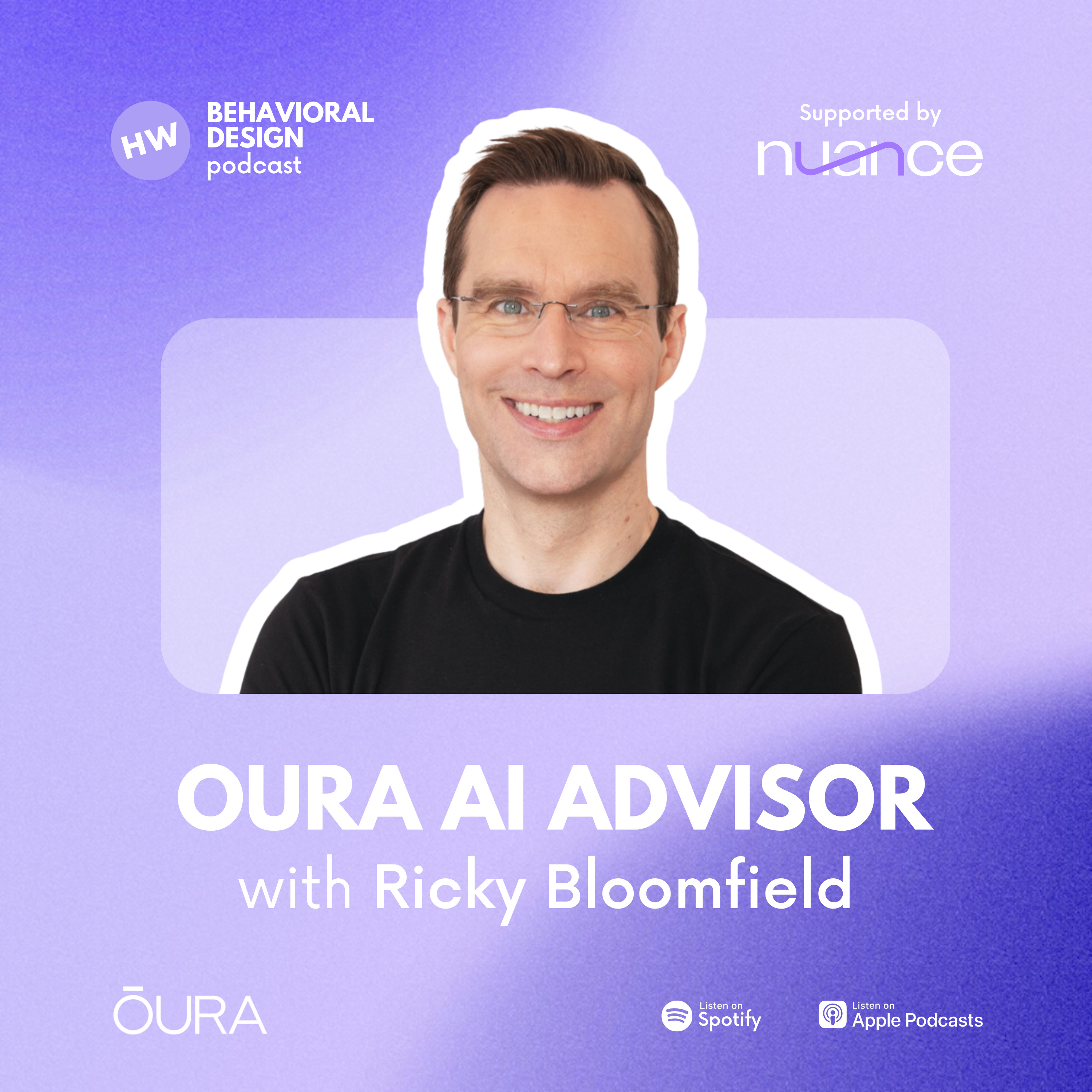
    Oura AI Advisor with Ricky Bloomfield

    Oura AI Advisor with Dr. Ricky Bloomfield In this episode of the Behavioral Design Podcast, hosts Aline and Samuel are joined by Dr. Ricky Bloomfield, Chief Medical Officer at Oura, to explore how AI is changing the way people understand, interpret, and act on their health data. Together, they examine what makes AI-powered health coaching feel different from traditional digital health tools. From conversational interfaces and biometric personalization to empathy, trust, uncertainty, and safety, Ricky shares a behind-the-scenes look at how Oura Advisor is designed to support people in making better health decisions without pretending to replace clinicians. The conversation covers: What makes a good health coach, whether human or AI Why conversational AI can feel somewhere between a tool, coach, and companion How Oura Advisor uses personal health data to make insights more relevant and actionable The importance of empathy, tone, and response length in AI health experiences Why AI systems need guardrails without becoming overly constrained The risks and benefits of personalization, memory, and agentic AI in digital health How wearable data could help uncover silent health risks like high blood pressure Why the future of health AI is less about replacing doctors and more about extending care, improving screening, and helping clinicians focus on higher-value work Ricky’s advice for product teams: optimize for speed of learning This episode is a must-listen for anyone interested in the future of AI, digital health, wearables, and behavior change. Especially those thinking about how to design AI products that are not only intelligent, but trustworthy, humane, and genuinely useful. -- Interesting in collaborating with Nuance? If you’d like to become one of our special projects, email us at hello@nuancebehavior.com or book a call directly on our website: ⁠⁠⁠⁠⁠⁠⁠⁠⁠⁠⁠⁠⁠⁠⁠nuancebehavior.com.⁠⁠⁠⁠⁠⁠⁠⁠⁠⁠⁠⁠⁠⁠⁠ Support the podcast by joining ⁠⁠⁠⁠⁠⁠⁠⁠⁠⁠⁠⁠⁠⁠⁠⁠⁠⁠⁠⁠⁠⁠⁠⁠⁠⁠⁠Habit Weekly Pro⁠⁠⁠⁠⁠⁠⁠⁠⁠⁠⁠⁠⁠⁠⁠⁠⁠⁠⁠⁠⁠⁠⁠⁠⁠⁠⁠ 🚀. Members get access to extensive content databases, calls with field leaders, exclusive offers and discounts, and so much more. Every Monday our ⁠⁠⁠⁠⁠⁠⁠⁠⁠⁠⁠⁠⁠⁠⁠⁠⁠⁠⁠Habit Weekly newsletter⁠⁠⁠⁠⁠⁠⁠⁠⁠⁠⁠⁠⁠⁠⁠⁠⁠⁠⁠ shares the best articles, videos, podcasts, and exclusive premium content from the world of behavioral science and business. Get in touch via ⁠⁠⁠⁠⁠⁠⁠⁠⁠⁠⁠⁠⁠⁠⁠⁠⁠⁠⁠⁠⁠⁠⁠⁠⁠⁠podcast@habitweekly.com⁠⁠⁠⁠⁠⁠⁠⁠⁠⁠⁠⁠⁠⁠⁠⁠⁠⁠⁠ The song used is ⁠⁠⁠⁠⁠⁠⁠⁠⁠⁠⁠⁠⁠⁠⁠⁠⁠⁠⁠⁠⁠⁠⁠⁠⁠⁠⁠Murgatroyd by David Pizarro⁠

  • S22 · E4
    Jul 31, 2025 · 47 min

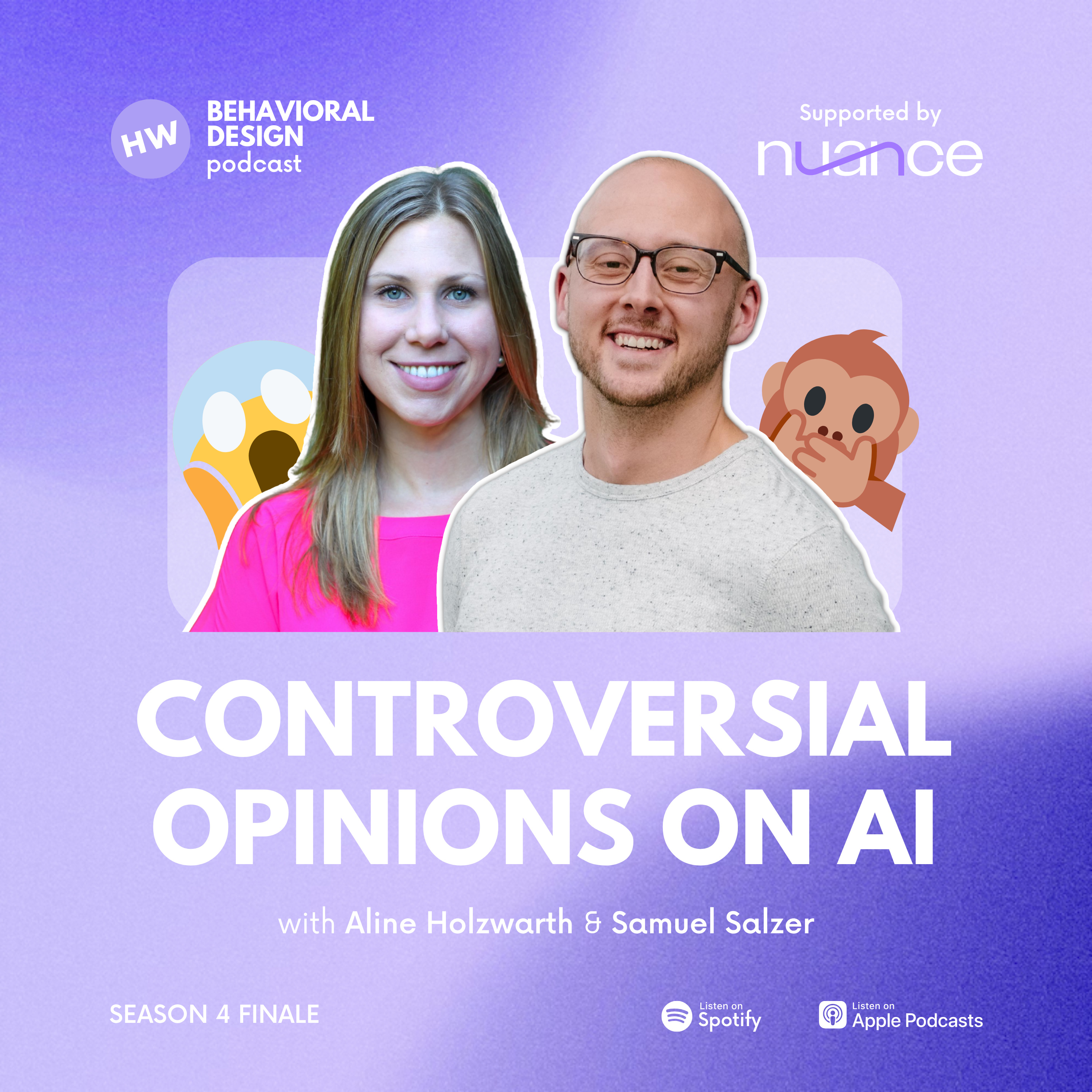
    Our Most Controversial AI Opinions – Season 4 Finale

    Season 4 Finale: Our Most Controversial AI Takes We wrap up Season 4 of the Behavioral Design Podcast with a different kind of conversation. Instead of looking outward at our guests’ insights, Aline and Samuel turn the mic on themselves, reflecting on the season, what we’ve learned, and the boldest, most controversial opinions we hold about AI. From questions about whether AI can truly emulate human qualities to fears of a future where we slowly de-skill ourselves by over-relying on machines, this episode is part reflection, part confessional. Highlights include: A look back at the season’s most surprising and provocative guest takes on AI Why AI optimism often lives closest to where experts work—and where skepticism still lingers The heated debate over AI companions: comforting helpers or human connection killers? Our personal, unfiltered takes on AI’s hidden risks, including cognitive offloading and the myth of collaboration The strange and perhaps surprisingly useful role of AI “oracles” in our own lives This is the perfect sendoff for Season 4: A candid, wide-ranging discussion about the future of AI, human behavior, and what it all means for how we live, think, and connect. -- Interesting in collaborating with Nuance? If you’d like to become one of our special projects, email us at hello@nuancebehavior.com or book a call directly on our website: ⁠⁠⁠⁠⁠⁠⁠⁠⁠⁠⁠⁠⁠⁠⁠⁠nuancebehavior.com.⁠⁠⁠⁠⁠⁠⁠⁠⁠⁠⁠⁠⁠⁠⁠⁠ Support the podcast by joining ⁠⁠⁠⁠⁠⁠⁠⁠⁠⁠⁠⁠⁠⁠⁠⁠⁠⁠⁠⁠⁠⁠⁠⁠⁠⁠⁠⁠Habit Weekly Pro⁠⁠⁠⁠⁠⁠⁠⁠⁠⁠⁠⁠⁠⁠⁠⁠⁠⁠⁠⁠⁠⁠⁠⁠⁠⁠⁠⁠ 🚀. Members get access to extensive content databases, calls with field leaders, exclusive offers and discounts, and so much more. Every Monday our ⁠⁠⁠⁠⁠⁠⁠⁠⁠⁠⁠⁠⁠⁠⁠⁠⁠⁠⁠⁠Habit Weekly newsletter⁠⁠⁠⁠⁠⁠⁠⁠⁠⁠⁠⁠⁠⁠⁠⁠⁠⁠⁠⁠ shares the best articles, videos, podcasts, and exclusive premium content from the world of behavioral science and business. Get in touch via ⁠⁠⁠⁠⁠⁠⁠⁠⁠⁠⁠⁠⁠⁠⁠⁠⁠⁠⁠⁠⁠⁠⁠⁠⁠⁠⁠podcast@habitweekly.com⁠⁠⁠⁠⁠⁠⁠⁠⁠⁠⁠⁠⁠⁠⁠⁠⁠⁠⁠⁠ The song used is ⁠⁠⁠⁠⁠⁠⁠⁠⁠⁠⁠⁠⁠⁠⁠⁠⁠⁠⁠⁠⁠⁠⁠⁠⁠⁠⁠⁠Murgatroyd by David Pizarro⁠

    • Transcript
  • S4 · E21
    Jul 9, 2025 · 46 min

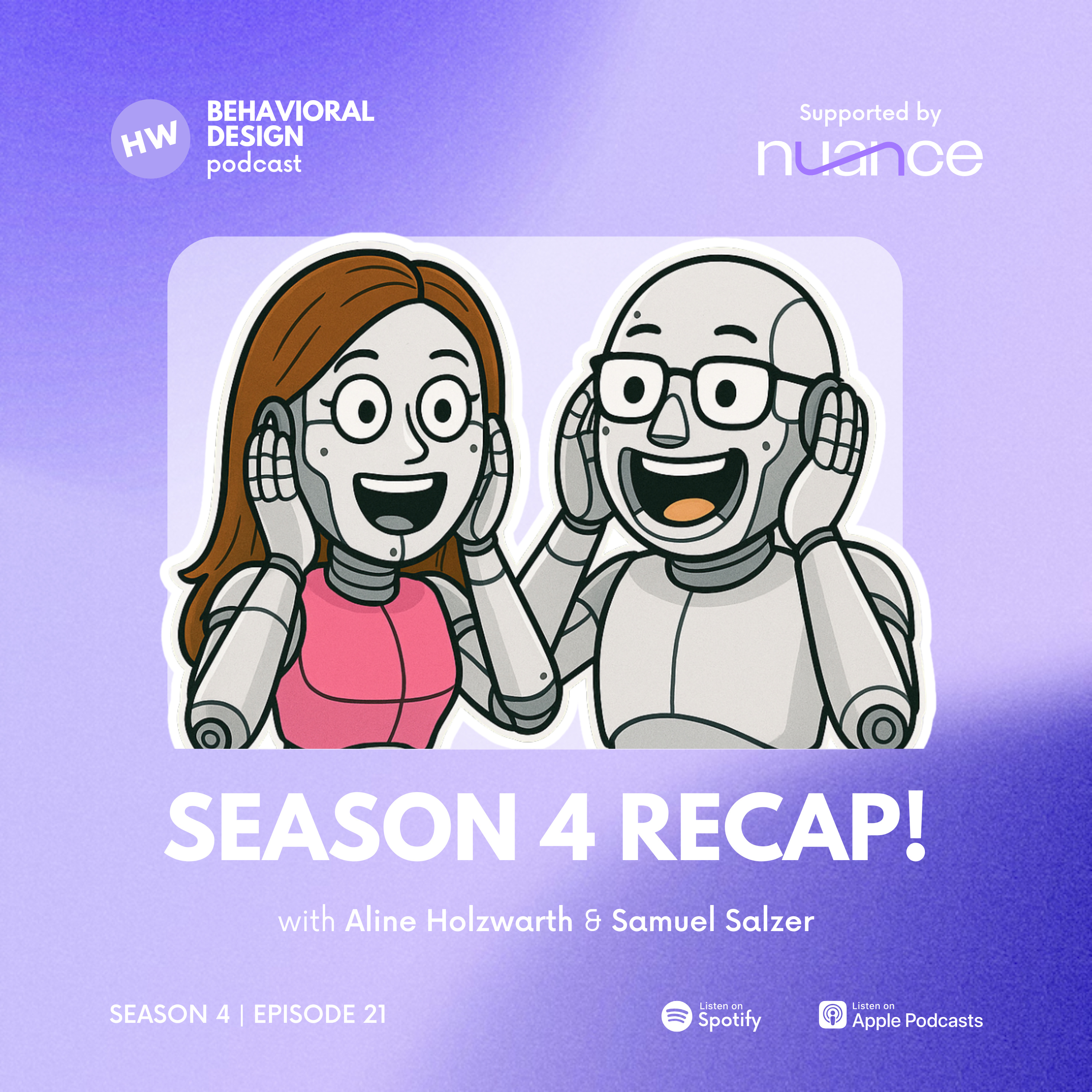
    Season 4 Recap: Meet Our AI Co-Hosts

    Season 4 Recap: Can AI Capture a Whole Season? In this special recap episode of the Behavioral Design Podcast, hosts Aline and Samuel reflect on the ambitious arc of Season 4—our deep dive into the intersection of behavioral science and artificial intelligence. From empathic chatbots to algorithmic sameness, AI co-therapists to synthetic friendships, we explored how AI is reshaping human behavior, relationships, and decision-making. But here’s the twist: the second half of this episode isn’t hosted by us. It’s AI. Using transcripts from every conversation this season, we asked our AI co-hosts to generate a narrated summary of the biggest ideas and themes that emerged across episodes. Can AI recap a whole season better than we can? Is this the beginning of our own replacement? Along the way, we revisit: How AI is changing the emotional landscape of our lives Why automation and personalization are both liberating and limiting What happens when algorithms replace—not just supplement—human judgment The ethical fault lines of psychological targeting, autonomy, and consent Whether behavioral science can keep up with the pace and power of AI If you missed any episodes or want a distilled tour of the season, this is the one to listen to. Next up: our Season Finale, featuring Aline and Samuel’s most controversial takes on AI 🍿 -- Interesting in collaborating with Nuance? If you’d like to become one of our special projects, email us at hello@nuancebehavior.com or book a call directly on our website: ⁠⁠⁠⁠⁠⁠⁠⁠⁠⁠⁠⁠⁠⁠⁠nuancebehavior.com.⁠⁠⁠⁠⁠⁠⁠⁠⁠⁠⁠⁠⁠⁠⁠ Support the podcast by joining ⁠⁠⁠⁠⁠⁠⁠⁠⁠⁠⁠⁠⁠⁠⁠⁠⁠⁠⁠⁠⁠⁠⁠⁠⁠⁠⁠Habit Weekly Pro⁠⁠⁠⁠⁠⁠⁠⁠⁠⁠⁠⁠⁠⁠⁠⁠⁠⁠⁠⁠⁠⁠⁠⁠⁠⁠⁠ 🚀. Members get access to extensive content databases, calls with field leaders, exclusive offers and discounts, and so much more. Every Monday our ⁠⁠⁠⁠⁠⁠⁠⁠⁠⁠⁠⁠⁠⁠⁠⁠⁠⁠⁠Habit Weekly newsletter⁠⁠⁠⁠⁠⁠⁠⁠⁠⁠⁠⁠⁠⁠⁠⁠⁠⁠⁠ shares the best articles, videos, podcasts, and exclusive premium content from the world of behavioral science and business. Get in touch via ⁠⁠⁠⁠⁠⁠⁠⁠⁠⁠⁠⁠⁠⁠⁠⁠⁠⁠⁠⁠⁠⁠⁠⁠⁠⁠podcast@habitweekly.com⁠⁠⁠⁠⁠⁠⁠⁠⁠⁠⁠⁠⁠⁠⁠⁠⁠⁠⁠ The song used is ⁠⁠⁠⁠⁠⁠⁠⁠⁠⁠⁠⁠⁠⁠⁠⁠⁠⁠⁠⁠⁠⁠⁠⁠⁠⁠⁠Murgatroyd by David Pizarro⁠

    • Transcript
  • S4 · E18
    Jun 11, 2025 · 1 hr 4 min

    Productivity and AI with Oliver Burkeman

    Productivity in the Age of AI with Oliver Burkeman In this episode of the Behavioral Design Podcast, hosts Aline and Samuel are joined by Oliver Burkeman, journalist and bestselling author of Four Thousand Weeks, to explore what it means to live and work meaningfully in an era of accelerating AI. Together, they examine how AI tools are reshaping our relationship with time, focus, and control—from email-writing assistants to algorithmic scheduling and optimization. Oliver shares his thoughts on how these technologies, while promising to save us time, often pull us deeper into compulsive productivity loops and distract us from the deeper questions: What are we optimizing for? And what does it mean to spend our time well? The conversation covers: The seduction of infinite optionality and why AI might make it worse Whether AI-generated outputs dull our creative instincts or free them Why doing fewer things might become even more important in the AI era The psychological cost of outsourcing decisions to machines How behavioral science can help people reclaim agency and meaning in a world of hyper-efficiency This episode is a must-listen for anyone navigating the tension between automation and intention—especially those wondering how to stay human in the loop. -- Interesting in collaborating with Nuance? If you’d like to become one of our special projects, email us at hello@nuancebehavior.com or book a call directly on our website: ⁠⁠⁠⁠⁠⁠⁠⁠⁠⁠⁠⁠⁠⁠nuancebehavior.com.⁠⁠⁠⁠⁠⁠⁠⁠⁠⁠⁠⁠⁠⁠ Support the podcast by joining ⁠⁠⁠⁠⁠⁠⁠⁠⁠⁠⁠⁠⁠⁠⁠⁠⁠⁠⁠⁠⁠⁠⁠⁠⁠⁠Habit Weekly Pro⁠⁠⁠⁠⁠⁠⁠⁠⁠⁠⁠⁠⁠⁠⁠⁠⁠⁠⁠⁠⁠⁠⁠⁠⁠⁠ 🚀. Members get access to extensive content databases, calls with field leaders, exclusive offers and discounts, and so much more. Every Monday our ⁠⁠⁠⁠⁠⁠⁠⁠⁠⁠⁠⁠⁠⁠⁠⁠⁠⁠Habit Weekly newsletter⁠⁠⁠⁠⁠⁠⁠⁠⁠⁠⁠⁠⁠⁠⁠⁠⁠⁠ shares the best articles, videos, podcasts, and exclusive premium content from the world of behavioral science and business. Get in touch via ⁠⁠⁠⁠⁠⁠⁠⁠⁠⁠⁠⁠⁠⁠⁠⁠⁠⁠⁠⁠⁠⁠⁠⁠⁠podcast@habitweekly.com⁠⁠⁠⁠⁠⁠⁠⁠⁠⁠⁠⁠⁠⁠⁠⁠⁠⁠ The song used is ⁠⁠⁠⁠⁠⁠⁠⁠⁠⁠⁠⁠⁠⁠⁠⁠⁠⁠⁠⁠⁠⁠⁠⁠⁠⁠Murgatroyd by David Pizarro⁠

    • Transcript
  • S4 · E19
    May 28, 2025 · 52 min

    AI Therapy with Alison Cerezo

    AI Co-Therapists with Alison Cerezo In this episode of the Behavioral Design Podcast, hosts Aline and Samuel talk with Dr. Alison Cerezo, a clinical psychologist, professor, and Senior Vice President of Research at Mpathic, a company developing AI tools that support therapists in delivering more empathetic and precise care. They explore the growing role of AI in mental health, from real-time feedback during therapy sessions to tools that help clinicians detect risk, stay aligned with best practices, and reduce bias. Alison describes how Mpathic works as a co-therapist—supporting rather than replacing the human element of therapy. The conversation also digs into larger questions: Can AI feel more empathetic than humans? How do we avoid over-reliance on machines for emotional support? And what does it really mean to design AI that complements rather than competes with people? This episode is a must-listen for anyone interested in the future of therapy, empathy, and AI—and what it looks like to build systems that enhance human care, not undermine it. -- Interesting in collaborating with Nuance? If you’d like to become one of our special projects, email us at hello@nuancebehavior.com or book a call directly on our website: ⁠⁠⁠⁠⁠⁠⁠⁠⁠⁠⁠⁠⁠nuancebehavior.com.⁠⁠⁠⁠⁠⁠⁠⁠⁠⁠⁠⁠⁠ Support the podcast by joining ⁠⁠⁠⁠⁠⁠⁠⁠⁠⁠⁠⁠⁠⁠⁠⁠⁠⁠⁠⁠⁠⁠⁠⁠⁠Habit Weekly Pro⁠⁠⁠⁠⁠⁠⁠⁠⁠⁠⁠⁠⁠⁠⁠⁠⁠⁠⁠⁠⁠⁠⁠⁠⁠ 🚀. Members get access to extensive content databases, calls with field leaders, exclusive offers and discounts, and so much more. Every Monday our ⁠⁠⁠⁠⁠⁠⁠⁠⁠⁠⁠⁠⁠⁠⁠⁠⁠Habit Weekly newsletter⁠⁠⁠⁠⁠⁠⁠⁠⁠⁠⁠⁠⁠⁠⁠⁠⁠ shares the best articles, videos, podcasts, and exclusive premium content from the world of behavioral science and business. Get in touch via ⁠⁠⁠⁠⁠⁠⁠⁠⁠⁠⁠⁠⁠⁠⁠⁠⁠⁠⁠⁠⁠⁠⁠⁠podcast@habitweekly.com⁠⁠⁠⁠⁠⁠⁠⁠⁠⁠⁠⁠⁠⁠⁠⁠⁠ The song used is ⁠⁠⁠⁠⁠⁠⁠⁠⁠⁠⁠⁠⁠⁠⁠⁠⁠⁠⁠⁠⁠⁠⁠⁠⁠Murgatroyd by David Pizarro⁠

    • Transcript
  • S4 · E18
    May 15, 2025 · 1 hr 3 min

    Empathy and AI with Michael Inzlicht

    Empathic Machines with Michael Inzlicht In this episode of the Behavioral Design Podcast, hosts Aline and Samuel are joined by Michael Inzlicht, professor of psychology at the University of Toronto and co-host of the podcast Two Psychologists Four Beers. Together, they explore the surprisingly effortful nature of empathy—and what happens when artificial intelligence starts doing it better than we do. Michael shares insights from his research into empathic AI, including findings that people often rate AI-generated empathy as more thoughtful, emotionally satisfying, and effortful than human responses—yet still prefer to receive empathy from a human. They unpack the paradox behind this preference, what it tells us about trust and connection, and whether relying on AI for emotional support could deskill us over time. This conversation is essential listening for anyone interested in the intersection of psychology, emotion, and emerging AI tools—especially as machines get better at sounding like they care. -- Interesting in collaborating with Nuance? If you’d like to become one of our special projects, email us at hello@nuancebehavior.com or book a call directly on our website: ⁠⁠⁠⁠⁠⁠⁠⁠⁠⁠⁠⁠nuancebehavior.com.⁠⁠⁠⁠⁠⁠⁠⁠⁠⁠⁠⁠ Support the podcast by joining ⁠⁠⁠⁠⁠⁠⁠⁠⁠⁠⁠⁠⁠⁠⁠⁠⁠⁠⁠⁠⁠⁠⁠⁠Habit Weekly Pro⁠⁠⁠⁠⁠⁠⁠⁠⁠⁠⁠⁠⁠⁠⁠⁠⁠⁠⁠⁠⁠⁠⁠⁠ 🚀. Members get access to extensive content databases, calls with field leaders, exclusive offers and discounts, and so much more. Every Monday our ⁠⁠⁠⁠⁠⁠⁠⁠⁠⁠⁠⁠⁠⁠⁠⁠Habit Weekly newsletter⁠⁠⁠⁠⁠⁠⁠⁠⁠⁠⁠⁠⁠⁠⁠⁠ shares the best articles, videos, podcasts, and exclusive premium content from the world of behavioral science and business. Get in touch via ⁠⁠⁠⁠⁠⁠⁠⁠⁠⁠⁠⁠⁠⁠⁠⁠⁠⁠⁠⁠⁠⁠⁠podcast@habitweekly.com⁠⁠⁠⁠⁠⁠⁠⁠⁠⁠⁠⁠⁠⁠⁠⁠ The song used is ⁠⁠⁠⁠⁠⁠⁠⁠⁠⁠⁠⁠⁠⁠⁠⁠⁠⁠⁠⁠⁠⁠⁠⁠Murgatroyd by David Pizarro⁠

    • Transcript
  • S4 · E17
    May 1, 2025 · 1 hr 22 min

    Building Moral AI with Jana Schaich Borg

    How Do You Build a Moral AI? with Jana Schaich Borg In this episode of the Behavioral Design Podcast, hosts Aline and Samuel are joined by Jana Schaich Borg, Associate Research Professor at Duke University and co-author of the book “Moral AI and How We Get There”. Together they explore one of the thorniest and most important questions in the AI age: How do you encode human morality into machines—and should you even try? Drawing from neuroscience, philosophy, and machine learning, Jana walks us through bottom-up and top-down approaches to moral alignment, why current models fall short, and how her team’s hybrid framework may offer a better path. Along the way, they dive into the messy nature of human values, the challenges of AI ethics in organizations, and how AI could help us become more moral—not just more efficient. This conversation blends practical tools with philosophical inquiry and leaves us with a cautiously hopeful perspective: that we can, and should, teach machines to care. —  Topics Covered: What AI alignment really means (and why it’s so hard) Bottom-up vs. top-down moral AI systems How organizations get ethical AI wrong—and what to do instead The messy reality of human values and decision making Translational ethics and the need for AI KPIs Personalizing AI to match your values When moral self-reflection becomes a design feature — Timestamps: 00:00  Intro: AI Alignment — Mission Impossible? 04:00  Why Moral AI Is So Hard (and Necessary) 07:00  The “Spec” Story & Reinforcement Gone Wrong 10:00  Anthropomorphizing AI — Helpful or Misleading? 12:00  Introducing Jana & the Moral AI Project 15:00  What “Moral AI” Really Means 18:00  Interdisciplinary Collaboration (and Friction) 21:00  Bottom-Up vs. Top-Down Approaches 27:00  Why Human Morality Is Messy 31:00  Building a Hybrid Moral AI System 41:00  Case Study: Kidney Donation Decisions 47:00  From Models to Moral Reflection 52:00  Embedding Ethics Inside Organizations 56:00  Moral Growth Mindset & Training the Workforce 01:03:00  Why Trust & Culture Matter Most 01:06:00  Comparing AI Labs: OpenAI vs. Anthropic vs. Meta 01:10:00  What We Still Don’t Know 01:11:00  Quickfire: To AI or Not To AI 01:16:00  Jana’s Most Controversial Take 01:19:00  Can AI Make Us Better Humans? — 🎧 Like this episode? Share it with a friend or leave us a review to help others discover the show. Let me know if you’d like an abridged version, pull quotes, or platform-specific text for Apple, Spotify, or LinkedIn.

    • Transcript
  • S4 · E16
    Apr 16, 2025 · 1 hr 9 min

    State of AI Risk with Peter Slattery

    Understanding AI Risks with Peter Slattery In this episode of the Behavioral Design Podcast, hosts Aline and Samuel are joined by Peter Slattery, behavioral scientist and lead researcher at MIT’s FutureTech lab, where he spearheads the groundbreaking AI Risk Repository project. Together, they dive into the complex and often overlooked risks of artificial intelligence—ranging from misinformation and malicious use to systemic failures and existential threats. Peter shares the intellectual and emotional journey behind categorizing over 1,000 documented AI risks, how his team built a risk taxonomy from 17,000+ sources, and why shared understanding and behavioral science are critical for navigating the future of AI. This one is a must-listen for anyone curious about AI safety, behavioral science, and the future of technology that’s moving faster than most of us can track. -- LINKS: Peter's LinkedIn Profile MIT FutureTech Lab: futuretech.mit.edu AI Risk Repository -- Interesting in collaborating with Nuance? If you’d like to become one of our special projects, email us at hello@nuancebehavior.com or book a call directly on our website: ⁠⁠⁠⁠⁠⁠⁠⁠⁠⁠⁠nuancebehavior.com.⁠⁠⁠⁠⁠⁠⁠⁠⁠⁠⁠ Support the podcast by joining ⁠⁠⁠⁠⁠⁠⁠⁠⁠⁠⁠⁠⁠⁠⁠⁠⁠⁠⁠⁠⁠⁠⁠Habit Weekly Pro⁠⁠⁠⁠⁠⁠⁠⁠⁠⁠⁠⁠⁠⁠⁠⁠⁠⁠⁠⁠⁠⁠⁠ 🚀. Members get access to extensive content databases, calls with field leaders, exclusive offers and discounts, and so much more. Every Monday our ⁠⁠⁠⁠⁠⁠⁠⁠⁠⁠⁠⁠⁠⁠⁠Habit Weekly newsletter⁠⁠⁠⁠⁠⁠⁠⁠⁠⁠⁠⁠⁠⁠⁠ shares the best articles, videos, podcasts, and exclusive premium content from the world of behavioral science and business. Get in touch via ⁠⁠⁠⁠⁠⁠⁠⁠⁠⁠⁠⁠⁠⁠⁠⁠⁠⁠⁠⁠⁠⁠podcast@habitweekly.com⁠⁠⁠⁠⁠⁠⁠⁠⁠⁠⁠⁠⁠⁠⁠ The song used is ⁠⁠⁠⁠⁠⁠⁠⁠⁠⁠⁠⁠⁠⁠⁠⁠⁠⁠⁠⁠⁠⁠⁠Murgatroyd by David Pizarro⁠

    • Transcript
  • S4 · E15
    Mar 20, 2025 · 48 min

    Enter the AI Lab

    Enter the AI Lab: Insights from LinkedIn Polls and AI Literature Reviews In this episode of the Behavioral Design Podcast, hosts Samuel Salzer and Aline Holzwarth explore how AI is shaping behavioral design processes—from discovery to testing. They revisit insights from past LinkedIn polls, analyzing audience perspectives on which phases of behavioral design are best suited for AI augmentation and where human expertise remains crucial. The discussion then shifts to AI-driven literature reviews, comparing the effectiveness of various AI tools for synthesizing research. Samuel and Aline assess the strengths and weaknesses of different platforms, diving into key performance metrics like quality, speed, and cost, and debating the risks of over-reliance on AI-generated research without human oversight. The episode also introduces Nuance’s AI Lab, highlighting upcoming projects focused on AI-driven behavioral science innovations. The conversation concludes with a Behavioral Redesign series case study on Peloton, offering a fresh take on how AI and behavioral insights can reshape product experiences. If you're interested in the intersection of AI, behavioral science, and research methodologies, this episode is packed with insights on where AI is excelling—and where caution is needed. LINKS: Nuance AI Lab: Website TIMESTAMPS: 00:00 Introduction and Recap of Last Year's AI Polls 06:27 AI's Strengths in Literature Review 15:12 Emerging AI Tools for Research 19:31 Evaluating AI Tools for Literature Reviews 23:57 Comparing Chinese and American AI Tools 26:01 Evaluating Literature Review Outputs 28:12 Critical Analysis and Human Oversight 35:19 The Worst Performing Model 37:21 Introducing Nuance's AI Lab 38:51 Behavioral Redesign Series: Peloton Example 45:21 Podcast Highlights and Future Guests -- Interesting in collaborating with Nuance? If you’d like to become one of our special projects, email us at hello@nuancebehavior.com or book a call directly on our website: ⁠⁠⁠⁠⁠⁠⁠⁠⁠⁠⁠nuancebehavior.com.⁠⁠⁠⁠⁠⁠⁠⁠⁠⁠⁠ Support the podcast by joining ⁠⁠⁠⁠⁠⁠⁠⁠⁠⁠⁠⁠⁠⁠⁠⁠⁠⁠⁠⁠⁠⁠⁠Habit Weekly Pro⁠⁠⁠⁠⁠⁠⁠⁠⁠⁠⁠⁠⁠⁠⁠⁠⁠⁠⁠⁠⁠⁠⁠ 🚀. Members get access to extensive content databases, calls with field leaders, exclusive offers and discounts, and so much more. Every Monday our ⁠⁠⁠⁠⁠⁠⁠⁠⁠⁠⁠⁠⁠⁠⁠Habit Weekly newsletter⁠⁠⁠⁠⁠⁠⁠⁠⁠⁠⁠⁠⁠⁠⁠ shares the best articles, videos, podcasts, and exclusive premium content from the world of behavioral science and business. Get in touch via ⁠⁠⁠⁠⁠⁠⁠⁠⁠⁠⁠⁠⁠⁠⁠⁠⁠⁠⁠⁠⁠⁠podcast@habitweekly.com⁠⁠⁠⁠⁠⁠⁠⁠⁠⁠⁠⁠⁠⁠⁠ The song used is ⁠⁠⁠⁠⁠⁠⁠⁠⁠⁠⁠⁠⁠⁠⁠⁠⁠⁠⁠⁠⁠⁠⁠Murgatroyd by David Pizarro⁠

    • Transcript
  • S4 · E14
    Mar 6, 2025 · 1 hr 6 min

    When to AI, and When Not to AI with Eric Hekler

    When to AI, and When Not to AI with Eric Hekler "People are different. Context matters. Things change." In this episode of the Behavioral Design Podcast, Aline is joined by Eric Hekler, professor at UC San Diego, to explore the nuances of AI in behavioral science and health interventions. Eric’s mantra—emphasizing the importance of individual differences, context, and change—serves as a foundation for the conversation as they discuss when AI enhances behavioral interventions and when human judgment is indispensable. The discussion explores just-in-time adaptive interventions (JITAI), the efficiency trap of AI, and the jagged frontier of AI adoption—where machine learning excels and where it falls short. Eric shares his expertise on control systems engineering, human-AI collaboration, and the real-world challenges of scaling adaptive health interventions. The episode also explores teachable moments, the importance of domain knowledge, and the need for AI to support rather than replace human decision-making. The conversation wraps up with a quickfire round, where Eric debates AI’s role in health coaching, mental health interventions, and optimizing human routines. LINKS: Eric Hekler: TIMESTAMPS: 02:01 Introduction and Correction 05:21 The Efficiency Trap of AI 08:02 Human-AI Collaboration 11:04 Conversation with Eric Hekler 14:12 Just-in-Time Adaptive Interventions 15:19 System Identification Experiment 28:27 Control Systems vs. Machine Learning 39:44 Challenges with Classical Machine Learning 43:16 Translating Research to Real-World Applications 49:49 Community-Based Research and Context Matters 59:46 Quickfire Round: To AI or Not to AI 01:08:27 Final Thoughts on AI and Human Evolution -- Interesting in collaborating with Nuance? If you’d like to become one of our special projects, email us at hello@nuancebehavior.com or book a call directly on our website: ⁠⁠⁠⁠⁠⁠⁠⁠⁠⁠nuancebehavior.com.⁠⁠⁠⁠⁠⁠⁠⁠⁠⁠ Support the podcast by joining ⁠⁠⁠⁠⁠⁠⁠⁠⁠⁠⁠⁠⁠⁠⁠⁠⁠⁠⁠⁠⁠⁠Habit Weekly Pro⁠⁠⁠⁠⁠⁠⁠⁠⁠⁠⁠⁠⁠⁠⁠⁠⁠⁠⁠⁠⁠⁠ 🚀. Members get access to extensive content databases, calls with field leaders, exclusive offers and discounts, and so much more. Every Monday our ⁠⁠⁠⁠⁠⁠⁠⁠⁠⁠⁠⁠⁠⁠Habit Weekly newsletter⁠⁠⁠⁠⁠⁠⁠⁠⁠⁠⁠⁠⁠⁠ shares the best articles, videos, podcasts, and exclusive premium content from the world of behavioral science and business. Get in touch via ⁠⁠⁠⁠⁠⁠⁠⁠⁠⁠⁠⁠⁠⁠⁠⁠⁠⁠⁠⁠⁠podcast@habitweekly.com⁠⁠⁠⁠⁠⁠⁠⁠⁠⁠⁠⁠⁠⁠ The song used is ⁠⁠⁠⁠⁠⁠⁠⁠⁠⁠⁠⁠⁠⁠⁠⁠⁠⁠⁠⁠⁠⁠Murgatroyd by David Pizarro⁠

    • Transcript
  • S4 · E13
    Feb 20, 2025 · 1 hr 6 min

    Sci-Fi and AI: Exploring Annie Bot with Sierra Greer

    Sci-Fi and AI: Exploring Annie Bot with Sierra Greer In this episode of the Behavioral Design Podcast, hosts Aline and Samuel dive into the ethical, emotional, and societal complexities of AI companionship with special guest Sierra Greer, author of Annie Bot. This thought-provoking novel explores AI-human relationships, autonomy, and the blurred line between artificial intelligence and the human experience. Sierra shares her inspiration for Annie Bot and how sci-fi can serve as a lens to explore real-world ethical dilemmas in AI development. The conversation covers the concept of reinforcement learning in AI and how it mirrors human conditioning The gender dynamics embedded in AI design, and the ethical implications of AI companions. The discussion also examines real-life cases of people forming deep emotional bonds with AI chatbots The episode rounds out with a lively quickfire round, where Sierra debates whether AI should replace lost loved ones, act as conversational assistants for introverts, or intervene in human arguments. This is a must-listen for fans of sci-fi, behavioral science, and those fascinated by the future of AI companionship and emotional intelligence. LINKS: Sierra Greer website Annie Bot – Official Book Page Goodreads Profile TIMESTAMPS: 01:43 AI Companions: A Controversial Opinion 05:48 Exploring Sci-Fi and AI in Literature 07:42 Introducing Sierra Greer and Her Book 09:12 Reinforcement Learning Explained 15:47 Diving into the World of Annie Bot 23:17 Power Dynamics and Human-Robot Relationships 32:31 Humanity and Artificial Intelligence 41:31 Autonomy vs. Agreeableness in Relationships 43:20 Reinforcement Learning in AI and Humans 46:13 Ethics and Gaslighting in AI 48:57 Gender Dynamics in AI Design 57:18 AI Companions and Human Relationships 01:06:45 Quickfire Round: To AI or Not to AI 01:12:39 Final Thoughts and Controversial Opinions -- Interesting in collaborating with Nuance? If you’d like to become one of our special projects, email us at hello@nuancebehavior.com or book a call directly on our website: ⁠⁠⁠⁠⁠⁠⁠⁠⁠nuancebehavior.com.⁠⁠⁠⁠⁠⁠⁠⁠⁠ Support the podcast by joining ⁠⁠⁠⁠⁠⁠⁠⁠⁠⁠⁠⁠⁠⁠⁠⁠⁠⁠⁠⁠⁠Habit Weekly Pro⁠⁠⁠⁠⁠⁠⁠⁠⁠⁠⁠⁠⁠⁠⁠⁠⁠⁠⁠⁠⁠ 🚀. Members get access to extensive content databases, calls with field leaders, exclusive offers and discounts, and so much more. Every Monday our ⁠⁠⁠⁠⁠⁠⁠⁠⁠⁠⁠⁠⁠Habit Weekly newsletter⁠⁠⁠⁠⁠⁠⁠⁠⁠⁠⁠⁠⁠ shares the best articles, videos, podcasts, and exclusive premium content from the world of behavioral science and business. Get in touch via ⁠⁠⁠⁠⁠⁠⁠⁠⁠⁠⁠⁠⁠⁠⁠⁠⁠⁠⁠⁠podcast@habitweekly.com⁠⁠⁠⁠⁠⁠⁠⁠⁠⁠⁠⁠⁠ The song used is ⁠⁠⁠⁠⁠⁠⁠⁠⁠⁠⁠⁠⁠⁠⁠⁠⁠⁠⁠⁠⁠Murgatroyd by David Pizarro⁠

    • Transcript
  • S4 · E12
    Feb 6, 2025 · 1 hr 11 min

    AI and Behavioral Science in Public Policy with Laura de Molière

    AI and Behavioral Science in Public Policy with Laura de Moliere In this episode of the Behavioral Design Podcast, host Samuel Salzer is joined by Laura de Moliere, a behavioral scientist with deep expertise in applying behavioral insights to public policy. As the former head of behavioral science at the UK Cabinet Office, Laura has worked at the intersection of behavioral science and policymaking during some of the most high-stakes moments in recent history, including Brexit and COVID-19. Samuel and Laura explore the evolving role of AI in behavioral science, reflecting on how AI can enhance decision-making, improve policymaking, and surface unintended consequences. Laura shares her AI “aha moment”—when she realized the potential of large language models to support policymakers in making more behaviorally informed decisions. The discussion also covers the promises and perils of AI in behavioral science, the potential of synthetic users to test interventions, and the growing challenge of balancing AI’s capabilities with human biases and policymaking needs. The episode wraps up with a playful quickfire round, where Laura debates the use of AI in everything from tax optimization to gamified urinals. This episode is a must-listen for anyone interested in the intersection of AI, behavioral science, and public policy, offering a nuanced and thought-provoking perspective on the future of AI in decision-making. LINKS: • Laura de Moliere: • LinkedIn Profile • INCASE Framework on Unintended Consequences TIMESTAMPS: 00:00 A Surprise Gift 05:38 Reflections on 2025 09:28 AI and Behavioral Science 19:29 Introducing Laura de Moliere 21:30 Start of Laura interview 33:08 Applying Behavioral Science to AI and Government 35:16 Behavioral Science and AI: Use Cases and Impacts 36:32 Understanding and Interacting with AI Models 47:43 Synthetic Users and Their Potential 01:01:08 Quickfire Round: To AI or Not to AI 01:06:35 Controversial Opinions on AI -- Interesting in collaborating with Nuance? If you’d like to become one of our special projects, email us at hello@nuancebehavior.com or book a call directly on our website: ⁠⁠⁠⁠⁠⁠⁠⁠nuancebehavior.com.⁠⁠⁠⁠⁠⁠⁠⁠ Support the podcast by joining ⁠⁠⁠⁠⁠⁠⁠⁠⁠⁠⁠⁠⁠⁠⁠⁠⁠⁠⁠⁠Habit Weekly Pro⁠⁠⁠⁠⁠⁠⁠⁠⁠⁠⁠⁠⁠⁠⁠⁠⁠⁠⁠⁠ 🚀. Members get access to extensive content databases, calls with field leaders, exclusive offers and discounts, and so much more. Every Monday our ⁠⁠⁠⁠⁠⁠⁠⁠⁠⁠⁠⁠Habit Weekly newsletter⁠⁠⁠⁠⁠⁠⁠⁠⁠⁠⁠⁠ shares the best articles, videos, podcasts, and exclusive premium content from the world of behavioral science and business. Get in touch via ⁠⁠⁠⁠⁠⁠⁠⁠⁠⁠⁠⁠⁠⁠⁠⁠⁠⁠⁠podcast@habitweekly.com⁠⁠⁠⁠⁠⁠⁠⁠⁠⁠⁠⁠ The song used is ⁠⁠⁠⁠⁠⁠⁠⁠⁠⁠⁠⁠⁠⁠⁠⁠⁠⁠⁠⁠Murgatroyd by David Pizarro⁠

    • Transcript
  • S4 · E11
    Jan 22, 2025 · 1 hr 34 min

    Predicting 2025 and Beyond with Jared Peterson

    Predictions for 2025: AI, AGI, and the Future of Behavioral Science with Jared Peterson In this episode of the Behavioral Design Podcast, host Samuel is joined by Jared Peterson, a behavioral scientist and expert in decision science at Nuance Behavior. Together, they explore some of the most pressing questions and exciting developments at the intersection of AI, behavioral science, and the future of human-centered design. The conversation highlights key advancements from 2024, including the rise of multimodal AI, breakthroughs in AI agents, and the transformative use of AI in scientific research. Samuel and Jared share bold predictions for 2025, tackling questions like: Will AI agents become trusted coworkers? Can AI revolutionize science? And how should we navigate the hype surrounding artificial general intelligence (AGI)? The discussion is packed with hot takes, nuanced perspectives, and thoughtful reflections, including Jared’s controversial prediction about the future of AI in predicting research replicability. This episode is a must-listen for anyone curious about the rapidly evolving AI landscape and its implications for behavioral science, creativity, and society at large. For questions or comments - email samuel@nuancebehavior..com LINKS: Jared's website Jared's linkedin The Science of Context A Failure to Disagree TIMESTAMPS 00:00 – Meet Jared Peterson: Behavioral Scientist and AI Expert 01:01 – Reflections on 2024: Key Breakthroughs and Predictions 03:36 – The Multimodal Evolution of AI 10:06 – AI Surpassing Human Benchmarks 21:25 – The Rise of AI Agents and Synthetic Content 35:18 – Musical Turing Test: AI vs. Eurovision 43:26 –Predictions for 2025: AI Coworkers and Beyond 44:06 – AI Coworkers: The Future of Work? 51:11 – AI in Science: Revolutionizing Research 01:05:56 – The Hype and Reality of AGI 01:10:42 – Adoption Challenges and Future Predictions 01:25:40 – Final Thoughts and Controversial Predictions -- Interesting in collaborating with Nuance? If you’d like to become one of our special projects, email us at hello@nuancebehavior.com or book a call directly on our website: ⁠⁠⁠⁠⁠⁠⁠nuancebehavior.com.⁠⁠⁠⁠⁠⁠⁠ Support the podcast by joining ⁠⁠⁠⁠⁠⁠⁠⁠⁠⁠⁠⁠⁠⁠⁠⁠⁠⁠⁠Habit Weekly Pro⁠⁠⁠⁠⁠⁠⁠⁠⁠⁠⁠⁠⁠⁠⁠⁠⁠⁠⁠ 🚀. Members get access to extensive content databases, calls with field leaders, exclusive offers and discounts, and so much more. Every Monday our ⁠⁠⁠⁠⁠⁠⁠⁠⁠⁠⁠Habit Weekly newsletter⁠⁠⁠⁠⁠⁠⁠⁠⁠⁠⁠ shares the best articles, videos, podcasts, and exclusive premium content from the world of behavioral science and business. Get in touch via ⁠⁠⁠⁠⁠⁠⁠⁠⁠⁠⁠⁠⁠⁠⁠⁠⁠⁠podcast@habitweekly.com⁠⁠⁠⁠⁠⁠⁠⁠⁠⁠⁠ The song used is ⁠⁠⁠⁠⁠⁠⁠⁠⁠⁠⁠⁠⁠⁠⁠⁠⁠⁠⁠Murgatroyd by David Pizarro⁠

    • Transcript
  • S4 · E10
    Jan 8, 2025 · 1 hr 16 min

    Psychological Targeting & AI with Sandra Matz

    Exploring Psychological Targeting and the Power of AI with Sandra Matz In this episode of the Behavioral Design Podcast, hosts Aline and Samuel sit down with Sandra Matz, leading expert on psychological targeting and Associate Professor of Business at Columbia Business School. As a computational social scientist, Sandra uses Big Data analytics and experimental methods to study human behavior, uncovering how psychological traits influence business outcomes like financial well-being, consumer satisfaction, and team performance. The conversation covers how digital footprints from social media, GPS data, and more are leveraged to create psychological profiles, shaping everything from advertisements to decision-making. Sandra provides unique insights into the controversial Cambridge Analytica case and discusses the democratization of personalized content generation through tools like ChatGPT. Whether you're curious about personality psychology, the ethics of data privacy, or the evolving role of AI, this episode is a must-listen. LINKS: Sandra Matz: Sandra's Website Her New Book: Mindmasters Relevant Research and Resources: Cambridge Analytica and the Evolution of Psychological Targeting The Social Dilemma Documentary Big Five Personality Model Explained Moral Foundations Theory Overview TIMESTAMPS: 02:03 – Personality Tests 09:23 – ChatGPT Gift Experiment 19:50 – Introducing Sandra Matz 21:35 – Understanding Psychological Targeting 24:27 – Real-World Examples and Implications 34:58 – Cambridge Analytica and Data Privacy 39:38 – The Social Dilemma and Personality Representation 41:19 – Understanding Personality Traits 43:49 – Dynamic Personality and Context 46:26 – AI's Role in Psychological Targeting 50:32 – Generative AI and Personalized Content 58:40 – Ethical Considerations and Future of AI 01:11:40 – Final Thoughts and Sandra’s New Book -- Interesting in collaborating with Nuance? If you’d like to become one of our special projects, email us at hello@nuancebehavior.com or book a call directly on our website: ⁠⁠⁠⁠⁠⁠⁠nuancebehavior.com.⁠⁠⁠⁠⁠⁠⁠ Support the podcast by joining ⁠⁠⁠⁠⁠⁠⁠⁠⁠⁠⁠⁠⁠⁠⁠⁠⁠⁠⁠Habit Weekly Pro⁠⁠⁠⁠⁠⁠⁠⁠⁠⁠⁠⁠⁠⁠⁠⁠⁠⁠⁠ 🚀. Members get access to extensive content databases, calls with field leaders, exclusive offers and discounts, and so much more. Every Monday our ⁠⁠⁠⁠⁠⁠⁠⁠⁠⁠⁠Habit Weekly newsletter⁠⁠⁠⁠⁠⁠⁠⁠⁠⁠⁠ shares the best articles, videos, podcasts, and exclusive premium content from the world of behavioral science and business. Get in touch via ⁠⁠⁠⁠⁠⁠⁠⁠⁠⁠⁠⁠⁠⁠⁠⁠⁠⁠podcast@habitweekly.com⁠⁠⁠⁠⁠⁠⁠⁠⁠⁠⁠ The song used is ⁠⁠⁠⁠⁠⁠⁠⁠⁠⁠⁠⁠⁠⁠⁠⁠⁠⁠⁠Murgatroyd by David Pizarro⁠

    • Transcript
  • S4 · E9
    Dec 11, 2024 · 31 min

    Behavior Change Score with Roos van Duijnhoven

    Behavior Change Score with Roos van Duijnhoven In this special episode of the Behavioral Design Podcast, host Samuel continues the mini-series featuring expert practitioners from the Nuance Behavior team. This week’s guest is Roos van Duijnhoven, a behavioral scientist with a deep passion for designing human-centered digital solutions that drive meaningful behavior change. Samuel and Roos explore a wide range of topics, including the Behavior Change Score Framework, strategies for improving onboarding and retention in digital health products, and the importance of focusing on real-world behavior (‘big E’ engagement) versus in-app behavior (‘little e’ engagement). They also dive into insights from Nuance Behavior’s ‘Behavior Change Score Report,’ which evaluates fitness apps and provides actionable lessons for designing more effective digital interventions. This episode offers a treasure trove of insights for anyone interested in applying behavioral science to digital product design and health interventions! LINKS: ⁠⁠Roos's LinkedIn⁠ The Behavior Change Score Report ⁠Nuance Behavior Website⁠ Engagement with Heather Cole-Lewis TIMESTAMPS 00:36 Meet Roos van Duijnhoven 01:06 Recap of Susan Murhpy episode 07:31 Insights from the Behavior Change Score Report 20:14 Big E vs. Little e Engagement: Real-World vs. In-App Behavior 26:31 Controversial Opinions: Electric Bicycles 29:32 Conclusion and Farewell -- Interesting in collaborating with Nuance? If you’d like to become one of our special projects, email us at hello@nuancebehavior.com or book a call directly on our website: ⁠⁠⁠⁠⁠⁠nuancebehavior.com.⁠⁠⁠⁠⁠⁠ Support the podcast by joining ⁠⁠⁠⁠⁠⁠⁠⁠⁠⁠⁠⁠⁠⁠⁠⁠⁠⁠Habit Weekly Pro⁠⁠⁠⁠⁠⁠⁠⁠⁠⁠⁠⁠⁠⁠⁠⁠⁠⁠ 🚀. Members get access to extensive content databases, calls with field leaders, exclusive offers and discounts, and so much more. Every Monday our ⁠⁠⁠⁠⁠⁠⁠⁠⁠⁠Habit Weekly newsletter⁠⁠⁠⁠⁠⁠⁠⁠⁠⁠ shares the best articles, videos, podcasts, and exclusive premium content from the world of behavioral science and business. Get in touch via ⁠⁠⁠⁠⁠⁠⁠⁠⁠⁠⁠⁠⁠⁠⁠⁠⁠podcast@habitweekly.com⁠⁠⁠⁠⁠⁠⁠⁠⁠⁠ The song used is ⁠⁠⁠⁠⁠⁠⁠⁠⁠⁠⁠⁠⁠⁠⁠⁠⁠⁠Murgatroyd by David Pizarro⁠

    • Transcript
  • S4 · E8
    Dec 5, 2024 · 1 hr 6 min

    Behavior Change Algorithms with Susan Murphy

    Real-Time Behavior Change Algorithms with Susan Murphy In this thought-provoking episode of the Behavioral Design Podcast, hosts Aline and Samuel explore the cutting edge of AI in behavioral science with Professor Susan Murphy, a world-renowned expert in statistics and behavioral research. The conversation dives into Susan's groundbreaking work on micro-randomized trials and just-in-time adaptive interventions (JITAI) to create personalized, real-time behavior change algorithms. Together, they explore the role of reinforcement learning in adapting interventions over time, tackling ethical challenges, and sustaining user engagement in a rapidly evolving world. This episode also includes a fun "To AI or Not to AI" quickfire round and Susan’s reflections on the "frontier" nature of behavioral science today, making this a must-listen for anyone passionate about technology, psychology, and innovation. LINKS: ⁠Susan Murphy's Faculty Page⁠ ⁠Learn more about JITAI Heart Steps Study⁠ ⁠Nuance Behavior Website TIMESTAMPS 01:00 – AI Voice Assistants in Everyday Life 07:22 – Introduction to Susan Murphy 08:06 – Micro-Randomized Trials Explained 11:08 – Just-in-Time Adaptive Interventions (JITAI) 27:19 – Reinforcement Learning and Behavioral Science 35:15 – Adaptive Algorithms for Personalized Support 40:30 – Micro-Randomization and Personalized Interventions 45:19 – Maintaining Engagement in Digital Interventions 49:51 – The Frontier Nature of Behavioral Science 51:39 – Quickfire Round: To AI or Not to AI 57:13 – Ethical Considerations in AI and Behavioral Science -- Interesting in collaborating with Nuance? If you’d like to become one of our special projects, email us at hello@nuancebehavior.com or book a call directly on our website: ⁠⁠⁠⁠⁠⁠nuancebehavior.com.⁠⁠⁠⁠⁠⁠ Support the podcast by joining ⁠⁠⁠⁠⁠⁠⁠⁠⁠⁠⁠⁠⁠⁠⁠⁠⁠⁠Habit Weekly Pro⁠⁠⁠⁠⁠⁠⁠⁠⁠⁠⁠⁠⁠⁠⁠⁠⁠⁠ 🚀. Members get access to extensive content databases, calls with field leaders, exclusive offers and discounts, and so much more. Every Monday our ⁠⁠⁠⁠⁠⁠⁠⁠⁠⁠Habit Weekly newsletter⁠⁠⁠⁠⁠⁠⁠⁠⁠⁠ shares the best articles, videos, podcasts, and exclusive premium content from the world of behavioral science and business. Get in touch via ⁠⁠⁠⁠⁠⁠⁠⁠⁠⁠⁠⁠⁠⁠⁠⁠⁠podcast@habitweekly.com⁠⁠⁠⁠⁠⁠⁠⁠⁠⁠ The song used is ⁠⁠⁠⁠⁠⁠⁠⁠⁠⁠⁠⁠⁠⁠⁠⁠⁠⁠Murgatroyd by David Pizarro⁠

    • Transcript
  • S4 · E7
    Nov 20, 2024 · 41 min

    Chatbots, Synthetic Users and AI for User Research with Hassan Aleem

    AI Chatbots and Synthetic Users with Hassan Aleem In this special episode of the Behavioral Design Podcast, host Samuel kicks off a new mini-series featuring expert practitioners from the Nuance Behavior team. This week’s guest is Hassan Aleem, a respected behavioral practitioner with a Ph.D. in neuroscience and extensive experience in industries like fintech, health wearables, and public health. Together, Samuel and Hassan explore the fascinating intersection of AI and behavioral science. They discuss AI’s impact on user research, the opportunities and challenges of AI-powered chatbots, the role of synthetic users in behavioral research, and the potential of AI to streamline literature reviews. The conversation culminates in a thought-provoking discussion: can AI truly understand and design for beauty? This episode is packed with insights on how AI can enhance behavioral science practice while emphasizing the irreplaceable value of human expertise. TIMESTAMPS 00:00 Introduction to the Behavioral Design Podcast 02:00 Meet Hassan Aleem: Neuroscientist and Behavioral Practitioner 02:37 Exploring AI in Behavioral Science 03:42 The Role of AI in User Research 10:21 Chatbots and Behavioral Design 18:50 AI in Literature Reviews and Research 34:59 Can AI Understand Beauty? 40:48 Conclusion and Final Thoughts LINKS: ⁠Hassan's LinkedIn Nuance Behavior Website -- Interesting in collaborating with Nuance? If you’d like to become one of our special projects, email us at hello@nuancebehavior.com or book a call directly on our website: ⁠⁠⁠⁠⁠nuancebehavior.com.⁠⁠⁠⁠⁠ Support the podcast by joining ⁠⁠⁠⁠⁠⁠⁠⁠⁠⁠⁠⁠⁠⁠⁠⁠⁠Habit Weekly Pro⁠⁠⁠⁠⁠⁠⁠⁠⁠⁠⁠⁠⁠⁠⁠⁠⁠ 🚀. Members get access to extensive content databases, calls with field leaders, exclusive offers and discounts, and so much more. Every Monday our ⁠⁠⁠⁠⁠⁠⁠⁠⁠Habit Weekly newsletter⁠⁠⁠⁠⁠⁠⁠⁠⁠ shares the best articles, videos, podcasts, and exclusive premium content from the world of behavioral science and business. Get in touch via ⁠⁠⁠⁠⁠⁠⁠⁠⁠⁠⁠⁠⁠⁠⁠⁠podcast@habitweekly.com⁠⁠⁠⁠⁠⁠⁠⁠⁠ The song used is ⁠⁠⁠⁠⁠⁠⁠⁠⁠⁠⁠⁠⁠⁠⁠⁠⁠Murgatroyd by David Pizarro⁠

    • Transcript
  • S4 · E6
    Nov 13, 2024 · 57 min

    Personalized AI with Amy Bucher

    Using AI to Change Human Behavior In this episode of the Behavioral Design Podcast, hosts Aline Holzwarth and Samuel Salzer explore the fascinating intersection of AI and behavioral science with Amy Bucher, Chief Behavior Officer at Lirio. Together, they dive into the challenges and opportunities of integrating AI with behavioral science for health interventions, focusing on the critical need to design AI tools with human behavior in mind. Key topics include the role of reinforcement learning and precision nudging in behavior change, the importance of grounded behavioral insights to cut through AI hype, and Amy’s experiences with personalized health interventions. Amy also sheds light on the effectiveness of digital tools in behavior change and shares her vision for the future of AI in behavioral health. Tune in for an insightful discussion on how behavioral science can shape the next generation of AI-driven health interventions! LINKS: Amy Bucher Lirio Website LinkedIn Profile Further Reading on AI and Behavioral Science: ⁠How Machine Learning and Artificial Intelligence are Used in Digital Behavior Change Interventions: A Scoping Review⁠ The Power of Large Behavior Models in Healthcare Consumer Engagement Moral Agents for Sustainable Transitions Personalized Digital Health Communications to Increase COVID-19 Vaccination in Underserved Populations: A Double Diamond Approach to Behavioral Design The Patient Experience of the Future is Personalized: Using Technology to Scale an N of 1 Approach Digital Twins and the Emerging Science of Self: Implications for Digital Health Experience Design and “Small” Data Feasibility of a Reinforcement Learning–Enabled Digital Health Intervention to Promote Mammograms Precision Nudging and Health Interventions Reinforcement Learning in Behavior Change TIMESTAMPS: 00:30 Behavioral Science and AI: A Crucial Intersection 07:44 Introducing Amy Bucher 10:43 Scoping Review on AI in Behavior Change 16:05 Challenges and Misconceptions in AI 22:07 Reinforcement Learning and AI Agents 28:40 Designing Interventions with AI and Behavioral Science 31:32 Operationalizing Behavior Change Techniques 35:25 Challenges in Measuring Engagement 42:43 The Role of Behavioral Science in AI 46:53 Quickfire Round: To AI or Not to AI 49:25 Controversial Opinions on AI 53:52 Closing Thoughts and Acknowledgements -- Interesting in collaborating with Nuance? If you’d like to become one of our special projects, email us at hello@nuancebehavior.com or book a call directly on our website: ⁠⁠⁠⁠nuancebehavior.com.⁠⁠⁠⁠ Support the podcast by joining ⁠⁠⁠⁠⁠⁠⁠⁠⁠⁠⁠⁠⁠⁠⁠⁠Habit Weekly Pro⁠⁠⁠⁠⁠⁠⁠⁠⁠⁠⁠⁠⁠⁠⁠⁠ 🚀. Members get access to extensive content databases, calls with field leaders, exclusive offers and discounts, and so much more. Every Monday our ⁠⁠⁠⁠⁠⁠⁠⁠Habit Weekly newsletter⁠⁠⁠⁠⁠⁠⁠⁠ shares the best articles, videos, podcasts, and exclusive premium content from the world of behavioral science and business. Get in touch via ⁠⁠⁠⁠⁠⁠⁠⁠⁠⁠⁠⁠⁠⁠⁠podcast@habitweekly.com⁠⁠⁠⁠⁠⁠⁠⁠ The song used is ⁠⁠⁠⁠⁠⁠⁠⁠⁠⁠⁠⁠⁠⁠⁠⁠Murgatroyd by David Pizarro⁠

    • Transcript
  • S4 · E5
    Nov 6, 2024 · 1 hr 3 min

    Misinformation Machines with Gordon Pennycook – Part 2

    Debunkbot and Other Tools Against Misinformation In this follow-up episode of the Behavioral Design Podcast, hosts Aline Holzwarth and Samuel Salzer welcome back Gordon Pennycook, psychology professor at Cornell University, to continue their deep dive into the battle against misinformation. Building on their previous conversation around misinformation’s impact on democratic participation and the role of AI in spreading and combating falsehoods, this episode focuses on actionable strategies and interventions to combat misinformation effectively. Gordon discusses evidence-based approaches, including nudges, accuracy prompts, and psychological inoculation (or prebunking) techniques, that empower individuals to better evaluate the information they encounter. The conversation highlights recent advancements in using AI to debunk conspiracy theories and examines how AI-generated evidence can influence belief systems. They also tackle the role of social media platforms in moderating content, the ethical balance between free speech and misinformation, and practical steps that can make platforms safer without stifling expression. This episode provides valuable insights for anyone interested in understanding how to counter misinformation through behavioral science and AI. LINKS: Gordon Pennycook: ⁠Google Scholar Profile⁠ ⁠Twitter⁠ ⁠Personal Website⁠ ⁠Cornell University Faculty Page⁠ Further Reading on Misinformation: Debunkbot - The AI That Reduces Belief in Conspiracy Theories Interventions Toolbox - Strategies to Combat Misinformation TIMESTAMPS: 01:27 Intro and Early Voting 06:45 Welcome back, Gordon! 07:52 Strategies to Combat Misinformation 11:10 Nudges and Behavioral Interventions 14:21 Comparing Intervention Strategies 19:08 Psychological Inoculation and Prebunking 32:21 Echo Chambers and Online Misinformation 34:13 Individual vs. Policy Interventions 36:21 If You Owned a Social Media Company 37:49 Algorithm Changes and Platform Quality 38:42 Community Notes and Fact-Checking 39:30 Reddit’s Moderation System 42:07 Generative AI and Fact-Checking 43:16 AI Debunking Conspiracy Theories 45:26 Effectiveness of AI in Changing Beliefs 51:32 Potential Misuse of AI 55:13 Final Thoughts and Reflections -- Interesting in collaborating with Nuance? If you’d like to become one of our special projects, email us at hello@nuancebehavior.com or book a call directly on our website: ⁠⁠⁠nuancebehavior.com.⁠⁠⁠ Support the podcast by joining ⁠⁠⁠⁠⁠⁠⁠⁠⁠⁠⁠⁠⁠⁠⁠Habit Weekly Pro⁠⁠⁠⁠⁠⁠⁠⁠⁠⁠⁠⁠⁠⁠⁠ 🚀. Members get access to extensive content databases, calls with field leaders, exclusive offers and discounts, and so much more. Every Monday our ⁠⁠⁠⁠⁠⁠⁠Habit Weekly newsletter⁠⁠⁠⁠⁠⁠⁠ shares the best articles, videos, podcasts, and exclusive premium content from the world of behavioral science and business. Get in touch via ⁠⁠⁠⁠⁠⁠⁠⁠⁠⁠⁠⁠⁠⁠podcast@habitweekly.com⁠⁠⁠⁠⁠⁠⁠ The song used is ⁠⁠⁠⁠⁠⁠⁠⁠⁠⁠⁠⁠⁠⁠⁠Murgatroyd by David Pizarro⁠

    • Transcript
  • S4 · E4
    Nov 4, 2024 · 53 min

    Misinformation Machines with Gordon Pennycook – Part 1

    The Role of Misinformation and AI in the US Election with Gordon Pennycook In this episode of the Behavioral Design Podcast, hosts Aline and Samuel explore the complex world of misinformation in the context of the U.S. elections with special guest Gordon Pennycook, a psychology professor at Cornell University. The episode covers the effects of misinformation on democratic participation, and how behavioral science sheds light on reasoning errors that drive belief in falsehoods. Gordon shares insights from his groundbreaking research on misinformation, exploring how falsehoods gain traction and the role AI can play in both spreading and mitigating misinformation. The conversation also tackles the evolution of misinformation, including the impact of social media and disinformation campaigns that blur the line between truth and fiction. Tune in to hear why certain falsehoods spread faster than truths, the psychological appeal of conspiracy theories, and how humor can amplify the reach of misinformation in surprising ways. LINKS: Gordon Pennycook: Google Scholar Profile Twitter Personal Website Cornell University Faculty Page Further Reading on Misinformation: Brandolini’s Law and the Spread of Falsehoods Role of AI in Misinformation The Psychology of Conspiracy Theories TIMESTAMPS: 00:00 Introduction 03:14 Behavioral Science and Misinformation 05:28 Introducing Gordon Pennycook 10:02 The Evolution of Misinformation 12:46 AI’s Role in Misinformation 14:51 Impact of Misinformation on Elections 21:43 COVID-19 and Vaccine Misinformation 26:32 Technological Advancements in Misinformation 33:50 Conspiracy Theories 35:39 Misinformation and Social Media 42:35 The Role of Humor in Misinformation 48:08 Quickfire Round: To AI or Not to AI -- Interesting in collaborating with Nuance? If you’d like to become one of our special projects, email us at hello@nuancebehavior.com or book a call directly on our website: ⁠⁠nuancebehavior.com.⁠⁠ Support the podcast by joining ⁠⁠⁠⁠⁠⁠⁠⁠⁠⁠⁠⁠⁠⁠Habit Weekly Pro⁠⁠⁠⁠⁠⁠⁠⁠⁠⁠⁠⁠⁠⁠ 🚀. Members get access to extensive content databases, calls with field leaders, exclusive offers and discounts, and so much more. Every Monday our ⁠⁠⁠⁠⁠⁠Habit Weekly newsletter⁠⁠⁠⁠⁠⁠ shares the best articles, videos, podcasts, and exclusive premium content from the world of behavioral science and business. Get in touch via ⁠⁠⁠⁠⁠⁠⁠⁠⁠⁠⁠⁠⁠podcast@habitweekly.com⁠⁠⁠⁠⁠⁠ The song used is ⁠⁠⁠⁠⁠⁠⁠⁠⁠⁠⁠⁠⁠⁠Murgatroyd by David Pizarro⁠

    • Transcript
Showing 1–20 of 20 episodes