Skip to content
Artwork for Texas Talks
GovernmentSociety & CultureNewsPolitics

Texas Talks

Texas Talks

Texas Talks with Brad Swail, brought to you by the Texas Dispatch, is a weekly podcast that features wide-ranging discussions with the people, organizations, and businesses that shape public policy in Texas. Texas Talks aims to provide listeners with a deeper understanding of the policy debates and reasons and insight into the personalities that shape public policy in Texas.

Play
  • 22 episodes
  • weekly
  • Avg 39 min
  • English
Counted on this page — what you have heard stays on this device, so it is not something the list can be paged by.
  • #121
    April 30 · 34 min

    Buffalo Bayou: Inside Houston’s Waterway Cleanup & Policy Fight

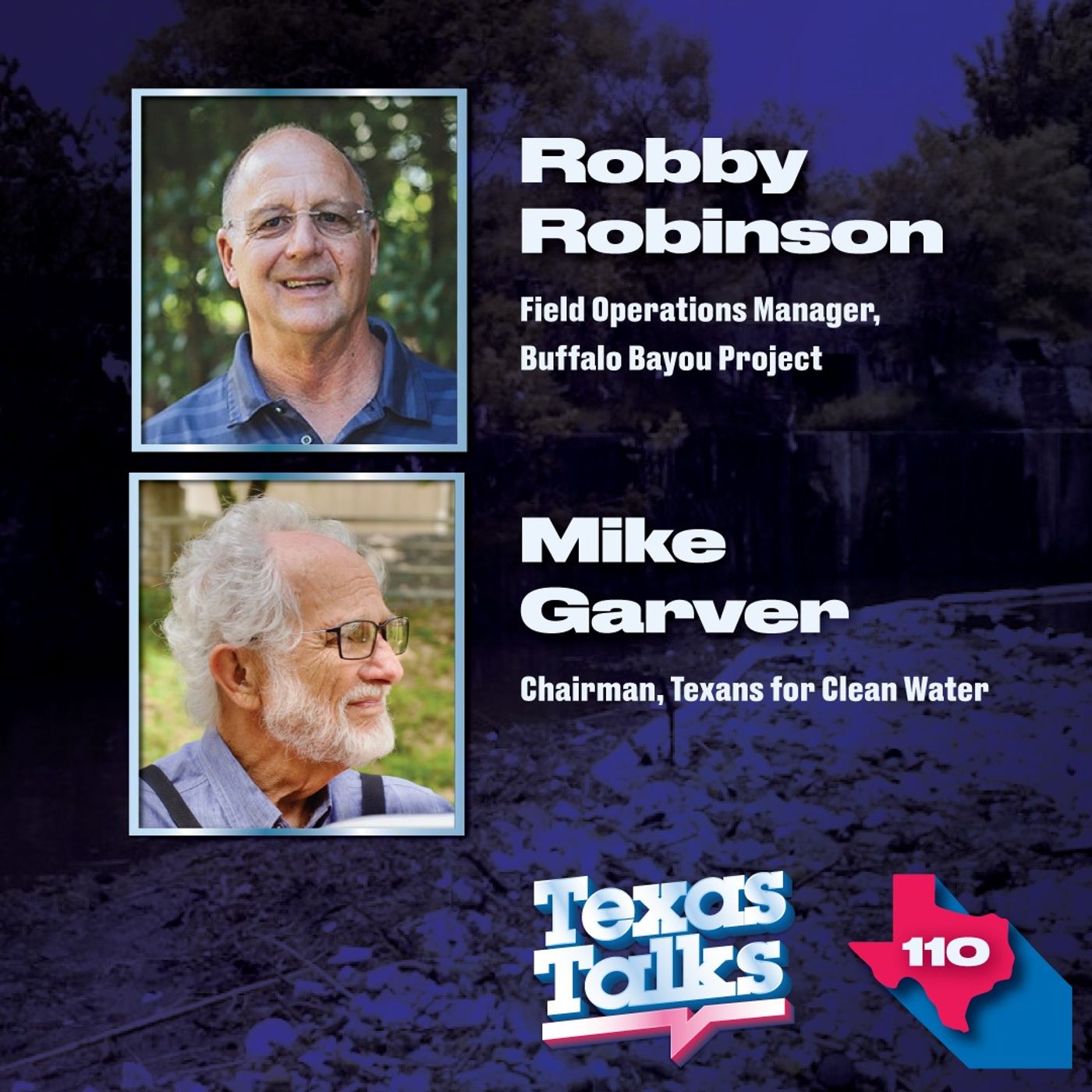
    What’s really happening in Texas waterways — and why is so much trash ending up there? In this episode of Texas Talks, host Brad Swail sits down with Robby Robinson, Field Operations Manager at the Buffalo Bayou Partnership, and Mike Garver, Chairman of Texans for Clean Water and a founding member of the Buffalo Bayou Partnership, for a firsthand look at the growing challenge of waterway pollution in Texas. Recorded in Houston after a live tour of Buffalo Bayou, the conversation explores what the team saw on the water — and why the problem is far bigger than most people realize. A major focus of the discussion is how trash actually reaches waterways. Contrary to common assumptions, most of it isn’t dumped directly into rivers or bayous — it comes from everyday litter on streets, which is carried through storm drains and funnels into the broader water system. The discussion covers: • How Buffalo Bayou has transformed since the 1980s • Where waterway trash actually comes from • How Houston’s storm drain system feeds directly into the bayou • The scale of the problem — draining over 200 square miles • The “bayou vac” system and how cleanup operations work • Why cleanup efforts only capture a fraction of total waste • How plastic pollution travels from cities to the ocean • The rise of microplastics and long-term environmental impact • Why Texas imports recyclable materials from other states • The economic demand for recycled plastic, glass, and aluminum • The limits of cleanup vs preventing pollution at the source • The case for a bottle deposit refund system in Texas • How other states (like Oregon) achieve high recycling rates • Policy barriers and the need for state-level legislation • Landfill capacity concerns and long-term waste challenges Robinson and Garver emphasize a key point: cleanup alone is not the solution. Even with daily operations, only a small percentage of total waste is removed — meaning most of it ultimately flows into the Gulf of Mexico. Instead, they argue the answer lies upstream — preventing waste from entering the system in the first place, particularly through proven policies like deposit-refund recycling programs. The episode highlights a broader takeaway: keeping Texas waterways clean isn’t just an environmental issue — it’s a matter of infrastructure, public behavior, and policy alignment. 00:00 — Intro + Buffalo Bayou tour recap 00:35 — What is the Buffalo Bayou Partnership? 01:37 — What the bayou looked like in the 1980s 02:58 — From “no man’s land” to public space 03:44 — Where all the trash comes from 05:04 — Storm drains and urban runoff explained 05:30 — Scale of the problem: 200+ square miles 06:08 — Inside the “bayou vac” cleanup system 07:03 — How much trash gets collected weekly 08:10 — What happens when trash reaches the ocean 08:50 — Microplastics and environmental impact 10:23 — Why some trash sinks and some floats 11:17 — How unique is Houston’s cleanup operation? 11:31 — Funding: public, private, and local support 12:38 — Cleanup efforts across Texas waterways 13:34 — Trash flowing downstream from across the state 14:17 — Policy discussion: bottle deposit systems 15:26 — Why Texas imports recyclable materials 16:29 — How deposit systems work in other states 17:39 — “Legislating ourselves out of a job” 18:11 — Why prevention beats cleanup 19:01 — Growth, consumption, and rising waste 20:06 — Industry pushback and policy challenges 21:18 — Economic and landfill impacts 22:53 — Landfill capacity concerns in Texas 23:39 — Why the problem is getting worse 32:12 — Final thoughts + call to action 34:02 — Where to learn more (Texans for Clean Water) Watch Full-Length Interviews: https://www.youtube.com/@TexasTalks Follow us on social media X: @Texas_Dispatch Instagram: thetexasdispatch LinkedIn: The Texas Dispatch TikTok: texas_talks_podcast Find more at The Texas Dispatch Your source for state news, policy, and investigative journalism. https://thetexasdispatch.com
  • #120
    April 28 · 44 min

    The Future of Higher Ed

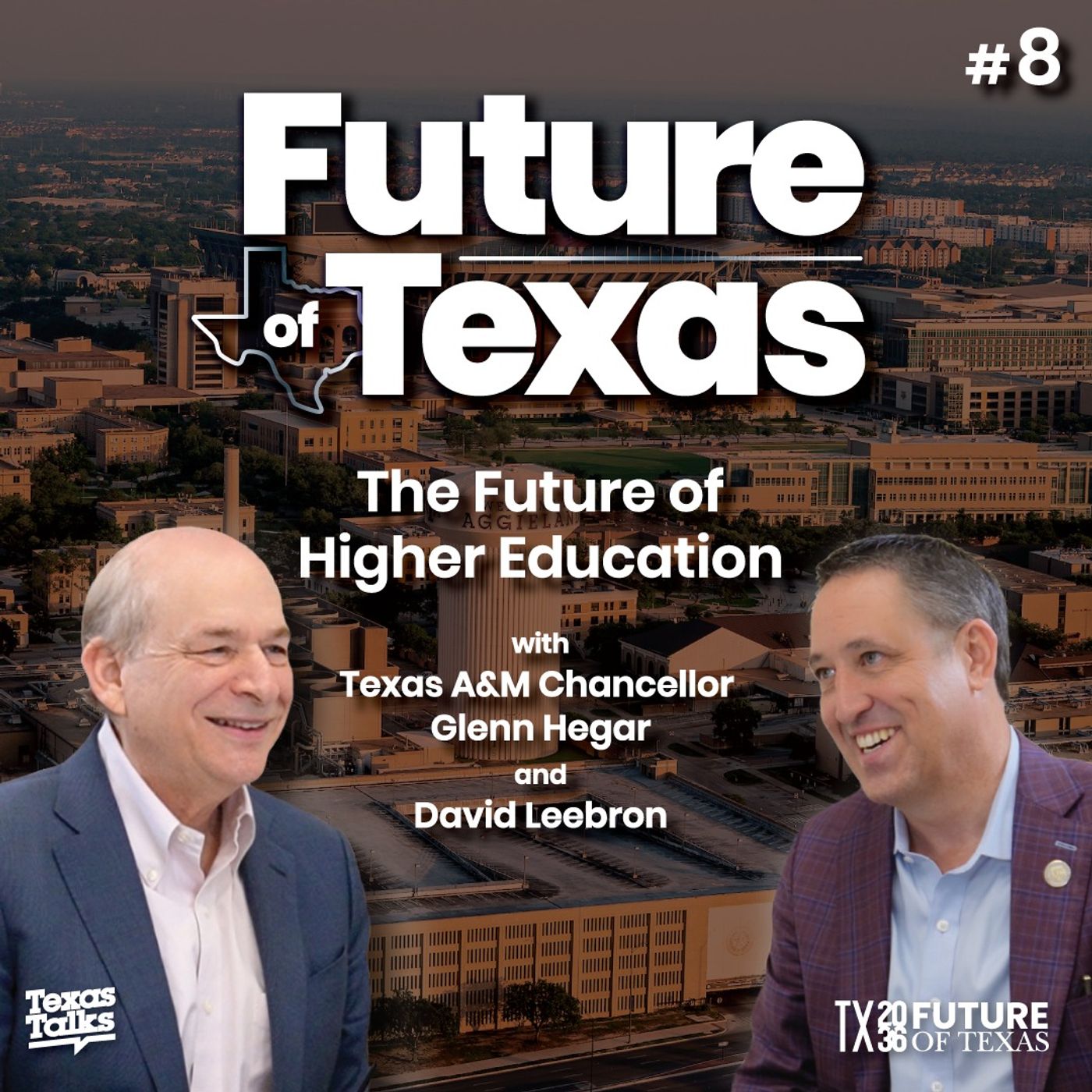
    As part of the Future of Texas series in partnership with Texas 2036, this episode explores how higher education will shape the state’s workforce, economy, and long-term competitiveness. Through the Future of Texas podcast series, Texas 2036 brings together diverse perspectives as we explore the opportunities and challenges facing our state over the next ten years. The views expressed in this program are those of the individual speakers and do not necessarily reflect the views of Texas 2036, its staff or its Board of Directors. Host Brad Swail is joined by Texas A&M Chancellor Glenn Hegar and David Leebron, President and CEO of Texas 2036 and former President of Rice University, for a comprehensive look at the future of higher education in a rapidly growing Texas. With millions more Texans expected by 2036, the conversation examines how universities are adapting to rising demand, changing workforce needs, and growing concerns about the cost and value of a college degree. A major theme is the evolving role of higher education — not just as a pathway to jobs, but as a driver of innovation, economic growth, and opportunity across the state. The discussion covers: • How Texas’ population growth is reshaping higher education demand • The gap between workforce needs and degree attainment • Why more Texans need postsecondary credentials • The role of regional universities and community colleges • Affordability challenges and pathways to lower student debt • Differences between public and private institutions • The importance of leadership, flexibility, and institutional independence • Collaboration across universities and with industry • How research drives innovation and new industries • Texas’ growing role in semiconductors and advanced manufacturing • Why space exploration is becoming a major economic opportunity • The future of nuclear energy and meeting rising power demand • The importance of K–12 readiness in long-term success • How policymakers can better align education with workforce needs The episode also highlights a key shift: universities are increasingly serving as hubs for talent development, research, and industry collaboration — all critical to maintaining Texas’ economic momentum. Looking ahead to 2036, success will be measured not just by enrollment, but by outcomes — including workforce readiness, income growth, and the ability of Texas institutions to compete globally. 00:00 — Intro + Future of Texas series overview 00:26 — Why higher education matters for Texas’ future 01:10 — Guest introductions: Glenn Hegar & David Leebron 02:14 — Texas A&M system size and statewide reach 03:19 — Growth across Texas universities 05:00 — Competing for students in a growing state 07:12 — Workforce demand vs degree attainment gap 08:51 — Expanding university missions and impact 10:18 — Growth of AI, semiconductors, and emerging industries 11:44 — Collaboration across universities and systems 13:13 — Interdisciplinary innovation and research 14:09 — Public vs private universities explained 15:55 — Leadership and institutional flexibility 17:09 — Affordability challenges in higher education 18:01 — Community colleges and alternative pathways 19:07 — Financial aid transparency and access 20:21 — Policy priorities for the next decade 21:57 — Investing in research and innovation 23:04 — K–12 pipeline and readiness challenges 24:59 — Space industry growth and Texas’ role 27:35 — Economic impact of space innovation 30:37 — Semiconductor investment and workforce pipeline 33:10 — Universities and private industry collaboration 36:14 — Nuclear energy and future power needs 38:46 — Measuring success by 2036 41:15 — Final thoughts on leadership and opportunity 43:07 — Closing Watch Full-Length Interviews: https://www.youtube.com/@TexasTalks Follow us on social media X: @Texas_Dispatch Instagram: thetexasdispatch LinkedIn: The Texas Dispatch TikTok: texas_talks_podcast Find more at The Texas Dispatch Your source for state news, policy, and investigative journalism. https://thetexasdispatch.com

Showing 21–22 of 22 episodes