Skip to content
Artwork for TED-Ed
EducationScienceTechnology

TED-Ed

TED-Ed

TED-Ed’s mission is to create lessons worth sharing. Feed and expand your curiosity with our award-winning animated shorts - published on YouTube and available with supplemental learning materials on ed.ted.com.

Want to suggest an idea for a TED-Ed animation, nominate an educator or animator? Visit our website at: http://ed.ted.com/get_involved.

Consider backing us on Patreon. By doing so, you directly support our nonprofit mission to create free, high-quality educational content: https://www.patreon.com/teded

For more information on using TED-Ed content for commercial purposes (e.g. employee learning, in a film, or in an online course), please submit a Media Request using this link: https://media-requests.ted.com/

Play
  • 1,839 episodes
  • daily
  • Avg 9 min
  • English

Episodes 1,839

Counted on this page — what you have heard stays on this device, so it is not something the list can be paged by.
  • October 10 · 7 min

    Stretching time (in writing and film) - Aaron Sitze

    View full lesson: http://ed.ted.com/lessons/slowing-down-time-in-writing-film-aaron-sitze Certain moments in our lives seem to last forever. Whether it is a first kiss or a car crash, time can can seem to stretch...or even stop. Aaron Sitze explains how this sensation is conveyed in cinema and how the same conventions can be used to slow down time in your writing. Lesson by Aaron Sitze, animation by TED-Ed. Learn more about your ad choices. Visit megaphone.fm/adchoices

  • October 10 · 6 min

    Why animals support each other - Ashley Ward

    Dig into the animal kingdom’s capacity for generosity, and find out how cooperation between animals may contribute to their survival. -- Charles Darwin introduced the notion of “survival of the fittest,” where the fittest animals are those who can survive long enough to produce healthy offspring. The fittest animal can also be the most stealthy, resourceful, or even the most cooperative. So what exactly does cooperation look like in the wild? Ashley Ward digs into the animal kingdom's capacity for generosity. Lesson by Ashley Ward, directed by Sharon Colman. Support Our Non-Profit Mission ---------------------------------------------- Support us on Patreon: http://bit.ly/TEDEdPatreon Check out our merch: http://bit.ly/TEDEDShop ---------------------------------------------- Connect With Us ---------------------------------------------- Sign up for our newsletter: http://bit.ly/TEDEdNewsletter Follow us on Facebook: http://bit.ly/TEDEdFacebook Find us on Twitter: http://bit.ly/TEDEdTwitter Peep us on Instagram: http://bit.ly/TEDEdInstagram ---------------------------------------------- Keep Learning ---------------------------------------------- View full lesson: https://ed.ted.com/lessons/why-animals-help-each-other-ashley-ward Dig deeper with additional resources: https://ed.ted.com/lessons/why-animals-help-each-other-ashley-ward/digdeeper Animator's website: https://www.sharoncolman.com Music: https://soundgoods.tv ---------------------------------------------- Thank you so much to our patrons for your support! Without you this video would not be possible! Jay M, Constantino Victor Delgado, Andrea Galvagni, Andrew Tweddle, Laurel-Ann Rice, Fernando A. Endo, Helen Lee, pam morgan, sarim haq, Gerardo Castro, Michel-Ange Hortegat, Enes Kirimi, Amaury BISIAUX, ND, Samyogita Hardikar, Vanessa Graulich, Vandana Gunwani, Abdulmohsin Almadi, AJ Lyon, Geoffrey Bultitude, Mi Mi, Thomas Rothert, Brian Elieson, Oge O, Weronika Falkowska, Nevin Spoljaric, Sid Chanpuriya, Anoop Varghese, David Yastremski, Noah Webb, Roberto Chena, Oliver Koo, Luke Pisano, Andrea Gordon, Aleksandar Donev, Nicole Klau Ibarra, Jesse Lira, Ezekiel Raui, Petr Vacek, Dennis, Olivia Fu, Kari Teffeau, Cindy Lai, Rajath Durgada Manjunath, Dan Nguyen, Chin Beng Tan, Tom Boman, Karen Warner, Iryna Panasiuk, and Aaron Torres, Learn more about your ad choices. Visit megaphone.fm/adchoices

  • October 10 · 5 min

    Do the environmental thing - Andy Hobsbawm

    View full lesson: http://ed.ted.com/lessons/do-the-green-thing-andy-hobsbawm Andy Hobsbawm shares a fresh ad campaign about going green -- and some of the fringe benefits. Talk by Andy Hobsbawm. Learn more about your ad choices. Visit megaphone.fm/adchoices

  • October 10 · 5 min

    How to set the table - Anna Post

    View full lesson: http://ed.ted.com/lessons/how-to-set-the-table-anna-post Uploaded 26-06-13 Can't remember where your soup spoon ought to go? What about your salad fork? Knowing how to set a traditional table can seem like antiquated etiquette -- but it can come in handy! Anna Post, great-great-granddaughter of etiquette expert Emily Post, shows how to set a table with a plate full of tips and tricks to boot (even your grandmother will be impressed). Lesson by Anna Post, animation by TED-Ed. Learn more about your ad choices. Visit megaphone.fm/adchoices Learn more about your ad choices. Visit megaphone.fm/adchoices

  • October 10 · 6 min

    The bug that poops candy - George Zaidan

    Download a free audiobook version of "Ingredients" and support TED-Ed's nonprofit mission: https://www.audible.com/ted-ed Uploaded 14-04-20 -- Aphids can reproduce incredibly fast: they can make 20 new generations within a single season. And that means lots of poop. Some aphid populations can produce hundreds of kilograms of poop per acre— making them some of the most prolific poopers on the planet. We know this poop as the sweet, syrupy liquid called honeydew. George Zaidan explores the wonderfully weird life of an aphid. Lesson by George Zaidan, directed by Hype CG. Support Our Non-Profit Mission ---------------------------------------------- Support us on Patreon: http://bit.ly/TEDEdPatreon Check out our merch: http://bit.ly/TEDEDShop ---------------------------------------------- Connect With Us ---------------------------------------------- Sign up for our newsletter: http://bit.ly/TEDEdNewsletter Follow us on Facebook: http://bit.ly/TEDEdFacebook Find us on Twitter: http://bit.ly/TEDEdTwitter Peep us on Instagram: http://bit.ly/TEDEdInstagram ---------------------------------------------- Keep Learning ---------------------------------------------- View full lesson: https://ed.ted.com/lessons/the-bug-that-poops-candy-george-zaidan Dig deeper with additional resources: https://ed.ted.com/lessons/the-bug-that-poops-candy-george-zaidan#digdeeper Check out our full book recommendation: https://shop.ed.ted.com/collections/ted-ed-book-recommendations/products/ingredients Animator's website: https://www.luisacopetti.com and https://www.hype.cg ---------------------------------------------- Thank you so much to our patrons for your support! Without you this video would not be possible! John Hong, Minh Tran, Helen Lee, Anthony Benedict, Turine Tran, Mathew Samuel, Karthik Balsubramanian, Lee, Livia-Alexandra Sarban, Annastasshia Ames, João Henrique Rodrigues, Sebastiaan Hols, Aries SW, SANG HAN, Amy Lopez, ReuniteKorea, Vinh-Thuy Nguyen, Liz Candee, Clovis Norroy, Danielle Downs, Nik Maier, Angel Pantoja, Nishant Suneja, 张晓雨, Srinivasa C Pasumarthi, Kathryn Vacha, Anthony Arcis, Jeffrey Segrest, Sandra Fuller Bocko, Alex Pierce, Lawrence Teh Swee Kiang, BRENDAN NEALE, Jane White, Karmi Nguyen, John C. Vesey, Yelena Baykova, Harshita Jagdish Sahijwani, Won Jang, Nick Johnson, Tariq Keblaoui, Carlos H. Costa, Eimann P. Evarola, Aleksandr Lyozin, Mohamed Elsayed, Alan Wilder, Marcus Appelbaum, Francisco Leos, Kevin O'Leary, Les Howard and Ten Cha. Learn more about your ad choices. Visit megaphone.fm/adchoices Learn more about your ad choices. Visit megaphone.fm/adchoices

  • October 10 · 21 min

    A reality check on renewables - David MacKay

    How much land mass would renewables need to power a nation like the UK? An entire country's worth. In this pragmatic talk, David MacKay tours the basic mathematics that show worrying limitations on our sustainable energy options and explains why we should pursue them anyway. (Filmed at TEDxWarwick.) Uploaded 26-06-13 Lesson by David MacKay. Learn more about your ad choices. Visit megaphone.fm/adchoices Learn more about your ad choices. Visit megaphone.fm/adchoices
  • October 10 · 7 min

    Can stereotypes ever be good? - Sheila Marie Orfano and Densho

    Explore the model minority stereotype, and discover how it became a label for Asian Americans and is used to enforce racial hierarchies. Uploaded 02-12-21 -- In 2007, researchers surveyed 180 teachers to understand if they held stereotypes about their students. The most commonly held opinion was that Asian students were significantly more industrious, intelligent, and gentle. This might seem like a good thing, but treating this stereotype as reality can cause a surprising amount of harm. Sheila Marie Orfano and Densho dig into the model minority myth. Lesson by Sheila Marie Orfano and Densho, directed by Léon Moh-Cah. Support Our Non-Profit Mission ---------------------------------------------- Support us on Patreon: http://bit.ly/TEDEdPatreon Check out our merch: http://bit.ly/TEDEDShop ---------------------------------------------- Connect With Us ---------------------------------------------- Sign up for our newsletter: http://bit.ly/TEDEdNewsletter Follow us on Facebook: http://bit.ly/TEDEdFacebook Find us on Twitter: http://bit.ly/TEDEdTwitter Peep us on Instagram: http://bit.ly/TEDEdInstagram ---------------------------------------------- Keep Learning ---------------------------------------------- View full lesson: https://ed.ted.com/lessons/can-stereotypes-ever-be-good-sheila-marie-orfano-and-densho Dig deeper with additional resources: https://ed.ted.com/lessons/can-stereotypes-ever-be-good-sheila-marie-orfano-and-densho#digdeeper Animator's website: https://leonmohcah.com Educator's website: https://densho.org ---------------------------------------------- Thank you so much to our patrons for your support! Without you this video would not be possible! Phyllis Dubrow, Ophelia Gibson Best, Paul Schneider, Joichiro Yamada, Henrique Cassús, Lyn-z Schulte, Elaine Fitzpatrick, Karthik Cherala, Clarence E. Harper Jr., Vignan Velivela, Ana Maria, Exal Enrique Cisneros Tuch, Tejas Dc, Khalifa Alhulail, Martin Stephen, Dan Paterniti, Jose Henrique Leopoldo e Silva, Elnathan Joshua Bangayan, Jayant Sahewal, Mandeep Singh, Abhijit Kiran Valluri, Kris Siverhus, Devin Harris, Pavel Zalevskiy, Karen Goepen-Wee, Brad Sullivan, Karen Ho, Filip Dabrowski, Barbara Smalley, Megan Douglas, Tim Leistikow, Ka-Hei Law, Hiroshi Uchiyama, Mark Morris, Misaki Sato, EdoKun, Boytsov Ilya, SookKwan Loong, Bev Millar, Lex Azevedo, Noa Shore, Michael Aquilina, Jason A Saslow, Dawn Jordan, Prasanth Mathialagan, Samuel Doerle, David Rosario, Dominik Kugelmann - they-them, Siamak H, Ryohky Araya, Mayank Kaul and Christophe Dessalles. Learn more about your ad choices. Visit megaphone.fm/adchoices Learn more about your ad choices. Visit megaphone.fm/adchoices

  • October 10 · 6 min

    The myth of Jason and the Argonauts - Iseult Gillespie

    Download a free audiobook version of "Circe" and support TED-Ed's nonprofit mission: https://www.audible.com/ted-ed Uploaded 27-08-19 Check out our full book recommendation: https://shop.ed.ted.com/collections/ted-ed-book-recommendations/products/circe -- Hercules, the strongest man alive with a mighty heart to match. Orpheus, charmer of nature and master of music. Castor and Pollux, the twin tricksters. The Boreads, sons of the North Wind who could hurtle through the air. Brought together by a young man’s call for help, these heroes joined forces and named themselves the Argonauts. Iseult Gillespie traces their quest to steal the Golden Fleece. Lesson by Iseult Gillespie, directed by Kozmonot Animation Studio. Sign up for our newsletter: http://bit.ly/TEDEdNewsletter Support us on Patreon: http://bit.ly/TEDEdPatreon Follow us on Facebook: http://bit.ly/TEDEdFacebook Find us on Twitter: http://bit.ly/TEDEdTwitter Peep us on Instagram: http://bit.ly/TEDEdInstagram View full lesson: https://ed.ted.com/lessons/the-myth-of-jason-and-the-argonauts-iseult-gillespie Thank you so much to our patrons for your support! Without you this video would not be possible! Leen Mshasha, Mariana Ortega, Danny Romard, James Bruening, Ricki Daniel Marbun, Malcolm Callis, Sabrina Gonzalez, Al the Scottish Wildcat, سلطان الخليفي, Alexander Walls, Della Palacios, Vik Nagjee, Hiroshi Uchiyama, Adi V, Andrew Bosco, Craig Sheldon, Rishi Pasham, Joanne Luce, Jason A Saslow, Mary Sawyer, Scott Gass, Ruth Fang, Mayank Kaul, Kathryn J Hammond, Max Shuai Tang, Terry Minion, Sami Khan, Rob Johnson, Abdullah Abdulaziz, Angelo Urzua-Milla, Tommy Lewis, leorene , Mahina Bachiller, Marcus Andre Nery, Bruce Vieira Lopes, Chef , Charmaine Hanson, Michael Goldberg, Lydia Pflieger, Paul Aldred-Bann, Manav parmar, Susan Wang, Utkarsh Dubey, Thawsitt, Xuebicoco, Jezabel, Maeve, Kim Humphrey and Kristen Damas. Learn more about your ad choices. Visit megaphone.fm/adchoices Learn more about your ad choices. Visit megaphone.fm/adchoices
  • October 10 · 6 min

    The truth about electroconvulsive therapy (ECT) - Helen M. Farrell

    Sign up for our newsletter and never miss an animation: http://bit.ly/TEDEdNewsletter Uploaded 14-01-19 View full lesson: https://ed.ted.com/lessons/the-truth-about-electroconvulsive-therapy-ect-helen-m-farrell In 1982, a young nurse was suffering from severe, unrelenting depression. She couldn’t work, socialize or concentrate. One controversial treatment changed everything: after two courses of electroconvulsive therapy (ECT) her symptoms lifted. So what exactly is electroconvulsive therapy and why is it so stigmatized? Helen M. Farrell details the history and evolution of ECT. Lesson by Helen Farrell, directed by Artrake Studio. Thank you so much to our patrons for your support! Without you this video would not be possible! Dan Paterniti, Jerome Froelich, Tyler Yoshizumi, Martin Stephen, Justin Carpani, Faiza Imtiaz, Khalifa Alhulail, Tejas Dc, Benjamin and Shannon Pinder, Srikote Naewchampa, Sage Curie, Exal Enrique Cisneros Tuch, Ana Maria, Vignan Velivela, Ahmad Hyari, eden sher, Travis Wehrman, Louisa Lee, Kiara Taylor, Аркадий Скайуокер, Milad Mostafavi, Rob Johnson, Clarence E. Harper Jr., Mihail Radu Pantilimon, Karthik Cherala, haventfiguredout , Violeta Cervantes, Elaine Fitzpatrick, Lyn-z Schulte, cnorahs , Henrique 'Sorín' Cassús, Tim Robinson, Jun Cai, Joichiro Yamada, Paul Schneider, Amber Wood, Ophelia Gibson Best, Cas Jamieson, Michelle Stevens-Stanford, Phyllis Dubrow, Andreas Voltios, Eunsun Kim, Philippe Spoden, Samantha Chow, Ayala Ron, Manognya Chakrapani, Simon Holst Ravn, Doreen Reynolds-Consolati, Rakshit Kothari and Melissa Sorrells. Learn more about your ad choices. Visit megaphone.fm/adchoices Learn more about your ad choices. Visit megaphone.fm/adchoices
  • October 10 · 6 min

    The mysterious origins of life on Earth - Luka Seamus Wright

    Where on Earth did life begin? Explore the hydrothermal vents in Earth’s crust as simple compounds gave way to complex life. Uploaded 26-08-19 -- Billions of years ago, simple organic compounds assembled into more complex coalitions that could grow and reproduce. At the time, Earth had widespread volcanic activity and a hostile atmosphere that made it almost devoid of a suitable environment for living things. So where did life begin? Luka Wright searches for the cradle of life that gave rise to the billions of species that inhabit our planet. Lesson by Luka Seamus Wright, directed by Nick Hilditch. Sign up for our newsletter: http://bit.ly/TEDEdNewsletter Support us on Patreon: http://bit.ly/TEDEdPatreon Follow us on Facebook: http://bit.ly/TEDEdFacebook Find us on Twitter: http://bit.ly/TEDEdTwitter Peep us on Instagram: http://bit.ly/TEDEdInstagram View full lesson: https://ed.ted.com/lessons/the-mysterious-origins-of-life-on-earth-luka-seamus-wright Thank you so much to our patrons for your support! Without you this video would not be possible! Marc Bilodeau, Peng, Tzu-Hsiang, paul g mohney, Maya Toll, Sebastian Regez, Bruno Hannud, Andreas Voltios, Shubham Arora, Ugur Doga Sezgin, Akinola Emmanuel, Kyanta Yap, Ricardo Rendon Cepeda, Ana Maria, Benjamin and Shannon Pinder, Ernest Chow, Bela Namyslik, Alan Froese, Anika Westburg, Nick Cozby, Shawar Khan, Michael Braun-Boghos, Rohan Gupta, Elizabeth Cruz, Yujing Jiang, Sarah Lundegaard, Vladimir Ivanchenko, Georg Gusewski, Rohit Lodha, Erica Zhuang, Aaron Henson, Julio Sabatés Rodríguez, Vivian and Gilbert Lee, Fahad Nasser Chowdhury, ரமணன், John simmons, June Reiling, Khalid AlAli, Mickey Mikeworth, Nathaniel Lupus, Yansong Li, Chung Wah Gnapp, Amber Alexander, Robert Patrick, Pi Guanghui, Barbara Younker, Ai Ejima, Soma Ali, Roman Pinchuk, Raheem and Hector Quintanilla. Learn more about your ad choices. Visit megaphone.fm/adchoices Learn more about your ad choices. Visit megaphone.fm/adchoices

  • October 10 · 9 min

    The monkey's paw curse - Iseult Gillespie

    Dig into W.W. Jacobs’ horror story, “The Monkey’s Paw,” about an artifact that grants wishes — with great consequences. -- Sergeant-Major Morris regaled his friends with epic tales from faraway lands— until one asked about an artifact the Sergeant had alluded to. Slowly, he produced the object: a mummified monkey’s paw. He explained that a holy man had imbued the paw with the power to grant three wishes to three men. But each wish comes with chilling consequences. Iseult Gillespie shares the tale of the monkey’s paw. Lesson by Iseult Gillespie, directed by Kayu Leung. Support Our Non-Profit Mission ---------------------------------------------- Support us on Patreon: http://bit.ly/TEDEdPatreon Check out our merch: http://bit.ly/TEDEDShop ---------------------------------------------- Connect With Us ---------------------------------------------- Sign up for our newsletter: http://bit.ly/TEDEdNewsletter Follow us on Facebook: http://bit.ly/TEDEdFacebook Find us on Twitter: http://bit.ly/TEDEdTwitter Peep us on Instagram: http://bit.ly/TEDEdInstagram ---------------------------------------------- Keep Learning ---------------------------------------------- View full lesson: https://ed.ted.com/lessons/the-curse-of-the-monkeys-paw-iseult-gillespie Dig deeper with additional resources: https://ed.ted.com/lessons/the-curse-of-the-monkeys-paw-iseult-gillespie/digdeeper Animator's website: https://linktr.ee/kayu.caillou.leung Music: https://linktr.ee/redstems Sound design: https://soundgoods.tv ---------------------------------------------- Thank you so much to our patrons for your support! Without you this video would not be possible! Igor Stavchanskiy, James R DeVries, Grace Huo, Diana Huang, Chau Hong Diem, Orlellys Torre, Corheu, Thomas Mee, Maryann H McCrory, Blas Borde, John Hellmann, Poompak Meephian, Chuck Wofford, Adam Pagan, Wes Winn, Conder Shou, ntiger, Noname, Hansan Hu, David D, Mac Hyney, Keith Ellison, robin valero walters, Lynne Truesdale, Gatsby Dkdc, Matthew Neal, Denis Chon, Julian Oberhofer, Monte Carroll, Eddy, Jay M, Constantino Victor Delgado, Andrea Galvagni, Andrew Tweddle, Laurel-Ann Rice, Fernando A. Endo, Helen Lee, pam morgan, sarim haq, Gerardo Castro, Michel-Ange Hortegat, Enes Kirimi, Amaury BISIAUX, ND, Samyogita Hardikar, Vanessa Graulich, Vandana Gunwani, Abdulmohsin Almadi, AJ Lyon and Geoffrey Bultitude. Learn more about your ad choices. Visit megaphone.fm/adchoices

  • October 10 · 7 min

    Why is the Mona Lisa so famous? - Noah Charney

    Discover what factors helped Leonardo da Vinci’s “Mona Lisa” become the world’s most famous painting. Uploaded 04-01-22 -- More than 500 years after its creation, Leonardo da Vinci’s “Mona Lisa” is arguably the world’s most famous painting. Many scholars consider it an outstanding work of Renaissance art— but history is full of great paintings. So, how did this particular portrait skyrocket to unprecedented fame? Noah Charney explores the factors that helped create a worldwide sensation. Lesson by Noah Charney, directed by Avi Ofer. Support Our Non-Profit Mission ---------------------------------------------- Support us on Patreon: http://bit.ly/TEDEdPatreon Check out our merch: http://bit.ly/TEDEDShop ---------------------------------------------- Connect With Us ---------------------------------------------- Sign up for our newsletter: http://bit.ly/TEDEdNewsletter Follow us on Facebook: http://bit.ly/TEDEdFacebook Find us on Twitter: http://bit.ly/TEDEdTwitter Peep us on Instagram: http://bit.ly/TEDEdInstagram ---------------------------------------------- Keep Learning ---------------------------------------------- View full lesson: https://ed.ted.com/lessons/why-is-the-mona-lisa-so-famous-noah-charney Dig deeper with additional resources: https://ed.ted.com/lessons/why-is-the-mona-lisa-so-famous-noah-charney#digdeeper Animator's website: https://aviofer.com ---------------------------------------------- Thank you so much to our patrons for your support! Without you this video would not be possible! Marin Kovachev, Fahad Nasser Chowdhury, Penelope Misquitta, Hans Peng, Gaurav Mathur, Erik Biemans, Tony, Michelle, Katie and Josh Pedretti, Sunny Patel, Hoai Nam Tran, Stina Boberg, Kack-Kyun Kim, Michael Braun-Boghos, zjweele13, Jurjen Geleijn, Anna-Pitschna Kunz, Edla Paniguel, Thomas Mungavan, Jaron Blackburn, Venkat Venkatakrishnan, ReuniteKorea, Aaron Henson, Rohan Gupta, Begum Tutuncu, Mikhail Shkirev, Brian Richards, Brad Sullivan, Cindy O., Jørgen Østerpart, Tyron Jung, Carolyn Corwin, Carsten Tobehn, Katie Dean, Ezgi Yersu, Gerald Onyango, alessandra tasso, Côme Vincent, Doreen Reynolds-Consolati, Manognya Chakrapani, Ayala Ron, Samantha Chow, Eunsun Kim, Phyllis Dubrow, Karen Ho, Ophelia Gibson Best, Paul Schneider, Joichiro Yamada, Henrique Cassús, Lyn-z Schulte, Elaine Fitzpatrick, Karthik Cherala, Clarence E. Harper Jr. and Vignan Velivela. Learn more about your ad choices. Visit megaphone.fm/adchoices Learn more about your ad choices. Visit megaphone.fm/adchoices
  • October 10 · 6 min

    Vermicomposting: How worms can reduce our waste - Matthew Ross

    View full lesson: http://ed.ted.com/lessons/vermicomposting-how-worms-can-reduce-our-waste-matthew-ross Uploaded 26-06-13 Nearly one third of our food ends up in the trash can. There is hope, however, in the form of worms, which naturally convert organic waste into fertilizer. Matthew Ross details the steps we can all take to vermicompost at home -- and why it makes good business sense to do so. Lesson by Matthew Ross, animation by Cinematic Sweden. Learn more about your ad choices. Visit megaphone.fm/adchoices Learn more about your ad choices. Visit megaphone.fm/adchoices

  • October 10 · 18 min

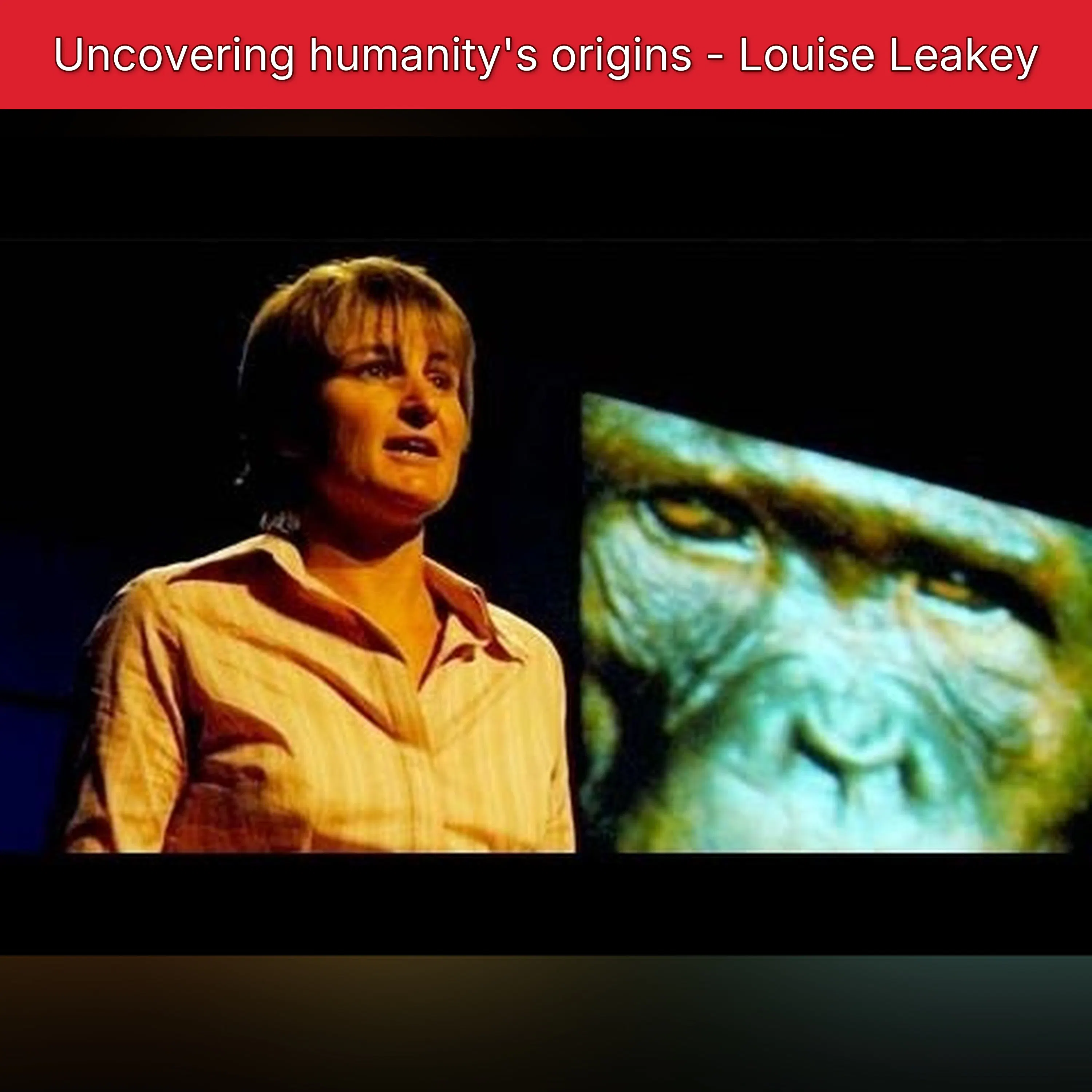
    Uncovering humanity's origins - Louise Leakey

    View full lesson: http://ed.ted.com/lessons/digging-for-humanity-s-origins-louise-leakey Louise Leakey asks, "Who are we?" The question takes her to the Rift Valley in Eastern Africa, where she digs for the evolutionary origins of humankind -- and suggests a stunning new vision of our competing ancestors. Talk by Louise Leakey Learn more about your ad choices. Visit megaphone.fm/adchoices

  • October 10 · 7 min

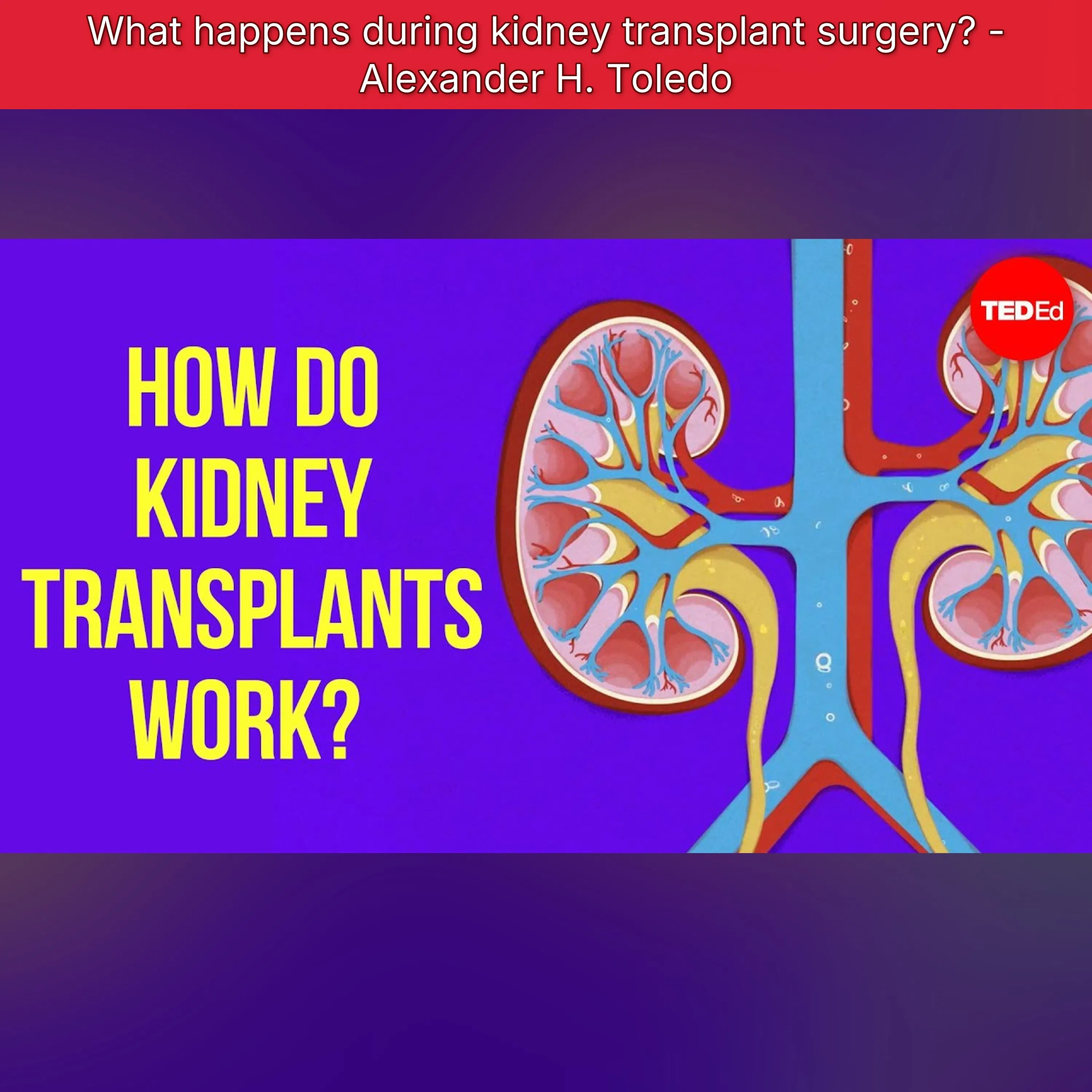
    What happens during kidney transplant surgery? - Alexander H. Toledo

    Dig into the science of how kidney transplants work, how donors are matched and find out how this surgery saves lives. -- In 1954, Joseph Murray attempted a type of kidney swap that no doctor had tried before. The surgery was a success, and the patient would go on to live with the transplanted organ thanks to one key factor: it came from his identical twin. 70 years later, nearly 100,000 kidneys are transplanted annually in the US alone. So how does this surgery work today? Alexander H. Toledo explains the procedure. Lesson by Alexander H. Toledo, directed by Biljana Labović. Support Our Non-Profit Mission ---------------------------------------------- Support us on Patreon: http://bit.ly/TEDEdPatreon Check out our merch: http://bit.ly/TEDEDShop ---------------------------------------------- Connect With Us ---------------------------------------------- Sign up for our newsletter: http://bit.ly/TEDEdNewsletter Follow us on Facebook: http://bit.ly/TEDEdFacebook Find us on Twitter: http://bit.ly/TEDEdTwitter Peep us on Instagram: http://bit.ly/TEDEdInstagram ---------------------------------------------- Keep Learning ---------------------------------------------- View full lesson: https://ed.ted.com/lessons/how-do-kidney-transplants-work-alexander-h-toledo Dig deeper with additional resources: https://ed.ted.com/lessons/how-do-kidney-transplants-work-alexander-h-toledo/digdeeper ---------------------------------------------- Thank you so much to our patrons for your support! Without you this video would not be possible! Heidi Stolt, Nicole Sund, Karlee Finch, Mario Mejia, Denise A Pitts, Doug Henry, Keven Webb, Mihai Sandu, Deepak Iyer, Javid Gozalov, Kyanta Yap, Rebecca Reineke, William Biersdorf, Patricia Alves Panagides, Yvette Mocete, Cyrus Garay, Samuel Barbas, LadyGeek, Marin Kovachev, Penelope Misquitta, Hans Peng, Gaurav Mathur, Erik Biemans, Tony, Michelle, Katie and Josh Pedretti, Hoai Nam Tran, Kack-Kyun Kim, Michael Braun-Boghos, zjweele13, Anna-Pitschna Kunz, Edla Paniguel, Thomas Mungavan, Jaron Blackburn, Venkat Venkatakrishnan, ReuniteKorea, Aaron Henson, Rohan Gupta, Begum Tutuncu, Brian Richards, Jørgen Østerpart, Tyron Jung, Carsten Tobehn, Katie Dean, Ezgi Yersu, Gerald Onyango, alessandra tasso, Doreen Reynolds-Consolati, Manognya Chakrapani, Ayala Ron, Eunsun Kim and Phyllis Dubrow. Learn more about your ad choices. Visit megaphone.fm/adchoices

  • October 10 · 6 min

    What’s the point(e) of ballet? - Ming Luke

    How does ballet convey narrative, emotion, and character? Dive into “The Sleeping Beauty” to see how a ballet creates its essential elements. Uploaded 20-04-20 -- A baby cursed at birth. A fierce battle of good and evil. A true love awoken with a kiss. Since premiering in 1890, “The Sleeping Beauty” has become one of the most frequently staged ballets in history. So what makes this piece so beloved? And what exactly does ballet bring to this— or any other— story? Ming Luke shares what makes ballet the perfect medium for stories old and new. Lesson by Ming Luke, directed by Visorama. Animator's website: http://www.visorama.tv/ Sign up for our newsletter: http://bit.ly/TEDEdNewsletter Support us on Patreon: http://bit.ly/TEDEdPatreon Follow us on Facebook: http://bit.ly/TEDEdFacebook Find us on Twitter: http://bit.ly/TEDEdTwitter Peep us on Instagram: http://bit.ly/TEDEdInstagram View full lesson: https://ed.ted.com/lessons/what-s-the-point-e-of-ballet-ming-luke Thank you so much to our patrons for your support! Without you this video would not be possible! Mehmet Yusuf Ertekin, Arlene Weston, phkphk123321, Jennifer Kurkoski, Ryan B Harvey, Austin Randall, Abhishek Bansal, Jayant Sahewal, Dian Atamyanov, igor romanenko, Jose Arcadio Valdes Franco, Brandy Sarver, Guy Hardy, Tu-Anh Nguyen, Karl Laius, Madee Lo, JY Kang, Marc Bou Zeid, Abhishek Goel, Charles A Hershberger, Coenraad Keuning, Robert Seik, Heidi Stolt, Alexis Hevia, Todd Gross, Brady Jones, Christina Salvatore, Zhong Ming Zenny Tan, Karisa Caudill, Bruno Pinho, Derek Drescher, Mihail Radu Pantilimon, Amin Shahril, Mohamed Elsayed, Barthélémy Michalon, Chumi Ogbonna, Karlee Finch, Mohammad Said, jj5252, Kelvin Lam, Mauricio Basso, Athena Grace Franco, Tirath Singh Pandher, Melvin Williams, Tsz Hin Edmund Chan, Nicolas Silva, Raymond Lee, Kurt Almendras, Denise A Pitts and Abdallah Absi. Learn more about your ad choices. Visit megaphone.fm/adchoices Learn more about your ad choices. Visit megaphone.fm/adchoices

  • October 10 · 6 min

    You can only save one— who do you choose? - Doug MacKay

    Puzzle through the ethical dilemma where two ships are in distress but you can only save one, and decide: which do you choose? Uploaded 21-12-21 -- You are the captain of an interstellar cargo transport headed to port when you receive two distress calls. The first is from a labor ship, whose passengers are running out of oxygen. The other from a luxury space cruiser which has lost a thruster, sending them careening into danger. With only enough time to save one ship, which should you choose? Doug Mackay explores this classic ethical dilemma. Lesson by Doug Mackay, directed by Avi Ofer. This video was produced in collaboration with the Parr Center for Ethics, housed within the renowned Philosophy Department at the University of North Carolina at Chapel Hill. The Parr Center is committed to integrating abstract work in ethical theory with the informed discussion of practical ethical issues, and prides itself on the development of innovative and inclusive approaches to moral and civic education. Support Our Non-Profit Mission ---------------------------------------------- Support us on Patreon: http://bit.ly/TEDEdPatreon Check out our merch: http://bit.ly/TEDEDShop ---------------------------------------------- Connect With Us ---------------------------------------------- Sign up for our newsletter: http://bit.ly/TEDEdNewsletter Follow us on Facebook: http://bit.ly/TEDEdFacebook Find us on Twitter: http://bit.ly/TEDEdTwitter Peep us on Instagram: http://bit.ly/TEDEdInstagram ---------------------------------------------- Keep Learning ---------------------------------------------- View full lesson: https://ed.ted.com/lessons/you-can-only-save-one-who-do-you-choose-doug-mackay Dig deeper with additional resources: https://ed.ted.com/lessons/you-can-only-save-one-who-do-you-choose-doug-mackay#digdeeper Animator's website: https://aviofer.com ---------------------------------------------- Thank you so much to our patrons for your support! Without you this video would not be possible! Ezgi Yersu, Gerald Onyango, alessandra tasso, Côme Vincent, Doreen Reynolds-Consolati, Manognya Chakrapani, Ayala Ron, Samantha Chow, Eunsun Kim, Phyllis Dubrow, Ophelia Gibson Best, Paul Schneider, Joichiro Yamada, Henrique Cassús, Lyn-z Schulte, Elaine Fitzpatrick, Karthik Cherala, Clarence E. Harper Jr., Clarissa Bartolini-Toro, Vignan Velivela, Ana Maria, Exal Enrique Cisneros Tuch, Tejas Dc, Khalifa Alhulail, Martin Stephen, Dan Paterniti, Jose Henrique Leopoldo e Silva, Elnathan Joshua Bangayan, Jayant Sahewal, Mandeep Singh, Abhijit Kiran Valluri, Morgan Williams, Kris Siverhus, Devin Harris, Pavel Zalevskiy, Karen Goepen-Wee, Filip Dabrowski, Barbara Smalley, Megan Douglas, Tim Leistikow, Maya Toll, Ka-Hei Law, Hiroshi Uchiyama, Mark Morris, Misaki Sato, EdoKun, Boytsov Ilya, SookKwan Loong, Bev Millar and Lex Azevedo. Learn more about your ad choices. Visit megaphone.fm/adchoices Learn more about your ad choices. Visit megaphone.fm/adchoices

  • October 10 · 5 min

    What if we could observe inside human brains? - Moran Cerf

    View full lesson: http://ed.ted.com/lessons/what-if-we-could-look-inside-human-brains-moran-cerf The brain is what makes us function, yet we understand so little about how it works. We are learning more about the brain by using new technology to monitor epilepsy patients during surgery. Moran Cerf explains the process doctors use to explore the brain further. Lesson by Moran Cerf, animation by Buzzco Associates, inc. Learn more about your ad choices. Visit megaphone.fm/adchoices

  • October 10 · 19 min

    The "bottom billion" - Paul Collier

    View full lesson: http://ed.ted.com/lessons/the-bottom-billion-paul-collier Uploaded 16-01-13 Around the world right now, one billion people are trapped in poor or failing countries. How can we help them? Economist Paul Collier lays out a bold, compassionate plan for closing the gap between rich and poor. Talk by Paul Collier. Learn more about your ad choices. Visit megaphone.fm/adchoices Learn more about your ad choices. Visit megaphone.fm/adchoices
  • October 10 · 7 min

    Can you answer the trickster god riddle? - Alex Rosenthal

    Loki has challenged you to a winner-take-all game to end Ragnarok. Can you beat him and win the right to rule the new world? -- Ragnarok has been raging for far too long; many gods and heroes have fallen, and the rest can barely stand. Loki, his bright eyes dimmed by exhaustion, asks to meet. He proposes that you and he settle the conflict with a game atop a sacred table engraved with your names. Can you beat the infamous trickster and win the right to rule the new world? Alex Rosenthal shows how. Lesson by Alex Rosenthal, directed by Igor Ćorić, Artrake Studio. Support Our Non-Profit Mission ---------------------------------------------- Support us on Patreon: http://bit.ly/TEDEdPatreon Check out our merch: http://bit.ly/TEDEDShop ---------------------------------------------- Connect With Us ---------------------------------------------- Sign up for our newsletter: http://bit.ly/TEDEdNewsletter Follow us on Facebook: http://bit.ly/TEDEdFacebook Find us on Twitter: http://bit.ly/TEDEdTwitter Peep us on Instagram: http://bit.ly/TEDEdInstagram ---------------------------------------------- Keep Learning ---------------------------------------------- View full lesson: https://ed.ted.com/lessons/can-you-solve-the-trickster-god-riddle-alex-rosenthal Dig deeper with additional resources: https://ed.ted.com/lessons/can-you-solve-the-trickster-god-riddle-alex-rosenthal/digdeeper Animator's website: https://www.artrake.com ---------------------------------------------- Thank you so much to our patrons for your support! Without you this video would not be possible! Sydney Evans, Latora, Noel Situ, emily lam, Sid, Niccolò Frassetto, Mana, I'm here because of Knowledge Fight Facebook group., Linda Freedman, Edgardo Cuellar, Jaspar Carmichael-Jack, Michael Burton, VIVIANA A GARCIA BESNE, The Vernon's, Olha Bahatiuk, Jesús Bíquez Talayero, Chels Raknrl, Sai Pranavi Jonnalagadda, Stuart Rice, Jing Chen, Vector-Dopamine math, Jasper Song, Giorgio Bugnatelli, Chardon, Eddy Trochez, OnlineBookClub.org, Eric Shear, Leith Salem, Omar Hicham, Adrian Rotaru, Brad Sullivan, Karen Ho, Niklas Frimberger, Hunter Manhart, Nathan Nguyen, Igor Stavchanskiy, James R DeVries, Grace Huo, Diana Huang, Chau Hong Diem, Orlellys Torre, Corheu, Thomas Mee, Maryann H McCrory, Blas Borde, John Hellmann, Poompak Meephian, Chuck Wofford, Adam Pagan and Wes Winn. Learn more about your ad choices. Visit megaphone.fm/adchoices

Showing 1,041–1,060 of 1,839 episodes