
August 16 · 23 min

TED-Ed
TED-Ed’s mission is to create lessons worth sharing. Feed and expand your curiosity with our award-winning animated shorts - published on YouTube and available with supplemental learning materials on ed.ted.com.
Want to suggest an idea for a TED-Ed animation, nominate an educator or animator? Visit our website at: http://ed.ted.com/get_involved.
Consider backing us on Patreon. By doing so, you directly support our nonprofit mission to create free, high-quality educational content: https://www.patreon.com/teded
For more information on using TED-Ed content for commercial purposes (e.g. employee learning, in a film, or in an online course), please submit a Media Request using this link: https://media-requests.ted.com/

We feel instinctively that societies with huge income gaps are somehow going wrong. Richard Wilkinson charts the hard data on economic inequality, and shows what gets worse when rich and poor are too far apart: real effects on health, lifespan, even such basic values as trust. Talk by Richard Wilkinson. Learn more about your ad choices. Visit megaphone.fm/adchoices

Physiatrist and engineer Todd Kuiken is building a prosthetic arm that connects with the human nervous system -- improving motion, control and even feeling. Onstage, patient Amanda Kitts helps demonstrate this next-gen robotic arm. Talk by Todd Kuiken. Learn more about your ad choices. Visit megaphone.fm/adchoices

View full lesson: http://ed.ted.com/lessons/what-is-verbal-irony-christopher-warner At face value, the lines between verbal irony, sarcasm, and compliments can be blurry. After all, the phrase 'That looks nice' could be all three depending on the circumstances. In the final of a three part series on irony, Christopher Warner gets into the irony you may use most often and most casually: verbal irony. Lesson by Christopher Warner, animation by Ben Pearce. Learn more about your ad choices. Visit megaphone.fm/adchoices
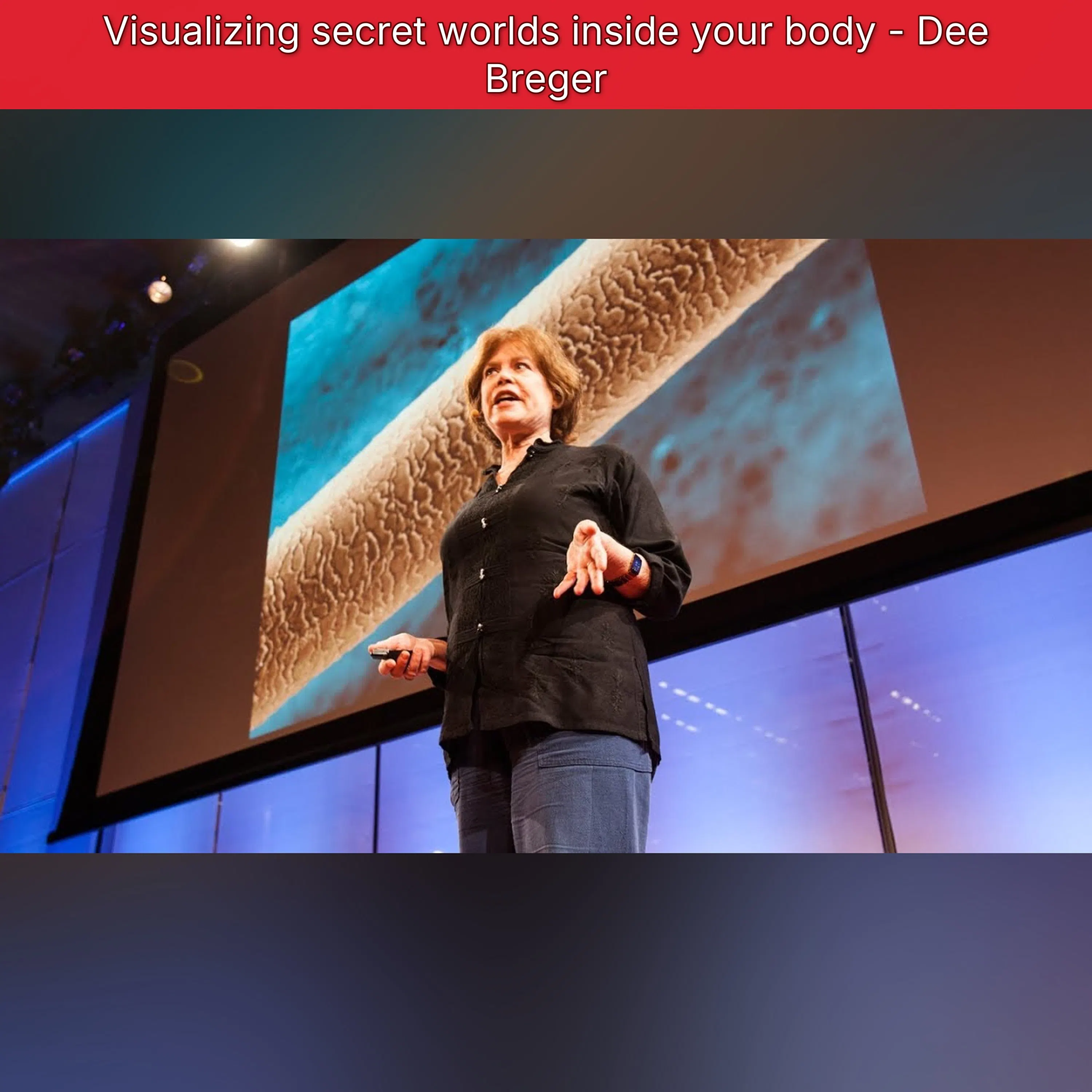
View full lesson: http://ed.ted.com/lessons/visualizing-hidden-worlds-inside-your-body-dee-breger How do we see things too small to be detected by the human eye? What about things inside our own bodies? At TEDYouth 2012, Dee Breger uses a scanning electron microscope to give us a glimpse of images including blood clots, thyroid glands, and lungs with pneumonia. Talk by Dee Breger. Learn more about your ad choices. Visit megaphone.fm/adchoices

Today we know the molecular cause of 4,000 diseases, but treatments are available for only 250 of them. So what's taking so long? Geneticist and physician Francis Collins explains why systematic drug discovery is imperative, even for rare and complex diseases, and offers a few solutions -- like teaching old drugs new tricks. Talk by Francis Collins. Learn more about your ad choices. Visit megaphone.fm/adchoices

Download a free audiobook version of “The Vanishing Half“ and support TED-Ed's nonprofit mission: https://www.audible.com/ted-ed -- While searching for a kidney donor, Karen Keegan stumbled upon a mystery. After undergoing genetic testing, it turned out that some of her cells had a completely different set of genes from the others. And this second set of genes belonged to her twin sister— who had never been born. How did this happen? Kayla Mandel Sheets explores the condition known as chimerism. Lesson by Kayla Mandel Sheets, directed by Luísa M H Copetti, Hype CG. Support Our Non-Profit Mission ---------------------------------------------- Support us on Patreon: http://bit.ly/TEDEdPatreon Check out our merch: http://bit.ly/TEDEDShop ---------------------------------------------- Connect With Us ---------------------------------------------- Sign up for our newsletter: http://bit.ly/TEDEdNewsletter Follow us on Facebook: http://bit.ly/TEDEdFacebook Find us on Twitter: http://bit.ly/TEDEdTwitter Peep us on Instagram: http://bit.ly/TEDEdInstagram ---------------------------------------------- Keep Learning ---------------------------------------------- View full lesson: https://ed.ted.com/lessons/you-could-have-a-secret-twin-but-not-the-way-you-think-kayla-mandel-sheets Dig deeper with additional resources: https://ed.ted.com/lessons/you-could-have-a-secret-twin-but-not-the-way-you-think-kayla-mandel-sheets#digdeeper Check out our full book recommendation: https://shop.ed.ted.com/collections/ted-ed-book-recommendations/products/the-vanishing-half Animator's website: https://www.luisacopetti.com and https://www.hype.cg ---------------------------------------------- Thank you so much to our patrons for your support! Without you this video would not be possible! Noa Shore, Jason A Saslow, MJ Tan Mingjie, Dawn Jordan, Prasanth Mathialagan, Samuel Doerle, David Rosario, Siamak H, Manav parmar, Ryohky Araya, Mayank Kaul, Christophe Dessalles, Heather Slater, Sandra Tersluisen, Zhexi Shan, Bárbara Nazaré, Andrea Feliz, Victor E Karhel, Sydney Evans, Latora Slydell, Noel Situ, emily lam, Sid, Kent Logan, Alexandra Panzer, David D, Zuko Gameplays, Jonathan Bates JBZ, Aria Smith, Mac Hyney, Keith Ellison, robin valero walters, Camehira, Lynne Truesdale, Gatsby Dkdc, Matthew Neal, Jayson Gasper Ayson, Jayson Murray, Maxwell Ramsby, Dmitry Yuryev, Kitick, Denis Chon, Julian Oberhofer, Monte Carroll, Eddy, Jay M, Constantino Victor Delgado, Andrea Galvagni, Andrew Tweddle and Laurel-Ann Rice. Learn more about your ad choices. Visit megaphone.fm/adchoices

Dig into the Greek myth of Mestra and her father King Erysichthon, who angered the gods and was cursed with insatiable hunger. -- Mestra, princess of Thessaly, was far from home. She had watched her father, King Erysichthon, plunge into a ruin of his own making. Now, to save himself, he’d sold his own daughter to the highest bidder. But Mestra refused to accept this fate and began to plan her escape. Iseult Gillespie shares the Greek myth of Mestra's bid for freedom. Lesson by Iseult Gillespie, directed by Vitalii Nebelskyi, and action creative agency. Support Our Non-Profit Mission ---------------------------------------------- Support us on Patreon: http://bit.ly/TEDEdPatreon Check out our merch: http://bit.ly/TEDEDShop ---------------------------------------------- Connect With Us ---------------------------------------------- Sign up for our newsletter: http://bit.ly/TEDEdNewsletter Follow us on Facebook: http://bit.ly/TEDEdFacebook Find us on Twitter: http://bit.ly/TEDEdTwitter Peep us on Instagram: http://bit.ly/TEDEdInstagram ---------------------------------------------- Keep Learning ---------------------------------------------- View full lesson: https://ed.ted.com/lessons/the-greek-myth-of-demeter-s-revenge-iseult-gillespie Dig deeper with additional resources: https://ed.ted.com/lessons/the-greek-myth-of-demeter-s-revenge-iseult-gillespie/digdeeper Animator's website: https://www.and-action.net Music: https://soundcloud.com/aim-music ---------------------------------------------- Thank you so much to our patrons for your support! Without you this video would not be possible! Fernando A. Endo, Helen Lee, pam morgan, sarim haq, Gerardo Castro, Michel-Ange Hortegat, Enes Kirimi, Amaury BISIAUX, ND, Samyogita Hardikar, Vanessa Graulich, Vandana Gunwani, Abdulmohsin Almadi, AJ Lyon, Geoffrey Bultitude, Mi Mi, Thomas Rothert, Brian Elieson, Oge O, Weronika Falkowska, Nevin Spoljaric, Sid Chanpuriya, Anoop Varghese, David Yastremski, Noah Webb, Roberto Chena, Oliver Koo, Luke Pisano, Andrea Gordon, Aleksandar Donev, Nicole Klau Ibarra, Jesse Lira, Ezekiel Raui, Petr Vacek, Dennis, Olivia Fu, Kari Teffeau, Cindy Lai, Rajath Durgada Manjunath, Dan Nguyen, Chin Beng Tan, Tom Boman, Karen Warner, Iryna Panasiuk, Aaron Torres, Eric Braun, Sonja Worzewski, Michael Clement, Adam Berry and Ghaith Tarawneh. Learn more about your ad choices. Visit megaphone.fm/adchoices

View full lesson: http://ed.ted.com/lessons/hiv-and-flu-the-vaccine-strategy-seth-berkley Seth Berkley explains how smart advances in vaccine design, production and distribution are bringing us closer than ever to eliminating a host of global threats -- from AIDS to malaria to flu pandemics. Talk by Seth Berkley. Learn more about your ad choices. Visit megaphone.fm/adchoices
Trace the rise and fall of the Maya city Chichen Itza, and how Yucatán’s unpredictable environment contributed to its demise. -- During the 8th century CE, warfare and failing agriculture forced Maya people to move north, to hotter, drier Yucatán. Because of its freshwater access, Chichen Itza became the most powerful Maya city, with nearly 50,000 citizens at its height. But the region presented its own challenges and the city's golden age wouldn’t last forever. Geoffrey E. Braswell traces the city's rise and fall. Lesson by Geoffrey E. Braswell, directed by Hernando Bahamon, Globizco Studios. Support Our Non-Profit Mission ---------------------------------------------- Support us on Patreon: http://bit.ly/TEDEdPatreon Check out our merch: http://bit.ly/TEDEDShop ---------------------------------------------- Connect With Us ---------------------------------------------- Sign up for our newsletter: http://bit.ly/TEDEdNewsletter Follow us on Facebook: http://bit.ly/TEDEdFacebook Find us on Twitter: http://bit.ly/TEDEdTwitter Peep us on Instagram: http://bit.ly/TEDEdInstagram ---------------------------------------------- Keep Learning ---------------------------------------------- View full lesson: https://ed.ted.com/lessons/the-rise-and-fall-of-the-maya-empire-s-most-powerful-city-geoffrey-e-braswell Dig deeper with additional resources: https://ed.ted.com/lessons/the-rise-and-fall-of-the-maya-empire-s-most-powerful-city-geoffrey-e-braswell/digdeeper Animator's website: https://www.globizcostudios.com ---------------------------------------------- Thank you so much to our patrons for your support! Without you this video would not be possible! Ophelia Gibson Best, Paul Schneider, Joichiro Yamada, Henrique Cassús, Karthik Cherala, Clarence E. Harper Jr., Vignan Velivela, Ana Maria, Exal Enrique Cisneros Tuch, Tejas Dc, Khalifa Alhulail, Martin Stephen, Jose Henrique Leopoldo e Silva, Mandeep Singh, Abhijit Kiran Valluri, Morgan Williams, Devin Harris, Pavel Zalevskiy, Karen Goepen-Wee, Filip Dabrowski, Barbara Smalley, Megan Douglas, Tim Leistikow, Ka-Hei Law, Hiroshi Uchiyama, Mark Morris, Misaki Sato, EdoKun, SookKwan Loong, Bev Millar, Lex Azevedo, Michael Aquilina, Jason A Saslow, Yansong Li, Cristóbal Moenne, Dawn Jordan, Prasanth Mathialagan, Samuel Doerle, David Rosario, Dominik Kugelmann - they-them, Siamak Hajizadeh, Ryohky Araya, Mayank Kaul, Christophe Dessalles, Heather Slater, Sandra Tersluisen, Zhexi Shan, Bárbara Nazaré, Andrea Feliz and Victor E Karhel. Learn more about your ad choices. Visit megaphone.fm/adchoices

Dig into how scholars decoded the writing on the Rosetta Stone, and how this helped them understand ancient hieroglyphs. -- For centuries, scholars puzzled over the hieroglyphs they found carved onto ancient Egyptian ruins, tablets, and papyri. But in 1799, a unique discovery would finally help unlock their meaning. It was a stone inscribed with three different texts: Egyptian Hieroglyphs, Demotic Egyptian, and Ancient Greek. Franziska Naether shares how scholars decoded the ancient message of the Rosetta Stone. Lesson by Franziska Naether, directed by Tim Rauch. Support Our Non-Profit Mission ---------------------------------------------- Support us on Patreon: http://bit.ly/TEDEdPatreon Check out our merch: http://bit.ly/TEDEDShop ---------------------------------------------- Connect With Us ---------------------------------------------- Sign up for our newsletter: http://bit.ly/TEDEdNewsletter Follow us on Facebook: http://bit.ly/TEDEdFacebook Find us on Twitter: http://bit.ly/TEDEdTwitter Peep us on Instagram: http://bit.ly/TEDEdInstagram ---------------------------------------------- Keep Learning ---------------------------------------------- View full lesson: https://ed.ted.com/lessons/why-was-the-rosetta-stone-so-important-franziska-naether Dig deeper with additional resources: https://ed.ted.com/lessons/why-was-the-rosetta-stone-so-important-franziska-naether/digdeeper Animator's website: https://www.instagram.com/tim_rauch ---------------------------------------------- Thank you so much to our patrons for your support! Without you this video would not be possible! Hans Peng, Gaurav Mathur, Erik Biemans, Tony, Michelle, Katie and Josh Pedretti, Hoai Nam Tran, Kack-Kyun Kim, Michael Braun-Boghos, zjweele13, Anna-Pitschna Kunz, Edla Paniguel, Thomas Mungavan, Jaron Blackburn, Venkat Venkatakrishnan, ReuniteKorea, Aaron Henson, Rohan Gupta, Begum Tutuncu, Brian Richards, Jørgen Østerpart, Tyron Jung, Carsten Tobehn, Katie Dean, Ezgi Yersu, Gerald Onyango, alessandra tasso, Doreen Reynolds-Consolati, Manognya Chakrapani, Ayala Ron, Eunsun Kim, Phyllis Dubrow, Ophelia Gibson Best, Paul Schneider, Joichiro Yamada, Henrique Cassús, Karthik Cherala, Clarence E. Harper Jr., Vignan Velivela, Ana Maria, Exal Enrique Cisneros Tuch, Tejas Dc, Khalifa Alhulail, Martin Stephen, Jose Henrique Leopoldo e Silva, Mandeep Singh, Abhijit Kiran Valluri, Morgan Williams, Devin Harris, Pavel Zalevskiy, Karen Goepen-Wee and Filip Dabrowski. Learn more about your ad choices. Visit megaphone.fm/adchoices

Dig into the tragic tale of Oedipus, who unknowingly fulfills a prophecy that he would kill his father and marry his mother. -- When Queen Jocasta of Thebes gave birth to Oedipus, a grim air seized the occasion. Her husband, King Laius, had received a prophecy from Apollo's oracle foretelling that he would die at the hands of his own son. Determined to escape this fate, Laius abandoned the newborn on Mount Cithaeron. But divine prophecies can be quite stubborn. Stephen Esposito shares the tragic Greek tale of Oedipus. Lesson by Stephen Esposito, directed by Yael Reisfeld. Support Our Non-Profit Mission ---------------------------------------------- Support us on Patreon: http://bit.ly/TEDEdPatreon Check out our merch: http://bit.ly/TEDEDShop ---------------------------------------------- Connect With Us ---------------------------------------------- Sign up for our newsletter: http://bit.ly/TEDEdNewsletter Follow us on Facebook: http://bit.ly/TEDEdFacebook Find us on Twitter: http://bit.ly/TEDEdTwitter Peep us on Instagram: http://bit.ly/TEDEdInstagram ---------------------------------------------- Keep Learning ---------------------------------------------- View full lesson: https://ed.ted.com/lessons/what-really-happened-to-oedipus-stephen-esposito Dig deeper with additional resources: https://ed.ted.com/lessons/what-really-happened-to-oedipus-stephen-esposito/digdeeper Animator's website: https://www.yaelreisfeld.com ---------------------------------------------- Thank you so much to our patrons for your support! Without you this video would not be possible! Angel Alberici, Minh Quan Dinh, Sylvain, Terran Gimpel, Talia Sari, Katie McDowell, Allen, Mahina Knuckles, Charmaine Hanson, Thawsitt, Jezabel, Abdullah Abdulaziz, Xiao Yu, Melissa Suarez, Brian A. Dunn, Francisco Amaya, Daisuke Goto, Matt Switzler, Peng, Tzu-Hsiang, Bethany Connor, Jeremy Shimanek, Mark Byers, Avinash Amarnath, Xuebicoco, Rayo, Po Foon Kwong, Boffin, Jesse Jurman, Scott Markley, Elija Peterson, Ovidiu Mrd, paul g mohney, Steven Razey, Nathan Giusti, Helen Lee, Anthony Benedict, Karthik Balsubramanian, Annastasshia Ames, Amy Lopez, Vinh-Thuy Nguyen, Liz Candee, Ugur Doga Sezgin, Karmi Nguyen, John C. Vesey, Yelena Baykova, Nick Johnson, Carlos H. Costa, Jennifer Kurkoski, Ryan B Harvey and Akinola Emmanuel. Learn more about your ad choices. Visit megaphone.fm/adchoices

Dig into Operation Paperclip, a secret intelligence program which brought scientists from Nazi Germany to the US after WWII. -- In May of 1945 the Third Reich was in chaos. Adolf Hitler was dead and German surrender was imminent. But while World War II was almost over, a new war was brewing. And the US was eager to recruit the smartest minds in Germany before the Soviets got the chance— regardless of their affiliation with the Nazis. This became known as Operation Paperclip. Brian Crim digs into the clandestine campaign. Lesson by Brian Crim, directed by Jeff Le Bars, JetPropulsion.space. Support Our Non-Profit Mission ---------------------------------------------- Support us on Patreon: http://bit.ly/TEDEdPatreon Check out our merch: http://bit.ly/TEDEDShop ---------------------------------------------- Connect With Us ---------------------------------------------- Sign up for our newsletter: http://bit.ly/TEDEdNewsletter Follow us on Facebook: http://bit.ly/TEDEdFacebook Find us on Twitter: http://bit.ly/TEDEdTwitter Peep us on Instagram: http://bit.ly/TEDEdInstagram ---------------------------------------------- Keep Learning ---------------------------------------------- View full lesson: https://ed.ted.com/lessons/the-program-that-brought-nazis-to-america-brian-crim Dig deeper with additional resources: https://ed.ted.com/lessons/the-program-that-brought-nazis-to-america-brian-crim/digdeeper Animator's website: https://jetpropulsion.space ---------------------------------------------- Thank you so much to our patrons for your support! Without you this video would not be possible! Mi Mi, Thomas Rothert, Brian Elieson, Oge O, Weronika Falkowska, Nevin Spoljaric, Sid Chanpuriya, Anoop Varghese, David Yastremski, Noah Webb, Roberto Chena, Oliver Koo, Luke Pisano, Andrea Gordon, Aleksandar Donev, Nicole Klau Ibarra, Jesse Lira, Ezekiel Raui, Petr Vacek, Dennis, Olivia Fu, Kari Teffeau, Cindy Lai, Rajath Durgada Manjunath, Dan Nguyen, Chin Beng Tan, Tom Boman, Karen Warner, Iryna Panasiuk, Aaron Torres, Eric Braun, Sonja Worzewski, Michael Clement, Adam Berry, Ghaith Tarawneh, Nathan Milford, Tomas Beckett, Alice Ice, Eric Berman, Kurt Paolo Sevillano, Jennifer Heald, Megulo Abebe, isolwi, Kate Sem, Ujjwal Dasu, Angel Alberici, Minh Quan Dinh, Sylvain, Terran Gimpel and Talia Sari. Learn more about your ad choices. Visit megaphone.fm/adchoices

Discover what makes Ludwig van Beethoven’s Symphony Number Five a musical masterpiece, and uncover the story behind its inception. -- Eight ferocious notes open one of the most explosive pieces of music ever composed. Ludwig van Beethoven’s Symphony Number Five premiered in 1808, and quickly won acclaim. Its central motif and raw emotionality have continued to resound through the ages. So what exactly makes Beethoven’s Fifth so captivating? Hanako Sawada uncovers the story behind this musical masterpiece. Lesson by Hanako Sawada, directed by Yael Reisfeld. Support Our Non-Profit Mission ---------------------------------------------- Support us on Patreon: http://bit.ly/TEDEdPatreon Check out our merch: http://bit.ly/TEDEDShop ---------------------------------------------- Connect With Us ---------------------------------------------- Sign up for our newsletter: http://bit.ly/TEDEdNewsletter Follow us on Facebook: http://bit.ly/TEDEdFacebook Find us on Twitter: http://bit.ly/TEDEdTwitter Peep us on Instagram: http://bit.ly/TEDEdInstagram ---------------------------------------------- Keep Learning ---------------------------------------------- View full lesson: https://ed.ted.com/lessons/the-secrets-of-the-world-s-most-famous-symphony-hanako-sawada Dig deeper with additional resources: https://ed.ted.com/lessons/the-secrets-of-the-world-s-most-famous-symphony-hanako-sawada#digdeeper Animator's website: https://www.yaelreisfeld.com & https://www.instagram.com/yaelreisfeld ---------------------------------------------- Thank you so much to our patrons for your support! Without you this video would not be possible! Milo Vermeulen, Ryan Weiler, Jesse Lira, Ezekiel Raui, Zongpu Kou, Cameron Chakraverty, Petr Vacek, Rhys Patterson, Dennis, Olivia Fu, Katrina Adams, Regina Post, Mary Collins, Kari Teffeau, clumsybunnie, Adam Leos, Jeremy Laurin, Cindy Lai, Liz, Bhargav Pandravada, Rajath Durgada Manjunath, Dan Nguyen, Chin Beng Tan, Alejandro Gomez, Tom Boman, Karen Warner, Isorn Sookwanish, Iryna Panasiuk, Diane Gallin, Aaron Torres, Vasundhar, Eric Braun, Denka Wee, Sonja Worzewski, Amy, Michael Clement, Ghaith Tarawneh, Nathan Milford, Tomas Beckett, Alice Ice, Eric Berman, Kurt Paolo Sevillano, Ron Kakar, Megulo Abebe, TAO7CADENCE, isolwi, Vedasheersh, Michael Chang, Waqar Sheikh and Irene Y. Learn more about your ad choices. Visit megaphone.fm/adchoices

Take a closer look at the challenges of antibiotic resistance and what we can do to prevent losing this vital medicine. -- Antibiotics: behind the scenes, they enable much of modern medicine. We use them to cure infectious diseases, and to safely facilitate everything from surgery to chemotherapy to organ transplants. But we’ve stopped discovering new ones and we’re at risk of losing them forever. How did we get into this situation? Gerry Wright shares what we can do about antibiotic resistance. Lesson by Gerry Wright, directed by Artrake Studio. Animator's website: https://www.artrake.com Sign up for our newsletter: http://bit.ly/TEDEdNewsletter Support us on Patreon: http://bit.ly/TEDEdPatreon Follow us on Facebook: http://bit.ly/TEDEdFacebook Find us on Twitter: http://bit.ly/TEDEdTwitter Peep us on Instagram: http://bit.ly/TEDEdInstagram View full lesson: https://ed.ted.com/lessons/how-can-we-solve-the-antibiotic-resistance-crisis-gerry-wright Thank you so much to our patrons for your support! Without you this video would not be possible! Julio Sabatés Rodríguez, Vivian & Gilbert Lee, Fahad Nasser Chowdhury, ரமணன், John simmons, June Reiling, Khalid AlAli, Mickey Mikeworth, Nathaniel Lupus, Yansong Li, Chung Wah Gnapp, Amber Alexander, Robert Patrick, Pi Guanghui, Barbara Younker, Ai Ejima, Soma Ali, Roman Pinchuk, Raheem, Hector Quintanilla, Leen Mshasha, Mariana Ortega, Danny Romard, James Bruening, Ricki Daniel Marbun, Malcolm Callis, Sabrina Gonzalez, Al the Scottish Wildcat, سلطان الخليفي, Alexander Walls, Della Palacios, Vik Nagjee, Hiroshi Uchiyama, Adi V, Andrew Bosco, Craig Sheldon, Rishi Pasham, Joanne Luce, Jason A Saslow, Mary Sawyer, Scott Gass, Ruth Fang, Mayank Kaul, Kathryn J Hammond, Max Shuai Tang, Terry Minion, Sami Khan, Rob Johnson and Abdullah Abdulaziz. Learn more about your ad choices. Visit megaphone.fm/adchoices

View full lesson: http://ed.ted.com/lessons/how-mendel-s-pea-plants-helped-us-understand-genetics-hortensia-jimenez-diaz Each father and mother pass down traits to their children, who inherit combinations of their dominant or recessive alleles. But how do we know so much about genetics today? Hortensia Jiménez Díaz explains how studying pea plants revealed why you may have blue eyes. Lesson by Hortensia Jiménez Díaz, animation by Cinematic Sweden. Learn more about your ad choices. Visit megaphone.fm/adchoices

Explore the evolution of English spelling conventions throughout history, and find out why it's such an inconsistent language. -- Spelling reformers have been advocating for changes to make English spelling more intuitive and less irregular. One example of its messiness: take the “g-h” sound from “enough,” the “o” sound from “women” and the “t-i” sound from “action,” and you could argue that “g-h-o-t-i” spells “fish.” So, how did English get like this? Arika Okrent explores the complexity of English spelling conventions. Lesson by Arika Okrent, directed by Emily Howells, Aaron Brady. Support Our Non-Profit Mission ---------------------------------------------- Support us on Patreon: http://bit.ly/TEDEdPatreon Check out our merch: http://bit.ly/TEDEDShop ---------------------------------------------- Connect With Us ---------------------------------------------- Sign up for our newsletter: http://bit.ly/TEDEdNewsletter Follow us on Facebook: http://bit.ly/TEDEdFacebook Find us on Twitter: http://bit.ly/TEDEdTwitter Peep us on Instagram: http://bit.ly/TEDEdInstagram ---------------------------------------------- Keep Learning ---------------------------------------------- View full lesson: https://ed.ted.com/lessons/why-don-t-tough-and-dough-rhyme-arika-okrent Dig deeper with additional resources: https://ed.ted.com/lessons/why-don-t-tough-and-dough-rhyme-arika-okrent/digdeeper Animator's website: https://www.emilyhowells.com and https://aaronbrady.uk ---------------------------------------------- Thank you so much to our patrons for your support! Without you this video would not be possible! Jay M, Constantino Victor Delgado, Andrea Galvagni, Andrew Tweddle, Laurel-Ann Rice, Fernando A. Endo, Helen Lee, pam morgan, sarim haq, Gerardo Castro, Michel-Ange Hortegat, Enes Kirimi, Amaury BISIAUX, ND, Samyogita Hardikar, Vanessa Graulich, Vandana Gunwani, Abdulmohsin Almadi, AJ Lyon, Geoffrey Bultitude, Mi Mi, Thomas Rothert, Brian Elieson, Oge O, Weronika Falkowska, Nevin Spoljaric, Sid Chanpuriya, Anoop Varghese, David Yastremski, Noah Webb, Roberto Chena, Oliver Koo, Luke Pisano, Andrea Gordon, Aleksandar Donev, Nicole Klau Ibarra, Jesse Lira, Ezekiel Raui, Petr Vacek, Dennis, Olivia Fu, Kari Teffeau, Cindy Lai, Rajath Durgada Manjunath, Dan Nguyen, Chin Beng Tan, Tom Boman, Karen Warner, Iryna Panasiuk and Aaron Torres. Learn more about your ad choices. Visit megaphone.fm/adchoices
View full lesson: http://ed.ted.com/lessons/the-difference-between-classical-and-operant-conditioning-peggy-andover Why is it that humans react to stimuli with certain behaviors? Can behaviors change in response to consequences? Peggy Andover explains how the brain can associate unrelated stimuli and responses, proved by Ivan Pavlov's famous 1890 experiments, and how reinforcement and punishment can result in changed behavior. Lesson by Peggy Andover, animation by Alan Foreman. Learn more about your ad choices. Visit megaphone.fm/adchoices

View full lesson: http://ed.ted.com/lessons/the-simple-but-fascinating-story-of-photosynthesis-and-food-amanda-ooten Photosynthesis is an essential part of the exchange between humans and plants. Amanda Ooten walks us through the process of photosynthesis, also discussing the relationship between photosynthesis and carbohydrates, starch, and fiber -- and how the air we breathe is related to the food we ingest. Lesson by Amanda Ooten, animation by Bouncepad Collective. Learn more about your ad choices. Visit megaphone.fm/adchoices

Discover the world’s largest organism: Pando, an enormous and ancient quaking aspen, and find out how it became so huge. -- The largest animal in the world is the blue whale, which weighs a massive 150 metric tons. Even so, it’s not remotely close to being the largest organism by weight. That title goes to an organism so huge that it’s estimated to weigh the equivalent of 40 blue whales. So what is this behemoth? And… where is it? Alex Rosenthal shares the story of the enormous and ancient Pando. Lesson by Alex Rosenthal, directed by Lisa LaBracio. Support Our Non-Profit Mission ---------------------------------------------- Support us on Patreon: http://bit.ly/TEDEdPatreon Check out our merch: http://bit.ly/TEDEDShop ---------------------------------------------- Connect With Us ---------------------------------------------- Sign up for our newsletter: http://bit.ly/TEDEdNewsletter Follow us on Facebook: http://bit.ly/TEDEdFacebook Find us on Twitter: http://bit.ly/TEDEdTwitter Peep us on Instagram: http://bit.ly/TEDEdInstagram ---------------------------------------------- Keep Learning ---------------------------------------------- View full lesson: https://ed.ted.com/lessons/the-world-s-largest-organism-alex-rosenthal Dig deeper with additional resources: https://ed.ted.com/lessons/the-world-s-largest-organism-alex-rosenthal#digdeeper Composer: http://aimcreativestudios.com/ ---------------------------------------------- Thank you so much to our patrons for your support! Without you this video would not be possible! Nathan Giusti, Helen Lee, Anthony Benedict, Karthik Balsubramanian, John Hong, Annastasshia Ames, Sebastiaan Hols, Aries SW, Amy Lopez, Liz Candee, Kathryn Vacha, Anthony Arcis, Jeffrey Segrest, Karmi Nguyen, Yelena Baykova, Harshita Jagdish Sahijwani, Nick Johnson, Carlos H. Costa, Mohamed Elsayed, Les Howard, Jennifer Kurkoski, Ryan B Harvey, Abhishek Bansal, Jose Arcadio Valdes Franco, Karl Laius, JY Kang, Charles A Hershberger, Robert Seik, Heidi Stolt, Alexis Hevia, Brady Jones, Christina Salvatore, Karlee Finch, Michael Goldberg, Mario Mejia, Nicolas Silva, Kurt Almendras, Denise A Pitts, Doug Henry, Kristiyan Bonev, Keven Webb, Mihai Sandu, Deepak Iyer, Javid Gozalov, Jaime Arriola, Rebecca Reineke, William Biersdorf, Patricia Alves Panagides, Valeria Sloan Vasquez and Yvette Mocete. Learn more about your ad choices. Visit megaphone.fm/adchoices

Take a look at the science of how addictive drugs affect your body and why substance addiction can be so difficult to treat. -- As of 2021, more than 36 million people were estimated to be experiencing substance use disorder. This condition spans a spectrum of patterned drug use that causes issues in a person’s life, with substance addiction at the more severe end. Why are some people more susceptible to addiction, and why can it be so difficult to treat? Judy Grisel takes a look at how addictive drugs affect the body. Lesson by Judy Grisel, directed by Gabriella Marsh. Support Our Non-Profit Mission ---------------------------------------------- Support us on Patreon: http://bit.ly/TEDEdPatreon Check out our merch: http://bit.ly/TEDEDShop ---------------------------------------------- Connect With Us ---------------------------------------------- Sign up for our newsletter: http://bit.ly/TEDEdNewsletter Follow us on Facebook: http://bit.ly/TEDEdFacebook Find us on Twitter: http://bit.ly/TEDEdTwitter Peep us on Instagram: http://bit.ly/TEDEdInstagram ---------------------------------------------- Keep Learning ---------------------------------------------- View full lesson: https://ed.ted.com/lessons/what-causes-addiction-and-why-is-it-so-hard-to-treat-judy-grisel Dig deeper with additional resources: https://ed.ted.com/lessons/what-causes-addiction-and-why-is-it-so-hard-to-treat-judy-grisel/digdeeper Animator's website: https://gabriella-marsh.com Music: https://soundcloud.com/aim-music ---------------------------------------------- Thank you so much to our patrons for your support! Without you this video would not be possible! Barbara Smalley, Megan Douglas, Tim Leistikow, Ka-Hei Law, Hiroshi Uchiyama, Mark Morris, Misaki Sato, EdoKun, SookKwan Loong, Bev Millar, Lex Azevedo, Michael Aquilina, Jason A Saslow, Yansong Li, Cristóbal Moenne, Dawn Jordan, Prasanth Mathialagan, Samuel Doerle, David Rosario, Dominik Kugelmann - they-them, Siamak Hajizadeh, Ryohky Araya, Mayank Kaul, Christophe Dessalles, Heather Slater, Sandra Tersluisen, Zhexi Shan, Bárbara Nazaré, Andrea Feliz, Victor E Karhel, Sydney Evans, Latora, Noel Situ, emily lam, Sid, Niccolò Frassetto, Mana, I'm here because of Knowledge Fight Facebook group., Linda Freedman, Edgardo Cuellar, Jaspar Carmichael-Jack, Michael Burton, VIVIANA A GARCIA BESNE, The Vernon's, Olha Bahatiuk, Jesús Bíquez Talayero, Chels Raknrl, Sai Pranavi Jonnalagadda, Stuart Rice and Jing Chen. Learn more about your ad choices. Visit megaphone.fm/adchoices