Skip to content
Artwork for TED-Ed
EducationScienceTechnology

TED-Ed

TED-Ed

TED-Ed’s mission is to create lessons worth sharing. Feed and expand your curiosity with our award-winning animated shorts - published on YouTube and available with supplemental learning materials on ed.ted.com.

Want to suggest an idea for a TED-Ed animation, nominate an educator or animator? Visit our website at: http://ed.ted.com/get_involved.

Consider backing us on Patreon. By doing so, you directly support our nonprofit mission to create free, high-quality educational content: https://www.patreon.com/teded

For more information on using TED-Ed content for commercial purposes (e.g. employee learning, in a film, or in an online course), please submit a Media Request using this link: https://media-requests.ted.com/

Play
  • 1,297 episodes
  • Avg 10 min
  • English

Episodes 1,297

Counted on this page — what you have heard stays on this device, so it is not something the list can be paged by.
  • August 25 · 8 min

    Why plague doctors sported beaked masks

    Explore the history of the European plague doctor, and find out where their iconic outfit of a beaked mask and robe came from. -- The year is 1656. Your body is wracked by violent chills. Your head pounds and you're too weak to sit up. In your feverish state, you see a strange-looking man wearing a beak-like mask, his body covered from head to toe. Without seeing his face, you know: you have the plague. So, where did these iconic outfits come from? Stephanie Honchell Smith explores the history of plague doctors. Directed by Anton Bogaty. This video made possible in collaboration with Gates Ventures Learn more about how TED-Ed partnerships work: https://bit.ly/TEDEdPartners Support Our Non-Profit Mission ---------------------------------------------- Support us on Patreon: http://bit.ly/TEDEdPatreon Check out our merch: http://bit.ly/TEDEDShop ---------------------------------------------- Connect With Us ---------------------------------------------- Sign up for our newsletter: http://bit.ly/TEDEdNewsletter Follow us on Facebook: http://bit.ly/TEDEdFacebook Find us on Twitter: http://bit.ly/TEDEdTwitter Peep us on Instagram: http://bit.ly/TEDEdInstagram ---------------------------------------------- Keep Learning ---------------------------------------------- View full lesson: https://ed.ted.com/lessons/why-plague-doctors-wore-beaked-masks Dig deeper with additional resources: https://ed.ted.com/lessons/why-plague-doctors-wore-beaked-masks#digdeeper Animator's website: https://www.instagram.com/anton_bogaty Music: https://yessian.com ---------------------------------------------- Thank you so much to our patrons for your support! Without you this video would not be possible! Chin Beng Tan, Tom Boman, Karen Warner, Iryna Panasiuk, Aaron Torres, Eric Braun, Sonja Worzewski, Michael Clement, Adam Berry, Ghaith Tarawneh, Nathan Milford, Tomas Beckett, Alice Ice, Eric Berman, Kurt Paolo Sevillano, Jennifer Heald, Megulo Abebe, isolwi, Kate Sem, Ujjwal Dasu, Angel Alberici, Minh Quan Dinh, Sylvain, Terran Gimpel, Talia Sari, Katie McDowell, Allen, Mahina Knuckles, Charmaine Hanson, Thawsitt, Jezabel, Abdullah Abdulaziz, Xiao Yu, Melissa Suarez, Brian A. Dunn, Francisco Amaya, Daisuke Goto, Matt Switzler, Peng, Tzu-Hsiang, Bethany Connor, Jeremy Shimanek, Mark Byers, Avinash Amarnath, Xuebicoco, Rayo, Po Foon Kwong, Boffin, Jesse Jurman, Scott Markley and Elija Peterson. Learn more about your ad choices. Visit megaphone.fm/adchoices

  • August 25 · 16 min

    A universal translator for doctors - Steven Schwaitzberg

    View full lesson: http://ed.ted.com/lessons/a-universal-translator-for-surgeons-steven-schwaitzberg Laparoscopic surgery uses minimally invasive incisions -- which means less pain and shorter recovery times for patients. But Steven Schwaitzberg has run into two problems teaching these techniques to surgeons around the world -- language and distance. He shares how a new technology, which combines video conferencing and a real-time universal translator, could help. Talk by Steven Schwaitzberg. Learn more about your ad choices. Visit megaphone.fm/adchoices

  • August 25 · 8 min

    Gibberish, urine, and sheer chaos: What happens when you sleepwalk - Emmanuel During

    Download a free audiobook version of “The Midnight Library“ and support TED-Ed's nonprofit mission: https://www.audible.com/ted-ed -- Mumbling fantastical gibberish; devouring blocks of cheese in the nude; peeing in places that aren’t toilets; and jumping out of windows. These are all things people have reportedly done while sleepwalking, a behavior that can be dangerous in some cases. It’s estimated that around 18% of people sleepwalk at least once in their lives. So, what exactly is sleepwalking? Emmanuel During investigates. Lesson by Emmanuel During, directed by Laura Jayne Hodkin. Learn more about how TED-Ed partnerships work: https://bit.ly/TEDEdPartners Support Our Non-Profit Mission ---------------------------------------------- Support us on Patreon: http://bit.ly/TEDEdPatreon Check out our merch: http://bit.ly/TEDEDShop ---------------------------------------------- Connect With Us ---------------------------------------------- Sign up for our newsletter: http://bit.ly/TEDEdNewsletter Follow us on Facebook: http://bit.ly/TEDEdFacebook Find us on Twitter: http://bit.ly/TEDEdTwitter Peep us on Instagram: http://bit.ly/TEDEdInstagram ---------------------------------------------- Keep Learning ---------------------------------------------- View full lesson: https://ed.ted.com/lessons/what-causes-sleepwalking-emmanuel-during Dig deeper with additional resources: https://ed.ted.com/lessons/what-causes-sleepwalking-emmanuel-during#digdeeper Check out our full book recommendation: https://shop.ed.ted.com/collections/ted-ed-book-recommendations/products/the-midnight-library Animator's website: https://www.laurajaynehodkin.com ---------------------------------------------- Thank you so much to our patrons for your support! Without you this video would not be possible! Doreen Reynolds-Consolati, Manognya Chakrapani, Ayala Ron, Eunsun Kim, Phyllis Dubrow, Ophelia Gibson Best, Paul Schneider, Joichiro Yamada, Henrique Cassús, Karthik Cherala, Clarence E. Harper Jr., Vignan Velivela, Ana Maria, Exal Enrique Cisneros Tuch, Tejas Dc, Khalifa Alhulail, Martin Stephen, Jose Henrique Leopoldo e Silva, Mandeep Singh, Abhijit Kiran Valluri, Morgan Williams, Devin Harris, Pavel Zalevskiy, Karen Goepen-Wee, Filip Dabrowski, Barbara Smalley, Megan Douglas, Tim Leistikow, Ka-Hei Law, Hiroshi Uchiyama, Mark Morris, Misaki Sato, EdoKun, SookKwan Loong, Bev Millar, Lex Azevedo, Michael Aquilina, Jason A Saslow, Yansong Li, Cristóbal Moenne, Dawn Jordan, Prasanth Mathialagan, Samuel Doerle, David Rosario, Dominik Kugelmann - they-them, Siamak Hajizadeh, Ryohky Araya, Mayank Kaul, Christophe Dessalles and Heather Slater. Learn more about your ad choices. Visit megaphone.fm/adchoices

  • August 25 · 8 min

    How do oysters generate pearls? - Rob Ulrich

    Explore how oysters use calcium carbonate to create pearls, and how this chemical compound creates a vast array of other materials. -- Despite their iridescent colors and smooth shapes, pearls are actually made of the exact same material as the craggy shell that surrounds them. Pearls, urchin spines, the shells of mussels, snails and clams, even coral— all these structures are made out of the same chemical compound: calcium carbonate. So how does this single ingredient form such a vast array of materials? Rob Ulrich investigates. Lesson by Rob Ulrich, directed by Ivana Bošnjak. Support Our Non-Profit Mission ---------------------------------------------- Support us on Patreon: http://bit.ly/TEDEdPatreon Check out our merch: http://bit.ly/TEDEDShop ---------------------------------------------- Connect With Us ---------------------------------------------- Sign up for our newsletter: http://bit.ly/TEDEdNewsletter Follow us on Facebook: http://bit.ly/TEDEdFacebook Find us on Twitter: http://bit.ly/TEDEdTwitter Peep us on Instagram: http://bit.ly/TEDEdInstagram ---------------------------------------------- Keep Learning ---------------------------------------------- View full lesson: https://ed.ted.com/lessons/how-do-oysters-make-pearls-rob-ulrich Dig deeper with additional resources: https://ed.ted.com/lessons/how-do-oysters-make-pearls-rob-ulrich#digdeeper Music: https://www.campstudio.co ---------------------------------------------- Thank you so much to our patrons for your support! Without you this video would not be possible! Khalifa Alhulail, Martin Stephen, Jose Henrique Leopoldo e Silva, Mandeep Singh, Abhijit Kiran Valluri, Morgan Williams, Devin Harris, Pavel Zalevskiy, Karen Goepen-Wee, Filip Dabrowski, Barbara Smalley, Megan Douglas, Tim Leistikow, Ka-Hei Law, Hiroshi Uchiyama, Mark Morris, Misaki Sato, EdoKun, SookKwan Loong, Bev Millar, Lex Azevedo, Michael Aquilina, Jason A Saslow, Yansong Li, Cristóbal Moenne, Dawn Jordan, Prasanth Mathialagan, Samuel Doerle, David Rosario, Dominik Kugelmann - they-them, Siamak Hajizadeh, Ryohky Araya, Mayank Kaul, Christophe Dessalles, Heather Slater, Sandra Tersluisen, Zhexi Shan, Bárbara Nazaré, Andrea Feliz, Victor E Karhel, Sydney Evans, Latora, Noel Situ, emily lam, Sid, Niccolò Frassetto, Mana, I'm here because of Knowledge Fight Facebook group., Linda Freedman and Edgardo Cuellar. Learn more about your ad choices. Visit megaphone.fm/adchoices
  • August 25 · 5 min

    The magnificence of bioluminescence - Leslie Kenna

    View full lesson: http://ed.ted.com/lessons/the-brilliance-of-bioluminescence-leslie-kenna Some lucky animals are naturally endowed with bioluminescence, or the ability to create light. The firefly, the anglerfish, and a few more surprising creatures use this ability in many ways, including survival, hunting, and mating. Leslie Kenna investigates this magical glow - and our quest to replicate it. Lesson by Leslie Kenna, animation by Cinematic Sweden. Learn more about your ad choices. Visit megaphone.fm/adchoices
  • August 25 · 7 min

    What makes an algorithm? - David J. Malan

    View full lesson: http://ed.ted.com/lessons/your-brain-can-solve-algorithms-david-j-malan An algorithm is a mathematical method of solving problems both big and small. Though computers run algorithms constantly, humans can also solve problems with algorithms. David J. Malan explains how algorithms can be used in seemingly simple situations and also complex ones. Lesson by David J. Malan, animation by enjoyanimation. Learn more about your ad choices. Visit megaphone.fm/adchoices
  • August 25 · 7 min

    The most groundbreaking scientist you've never heard of - Addison Anderson

    View full lesson: http://ed.ted.com/lessons/the-most-groundbreaking-scientist-you-ve-never-heard-of-addison-anderson Seventeenth-century Danish geologist Nicolas Steno earned his chops at a young age, studying cadavers and drawing anatomic connections between species. Steno made outsized contributions to the field of geology, influencing Charles Lyell, James Hutton and Charles Darwin. Addison Anderson recounts Steno's little-known legacy and lauds his insistence on empiricism over blind theory. Lesson by Addison Anderson, animation by Anton Bogaty. Learn more about your ad choices. Visit megaphone.fm/adchoices

  • August 25 · 13 min

    Lesson 1: What define ideas?

    Master a variety of communication skills with TED’s official public speaking course. This course will teach you how to identify, develop and share your best ideas with the world. This video - the first in the series - is available for free. If you'd like to continue on this learning journey, you can purchase the full 11-lesson course. All proceeds support TED-Ed's nonprofit mission to develop and share free high-quality educational materials with the world. Lesson 1 Learning Goal: Identify the qualities of ideas worth spreading. This lesson is full of foundational knowledge that will help you get the most out of this course. Before you begin the lesson, take a moment to briefly reflect on the questions below. No need to have formal answers, but have an example or two in mind. If you need help, check out the Library for inspiration. Questions You’ll Answer After the Video: What's the best example of public speaking you've ever seen? What is your favorite TED talk? What is it about that memorable talk that has persisted in your mind for days, months or even years? Can you identify the speaker’s idea? Learn more about your ad choices. Visit megaphone.fm/adchoices
  • August 25 · 17 min

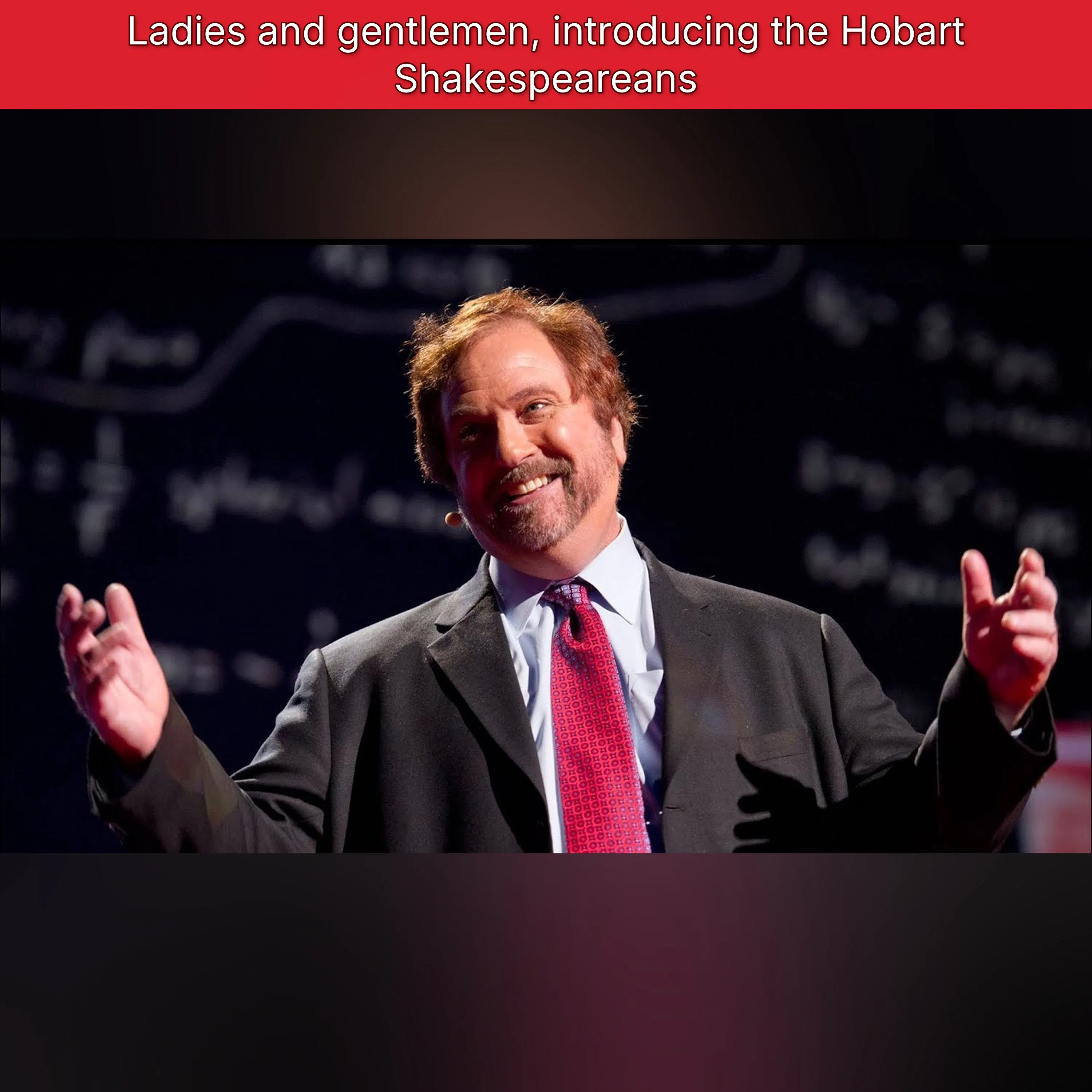
    How movies portray manhood - Colin Stokes

    When Colin Stokes' 3-year-old son caught a glimpse of Star Wars, he was instantly obsessed. But what messages did he absorb from the sci-fi classic? Stokes asks for more movies that send positive messages to boys: that cooperation is heroic, and respecting women is as manly as defeating the villain. (Filmed at TEDxBeaconStreet.) Talk by Colin Stokes. Learn more about your ad choices. Visit megaphone.fm/adchoices
  • August 25 · 7 min

    What happens to your brain during a migraine - Marianne Schwarz

    Find out what’s happening in the brain when you have a migraine and what we still don’t know about this complex disorder. -- A throbbing, pounding headache. Bright zigzagging lines across your field of vision. Sensitivity to light, lingering fatigue, disrupted sleep. While an incapacitating headache is one of the most common symptoms, a migraine can include any of these experiences. So what exactly is a migraine? And what causes it? Marianne Schwarz explores what we know— and don't know— about this complex disorder. Lesson by Marianne Schwarz, directed by Bálint Gelley, CUB Animation. Support Our Non-Profit Mission ---------------------------------------------- Support us on Patreon: http://bit.ly/TEDEdPatreon Check out our merch: http://bit.ly/TEDEDShop ---------------------------------------------- Connect With Us ---------------------------------------------- Sign up for our newsletter: http://bit.ly/TEDEdNewsletter Follow us on Facebook: http://bit.ly/TEDEdFacebook Find us on Twitter: http://bit.ly/TEDEdTwitter Peep us on Instagram: http://bit.ly/TEDEdInstagram ---------------------------------------------- Keep Learning ---------------------------------------------- View full lesson: https://ed.ted.com/lessons/what-causes-migraines-marianne-schwarz Dig deeper with additional resources: https://ed.ted.com/lessons/what-causes-migraines-marianne-schwarz#digdeeper Animator's website: http://cubanimation.com/en/about ---------------------------------------------- Thank you so much to our patrons for your support! Without you this video would not be possible! Erica Guerrero, Richard Manklow, Roberto Chena, Oliver Koo, Luke Pisano, Andrea Gordon, Aleksandar Donev, Nicole Klau Ibarra, Milo Vermeulen, Ryan Weiler, Jesse Lira, Ezekiel Raui, Itay Levi, Zongpu Kou, Cameron Chakraverty, Petr Vacek, Rhys Patterson, Dennis, Olivia Fu, Katrina Adams, Regina Post, Mary Collins, Kari Teffeau, clumsybunnie, Adam Leos, Jeremy Laurin, Cindy Lai, Liz, Bhargav Pandravada, Rajath Durgada Manjunath, Dan Nguyen, sarim haq, Chin Beng Tan, Alejandro Gomez, Tom Boman, Karen Warner, Isorn Sookwanish, Iryna Panasiuk, Diane Gallin, Aaron Torres, Vasundhar, Eric Braun, Denka Wee, Daru Bhargav, Sonja Worzewski, Amy, Michael Clement, Ghaith Tarawneh, Nathan Milford and Tomas Beckett. Learn more about your ad choices. Visit megaphone.fm/adchoices

  • August 25 · 6 min

    Why do fingers become wrinkled in water? - Mark Changizi

    View full lesson: http://ed.ted.com/lessons/pruney-fingers-a-gripping-story-mark-changizi Why do fingers become pruney when they get wet? Likely, for the same reasons that tires have treads. Mark Changizi examines the evolutionary reasons for pruney fingers, while exploring natural and manmade phenomena, like river networks, that operate similarly. Lesson by Mark Changizi, animation by Lippy. Learn more about your ad choices. Visit megaphone.fm/adchoices

  • August 25 · 8 min

    Should you donate your DNA to help cure diseases? - Greg Foot

    Discover how scientists are using crowdsourced DNA to find the causes of untreatable diseases, and developing new drug treatments for them. -- When scientists don't know the cause of a medical condition, developing a drug treatment takes significant trial and error, and lots of money— which is why we only have drugs for a small proportion of diseases. Researchers are hoping to change this using crowdsourced DNA. So how does this work, and what do your genes have to do with it? Greg Foot digs into the science of therapeutic targets. Lesson by Greg Foot, directed by Pierangelo Pirak. Produced for TED-Ed by https://www.sciencemedia.studio and NIHR University College London Hospitals Biomedical Research Centre. Support Our Non-Profit Mission ---------------------------------------------- Support us on Patreon: http://bit.ly/TEDEdPatreon Check out our merch: http://bit.ly/TEDEDShop ---------------------------------------------- Connect With Us ---------------------------------------------- Sign up for our newsletter: http://bit.ly/TEDEdNewsletter Follow us on Facebook: http://bit.ly/TEDEdFacebook Find us on Twitter: http://bit.ly/TEDEdTwitter Peep us on Instagram: http://bit.ly/TEDEdInstagram ---------------------------------------------- Keep Learning ---------------------------------------------- View full lesson: https://ed.ted.com/lessons/should-you-donate-your-dna-to-help-cure-diseases-greg-foot Dig deeper with additional resources: https://ed.ted.com/lessons/should-you-donate-your-dna-to-help-cure-diseases-greg-foot#digdeeper Animator's website: https://www.pomonapictures.com Educator's website: https://www.gregfoot.com ---------------------------------------------- Thank you so much to our patrons for your support! Without you this video would not be possible! pam morgan, sarim haq, Juan Pablo Rodriguez Morales, ANNE FINE, Gerardo Castro, Siddharth Toshniwal, Justice Boehmer, Michel-Ange Hortegat, Enes Kirimi, Amaury BISIAUX BISIAUX, Aravind C V, ND, Samyogita Hardikar, Vanessa Graulich, Vandana Gunwani, LvL042, Abdulmohsin Almadi, Andrew Brodski, John van den Berg, Anandha Krishnan, Geoffrey Bultitude, Mi Mi, Thomas Rothert, Christopher McVay, Izhari Ishak Aksa, Declan Manning, Javier Aldavaz, Ivan Yeung, Jaime Camacho, Irene Au, Роман Валесюк, LunarQueen, Iza, Brian Elieson, Paul, Grayson Garbarino, Oge O, Weronika Falkowska, Stefano Esposito, Nevin Spoljaric, Yvonne Feijoo, Sid Chanpuriya, Arjay Arcinue Dineros, Anoom Yasmin, Laura Johnson, Anoop Varghese, David Yastremski, Zoë Tulip, B and Jason Harrison. Learn more about your ad choices. Visit megaphone.fm/adchoices

  • August 25 · 8 min

    Ethical dilemma: Whose life deserves greater worth? - Rebecca L. Walker

    Puzzle through a classic ethical dilemma and decide: how do we determine the value of a life, whether human or non-human? -- To protect against a possible resurgence of smallpox, the US government is funding research to improve treatments and vaccines. And since it’s unethical to expose people to a highly lethal virus, labs are using monkeys as research subjects. But is it right to harm these animals to protect humanity from a potential threat? Rebecca L. Walker takes a look at this classic ethical dilemma. Lesson by Rebecca L. Walker, directed by Sharon Colman. This video was produced in collaboration with the Parr Center for Ethics, housed within the renowned Philosophy Department at the University of North Carolina at Chapel Hill. The Parr Center is committed to integrating abstract work in ethical theory with the informed discussion of practical ethical issues, and prides itself on the development of innovative and inclusive approaches to moral and civic education. Learn more about how TED-Ed partnerships work: https://bit.ly/TEDEdPartners Support Our Non-Profit Mission ---------------------------------------------- Support us on Patreon: http://bit.ly/TEDEdPatreon Check out our merch: http://bit.ly/TEDEDShop ---------------------------------------------- Connect With Us ---------------------------------------------- Sign up for our newsletter: http://bit.ly/TEDEdNewsletter Follow us on Facebook: http://bit.ly/TEDEdFacebook Find us on Twitter: http://bit.ly/TEDEdTwitter Peep us on Instagram: http://bit.ly/TEDEdInstagram ---------------------------------------------- Keep Learning ---------------------------------------------- View full lesson: https://ed.ted.com/lessons/how-do-we-determine-the-value-of-a-life-rebecca-l-walker Dig deeper with additional resources: https://ed.ted.com/lessons/how-do-we-determine-the-value-of-a-life-rebecca-l-walker#digdeeper Animator's website: https://www.sharoncolman.com ---------------------------------------------- Thank you so much to our patrons for your support! Without you this video would not be possible! Francisco Amaya, Daisuke Goto, Matt Switzler, Peng, Tzu-Hsiang, Bethany Connor, Jeremy Shimanek, Mark Byers, Avinash Amarnath, Xuebicoco, Rayo, Po Foon Kwong, Boffin, Jesse Jurman, Scott Markley, Elija Peterson, Ovidiu Mrd, paul g mohney, Steven Razey, Nathan Giusti, Helen Lee, Anthony Benedict, Karthik Balsubramanian, Annastasshia Ames, Amy Lopez, Vinh-Thuy Nguyen, Liz Candee, Ugur Doga Sezgin, Karmi Nguyen, John C. Vesey, Yelena Baykova, Nick Johnson, Carlos H. Costa, Jennifer Kurkoski, Ryan B Harvey, Akinola Emmanuel, Jose Arcadio Valdes Franco, Sebastiaan Vleugels, Karl Laius, JY Kang, Abhishek Goel, Heidi Stolt, Nicole Sund, Karlee Finch, Mario Mejia, Denise A Pitts, Doug Henry, Keven Webb, Mihai Sandu, Deepak Iyer and Javid Gozalov. Learn more about your ad choices. Visit megaphone.fm/adchoices

  • August 25 · 19 min

    Who directs the world? - James B. Glattfelder

    James Glattfelder studies complexity: how an interconnected system -- say, a swarm of birds -- is more than the sum of its parts. And complexity theory, it turns out, can reveal a lot about how the economy works. Glattfelder shares a groundbreaking study of how control flows through the global economy, and how concentration of power in the hands of a shockingly small number leaves us all vulnerable. (Filmed at TEDxZurich.) Talk by James B. Glattfelder. Learn more about your ad choices. Visit megaphone.fm/adchoices

  • August 25 · 7 min

    Can you solve the dragon jousting riddle? - Alex Gendler

    Practice more problem-solving at https://brilliant.org/TedEd/ -- After years of war, the world’s kingdoms have come to an agreement. Every five years, teams representing the elves, goblins, and treefolk will compete in a grand tournament of dragon jousting. You have the important job of recording the scores for the inaugural tournament. But, you overslept and the games are already underway. Can you figure out the real score of each match? Alex Gendler shows how. Lesson by Alex Gendler, directed by Artrake Studio. This riddle is adapted from a puzzle that originally appeared in Puzzles for Pleasure, by E.R. Emmet. Animator's website: https://www.artrake.com Sign up for our newsletter: http://bit.ly/TEDEdNewsletter Support us on Patreon: http://bit.ly/TEDEdPatreon Follow us on Facebook: http://bit.ly/TEDEdFacebook Find us on Twitter: http://bit.ly/TEDEdTwitter Peep us on Instagram: http://bit.ly/TEDEdInstagram View full lesson: https://ed.ted.com/lessons/can-you-solve-the-dragon-jousting-riddle-alex-gendler Thank you so much to our patrons for your support! Without you this video would not be possible! Manognya Chakrapani, Ayala Ron, Samantha Chow, Philippe Spoden, Phyllis Dubrow, Michelle Stevens-Stanford, Cas Jamieson, Ophelia Gibson Best, Amber Wood, Paul Schneider, Jun Cai, Tim Robinson, Henrique 'Sorín' Cassús, cnorahs, Lyn-z Schulte, Elaine Fitzpatrick, Karthik Cherala, Clarence E. Harper Jr., Milad Mostafavi, Аркадий Скайуокер, Kiara Taylor, Louisa Lee, eden sher, Vignan Velivela, Sage Curie, Srikote Naewchampa, Tejas Dc, Khalifa Alhulail, Faiza Imtiaz, Martin Stephen, Jerome Froelich, Dan Paterniti, Jose Henrique Leopoldo e Silva, Mullaiarasu Sundaramurthy, Elnathan Joshua Bangayan, Caleb ross, Duo Xu, Quinn Shen, Marvin Vizuett, Sid, Marylise CHAUFFETON, Karen Goepen-Wee, Sama aafghani, Mandeep Singh, Abhijit Kiran Valluri, Morgan Williams, Kris Siverhus, Jason Weinstein, Tony Trapuzzano and Devin Harris. Learn more about your ad choices. Visit megaphone.fm/adchoices

  • August 25 · 8 min

    How to read music - Tim Hansen

    Like an actor's script, a sheet of music instructs a musician on what to play (the pitch) and when to play it (the rhythm). Sheet music may look complicated, but once you've gotten the hang of a few simple elements like notes, bars and clefs, you're ready to rock. Tim Hansen hits the instrumental basics you need to read music. Learn more about your ad choices. Visit megaphone.fm/adchoices
  • August 25 · 8 min

    Everyday leadership - Drew Dudley

    We have all changed someone's life -- usually without even realizing it. In this funny talk, Drew Dudley calls on all of us to celebrate leadership as the everyday act of improving each other's lives. (Filmed at TEDxToronto.) Talk by Drew Dudley. Learn more about your ad choices. Visit megaphone.fm/adchoices
  • August 24 · 8 min

    Is human evolution speeding up or slowing down? - Laurence Hurst

    Download a free audiobook version of "Sapiens" and support TED-Ed's nonprofit mission: https://www.audible.com/ted-ed Check out our full book recommendation: https://shop.ed.ted.com/collections/ted-ed-book-recommendations/products/sapiens -- In the past 3,000 years, many populations have evolved genetic adaptations to their local environments. People in Siberia and the high arctic are uniquely adapted to survive extreme cold. The Bajau people can dive 70 meters and stay underwater for almost 15 minutes. So what are other recent changes? And will our technological innovations impact our evolution? Laurence Hurst investigates. Lesson by Laurence Hurst, directed by Philip Piaget & Rikke Planeta. Animator's website: https://www.ouros.net Producer's website: https://animationworkshop.via.dk/ Sound designer's website: http://aimcreativestudios.com/ Sign up for our newsletter: http://bit.ly/TEDEdNewsletter Support us on Patreon: http://bit.ly/TEDEdPatreon Follow us on Facebook: http://bit.ly/TEDEdFacebook Find us on Twitter: http://bit.ly/TEDEdTwitter Peep us on Instagram: http://bit.ly/TEDEdInstagram View full lesson: https://ed.ted.com/lessons/is-human-evolution-speeding-up-or-slowing-down-laurence-hurst Thank you so much to our patrons for your support! Without you this video would not be possible! Boytsov Ilya, Steven Razey, Javier Aldavaz, Nathan Giusti, Mada Arslan, Joichiro Yamada, Ritul Raghavan, Aline de Paula Zillig, Yambu Ganesh Shaw, Abeer Rajbeen, John Hong, Minh Tran, Helen Lee, Anthony Benedict, Turine Tran, Mathew Samuel, Karthik Balsubramanian, Lee , Livia-Alexandra Sarban, Annastasshia Ames, João Henrique Rodrigues, Sebastiaan Hols, Aries SW, SANG HAN, Amy Lopez, ReuniteKorea, Vinh-Thuy Nguyen, Liz Candee, Clovis Norroy, Danielle Downs, Nik Maier, Angel Pantoja, Nishant Suneja, 张晓雨, Srinivasa C Pasumarthi, Kathryn Vacha, Anthony Arcis, Jeffrey Segrest, Sandra Fuller Bocko, Alex Pierce, Lawrence Teh Swee Kiang, BRENDAN NEALE, Jane White, Karmi Nguyen, John C. Vesey, Yelena Baykova, Harshita Jagdish Sahijwani, Won Jang, Nick Johnson and Tariq Keblaoui. Learn more about your ad choices. Visit megaphone.fm/adchoices

  • August 24 · 6 min

    Animation basics: Homemade practical effects - TED-Ed

    View full lesson: http://ed.ted.com/lessons/animation-basics-homemade-special-effects-ted-ed Animation is used everywhere to communicate big ideas--in movies, television, and media. Do you ever stop and wonder about the magic of it all? And have you ever wanted to create your own special effects? TED-Ed animators show just how easy (and fun) homemade special effects can be. Lesson and animation by TED-Ed. Learn more about your ad choices. Visit megaphone.fm/adchoices

Showing 601–620 of 1,297 episodes