Skip to content
Artwork for STEM-Talk
Health & FitnessNutritionAlternative HealthScienceNatural Sciences

STEM-Talk

Dawn Kernagis and Ken Ford

The most interesting people in the world of science and technology

Play
  • 22 episodes
  • monthly
  • Avg 1 hr 18 min
  • English
Counted on this page — what you have heard stays on this device, so it is not something the list can be paged by.
  • S9 · E179
    Mar 5, 2025 · 1 hr 16 min

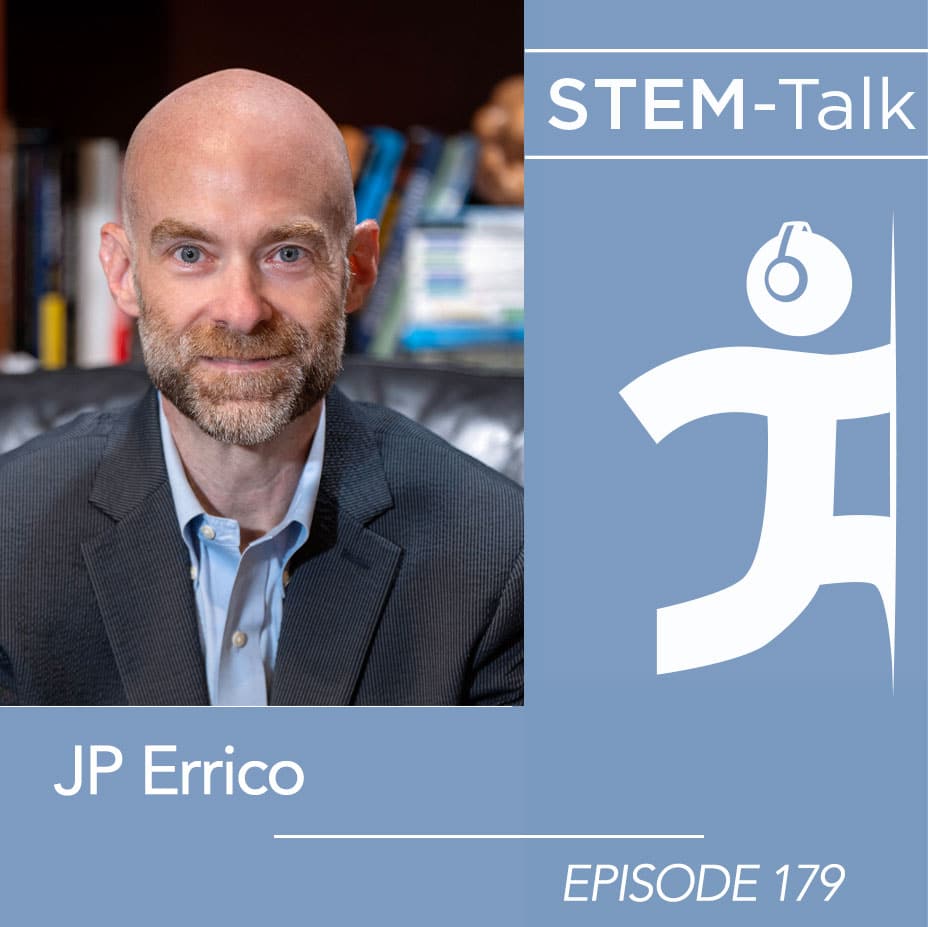
    Episode 179: JP Errico explains how vagus-nerve stimulation reduces inflammation and chronic diseases

    Today we have JP Errico, a scientist and inventor whose work focuses on neuroimmunology and the many ways it impacts cellular metabolism, inflammation, mental health and how we age. He recently joined IHMC as a Senior Research Scientist. JP is particularly known for his research on vagus-nerve stimulation and is the author of the book, The Vagus-Immune Connection: Harness Your Vagus Nerve to Manage Stress, Prevent Immune Dysregulation, and Avoid Chronic Disease. He also is the co-host of the podcast, The Health Upgrade. JP has more than 250 patents and is the founder of ElectroCore, a company that specializes in neuromodulation and noninvasive vagus-nerve stimulation. He has an undergraduate degree in aeronautical engineering from the Massachusetts Institute of Technology and worked at Lincoln Laboratories. JP also holds graduate degrees in both law and mechanical/materials engineering from Duke University. Show notes: [00:03:08] Tim opens our interview mentioning that as a child JP was focused on both sports and academics. [00:04:50] Tim talks about how hard it is to find quality math and science education today similar to what JP experienced at his high school. [00:05:16] Tim asks JP what it was that led him to pursue an undergraduate degree at MIT. [00:05:53] Tim asks if it was always JP’s plan to go into aeronautical engineering. [00:07:22] Tim mentions that as a kid, JP would scour bookstores and libraries for textbooks on physics and quantum mechanics and asks JP if there were any books that particularly inspired him. [00:10:12] Ken mentions that after MIT, JP went to Duke University where he pursued mechanical engineering and also went to law school. Given this workload, Ken asks if JP ever had any free time while studying at Duke. [00:13:26] Tim mentions that while JP was in law school, he got a job at a patent firm. After obtaining his law degree, JP’s uncle called and offered JP an opportunity. [00:17:42] Tim explains that JP’s career has focused on neuroimmunology, or the study of how the nervous system and immune system interact. Neuroimmunology affects a wide range of health factors including inflammation, mental health and aging. Tim also explains that JP has recently authored a book on neuroimmunology titled “The Vagus Immune Connection: Harness Your Vagus Nerve to Manage Stress, Prevent Immune Dysregulation and Avoid Chronic Disease.” Tim asks JP to touch on the key features of neuroimmunology that people should be aware of. [00:21:59] Tim asks JP to touch on the epigenetic factors regarding neuroimmunology. [00:25:01] Since JP brought up Dr. Kevin Tracey’s work, Ken mentions that Kevin was recently interviewed on STEM-Talk episode 172 and encourages listeners to listen to that episode for more context on the vagus nerve and neuroimmunology. [00:25:48] JP talks about how he stumbled upon the idea of how stimulating a nerve may have the same clinical benefit that sometimes occurs as a result of cutting a nerve. [00:28:16] Tim talks about the unintended consequences he observed as surgeon when he cut a patient’s vagus nerve. [00:30:50] Ken mentions that another area where JP has had impact with respect to stimulating the vagus nerve is the treatment of asthma and asks JP to talk about his findings in this area. [00:40:10] Tim notes that after JP knew that non-invasive approaches to vagus-nerve stimulation were possible, he went on to optimize a delivery device. These efforts resulted in a device called gamaCore. Tim asks JP to talk about this device and how it works. [00:43:27] Tim asks JP to talk about what it feels like for patients to have their vagus nerve stimulated. [00:44:50] Ken asks if JP thinks that his and others’ work in vagus-nerve stimulation inspired the development of similar devices for orthopedic pain, where the device is implanted near the nerve on the knee or other area experiencing pain. [00:50:41] Tim starts a conversation about a program at DARPA called Targeted Neuroplasticity Training, or TNT, which investigated ways to stimulate the nervous system to treat various conditions like pain and phantom pain. Before jumping into that topic, however, JP discusses depression and how inflammation and the vagus nerve play a part in serotonin and melatonin production. [00:55:39] Ken asks JP why stimulating the vagus nerve has such a breadth of applications and benefits. [01:01:57] Given the success of vagus-nerve stimulation in affecting a wide variety of health outcomes as well as improving learning, there are many individuals interested in trying vagus-nerve stimulation for themselves. Tim asks JP what advice he has for people looking to try vagus-nerve stimulation. [01:09:39] Tim notes that in his use of various vagus-nerve stimulation devices in studies he has conducted, there are varying outcomes. Given this, Tim asks JP what devices he recommends. [01:11:50] Ken asks JP to talk about the development of the Truvaga device. [01:13:47] Ken closes our interview mentioning again JP’s book, “The Vagus Immune Connection: Harness Your Vagus Nerve to Manage Stress, Prevent Immune Dysregulation and Avoid Chronic Disease,” and encourages listeners to check it out. Links: Learn more about IHMC STEM-Talk homepage Ken Ford bio Ken Ford Wikipedia page Tim Broderick bio JP Errico bio
  • S9 · E178
    Feb 5, 2025 · 1 hr 30 min

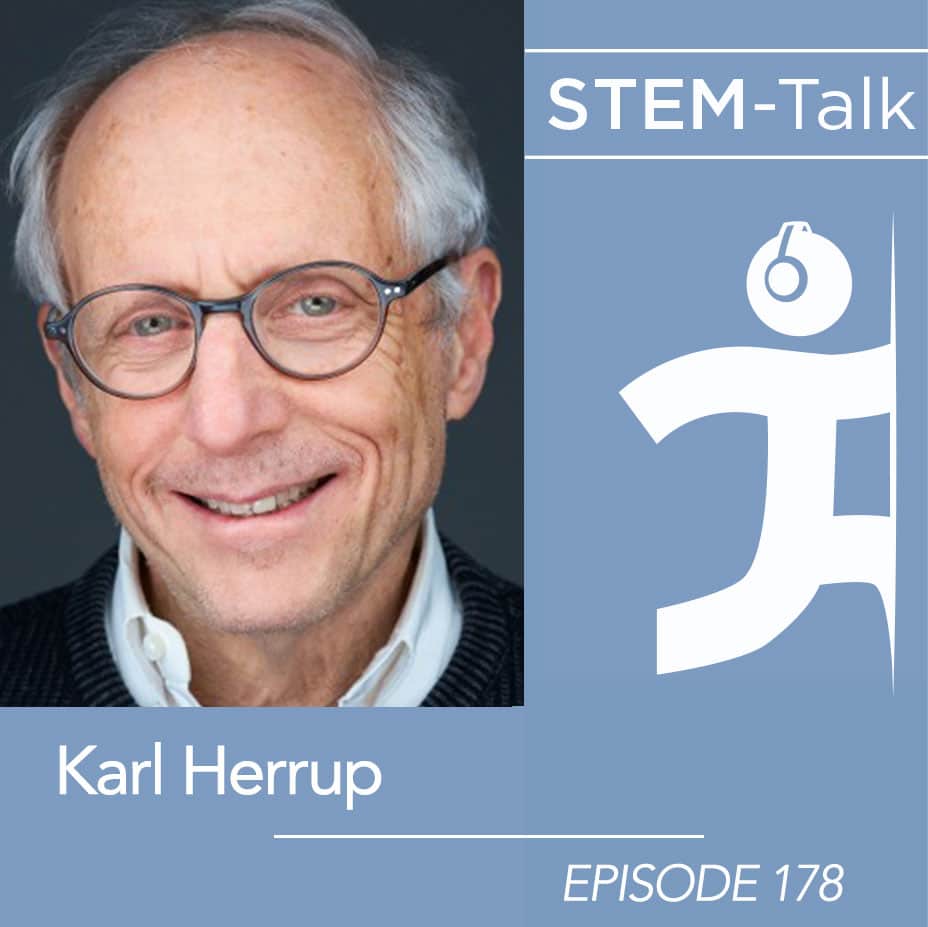
    Episode 178: Karl Herrup discusses the shortcomings of Alzheimer’s research

    Today we have Dr. Karl Herrup, a neurobiologist known for his investigations into the roles that DNA damage and noncoding genetic variants have in Alzheimer’s disease. Joining Ken today to interview Karl is Dr. Tommy Wood, a visiting scientist here at IHMC. Tommy also is an associate professor of pediatrics and neuroscience at the University of Washington, where he focuses on brain health across lifespan. He has been our guest several times on STEM-Talk and we will have links to those interviews in our show notes for today’s episode. After more than a century of research, the underlying cause of Alzheimer’s remains a mystery. For the past few decades, the leading theory has been the amyloid cascade hypothesis, which proposes that abnormal amyloid plaques in the brain are the central cause of the disease. Today we talk to Karl about his lab and research as well as his view that the amyloid cascade hypothesis is not only flawed, but also could be holding back research for a cure of Alzheimer’s. A professor of neurobiology and an investigator in the Alzheimer’s Disease Research Center at the University of Pittsburgh School of Medicine, Herrup is the author of How Not to Study a Disease: The Story of Alzheimer’s. Show notes: [00:03:50] Tommy asks Karl what he was like as a kid to open the interview. [00:04:36] Tommy asks Karl about his educational environment growing up. [00:05:10] Ken mentions that Karl went to Brandies University originally with the intent of becoming a physician and asks Karl what happened to change his mind. [00:06:14] Ken asks Karl if it is true that his father was disappointed with Karl’s decision to abandon medical school in favor of genetics. [00:07:02] Tommy mentions that Karl began researching genetics in the late 1960s when researchers were just beginning to unravel the secrets of DNA. Tommy asks Karl to discuss why this was such an exciting time to study genetics. [00:08:38] Tommy asks Karl what prompted him to pursue a PhD in neuroscience. [00:11:34] Continuing on the theme of happy accidents, Ken asks if it was also an accident that led to Karl moving to Switzerland for a second post-doc. [00:12:36] Ken asks Karl to expound on his experience taking an overseas post-doc, which was not a common practice in the 1970s. [00:14:11] Ken mentions that Karl has seemed to benefit in his life from the combination of preparation and the willingness to explore opportunities that present themselves. [00:15:00] Tommy mentions that when Karl arrived back in the US from Switzerland, he accepted a faculty position at Yale and asks him to discuss this experience. [00:17:06] Tommy mentions that after Yale, Karl had several faculty appointments, including a seven-year stint in Hong Kong, and asks Karl to talk about that experience. [00:21:36] Tommy asks Karl why, in 2019, he moved back to his hometown to become a professor of neurobiology at the University of Pittsburgh and co-investigator at the university’s Alzheimer’s research center. [00:24:45] Ken asks Karl to talk about his lab at the University of Pittsburgh, which focuses on the biology of neurodegeneration. [00:26:32] Ken asks Karl if there was anything specific that caused him to shift his focus at this stage in his career so heavily towards Alzheimer’s research. [00:28:21] Tommy comments on Karl’s hypothesis of the aging brain, noting that it would make sense for the same processes involved in the developing brain to relate to what we see in the aging brain, as these processes are continuous throughout the lifespan. [00:29:54] Tommy pivots to talk about Karl’s book, entitled “How Not to Study a Disease: The Story of Alzheimer’s” for which Karl interviewed a number of experts and colleagues, asking each one to define Alzheimer’s disease in their own words. [00:30:51] Tommy reiterates the point that we still do not have a universally accepted definition of Alzheimer’s disease and asks Karl why this is such a critical problem for the field. [00:32:27] Ken asks if Karl has a working definition of Alzheimer’s disease. [00:33:47] Ken explains that Karl begins his book with the story of a woman named Dorothy, who after living a vibrant life and taking good care of herself as she aged, fell victim to Alzheimer’s disease. Ken asks Karl to talk about Dorothy, and why he chose to begin his book with her story. [00:36:58] Tommy asks Karl to define the difference between Alzheimer’s and dementia more broadly. [00:38:00] Tommy explains that while Alzheimer’s is typically characterized as a disease of late life, early onset Alzheimer’s, while rare, is possible, typically very aggressive, and generally runs in families. Tommy asks Karl to explain how we differentiate late and early onset Alzheimer’s. [00:38:58] Ken asks Karl to explain how one differentiates Alzheimer’s from other forms of dementia in a clinical context. [00:41:53] Ken points out that the title of Karl’s book “How Not to Study a Disease” highlights that assumptions about Alzheimer’s disease potentially have misdirected research in some ways. Ken asks Karl to talk about this misdirection and its consequences. [00:43:37] Tommy gives some background on the amyloid cascade hypothesis, explaining that Dr. Alzheimer himself was not entirely convinced that the cases he had been studying were necessarily representative of a single condition. Dr. Alzheimer’s mentor, Dr. Kraepelin, coined the disease in a book that he was writing. Tommy also mentions that Karl has said that this is one of three key events that cemented the amyloid cascade hypothesis as the leading hypothesis of Alzheimer’s disease and asks Karl to discuss more of this history. [00:49:20] Tommy asks Karl to give an overview of the amyloid cascade hypothesis. [00:53:36] Ken explains that Karl sees the amyloid cascade hypothesis as failing three basic tests. Ken goes on to ask Karl to discuss, in depth, the first test, which is the fact that in both humans and mice the addition of amyloid to healthy brains does not trigger an amyloid cascade. [00:56:55] Tommy moves to Karl’s second test of the amyloid cascade hypothesis, the fact that removal of amyloid from the brains of mice and humans does not stop Alzheimer’s disease processes. Given the recent FDA approval of several anti-amyloid drugs, Tommy asks Karl to give his thoughts on the history of anti-amyloid therapies. [01:03:29] Ken explains that the third test of the amyloid cascade hypothesis entails blocking the formation of amyloid from the amyloid precursor protein, which was not only found to not stop Alzheimer’s progression, but in fact makes humans and mice sicker. [01:05:47] Ken takes a moment to clarify that Karl is not arguing that amyloid has no role in Alzheimer’s disease, just that it is not the primary cause of Alzheimer’s. [01:06:21] Ken asks Karl what his response is when people ask what he proposes the cause of Alzheimer’s is if it’s not amyloid. [01:08:45] Tommy asks Karl to elaborate on the idea of the emergent nature of the brain and the potential for this emergence to help explain Alzheimer’s disease. [01:10:54] Ken mentions that the last section of Karl’s book is titled “Where Do We Go From Here” in which he argues that because age is an absolute prerequisite for Alzheimer’s, there is no solution to the problem of dementia that does not rely heavily on an understanding of the process of aging. Ken goes on to explain that much of this was originally posited in Karl’s 2010 paper Reimagining Alzheimer’s disease: An age-based hypothesis. Ken goes on to ask Karl to talk about his view that developing an age-based hypothesis is going to be difficult given that aging is one of the greatest unsolved mysteries in biology. [01:13:19] Ken mentions that aging research gets a very small amount of funding in comparison to the myriad disorders for which aging is the primary risk factor. [01:16:11] Tommy shifts gears to talk about a series of studies that Karl conducted on the benefits of exposure to Japanese gardens on the clinical symptoms of Alzheimer’s disease. In one of these studies, Karl found that the Japanese garden not only relieved physiological stress but also improved qualitative measures such as verbalization and memory retrieval. Tommy asks Karl how he became interested in Japanese gardens, and if the results of his experiments surprised him. [01:20:33] Tommy comments that Karl’s work on the effects of Japanese gardens on the clinical symptoms of Alzheimer’s contributes to a larger body of literature showing the critical importance of the environment in shaping and maintaining cognitive function. Tommy goes on to say that the decline in certain cases of Alzheimer’s can be matched to the increasing levels of institutionalization and the decrease of enriching stimuli in a patient’s environment as their disease progresses. Tommy asks Karl to talk about the importance of social, cognitive, and environmental stimuli for cognitive function. [01:23:34] Ken mentions that Karl has pointed out in the past that non-pharmacological approaches to treating Alzheimer’s have been the most effective tools in our arsenal so far. Given this, Ken asks Karl what he recommends to people for their brain health and cognitive function. [01:25:22] Ken explains that Karl is involved with, or supports, at least two charitable organizations that aim to reshape the face of funding for Alzheimer’s research, namely the Coins for Alzheimer’s Research Trust, and the Clear Thoughts Foundation. Ken asks Karl to talk about his relationship to these organizations and what he hopes will change in the landscape of Alzheimer’s research funding. [01:27:23] Tommy closes our interview asking whether Karl has a Japanese garden of his own in his back yard. Links: About IHMC Karl Herrup bio Ken Ford bio Ken Ford Wikipedia page Tommy Wood bio Tommy Wood STEM-Talk episode 47 Tommy Wood STEM-Talk episode 48 Tommy Wood STEM-Talk episode 110 Tommy Wood STEM-Talk episode 111 Tommy Wood STEM-Talk episode 128

Showing 21–22 of 22 episodes