Skip to content
Artwork for SLP Learning Hour
EducationCoursesHow To

SLP Learning Hour

Speech Therapy PD

Each season of the SLP Learning Hour we release a new miniseries, all dedicated to going in-depth on a different speech therapy topic. Hear from a variety of hosts and guests who are leaders in the field as they discuss topics including: stuttering, AAC, sports concussion, teletherapy, ethics, and more!

Each episode of SLP Learning Hour is worth .1 ASHA CEU when you complete the accompanying course through Speech Therapy PD.

Play
  • 52 episodes
  • Avg 1 hr 7 min
  • English
Counted on this page — what you have heard stays on this device, so it is not something the list can be paged by.
  • July 28 · 1 hr 5 min

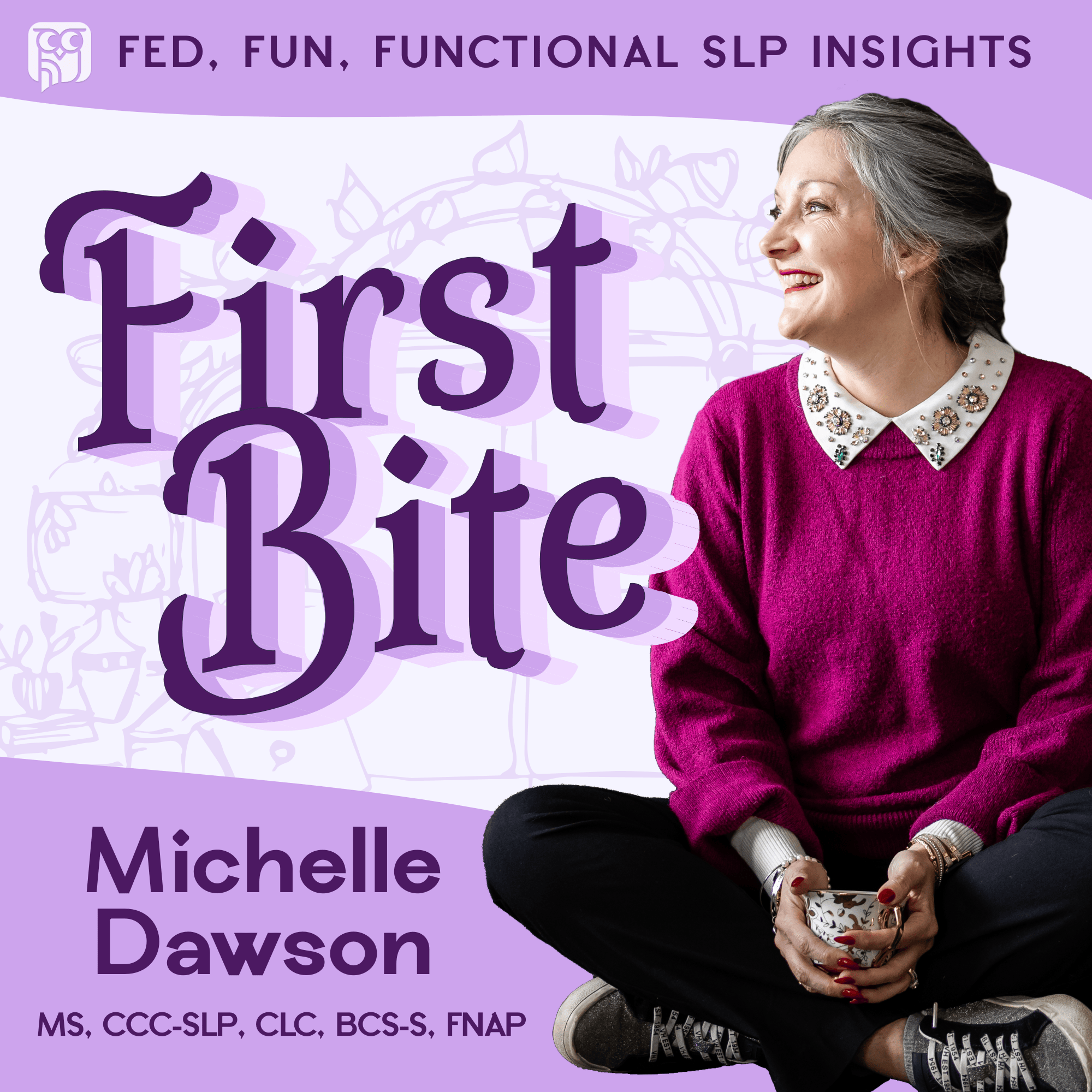
    Audiology & Speech-Language Pathology Interstate Compact (ASLP-IC) - First Bite: Fed, Fun, Functional SLP Insights

    What is the ASLP Interstate Compact and what does it mean for SLPs? Guest: Susan Adams, Esq., CAE, Director of State Legislative & Regulatory Affairs at ASHA Earn 0.10 ASHA CEUs for this episode with Speech Therapy PD Watch on YouTube In this episode of First Bite, Michelle Dawson, MS, CCC-SLP, CLC, BCS-S, FNAP, welcomes Susan Adams, Esq., CAE, for a timely discussion about the Audiology & Speech-Language Pathology Interstate Compact (ASLP-IC) and what it means for speech-language pathologists. Together, they break down how the ASLP Compact works, who is eligible to participate, what privileges it provides, and where implementation currently stands across the United States. If you've been wondering how the compact could affect your clinical practice, this episode will help you understand the opportunities, limitations, and what to watch for next. About the Guest: Susan Adams is the Director for State Legislative and Regulatory Affairs at ASHA. She is responsible for advancing the public policy objectives of ASHA by serving as team lead and policy expert on state legislation and regulations affecting audiologists and speech-language pathologists, related to state licensure, including the Audiology & Speech-Language Pathology Interstate Compact, and diversity, equity, and inclusion issues that affect the ability to practice. Show Notes: Contact Susan on LinkedIn ASLP-IC Website Love Money: Support ACLU

  • July 27 · 1 hr 6 min

    Coaching Techniques for Parents of Gestalt Processors - the gestalt get-together

    Small shifts in your coaching can make a lasting impact at home. Guest: Cristina J. Easton, Educational Consultant Earn 0.10 ASHA CEUs for this episode with Speech Therapy PD Watch on Youtube In this episode of The Gestalt Get-Together, host Corinne Zmoos, MS, CCC-SLP, welcomes back Cristina Easton to discuss what effective parent coaching looks like through the eyes of a parent of a Gestalt Language Processor. Drawing from her own experiences, Cristina shares what helped her feel supported, what created barriers to learning, and how clinicians can build stronger partnerships with families throughout the therapy process. Together, Corinne and Cristina discuss practical coaching strategies that encourage collaboration, confidence, and meaningful carryover beyond the therapy room. You'll learn ways to provide education and feedback that feel supportive rather than overwhelming, helping families become active, empowered members of the therapeutic team. Whether you're new to parent coaching or looking to strengthen your approach, this episode offers thoughtful insights and real-world perspectives that can help you create more effective, family-centered therapy for Gestalt Language Processors. About the Guest: Cristina J. Easton is the founder of imPACT Educational Consulting, LLC, Director at Educator Support Collaborative, and Program Strategy Manager at AdoptAClassroom.org. She majored in Sociology at Smith College, earned her Master's in Teaching as a New York City Teaching Fellow in Special Education, and her Master's in Education Leadership at Bank Street College of Education. Her mission is to guide projects from promise to impact, focusing on measurable actions that promote voice, equity, and joy for youth, families, educators, and institutions. Show Notes: In Vivo Feedback Predicts Parent Behavior Change in the Attachment and Biobehavioral Catch-up Intervention The Early Childhood Coaching Handbook - Dathan D. Rush & M'Lisa L. Shelden Therapeutic Climbing: A Pediatric Top-Rope Rock Climbing Program for Sensory Integration Through Social Prescribing Neurodivergent Climbers: Finding Balance On and Off the Wall Effect of an indoor climbing program on selective attention of children with autism spectrum disorder (ASD) Reflection Questions

  • July 23 · 1 hr 6 min

    Intent, Intensity, and Neuroplasticity with Laura Langer - Brainstorms: Functional Neurorehab for SLPs

    Why Do Intent, Intensity, and Neuroplasticity Matter? Guest: Laura Langer, MS, CCC-SLP Earn 0.10 ASHA CEUs for this episode with Speech Therapy PD Watch on YouTube In this episode of Brainstorms, host Renee Garrett, MSEd, CCC-SLP, CBIS, is joined by Laura Langer, MS, CCC-SLP, to examine the evidence behind the SPEAK OUT! program and why intentional speech production plays such an important role in treating individuals with Parkinson's disease. Together, they discuss the research supporting SPEAK OUT!, the principles of motor learning and neuroplasticity that guide the program, and how repetition, intensity, and salience work together to create meaningful improvements in communication. About the Guest: Laura Langer, M.S., CCC-SLP, serves as the Chief Clinical & Research Officer at Parkinson Voice Project, where she is committed to advancing evidence-based care for individuals with Parkinson's disease. She has an extensive background in medical speech-language pathology and clinical education, with a strong focus on neurologic communication and swallowing disorders.

  • July 21 · 1 hr 2 min

    Debunking Baby-Led Weaning | Kelsey Thompson - First Bite: Fed, Fun, Functional SLP Insights

    Understanding the research, benefits, and limitations of Baby-Led Weaning. Guest: Kelsey Thompson, PhD, CCC-SLP Earn 0.10 ASHA CEUs for this episode with Speech Therapy PD Watch on Youtube In this episode of First Bite, Michelle Dawson, MS, CCC-SLP, CLC, BCS-S, and Kelsey Thompson, PhD, CCC-SLP, dig into baby-led weaning (BLW). Whether you're new to BLW or looking to refine your clinical perspective, Michelle and Kelsey break down what BLW is, what it isn't, and how to support families and their little ones with confidence. About the Guest: Kelsey Thompson, PhD, CCC-SLP, is a speech-language pathologist, research scientist, and mom of two. Her clinical and research work centers on supporting families during the introduction of solid foods, with the goal of preventing long-term pediatric feeding disorders and empowering caregivers to feel confident in their feeding journey. Related Courses: Early Feeding Transitions and Down Syndrome: How to Support Caregivers Infant Reflexes for Feeding and Development Show Notes: Contact Kelsey on LinkedIn Feeding Flock Find Resources: FindHelp.org Love Money: Support Feeding Matters Resources: Complementary Feeding Methods-A Review of the Benefits and Risks The Baby-Led Weaning Method (BLW) in the Context of Complementary Feeding: A Review Baby-led weaning: A thematic analysis of comments made by parents using online parenting forums Early feeding practices and eating behaviour in preschool children: The CORALS cohort Impact of a Modified Version of Baby-Led Weaning on Infant Food and Nutrient Intakes: The BLISS Randomized Controlled Trial How different are baby-led weaning and conventional complementary feeding? A cross-sectional study of infants aged 6-8 months Current Evidence on Nutrient Intakes and Infant Growth: A Narrative Review of Baby-Led Weaning vs. Conventional Weaning

  • Aug 19, 2025 · 1 hr 8 min

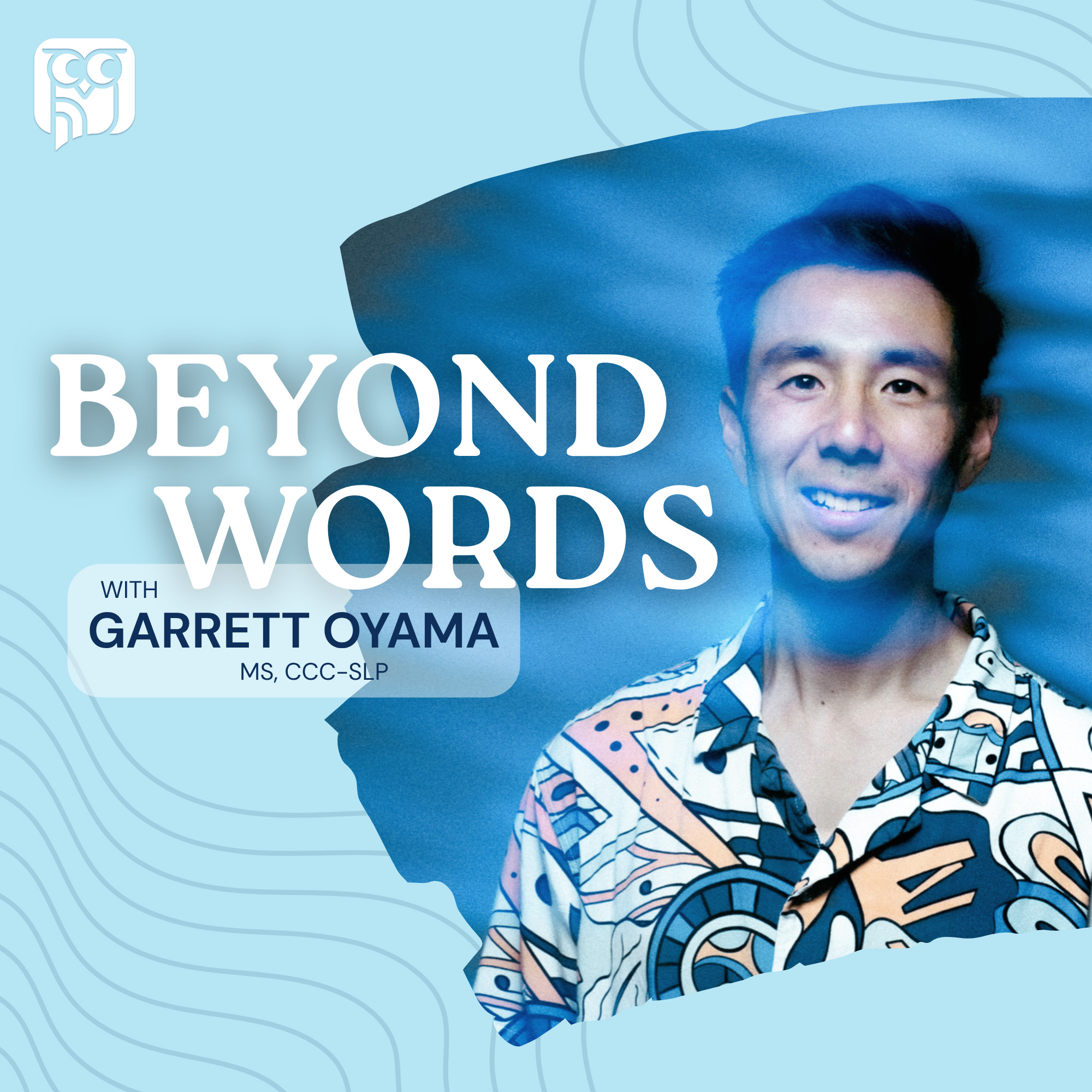
    The Hidden Architecture of Language: Autoregression, AI, and Human Speech with Dr. Elan Barenholtz - Beyond Words with Garrett Oyama

    Get ASHA CEUs: Speech Therapy PD Watch on YouTube Join the Beyond Words Newsletter Learn more about Dr. Barenholtz: Elan's substack Elan on X Elan's lab Elan's YouTube channel Join host Garrett Oyama in this thought-provoking episode of Beyond Words, featuring Dr. Elan Barenholtz, cognitive scientist and professor of psychology at Florida Atlantic University. Together, they explore Dr. Barenholtz’s compelling theory that language is not invented, but discovered—emerging from structured, sequential patterns much like music. They dive deep into the concept of language as an autoregressive system, where meaning arises not from static symbols but from dynamic movement through linguistic space. Key topics include the aesthetics of syntax, the parallels between language and jazz improvisation, and what large language models can teach us about human communication. With implications for AI, language development, and clinical practice, this episode offers a paradigm-shifting view of how we speak, think, and understand the world.

  • Aug 12, 2025 · 1 hr 4 min

    The Shape of Language with Dr. Edward Gibson - Beyond Words with Garrett Oyama

    Join the Beyond Words Newsletter Get ASHA CEUs: SpeechTherapyPD Watch on YouTube Description: What shapes the way humans speak? In this episode of Beyond Words, Garrett Oyama sits down with Dr. Ted Gibson, professor of cognitive science at MIT and director of the MIT Language Lab, to explore how language emerges from cognitive and communicative pressures. From Amazonian hunter-gatherer languages with no number words, to cross-linguistic patterns explained by dependency length minimization, Ted shares insights from decades of research across dozens of languages. We also discuss why syntax matters for communication, how brain imaging separates language from thought, and what this means for speech-language pathologists, educators, and anyone fascinated by human cognition. Find Dr. Gibson here: X Lex Fridman Interview

  • Jul 28, 2025 · 57 min

    Cracking the Code: How Babies Learn Language Before Their First Word with Dr. Saffran - Beyond Words with Garrett Oyama

    Join the Beyond Words Newsletter Get CEUs: SpeechTherapyPd Watch on YouTube What does it take to make sense of the sound soup that surrounds a newborn? In this episode of Beyond Words, Garrett Oyama sits down with Dr. Jenny Saffran—pioneer of infant statistical learning—to explore how babies transform streams of speech into meaningful language, all without seeing “white spaces” between words. Together, they dive into: How infants use statistical learning to segment and group sounds Why the brain’s ability to track syllable patterns is like a built-in prediction engine How context and the physical environment (like shape-sorter toys!) support early word learning New work applying eye-tracking to understand language in children with cerebral palsy The intersection of music, language, and domain-general learning mechanisms Dr. Saffran also weighs in on nature vs. nurture, the rise of large language models, and why infants may be motivated not by communication—but by the desire to grip the world with meaning. Whether you’re a speech therapist, a cognitive science fan, or just fascinated by how humans learn to speak, this conversation opens up wonder and insight on every level.

  • Jun 18, 2025 · 1 hr 50 min

    Advocacy and Understanding for ASHA’s Proposed Changes to the “2020 Certification Standards” Panel Discussion - First Bite: Fed, Fun, Functional SLP Insights

    Expert Panel: Amy Hobek, PhD, CCC-SLP, Fé González Murray, EdD, CCC-SLP, Vishnu KK Nair, Archie Soelaeman, Betty Yu and Reem Khamis Take ACTION HERE: Changes to 2020 certification standards feedback. Survey. (n.d.). https://www.surveymonkey.com/r/2020_Cert_Changes This episode will be available for 0.1 ASHA CEU on July 4, enroll here: https://www.speechtherapypd.com/courses/ashas-proposed-changes Correction Note from Dr. Betty: “During the recording I referred to the executive order targeting associations with assets of $500 million or more. I thought ASHA met that criteria but actually ASHA’s net assets are around $174 million.” In this episode, Michelle and Erin host an all start line up of colleagues from across the globe to discuss ASHA’s Proposed Changes to the “2020 Certification Standards” and the long-term ramifications that these changes could have for our profession. This conversation is timely in that there are only a matter of days, roughly 3 weeks or less, for audiologists and speech-language pathologists (including students) to write in and advocate to ASHA on whether the proposed changes to the 2020 Certification Standards should be accepted… changes that remove key words and language that were hard fought to obtain. Be informed that this conversation does address political rationale behind the changes and offer a plethora of resources for individuals to grow their knowledge regarding the long-term ramifications of these proposed changes… but it ends with resources on how to make your voice heard! So, come join the ladies of “First Bite” and ADVOCATE! About the Panel: Amy Hobek, PhD, CCC-SLP is an Associate Professor of Communication Sciences and Disorders at the University of Cincinnati. Her teaching and scholarship focus on equity and inclusion, with an emphasis on valuing and legitimizing cultural and linguistic variations in these areas within individuals, families, and communities. She is also a licensed speech language pathologist providing clinic supervision of graduate students in a culturally and linguistically diverse preschool setting on UC’s campus. She is a co-chair of the Cultural Humility Task Force of the National Black Association of Speech Language and Hearing. She is a topic co-chair of Equity, Inclusion, and Cultural-Linguistic Diversity for the ASHA 2025 Convention. Professor Reem Khamis (also known as Reem Khamis-Dakwar) is Professor Emerita at Adelphi University and Chair of the Department of Communication Sciences and Disorders at Long Island University (LIU) Brooklyn. Her expertise centers on language development, processing, and clinical services within the sociolinguistic context of diglossia and diverse populations. Dr. Khamis is co-founder of the Journal of the Critical Study of Communication and Disability (JCSCD) and a co-founding member of the Speech, Language, and Hearing Scientists Equity Action Collective. She currently serves as Language Section Editor for the Journal of Speech, Language, and Hearing Research (JSLHR). She received the Excellence in Diversity Award in 2020 from the Council of Academic Programs in Communication Sciences and Disorders (CAPCSD). Fé González Murray, EdD, CCC-SLP is an Associate Clinical Professor in the Department of Communication Sciences and Disorders at Northern Arizona University. Prior to joining the NAU faculty, she worked for 25 years as an English/Spanish bilingual speech-language pathologist in various settings, most notably in public schools serving Indigenous American, migrant, and immigrant populations. In addition to teaching and supervising clinical rotations, she facilitates workshops nationally and internationally on topics related to responsive practice with culturally and linguistically diverse individuals and their families, including multilingualism and collaboration with interpreters. Vishnu KK Nair is a lecturer in the School of Psychology and Clinical Language Sciences at University of Reading, UK. He currently co-leads the health theme of the Centre for Literacy and Multilingualism, University of Reading. His current research utilizes critical, decolonial and more than human approaches to understanding communication and disability. He is committed towards building a body of interdisciplinary and anti-colonial scholarship that de-pathologizes communication disability and focuses on understanding and affirming communication variability. His teaching and research have won multiple teaching excellence, research supervision and best student dissertation awards. Archie Soelaeman (she/her) is the Manager of School Speech Language Services and a speech-language pathologist at Helping Hand School in Countryside, Illinois, a therapeutic day school. She provides services to students with a primary diagnosis of autism and collaborates with a multidisciplinary team on a daily basis. She has over 16 years of experience in this setting. Her clinical interests include autism spectrum, augmentative and alternative communication, and apraxia. Archie is also a co-president of the Asian Pacific Islander Speech-Language-Hearing Caucus, a non-profit 501(c)(3) organization whose primary mission is to make connections among API groups, share common concerns in education, and advocate for quality speech and hearing service delivery for individuals across diverse API communities. Archie is a native speaker of Bahasa Indonesia who also has conversational proficiency in Spanish. Betty Yu is a Professor in the Department of Speech, Language, and Hearing Sciences and a Co-Managing Editor of the Journal of Critical Study of Communication and Disability. Her research and clinical interests are in how communication access among racially-minoritized, disabled children in multilingual communities are shaped by institutional practices/policies, family socialization, and dominant ideologies about race/language/disability. She also focuses on issues of equity in the field of Speech, Language and Hearing Sciences (SLHS), particularly as related to the systemic influences of raciolinguistic discrimination, ableism and pathologization. Show Notes: Asian Pacific Islander speech-language-hearing caucus. Asian Pacific Islander Speech-Language-Hearing Caucus. (2022, December 14). https://apislhc.org/ Beaver, D. (2024). The politics of language. Princeton University Press. El Akkad, O. (2025). One day, everyone will have always been against this. Alfred A. Knopf. Karen Yourish, A. D. (2025, March 8). These words are disappearing in the new Trump administration. The New York Times. https://www.nytimes.com/interactive/2025/03/07/us/trump-federal-agencies-websites-words-dei.html Ostrager, A.-E., Jordan, J., & High, T. R. (2025, February 10). President Trump acts to roll back dei initiatives. The Harvard Law School Forum on Corporate Governance. https://corpgov.law.harvard.edu/2025/02/10/president-trump-acts-to-roll-back-dei-initiatives/

  • May 16, 2025 · 1 hr 4 min

    The Perfect Oral Motor Storm: What Happened, Why, and Supportive Evidence for Oral Sensory-Motor Therapy (Part 5) - The Speech Link with Char Boshart

    -Originally Aired September 2019- Earn a total of 0.5 ASHA CEUs for the 5-part episodes with Speech Therapy PD: https://www.speechtherapypd.com/course?name=The-Perfect-Oral-Motor-Storm-What-Happened-Why-and-Supportiv In this five-hour course, Char chronicles a comprehensive account of the events of the past two decades that have infused and inspired one of the most controversial—and misunderstood—storms in the history of speech-language pathology. Perhaps you’re unsure why “oral motor” has been criticized, or how to respond when someone mentions it. You’ll learn what to say and how to back it up. Char covers the “Five Waves” as to what happened, who did what, and where we go from here. Most importantly, you’ll learn Supportive Evidence for the Use of Oral Sensory-Motor Methods to Remediate Speech Sound Productions.

  • May 14, 2025 · 1 hr 1 min

    The Perfect Oral Motor Storm: What Happened, Why, and Supportive Evidence for Oral Sensory-Motor Therapy (Part 4) - The Speech Link with Char Boshart

    -Originally Aired September 2019- Earn a total of 0.5 ASHA CEUs for the 5-part episodes with Speech Therapy PD: https://www.speechtherapypd.com/course?name=The-Perfect-Oral-Motor-Storm-What-Happened-Why-and-Supportiv In this five-hour course, Char chronicles a comprehensive account of the events of the past two decades that have infused and inspired one of the most controversial—and misunderstood—storms in the history of speech-language pathology. Perhaps you’re unsure why “oral motor” has been criticized, or how to respond when someone mentions it. You’ll learn what to say and how to back it up. Char covers the “Five Waves” as to what happened, who did what, and where we go from here. Most importantly, you’ll learn Supportive Evidence for the Use of Oral Sensory-Motor Methods to Remediate Speech Sound Productions.

  • May 12, 2025 · 1 hr

    The Perfect Oral Motor Storm: What Happened, Why, and Supportive Evidence for Oral Sensory-Motor Therapy (Part 3) - The Speech Link with Char Boshart

    -Originally Aired September 2019- Earn a total of 0.5 ASHA CEUs for the 5-part episodes with Speech Therapy PD: https://www.speechtherapypd.com/course?name=The-Perfect-Oral-Motor-Storm-What-Happened-Why-and-Supportiv In this five-hour course, Char chronicles a comprehensive account of the events of the past two decades that have infused and inspired one of the most controversial—and misunderstood—storms in the history of speech-language pathology. Perhaps you’re unsure why “oral motor” has been criticized, or how to respond when someone mentions it. You’ll learn what to say and how to back it up. Char covers the “Five Waves” as to what happened, who did what, and where we go from here. Most importantly, you’ll learn Supportive Evidence for the Use of Oral Sensory-Motor Methods to Remediate Speech Sound Productions.

  • May 9, 2025 · 1 hr 2 min

    The Perfect Oral Motor Storm: What Happened, Why, and Supportive Evidence for Oral Sensory-Motor Therapy (Part 2) - The Speech Link with Char Boshart

    -Originally Aired September 19, 2019- Earn a total of 0.5 ASHA CEUs for the 5-part episodes with Speech Therapy PD: https://www.speechtherapypd.com/course?name=The-Perfect-Oral-Motor-Storm-What-Happened-Why-and-Supportiv In this five-hour course, Char chronicles a comprehensive account of the events of the past two decades that have infused and inspired one of the most controversial—and misunderstood—storms in the history of speech-language pathology. Perhaps you’re unsure why “oral motor” has been criticized, or how to respond when someone mentions it. You’ll learn what to say and how to back it up. Char covers the “Five Waves” as to what happened, who did what, and where we go from here. Most importantly, you’ll learn Supportive Evidence for the Use of Oral Sensory-Motor Methods to Remediate Speech Sound Productions.

Showing 41–52 of 52 episodes