Skip to content
Artwork for SLP Learning Hour
EducationCoursesHow To

SLP Learning Hour

Speech Therapy PD

Each season of the SLP Learning Hour we release a new miniseries, all dedicated to going in-depth on a different speech therapy topic. Hear from a variety of hosts and guests who are leaders in the field as they discuss topics including: stuttering, AAC, sports concussion, teletherapy, ethics, and more!

Each episode of SLP Learning Hour is worth .1 ASHA CEU when you complete the accompanying course through Speech Therapy PD.

Play
  • 27 episodes
  • Avg 1 hr 6 min
  • English
Counted on this page — what you have heard stays on this device, so it is not something the list can be paged by.
  • Yesterday · 1 hr 6 min

    Making Sense of Responsive Feeding Therapy: Child-Centered Feeding Therapy - Making Sense with Madi the SLP

    Follow the child’s cues for more meaningful feeding therapy. Guest: Karen Dilfer, OTR/L Earn 0.10 ASHA CEUs for this episode with Speech Therapy PD Watch on YouTube In this episode of the Making Sense podcast, host Madi Metcalf, MS, CCC-SLP, is joined by Karen Dilfer, OTR/L, to discuss child-centered feeding therapy and how it aligns with the principles of responsive feeding therapy. Together, they explore the importance of honoring a child's autonomy and share practical ways to implement child-led approaches during feeding therapy sessions. Whether you're new to responsive feeding therapy or looking to strengthen your current approach, this episode offers practical strategies for balancing therapeutic goals with respect for each child's cues, preferences, and participation, supporting more positive and meaningful feeding experiences. About the Guest: Karen Dilfer MS, OTR/L is an occupational therapist, feeding specialist, and food enthusiast. She is trained in the Get Permission Approach to pediatric feeding and is privileged to spend the majority of her time as a clinician, working with children and families. Karen is the director of the feeding program at Amy Zier + Associates, a private pediatric therapy clinic in Chicago. She participates in research activities at the University of Chicago where she works in the department of Developmental and Behavioral Pediatrics. Karen is a co-founder and board member of The Chicago Feeding Group, a 501(c)(3) nonprofit organization dedicated to supporting families of children with Pediatric Feeding Disorder (PFD) and advancing continuing education for professionals serving this population. Recognized as a leader in the field, Karen is a sought-after educator and regularly presents for advanced practice platforms, including the Early Intervention training program in Illinois, Sooner Start in Oklahoma, and national professional organizations such as the American Speech-Language-Hearing Association (ASHA). Show Notes: Contact Madi Metcalf: LinkedIn, Instagram, Function First Contact Karen Dilfer: LinkedIn Pediatric feeding disorder in early intervention: Expanding access, improving outcomes, and prioritizing responsive feeding Responsive Feeding Therapy: Values and Practice Chicago Feeding Group Get Permission Institute
  • Tuesday · 1 hr 6 min

    Culturally Responsive Practices Transform Outcomes with Samantha Dudding - First Bite: Fed, Fun, Functional SLP Insights

    Gain actionable strategies to support more inclusive, culturally responsive, and family-centered practice. Guest: Samantha Dudding, MS, CCC-SLP Earn 0.10 ASHA CEUs for this episode with Speech Therapy PD Watch on YouTube In this episode of First Bite, Michelle Dawson, MS, CCC-SLP, CLC, is joined by Samantha Dudding, MS, CCC-SLP, for a thoughtful conversation about how culturally responsive communication can promote more equitable outcomes in special education. Drawing on her clinical expertise and leadership experience, Samantha shares practical strategies for supporting culturally and linguistically diverse students and families while strengthening collaboration across educational teams. About the Guest: Samantha Dudding, M.S., CCC‑SLP, is a speech‑language pathologist and special education leader whose work centers on culturally responsive communication within school‑based special education processes. She is currently a Student Support Coordinator in a school district just outside of Washington, DC where she facilitates special education processes, supports multidisciplinary teams, and leads professional development focused on inclusive practices. Show Notes: Bronfenbrenner's ecological systems theory Sign up for the ASHFoundation's 7th Annual Virtual Walk/Run Join the team "First Bite Fun Runners"

  • Monday · 1 hr 2 min

    What School-Based SLPs Should Know About Music Therapy with Anna Graves - School of Speech

    Whether you're curious about the science behind music-based interventions or looking to build stronger interdisciplinary partnerships, this episode offers a practical introduction to music therapy Full Episode Title: More Than Music: What School-Based SLPs Should Know About Music Therapy Guest: Anna Graves, MA, MT-BC Earn 0.10 ASHA CEUs for this episode with Speech Therapy PD Watch on YouTube Music therapy is far more than singing songs or playing instruments. In this episode of the School of Speech podcast, host Carolyn Dolby, MS, CCC-SLP, is joined by music therapist and SLP graduate student Anna Graves, MA, MT-BC, to discuss what music therapy is, the theoretical approaches that guide clinical practice, and how understanding the role of music therapists can strengthen collaboration in school settings. About the Guest: Anna Graves, MA, MT-BC, is a music therapist and graduate speech language pathology student in Northern Colorado. After her undergraduate schooling at Truman State University, she attended graduate school for Music Therapy at the University of Iowa. She relocated to Northern Colorado in 2022, and she has been practicing music therapy since.

  • August 20 · 1 hr 6 min

    The Brain Health Toolbox with Jennifer Ruckner - Brainstorms: Functional Neurorehab for SLPs

    How can we incorporate brain health into everyday clinical practice? Guest: Jennifer Ruckner, MS, CCC-SLP Earn 0.10 ASHA CEUs for this episode with Speech Therapy PD Watch on YouTube Brainstorms podcast host Renee Garrett, MSED, CCC-SLP, CBIS, is joined by Jennifer Ruckner, MS, CCC-SLP, for a practical discussion on how speech-language pathologists can incorporate brain health into everyday clinical practice. Together, they break down the neuroscience behind neuroplasticity, cognitive reserve, and lifestyle factors that influence brain function, while exploring what brain health really means across the continuum of care. About the Guest: Jennifer Ruckner, MS, CCC-SLP, is a seasoned speech-language pathologist with over three decades of experience across Early Intervention, school districts, and private practice. She earned her Bachelor of Science and Master’s degrees in Communication Disorders from Auburn University and has practiced since 1990. Jennifer specializes in Social/Pragmatic Language, Autism Spectrum Disorder, Expressive Language Disorder, and Feeding Disorders. Show Notes and Resources: First Things First (Arizona Early Childhood Development and Health Board): This state-funded organization explicitly publishes these exact percentage benchmarks in their The First Five Years and general Brain Development guides to emphasize the importance of early childhood. [1, 2, 3] The Center on the Developing Child at Harvard University: Harvard's research on early brain architecture and "serve-and-return" interactions serves as the scientific foundation for these milestones. They document that the brain's physical volume and synaptic pathways undergo their most rapid, critical expansion during this 0-to-5 window. [1, 2, 3, 4, 5] National Institutes of Health (NIH): Public health studies track these figures based on physical brain weight and volume growth, explaining how a newborn's brain starts at about 25% of adult size, doubles in the first year, and hits the 90% mark around age 5. [1, 2]

  • August 18 · 1 hr 21 min

    Training Pediatric SLPs for Community Impact with Paula Pineda - First Bite: Fed, Fun, Functional SLP Insights

    What does it take to prepare pediatric SLPs in serving diverse communities? Guest: Paula V. Pineda, SLPD, CCC-SLP, BCS-CL Earn 0.10 ASHA CEUs for this episode with Speech Therapy PD Watch on YouTube In this episode of the First Bite podcast, host Michelle Dawson, MS, CCC-SLP, CLC, is joined by Paula V. Pineda, SLPD, CCC-SLP, BCS-CL, bilingual speech-language pathologist, Chief Clinical Supervisor at Teachers College, Columbia University, and President of the ASHA Hispanic Caucus, for a thoughtful conversation about preparing pediatric SLPs to serve culturally and linguistically diverse communities. About the Guest: Paula V. Pineda, SLPD, CCC-SLP, BCS-CL, is a bilingual (English/Spanish) Speech-Language Pathologist with over 14 years of experience. Originally from Colombia, Paula has lived in New York City since 2001. She earned her Master’s degree from Adelphi University in 2011 and completed her clinical doctorate at Northwestern University in 2023. Show Notes: Contact Paula: www.tc.columbia.edu Family Guided Routines Based Intervention: fgrbi.com Sign up for ASHFoundation's 7th Annual Virtual Walk/Run Join the team "First Bite Fun Runners" Love Money: Support the Hispanic Caucus: www.hispaniccaucusasha.org Support your local immigration association: www.findhelp.org

  • August 17 · 1 hr 2 min

    How SLPs and OTs Can Transform School Mealtimes - School of Speech

    Whether you're part of a feeding team or looking to strengthen collaboration with colleagues, you'll leave this episode with practical, evidence-informed ideas you can put to work in your own school. Full Episode Title: More Than Lunch: How SLPs and OTs Can Transform School Mealtimes Guests: Maragryta Kuzmin, MA, CCC-SLP, TSSLD-BE & Lily Glasgo, PhD, OTR/L Earn 0.10 ASHA CEUs for this episode with Speech Therapy PD Watch on YouTube In this episode of the School of Speech podcast, host Carolyn Dolby, MS, CCC-SLP, is joined by Margaryta Kuzmin, MA, CCC-SLP, TSSLD-BE, BCS-S Candidate, and Lily Glasgo, PhD, OTR/L, to discuss how school-based speech-language pathologists and occupational therapists can work together to better support students with pediatric feeding disorder. They explore each profession's unique and overlapping roles in feeding, swallowing, self-feeding, sensory needs, and mealtime participation, while examining how feeding challenges can influence student safety, nutrition, attendance, learning, inclusion, and access to the educational environment. About the Guests: Margaryta Kuzmin is a bilingual speech-language pathologist based in New York City with over 15 years of experience working with infants, toddlers, and school-age children with complex communication, feeding, and developmental needs. She specializes in pediatric feeding and swallowing disorders, AAC, and working with medically complex populations. Dr. Glasgo received her PhD in Occupational Science in 2025 from UNC Chapel Hill, where she was funded through a Department of Education grant supporting young children with significant disabilities. She enjoys interdisciplinary collaboration and loves to bring an occupational perspective to research. She is co-chairing a large research project with the nonprofit Feeding Matters, which aims to increase physician education and outreach for early identification of pediatric feeding disorder.

  • August 14 · 1 hr 8 min

    Making Sense of Responsive Feeding Therapy: Felt Safety as the Foundation - Making Sense with Madi the SLP

    Discover how felt safety can open the door to appetite, curiosity, and connection at mealtimes. Guest: Katja Rowell, MD Earn 0.10 ASHA CEUs for this episode with Speech Therapy PD Watch on YouTube In this episode of Making Sense of Responsive Feeding Therapy, host Madi Metcalf, MS, CCC-SLP, is joined by Katja Rowell, MD, to explore why felt safety is the foundation of responsive feeding therapy. Together, they discuss how creating a sense of felt safety during feeding sessions and at home supports children with pediatric feeding and swallowing disorders by fostering appetite, regulation, and curiosity about food. Throughout the episode, Madi and Dr. Rowell examine the relationship between felt safety and responsive feeding, explaining how a supportive environment can reduce stress around mealtimes while encouraging intrinsic motivation and engagement. Participants will gain a deeper understanding of how felt safety influences feeding outcomes and leave with practical insights for creating more effective, child-centered feeding experiences. About the Guest: Katja Rowell is a family doctor, author, and founder of The Feeding Doctor. She is one of the authors of the Responsive Feeding Therapy White Paper. Her mission is to help children grow up to feel good about food and their bodies. She has special interests in avoidant eating and supporting adopted and fostered children. Her books include Helping Your Child When Mealtimes are Hard, Helping Your Child with Extreme Picky Eating, and Love Me, Feed Me, for fostering and adopting parents. She is a webinar contributor at Responsivefeedingpro.com. Show Notes: Contact Madi Metcalf: LinkedIn, Instagram, Function First Dr. Katja Rowell - The Feeding Doctor Self-Determination Theory as a Theoretical Framework for a Responsive Approach to Child Feeding Responsive feeding is embedded in a theoretical framework of responsive parenting Relationships between sensory sensitivity, anxiety and selective eating in children Impact of a Responsive Feeding Intervention on Children and Caregivers: A Nonrandomized, Repeated-Measures Study 'Finish your soup': counterproductive effects of pressuring children to eat on intake and affect The'picky eater': The toddler or preschooler who does not eat Modern Attachment Theory: The Central Role of Affect Regulation in Development and Treatment Role reversal method for treatment of food refusal associated with infantile feeding disorders

  • August 13 · 1 hr 6 min

    Teleterapia que conecta: intervenciones efectivas en acción - SLPs en Acción

    Invitada: Lymari Segarra Arroyo, SLPD, CCC-SLP Gana 0.1 ASHA CEU por este episodio con Speech Therapy PD Watch on Youtube En este episodio del podcast SLPs en Acción, Damaris Sánchez Rivera, MS, CCC-SLP, conversa con la Dra. Lymari Segarra Arroyo, SLPD, CCC-SLP, sobre cómo la teleterapia puede convertirse en una herramienta clínica efectiva, dinámica y accesible para nuestros clientes. Juntas exploran estrategias prácticas para planificar sesiones virtuales significativas, fomentar la participación activa, adaptar las intervenciones según las necesidades del cliente y abordar los desafíos más comunes de la telepráctica. Este episodio ofrece ideas aplicables para SLPs y SLPAs que desean fortalecer sus servicios en línea con confianza, creatividad y propósito clínico. Show Notes: Contacta a Lymari Segarra Arroyo en Instagram: @wepaslp Facebook: Wepa SLP TikTok: WepaSLP Recursos: Kit de recursos para telepráctica

  • August 11 · 1 hr 4 min

    Language, Literacy, and the Path to Reading Success with Heather Ramsdell - First Bite: Fed, Fun, Functional SLP Insights

    What role do SLPs play with literacy development? Guest: Heather L. Ramsdell, PhD, CCC-SLP, CALT, QIT Earn 0.10 ASHA CEUs for this episode with Speech Therapy PD Watch on Youtube In this episode of First Bite, Michelle Dawson, MS, CCC-SLP, CLC, BCS-S, FNAP, is joined by Heather L. Ramsdell, PhD, CCC-SLP, CALT, QIT, for a passionate, research-backed discussion that positions speech-language pathologists as central to literacy development. Heather reframes dyslexia and reading challenges as reflections of underlying language and developmental profiles, explains how early oral language skills lay the foundation for reading, and discusses key early indicators of risk and the diverse developmental pathways that contribute to reading difficulties. About the Guest: Heather L. Ramsdell, PhD CCC-SLP, CALT, QI in Training, University of Memphis, 2009, is an Associate Professor in the Department of Communication Sciences and Disorders at Idaho State University, owner/clinician at Once Upon a Time LLC, and mother of two children with dyslexia. Her teaching, research, and clinical areas of expertise/interest include infant vocal development, phonetics, phonology, multisensory structured language intervention, spelling, structured word inquiry, literacy, and dyslexia. Show Notes: Read with Ramsdell: www.readwithramsdell.com Contact Heather: www.isu.edu/slp/about/faculty Publications: https://pubs.asha.org/authored-by/Ramsdell/Heather+L Sign up for the ASHFoundation 7th Annual Virtual Walk/Run Join the First Bite Team: "First Bite Fun Runners" Love Money: Support Children's Dyslexia Centers

  • August 10 · 1 hr 2 min

    Making Evidence-Based Practice Work in Schools - School of Speech

    Whether you're new to school-based practice or a seasoned clinician, you'll leave with realistic, time-saving strategies you can use to make evidence-based practice a sustainable part of your everyday workflow. Full Episode Title: From Research to Real Life: Making Evidence-Based Practice Work in Schools Guests: Gabriella Reynolds, PhD, CCC-SLP & Dr. Ellie Cooper PhD, CCC-SLP, LSLS CERT. AVT Earn 0.10 ASHA CEUs for this episode with Speech Therapy PD Watch on YouTube Evidence-based practice is essential for school-based speech-language pathologists (SLPs), but finding, evaluating, and applying research can feel overwhelming in the realities of school practice. In this episode of School of Speech, host Carolyn Dolby, MS, CCC-SLP, welcomes Dr. Gabriella Reynolds and Dr. Ellie Cooper, to share practical, evidence-based strategies for helping school-based SLPs translate research into confident clinical decision-making and effective interventions for the students they serve every day. About the Guests: Gabriella Reynolds, PhD, CCC-SLP is an assistant professor in the Communication Sciences and Disorders Department at Syracuse University. Prior to entering academia, she worked as a speech-language pathologist (SLP) at a school for children with language and learning difficulties. Her research focuses on the language and literacy development of children with hearing loss. Dr. Ellie Cooper is a certified Speech-Language Pathologist, Listening and Spoken Language Specialist (LSLS Cert. AVT), and Assistant Professor in the Master of Speech-Language Pathology program at the University of St. Augustine for Health Sciences.

  • August 9 · 1 hr 2 min

    Celebrating ASHFoundation: 80 Years of Advancing Clinical Practice - First Bite: Fed, Fun, Functional SLP Insights

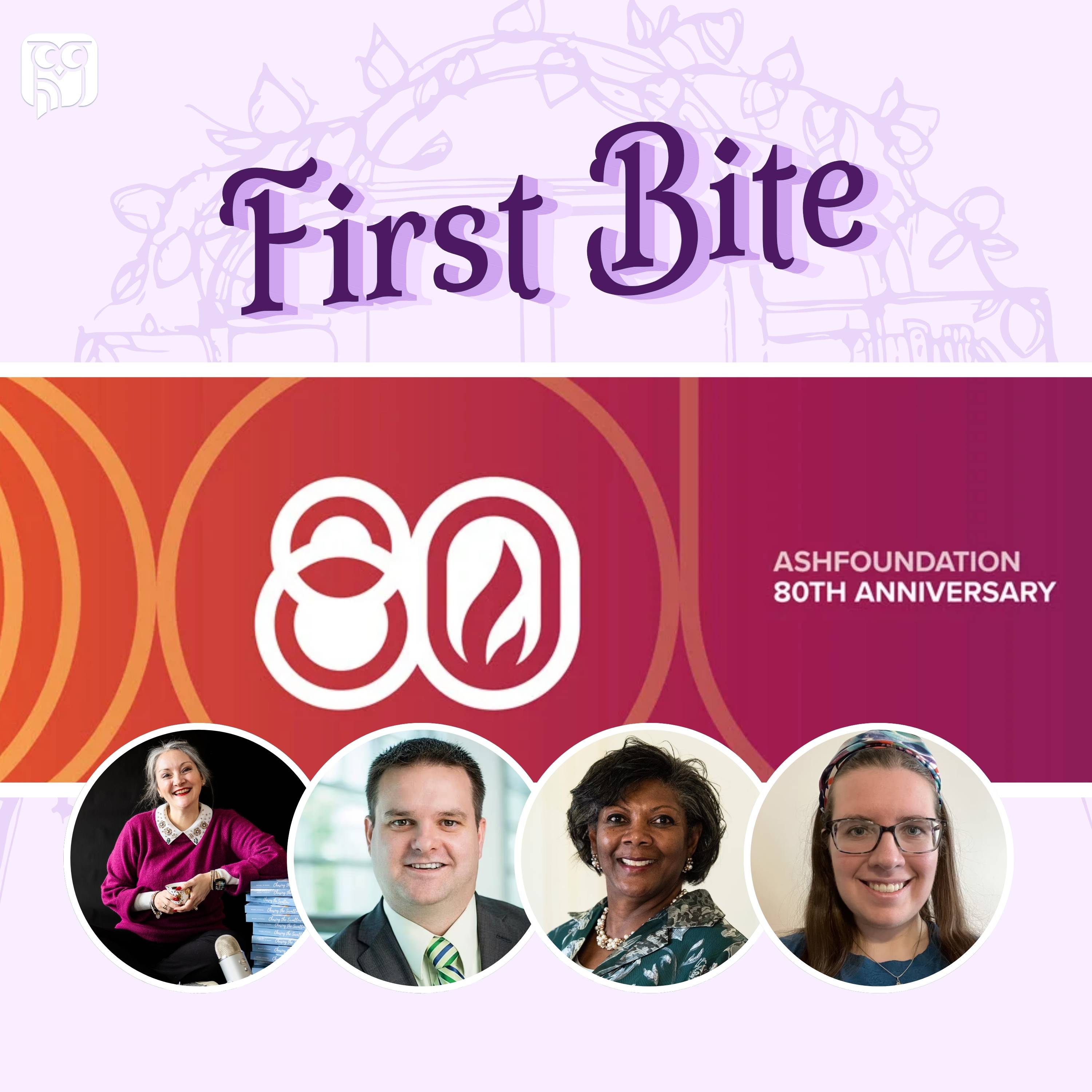
    Learn how the ASHFoundation is stepping up amidst research funding cuts. Earn 0.10 ASHA CEUs for this episode with Speech Therapy PD Watch on YouTube In this special live episode of First Bite, Michelle Dawson, MS, CCC-SLP, CLC, BCS-S, FNAP, is joined by Sharon E. Moss, PhD, CCC-SLP, CAE, Executive Director of the ASHFoundation, along with past funding recipients Katherine M. Trice, BA, and Ryan McCreery, PhD, to celebrate the ASHFoundation's 80th anniversary. If you've been watching the news and wondering how research funding cuts might impact our field, take a breath. The ASHFoundation is stepping up. Together, they discuss how innovative funding initiatives, including the Need-Based Emergency Funding Program, are supporting students, early-career investigators, and the future of communication sciences and disorders. Katherine and Ryan also share their personal experiences, highlighting the impact of Foundation support on their research and professional journeys. About the Guests: Dr. Ryan McCreery, PhD, is the Vice President of Research at Boys Town National Research Hospital in Omaha, Nebraska. He also serves as a Senior Scientist and Director of the Audibility, Perception, and Cognition (APC) Lab. Sharon E. Moss, PhD, CCC-SLP, CAE, became the executive director of the American Speech-Language-Hearing Foundation in October 2022. Moss is responsible for the ASHFoundation’s leadership and management, fundraising, and mission-related program activities which include scholarship, research grant and special project initiatives. Katherine M. Trice earned her BA in Linguistics from the University of Rochester and completed her PhD in Psychology from Northeastern University this July. She currently works as a postdoctoral associate in the Gabrieli Lab at MIT. Show Notes: www.ashfoundation.org ASHFoundation on Instagram: @ashfoundationcsd ASHFoundation on LinkedIn Sign up for the ASHFoundation 7th Annual Virtual Walk/Run Join the First Bite Team: "First Bite Fun Runners"

  • August 6 · 1 hr 4 min

    Health-Literate Communication for SLPs with Richard Zraick - Brainstorms: Functional Neurorehab for SLPs

    Health-literate communication is essential to effective speech-language pathology practice. Guest: Richard Zraick, PhD, CCC-SLP, CHSE Earn 0.10 ASHA CEUs for this episode with Speech Therapy PD Watch on YouTube In this episode of Brainstorms, Richard Zraick, PhD, CCC-SLP, CHSE, joins host Renee Garrett, MSEd, CCC-SLP, CBIS, to discuss practical, evidence-informed strategies for making clinical communication clearer, more accessible, and more actionable. Together, they examine common barriers to patient understanding and share practical ways to organize information, reduce cognitive load, use plain language without sacrificing clinical accuracy, incorporate teach-back into everyday practice, and create patient education that better supports individuals with communication disorders, cognitive impairments, and varying literacy levels. About the Guest: Richard Zraick, PhD, CCC-SLP, CHSE, is Professor and formerly the Founding Director of the School of Communication Sciences and Disorders at the University of Central Florida. He is a Fellow of the American Speech, Language, and Hearing Association. He is also a Certified Health Simulation Educator. He completed his Psychology B.A. (’84) and Speech and Hearing Science M.A. (’87) at the University of Arizona, followed by a Ph.D. from Arizona State University (’98). Show Notes: Examining Patient-Provider Language and Interactions in Healthcare (EXPLAIN) Lab

  • August 4 · 1 hr 13 min

    NICU to EI with the Hospital-to-Home Systems Change Team - First Bite: Fed, Fun, Functional SLP Insights

    Learn how to support NICU graduates as they transition from the hospital to home. Earn 0.10 ASHA CEUs for this episode with Speech Therapy PD Watch on Youtube What happens when Michelle sits down with Tiffany Elliott, MS, CCC-SLP, CNT, IBCLC, NTMTC; Sara Circelli, MA, IMH-E, PMH-C; and Dr. Leslie Butterfield, PhD, PMH-C, from Hospital-to-Home Systems Change? You get a powerful hour dedicated to perinatal mental health, systems change, and supporting NICU graduates as they transition from the hospital to home. Together, they discuss how perinatal mental health, including postpartum anxiety, depression, and trauma, impacts caregiver engagement, readiness to learn, and the ability to support their newborns. They also highlight why supporting caregivers is essential to improving outcomes for infants and families. About the Guests: Tiffany Elliott, MS, CCC-SLP, CNT, IBCLC, NTMTC, is a Speech Language Pathologist and International Board-Certified Lactation Consultant. She brings her deep clinical experience in pediatric feeding and swallowing disorders, preterm and medically complex infants, and healthcare systems in the work she does as a clinician, educator and systems change advocate. Sara Circelli, MA, IMH-E, PMH-C, is the Hospital-to-Home Systems Change Manager at Northwest Center, where she also served as an Early Intervention Family Resources Coordinator for nearly a decade. She helped develop Northwest Center’s Hospital-to-Home team to address the “service cliff” families face after NICU discharge, ensuring a supported transition home. Leslie Butterfield, PhD, PMH-C, is a perinatal psychologist specializing in the transition to parenthood, perinatal mood and anxiety disorders (PMADs), perinatal loss, recovery from traumatic birth, NICU parenting, and parenting medically fragile infants. She is past Chairwoman of Perinatal Support Washington and the past President of PATTCh (Prevention and Treatment of Traumatic Childbirth). Show Notes: hospitaltohomesystemschange.org pediatricfeedingconnections.com Love Money: Support National Perinatal Association

  • August 3 · 38 min

    Coming Back to Your Body: Stress Relief for Helping Professionals - The Morning Commute

    Hosted by: Stephanie Michele Sweigart, MS, CCC-SLP Earn 0.05 ASHA CEUs for this episode with Speech Therapy PD Stephanie Michele Sweigart, MS, CCC-SLP, welcomes you to this episode of The Morning Commute, where she explores body mindfulness as a practical, accessible tool for helping professionals working in high-demand environments such as schools, clinics, and healthcare settings. Clinicians often spend their days managing paperwork, caseload demands, behavioral challenges, scheduling pressures, and emotional decision-making, all while becoming disconnected from their own physical and emotional needs. This episode emphasizes that mindfulness is not about eliminating stress or achieving perfect calm. Instead, it focuses on developing the ability to notice, pause, and return to the present moment with greater awareness and self-compassion. You'll leave with practical strategies to support your own well-being and, when appropriate, adapt these approaches for students and clients. About the Host: Stephanie Michele Sweigart, MS, CCC-SLP, is a leading expert in mindfulness and compassion-based practices in special education. Certified as both a Speech-Language Pathologist and a Teacher of Mindfulness Meditation, she integrates holistic approaches into clinical and educational settings to empower professionals and students alike. Stephanie Michele is the founder of Golden State Speech Pathology Services, Inc., a woman-owned Non-Public Agency established in 2013. Show Notes: Free PDF: The Power of You eBook Guided Practice References: A Roadmap Series From Graduation to CF Handout 👉 Golden State of Mind 👉Golden State Speech Pathology Services, Inc. 📩 Contact Me:📸 Instagram Spotify Apple Podcasts 🟢 Spotify Playlist for the Morning Commute: 🎁 Freebies & Extras🎉 Free download: Compassionate Communication in the Workplace Workbook

  • July 30 · 1 hr 5 min

    Bilingüismo y lenguaje: estrategias prácticas que sí funcionan - SLPs en Acción

    Invitada: Jamilet Figueroa, MS, CCC-SLP Gana 0.1 ASHA CEU por este episodio con Speech Therapy PD Watch on Youtube En este episodio de SLPs en Acción, Damaris Sánchez Rivera, MS, CCC-SLP, conversa con Jamilet Figueroa, MS, CCC-SLP, sobre la evaluación e intervención del lenguaje en niños bilingües español-inglés. Juntas analizan cómo diferenciar una diferencia lingüística de un trastorno real del lenguaje y comparten estrategias que los patólogos del habla y lenguaje pueden aplicar de inmediato en su práctica clínica. A lo largo del episodio, conocerás los errores más comunes durante la evaluación de estudiantes bilingües, cómo fomentar el *carryover* entre la terapia, la escuela y el hogar, y maneras efectivas de aumentar la participación de las familias sin sobrecargar al profesional. También descubrirás cómo la tecnología puede convertirse en una aliada para fortalecer la colaboración con los cuidadores y apoyar el desarrollo del lenguaje más allá de la sesión de terapia. Si trabajas con niños bilingües en entornos escolares, clínicos o de intervención temprana, este episodio te ofrecerá ideas prácticas y aplicables para brindar una atención más efectiva y culturalmente responsable. Contacta a Jamilet Figueroa, MS, CCC-SLP en Instagram Página web: https://hablamigo.com/ Recursos: Guía gratuita SLPs: Estrategias para optimizar tu tiempo, mejorar tu organización y utilizar herramientas tecnológicas para facilitar tu trabajo diario. Guía gratuita padres: Sobre hitos del desarrollo del habla y el lenguaje en niños de 3 a 8 años, las primeras posibles señales de retraso y cuándo es el momento adecuado para buscar ayuda profesional. Guía disponible en español e inglés. Para accesarlas solo tienen que ir a hablamigo.com y deslizarse hasta el final de la página web. Un mes gratis de la version Premium de la App: Hablamigo Código: SLPsEnAccion

  • July 28 · 1 hr 5 min

    Audiology & Speech-Language Pathology Interstate Compact (ASLP-IC) - First Bite: Fed, Fun, Functional SLP Insights

    What is the ASLP Interstate Compact and what does it mean for SLPs? Guest: Susan Adams, Esq., CAE, Director of State Legislative & Regulatory Affairs at ASHA Earn 0.10 ASHA CEUs for this episode with Speech Therapy PD Watch on YouTube In this episode of First Bite, Michelle Dawson, MS, CCC-SLP, CLC, BCS-S, FNAP, welcomes Susan Adams, Esq., CAE, for a timely discussion about the Audiology & Speech-Language Pathology Interstate Compact (ASLP-IC) and what it means for speech-language pathologists. Together, they break down how the ASLP Compact works, who is eligible to participate, what privileges it provides, and where implementation currently stands across the United States. If you've been wondering how the compact could affect your clinical practice, this episode will help you understand the opportunities, limitations, and what to watch for next. About the Guest: Susan Adams is the Director for State Legislative and Regulatory Affairs at ASHA. She is responsible for advancing the public policy objectives of ASHA by serving as team lead and policy expert on state legislation and regulations affecting audiologists and speech-language pathologists, related to state licensure, including the Audiology & Speech-Language Pathology Interstate Compact, and diversity, equity, and inclusion issues that affect the ability to practice. Show Notes: Contact Susan on LinkedIn ASLP-IC Website Love Money: Support ACLU

  • July 27 · 1 hr 6 min

    Coaching Techniques for Parents of Gestalt Processors - the gestalt get-together

    Small shifts in your coaching can make a lasting impact at home. Guest: Cristina J. Easton, Educational Consultant Earn 0.10 ASHA CEUs for this episode with Speech Therapy PD Watch on Youtube In this episode of The Gestalt Get-Together, host Corinne Zmoos, MS, CCC-SLP, welcomes back Cristina Easton to discuss what effective parent coaching looks like through the eyes of a parent of a Gestalt Language Processor. Drawing from her own experiences, Cristina shares what helped her feel supported, what created barriers to learning, and how clinicians can build stronger partnerships with families throughout the therapy process. Together, Corinne and Cristina discuss practical coaching strategies that encourage collaboration, confidence, and meaningful carryover beyond the therapy room. You'll learn ways to provide education and feedback that feel supportive rather than overwhelming, helping families become active, empowered members of the therapeutic team. Whether you're new to parent coaching or looking to strengthen your approach, this episode offers thoughtful insights and real-world perspectives that can help you create more effective, family-centered therapy for Gestalt Language Processors. About the Guest: Cristina J. Easton is the founder of imPACT Educational Consulting, LLC, Director at Educator Support Collaborative, and Program Strategy Manager at AdoptAClassroom.org. She majored in Sociology at Smith College, earned her Master's in Teaching as a New York City Teaching Fellow in Special Education, and her Master's in Education Leadership at Bank Street College of Education. Her mission is to guide projects from promise to impact, focusing on measurable actions that promote voice, equity, and joy for youth, families, educators, and institutions. Show Notes: In Vivo Feedback Predicts Parent Behavior Change in the Attachment and Biobehavioral Catch-up Intervention The Early Childhood Coaching Handbook - Dathan D. Rush & M'Lisa L. Shelden Therapeutic Climbing: A Pediatric Top-Rope Rock Climbing Program for Sensory Integration Through Social Prescribing Neurodivergent Climbers: Finding Balance On and Off the Wall Effect of an indoor climbing program on selective attention of children with autism spectrum disorder (ASD) Reflection Questions

  • July 23 · 1 hr 6 min

    Intent, Intensity, and Neuroplasticity with Laura Langer - Brainstorms: Functional Neurorehab for SLPs

    Why Do Intent, Intensity, and Neuroplasticity Matter? Guest: Laura Langer, MS, CCC-SLP Earn 0.10 ASHA CEUs for this episode with Speech Therapy PD Watch on YouTube In this episode of Brainstorms, host Renee Garrett, MSEd, CCC-SLP, CBIS, is joined by Laura Langer, MS, CCC-SLP, to examine the evidence behind the SPEAK OUT! program and why intentional speech production plays such an important role in treating individuals with Parkinson's disease. Together, they discuss the research supporting SPEAK OUT!, the principles of motor learning and neuroplasticity that guide the program, and how repetition, intensity, and salience work together to create meaningful improvements in communication. About the Guest: Laura Langer, M.S., CCC-SLP, serves as the Chief Clinical & Research Officer at Parkinson Voice Project, where she is committed to advancing evidence-based care for individuals with Parkinson's disease. She has an extensive background in medical speech-language pathology and clinical education, with a strong focus on neurologic communication and swallowing disorders.

  • July 21 · 1 hr 2 min

    Debunking Baby-Led Weaning | Kelsey Thompson - First Bite: Fed, Fun, Functional SLP Insights

    Understanding the research, benefits, and limitations of Baby-Led Weaning. Guest: Kelsey Thompson, PhD, CCC-SLP Earn 0.10 ASHA CEUs for this episode with Speech Therapy PD Watch on Youtube In this episode of First Bite, Michelle Dawson, MS, CCC-SLP, CLC, BCS-S, and Kelsey Thompson, PhD, CCC-SLP, dig into baby-led weaning (BLW). Whether you're new to BLW or looking to refine your clinical perspective, Michelle and Kelsey break down what BLW is, what it isn't, and how to support families and their little ones with confidence. About the Guest: Kelsey Thompson, PhD, CCC-SLP, is a speech-language pathologist, research scientist, and mom of two. Her clinical and research work centers on supporting families during the introduction of solid foods, with the goal of preventing long-term pediatric feeding disorders and empowering caregivers to feel confident in their feeding journey. Related Courses: Early Feeding Transitions and Down Syndrome: How to Support Caregivers Infant Reflexes for Feeding and Development Show Notes: Contact Kelsey on LinkedIn Feeding Flock Find Resources: FindHelp.org Love Money: Support Feeding Matters Resources: Complementary Feeding Methods-A Review of the Benefits and Risks The Baby-Led Weaning Method (BLW) in the Context of Complementary Feeding: A Review Baby-led weaning: A thematic analysis of comments made by parents using online parenting forums Early feeding practices and eating behaviour in preschool children: The CORALS cohort Impact of a Modified Version of Baby-Led Weaning on Infant Food and Nutrient Intakes: The BLISS Randomized Controlled Trial How different are baby-led weaning and conventional complementary feeding? A cross-sectional study of infants aged 6-8 months Current Evidence on Nutrient Intakes and Infant Growth: A Narrative Review of Baby-Led Weaning vs. Conventional Weaning

  • Aug 19, 2025 · 1 hr 8 min

    The Hidden Architecture of Language: Autoregression, AI, and Human Speech with Dr. Elan Barenholtz - Beyond Words with Garrett Oyama

    Get ASHA CEUs: Speech Therapy PD Watch on YouTube Join the Beyond Words Newsletter Learn more about Dr. Barenholtz: Elan's substack Elan on X Elan's lab Elan's YouTube channel Join host Garrett Oyama in this thought-provoking episode of Beyond Words, featuring Dr. Elan Barenholtz, cognitive scientist and professor of psychology at Florida Atlantic University. Together, they explore Dr. Barenholtz’s compelling theory that language is not invented, but discovered—emerging from structured, sequential patterns much like music. They dive deep into the concept of language as an autoregressive system, where meaning arises not from static symbols but from dynamic movement through linguistic space. Key topics include the aesthetics of syntax, the parallels between language and jazz improvisation, and what large language models can teach us about human communication. With implications for AI, language development, and clinical practice, this episode offers a paradigm-shifting view of how we speak, think, and understand the world.

Showing 1–20 of 27 episodes