Skip to content
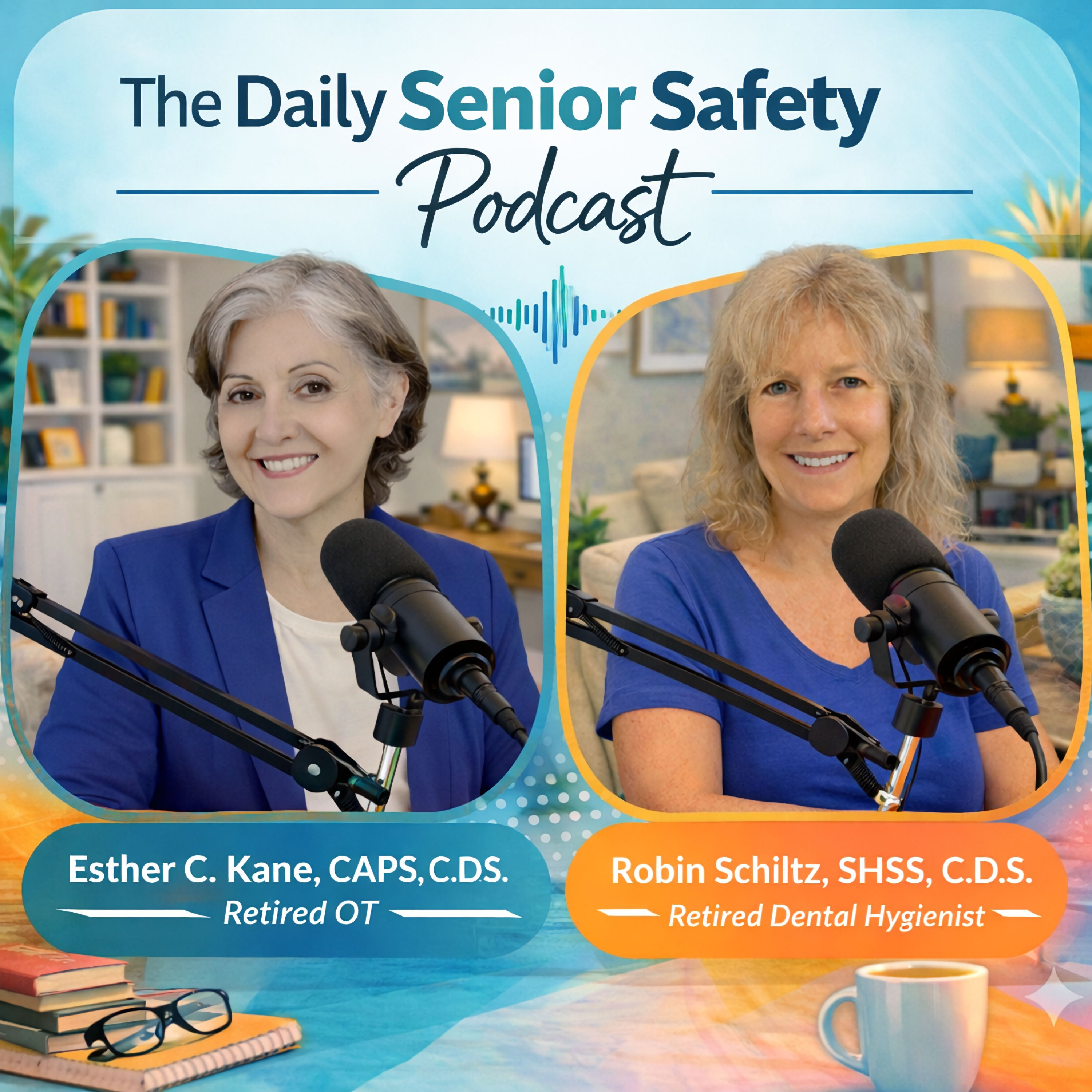
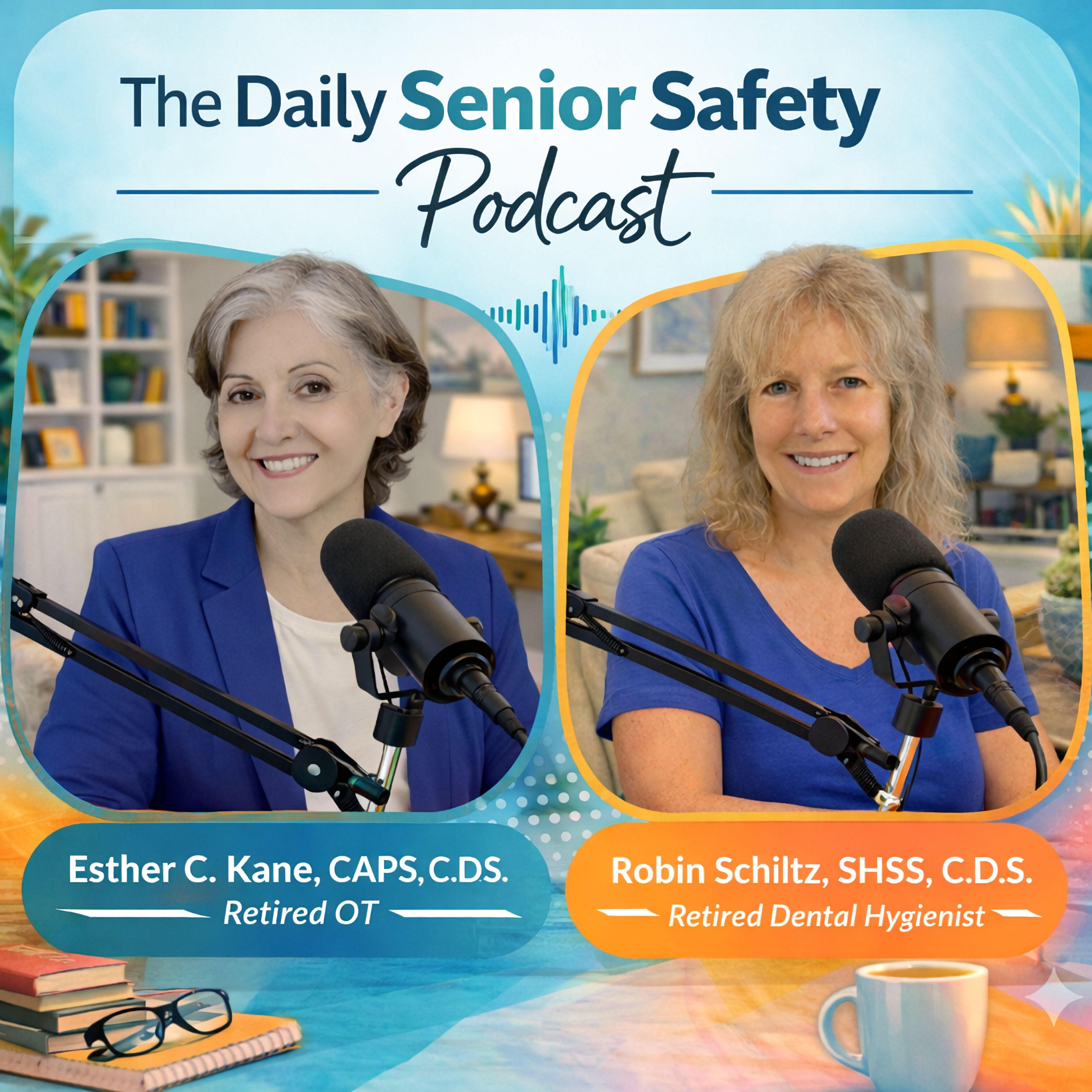
Artwork for Senior Safety Advice
LeisureHome & GardenSociety & CultureRelationships

Senior Safety Advice

Esther C Kane CAPS, C.D.S.

A podcast focused on the topics of senior safety, aging in place and caring for older adults.

Play
  • 27 episodes
  • Avg 8 min
  • English

Support the show

Goes straight to the publisher. podnod takes nothing.

Counted on this page — what you have heard stays on this device, so it is not something the list can be paged by.
  • Yesterday · 8 min

    How to Keep Showing Up When You Are Running on Empty

    Caregiving can become overwhelming when there is always one more task, phone call, appointment, or problem to solve. In this episode, Senior Home Safety Specialist Robin Schiltz shares practical ways caregivers can keep going without expecting themselves to do everything perfectly. She talks about simplifying difficult days, accepting help, recognizing exhaustion, and protecting the energy you still have. Visit SeniorSafetyAdvice.com for more caregiver support, home safety tips, and practical resources.

    • Transcript
  • Saturday · 8 min

    Your Parent Fell. Here's What Actually Prevents the Next One.

    After a parent falls, most families rush straight to grab bars and walkers without ever asking why the fall happened. Retired Occupational Therapist and Certified Aging in Place Specialist Esther Kane explains why a fall is a symptom rather than an accident, and walks listeners through what to do in the weeks that follow. She covers how to reconstruct the fall for the doctor, why a full medication review is the single highest-value step, and why the natural instinct to move less quietly raises the risk of a second, worse fall. She also explains how to ask for the physical therapy referral most families never think to request. Visit SeniorSafetyAdvice.com for more practical tips and resources.

    • Transcript
  • Friday · 8 min

    New Apps and Tools Helping Family Caregivers Stay Organized

    Family caregiving can quickly become a jumble of appointments, medication lists, texts, reminders, and requests for help. In this episode, Senior Home Safety Specialist Robin Schiltz explores simple apps and digital tools that can help families organize schedules, coordinate care, manage medications, and share responsibilities. She also explains why caregivers don’t need a complicated technology system to make life easier. Visit SeniorSafetyAdvice.com for more practical caregiving and aging-at-home tips and resources.

    • Transcript
  • Thursday · 8 min

    Why the Safest Homes All Have One Thing in Common (And It Isn't Grab Bars)

    The safest homes aren't always the ones with the most equipment. Retired Occupational Therapist and Certified Aging in Place Specialist Esther Kane explains why a simple daily routine does more to prevent falls than most home modifications, and why routine protects independence rather than limiting it. She walks through the few moments of the day when accidents actually cluster, offers practical anchors for morning, evening, and the risky nighttime trip to the bathroom, and shows family caregivers how steady habits make early warning signs visible. Listeners are encouraged to start with just one anchor. Visit SeniorSafetyAdvice.com for more practical tips and resources.

    • Transcript
  • Wednesday · 8 min

    How to Talk to a Doctor on Behalf of an Aging Parent

    Going to the doctor with an aging parent can be uncomfortable when you need to speak up without making your parent feel pushed aside. In this episode, Senior Home Safety Specialist Robin Schiltz explains how family caregivers can prepare for appointments, share concerns clearly, handle sensitive subjects, and help parents understand what comes next. She also discusses medical privacy and ways to keep the older adult involved in the conversation. Visit SeniorSafetyAdvice.com for more practical tips and resources for seniors and family caregivers.

    • Transcript
  • Tuesday · 8 min

    The 15-Minute Check That Could Save Your Parent's Life Tonight

    Carbon monoxide has no smell, no color, and no warning, and in older adults its symptoms are easily mistaken for ordinary aging or dementia. Retired Occupational Therapist and Certified Aging in Place Specialist Esther Kane walks listeners through a fifteen-minute check they can do in a parent's home today. She covers where alarms belong, the expiration date most people never check, what the test button does and doesn't prove, and the warning signs to look for on a furnace, water heater, and stove. She also explains exactly what to do if an alarm sounds. Visit SeniorSafetyAdvice.com for more practical tips and resources.

    • Transcript
  • August 23 · 7 min

    When You Can't Fix It: How Caregivers Find Peace Without Giving Up

    Most family caregivers are fixers by nature, which makes it especially painful when the problem in front of them has no solution. Retired Occupational Therapist and Certified Aging in Place Specialist Esther Kane talks openly about how to find peace with the parts of caregiving that cannot be changed, without feeling like you've given up. She explains why so much caregiver guilt is really grief in disguise, shares a simple two-column exercise for sorting what you control from what you don't, and offers a gentler way to set daily goals. This episode is for anyone carrying more than they can fix. Visit SeniorSafetyAdvice.com for more practical tips and resources.

    • Transcript
  • August 22 · 8 min

    "How Do We Afford Home Modifications on a Fixed Income?"

    Home safety changes can feel impossible when an older adult is living on a fixed income. In this episode, Senior Home Safety Specialist Robin Schiltz explains how to prioritize the most important modifications, reduce project costs, and search for grants, benefits, nonprofit programs, and other forms of assistance. She also discusses common misunderstandings about Medicare coverage and shares ways to avoid risky financing decisions. Visit SeniorSafetyAdvice.com for more practical home safety tips and resources.

    • Transcript
  • August 21 · 8 min

    5 Dementia Breakthroughs From This Summer That Actually Affect Your Family

    Dementia headlines come and go, but this summer brought news that actually reaches the kitchen table. Retired Occupational Therapist and Certified Aging in Place Specialist Esther Kane breaks down five findings from the 2026 Alzheimer's Association International Conference in plain, everyday language. She covers blood tests that may soon be available through your own family doctor, promising research on late-stage agitation, and a striking study showing that caregiver support programs kept people at home four months longer than a leading drug did. Esther explains what each finding means for families living with dementia right now, and offers one simple step listeners can take this week. Visit SeniorSafetyAdvice.com for more practical tips and resources.

    • Transcript
  • August 20 · 8 min

    How to Create a Fall Prevention Plan for a Senior Living Alone

    Living alone does not have to mean living without a safety plan. In this episode, Senior Home Safety Specialist Robin Schiltz explains how older adults and their families can create a practical fall prevention plan that covers health risks, home hazards, safer daily habits, emergency alerts, and regular check-ins. Listeners will learn how small changes can protect both safety and independence. Visit SeniorSafetyAdvice.com for more senior safety tips and caregiver resources.

    • Transcript
  • August 19 · 8 min

    How to Coordinate Care Between Siblings Without Conflict

    Caring for an aging parent can bring siblings closer together — or pull them apart. In this episode, retired Occupational Therapist, Certified Aging in Place Specialist, and Dementia Care Specialist Esther Kane explains why most sibling conflict isn't really about the parent at all, and what families can do about it. She shares simple, practical steps for dividing caregiving responsibilities, holding regular family check-ins, and talking about money without turning it into a fight. Listeners will also learn the one question long-distance siblings should ask before offering advice. Visit SeniorSafetyAdvice.com for more tips and resources on caring for the older adults you love.

    • Transcript
  • August 18 · 7 min

    The Simple Grab Bar Placement Tip That Could Prevent a Fall

    A grab bar only helps when it is placed where a person can reach it during the exact moment they feel unsteady. In this episode, Senior Home Safety Specialist Robin Schiltz explains a simple way to test grab bar placement before installation. She also discusses common grab bar mistakes, secure installation, and how proper placement can support independence and confidence. Visit SeniorSafetyAdvice.com for more practical home safety tips.

    • Transcript
  • August 17 · 7 min

    The Best Smart Home Devices That Help Seniors Stay Independent Longer

    Smart home technology can sound complicated and expensive, but the right device can quietly remove the small daily frustrations that make living alone harder. In this episode, host Esther Kane, a retired Occupational Therapist, Certified Aging in Place Specialist, and Dementia Care Specialist, walks through the devices she'd recommend first — voice speakers, smart plugs, motion-activated lighting, video doorbells, medication dispensers, smart thermostats, and fall-detection alerts — and explains the everyday problem each one solves. She also shares the single most important question to ask before buying anything, plus straightforward guidance on privacy, cost, and why starting with just one device works better than buying a whole system. Visit SeniorSafetyAdvice.com for more tips and resources for older adults and the families who love them.

    • Transcript
  • August 16 · 9 min

    How to Stop Dreading the Hard Conversations and Start Feeling Ready

    Difficult conversations about driving, home safety, caregiving, and independence can leave families feeling anxious and unprepared. In this episode, Senior Home Safety Specialist Robin Schiltz explains how to organize your concerns, choose a calmer approach, and begin the discussion without making an older adult feel attacked or controlled. Listeners will learn how to use specific examples, offer choices, handle resistance, and keep the focus on safety and independence. Visit SeniorSafetyAdvice.com for more guidance and practical resources.

    • Transcript
  • August 15 · 7 min

    When The Answer Is No And It Stays No: A Caregiver’s Guide To Coping

    You bring the groceries, you offer to help, and she says no — again. In this episode, retired Occupational Therapist, Certified Aging in Place Specialist, and Dementia Care Specialist Esther Kane explains what a parent’s refusal is actually made of, why explaining it better never works, and how to sort your worries into the ones worth fighting for and the ones to let go. She also covers what changes when memory loss is part of the picture, when to bring in a doctor instead of the family, and how to cope on the days the answer stays no. Visit SeniorSafetyAdvice.com for more practical tips and resources on aging in place safely.

    • Transcript
  • August 14 · 9 min

    New Guidelines on Preventing Medication Errors at Home

    New medication safety guidance is placing greater attention on accurate medication lists, careful pharmacy checks, safer liquid measurements, and medication reviews after hospital stays or prescription changes. In this episode, Robin Schiltz, a Senior Home Safety Specialist and Dementia Care Specialist, explains how older adults and family caregivers can turn these recommendations into a simple home routine. She also discusses high-risk medicines, safe storage, disposal, and what to do when a possible error occurs. Visit SeniorSafetyAdvice.com for more practical home safety and caregiving resources.

    • Transcript
  • August 13 · 8 min

    A Rollator Is Not A Walker With Wheels — And That Mix-Up Is Sending People To The Hospital

    Families almost always buy the rollator — four wheels, hand brakes, a padded seat — because it looks like the upgrade. It usually isn’t, and for someone who needs to lean, it can roll right out from under them. In this episode, retired Occupational Therapist, Certified Aging in Place Specialist, and Dementia Care Specialist Esther Kane explains the real difference between a standard walker, a two-wheel walker, and a rollator, who each one is actually for, and the three measurements to take before spending a dollar. She also covers why the rollator is often the wrong choice when dementia is part of the picture, the brake design that fixes it, and the Medicare rule that can leave a family stuck with the wrong device for years. Visit SeniorSafetyAdvice.com for more practical tips and resources on aging in place safely.

    • Transcript
  • August 12 · 9 min

    How to Set Boundaries as a Family Caregiver Without Guilt

    Family caregivers often feel guilty when they say no, ask for help, or protect their personal time. In this episode, Senior Home Safety Specialist Robin Schiltz explains why healthy boundaries are an important part of safe, sustainable caregiving. She shares practical ways to communicate limits, divide responsibilities, and manage feelings of guilt without losing compassion. Visit SeniorSafetyAdvice.com for more caregiving guidance and senior safety resources.

    • Transcript
  • August 11 · 10 min

    The Most Dangerous Room In Your House Is The One You Relax In

    Everybody checks the bathroom for fall hazards. Almost nobody checks the living room — which is where older adults spend most of their waking hours and stand up out of a chair a dozen times a day. In this episode, retired Occupational Therapist, Certified Aging in Place Specialist, and Dementia Care Specialist Esther Kane walks through the five things that actually catch a foot in a living room, three free ways to see a room you’ve stopped looking at, and a ten-minute fix-three-things routine anyone can do today. She also explains why the usual advice reverses when dementia is part of the picture, and why moving the furniture can be more dangerous than leaving it. Visit SeniorSafetyAdvice.com for more practical tips and resources on aging in place safely.

    • Transcript
  • August 10 · 8 min

    When Your Parent Asks the Same Question Again: What to Say

    When an aging parent asks the same question repeatedly, even a loving caregiver can become frustrated. In this episode, Senior Home Safety Specialist and Dementia Care Specialist Robin Schiltz explains why repeated questions happen and shares calm, practical ways to respond. Listeners will learn how reassurance, simple answers, written reminders, gentle redirection, and caregiver breaks can make these moments easier. Visit SeniorSafetyAdvice.com for more caregiving and senior safety resources.

    • Transcript
Showing 1–20 of 27 episodes