Skip to content
Artwork for Roborant Review

Roborant Review

Hugh Leeman

Art, museums, and culture in a time of profound social change

Play
  • 30 episodes
  • weekly
  • Avg 56 min
  • English
Counted on this page — what you have heard stays on this device, so it is not something the list can be paged by.
  • S1 · E31
    June 15 · 1 hr 4 min

    Faig Ahmed: The Venice Biennale, Quantum Physics, and Cultural Healing

    What does a 14th-century Azerbaijani mystic poet have in common with quantum physics — and what does either of them have to do with a carpet? In this episode, host Hugh Leeman sits down with internationally acclaimed Azerbaijani artist Faig Ahmed, whose solo exhibition currently represents Azerbaijan at the Venice Biennale, for a conversation that moves from the unspoken social codes of post-Soviet society to the philosophy of Nasimi, from the hidden shame of inherited silence to the healing potential of contemporary art. Faig's work — known for its radical transformation of traditional Azerbaijani carpet forms into something that bends, dissolves, liquefies, and defies — is as philosophically layered as it is visually arresting. Faig opens up about growing up through the collapse of the Soviet Union and the identity vacuum it left behind, about the early years of his career when he had to communicate with women weavers through their brothers and husbands because cultural codes forbade direct contact, and about the village that agreed to collaborate with him only under the condition that they never be named.
  • S1 · E30
    June 9 · 1 hr 6 min

    Dave Eggers on Contrapposto, Art School, and Creativity in the Age of AI

    In this episode, host Hugh Leeman sits down with Dave Eggers — bestselling author of A Heartbreaking Work of Staggering Genius, The Circle, and The Every, co-founder of 826 Valencia, and now the author of Contrapposto, a novel that pulls readers through every angle of the art world — for a conversation that is at once a deep literary discussion and a sweeping indictment of everything wrong with how America treats its artists. Dave traces the roots of Contrapposto back to his own early art education in the Chicagoland area, where he was a painting major before practicality intervened, and forward to his own practice of making art — drawings, paintings, prints — to fund ScholarMatch and the nonprofits at 849 Valencia. He talks about Cricket and Olympia, the novel's two protagonists, and the feral self-reliance of 70s and 80s kids who grew up free-range by default. He dissects the cannibalistic culture of art school MFA programs, explains why he believes the apprenticeship model should replace the $100,000-a-year degree, and introduces Art and Water — his new Pier 29 art school built on the idea that master artists and students should share space without money being exchanged. He also calls ChatGPT a hundred percent plagiarism, explains why letting AI write for you means leaving the human race, shares why he hasn't had a smartphone in years, and reflects on how The Circle — which predicted surveillance capitalism, corporate overreach, and the erosion of democracy — got it mostly right and somehow still underestimated things.

  • S1 · E29
    June 2 · 1 hr 25 min

    Peter Coyote’s Life of Art, Activism, and Awakening

    In this wide-ranging conversation, Hugh Leeman sits down with actor, writer, Zen priest, and activist Peter Coyote to trace a life shaped by outsiders, mentors, rebellion, and disciplined spiritual practice. Coyote reflects on his childhood in New York, the profound influence of Susie Nelson, and the early awareness of race, class, Jewish identity, and American hypocrisy that made him skeptical of power. He recounts the peyote experience that led Robert Peter Cohan to become Peter Coyote, his years with the San Francisco Mime Troupe and the Diggers, and the radical experiments in free food, free stores, communal life, and antiwar organizing that defined the counterculture. The interview moves through his acting and writing career, his work with Ken Burns, and his belief that storytelling can reach beyond ideology when it refuses simplification. Coyote also discusses toxic masculinity, Gary Snyder, Zen practice, nonviolent protest, corporate power, and the political lessons he draws from Vietnam, Trump-era authoritarianism, and the failures of the left. The result is a candid portrait of an artist-activist still asking how to live truthfully, resist domination, and act with discipline in dangerous times while honoring humility, restraint, and the fragile work of building democratic trust together today, now.

  • S1 · E28
    May 26 · 51 min

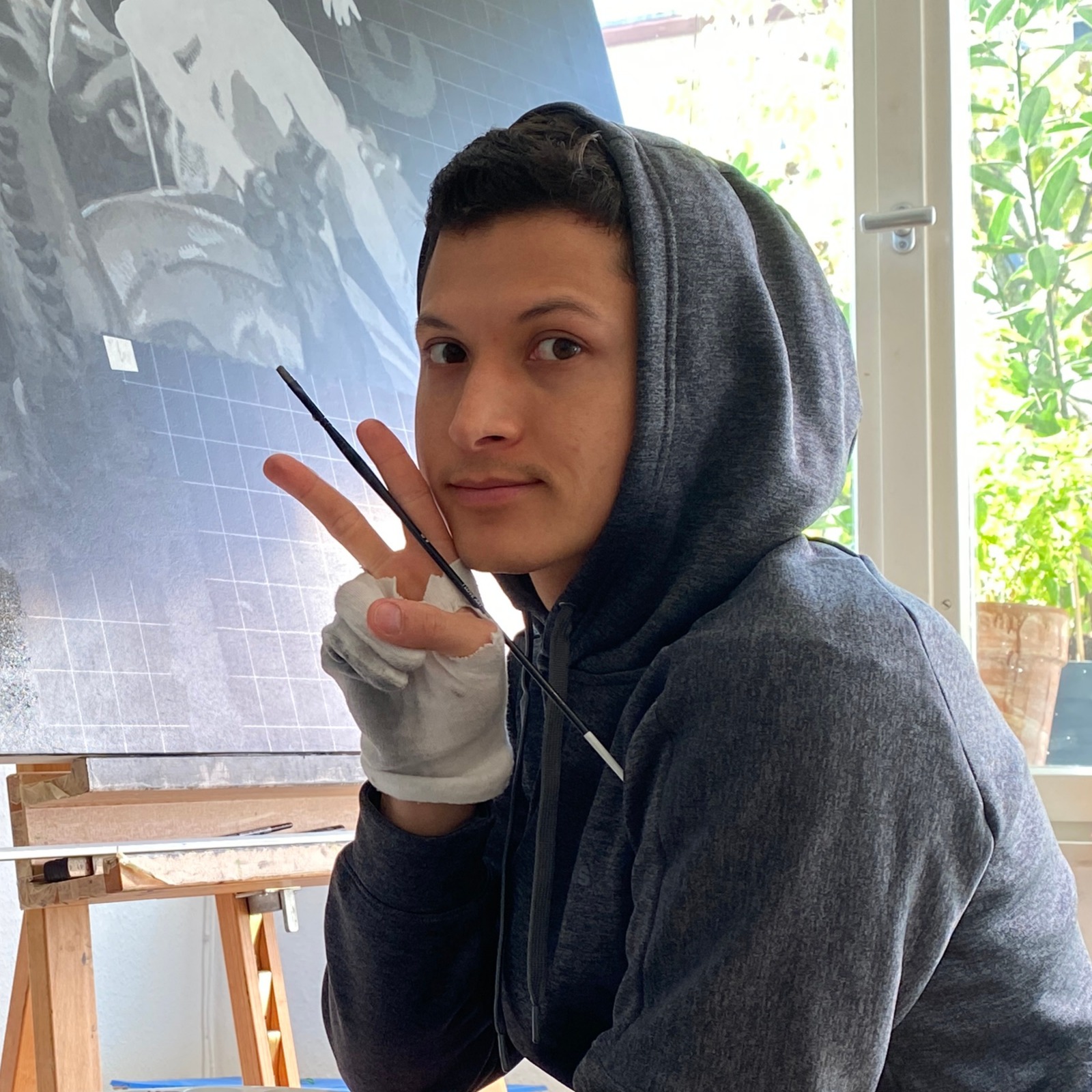
    Xavier Robles de Medina on Post-Colonial Memory and The Constructed Image.

    Xavier traces his path from growing up in independent Suriname surrounded by his grandfather's art books and the quiet legacy of a sculptor who built the country's most iconic public monument — including setting up a bronze foundry from scratch, without an income, with a budget barely sufficient for the task — to working as a studio assistant for Takashi Murakami in New York, where he got his first real crash course in the commercial art world. He talks about what it meant to grow up in a post-colonial education system that never taught him the Dutch national anthem, and what it revealed when he moved to the Netherlands and found that his peers knew almost nothing about Suriname. He opens up about publishing his book Pengel, co-authored with his grandmother, to bring his grandfather's obscure international legacy into the light. And he digs into the works that have defined his recent practice: the Mangione portraits — those matter-of-fact colored pencil renderings of a face everyone has seen and no one knows — and the painting of the last U.S. soldier leaving Afghanistan, perfectly centered in a night-vision frame. These are meditations on what it means to see someone, to idolize someone, and to let an image carry the full weight of a historical moment.

  • S1 · E27
    May 21 · 38 min

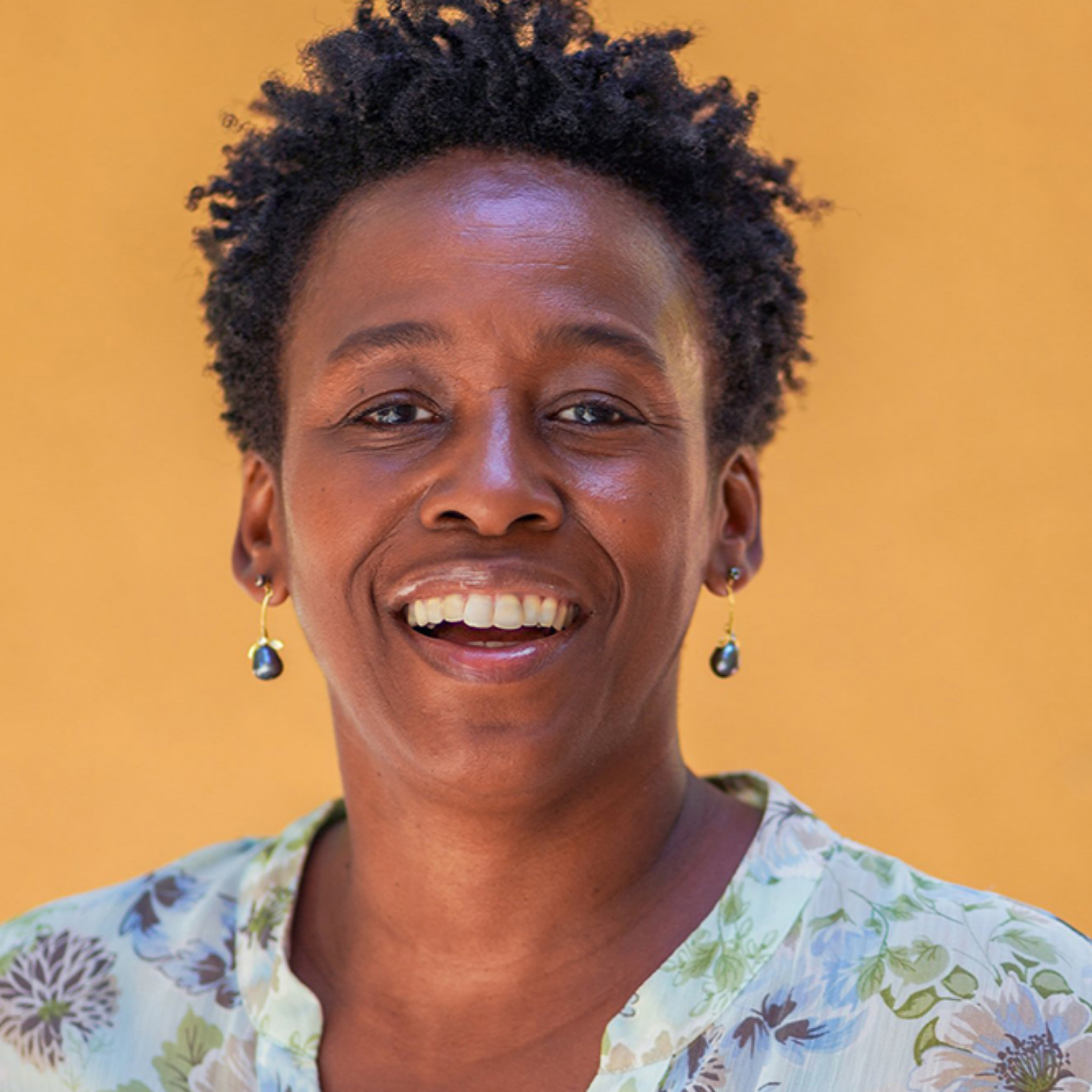
    Stephanie Dinkins on AI, Community Memory, and Data as Care

    Transmedia artist Stephanie Dinkins joins Hugh Leeman for a conversation about AI, equity, storytelling, and collective memory. Known for her work at the intersection of emerging technology and underrepresented communities, Dinkins discusses how personal and communal narratives can reshape the data systems that increasingly govern our lives. The conversation moves from her grandmother’s garden as a model of community-building to her AI literacy work, her family-based project Not the Only Ones, and her exhibition Data Trust at ICA San José. Dinkins considers what it means to create technologies rooted in care, how Black and brown communities can challenge algorithmic bias, and why storytelling remains one of humanity’s most powerful tools for survival, recognition, and transformation.

  • S1 · E26
    May 19 · 40 min

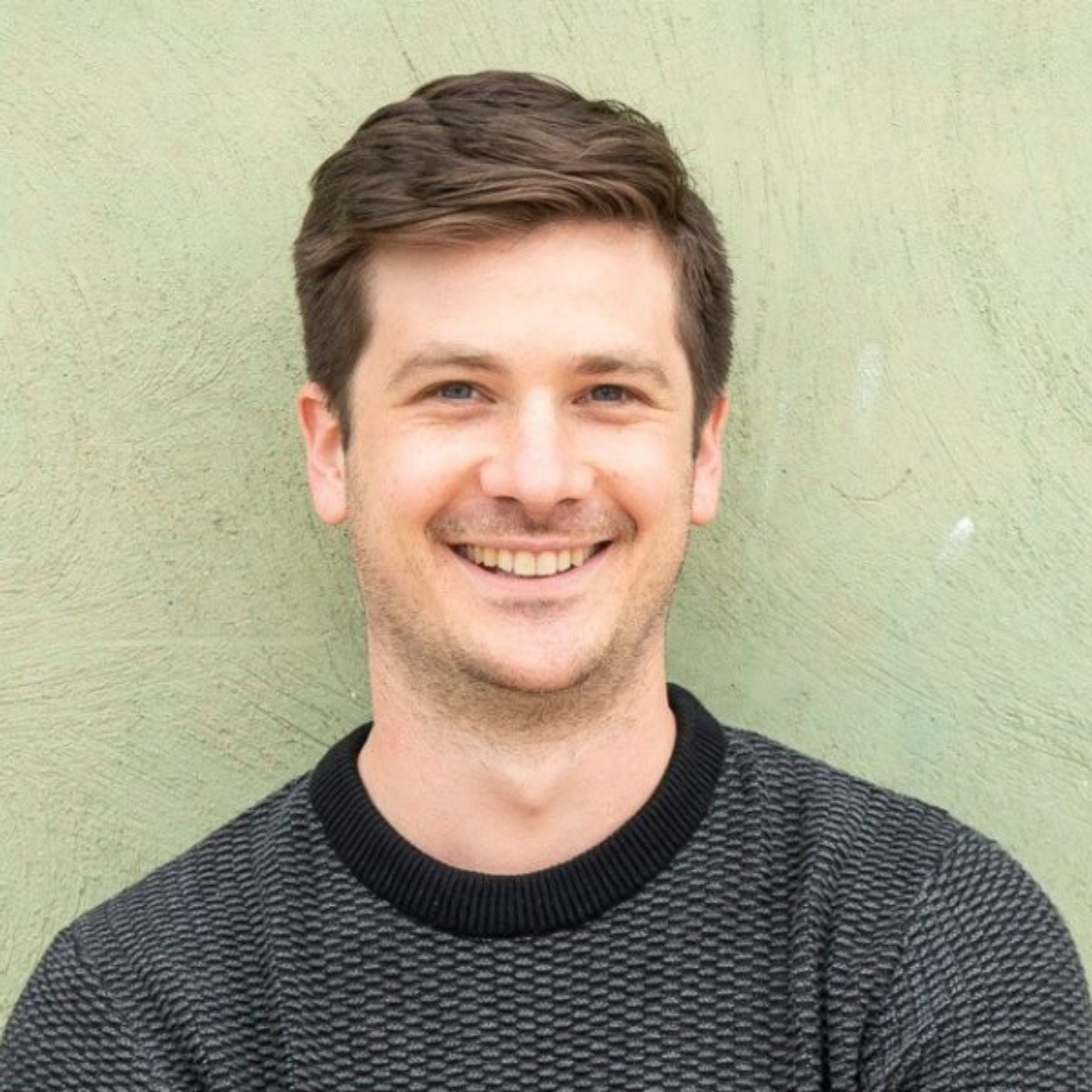
    Kevin Ivester on Contemporary Art in Austin and the Fight for Funding

    What does it take to build an art ecosystem from scratch in a city changing faster than anyone can track? And why does one gallerist believe Austin’s biggest tech companies owe its artists a debt they have yet to pay? In this episode, host Hugh Leeman speaks with Kevin Ivester, founder of Ivester Contemporary and chair of the Austin Art Agency (A3), about galleries, grant writing, art fairs, corporate responsibility, and the choice to serve other people’s stories over his own artistic ambitions. Kevin traces his path from art school in Massachusetts to an impulsive road trip that unexpectedly ended in Austin, where he built one of the city’s key emerging galleries. He reflects on the great-grandfather who inspired the gallery’s name — a Jewish shipping magnate whose assets were seized in Nazi Germany — and how that history shaped his belief in service and community. Kevin also discusses the politics of arts funding, the founding of Friends Fair, and the challenge of building collector culture in a city of transplants. This is a conversation about art, access, money, and the radical possibility of genuine connection.

  • S1 · E25
    May 14 · 1 hr 18 min

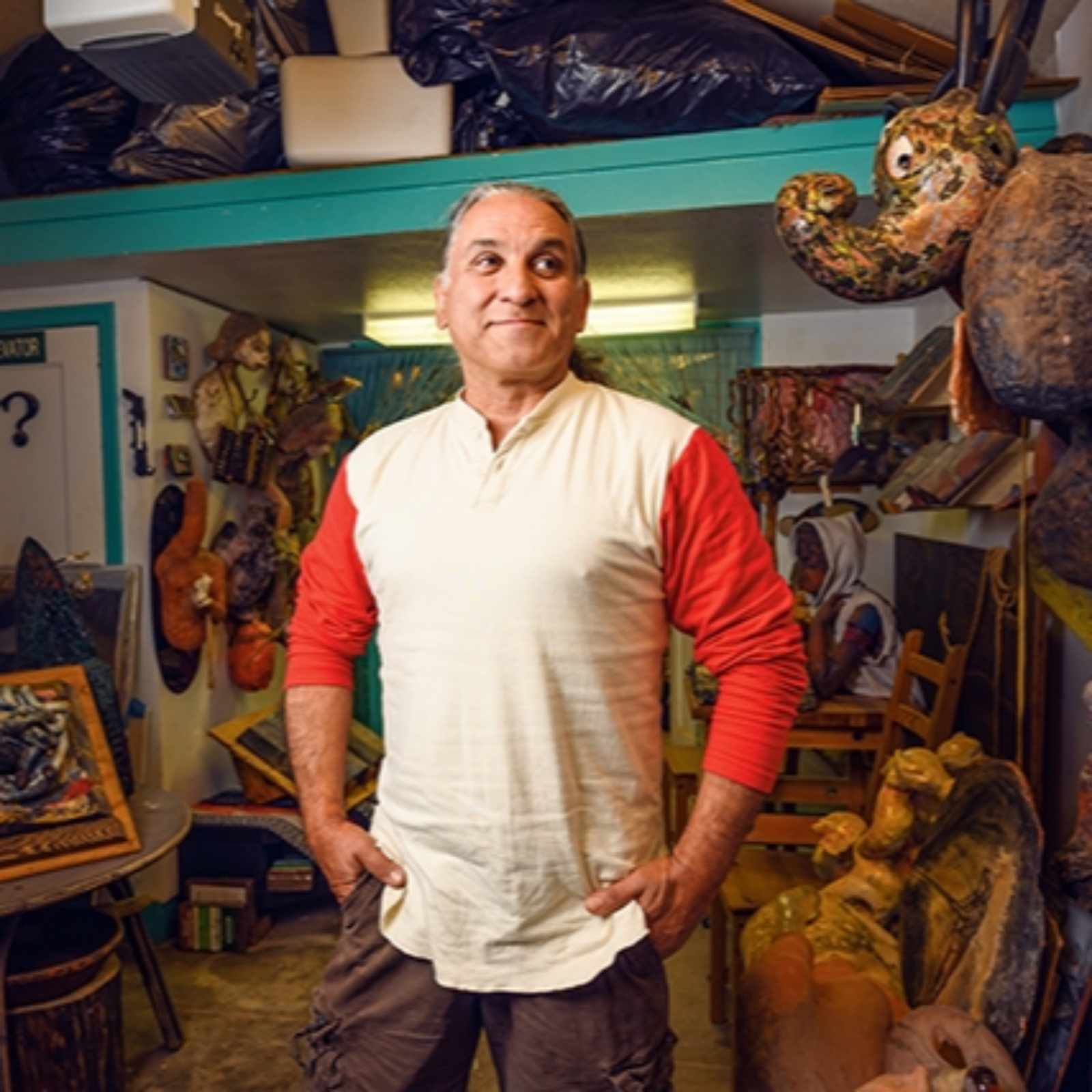
    Arthur Gonzalez on Surfing Rejection, the Rat Fink, and Magic Realism

    In this episode, host Hugh Leeman sits down with the Bay Area artist and educator for a wide-ranging conversation about creative identity, the art of handling rejection, and what it takes to build a life in art over four decades. Arthur traces his path from discovering lowbrow artist Ed "Big Daddy" Roth and Juxtapoz co-founder Robert Williams as an eleven-year-old in the streets of Sacramento, to abandoning photorealism, to fishing exploded ceramic shards out of a garbage bin and calling it sculpture — and finding, in that moment, exactly who he was as an artist. Arthur opens up about the six consecutive graduate school rejections that nearly derailed his career, how studying under legendary California artists Robert Arneson, Wayne Thiebaud, and Manuel Neri at UC Davis transformed his practice, and why he applied for the NEA Fellowship so many times that four of those applications said yes. He also reflects on magic realism as a creative framework, the original dark mythology of Pinocchio, the closing of CCA and SFAI and what it means for the future of arts education in the Bay Area, and why every artist — no matter how established — needs to keep asking: what am I making, and why?

  • S1 · E24
    May 12 · 45 min

    Mario Laplante: The Unembarrassed Truth: Faith, Identity, and Art That Confronts

    Mario Laplante is a Quebec-born, San Francisco-based artist whose work has never been content to decorate walls. For three decades, he has used printmaking, ceramics, installation, and artist books to confront some of the most charged intersections of identity, faith, and culture: the gay experience, the Catholic Church's sexual abuse scandals, dual national identity, and the sacred weight of objects we no longer know what to do with. In this conversation with Hugh Leeman, Mario speaks with remarkable candor about growing up gay and Catholic in Montreal — and what it meant when his parents' faith collapsed overnight. He traces the origins of his landmark project Illuminae, in which he created three hundred ceramic priest figures in response to the Boston clergy abuse crisis, and explains his ongoing series of disc sculptures made from deconstructed Bibles — a practice born from bookbinding training, personal theology, and a willingness to hold contradiction without resolution.

  • S1 · E23
    May 7 · 44 min

    Hillary Olcott on Indigenous Art, Museum Repatriation, and Reimagining the de Young Museum’s Galleries

    In this episode, Hugh Leeman speaks with Hillary Olcott, curator of the Arts of the Americas at the Fine Arts Museums of San Francisco, about the evolving role of museums in telling more inclusive, collaborative, and community-centered stories. Olcott discusses the reopening of the de Young Museum’s Arts of Indigenous Americas galleries, the importance of Indigenous curators, artists, advisors, and cultural leaders in shaping interpretation, and how museums can move beyond older boundaries between “fine art,” anthropology, and cultural heritage. This episode is essential listening for anyone interested in Indigenous art, museum ethics, curatorial practice, repatriation, visitor engagement, and the future of art museums.

  • S1 · E22
    May 5 · 38 min

    Adam Leao’s Documentary San Francisco Rising: Hope, Community, and the City’s Comeback — Streaming on Apple TV

    In this episode, filmmaker Adam Leao discusses San Francisco Rising, his documentary now streaming on Apple TV. The film offers an intimate, street-level portrait of San Francisco in 2024, exploring the city’s beauty, contradictions, and resilience through the lives of artists, activists, public officials, and community members. Adam discusses some of the documentary’s most powerful scenes, including the scattering of unclaimed ashes under the Golden Gate Bridge, the fentanyl and opioid crisis in the Tenderloin, JJ Smith’s street-level documentation and community work, former Mayor London Breed’s reflections on the city, and photographer Jake Ricker’s years of photographing the Golden Gate Bridge. The episode also explores documentary filmmaking, trust-building, shooting on location, and how San Francisco continues to rise through crisis, creativity, and community. Watch San Francisco Rising, now streaming on Apple TV. Disclosure: Host Hugh Leeman appears briefly in San Francisco Rising as one of the documentary’s interview subjects. This episode is not a paid advertisement or sponsored placement; the conversation explores the film, its portrait of San Francisco, and the documentary process.

Showing 21–30 of 30 episodes