Artwork for ReWrite ReBirth
Fiction

ReWrite ReBirth

Soenke Scharnhorst

Der Bücherpodcast

  • 503 episodes
  • Updated Sunday

Support the show

Goes straight to the publisher. podnod takes nothing.

Episodes503

  • Jun 20, 2021 · 14 min

    [PODYSSEY] Die Stoppuhr (Soenke Scharnhorst)

    Die Stoppuhr wurde als eBook veröffentlicht. Soenke Scharnhorst wurde 1979 in Stuttgart geboren und studierte Wirtschaftsinformatik an der Dualen Hochschule Mannheim. Seit 2000 arbeitete er in verschieden Positionen für Europas größtes Softwareunternehmen als IT Lead Architekt. Sehr geprägt haben ihn seine sechs Jahre in Singapur und die zahlreichen internationalen Kooperationen. Seit 2014 wohnt er mit seiner Familie in der Zwei-Burgen-Stadt Weinheim. Er liebt das Reisen und Fotografieren. In seinen Kurzgeschichten behandelt er die Verschmelzung von Kultur und Technologie, den Wandel von Bewusstsein und Realität in Zeiten von künstlicher Intelligenz. In verschiedenen Magazinen und Analogien wurden seine Werke veröffentlicht. Bisher erschienen drei seiner Kurzgeschichten als c’t-Story. Als begeisterte Hörer von Audiobüchern und Podcasts, produziert er seit 2019 den ReWrite-Podcast und Podyssey. http://www.soenke-scharnhorst.de/

  • Jun 19, 2021 · 1 hr 52 min

    [REWRITE] Starship Troopers German Division

    Tough Troopers: Homepage der Official Starship Troopers German Division Youtube-Channel: Official Starship Troopers German Division SSTGD sind auch zu finden auf • Instagram • Facebook • Twitter Interview mit Rock Galotti über Starship Troopers 1997 [engl.] Robert „Rock“ Galotti: Stuntman und Waffenmeister, u. a. beim Starship Troopers 1997 und Matrix Jim Martin Design: Starship Troopers Trailer zum Starship Troopers Fan Film • Fan Film Website Film-Location: Reichsschwefelwerk in Haßmersheim Empfehlungen: ReWrite Ausgabe 19: Starship Troopers

  • Jun 6, 2021 · 33 min

    [PODYSSEY] Verborgenes Erbe (Ulf Fildebrandt|Stephan Kanthak)

    Ulf Fildebrandt Ulf Fildebrandt, 1972 in Stadthagen geboren, begann als 12-jähriger Junge ungefähr zeitgleich mit dem Programmieren von Computern und dem Lesen von Science Fiction. Das Schreiben von Science Fiction folgte dann einige Jahre später, sogar mit dem Gewinn eines kleinen Schulwettbewerbs. Da Software einen sicheren Broterwerb versprach, studierte er Informatik an der Universität Hildesheim und widmete sich in den darauffolgenden beiden Jahrzehnten dem Schreiben von Software beim größten deutschen Softwarehersteller. Er zog deshalb in den Süden von Deutschland, nach Schwetzingen in die Kurpfalz. Erst in den letzten Jahren fand er über den Umweg des Schreibens von Fachbüchern und -artikeln zum Schreiben von phantastischen Geschichten zurück. Bibliografie (auszugsweise): Romane: „Dunkelwärts“, scholz Verlag, 2014 „Meister der Erinnerung“, Lysandra Verlag, 2019 Kurzgeschichten: Stellaris, Perry Rhodan: „Der Datent von Richese“ in PR 2982 „Eine intelligente Maschine“ in PR 2926 „Erinnerungen“ in PR 2854 c’t „Werkzeug der Fantasie“: in c’t 8/19 „Naos Botschaft“ in c’t 4/17 und 5/17 „Feedback“ in c’t 26/15 Exodus-Magazin „Die Sphäre der Milliarden Wege“ in EXODUS 39 „Ein Leben lang“ in EXODUS 32 „Verborgenes Erbe“ in EXODUS 30 andere Anthologien („Schnee von Morgen“, „Exotische Welten“, usw.) Homepage: http://www.ulf-fildebrandt.de (mit Informationen zu Lesungen, Kurzgeschichten, usw.) Stephan Kanthak https://twitter.com/StephanKanthak https://stephankanthak.de/

  • Jun 5, 2021 · 1 hr 24 min

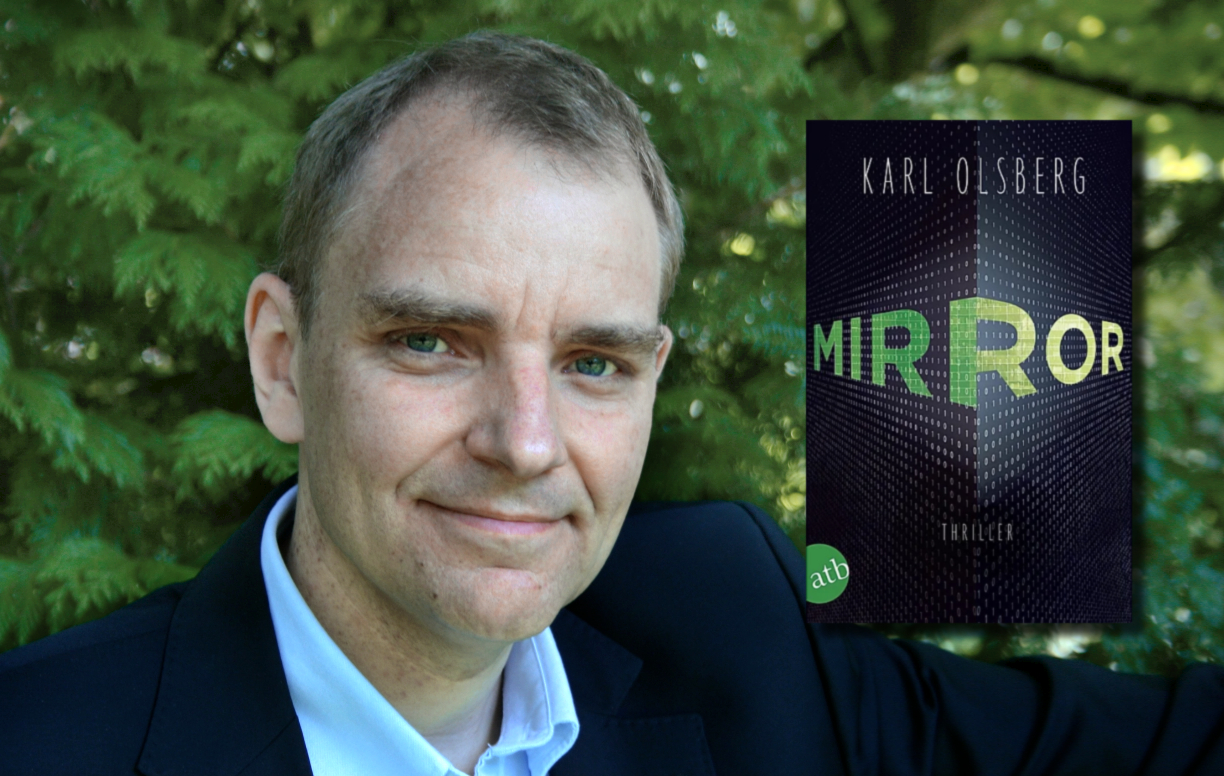
    [REWRITE] Risiken Künstlicher Intelligenz (mit Karl Olsberg)

    Diskutierte Blog-Beiträge Drei fundamentale KI-Probleme 1. Das Kompetenzproblem 2. Das Ungleichheitsproblem 3. Das Midas-Problem Stuart Russells 3 Prinzipien für „gutartige“ KI (und Zweifel daran) Maximierung des Ziels der „Verwirklichung menschl. Werte“, Anfangsunsicherheit, welche Werte das sind u. Ableitung dieser aus Beobachtung menschl. Verhaltens. Regeln für gutartige KI von Karl Olsberg Eine Maschine … 1. darf kein unbegrenztes Ziel verfolgen. 2. muss sich an geltende Gesetze halten. 3. muss tun, was der Nutzer von ihr möchte – ohne Verstoß gegen Regel 1 oder 2. Weitere Blogbeiträge (Auswahl) Sie wissen, wer du bist Die Fantasie der Maschine Weitere Beiträg auf Karl Olsbergs Blog KI-Risiken Referenzen OODA-Loop [wikipedia dt.] Human-in-the-loop [wikipedia engl.] KI-Regeln: Wofür das Europäische Parlament eintritt [dt.] The ethics of artificial intelligence: Issues and initiatives [engl.] Empfehlungen Youtube-Channel: Karl Olsbergs KONSEQUENZEN ReWrite Ausgabe 57: Karl Olsbergs Roman »Mirror« ReWrite Ausgabe 17: Künstliche Intelligenz in Literatur und Film Sam Harris: Can we build AI without losing control over it? [TED Talk auf youtube, engl.]

  • May 23, 2021 · 14 min

    [PODYSSEY] Einwegzeitreisen (Soenke Scharnhorst|Boris Greff)

    Soenke Scharnhorst Soenke Scharnhorst wurde 1979 in Stuttgart geboren und studierte Wirtschaftsinformatik an der Dualen Hochschule Mannheim. Seit 2000 arbeite er in verschieden Positionen für Europas größtes Softwareunternehmen. Sehr geprägt haben ihn seine sechs Jahre in Singapur und zahlreiche internationalen Kooperationen. Seit 2014 wohnt er mit seiner Familie in der Zwei-Burgen-Stadt Weinheim. Er liebt das Reisen und Fotografieren. Als Autor behandelt er die Verschmelzung von Kultur und Technologie, den Wandel von Bewusstsein und Realität in Zeiten von künstlicher Intelligenz. In verschiedenen Magazinen und Analogien wurden seine Werke veröffentlicht. Bisher erschienen drei seiner Kurzgeschichten als c’t-Story. Als begeisterter Hörer von Audiobüchern und Podcasts produziert er seit 2019 den ReWrite-Podcast und Podyssey. Boris Greff Boris Greff, Jahrgang 1973, studierter Anglist und Hispanist, nebenberuflich Übersetzer (v.a. Werke G. K. Chestertons) und Schriftsteller (Gedichte und Kurzgeschichten, finden sich verstreut in diversen Anthologien), ebenso Hobbysprecher (zum Beispiel Hörbücher bei „Librivox“ bzw. Hörspiele bei „hoer-talk“) sowie Amateur-Sänger und -Musiker. Wenn er nicht schreibt, singt oder vorliest, malt er und hört gerne Podcasts. So wie diesen hier.

  • May 22, 2021

    [REWRITE] Mirror (Karl Olsberg)

    Inhaltsangabe und Rezension zum Roman »Mirror« auf whatchareadin.de Karl Olsberg auf wikipedia Web-Präsenz des Autors Karls Olsbergs Blog KI-Risiken: Karl Olsbergs Blog mit Fokus auf künstliche Intelligenz Youtube-Channel: Karl Olsbergs KONSEQUENZEN Referenzen Künstliche Intelligenz – wichtige Begriffe und ihre Bedeutung erklärt auf ard alpha Das Trolley-Problem (»Wagon-Problem«) Kapitatlismus vs. Kommunismus erklärt auf Focus online Die Robotergesetze von Isaak Asimov Ähnliche Werke »Deamon« – besprochen in unserer Rewrite-Episode 18 über Daniel Suarez »Kill Decision« – besprochen in unserer Rewrite-Episode 18 über Daniel Suarez »Robopocalypse« [engl.] / »Robocalypse« [dt.] von Daniel Wilson (Trailer zum Roman auf Youtube [engl.]) »Qualityland 2.0« von Marc-Uwe Kling Empfehlungen ReWrite Ausgabe 17: Künstliche Intelligenz in Literatur und Film

  • May 9, 2021 · 26 min

    [PODYSSEY] DAEFELIA (Patrick Mangan|Nancy Dammann)

    Patrick Mangan 42 Jahre alt, Lehrer für Fremdsprachen, Vater von zwei Kindern. Nancy Dammann Beruflicher Werdegang: Studium der Deutsche Philologie Derzeit Studentin der Deutschen Pop Hannover als Synchronsprecherin, Zertifizierte Sprecherin mit Auszeichnung, im Stimm-, Atem- und Gesangstraining email: Nancydammann@web.de twitter: @schwindelkind

  • May 8, 2021 · 1 hr 37 min

    [REWRITE] Science Fiction vs. Reality: Bitcoin

    https://bitcoin.org/bitcoin.pdf Bitcoin is a cryptocurrency, a digital asset designed to work as a medium of exchange that uses cryptography to control its creation and management, rather than relying on central authorities. The history of Bitcoin started with the invention and implemented by the presumed pseudonymous Satoshi Nakamoto, who integrated many existing ideas from the cypherpunk community. https://en.wikipedia.org/wiki/History_of_Bitcoin

  • Apr 24, 2021 · 22 min

    [PODYSSEY] Das Rätzel der Qualia

    Ulf Fildebrandt Ulf Fildebrandt, 1972 in Stadthagen geboren, begann als 12-jähriger Junge ungefähr zeitgleich mit dem Programmieren von Computern und dem Lesen von Science Fiction. Das Schreiben von Science Fiction folgte dann einige Jahre später, sogar mit dem Gewinn eines kleinen Schulwettbewerbs. Da Software einen sicheren Broterwerb versprach, studierte er Informatik an der Universität Hildesheim und widmete sich in den darauffolgenden beiden Jahrzehnten dem Schreiben von Software beim größten deutschen Softwarehersteller. Er zog deshalb in den Süden von Deutschland, nach Schwetzingen in die Kurpfalz. Erst in den letzten Jahren fand er über den Umweg des Schreibens von Fachbüchern und -artikeln zum Schreiben von phantastischen Geschichten zurück. Bibliografie (auszugsweise): Romane: „Dunkelwärts“, scholz Verlag, 2014 „Meister der Erinnerung“, Lysandra Verlag, 2019 Kurzgeschichten: Stellaris, Perry Rhodan: „Der Datent von Richese“ in PR 2982 „Eine intelligente Maschine“ in PR 2926 „Erinnerungen“ in PR 2854 c’t „Werkzeug der Fantasie“: in c’t 8/19 „Naos Botschaft“ in c’t 4/17 und 5/17 „Feedback“ in c’t 26/15 Exodus-Magazin „Die Sphäre der Milliarden Wege“ in EXODUS 39 „Ein Leben lang“ in EXODUS 32 „Verborgenes Erbe“ in EXODUS 30 andere Anthologien („Schnee von Morgen“, „Exotische Welten“, usw.) Homepage: http://www.ulf-fildebrandt.de (mit Informationen zu Lesungen, Kurzgeschichten, usw.) Jan J. Münter Theater seit dem 15. Lebensjahr Schauspielgrundausbildung bei Guy Krneta und Martin Frank am Staatstheater Braunschweig danach diverse freie Thatergruppen – parallel Bühnentechnik und Tourneeleitungen für diverse Theater Um den Jahrtausendwechsel Theater-spielen und -technik aus Zeitgründen aufgegeben, tätig in der Entwicklung von Industrieelektronik Mitte 2000 „auf der Straße entdeckt“ als Sprecher für Radiowerbung Seit Anfang 2010 als Sprecher in freien Projekten Seit etwa 2017 Sprecher für kleine kommerzielle Hörbuchprojekte. Ansonsten arbeitet er inzwischen hauptberuflich in der IT, und zwar in der Planung und Verwaltung von Serverinfrastrukturen und Rechenzentren. Nebenberuflich entwickelt er elektronische Geräte zur Schallaufnahme und -wiedergabe, die die Welt nicht braucht. http://www.münter.org

  • Apr 24, 2021 · 1 hr 8 min

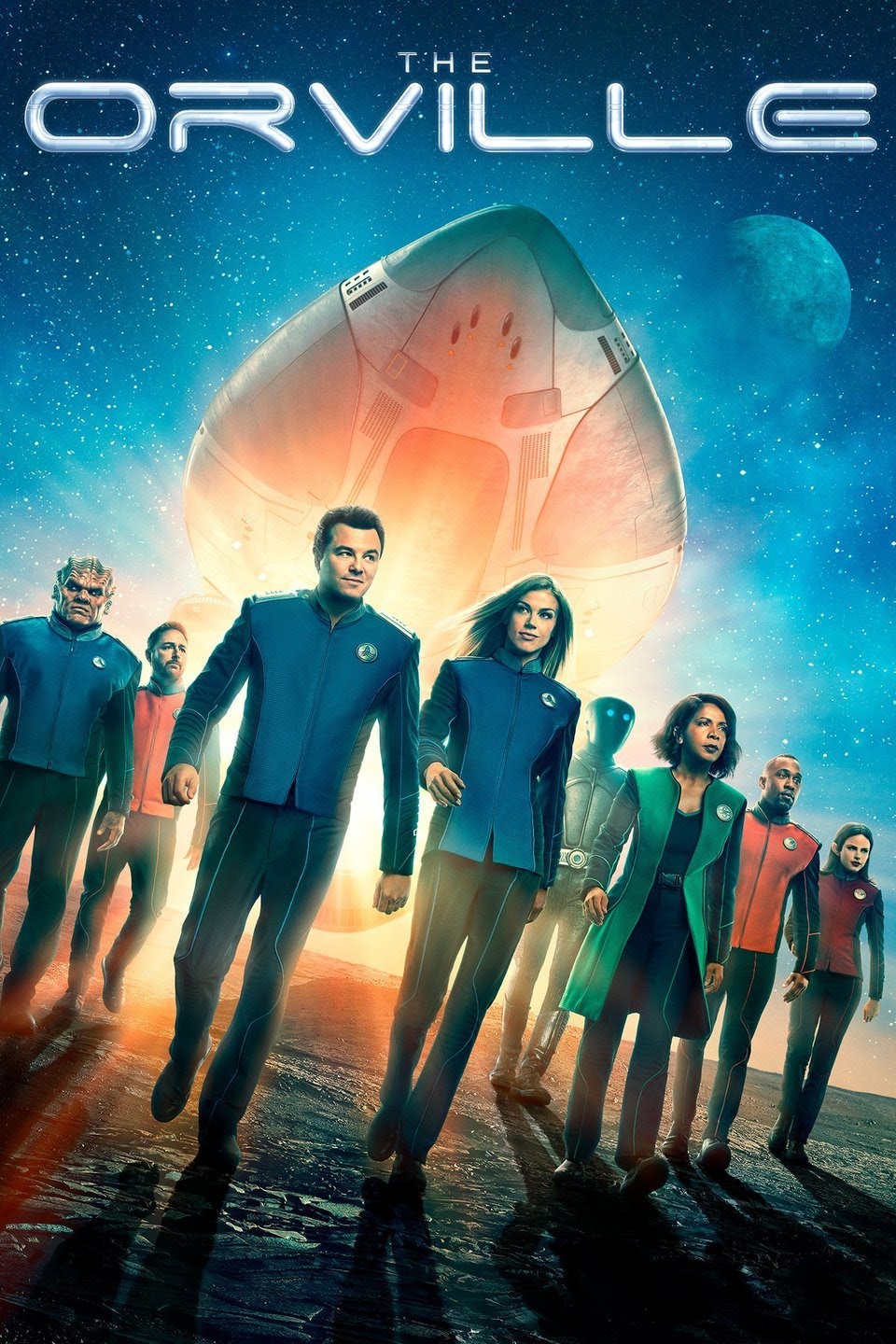
    [REWRITE] The Orville

    Szenen aus unseren favorisieren Episoden (in chronologischer Reihung, engl.) Krill (S01E06) https://youtu.be/GEPZQ13kh7U Majority Rule (S01E07) Cupid’s Dagger (S01E09) Home (S02E03) Nothing Left on Earth Excepting Fishes (S02E04) https://youtu.be/W93ooVyLh4M Identity Part I (S02E09) Identity Part II (S02E09) Lasting Impressions (S02E12) Lustige Szenen (Auswahl, engl.) https://youtu.be/8Y5HxfxV1BY Lustige Szenen mit Captain Mercer Bortus und Klydon entdecken den Genuss von Zigaretten Moclaner können alles essen Gordon und Isaak Prank-Wettbewerb

  • Apr 11, 2021 · 15 min

    [PODYSSEY] Der Heckeeuro (Nina Horvath|Lisa Schaumann)

    Der Heckeeuro von Nina Horvath, gesprochen von Lisa Schaumann. Nina Horvath, die Vorliebe der österreichischen Autorin gilt düster angehauchten Science Fiction-Geschichten, die sie in Anthologien, Magazinen und Fanzines veröffentlicht. Ihre Erzählung „Die Duftorgel“ wurde mit dem Deutschen Phantastik Preis 2012 ausgezeichnet. Weiters schreibt sie auch regelmäßig Beiträge über phantastische Literatur, beispielsweise Rezensionen und Eventberichte (ihre Leidenschaft gilt Science-Fiction Conventions) für das AGM-Magazin und englischsprachige Berichte für Europa SF. Seit zwei Jahren vertritt sie Österreich bei den Awards der European Science Fiction Society. 2015 gewann sie den Trans-Atlantic Fan Fund. http://www.ninahorvath.at Lisa Schaumann hat kurzem ihrer Sprecher- & Synchronsprecher Ausbildung abgeschlossen und möchtedanachihre Leidenschaft für Hörbücher und Hörspiele zum Beruf machen. Erfahrungen als Sprecherin konnte sie bereits in Non-Profit Hörspielen sammeln. Lisa Schaumann: https://www.lisa-schaumann.de/

  • Apr 10, 2021 · 1 hr 16 min

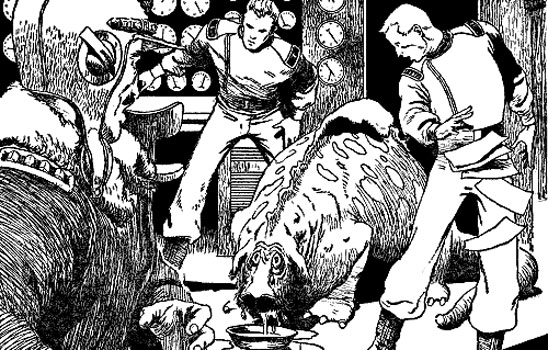
    [REWRITE] Phillp K. Dick – Kurzgeschichten Teil 1

    Titelbild-Quelle: mythcreants.com Liste der 118 Geschichten der Sammlung • komplette Bibliographie Philip K. Dick Zusammenfassungen der besprochenen Geschichten Stability [engl.] / Stabilität [dt.] Roog [engl.] / Roog [dt.] The Little Movement [engl.] / Die kleine Bewegung [dt.] Beyond Lies the Wub [engl.] / Und jenseits – das Wobb [dt.] The Gun [engl.] / Die Kanone [dt.] The Skull [engl.] / Der Schädel [dt.] Ressourcen Stability online Lesen [Bild: deathby1000papercuts.blogspot] Stability – An analysis of one of Philip K. Dick’s earliest stories Roog online lesen [Bild: Desktopbackground] Roog – Audiobook auf Youtube verfügbar The Little Movement online lesen [Bild: Aeon] Beyond Lies The Wub online lesen [Bild: 2000 AD Forum] Beyond Lies The Wub – Audiobook The Gun – Audiobook auf youtube verfügbar https://youtu.be/ZBt1cTcs84Q The Skull – Audiobook auf Youtube verfügbar Weiterführende Links Stability / Stabilität Brazil [1985] Trailer Roog Philip K. Dick und wie er die Welt sah The Little Movement / Die kleine Bewegung Toy Story [1995] Trailer Small Soldiers [1998] Trailer Stephen King: Battlegrund (Short Story) – wikipedia https://youtu.be/ufOMa3_rYvI Battleground – TV-Adaption auf Youtube P.K. Dick: Die drei Stigmata des Palmer Eldritch Dean Koontz: Nacht der Zaubertiere Beyond Lies the Wub / Und jenseits – das Wobb Mythcrants – Fantasy & Science Fiction for Storytellers: Lessons From the Confused Writing of Beyond Lies the Wub Robert Sheckley: Mindswap zum Lesen online verfügbar sowie als Audiobook Claire North (Pseudonym): Touch Audiobook-Hörprobe (dt) What’s Eating You? – The Hitchhiker’s Guide To The Galaxy The Ppl. of Sand’n’Slag Paolo Bacigalupi: The People of Sand and Slag Audiobook auf Youtube verfügbar Cixin Liu: Weltenzerstörer The Gun / Die Kanone Star Treck TNG: Die Waffenhändler Star Treck Voyager: Episode Prototyp Der Barbarastollen in der Nähe von Freiburg im Breisgau: Eine Sicherungskopie unserer Geschichtsschreibung The Skull / Der Schädel The Orville: Gotteskult – Schlüsselszene Das Großvaterparadoxon [SRF-Clip] [Wikipedia-Artikel] #Philip K. Dick: ReWrite-Episoden über Werke und Adaptionen

  • Mar 27, 2021 · 1 hr 34 min

    [REWRITE] »The Expanse« und »Der Algorithmus der Menschlichkeit«

    Vera Bucks »Der Algorithmus der Menschlichkeit« Autorin Vera Buck Wikipedia Homepage • Facebook Der Algorithmus der Menschlichkeit Leseprobe auf Amazon Alternative Hörprobe zu Vera Bucks Roman Der Algorithmus der Menschlichkeit Weiterführende Links zum den Themen Joko zu Besuch im ersten Puppen-Bordell Deutschlands (Stern Online Artikel) Diana sagt nie Nein Ein deutsches Bordell bietet neben Prostituierten erstmals auch Sexpuppen an. (Neue Züricher Zeitung) There Are a Lot of Problems with Sex Robots (OneZero Artikel) Meine große Liebe, der Roboter [zeit.de] Bildquelle: behance.net Das Kontrollproblem von Superintelligenzen, Überlegungen von Nick Bostrom The Expanse An Astrophysisist watches The Expanse The Expanse Is Ending After Season 6 (Screenrant.com) Sexismus und Rassismus in The Expanse? (Egozine auf rezensionsnerdista.de)

  • Mar 13, 2021 · 1 hr 30 min

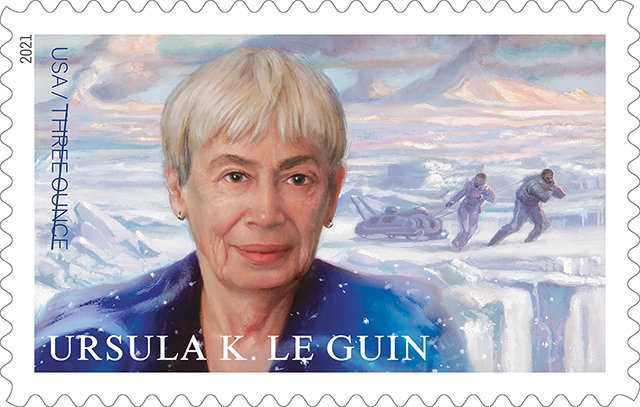
    [REWRITE] The Left Hand of Darkness (Ursula K. Le Guin)

    [Titelbild v. Donato Giancola] Introduction to Left Hand of Darkness: Ursula K. LeGuinn über Science Fiction [engl.] Bildquelle: The Folio Society – A tribute to Ursula K. Le Guin Science fiction isoften described, and even defined, as extrapolative. The science fiction writer is supposed to take a trend or phenomenon of the here-and-now, purify and intensify it for dramatic effect, and extend it into the future. „If this goes on, this is what will happen.“ A prediction is made. Method and results much resemble those of a scientist who feeds large doses of a purified and concentrated food additive to mice, in order to predict what may happen to people who eat it in small quantities for a long time. The outcome seems almost inevitably to be cancer. So does the outcome of extrapolation. Strictly extrapolative works of science fiction generally arrive about where the Club ofRomearrives: somewhere between the gradual extinction of human liberty and the total extinction of terrestrial life. This may explain why many people who do not read science fiction describe it as ‘escapist,’ but when questioned further, admit they do not read it because ‘it’s so depressing.’ Page 2 Almost anything carried to its logical extreme becomes depressing, if not carcinogenic. Fortunately, though extrapolation is an element in science fiction, it isn’t the name of the game by any means. It is far too rationalist and simplistic to satisfy the imaginative mind, whether the writer’s or the reader’s. Variables are the spice of life. This book is not extrapolative. If you like you can read it, and a lot of other science fiction, as a thought-experiment. Let’s say (says Mary Shelley) that a young doctor creates a human being in his laboratory; let’s say (says Philip K. Dick) that the Allies lost the second world war; let’s say this or that is such and so, and see what happens… In a story so conceived, the moral complexity proper to the modern novel need not be sacrificed, nor is there any built-in dead end; thought and intuition can move freely within bounds set only by the terms of the experiment, which may be very large indeed. The purpose of a thought-experiment, as the term was used by Schrodinger and other physicists, is not to predict the future—indeed Schrodinger’s most famous thought-experiment goes to show that the ‘future,’ on the quantum level,cannot be predicted—but to describe reality, the present world. Science fiction is not predictive; it is descriptive. Predictions are uttered by prophets (free of charge); by clairvoyants (who usually charge a fee, and are therefore more honored in their day than prophets); and by futurologists (salaried). Prediction is the business of prophets, clairvoyants, and futurologists. It is not the business of novelists. A novelist’s business is lying. The weather bureau will tell you what next Tuesday will be like, and the Rand Corporation will tell you what the twenty-first century will be like. I don’t recommend that you turn to the writers of fiction for such information. It’s none of their business. All they’re trying to do is tell you what they’re like, and what you’re like—what’s going on—what the weather is now, today, this moment, the rain, the sunlight, look! Open your eyes; listen, listen. That is what the novelists say. But they don’t tell you what you will see and hear. All they can tell you is what they have seen and heard, in their time in this world, a third of it spent in sleep and dreaming, another third of it spent in telling lies. “The truth against the world!”—Yes. Certainly. Fiction writers, at least in their braver moments, do desire the truth: to know it, speak it, serve it. But they go about it in a peculiar and devious way, which consists in inventing persons, places, and events which never did and never will exist or occur, and telling about these fictions in detail and at length and with a great deal of emotion, and then when they are done writing down this pack of lies, they say, There! That’s the truth! They may use all kinds of facts to support their tissue of lies. They may describe the Marshalsea Prison, which was a real place, or the battle of Borodino, which really was fought, or the process of cloning, which really takes place in laboratories, or the deterioration of a personality, which is described in real textbooks of psychology; and so on. This weight of verifiable place-event-phenomenon-behavior makes the reader forget that he is reading a pure invention, a history that never took place anywhere but in that unlocalisable region, the author’s mind. In fact, while we read a novel, we are insane—bonkers. We believe in the existence of people who aren’t there, we hear their voices, we watch the battle ofBorodinowith Page 3 them, we may even become Napoleon. Sanity returns (in most cases) when the book is closed. Is it any wonder that no truly respectable society has ever trusted its artists? But our society, being troubled and bewildered, seeking guidance, sometimes puts an entirely mistaken trust in its artists, using them as prophets and futurologists. I do not say that artists cannot be seers, inspired: that theawen cannot come upon them, and the god speak through them. Who would be an artist if they did not believe that that happens? if they did notknow it happens, because, they have felt the god within them use their tongue, their hands? Maybe only once, once in their lives. But once is enough. Nor would I say that the artist alone is so burdened and so privileged. The scientist is another who prepares, who makes ready, working day and night, sleeping and awake, for inspiration. As Pythagoras knew, the god may speak in the forms of geometry as well as in the shapes of dreams; in the harmony of pure thought as well as in the harmony of sounds; in numbers as well as in words. But it is words that make the trouble and confusion. We are asked now to consider words as useful in only one way: as signs. Our philosophers, some of them, would have us agree that a word (sentence, statement) has value only in so far as it has one single meaning, points to one fact which is comprehensible to the rational intellect, logically sound, and—ideally—quantifiable. Apollo, the god of light, of reason, of proportion, harmony, number—Apollo blinds those who press too close in worship. Don’t look straight at the sun. Go into a dark bar for a bit and have a beer with Dionysios, every now and then. I talk about the gods, I am an atheist. But I am an artist too, and therefore a liar. Distrust everything I say. I am telling the truth. The only truth I can understand or express is, logically defined, a lie. Psychologically defined, a symbol. Aesthetically defined, a metaphor. Oh, it’s lovely to be invited to participate in Futurological Congresses where Systems Science displays its grand apocalyptic graphs, to be asked to tell the newspapers what America will be like in 2001, and all that, but it’s a terrible mistake. I write science fiction, and science fiction isn’t about the future. I don’t know any more about the future than you do, and very likely less. This book is not about the future. Yes, it begins by annnouncing that it’s set in the ‘Ekumenical Year 1490-97,’ but surely you don’tbelieve that? Yes, indeed the people in it are androgynous, but that doesn’t mean that I’m predicting that in a millennium or so we will all be androgynous, or announcing that I think we damned well ought to be androgynous. I’m merely observing, in the peculiar, devious, and thought-experimental manner proper to science fiction, that if you look at us at certain odd times of day in certain weathers, we already are. I am not predicting, or prescribing. I am describing. I am describing certain aspects of psychological reality in the novelist’s way, which is by inventing elaborately circumstantial lies. In reading a novel, any novel, we have to know perfectly well that the whole thing is nonsense, and then, while reading, believe every word of it. Finally, when we’re done with it, we may find—if it’s a good novel—that we’re a bit different from what we were before we read it, that Page 4 we have been changed a little, as if by having met a new face, crossed a street we never crossed before. But it’s very hard tosay just what we learned, how we were changed. The artist deals with what cannot be said in words. The artist whose medium is fiction does thisin words . The novelist says in words what cannot be said in words. Words can be used thus paradoxically because they have, along with a semiotic usage, a symbolic or metaphoric usage. (They also have a sound—a fact the linguistic positivists take no interest in. A sentence or paragraph is like a chord or harmonic sequence in music: its meaning may be more clearly understood by the attentive ear, even though it is read in silence, than by the attentive intellect). All fiction is metaphor. Science fiction is metaphor. What sets it apart from older forms of fiction seems to be its use of new metaphors, drawn from certain great dominants of our contemporary life—science, all the sciences, and technology, and the relativistic and the historical outlook, among them. Space travel is one of these metaphors; so is an alternative society, an alternative biology; the future is another. The future, in fiction, is a metaphor. A metaphor for what? If I could have said it non-metaphorically, I would not have written all these words, this novel; and Genly Ai would never have sat down at my desk and used up my ink and typewriter ribbon in informing me, and you, rather solemnly, that the truth is a matter of the imagination. —Ursula K. Le Guin The Left Hand of Darkness wikipedia engl. Winterplanet wikipedia deu. »How The Left Hand of Darkness Changed Everything« [literary hub] Kurzgeschichte: Coming of Age in Karhide von U.K. LeGuin Bildquelle: Spring in Karhide von Laleira Granite History of the Hainish Universe – Ursula K LeGuin

  • Feb 28, 2021 · 10 min

    [PODYSSEY] Espresso schwerelos (Gernot Schatzdorfer)

    Espresso schwerelos von Gernot Schatzdorfer gelesen von Jens Hartmann. Gernot Schatzdorfer, Jahrgang 1960, Mathematiklehrer in Graz, Österreich, schreibt seit etwa 10 Jahren Science-Fiction-Texte und hat schon einige Storys in Anthologien und Magazinen veröffentlicht. https://schatzdorfer-graz.at/Gernot „Sonnenfeuer“, erschienen 2018 in „Neue Welten“ beim Verein zur Förderung der Raumfahrt e.V. : http://vfr.de/2018/02/18/space-science-fiction-stories-sammelband-neue-welten/ „Vorfall in Utopia West“, erschienen 2018 in „Reiseziel Utopie“ bei Edition Roter Drache: https://www.roterdrache.org/catalog/Belletristik-Roman-Satire/Reiseziel-Utopia::212.html