Skip to content
Artwork for Restrocast
BusinessManagementEntrepreneurshipTechnology

Restrocast

Restrocast

It’s never been easier to start a restaurant, but it’s never been harder to scale. Each episode of Restrocast explores the inspiring stories behind restaurateurs and executives who have achieved remarkable growth in their fields. Follow the journey of some of the world’s greatest restaurant operators and how they took their business from x to 10x.Restrocast is hosted by the Co-founder and CEO of Restroworks, Ashish Tulsian, who brings his unique perspective as a technologist, restauranteur, investor and entrepreneur. Much more than just an interview show, this is a genre-defining series on how to think boldly and differently about the world.

Play
  • 20 episodes
  • Avg 1 hr 15 min
  • English

Support the show

Goes straight to the publisher. podnod takes nothing.

  • September 8 · 1 hr 14 min

    The Unit Economics of Building a Burger Chain in India | Burgrill

    In this episode, Ashish Tulsian speaks with the founder of Burgrill for some of the most honest conversations on creating a franchise model of restaurants in India, how to succeed and how not to, and what the economics of your unit really looks like. This journey starts from the time he was studying eighth standard in Indore when his family opened a bakery business, and covers various aspects of hotel management, a smoothie bar at Select City Walk, a café in Indore, a stint with his father's business of solar panels and bulletproof jackets, and eventually the founding of Burgrill in Sector 8, Chandigarh in August 2016. Here, Shreh is being completely upfront about the franchising model, from the political pressure when the franchisee fails in his business, the experience of seeing 11 stores shut down in a week because of COVID, how they have been successfully copied three times by their former franchisees, and why proprietary seasoning is the moat of the business, and everything else can be outsourced. He is explaining how Burgrill keeps track of all 69 stores using CCTV access, reads every negative comment in the morning, and evaluates their employees monthly for quality control using the incentive structure of trainers. He goes into the unit economics in detail—40% cost of goods sold, 8 to 10% rent, 15% operating costs, 25% aggregator fee—and shows why retaining 40% of the business through dine-in and takeaway is necessary from both a philosophical and a mathematical perspective. He goes into how his positioning around being a guilt-free, grilled neighborhood burger made for everyday consumption, his brown bun, which his customers rebelled against when he once switched to a white bun, and how his passion for product development has helped him introduce the first-ever plant-based burger in India, a chili oil line in 2021, and a hot truffle sauce line in 2023. In the end, he reveals a concept he has not yet built—that of the Indian Chipotle—and means it. Find us online: Ashish Tulsian- LinkedIn Shreh Madan- LinkedIn Support the show

  • July 16 · 57 min

    74 Years, 14 Countries, Zero Outside Funding: The Kailash Parbat Story

    In this episode, Ashish Tulsian sits down with Amit Mulchandani, third-generation director of Kailash Parbat, for a rare and detailed conversation about what it takes to keep a restaurant brand alive, relevant, and expanding across seven decades and six continents, without a single rupee of outside capital. Amit traces the full arc of the Kailash Parbat story: a 16-year-old Sindhi boy cooking in Karachi in 1940, Partition, a humble restart at Azad Maidan, the first store in Colaba in 1952 that still operates today, and a slow, deliberate expansion that now spans the US, Canada, Singapore, Hong Kong, Germany, the Netherlands, and an imminent opening in China. He talks about being left to run a restaurant at age 11 while his father and uncle catered in Japan, being pushed into the business full-time at 16, and spending the next 30 years learning every corner of it. The episode covers the operational architecture behind a 14-country presence: premixes made in Mumbai and shipped globally, Indian community partners in every market, company-operated stores with their own trained teams, and the hard lessons of the UK and Switzerland exits, where visa failures and labor laws forced retreats from markets that were performing well. Amit opens up entirely on unit economics, stores doing 1.2 crores a month on rentals of 2.5 lakhs, a portfolio averaging sub-5% rent, food cost at 22 to 24%, manpower at 20% because everything is made from scratch at every store, and dine-in accounting for over 80% of business. He explains why he is against franchising at scale, why Indian food has never produced a McDonald 's-equivalent, and why he believes AI-powered robotic kitchens may be the only real path to 10,000 Indian food stores globally. He also talks about what he eats when nobody is watching, a 40-year-old vada pav stall outside the office, a specific shop in Banaras he is planning a trip around, and a Goan vegetarian restaurant concept he is quietly developing. And about the 150-watch collection built entirely on story and character, never on brand or price. This is a conversation about what restaurants look like when they are built to last. Find us online: Ashish Tulsian- LinkedIn Amit Mulchandani- LinkedIn Support the show

  • June 24 · 1 hr 23 min

    How Balachandar Raju Built a 54-Year Restaurant Legacy Without Leaving Coimbatore

    In this episode, Ashish Tulsian sits down with Balachandar Raju, second-generation owner of Hari Bhavanam, for a rare and deeply honest conversation about what it looks like to build a restaurant business not for numbers, but for trust, and to keep it that way across five decades. Bala traces the full arc of the Hari Bhavanam story: a 16-year-old boy from outside Coimbatore who took a job as a room boy in a lodging mansion in the 1960s, whose wife lit a stove one evening to feed stranded government employees, and who never switched it off. He walks through his own journey as the MBA son who fought his father for the right to implement billing machines, menu cards, and uniforms, and who then secretly borrowed four lakhs against a Maruti 800 to open his first independent restaurant at the age of 22. The episode covers the sourcing philosophy that defines Hari Bhavanam today: rice and maida bought directly from mills by the truckload, seafood sourced from Rameswaram and Kochi by their own vehicles, 35 to 40 goats butchered in-house daily, and a hypermarket now being built to bring every input under one roof they control entirely. Bala explains why this isn't about cost, it's about the family who brought their 28-day-old child for their first non-vegetarian meal, and what that trust demands of you. He is candid about why he has chosen to stay within Coimbatore across 10 restaurants, why he is entirely against franchising, why he has never taken private equity, and what he believes happens to a brand— and to a family —when growth outpaces the founder's line of sight. He also talks about preparing his children, currently studying food science in the US, to eventually take over a business that is only now being formally systematized after more than five decades of running on instinct, relationships, and a standard his father set and never allowed anyone to lower. And he talks about singing, 3,500 songs recorded and posted at exactly 6 AM every morning to 500 people, from anywhere in the world, without a single day missed. This is a conversation about what restaurants can be when they are built for something other than scale. Find us online: Ashish Tulsian- LinkedIn Balachandar Raju- LinkedIn Support the show

  • June 11 · 1 hr 23 min

    How Sultan Chatila Went From Supper Club to Dubai's Most Talked-About Burger Chain

    In this episode, Ashish Tulsian sits down with Sultan Chatila, co-founder of Eleven Green Burgers, for an honest and wide-ranging conversation about one of Dubai's most unlikely and compelling restaurant origin stories. Sultan traces a journey that begins in a Saudi Arabian household where both parents cooked with extraordinary skill, runs through a chemical engineering degree at Tufts that was always a compromise, and winds through twelve years of corporate life at GE, Booz Allen Hamilton, and Honeywell, all while cooking quietly, obsessively, for anyone who would sit at his table. He talks about how a supper club started by a late-night Instagram post from his wife grew into one of Dubai's most beloved dining experiences, running four nights a week while he remained a senior executive. He breaks down how a burger competition he entered for fun turned into a third-place finish at the World Food Championship in Dallas, and why that was the moment he finally had permission to leave. The episode covers what it costs to build Eleven Green on a foundation of freshly ground, sell-out-daily beef with no freezer on the premises. Sultan is candid about the betrayal of a trusted kitchen employee who left to copy his concept, and what that episode taught him about culture over credentials. He talks about the invisible stress of a calm-looking entrepreneur, the discipline behind SOPs that keep four locations consistent, the fries problem he still hasn't fully solved, and why Five Guys' fourteen years in one state is the most underrated business lesson in the burger world. At its heart, this is a conversation about what happens when a person stops performing a career and starts living one. Find us online: Ashish Tulsian- LinkedIn Sultan Chatila- LinkedIn Support the show

  • June 5 · 1 hr 36 min

    How Chirag Chhajer Built India's Largest Burmese Restaurant Chain by Breaking Every Rule

    In this episode, Ashish Tulsian sits down with Chirag Chhajer, co-founder of Burma Burma, for a wide-ranging and remarkably transparent conversation on what it actually takes to build a scalable, profitable restaurant brand in India - and why most of the rules people follow are the reason most restaurants fail. Chirag traces his journey from a Marwari textile family in Bombay, three formative years cooking in a shared apartment in Australia, and a decade in his father's business, to co-founding Burma Burma in 2014 with zero restaurant experience and a concept that every industry veteran told him was a mistake: a vegetarian, no-alcohol, single-cuisine casual dining restaurant serving food most Indians had never heard of. He breaks down the business decisions that defined Burma Burma's growth, opening in six different cities before mastering any one of them, maintaining an 18% food cost without a central kitchen, paying every vendor within 45 days as a negotiating strategy, and building a 32-person cost control team that he considers one of the company's core competitive advantages. He also walks through four rounds of fundraising in detail: the 2018 failure, the ghosting by a major PE fund, the cold DM to a finance creator with 10,000 followers that eventually led to 98 crores raised, and the moment investor demand flipped from reluctance to competition for allocation. The episode covers the real math behind delivery economics and why Chirag believes any commission above 15% is a slow bleed, his framework for defensibility and why most restaurants that close deserved to, the R&D lab that costs 4 lakh rupees a month and generates zero revenue by design, and what it means to run a brand where the P&L is the only performance metric that counts. Chirag also reflects on what has changed in him as a founder, from writing a 25-lakh cheque with his heart in his throat in 2014, to signing 15-crore cheques monthly without feeling a thing in 2026, and what he believes it will take to finally put a genuinely Indian restaurant brand on the stock exchange. Find us online: Ashish Tulsian- LinkedIn Chirag Chhajer- LinkedIn Support the show

  • May 15 · 1 hr 34 min

    Luma Makhlouf: Building a Multi-Brand F&B Business, Dubai | Restroworks

    In this episode of Restrocast, Ashish Tulsian, Co-founder and CEO of Restroworks, sits down with Luma Makhlouf, co-creator of HL Food, for an honest and wide-ranging conversation on what it really takes to build lasting multi-brand food businesses in one of the world's most competitive restaurant markets. Luma shares how a Palestinian-American upbringing in Chicago, years in Dubai's tech startup scene, and a deep personal obsession with food eventually led her to launch a food truck, open her first restaurant six months before COVID hit, and grow a multi-brand portfolio without ever paying for an influencer or running a traditional ad campaign. She breaks down her theory of business karma: the idea that delivering exceptional work consistently, regardless of the size of the client or booking, compounds into a reputation that no marketing budget can replicate. The episode also covers her views on bootstrapping versus outside investment, why founders should stay involved in the details even at scale, and the hard reality of what it costs to start an F&B business in Dubai today. Luma reflects on opening her first restaurant while on hospital bed rest, adapting through COVID, the power of knowing your P&L inside out, and why the only noise worth listening to is the one at the bottom of your financial statement. Find us online: Ashish Tulsian- https://www.linkedin.com/in/ashishtulsian/ Luma Makhlouf- https://www.linkedin.com/in/luma-makhlouf/ Support the show

  • April 28 · 1 hr 5 min

    How Katerina Borodich Built DrinkIt by Treating the App as the Business

    In this episode, Ashish Tulsian sits down with Katerina Borodich, CEO of DrinkIt MENA, for a wide-ranging conversation on what it takes to build a technology-first F&B brand in one of the world's most competitive markets - from zero presence, zero legal entity, and two suitcases. Katerina shares her unlikely path from electrical engineering and academic publishing in Russia to running marketing for Dodo Pizza in Europe, launching a new pizza concept in the UK during the pandemic, and ultimately being tapped to bring DrinkIt to the UAE. She breaks down what makes DrinkIt different — 97% of orders placed through the app, smart takeaway displays, and a model designed to eliminate friction without removing the human element — and why she still believes the revolution in coffee is just beginning. The episode goes deep on her approach to consumer research: living with Airbnb hosts to understand British culture, standing in competitors' queues to collect insights, and asking 100 customers directly what they want on the menu. It also covers the real challenges of entering Dubai — getting first locations, building trust with developers, and using public sales transparency as a franchise tool. Katerina also reflects on building her own community from scratch in a new country, the mental demands of scaling from small to mid-size business, and why she now believes mental stability and the right people matter more than any hard skill. Find us online: Ashish Tulsian- LinkedIn Katerina Borodich- LinkedIn Support the show

  • April 3 · 1 hr 24 min

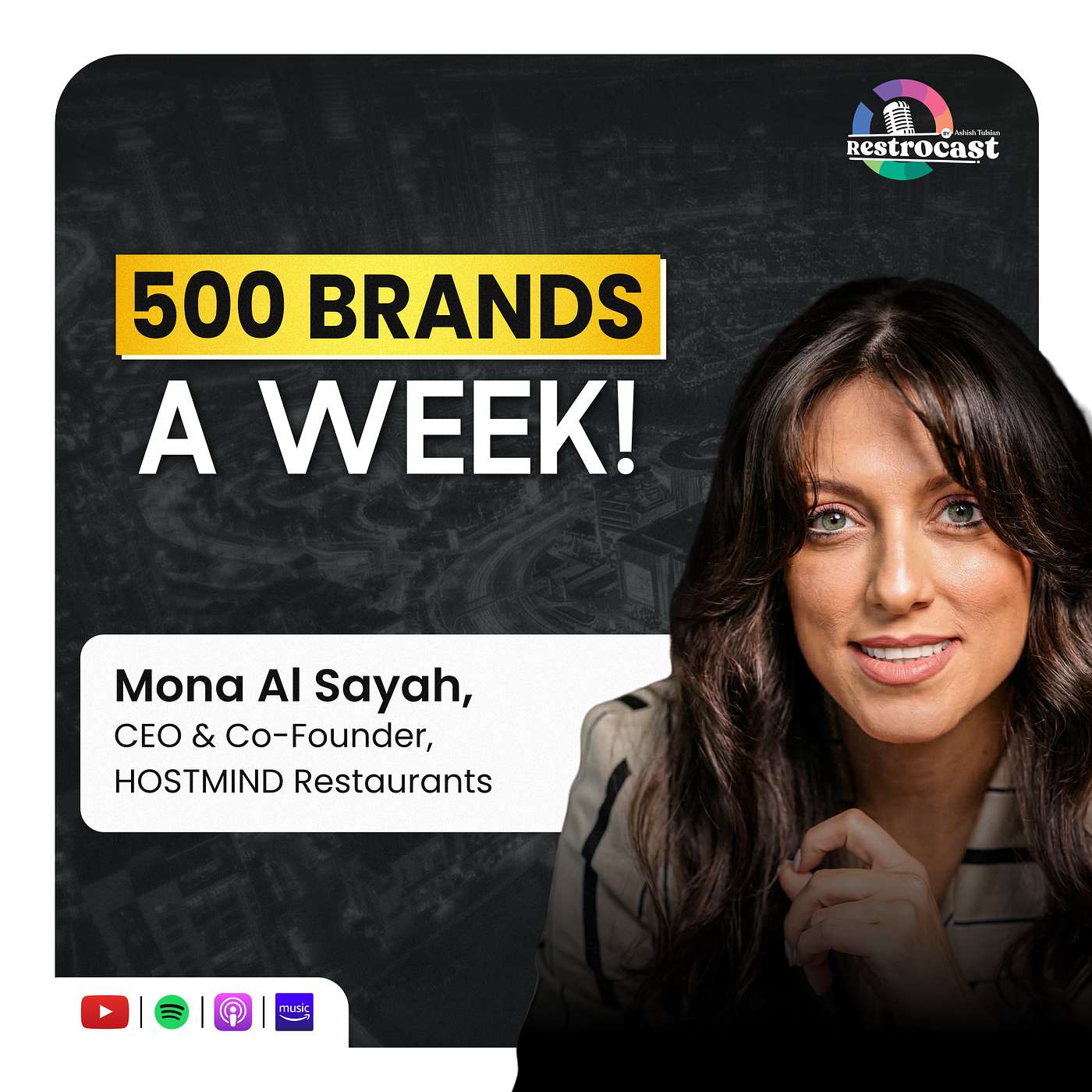
    The Making of HostMind: Mona Al Sayah’s Story of Scale and Discipline

    In this episode, Mona Al Sayah, CEO and co-founder of HostMind, shares her journey from working in her family’s restaurant at the age of 12 to building a scalable cloud kitchen business in Dubai. She reflects on how early exposure to the F&B industry shaped her resilience, work ethic, and understanding of customer experience. Mona dives into the realities of the cloud kitchen space, highlighting the gap between how easy it is to launch a brand and how difficult it is to build one that lasts. She emphasizes the importance of structure, systems, and long-term vision, especially in a crowded and competitive market. She also talks about HostMind’s multi-brand strategy, the philosophy behind “clean food,” and the role of packaging, marketing, and customer retention in driving growth. From navigating aggregator platforms to building repeat customers, Mona shares practical, hard-earned lessons. Find us online: Ashish Tulsian- LinkedIn Mona Al Sayah- LinkedIn Support the show

  • March 10 · 1 hr 2 min

    Khaled Naga: Al-Thiqa's Multi-Brand Restaurant Ops, Kuwait | Restroworks

    Khaled Naga, CEO of Al-Thiqa Group Division, joins Ashish Tulsian, Co-founder and CEO of Restroworks, on Restrocast for a grounded conversation on what it really takes to scale multi-brand restaurant operations in Kuwait and the wider GCC. Khaled shares Al-Thiqa's story of operating 57+ locations across Kuwait, expanding into markets like London and Qatar, and the operational shift from running global franchises to building homegrown brands. They unpack how external forces shape unit economics, from sudden labor and regulatory changes to post-COVID demand swings and intense price competition. Khaled also highlights how Gen Z is changing both customer behavior and hiring, and why operators need teams that can adapt quickly as trends and platforms evolve. The discussion shifts to practical leadership lessons, including building a culture where teams bring solutions, earning trust through consistency, and staying focused on execution while navigating constant volatility. Find us online: Ashish Tulsian- https://www.linkedin.com/in/ashishtulsian/ Khaled Naga- https://www.linkedin.com/in/khaled-naga/ Support the show

  • February 24 · 1 hr 15 min

    Hattan Bakor on Why the First Franchise Opening Is Hard and What Fixes It

    In this episode, Ashish Tulsian sits down with Hattan Bakor to unpack what it really takes to scale a food brand in Saudi Arabia without losing consistency. Hattan shares how entering the business with “fresh eyes” helped him spot operational gaps quickly and why he insisted on a learning window before making changes. They discuss the harsh reality behind restaurant economics, how margins look big from the outside but feel thin once you’re operating day to day. Hattan also reflects on how COVID forced the team into trial-and-error, ultimately pushing them to become more efficient than they were before. A key theme is franchising done right: building SOPs, manuals, and standards first, then creating repeatable launch playbooks after early mistakes. Hattan ties it all back to customer experience because at scale, experience isn’t a tagline; it’s an operational discipline. Find us online: Ashish Tulsian- LinkedIn Hattan Bakor- LinkedIn Support the show

  • February 17 · 1 hr 14 min

    The Longevity Advantage: Silvena Rowe on Movement, Mental Health, and Food

    In this podcast episode, Ashish Tulsian sits down with chef, author, and longevity educator Silvena Rowe for a candid conversation that goes beyond food trends and into the philosophy behind modern dining. Silvena reflects on her global culinary journey, the realities of scaling a values-led restaurant brand like Dose by Silvena, and why ingredient integrity sits at the core of her work today. The discussion explores what she calls “biohacking food”, viewing ingredients as functional inputs that support energy, resilience, and long-term health. She also shares her perspective on cost control in restaurants, reducing food waste without compromising quality, and navigating the pressures and biases of professional kitchens. From teaching longevity nutrition to experimenting with regenerative medicine and disciplined lifestyle practices, Silvena offers a holistic lens on performance, both in hospitality and in life. This episode brings together insights on nutrition, business operations, and personal longevity, revealing how respect for ingredients and data-led decisions can shape a more sustainable future for chefs and restaurant operators alike. #longevity #Biohacking #nutrition Find us online: Ashish Tulsian- LinkedIn Silvena Rowe- LinkedIn Support the show

  • February 10 · 1 hr 17 min

    Beyond the Title: Samer Nasrallah on People Leadership, Pressure Management, and Quality Execution

    In this episode, Ashish Tulsian sits down with Samer Nasrallah, F&B Country Manager for Patchi Café in Saudi Arabia and Bahrain, to unpack what it really takes to build a career in hospitality from the ground up. Samer shares how he unexpectedly entered F&B, the chaos of running in-house delivery and catering in Egypt before the era of aggregators, and the habits that helped him rise fast, including relentless organization and attention to detail. The conversation moves through his experiences across markets, from large-scale event catering in Doha to leadership lessons earned under pressure. Samer breaks down his approach to quality-first operations, team protection, and workplace diplomacy, and reflects on launching Ladurée during COVID, where central kitchen setup and cold chain readiness became the real work behind the brand. He also talks about starting and exiting his Soho food truck venture, and what is different about building a café experience within a chocolate-led brand at Patchi. Find us online: Ashish Tulsian- LinkedIn Samer Nasrallah- LinkedIn Support the show

  • February 2 · 1 hr 20 min

    Sudhin Siva: Multi-Brand F&B Portfolio at Shamal Holding | Restroworks

    Ashish Tulsian, Co-founder and CEO of Restroworks, welcomes Sudhin Siva, Chief Asset Management Officer at Shamal Holding, to Restrocast to discuss how Shamal manages a diversified multi-brand hospitality portfolio and scales F&B brands like Five Guys (UAE franchise), Sushi Samba, Duck & Waffle, Espresso Lab, and Zero Gravity. Sudhin reflects on his start at Jumeirah in quality management, planning, and strategy, and shares the principles he still applies: lead through collaboration, protect the fundamentals, and build a culture that empowers teams to create real guest moments. He explains the tension between brand equity and unit-level performance when owners and management companies partner, why reinvestment matters, and how to optimize an asset without over-extracting it. The conversation also covers piloting innovation with global brands in airport formats and delivery, scaling without diluting what made a concept special, and his personal shift from perfectionism to delegation and listening. Find us online: Ashish Tulsian- https://www.linkedin.com/in/ashishtulsian/ Sudhin Siva- https://www.linkedin.com/in/sudhin-siva-2903139/?originalSubdomain=ae Support the show

  • January 12 · 1 hr 17 min

    Joseph Chartouni: Caribou Coffee & Five Guys in Kuwait | Restroworks

    Restrocast host Ashish Tulsian, Co-founder and CEO of Restroworks, talks with Joseph Chartouni, CEO of Al Sayer Franchising in Kuwait, the enterprise operator behind Caribou Coffee and Five Guys in the market. Joseph shares how resilience shaped him early, growing up between Lebanon and Kuwait during the civil war, and how those experiences influenced his leadership across large-scale restaurant and franchise operations. The conversation challenges the common view of marketing as "messaging." For Joseph, marketing starts with product, innovation, and understanding what customers are becoming, but it's only real when it's fulfilled through operations, store experience, SOPs, training, quality assurance, and food safety. He explains "marketing as a life benefit". Joseph also reflects on values learned from his father, lessons from bringing restaurant concepts to life, the shift from marketing to operations at Americana, and why leadership, focus, and partnerships drove key results. He closes with a practical reminder: strong culture is built in small details, and strategy only works when backed by P&L discipline and relentless execution. Find us online: Ashish Tulsian- https://www.linkedin.com/in/ashishtulsian/ Joseph Chartouni- https://www.linkedin.com/in/joseph-chartouni-ceo-restaurants-retail/ Support the show

  • January 6 · 1 hr 14 min

    KLC Virtual Restaurants: Multi-Brand Delivery in GCC | Restroworks

    Mubarak Jaffar, Co-Founder and CEO of KLC Virtual Restaurants, stops by Restrocast for a conversation with host Ashish Tulsian, Co-founder and CEO of Restroworks, about building One Eatery into a scaled, delivery-first multi-brand restaurant operation across the GCC. Mubarak shares why he moved from traditional dine-in and franchise operations to a model designed for pure kitchen efficiency, and what it takes to make unit economics work in a 24-hour setup. They unpack the "virtual food hall" approach, in which multiple brands operate from a single kitchen per zone to avoid demand fragmentation, and how menu and packaging standardization helped the business stay lean while expanding into new markets. Mubarak also reveals how he thinks about building and deploying brands based on demand, naming brands for search, and capturing cuisines without over-relying on a single brand's lifecycle. The conversation closes with his founder mindset on control, resilience, and the value of having the right co-founder as you scale through uncertainty. Find us online: Ashish Tulsian- https://www.linkedin.com/in/ashishtulsian/ Mubarak Jaffar- https://www.linkedin.com/in/mubarak-jaffar-0114661b4/ Support the show

  • Dec 23, 2025 · 1 hr 44 min

    Kamran Khan on Scaling Enterprise Restaurants in Saudi | Restroworks

    On Restrocast, Ashish Tulsian (Co-founder and CEO, Restroworks) is joined by Kamran Khan, a veteran restaurant operator in Saudi Arabia, for a candid conversation on what it really takes to build and scale an enterprise restaurant brand. Kamran breaks down the operator reality: restaurants are a daily problem-solving business where execution, not intent, decides outcomes. He shares lessons on why the second and third outlets are the true test of scalability, and why brands win when they deliver consistency customers can predict. The discussion goes deep into the economics of running restaurants in thin margins, the "cash in today, cash out today" cycle, and how small leaks across supply chain, rent, and operations can quietly destroy profitability. Kamran also explores franchising versus independent growth, highlighting the power of SOPs and local market intelligence. From post-COVID shifts to leadership habits rooted in empathy and ground-level understanding, this episode is a practical playbook for founders, operators, and multi-unit teams focused on building brands that last. Find us online: Ashish Tulsian- https://www.linkedin.com/in/ashishtulsian/ Kamran Khan- https://www.linkedin.com/in/kamrankhan1/?originalSubdomain=sa Support the show

  • Dec 19, 2025 · 1 hr 2 min

    Scaling Shrimpy and Beyond: What It Takes to Grow in Kuwait with Khaled Naga

    In this episode, Khaled Naga, CEO of Al-Thiqa Group Division, joins Ashish Tulsian for a grounded conversation on what it really takes to scale restaurant brands in Kuwait and the wider GCC. Khaled shares Al-Thiqa’s journey of operating 57+ locations across Kuwait, expanding into markets like London and Qatar, and explains the operational shift from running global franchises to building homegrown brands from scratch. They unpack how external forces shape unit economics, from sudden labor and regulatory changes to post-COVID demand swings and intense price competition. Khaled also highlights how Gen Z is changing both customer behavior and hiring, and why operators need teams that can adapt quickly as trends and platforms evolve. The discussion shifts to practical leadership lessons, including building a culture where teams bring solutions, earning trust through consistency, and staying focused on execution while navigating constant volatility. Find us online: Ashish Tulsian- LinkedIn Khaled Naga- LinkedIn Support the show

  • Dec 11, 2025 · 1 hr 17 min

    How Nasser Al Massabi Built Low-Calories into a Leading Healthy Restaurant Brand

    In this episode, Ashish Tulsian speaks with Nasser Al Messabi, CEO of Low Calories, a fast-growing healthy restaurant brand from the UAE. Nasser shares how he went from 18 years in the UAE Police to launching a health-food concept at a time when almost no one was doing it, the failures and land deals that taught him hard lessons, and why he ultimately resigned seven years before a secure government pension to go “all in” on his brand. He also discusses scaling to multiple countries through franchising, navigating trends like Ozempic and Mounjaro, and why treating employees like family sits at the core of his success. Nasser opens up about how police life shaped his discipline and decision-making and what he had to unlearn to become a flexible, people-first entrepreneur. He talks candidly about money, responsibility, and why he believes God tests founders by what they do with success. Find us online: Ashish Tulsian- LinkedIn Support the show

  • Nov 25, 2025 · 59 min

    Mohammad Al Madani: 50-Store Enterprise Restaurant Brand, GCC | Restroworks

    In this episode of Restrocast, Ashish Tulsian, Co-founder and CEO of Restroworks, sits down with Mohammad Al Madani, Chairman of the Al Madani Group, to explore his path from his father's tailoring shop in the 1940s to building a 50+ store enterprise restaurant portfolio in the GCC with Charley's Philly Steaks. Growing up watching his father stitch kanduras for Dubai's earliest rulers and business families, Al Madani learned customer service the traditional way, and those lessons in humility, discipline, and hospitality shaped the foundation of his business. From running one of the UAE's most iconic tailoring brands to opening 40 retail stores and eventually building a 50+ store restaurant portfolio with Charley's Philly Steaks, his career reflects constant reinvention. In this conversation, he shares the realities of entering F&B without prior experience, why his first standalone restaurant failed, what most franchisees get wrong, and how to choose locations that actually work. He also talks about staying relevant for Gen Z, bringing new global concepts into the GCC, and why people, not systems, drive long-term success. Packed with practical lessons and timeless wisdom, this episode is a must-listen for anyone in restaurants, franchising, or entrepreneurship. Find us online: Ashish Tulsian- https://www.linkedin.com/in/ashishtulsian/ Mohammad Al Madani- https://www.linkedin.com/in/mohammad-almadani-5a932930/?originalSubdomain=ae Support the show

  • Nov 21, 2025 · 49 min

    Building Teams, Not Just Brands: Pauline Ibrahim on Leadership in Hospitality

    In this episode, Ashish Tulsian sits down with CEO Pauline Ibrahim to explore her remarkable journey from a finance analyst in Lebanon to leading some of the most respected F&B brands in the Middle East. Pauline shares how moving to Dubai ignited her passion for the restaurant industry, why Azadea became her “F&B school,” and how jumping into the startup world with iKcon became her real-life PhD in growth, risk, and resilience, especially during the COVID-19 pandemic. She breaks down what a healthy restaurant P&L truly looks like, why cloud kitchens struggle with sustainable profitability, and the real economics behind food cost, rent, labor, and delivery commissions. From cautionary advice for anyone planning to open a restaurant in Dubai to her views on authenticity and women in leadership, this conversation is packed with hard truths every operator should hear. Find us online: Ashish Tulsian- LinkedIn Pauline Ibrahim- LinkedIn Support the show

Showing 1–20 of 20 episodes