Skip to content
Artwork for Relatively Stable
Society & CultureRelationshipsPhilosophy

Relatively Stable

Kimberly Carter

In Relatively Stable we delve into the journeys of those who have faced challenges, uncovered their passions, and discovered resilience along the way. Whether you're here for the stories, seeking inspiration, or simply drawn to the wisdom we glean from horses—and life—you’re in the right place. Let’s dive into the narratives that remind us how to stay relatively stable, no matter what comes our way.

stableroots.substack.com
Play
  • 23 episodes
  • weekly
  • Avg 22 min
  • English
Counted on this page — what you have heard stays on this device, so it is not something the list can be paged by.
  • S2 · E12
    April 2 · 16 min

    The Invisible Altar

    A few weeks before our cat Indigo was diagnosed with FIP, she started purring constantly. Every night, pressed against me, making biscuits on the duvet. I thought she was finally at peace after the hardest year of our lives. I was wrong. A cat's purr vibrates between 25 and 150 hertz — a frequency clinically shown to stimulate bone density and accelerate tissue repair. She wasn't contented. She was in triage. Her body was running the only repair instrument it had, alone in the dark, while I lay there reading her distress as gratitude. I had been doing the same thing for months. This episode is about the place we go when the performance of wellness finally runs out of gas. Not the meditation cushion version. The real one — unglamorous, unwatched, and the only thing that actually works. It's about what the horses at Lavender Hill know about exhaling that we've largely forgotten. It's about the specific madness of being a nervous system coach while your own perimeter comes apart at the seams. It's about what two hundred years of floorboards sound like before dawn, and a cat named Indigo who fought something ancient and enormous with nothing but the instrument of her own frequency. The episode closes with two practice prompts: an audit for locating where you're performing okay while your nervous system is actually in triage, and a practice for finding the one private gesture that is purely yours — not for the optics, not for the audience, but for the bone-deep necessity of staying whole. This is the first essay in a four-part April series. Each piece stands alone. Together they form a complete arc — from the recognition of the private self, through the body's own repair, through what it means to stay in the room with someone else's hard thing, to the changed person who walks back into ordinary life carrying something new. Week 1 — The Invisible Altar: Who we are when no one is watching Week 2 — The Biological Prayer: What the body does there Week 3 — The Witness: What it means to stay Week 4 — The Return: What we carry back About 20 minutes. Best listened to anywhere you don't have to be performing anything for anyone. Read the full essay, subscribe, or share at Stable Roots, a weekly essay and audio publication written from Lavender Hill — a 200-year-old farmhouse and working stable. It lives at the intersection of nervous system work, honest writing, and what the horses keep insisting on teaching. New every Thursday. This is a public episode. If you'd like to discuss this with other subscribers or get access to bonus episodes, visit stableroots.substack.com/subscribe
  • S2 · E11
    March 19 · 25 min

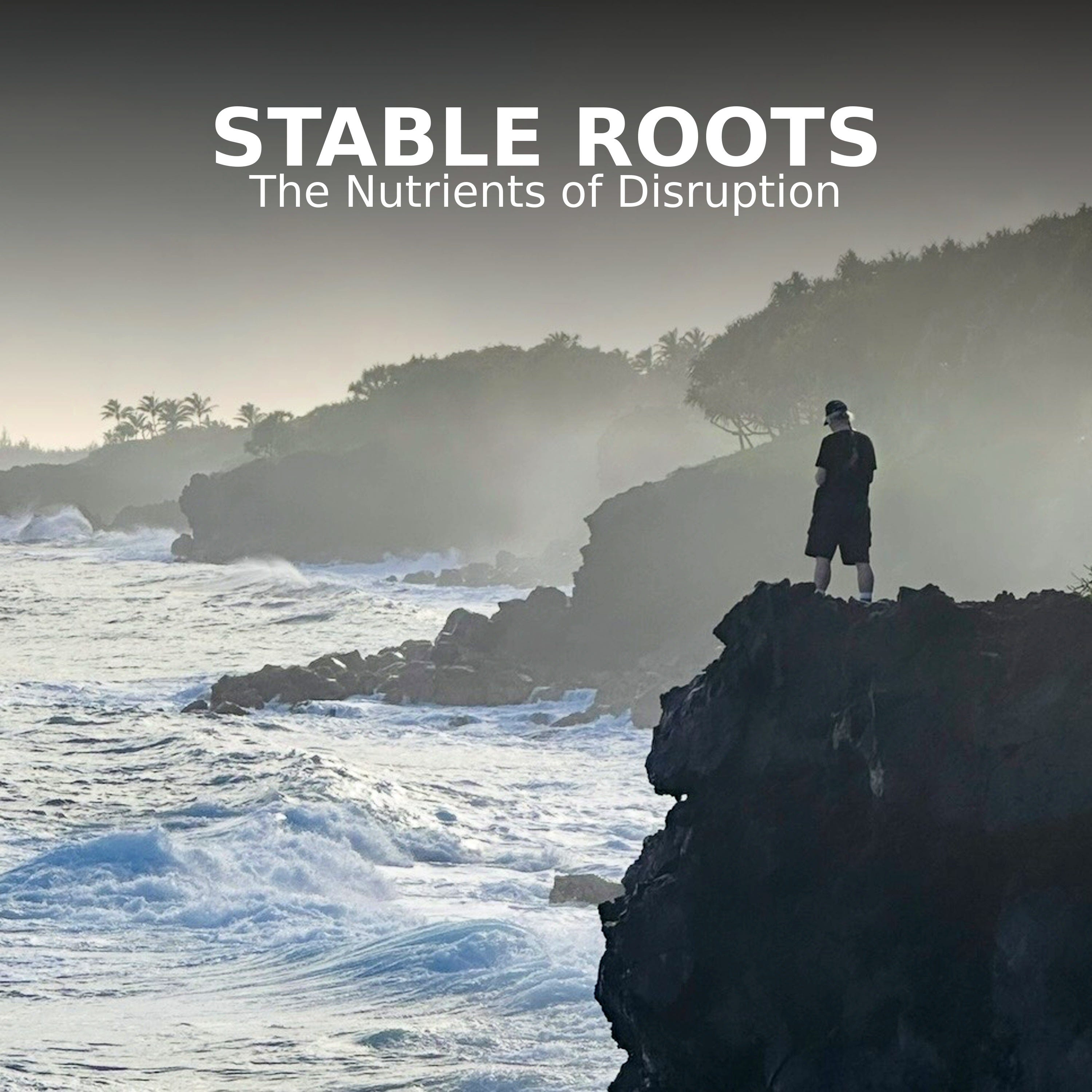
    The Nutrients of Disruption

    The Nutrients of Disruption When we arrived at the new farm, I thought my first responsibility would be to maintain the tidy lawns and pastures that had been carefully tended for generations. My plan was simple: mow early, manage the weeds, and keep the landscape looking orderly. But spring had other ideas. Before I could get the mower started, the fields erupted with plants most people would call weeds—henbit, chickweed, dandelion, wild onion, violets, shepherd’s purse. As I paused long enough to identify them, I discovered that nearly every one of these early plants is edible and nutrient-dense, arriving at the exact moment when bodies—both human and equine—are depleted after winter. The horses noticed long before I did. Watching them move through the pasture like quiet herbalists began to change the way I thought about disruption, not just in the field but in life itself. In this essay, I explore how the natural world uses disturbance to restore balance: fire opening the seeds of pine forests, floodwaters replenishing soil across valleys, wind scattering life across landscapes, and grazing animals renewing grasslands through movement and pressure. What we often experience as destruction can also be part of a much longer cycle of renewal. This piece reflects on the strange wisdom of weeds, the forces of the elements, and the way disruption has shaped both the land and my own life here at the farm. Listen if you’re interested in: - how weeds restore nutrients to depleted soil - the ecological role of fire, flooding, wind, and grazing - what horses can teach us about seasonal nourishment - why disruption is often the beginning of renewal Subscribe to Stable Roots Stable Roots is a reader-supported publication exploring the intersection of land, horses, and the deeper lessons that emerge when life refuses to stay orderly. Free subscribers receive each essay in their inbox. Paid subscribers help support the writing and the work unfolding here at the farm. This is a public episode. If you'd like to discuss this with other subscribers or get access to bonus episodes, visit stableroots.substack.com/subscribe
  • S2 · E10
    March 12 · 24 min

    The Elephant in the Room

    The Elephant in the Room In this episode, I read a new essay from Stable Roots written in response to an anonymous letter that arrived at our farm. The letter accused me of harming my horses, misusing donations that supported the relocation of Bramblewood Stables, and failing the community that helped make our move possible. Rather than responding through rumor or secondhand conversation, I chose to answer the only way I know how: openly and in writing. This piece explores what transparency actually means when your work is visible, vulnerable, and deeply tied to the lives of animals and people who trust you. It touches on the realities of relocating a working horse farm, the loss of a beloved horse named Sheba, and the labor that continues every day behind the scenes at Lavender Hill. Most of all, it is a reflection on community — the people who showed up when our farm needed them most and who continue to stand beside this work. If you’d like to read the full essay or learn more about the work we are building here, you can find it at Stable Roots, where I document the realities of stewarding land, horses, and a community that continues to grow. Love, Kim This is a public episode. If you'd like to discuss this with other subscribers or get access to bonus episodes, visit stableroots.substack.com/subscribe
Showing 21–23 of 23 episodes