Artwork for Protrusive Dental Podcast
Health & Fitness

Protrusive Dental Podcast

Jaz Gulati

The Forward Thinking Dental Podcast

  • 20 episodes
  • Updated Wednesday

Episodes20

  • Wednesday · 1 hr 6 min

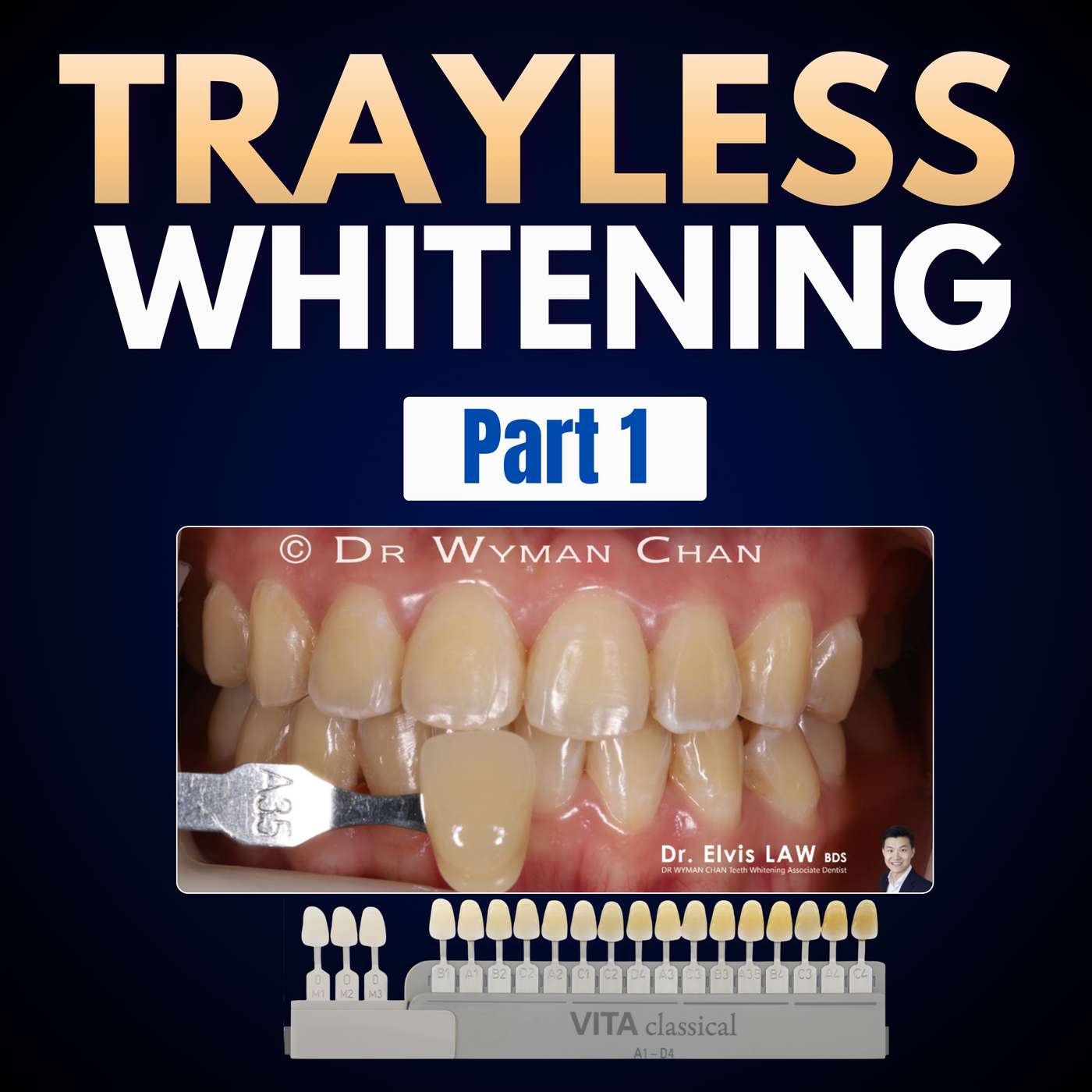
    TRAYLESS Whitening Technique Part 1 – with Dr Wyman Chan – PDP277

    What if the tray is the reason your whitening results are inconsistent? Why would a dentist who owns a whitening lab — and holds four patents on making bleaching trays — tell you to skip the tray? Trayless whitening does not mean strips. It means the patient puts in a retractor and paints the gel directly onto the teeth, twice a day, for half an hour. No impression, no lab bill, no two-week wait, and no soft plastic reservoir quietly absorbing your peroxide. This is Part 1 of a two-part conversation with Dr Wyman Chan and Dr Elvis Law, recorded live in their central London whitening practice. Wyman has done nothing but whitening since 2002, has a PhD on the efficacy and safety of whitening processes, and — despite owning the lab that makes the trays — now does most of his cases without one. Elvis trained under him and reckons around 90% of his own cases are now trayless. Part 1 is the mechanism, the protocol and an honest list of who it doesn’t suit. Part 2 takes it into the hard cases. https://youtu.be/aAAoUxTIkxo Watch PDP277 on YouTube Protrusive Dental Pearl: Let the Patient Pick the Shade Most of us ask “how white do you want to go?”, get a laugh about Hollywood white or Simon Cowell white, then hold a B1 tab against the canine and call that the destination. Try flipping it. Under corrected light, record where the patient is now. Then hand over the whole shade guide, arranged by value, and let them choose the tab they want to reach. Photograph both. This is the VITA Shade guide arranged by value: B1 → A1 → B2 → D2 → A2 → C1 → C2 → D4 → A3 → D3 → B3 → A3.5 → B4 → C3 → A4 → C4 Two things change. You now know the target precisely instead of inferring it, and you can track progress against a fixed reference. Most patients land on B1 — it’s the last shade before the bleach range, and it reads natural rather than veneered. Some will point at 0M1 and that’s a different conversation, which is exactly the point. Because whatever they choose dictates how many weeks, how much gel and how many reviews the case needs — and therefore what it should cost. A single flat whitening fee assumes every case takes the same work. They don’t. Someone starting at C4 who wants a bleach shade can get there, but it takes more gel, more time, more reviews and probably a protocol change along the way. Price that honestly. Only you can decide what the tiers look like in your practice. But it might be worth sitting down as a team of dentists and therapists and asking: how are we delivering whitening? Two tiers? More? Based on what? What You’ll Take From This Episode Conscious bleaching — why an awake patient with an open mouth is a completely different chemical situation to a sealed tray worn overnight, and what that does to sensitivity. The formulation constraint — peroxide needs acid to stay stable on the shelf, which is why pre-mixed products lean acidic and why two-component gels exist at all. The full trayless protocol — wear schedule, spacing, patient positioning, review intervals and what to troubleshoot first when a case is behind. Who it doesn’t suit — an honest contraindications list, including the one objection patients raise most often and the answer to it. Tray hygiene as a clinical instruction — the reason results vary so much between patients using the identical gel. An A3.5 to B1 case — start to finish in three weeks, with the review points and the maintenance plan. Highlights of This Episode 00:00 TEASER 01:05 Trayless Teeth Whitening Explained 03:40 Protrusive Dental Pearl: Let Patients Pick Their Whitening Shade 06:05 Meet the Guests: A Career Built on Teeth Whitening 10:27 What Is Trayless Whitening? (It’s Not Whitening Strips) 13:44 Why Whitening Trays Waste Your Bleaching Gel 15:37 Are Whitening Strips Acidic? Gel Formulation Explained 19:17 Conscious Bleaching and Whitening Sensitivity 24:43 When NOT to Use Trayless Whitening 29:05 The Trayless Whitening Protocol: 30 Minutes Twice a Day 32:55 Midroll 42:45 How to Clean Whitening Trays Properly 50:02 A3.5 to B1 in Three Weeks: A Case Walkthrough 56:16 Tooth Porosity and the 45-Degree Recline Rule 1:02:09 Whitening Top-Ups and the Five-Year Guarantee 1:06:49 How to Price Teeth Whitening and Let Patients Pick the Shade 1:07:45 OUTRO 1:12:56 What’s Coming in Part 2 Start Offering Trayless Whitening for Your Office UK Dentists: In the UK you need the Get2Smile Kit which is 6% formulation applied twice daily for 30 minutes. Head to directoralcare.com and register for a free professional account. Approval unlocks the full shop, pricing, offers and their upcoming educational courses. At checkout, use code: DOCSUMMER20 The Trayless whitening system is called Get2Smile. International Dentists wishing to offer Get2Smile, please enquire from Dr Chan’s website. The international version uses 10% formulation applied for 15 minutes, twice daily. 📌 Want to learn directly from Dr Wyman Chan? Join him for Redefining Early Caries Management and Aesthetic Dentistry in Shanghai, China, on 20–21 October 2026. Saturday 5th September London, UK CPD EVENT: Join Dr Wyman Chan for an exciting event focused on redefining the management of dental plaque-induced oral diseases. 📍 Royal Asiatic Society, London NW1 2HD The session will include a live lecture, clinical demonstration, and the opportunity to take part in practical, hands-on training. Dr Wyman Chan will be joined by Dr Niki Shah and Dr Elvis Law, who will also showcase their clinical cases. Want more? If you enjoyed this episode, check out: MAGIC Teeth Whitening with Dr. Wyman Chan – PDP245 — Wyman’s first Protrusive episode, covering whitening myths, sensitivity, and whether in-office lights do anything at all. Tags #PDPMainEpisodes Listen, Subscribe, Earn CPD Listen: Subscribe to the Protrusive Dental Podcast on Spotify, Apple Podcasts, or YouTube. This episode is eligible for 1 CE credit via the quiz on Protrusive Guidance. This episode meets GDC Outcomes C. AGD Subject Code: 780 Esthetics/Cosmetic Dentistry. Aim & Learning Outcomes Aim: To give dental practitioners a mechanism-led understanding of external tooth whitening delivered without a tray — how gel containment and contact time influence sensitivity and efficiency, how formulation constrains the delivery method, and how to select, sequence and price a whitening case around the patient’s chosen target shade. Learning Outcomes — by the end of this episode, dentists will be able to: Describe how containment and contact time influence bleaching sensitivity, gingival irritation and the proportion of active gel that reaches the tooth. Apply a structured protocol for tray-free external whitening, including wear scheduling, patient positioning, review intervals and technique troubleshooting. Differentiate between patients suited to tray-based and tray-free delivery, and justify a fee structure derived from the patient’s target shade rather than a flat rate.

  • July 22 · 46 min

    What Dental School Didn’t Prepare You For – PDP276

    Just qualified — so why does it feel like the learning is only just beginning? What should you actually focus on in year one: the flawless dentistry on your feed, or something far less glamorous? How do you tell a patient their nerve might die — without it sounding like YOUR fault? And when a patient says “just do whatever you think” — what do you say back? This is the conversation every new dentist needs and every experienced one recognises. Our guest is Dr Emma Hutchison — a former dental nurse who trained at the University of Glasgow, and has been the face of the Protrusive Students series across her studies. We recorded in her final weeks of dental school, right on the threshold of practice, and talked through everything the syllabus skips: the safe-beginner mindset, what to learn (and what to ignore) early on, how to protect your standards under time pressure, which cases to take on, and how to talk to patients about risk, cost and consent so the words actually land. If you’re fresh out, this one hits hard. If you’re an oldie, it’s a trip down memory lane — and a reminder of how far you’ve come. https://youtu.be/gjJiDVP4w-4 Watch PDP276 on YouTube Protrusive Dental Pearl: Predict the Complication Before It Happens A communication pearl for every deep restoration. When a filling sits close to the nerve — a big cavity, a crack — name the likely complication before it happens. Show the patient the images, then tell them what to expect: a twinge to cold or hot that can linger a few days, so keep taking painkillers and keep the area clean. And warn them what a red flag looks like: a severe throbbing ache keeping them up at night, or pain out of the blue without eating or drinking, means the nerve is struggling and they should call you. Do this and, if the complication ever arrives, you look like the expert who called it — not someone something went wrong for. Skip it and reception fields the panicked calls instead. It reassures the patient, lowers your callback rate, and quietly reduces your risk profile. Obvious, easy to forget, and worth saying out loud every single time. What You’ll Take From This Episode The safe-beginner mindset — why qualifying is the driving licence, not the destination, and how the happiest dentists keep getting 1% better. Just-in-time learning — study for the cases actually in your diary, not the obscure pathology you won’t meet for years. Get good before you get fast — master the bread and butter, protect a little extra time early, and reflect on every procedure. Clever hacks vs cutting corners — how to tell the difference, and why every shortcut quietly rewires the habit. Consent that works — getting patients to own the problem, and giving a clear recommendation instead of a fifteen-item menu. Highlights of This Episode 00:00 Teaser 01:05 The Things Dental School Doesn’t Prepare You For 03:05 Communication Pearl: Predict the Complication Before It Happens 05:35 Life as a Final-Year Dental Student on Outreach 09:55 Why You’re Only a “Safe Beginner” When You Qualify 13:45 Master Bread-and-Butter Dentistry Before the Fancy Stuff 16:05 Just-in-Time Learning: Study for the Cases in Front of You 18:05 Get Good Before You Get Fast (and Protect Your Time) 19:45 Clever Hacks vs Cutting Corners: Don’t Lose Your Standards 24:14 Midroll 27:46 The Skills to Nail in Your First Year as a Dentist 30:11 Which Cases to Take On — and Learning From Mistakes 35:46 How to Explain Risk and Get Patients to Own the Problem 41:26 When Patients Refuse the Ideal Treatment: Start With Their Goal 44:26 Treatment Planning Without the Overwhelm: Loom & “Guess Who” 47:36 Claim Your CPD & Become the Next Protrusive Student 47:38 Outro Dr Emma Hutchison came to dentistry the long way round — from a dental nursing background into dental school at the University of Glasgow, with final-year outreach on the Kintyre peninsula in Campbeltown. She has been the face of the Protrusive Students series throughout her studies, and this episode marks her crossing from student to newly qualified dentist. On behalf of the whole Protruserati: we’re proud of you, Emma. Become the next Protrusive Student: with Emma qualifying, we’re looking for the next keen student who wants part-time work, an income while studying, and to contribute to Protrusive — or a nudge if you know one. DM the team inside the Protrusive Guidance app. Resources & Mentions From This Episode Quick & slick rubber dam — the in-app video series on quadrant isolation, for building the rubber dam habit from day one. 21-Day Photography Challenge — the in-app challenge that walks you through capturing every clinical photo, including the dreaded occlusal shots, in your first three weeks. Loom School — in-app training on async, Loom-video treatment planning (roughly 90 minutes of CPD across around 15 bite-sized lessons). Access the above masterclasses and more when you subscribe to the Ultimate or Infinity plan. Want more? If you enjoyed this episode, check out: Periodontics for Beginners – PS008 #PDPMainEpisodes #CareerDevelopment #Communication Listen, Subscribe, Earn CPD Listen: Subscribe to the Protrusive Dental Podcast on Spotify, Apple Podcasts, or YouTube. This episode is eligible for 0.5 CE credit via the quiz on Protrusive Guidance. This episode meets GDC Outcomes A and D. AGD Subject Code: 770 Self-Improvement Aim & Learning Outcomes Aim: To give early-career dentists a practical framework for the transition from dental school to independent practice — how to keep developing, how to protect clinical standards under time pressure, and how to communicate risk and treatment options as part of valid consent. Learning Outcomes — by the end of this episode, dentists will be able to: Apply a “just-in-time” approach to continuing development, prioritising the competencies relevant to the cases in front of them over isolated advanced techniques. Differentiate time-saving efficiencies from quality-compromising shortcuts, and describe strategies to maintain clinical standards early in practice. Apply structured communication techniques to explain procedural risk, establish a patient’s treatment goal, and make a clear, defensible recommendation as part of valid consent.

  • July 15 · 1 hr 2 min

    Why is Dr Tif Qureshi doing Blood Tests for his Patients? Should YOU? – PDP275

    Your patient brushes well, avoids sweets — and still keeps getting decay. What if the answer isn’t in their mouth at all? What if two inexpensive finger-prick tests told you more about a patient’s gum disease and implant prognosis than anything on the radiograph? And here’s the uncomfortable one: if the science is this clear, is not checking starting to look like a medico-legal risk? Especially for imlpant surgery! This is a conversation with Dr Tif Qureshi — the dentist who changed how the profession thinks about the lifelong patient, the envelope of function, and Align, Bleach, Bond. He’s gone down a new rabbit hole: metabolic health. In general practice he’s now doing blood tests — HbA1c and vitamin D — and making the case that the mouth isn’t connected to the body, it is the body. This isn’t about becoming a “biological dentist” (as you’ll hear, Tif is refreshingly blunt about the wilder end of that world). It’s about respecting the biology, screening sensibly, and helping patients where we’re genuinely placed to help. https://youtu.be/mt1MXLFCTp0 Watch PDP275 on YouTube Protrusive Dental Pearl: Test Yourself First Before you even think about introducing blood tests for your patients, ask whether you’re checking your own biomarkers at a sensible interval. The deepest way to understand this topic is to learn it on yourself and your family first — run your own HbA1c, vitamin D, iron, and liver and kidney markers, and see what the data tells you. Start quarterly, like hygienist visits, then stretch to six-monthly or annual once things look good. Getting invested in your own numbers is what makes better food and lifestyle choices actually stick — and it’s the honest starting point for ever offering this to a patient. What You’ll Take From This Episode The metabolic lens — why one disordered glucose-and-insulin system sits under so much chronic and dental disease, and why dentistry is well placed to act on it. Sugar, redefined — why patients who avoid sweets still get decay, and how frequency of starchy carbs drives the problem. The two biomarkers that matter most — what HbA1c and vitamin D each tell you about caries, perio and healing. How to run it in practice — finger-prick logistics, what to test, and how to raise it on the medical history form. The medico-legal case — why documenting these markers can protect you before implant, graft and perio work. Highlights of This Episode 00:00 Why Dentists Should Care About Blood Tests 06:00 Metabolic Disease: The Root Cause Dentists Miss 13:00 Why Starchy Carbs Cause Decay, Not Just Sugar 15:50 HbA1c and Caries: What the SHIP Study Shows 21:00 Insulin Resistance: The Hidden Driver of Gum Disease 26:00 How to Talk to Patients About Diet Without Scaring Them 31:00 Why Vitamin D Deserves a Place in Dentistry 34:00 Vitamin D, Implant Failure and Perio Risk 37:00 Blood Tests as Medico-Legal Defence 42:00 What Dentists Should Test: HbA1c and Vitamin D 44:00 How In-Practice Blood Testing Actually Works 50:00 The Mouth Is the Body: Screening, Not Diagnosing 51:00 Is This Biological Dentistry? An Honest Answer 57:00 How to Learn Blood Testing for Your Practice From the Guest Dr Tif Qureshi qualified from King’s College London in 1992 and is a Past President of the British Academy of Cosmetic Dentistry. He is Founder and Clinical Director of IAS Academy, best known for pioneering Align, Bleach, Bond and Progressive Smile Design, and as a teacher of the Dahl concept. His current focus is metabolic health in general practice. 👉 IAS Academy — Align, Bleach, Bond, the Dahl concept, and blood-testing / metabolic health training Coming soon: Join Dr. Tif in one-day metabolic health programme. He has spent years connecting the dots between what’s happening in the mouth and what’s happening in the body. The results are undeniable: better outcomes, stronger case acceptance, and a rock-solid medico-legal position. This one-day course will change the way you practise. For good.👉Metabolic Health in Dentistry References & Further Reading Studies and sources referenced in this episode: Song I-S, et al. Severe Periodontitis Is Associated with Insulin Resistance in Non-abdominal Obese Adults. J Clin Endocrinol Metab, 2016;101(11):4251–4259. Insulin resistance as an independent risk factor for severe perio in normal-weight adults. Botelho J, et al. Vitamin D Deficiency and Oral Health: A Comprehensive Review. Nutrients, 2020;12(5):1471. Vitamin D across caries, periodontitis, orthodontic and surgical outcomes. Schmolinsky J, Kocher T, Rathmann W, Völzke H, Pink C, Holtfreter B. Diabetes status affects long-term changes in coronal caries – The SHIP Study. Sci Rep. 2019 Oct 30;9(1):15685. doi: 10.1038/s41598-019-51086-z. PMID: 31666549; PMCID: PMC6821733. Want more? If you enjoyed this episode, check out: Why do some Dentists find Dahl Distasteful? – PDP016. #PDPMainEpisodes #BeyondDentistry #Communication Listen, Subscribe, Earn CPD Listen: Subscribe to the Protrusive Dental Podcast on Spotify, Apple Podcasts, or YouTube. This episode is eligible for 1.0 CE credit via the quiz on Protrusive Guidance. This episode meets GDC Outcomes C and A. AGD Subject Code: 730 Oral Medicine, Oral Diagnosis, Oral Pathology Aim & Learning Outcomes Aim: To help dental practitioners understand the link between metabolic health and oral disease, and to evaluate whether simple in-practice biomarker screening has a place in their care of patients. Learning Outcomes — by the end of this episode, dentists will be able to: Describe how disordered glucose and insulin metabolism relates to caries, periodontal disease and healing outcomes, and explain what HbA1c and vitamin D each indicate. Apply a structured, non-alarmist approach to discussing diet and biomarker screening with patients, within the professional boundary of screening rather than diagnosing or prescribing. Evaluate the clinical and medico-legal case for documenting relevant biomarkers before periodontal and surgical treatment, and identify when to refer to a medical colleague.

  • July 8 · 56 min

    Mastering Pediatric Dentistry: Pulpotomy and Crown Techniques – PDP274

    Filling, stainless steel crown, pulpotomy or extraction — how do you actually decide on a deciduous tooth? Why is the lower first primary molar the one that always seems to flare up? When should you reach for silver diamine fluoride instead of the drill — and when is a child’s cooperation telling you to change the plan entirely? And how do you actually do a pulpotomy, step by step, without it blowing up under the crown? This is a paediatric dentistry masterclass with Dr Nidhi Kotak — “The Baby Tooth Dentist,”. It’s built for the general dentist who treats children and wants clearer rules: when to fill versus crown, how to read the radiograph, silver diamine fluoride, local anaesthetic and behaviour guidance, isolation, and a full pulpotomy and stainless steel crown technique. The through-line is simple — in children you decide fast, protect the airway, and treat for predictability rather than heroics. https://youtu.be/3OscfwF7SIQ Watch PDP274 on YouTube Protrusive Dental Pearl: Strategic Flexibility You cannot be rigid when treating children. The mindset shift is to stop asking “what should be done for this child?” and start asking “what can be done for this child?” With children you have to be fast and efficient, and curveballs are constant — sometimes the parent is harder to manage than the child. So the plan has to bend. The worked example: you planned a conventional prepped stainless steel crown, but cooperation drops mid-appointment. Rather than abandon the visit, switch to a no-prep whole-crown approach and protect the tooth anyway. It stays in the child’s best interest — and it’s far kinder to your own mental health. It’s a mindset worth carrying into all of dentistry, not just children’s. What You’ll Take From This Episode When to fill vs crown — the surface rule for baby molars, why crowns are so predictable in children, and where composites still work. The “D” devil tooth — why the lower first primary molar flares up, and why mesial caries on a D is an automatic crown. Pulpotomy indications — the signs that say vital pulpotomy, the ones that say extraction, and why a pulp exposure in a primary tooth is an automatic pulpotomy. SDF, sedation and isolation — arresting decay without drilling, matching sedation to the child, and protecting the airway. The pulpotomy technique — a full step-by-step from caries removal to cementing the stainless steel crown, including the modern medicament choice. Highlights of This Episode 00:00 TEASER 00:59 Pediatric Dentistry for GDPs: The Strategic Flexibility Mindset 07:24 Why GDPs Struggle Treating Children 08:19 When to Fill vs When to Crown a Baby Tooth 12:18 Class II vs Stainless Steel Crown: The Surface Rule 13:41 Reading Pediatric Radiographs & When to Take Bitewings 19:15 SDF vs Fluoride Varnish: When to Use Each 22:37 Resin Infiltration (Icon) for Children’s Teeth 25:15 Pulpotomy in Primary Teeth: When It’s Indicated 26:19 The “D” Devil Tooth: Why Mesial Caries Means a Crown 27:31 Hall Crowns and the Modified Whole Crown Technique 27:48 Midroll 38:39 Local Anaesthetic & Behaviour Guidance in Children 40:38 Sedation Options: Oral, Nitrous & Intranasal 46:22 Rubber Dam vs Isolite: Isolation for Kids 48:59 How to Do a Pulpotomy: Step-by-Step Technique 58:03 OUTRO Dr Nidhi Kotak is a dual US and Canadian board-certified paediatric dentist — a Diplomate of the American Board of Pediatric Dentistry and a Fellow of the Royal College of Dentists of Canada. Follow Dr. Nidhi for more paediatric dentistry tips 👉 @babytoothdentist on Instagram Want more? If you enjoyed this episode, check out: Zirconia vs Metal Hall Crowns vs Conventional with Dr Tim Keys – PDP227 #PDPMainEpisodes #EndoRestorative Listen, Subscribe, Earn CPD Listen: Subscribe to the Protrusive Dental Podcast on Spotify, Apple Podcasts, or YouTube. This episode is eligible for 1.0 CE credit via the quiz on Protrusive Guidance. This episode meets GDC Outcomes C AGD Subject Code: 430 Pediatric Dentistry. Aim & Learning Outcomes Aim: To give dental practitioners a clear, decision-led approach to restorative paediatric dentistry — how to choose between filling, crowning, pulpotomy and extraction, how to manage caries conservatively, and how to carry out a pulpotomy and stainless steel crown safely. Learning Outcomes — by the end of this episode, dentists will be able to: Differentiate the presentations that indicate a direct restoration, a stainless steel crown, a vital pulpotomy, or an extraction in the primary dentition, using clinical and radiographic findings. Describe minimally invasive and behaviour-management options in children — silver diamine fluoride, fluoride varnish, resin infiltration, local anaesthesia, sedation and isolation — and select them appropriately for the individual child. Apply a step-by-step technique for a vital pulpotomy and stainless steel crown in a primary molar, including the current choice of medicament and cementation.

  • July 3 · 46 min

    Consent in Orthodontics Should Be Individualised – PDP273

    How good is your consent for orthodontics — really? More adults are having ortho, and more GDPs are providing it. So which risks should you be discussing with every single patient — and which ones depend on the person in the chair? When a case is heading for a big overjet or a tricky rotation, is that a conversation you have at the start, or one you scramble to explain halfway through? And what actually makes a consent form legally valid — the signature, or everything around it? This episode brings together two perspectives you don’t often hear in the same room. Dr Zaid Esmail is a specialist orthodontist and founder of the Online Orthodontic Academy, who mentors GDPs through fixed and aligner cases. Dr Neel Jaiswal returns for the dento-legal view — he’s a dentist and the founder of Professional Dental Indemnity (PDI). Together with Jaz, they get very specific about what individualised consent looks like in practice, and how to build a process your patients remember and a court respects. https://youtu.be/YvsiIiX1Q1w Watch PDP273 on YouTube Protrusive Dental Pearl: Make Your Patient Feel Unique It might be your 100th, 500th or 1,000th case — but for the patient in the chair, this is a significant event. Never forget that. A routine extraction is routine for you; for them it’s a big deal, and remembering that makes you a better communicator. To make a specific risk stick, make the patient feel unique. Point to their OPG: “Your sinus here is actually really interesting,” or “Did you know your roots are unusually long?” Patients remember a risk framed as if they’re a special case far better than a generic warning. Make it personal, and the consent becomes memorable. What You’ll Take From This Episode The whole episode turns on one idea: generic, templated consent is no longer defensible — the skill is individualising the form to the patient in front of you. Premium members get the full breakdown; here’s the shape: The layers of valid consent — consent is like an onion; a signed form and a documented conversation each cover a gap the other leaves open. Individualising risk from the records — how the OPG and photos turn a generic warning (resorption, devitalisation, recession, relapse) into a patient-specific one. The two-appointment consent flow — records, individualised risks, thinking time, and why you sign or initial every line. The Class II Div 2 overjet trap — the case that looks like simple crowding and ends in a big overjet, and how to consent for it before you start. When to treat, add an option, or refer — the GDC line on offering all options, and building alternatives into the form. Highlights of This Episode: 00:00 Teaser 01:01 Consent in Orthodontics: Why It Has to Be Individualised 02:59 Protrusive Dental Pearl: Make Your Patient Feel Unique 07:58 What Makes Orthodontic Consent Different 10:08 How Much Ortho Litigation Comes From Consent? 11:53 What Makes Consent Valid and Patient-Specific 12:26 Individualising Ortho Risk from the OPG 13:11 Using the ClinCheck as a Consent Tool 14:40 How to Structure the Consent Appointment 15:30 Root Resorption, Devitalisation, Recession and Relapse 19:37 Should You Initial Every Line of a Consent Form? 21:50 Midroll 27:11 Building a Multi-Layered Consent Process 29:31 Consenting for Fees, Relapse and Retainers 34:41 The Class II Div 2 Overjet Trap 37:51 When Should a GDP Refer an Ortho Case? 40:31 How to Learn Orthodontics with Mentorship 47:01 Outro Dr Zaid Esmail is a specialist orthodontist. He founded the Online Orthodontic Academy to teach GDPs orthodontics — assessment, diagnosis and treatment planning across fixed appliances and aligners — with one-to-one case mentorship. He’s extended a 10% discount to the community with the code PROTRUSIVE. 👉 Online Orthodontic Academy — online ortho mentorship, fixed & aligners, Level 7 Diploma Dr Neel Jaiswal returned for the dento-legal perspective. He’s a dentist and the founder of Professional Dental Indemnity (PDI), which introduces dentists to insurance-based indemnity cover. Request a Quote for Insurance and Get £100 off 👉 Professional Dental Indemnity (PDI) — insurance-based dental indemnity Want more? If you enjoyed this episode, check out: Consent Is Like An Onion – Are You Consenting Your Patients Correctly? – PDP113 Tags #PDPMainEpisodes #OrthoRestorative #Communication Listen, Subscribe, Earn CPD Listen: Subscribe to the Protrusive Dental Podcast on Spotify, Apple Podcasts, or YouTube. This episode is eligible for 0.5 CE credit via the quiz on Protrusive Guidance. This episode meets GDC Outcomes A AGD Subject Code: 565 Documentation & Risk Management Aim & Learning Outcomes Aim: To help dental practitioners obtain valid, individualised consent for orthodontic treatment — identifying the risks that apply to every patient, tailoring them to the individual, and structuring a consent process that is both comprehensible to the patient and defensible in law. Learning Outcomes — by the end of this episode, dentists will be able to: Describe the elements that make orthodontic consent valid and patient-specific, including the material-risk standard and the role of reasonable alternative treatments. Apply a structured, multi-layered consent process — individualising risk from the clinical records and documenting the discussion — to an individual orthodontic patient. Identify the case types and clinical situations that warrant additional consent, an alternative option, or onward referral to a specialist.

  • July 1 · 44 min

    Thinking About Teaching Dentistry? Here’s What You Need to Know First – IC076

    Ever fancied teaching dental students part time… but no real idea how you’d actually get in? Are you the kind of person teaching would energise — or quietly drain? Is a PGCert in dental education actually worth it, or just wishy-washy theory? And the honest question nobody asks out loud: does it pay anything? This is an Interference Cast — the non-clinical arm of the podcast — with Dr Rima Hussain, a general dentist who teaches restorative dentistry to undergraduates at King’s a couple of days a week. It’s a candid look at what a career in dental education actually involves: how to get in, who thrives and who burns out, what the work is really like, and the honest truth about the pay and the rewards. The bigger theme: dentistry is a career you can mould in endless directions — and for the right person, teaching is one of the most energising of them. https://youtu.be/DzmcM-SbD68 Watch IC076 on YouTube What You’ll Take From This Episode The full self-assessment and the step-by-step route into a teaching role are in the Premium Notes. Here’s the shape of what we cover: Are you built for the classroom? — the two-camp self-check (energised vs drained) that predicts whether teaching will recharge you or wear you down. How to actually land a role — the ‘BDJ Jobs’ plus pick-up-the-phone route, and why “who you know” so often cuts through the application process. Relatability as a strength — why being closer to a student’s level can beat decades of experience for an absolute beginner. Back to basics — the “monkey see, monkey do” risk from YouTube and AI, and what the tutor’s real job becomes. The honest pay-and-balance picture — why you don’t do it for the money, what you do get, and how teaching and practice keep each other fresh. Highlights of This Episode 00:00 Teaser 01:08 Should You Teach Dentistry? How to Know If It’s for You 04:39 How a General Dentist Gets Into Dental Education 06:15 Signs You’re Suited to Teaching Dentistry 08:52 Is a PGCert in Dental Education Worth It? 12:07 How to Land a Clinical Teaching Post at a Dental School 14:38 Why a Relatable Tutor Beats Decades of Experience 16:52 How Dental Students Have Changed Since COVID 19:20 Is Social Media and AI Helping or Hurting Dental Students? 21:55 Midroll 26:43 Why “Back to Basics” Beats Chasing Advanced Techniques 29:20 How to Get a Teaching (or Associate) Job: Pick Up the Phone 31:50 Why Dental Tutors Quit After Six Months 36:29 The Most Rewarding Part of Teaching Dentistry 38:46 Teaching, Practice and Pay: How to Avoid Burnout 44:39 Outro From the Guest Dr Rima Hussain is a general dentist who also teaches restorative (conservative) dentistry to undergraduates at King’s College London — a route she fell into via tutoring as a teenager and has been in since 2019. Her advice for anyone curious: you’re probably already teaching in some form, so try it; the worst case is you find it isn’t for you. 👉 Reach Rima on Instagram References & Further Reading Mentioned in this episode: Rath T. StrengthsFinder 2.0. Gallup Press, 2007. The strengths-assessment book referenced for the “Learner” theme and the idea of building your career around your natural strengths. “Learner” is one of its 34 themes; the assessment is now delivered as CliftonStrengths. BDJ Jobs. The British Dental Journal jobs board where clinical tutor and academic posts are advertised, usually with short application windows. Want more? If you enjoyed this episode, check out: 2 Years Out of Dental School – Insights for New Grads – IC066 #InterferenceCast #CareerDevelopment #BeyondDentistry Listen, Subscribe, Earn CPD This episode is eligible for 0.5 CE credit via the quiz on Protrusive Guidance. This episode meets GDC Outcomes B AGD Subject Code: 770 Self-Improvement Aim & Learning Outcomes Aim: To help dentists evaluate a part-time career in dental education — what the role involves, how to obtain one, and how to sustain it alongside clinical practice. Learning Outcomes — by the end of this episode, dentists will be able to: Identify the personal attributes and expectations that distinguish dentists who thrive in clinical teaching from those who do not. Describe the practical routes into a dental-school teaching post, including where posts are advertised and how a direct, proactive approach can work. Recognise the workload, financial and work-life-balance realities of part-time teaching, and strategies to avoid burnout while balancing teaching and practice.

  • June 24 · 1 hr

    Putting the ENT into dENTistry – PDP272

    Sleep, Airway and Mouth Breathing: An ENT’s Guide for Dentists Could a “normal” sleep study still be missing your patient’s airway problem? Why do women and children with real symptoms keep scoring “mild”? Should a mouth-breathing child see a myofunctional therapist — or an ENT first? And which four questions screen a child for sleep problems in under a minute? The roof of the mouth is the floor of the nose — so ENT and dentistry should be in constant dialogue. In practice, they rarely are. In this one, Dr David McIntosh — an Australian ear, nose and throat surgeon with a deep niche in sleep-disordered breathing — makes the case for why that has to change, and gives dentists practical ways to screen and refer. He is direct, analogy-rich and doesn’t mince words; expect a few positions that cut against the grain of how sleep apnoea is usually handled. https://youtu.be/QVEc0ocxTCc Watch PDP272 on YouTube Protrusive Dental Pearl: When the Numbers Mislead Dentists love data — the AHI, the cut-offs (over 5 is mild, over 30 is severe). But take those numbers with a pinch of salt: the thresholds are arbitrary, and a single score tells you nothing about why a patient has the problem. They don’t account for individual variability — especially in women and children, where a mild score can sit right alongside significant symptoms. Read the number with the anatomy and the phenotype — the clinical signs and the airway assessment — never instead of them. What You’ll Take From This Episode This conversation reframes sleep-disordered breathing from a number on a report into something you can localise and refer. A sleep study tells you IF, not WHY — sleep-disordered breathing is the whole spectrum; a normal study doesn’t mean normal breathing. Phenotyping the airway — map the individual anatomical causes instead of trusting a single score. Why women get missed — the gender bias built into standard adult screening tools, and what to ask instead. The four-question filter for children — snore, mouth breathe, stop breathing, wake up tired: any ‘yes’ means refer. Treat the cause before the function — why myofunctional therapy comes after the obstruction is cleared, not before, and how expansion and surgery are matched to the anatomy. Highlights of This Episode 00:00 Teaser 01:00 Why ENT and Dentistry Should Be Talking 02:51 Protrusive Dental Pearl: When Sleep Data Misleads You 03:46 Meet the ENT Who Works With Dentists 06:00 Sleep Physician, ENT or Dentist: Who Should Lead? 07:26 Why Children and Adults Are Completely Different 08:58 Sleep-Disordered Breathing Is Not the Same as Sleep Apnoea 09:39 Why a Normal Sleep Study Doesn’t Mean Normal Breathing 10:01 Same AHI, Different Cause: A Tale of Two Patients 12:54 Why One Night’s Sleep Study Isn’t Enough 13:44 Where the AHI Cut-Off Numbers Really Came From 15:27 CPAP Explained: A Bridge, Not a Cure 18:27 When Snoring Hides Something Serious 19:10 What Phenotyping the Airway Actually Means 20:27 Splint, CPAP, or Both? 21:33 Why a CBCT Can Miss a Deviated Septum 25:32 Is STOP-Bang Enough to Screen for Sleep Apnoea? 26:06 Why the Epworth Sleepiness Scale Is a Blunt Tool 26:50 Why STOP-Bang Is Biased Against Women 31:17 Sleep Apnoea in Women: Mild on Paper, Severe in Life 32:05 Midroll 36:56 The Triad: Airway, TMD and Orthodontics 37:12 The Three Most Common Causes of Night-Time Grinding 39:41 The Four Questions That Screen a Child for Sleep Problems 41:03 Tired vs Not Tired: The Sign That Changes Everything 43:36 Should You Refer to Myofunctional Therapy Before an ENT? 45:58 The Hidden Dangers of Forcing Nasal Breathing 52:28 Maxillary Expansion vs Surgery: Which One Fixes It? 54:51 How Dentists Can Assess Adenoids 56:25 Save the Child First: The Drowning Analogy 57:56 Where Dentistry and ENT Go From Here 1:00:05 Outro – New-Look Premium Notes & CPD Outro From the Guest Dr David McIntosh is an ear, nose and throat surgeon (MBBS, FRACS, PhD) with a special interest in sleep-disordered breathing and airway obstruction. A self-described compulsive educator, he is the author of several books on Amazon — including dENTal health, on the connection between ENT and dental disease, and Snored to Death, on the lesser-recognised causes of obstructive sleep apnoea in adults. References & Further Reading Sources discussed in this episode: Chervin RD, Hedger K, Dillon JE, Pituch KJ. Pediatric sleep questionnaire (PSQ): validity and reliability of scales for sleep-disordered breathing, snoring, sleepiness, and behavioral problems. Sleep Medicine, 2000;1(1):21–32. The 22-item PSQ; a score above 0.33 suggests sleep-disordered breathing. Loved This Episode? Try Next Airway Dentistry with Jeff Rouse – PDP229 Listen, Subscribe, Earn CPD This episode is eligible for 1 CE credit via the quiz on Protrusive Guidance. This episode meets GDC Outcomes C AGD Subject Code: 730 – Oral Medicine, Oral Diagnosis, Oral Pathology (Sleep medicine) #PDPMainEpisodes #OralSurgeryandOralMedicine Aim & Learning Outcomes Aim: To help dental practitioners recognise sleep-disordered breathing across the whole airway, screen adults and children appropriately, and refer at the right time and to the right clinician. Learning Outcomes — by the end of this episode, dentists will be able to: Differentiate sleep-disordered breathing from obstructive sleep apnoea, and explain why a normal sleep study does not exclude clinically significant breathing problems. Apply a structured screening approach for adults and children, including recognising why standard adult tools under-detect sleep-disordered breathing in women and children. Evaluate when to refer for specialist airway assessment, and articulate why addressing anatomical obstruction should precede functional (myofunctional) therapy.

  • June 17 · 48 min

    Your Dental Assistant Can Make or Break You – IC075

    The most important part of your surgery isn’t plugged in, mounted, or calibrated. It’s the person standing beside you. Have you ever dreaded walking into a beautiful practice with lovely patients — purely because of who you share the surgery with? What do you actually do, in the moment, when your assistant rolls their eyes at a request for rubber dam? And should you be friends with your assistant at all — or does that cross a line you’ll regret? This is an Interference Cast — a non-clinical but deeply practical episode — with Dr. Sarah Braun, a dentist in Australia and a fellow Protrusive Guidance member who DM’d to suggest this very topic. No course, no book, nothing to sell: just two clinicians comparing notes (and the odd scar) on the one relationship that quietly shapes your whole working life. It sits inside this month’s theme of the relationships that support your career. https://youtu.be/OyztRyPpcHM Watch IC075 on YouTube What You’ll Take From This Episode The full breakdown is in the Premium Notes; here’s the shape of the thinking that runs through the episode: Engagement is the whole game — the assistant relationship sets the mood of the room, the patient’s experience, and whether good people stay. Speak their language — appreciation only lands if it’s delivered in the form that particular person actually values. Appreciation is a verb — specific, named praise lands far harder than a vague “good job.” Let them, let me — you don’t control how someone reacts in the moment; you only control your response to it. Lead the room — dentistry is a performance, and the room takes its emotional cue from whoever is leading it. Highlights of this episode: 00:00 TEASER 01:13 Why This One Relationship Can Make or Break You 03:49 A Non-Clinical Interference Cast: What to Expect 04:47 Meet the Guest: Nine Years In, City to Country 07:01 A Week in Private Practice 09:15 How Much Does the Dentist–Assistant Relationship Matter? 11:01 Engagement at Work: The Gallup Lens 12:30 People Remember How You Made Them Feel 14:21 When the Relationship Turns Toxic 15:23 The Power Imbalance You Might Not See 18:11 The First-Day Conversation 20:52 Keeping Your Assistant Engaged 22:23 Specific Praise Beats a Vague “Good Job” 23:55 Midroll 27:37 You Can Only Control Yourself 29:34 The Eye-Roll Moment: Let Them, Let Me 31:23 Off Days vs Patterns 32:12 Appreciation, Gifting & Speaking Their Language 35:32 Run the Relationship Like It Matters 36:48 Friends With Your Assistant, or Keep Your Distance? 39:08 A Best Friend at Work: The Engagement Link 41:15 Advice for New Grads: Start With Time Management 44:26 Teaching as a Tool: Show Your Working Out 48:05 Wrap-Up & a Healthy Debate 48:37 CPD Outro & the Protrusive Vault References & Further Reading: Sources and further reading from this episode: Chapman G. The Five Love Languages. Northfield Publishing, 1992. The five ways people give and receive appreciation — words of affirmation, quality time, acts of service, receiving gifts, and physical touch — applied here to the dentist–assistant relationship. Robbins M, Robbins S. The Let Them Theory. Hay House, 2024. The “let them / let me” reframe for releasing what you can’t control and owning your own response. Rath T. StrengthsFinder 2.0. Gallup Press, 2007. The CliftonStrengths assessment; “Learner” is one of its talent themes, referenced in the discussion of teaching as a way to engage your assistant. Gallup employee-engagement research. The Gallup Q12 engagement survey (including the validated “I have a best friend at work” item) and Gallup’s State of the Global Workplace reports. Source of the workforce-engagement framing in this episode. Exact figures vary by year — see Reviewer Note. Want more? If you enjoyed this episode, check out: How to Find a Mentor in 5 Seconds Flat! – IC058. #InterferenceCast #CareerDevelopment #Communication #BeyondDentistry Listen, Subscribe, Earn CPD: This episode is eligible for 0.75 CE credit via the quiz on Protrusive Guidance. This episode meets GDC Outcomes A and B AGD Subject Code: 550 Practice Management and Human Relations Aim & Learning Outcomes: Aim: To help dental practitioners understand and strengthen the working relationship between dentist and dental assistant — recognising its impact on team engagement, patient experience and personal job satisfaction, and building practical habits to improve it. Learning Outcomes — by the end of this episode, dentists will be able to: Explain how the working relationship between a dentist and a dental assistant affects team engagement, the patient experience, and clinician wellbeing. Identify practical strategies for communicating appreciation and recognition in ways suited to the individual, and for involving an assistant according to their preferences. Apply self-management and emotional-regulation approaches to leading the surgery and responding constructively to interpersonal friction.

  • June 10 · 51 min

    Rotary vs Reciprocating Files Part 2 with Samuel Johnson – PDP271

    Is rotary really better than reciprocating? Can you safely skip the glide path with modern reciprocating systems? What is the best file system for a GDP who wants predictable endodontic results? And perhaps the biggest question of all: does the file system matter as much as we think it does? In Part 2 of the Endo Showdown, Dr Samuel Johnson returns to tackle some of the most common questions dentists have about file systems, glide path preparation, retreatment, and endodontic workflow. From practical negotiation tips to choosing a system that works in your hands, this episode focuses on the decisions that can make endodontics simpler, safer, and more predictable. https://www.youtube.com/watch?v=onZMR-872HQ Watch PDP271 on YouTube Protrusive Dental Pearl Cut your gutta-percha at the level of the canal orifice and thoroughly clean the pulp chamber before placing the coronal restoration. ⚠️ Leaving gutta-percha and sealer coronally can compromise the coronal seal and promote leakage. ✅ Use isopropyl alcohol to clean resin-based sealer residue before bonding. Water is effective for cleaning bioceramic sealers. Key Takeaways Establish a glide path before shaping whenever possible. D-Finders can negotiate difficult canals more predictably than traditional K-files. Intermediate files such as size 12 or 12.5 can help bridge the jump from size 10 to size 15. Straight-line access reduces file binding and improves shaping efficiency. Avoid forcing glide path files to working length. Gates Glidden drills may be unnecessarily aggressive for routine coronal flaring. Consistency with one file system is often more important than chasing the latest product. WaveOne Gold remains a simple and user-friendly option for many GDPs. Rotary and reciprocating systems can both achieve successful outcomes when used appropriately. A good glide path is often more important than the type of motion being used. Hand files and Hedström files remain valuable during retreatment. Mechanical GP removal near the apex increases the risk of extrusion. Solvents are best reserved for residual gutta-percha rather than used at the start of retreatment. Understanding motor settings, torque, and RPM improves file safety and efficiency. Knowing when to refer is a sign of clinical maturity, not weakness. Clear consent and expectation management reduce stress for both clinician and patient. Highlights of this episode: 00:00 Teaser 01:09 Introduction 02:15 Protrusive Dental Pearl: Coronal GP Removal & Pulp Chamber Clean-Up 03:59 Glide Path File Protocol & Canal Negotiation 06:24 Access Cavity Design & Coronal Flaring in RCT 08:38 File Taper & Canal Preparation Philosophy 09:54 Managing Difficult Canals in Endodontic Treatment 11:48 When to Introduce the Glide Path File 13:24 Using Intermediate File Sizes 15:39 Useful Negotiation & Shaping Tips 17:19 Choosing a File System 20:19 Rotary vs Reciprocating in Clinical Practice 21:29 Motor Settings & File Control 21:40 XP-Endo & Specialised File Designs 22:05 Endo Motor Ads 24:44 XP-Endo & Specialised File Designs 25:16 Retreatment Files & GP Removal 26:08 Preferred Gutta-Percha Removal 31:21 Recommended System for Simplicity 32: 44 Building Skills Faster in Endodontics 36:13 Consent & Managing Expectations 41:51 Reciproc vs WaveOne Gold 42:22 Preferred Retreatment Protocol 43:33 Using Rotary Files in Reciprocation 45:12 Curved Canals & Shaping Efficiency 46:32 Can Reciproc Blue Bypass the Glide Path? 49:29 Outro Want more? Check out the previous episode with Dr. Samuel Johnson: Working Lengths and Troubleshooting Apex Locators – PDP216 🦷 Looking for an endomotor? Upgrade your endodontic workflow with the Woodpecker Endo Radar Pro. Head to protrusive.co.uk/endomotor and use coupon code PROTRUSIVE at checkout to claim an exclusive discount and your choice of complimentary file system. 🎁 Subscribe to Dr. Samuel Johnson’s amazing YouTube Channel: I Love The Pulp for more helpful endodontics tips and tricks. #PDPMainEpisodes #EndoRestorative This episode is eligible for 0.75 CE credit via the quiz on Protrusive Guidance. This episode meets GDC Outcomes C AGD Subject Code: 070 – Endodontics Aim: To enhance clinicians’ understanding of glide path preparation, rotary and reciprocating instrumentation, canal negotiation, retreatment strategies, and risk management in contemporary endodontic practice. Dentists will be able to – Dentists will be able to evaluate the role of glide path preparation in improving shaping efficiency and reducing procedural errors. Dentists will be able to compare practical considerations when using rotary and reciprocating file systems. Dentists will be able to apply safe and predictable approaches to canal negotiation, retreatment, and clinical decision-making.

  • June 3 · 45 min

    Rotary vs Reciprocating Files – The Endo Showdown with Samuel Johnson Part 1 – PDP270

    Rotary or reciprocating files — which should you actually be using? Is one safer than the other? Does reciprocation really reduce file separation? Are you choosing your system because it suits the canal anatomy, or because it is simply the one you were taught? Endodontic file systems can feel like a maze of brands, tapers, alloys, motions and marketing claims. But beneath all that noise, the real question is much more practical: what is your file doing inside the canal, and what compromise are you accepting? In this episode, Dr Samuel Johnson returns to unpack the Endo Showdown: rotary versus reciprocating files. We cover file motion, glide paths, shaping philosophy, NiTi metallurgy, cyclic fatigue, torsional fatigue, and why no system is perfect. https://youtu.be/HfWDBbNgjsA Watch PDP270 on YouTube Protrusive Dental Pearl A palliative root canal can be useful for an unrestorable tooth if disinfecting the canal allows infection to heal and natural bone to recover before extraction and future implant planning. ⚠️ Do not dismiss root canal treatment purely because the tooth is not a long-term functional restoration. ✅ Where appropriate, consider whether endodontic disinfection could improve the future implant site by allowing natural bone healing. Key Takeaways The purpose of shaping is not simply to scrape canal walls; it is to create space for irrigant flow. Irrigation is the most important part of root canal disinfection. Rotary files move in a continuous 360-degree rotation. Reciprocating files cut in one direction and reverse before excessive stress builds up. Modern reciprocation is designed to cut, release and gradually progress apically. File choice is not just about motion; metallurgy, taper, design and operator experience all matter. NiTi hand files with strong shape memory may be problematic in curved canals because they want to straighten. Martensitic heat-treated files are more flexible and can better follow canal curvature. Unwinding flutes are a warning sign that a file may be close to separation. Inspect files regularly during treatment, especially in curved, calcified or difficult canals. A glide path is essential before introducing larger rotary or reciprocating files. Without a glide path, a shaping file may create its own path, risking ledging, transportation or perforation. “Grabby” files pull themselves into the canal; this can be useful in experienced hands but risky if forced. Reciprocating systems can feel simpler and safer, but they are not foolproof. Cyclic fatigue happens when a file repeatedly bends around a curve until microcracks form. Torsional fatigue happens when part of the file binds while the motor continues to turn. Highlights of the episode: 00:00 Teaser 00:47 Introduction 02:13 Protrusive Dental Pearl: Palliative Root Canal Treatment 05:30 Main Question: Rotary vs Reciprocating Files 06:31 Hybrid File Motions 08:19 File Choice Is More Than Motion 10:26 Purpose of Shaping in Endodontics 11:10 Chemo-Mechanical Preparation 11:34 Rotary Motion in Root Canal Treatment 11:45 Origins of Reciprocation 12:21 Balanced Force Technique 18:00 NiTi K-Files vs Stainless Steel K-Files 22:37 Practical Advice: Inspect the File 23:40 Rotary Can Also Be a One File System 24:24 Reciprocation and Sense of Safety 24:47 “Grabby” Files 24:53 Midroll 33:54 Choosing Between Rotary and Reciprocating 35:20 Cyclic Fatigue 37:41 Endo Radar Pro Ads 40:20 Torque and RPM in Endodontics 41:41 Why Reciprocation Advances 42:56 Debris Extrusion in RCT 43:34 Benefits of Rotary Systems 44:13 Tactile Feedback in Root Canal Treatment 45:21 Outro Want more? Check out previous episode with Dr. Samuel Johnson: Working Lengths and Troubleshooting Apex Locators – PDP216 🦷 Looking for an endomotor? Upgrade your endodontic workflow with the Woodpecker Endo Radar Pro. Head to protrusive.co.uk/endomotor and use coupon code PROTRUSIVE at checkout to claim an exclusive discount and your choice of complimentary file system. #PDPMainEpisodes #EndoRestorative This episode is eligible for 0.5 CE credit via the quiz on Protrusive Guidance. This episode meets GDC Outcomes C AGD Subject Code: 070 Endodontics Aim: To improve dentists’ understanding of rotary and reciprocating endodontic file systems, including file motion, glide path creation, file metallurgy, fatigue mechanisms, irrigation principles, and practical steps to reduce procedural risks. Dentists will be able to – Understand the clinical differences between rotary and reciprocating file motions and how these may influence endodontic workflow Recognise key risk factors for file separation, including cyclic fatigue, torsional fatigue, file distortion and inappropriate file use Apply practical principles around glide path creation, irrigation, file inspection and system selection in endodontic treatment

  • May 27 · 56 min

    A Practical Guide to Modern Caries Management Part 2 – Peptides, SDF, Hydroxyapatite and Xeristomia! – PDP269

    Should we still be drilling early caries lesions? Where do peptides, resin infiltration, fluoride varnish and SDF actually fit in modern practice? Is hydroxyapatite toothpaste a genuine alternative to fluoride, or just another dental trend? And when you see that suspicious grey occlusal shadow, do you seal it, explore it, or actively surveil it? In part two of this modern caries management episode, Jaz continues the conversation with Prof. Avijit Banerjee on minimal intervention dentistry. This episode moves beyond diagnosis and communication into the practical management of early and progressing caries lesions, including peptides, SDF, hydroxyapatite toothpaste, fissure sealing, xerostomia, root caries and selective caries removal. https://youtu.be/dGt7FW7C4N0 Watch PDP269 on YouTube Protrusive Dental Pearl Use the Contemporary Caries Management Implementation Pack as a chairside aid to turn the episode into daily clinical action. ⚠️ Learning the evidence is not enough if it never makes it into your patient conversations, risk assessment or treatment planning. ✅ Print it, laminate it, and use it to support communication, diagnosis, active surveillance and minimally invasive decision-making. Disclaimer: This is an educational resource produced by Team Protrusive, derived from the two-part Protrusive Dental Podcast episode featuring Prof. Avijit Banerjee. Its contents were not written, reviewed, or endorsed by Prof. Banerjee; they represent Team Protrusive’s own interpretation of the material discussed. It is intended as a practical summary and is not a substitute for primary sources. We strongly encourage all clinicians to consult the latest Clinical Practice Guidelines before making treatment decisions. Key Takeaways: Peptides are designed to infiltrate early enamel lesions and create a scaffold for mineral deposition. Peptide technologies still need minerals from saliva, toothpaste, mouthwash or other sources to work. Fluoride supports remineralisation; it acts more like the “mortar” than the “bricks”. Early E1 lesions are usually managed with prevention, fluoride, oral hygiene, diet control and biofilm control. Deeper enamel lesions, such as progressing E1 or E2 lesions, may be suitable for resin infiltration or peptide infiltration. SDF is better suited to cavitated lesions where arrest and stabilisation are needed. In the UK, SDF is licensed for dentine sensitivity, so caries arrest is an off-label use. SDF can be very useful for children, older adults, medically compromised patients and care-home patients. The main downside of conventional SDF is black staining, especially on anterior teeth. Hydroxyapatite toothpaste has more science behind it than charcoal-style fad toothpastes. Fluoride toothpaste remains the preferred baseline recommendation when patients are happy to use fluoride. A suspicious grey occlusal lesion should be assessed in the context of the patient’s overall caries risk. In selected cases, a tiny exploratory opening can act like a diagnostic biopsy. Sealing fissures on the same tooth being restored can be sensible when the fissure pattern is deep. For severe xerostomia and root caries risk, consider high-fluoride regimes, close recalls, trays or dentures as carriers for remineralising agents. YouTube Highlights: 00:00 Teaser 01:17 Introduction 02:17 Pearl: Caries Management Implementation Pack 05:54 What are Peptides? 14:42 SDF: Silver Diamine Fluoride 14:55 Early Enamel Lesion Pathway 15:11 When to Consider Resin or Peptide Infiltration 15:51 Best Use Case for SDF 20:14 Hydroxyapatite Toothpaste 21:18 Fluoride Safety and Evidence 27:00 Midroll 40:53 Preventive vs Therapeutic Sealants 42:09 Severe Xerostomia and Root Caries 44:40 Using Trays or Dentures as Carriers 45:48 Tooth Mousse and CPP-ACP 47:11 Artificial Saliva 47:46 Why the Patient Has Dry Mouth Matters 49:35 Current Position on Stepwise Excavation 50:09 Selective Caries Removal 51:15 Deep Caries Guidelines 53:01 Materials Are Not Everything in Caries Management 55:59 Further Learning Resource 56:44 Outro Want more? Check out part one of this modern caries management series for communication, diagnostics, triangulating data and deciding which caries detection tools are actually worth using. 🦷 Download the Contemporary Caries Management Implementation Pack Head to protrusive.co.uk/MID to access the free implementation pack, including key communication points, diagnosis guidance, management flowcharts and evidence links. Professor Avijit Banerjee’s recommended reading and ongoing work: New textbook: A Clinical Guide to Advanced Minimum Intervention Restorative Dentistry (Banerjee A., Elsevier, 2024) — the most comprehensive single reference for modern MIOC and MID. 👉 uk.elsevierhealth.com (ISBN 978-0-443-10971-3) Resources mentioned in this episode: S3 Guidelines: https://pmc.ncbi.nlm.nih.gov/articles/PMC13099699/ 🦷 Interested in Proximal Resin Infiltration? Explore The Iconic Method with Cat Edney: a free 1-hour webinar on 24 June 2026, followed by a hands-on 1-day Birmingham course on 4 July 2026 covering Icon resin infiltration, tooth whitening and NIRI-guided enamel management, with verifiable CPD available. Don’t miss out!DMG Icon Proximal discount for dental professionals at protrusive.co.uk/dmg #PDPMainEpisodes #BreadandButterDentistry This episode is eligible for 0.75 CE credit via the quiz on Protrusive Guidance. This episode meets GDC Outcomes C AGD Subject Code: 250 Operative (Restorative) Dentistry Aim: To improve dentists’ confidence in modern minimal intervention caries management by applying risk-based decision-making, active surveillance, appropriate use of remineralising and arresting therapies, and evidence-informed restorative strategies. Dentists will be able to – Assess early and progressing caries lesions using patient risk, clinical signs, symptoms and radiographic findings. Select appropriate non-operative, microinvasive and stabilisation strategies, including fluoride, peptides, resin infiltration, sealants and SDF. Manage high-risk patients, including those with xerostomia or root caries risk, using prevention, recall planning and patient-specific delivery methods.

  • May 20 · 1 hr 3 min

    A Practical Guide to Modern Caries Management – MIOC and MID Part 1 – PDP268

    If you showed the same bitewing to 10 dentists, would they all agree on whether to pick up the drill? Why does the word monitoring mean nothing to a patient — and how does swapping it for active surveillance change everything from your notes to your indemnity to your government policy meetings? Is it overtreatment to act on an E2 lesion — or is “watch and wait” actually the lazy answer dressed up as minimally invasive? And what should you actually do with AI caries detection that flags shadows your eye doesn’t see? In this episode, Professor Avijit Banerjee — Professor of Cariology & Operative Dentistry at King’s College London, Honorary Consultant at Guy’s & St Thomas’, and First Dean of the Faculty of Dentistry at the College of General Dentistry — sits down with Jaz for what is genuinely one of the most important caries conversations on the podcast. Part one of two. Avijit doesn’t do soft answers. The drill-fill-bill model is broken. “Monitoring” needs to go. “Treatment planning” is antiquated terminology medics dropped twenty-five years ago. And AI in caries diagnosis? Useful — but the moment it gets things wrong, you are the one with indemnity, not the software. What you walk away with is a framework (MIOC), a decision filter (three factors that decide whether to pick up a bur), and a vocabulary shift you can implement tomorrow. Part two covers peptides, SDF, hydroxyapatite, stepwise excavation, and managing caries in xerostomia. https://youtu.be/YriLo8_hXNw Watch PDP268 on YouTube Protrusive Dental Pearl: Delete the Word “Monitor” from Your Vocabulary Stop saying monitor. Start saying active surveillance. ⚠️ Active surveillance must not mean passive delay — document your reasoning, risk assessment, and what would trigger intervention. ✅ Explain it to patients as structured, proactive care: clinical checks, radiographs, risk review, behaviour support, and timely action if things change. Key Takeaways Minimum intervention oral care is bigger than minimally invasive dentistry. MIOC is prevention-based, person-focused, susceptibility-related, and delivered by the whole oral healthcare team. MID is only one part of MIOC: operative dentistry when a tooth actually needs intervention. The four MIOC domains are: identify the problem, prevent lesions and control disease, provide minimally invasive operative care, then reassess. A care plan is more useful than a treatment plan because it includes justification, prevention, behaviour change, and review. Ask patients what matters to you, not just what’s the matter with you. Cavitation, cleansability, and lesion activity should guide whether to intervene operatively. A cavitated lesion that cannot be cleaned is much more likely to remain active. Smooth surface lesions may sometimes be made cleansable without conventional drilling. Restorations are not just about filling holes; they help recreate a cleansable tooth surface. There is no single perfect caries detection technology — clinical examination and good radiographs remain fundamental. If using NIRI, fluorescence, scanners, or AI, understand how the technology works and where it fails. AI should support diagnosis, not replace clinical judgement. For uncertain early lesions, triangulate: clinical findings, radiographs, risk, technology, and patient factors. Proximal resin infiltration has a role in the right patient and situation, especially as part of a wider prevention-led strategy. Highlights of This Episode 00:00 Teaser 02:17 Protrusive Dental Pearl: Active Surveillance, Not Monitoring 09:14 Minimum Intervention Oral Care vs Minimally Invasive Dentistry 11:28 Core Principles of MIOC 11:48 Domain 1: Identify the Problem 12:46 Domain 2: Prevention of Lesions and Control of Disease 13:18 Microinvasive Care Options 14:41 Domain 3: Minimally Invasive Operative Dentistry 16:38 Why “Active Surveillance” Matters 18:24 MIOC as a Practical Framework 19:43 Applying MIOC in Patient Communication 22:38 Sustainability & Salutogenesis 29:05 When to Pick Up a Drill 30:23 Biofilm as the Engine of Caries 31:33 Purpose of a Restoration in Caries Management 36:13 Caries Detection Technologies 42:44 Watch and Wait vs Detect and Manage 01:02:52 Outro Professor Avijit Banerjee’s recommended reading and ongoing work: New textbook: A Clinical Guide to Advanced Minimum Intervention Restorative Dentistry (Banerjee A., Elsevier, 2024) — the most comprehensive single reference for modern MIOC and MID. 👉 uk.elsevierhealth.com (ISBN 978-0-443-10971-3) 🦷 Interested in Proximal Resin Infiltration? Don’t miss out! DMG Icon Proximal discount for dental professionals at protrusive.co.uk/dmg Explore The Iconic Method with Cat Edney: a free 1-hour webinar on 24 June 2026, followed by a hands-on 1-day Birmingham course on 4 July 2026 covering Icon resin infiltration, tooth whitening and NIRI-guided enamel management, with verifiable CPD available. Loved This Episode? Try this next: Is Caries Detector Dye BS? – PDP138 #PDPMainEpisodes #BreadandButterDentistry Listen & Earn CPD This episode is eligible for 1 CE credit via the quiz on Protrusive Guidance. This episode meets GDC Outcomes A and C AGD Subject Code: 250 Operative Dentistry (Caries Detection and Prevention) Aim & Learning Outcomes Aim: To equip dental practitioners with a contemporary, evidence-informed framework for the diagnosis and non-operative or minimally invasive management of dental caries — with a particular focus on the decision-making that determines whether operative intervention is justified. Learning Outcomes — by the end of this episode, dentists will be able to: Describe the four underpinning principles and four clinical domains of Minimum Intervention Oral Care (MIOC), and articulate the difference between MIOC and minimally invasive dentistry. Apply a structured decision filter — incorporating cavitation, cleansability, and lesion activity — to determine whether a carious lesion requires operative intervention or microinvasive/non-operative management. Differentiate between passive monitoring and active surveillance, and use appropriate language in clinical communication, care planning, and contemporaneous notes

  • May 13 · 34 min

    Realism, Mistakes and Radical Honesty in Dentistry – IC074

    Why does dentistry on social media look so perfect? Are those flawless before-and-after cases the reality of everyday practice—or just the highlight reel? And why aren’t we talking more openly about the failures, frustrations, and imperfect outcomes that every dentist experiences? In this episode, Dr Artem Mkrtichyan joins Jaz for a refreshingly honest conversation about the realities of modern dentistry. Known for his candid and relatable social media posts, Dr. Artem has built a following by sharing what many dentists think—but rarely say out loud: dentistry is hard, results aren’t always perfect, and social media often paints an unrealistic picture of the profession. https://youtu.be/uTKaeewgrgE Watch IC074 on YouTube Key Takeaways Social media has become a powerful tool for dentists to connect and share experiences. Mistakes in clinical practice are common and should be openly discussed. Rural practice may not always lead to higher income as expected. Success in dentistry is subjective and varies for each individual. Continuous learning and skill development are crucial for career growth. Financial freedom in dentistry is not guaranteed and varies widely. Networking and mentorship can significantly impact career progression. Social media can be leveraged to attract patients and build a personal brand. Highlights of this episode: 00:00 Teaser 00:18 Introduction 02:24 Meet Dr Artem Mkrtichyan 05:27 Rejections And Resilience 09:03 Why Honesty Wins 10:58 Rural Dentistry Reality 14:58 Handling Online Criticism 16:01 Associate Vs Owner Myth 18:05 Midroll: Protrusive App 22:48 Dentistry Money Reality 26:57 Design Your Career Path 28:00 Standing Out In Saturated Markets 29:27 Content Marketing Strategy 31:46 Veneer Minimum Ethics 33:48 Final Advice And Community If this episode resonated with you, don’t miss “I Committed Fraud – Learn from My Mistakes” – PDP248 #InterferenceCast #BeyondDentistry This episode is not eligible for CPD/CE points, but never fear, there are hundreds of hours of CPD waiting for you on the Ultimate Education Plan.

  • May 11 · 58 min

    10 Occlusion Pearls That Will Blow Your Mind – PDP267

    Why does occlusion feel so confusing at dental school? What if the problem is not that occlusion is too complex, but that it was taught in the wrong order? How do you make sense of worn teeth, bite scans, shimstock, leaf gauges, provisionals and T-Scan without getting overwhelmed? And which small ideas can genuinely change the way you diagnose, plan and restore? In this episode, Jaz is joined by Dr. Mahmoud Ibrahim for a brilliant occlusion-focused conversation. They each bring five clinical “pearls” that helped occlusion finally click for them — from facially generated treatment planning to checking the contralateral side, muscle palpation, provisionals and digital occlusal data. https://youtu.be/REQ_L5NNEF4 Watch PDP267 on YouTube Protrusive Dental Pearl Create a PowerPoint or Keynote library of your clinical photos so you can quickly show patients relevant examples during consultations. ⚠️ Avoid hunting through random folders chairside — it feels clunky and breaks the flow of the conversation. ✅ Build a scrollable visual library of cracks, before-and-afters, complications, direct restorations, overlays, crowns and consent examples to support clearer patient communication. Key Takeaways Occlusion becomes easier when it is placed inside the treatment planning sequence, not treated as a separate subject. Facially generated treatment planning starts with where the upper teeth need to be for aesthetics. Once the central incisors are planned, the rest of the occlusion becomes easier to organise. Worn teeth that are still in occlusion are often in the wrong position. Anterior wear may be caused by tooth position, contact time, contact force, or a combination of all three. Gingival levels can reveal whether worn lower incisors have over-erupted. Digital bite scans are useful, but they are not always a perfect representation of the patient’s bite. Shimstock remains one of the most valuable and inexpensive tools for checking true occlusal contacts. After fitting a restoration, checking the contralateral side first can reveal whether the new restoration is high. Anterior guidance should be steep enough to separate the back teeth, but shallow enough to allow the lower incisors room to move. Muscle palpation should assess the quality and symmetry of contraction, not just whether the muscles exist. Always assess the opposing tooth before placing composite, ceramic or an indirect restoration. A leaf gauge can help create a more repeatable jaw position when planning more complex occlusal cases. Provisionals are essential for testing aesthetics, function, vertical dimension and occlusion before committing to final restorations. Highlights of the Episode: 00:00 Teaser 00:56 Introduction 03:36 Pearl: Build a Clinical Photo PowerPoint 12:48 Pearl 1: Facially Generated Treatment Planning 15:56 Pearl 2: Worn Teeth in Occlusion Are in the Wrong Position 18:05 Why Tooth Position Matters 18:22 Three Causes of Wear to Consider 19:34 Pearl 3: Digital Bite Scans Are Not Always Accurate 20:24 Why Shimstock Still Matters in Digital Dentistry 24:18 Pearl 4: Check the Contralateral Side After a Restoration 26:27 Pearl 5: The First Movement of Opening Is Not Pure Rotation 28:27 Midroll 33:10 Pearl 6: Healthy Occlusion Should Have Coordinated Muscle Contraction 35:22 Why Muscle Palpation Is a Useful Data Point 38:18 Practical Muscle Assessment Tip 38:58 Pearl 7: Always Look at the Opposing Tooth 39:33 What to Check Before an Indirect Restoration 39:44 Why the Opposing Tooth Matters 41:13 Pearl 8: Leaf Gauge for Finding a Repeatable Jaw Position 42:43 What a Leaf Gauge Is 44:33 Pearl 9: Provisionals Reduce the Fear of Complex Cases 47:49 Pearl 10: T-Scan Adds Objective Occlusal Data 53:16 Course Options and Learning Pathway 55:59 Outro ✨Connect with Dr. Mahmoud on Instagram 📍 Want to make occlusion more practical? Bulletproof is designed to take occlusion from abstract theory to real-world clinical application — covering posterior crowns, quadrant dentistry, PROPER conformative dentistry, occlusal risk assessment, shimstock, leaf gauges and daily protocols you can use straight away. The next Bulletproof course takes place on 26th–27th June at London Heathrow (Radisson Blu Hotel) Don’t miss it — find out more at bulletproofdentistry.com ➡️Check out more episodes on occlusion: Indirect Restorations For Guiding Teeth – PDP196 #PDPMainEpisodes #OcclusionTMDandSplints This episode is eligible for 0.75 CE credit via the quiz on Protrusive Guidance. This episode meets GDC Outcomes C AGD Subject Code: 180 Occlusion Aim: To help dentists improve their understanding and clinical application of occlusion by recognising key diagnostic signs, using practical occlusal assessment tools, and applying occlusal principles to restorative treatment planning. Dentists will be able to – Apply facially generated treatment planning principles when assessing occlusal and restorative cases. Identify how tooth position, contact time and contact force contribute to tooth wear and restoration risk. Use practical occlusal assessment methods such as shimstock, contralateral checking, muscle palpation, leaf gauges, provisionals and T-Scan data.

  • May 8 · 52 min

    Posterior Composites Done Right – PDP266

    Are we overcomplicating posterior composites? Are those beautiful fissures and stains actually helping the patient… or just us? Why does that “perfect” restoration suddenly need 20 minutes of occlusal adjustment after rubber dam removal? And how can we make functional, predictable composites without burning time or stress? In this episode, Dr. Vishaal Shah shares a refreshingly practical approach to posterior composites. From understanding the basics, to simplifying anatomy and improving efficiency, this is a grounded, clinically focused conversation on how to deliver restorations that actually serve the patient. https://youtu.be/tdkTxzcloN0 Watch PDP266 on YouTube Protrusive Dental Pearl Match your composite anatomy to the patient’s dental age and opposing dentition before you start building. ⚠️ Overbuilding cusps in a worn dentition will create occlusal interferences and wasted adjustment time ✅ Assess space, wear, and occlusion first—then design the restoration accordingly Key Takeaways Function, efficiency, and occlusal compatibility should guide every restoration Dental age (wear) is more important than chronological age when planning anatomy Always assess the opposing tooth before designing cusps and fissures Use the whole arch—not just the contralateral tooth—as your anatomical guide Follow the central fissure line across the quadrant to orient your restoration Avoid textbook anatomy in worn dentitions—adapt to what’s present Large MOD composites often act as interim restorations before crowns Build proximal walls first to establish contact and control final contour Use composite slump (with a microbrush) to naturally form proximal curvature Base layer height should match the deepest fissure level of adjacent teeth Map out fissures and cusps before building to improve accuracy and speed Start with the most difficult cusp first to reduce fatigue-related errors Proper planning before drilling reduces occlusal errors and remakes Highlights of the Episode: 00:00 Teaser 01:08 Introduction 01:50 Pearl: Matching Anatomy to Dental Age 05:32 Posterior Composite: Start with Basics, Not Complexity 10:42 Efficient Approach to Large Restorations 14:22 Efficiency vs Ideal Posterior Restorations 19:25 Building Proximal Walls First 20:55 Using Putty Stents for Missing Cusps 23:54 Midroll 27:15 Using Putty Stents for Missing Cusps 27:25 Matrix System Selection 28:06 No Pre-Wedging Philosophy 29:06 Managing Composite Overhangs 30:46 Matrix Ring Differences 32:45 Interjection 37:03 Matrix Ring Differences 37:43 Proximal Wall Technique for Posterior Composite 41:03 Base Layer Strategy in Posterior Restorations 42:23 Mapping Anatomy Before Composite Build-Up 43:13 Cusp Build-Up Approach 45:03 Minimal Adjustment Philosophy 46:43 Final Philosophy: Keep It Simple 48:00 Learning Opportunities 49:54 Outro 🔥 Want to level up your posterior composites? Dr. Vishaal Shah runs hands-on courses focused on simplifying and mastering everyday restorations. 👉 Visit www.levelupdentistry.com to explore courses and upcoming training opportunities. More about posterior restorations: Check out more episodes on occlusion and restorative dentistry: How to Place Posterior Composites without Destroying Your Anatomy – PDP200 #PDPMainEpisodes #BreadandButterDentistry This episode is eligible for 0.75 CE credit via the quiz on Protrusive Guidance. This episode meets GDC Outcomes C AGD Subject Code: 250 Operative Dentistry Aim: To enhance clinicians’ understanding of efficient, functional posterior composite techniques with a focus on anatomy, occlusion, and practical workflow. Dentists will be able to – Assess dental age and occlusal compatibility when planning posterior composites Apply simplified, efficient techniques to build functional posterior restorations Select appropriate materials and matrix systems to optimise contact, contour, and outcomes

  • May 6 · 49 min

    Why We Need to Take MRIs for TMJs! – PDP265

    When is it appropriate to consider an MRI for your TMD patient? What’s actually involved in MRI of the TMJ? Can you use any MRI machine, or is the choice of imaging center crucial? And who should be reporting on these scans — does it really matter? (Hint: yes, it does!) Dr. Kevin Lotzof, a straight-talking radiologist, joins Jaz for a controversial deep dive into the role of MRI in Temporomandibular Disorders. While many experts downplay its importance, Kevin argues that TMJs are under-imaged and under-diagnosed — and that we may be missing critical pathology. They explore the practicalities of imaging, how to set expectations with your patients, and why strong but differing views in TMD care can ultimately help you refine your own clinical approach. https://youtu.be/-yo_Qx4Zg5Q Watch PDP265 on YouTube  Protrusive Dental Pearl: Adopt the mindset of “Find the cancer today.” When carrying out examinations—whether soft tissue or extraoral—approach it with the intention of detecting oral or skin cancers early. This mindset helps clinicians look beyond just teeth, catch unusual or suspicious lesions, and potentially save lives. Key Takeaways TMJ is often overlooked but is crucial for overall health. MRI is essential for accurate TMJ diagnosis. Cone beam CT cannot replace MRI for TMD assessment. Patients with headaches may have undiagnosed TMD. Education on TMJ imaging is lacking among dental professionals. Asymptomatic patients should still be scanned for TMJ issues. The quality of imaging directly impacts diagnosis accuracy. Patients often feel anxious about MRI procedures. Understanding patient perspectives can improve care. There is a need for better collaboration between dentists and radiologists. Highlight of the episode: 00:00 Teaser 00:55 Intro 05:20 Protrusive dental pearl 06:36 Interview with Dr. Kevin Lotzof 09:38 Under-Imaging and Differing Perspectives 13:27 Access and MRI Centers in the UK 17:51 TMJ MRI: Patient Expectations 22:17 Midroll 25:53 Open MRI Machines 27:26 Ideal Candidates for MRI Imaging 29:55 Cone Beam CT vs. MRI 31:53 Screening and Asymptomatic Patients 38:43 Centers with Reliable TMJ Imaging 41:27 Encouragement for General Dentists 46:33 Outro Where to Get Reliable TMJ Imaging ⭐ Top Pick: Orion, Wimpole Street, London (Full contact details available via the Protrusive Guidance App) 🏙️ Other London Options: Spire Bushey, Circle Hendon, Cavell, Kings Oak, Circle Healthcare Center Learn more about TMJ radiographic imaging in PDP223: Understanding TMD Radiographic Imaging – Pano vs CBCT vs MRI #PDPMainEpisodes #OcclusionTMDandSplints #CareerDevelopment This episode is eligible for 0.75 CE credit via the quiz on Protrusive Guidance. This episode meets GDC Outcomes A and C. AGD Subject Code: 730 ORAL MEDICINE, ORAL DIAGNOSIS, ORAL PATHOLOGY (Imaging techniques) Aim: To highlight the importance of MRI in the diagnosis and management of temporomandibular joint (TMJ) disorders, ensuring safe and effective orthodontic and restorative treatment planning. Dentists will be able to: Explain why MRI is superior to clinical examination and CBCT in diagnosing TMJ pathology. Identify the key indications for TMJ MRI, including both dental and non-dental symptoms. Recognize the limitations of poor imaging technique and reporting in TMJ diagnosis

  • April 29 · 50 min

    Zirconia vs. Titanium: The Implant Debate – PDP264

    Is titanium still the gold standard for implants? Are zirconia implants just hype from biological dentistry… or something more? Do ceramic implants really integrate as well as titanium? And should we already be offering patients a choice? Zirconia implants are no longer a fringe concept—they’re entering mainstream conversations. In this episode, Dr. Pav Khaira returns to break down the science, clinical decision-making, and real-world application of zirconia vs titanium implants. From corrosion and osteoimmunology to occlusion and case selection, this is a practical, evidence-led discussion for clinicians navigating modern implant options. https://youtu.be/-RCvf2KOdSc Watch PDP264 on YouTube Protrusive Dental Pearl: Thriving in Challenging Times 💡 Prioritize quality sleep—it sharpens decision-making, improves mood, and reduces irritability (6–7 solid hours beats longer, disrupted sleep). ➡️ Remember, stress comes from how we respond, not the situation itself—focus on what you can control and let go of the rest. 📢 Lean on your support system and make time for reflection and gratitude—they help reframe pressure and build resilience. Key Takeaways Zirconia implants integrate just as well as titanium, with comparable clinical outcomes Early healing may be slightly faster around zirconia, but long-term results are similar Titanium can corrode over time, releasing particles linked to peri-implantitis Zirconia does not corrode, removing this biological risk factor Modern implant thinking focuses on osteoimmunology, not just osseointegration Zirconia implants are often one-piece → no microgap and improved crestal bone stability Surgical placement must be highly precise—zirconia is less forgiving than titanium Guided osteotomy is strongly recommended for ceramic implants Fracture risk in modern zirconia implants is low when manufactured correctly Hot isostatic pressing significantly increases zirconia strength and reduces defects Case selection is critical—limited bone or complex angulation may favour titanium Zirconia implants are typically cement-retained only Excess cement remains a risk factor for peri-implant disease → manage carefully Zinc phosphate cement is useful due to radiopacity and bacteriostatic properties Angled screw correction (titanium) is predictable only up to ~15 degrees Patient preference for metal-free dentistry is a growing driver of zirconia demand Episode Highlights 00:00 Teaser 00:49 Introduction 02:32 Protrusive Dental Pearl: Advice for Dentists during challenging times 05:14 Basics: What Are Implants Made Of? 07:13 Osseointegration: Zirconia vs Titanium 08:28 Why Zirconia? Biological Rationale 11:13 Clinical Advantages of Zirconia Implant 14:09 Zirconia Implants Limitations in Clinical Use 17:45 Case Selection: When to Use Zirconia Implant 19:16 Fracture Risk: Myth vs Reality 21:30 Midroll 24:51 Fracture Risk: Myth vs Reality 25:29 Importance of Manufacturing Zirconia Implants 27:49 Weaknesses & Clinical Considerations of Zirconia Implants 30:49 Occlusal Programming for Implants 32:24 Screw vs Cement Retention in Implants 34:07 Angle Screw Correction (titanium Context) 36:20 Cement Choices for Zirconia Implants 38:27 Market Share & Future Trends of Zirconia Implants 40:25 Learning Resources for Zirconia Implants 41:51 Medico-Legal Considerations of Zirconia Implants 47:37 Training & Education Pathways for Zirconia Implants 48:25 Outro Want to go deeper into implants? Explore Dr. Pav Khaira’s Academy of Implant Excellence— training designed to help you truly understand the why behind implant dentistry, not just follow protocols. Hands-on options, mentorship, and advanced training available. ✨Follow Academy of Implant Excellence on Instagram: https://www.instagram.com/academyofimplantexcellence Mentioned resources from this Episode Book: Zirconia: Material Properties and Surgical Principles for Dental Implants and Restorations Want more? 📢 Check out more episodes on implant complications and treatment planning Implant Occlusion that Makes Sense – PDP 204 Implant Assessment for GDPs: from Space Requirement to Ridge Preservation – PDP052 #PDPMainEpisodes This episode is eligible for 0.75 CE credit via the quiz on Protrusive Guidance. This episode meets GDC Outcomes C AGD Subject Code: 690 Implants Aim: To improve understanding of zirconia implants, including biological considerations, clinical indications, limitations, occlusal principles, consent, and material-related decision-making. Dentists will be able to – Describe the clinical and biological considerations when comparing zirconia and titanium implants Identify key case selection factors and limitations for zirconia implant treatment Apply practical principles for occlusion, cementation, consent, and risk reduction in implant dentistry

  • April 25 · 52 min

    Better Dentistry Through Compassion (Not Just Technique) – IC073

    Is burnout inevitable in dentistry? Why do so many high-achieving dentists still feel unfulfilled? Are we too harsh on ourselves without even realising it? And what if the way we speak to ourselves is the real problem? In this episode, Jaz sits down with Dr Aditi Bhalla—a Prosthodontist and Integrative Psychotherapist, with over 15 years in dentistry and extensive training in mental health, mindfulness, and movement—to explore compassion-focused dentistry. They unpack burnout, perfectionism, fear-driven practice, and how understanding your mind could be the key to a sustainable, fulfilling career. https://youtu.be/pNsW6AiWsWQ Watch IC073 on Youtube Key Takeaways Burnout often stems from perfectionism, shame, and constant self-criticism Many dentists tie their self-worth entirely to clinical performance Childhood experiences can shape how we respond to stress and pressure High-functioning anxiety is common but often goes unnoticed NHS-style time pressure and fear of complaints drive chronic stress Decision fatigue in dentistry significantly impacts performance and wellbeing Social media amplifies comparison and feelings of inadequacy There is a growing gap between expectations and real-world dentistry Compassion requires courage, wisdom, and commitment—not weakness Dentists are good at caring for patients but neglect self-care Accepting positive feedback is as important as improving weaknesses Emotional awareness is the first step to managing stress effectively A “compassion toolkit” helps regulate emotions in real-time clinical scenarios Sustainable dentistry requires prevention of burnout, not just coping strategies Team culture improves when you recognise the human behind the role Compassionate leadership still requires clear boundaries and accountability Highlights of this episode: 00:00 Teaser 00:51 Introduction 07:50 What “Therapy” Means 11:43 Role of Childhood & Trauma 13:10 Therapists Need Therapy Too 14:40 Breakdown & Burnout in Dentistry 16:50 Causes of Burnout in Dentistry 19:50 Clinical Stress Factors 20:50 Decision Fatigue in Dentistry 23:35 Burnout in Modern Dentistry – Why More Now? 27:38 Midroll 30:59 Burnout in Modern Dentistry – Why More Now? 31:11 What is Compassion? 32:11 Lack of Self-Compassion in Dentistry 33:11 Three Directions of Compassion in Dentistry 35:11 Compassion Focused Dentistry (CFD) 39:11 Nervous System Awareness 41:31 Applying Compassion in DailyDental Practice 43:01 Compassion = Emotional Intelligence + Mindfulness 43:41 Compassion “Kit Bag” 45:11 Compassion in the Team 46:41 Creating a Compassionate Practice 51:51 Getting Started with Compassion 54:12 Outro 💡 Want to improve your wellbeing and prevent burnout? Dr Aditi Bhalla runs free workshops and resources via the Dental Wellbeing Hub. You can also explore her work and sign up through her website: draditibhalla.com LinkedIn: https://www.linkedin.com/in/draditibhalla/ Facebook: https://www.facebook.com/draditibhalla Dental Wellbeing Hub Instagram: https://www.instagram.com/dentalwellbeinghub #InterferenceCast #BeyondDentistry Want more? Check out the episode with Marco Maiolino on perfectionism in dentistry – Stop Being a Perfectionist – it’s OK to Fail – PDP184 This episode is eligible for 0.75 CE credit via the quiz on Protrusive Guidance. This episode meets GDC Outcomes B and D AGD Subject Code: 770 Self-improvement Aim: To explore the principles of compassion-focused dentistry and how emotional awareness, self-compassion, and team dynamics can improve clinician wellbeing and reduce burnout. Dentists will be able to – Recognise the role of emotional awareness and self-compassion in managing clinical stress Identify key contributors to burnout in modern dental practice Apply practical strategies to foster a compassionate and sustainable workplace

  • April 22 · 37 min

    How Balancing Nutrition and Exercise Can Extend Your Dental Career – IC072

    Are you sacrificing your health for your patients? Are your neck and back quietly dictating how long you can practise? Do you skip workouts because you “don’t have time”? And what if your career ended—not by choice, but because your body gave up first? In this episode, Jaz is joined by Fraser Smith, a sports scientist and nutrition expert, to break down what dentists actually need to do to stay healthy, pain-free, and practising for longer. From EMS training and realistic exercise routines to nutrition and injury prevention, this is a practical guide to protecting your most important asset—your health. https://youtu.be/kQu7rDlzT8k Watch IC072 on Youtube Key Takeaways Health is a key pillar of career longevity in dentistry Many dentists sacrifice exercise and sleep during high-stress periods Short, consistent workouts are more sustainable than long, infrequent sessions EMS can be a useful time-efficient adjunct but should not replace a full training programme Strength, endurance, and mobility are all essential components of fitness Most dentists should start with small, manageable exercise habits and build gradually Deadlifts are beneficial but require proper technique and guidance Reformer Pilates is a practical option for improving posture and mobility Stretching provides short-term relief but must be combined with strengthening Most musculoskeletal pain in dentists is due to repetitive strain and weakness Movement and gradual strengthening are key to managing and preventing pain Ignoring early pain increases the risk of chronic, persistent symptoms Nutrition should be balanced and sustainable rather than extreme Protein intake is often insufficient in active individuals Supplements can support performance but should not replace a good diet Long-term success depends on prioritising health as part of professional responsibility Highlights of this episode: 00:00 Teaser 00:53 Introduction 05:40 What is EMS Training? 07:45 Get to know Fraser Smith 09:35 What’s the ideal health routine for Dentists? 11:56 Deadlifts for Dentists 15:01 Stretching & Posture Tips for Dentists 18:35 Midroll 21:56 Stretching & Posture Tips for Dentists 25:41 Balanced Nutrition 28:23 Protein Intake Suggestions 30:51 Back Pain Management 39:09 Outro 💡For tailored support with strength, posture, and long-term health, check out Vive Fitness Want more? Check out episodes on health and longevity in dentistry: My Neck, My Back (Fix Your Posture While Removing Plaque!) – PDP220 #InterferenceCast #BeyondDentistry This episode is not eligible for CPD/CE points, but never fear, there are hundreds of hours of CPD waiting for you on the Ultimate Education Plan, including Premium clinical walkthroughs and Masterclasses.

  • April 15 · 43 min

    Before the Breaking Point – Mental Health and Suicide Prevention in Dentistry – IC071

    (This episode discusses suicide prevention and mental health. It does not include graphic details, but please listen with care. If this topic feels close to home, consider pausing and reaching out to someone you trust or a mental health professional.) Why does dentistry have such high levels of stress and burnout? Why do so many clinicians feel isolated despite working in busy practices? What are the early warning signs that a colleague might be struggling? And what can you actually do — practically — if someone is in crisis? In this powerful and deeply important episode, Professor John Gibson shares his personal story and the mission behind the Canmore Trust. The conversation explores suicide prevention in dentistry, how to recognise warning signs, and the simple but life-saving actions every clinician should know. https://youtu.be/F8uWxhn3B8k Watch IC071 on YouTube Key Takeaways Dentistry has a well-recognised issue with stress, burnout, and suicide risk Suicide is always multifactorial — never caused by a single event Toxic culture, including harassment and unrealistic expectations, contributes to distress Social media comparison can amplify feelings of inadequacy and isolation Dentistry is uniquely demanding — both intellectually and technically Mental health stigma prevents open conversations within the profession Neurodivergence is increasingly relevant and often underdiagnosed Perfectionism is a key risk trait linked to suicidal thinking Working below your moral standards creates significant psychological stress Warning signs include changes in temperament, withdrawal, and isolation Asking directly about suicide does not increase risk — it can save lives Use the “double bounce” approach: ask the question twice if needed If someone says yes, act immediately — hospital or emergency services You are not responsible for managing the crisis alone Early support includes sharing concerns and involving a trusted person GP support can be transformative and should not be delayed Highlight of this episode: 00:00 Teaser 00:51 Intro 04:16 John Gibson Introduction 07:15 Understanding the Scale of Suicide in Dentistry 09:59 Why Suicide Happens in Dentistry 11:13 Key Risk Factors of Suicide in Dentistry 12:09 Social Media and Comparison 12:52 Isolation 13:04 Difficulty of Dentistry 14:03 Mental Health Stigma 15:22 Neurodiversity 18:18 Perfectionism and Moral Conflict in Dentistry 21:44 Recognising Warning Signs of Suicide 21:46 Midroll 25:07 Recognising Warning Signs of Suicide 26:21 How to Approach a Suicidal Colleague 28:49 Double Bounce Technique 30:44 If the Answer is YES 33:36 Support and Resources for Dentists 34:12 Key Suicide Prevention Steps 37:40 Creating a Supportive Workplace 39:18 Reflective Space 40:00 Daily Positivity Practice 42:46 Canmore Trust Podcast 42:59 Outro Learn more about mental health in Dentistry: Check out more episodes on mental health, burnout, and wellbeing in dentistry. PDP185 – Mental Health in Dentistry IC040 – Overcoming Adversities 💙 Support and resources If this episode resonated with you or someone you know, explore the Canmore Trust for practical support and guidance: 👉 thecanmoretrust.co.uk 👉 The Canmore Trust Podcast They also offer helpful resources and podcasts focused on suicide prevention and mental well-being for healthcare professionals. ➡️General Dental Council – Mental Health and Well Being in Dentistry: A Rapid Evidence Assessment #InterferenceCast #Communication #BeyondDentistry This episode is eligible for 0.5 CE credit via the quiz on Protrusive Guidance. This episode meets GDC Outcomes B AGD Subject Code: 770 Self Improvement (Mental Health / Stress Management) Aim: To enhance clinicians’ understanding of suicide risk within dentistry, including contributing factors, warning signs, and practical approaches to supporting colleagues, fostering open conversations, and creating a mentally healthy workplace. Dentists will be able to – Recognise the multifactorial nature of suicide in dentistry and identify key contributing risk factors such as toxic culture, isolation, and stigma. Identify behavioural and emotional warning signs of suicide in dental professionals and apply appropriate communication strategies, including direct questioning and empathetic support. Implement practical steps to support colleagues in crisis and contribute to a workplace culture that prioritises mental health and wellbeing.