Artwork for Physio Edge podcast with David Pope
Health & Fitness

Physio Edge podcast with David Pope

David Pope

Inspiring interviews with leading Physiotherapists, discussing real life assessment and treatment, clinical issues and ways to give you an edge in your Physiotherapy clinical practice.

  • 179 episodes
  • Updated July 10

Episodes179

  • Apr 16, 2021 · 19 min

    120. Pec minor - a major cause of shoulder pain? Physio Edge Shoulder success podcast with Jo Gibson

    Pec minor cops the blame for shoulder pain, scapular dyskinesia and all sorts of upper limb pain and "dysfunction". Is pec minor shortness or "tightness" really responsible for shoulder pain? In this podcast with Jo Gibson (Clinical Physiotherapy Specialist), you'll discover whether the latest evidence supports pec minor as a major cause of shoulder pain, or whether pec minor is an innocent victim. You'll also explore: Is pec minor responsible for shoulder pain? Does pec minor truly become "shortened"? Is there a link between a shortened pec minor, scapular dyskinesia and risk of developing shoulder pain? Should the Pectoralis minor be stretched in patients with shoulder pain? Review of pec minor attachments & anatomy Measurement of pec minor length has been shown in the literature to be reliable, but do we need to measure it? What is the most effective way of increasing length in pec minor? Stretching, self release, taping or strengthening the rotator cuff? Does pec minor stretching help to improve shoulder function, mechanics or prevent injury in overhead athletes? How long do ROM improvements following pec minor stretching last? If patients have a clear history of trauma, is pec minor shortness relevant? Is pec minor shortness relevant in thoracic outlet syndrome (TOS)? Can weightlifters develop pec minor tendinopathy? Is it worth assessing pec minor length in shoulder pain patients? Does the evidence support treating PM shortness in shoulder pain patients? Podcast handout The handout for this podcast is an article referenced in the podcast. There is no additional transcript or handout available. Free webinar "5 common mistakes therapists make with shoulder pain, and what to do about them" with Jo Gibson Register now for the free webinar "5 common mistakes therapists make with shoulder pain, and what to do about them" with Jo Gibson (Upper Limb Specialist Physio) Frozen and stiff shoulder assessment & treatment with Jo Gibson Improve your assessment and treatment of frozen and stiff shoulders now with Jo Gibson's online course at clinicaledge.co/frozenshoulder Shoulder: Steps to Success online course with Jo Gibson Improve your assessment and treatment of shoulder pain with the Shoulder: Steps to Success online course with Jo Gibson, now available for enrolment at clinicaledge.co/shouldersuccess Links associated with this episode: Improve your assessment and treatment of frozen and stiff shoulders now with Jo Gibson's online course at clinicaledge.co/frozenshoulder Physio Edge 096 Thoracic outlet syndrome with Jo Gibson Physio Edge 099 Upper traps - are they really a bad guy? with Jo Gibson Get your access to the free video series "Frozen shoulder assessment & treatment" with Jo Gibson Improve your shoulder assessment & treatment with the Shoulder: Steps to Success online course with Jo Gibson Improve your confidence and clinical reasoning with a free trial Clinical Edge membership Join Jo Gibson live on Facebook & ask your shoulder related questions every Monday Download and subscribe to the podcast on iTunes Download the podcast now using the best podcast app currently in existence - Overcast Listen to the podcast on Spotify Jo Gibson on Twitter Let David know what you liked about this podcast on Twitter Review the podcast on iTunes Infographics by Clinical Edge Article associated with this episode: Download the podcast handout to receive the article associated with this podcast. Illig KA, Donahue D, Duncan A, Freischlag J, Gelabert H, Johansen K, Jordan S, Sanders R, Thompson R. Reporting standards of the Society for Vascular Surgery for thoracic outlet syndrome. Journal of vascular surgery. 2016 Sep 1;64(3):e23-35.

  • Apr 14, 2021 · 14 min

    119. Suspect a stress fracture? Physio Edge Track record: Running repairs podcast with Tom Goom

    Stress fractures and bone stress injuries in running patients need to be identified early, to allow recovery before the injury worsens and requires extensive time away from running. When should you suspect a stress fracture or a bone stress injury (BSI) in your running patients? Find out in the podcast with Tom Goom (Running Physio), and explore: How to identify stress fractures & BSI's in your patients. Which patients are at greater risk of developing BSI or stress fractures? Features in your patient history, including past & medical history, onset & aggravating factors that increase your suspicion of a stress fracture. Which BSI's are "high risk"? Common training errors that lead to a stress fracture. What tests can be performed in your objective assessment to help diagnose stress fractures? How to differentiate tendon pain from bone stress injuries Will bruising or swelling appear with bone stress fractures? How palpation can help your diagnosis Why common assessment tests are often painfree in bone stress injuries. When imaging is important. Which imaging modalities to request when you suspect a stress fracture or BSI. Improve your identification and assessment of stress fractures and bone stress injuries now with this podcast. Free running injury assessment & treatment video series available now Links associated with this episode: Successfully treat ITB pain with this free three part video series with Tom Goom. Improve your lateral hip pain assessment, diagnosis & treatment skills with 3 free videos presented by Tom Goom Improve your confidence and clinical reasoning with a free trial Clinical Edge membership Join Tom live on Facebook & ask your running related questions every Friday Download and subscribe to the podcast on iTunes Download the podcast now using the best podcast app currently in existence - Overcast Listen to the podcast on Spotify Tom Goom on Twitter Tom Goom's website David Pope - Twitter David Pope & why I started Clinical Edge Review the podcast on iTunes Infographics by Clinical Edge

  • Apr 5, 2021 · 33 min

    118. Atraumatic SCJ instability diagnosis & rehab. Physio Edge Shoulder success podcast with Jo Gibson

    Patients with atraumatic sternoclavicular joint (SCJ) instability may have pain during overhead activities, throwing or playing sport. How can you diagnose and successfully rehabilitate SCJ instability? Find out in this podcast with Jo Gibson (Clinical Physiotherapy Specialist), and explore: Assessment & diagnosis Which bony surfaces, ligaments and muscles provide stability at the SCJ. Why do patients develop SCJ instability, and what are the risk factors? What the research reveals about SCJ instability. Common symptoms that help you identify SCJ instability. Questions you need to ask that help with diagnosis. Posterior instability - Common symptoms & anatomical structures that can be impacted. How to identify clavicular epiphyseal plate injuries in young athletes. When closing of the proximal clavicular epiphyseal plate occurs, and why this is important to know. Rehab & recovery Rehab exercises you can use to develop muscular support for the SCJ. How and why you can add C/Sp exercises into SCJ rehab. How long recovery will take your patients. When patients are likely to start noticing improvements in symptoms. Will SCJ instability patients continue to experience instability and pain after rehab? Is this condition self-limiting? How can involvement of the SCJ disc be identified? What imaging can be helpful? When should you request SCJ imaging? When is SCJ surgery indicated? Jo also answered these questions from FB Live listeners: Does hypermobility change with age? Can asymptomatic SCJ instability occur in weightlifters that do not have hypermobility, and do we need to treat it? Which SCJ patients benefit from injections? When should SCJ injections be avoided? What autoimmune inflammatory conditions may result in SCJ swelling? Podcast handout The handout for this podcast consists of articles referenced in the podcast. There is no additional transcript or handout available. Free webinar "5 common mistakes therapists make with shoulder pain, and what to do about them" with Jo Gibson Register now for the free webinar "5 common mistakes therapists make with shoulder pain, and what to do about them" with Jo Gibson (Upper Limb Specialist Physio) Frozen and stiff shoulder assessment & treatment with Jo Gibson Improve your assessment and treatment of frozen and stiff shoulders now with Jo Gibson's online course at clinicaledge.co/frozenshoulder Shoulder: Steps to Success online course with Jo Gibson Improve your assessment and treatment of shoulder pain with the Shoulder: Steps to Success online course with Jo Gibson, now available for enrolment at clinicaledge.co/shouldersuccess Links associated with this episode: Improve your assessment and treatment of frozen and stiff shoulders now with Jo Gibson's online course at clinicaledge.co/frozenshoulder Improve your shoulder assessment & treatment with the Shoulder: Steps to Success online course with Jo Gibson The Hypermobility Syndromes Association (HMSA) Improve your confidence and clinical reasoning with a free trial Clinical Edge membership Join Jo Gibson live on Facebook & ask your shoulder related questions every Monday Download and subscribe to the podcast on iTunes Download the podcast now using the best podcast app currently in existence - Overcast Listen to the podcast on Spotify Jo Gibson on Twitter Let David know what you liked about this podcast on Twitter Review the podcast on iTunes Infographics by Clinical Edge Articles associated with this episode: Download the podcast handout to receive the articles associated with this podcast. Castori M, Tinkle B, Levy H, Grahame R, Malfait F, Hakim A. A framework for the classification of joint hypermobility and related conditions. InAmerican Journal of Medical Genetics Part C: Seminars in Medical Genetics 2017 Mar (Vol. 175, No. 1, pp. 148-157). Malfait F, Francomano C, Byers P, Belmont J, Berglund B, Black J, Bloom L, Bowen JM, Brady AF, Burrows NP, Castori M. The 2017 international classification of the Ehlers–Danlos syndromes. In American Journal of Medical Genetics Part C: Seminars in Medical Genetics 2017 Mar (Vol. 175, No. 1, pp. 8-26). Martetschläger F, Warth RJ, Millett PJ. Instability and degenerative arthritis of the sternoclavicular joint: a current concepts review. The American journal of sports medicine. 2014 Apr;42(4):999-1007. Sewell MD, Al-Hadithy N, Le Leu A, Lambert SM. Instability of the sternoclavicular joint: current concepts in classification, treatment and outcomes. The bone & joint journal. 2013 Jun;95(6):721-31.

  • Mar 29, 2021 · 27 min

    117. ACJ rehab. Physio Edge Shoulder success podcast with Jo Gibson

    How can you rehab patients with an acromioclavicular joint (ACJ) injury, or end of range elevation shoulder pain, long term shoulder pain, clavicular osteolysis, or osteoarthritis? What exercises and manual therapy can you use in your rehab program? Find out in this podcast with Jo Gibson (Clinical Physiotherapy Specialist), and discover: Common ACJ mechanisms of injury A recap of ACJ injury classification and treatment pathways for different grades of injury. How useful is X-ray in ACJ injuries, and what is the best imaging for this injury? What imaging should ACJ injury patients have? What are the long term risks for ACJ patients? What factors correlate with worsening ACJ pain? Can atraumatic instability occur at the ACJ? What movements should be assessed in ACJ injury patients? Why is symptom modification helpful in shoulder pain and ACJ patients? What compensatory movement patterns do patients adapt that may contribute to ongoing pain? How can we help to break the cycle of ACJ pain? What tests can be performed to identify the best treatment for individual ACJ patients? What muscles help to improve stability around the ACJ, and how can these be targeted in ACJ injury patients? What exercises can be used in initial ACJ rehab? How can ACJ rehab be progressed? How can end range pain (ERP) be improved in ACJ patients? How to identify when scapular mechanics affect the ACJ. Exercises that improve scapular mechanics in ACJ patients? When is manual therapy useful in ACJ patients? What combination of manual therapy or mobilisation with movement and exercises can be used in ACJ patients? What role can the ACJ play in shoulder pain? Does the ACJ need to be symptomatic to cause shoulder pain? What common symptoms make you suspect the ACJ is involved in shoulder pain? Answers to live listener questions: What humeral fractures or bone stress injuries occur in throwing athletes? Who develops humeral spiral fractures or stress fractures? Are recreational or high level athletes more likely to develop humeral fractures? Are players more or less likely to have a fracture after having a 6 week break from training? How can players prevent humeral stress fractures? Free webinar "5 common mistakes therapists make with shoulder pain, and what to do about them" with Jo Gibson Register now for the free webinar "5 common mistakes therapists make with shoulder pain, and what to do about them" with Jo Gibson (Upper Limb Specialist Physio) Frozen and stiff shoulder assessment & treatment with Jo Gibson Improve your assessment and treatment of frozen and stiff shoulders now with Jo Gibson's online course at clinicaledge.co/frozenshoulder Shoulder: Steps to Success online course with Jo Gibson Improve your assessment and treatment of shoulder pain with the Shoulder: Steps to Success online course with Jo Gibson, now available for enrolment at clinicaledge.co/shouldersuccess Links associated with this episode: Improve your assessment and treatment of frozen and stiff shoulders now with Jo Gibson's online course at clinicaledge.co/frozenshoulder Improve your shoulder assessment & treatment with the Shoulder: Steps to Success online course with Jo Gibson Improve your confidence and clinical reasoning with a free trial Clinical Edge membership Join Jo Gibson live on Facebook & ask your shoulder related questions every Monday Download and subscribe to the podcast on iTunes Download the podcast now using the best podcast app currently in existence - Overcast Listen to the podcast on Spotify Jo Gibson on Twitter Let David know what you liked about this podcast on Twitter Review the podcast on iTunes Infographics by Clinical Edge

  • Mar 19, 2021 · 32 min

    116. Shoulder pain & bone stress injuries in weightlifters & throwing athletes. Physio Edge Shoulder success podcast with Jo Gibson

    How can you diagnose posterior shoulder, neck and supraclavicular pain in your weightlifting patients and throwing athletes? Could a bone stress injury be responsible for your patients pain? Explore how to assess, diagnose and rehab shoulder pain from bone stress injuries in weightlifters or throwing athletes in this podcast with Jo Gibson (Clinical Physiotherapy Specialist). Discover: Bone stress injuries in the upper limb and ribcage that cause shoulder pain. What causes first rib stress fractures? Which patients develop first rib bone stress injuries - common populations and activities. Common areas of pain with first rib stress fractures. How to assess & diagnose first rib bone stress injuries. Common painful and restricted movements that help with diagnosis. How to differentiate between a rotator cuff injury and first rib bone stress injuries. Cervical spine & shoulder strength and control assessment tests that help identify where to target your rehab. Do biomechanics in weightlifting matter? How to assess and address weightlifting biomechanics to allow healing and return to sport. Imaging Why imaging is vital in patients with this injury. Common imaging that misses 1st rib bone stress fracture, and what imaging to request that actually identifies it. Why non-healing with the formation of pseudoarthrosis may lead to better outcomes than bony callous formation. Whether patients can return to sport if rib stress fractures don't heal. How can you rehab patients with 1st rib stress fracture? How to progress rehab exercises. Treatment when 1st rib callus formation is causing thoracic outlet syndrome. Podcast handout The handout for this podcast consists of an article referenced in the podcast. There is no additional transcript or handout available. Free webinar "5 common mistakes therapists make with shoulder pain, and what to do about them" with Jo Gibson Register now for the free webinar "5 common mistakes therapists make with shoulder pain, and what to do about them" with Jo Gibson (Upper Limb Specialist Physio) Frozen and stiff shoulder assessment & treatment with Jo Gibson Improve your assessment and treatment of frozen and stiff shoulders now with Jo Gibson's online course at clinicaledge.co/frozenshoulder Shoulder: Steps to Success online course with Jo Gibson Improve your assessment and treatment of shoulder pain with the Shoulder: Steps to Success online course with Jo Gibson, now available for enrolment at clinicaledge.co/shouldersuccess Links associated with this episode: Improve your assessment and treatment of frozen and stiff shoulders now with Jo Gibson's online course at clinicaledge.co/frozenshoulder Improve your shoulder assessment & treatment with the Shoulder: Steps to Success online course with Jo Gibson Improve your confidence and clinical reasoning with a free trial Clinical Edge membership Join Jo Gibson live on Facebook & ask your shoulder related questions every Monday Download and subscribe to the podcast on iTunes Download the podcast now using the best podcast app currently in existence - Overcast Listen to the podcast on Spotify Jo Gibson on Twitter Let David know what you liked about this podcast on Twitter Review the podcast on iTunes Infographics by Clinical Edge Article associated with this episode: Download the podcast handout to receive the article associated with this podcast. Miller A, Dodson CC, Ilyas AM. Thrower's fracture of the humerus. The Orthopedic Clinics of North America. 2014 Aug 3;45(4):565-9.

  • Mar 19, 2021 · 32 min

    115. Shoulder pain & weakness - diagnosis and detective work. Physio Edge Shoulder success podcast with Jo Gibson

    Time for some detective work - can you diagnose the cause of this man's shoulder pain? Listen out for the clues in this interesting case study. When your shoulder pain patient has bilateral shoulder pain after starting a gym program, difficulty lifting their arms overhead due to weakness, significant bilateral scapular winging and muscle atrophy, what are your potential diagnoses? Find out in this case study with Jo Gibson (Clinical Physiotherapy Specialist), and discover: When patients have uncommon shoulder pain presentations, what potential diagnoses can you keep in mind? How does it impact your diagnosis if your patient has difficulty smiling, whistling and drinking through a straw? What's this patients' diagnosis? What tests can be performed to confirm the diagnosis? Which muscles are commonly affected? How much muscle weakness commonly occurs? What is the long term prognosis for this condition? What treatment is supported by the evidence? Are braces helpful? Which medical specialists are important to include in diagnosis & management? Podcast handout The handout for this podcast consists of articles referenced in the podcast. There is no additional transcript or handout available. Free webinar "5 common mistakes therapists make with shoulder pain, and what to do about them" with Jo Gibson Register now for the free webinar "5 common mistakes therapists make with shoulder pain, and what to do about them" with Jo Gibson (Upper Limb Specialist Physio) Frozen and stiff shoulder assessment & treatment with Jo Gibson Improve your assessment and treatment of frozen and stiff shoulders now with Jo Gibson's online course at clinicaledge.co/frozenshoulder Shoulder: Steps to Success online course with Jo Gibson Improve your assessment and treatment of shoulder pain with the Shoulder: Steps to Success online course with Jo Gibson, now available for enrolment at clinicaledge.co/shouldersuccess Links associated with this episode: Improve your assessment and treatment of frozen and stiff shoulders now with Jo Gibson's online course at clinicaledge.co/frozenshoulder Improve your shoulder assessment & treatment with the Shoulder: Steps to Success online course with Jo Gibson The Facioscapulohumeral Muscular Dystrophy (FSHD) Society Improve your confidence and clinical reasoning with a free trial Clinical Edge membership Join Jo Gibson live on Facebook & ask your shoulder related questions every Monday Download and subscribe to the podcast on iTunes Download the podcast now using the best podcast app currently in existence - Overcast Listen to the podcast on Spotify Jo Gibson on Twitter Let David know what you liked about this podcast on Twitter Review the podcast on iTunes Infographics by Clinical Edge Articles associated with this episode: Download the podcast handout to receive the articles associated with this podcast. Hamel J, Tawil R. Case Studies on the Genetic and Clinical Diagnosis of Facioscapulohumeral Muscular Dystrophy. Neurologic Clinics. 2020 Aug 1;38(3):529-40. Mul K, Lassche S, Voermans NC, Padberg GW, Horlings CG, van Engelen BG. What's in a name? The clinical features of facioscapulohumeral muscular dystrophy. Practical neurology. 2016 Jun 1;16(3):201-7.

  • Mar 12, 2021 · 36 min

    114. Paediatric shoulder injuries. Physio Edge Shoulder success podcast with Jo Gibson

    When paediatric or skeletally immature patients have shoulder pain, what diagnoses should be kept in mind? What are the potential diagnoses following trauma, in overuse injuries or "little leaguers shoulder"? What assessment and imaging is required in these patients? Find out in this podcast/video with Jo Gibson (Clinical Physiotherapy Specialist), and explore: What growth plate injuries may occur in skeletally immature athletes? The case study of a young athlete with misdiagnosed pain over the acromioclavicular joint (ACJ) A recap of acromial apophylysis and distal clavicular osteolysis. What are the common mechanisms of injury for ACJ? How are ACJ injuries classified? What are the limitations of ACJ injury classifications? Why are there often differences in ACJ injury classification between X-ray and MRI? How can ACJ imaging lead to incorrect return to play timeframes in mature athletes? In paediatric patients, what differential diagnosis do you need to keep in mind with an apparent ACJ injury? How does imaging help guide prognosis and treatment in younger athletes with ACJ injuries? How can growth plate injuries be identified? Can patients have a slipped humeral epiphysis? What are the most common humeral fractures What are humeral Salter-Harris fractures? Which fractures may impact future growth in the humerus? When is imaging absolutely required in paediatric shoulder injuries? What is "little leaguers shoulder" and why is it important to identify this early? When is glenohumeral internal rotation deficit (GIRD) relevant in lateral humeral pain? What are the risk factors for shoulder pain in young athletes? What causes GIRD in paediatric and skeletally mature athletes? What tests help with diagnosis in stiff shoulders? When is GIRD relevant? Why should the term "shoulder impingement" be avoided? How can you describe shoulder pain to patients? Can osteolysis of the whole scapula occur? Podcast handout The handout for this podcast consists of articles referenced in the podcast. There is no additional transcript or handout available. Free webinar "5 common mistakes therapists make with shoulder pain, and what to do about them" with Jo Gibson Register now for the free webinar "5 common mistakes therapists make with shoulder pain, and what to do about them" with Jo Gibson (Upper Limb Specialist Physio) Frozen and stiff shoulder assessment & treatment with Jo Gibson Improve your assessment and treatment of frozen and stiff shoulders now with Jo Gibson's online course at clinicaledge.co/frozenshoulder Shoulder: Steps to Success online course with Jo Gibson Improve your assessment and treatment of shoulder pain with the Shoulder: Steps to Success online course with Jo Gibson, now available for enrolment at clinicaledge.co/shouldersuccess Links associated with this episode: Improve your assessment and treatment of frozen and stiff shoulders now with Jo Gibson's online course at clinicaledge.co/frozenshoulder Improve your shoulder assessment & treatment with the Shoulder: Steps to Success online course with Jo Gibson Improve your confidence and clinical reasoning with a free trial Clinical Edge membership Join Jo Gibson live on Facebook & ask your shoulder related questions every Monday Download and subscribe to the podcast on iTunes Download the podcast now using the best podcast app currently in existence - Overcast Listen to the podcast on Spotify Jo Gibson on Twitter Let David know what you liked about this podcast on Twitter Review the podcast on iTunes Infographics by Clinical Edge Articles associated with this episode: Download the podcast handout to receive the articles associated with this podcast. Hall K, Borstad JD. Posterior shoulder tightness: to treat or not to treat?. journal of orthopaedic & sports physical therapy. 2018 Mar;48(3):133-6. Zajac JM, Tokish JM. Glenohumeral Internal Rotation Deficit: Prime Suspect or Innocent Bystander?. Current reviews in musculoskeletal medicine. 2020 Feb 12:1-0.

  • Mar 12, 2021 · 35 min

    113. Massive rotator cuff tear rehab. Physio Edge Shoulder success podcast with Jo Gibson

    What are the best rehab options for patients with an irreparable rotator cuff tear? Can we predict which patients will do well and how long rehab will take? Find out in this video/podcast with Jo Gibson (Clinical Physiotherapy Specialist), discussing rehab options, a patient case study and the latest evidence for massive rotator cuff tear (MRCT) rehab. Discover: When patients are unable to have surgery, what rehab options are available to rehab MRCT? What is classified as a MRCT? What common issues do patients with MRCT face? What proprioceptive deficits exist in MRCT patients functionally and on fMRI? Is the "Anterior deltoid program" really the best rehab program for MRCT patients? What MRCT rehab exercises & programs are supported by the latest research? Which MRCT patients are likely to respond to rehab? Is scapular dyskinesis important to target in MRCT rehab? When patients are unable to lie supine, and are therefore unable to complete the anterior deltoid program, what options are available for rehab? How do rotator cuff imaging results help guide treatment? Which rotator cuff tendons need to be intact for successful rehab? Specific exercise ideas and progressions that can be used in rehab. How long is recovery likely to take? What key messages are important to convey to patients? What is the evidence for injections in MRCT, including prolotherapy, PRP? How can rehab programs target subscapularis strength? Is humeral head depression an important component in rehab? Podcast handout The handout for this podcast consists of articles referenced in the podcast. There is no additional transcript or handout available. Free webinar "5 common mistakes therapists make with shoulder pain, and what to do about them" with Jo Gibson Register now for the free webinar "5 common mistakes therapists make with shoulder pain, and what to do about them" with Jo Gibson (Upper Limb Specialist Physio) Frozen and stiff shoulder assessment & treatment with Jo Gibson Improve your assessment and treatment of frozen and stiff shoulders now with Jo Gibson's online course at clinicaledge.co/frozenshoulder Shoulder: Steps to Success online course with Jo Gibson Improve your assessment and treatment of shoulder pain with the Shoulder: Steps to Success online course with Jo Gibson, now available for enrolment at clinicaledge.co/shouldersuccess Links associated with this episode: Improve your assessment and treatment of frozen and stiff shoulders now with Jo Gibson's online course at clinicaledge.co/frozenshoulder Improve your shoulder assessment & treatment with the Shoulder: Steps to Success online course with Jo Gibson Improve your confidence and clinical reasoning with a free trial Clinical Edge membership Join Jo Gibson live on Facebook & ask your shoulder related questions every Monday Download and subscribe to the podcast on iTunes Download the podcast now using the best podcast app currently in existence - Overcast Listen to the podcast on Spotify Jo Gibson on Twitter Let David know what you liked about this podcast on Twitter Review the podcast on iTunes Infographics by Clinical Edge Articles associated with this episode: Download the podcast handout to receive the articles associated with this podcast. Agout C, Berhouet J, Spiry C, Bonnevialle N, Joudet T, Favard L, Society FA. Functional outcomes after non-operative treatment of irreparable massive rotator cuff tears: Prospective multicenter study in 68 patients. Orthopaedics & Traumatology: Surgery & Research. 2018 Dec 1;104(8):S189-92. Cavalier M, Jullion S, Kany J, Grimberg J, Lefebvre Y, Oudet D, Grosclaude S, Charousset C, Boileau P, Joudet T, Bonnevialle N. Management of massive rotator cuff tears: prospective study in 218 patients. Orthopaedics & Traumatology: Surgery & Research. 2018 Dec 1;104(8):S193-7. Cools AM, Van Tongel A, Berckmans K, Spanhove V, Plaetevoet T, Rosseel J, Soen J, Levy O, Maenhout A. Electromyographic analysis of selected shoulder muscles during a series of exercises commonly used in patients with symptomatic degenerative rotator cuff tears. Journal of Shoulder and Elbow Surgery. 2020 Oct 1;29(10):e361-73. Levy O, Mullett H, Roberts S, Copeland S. The role of anterior deltoid reeducation in patients with massive irreparable degenerative rotator cuff tears. Journal of shoulder and elbow surgery. 2008 Nov 1;17(6):863-70.

  • Mar 5, 2021 · 31 min

    112. Shoulder pain in swimmers & overhead athletes. Physio Edge Shoulder success podcast with Jo Gibson

    When swimmers and overhead athletes have superior & anterior shoulder pain, what are your likely diagnoses? How can you successfully treat shoulder pain that improves with rest from sport, then comes back each time they return to training or sport? Find out in this podcast with Jo Gibson (Clinical Physiotherapy Specialist), where you'll discover: What are your likely diagnoses? Distal clavicular osteolysis (DCO) - what is it? How to differentially diagnose acromial apophysitis/apophylysis (AA) in young overhead athletes. What are common areas of pain and aggravating movements in DCO patients? Common training errors and weight training exercises that can cause or aggravate symptoms. Which athletes are likely to develop DCO, and common mechanisms of injury. Imaging you need to order. What Xray and other imaging reveals in DCO. What are potential long term issues following DCO, and how can this be avoided? The MOST important treatment for patients with DCO and AA. How can DCO be successfully managed? How to modify work activities in DCO patients. How long recovery takes. Why asymptomatic stress tests and palpation doesn't mean your patient is safe to return to sport. How to work with coaches when your patients are experiencing DCO. How to successfully return DCO patients to sport. Free webinar "5 common mistakes therapists make with shoulder pain, and what to do about them" with Jo Gibson Register now for the free webinar "5 common mistakes therapists make with shoulder pain, and what to do about them" with Jo Gibson (Upper Limb Specialist Physio) Frozen and stiff shoulder assessment & treatment with Jo Gibson Improve your assessment and treatment of frozen and stiff shoulders now with Jo Gibson's online course at clinicaledge.co/frozenshoulder Shoulder: Steps to Success online course with Jo Gibson Improve your assessment and treatment of shoulder pain with the Shoulder: Steps to Success online course with Jo Gibson, now available for enrolment at clinicaledge.co/shouldersuccess Links associated with this episode: Improve your assessment and treatment of frozen and stiff shoulders now with Jo Gibson's online course at clinicaledge.co/frozenshoulder Improve your shoulder assessment & treatment with the Shoulder: Steps to Success online course with Jo Gibson Improve your confidence and clinical reasoning with a free trial Clinical Edge membership Join Jo Gibson live on Facebook & ask your shoulder related questions every Monday Download and subscribe to the podcast on iTunes Download the podcast now using the best podcast app currently in existence - Overcast Listen to the podcast on Spotify Jo Gibson on Twitter Let David know what you liked about this podcast on Twitter Review the podcast on iTunes Infographics by Clinical Edge

  • Mar 3, 2021 · 18 min

    111. How to identify shoulder pain from pelvic health issues. Case studies with Jo Gibson

    When your female patient has shoulder pain, how can you identify if the cause is musculoskeletal, or related to women's health issues? Find out in this video/podcast with Jo Gibson (Clinical Physiotherapy Specialist). You'll explore two separate case studies of female shoulder pain patients with different diagnoses, that'll help you discover: Which female reproductive issues can cause shoulder pain? How can you differentiate musculoskeletal and non-musculoskeletal causes of shoulder pain? Is pain at different stages of the menstrual cycle really just "hormones"? What questions can you ask your patients to help guide your diagnosis? What is the typical history of patients with shoulder pain related to women's health? If patients wake with acute shoulder pain, what are the potential musculoskeletal and non-musculoskeletal diagnoses? Free webinar "5 common mistakes therapists make with shoulder pain, and what to do about them" with Jo Gibson Register now for the free webinar "5 common mistakes therapists make with shoulder pain, and what to do about them" with Jo Gibson (Upper Limb Specialist Physio) Frozen and stiff shoulder assessment & treatment with Jo Gibson Improve your assessment and treatment of frozen and stiff shoulders now with Jo Gibson's online course at clinicaledge.co/frozenshoulder Shoulder: Steps to Success online course with Jo Gibson Improve your assessment and treatment of shoulder pain with the Shoulder: Steps to Success online course with Jo Gibson, now available for enrolment at clinicaledge.co/shouldersuccess Links associated with this episode: Improve your assessment and treatment of frozen and stiff shoulders now with Jo Gibson's online course at clinicaledge.co/frozenshoulder Improve your shoulder assessment & treatment with the Shoulder: Steps to Success online course with Jo Gibson Improve your confidence and clinical reasoning with a free trial Clinical Edge membership Join Jo Gibson live on Facebook & ask your shoulder related questions every Monday Download and subscribe to the podcast on iTunes Download the podcast now using the best podcast app currently in existence - Overcast Listen to the podcast on Spotify Jo Gibson on Twitter Let David know what you liked about this podcast on Twitter Review the podcast on iTunes Infographics by Clinical Edge

  • Feb 25, 2021 · 37 min

    110. Eccentric exercises for subacromial shoulder pain? Physio Edge Shoulder success podcast with Jo Gibson

    Are eccentric exercises useful in subacromial shoulder pain rehab? When shoulder pain rehab has stalled, and patients aren't improving, will eccentric exercises help? Are eccentric exercises the missing component in successful rehab programs for recalcitrant shoulder pain? Find out in this discussion with Jo Gibson (Clinical Physiotherapy Specialist). Also discover: Should eccentric exercises be included in shoulder rehab programs? What does the research reveal about eccentric shoulder exercises? How can the research be applied and adapted clinically with shoulder pain patients? If eccentric exercises are helpful, which exercises should patients use? When and how often should eccentric exercises be performed? Are eccentric exercises helpful in acute shoulder pain? How long does shoulder pain normally take to recover from? How can gym programs be adapted to allow shoulder pain to recover while patients continue training or exercising? How many exercises should be included in shoulder pain rehab programs? Free webinar "5 common mistakes therapists make with shoulder pain, and what to do about them" with Jo Gibson Register now for the free webinar "5 common mistakes therapists make with shoulder pain, and what to do about them" with Jo Gibson (Upper Limb Specialist Physio) Frozen and stiff shoulder assessment & treatment with Jo Gibson Improve your assessment and treatment of frozen and stiff shoulders now with Jo Gibson's online course at clinicaledge.co/frozenshoulder Shoulder: Steps to Success online course with Jo Gibson Improve your assessment and treatment of shoulder pain with the Shoulder: Steps to Success online course with Jo Gibson, now available for enrolment at clinicaledge.co/shouldersuccess Links associated with this episode: Improve your assessment and treatment of frozen and stiff shoulders now with Jo Gibson's online course at clinicaledge.co/frozenshoulder Improve your shoulder assessment & treatment with the Shoulder: Steps to Success online course with Jo Gibson Improve your confidence and clinical reasoning with a free trial Clinical Edge membership Join Jo Gibson live on Facebook & ask your shoulder related questions every Monday Download and subscribe to the podcast on iTunes Download the podcast now using the best podcast app currently in existence - Overcast Listen to the podcast on Spotify Jo Gibson on Twitter Let David know what you liked about this podcast on Twitter Review the podcast on iTunes Infographics by Clinical Edge

  • Feb 23, 2021 · 24 min

    109. An unusual cause of shoulder pain - what's the diagnosis? Physio Edge Shoulder success podcast with Jo Gibson

    An unusual cause of shoulder pain - what's the diagnosis? Solve this patient case study with Jo Gibson (Clinical Physiotherapy Specialist) and discover musculoskeletal and non-musculoskeletal causes of shoulder pain that are important to keep in mind when features don't fit. Free webinar "5 common mistakes therapists make with shoulder pain, and what to do about them" with Jo Gibson Register now for the free webinar "5 common mistakes therapists make with shoulder pain, and what to do about them" with Jo Gibson (Upper Limb Specialist Physio) Frozen and stiff shoulder assessment & treatment with Jo Gibson Improve your assessment and treatment of frozen and stiff shoulders now with Jo Gibson's online course at clinicaledge.co/frozenshoulder Shoulder: Steps to Success online course with Jo Gibson Improve your assessment and treatment of shoulder pain with the Shoulder: Steps to Success online course with Jo Gibson, now available for enrolment at clinicaledge.co/shouldersuccess Links associated with this episode: Improve your assessment and treatment of frozen and stiff shoulders now with Jo Gibson's online course at clinicaledge.co/frozenshoulder Improve your shoulder assessment & treatment with the Shoulder: Steps to Success online course with Jo Gibson Improve your confidence and clinical reasoning with a free trial Clinical Edge membership Join Jo Gibson live on Facebook & ask your shoulder related questions every Monday Download and subscribe to the podcast on iTunes Download the podcast now using the best podcast app currently in existence - Overcast Listen to the podcast on Spotify Jo Gibson on Twitter Let David know what you liked about this podcast on Twitter Review the podcast on iTunes Infographics by Clinical Edge

  • Dec 7, 2020 · 39 min

    108. Cervical spine referred shoulder pain assessment, diagnosis & treatment with Jo Gibson

    When is shoulder pain from the C/sp? When a patient presents with shoulder pain and stiffness, how can C/Sp referral be identified? If a patient has full neck range of movement, and neck movements don't reproduce shoulder pain, can their pain still be from the C/sp? Recent research shows that including treatment of the C/sp can improve results in up to ⅓ of shoulder pain patients. In this video with Jo Gibson (Clinical Physiotherapy Specialist) discover how to identify, assess and treat patients with cervical referral, including: What history and pain features will patients with cervical referred shoulder pain report? What assessment tests can be performed to diagnose or rule out the C/Sp involvement in shoulder pain? What information does palpation and repeated movements in the objective assessment provide? What does the research reveal about cervical referred shoulder pain? What biopsychosocial factors may be involved in cervical referred shoulder pain? How can manual therapy to the C/Sp improve shoulder range of movement? What education can be provided to patients with cervical spine referral? What exercises and exercise variations may be used to improve cervical referred shoulder pain? Are upper muscle fibres of trapezius "overactive" or are these muscles actually weak? What exercises can be used for upper traps in C/sp referred shoulder pain? What manual therapy can be used for C/sp referred shoulder pain? Does the thorax get "stiff", and what exercises help improve thoracic range of movement? Podcast handout The handout for this podcast is articles referenced in the podcast. There is no additional transcript or handout available. Free webinar "5 common mistakes therapists make with shoulder pain, and what to do about them" with Jo Gibson Register now for the free webinar "5 common mistakes therapists make with shoulder pain, and what to do about them" with Jo Gibson (Upper Limb Specialist Physio) Frozen and stiff shoulder assessment & treatment with Jo Gibson Improve your assessment and treatment of frozen and stiff shoulders now with Jo Gibson's online course at clinicaledge.co/frozenshoulder Shoulder: Steps to Success online course with Jo Gibson Improve your assessment and treatment of shoulder pain with the Shoulder: Steps to Success online course with Jo Gibson, now available for enrolment at clinicaledge.co/shouldersuccess Links associated with this episode: Improve your assessment and treatment of frozen and stiff shoulders now with Jo Gibson's online course at clinicaledge.co/frozenshoulder Download and subscribe to the podcast on iTunes Download the podcast now using the best podcast app currently in existence - Overcast Listen to the podcast on Spotify Improve your confidence and clinical reasoning with a free trial Clinical Edge membership Let David know what you liked about this podcast on Twitter Review the podcast on iTunes Like the podcast on Facebook Infographics by Clinical Edge Jo Gibson on Twitter Articles associated with this episode: Download the podcast handout to receive the articles associated with this podcast. Alonso-Perez JL, Lopez-Lopez A, La Touche R, Lerma-Lara S, Suarez E, Rojas J, Bishop MD, Villafañe JH, Fernández-Carnero J. Hypoalgesic effects of three different manual therapy techniques on cervical spine and psychological interaction: A randomized clinical trial. Journal of Bodywork and Movement Therapies. 2017 Oct 1;21(4):798-803. Hauswirth J, Ernst MJ, Preusser ML, Meichtry A, Kool J, Crawford RJ. Immediate effects of cervical unilateral anterior-posterior mobilisation on shoulder pain and impairment in post-operative arthroscopy patients. Journal of back and musculoskeletal rehabilitation. 2017 Jan 1;30(3):615-23. Katsuura Y, Bruce J, Taylor S, Gullota L, Kim HJ. Overlapping, Masquerading, and Causative Cervical Spine and Shoulder Pathology: A Systematic Review. Global Spine Journal. 2020 Apr;10(2):195-208. Vicenzino B, Collins D, Benson H, Wright A. An investigation of the interrelationship between manipulative therapy-induced hypoalgesia and sympathoexcitation. Journal of manipulative and physiological therapeutics. 1998 Sep 1;21(7):448-53.

  • Oct 23, 2020 · 1 hr 22 min

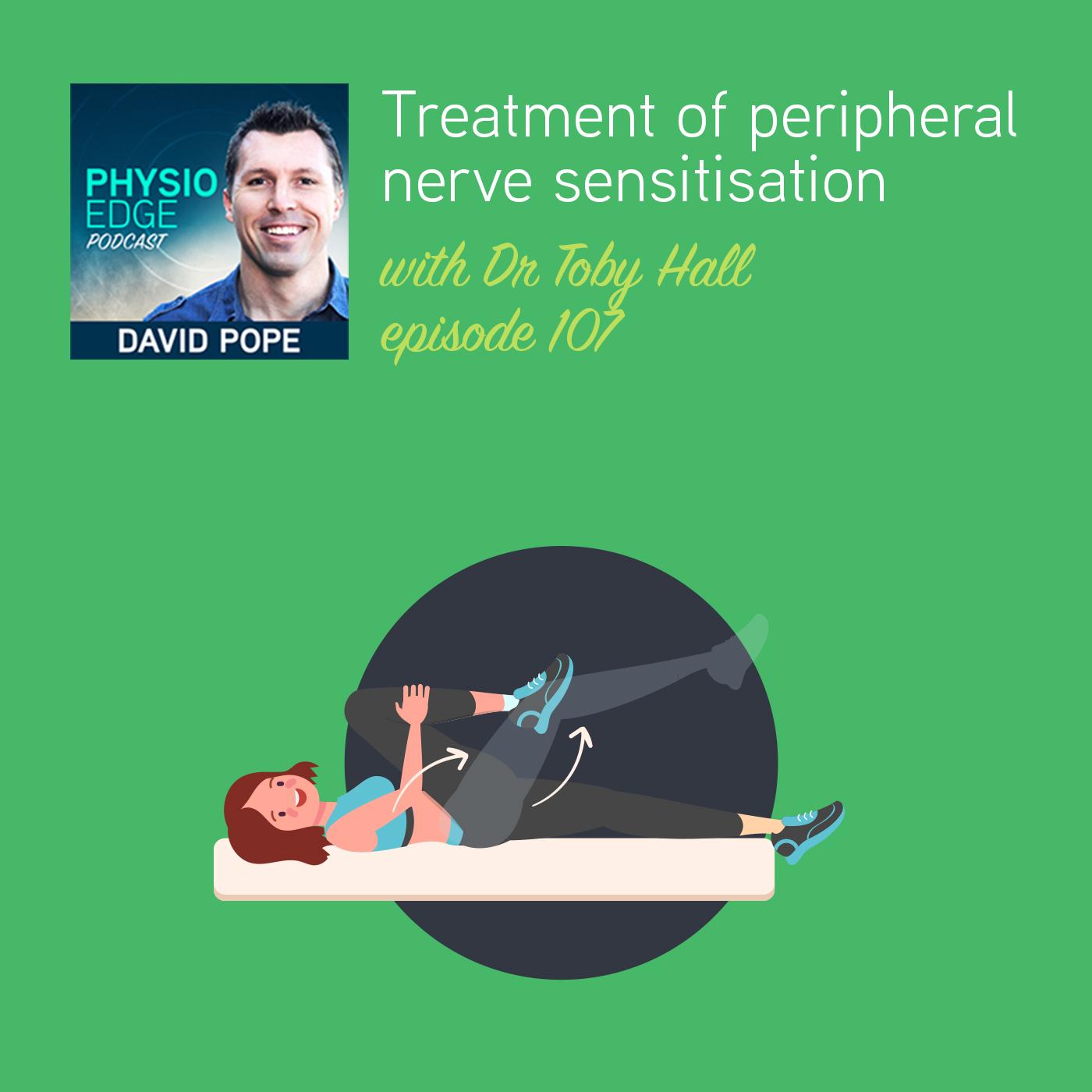
    107. Treatment of peripheral nerve sensitisation with Dr Toby Hall

    When your patient has neck and arm pain, or low back and leg pain from neural tissue pain disorders (NTPD) such as peripheral nerve sensitisation (PNS), how will you treat them? Pain associated with PNS can occasionally be mild and non-irritable, but more often than not, it's severe, highly irritable, and easy to stir up. How can you provide treatment that settles their pain, without stirring them up? What advice, education, manual therapy and exercise will you provide to help improve symptoms and speed up recovery? What are the keys to success with PNS patients? In Physio Edge podcast 104, Dr Toby Hall and I discussed PNS, common symptoms, causes, questions to ask, and how to assess and diagnose PNS in your patients. In this followup podcast, the second in our two-part series, Dr Toby Hall and I take you through the next phase - how to treat PNS. You'll discover: The 7 keys to success with PNS How to successfully treat PNS in the neck and upper limb, AND the low back and lower limb. What education and advice should you provide to your patient about activities to avoid or reduce, and which activities should they increase? What are the most effective exercises for patients with PNS? Should exercise be painful or painless? When is neural mobilisation an effective treatment? When should you avoid using neural mobilisation as a treatment? Is manual therapy effective in PNS? Which manual therapy techniques can you use to improve symptoms and range of movement (ROM) immediately? How to perform effective manual therapy techniques that reduce pain without stirring up your patients. How can you combine neural mobilisation with manual therapy? If you use manual therapy to improve symptoms, what home exercises should patients perform after each treatment session? CLICK HERE to get access to Sherlock Holmes and the sign of the four hypotheses with Nick Kendrick Links associated with this episode: Physio Edge podcast 104 - Peripheral nerve sensitisation & neural tissue pain disorders with Dr Toby Hall Comprehensive, practical training to improve your skills, clinical reasoning, treatment results & confidence with a free trial Clinical Edge membership The new "Making sense of pain" module available with a free trial Clinical Edge membership Download and subscribe to the podcast on iTunes Download the podcast now using the best podcast app currently in existence - Overcast Listen to the podcast on Spotify Sherlock Holmes & the Sign of the Four Hypotheses case study with Nick Kendrick Comprehensive, practical training to improve your skills, clinical reasoning, treatment results & confidence with a free trial Clinical Edge membership Dr Toby Hall on Twitter Low back pain treatment online course with Dr Toby Hall and Manual Concepts Manual Concepts Dr Annina Schmid Let David know what you liked about this podcast on Twitter Review the podcast on iTunes Join live Q&A podcasts on Facebook Infographics by Clinical Edge

  • Sep 17, 2020 · 47 min

    106. Cervical radiculopathy, central sensitisation, achilles tendinopathy, hip & groin pain, and strength testing with Paula Peralta, Simon Olivotto, Nick Kendrick & David Toomey

    Explore cervical radiculopathy, central sensitisation, achilles tendinopathy, hip & groin pain, & strength tests for athletes with Simon Olivotto, Dave Toomey, Paula Peralta & Nick Kendrick. The Clinical Edge Senior Physio Education & Presentation team and I sat down to answer Clinical Edge member questions, and we wanted to share this one with you, so you can benefit from it too. In this Q&A, we discussed: Cervical radiculopathy patients with an irritable presentation Do imaging findings such as modic changes, alter our management How can you approach treatment of cervical radiculopathy? Are medications indicated? Red flags you need to rule out Are sliders and gliders a useful treatment? Sensitivity to cold or ice How can you use tests to identify sensitivity to cold or ice to guide your treatment? Does ice sensitivity indicate central sensitisation? How does this impact management? If your whiplash patients have sensitivity to cold or ice, how does this impact treatment & prognosis? Which research articles cover this topic? Calf & achilles strengthening When is it best to perform calf raises into dorsiflexion (DF)? When should you avoid strengthening the calf into end of range (EOR) DF? What ankle issues may lead you to avoid strengthening or stretching into EOR DF? Hip joint pain and the acetabular labrum Can we identify when the labrum is responsible for hip or groin pain? What tests are important to perform in patients with hip or groin pain? If deep structures such as the hip joint are painful or injured, does this mean more superficial structures such as the acetabular labrum are also pain generators? Strength assessment & screening of athletes What strength screening tests can you perform in athletes with large demands such as motorcross? Which areas do you need to assess? What are simple and more complex ways to assess strength in different regions of the body? What are important considerations when designing a S&C program for a motocross athlete? Making sense of pain How can you make sense of pain? How can you describe pain to your patients in a way that makes sense, and doesn't tell them "it's all in your head"? Find out how to improve your confidence with acute and persistent pain in the upcoming "Making sense of pain" module. Warning: Contains swearing. Links associated with this episode: Download and subscribe to the podcast on iTunes Download the podcast now using the best podcast app currently in existence - Overcast Listen to the podcast on Spotify Improve your clinical reasoning, assessment and treatment effectiveness, efficiency and results with a free trial Clinical Edge membership Clinical reasoning module - simplify complex patients, clarify your assessment and get great results with clinically reasoned treatment "Making sense of pain" module Let David know what you liked about this podcast on Twitter Review the podcast on iTunes Like the podcast on Facebook Infographics by Clinical Edge Clinical Edge Education & presentation team Simon Olivotto Paula Peralta David Toomey Nick Kendrick Articles associated with this episode: Maxwell S, Sterling M. An investigation of the use of a numeric pain rating scale with ice application to the neck to determine cold hyperalgesia. Manual therapy. 2013 Apr 1;18(2):172-4. Machado GC, Maher CG, Ferreira PH, Day RO, Pinheiro MB, Ferreira ML. Non-steroidal anti-inflammatory drugs for spinal pain: a systematic review and meta-analysis. Annals of the rheumatic diseases. 2017 Jul 1;76(7):1269-78. Zhu S, Zhu J, Zhen G, Hu Y, An S, Li Y, Zheng Q, Chen Z, Yang Y, Wan M, Skolasky RL. Subchondral bone osteoclasts induce sensory innervation and osteoarthritis pain. The Journal of clinical investigation. 2019 Mar 1;129(3):1076-93.

  • Jun 29, 2020 · 34 min

    105. Scapular dyskinesis - Does it really matter? with Jo Gibson

    When you assess your patients shoulder movements, and notice a winging scapula, altered resting position or timing of scapula movement, do you need to treat it? Can we diagnose "Scapular dyskinesis", and does it matter? How can you simplify your scapular assessment? In this podcast, Jo Gibson (Clinical Physiotherapy Specialist) explores common beliefs and myths around the scapula, including: Abnormal scapular kinematics cause pain We can predict patients that are going to get shoulder pain Upper traps should be retrained to decrease their activation Scapular-based interventions are superior to rotator cuff based treatment There are reliable and valid ways to assess scapular movement Alongside this mythbusting, you'll explore: Is there any point assessing the scapula? Is scapular asymmetry normal or abnormal? Is scapular dyskinesis a normal response to exercise or loading? How accurate are we at identifying scapular dyskinesis compared to findings in laboratory studies of scapula movement? What scapular findings will you commonly observe in patients with massive rotator cuff tears, nerve injuries & stiffness? How does rotator cuff fatigue impact scapular movement? How does fear avoidance and worry about particular movements impact muscle activity and movement? When is increased upper traps activity helpful and beneficial? Should we try to decrease upper traps activity in patients with C/Sp driven shoulder pain? Can we preferentially target the scapular or rotator cuff with our exercises? Do improvements in shoulder pain correlate with changes or "improvements" in scapular movement? How do scapular assessment test (SAT) results impact your treatment and exercise prescription? If the SAT improves pain, does that mean we should perform scapular based exercises? Can we use scapular dyskinesia classification to stratify patients or guide our treatment? Is there any reliability in scapular assessment? Does the SAT simply identify those that have a favourable natural history ie are going to get better on their own regardless? Do scapular treatments increase the subacromial space, and does this matter? Is winging post-surgery (posterior stabilisation + labral repair) a product of surgery or does this need to be addressed? How does incorporating the kinetic chain into rehab impact patient movement strategies, scapular and rotator cuff recruitment? Are scapulothoracic bursae relevant to shoulder pain? How can you address patient beliefs and fear avoidance around their shoulder pain? Podcast handout Free webinar "5 common mistakes therapists make with shoulder pain, and what to do about them" with Jo Gibson Register now for the free webinar "5 common mistakes therapists make with shoulder pain, and what to do about them" with Jo Gibson (Upper Limb Specialist Physio) Frozen and stiff shoulder assessment & treatment with Jo Gibson Improve your assessment and treatment of frozen and stiff shoulders now with Jo Gibson's online course at clinicaledge.co/frozenshoulder Shoulder: Steps to Success online course with Jo Gibson Improve your assessment and treatment of shoulder pain with the Shoulder: Steps to Success online course with Jo Gibson, now available for enrolment at clinicaledge.co/shouldersuccess CLICK HERE to get access to Sherlock Holmes and the sign of the four hypotheses with Nick Kendrick Links associated with this episode: Improve your assessment and treatment of frozen and stiff shoulders now with Jo Gibson's online course at clinicaledge.co/frozenshoulder Improve your shoulder assessment & treatment with the Shoulder: Steps to Success online course with Jo Gibson Download and subscribe to the podcast on iTunes Download the podcast now using the best podcast app currently in existence - Overcast Listen to the podcast on Spotify Improve your confidence and clinical reasoning with a free trial Clinical Edge membership Let David know what you liked about this podcast on Twitter Review the podcast on iTunes Like the podcast on Facebook Infographics by Clinical Edge Jo Gibson on Twitter Articles associated with this episode: Download the podcast handout to receive the articles associated with this podcast. Andersson SH, Bahr R, Clarsen B, Myklebust G. Risk factors for overuse shoulder injuries in a mixed-sex cohort of 329 elite handball players: previous findings could not be confirmed. British journal of sports medicine. 2018 Sep 1;52(18):1191-8. Asker M, Brooke HL, Waldén M, Tranaeus U, Johansson F, Skillgate E, Holm LW. Risk factors for, and prevention of, shoulder injuries in overhead sports: a systematic review with best-evidence synthesis. British journal of sports medicine. 2018 Oct 1;52(20):1312-9. Christiansen DH, Møller AD, Vestergaard JM, Mose S, Maribo T. The scapular dyskinesis test: Reliability, agreement, and predictive value in patients with subacromial impingement syndrome. Journal of Hand Therapy. 2017 Apr 1;30(2):208-13.

  • Jun 18, 2020 · 1 hr 25 min

    104. Peripheral nerve sensitisation & neural tissue pain disorders with Dr Toby Hall

    How can you identify the source of your patients leg, shoulder or arm pain? Is it from neural tissue compression, sensitisation or irritation or nearby joints, tendons or muscles? What questions and objective tests will help you diagnose a neural tissue pain disorder (NTPD)? In this podcast with Dr Toby Hall (Specialist Musculoskeletal Physiotherapist, FACP, PhD), you'll discover: Three types of neural tissue pain disorders, and how to identify each one What is Peripheral nerve sensitisation (PNS)? What clues in your subjective examination will help you identify PNS? Why do nerves become inflamed or irritated? How to identify & differentiate radiculopathy and radicular pain in patients with radiating limb pain. Do all patients with NTPD have obvious neuro symptoms such as pins and needles, numbness or weakness? Quick screening tests you can use in your assessment to identify PNS. How to identify if your patients shoulder and arm pain is from neural tissue or from local shoulder structures. How to diagnose a NTPD in patients with hip or leg pain. How to perform passive neurodynamic tests such as the straight leg raise (SLR), upper limb neurodynamic test (ULNT), slump test and femoral nerve slump test. What information does a positive or negative neurodynamic test provide? Can we identify the location of a nerve lesion or irritation with our passive neurodynamic tests or palpation? Initial PNS treatment options Is exercise helpful or harmful in patients with PNS? How can you palpate over neural tissue, and what information does this provide? Do opioids provide pain relief, or prolong recovery in patients with NTPD? This podcast is the first part in a two part series on neural tissue pain disorders with Dr Toby Hall. Part 1 (this podcast) guides you through the types of NTPD, and how to assess and diagnose NTPD. Part 2 (available soon) will take you through how to treat PNS. I highly recommend listening to this episode (part 1) prior to part 2, to have a thorough understanding of when and how to treat PNS. CLICK HERE to get access to Sherlock Holmes and the sign of the four hypotheses with Nick Kendrick Links associated with this episode: Download and subscribe to the podcast on iTunes Download the podcast now using the best podcast app currently in existence - Overcast Listen to the podcast on Spotify Sherlock Holmes & the Sign of the Four Hypotheses case study with Nick Kendrick Comprehensive, practical training to improve your skills, clinical reasoning, treatment results & confidence with a free trial Clinical Edge membership Dr Toby Hall on Twitter Manual Concepts Free online conference with Toby Hall & other presenters Dr Annina Schmid Let David know what you liked about this podcast on Twitter Review the podcast on iTunes Join live Q&A podcasts on Facebook Infographics by Clinical Edge

  • Jun 11, 2020 · 20 min

    103. An unusual cause of shoulder pain with Jo Gibson

    A young male patient woke with an acute onset of constant, shooting shoulder pain, is painful into abduction, reluctant to lift his arm, and feels like he's losing shoulder strength. He has no recent history of injury. Can you diagnose this unusual cause of shoulder pain, based on this patient's symptoms and physical tests? What are your differential diagnoses and red flags to keep in mind with this patient? In this podcast, Jo Gibson puts your knowledge of shoulder pain and diagnostic skills to the test, and explores how you can treat patients with this diagnosis. Podcast handout Free webinar "5 common mistakes therapists make with shoulder pain, and what to do about them" with Jo Gibson Register now for the free webinar "5 common mistakes therapists make with shoulder pain, and what to do about them" with Jo Gibson (Upper Limb Specialist Physio) Frozen and stiff shoulder assessment & treatment with Jo Gibson Improve your assessment and treatment of frozen and stiff shoulders now with Jo Gibson's online course at clinicaledge.co/frozenshoulder Shoulder: Steps to Success online course with Jo Gibson Improve your assessment and treatment of shoulder pain with the Shoulder: Steps to Success online course with Jo Gibson, now available for enrolment at clinicaledge.co/shouldersuccess CLICK HERE to get access to Sherlock Holmes and the sign of the four hypotheses with Nick Kendrick Links associated with this episode: Improve your assessment and treatment of frozen and stiff shoulders now with Jo Gibson's online course at clinicaledge.co/frozenshoulder Improve your shoulder assessment & treatment with the Shoulder: Steps to Success online course with Jo Gibson Download and subscribe to the podcast on iTunes Download the podcast now using the best podcast app currently in existence - Overcast Listen to the podcast on Spotify Improve your confidence and clinical reasoning with a free trial Clinical Edge membership Let David know what you liked about this podcast on Twitter Review the podcast on iTunes Like the podcast on Facebook Infographics by Clinical Edge Jo Gibson on Twitter Articles associated with this episode: Download the podcast handout to receive the articles associated with this podcast. Clarke CJ, Torrance E, McIntosh J, Funk L. Neuralgic amyotrophy is not the most common neurologic disorder of the shoulder: a 78-month prospective study of 60 neurologic shoulder patients in a specialist shoulder clinic. Journal of shoulder and elbow surgery. 2016 Dec 1;25(12):1997-2004. Cup EH, Ijspeert J, Janssen RJ, Bussemaker-Beumer C, Jacobs J, Pieterse AJ, van der Linde H, van Alfen N. Residual complaints after neuralgic amyotrophy. Archives of physical medicine and rehabilitation. 2013 Jan 1;94(1):67-73. DO MAGDALIA PB. Neuralgic Amyotrophy. Challenging Neuropathic Pain Syndromes: Evaluation and Evidence-Based Treatment. 2017 Nov 12:197. Feinberg JH, Nguyen ET, Boachie‐Adjei K, Gribbin C, Lee SK, Daluiski A, Wolfe SW. The electrodiagnostic natural history of parsonage–turner syndrome. Muscle & nerve. 2017 Oct;56(4):737-43. Lustenhouwer R, Cameron IG, van Alfen N, Oorsprong TD, Toni I, van Engelen BG, Groothuis JT, Helmich RC. Altered sensorimotor representations after recovery from peripheral nerve damage in neuralgic amyotrophy. Cortex. 2020 Feb 28. Seror P. Neuralgic amyotrophy. An update. Joint Bone Spine. 2017 Mar 1;84(2):153-8.

  • May 18, 2020 · 26 min

    102. Stretching for shoulder pain - Is it time to put sleeper stretches to bed? with Jo Gibson

    Do you include stretches in your treatment of shoulder pain? Have you ever identified a glenohumeral internal rotation deficit (GIRD) and used the "Sleeper stretch" to help improve internal rotation? Do stretches have any value for shoulder pain, or are there better treatment options? In this podcast, Jo Gibson (Clinical Physiotherapy Specialist) discusses how to differentiate true capsular stiffness from muscle stiffness, what information GIRD provides, and whether sleeper stretches for shoulder pain are a useful treatment. Jo explores the current research and clinical implications on your treatment, including: What is the driver of decreased range of movement (ROM)? If we get immediate changes in ROM with a sleeper stretch, does that mean we should use this as a treatment? Is stretching an effective, efficient and evidence-based treatment? Can we use strengthening movements to improve range and cuff recruitment? What exercises can you use with patients with GIRD to improve ROM and cuff recruitment? Humeral retroversion and how torsional load from throwing sports at a young age impact your ROM assessment. If you have a patient with GIRD, what does this tell you? In patients with true capsular stiffness, does stretching in combination with damp heat have a role? Does eccentric strengthening have a role in improving GIRD in patients with true capsular stiffness or fibrosis? How can you use GIRD to monitor your athletes fatigue and recovery? Podcast handout Free webinar "5 common mistakes therapists make with shoulder pain, and what to do about them" with Jo Gibson Register now for the free webinar "5 common mistakes therapists make with shoulder pain, and what to do about them" with Jo Gibson (Upper Limb Specialist Physio) Frozen and stiff shoulder assessment & treatment with Jo Gibson Improve your assessment and treatment of frozen and stiff shoulders now with Jo Gibson's online course at clinicaledge.co/frozenshoulder Shoulder: Steps to Success online course with Jo Gibson Improve your assessment and treatment of shoulder pain with the Shoulder: Steps to Success online course with Jo Gibson, now available for enrolment at clinicaledge.co/shouldersuccess CLICK HERE to get access to Sherlock Holmes and the sign of the four hypotheses with Nick Kendrick Links associated with this episode: Improve your assessment and treatment of frozen and stiff shoulders now with Jo Gibson's online course at clinicaledge.co/frozenshoulder Improve your shoulder assessment & treatment with the Shoulder: Steps to Success online course with Jo Gibson Download and subscribe to the podcast on iTunes Download the podcast now using the best podcast app currently in existence - Overcast Listen to the podcast on Spotify Improve your confidence and clinical reasoning with a free trial Clinical Edge membership Let David know what you liked about this podcast on Twitter Review the podcast on iTunes Like the podcast on Facebook Infographics by Clinical Edge Jo Gibson on Twitter Articles associated with this episode: Download the podcast handout to receive the articles associated with this podcast. Hall K, Borstad JD. Posterior Shoulder Tightness: To Treat or Not to Treat?. journal of orthopaedic & sports physical therapy. 2018 Mar;48(3):133-6. Keller RA, De Giacomo AF, Neumann JA, Limpisvasti O, Tibone JE. Glenohumeral internal rotation deficit and risk of upper extremity injury in overhead athletes: a meta-analysis and systematic review. Sports health. 2018 Mar;10(2):125-32. Mine K, Nakayama T, Milanese S, Grimmer K. Effectiveness of stretching on posterior shoulder tightness and glenohumeral internal-rotation deficit: a systematic review of randomized controlled trials. Journal of sport rehabilitation. 2017 Jul 1;26(4):294-305.

  • May 5, 2020 · 36 min

    101. Return to play testing after shoulder surgery with Jo Gibson

    Shoulder surgery in athletes is common following dislocation. Accelerated post-op shoulder stabilisation rehab protocols include early mobilisation to reduce movement, proprioceptive and strength deficits. This has allowed earlier return to play (RTP), however athletes often still have significant proprioceptive and strength deficits up to 2 years post surgery. Despite getting back to play, athletes may struggle to get back to performance. Following surgery, contact athletes such as rugby players, throwing athletes and young players have additional RTP challenges. Redislocation risks in contact sports such as rugby are high, leading to poor outcomes. Younger athletes are not skeletally mature, and with early RTP following stabilisation surgery may have higher failure rates. How can you identify and address these challenges? Which tests and features in a patients history help you determine whether a patient is suitable for an early RTP? In this podcast with Jo Gibson (Clinical Physiotherapy Specialist), you'll explore: Which shoulder tests are most valuable with your patients? How has emerging evidence challenged our previous approach to RTP testing? What are the risks associated with early RTP following shoulder surgery? How can you help identify athletes at risk of redislocation? Which psychosocial factors impact RTP? How does fear of reinjury and levels of anxiety about their shoulder affects RTP? How does your patient's sport of choice affects dislocation risks? How is RTP impacted by patients age? How do daily stressors impact RTP and predict outcomes? Which psychosocial factors impact RTP? What is the biggest factor in whether an athlete gets back to play? Which questions are key to ask your patients? Which questionnaires can you use with your post-op shoulder patients? Which tests and combinations of tests have been validated and are evidence-based? How can you assess range of movement (ROM)? How can you measure patients strength? How is rate of force development (RFD) affected following shoulder injury? How can you assess RFD? How does fatigue impact strength testing eg testing at the start of training compared to the after training? How does the kinetic chain impact RTP testing for throwers? How can you assess shoulder endurance? How can you test if your swimmers are ready for RTP? What role does manual therapy have in shoulder rehab? Podcast handout Free webinar "5 common mistakes therapists make with shoulder pain, and what to do about them" with Jo Gibson Register now for the free webinar "5 common mistakes therapists make with shoulder pain, and what to do about them" with Jo Gibson (Upper Limb Specialist Physio) Frozen and stiff shoulder assessment & treatment with Jo Gibson Improve your assessment and treatment of frozen and stiff shoulders now with Jo Gibson's online course at clinicaledge.co/frozenshoulder Shoulder: Steps to Success online course with Jo Gibson Improve your assessment and treatment of shoulder pain with the Shoulder: Steps to Success online course with Jo Gibson, now available for enrolment at clinicaledge.co/shouldersuccess Links associated with this episode: Improve your assessment and treatment of frozen and stiff shoulders now with Jo Gibson's online course at clinicaledge.co/frozenshoulder Improve your shoulder assessment & treatment with the Shoulder: Steps to Success online course with Jo Gibson Download and subscribe to the podcast on iTunes Download the podcast now using the best podcast app currently in existence - Overcast Listen to the podcast on Spotify Improve your confidence and clinical reasoning with a free trial Clinical Edge membership Let David know what you liked about this podcast on Twitter Review the podcast on iTunes Like the podcast on Facebook Infographics by Clinical Edge Jo Gibson on Twitter Articles associated with this episode: Download the podcast handout to receive the articles associated with this podcast. Ashworth B, Cohen DD. Force awakens: a new hope for athletic shoulder strength testing. Ashworth B, Hogben P, Singh N, Tulloch L, Cohen DD. The Athletic Shoulder (ASH) test: reliability of a novel upper body isometric strength test in elite rugby players. BMJ open sport & exercise medicine. 2018 Jul 1;4(1):e000365. Cools AM, Vanderstukken F, Vereecken F, Duprez M, Heyman K, Goethals N, Johansson F. Eccentric and isometric shoulder rotator cuff strength testing using a hand-held dynamometer: reference values for overhead athletes. Knee Surgery, Sports Traumatology, Arthroscopy. 2016 Dec 1;24(12):3838-47. Forsdyke D, Gledhill A, Ardern C. Psychological readiness to return to sport: three key elements to help the practitioner decide whether the athlete is REALLY ready?. Olds M, Coulter C, Marant D, Uhl T. Reliability of a shoulder arm return to sport test battery. Physical Therapy in Sport. 2019 Sep 1;39:16-22. Glazer DD. Development and preliminary validation of the Injury-Psychological Readiness to Return to Sport (I-PRRS) scale. Journal of athletic training. 2009 Mar;44(2):185-9. Gerometta A, Klouche S, Herman S, Lefevre N, Bohu Y. The Shoulder Instability-Return to Sport after Injury (SIRSI): a valid and reproducible scale to quantify psychological readiness to return to sport after traumatic shoulder instability. Knee surgery, sports traumatology, arthroscopy. 2018 Jan 1;26(1):203-11. Keller RA, De Giacomo AF, Neumann JA, Limpisvasti O, Tibone JE. Glenohumeral internal rotation deficit and risk of upper extremity injury in overhead athletes: a meta-analysis and systematic review. Sports health. 2018 Mar;10(2):125-32. Mine K, Nakayama T, Milanese S, Grimmer K. Effectiveness of stretching on posterior shoulder tightness and glenohumeral internal-rotation deficit: a systematic review of randomized controlled trials. Journal of sport rehabilitation. 2017 Jul 1;26(4):294-305. Olds M, Coulter C, Marant D, Uhl T. Reliability of a shoulder arm return to sport test battery. Physical Therapy in Sport. 2019 Sep 1;39:16-22. Tjong VK, Devitt BM, Murnaghan ML, Ogilvie-Harris DJ, Theodoropoulos JS. A qualitative investigation of return to sport after arthroscopic Bankart repair: beyond stability. The American journal of sports medicine. 2015 Aug;43(8):2005-11.