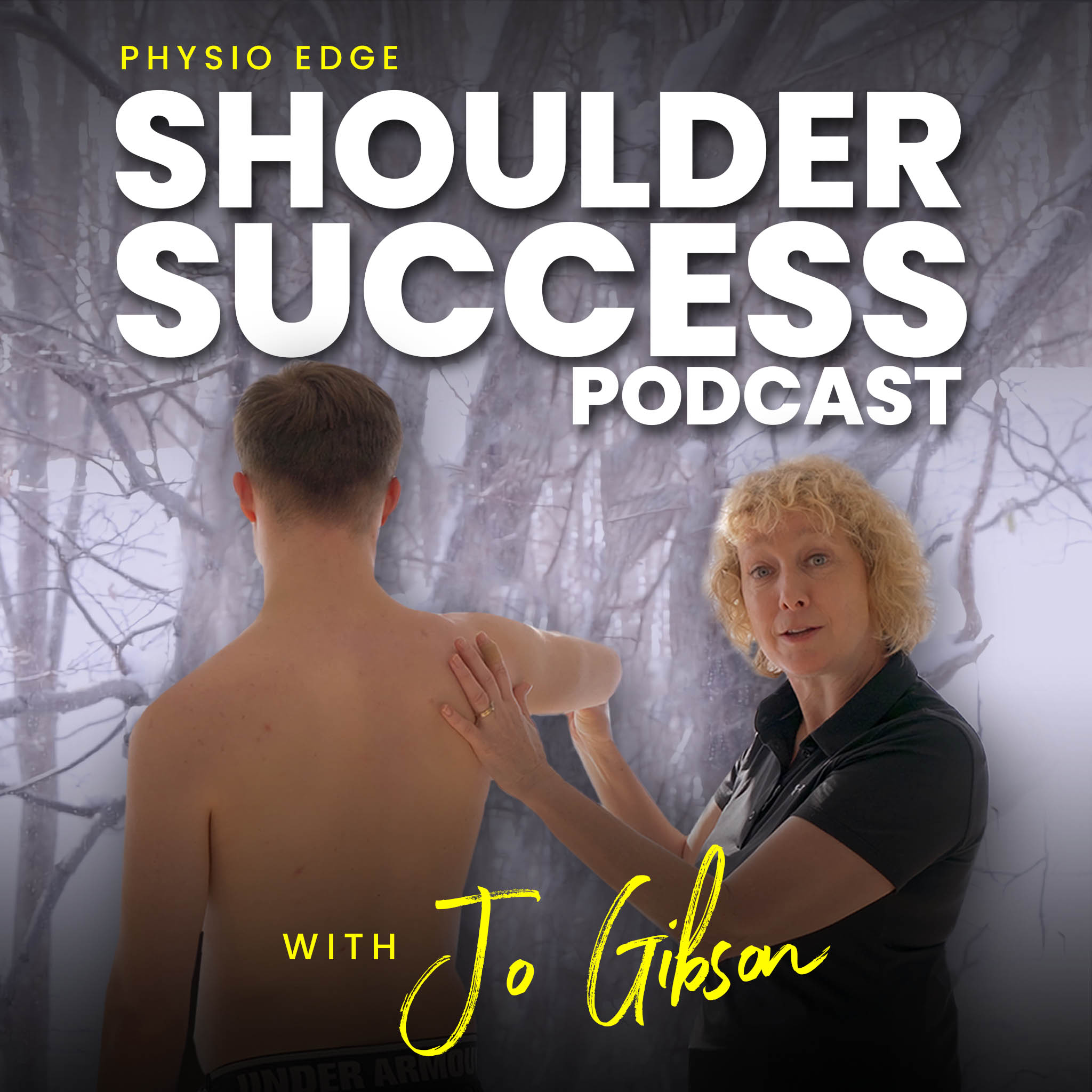
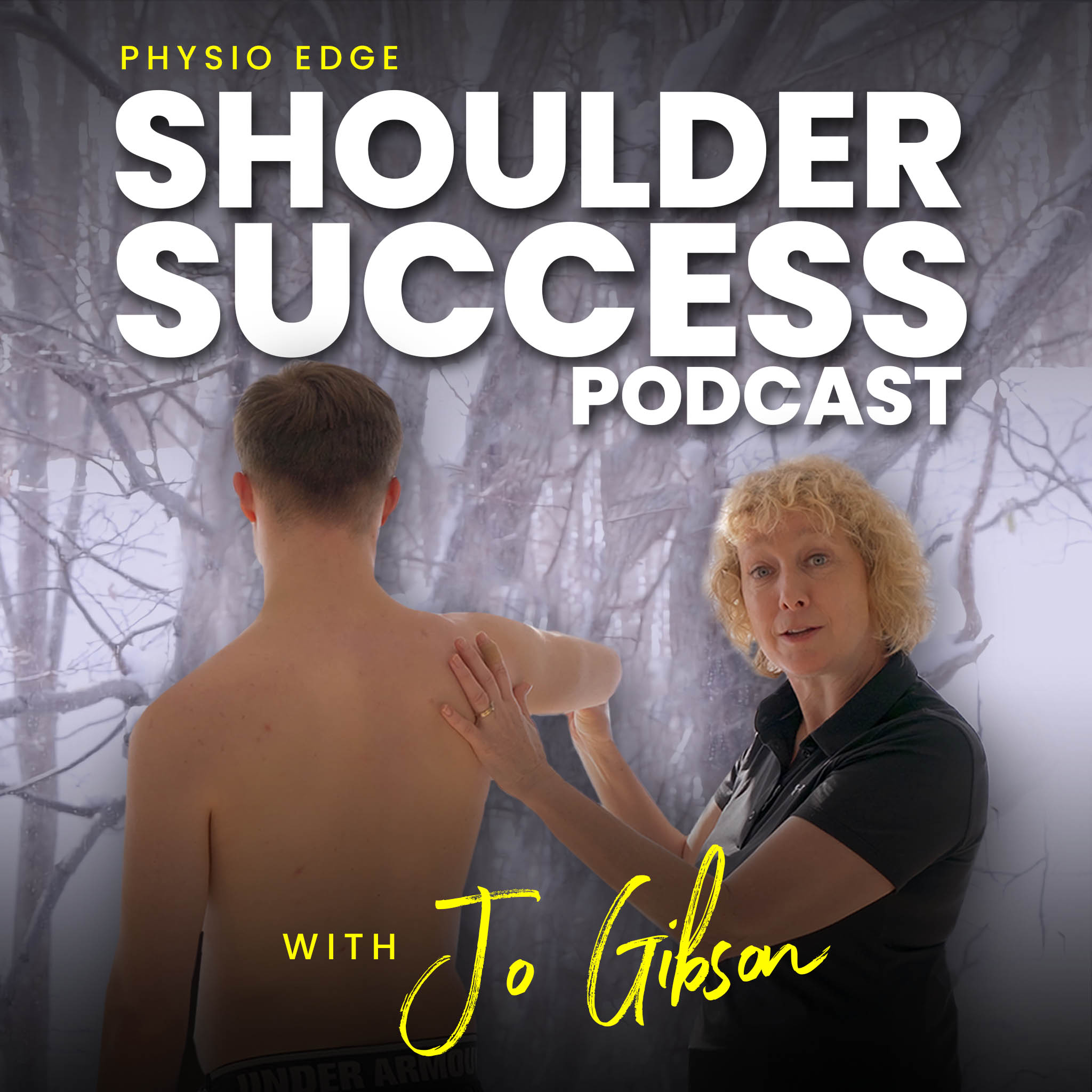
Artwork for Physio Edge podcast with David Pope
Health & Fitness

Physio Edge podcast with David Pope

David Pope

Inspiring interviews with leading Physiotherapists, discussing real life assessment and treatment, clinical issues and ways to give you an edge in your Physiotherapy clinical practice.

  • 179 episodes
  • Updated July 10

Episodes179

  • Mar 24, 2022 · 21 min

    140. How to use non-verbal communication for successful treatment sessions. Physio Edge Shoulder Success podcast with Jo Gibson

    When things don't go well in a treatment session, what will help you identify the potential reasons and clues? Find out in this podcast with Jo Gibson (Upper Limb Rehabilitation Specialist Physio), and discover how to use non-verbal communication to improve the success of your treatment sessions. The handout for this podcast is an article referenced in the podcast. There is no additional transcript or handout available. Click here for the free webinar with Jo Gibson "Rotator cuff revealed! Rehab & reasoning". Free trial Clinical Edge membership Use a fresh approach to your musculoskeletal and sports injury treatment with a free trial Clinical Edge membership at clinicaledge.co/freetrial Links associated with this episode: Free webinar - Rotator cuff revealed: Rehab & reasoning with Jo Gibson Improve your confidence and clinical reasoning with a free trial Clinical Edge membership Join Jo Gibson live on Facebook & ask your shoulder related questions every Monday Download and subscribe to the podcast on iTunes Download the podcast now using the best podcast app currently in existence - Overcast Listen to the podcast on Spotify Jo Gibson on Twitter Let David know what you liked about this podcast on Twitter Review the podcast on iTunes Infographics by Clinical Edge Articles associated with this episode: Download the podcast handout to receive the articles associated with this podcast. Riess H, Kraft-Todd G. EMPATHY: a tool to enhance nonverbal communication between clinicians and their patients. Academic Medicine. 2014 Aug 1;89(8):1108-12.

  • Mar 11, 2022 · 14 min

    139. Shockwave for Achilles tendinopathy? Physio Edge Track record: Running repairs podcast with Tom Goom

    Can shockwave improve pain and function in Achilles tendinopathy patients that fail to improve with rehab? Find out in this podcast as Tom Goom (Running Physio) reveals whether the latest research supports the use of shockwave in Achilles tendinopathy patients, and how to successfully return patients to running and rehab. Improve running injury assessment & treatment now with the Running Repairs Online course with Tom Goom at clinicaledge.co/runningrepairs The handout for this podcast is an article referenced in the podcast. There is no additional transcript or handout available. Free running injury assessment & treatment video series available now Links associated with this episode: Improve your confidence and clinical reasoning with a free trial Clinical Edge membership Join Tom live on Facebook & ask your shoulder related questions every Friday Download and subscribe to the podcast on iTunes Download the podcast now using the best podcast app currently in existence - Overcast Listen to the podcast on Spotify Tom Goom on Twitter Tom Goom's website David Pope - Twitter David Pope & why I started Clinical Edge Review the podcast on iTunes Infographics by Clinical Edge Article associated with this episode: Download the podcast handout to receive the article associated with this podcast. Abdelkader NA, Helmy MN, Fayaz NA, Saweeres ES. Short-and intermediate-term results of extracorporeal shockwave therapy for noninsertional Achilles tendinopathy. Foot & Ankle International. 2021 Jun;42(6):788-97.

  • Mar 3, 2022 · 1 hr 24 min

    138. How to treat patellar & achilles tendinopathy with Daniel Silvan

    How can you treat patients with an achilles or patellar tendinopathy while they're in the middle of a season or training for an event? Successful treatment often includes loading and strengthening the tendon, but how can you quickly identify the best exercises and load for each patient? Find out in this Physio Edge podcast as David Pope and Daniel Silvan (Head Physiotherapist at Aspire Academy, Aspetar) discuss how to choose the most effective exercises for your patients to successfully treat lower limb tendinopathy. Links associated with this episode: iTunes - Download and follow the podcast Overcast - Download the podcast in Overcast Spotify - Listen to the podcast on Spotify Download the infographic handout for this podcast Comprehensive, practical training to improve your skills, clinical reasoning, treatment results & confidence with a free trial Clinical Edge membership Daniel Silvan Let David know what you liked about this podcast on Twitter Follow and review the podcast on iTunes Infographics by Clinical Edge

  • Feb 24, 2022 · 29 min

    137. Acute AC joint injury imaging, rehab & recovery. Physio Edge Shoulder Success podcast with Jo Gibson

    Do your acute ACJ injury patients require surgery, or can they be managed conservatively with a rehab program? Find out in this podcast as Jo Gibson (Upper Limb Rehabilitation Specialist Physio) reveals how to grade patients' acute ACJ injuries, help patients decide on surgery or conservative management, and rehab your patients effectively. Click here for the free webinar with Jo Gibson "Rotator cuff revealed! Rehab & reasoning". Free trial Clinical Edge membership Use a fresh approach to your musculoskeletal and sports injury treatment with a free trial Clinical Edge membership at clinicaledge.co/freetrial Links associated with this episode: Free webinar - Rotator cuff revealed: Rehab & reasoning with Jo Gibson Improve your confidence and clinical reasoning with a free trial Clinical Edge membership Join Jo Gibson live on Facebook & ask your shoulder related questions every Monday Download and subscribe to the podcast on iTunes Download the podcast now using the best podcast app currently in existence - Overcast Listen to the podcast on Spotify Jo Gibson on Twitter Let David know what you liked about this podcast on Twitter Review the podcast on iTunes Infographics by Clinical Edge

  • Feb 17, 2022 · 17 min

    136. Frozen shoulder patients journey to recovery. Physio Edge Shoulder Success podcast with Jo Gibson

    Shoulder pain & frozen shoulder can be extremely debilitating for patients, impacting their ability to sleep, fulfill their normal work and family role or have fun. How can you as a therapist understand your patients pain experience, help them feel supported and meet your patients needs throughout their journey to recovery from shoulder pain or frozen shoulder? Find out in this podcast with Jo Gibson (Upper Limb Rehabilitation Specialist Physio), hosted by Clinical Edge, as you explore how the latest research can help improve your shoulder pain treatment. The handout for this podcast consists of articles referenced in the podcast. There is no additional transcript or handout available. Click here for the free webinar with Jo Gibson "Rotator cuff revealed! Rehab & reasoning". Free trial Clinical Edge membership Use a fresh approach to your musculoskeletal and sports injury treatment with a free trial Clinical Edge membership at clinicaledge.co/freetrial Links associated with this episode: Free webinar - Rotator cuff revealed: Rehab & reasoning with Jo Gibson Improve your confidence and clinical reasoning with a free trial Clinical Edge membership Join Jo Gibson live on Facebook & ask your shoulder related questions every Monday Download and subscribe to the podcast on iTunes Download the podcast now using the best podcast app currently in existence - Overcast Listen to the podcast on Spotify Jo Gibson on Twitter Let David know what you liked about this podcast on Twitter Review the podcast on iTunes Infographics by Clinical Edge Articles associated with this episode: Download the podcast handout to receive the articles associated with this podcast. Jones S, Hanchard N, Hamilton S, Rangan A. A qualitative study of patients' perceptions and priorities when living with primary frozen shoulder. BMJ open. 2013 Sep 1;3(9):e003452. King W, Hebron C. Frozen shoulder: living with uncertainty and being in'no man's land'. Physiotherapy Theory and Practice. 2021 Dec 23. Minns Lowe CJ, Moser J, Barker K. Living with a symptomatic rotator cuff tear 'bad days, bad nights': a qualitative study. BMC musculoskeletal disorders. 2014 Dec;15(1):1-0. Ulack C, Suarez J, Brown L, Ring D, Wallace S, Teisberg E. What are People That Seek Care for Rotator Cuff Tendinopathy Experiencing in Their Daily Life?. Journal of Patient Experience. 2022 Jan;9:23743735211069811.

  • Feb 15, 2022 · 24 min

    135. Rehab calf strain patients effectively. Physio Edge Track record: Running repairs podcast with Tom Goom

    Calf strains are common in runners, footballers, dancers and other athletes. Discover how to assess, differentially diagnose and tailor your treatment of calf strains using the latest evidence in this podcast with Tom Goom (Running Physio). Improve running injury assessment & treatment now with the Running Repairs Online course with Tom Goom at clinicaledge.co/runningrepairs The handout for this podcast is an article referenced in the podcast. There is no additional transcript or handout available. Free running injury assessment & treatment video series available now Links associated with this episode: Improve your confidence and clinical reasoning with a free trial Clinical Edge membership Join Tom live on Facebook & ask your shoulder related questions every Friday Download and subscribe to the podcast on iTunes Download the podcast now using the best podcast app currently in existence - Overcast Listen to the podcast on Spotify Tom Goom on Twitter Tom Goom's website David Pope - Twitter David Pope & why I started Clinical Edge Review the podcast on iTunes Infographics by Clinical Edge Article associated with this episode: Download the podcast handout to receive the article associated with this podcast. The Assessment, Management and Prevention of Calf Muscle Strain Injuries: A Qualitative Study of the Practices and Perspectives of 20 Expert Sports Clinicians. Green et al., 2022

  • Feb 11, 2022 · 26 min

    134. How to help patients that feel asymmetrical, stiff or something's "out of place". Physio Edge Shoulder Success podcast with Jo Gibson

    When you're treating patients that feel like their scapulae are asymmetrical, a rib is "out of place", or they feel neck or thoracic stiffness without any restriction in movement, they may expect you to perform treatment that is unlikely to help, like joint mobilisation, manipulation or massage. How can you use the latest pain science in your treatment to help patients overcome the experience of asymmetry, stiffness or something being out of place? Find out in this podcast with Jo Gibson (Upper Limb Rehabilitation Specialist Physio). The handout for this podcast is an article referenced in the podcast. There is no additional transcript or handout available. Free webinar "5 common mistakes therapists make with shoulder pain, and what to do about them" with Jo Gibson Register now for the free webinar "5 common mistakes therapists make with shoulder pain, and what to do about them" with Jo Gibson (Upper Limb Specialist Physio) Frozen and stiff shoulder assessment & treatment with Jo Gibson Improve your assessment and treatment of frozen and stiff shoulders now with Jo Gibson's online course at clinicaledge.co/frozenshoulder Shoulder: Steps to Success online course with Jo Gibson Improve your assessment and treatment of shoulder pain with the Shoulder: Steps to Success online course with Jo Gibson, now available for enrolment at clinicaledge.co/shouldersuccess Free trial Clinical Edge membership Use a fresh approach to your musculoskeletal and sports injury treatment with a free trial Clinical Edge membership at clinicaledge.co/freetrial Links associated with this episode: Improve your assessment and treatment of frozen and stiff shoulders now with Jo Gibson's online course at clinicaledge.co/frozenshoulder Improve your shoulder assessment & treatment with the Shoulder: Steps to Success online course with Jo Gibson Improve your confidence and clinical reasoning with a free trial Clinical Edge membership Join Jo Gibson live on Facebook & ask your shoulder related questions every Monday Download and subscribe to the podcast on iTunes Download the podcast now using the best podcast app currently in existence - Overcast Listen to the podcast on Spotify Jo Gibson on Twitter Let David know what you liked about this podcast on Twitter Review the podcast on iTunes Infographics by Clinical Edge Articles associated with this episode: Download the podcast handout to receive the articles associated with this podcast. Tabor A, Keogh E, Eccleston C. Embodied pain—negotiating the boundaries of possible action. Pain. 2017 Jun 1;158(6):1007-11. Tabor A, Vollaard N, Keogh E, Eccleston C. Predicting the consequences of physical activity: An investigation into the relationship between anxiety sensitivity, interoceptive accuracy and action. Plos one. 2019 Mar 28;14(3):e0210853. Tabor A, Van Ryckeghem DM, Hasenbring MI. Pain unstuck: the role of action and motivation. The Clinical Journal of Pain. 2020 Mar 10;36(3):143-9. Venter E. Toward an embodied, embedded predictive processing account. Frontiers in Psychology. 2021:137.

  • Feb 10, 2022 · 17 min

    133. How to assess and treat calcaneal stress fractures. Physio Edge Running Repairs podcast with Tom Goom

    Calcaneal bony stress injuries or fractures are often misdiagnosed and incorrectly treated as insertional Achilles tendinopathy or plantar heel pain, leading to worsening pain and poor recovery. In this podcast with Tom Goom (Running Physio), hosted by Clinical Edge, discover how to accurately assess and effectively treat patients with calcaneal bony stress injuries or fractures. Improve running injury assessment & treatment now with the Running Repairs Online course with Tom Goom at clinicaledge.co/runningrepairs The handout for this podcast is an article referenced in the podcast. There is no additional transcript or handout available. Free running injury assessment & treatment video series available now Links associated with this episode: Improve your confidence and clinical reasoning with a free trial Clinical Edge membership Join Tom live on Facebook & ask your shoulder related questions every Friday Download and subscribe to the podcast on iTunes Download the podcast now using the best podcast app currently in existence - Overcast Listen to the podcast on Spotify Tom Goom on Twitter Tom Goom's website David Pope - Twitter David Pope & why I started Clinical Edge Review the podcast on iTunes Infographics by Clinical Edge Article associated with this episode: Download the podcast handout to receive the article associated with this podcast. The handout for this podcast is an article referenced in the podcast. There is no additional transcript or handout available. Italiano J, Bitterman AD. Diagnosis and Management of Calcaneal Stress Fractures. Radiologic Technology. 2021 Nov 1;93(2):177-94.

  • Feb 4, 2022 · 25 min

    132. Rotator cuff repairs: How to treat slowly recovering patients. Physio Edge Shoulder Success podcast with Jo Gibson

    Why do some rotator cuff (RC) repair patients progress really slowly post-operatively and experience high levels of pain and sleep disturbance for long periods? Find out in this case study and exploration of the latest evidence in this podcast with Jo Gibson (Shoulder Rehabilitation Specialist) as she reveals: Quick or slow recovery? Which patients are likely to improve quickly, and which patients are likely to take longer to improve. How soon after arthroscopic RC repair your patients will experience significant improvements in pain. When patients sleep is likely to improve. Objective assessment tests How to identify post-op nerve injury, red flags and infection. Objective tests you can safely perform without overstressing the rotator cuff. How to identify patients developing post-op frozen shoulder. Expectations, education & reassurance How to help set patient expectations for recovery before and after surgery. Questions to ask patients after surgery that will help guide your treatment. How to reassure patients that are experiencing pain. How to explain post-op recovery to patients that are unhappy with their progress, even when their recovery is on track. Treatment & resources Activities your patients may be performing that slow their post-op recovery. Positions and postures you can show patients to improve their pain in the day, and sleep at night. Resources to give your post-op patients. The handout for this podcast consists of articles referenced in the podcast. There is no additional transcript or handout available. Free webinar "5 common mistakes therapists make with shoulder pain, and what to do about them" with Jo Gibson Register now for the free webinar "5 common mistakes therapists make with shoulder pain, and what to do about them" with Jo Gibson (Upper Limb Specialist Physio) Frozen and stiff shoulder assessment & treatment with Jo Gibson Improve your assessment and treatment of frozen and stiff shoulders now with Jo Gibson's online course at clinicaledge.co/frozenshoulder Shoulder: Steps to Success online course with Jo Gibson Improve your assessment and treatment of shoulder pain with the Shoulder: Steps to Success online course with Jo Gibson, now available for enrolment at clinicaledge.co/shouldersuccess Use a fresh approach to your musculoskeletal and sports injury treatment with a free trial Clinical Edge membership at clinicaledge.co/freetrial Links associated with this episode: Improve your assessment and treatment of frozen and stiff shoulders now with Jo Gibson's online course at clinicaledge.co/frozenshoulder Improve your shoulder assessment & treatment with the Shoulder: Steps to Success online course with Jo Gibson Improve your confidence and clinical reasoning with a free trial Clinical Edge membership Join Jo Gibson live on Facebook & ask your shoulder related questions every Monday Download and subscribe to the podcast on iTunes Download the podcast now using the best podcast app currently in existence - Overcast Listen to the podcast on Spotify Jo Gibson on Twitter Let David know what you liked about this podcast on Twitter Review the podcast on iTunes Infographics by Clinical Edge Articles associated with this episode: Download the podcast handout to receive the articles associated with this podcast. Cho CH, Bae KC, Kim DH. Patients who have undergone rotator cuff repair experience around 75% functional recovery at 6 months after surgery. Knee Surgery, Sports Traumatology, Arthroscopy. 2021 Jul;29(7):2220-7. Grubhofer F, Martinez AR, Ernstbrunner L, Haberli J, Selig ME, Yi K, Warner JJ. Speed of recovery of the most commonly performed shoulder surgeries. JSES international. 2021 Jul 1;5(4):776-81. Kurowicki J, Berglund DD, Momoh E, Disla S, Horn B, Giveans MR, Levy JC. Speed of recovery after arthroscopic rotator cuff repair. Journal of Shoulder and Elbow Surgery. 2017 Jul 1;26(7):1271-7.

  • Dec 3, 2021 · 1 hr 14 min

    131. Holiday season - How to keep patients progressing, avoid losing them over the holidays and keep kids active & injury free with Paula Peralta, Simon Olivotto, David Toomey & Zoe Russell

    We're heading into the holiday season, when your patients will either keep progressing with their rehab program, or give their exercises a miss for a while and risk an increase in symptoms, skip appointments in the new year, and disappear off your list. How can you prepare & motivate your patients for the holiday period, or effectively hand over care of your patients to another therapist, so their pain and strength keep improving? In this live mentoring session, the Clinical Edge presentation team of Specialist and Titled Physiotherapists will reveal to you: How to keep your patients engaged and progressing over the holiday period. If you're going away, how to effectively keep in contact with patients or hand patients over to other therapists, and avoid losing them over the Christmas period. How to help kids and young athletes stay active and manage load over the holidays, to stay strong and healthy and avoid overuse injuries early next year. Prepare your patients now, and set yourself up for a successful holiday season and new year with this free mentoring session. Links associated with this episode: CLICK HERE to download your podcast handout Holiday season exclusive handout & infographic iTunes - Download and follow the podcast Overcast - Download the podcast in Overcast Spotify - Listen to the podcast on Spotify Comprehensive, practical training to improve your skills, clinical reasoning, treatment results & confidence with a free trial Clinical Edge membership Twitter - Paula Peralta Twitter - Simon Olivotto Twitter - David Toomey Twitter - Zoe Russell Let David know what you liked about this podcast on Twitter Follow and review the podcast on iTunes Infographics by Clinical Edge

  • Aug 26, 2021 · 1 hr 31 min

    130. Neck pain objective assessment & treatment part 2 with Prof. Gwendolen Jull

    When assessing and treating neck pain patients, there are a lot of tests and treatments to choose from. If you choose treatments that aren't suitable for your patient's presentation, your patient won't progress, or worse, you'll aggravate their symptoms. How can you thoroughly assess your neck pain patients, and use the information from your assessment to choose treatments that help improve their pain? In the first podcast with Specialist Musculoskeletal Physiotherapist, researcher and Emeritus Prof. Gwen Jull 121. Neck pain assessment, clinical reasoning & rehab. Physio Edge podcast with Prof Gwendolen Jull, we discussed questions to ask during your subjective history that help guide your neck pain assessment and clinical reasoning. In this followup podcast, discover how to accurately assess and effectively treat neck pain with Emeritus Prof. Gwen Jull, including: Objective examination (OE) How to perform a thorough OE to identify why your patient has pain, and the best treatment for each patient. How to perform a skilled manual assessment. What we can actually identify & diagnose in neck pain patients. Whether posture is relevant to neck pain. When and how to assess posture. How to assess physical impairments, and identify if they're relevant to a patient's neck pain. Which tests you should use to assess: ROM Strength Endurance Control Successful treatment How to decide where treatment should start in your initial session. Whether manual therapy (MT) is useful in the treatment of neck pain. How to tailor and progress your treatment to successfully rehab each patient, and choose between: MT Postural changes Strength exercises Control exercises Craniocervical flexion and extension exercises Neurodynamic treatment General strength and endurance training Exercises for flexibility and range of motion Graded activity Motor control Shoulder girdle strengthening Aerobic exercise for general fitness CLICK HERE to get access to Cervical spine assessment & treatment for neck pain & upper limb symptoms CLICK HERE to get access to Cervical radiculopathy assessment & treatment case study Links associated with this episode: 121. Neck pain assessment, clinical reasoning & rehab. Physio Edge podcast with Prof Gwendolen Jull iTunes - Download and follow the podcast Overcast - Download the podcast in Overcast Spotify - Listen to the podcast on Spotify Download the infographic handout for this podcast Cervical spine assessment & treatment for neck pain & upper limb symptoms - available with a free trial membership Cervical radiculopathy assessment & treatment case study available with a free trial membership Comprehensive, practical training to improve your skills, clinical reasoning, treatment results & confidence with a free trial Clinical Edge membership Prof Gwen Jull Management of Neck Pain Disorders: a research informed approach 1st Edition, by Gwendolen Jull, Deborah Falla, Julia Treleaven, Shaun O'Leary, and foreword by Jeremy S Lewis Let David know what you liked about this podcast on Twitter Follow and review the podcast on iTunes Infographics by Clinical Edge

  • Aug 18, 2021 · 14 min

    129. How important is strength in running injury? Physio Edge Track record: Running repairs podcast with Tom Goom

    When patients have a running injury, such as knee pain or Achilles tendinopathy, do we need to include strength training in their rehab? Discover when strength training is an important part of comprehensive running injury rehab in this podcast with Tom Goom (Running Physio), and explore: Whether strength is important in runners. Whether patients that are stronger are less likely to develop running injuries. Why recent research found higher levels of strength in recently injured runners compared to uninjured runners. When we need to improve patients' strength in running injury rehab. Can strength training reduce the risk of running injuries? How strength training fits into a comprehensive rehab program. When strength is relevant to pain and pathology. When rehab does NOT need to include strength training. How to know what to focus on during rehab. Which patients don't require exercises or strength training. How to identify when strength goals are a barrier to recovery and return to running. Additional benefits of strength training, beyond improved strength. Improve running injury assessment & treatment now with the Running Repairs Online course with Tom Goom at clinicaledge.co/runningrepairs Free running injury assessment & treatment video series available now Links associated with this episode: Improve your confidence and clinical reasoning with a free trial Clinical Edge membership Join Tom live on Facebook & ask your shoulder related questions every Friday Download and subscribe to the podcast on iTunes Download the podcast now using the best podcast app currently in existence - Overcast Listen to the podcast on Spotify Tom Goom on Twitter Tom Goom's website David Pope - Twitter David Pope & why I started Clinical Edge Review the podcast on iTunes Infographics by Clinical Edge

  • Aug 17, 2021 · 16 min

    128. Postoperative shoulders - can we predict who gets stiff? Physio Edge Shoulder success podcast with Jo Gibson

    Patients may develop stiffness following rotator cuff repair or other shoulder surgery, particularly with longer periods of immobilisation. On the other hand, some patients may fail rehab without sufficient immobilisation. How can you identify which patients are likely to develop stiffness and will benefit from early mobilisation? Find out in this podcast with Jo Gibson (Clinical Physiotherapy Specialist), and discover: Which patients are likely to benefit from rotator cuff or other surgical repair. How to plan post-op surgical rehab. Whether patients should have a period of immobilisation or not. How to predict patients that are likely to develop post-op shoulder stiffness. Metabolic, genetic, age-related and psychosocial factors that influence development of stiffness. Pre-operative and surgical factors that influence development of stiffness. How to reduce the likelihood of stiffness developing. Comparison between early post-op shoulder mobilisation and six weeks in a sling. Patients more likely to fail a RC repair, who may need more of a conservative approach to early mobilisation. How to explain mobilisation vs immobilisation to patients. Short and long term outcomes when patients develop stiffness. Frozen shoulder If and when corticosteroid injections are helpful. The role of P. acnes in development of frozen shoulder. Free webinar "5 common mistakes therapists make with shoulder pain, and what to do about them" with Jo Gibson Register now for the free webinar "5 common mistakes therapists make with shoulder pain, and what to do about them" with Jo Gibson (Upper Limb Specialist Physio) Frozen and stiff shoulder assessment & treatment with Jo Gibson Improve your assessment and treatment of frozen and stiff shoulders now with Jo Gibson's online course at clinicaledge.co/frozenshoulder Shoulder: Steps to Success online course with Jo Gibson Improve your assessment and treatment of shoulder pain with the Shoulder: Steps to Success online course with Jo Gibson, now available for enrolment at clinicaledge.co/shouldersuccess Links associated with this episode: Improve your assessment and treatment of frozen and stiff shoulders now with Jo Gibson's online course at clinicaledge.co/frozenshoulder Comprehensively assess and treat shoulder pain with the Shoulder: Steps to Success online course with Jo Gibson Improve your confidence and clinical reasoning with a free trial Clinical Edge membership Join Jo Gibson live on Facebook & ask your shoulder related questions every Monday Download and subscribe to the podcast on iTunes Download the podcast now using the best podcast app currently in existence - Overcast Listen to the podcast on Spotify Jo Gibson on Twitter Let David know what you liked about this podcast on Twitter Review the podcast on iTunes Infographics by Clinical Edge

  • Aug 6, 2021 · 22 min

    127. Posterior shoulder pain differential diagnosis & treatment. Physio Edge Shoulder success podcast with Jo Gibson

    Can you solve this case of a badminton player with a five year history of posterior shoulder pain and shoulder fatigue with overhead movements? Find out in this podcast with Jo Gibson (Clinical Physiotherapy Specialist). Discover the diagnosis and why the patient hasn't improved with rehabilitation, as Jo reveals the case study and: Subjective clues to help diagnose this condition. Questions to ask in the subjective history. Differential diagnoses to keep in mind. How to identify and rule out red flags. Clinical tests to use to rule this condition in and out. What medical tests and MRI reveal. Common causes of this condition. Conservative, medical and surgical management and results. Ideal treatment pathways for this condition. Free webinar "5 common mistakes therapists make with shoulder pain, and what to do about them" with Jo Gibson Register now for the free webinar "5 common mistakes therapists make with shoulder pain, and what to do about them" with Jo Gibson (Upper Limb Specialist Physio) Frozen and stiff shoulder assessment & treatment with Jo Gibson Improve your assessment and treatment of frozen and stiff shoulders now with Jo Gibson's online course at clinicaledge.co/frozenshoulder Shoulder: Steps to Success online course with Jo Gibson Improve your assessment and treatment of shoulder pain with the Shoulder: Steps to Success online course with Jo Gibson, now available for enrolment at clinicaledge.co/shouldersuccess Links associated with this episode: Improve your assessment and treatment of frozen and stiff shoulders now with Jo Gibson's online course at clinicaledge.co/frozenshoulder Improve your shoulder assessment & treatment with the Shoulder: Steps to Success online course with Jo Gibson Improve your confidence and clinical reasoning with a free trial Clinical Edge membership Join Jo Gibson live on Facebook & ask your shoulder related questions every Monday Download and subscribe to the podcast on iTunes Download the podcast now using the best podcast app currently in existence - Overcast Listen to the podcast on Spotify Jo Gibson on Twitter Let David know what you liked about this podcast on Twitter Review the podcast on iTunes Infographics by Clinical Edge

  • Jul 23, 2021 · 11 min

    126. 3 signs of Plantaris involvement in Achilles Tendinopathy. Physio Edge Track record: Running repairs podcast with Tom Goom

    When your patient with Achilles tendon pain isn't progressing as well as you hoped, could Plantaris be implicated in their pain? Find out in this latest Physio Edge Track record: Running repairs podcast with Tom Goom, where you'll discover: Plantaris anatomy and relationship to the Achilles tendon. Common symptoms when Plantaris is causing Achilles tendon pain. How to differentiate Achilles tendinopathy from Plantaris involvement. Why patients with Plantaris involvement may not progress with a tendon loading program. How to adjust treatment when you suspect Plantaris involvement. When Plantaris patients can return to running and hill running. Additional medical and surgical management when Plantaris conservative treatment doesn't resolve symptoms. Enjoy this new podcast with Tom Goom now to improve your treatment of Achilles tendon pain. Improve running injury assessment & treatment now with the Running Repairs Online course with Tom Goom at clinicaledge.co/runningrepairs Free running injury assessment & treatment video series available now Links associated with this episode: Improve your confidence and clinical reasoning with a free trial Clinical Edge membership Join Tom live on Facebook & ask your shoulder related questions every Friday Download and subscribe to the podcast on iTunes Download the podcast now using the best podcast app currently in existence - Overcast Listen to the podcast on Spotify Tom Goom on Twitter Tom Goom's website David Pope - Twitter David Pope & why I started Clinical Edge Review the podcast on iTunes Infographics by Clinical Edge

  • Jul 22, 2021 · 20 min

    125. Cross education to improve shoulder strength. Physio Edge Shoulder success podcast with Jo Gibson

    Immobilisation following a humeral fracture or shoulder surgery quickly results in muscle atrophy and decreased shoulder strength and proprioception. How can you limit strength deficits that develop while patients are in a sling? During this period of immobilisation, cross education (CE) can help retain shoulder strength. This improved shoulder strength and proprioception after the immobilisation period concludes may enable a faster return to work, high load activities or sport. What is CE, and how can you use it in your treatment? Find out in this podcast with Jo Gibson (Clinical Physiotherapy Specialist), and discover: What is cross education (CE)? What the latest research reveals about the effectiveness of CE? Which patients benefit most from CE. Common strength and proprioceptive deficits after shoulder stabilisation surgery. How CE improves strength and proprioception. Recommendations for CE exercise intensity and dosage. Whether to use eccentric, concentric or isometric exercises. How to amplify the strength and cortical effects of CE. How to target the rotator cuff with CE. How to incorporate proprioception into CE. How to use CE in rehab for instability, movement apprehension & kinesiophobia. When to include CE in MRCT post-op rehab. Improve your rehab of post-op, post-fracture and immobilised patients now with this podcast. Free webinar "5 common mistakes therapists make with shoulder pain, and what to do about them" with Jo Gibson Register now for the free webinar "5 common mistakes therapists make with shoulder pain, and what to do about them" with Jo Gibson (Upper Limb Specialist Physio) Frozen and stiff shoulder assessment & treatment with Jo Gibson Improve your assessment and treatment of frozen and stiff shoulders now with Jo Gibson's online course at clinicaledge.co/frozenshoulder Shoulder: Steps to Success online course with Jo Gibson Improve your assessment and treatment of shoulder pain with the Shoulder: Steps to Success online course with Jo Gibson, now available for enrolment at clinicaledge.co/shouldersuccess Links associated with this episode: Improve your assessment and treatment of frozen and stiff shoulders now with Jo Gibson's online course at clinicaledge.co/frozenshoulder Improve your shoulder assessment & treatment with the Shoulder: Steps to Success online course with Jo Gibson Improve your confidence and clinical reasoning with a free trial Clinical Edge membership Join Jo Gibson live on Facebook & ask your shoulder related questions every Monday Download and subscribe to the podcast on iTunes Download the podcast now using the best podcast app currently in existence - Overcast Listen to the podcast on Spotify Jo Gibson on Twitter Let David know what you liked about this podcast on Twitter Review the podcast on iTunes Infographics by Clinical Edge

  • Jul 16, 2021 · 12 min

    124. What do foam rolling and stretching do to the ITB? Physio Edge Track record: Running repairs podcast with Tom Goom

    What do foam rolling and stretching do to the ITB? Are they effective in the treatment of ITB syndrome? Find out in this podcast with Tom Goom (Running Physio). The handout for this podcast is an article referenced in the podcast. There is no additional transcript or handout available. Free running injury assessment & treatment video series available now Links associated with this episode: Successfully treat ITB pain with this free three part video series with Tom Goom. Improve your lateral hip pain assessment, diagnosis & treatment skills with 3 free videos presented by Tom Goom Improve your confidence and clinical reasoning with a free trial Clinical Edge membership Join Tom live on Facebook & ask your shoulder related questions every Friday Download and subscribe to the podcast on iTunes Download the podcast now using the best podcast app currently in existence - Overcast Listen to the podcast on Spotify Tom Goom on Twitter Tom Goom's website David Pope - Twitter David Pope & why I started Clinical Edge Review the podcast on iTunes Infographics by Clinical Edge Article associated with this episode: Download the podcast handout to receive the articles associated with this podcast. Pepper TM, Brismée JM, Sizer Jr PS, Kapila J, Seeber GH, Huggins CA, Hooper TL. The Immediate Effects of Foam Rolling and Stretching on Iliotibial Band Stiffness: A Randomized Controlled Trial. International journal of sports physical therapy. 2021;16(3):651.

  • Jul 14, 2021 · 25 min

    123. Subscapularis - the forgotten part of the rotator cuff? Physio Edge Shoulder success podcast with Jo Gibson

    Is subscapularis the forgotten part of the rotator cuff? Do we ever need to target it individually? If we do what are the best options for exercises? Find out which patients with torn or painful shoulders benefit from targeted subscapularis rehab in this episode of the Physio Edge Shoulder success podcast with Jo Gibson. You'll discover: Rotator cuff & subscapularis anatomy & function. Role and function of subscapularis with shoulder movement. How subscapularis works with the posterior cuff and larger shoulder muscles. Subscapularis pain & injury Subscapularis tears - mechanism of injury. Whether subscapularis is implicated in swimmers' shoulder pain. Objective assessment Objective tests to assess subscapularis strength. The role of special tests to identify subscap tears. Targeted subscapularis rehabilitation Which shoulder pain patients require targeted subscapularis rehab. When to target subscap in post-op rehab. Why and how to start subscap rehab in patients with massive rotator cuff tears Exercises to target subscap. How incorporating the kinetic chain can help your subscap rehab. How to improve subscap recruitment with altered speed of exercise. Plyometrics for subscapularis. Subscapularis rehab in other patients Stiff shoulders - using eccentric subscap exercises to improve range of movement. Whether subscap should be targeted post long head of biceps (LHB) rupture. Improve your rehab of painful and torn shoulders now with this podcast. Free webinar "5 common mistakes therapists make with shoulder pain, and what to do about them" with Jo Gibson Register now for the free webinar "5 common mistakes therapists make with shoulder pain, and what to do about them" with Jo Gibson (Upper Limb Specialist Physio) Frozen and stiff shoulder assessment & treatment with Jo Gibson Improve your assessment and treatment of frozen and stiff shoulders now with Jo Gibson's online course at clinicaledge.co/frozenshoulder Shoulder: Steps to Success online course with Jo Gibson Improve your assessment and treatment of shoulder pain with the Shoulder: Steps to Success online course with Jo Gibson, now available for enrolment at clinicaledge.co/shouldersuccess Links associated with this episode: Improve your assessment and treatment of frozen and stiff shoulders now with Jo Gibson's online course at clinicaledge.co/frozenshoulder Improve your shoulder assessment & treatment with the Shoulder: Steps to Success online course with Jo Gibson Improve your confidence and clinical reasoning with a free trial Clinical Edge membership Join Jo Gibson live on Facebook & ask your shoulder related questions every Monday Download and subscribe to the podcast on iTunes Download the podcast now using the best podcast app currently in existence - Overcast Listen to the podcast on Spotify Jo Gibson on Twitter Let David know what you liked about this podcast on Twitter Review the podcast on iTunes Infographics by Clinical Edge

  • Jul 2, 2021 · 17 min

    122. Shoulder pain after vaccine & NSAIDS - Physio Edge Shoulder success podcast with Jo Gibson

    Are vaccinations associated with shoulder pain? Shoulder injury related to vaccine administration (SIRVA) has received a lot of attention on social media as vaccination levels have increased. If your patient has shoulder pain after a vaccine, what does this mean for treatment? Also in this podcast, how can you identify non-musculoskeletal causes of shoulder pain related to NSAID use or viscera? Find out in this podcast with Jo Gibson (Clinical Physiotherapy Specialist). Podcast handout The handout for this podcast consists of articles referenced in the podcast. There is no additional transcript or handout available. Free webinar "5 common mistakes therapists make with shoulder pain, and what to do about them" with Jo Gibson Register now for the free webinar "5 common mistakes therapists make with shoulder pain, and what to do about them" with Jo Gibson (Upper Limb Specialist Physio) Frozen and stiff shoulder assessment & treatment with Jo Gibson Improve your assessment and treatment of frozen and stiff shoulders now with Jo Gibson's online course at clinicaledge.co/frozenshoulder Shoulder: Steps to Success online course with Jo Gibson Improve your assessment and treatment of shoulder pain with the Shoulder: Steps to Success online course with Jo Gibson, now available for enrolment at clinicaledge.co/shouldersuccess Links associated with this episode: Improve your assessment and treatment of frozen and stiff shoulders now with Jo Gibson's online course at clinicaledge.co/frozenshoulder Improve your shoulder assessment & treatment with the Shoulder: Steps to Success online course with Jo Gibson Improve your confidence and clinical reasoning with a free trial Clinical Edge membership Join Jo Gibson live on Facebook & ask your shoulder related questions every Monday Download and subscribe to the podcast on iTunes Download the podcast now using the best podcast app currently in existence - Overcast Listen to the podcast on Spotify Jo Gibson on Twitter Let David know what you liked about this podcast on Twitter Review the podcast on iTunes Infographics by Clinical Edge Articles associated with this episode: Download the podcast handout to receive the articles associated with this podcast. Bancsi A, Houle SK, Grindrod KA. Getting it in the right spot: Shoulder injury related to vaccine administration (SIRVA) and other injection site events. Canadian Pharmacists Journal/Revue des Pharmaciens du Canada. 2018 Sep;151(5):295-9. Batra S, Page B. Shoulder injury related to vaccine administration: case series of an emerging occupational health concern. Workplace Health & Safety. 2021 Feb;69(2):68-72. Cross GB, Moghaddas J, Buttery J, Ayoub S, Korman TM. Don't aim too high: avoiding shoulder injury related to vaccine administration. Australian family physician. 2016 May;45(5):303-6. Gonzalez AI, Kortlever JT, Moore MG, Ring DC. Influenza Vaccination Is Not Associated with Increased Number of Visits for Shoulder Pain. Clinical Orthopaedics and Related Research®. 2020 Oct 1;478(10):2343-8. Hesse EM, Atanasoff S, Hibbs BF, Adegoke OJ, Ng C, Marquez P, Osborn M, Su JR, Moro PL, Shimabukuro T, Nair N. Shoulder injury related to vaccine administration (SIRVA): petitioner claims to the National Vaccine Injury Compensation Program, 2010–2016. Vaccine. 2020 Jan 29;38(5):1076-83. Hibbs BF, Ng CS, Museru O, Moro PL, Marquez P, Woo EJ, Cano MV, Shimabukuro TT. Reports of atypical shoulder pain and dysfunction following inactivated influenza vaccine, Vaccine Adverse Event Reporting System (VAERS), 2010–2017. Vaccine. 2020 Jan 29;38(5):1137-43. Martin Arias L, Fadrique RS, Gil MS, Salgueiro-Vazquez ME. Risk of bursitis and other injuries and dysfunctions of the shoulder following vaccinations. Vaccine. 2017 Sep 5;35(37):4870-6. Shahbaz M, Blanc PD, Domeracki SJ, Guntur S. Shoulder injury related to vaccine administration (SIRVA): an occupational case report. Workplace Health & Safety. 2019 Oct;67(10):501-5. Sohn DH. CORR Insights®: Influenza Vaccination Is Not Associated with Increased Number of Visits for Shoulder Pain. Clinical Orthopaedics and Related Research. 2020 Oct;478(10).

  • Apr 26, 2021 · 1 hr 17 min

    121. Neck pain assessment, clinical reasoning & rehab. Physio Edge podcast with Prof Gwendolen Jull

    How can you accurately assess neck pain patients and choose the most effective treatment to help resolve their pain and prevent recurrence? Find out in part 1 of this two part podcast series with Emeritus Professor Gwendolen Jull, and explore: How to accurately assess patients movements, muscular control, strength, posture, and palpate the cervical spine to identify the source of neck symptoms and contributing factors. Which questions and assessment tests will help you choose treatment that resolves symptoms, fully rehabilitates patients and helps to prevents future episodes of neck pain? How to use clinical reasoning to target your rehab, and decide if your treatment should include neck strengthening, manual therapy, sensory motor control, postural or work position changes? Download this podcast now to improve your assessment and treatment of neck pain. The next podcast with Prof Gwen Jull, available soon, will build on the knowledge you gain from part 1, and provide you with additional neck pain treatment strategies. CLICK HERE to get access to Cervical spine assessment & treatment for neck pain & upper limb symptoms CLICK HERE to get access to Cervical radiculopathy assessment & treatment case study Links associated with this episode: iTunes - Download and follow the podcast Overcast - Download the podcast in Overcast Spotify - Listen to the podcast on Spotify Download the infographic handout for this podcast Cervical spine assessment & treatment for neck pain & upper limb symptoms - available with a free trial membership Cervical radiculopathy assessment & treatment case study available with a free trial membership Comprehensive, practical training to improve your skills, clinical reasoning, treatment results & confidence with a free trial Clinical Edge membership Prof Gwen Jull Management of Neck Pain Disorders: a research informed approach 1st Edition, by Gwendolen Jull, Deborah Falla, Julia Treleaven, Shaun O'Leary, and foreword by Jeremy S Lewis Let David know what you liked about this podcast on Twitter Follow and review the podcast on iTunes Infographics by Clinical Edge