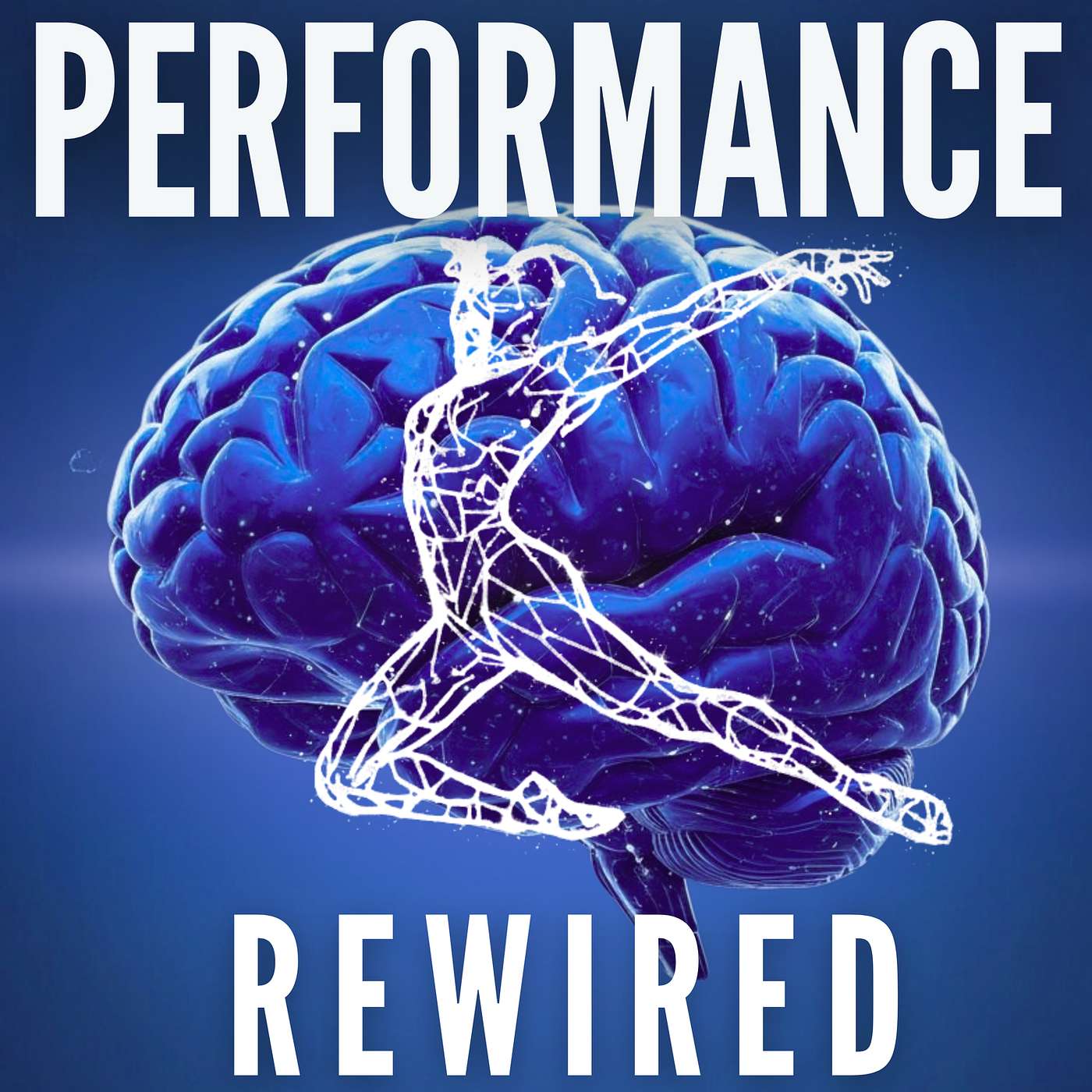
Artwork for Performance Rewired
Science

Performance Rewired

Yuka Sugiura & Nikki Bybee

Performance Rewired is a podcast for movement experts ready to challenge everything they’ve been taught about learning movement and tap into a brain-based approach to performance.  For dancers, gymnasts, artistic athletes, instructors, and coaches who want to understand what’s really behind elite performance. Hosted by Nikki Bybee and Yuka Sugiura, master neuro trainers and performance coaches.

  • 10 episodes
  • Updated July 22

Episodes10

  • July 22 · 37 min

    Episode 9 - Understanding the Crucial Role of Feet in Movement, Safety, and Performance

    Inthis episode, we explore the often overlooked importance of foot function in dance and gymnastics, emphasizing sensory feedback, biomechanics, and training techniques to improve connection to the ground. Whether you're a performer or coach, gain insights on how foot awareness can transform movement quality and safety. Key Topics The feet as primary sensory tools critical for safety and movement control The feedback loop between feet and brain: How sensory input influences gait, posture, and power The anatomy of the foot: 26 bones, joints, muscles, and its complexity The concept of the tripod foot: Its shape, significance, and how proper contact points enhance control How to recognize and correct improper foot engagement in dancers and gymnasts The impact of footwear and technique on foot sensory input and function Connection between foot alignment and overall body posture, with practical exercises Interrelationship between hands, feet known as interlimb neural coupling Drills to improve proprioception and internal rotation via sensory feedback The importance of barefoot training and reducing compressive footwear for better foot health Tips for assessing and enhancing foot sensation in daily and training routines Timestamps 00:00 - Introduction: The importance of foot awareness in movement 00:42 - How the feet influence posture, safety, and performance 03:35 - Exploring the main focus: foot feedback loop and biomechanical control 05:07 - Recognizing momentum generation through the foot: lurching vs tripod grounding 06:31 - Aesthetic considerations in gymnastics and the importance of foot points 08:48 - Defining the tripod foot: contact points and misconceptions in training 11:13 - Using the tripod concept to improve ground engagement and reduce tension 12:10 - Sensory input, safety, and the brain's representation of the feet 14:18 - The importance of landing softly and absorbing shock effectively 17:15 - The anatomy of the foot: bones, joints, and neural significance 19:00 - The brain's sensory prioritization of the feet and implications for training 20:30 - Sensory exercises and the connection to movement accuracy, especially on beam 23:31 - Interlimb neural coupling: how hand exercises can benefit foot mobility 27:47 - Body structure influences on foot positioning and movement range 30:16 - Techniques for increasing range of motion: foot twists and internal rotation drills 33:15 - The benefits of barefoot training for sensory feedback and better function 35:56 - Practical assessments: testing sensation, proprioception, and encouraging awareness 36:50 - Final tips: Reducing footwear's compressive effects and enhancing sensory input 37:20 - Closing remarks and resources Resources & Links: Heel exercises to increase plantar flexion (pointed feet) Connect with us Yuka on Instagram (@levelupneuro) Nikki on Instagram (@bybee_nikki) Performance Rewired YouTube Subscribe to our newsletters: Yuka: LevelUp Newsletter Nikki: Transformational Newsletter

  • July 8 · 33 min

    Episode 8 - How We Approach Neuro Training Program Design for Dancers and Gymnasts

    In this episode, we talk about the perception of neuro training as brain ‘tricks’ and discuss how it's a process and approach that creates changes in the brain to improve physical performance for the long-run. We share recent experiences from workshops and clinics and the process behind designing and refining programs for groups and individuals. Key topics Why neuro training should be part of the beginning of every movement session Translating workshop “tricks” into long-term training How an Assess - Reassess process helps athletes track what actually works Individualized protocols and why some athletes respond differently Using neuro training as a warm-up for the nervous system, not just the muscles Pain, safety, and how the brain can create protective responses that inhibit movement Timestamps 1:20 - How Nikki creates accountability for dancers in her workshops 02:08 - We’re rewiring the brain in order to create changes in how it drives movement, not doing a series of brain “tricks” 05:35 - The Assess - Reassess process as a method to select drills, and how to reinforce the learning process with athletes, dancers and coaches 07:37 - The benefit of coaches and instructors understanding the approach and process 09:05 - Why neurotraining works best when integrated into daily practice, classes or rehearsals 09:53 - The process of introducing and adjusting drills in group settings 11:20 - How body position plays a role in the outcome of a drill and the importance of gradually introducing complexity 13:13 - How a simple positional change could create a negative or positive result from a drill 14:30 - Challenges of introducing neuro training to a group that will respond to drills differently 15:47 - The power of individualized protocols and the optimal frequency for the best results 16:25 - An example of neuro training improving a professional athlete’s performance and longevity 19:20 - Why warming up and performance improvements benefit from solutions beyond solely biomechanical ones 20:40 - Pain as a protective response from the brain, and how a single neuro drill provided relief from knee pain 23:11 - Benefits of preparing both the physical tissues and brain areas that regulate movement and muscle tone 26:50 - Why neuro training warm-up protocols can be more efficient than traditional warm-ups 27:30 - A case study of a dancer with difficulty spotting and how biomechanical instructions or adjustments alone may be insufficient 28:40 - Closing thoughts Resources & Links Connect with us Yuka on Instagram (@levelupneuro) Nikki on Instagram (@bybee_nikki) Performance Rewired YouTube Subscribe to our newsletters Yuka: LevelUp Newsletter Nikki: Transformational Newsletter

  • June 24 · 32 min

    Episode 7 - Why Elite Dancers and Gymnasts Need Elite Levels of Proprioception

    In this episode of Performance Rewired, we dive into the essential role of proprioception in athletic and artistic performance, exploring how elite performers might still have gaps in their sensory awareness and how to optimize this critical system. We share insights from our coaching experiences as well as practical exercises to improve proprioceptive capacity. Key Topics: The importance of having high-levels of proprioceptive awareness for elite athletes, dancers, and gymnasts How injuries and repetitive patterns can limit proprioceptive acuity Exercises to enhance proprioceptive awareness, including two-point discrimination and graphesthesia The impacts of sensory reweighting, like an overreliance on visual inputs to understand where you are in space The role of sensory mapping in injury recovery and movement Timestamps: 00:00 - Introduction to proprioception and its relevance for performance 00:27 - Common misconceptions about elite proprioception levels 01:23 - Life updates 03:54 - Observations from coaching diverse groups and managing threshold points in the course of a class 04:51 - How having a neural lens aids in calibrating performance level changes during a class 08:39 - The hierarchy of systems that drive movement and where proprioception falls in that hierarchy 09:10 - Proprioception defined 09:44 - Why high performers need high-definition 3D brain-body maps 10:02 - How injuries and repetitive patterns can lead to gaps in proprioceptive maps 11:00 - Clues pointing to proprioceptive deficits and cases of intentionally ignoring information from the limbs13:17 - Sensory reweighting: Reliance on proprioceptive information vs visual and vestibular inputs 15:37 - Effects of mirror reliance and visual dependence in artistic movement 17:19 - Using resistance bands to enhance body awareness 19:26 - Assessing proprioception through two-point discrimination 22:02 - Graphesthesia and sensory exercises for performance, pain and injury recovery 26:30 - The importance and performance impacts of being able to feel all varieties of sensations on the skin 27:40 - Looking at foam rolling or massage guns as sources of sensory inputs to create a different output (a change to muscular tone or function) 29:15 - Practical tips: self-massage, brushing, and other sensory strategies before movement Connect with us Yuka on Instagram (@levelupneuro) Nikki on Instagram (@bybee_nikki) Performance Rewired YouTube Subscribe to our newsletters: Yuka: LevelUp Newsletter Nikki: Transformational Newsletter

  • June 10 · 35 min

    Episode 6: How to Incorporate Neurotraining In High Performance Athletes, Dancers, and Gymnasts— Boost Your Movement, Resilience, and Longevity

    Discover how neuro performance training can enhance athletic and dance performance, prolong careers, and optimize movement efficiency. This episode explores the integration of neuro training into high-performance routines, emphasizing the importance of training the brain and nervous system alongside physical strength. In this episode The hierarchy of movement: Why the brain's input (visual, vestibular, sensory systems) governs muscle function How neuro training acts as the software for the body's hardware, optimizing movement and performance The significance of neuro training for high-level athletes, dancers, and performers aiming for that extra 1% boost Ways to incorporate neuro drills into daily routines, training sessions, and pre-performance routines The role of neuro training in reducing tension, unraveling compensations, and preventing injury or plateau Understanding the nervous system’s role in pain, tension, and movement limitations How neuro training enhances resilience and adaptability to high stress and demanding environments Case examples: Olympic athletes, dancers, and even horses benefiting from resilience-building neuro protocols Practical tips on assessing nervous system thresholds and customizing neuro interventions Timestamps 00:00 - Introduction: How neuro training fits into high performance and why it matters 00:17 - The hierarchy of biomechanics: inputs controlling muscle function 00:47 - Neuro training as the brain's software, enhancing the body's hardware 01:30 - Benefits for elite athletes and dancers: performance edge and career longevity 02:45 - How neuro training can reduce tension and undo compensations 03:36 - Addressing nervous system regulation in movement and performance 04:04 - Why high performers plateau and how neuro training offers a solution 05:04 - Integrating neuro drills into busy training routines and pre-performance warm-ups 07:19 - The importance of resilience and managing high-stress environments 08:14 - Understanding pain and tension as signals from the brain, not just biomechanics 09:03 - The power of neurotraining to improve force generation and movement control 10:11 - Case example: Adding neuro drills to already intense routines for measurable gains 11:21 - The emerging science supporting neuro performance training in sports and dance 12:26 - How to assess nervous system readiness and determine low thresholds for stress 13:15 - Case studies from athletes and performers: managing stress, tension, and fatigue 14:42 - Tension as a sign of nervous system overload and how neuro training resets it 15:52 - The role of the nervous system in safety, survival, and movement restrictions 16:23 - How neuro training can unlock hidden potential by calming protective responses 17:47 - The misconception of pain and injury—pain as a brain-protective response 18:50 - Building resilience through neuro protocols: high stress, high performance environments 19:40 - Practical ways to incorporate neuro drills during training or in daily life 20:42 - How enhanced sensory input improves force production and movement efficiency 22:29 - The significance of visual convergence and neuro-ergonomic exercises 23:54 - Simple neuro drills for athletes: between sets, pre-performance, or as part of a warm-up 25:19 - Scaffolding neuro training into existing routines: eye drills, vestibular exercises, etc. 26:50 - Recognizing signs of nervous system fatigue and thresholds for neuro intervention 27:47 - The importance of resilience in managing stress, fatigue, and unpredictability 28:41 - Low threshold indicators: pain, instability, inconsistent movement patterns 29:16 - Resilience as adaptability and how neuro training enhances it 30:16 - Recognizing when neuro training can shift nervous system responses for better performance 31:11 - A horse’s resilience training: chaos and calm through neuro protocols Instagram: @TotalHorseMethod 33:00 - Wrapping up: Evolving high-performance training by focusing on brain and nervous system 33:23 - Final thoughts: Engage the brain purposefully, train what matters, and optimize your movement Connect with us: Yuka on Instagram (@levelupneuro) Nikki on Instagram (@bybee_nikki) Performance Rewired YouTube Subscribe to our newsletters: Yuka: LevelUp Newsletter Nikki: Transformational Newsletter

  • May 27 · 36 min

    Episode 5: The Vestibular System's Hidden Role in High-Performance Athletes

    Discover why the vestibular system, a crucial set of organs in the inner ear, can significantly impact athletic performance, balance, and movement. Learn how fine-tuning this system can lead to rapid improvements in stability, flexibility, and overall coordination, as well as reduce spinal tension. In this episode: The role of the vestibular system in balancing and spatial orientation How vestibular dysfunction affects elite athletes and dancers Simple tests and drills to assess and enhance vestibular function The misconception of BOSU balls as proprioceptive tools Relationship between vestibular health, postural tension, and movement quality Case studies demonstrating quick progress with targeted vestibular training Timestamps: 00:00 - Introduction to the powerful vestibular system 01:53 - The importance of understanding vestibular health for performers 02:22 - How the inner ear regulates balance and spatial relationships 03:07 - The impact of vestibular dysfunction in elite athletes 04:17 - Common signs of vestibular system issues and their effects 05:09 - What is the vestibular system and how does it work? 08:18 - The vestibulo-ocular reflex and its importance for focus during movement 09:12 - How delayed reactions reveal vestibular deficiencies 10:06 - Rapid and effective training methods for the vestibular system 11:43 - The connection between balance, eye focus, and performance 13:06 - How vestibular assessments help guide training, especially in young athletes 14:46 - The significance of reflexes in movement and performance 16:00 - Common signs of vestibular dysfunction in gymnasts and dancers 17:41 - Practical examples of vestibular influence on flexibility and strength 19:11 - The impact of vestibular training on spinal tension and movement range 22:37 - Success stories of rapid adaptation through vestibular rehab 25:09 - Functional movements to train the vestibular system effectively 27:45 - Signs of vestibular issues in gait and posture 29:21 - Using Romberg’s test as an assessment tool 32:21 - The importance of moving the head and eyes during balance training 33:17 - The essential role of vestibular skills in everyday movement and athletic performance Resources & Links: The Vestibular System: Your Body’s Secret Weapon - Yuka’s clinic on the vestibular system Romberg’s Test Demo VOR (Vestibulo-oculo Reflex) Demo Connect with the Hosts: Yuka - IG: @levelupneuro Nikki - IG: @bybee_nikki

  • May 13 · 29 min

    Episode 4: Convergence - A Crucial Visual Skill for Dance and Gymnastics

    In this episode, we explore how visual skills, particularly convergence, impact movement, performance, and injury prevention in dance and athletics. You’ll find practical insights into diagnosing convergence issues and techniques to improve visual capacity for better performance. Main Topics: The role of convergence in movement and performance How to self-assess convergence skills Insight into optimizing visual input for better balance, movement, and injury prevention The impact of visual system efficiency on sports like gymnastics and dance Practical exercises to enhance convergence and visual awareness In this episode: How convergence influences depth judgment, balance, and coordination Common signs of convergence issues Case examples of athletes with convergence deficiencies and their effects on performance The relationship between eye health, tension, and movement safety Timestamps: 00:00 - The influence of eye convergence on movement 02:30 - Prevalence of convergence insufficiency among children and adults 04:10 - Case study: Traumatic brain injury and convergence challenges 06:47 - How convergence impacts depth perception and spatial awareness 09:00 - Examples from gymnastics and sports illustrating visual system importance 12:14 - Personal experiences with eye dominance and depth perception issues 15:07 - How visual input drives movement safety and efficiency in dance and sports 17:38 - The importance of convergence training in improving athletic performance 22:22 - Signs of visual fatigue linked to injury risk and mental blocks 25:07 - Why train your visual system for optimal movement and safety 26:50 - Quick self-assessment for convergence capabilities 28:31 - Practical exercises to improve convergence and visual coordination 30:18 - Final thoughts: vision as a critical, trainable component of performance Resources & Links: A Basic Convergence Exercise: Pencil Push Ups Connect with Yuka & Nikki: IG: @bybee_nikki IG: @levelupneuro Join our newsletters: LevelUp Newsletter Elevated Performance Newsletter

  • April 29 · 41 min

    Episode 3: Enhancing Movement Through Vision - The Power of Eye Training in Dance and Gymnastics Performance

    Discover how your eyes influence movement, performance, and overall physical health. This episode explores the deep connection between vision and motor skills, providing practical insights into improving visual skills for athletes and movers alike. Key topics The critical role of vision in motor development and movement efficiency How early eye tracking (smooth pursuit) influences locomotion The connection between eye health, movement, and neck pain Assessment tools for visual system deficiencies impacting performance Practical drills to enhance visual skills such as smooth pursuit, saccades, and accommodation The impact of visual training on athletic reflexes, balance, and confidence Reweighting neural pathways through targeted eye exercises Case studies: from dance to sports—how vision training improves outcomes The relationship between visual input and reprogramming motor patterns Simple daily eye exercises for immediate movement and performance benefits Timestamps: 00:00 - Introduction to the importance of vision in movement 00:21 - Personal updates and new neuro performance mentorship program 02:18 - How visual skills impact athletic performance 04:20 - Visual system's role from infancy to adult movement 05:51 - How vision influences safety, balance, and coordination 06:02 - Developmental milestones: eye tracking and locomotion 07:36 - The significance of visual skills like focus, acuity, and pursuit 08:56 - Vision as a primary sensory input for spatial awareness 09:23 - Consequences of vision impairments on confidence and movement 11:18 - Visual skills assessment and neural pathways 12:34 - How eye motion reveals neurological and motor coordination issues 13:44 - Practical examples: improving sports performance with visual drills 16:56 - The impact of focus, accommodation, and eye muscle efficiency 20:23 - Visual training's effect on high-level performance and reflexes 22:44 - Simple drills to train smooth pursuit, saccades, and near-far focus 35:51 - Incorporating eye exercises into daily routines for performance gains 39:20 - Final thoughts on vision training as a foundational tool for movement improvement Resources & Links: Rewiring Performance Mentorship (Enrollment opens May 4th) Smooth Pursuits - An exercise for the cerebellum Horizontal Saccades - An exercise for the frontal lobe Pencil Push-ups - An exercise for convergence Connect with Nikki and Yuka! Yuka - IG: @levelupneuro Nikki - IG: @bybee_nikki Join our newsletters: LevelUp Newsletter Elevated Performance Newsletter YouTube: @performance-rewired

  • April 15 · 29 min

    Episode 1: Understanding the Frontal Lobe

    In this episode, we explore how the frontal lobe influences movement, decision-making, and inhibition, with insights from dancers, gymnasts, and case studies. We discuss practical drills and exercises to activate the frontal lobe, improve movement initiation, and reduce unnecessary tension, enhancing athletic performance and everyday function. Key topics: The anatomy of the frontal lobe: primary motor cortex, motor association cortex, prefrontal cortex, Broca's area, and the frontal eye field How the frontal lobe controls movement initiation, planning, and inhibition The relationship between the frontal lobe and movement disorders like Parkinson’s and ADHD Practical exercises: Stroop activity, saccades, and balance drills to activate and train the frontal lobe The impact of frontal lobe activity on movement fluidity, tension, and reflexive responses Case studies: eye movement delay in patients with brain tumors and personal experiences with initiation/inhibition challenges The global influence of frontal lobe function on daily habits, gait, and emotional regulation Timestamps: 00:00 - Introduction to the episode and the importance of studying the frontal lobe in movement 02:25 - Overview of the frontal lobe regions involved in movement control 03:06 - Primary motor cortex and inhibition versus initiation roles 04:01 - The motor association cortex as the brain’s navigator for movement plans 05:01 - Executive functions housed in the prefrontal cortex: decision-making and emotional regulation06:26 - The frontal lobe as the brain’s CEO in movement 07:06 - Coordination of brain regions for seamless responses 08:00 - How the brain anticipates and prepares for movement using the motor association cortex 09:22 - The impact of over-monitoring on movement fluidity and tension 10:20 - Fear, mental rehearsal, and the "frozen" states in movement execution 11:19 - Case study: eye movement delays post-brain tumor removal 12:23 - Personal experiences with initiation delays in weight training and eye pursuits 15:34 - Broader effects: initiation issues in habits and early signs of neurodegenerative conditions 19:47 - Drills to activate the frontal lobe: Stroop activity, saccades, and balance exercises 23:32 - Practical application in dance, gymnastics, and athletic training 24:33 - Using saccades and inhibitory games to enhance power and fluidity in movement 31:37 - Closing thoughts and reflection on the global influence of frontal lobe function Resources & Links: Stroop Test Explanation Saccades and Eye Movement Drills Connect with Yuka and Nikki: Yuka - IG @levelupneuro Nikki - IG: @bybee_nikki Join our newsletters: LevelUp Newsletter Elevated Performance Newsletter

  • April 15 · 36 min

    Episode 2: Unlocking Movement Mastery - The Power of the Cerebellum

    Discover how understanding and training the cerebellum can dramatically enhance coordination, balance, and agility—especially for dancers, gymnasts, athletes and movement enthusiasts. Join us as we explore the brain's tiny yet mighty structure that controls precision, muscle tone, and error correction in movement. In this episode: The cerebellum's core functions: accuracy, balance, and coordination How cerebellar drills improve trunk control, eye movement, and limb precision The significance of right-left limb balance and strategies to assess imbalances Simple assessment tools: RAPS, heel-to-shin, and eye tracking Practical drills for cerebellar training to boost athletic performance The impact of cerebellum health on muscle tone, and posture Relationship between cerebellar function and neurological conditions like hypotonia How to tailor training programs based on cerebellar assessments Timestamps 00:00 - Introduction to the cerebellum's role in movement 00:48 - The cerebellum and trunk control: a dancer's story 01:06 - Coordination in sprained ankles and brain-body maps 02:07 - How cerebellar function affects angular vs. smooth movement 04:11 - The ABCs of the cerebellum: accuracy, balance, coordination 04:43 - Error detection and correction: refining motor plans 05:13 - How the cerebellum acts as a project manager in movement 06:40 - Signs of cerebellar imbalance: stiffness and angularity 07:09 - Regulation of muscle tone and reflexive postural control 07:49 - Roadside cerebellar tests and eye coordination drills 09:16 - Personal gaze stabilization exercises and their benefits 10:24 - Zones of the cerebellum: vermis, intermediate, lateral zones 11:21 - Assessing limb control and fine motor skills 12:57 - The importance of bilateral training in dance and gymnastics 15:23 - Assessment tools: diadochokinesia, heel-to-shin, circle drawing 18:13 - Recognizing cerebellar deficiency: slow and flailing movements 20:22 - Foot and leg coordination tests for balance and power 23:01 - Posture and muscle tone: cerebellar contributions 25:23 - The spinocerebellum and eye convergence in sports 27:27 - The cerebellum's neuronal density and metabolic impact 28:52 - Practical outcomes of cerebellar training: better coordination, balance, and strength 30:39 - Tailoring cerebellar drills for individual imbalances 32:42 - Recognizing and addressing hypotonia related to cerebellar lesions 33:04 - Final thoughts on the tiny but powerful cerebellum Resources & Links RAPS (Rapid Alternating Pronation / Supination) also known as diadochokinesia, the ability to perform fast alternating movements Connect with Nikki and Yuka! Yuka - IG: @levelupneuro Nikki - IG: @bybee_nikki Join our newsletters: LevelUp Newsletter Elevated Performance Newsletter YouTube: @performance-rewired

  • March 30 · 13 min

    Trailer

    Welcome to the trailer for Performance Rewired! In this episode we talk about our backgrounds, why we wanted to start a podcast, and how we hope to educate gymnasts, dancers, coaches and instructors on what it actually means to apply neuroscience to these pursuits, how you and your students can benefit, and share practical ways to do it. Things we covered: •Why we started a podcast •Our background and education, how we came to neuroscience and why it’s now central to how we work •How conventional training falls short •The brain’s role in movement •Real-world success stories •Key take-aways and what’s next Connect with Yuka and Nikki: Yuka - IG @levelupneuro Nikki - IG: @bybee_nikki Join our newsletters: LevelUp Newsletter Elevated Performance Newsletter