Skip to content
Artwork for Patrick Boyle
BusinessInvestingEducation

Patrick Boyle

Patrick Boyle

Patrick Boyle is a hedge fund manager, a university professor and a former investment banker.

This channel is all about quantitative finance. By subscribing you will see videos explaining what is happening in markets right now, you will learn about financial derivatives, corporate finance and how traders use quantitative tools like statistics. You will see interviews with some of the most interesting people in the financial industry. In addition, you will see some longer form documentaries on the history of financial markets.

To contact Patrick go to the website http://onfinance.org

DISCLAIMER:
This channel is not affiliated with any financial institution. The videos on this channel are for entertainment purposes only and do not constitute financial advice. Those seeking investment advice should seek out a registered professional. Patrick is not responsible for investment actions taken by viewers and his content should not be used as a basis for investment.

Links:
Amazon Author Page: https://amzn.to/3bTeqed
Patreon: https://www.patreon.com/PatrickBoyleOnFinance
Website: https://www.onfinance.org/
Instagram: https://www.instagram.com/patrickeboyle/
BlueSky: https://bsky.app/profile/pboyle.bsky.social

Play
  • 479 episodes
  • daily
  • Avg 28 min
  • English
Counted on this page — what you have heard stays on this device, so it is not something the list can be paged by.
  • Wednesday · 34 min

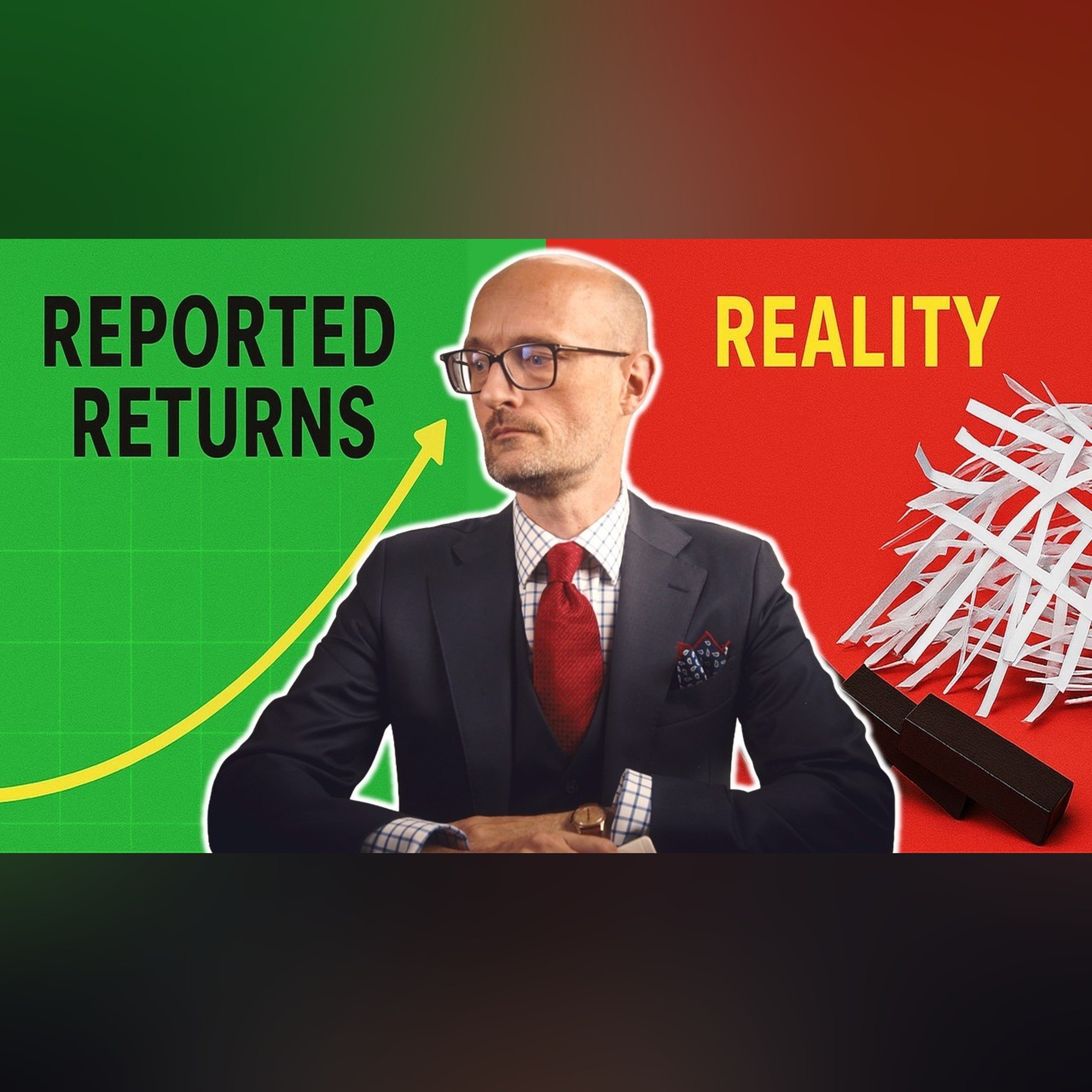
    Private Equity’s Quiet Crisis!

    ⚡️ Build something with Lovable ➡️➡️https://lovable.link/patrickboyle Private equity has long promised smooth returns, operational excellence, and sophisticated diversification. But behind the pitch decks and performance charts lies a growing crisis. In this video, we explore: 🔹 Why private equity firms are struggling to exit investments 🔹 The illusion of stability created by stale pricing 🔹 The role of leverage in driving returns — and fragility 🔹 The push into 401(k)s and what it means for retail investors 🔹 The rise of continuation funds, NAV loans, and other liquidity maneuvers 🔹 The social and regulatory backlash against PE roll-up strategies 🔹 What Bain, Buffett, and Cliff Asness really think about the model From inflated IRRs to collapsing portfolio companies, the cracks are starting to show. Is private equity still a smart bet — or just a sophisticated shell game? Patrick's Books: Statistics For The Trading Floor: https://amzn.to/3eerLA0 Derivatives For The Trading Floor: https://amzn.to/3cjsyPF Corporate Finance: https://amzn.to/3fn3rvC Ways To Support The Channel Patreon: https://www.patreon.com/PatrickBoyleOnFinance Buy Me a Coffee: https://www.buymeacoffee.com/patrickboyle Visit our website: https://www.onfinance.org Follow Patrick on Twitter Here: https://bsky.app/profile/pboyle.bsky.social Business Inquiries ➡️ sponsors@onfinance.org Patrick Boyle On Finance Podcast: Spotify: https://open.spotify.com/show/7uhrWlDvxzy9hLoW0EYf0b Apple: https://podcasts.apple.com/us/podcast/patrick-boyle-on-finance/id1547740313 Google Podcasts: https://tinyurl.com/62862nve Join this channel to support making this content: https://www.youtube.com/channel/UCASM0cgfkJxQ1ICmRilfHLw/join Learn more about your ad choices. Visit megaphone.fm/adchoices
  • Wednesday · 44 min

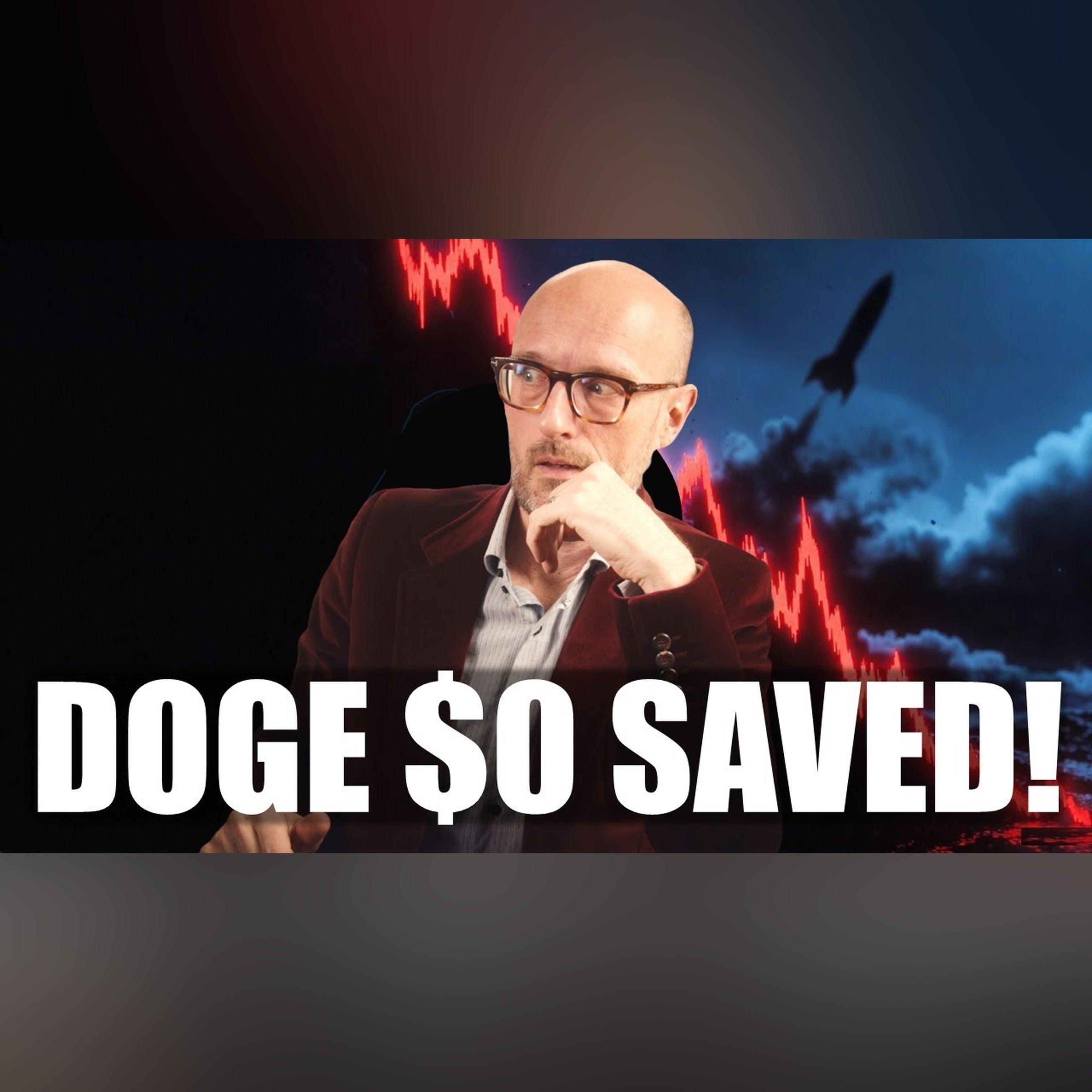
    Elon Musk Admits DOGE Was a Failure!

    Thank you to Bilt for sponsoring this video! Start earning rewards on rent right now when you sign up at https://biltrewards.yt.link/MtRNXAD DOGE promised to cut $2 trillion from the U.S. budget. Instead, it delivered chaos, memes, and a black eye—literally. In this video, we unpack Elon Musk’s candid post-mortem on the Department of Government Efficiency, why the savings never showed up, and how the “Manhattan Project of our time” turned into a bottle rocket. From the Wall of Receipts to the IRS meltdown and USAID’s woodchipper moment, we follow the money (and the missing billions) using Treasury data, Brookings analysis, and some jaw-dropping anecdotes. If you want the truth behind the headlines—and a few laughs along the way—this is the deep dive you’ve been waiting for. Patrick's Books: Statistics For The Trading Floor: https://amzn.to/3eerLA0 Derivatives For The Trading Floor: https://amzn.to/3cjsyPF Corporate Finance: https://amzn.to/3fn3rvC Ways To Support The Channel Patreon: https://www.patreon.com/PatrickBoyleOnFinance Buy Me a Coffee: https://www.buymeacoffee.com/patrickboyle Visit our website: https://www.onfinance.org Follow Patrick on Twitter Here: https://bsky.app/profile/pboyle.bsky.social Business Inquiries ➡️ sponsors@onfinance.org Patrick Boyle On Finance Podcast: Spotify: https://open.spotify.com/show/7uhrWlDvxzy9hLoW0EYf0b Apple: https://podcasts.apple.com/us/podcast/patrick-boyle-on-finance/id1547740313 Google Podcasts: https://tinyurl.com/62862nve Join this channel to support making this content: https://www.youtube.com/channel/UCASM0cgfkJxQ1ICmRilfHLw/join Learn more about your ad choices. Visit megaphone.fm/adchoices

  • Wednesday · 15 min

    What is the Monte Carlo method? | Monte Carlo Simulation in Finance | Pricing Options

    In today's video we learn all about the Monte Carlo Method in Finance. These classes are all based on the book Trading and Pricing Financial Derivatives, available on Amazon at this link. https://amzn.to/2WIoAL0 Check out our website http://www.onfinance.org/ Follow Patrick on twitter here: https://twitter.com/PatrickEBoyle Patreon Page: https://www.patreon.com/PatrickBoyleOnFinance What is the Monte Carlo Method? Monte Carlo methods, or Monte Carlo experiments, are a broad class of computational algorithms that rely on repeated random sampling to obtain numerical results. The underlying concept is to use randomness to solve problems that might be deterministic in principle. They are often used in physical and mathematical problems and are most useful when it is difficult or impossible to use other approaches. Monte Carlo methods are mainly used in three problem classes: optimization, numerical integration, and generating draws from a probability distribution. In physics-related problems, Monte Carlo methods are useful for simulating systems with many coupled degrees of freedom, such as fluids, disordered materials, strongly coupled solids, and cellular structures. Other examples include modeling phenomena with significant uncertainty in inputs such as the calculation of risk in business and, in maths, evaluation of multidimensional definite integrals with complicated boundary conditions. In application to systems engineering problems (space, oil exploration, aircraft design, etc.), Monte Carlo–based predictions of failure, cost overruns and schedule overruns are routinely better than human intuition or alternative "soft" methods. Monte Carlo methods are used in corporate finance and mathematical finance to value and analyze complex financial instruments, portfolios and investments by simulating the various sources of uncertainty affecting their value, and then determining the distribution of their value over the range of resultant outcomes. This is usually done by help of stochastic asset models. The advantage of Monte Carlo methods over other techniques increases as the dimensions (sources of uncertainty) of the problem increase. In 1977, Phelim Boyle pioneered the use of the Monte Carlo Method in derivative valuation in a Journal of Financial Economics paper. Learn more about your ad choices. Visit megaphone.fm/adchoices

  • Wednesday · 1 hr 1 min

    Hard Times - The Great Depression.

    Enjoy up to 50% off Ekster's Black Friday! Go to https://partner.ekster.com/pboyle and use code BOYLE at checkout to unlock further savings! The Great Depression was the worst and deepest peacetime economic shock in the history of the industrialized world. It brought about profound social change and was a significant factor in the drift towards the Second World War. The depth of suffering during the Depression years is hard for many of us to imagine today. More than 1 in five children in the city were suffering from malnutrition by 1932, and the Great Depression was only getting going at that point, it lasted seven more years. So, why did events on Wall Street in 1929 reverberate around the world? Why did the depression last so long, and how did America and the rest of the world eventually dig themselves out of this financial hole? Patrick's Books: Statistics For The Trading Floor: https://amzn.to/3eerLA0 Derivatives For The Trading Floor: https://amzn.to/3cjsyPF Corporate Finance: https://amzn.to/3fn3rvC Ways To Support The Channel Patreon: https://www.patreon.com/PatrickBoyleOnFinance Buy Me a Coffee: https://www.buymeacoffee.com/patrickboyle Visit our website: https://www.onfinance.org Follow Patrick on Twitter Here: https://twitter.com/PatrickEBoyle Additional Reading: Milton Friedman on The Great Depression: https://amzn.to/4fvMYF6 The Great Depression by Robert S. McElvaine: https://amzn.to/40Szajt Essays on The Great Depression by Ben Bernanke: https://amzn.to/40Szajt Keynes letter: https://www.economicsnetwork.ac.uk/archive/keynes_persuasion/The_Economic_Consequences_of_Mr._Churchill.htm The U.S. Economy in the 1920s: https://eh.net/encyclopedia/the-u-s-economy-in-the-1920s/ Britain In The Great Depression: https://moneyweek.com/economy/uk-economy/602525/britain-didnt-have-a-roaring-20s-it-had-a-roaring-30s-heres-why Michael Pettis in The FT: https://www.ft.com/content/ec1b730b-0fbf-3a8c-896a-557c06f730cf The photographers of the Great Depression - Dorothea Lange, Walker Evans, and Arthur Rothstein Business Inquiries ➡️ sponsors@onfinance.org Patrick Boyle On Finance Podcast: Spotify: https://open.spotify.com/show/7uhrWlDvxzy9hLoW0EYf0b Apple: https://podcasts.apple.com/us/podcast/patrick-boyle-on-finance/id1547740313 Google Podcasts: https://tinyurl.com/62862nve Join this channel to support making this content: https://www.youtube.com/channel/UCASM0cgfkJxQ1ICmRilfHLw/join Learn more about your ad choices. Visit megaphone.fm/adchoices

  • Tuesday · 12 min

    How and why do companies hedge?

    Should companies use derivatives to hedge? How and why do companies hedge? These classes are all based on the book Trading and Pricing Financial Derivatives, available on Amazon at this link. https://amzn.to/2WIoAL0 Check out our website http://www.onfinance.org/ Follow Patrick on twitter here: https://twitter.com/PatrickEBoyle Should Companies Use Derivatives to Hedge? Over the last several decades, the use of derivatives as a tool to mitigate and control risk has expanded significantly. Despite well-publicized abuses involving derivatives, the efficacy of derivatives as a means of managing economic and other forms of risk remains widely accepted. The evolving mix of users of derivatives in the last ten years has also impacted the derivatives landscape. Traditionally, commercial hedgers such as processors, mills and large corporations used derivatives to manage risks; today, while commercial hedgers remain active, much of the increase in volume in derivatives is attributable to non-traditional end-users, such as public companies, which have been active users of derivatives, most notably interest rate and foreign currency hedging instruments. Learn more about your ad choices. Visit megaphone.fm/adchoices

  • Tuesday · 40 min

    How Would Mass Deportations Affect the US Economy?

    Go to https://ground.news/pb to get up to 40% off unlimited access to stay fully informed. Subscribe through my link this month for 40% off unlimited access. Donald Trump has promised to conduct “the largest deportation effort in American history,” no matter what it costs—but the price tag may be bigger than expected. In today's video we look at a history of US border control and the economic costs of deporting more than six percent of the US workforce while the US workforce ages. Patrick's Books: Statistics For The Trading Floor: https://amzn.to/3eerLA0 Derivatives For The Trading Floor: https://amzn.to/3cjsyPF Corporate Finance: https://amzn.to/3fn3rvC Ways To Support The Channel Patreon: https://www.patreon.com/PatrickBoyleOnFinance Buy Me a Coffee: https://www.buymeacoffee.com/patrickboyle Visit our website: https://www.onfinance.org Follow Patrick on Twitter Here: https://bsky.app/profile/pboyle.bsky.social Business Inquiries ➡️ sponsors@onfinance.org Patrick Boyle On Finance Podcast: Spotify: https://open.spotify.com/show/7uhrWlDvxzy9hLoW0EYf0b Apple: https://podcasts.apple.com/us/podcast/patrick-boyle-on-finance/id1547740313 Links: Chloe East - The Labor Market Effects of Immigration Enforcement: https://www.journals.uchicago.edu/doi/epdf/10.1086/721152 Chloe East - Unintended Consequences of Immigration Enforcement: https://jhr.uwpress.org/content/early/2022/05/02/jhr.0920-11197R1 Warwick McKibbin presentation: https://www.youtube.com/watch?v=QV3lxKYIDFE What Will Mass Deportations Look Like: What Will Mass Deportations Look Like? How many people did Obama, Biden and Trump actually deport? https://www.the-independent.com/news/world/americas/us-politics/trump-deportation-numbers-obama-biden-b2649257.html Sarah O’Connor Article: https://www.ft.com/content/2bb60c40-efe1-48d1-9c9e-b9ff672ce349 Who is right about ‘Maganomics? https://www.ft.com/content/76ee5977-1f16-470b-86a5-400209aad5a3 What we know about unauthorized immigrants living in the U.S: https://www.pewresearch.org/short-reads/2024/07/22/what-we-know-about-unauthorized-immigrants-living-in-the-us/ Join this channel to support making this content: https://www.youtube.com/channel/UCASM0cgfkJxQ1ICmRilfHLw/join Learn more about your ad choices. Visit megaphone.fm/adchoices
  • Tuesday · 15 min

    What are Asset Backed Securities?

    In todays video we learn what are asset backed securities, what are credit card receivables and what is a Special Purpose Vehicle (SPV)? These classes are all based on the book Trading and Pricing Financial Derivatives, available on Amazon at this link. https://amzn.to/2WIoAL0 Check out our website http://www.onfinance.org/ Follow Patrick on twitter here: https://twitter.com/PatrickEBoyle What is an Asset-Backed Security (ABS)? An asset-backed security (ABS) is a financial security collateralized by a pool of assets such as loans, leases, credit card debt, royalties or receivables. For investors, asset-backed securities are an alternative to investing in corporate debt. An ABS is similar to a mortgage-backed security, except that the underlying securities are not mortgage-based. Credit card asset-backed securities (ABSs) are fixed-income bonds based on the cash flow stream from pooled credit card accounts. First issued in 1987, credit card ABSs are mostly high quality, pay good yields, and are liquid, with transparent prices. The number of credit card ABSs increase as the use of credit increases. However, like most asset-backed securities and unlike most corporate or government bonds, credit card ABSs have only an average maturity rather than a specified maturity because the underlying cash flow is highly variable. Credit card ABSs are structured so as to mimic the cash flow of a typical bond, but the timing of the cash flow is usually not guaranteed. The process of securitizing credit card receivables is very similar to that of securitizing mortgages and other loan obligations. A card issuer sells a group of accounts to a trust, which issues securities backed by those receivables. The card issuer still services the account, but the assets are removed from its balance sheet. This allows the card issuer to issue more accounts and to reduce its capital reserve requirements, the amount of money banks are required by law to hold to do business. This money doesn't earn interest, so, naturally, the card issuer wants to reduce its required reserves as much as possible. As the cardholders pay on their accounts monthly, most of the money is sent to the trust, which pays the holders of the credit card ABSs interest and principal. The card issuer retains a servicing fee and part of the finance charge as profit, and also includes part of the principal—the seller's interest. Securitization allows more rapid growth of banks specializing in credit card issuances by providing a source of funding and transferring risk. Before the securitization of credit card receivables, card issuers borrowed money from a bank or relied on bank deposits to fund credit card loans. Securitization greatly expanded funding for credit card issuers, including monoline issuers, and issuers whose main business is not banking or issuing credit cards, such as Amazon.com. A special-purpose vehicle, or special-purpose entity (SPE; or SPV, or, in some cases in each EU jurisdiction – FVC, financial vehicle corporation) is a legal entity (usually a limited company of some type or, sometimes, a limited partnership) created to fulfill narrow, specific or temporary objectives. SPEs are typically used by companies to isolate the firm from financial risk. A formal definition is "The Special Purpose Entity is a fenced organization having limited predefined purposes and a legal personality" Trading and pricing financial derivatives. Learn more about your ad choices. Visit megaphone.fm/adchoices

  • Tuesday · 1 hr 55 min

    Financial Derivatives - Lecture 7 - Forward Rate Agreements and Swaps

    These full length lectures are being provided for students who are unable to attend live university lectures due to the public health issues associated with Covid 19. I will return to my standard YouTube video format shortly. Buy The Book Here: https://amzn.to/2Qdj9zu Visit our website. www.onfinance.org Follow Patrick on Twitter Here: https://twitter.com/PatrickEBoyle Full two hour university lecture on forward rate agreements and swaps. In this lecture we learn about forward rate curves, FRA's and swaps. We learn about the plain vanilla swap, interest rate swaps, foreign exchange swaps, variance swaps and dividend swaps. We learn two methods for pricing swaps, how swaps are traded and how the law of comparative advantage applies to swaps. This is lecture seven of a ten lecture series on financial derivatives for Masters in Finance Students, recorded in 2020. The lecture is based on the book Trading and Pricing Financial Derivatives and is taught by Patrick Boyle Learn more about your ad choices. Visit megaphone.fm/adchoices

  • Tuesday · 33 min

    Does Europe Have a Financial Nuclear Option?

    Click the link below to get started with Genspark and lock in unlimited access for all of 2026. https://www.genspark.ai/?utm_source=yt&utm_campaign=PBoyle Genspark includes unlimited usage of AI Chat and AI Image in 2026 — with top models available inside these features, including Nano Banana Pro, GPT Image, Flux, Seedream, Gemini 3 Pro, GPT-5.2, Claude Opus 4.5, and more. @GensparkProduct #Genspark #WorkwithGenspark The recent Greenland crisis at Davos 2026 has shattered transatlantic trust, forcing Europe to confront a terrifying new reality: the need for strategic autonomy from the United States. Faced with what it views as transactional coercion, Brussels is readying an arsenal of economic countermeasures, ranging from a "trade bazooka" targeting U.S. tech firms to the highly publicized "financial nuclear option"—the threat of dumping trillions in U.S. Treasuries. But before we panic about a bond market collapse, we need to examine the hard financial realities: Is weaponizing sovereign debt a viable strategy, or is it merely a macroeconomic suicide pact? This video dives into the mechanics of this potential economic war and the high cost of moving from an era of global efficiency to one of fearful autarky Michael Pettis Paper: https://carnegieendowment.org/china-financial-markets/2025/07/foreign-capital-inflows-dont-lower-us-interest-rates Martin Wolf Article: https://www.ft.com/content/e2c8c6c3-0cdc-4aa8-a47d-399407c75ad9 Richard Samans Paper: https://www.brookings.edu/articles/rebalancing-the-world-economy-right-idea-but-wrong-approach/ Patrick's Books: Statistics For The Trading Floor: https://amzn.to/3eerLA0 Derivatives For The Trading Floor: https://amzn.to/3cjsyPF Corporate Finance: https://amzn.to/3fn3rvC Ways To Support The Channel Patreon: https://www.patreon.com/PatrickBoyleOnFinance Buy Me a Coffee: https://www.buymeacoffee.com/patrickboyle Visit our website: https://www.onfinance.org Follow Patrick on Twitter Here: https://bsky.app/profile/pboyle.bsky.social Business Inquiries ➡️ sponsors@onfinance.org Patrick Boyle On Finance Podcast: Spotify: https://open.spotify.com/show/7uhrWlDvxzy9hLoW0EYf0b Apple: https://podcasts.apple.com/us/podcast/patrick-boyle-on-finance/id1547740313 Google Podcasts: https://tinyurl.com/62862nve Join this channel to support making this content: https://www.youtube.com/channel/UCASM0cgfkJxQ1ICmRilfHLw/join Learn more about your ad choices. Visit megaphone.fm/adchoices

  • Tuesday · 28 min

    The Dumbest Buyout

    Learn more about your ad choices. Visit megaphone.fm/adchoices

  • Tuesday · 46 min

    The Book That Wasn’t Supposed to Exist - Epstein's Birthday Book Released!

    Go to https://surfshark.com/boyle or use code BOYLE at checkout to get 4 extra months of Surfshark VPN! In 2003, Ghislaine Maxwell compiled a 238-page leather-bound book for Jeffrey Epstein — filled with letters, sketches, poems, and photos from billionaires, politicians, scientists, and celebrities. This book was never meant to be public. But now, thanks to the House Oversight Committee, it’s part of the public record — and it’s worse than anyone expected. We’ll also explore the deeper questions: Where did Epstein’s money come from? Why hasn’t the government followed the money? And what does this say about the two-tiered justice system in America? This scandal isn’t just about Epstein. It’s about the system that made him possible. Link to my original Epstein Video: https://youtu.be/CbJSgan4mfQ Patrick's Books: Statistics For The Trading Floor: https://amzn.to/3eerLA0 Derivatives For The Trading Floor: https://amzn.to/3cjsyPF Corporate Finance: https://amzn.to/3fn3rvC Ways To Support The Channel Patreon: https://www.patreon.com/PatrickBoyleOnFinance Buy Me a Coffee: https://www.buymeacoffee.com/patrickboyle Visit our website: https://www.onfinance.org Follow Patrick on Twitter Here: https://bsky.app/profile/pboyle.bsky.social Business Inquiries ➡️ sponsors@onfinance.org Patrick Boyle On Finance Podcast: Spotify: https://open.spotify.com/show/7uhrWlDvxzy9hLoW0EYf0b Apple: https://podcasts.apple.com/us/podcast/patrick-boyle-on-finance/id1547740313 Google Podcasts: https://tinyurl.com/62862nve Join this channel to support making this content: https://www.youtube.com/channel/UCASM0cgfkJxQ1ICmRilfHLw/join Learn more about your ad choices. Visit megaphone.fm/adchoices

Showing 201–220 of 479 episodes