Skip to content
Artwork for Odd Lots
BusinessInvestingNewsBusiness NewsNews Commentary

Odd Lots

Bloomberg

#16 in Business this week

Bloomberg's Joe Weisenthal and Tracy Alloway explore the most interesting topics in finance, markets and economics. Join the conversation every Monday, Thursday, and Friday

Play
  • 1,302 episodes
  • daily
  • Avg 41 min
  • English

Episodes 1,302

Counted on this page — what you have heard stays on this device, so it is not something the list can be paged by.
  • January 8 · 35 min

    Here's What Could Happen to Venezuela's Messy $170 Billion of Debt

    There are a bunch of questions right now about the future of Venezuela, and one of the big ones is what's going to happen to its circa $170 billion pile of debt. Some investors have been snapping up defaulted Venezuelan bonds, betting that a future restructuring could hand them a hefty payout. Others argue that the Venezuelan people shouldn't be saddled with debt issued by an authoritarian regime. In this episode, we speak with the legendary lawyer Lee Buchheit. Lee has worked on more than two dozen sovereign debt restructurings over the course of a 40-year career, including those of Iraq and Greece. He explains how a Venezuelan debt workout might unfold and the unique challenges that arise when trying to restructure the obligations of a sovereign nation. Read more: Santander, BBVA and Deutsche Lead $3 Billion Repo for Argentina Donation From Century-Old Fund Cuts UK Debt by £607 Million Only http://Bloomberg.com subscribers can get the Odd Lots newsletter in their inbox each week, plus unlimited access to the site and app. Subscribe at bloomberg.com/subscriptions/oddlots Subscribe to the Odd Lots Newsletter Join the conversation: discord.gg/oddlots See omnystudio.com/listener for privacy information.

    • Transcript
  • January 7 · 46 min

    This Is What Maduro's Arrest Means for the Oil Market

    Venezuela is sitting on, by some measures, the biggest oil reserves in the world. And yet, in the immediate wake of Maduro's capture by US forces, the actual price of oil has moved very little. So what gives? And what are the stakes for the industry? On this episode, we speak with Gregory Brew, a senior analyst at the Eurasia Group. Greg has the perfect background for this conversation, because in addition to closely monitoring both the oil industry and the global geopolitical environment, he's a trained historian. So we talk about the long history of the Venezuelan oil industry, starting in its boom years, and then its ultimate decline amid nationalization, corruption, sanctions, and blockades. He explains to us the potential huge costs of restarting production, the actual logic behind the arrest, as well as potential fallout across Latin America, and with Venezuela's friends, such as Iran, China, and Cuba. Read more: Trump Says Venezuela to Send US Up to 50 Million Barrels of Oil Slumping Mideast Oil Market Adds to Signs of Global Weakness Only Bloomberg - Business News, Stock Markets, Finance, Breaking & World News subscribers can get the Odd Lots newsletter in their inbox each week, plus unlimited access to the site and app. Subscribe at bloomberg.com/subscriptions/oddlots Subscribe to the Odd Lots Newsletter Join the conversation: discord.gg/oddlots See omnystudio.com/listener for privacy information.

    • Transcript
  • January 5 · 41 min

    What Really Happens at a Fed Research Conference

    Every year, regional Federal Reserve banks host some of the most substantive — and under-the-radar — events in the central banking world: research conferences. Behind the formal papers and dense macro models, this is where much of the Fed’s intellectual groundwork for monetary policy first starts to take shape. On this episode, we take you inside the Boston Fed's 69th annual Economic Conference to hear what the economists are actually debating, how they choose the questions that matter most, and what happens when the evidence — or egos — clash. Along the way, we talk to Fed researchers, outside academics, and Boston Fed President Susan Collins about how this kind of work influences policy in the real world. Watch all the presentations at the Boston Fed's website Subscribe to the Odd Lots Newsletter Join the conversation: discord.gg/oddlots See omnystudio.com/listener for privacy information.

    • Transcript
  • January 2 · 52 min

    The Business of Butterworth's, the Hottest New Restaurant in Washington DC

    When the Odd Lots team was down in Washington DC earlier this year, we had a phenomenal meal at a restaurant called Butterworth's. As it turns out, the restaurant is one of the hottest hangouts for the MAGA crowd, with Steve Bannon and others frequently seen in its dining room. Of course, restaurants are difficult businesses in normal conditions, but in DC, you have the added factor that political cycles are changing all the time, and different bars and restaurants become associated with specific parties who go in and out of power. On this episode, we speak with Bart Hutchins, the chef-owner at the restaurant. We talk about everything from sourcing ingredients from small Amish farms, to acquiring beef tallow, and dining room logistics. We also talk about food costs, labor availability, and how the intense worker shortages and price inflation of the post-2020 period still affects how the restaurant is run today. Read more: A Former Soho House Executive Is Changing London’s Restaurant Scene DoorDash Tests AI Social App to Help Users Find Restaurants Only Bloomberg - Business News, Stock Markets, Finance, Breaking & World News subscribers can get the Odd Lots newsletter in their inbox each week, plus unlimited access to the site and app. Subscribe at bloomberg.com/subscriptions/oddlots Join the conversation: discord.gg/oddlots See omnystudio.com/listener for privacy information.

    • Transcript
  • January 1 · 34 min

    Tracy and Joe Answer All Your Questions

    It's that time of the year. On this episode, Tracy and Joe answer questions from listeners that were submitted via voice note. We talk about everything from Chinese history to whales to whether or not we ever hold an episode without publishing it. Only Bloomberg - Business News, Stock Markets, Finance, Breaking & World News subscribers can get the Odd Lots newsletter in their inbox each week, plus unlimited access to the site and app. Subscribe at bloomberg.com/subscriptions/oddlots Join the conversation: discord.gg/oddlots See omnystudio.com/listener for privacy information.

    • Transcript
  • Dec 29, 2025 · 46 min

    Goldman's Hatzius and Snider on the Outlook for 2026

    2025 was an extraordinary year, with the real economy defying recession worries and equity markets putting up monster returns. So can this be repeated again in 2026? On this episode, we speak with two of the top minds at Goldman Sachs. Jan Hatzius is the bank's chief economist and head of research and Ben Snider is its chief US equity strategist. We review what really happened in 2025, talking about the impact of both AI and the tariffs, as well as how these factors will impact the real economy and stocks next year. Read more: Larry Ellison, Not Elon Musk, Was The Tech Titan Who Defined 2025 Why 2026 Is Poised to Be Another Rocky Year for Global Trade Only Bloomberg - Business News, Stock Markets, Finance, Breaking & World News subscribers can get the Odd Lots newsletter in their inbox each week, plus unlimited access to the site and app. Subscribe at bloomberg.com/subscriptions/oddlots Join the conversation: discord.gg/oddlots See omnystudio.com/listener for privacy information.

    • Transcript
  • Dec 26, 2025 · 33 min

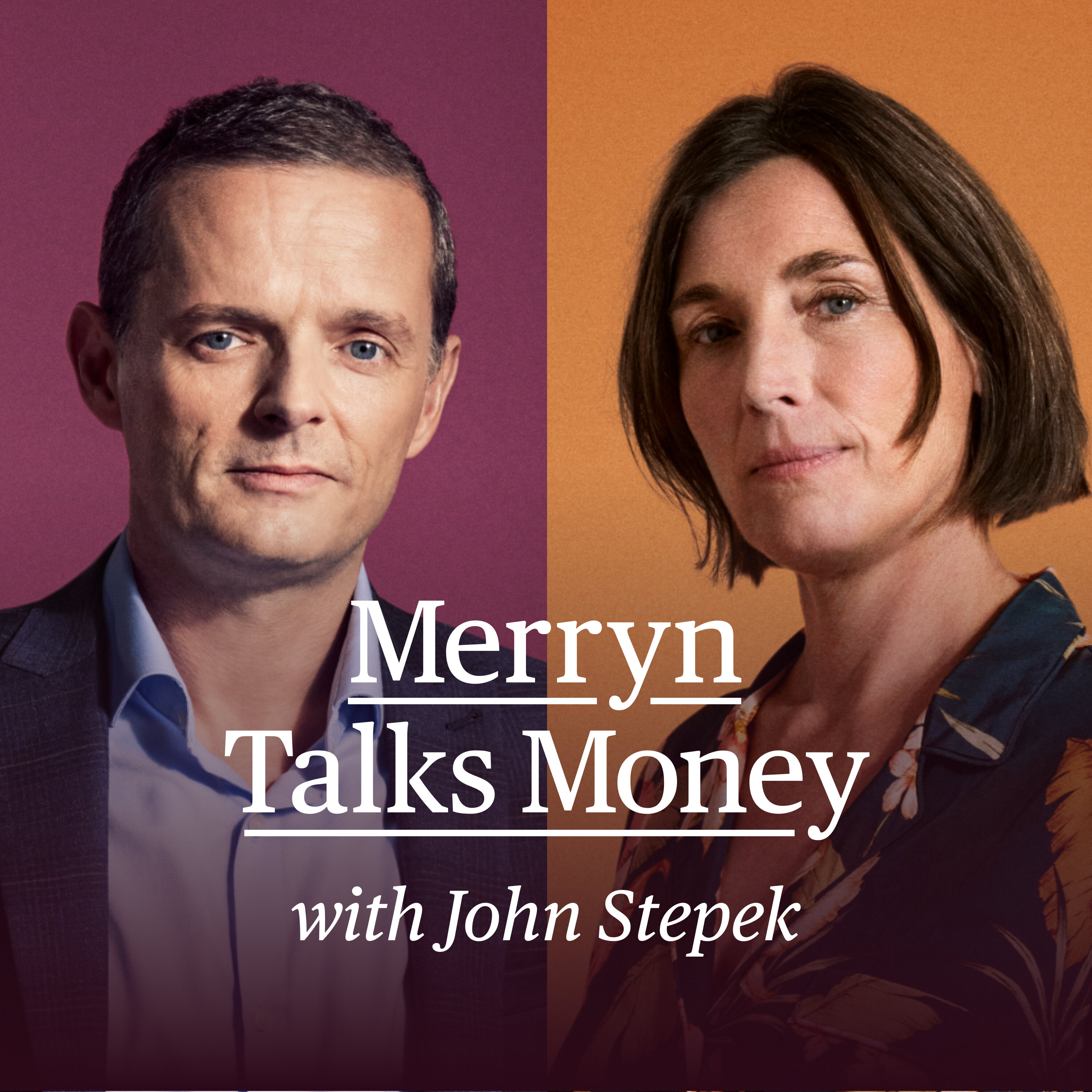
    Merryn Talks Money: John Law, The Gambler Who Invented Modern Money (Part 1)

    Hello Odd Lots listeners! As we take a break for the holidays we'd like to take a moment and bring you an episode by one of our sister shows here at Bloomberg Podcasts, Merryn Talks Money. In this special two-part series, John Stepek and Merryn Somerset Webb tell the extraordinary story of John Law: a fugitive Scots gambler who became the most powerful financier in France and helped invent the modern monetary system. From murder and exile to paper money, banking revolutions and spectacular collapse, Law’s life reveals why today’s financial system works the way it does—and why it sometimes blows up. It’s history, scandal and monetary theory rolled into one irresistible tale. We used a range of sources for this podcast but two key books to read if you'd like to find out more are: John Law: A Scottish Adventurer of the Eighteenth Century (2018), by James Buchan John Law: Economic Theorist and Policy-Maker (1997), by Antoin Murphy Like this episode? Listen and Subscribe to the Merryn Talks Money podcast on Apple, Spotify, iHeart or wherever you get your podcasts Only Bloomberg.com subscribers can get the Odd Lots newsletter in their inbox — now delivered every weekday — plus unlimited access to the site and app. Subscribe at bloomberg.com/subscriptions/oddlots See omnystudio.com/listener for privacy information.

    • Transcript
  • Dec 25, 2025 · 59 min

    Scott Kupor's New Plan to Bring Tech Workers Into the Federal Government

    If you're a high-skilled tech worker, then potentially huge fortunes await you working for a startup or one of our booming AI giants. But the government needs these types of workers too. And the government is not set up to pay commensurate salaries with the private sector -- particularly for these types of roles. This challenge has long been understood, and there have been numerous efforts over the years to infuse the government with high-tech talent. Scott Kupor is the director of the US Office of Personnel Management, which manages and coordinates recruiting of new government employees across the federal workforce. Scott was also previously one of the top partners at the famed VC firm Andreessen Horowitz. So he has a mind for bringing the recruiting practices of the tech world into DC. But of course, that's easier said than done. On this episode, we talk about how federal hiring works and doesn't work, and also his new endeavor called the US Tech Force, which aims to bring in top talent for a two-year stint of solving problems across the bureaus. We also talk about the DOGE initiative, and how he thinks about recruiting top talent at a time when the administration has been aggressive about shrinking the size of the overall federal workforce. Read More: Federal Workforce’s Toll After a Year of DOGE and Trump: 317,000 USDA Lost a Third of DC Staff Even Before Relocation Effort Join the conversation: discord.gg/oddlots Only Bloomberg.com subscribers can get the Odd Lots newsletter in their inbox — now delivered every weekday — plus unlimited access to the site and app. bloomberg.com/subscriptions/oddlots See omnystudio.com/listener for privacy information.

    • Transcript
  • Dec 22, 2025 · 50 min

    Why Americans Are Falling Behind on Auto Loans At Their Highest Level Ever

    By and large, American households are in a healthy economic position. Yes, unemployment has been rising, but it's still at fairly low levels. Consumer spending has held up well despite terrible sentiment. And many households are sitting on huge stock market gains and have a big home equity cushion. And yet, there are signs of trouble. Most notably, auto loan delinquencies have been surging to their highest level in history. It's the same with student loans, where delinquencies are far higher than normal. So what's going on? On this episode, we speak with Rikard Bandebo, the chief economist at VantageScore, which offers a consumer credit score that's different from the traditional FICO measures. He explains how surging prices, rising interests, and -- crucially -- rising insurance costs have created an auto squeeze. We also discuss what this means for broader consumer health and whether this auto delinquency phenomenon signals something broader about consumer stress. Read more: Rise of the ‘Zombie’ Loans First Brands Asks Lenders for Fresh Cash of Up to $800 Million Only Bloomberg - Business News, Stock Markets, Finance, Breaking & World News subscribers can get the Odd Lots newsletter in their inbox each week, plus unlimited access to the site and app. Subscribe at bloomberg.com/subscriptions/oddlots Join the conversation: discord.gg/oddlots See omnystudio.com/listener for privacy information.

    • Transcript
  • Dec 19, 2025 · 48 min

    The Booming Business of Chinese Peptides

    You probably already know someone doing peptides — the amino acids that form the basis of popular new drug treatments like Ozempic and Wegovy. Today there are peptides meant to help with everything from weight loss, to cellular regeneration, to improved eye contact while talking. In San Francisco, there are even organized “peptide raves.” Yet most of these underground peptides haven’t been approved by regulators for human use in the US. So where are they coming from? And how do they get here? On this episode, we speak with two guests who have seen this growing subculture up close, Jasmine Sun, an independent writer covering AI and San Francisco culture, as well as Zak David, managing partner of Pirsek Technologies, which runs a peptide supplier, Peptide Partners. Subscribe to the Odd Lots Newsletter Join the conversation: discord.gg/oddlots See omnystudio.com/listener for privacy information.

    • Transcript
  • Dec 18, 2025 · 47 min

    Meet the Politician the AI Industry Is Trying to Stop

    The politics of AI are already exploding. Whether we're talking about data centers, electricity prices, labor displacement, water consumption, competition with China, or users of chatbots becoming psychotically obsessed, AI is already a major topic in elections. And since there's so much money at stake, the industry is already spinning up super PACs and lobbying arms. Last month, it was reported that a new $100 million AI-industry super PAC called Leading the Future would be directly targeting Alex Bores, a Democrat who is running for his party's nomination for New York's 12th congressional district. Why target Bores? Well, as an New York assemblymember, he has led the push for the regulation of AI at the state level. The industry, of course, views state-level regulation as an existential threat to their business. So on this episode we speak with Alex about how he views AI and the optimal approach to regulation. Alex also has a tech background, and so we talk about the technology more broadly, as well as other issues in contemporary politics. Subscribe to the Odd Lots Newsletter Join the conversation: discord.gg/oddlots See omnystudio.com/listener for privacy information.

    • Transcript
  • Dec 15, 2025 · 54 min

    MeatEater's Steven Rinella on the Economic History of Hunting

    When we think about America’s economic rise, we usually point to agriculture or the industrial revolution. But in the early days of colonization, one of the biggest economic drivers wasn’t crops or factories — it was animal products. Deerskins were a booming trade that pushed hunters into new frontiers. In the early 1800s, beaver pelts became a fashion craze. And of course, later that century, we nearly hunted buffalo to extinction in another frenzy of resource extraction. On this episode, we talk to Steven Rinella, author and founder of MeatEater, about this overlooked chapter in US economic history, plus how the hunting economy functions today. Read more: USDA Lowers Cattle Price Outlook After Tyson Beef Plant Closure RFK Jr. Eyes Single National Standard on Food Labeling and Safety Only Bloomberg - Business News, Stock Markets, Finance, Breaking & World News subscribers can get the Odd Lots newsletter in their inbox each week, plus unlimited access to the site and app. Subscribe at bloomberg.com/subscriptions/oddlots Join the conversation: discord.gg/oddlots See omnystudio.com/listener for privacy information.

    • Transcript
  • Dec 12, 2025 · 50 min

    D.A. Wallach Explains Why Biotech VC Is So Different

    Most people think of venture capital as funding software startups or, these days, some new AI tool. But VC also plays a major role in developing new medicines and treatments. That’s the world of D.A. Wallach — though he didn’t start there. Before becoming a biotech investor, Wallach was the lead singer of the indie rock band Chester French. So how did he make the leap from music to venture capital? How does he spot promising biotech opportunities? What does it actually take to bring a new drug to market? And how does biotech investing differ from traditional VC? We talk to the co-founder of Time BioVentures about all of this — plus we get his thoughts on AI’s impact on music and a special performance. Have a question for Joe and Tracy? Now's your chance to be the perfect guest - record a voice memo with your name, age, location and question and email to oddlots@bloomberg.net for a chance to be included in the holiday AMA episode. Read More: Big Pharma’s Patent Cliff Puts China Front and Center Novartis Strikes Deal With UK Biotech for Up To $1.7 Billion Join the conversation: discord.gg/oddlots Only Bloomberg.com subscribers can get the Odd Lots newsletter in their inbox — now delivered every weekday — plus unlimited access to the site and app. bloomberg.com/subscriptions/oddlots See omnystudio.com/listener for privacy information.

    • Transcript
  • Dec 11, 2025 · 45 min

    This Is What It Takes to Get a Data Center Financed

    Data centers are weird things. They're partly real estate assets. They're partly extremely advanced technological products. And they have to find a way to consume a tremendous amount of electricity from the grid -- or they increasingly have their own power plants on site. And beyond that, they've become extremely controversial, with more and more communities pushing back on their development. So how do you get all your ducks in a row when a new project is proposed? Who provides the financing at which stage of the agreement? What are the legal complications that arise? On this episode, we speak with Travis Wofford, a partner at the law firm Baker Botts, who works in the firm's AI practice. We discuss all the intricacies of these projects, the challenges that arise, and how things have changed in this space just since the beginning of the year. Read more: Oracle Earnings May Not Be Enough to Assuage Debt, AI Deal Fears NextEra Shares Fall Amid Push to Move Into Data Centers and Gas Only Bloomberg - Business News, Stock Markets, Finance, Breaking & World News subscribers can get the Odd Lots newsletter in their inbox each week, plus unlimited access to the site and app. Subscribe at bloomberg.com/subscriptions/oddlots See omnystudio.com/listener for privacy information.

    • Transcript
  • Dec 8, 2025 · 57 min

    Dan Ivascyn Is Excited About a New Era in Fixed Income

    In the years since the financial crisis, bond investors didn't get much return for taking on risk. With low interest rates and little sign of inflation, investors had to accept lower-quality assets to get any semblance of yield. Now that's changing according to Dan Ivascyn, the chief investment officer of Pimco, one of the biggest bond fund managers around. In this special 10-year anniversary episode, Dan reflects on longer-term trends in the bond market, as well as more immediate issues like independence at the Federal Reserve, concerns around data center financing, and worries of "dangerous" and inflated credit ratings. Read more: French Budget Endgame Means Stress Test for Stocks and Bonds Pinebridge Sees Emerging-Markets Rally Tilting Toward Bonds Only Bloomberg - Business News, Stock Markets, Finance, Breaking & World News subscribers can get the Odd Lots newsletter in their inbox each week, plus unlimited access to the site and app. Subscribe at bloomberg.com/subscriptions/oddlots Subscribe to the Odd Lots Newsletter Join the conversation: discord.gg/oddlots See omnystudio.com/listener for privacy information.

    • Transcript
  • Dec 7, 2025 · 18 min

    How Microsoft Excel Conquered Corporate America

    Excel. If you work in corporate America, that word either inspires laser-focused productivity or pure dread. Over the last 40 years, the spreadsheet software has become synonymous with the best — and worst — of late-stage capitalism. It’s seeped into popular culture and, along the way, made Microsoft one of the world’s most valuable companies.But in a world of AI and new competition where Excel=Sum(39+1), can it stay on top? From the Big Take podcast, Bloomberg’s Dina Bass and Businessweek’s Max Chafkin join host Sarah Holder to track the rise and challenges ahead for one of the most ubiquitous programs around. Like this episode? Listen and Subscribe to the Big Take podcast on Apple, Spotify, iHeart or wherever you get your podcasts Only Bloomberg.com subscribers can get the Odd Lots newsletter in their inbox — now delivered every weekday — plus unlimited access to the site and app. Subscribe at bloomberg.com/subscriptions/oddlots See omnystudio.com/listener for privacy information.

    • Transcript
  • Dec 5, 2025 · 53 min

    Affirm's Max Levchin Breaks Down How Buy Now, Pay Later Really Works

    Max Levchin probably knows as much about online payments as anyone. He was part of the original "PayPal mafia" before going on to become co-founder and CEO of Affirm, the $22 billion player in the Buy Now, Pay Later industry that's hoping to disrupt the incumbent credit card companies. While BNPL is booming, there is still a lot of confusion about how it works, how it makes money, and how transparent its activities are. On this episode, we speak with Max about why he started his company, and why he believes that BNPL offers a superior product to traditional forms of payment and credit. We also discuss the current state of the economy, AI, and what he sees as the role of crypto in payments. Subscribe to the Odd Lots Newsletter Join the conversation: discord.gg/oddlots See omnystudio.com/listener for privacy information.

    • Transcript
  • Dec 4, 2025 · 44 min

    AI Can Tell Us Something About Credit Market Weakness

    There have been some wobbles in credit markets lately. It hasn't been too dramatic, but we've had some blowups, leading Jamie Dimon to speculate about the presence of other "cockroaches" lurking in the industry. But what do we actually know about the quality and practices of credit underwriting right now? Dan Wertman is the co-founder and CEO of Noetica, a startup that uses AI to scan deal documents and measure linguistic and term trends over time. Dan talks to us about what he's been seeing in the language of deal documents, and why there are reasons to think that more blowups are lurking around the corner. He also talks to us about how credit agreements are structured in the AI space, and how we should understand some of these huge data center financing deals we've seen lately. Read more: Oracle Credit Fear Gauge Hits Highest Since 2009 on AI Bubble Fears Secretive $3 Trillion Fund Giant Makes Flashy Move Into Private Assets Only Bloomberg - Business News, Stock Markets, Finance, Breaking & World News subscribers can get the Odd Lots newsletter in their inbox each week, plus unlimited access to the site and app. Subscribe at bloomberg.com/subscriptions/oddlots See omnystudio.com/listener for privacy information.

    • Transcript
  • Dec 1, 2025 · 57 min

    Travis Kavulla Explains Why Electric Bills Shot Up

    There's an incredible amount of focus on the grid this days. That's notable because for a long time, the grid was hardly of any interest. For years, load growth was flat. It was a sleepy market. And in fact, because it was sleepy, regulators and politicians and private companies started focusing on phasing out the dirtier parts of energy production. Now things have flipped. Prices are on the rise. Load growth is on the rise. And everyone's tying to figure out how we're going to attach all of these AI datacenters to the grid. On this episode, we speak with Travis Kavulla, the vice president of regulatory affairs at NRG. Prior to his current role, Travis served for eight years on Montana's Public Service Commission, and therefore has a good feel for what drives prices in both regulated and competitive electricity markets. He explains the factors that have pushed electricity costs up, particularly since the pandemic, and the calculations that have to be made to plan for the future burdens that will be placed on the grid. Read more: Americans Paying Record Electricity Prices as Gas Costs Climb As Federal Support Withers, California Invests in Cheap Heat Pumps Only Bloomberg - Business News, Stock Markets, Finance, Breaking & World News subscribers can get the Odd Lots newsletter in their inbox each week, plus unlimited access to the site and app. Subscribe at bloomberg.com/subscriptions/oddlots Join the conversation: discord.gg/oddlots See omnystudio.com/listener for privacy information.

    • Transcript
  • Nov 28, 2025 · 44 min

    This Is Why Credit Card Interest Rates Are So High

    Some people pay off their credit cards at the end of each month. They use the cards as a payment method and collect points and rewards, and never have to pay any interest. For other users, interest can be sky high — way higher than what would be expected simply based on a user's credit or default risk. Why is this? And how do credit card companies get away with charging interest at these levels? On this episode, we speak with Itamar Drechsler, a finance professor at Wharton, who recently co-authored a piece titled Why Are Credit Card Rates so High? Drechsler walks us through the costs of running a credit card operation and explains what borrowers are really paying for. Read more: US Consumer Confidence Falls by Most Since April on Economy Gambling, Prediction Markets Create New Credit Risks, BofA Warns Only http://Bloomberg.com subscribers can get the Odd Lots newsletter in their inbox each week, plus unlimited access to the site and app. Subscribe at bloomberg.com/subscriptions/oddlots See omnystudio.com/listener for privacy information.

    • Transcript
Showing 181–200 of 1,302 episodes