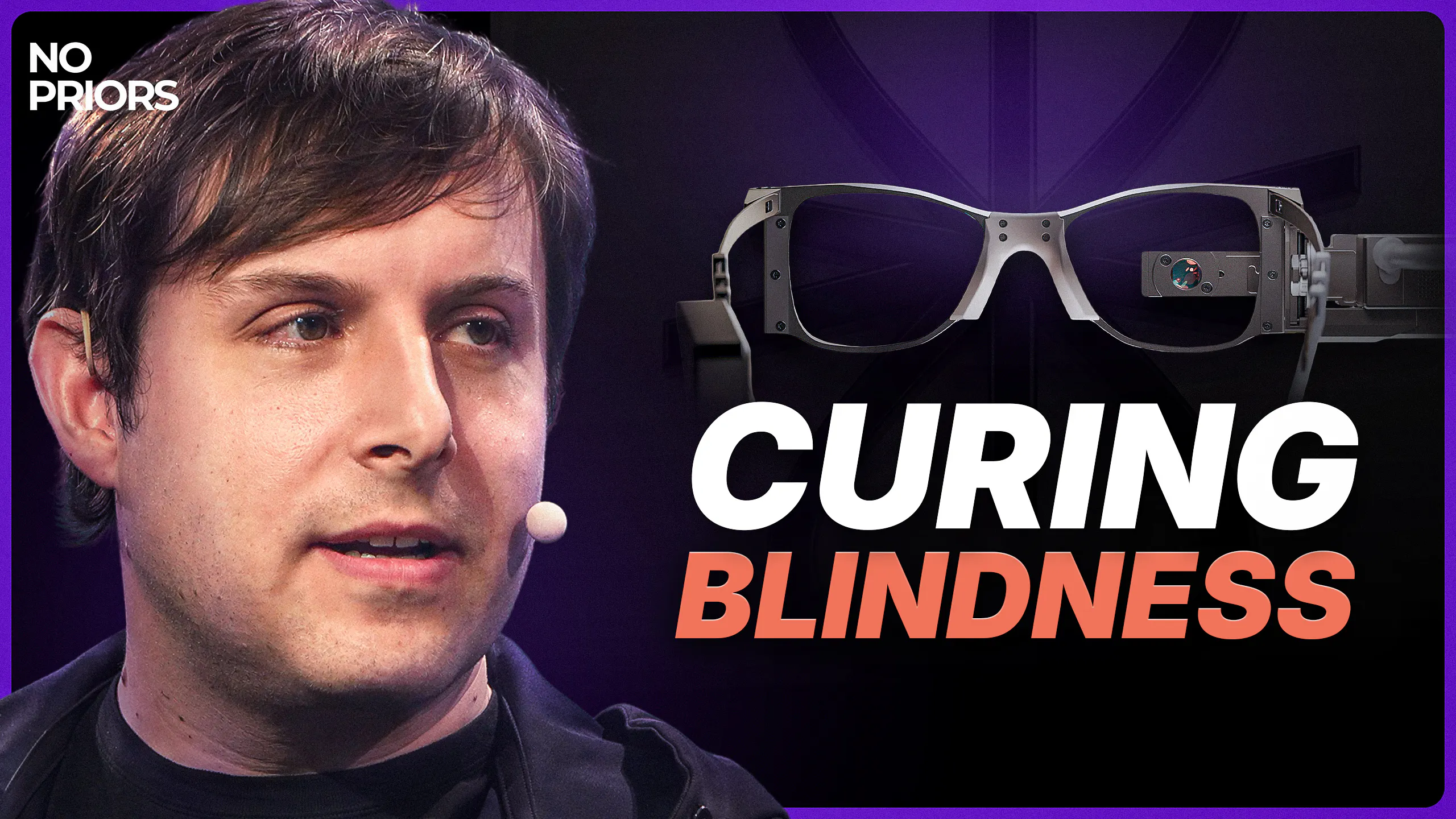
Why Diffusion Will Win AI Inference with Inception Co-Founder and CEO Stefano Ermon
As generative AI hits hardware and latency bottlenecks, Stanford professor, diffusion pioneer, and Inception co-founder and CEO Stefano Ermon is betting on a radical new architecture. Stefano joins Sarah Guo to talk about Inception, and how his team is applying diffusion architecture beyond images and video into discrete text and code generation. Stefano explains the limitations of autoregressive LLMs, as well as why parallel token generation in diffusion models offers superior inference scaling and hardware utilization on standard GPUs. He also shares details about Inception’s Mercury models, real-world voice agent applications, the software stack required to serve diffusion-based models at scale, academia’s role at the frontier of AI innovations, and why the next era of AI competition will be defined by efficiency. Sign up for new podcasts every week. Email feedback to show@no-priors.com Follow us on Twitter: @NoPriorsPod | @Saranormous | @EladGil | @StefanoErmon | @_inception_ai Chapters: 00:00 – Stefano Ermon Introduction 00:35 – Research Background 02:54 – Starting Inception 05:59 – Why Diffusion Beats Autoregressive 11:10 – Discrete vs. Continuous Modalities 13:19 – Inception Today 16:45 – Where Speed Wins 17:31 – Inception Customer Base 18:49 – Interaction with Hardware Landscape 19:34 – Inception and the Broader Industry 21:41 – Data Compression and Structure 24:45 – Controllability of Diffusion Modeles 27:25 – Emergent Capabilities at Scale 29:02 – Future Workload Split Between Diffusion vs. Traditional 30:03 – Adoption Challenges 31:44 – Hiring and Team Organization 32:50 – Recursive Self Improvement 34:02 – Resource Allocation 35:10 – Impact of Academia 38:13 – Conclusion