Skip to content
Artwork for NC Tweener Talks
BusinessEntrepreneurshipInvesting

NC Tweener Talks

NC Tweener Fund

A podcast for builders by builders in North Carolina. We explore the startup journey and stories with NC founders, from the idea to the exit and everything in between.

NC Tweener Talks is hosted by Scot Wingo, presented and produced by NC Tweener Fund, with creative assets and design support from Walk West.

Play
  • 32 episodes
  • weekly
  • Avg 43 min
  • English
Counted on this page — what you have heard stays on this device, so it is not something the list can be paged by.
  • #123
    Today · 44 min

    Spencer Martin, CEO & Founder of Sonic Power: 99 Problems, This Drain Ain’t One

    Spencer Martin, founder and CEO of Sonic Power, is building a house of cleaning brands from the ground up, and his newest one, Drain Suds, just launched nationwide at Target. In this episode, we trace Sonic Power's "double pivot." The company started as an all-in-one electronics brand, discovered that its cleaning products were driving the business, and then reinvented itself around consumable products under twenty dollars. Spencer explains his four-part test for launching a new brand, how he wins over retail buyers at Target, Harris Teeter, and Ace Hardware, and why he treats TikTok Shop as a marketing channel. He also shares the creative out-of-home campaigns behind Drain Suds. The conversation closes with one of the most practical fundraising discussions we've had on the show. We explain why family offices are often the best source of capital for consumer and CPG founders, and how to find them when there's no database to search. If you're building a consumer product company, or just want an inside look at how products get onto store shelves, this one is packed with lessons. Timestamps 00:00 Welcome & sponsors 01:33 Scot's intro: a CPG born in the Triangle 03:17 Welcome Spencer Martin, the King of Clean 03:40 Big news: Drain Suds launches nationwide at Target 04:30 Spencer's background: manufacturing broker for Nest & Fitbit 05:15 Magic Leap and the AR/VR boom 06:40 Sonic Power v1: a Trader Joe's for electronics 07:40 Pivot #1: cleaning products drive the revenue 08:45 The price problem: a $60 scrubber vs. a $2 Scrub Daddy 10:20 Pivot #2: building a house of brands like SC Johnson 12:00 Why everything stays under $20 14:10 How to get into Target: it's all about the buyer 17:05 Fundraising & the move to Boca Raton 18:45 Three new brands: Drain Suds, Glide & WaveCloth 19:10 The four-box framework for launching a brand 20:35 Drain Suds: a natural drain maintenance system 26:30 Behind the scenes: shelf, site & brand mood board 28:00 Truck ads, sidewalk stencils & earned media 29:40 Retail media networks & in-store screens 32:50 Club packs and channel conflict 33:35 A partner in every channel + TikTok Shop 36:35 Family offices: where CPG capital is 42:30 Wrap-up & credits ----- Where to Find Spencer Martin: LinkedIn: https://www.linkedin.com/in/spencer-martin-a2921735/ Sonic Power: https://sonicpower.co Where to Find Scot Wingo: LinkedIn: https://www.linkedin.com/in/thescotwingo/ Tweener Times: https://www.tweenertimes.com/ X: https://x.com/scotwingo --- This episode of Triangle Tweener Talks is hosted by Scot Wingo, presented and produced by NC Tweener Fund, with creative assets and design support from Walk West. We couldn’t share posts like this without our amazing sponsors: Platinum: NC IDEA: https://ncidea.org Gold Sponsors: - Balentine: https://www.balentine.com/triangle-entrepreneurs - EisnerAmpner: https://www.eisneramper.com - Robinson Bradshaw: https://www.robinsonbradshaw.com Silver Sponsors: - Automated Consulting Group: https://automated.co - Bank of America: https://business.bofa.com/en-us/content/technology-industry-group.html
  • #122
    November 12 · 55 min

    Doug Neumann, Co-Founder & CEO of Arpio: Why I Walked Away From the Deal

    Doug Neumann, co-founder and CEO of Arpio, joins me to share a founder story full of ups and downs, a true rocket coaster. Doug spent nine years at Microsoft and six years running software at Bandwidth through its IPO before starting Arpio, which provides disaster recovery and resilience for cloud workloads on AWS and Azure. He explains how a famous AWS outage, caused by a single typo, showed him the cloud hadn't solved disaster recovery. He also covers pivoting away from his first idea in two weeks, launching right as COVID hit, and going through a fully virtual Y Combinator batch. The second half of the conversation is a candid look at fundraising and exits. Doug signed a letter of intent with a strategic acquirer, spent three months in diligence, and walked away when the buyer tried to lower the price over a deal that slipped by a few weeks. Arpio went on to raise a 15 million dollar Series A, nearly double its original target, and has grown to 60 people. Doug also talks about how AI has and hasn't changed enterprise sales, what the CEO job turns into as a company scales, and his top advice for first-time founders: plan to do at least two startups, and pay for experienced talent. Timestamps 00:00 Welcome & sponsors 01:31 Scot's intro: a "rocket coaster" story 03:12 Doug's background: Texas, Davidson, WashU, Microsoft 05:05 Running software at Bandwidth through the IPO 07:05 Why become a founder & finding a co-founder 08:30 Finding an idea: making on-call less painful 10:50 NC IDEA Idea Labs and the pivot 11:40 Origin story: the AWS S3 outage 15:00 Two guys in a garage & launching into COVID 17:05 A migration project keeps the lights on 18:05 Acquisition offer vs. Y Combinator 19:10 Virtual YC & 50 VC intros from one slide 21:25 Hacker News launch and the Joe Arpaio problem 23:40 Finding the ICP: Crossing the Chasm & mature SaaS 27:50 Fundraising: $2.1M pre-seed & the S3 Ventures round 32:20 Arpio today: AWS, Azure, builder vs. operator clouds 36:05 The go-to-market unlock: "we're insurance" 37:15 How AI has (and hasn't) changed go-to-market 41:45 Series A: walking away from an acquisition 46:15 Sleep, stress & scaling to 60 people 49:00 What's next: Series B, $50M goal, PE calls 51:40 Founder lessons & wrap ----- Where to Find Doug Neumann: LinkedIn: https://www.linkedin.com/in/dougneumann/ Arpio: https://arpio.io Where to Find Scot Wingo: LinkedIn: https://www.linkedin.com/in/thescotwingo/ Tweener Times: https://www.tweenertimes.com/ X: https://x.com/scotwingo --- This episode of Triangle Tweener Talks is hosted by Scot Wingo, presented and produced by NC Tweener Fund, with creative assets and design support from Walk West. We couldn’t share posts like this without our amazing sponsors: Platinum: NC IDEA: https://ncidea.org Gold Sponsors: - Balentine: https://www.balentine.com/triangle-entrepreneurs - EisnerAmpner: https://www.eisneramper.com - Robinson Bradshaw: https://www.robinsonbradshaw.com Silver Sponsors: - Automated Consulting Group: https://automated.co - Bank of America: https://business.bofa.com/en-us/content/technology-industry-group.html
  • #121
    November 5 · 49 min

    Brian Handly, Founder & CEO of Reveal Mobile: "They Paid Me to Take It Off Their Hands"

    Brian Handly, founder and CEO of Reveal Mobile, joins me for a story-driven look at more than 25 years of building advertising technology in the Triangle. Brian started as a level one support engineer at Accipiter in 1997, became VP of operations within two years, and sold his stock just before the dot-com crash. When the company was about to be shut down, he bought it back, and the parent company paid him half a million dollars to take it. He rebuilt it, sold it to aQuantive, and spent three years at Microsoft after its $6 billion acquisition. From there, Brian spun StepLeader out of Capital Broadcasting, watched the TV broadcast industry consolidate out from under it, and pivoted to location data and attribution. That became Reveal Mobile, which now focuses entirely on measuring out-of-home advertising like billboards and digital screens. Brian explains how a billboard actually gets measured and shares the company's revenue, profitability, and fundraising numbers candidly. The conversation closes with why AI and zero-click search may be a tailwind for out-of-home, plus Brian's advice on honest investor updates, building a culture of autonomy, and being present when opportunity shows up. Timestamps 00:00 Welcome & sponsors 01:34 Scot's intro: meet Brian Handly 03:47 From Missouri to Raleigh and NC State 04:55 Accipiter: level one support to VP of Ops 05:49 CMGI, Engage and the dot-com rocket ship 07:16 Overheard in Wilmington: selling at the top 08:57 Getting paid to buy back Accipiter 10:16 aQuantive, Microsoft and the double dip 12:45 The sweating servers story 14:21 Three years at Microsoft 17:26 Retirement lasts six weeks: CED mentoring 18:25 Capital Broadcasting and the StepLeader spinout 21:03 Broadcast consolidation and "give me 6 months" 21:26 Beacons, location data and the birth of Reveal 24:08 The churn problem and the move to out-of-home 25:19 Acquiring Mira 27:43 Reveal today: revenue, profitability and a Q1 punch 30:17 Why agencies make sticky customers 33:48 How out-of-home attribution works 36:54 AI, the SaaSpocalypse and zero-click 40:15 Autonomous cars and the future of out-of-home 43:31 Investor updates: be candid 45:16 Culture, EOS and letting go 47:58 Final advice and credits ----- Where to Find Brian Handly: LinkedIn: https://www.linkedin.com/in/bhandly/ Reveal Mobile: https://revealmobile.com Where to Find Scot Wingo: LinkedIn: https://www.linkedin.com/in/thescotwingo/ Tweener Times: https://www.tweenertimes.com/ X: https://x.com/scotwingo --- This episode of Triangle Tweener Talks is hosted by Scot Wingo, presented and produced by NC Tweener Fund, with creative assets and design support from Walk West. We couldn’t share posts like this without our amazing sponsors: Platinum: NC IDEA: https://ncidea.org Gold Sponsors: - Balentine: https://www.balentine.com/triangle-entrepreneurs - EisnerAmpner: https://www.eisneramper.com - Robinson Bradshaw: https://www.robinsonbradshaw.com Silver Sponsors: - Automated Consulting Group: https://automated.co - Bank of America: https://business.bofa.com/en-us/content/technology-industry-group.html
  • #120
    October 29 · 49 min

    Robin Cowie, CEO & Founder of Skillmaker: From Haunted Woods to the Repair Bay

    Robin Cowie, CEO and founder of Skillmaker, went from co-creating The Blair Witch Project to building AI and extended reality tools for auto repair technicians, and he did it from Carolina Beach. Robin tells me how his father's "point of view learning," first developed to train South African gold miners, shaped his films, his work on Madden, and now Skillmaker. We talk about how NAPA paid him to spend two months listening to repair shops before he built anything. That research turned into a platform that assesses technicians, cuts entry-level training from two years to a few months, and uses smart glasses to put verified repair data in front of techs mid-job. Robin also shares hard-won founder lessons. He explains why distribution is the hardest part of any startup and how partnerships with NAPA and Solera solved it early. He walks through how more than 460 shops paid for a beta product and generated about a million dollars in revenue before launch. And he explains why his goal is for Skillmaker to become boring. Timestamps 00:00 Welcome to NC Tweener Talks 00:23 Thanks to our sponsors 01:32 Scot's intro: from Blair Witch to auto AR/VR 03:08 Meet Robin Cowie, CEO & founder of Skillmaker 03:42 Gold mines and "point of view learning" 04:58 Film school and The Blair Witch Project 06:25 Selling at Sundance and crashing the van 09:25 Madden Longshot 10:35 George Lucas, Skywalker Ranch, and Star Wars on a bedsheet 12:00 From London to Carolina Beach 13:50 Finding the problem: healthcare, then NAPA 18:40 Cutting training from 2 years to 30 days 20:20 Smart glasses and shop productivity 22:50 Assess, accelerate, assist 23:35 Quest 3, Unreal, and "teach 5, test 5" 25:50 148 hours of VR content and the pipeline behind it 29:05 Expanding into transportation 30:20 Smart safety glasses and the Pareto principle 33:05 Verified data: NAPA, Identifix, AutoVitals, ASE 35:45 Robin's prior companies and his leadership team 39:05 An agentic company and why distribution is key 40:45 Fundraising: $4.5M on a SAFE 41:20 The paid beta and the Champions Circle 45:00 Becoming "just another tool in the kit" 45:55 Scot's founder takeaways 47:20 Robin on the NC ecosystem 49:15 Wrap and credits ----- Where to Find Robin Cowie: LinkedIn: https://www.linkedin.com/in/robincowie/ Skillmaker: https://skillmaker.ai/ Where to Find Scot Wingo: LinkedIn: https://www.linkedin.com/in/thescotwingo/ Tweener Times: https://www.tweenertimes.com/ X: https://x.com/scotwingo --- This episode of Triangle Tweener Talks is hosted by Scot Wingo, presented and produced by NC Tweener Fund, with creative assets and design support from Walk West. We couldn’t share posts like this without our amazing sponsors: Platinum: NC IDEA: https://ncidea.org Gold Sponsors: - Balentine: https://www.balentine.com/triangle-entrepreneurs - EisnerAmpner: https://www.eisneramper.com - Robinson Bradshaw: https://www.robinsonbradshaw.com Silver Sponsors: - Automated Consulting Group: https://automated.co - Bank of America: https://business.bofa.com/en-us/content/technology-industry-group.html
  • #119
    October 22 · 35 min

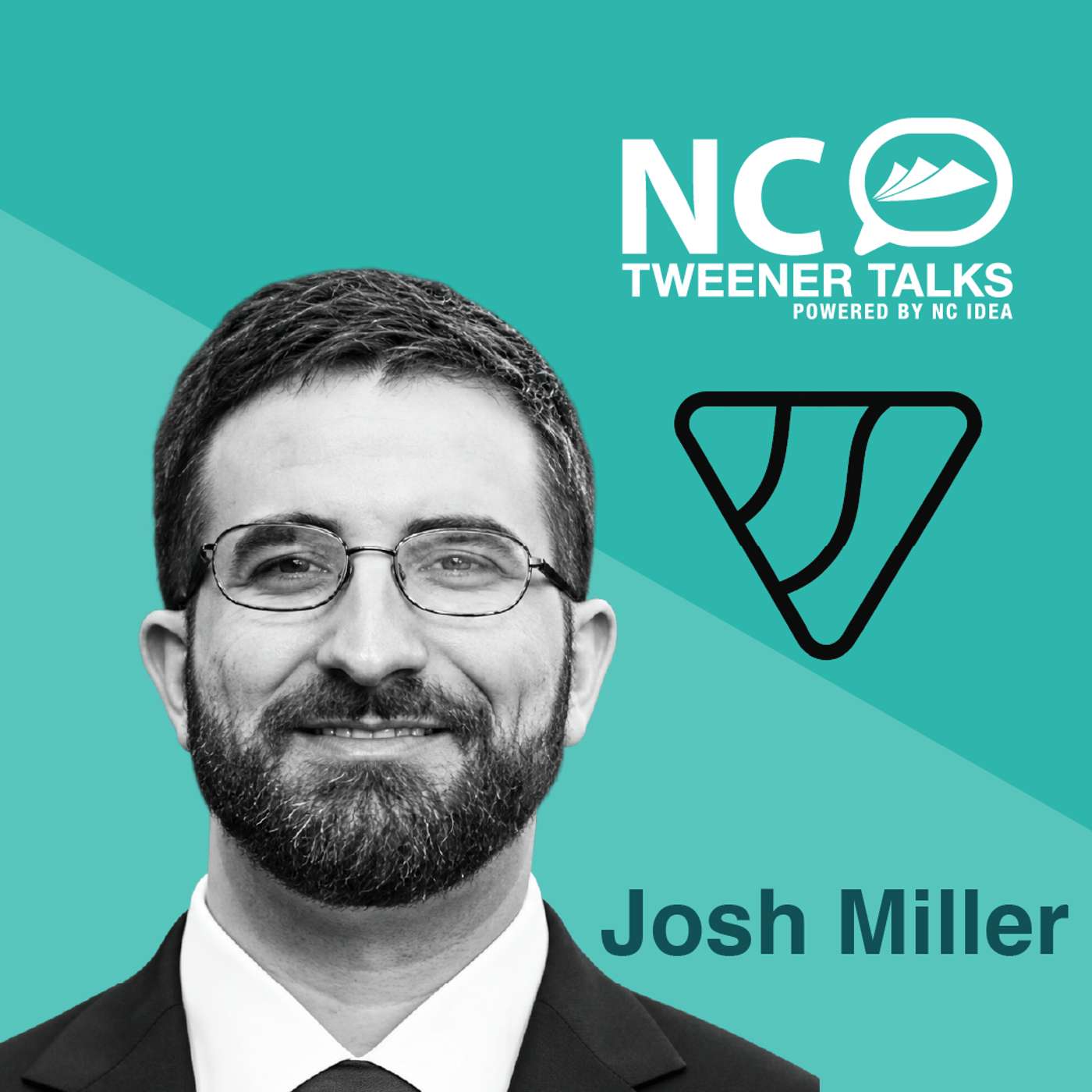
    Josh Miller, CEO & Co-Founder of Gradient Health: 40 People, $40 Million, and the Data Behind Medical AI

    Josh Miller, CEO and co-founder of Gradient Health, joins me to share how a Durham-area startup became the go-to source of medical data for AI developers around the world. Josh traces the path from his first company, FarmShots, a satellite imaging startup acquired by Syngenta, to Gradient, which began as an attempt to build cancer-detection AI and turned into something bigger once the team saw how hard it was to get the data. The conversation covers why de-identifying medical data is so much harder than removing a name, how foundation models changed the value of labeled data, and why expert-curated datasets are becoming the next frontier. Gradient's numbers are remarkable: roughly 40 million dollars in revenue this year with about 40 people, on only about 9 million dollars raised. Josh credits a culture that is willing to talk openly about what isn't working, along with AI-native engineering that has made his best engineers dramatically more productive. He also talks about go-to-market when customers are racing a 20 million dollar training run, his company's moat, and a personal reminder for founders to take care of themselves on the long road. Timestamps 00:00 Welcome to NC Tweener Talks 00:25 Thanks to our sponsors 01:35 Scot's intro: portfolio wins you can't talk about 02:30 Why Tweener invested in Gradient Health 04:55 Welcome Josh Miller 05:55 FarmShots: satellite imagery for farms 07:45 A lever through time 08:30 The Syngenta exit and Duke roots 09:25 Never again… then startup #2 10:40 Founding Gradient before ChatGPT 11:30 From building cancer AI to supplying the data 13:30 De-identification and the 87% problem 14:30 Paying hospitals back 15:20 Weak labels vs. strong labels 16:55 First contract and the revenue curve 19:20 Fundraising: $9M raised in total 20:35 Getting pulled by the market 21:55 Atlas 2 and multimodal data 23:00 Picks and shovels vs. building the model 23:55 40 people, $1M per head 25:30 Post-training and expert-curated data 27:35 Culture: talking about problems 28:55 AI-native engineering and the 100x engineer 30:15 Go-to-market in the AI data space 32:10 Gradient's competitive moat 33:10 Founder lesson: take care of yourself 34:15 Wrap and credits --- Where to Find Josh Miller: LinkedIn: https://www.linkedin.com/in/joshmichaelmiller/ Gradient Health: https://gradienthealth.io/ Where to Find Scot Wingo: LinkedIn: https://www.linkedin.com/in/thescotwingo/ Tweener Times: https://www.tweenertimes.com/ X: https://x.com/scotwingo --- This episode of Triangle Tweener Talks is hosted by Scot Wingo, presented and produced by NC Tweener Fund, with creative assets and design support from Walk West. We couldn’t share posts like this without our amazing sponsors: Platinum: NC IDEA: https://ncidea.org Gold Sponsors: - Balentine: https://www.balentine.com/triangle-entrepreneurs - EisnerAmpner: https://www.eisneramper.com - Robinson Bradshaw: https://www.robinsonbradshaw.com Silver Sponsors: - Automated Consulting Group: https://automated.co - Bank of America: https://business.bofa.com/en-us/content/technology-industry-group.html
  • #118
    October 21 · 47 min

    [REDACTED] Episode 13: How Do You Trust an Agent You Didn’t Watch?

    Craig Brown, a field engineer at Quantexa and the solo builder behind Blind Oracle, joins us as Redacted's first inbound guest. Blind Oracle is a trust and audit layer for AI agents doing business with other agents. It issues agent passports and records delegated work to public ledgers, so anyone can verify what an agent did without having to trust the people who run it. Craig screen-shares the software factory he built to develop it over the past two years. Signals from email, voice notes, social media, and research papers feed planning models, and a governance layer scores the system on alignment, autonomy, durability, and more. We dig into the questions every serious builder eventually hits. How do you evaluate a system once you've stopped reading its code? How do you build real trust in agents when the underlying models keep changing? And what should true north be when the product is early, and revenue hasn't arrived yet? Craig is candid about all of it, including his bet that agent-to-agent commerce is coming and that the agents themselves will decide who they trust. Timestamps: 00:00 Cold open: selling to the robots 00:44 Welcome to Redacted 01:00 Our first inbound guest 02:40 Craig's background: Quantexa and decision intelligence 04:05 From Lockheed Martin to Mantas 05:30 Solution engineering vs. forward deployed engineering 06:15 Building on the side: "the baby" turns one 07:40 Three ways to demo 11:10 What Blind Oracle does: agent counterparty risk 12:15 Agent passports and inter-agent commerce 12:55 Proof on-chain: Nostr and Base 14:40 Inside the software factory: signals, plans, builds 17:05 Feeding an article into the harness 23:35 How do you eval the factory? 24:15 Multi-agent deliberation 25:50 The governance scorecard 29:00 The honest failure: no revenue yet 29:50 Go-to-market for agents 31:00 How "decision confidence" gets measured 33:40 Building trust in an agent system 37:20 True north: the factory or the product? 39:50 The bet on agent-to-agent commerce 42:35 Research papers as signals 44:15 Model benchmarks and routing 46:30 Where to find Craig --- Show notes from the episode: https://github.com/instanttaylor/redacted-podcast Where to Find David: LinkedIn: https://www.linkedin.com/in/davidshaner/ Where to Find Taylor: LinkedIn: https://www.linkedin.com/in/taylorcotner/ More about Offline: https://www.linkedin.com/company/offline-media-inc-/ --- This episode of Redacted is hosted by David Shaner and Taylor Cotner, and presented and produced by NC Tweener Fund. We couldn’t share posts like this without our amazing sponsors: Platinum: NC IDEA: https://ncidea.org Gold Sponsors: - Balentine: https://www.balentine.com/triangle-entrepreneurs - EisnerAmpner: https://www.eisneramper.com - Robinson Bradshaw: https://www.robinsonbradshaw.com Silver Sponsors: - Automated Consulting Group: https://automated.co - Bank of America: https://business.bofa.com/en-us/content/technology-industry-group.html
  • #117
    October 15 · 48 min

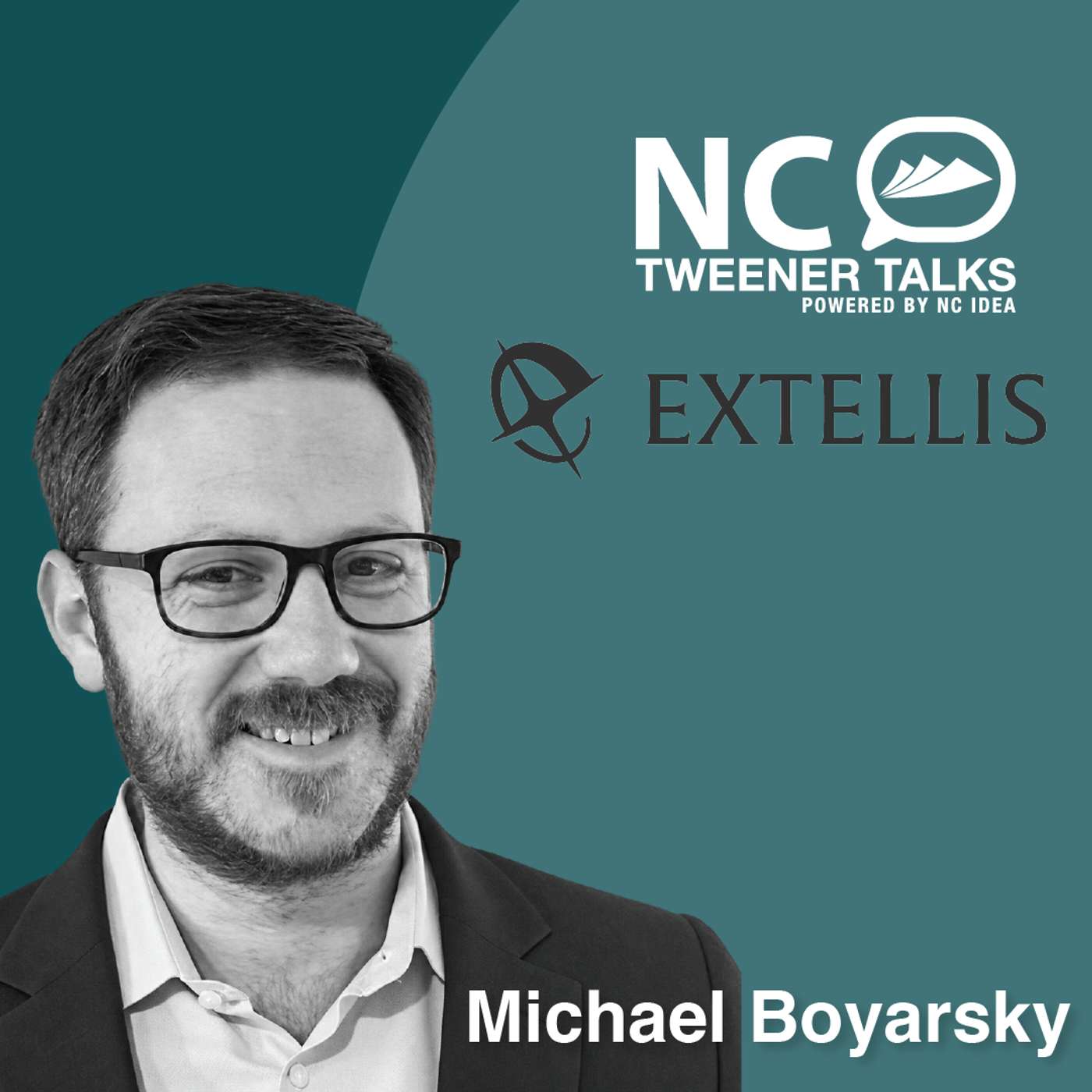
    Michael Boyarsky, CEO & Co-Founder of Extellis: Building a SpaceTech Company in NC and Meta Materials 101

    Michael Boyarsky, CEO and co-founder of Extellis, joins me to talk about turning more than a decade of Duke metamaterials research into a satellite imaging company. Michael explains what metamaterials are and why heat, not cold, is the real challenge for satellites in orbit. He also describes the conference moment when a competitor bragged about 2 percent uptime, and he thought the industry could do far better. He walks through the path from a DARPA-funded ground prototype to a spreadsheet that made the business case clear, and from there to spinning out of Duke with help from Duke New Ventures. The conversation also covers how Extellis is getting to orbit without building its own satellites. The company is partnering with Astro Digital and riding on the ecosystem SpaceX made possible. Michael shares the details of its oversubscribed 6.8 million dollar seed round led by Oval Park Capital and the upcoming Pathfinder satellite. He closes with advice for researchers who are thinking about starting a company: begin with a real market need, not a technology looking for a home. This is the Tweener Fund's first space investment, and it's a great listen for anyone curious about deep tech, university spinouts, or the new space economy. Timestamps 00:00 Welcome to NC Tweener Talks 00:25 Thanks to our sponsors 01:35 Scot's intro: the Tweener Fund's first space investment 03:30 Welcome Michael Boyarsky 04:00 From Boston College physics to Duke's metamaterials lab 06:35 What is a metamaterial? 08:05 Negative refraction and the invisibility cloak 10:45 From lab demos to satellite imaging 11:45 Why heat is a problem in space 13:45 The 2% uptime moment 15:35 DARPA prototype: could we hit 20-25%? 17:00 How you build a metamaterial 20:10 "The company started in a spreadsheet" 21:55 Duke New Ventures and learning to run a company 24:00 Customer discovery in deep tech 26:45 Target markets beyond defense 29:30 Why Extellis needs its own satellite, but not its own factory 32:25 SpaceX and the space ecosystem 36:40 Fundraising: Oval Park Capital and Shell Ventures 38:55 The pathfinder: Astro Digital and a ride on a Falcon 41:05 Pathfinder goals, size, and orbit 46:00 Advice for deep tech founders and wrap ----- Where to Find Michael Boyarsky: LinkedIn: https://www.linkedin.com/in/michaelboyarsky/ Extellis: https://www.extellis.com/ Where to Find Scot Wingo: LinkedIn: https://www.linkedin.com/in/thescotwingo/ Tweener Times: https://www.tweenertimes.com/ X: https://x.com/scotwingo --- This episode of Triangle Tweener Talks is hosted by Scot Wingo, presented and produced by NC Tweener Fund, with creative assets and design support from Walk West. We couldn’t share posts like this without our amazing sponsors: Platinum: NC IDEA: https://ncidea.org Gold Sponsors: - Balentine: https://www.balentine.com/triangle-entrepreneurs - EisnerAmpner: https://www.eisneramper.com - Robinson Bradshaw: https://www.robinsonbradshaw.com Silver Sponsors: - Automated Consulting Group: https://automated.co - Bank of America: https://business.bofa.com/en-us/content/technology-industry-group.html
  • #116
    October 7 · 44 min

    [REDACTED] Episode 12: Prototype, Survey, Repeat, and Building the Product Loop With AI

    On this episode of Redacted, we skip the guests and get back to the heart of the show: what it really looks like to build and run Offline with AI in 2026. David walks through the Hot List, a prototype feed of restaurants opening around Raleigh. An AI monitors Instagram and local news the way a person would, and David built the front end by having Claude recreate Offline's existing app with the new data. Taylor then shows the other half of the loop: a homegrown survey tool that embeds the live prototype, plays an intro video, and asks AI-generated follow-up questions based on each person's answers. From there, the conversation turns to strategy. We cover Offline's North Star metric, the inactive members they most want to reach, and the evidence-guided approach that starts with the most basic question of all: are people even going out to eat? The episode closes with a bonus segment on rebuilding the company website in roughly an hour of human time, and what that says about how small teams can multiply their output with agents. Timestamps 00:00 Cold open 00:45 Welcome back: just the two of us 01:55 Showing how it came together, not just what we built 02:40 The old prototype → interview → meeting loop 03:50 Introducing the Hot List 05:40 The Updates tab and opening-day reels 07:20 Back end: hiring an AI to watch the city 09:10 RapidAPI and monitoring Instagram 11:50 Borrowing the Offline app's skeleton 13:20 How do we put this in front of users? 14:15 Taylor's AI-powered survey tool 16:45 Survey requirements off-the-shelf tools can't hit 19:45 AI follow-up questions on Cloudflare 21:20 Checking Typeform's AI forms 23:50 North Star metric and the inactive cohort 26:35 An agent to watch the numbers 27:25 If you hired a head of product 30:45 Evidence Guided, RICE and ICE 32:05 Are they even going out to eat? 34:15 Packaging the show into chapters & wrap 35:55 Bonus: rebuilding the website in an hour 41:30 SEO, AI search, and Webflow's MCP --- Show notes from the episode: https://github.com/instanttaylor/redacted-podcast Where to Find David: LinkedIn: https://www.linkedin.com/in/davidshaner/ Where to Find Taylor: LinkedIn: https://www.linkedin.com/in/taylorcotner/ More about Offline: https://www.linkedin.com/company/offline-media-inc-/ --- This episode of Redacted is hosted by David Shaner and Taylor Cotner, and presented and produced by NC Tweener Fund. We couldn’t share posts like this without our amazing sponsors: Platinum: NC IDEA: https://ncidea.org Gold Sponsors: - Balentine: https://www.balentine.com/triangle-entrepreneurs - EisnerAmpner: https://www.eisneramper.com - Robinson Bradshaw: https://www.robinsonbradshaw.com Silver Sponsors: - Automated Consulting Group: https://automated.co - Bank of America: https://business.bofa.com/en-us/content/technology-industry-group.html
  • #115
    September 23 · 45 min

    [REDACTED] Episode 11: Getting Humans to Stop Doing the Robot Work

    This week on Redacted, we bring on our fourth guest: Ben Eckerson, founder of Agentcy, an AI-enabled consultancy helping small-to-mid-market companies close the gaps between the software they already pay for. Ben spent roughly 20 years in client services, including time at the ad agency McKinney, running Viget's Durham office, and co-founding Savas Labs, before launching Agentcy in early 2026 alongside business partner Eric out of the 24 and Up venture studio in downtown Raleigh. Most of the episode is a live demo: Ben walks through the internal tool he built from scratch, which turns a raw meeting transcript into extracted pain points, pricing and staffing estimates, and a styled, client-ready proposal deck. From there, the conversation turns into a real debate about whether it's worth building your own AI-native tools instead of buying an off-the-shelf AI CRM, what gets lost when you strip away the UI and go headless, and how much of client work still comes down to a human reading the room. It's a practical, behind-the-scenes look at how one small agency is actually using AI to run its business day-to-day, ending on a genuinely optimistic note about what all that automation is supposed to free people up to do. Timestamps 00:00 Cold open 00:43 What Redacted is about 01:09 Meet guest #4: Ben Eckerson, founder of Agentcy 01:44 Housekeeping + an Offline update 02:52 Ben joins the show 03:34 20 years in the agency trenches: McKinney, Viget, Savas Labs 04:58 What Agentcy does and "humans doing the robot work" 05:29 The real problem: tool sprawl at client companies 07:59 From stealth to launch: Agentcy's first year, with partner Eric at 24 and Up 08:33 Demo time: inside Agentcy's homegrown CRM 10:01 Where the tool started: turning Fathom transcripts into next steps 12:11 Building a new lead: the WellCare walkthrough 14:27 Adding a call transcript and hitting "Analyze" 18:58 The internal TLDR: stage, stakeholders, pricing 22:15 One click to a client-ready proposal deck 24:41 Exporting to Claude, Manus, or GPT for design polish 26:32 What's next: living inside Claude Projects 28:15 Why build your own AI CRM instead of buying one 33:45 Going headless: is the UI just a commodity now? 38:41 Meeting clients where their AI maturity actually is 41:35 The future of human work and the last-mile problem 44:27 Where to find Ben and Agentcy Show notes from the episode: https://github.com/instanttaylor/redacted-podcast Where to Find David: LinkedIn: https://www.linkedin.com/in/davidshaner/ Where to Find Taylor: LinkedIn: https://www.linkedin.com/in/taylorcotner/ More about Offline: https://www.linkedin.com/company/offline-media-inc-/ --- This episode of Redacted is hosted by David Shaner and Taylor Cotner, and presented and produced by NC Tweener Fund. We couldn’t share posts like this without our amazing sponsors: Platinum: NC IDEA: https://ncidea.org Gold Sponsors: - Balentine: https://www.balentine.com/triangle-entrepreneurs - EisnerAmpner: https://www.eisneramper.com - Robinson Bradshaw: https://www.robinsonbradshaw.com Silver Sponsors: - Automated Consulting Group: https://automated.co - Bank of America: https://business.bofa.com/en-us/content/technology-industry-group.html
  • #114
    September 10 · 51 min

    Will Duckett, Co-Founder & COO of Equity Shift: Opening Up How Private Company Ownership and Markets Operate.

    Will Duckett, co-founder and COO of Equity Shift, joins me to talk about building the infrastructure behind secondary liquidity in private markets. The conversation covers Will's path from a hedge fund back office in New York to co-founding a regulated broker-dealer in Raleigh, what it actually takes to get licensed with FINRA and the SEC, and why Equity Shift describes its platform as a digital operating system for private companies rather than just cap table software. Will and I dig into the mechanics that most founders never see up close: tender offers, the daisy-chained SPV structures that made SpaceX famous for not knowing all of its own shareholders, and how Equity Shift built a system meant to prevent that. We also trace the company's growth from small business customers up into some of the largest private equity firms in the world, and the underlying blockchain patent portfolio that powers it all. Will offers a candid look at what it's like building a capital-intensive fintech company in North Carolina, plus hard-won founder lessons from seven years and two economic shocks: expect everything to take twice as long as planned, and don't underestimate the value of a strong co-founder. Timestamps 00:00 Cold open & sponsors 01:36 Welcome & meet Will Duckett of Equity Shift 02:16 From Chapel Hill (and ancient Roman history) to Wall Street 02:40 Hedge fund back office to a Columbia MBA 03:06 Moving home and meeting co-founder Tom at a blockchain meetup 04:41 Why a blockchain meetup, in 2018 07:21 Founding Equity Shift with Tom Gordon 08:24 First customer and becoming a broker-dealer 09:53 Secondaries 101: SpaceX, Pendo, and tender offers 10:41 What Equity Shift actually does 13:17 The SpaceX SPV daisy-chain problem 14:45 How Equity Shift compares to Carta 16:19 Life as a regulated FINRA broker-dealer 18:14 The taxi medallion analogy 19:07 Splitting CEO/COO responsibilities 22:39 Fundraising milestones and the NC Tweener Fund seed round 25:07 Climbing from startups to private equity customers 30:30 Finding the bigger market beyond Carta 35:59 Go-to-market: enterprise sales, not self-serve 39:17 Founder lessons: it's always harder than you think 44:35 Coming home to North Carolina 47:13 What's next for Equity Shift 51:07 Wrap-up and credits ----- Where to Find Will Duckett: LinkedIn: https://www.linkedin.com/in/wduckett/ Equity Shift: https://equityshift.com/ Where to Find Scot Wingo: LinkedIn: https://www.linkedin.com/in/thescotwingo/ Tweener Times: https://www.tweenertimes.com/ X: https://x.com/scotwingo --- This episode of Triangle Tweener Talks is hosted by Scot Wingo, presented and produced by NC Tweener Fund, with creative assets and design support from Walk West. We couldn’t share posts like this without our amazing sponsors: Platinum: NC IDEA: https://ncidea.org Gold Sponsors: - Balentine: https://www.balentine.com/triangle-entrepreneurs - EisnerAmpner: https://www.eisneramper.com - Robinson Bradshaw: https://www.robinsonbradshaw.com Silver Sponsors: - Automated Consulting Group: https://automated.co - Bank of America: https://business.bofa.com/en-us/content/technology-industry-group.html
  • #113
    September 9 · 53 min

    [REDACTED] Episode 10: A Non-Technical Founder Doesn't Need a Technical Co-Founder Anymore

    Parker Mayes, founder of Signify, joins us on Redacted for a guest episode built around a live demo of his actual sales pipeline. Parker built Signify after spending four years running a go-to-market agency doing high-volume cold email, calls, and LinkedIn outreach for B2B clients, and getting frustrated with the low-trust, low-response nature of outbound at scale. Signify sits between a prospect database like Apollo or ZoomInfo and your CRM, scoring and enriching companies every day based on real buying signals like new hires, company news, and job postings, so reps know exactly who to reach out to and why. The conversation walks through the four daily automations running Parker's pipeline, the hard line he draws between automated cold outreach and human-run warm conversations, and how he's teaching an AI agent to write in his own voice. Parker also makes the case that a non-technical founder no longer needs a technical co-founder, as long as they have an AI sidekick that can write code. Along the way, David and Taylor pull in their own experience running Offline to compare notes on why the restaurant industry might be uniquely hard to sell into. Find Redacted wherever you listen to podcasts, or watch the full conversation on YouTube. Timestamps 00:00 Cold open 00:46 Welcome to Redacted 01:17 What Offline is 01:24 Meet this week's guest: Parker 01:49 Taylor recaps speaking at Parker's meetup 03:16 Bringing Parker into the conversation 04:05 How David and Parker first met 05:46 From go-to-market agency to building Signify 08:12 What Signify actually does 09:47 Getting leads in: imports and the "generate list" feature 11:05 Under the hood: signals, scraping, and daily scans 13:04 Why doesn't ZoomInfo already do this? 15:16 Parker as sales rep #1: results, then scaling with branded reps 17:06 The four daily automations in Parker's pipeline 18:55 How Cowork connects into Signify 20:04 Where should the AI live vs. the human in the loop? 22:29 Point tools vs. platform: Signify's acquisition thesis 23:36 Teaching the agent to document its own process 29:00 Live demo: the daily LinkedIn scan and connection run 30:51 Teaching the agent to write like Parker 34:09 Templates, guardrails, and how the agent learns his voice 38:00 Tangent: the tangled world of restaurant sales 43:11 Enrichment, credits, and Signify's pricing 44:27 The stack: Anthropic, Claude Sonnet, and building with Claude Code 47:02 Curiosity about Anthropic's "watch and skillify" feature 48:05 Keeping cold outreach human: screenshots and selfie videos 52:34 Closing thoughts for builders 52:40 Where to find Signify, Redacted, and Offline Show notes from the episode: https://github.com/instanttaylor/redacted-podcast Where to Find David: LinkedIn: https://www.linkedin.com/in/davidshaner/ Where to Find Taylor: LinkedIn: https://www.linkedin.com/in/taylorcotner/ More about Offline: https://www.linkedin.com/company/offline-media-inc-/ --- This episode of Redacted is hosted by David Shaner and Taylor Cotner, and presented and produced by NC Tweener Fund. We couldn’t share posts like this without our amazing sponsors: Platinum: NC IDEA: https://ncidea.org Gold Sponsors: - Balentine: https://www.balentine.com/triangle-entrepreneurs - EisnerAmpner: https://www.eisneramper.com - Robinson Bradshaw: https://www.robinsonbradshaw.com Silver Sponsors: - Automated Consulting Group: https://automated.co - Bank of America: https://business.bofa.com/en-us/content/technology-industry-group.html
  • #112
    September 3 · 36 min

    Steven King, Founder of Blue Sky Robotics: How a Metaverse Project Pivoted to Hospital Robotics

    Steven King, CEO and co-founder of Blue Sky Robotics, joins me to talk about building a computer vision company that has pivoted twice in three years, from metaverse avatars to warehouse robotics to hospital automation. Steven, a longtime UNC professor, explains how a side project meant to capture realistic 3D avatars for the metaverse turned into a vision system for robotic arms, and how a client's ambitious accuracy target forced his engineering team to rebuild the company's core technology from scratch. That rebuild became the foundation for Blue Sky's current focus: helping hospitals like UNC Health and Mayo Clinic catch operational errors, from mislabeled dining trays to missing surgical instruments, before they become patient safety issues. Along the way, we cover why the company built its early customer base on paying clients instead of venture capital, how real-world data has become Blue Sky's biggest competitive advantage over synthetic simulation, and why the team turned down deals that wouldn't scale even when it hurt short-term revenue. Steven also shares candid lessons on choosing a co-founder and staying flexible enough to let a company's direction change completely without losing its footing. It's a grounded, detail-rich conversation about building a hard-tech company in North Carolina, with real numbers on accuracy, team growth, and what's coming next. Timestamps 00:02 Cold open and sponsor thanks 01:34 Scot's preview: meet Steven King and Blue Sky Robotics 03:34 Welcome Steven King to the show 04:29 Life before Blue Sky Robotics 05:41 15 years at UNC: from photojournalism to computer vision 06:34 The Washington Post years and the trip to Liverpool 08:15 The spark: from innovation lab to startup 08:48 First idea: volumetric capture for the metaverse 09:45 The pivot: turning the camera outward for robots 10:25 Founding day and the first client 12:04 Bootstrapping with paying clients instead of VC 12:42 The 99.5% accuracy bet on fishing tackle 16:01 Edge inference with NVIDIA Jetson 18:18 Why fishing tackle data transfers to surgical tools 21:03 Saying no to deals that won't scale 23:07 Inside the use case: dining trays and dietary errors 24:45 Solving the 20% of surgeries that start unprepared 26:08 Building the "IoT toaster" for hospitals 27:00 UNC Health and Mayo Clinic partnerships 32:39 A 16-person team built on Triangle universities 34:00 What's next: raising capital and scaling to more hospitals 34:52 Founder lessons: pivots, pride, and picking a co-founder 35:40 Credits and sign-off ----- Where to Find Steven King: LinkedIn: https://www.linkedin.com/in/steven-king-b93885b/ Blue Sky Robotics: https://www.blueskyrobotics.ai/ Where to Find Scot Wingo: LinkedIn: https://www.linkedin.com/in/thescotwingo/ Tweener Times: https://www.tweenertimes.com/ X: https://x.com/scotwingo --- This episode of Triangle Tweener Talks is hosted by Scot Wingo, presented and produced by NC Tweener Fund, with creative assets and design support from Walk West. We couldn’t share posts like this without our amazing sponsors: Platinum: NC IDEA: https://ncidea.org Gold Sponsors: - Balentine: https://www.balentine.com/triangle-entrepreneurs - EisnerAmpner: https://www.eisneramper.com - Robinson Bradshaw: https://www.robinsonbradshaw.com Silver Sponsors: - Automated Consulting Group: https://automated.co - Bank of America: https://business.bofa.com/en-us/content/technology-industry-group.html
  • #111
    August 27 · 42 min

    Ben Scruggs, CEO of Altis Biosystems: Building the Gut Model That Predicts Which Drugs Actually Work

    Ben Scruggs, CEO of Altis Biosystems, joins me to talk about building human gut models that help pharma, biotech, and nutrition companies predict how a drug or ingredient will actually behave in the body before it ever reaches a patient. The conversation covers what an epithelial barrier is and why the gut is such an overlooked bottleneck in drug development, how Altis's technology is being used for absorption studies, inflammation research, and toxicity screening, and why GLP-1 drugs make such a compelling test case for the company's platform. Just as much of the episode is about Ben's own path: trained as a cell biologist, he spent close to a decade as a venture investor at Hatteras Venture Partners before stepping into the CEO role at Altis, a UNC spinout, about three years ago. He talks candidly about what surprised him most moving from advising founders to running a company himself, including the realization that most of the job is selling, not science. Altis Biosystems has scaled from testing a few dozen compounds at a time to routinely screening thousands, using automation and robotics to keep pace with customer demand, and Ben shares where he sees the technology heading next, well beyond the gut. Timestamps 00:00 Cold open & sponsor thank-yous 01:40 Scot's pre-show intro: today's guest, Ben Scruggs of Altis Biosystems 03:33 Episode starts 03:49 How Scot and Ben know each other 04:25 Ben's background: PhD in cell biology, postdoc in genomics 05:28 The pivot into venture investing at Hatteras Venture Partners 06:43 How UNC connections led Ben to Altis Biosystems 09:24 Inside Hatteras Venture Partners: 25 years, 100+ investments 13:06 Making the leap from investor to CEO 15:15 What Altis Biosystems actually does 16:34 What is an epithelial barrier, and why it matters 17:32 The three markets: absorption, inflammation, and toxicity 19:58 Why GLP-1 drugs are the ultimate bioavailability test 20:25 Altis's dual business model: full-service CRO vs. self-serve kits 23:29 Defining bioavailability 24:18 Beyond pharma: nutrition and CPG customers 28:37 The UNC tech-transfer story behind Altis 30:00 Advice for investors considering the jump to operator 31:42 The most underrated founder skill: selling 33:01 What's next: expanding beyond the gut 37:30 Scaling from dozens to thousands of compounds 41:39 Where to learn more about Altis Biosystems 42:10 Thanks and credits Where to Find Ben Scruggs: LinkedIn: https://www.linkedin.com/in/benjaminscruggs/ Altis Biosystems: https://www.altisbiosystems.com/ Where to Find Scot Wingo: LinkedIn: https://www.linkedin.com/in/thescotwingo/ Tweener Times: https://www.tweenertimes.com/ X: https://x.com/scotwingo --- This episode of Triangle Tweener Talks is hosted by Scot Wingo, presented and produced by NC Tweener Fund, with creative assets and design support from Walk West. We couldn’t share posts like this without our amazing sponsors: Platinum: NC IDEA: https://ncidea.org Gold Sponsors: - Balentine: https://www.balentine.com/triangle-entrepreneurs - EisnerAmpner: https://www.eisneramper.com - Robinson Bradshaw: https://www.robinsonbradshaw.com Silver Sponsors: - Automated Consulting Group: https://automated.co - Bank of America: https://business.bofa.com/en-us/content/technology-industry-group.html
  • #110
    August 26 · 42 min

    [REDACTED] Episode 9: He Gave His AI Assistant 64 Tools and Zero Permission to Delete Anything

    Josh Guter, founder of Elephants, joins us for a live product teardown of the AI operations assistant he built for small teams. The conversation covers the architecture behind the assistant: roughly 64 purpose-built tools, an approval-gated write system that never lets the AI act without human sign-off, and the logging system Josh built to audit a codebase that, by his own admission, has become a black box even to him. Josh walks us through his full build process, from sketching UI mockups in Adobe Illustrator to having Claude draft implementation plans and Codex tear them apart before anything ships, plus how he red-teams his own assistant before any change touches its tools or system prompt. He also shares how Elephants evolved from a low-code personal relationship manager built on Glide Apps and Make.com into a full-stack platform now running the daily operations of NC State's Entrepreneurship Clinic. It's a candid look at what it actually takes to ship an AI feature people trust with real operational data, including the parts that still keep a solo founder up at night. Timestamps 00:00 Cold open: "The devil's in the details" 00:45 Welcome back to Redacted 01:20 Introducing guest Josh Guter 02:33 Josh joins and how he and David met 02:56 What Elephants is: ops software for small teams 07:03 The real product: the AI assistant 08:04 The big question: model, cost, context, trust 14:04 Behind the scenes: Anthropic's API and the Make.com origin story 15:12 64 tools and counting 16:01 Managing the internal prompt library 18:07 Rebuilding full-stack with Opus 4.8 and Codex 20:38 Auditing a black box: breadcrumb logging 21:57 Claude Code as the new Make.com 25:10 The build process, start to finish 26:23 Illustrator mockups and the Claude/Codex review loop 29:05 QA without a QA team: red-teaming the assistant 31:51 Taylor's tangent: rebuilding an interview ingestion pipeline 34:09 The founders who never read their own PRs 35:02 Why nothing ships without user approval 36:57 It's a PWA, not an app 39:00 The "AI psychosis" moment 39:37 Josh's product vision: enterprise-knowledge AI 41:48 Where to find Josh and Elephants 42:08 Sign-off Show notes from the episode: https://github.com/instanttaylor/redacted-podcast Where to Find David: LinkedIn: https://www.linkedin.com/in/davidshaner/ Where to Find Taylor: LinkedIn: https://www.linkedin.com/in/taylorcotner/ More about Offline: https://www.linkedin.com/company/offline-media-inc-/ --- This episode of Redacted is hosted by David Shaner and Taylor Cotner, and presented and produced by NC Tweener Fund. We couldn’t share posts like this without our amazing sponsors: Platinum: NC IDEA: https://ncidea.org Gold Sponsors: - Balentine: https://www.balentine.com/triangle-entrepreneurs - EisnerAmpner: https://www.eisneramper.com - Robinson Bradshaw: https://www.robinsonbradshaw.com Silver Sponsors: - Automated Consulting Group: https://automated.co - Bank of America: https://business.bofa.com/en-us/content/technology-industry-group.html
  • #109
    August 20 · 41 min

    Adam Steege, Founder & CEO of Trio Labs: The Startup Failure That Became a Med-Tech Manufacturer

    Adam Steege, founder and CEO of Trio Labs, joins me to talk about building a company that 3D prints tiny, complex metal parts for medical devices out of Morrisville, North Carolina. The conversation covers Adam's path from a failed first startup in laparoscopic surgical devices to founding Trio Labs in 2015, the five years it took to reach bench-scale proof of concept, and the road from Series A funding in 2021 to commercial launch in 2023. Adam explains why his first company stalled, the manufacturing gap between traditional machining and semiconductor-style nanofabrication that Trio Labs fills, and why the company chose to sell finished parts rather than printing equipment. What makes this episode distinctive is how directly Adam connects his first company's failure to the thesis behind his second, along with a clear, first-principles explanation of why metal 3D printing at this precision is so difficult that Trio Labs describes itself as half ASML, half TSMC. It's a grounded look at what it actually takes to build a hardware company over more than a decade. Timestamps 00:00 Cold open & sponsor thanks 01:15 Welcome to NC Tweener Talks 01:35 Scot's intro: Adam Steege & Trio Labs 02:25 Interview begins 02:50 Guest welcome 02:55 NC Tweener Fund's investment history with Trio Labs 03:30 Adam's origin story begins 04:00 Growing up in NC, Carleton & Columbia 04:55 Why med tech pulled him in 05:40 The genesis of the Trio Labs idea 06:10 Technical founder staying on as CEO 08:10 What happened to the first company 09:05 The "stakeholder visibility mismatch" 11:20 From the first company's ashes to Trio Labs 13:15 Trio Labs' basic pitch 13:50 Why minimally invasive devices keep getting smaller 16:10 The manufacturing gap Trio Labs fills 18:05 Founding timeline: 2015 to Series A to commercial launch 20:00 Gen 1 to gen 3: iterating the printer 22:05 The "third dimension is nonlinear" analogy 24:00 "Half ASML, half TSMC" 25:05 Why metal instead of plastic 28:50 Facility tour: the machines, wafer fab in a box 30:05 The parts Trio Labs makes: robotics & endovascular 31:40 Where Trio Labs is in its scaling journey 34:50 Staying focused on med tech 37:35 Why they don't sell machines 40:05 Where to find Trio Labs 40:35 Wrap and credits ----- Where to Find Adam Steege: LinkedIn: https://www.linkedin.com/in/adam-t-c-steege-814b6821/ Trio Labs: https://triolabs.com Where to Find Scot Wingo: LinkedIn: https://www.linkedin.com/in/thescotwingo/ Tweener Times: https://www.tweenertimes.com/ X: https://x.com/scotwingo --- This episode of Triangle Tweener Talks is hosted by Scot Wingo, presented and produced by NC Tweener Fund, with creative assets and design support from Walk West. We couldn’t share posts like this without our amazing sponsors: Platinum: NC IDEA: https://ncidea.org Gold Sponsors: - Balentine: https://www.balentine.com/triangle-entrepreneurs - EisnerAmpner: https://www.eisneramper.com - Robinson Bradshaw: https://www.robinsonbradshaw.com Silver Sponsors: - Automated Consulting Group: https://automated.co - Bank of America: https://business.bofa.com/en-us/content/technology-industry-group.html
  • #108
    August 13 · 49 min

    Nick Genty, Co-Founder & CEO of AgEye: From a Storefront Full of Robots to a Deal in Qatar

    Nick Genty, co-founder and CEO of AgEye Technologies, joins me to talk about building robotics and AI software for indoor farms right here in North Carolina. The conversation traces Nick's path from state government IT work to an early Triangle startup acquired by SAS, into a mobile development agency serving national retailers, and eventually to a regulated medical device project that revealed the science behind AgEye: using environmental variables like light to influence plant biology. They cover how AgEye found its first customers in a channel with almost no LinkedIn presence, why the company nearly built its business around cannabis before a licensing crash forced a pivot to leafy greens and produce, and how a deliberately low-tech approach to robotics helped growers hit a realistic return on investment. Nick also walks through AgEye's data and hardware moat, the shift toward agentic AI models, and the corporate venture investors, including a Dutch agricultural giant and a German filtration company, who backed the company when traditional RTP investors weren't ready for a physical-world business. Nick is a natural storyteller with a knack for turning technical detail into something anyone can follow, and this episode is packed with concrete numbers on funding, robotics costs, and go-to-market strategy for anyone building at the intersection of hardware and software. Timestamps 00:00 Cold open & welcome 00:24 Sponsor thank-yous 03:15 Scot's intro & series preview 03:27 Guest introduction: Nick Genty, AgEye 04:06 Nick's background: Raleigh, ECU 04:59 Meeting his co-founder at the NC court system 06:27 Joining rPath & the Triangle's founder "mafias" 08:10 Founding Iconic Solutions 11:36 The hardware-software link & the genesis of AgEye 13:37 Edge AI arrives: NVIDIA Jetson & the Inception program 16:03 How Scot discovered AgEye (the lunch story) 20:02 Finding first customers on Reddit 20:41 The cannabis pivot to leafy greens 23:56 Why indoor farms exist even where crops "should" grow 27:56 Competitive moats: hardware + proprietary data 31:53 The "leaf model" & licensing the AI 34:34 How the robotic grow towers work 38:03 ARIS: the imaging robot & 3D plant modeling 42:15 The fundraising grind: $5M raised & corporate VCs 45:51 Company update: distributors & the Middle East push 48:09 Where to find AgEye & closing Where to Find Nick Genty: LinkedIn: https://www.linkedin.com/in/nicholasgenty/ AgEye: https://ageyetech.com/ Where to Find Scot Wingo: LinkedIn: https://www.linkedin.com/in/thescotwingo/ Tweener Times: https://www.tweenertimes.com/ X: https://x.com/scotwingo --- This episode of Triangle Tweener Talks is hosted by Scot Wingo, presented and produced by NC Tweener Fund, with creative assets and design support from Walk West. We couldn’t share posts like this without our amazing sponsors: Platinum: NC IDEA: https://ncidea.org Gold Sponsors: - Balentine: https://www.balentine.com/triangle-entrepreneurs - EisnerAmpner: https://www.eisneramper.com - Robinson Bradshaw: https://www.robinsonbradshaw.com Silver Sponsors: - Automated Consulting Group: https://automated.co - Bank of America: https://business.bofa.com/en-us/content/technology-industry-group.html
  • #107
    August 12 · 43 min

    [REDACTED] Episode 8: We Hired an AI Sales Rep and Became Its Manager

    Today, on Episode 8 of Redacted, we use this episode to show exactly what running a company with AI looks like day-to-day. Taylor walks through the agent system now handling Offline's lead generation and CRM cleanup, including a daily process that scans market signals, reconciles HubSpot data, and writes sales outreach briefs automatically. David then demos a redesigned mobile app and email system, and shares a candid breakdown of how many hours a recent landing page redesign actually took with AI assistance compared to how long the same project would have taken the old way. What sets this episode apart is the honesty about the mechanics: a story about an AI-generated email that silently failed for 10,000 recipients, a framework for treating AI agents like new hires who need onboarding and supervision rather than a one-time prompt, and real numbers on where the time actually goes when AI is doing the heavy lifting. It's a useful listen for anyone trying to figure out whether AI is actually saving them time or just moving the work around. Timestamps: 00:00 Cold open 00:22 Welcome to Redacted, episode 8 01:30 What Taylor's been building 03:39 Two things to show: internal ops + a product feature 03:51 What an "outreach brief" is 06:20 The automated dashboard demo 06:58 The daily sweep ritual 08:32 Catching drift between the backend and HubSpot 12:33 Closing the loop with Steve's feedback 16:14 The jungle-and-bulldozer metaphor 19:18 Structured data over meetings 20:14 Demo: a real outreach brief (Max Speed Shop) 22:23 "Iterative loop" and moving into the manager seat 23:02 Segment two: the Offline mobile app 26:00 Turning the design system into a reusable skill 31:03 HubSpot pain vs. mobile app gratification 32:01 The B2B landing page blog post 33:03 Breaking down 64.39 hours 36:11 Old world vs. new world time cost 37:37 Compounding as the X factor 37:44 The offline accountability / biz dev chart 39:32 This morning's market signals 42:00 The "hiring" framing, wrap-up 42:07 Upcoming guests: Josh and Parker 42:29 Where to find Offline and the hosts Show notes from the episode: https://github.com/instanttaylor/redacted-podcast Where to Find David: LinkedIn: https://www.linkedin.com/in/davidshaner/ Where to Find Taylor: LinkedIn: https://www.linkedin.com/in/taylorcotner/ More about Offline: https://www.linkedin.com/company/offline-media-inc-/ --- This episode of Redacted is hosted by David Shaner and Taylor Cotner, and presented and produced by NC Tweener Fund. We couldn’t share posts like this without our amazing sponsors: Platinum: NC IDEA: https://ncidea.org Gold Sponsors: - Balentine: https://www.balentine.com/triangle-entrepreneurs - EisnerAmpner: https://www.eisneramper.com - Robinson Bradshaw: https://www.robinsonbradshaw.com Silver Sponsors: - Automated Consulting Group: https://automated.co - Bank of America: https://business.bofa.com/en-us/content/technology-industry-group.html
  • #107
    August 6 · 48 min

    Andrew Ashur, Co-Founder & CEO of Lucid Bots: "Hardware Done Right Is Where the Moat Still Exists"

    Andrew Ashur, co-founder and CEO of Lucid Bots, joins Scot Wingo for the third episode in our series on North Carolina startups solving hard physical-world problems. Lucid Bots builds drones and robots that clean, paint, and coat buildings, and Andrew walks through how the company got here, starting from a duct-taped DJI drone he built as a Davidson College student after watching window washers struggle against high winds. The conversation covers the mechanical and business realities of building hardware: the physics of flying a drone tethered to a hundred feet of hose, the economics of a robots-as-a-service subscription model, and why hardware companies are finding it easier to raise venture capital today than they did a decade ago. Along the way, Andrew shares lessons on hiring people who thrive on uncertainty, developing the storytelling skills that founders need to raise money and win customers, and what he learned from roughly a thousand fundraising pitches on the way to a Series B round. Andrew is a first-time founder who graduated from Davidson a year early to run Lucid Bots full time, and the company has since raised more than $30 million, deployed over 600 units across 44 states and five countries, and grown to a team of 75. He shares where he sees the business heading over the next five years, and the much bigger bet he's making beyond that. Timestamps: 00:00 Welcome & sponsor thank-yous 01:31 Scot's intro: NC's physical-world startup series 02:06 Meet Andrew Ashur & Lucid Bots 04:38 How Andrew and Scot know each other 04:59 Origin story: the window washer moment 06:03 Why building maintenance is a massive market 06:42 The duct-taped DJI prototype 07:14 Winning $25K and graduating early 07:56 A broken drone, Christmas, and a book on Arduino 10:05 Why hardware iteration builds a moat 11:44 Inside the Sherpa drone 13:05 The physics of a 100-foot hose 17:05 Building an in-house power tether 18:24 Scale check: 600 units, 75 people, 44 states 19:00 The ROI: 2x to 8x faster than a boom lift 20:03 Pricing: buy it or subscribe to Lucid Refresh 23:01 Pausing the ground robot, adding paint & coatings 25:39 Scaling facilities from 23K to 45K square feet 32:43 Fundraising for a hardware company vs. software 36:39 Hiring for agency over intelligence 40:47 1,000 pitches and the road to Series B 45:03 The next 5 years: giving AI a physical body ----- Where to Find Andrew Ashur: LinkedIn: https://www.linkedin.com/in/andrewashur/ Lucid Bots: https://www.lucidbots.com/ Where to Find Scot Wingo: LinkedIn: https://www.linkedin.com/in/thescotwingo/ Tweener Times: https://www.tweenertimes.com/ X: https://x.com/scotwingo --- This episode of Triangle Tweener Talks is hosted by Scot Wingo, presented and produced by NC Tweener Fund, with creative assets and design support from Walk West. We couldn’t share posts like this without our amazing sponsors: Platinum: NC IDEA: https://ncidea.org Gold Sponsors: - Balentine: https://www.balentine.com/triangle-entrepreneurs - EisnerAmpner: https://www.eisneramper.com - Robinson Bradshaw: https://www.robinsonbradshaw.com Silver Sponsors: - Automated Consulting Group: https://automated.co - Bank of America: https://business.bofa.com/en-us/content/technology-industry-group.html
  • #106
    July 30 · 53 min

    Plantd Co-founder, Huade Tan: Innovating Carbon Capture With Building Materials

    Huade Tan, co-founder and CTO of Plantd, joins me to explain how two former SpaceX engineers ended up building carbon-capturing structural panels out of a North Carolina tobacco field. The conversation covers how Plantd chose its plant feedstock, why the team deliberately passed on the carbon-credit market in favor of a real product business, and what five years of hardware iteration looks like when you're building an industrial press that hasn't been attempted by a US company since the 1960s or '70s. Huade walks through the full process, from cloning a sterile perennial grass to harvesting it with a modified tobacco harvester to pressing it into finished building panels, and shares the numbers behind the business: $40 to $45 million raised from seed through Series B, and a 2024 deal with national homebuilder D.R. Horton to supply 10 million panels for roughly 90,000 homes. What sets this episode apart is how directly Huade connects his engineering background at SpaceX to the problems he's solving now, including a five-step framework for building hardware that the team is still applying today. It's a grounded, technical look at what it takes to build a genuine hardware moat in an industry that hasn't seen real innovation in decades Timestamps: 00:00 Cold open 00:23 Thank you to our sponsors: NC Idea, Ballentine, Bank of America 01:31 Welcome to the episode: introducing Huade Tan and Plantd 01:57 The pitch: two SpaceX engineers, carbon capture, and plywood-like panels 03:34 Huade joins the show 04:01 Huade's background: building life support systems for Crew Dragon at SpaceX 05:27 Education path and Nathan's aerospace background 06:39 Why North Carolina: population growth trends since 2018 07:34 From Crew Dragon's "bubble" to the idea for Plantd 10:14 The founding question: what do you build from captured carbon? 12:23 Why Plantd passed on the carbon credit market 14:14 What didn't work early on 16:03 The market gap: moisture damage in existing building materials 17:15 Simplifying it: how a plant becomes a structural panel 19:00 Finding the right fiber: hemp, wheat straw, bagasse, and more 21:15 The perennial grass: sterile, cloned, and drought-resistant 24:01 400–500 acres established in North Carolina tobacco fields 27:22 Harvesting and the strander: turning stalks into fiber 29:48 Inside the press: resin, heat, and pressure 30:37 Press specs: 15 feet wide, 70 feet long, a quarter-million panels a year 37:09 The 5-step SpaceX engineering framework 39:43 Funding: $40–45 million raised, seed through Series B 41:21 The D.R. Horton partnership and what it taught them 45:04 The 2024 deal: 10 million panels, 90,000 homes, 165,000 tons of CO2 46:04 From hand-made coffee coasters to a real house in Durham 51:36 Why North Carolina: cost, talent, and agricultural infrastructure 53:36 What's next: furniture, biochar, and other verticals 55:00 Where to find Plantd 55:20 Closing and credits ----- Where to Find Huade Tan: LinkedIn: https://www.linkedin.com/in/huadetan/ Plantd: https://plantdmaterials.com Where to Find Scot Wingo: LinkedIn: https://www.linkedin.com/in/thescotwingo/ Tweener Times: https://www.tweenertimes.com/ X: https://x.com/scotwingo --- This episode of Triangle Tweener Talks is hosted by Scot Wingo, presented and produced by NC Tweener Fund, with creative assets and design support from Walk West. We couldn’t share posts like this without our amazing sponsors: Platinum: NC IDEA: https://ncidea.org Gold Sponsors: - Balentine: https://www.balentine.com/triangle-entrepreneurs - EisnerAmpner: https://www.eisneramper.com - Robinson Bradshaw: https://www.robinsonbradshaw.com Silver Sponsors: - Automated Consulting Group: https://automated.co - Bank of America: https://business.bofa.com/en-us/content/technology-industry-group.html

  • #105
    July 29 · 43 min

    [REDACTED] Episode 7: How a Marketer with One Broken Assembly Class Built a Lead-Gen Tool Solo

    Ben Pope, who leads the new AI Solutions business unit at Levitate, joins Redacted as its very first guest. Ben spent five years on Levitate's marketing team as the company grew from six million to roughly fifty million in annual recurring revenue, before shifting a month ago to help small businesses fold AI into their own workflows. This episode is mostly show and tell: Ben screen-shares a lead-scoring web app he built entirely on his own, despite having no formal engineering background, along with the morning briefing and post-meeting automation skills he uses every day to prep for calls and follow up with clients. Along the way, the conversation turns into a practical breakdown of how to actually build with AI tools in a real business. Ben talks through why he prefers lightweight Claude skills over traditional workflow automation platforms, how he decides when a process needs to be deterministic versus handed to an LLM, and how he manages the sprawl of having built around a hundred skills over the past year, many of which he's since retired. What makes Ben's story distinctive is the contrast between his background and his output: a marketer who taught himself to ship production web apps, and whose client consulting work is now feeding directly back into Levitate's core product roadmap. Timestamps 00:00 Cold open, welcome to Redacted 00:34 What Redacted is about 01:33 Meet Ben Pope and Levitate's pitch 02:28 Ben's five years at Levitate, from $6M to $50M ARR 03:06 Founding story: Jess, his wife Brooks Bell, and word-of-mouth software 03:58 Ben's new role: launching the AI Solutions business unit 04:40 Levitate by the numbers: 9,000 customers, 300 employees 05:06 Why Ben wanted this role (the GWC test) 08:24 Demo starts: the lead-scoring web app 09:35 Walking through a live example (Union Special bakery) 11:36 Turning a business search into an enriched lead 12:16 What Ben used to build it: Claude, Codex, pre-November 2025 tools 14:20 Hardest parts of building solo, trial and error 17:21 How the scoring tool works under the hood 18:37 Killing Webflow, migrating to a Claude-editable GitHub site 21:03 Claude Club and internal hackathons at Levitate 21:45 Example client: an LA family-law attorney's intake workflow 22:50 Product-market fit and figuring out the sales process 25:29 Building Claude skills to interview clients automatically 26:35 Ben's morning briefing skill, demoed live 29:07 Manual runs vs. cron, why Ben hasn't automated it yet 33:05 Skill bloat: ~100 skills built, many abandoned 35:57 Deterministic vs. probabilistic, when not to trust the LLM 37:24 AI Solutions as Levitate's forward-deployed engineering arm 39:17 Where to find Ben 40:08 Shoutout: Simon Willison's agentic engineering resource 42:04 Show notes, sanitized skills repo, and wrap-up Find Redacted wherever you listen to podcasts, or on YouTube for the full screen share. Show notes from the episode: https://github.com/instanttaylor/redacted-podcast Where to Find David: LinkedIn: https://www.linkedin.com/in/davidshaner/ Where to Find Taylor: LinkedIn: https://www.linkedin.com/in/taylorcotner/ More about Offline: https://www.linkedin.com/company/offline-media-inc-/ Where to Find Ben: LinkedIn: https://www.linkedin.com/in/benjaminmpope/ Levitate: https://www.levitate.ai/ --- This episode of Redacted is hosted by David Shaner and Taylor Cotner, and presented and produced by NC Tweener Fund. We couldn’t share posts like this without our amazing sponsors: Platinum: NC IDEA: https://ncidea.org Gold Sponsors: - Balentine: https://www.balentine.com/triangle-entrepreneurs - EisnerAmpner: https://www.eisneramper.com - Robinson Bradshaw: https://www.robinsonbradshaw.com Silver Sponsors: - Automated Consulting Group: https://automated.co - Bank of America: https://business.bofa.com/en-us/content/technology-industry-group.html

Showing 1–20 of 32 episodes