Skip to content
Artwork for NC Tweener Talks
BusinessEntrepreneurshipInvesting

NC Tweener Talks

NC Tweener Fund

A podcast for builders by builders in North Carolina. We explore the startup journey and stories with NC founders, from the idea to the exit and everything in between.

NC Tweener Talks is hosted by Scot Wingo, presented and produced by NC Tweener Fund, with creative assets and design support from Walk West.

Play
  • 20 episodes
  • weekly
  • Avg 40 min
  • English
  • #111
    Thursday · 42 min

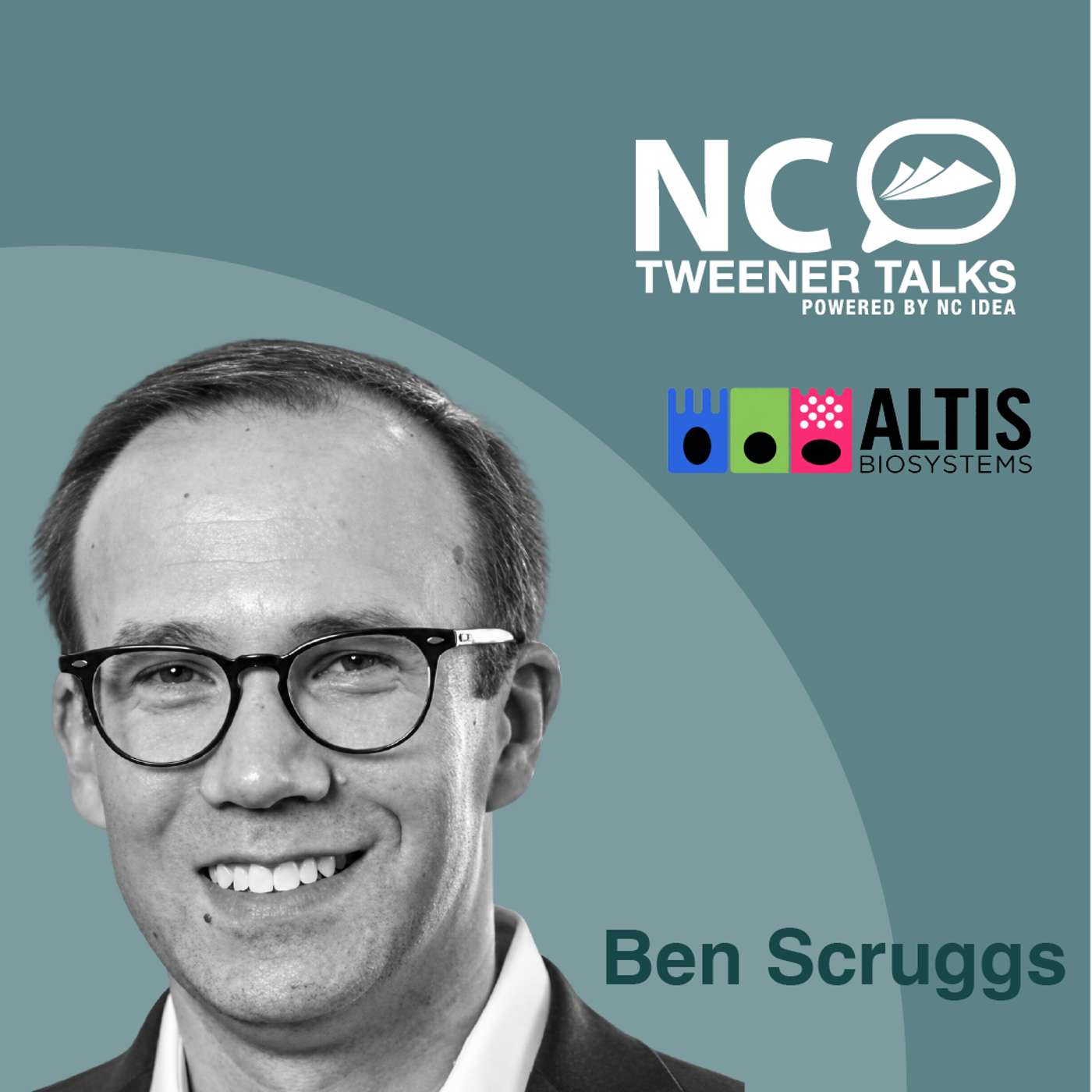
    Ben Scruggs, CEO of Altis Biosystems: Building the Gut Model That Predicts Which Drugs Actually Work

    Ben Scruggs, CEO of Altis Biosystems, joins me to talk about building human gut models that help pharma, biotech, and nutrition companies predict how a drug or ingredient will actually behave in the body before it ever reaches a patient. The conversation covers what an epithelial barrier is and why the gut is such an overlooked bottleneck in drug development, how Altis's technology is being used for absorption studies, inflammation research, and toxicity screening, and why GLP-1 drugs make such a compelling test case for the company's platform. Just as much of the episode is about Ben's own path: trained as a cell biologist, he spent close to a decade as a venture investor at Hatteras Venture Partners before stepping into the CEO role at Altis, a UNC spinout, about three years ago. He talks candidly about what surprised him most moving from advising founders to running a company himself, including the realization that most of the job is selling, not science. Altis Biosystems has scaled from testing a few dozen compounds at a time to routinely screening thousands, using automation and robotics to keep pace with customer demand, and Ben shares where he sees the technology heading next, well beyond the gut. Timestamps 00:00 Cold open & sponsor thank-yous 01:40 Scot's pre-show intro: today's guest, Ben Scruggs of Altis Biosystems 03:33 Episode starts 03:49 How Scot and Ben know each other 04:25 Ben's background: PhD in cell biology, postdoc in genomics 05:28 The pivot into venture investing at Hatteras Venture Partners 06:43 How UNC connections led Ben to Altis Biosystems 09:24 Inside Hatteras Venture Partners: 25 years, 100+ investments 13:06 Making the leap from investor to CEO 15:15 What Altis Biosystems actually does 16:34 What is an epithelial barrier, and why it matters 17:32 The three markets: absorption, inflammation, and toxicity 19:58 Why GLP-1 drugs are the ultimate bioavailability test 20:25 Altis's dual business model: full-service CRO vs. self-serve kits 23:29 Defining bioavailability 24:18 Beyond pharma: nutrition and CPG customers 28:37 The UNC tech-transfer story behind Altis 30:00 Advice for investors considering the jump to operator 31:42 The most underrated founder skill: selling 33:01 What's next: expanding beyond the gut 37:30 Scaling from dozens to thousands of compounds 41:39 Where to learn more about Altis Biosystems 42:10 Thanks and credits Where to Find Ben Scruggs: LinkedIn: https://www.linkedin.com/in/benjaminscruggs/ Altis Biosystems: https://www.altisbiosystems.com/ Where to Find Scot Wingo: LinkedIn: https://www.linkedin.com/in/thescotwingo/ Tweener Times: https://www.tweenertimes.com/ X: https://x.com/scotwingo --- This episode of Triangle Tweener Talks is hosted by Scot Wingo, presented and produced by NC Tweener Fund, with creative assets and design support from Walk West. We couldn’t share posts like this without our amazing sponsors: Platinum: NC IDEA: https://ncidea.org Gold Sponsors: - Balentine: https://www.balentine.com/triangle-entrepreneurs - EisnerAmpner: https://www.eisneramper.com - Robinson Bradshaw: https://www.robinsonbradshaw.com Silver Sponsors: - Automated Consulting Group: https://automated.co - Bank of America: https://business.bofa.com/en-us/content/technology-industry-group.html ------ Triangle Tweener Talks is sponsored by: Atomic Object: https://atomicobject.com/
  • #110
    Wednesday · 42 min

    [REDACTED] Episode 9: He Gave His AI Assistant 64 Tools and Zero Permission to Delete Anything

    Josh Guter, founder of Elephants, joins us for a live product teardown of the AI operations assistant he built for small teams. The conversation covers the architecture behind the assistant: roughly 64 purpose-built tools, an approval-gated write system that never lets the AI act without human sign-off, and the logging system Josh built to audit a codebase that, by his own admission, has become a black box even to him. Josh walks us through his full build process, from sketching UI mockups in Adobe Illustrator to having Claude draft implementation plans and Codex tear them apart before anything ships, plus how he red-teams his own assistant before any change touches its tools or system prompt. He also shares how Elephants evolved from a low-code personal relationship manager built on Glide Apps and Make.com into a full-stack platform now running the daily operations of NC State's Entrepreneurship Clinic. It's a candid look at what it actually takes to ship an AI feature people trust with real operational data, including the parts that still keep a solo founder up at night. Timestamps 00:00 Cold open: "The devil's in the details" 00:45 Welcome back to Redacted 01:20 Introducing guest Josh Guter 02:33 Josh joins and how he and David met 02:56 What Elephants is: ops software for small teams 07:03 The real product: the AI assistant 08:04 The big question: model, cost, context, trust 14:04 Behind the scenes: Anthropic's API and the Make.com origin story 15:12 64 tools and counting 16:01 Managing the internal prompt library 18:07 Rebuilding full-stack with Opus 4.8 and Codex 20:38 Auditing a black box: breadcrumb logging 21:57 Claude Code as the new Make.com 25:10 The build process, start to finish 26:23 Illustrator mockups and the Claude/Codex review loop 29:05 QA without a QA team: red-teaming the assistant 31:51 Taylor's tangent: rebuilding an interview ingestion pipeline 34:09 The founders who never read their own PRs 35:02 Why nothing ships without user approval 36:57 It's a PWA, not an app 39:00 The "AI psychosis" moment 39:37 Josh's product vision: enterprise-knowledge AI 41:48 Where to find Josh and Elephants 42:08 Sign-off Show notes from the episode: https://github.com/instanttaylor/redacted-podcast Where to Find David: LinkedIn: https://www.linkedin.com/in/davidshaner/ Where to Find Taylor: LinkedIn: https://www.linkedin.com/in/taylorcotner/ More about Offline: https://www.linkedin.com/company/offline-media-inc-/ --- This episode of Redacted is hosted by David Shaner and Taylor Cotner, and presented and produced by NC Tweener Fund. We couldn’t share posts like this without our amazing sponsors: Platinum: NC IDEA: https://ncidea.org Gold Sponsors: - Balentine: https://www.balentine.com/triangle-entrepreneurs - EisnerAmpner: https://www.eisneramper.com - Robinson Bradshaw: https://www.robinsonbradshaw.com Silver Sponsors: - Automated Consulting Group: https://automated.co - Bank of America: https://business.bofa.com/en-us/content/technology-industry-group.html ------ Triangle Tweener Talks is sponsored by: Atomic Object: https://atomicobject.com/
  • #109
    August 20 · 41 min

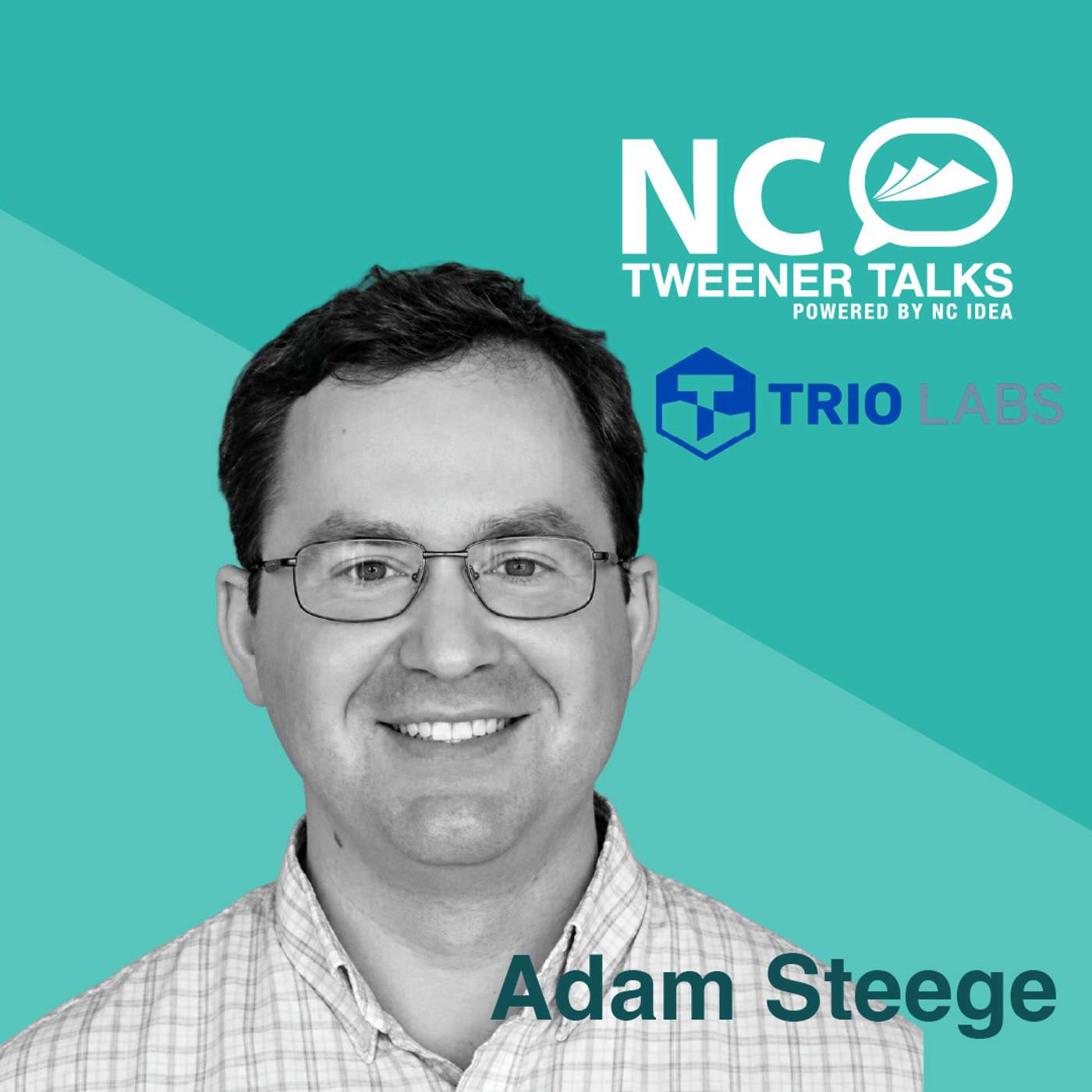
    Adam Steege, Founder & CEO of Trio Labs: The Startup Failure That Became a Med-Tech Manufacturer

    Adam Steege, founder and CEO of Trio Labs, joins me to talk about building a company that 3D prints tiny, complex metal parts for medical devices out of Morrisville, North Carolina. The conversation covers Adam's path from a failed first startup in laparoscopic surgical devices to founding Trio Labs in 2015, the five years it took to reach bench-scale proof of concept, and the road from Series A funding in 2021 to commercial launch in 2023. Adam explains why his first company stalled, the manufacturing gap between traditional machining and semiconductor-style nanofabrication that Trio Labs fills, and why the company chose to sell finished parts rather than printing equipment. What makes this episode distinctive is how directly Adam connects his first company's failure to the thesis behind his second, along with a clear, first-principles explanation of why metal 3D printing at this precision is so difficult that Trio Labs describes itself as half ASML, half TSMC. It's a grounded look at what it actually takes to build a hardware company over more than a decade. Timestamps 00:00 Cold open & sponsor thanks 01:15 Welcome to NC Tweener Talks 01:35 Scot's intro: Adam Steege & Trio Labs 02:25 Interview begins 02:50 Guest welcome 02:55 NC Tweener Fund's investment history with Trio Labs 03:30 Adam's origin story begins 04:00 Growing up in NC, Carleton & Columbia 04:55 Why med tech pulled him in 05:40 The genesis of the Trio Labs idea 06:10 Technical founder staying on as CEO 08:10 What happened to the first company 09:05 The "stakeholder visibility mismatch" 11:20 From the first company's ashes to Trio Labs 13:15 Trio Labs' basic pitch 13:50 Why minimally invasive devices keep getting smaller 16:10 The manufacturing gap Trio Labs fills 18:05 Founding timeline: 2015 to Series A to commercial launch 20:00 Gen 1 to gen 3: iterating the printer 22:05 The "third dimension is nonlinear" analogy 24:00 "Half ASML, half TSMC" 25:05 Why metal instead of plastic 28:50 Facility tour: the machines, wafer fab in a box 30:05 The parts Trio Labs makes: robotics & endovascular 31:40 Where Trio Labs is in its scaling journey 34:50 Staying focused on med tech 37:35 Why they don't sell machines 40:05 Where to find Trio Labs 40:35 Wrap and credits ----- Where to Find Adam Steege: LinkedIn: https://www.linkedin.com/in/adam-t-c-steege-814b6821/ Trio Labs: https://triolabs.com Where to Find Scot Wingo: LinkedIn: https://www.linkedin.com/in/thescotwingo/ Tweener Times: https://www.tweenertimes.com/ X: https://x.com/scotwingo --- This episode of Triangle Tweener Talks is hosted by Scot Wingo, presented and produced by NC Tweener Fund, with creative assets and design support from Walk West. We couldn’t share posts like this without our amazing sponsors: Platinum: NC IDEA: https://ncidea.org Gold Sponsors: - Balentine: https://www.balentine.com/triangle-entrepreneurs - EisnerAmpner: https://www.eisneramper.com - Robinson Bradshaw: https://www.robinsonbradshaw.com Silver Sponsors: - Automated Consulting Group: https://automated.co - Bank of America: https://business.bofa.com/en-us/content/technology-industry-group.html ------ Triangle Tweener Talks is sponsored by: Atomic Object: https://atomicobject.com/
  • #108
    August 13 · 49 min

    Nick Genty, Co-Founder & CEO of AgEye: From a Storefront Full of Robots to a Deal in Qatar

    Nick Genty, co-founder and CEO of AgEye Technologies, joins me to talk about building robotics and AI software for indoor farms right here in North Carolina. The conversation traces Nick's path from state government IT work to an early Triangle startup acquired by SAS, into a mobile development agency serving national retailers, and eventually to a regulated medical device project that revealed the science behind AgEye: using environmental variables like light to influence plant biology. They cover how AgEye found its first customers in a channel with almost no LinkedIn presence, why the company nearly built its business around cannabis before a licensing crash forced a pivot to leafy greens and produce, and how a deliberately low-tech approach to robotics helped growers hit a realistic return on investment. Nick also walks through AgEye's data and hardware moat, the shift toward agentic AI models, and the corporate venture investors, including a Dutch agricultural giant and a German filtration company, who backed the company when traditional RTP investors weren't ready for a physical-world business. Nick is a natural storyteller with a knack for turning technical detail into something anyone can follow, and this episode is packed with concrete numbers on funding, robotics costs, and go-to-market strategy for anyone building at the intersection of hardware and software. Timestamps 00:00 Cold open & welcome 00:24 Sponsor thank-yous 03:15 Scot's intro & series preview 03:27 Guest introduction: Nick Genty, AgEye 04:06 Nick's background: Raleigh, ECU 04:59 Meeting his co-founder at the NC court system 06:27 Joining rPath & the Triangle's founder "mafias" 08:10 Founding Iconic Solutions 11:36 The hardware-software link & the genesis of AgEye 13:37 Edge AI arrives: NVIDIA Jetson & the Inception program 16:03 How Scot discovered AgEye (the lunch story) 20:02 Finding first customers on Reddit 20:41 The cannabis pivot to leafy greens 23:56 Why indoor farms exist even where crops "should" grow 27:56 Competitive moats: hardware + proprietary data 31:53 The "leaf model" & licensing the AI 34:34 How the robotic grow towers work 38:03 ARIS: the imaging robot & 3D plant modeling 42:15 The fundraising grind: $5M raised & corporate VCs 45:51 Company update: distributors & the Middle East push 48:09 Where to find AgEye & closing Where to Find Nick Genty: LinkedIn: https://www.linkedin.com/in/nicholasgenty/ AgEye: https://ageyetech.com/ Where to Find Scot Wingo: LinkedIn: https://www.linkedin.com/in/thescotwingo/ Tweener Times: https://www.tweenertimes.com/ X: https://x.com/scotwingo --- This episode of Triangle Tweener Talks is hosted by Scot Wingo, presented and produced by NC Tweener Fund, with creative assets and design support from Walk West. We couldn’t share posts like this without our amazing sponsors: Platinum: NC IDEA: https://ncidea.org Gold Sponsors: - Balentine: https://www.balentine.com/triangle-entrepreneurs - EisnerAmpner: https://www.eisneramper.com - Robinson Bradshaw: https://www.robinsonbradshaw.com Silver Sponsors: - Automated Consulting Group: https://automated.co - Bank of America: https://business.bofa.com/en-us/content/technology-industry-group.html ------ Triangle Tweener Talks is sponsored by: Atomic Object: https://atomicobject.com/
  • #107
    August 12 · 43 min

    [REDACTED] Episode 8: We Hired an AI Sales Rep and Became Its Manager

    Today, on Episode 8 of Redacted, we use this episode to show exactly what running a company with AI looks like day-to-day. Taylor walks through the agent system now handling Offline's lead generation and CRM cleanup, including a daily process that scans market signals, reconciles HubSpot data, and writes sales outreach briefs automatically. David then demos a redesigned mobile app and email system, and shares a candid breakdown of how many hours a recent landing page redesign actually took with AI assistance compared to how long the same project would have taken the old way. What sets this episode apart is the honesty about the mechanics: a story about an AI-generated email that silently failed for 10,000 recipients, a framework for treating AI agents like new hires who need onboarding and supervision rather than a one-time prompt, and real numbers on where the time actually goes when AI is doing the heavy lifting. It's a useful listen for anyone trying to figure out whether AI is actually saving them time or just moving the work around. Timestamps: 00:00 Cold open 00:22 Welcome to Redacted, episode 8 01:30 What Taylor's been building 03:39 Two things to show: internal ops + a product feature 03:51 What an "outreach brief" is 06:20 The automated dashboard demo 06:58 The daily sweep ritual 08:32 Catching drift between the backend and HubSpot 12:33 Closing the loop with Steve's feedback 16:14 The jungle-and-bulldozer metaphor 19:18 Structured data over meetings 20:14 Demo: a real outreach brief (Max Speed Shop) 22:23 "Iterative loop" and moving into the manager seat 23:02 Segment two: the Offline mobile app 26:00 Turning the design system into a reusable skill 31:03 HubSpot pain vs. mobile app gratification 32:01 The B2B landing page blog post 33:03 Breaking down 64.39 hours 36:11 Old world vs. new world time cost 37:37 Compounding as the X factor 37:44 The offline accountability / biz dev chart 39:32 This morning's market signals 42:00 The "hiring" framing, wrap-up 42:07 Upcoming guests: Josh and Parker 42:29 Where to find Offline and the hosts Show notes from the episode: https://github.com/instanttaylor/redacted-podcast Where to Find David: LinkedIn: https://www.linkedin.com/in/davidshaner/ Where to Find Taylor: LinkedIn: https://www.linkedin.com/in/taylorcotner/ More about Offline: https://www.linkedin.com/company/offline-media-inc-/ --- This episode of Redacted is hosted by David Shaner and Taylor Cotner, and presented and produced by NC Tweener Fund. We couldn’t share posts like this without our amazing sponsors: Platinum: NC IDEA: https://ncidea.org Gold Sponsors: - Balentine: https://www.balentine.com/triangle-entrepreneurs - EisnerAmpner: https://www.eisneramper.com - Robinson Bradshaw: https://www.robinsonbradshaw.com Silver Sponsors: - Automated Consulting Group: https://automated.co - Bank of America: https://business.bofa.com/en-us/content/technology-industry-group.html ------ Triangle Tweener Talks is sponsored by: Atomic Object: https://atomicobject.com/
  • #107
    August 6 · 48 min

    Andrew Ashur, Co-Founder & CEO of Lucid Bots: "Hardware Done Right Is Where the Moat Still Exists"

    Andrew Ashur, co-founder and CEO of Lucid Bots, joins Scot Wingo for the third episode in our series on North Carolina startups solving hard physical-world problems. Lucid Bots builds drones and robots that clean, paint, and coat buildings, and Andrew walks through how the company got here, starting from a duct-taped DJI drone he built as a Davidson College student after watching window washers struggle against high winds. The conversation covers the mechanical and business realities of building hardware: the physics of flying a drone tethered to a hundred feet of hose, the economics of a robots-as-a-service subscription model, and why hardware companies are finding it easier to raise venture capital today than they did a decade ago. Along the way, Andrew shares lessons on hiring people who thrive on uncertainty, developing the storytelling skills that founders need to raise money and win customers, and what he learned from roughly a thousand fundraising pitches on the way to a Series B round. Andrew is a first-time founder who graduated from Davidson a year early to run Lucid Bots full time, and the company has since raised more than $30 million, deployed over 600 units across 44 states and five countries, and grown to a team of 75. He shares where he sees the business heading over the next five years, and the much bigger bet he's making beyond that. Timestamps: 00:00 Welcome & sponsor thank-yous 01:31 Scot's intro: NC's physical-world startup series 02:06 Meet Andrew Ashur & Lucid Bots 04:38 How Andrew and Scot know each other 04:59 Origin story: the window washer moment 06:03 Why building maintenance is a massive market 06:42 The duct-taped DJI prototype 07:14 Winning $25K and graduating early 07:56 A broken drone, Christmas, and a book on Arduino 10:05 Why hardware iteration builds a moat 11:44 Inside the Sherpa drone 13:05 The physics of a 100-foot hose 17:05 Building an in-house power tether 18:24 Scale check: 600 units, 75 people, 44 states 19:00 The ROI: 2x to 8x faster than a boom lift 20:03 Pricing: buy it or subscribe to Lucid Refresh 23:01 Pausing the ground robot, adding paint & coatings 25:39 Scaling facilities from 23K to 45K square feet 32:43 Fundraising for a hardware company vs. software 36:39 Hiring for agency over intelligence 40:47 1,000 pitches and the road to Series B 45:03 The next 5 years: giving AI a physical body ----- Where to Find Andrew Ashur: LinkedIn: https://www.linkedin.com/in/andrewashur/ Lucid Bots: https://www.lucidbots.com/ Where to Find Scot Wingo: LinkedIn: https://www.linkedin.com/in/thescotwingo/ Tweener Times: https://www.tweenertimes.com/ X: https://x.com/scotwingo --- This episode of Triangle Tweener Talks is hosted by Scot Wingo, presented and produced by NC Tweener Fund, with creative assets and design support from Walk West. We couldn’t share posts like this without our amazing sponsors: Platinum: NC IDEA: https://ncidea.org Gold Sponsors: - Balentine: https://www.balentine.com/triangle-entrepreneurs - EisnerAmpner: https://www.eisneramper.com - Robinson Bradshaw: https://www.robinsonbradshaw.com Silver Sponsors: - Automated Consulting Group: https://automated.co - Bank of America: https://business.bofa.com/en-us/content/technology-industry-group.html ------ Triangle Tweener Talks is sponsored by: Atomic Object: https://atomicobject.com/
  • #106
    July 30 · 53 min

    Plantd Co-founder, Huade Tan: Innovating Carbon Capture With Building Materials

    Huade Tan, co-founder and CTO of Plantd, joins me to explain how two former SpaceX engineers ended up building carbon-capturing structural panels out of a North Carolina tobacco field. The conversation covers how Plantd chose its plant feedstock, why the team deliberately passed on the carbon-credit market in favor of a real product business, and what five years of hardware iteration looks like when you're building an industrial press that hasn't been attempted by a US company since the 1960s or '70s. Huade walks through the full process, from cloning a sterile perennial grass to harvesting it with a modified tobacco harvester to pressing it into finished building panels, and shares the numbers behind the business: $40 to $45 million raised from seed through Series B, and a 2024 deal with national homebuilder D.R. Horton to supply 10 million panels for roughly 90,000 homes. What sets this episode apart is how directly Huade connects his engineering background at SpaceX to the problems he's solving now, including a five-step framework for building hardware that the team is still applying today. It's a grounded, technical look at what it takes to build a genuine hardware moat in an industry that hasn't seen real innovation in decades Timestamps: 00:00 Cold open 00:23 Thank you to our sponsors: NC Idea, Ballentine, Bank of America 01:31 Welcome to the episode: introducing Huade Tan and Plantd 01:57 The pitch: two SpaceX engineers, carbon capture, and plywood-like panels 03:34 Huade joins the show 04:01 Huade's background: building life support systems for Crew Dragon at SpaceX 05:27 Education path and Nathan's aerospace background 06:39 Why North Carolina: population growth trends since 2018 07:34 From Crew Dragon's "bubble" to the idea for Plantd 10:14 The founding question: what do you build from captured carbon? 12:23 Why Plantd passed on the carbon credit market 14:14 What didn't work early on 16:03 The market gap: moisture damage in existing building materials 17:15 Simplifying it: how a plant becomes a structural panel 19:00 Finding the right fiber: hemp, wheat straw, bagasse, and more 21:15 The perennial grass: sterile, cloned, and drought-resistant 24:01 400–500 acres established in North Carolina tobacco fields 27:22 Harvesting and the strander: turning stalks into fiber 29:48 Inside the press: resin, heat, and pressure 30:37 Press specs: 15 feet wide, 70 feet long, a quarter-million panels a year 37:09 The 5-step SpaceX engineering framework 39:43 Funding: $40–45 million raised, seed through Series B 41:21 The D.R. Horton partnership and what it taught them 45:04 The 2024 deal: 10 million panels, 90,000 homes, 165,000 tons of CO2 46:04 From hand-made coffee coasters to a real house in Durham 51:36 Why North Carolina: cost, talent, and agricultural infrastructure 53:36 What's next: furniture, biochar, and other verticals 55:00 Where to find Plantd 55:20 Closing and credits ----- Where to Find Huade Tan: LinkedIn: https://www.linkedin.com/in/huadetan/ Plantd: https://plantdmaterials.com Where to Find Scot Wingo: LinkedIn: https://www.linkedin.com/in/thescotwingo/ Tweener Times: https://www.tweenertimes.com/ X: https://x.com/scotwingo --- This episode of Triangle Tweener Talks is hosted by Scot Wingo, presented and produced by NC Tweener Fund, with creative assets and design support from Walk West. We couldn’t share posts like this without our amazing sponsors: Platinum: NC IDEA: https://ncidea.org Gold Sponsors: - Balentine: https://www.balentine.com/triangle-entrepreneurs - EisnerAmpner: https://www.eisneramper.com - Robinson Bradshaw: https://www.robinsonbradshaw.com Silver Sponsors: - Automated Consulting Group: https://automated.co - Bank of America: https://business.bofa.com/en-us/content/technology-industry-group.html ------ Triangle Tweener Talks is sponsored by: Atomic Object: https://atomicobject.com/
  • #105
    July 29 · 43 min

    [REDACTED] Episode 7: How a Marketer with One Broken Assembly Class Built a Lead-Gen Tool Solo

    Ben Pope, who leads the new AI Solutions business unit at Levitate, joins Redacted as its very first guest. Ben spent five years on Levitate's marketing team as the company grew from six million to roughly fifty million in annual recurring revenue, before shifting a month ago to help small businesses fold AI into their own workflows. This episode is mostly show and tell: Ben screen-shares a lead-scoring web app he built entirely on his own, despite having no formal engineering background, along with the morning briefing and post-meeting automation skills he uses every day to prep for calls and follow up with clients. Along the way, the conversation turns into a practical breakdown of how to actually build with AI tools in a real business. Ben talks through why he prefers lightweight Claude skills over traditional workflow automation platforms, how he decides when a process needs to be deterministic versus handed to an LLM, and how he manages the sprawl of having built around a hundred skills over the past year, many of which he's since retired. What makes Ben's story distinctive is the contrast between his background and his output: a marketer who taught himself to ship production web apps, and whose client consulting work is now feeding directly back into Levitate's core product roadmap. Timestamps 00:00 Cold open, welcome to Redacted 00:34 What Redacted is about 01:33 Meet Ben Pope and Levitate's pitch 02:28 Ben's five years at Levitate, from $6M to $50M ARR 03:06 Founding story: Jess, his wife Brooks Bell, and word-of-mouth software 03:58 Ben's new role: launching the AI Solutions business unit 04:40 Levitate by the numbers: 9,000 customers, 300 employees 05:06 Why Ben wanted this role (the GWC test) 08:24 Demo starts: the lead-scoring web app 09:35 Walking through a live example (Union Special bakery) 11:36 Turning a business search into an enriched lead 12:16 What Ben used to build it: Claude, Codex, pre-November 2025 tools 14:20 Hardest parts of building solo, trial and error 17:21 How the scoring tool works under the hood 18:37 Killing Webflow, migrating to a Claude-editable GitHub site 21:03 Claude Club and internal hackathons at Levitate 21:45 Example client: an LA family-law attorney's intake workflow 22:50 Product-market fit and figuring out the sales process 25:29 Building Claude skills to interview clients automatically 26:35 Ben's morning briefing skill, demoed live 29:07 Manual runs vs. cron, why Ben hasn't automated it yet 33:05 Skill bloat: ~100 skills built, many abandoned 35:57 Deterministic vs. probabilistic, when not to trust the LLM 37:24 AI Solutions as Levitate's forward-deployed engineering arm 39:17 Where to find Ben 40:08 Shoutout: Simon Willison's agentic engineering resource 42:04 Show notes, sanitized skills repo, and wrap-up Find Redacted wherever you listen to podcasts, or on YouTube for the full screen share. Show notes from the episode: https://github.com/instanttaylor/redacted-podcast Where to Find David: LinkedIn: https://www.linkedin.com/in/davidshaner/ Where to Find Taylor: LinkedIn: https://www.linkedin.com/in/taylorcotner/ More about Offline: https://www.linkedin.com/company/offline-media-inc-/ Where to Find Ben: LinkedIn: https://www.linkedin.com/in/benjaminmpope/ Levitate: https://www.levitate.ai/ --- This episode of Redacted is hosted by David Shaner and Taylor Cotner, and presented and produced by NC Tweener Fund. We couldn’t share posts like this without our amazing sponsors: Platinum: NC IDEA: https://ncidea.org Gold Sponsors: - Balentine: https://www.balentine.com/triangle-entrepreneurs - EisnerAmpner: https://www.eisneramper.com - Robinson Bradshaw: https://www.robinsonbradshaw.com Silver Sponsors: - Automated Consulting Group: https://automated.co - Bank of America: https://business.bofa.com/en-us/content/technology-industry-group.html ------ Triangle Tweener Talks is sponsored by: Atomic Object: https://atomicobject.com/
  • #104
    July 23 · 42 min

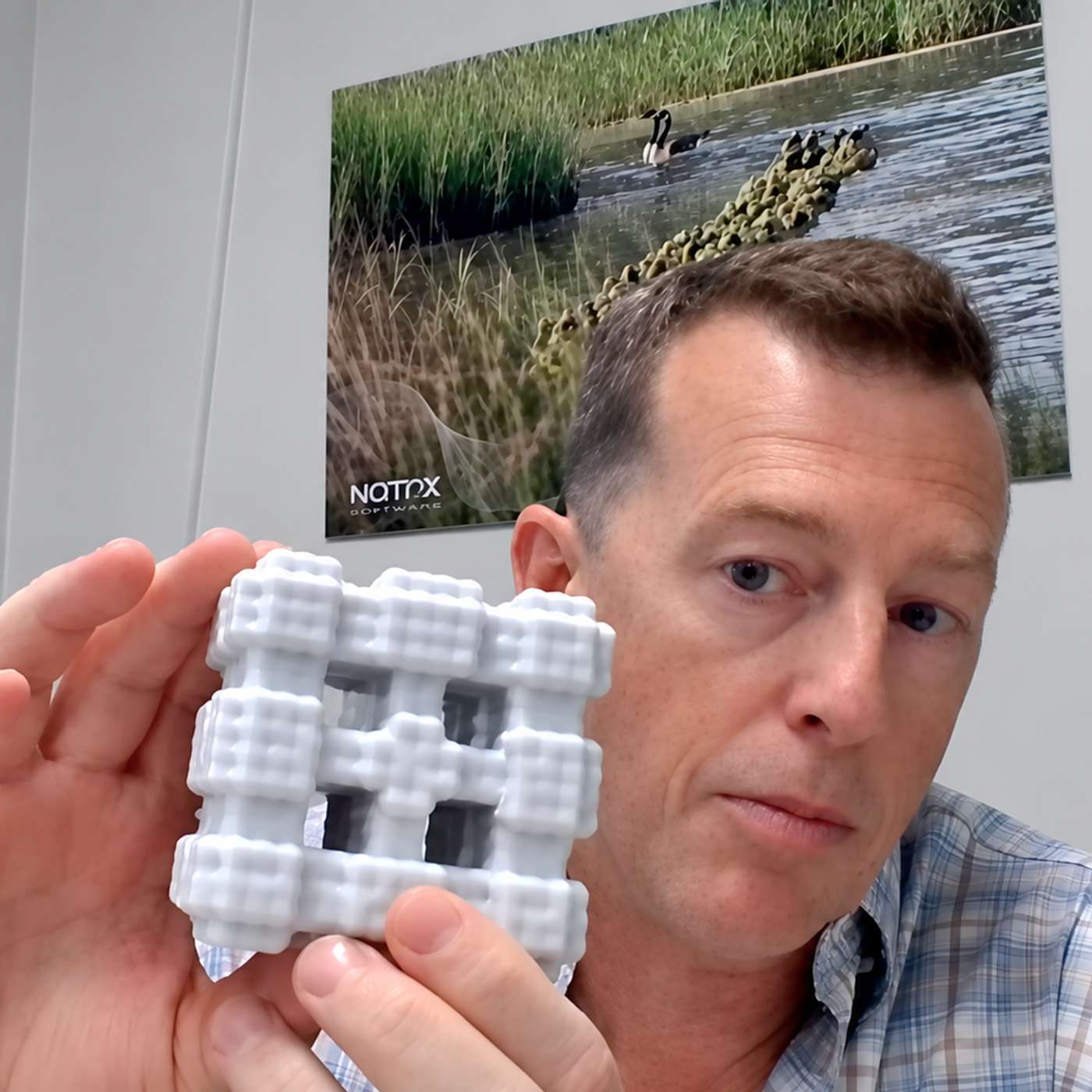
    Natrx: The Company Growing Coral Reefs Out of Concrete

    Tad Schwendler, COO of Natrx, joins Scot Wingo to talk about manufacturing concrete structures that work with nature instead of against it. Natrx, a North Carolina company and Tweener Fund portfolio company, has developed a patented dry-forming process that injects moisture into dry material to create rough, complex structures capable of slowing water, encouraging natural sediment buildup, and even supporting live coral growth. Tad walks through the company's founding story, which traces back to coastal engineers doing oyster reef restoration at LSU and a chance meeting with NC State-connected software co-founders, and shares how his own background in corporate development and M&A led him into a hands-on operating role at a manufacturing startup. The conversation covers the physical scale of what Natrx builds, from three-foot units weighing just under a ton to twelve-thousand-pound structures bound for a coral restoration project in Hawaii, along with the company's growth: more than 85 physical deployments, over 100,000 units placed, and roughly 80 percent revenue growth year over year. It's a hands-on, visual episode and the first in a new series on North Carolina's under-the-radar physical manufacturing companies. Timestamps: 00:00 Cold open and sponsor thanks 01:30 Welcome and series intro: NC's under-known manufacturing companies 03:12 Introducing Tad Schwindler, COO of Natrx 04:00 Formal welcome to the show 04:42 Tad's background: Atlanta, Duke, the Triangle 05:56 What does a COO actually do at Natrx? 07:58 Duke, Tulane, and a lifelong pull toward marine science 09:31 The founding story of Natrx 09:43 Two coastal engineers, oyster reefs, and LSU 11:13 Founded in 2018, commercializing by 2021 11:33 Nick's background: mechanical engineering meets software 12:52 What Natrx actually builds 13:13 Stopping water vs. working with it 15:44 Families of shapes: lattice, wave slope, and scaling up 19:02 How big are these things, and how deep do they go 21:12 What is "dry forming"? 22:07 The voxel: injecting moisture into dry material 22:55 The patent and the 10,000 sq ft Louisiana facility 23:37 Walking through the manufacturing process 26:01 How much does a unit weigh? 26:44 Shipping, barges, and why manufacturing stays centralized 29:13 Every unit is a little different: the voxel "snowflake" effect 30:02 How long do these structures last? 31:03 Growing live coral on the structures 32:30 How units get deployed in the water 33:56 Who's the customer? 35:50 Company scale: deployments, team size, revenue growth 37:14 What's next for Natrx, including a Series A 40:16 Why North Carolina is built for companies like this 41:40 Where to learn more: natrx.io 42:15 Credits and close ----- Where to Find Tad Schwendler LinkedIn: https://www.linkedin.com/in/tadschwendler/ Natrx: https://natrx.io/ Where to Find Scot Wingo: LinkedIn: https://www.linkedin.com/in/thescotwingo/ Tweener Times: https://www.tweenertimes.com/ X: https://x.com/scotwingo --- This episode of Triangle Tweener Talks is hosted by Scot Wingo, presented and produced by NC Tweener Fund, with creative assets and design support from Walk West. We couldn’t share posts like this without our amazing sponsors: Platinum: NC IDEA: https://ncidea.org Gold Sponsors: - Balentine: https://www.balentine.com/triangle-entrepreneurs - EisnerAmpner: https://www.eisneramper.com - Robinson Bradshaw: https://www.robinsonbradshaw.com Silver Sponsors: - Automated Consulting Group: https://automated.co - Bank of America: https://business.bofa.com/en-us/content/technology-industry-group.html ------ Triangle Tweener Talks is sponsored by: Atomic Object: https://atomicobject.com/
  • #103
    July 15 · 50 min

    [REDACTED] Episode 6: The 8-Stage "AI-ification Engine" Behind Every Automation Shipped

    David Shaner and Taylor Cotner spend this episode of Redacted screen-sharing everything they've built since the last one, and it centers on a framework David calls the AI-ification engine, an eight-stage method for turning any proven business process into something an AI agent can reliably run. He walks through the full pipeline, from process mapping through ongoing evaluation, and demos a new ClickUp documentation format the team built to keep every automation legible to both people and models. Taylor takes the second half to show how he rebuilt Offline's business development system from the ground up, using a single extended Claude conversation to reconstruct years of relationship history from his email and texts, then turning it into a repeatable five-phase playbook that can research a brand-new target company from a cold start. The conversation covers the practical side of running AI in production, too, why they dropped a synced database in favor of calling the HubSpot API directly with whitelisted fields, and an honest, unresolved discussion of how to evaluate dozens of different AI-run processes once they're all live. Timestamps 00:00 Cold open 00:41 Welcome back to Redacted 01:53 Taylor's back from two weeks in Europe 02:15 The new "AI-ification engine" board in ClickUp 03:05 Offline's marketplace of auto-updating Claude skills 06:50 Origin story of the AI-ification engine 08:25 The 8 stages, back to back 11:30 The hiring analogy: "This is like HR for AI" 14:40 Inside the "house format" ClickUp table 16:00 Ditching the proxy database for direct HubSpot calls 18:05 Old-school SOPs vs. the new house format 20:10 Walking the company-as-lead process step by step 24:10 Why the old nested-SOP approach never got followed 29:30 Handoff: Taylor's turn 29:55 Offline's accountability chart and the visionary/integrator split 32:05 Digging up the original Claude chat that started it all 34:05 The first draft was terrible 36:50 Timeline artifact and Claude for Chrome doing the research 37:50 The five-phase business development playbook 40:00 Slotting the BD system into the AI-ification board 45:35 The hardest open question: evaluating 50 agent processes 47:00 Show notes, GitHub repo, and where to find David and Taylor 47:50 What Redacted looks for in a guest Show notes from the episode: https://github.com/instanttaylor/redacted-podcast Where to Find David: LinkedIn: https://www.linkedin.com/in/davidshaner/ Where to Find Taylor: LinkedIn: https://www.linkedin.com/in/taylorcotner/ More about Offline: https://www.linkedin.com/company/offline-media-inc-/ --- This episode of Redacted is hosted by David Shaner and Taylor Cotner, and presented and produced by NC Tweener Fund. We couldn’t share posts like this without our amazing sponsors: Platinum: NC IDEA: https://ncidea.org Gold Sponsors: - Balentine: https://www.balentine.com/triangle-entrepreneurs - EisnerAmpner: https://www.eisneramper.com - Robinson Bradshaw: https://www.robinsonbradshaw.com Silver Sponsors: - Automated Consulting Group: https://automated.co - Bank of America: https://business.bofa.com/en-us/content/technology-industry-group.html ------ Triangle Tweener Talks is sponsored by: Atomic Object: https://atomicobject.com/
  • #102
    July 14 · 21 min

    The Unlocked Door: Ryan Eade on What OpenClaw Users Need to Secure Right Now

    Ryan Eade, Chief Product and Technology Officer at PtEverywhere, gave this talk at the June 10th TweenerClaw meetup, and it covers something most practitioners skip: how to actually keep your OpenClaw instance secure. Ryan walks through the three main ways OpenClaw instances get compromised: an open port that older versions left fully exposed, third-party skills that can carry malicious code (36% of early store listings had prompt injection), and prompt injection delivered through external content like X posts or README files. He also covers the upgrade windows that matter most; the March 12th and April 5th releases each contained critical security patches, and what to do right now: curl port 18789 on your OpenClaw and see if you get a response back. The practical framework Ryan closes with is worth listening to by itself. He calls it "staff not software" with the idea that every access decision for your OpenClaw should mirror how you'd onboard a new employee: scoped API keys with minimum permissions, a purpose-built email account, one-time credit cards for purchasing tasks, and human approval gates before any destructive action runs. If you've been meaning to lock down your setup but kept putting it off, Ryan gives you everything you need to do it in under 20 minutes. Timestamps 00:00 Intro bumper 00:16 Sponsor recognition 01:22 Scot's intro 01:56 Introducing Ryan Eade 02:05 Ryan's topic: cybersecurity for OpenClaw 02:50 Ryan Eade 03:28 "Nobody starts with security" 04:10 Why OpenClaw isn't just a chatbot 05:26 The threat landscape 06:09 Early OpenClaw exposure stats 06:40 Threat 1: The open port 07:28 Docker's dirty secret: it bypasses your local firewall 08:07 Fix: bind to localhost and use Tailscale 09:19 What Tailscale is and why it works 09:26 Threat 2: Third-party skills 10:18 How to vet skills: pull the GitHub and read the code 10:58 Threat 3: Prompt injection from the web 11:39 How prompt injection poisons an OpenClaw session 11:47 Real examples 12:51 The full attack chain: README → backdoor → breach 13:52 System prompts vs. session instructions 14:17 The upgrade reality 15:37 Critical release windows: January, March 12, April 5 16:21 "Staff, not software" 16:44 One-time credit cards for purchasing tasks 17:19 Keep your personal email separate 17:57 Least-privilege API keys 19:10 Build in approval gates 19:52 Summary: vet skills, keep it on a leash, have a no-no plan 20:16 The port 18789 check 20:32 Closing remarks ----- Where to Find Ryan Eade LinkedIn: https://www.linkedin.com/in/ryaneade/ PtEverywhere: https://www.pteverywhere.com/ Where to Find Scot Wingo: LinkedIn: https://www.linkedin.com/in/thescotwingo/ Tweener Times: https://www.tweenertimes.com/ X: https://x.com/scotwingo --- This episode of Triangle Tweener Talks is hosted by Scot Wingo, presented and produced by NC Tweener Fund, with creative assets and design support from Walk West. We couldn’t share posts like this without our amazing sponsors: Platinum: NC IDEA: https://ncidea.org Gold Sponsors: - Balentine: https://www.balentine.com/triangle-entrepreneurs - EisnerAmpner: https://www.eisneramper.com - Robinson Bradshaw: https://www.robinsonbradshaw.com Silver Sponsors: - Automated Consulting Group: https://automated.co - Bank of America: https://business.bofa.com/en-us/content/technology-industry-group.html ------ Triangle Tweener Talks is sponsored by: Atomic Object: https://atomicobject.com/
  • #98
    July 7 · 24 min

    Robbie Allen @ Tweener Claw: "3 to 5 of My Agents Fail Every Day: Here's What I've Learned"

    In this episode of Tweener Claw, Robbie Allen, the Founder and Managing Director of Automated Consulting Group and General Partner at NC Tweener Fund, shares a live talk from the June 10th Tweener Club meetup in Research Triangle Park. Robbie has spent the last year and a half deploying AI agents inside real mid-market companies, and he brings three lessons from just the last 60 days: how to build reusable AI skills that compound over time, how to monitor agents when 3 to 5 of your 25-plus will fail on any given day, and why using multiple LLMs to check each other's work has become a standard part of his workflow. Each lesson comes with a real-world example: a three-skill meeting pipeline, a monitor agent that watches the others, and a Codex Opinion skill that consistently finds gaps in Claude's output. The sharpest takeaway: AI build costs have dropped dramatically, but support and maintenance costs have not. Non-deterministic systems are inherently brittle, and anyone telling you otherwise hasn't run them in production long enough. This is a practitioner's talk for practitioners; specific, candid, and immediately actionable. Timestamps 01:31 Scot's intro 02:03 60 days of lessons 02:19 Three lessons preview 03:08 Robbie takes the stage 03:25 About Automated Consulting Group 04:13 Reality vs. the AI hype cycle 05:04 The Microsoft / Copilot rant 07:13 Lesson 1: Skills that build skills 08:41 Skills as reusable packages 09:21 "The sawdust of business" 10:58 Building a skills pipeline for meetings 11:57 Skills security risks in the enterprise 12:47 Lesson 2: Agents watching agents 13:44 Build costs are down 14:24 "3 to 5 of my agents fail every day" 15:44 Log everything 17:33 What causes agents to fail in the wild 18:02 Lesson 3: LLMs checking LLMs 18:13 The LLM Council concept explained 19:44 The case for a multi-LLM strategy 20:36 The "Codex Opinion" skill 21:33 Gemini Opinion & LLM Council in action 23:46 Wrap-up & credits --- This episode of Triangle Tweener Talks is hosted by Scot Wingo, and presented and produced by NC Tweener Fund, with creative assets and design support from Walk West. We couldn’t share posts like this without our amazing sponsors: Platinum: NC IDEA: https://ncidea.org Gold Sponsors: - Balentine: https://www.balentine.com/triangle-entrepreneurs - EisnerAmpner: https://www.eisneramper.com - Robinson Bradshaw: https://www.robinsonbradshaw.com Silver Sponsors: - Automated Consulting Group: https://automated.co - Bank of America: https://business.bofa.com/en-us/content/technology-industry-group.html ------ Triangle Tweener Talks is sponsored by: Atomic Object: https://atomicobject.com/
  • #101
    July 1 · 48 min

    [REDACTED] Episode 5: The Rage Log: AI-Powered Lead Gen, a Living Landing Page, and the Trick That Stops Claude From Making the Same Mistake Twice

    Redacted Episode 5 goes inside Offline, and what it actually looks like to wire AI into sales, marketing, and project management without a big engineering team behind you. Co-founders David Shaner and Taylor Cotner each take a turn. Taylor walks through Offline's AI lead gen pipeline: a Claude-assisted Google Places script that geocoded 2,000 restaurant locations in about an hour, a deliberate move away from LLMs toward deterministic code for market geography, and the "outreach brief," a context document the system assembles per account before any LLM writes an email. He frames the whole thing as a trust graph, working outward from existing partners in concentric circles. He also gets specific about the human-AI handoff: how a salesperson (Steve) has to trailblaze first, and why you need specific lead-by-lead feedback instead of generalizations to actually improve the system. David then demos the B2B landing page he built entirely with Claude copy from Fathom sales call transcripts, photos pulled from an AI-tagged Google Drive library, live data from the POS back end, and a review filter that's been running for four months without anyone touching it. Taylor closes with the practical bit: after a 36-hour stretch of AI frustration, he asked Claude to audit his own chat logs for recurring failures. Claude named the output a "rage log." He curated it into a "gotcha registry" and baked it into a Claude Code hook that fires during every planning step, so the same mistakes stop happening on repeat. It's a simple technique that doesn't get talked about enough. Timestamps: 00:00 Cold open: the rage log preview 01:02 Welcome to Redacted, Episode 5 01:50 Offline's AI lead gen pipeline 04:10 Reducing LLM usage: when code beats prompts 05:00 Geocoding 2,000 restaurants with Google Places API in ~1 hour 07:42 Building the outreach brief 09:14 What salespeople actually need before writing an email 11:46 The information a good brief assembles 14:25 Hot, warm, and cold leads defined 15:54 The B2B Hinge: visualizing your lead network 18:24 Why context-aware outreach wins in an AI-spam world 21:00 The resource-constrained case for a trust graph 23:37 The human-AI handoff: salesperson ↔ automation loop 25:00 Specifics over generalizations: how to debug a sales AI 26:22 Taylor's turn: the AI-built B2B landing page is live 28:50 Tagging Offline's photo library with AI (2,000+ images) 30:36 LLM-filtered reviews: 4 months running, never touched 33:52 Building the events page panel by panel 35:07 The Slack bot experiment: Claude as project manager 37:44 What the agent did right 39:58 Project management in the AI era: ClickUp vs. Docs 42:47 The bad AI days 44:04 The rage log becomes the gotcha registry 45:11 How Claude Code hooks inject the registry into every plan 46:38 Compound Engineering and the Every framework 47:50 Guests coming up, wrap Show notes from the episode: https://github.com/instanttaylor/redacted-podcast Where to Find David: LinkedIn: https://www.linkedin.com/in/davidshaner/ Where to Find Taylor: LinkedIn: https://www.linkedin.com/in/taylorcotner/ More about Offline: https://www.linkedin.com/company/offline-media-inc-/ --- This episode of Redacted is hosted by David Shaner and Taylor Cotner, and presented and produced by NC Tweener Fund. We couldn’t share posts like this without our amazing sponsors: Platinum: NC IDEA: https://ncidea.org Gold Sponsors: - Balentine: https://www.balentine.com/triangle-entrepreneurs - EisnerAmpner: https://www.eisneramper.com - Robinson Bradshaw: https://www.robinsonbradshaw.com Silver Sponsors: - Automated Consulting Group: https://automated.co - Bank of America: https://business.bofa.com/en-us/content/technology-industry-group.html ------ Triangle Tweener Talks is sponsored by: Atomic Object: https://atomicobject.com/
  • #97
    June 30 · 19 min

    The Open Claw Wave 2: 300K Stars, 1,400 Malicious Skills, and a Fork from Every Tech Giant

    A live recording of my talk at the June 10th NC Tweener Fund Open Claw meetup in Research Triangle Park. The second gathering of our local AI agent community. A lot has changed since April. Here's what I cover: - Open Claw by the numbers: 300K GitHub stars, 3.2M active users, fastest-growing project in GitHub history - What went wrong in April; broken updates, 1,400+ malicious marketplace skills, and why the community got nervous about OpenAI's intentions - How the project is stabilizing: monthly releases, long-term support plan, leaner core - The fork landscape: NVIDIA's NemoClaw, Microsoft's Scout, Google's Gemini Spark, Alibaba's Qwen, and Facebook's rumored $200/month Hatch - Hermes: the MIT-licensed open-source upstart getting the most attention in the Triangle right now - Why Satya Nadella said "OpenClaw" 28 times at Microsoft Build (and Tim Cook said it zero times at WWDC) - What Triangle founders are actually shipping with day-to-day Enjoy the conversation. Timestamps: 00:02 Welcome & Cold Open 00:23 Sponsor Thanks 01:25 Scot's Intro: The Open Claw Wave #2 04:48 Live Meetup Begins 05:17 Meetup Sponsors Recognized 05:56 Talk Order & How to Give a Future Talk 06:17 Big Picture Check-In Since April 06:29 Open Claw Stats: 300K Stars, 3.2M Users 07:38 LTS Plan, Monthly Releases & Stability Signal 08:33 What Broke in April 09:27 The Marketplace Crisis: 1,400+ Malicious Skills 10:03 Jensen Huang & NVIDIA's NemoClaw at GTC 10:50 "Personal Operating System for AI" 11:15 Satya Nadella at Microsoft Build: Scout Announced 11:43 Two Worlds: Copilot vs. Open Claw Users 13:50 Tim Cook Gets 0 OpenClaw Mentions at WWDC 14:09 Chinese Model Forks 15:05 The Clone Landscape: Gemini Spark, Hermes, Multus 16:07 Facebook's Rumored Hatch ($200/month) 16:59 Perplexity Personal Computer 18:04 Hermes Deep Dive 18:47 Comparison Chart Walkthrough 19:21 Hand-Off & Wrap --- This episode of Triangle Tweener Talks is hosted by Scot Wingo, and presented and produced by NC Tweener Fund, with creative assets and design support from Walk West. We couldn’t share posts like this without our amazing sponsors: Platinum: NC IDEA: https://ncidea.org Gold Sponsors: - Balentine: https://www.balentine.com/triangle-entrepreneurs - EisnerAmpner: https://www.eisneramper.com - Robinson Bradshaw: https://www.robinsonbradshaw.com Silver Sponsors: - Automated Consulting Group: https://automated.co - Bank of America: https://business.bofa.com/en-us/content/technology-industry-group.html ------ Triangle Tweener Talks is sponsored by: Atomic Object: https://atomicobject.com/
  • #100
    June 25 · 25 min

    Jesse Lipson, CEO & Founder of Levitate: Building AI Features Won't Save You but Here's What Will

    Jess Lipson, founder and CEO of Levitate, joins host Scot Wingo for a focused, framework-driven conversation on how SaaS founders should think about their businesses in the age of AI. Jess has been building SaaS since before the category had a name. His first company, ShareFile, sold to Citrix and eventually became a billion-dollar business. At Citrix, he ran the company's entire SaaS portfolio. Now at Levitate, a relationship marketing platform serving nearly 9,000 small businesses, he's spent the last year working out a clear-eyed answer to one of the most common questions Scot hears from Triangle founders: what do you actually do about the SaaSpocalypse? In this episode, Jess introduces two tests every SaaS founder should run: the Removal Test (if you strip AI out of your product, does it still function?) and the Growth Re-acceleration Test (is your growth rate going up or down, and what does that signal to investors?). Scot adds a third indicator from what he's seeing across the Tweener Fund portfolio: churn driven by customers who are now vibe-coding their own replacements. Together, they walk through how the buy-vs.-build equation has shifted 10 to 100 times, why having AI features is now table stakes rather than a competitive advantage, and what it looks like to build a business where new frontier model releases feel like tailwinds instead of threats. Timestamps 00:00 Cold Open & Welcome 00:29 Sponsors: Robinson Bradshaw & Bank of America 01:24 Scot's Intro: The SaaSpocalypse 02:31 The February Tweener Times Piece 03:05 Why This Episode Exists 04:08 Welcome Jess Lipson 04:37 How Scot & Jess Know Each Other 05:10 Jess's SaaS Pedigree: ShareFile to Citrix 05:49 SaaS Multiples Have Collapsed 07:00 Salesforce, HubSpot & Workday Are Down Too 08:13 AI Features Are Table Stakes 09:50 Is This the Lowest SaaS Multiples Ever? 11:28 Investment Landscape: Subscale SaaS Is Struggling 12:23 Framework #1: The Removal Test 14:22 Framework #2: Growth Re-Acceleration 15:23 Scot's Third Signal: Vibe Coding Churn 17:32 The Buy-vs.-Build Equation Has Shifted 10–100X 19:29 When Claude Becomes Your "Single Pane of Glass" 19:44 MCP Servers & Levitate's API Revamp 21:50 How Levitate Is Passing Its Own Tests 22:31 New Offering: Helping SMBs Actually Implement AI 23:44 Software + Services as the Durable Model 24:11 The Fear Index: Do You Dread New AI Releases? 24:50 Raleigh Founded & Closing Thanks 25:04 Outro ----- Where to Find Jesse Lipson: LinkedIn: https://www.linkedin.com/in/jesse-lipson-625195/ Levitate Ai: https://www.levitate.ai/ Where to Find Scot Wingo: LinkedIn: https://www.linkedin.com/in/thescotwingo/ Tweener Times: https://www.tweenertimes.com/ X: https://x.com/scotwingo --- This episode of Triangle Tweener Talks is hosted by Scot Wingo, presented and produced by NC Tweener Fund, with creative assets and design support from Walk West. We couldn’t share posts like this without our amazing sponsors: Platinum: NC IDEA: https://ncidea.org Gold Sponsors: - Balentine: https://www.balentine.com/triangle-entrepreneurs - EisnerAmpner: https://www.eisneramper.com - Robinson Bradshaw: https://www.robinsonbradshaw.com Silver Sponsors: - Automated Consulting Group: https://automated.co - Bank of America: https://business.bofa.com/en-us/content/technology-industry-group.html ------ Triangle Tweener Talks is sponsored by: Atomic Object: https://atomicobject.com/
  • #99
    June 22 · 16 min

    FLASH: Validic (NC Tweener!) acquired by ChartSpan - Live Interview with Drew Schiller, CEO, Validic

    Details->https://www.tweenertimes.com/p/breaking-validic-acquired-by-chartspan We couldn’t share posts like this without our amazing sponsors: Platinum: NC IDEA: https://ncidea.org Gold Sponsors: - Balentine: https://www.balentine.com/triangle-entrepreneurs - EisnerAmpner: https://www.eisneramper.com - Robinson Bradshaw: https://www.robinsonbradshaw.com Silver Sponsors: - Automated Consulting Group: https://automated.co - Bank of America: https://business.bofa.com/en-us/content/technology-industry-group.html ----- Where to Find xxxxxx: LinkedIn: xxxx Front Porch Venture Partners xxxx Where to Find Scot Wingo: LinkedIn: https://www.linkedin.com/in/thescotwingo/ Tweener Times: https://www.tweenertimes.com/ X: https://x.com/scotwingo --- This episode of Triangle Tweener Talks is hosted by Scot Wingo, presented and produced by NC Tweener Fund, with creative assets and design support from Walk West. We couldn’t share posts like this without our amazing sponsors: Platinum: NC IDEA: https://ncidea.org Gold Sponsors: - Balentine: https://www.balentine.com/triangle-entrepreneurs - EisnerAmpner: https://www.eisneramper.com - Robinson Bradshaw: https://www.robinsonbradshaw.com Silver Sponsors: - Automated Consulting Group: https://automated.co - Bank of America: https://business.bofa.com/en-us/content/technology-industry-group.html ------ Triangle Tweener Talks is sponsored by: Atomic Object: https://atomicobject.com/
  • #96
    June 18 · 52 min

    Rob Walter, Founder & CEO of RevBo: "Nobody Has It Right; The GTM Playbook Is Still Being Written"

    Rob Walter breaks down the AI-native GTM playbook: intent data, ABM-only outreach, the first sales hire trapdoor, and why "a human always writes the message." Stick around for the highlights below. 👇 Highlights "Nobody has it right: Rob's honest take on the current AI-GTM moment; the playbook is genuinely still being written, adoption is wildly uneven, and that gap between the leading edge and everyone else is the opportunity. Carpet bombing is killing brands: AI has made outbound spam so cheap and easy that it's destroying trust at scale. One competitor even cold-emailed Scot about "agentic commerce", not realizing they were emailing a direct rival. Rob's rule: "A human always writes the message." AI-generated outreach is detectable, and it permanently trains your ICPs to ignore you. Intent data, explained:Website visits, job postings, funding announcements, keyword searches, these are the signals that tell you when to reach out and why. Rob describes it as a "spider on a web" with legs out, waiting for any ICP company to show a flicker of intent before timing a precise, relevant outreach. He used actively.ai (recently raised its Series B) at BigCommerce, standing up the POC in about 2 months. ABM is now nearly the only outreach strategy: AI removed the bandwidth bottleneck that always made true account-based marketing impractical. Rob's view: from a direct outreach standpoint, it's now "darn close to ABM only." The first sales hire trapdoor: "Never hire someone from a big company and think they're gonna do well in your startup as a first sales employee. Never. I have never seen that work. Hundred percent failure rate." Their first question is about PTO policy and whether they get an admin. Four tiers of salespeople: Great and good reps will get dramatically better with AI. The "meh" tier, people who got by on volume and the occasional lucky close, will get weeded out. Founders need to know this when evaluating candidates. GTM engineer > first sales rep: A GTM engineer who can automate enrichment, workflow, and outreach sequencing can be "far more powerful than, honestly, maybe even a sales rep in some cases" for early-stage companies. Rob says this is one of his most consistent recommendations to founder-led businesses. Granola over Gong: For companies under $10M ARR, Rob's call recording recommendation is Granola, it works in coffee meetings, integrates cleanly with Claude for analysis, and costs a fraction of what Gong does. He uses it himself, with a custom recipe that pulls prospect questions across all sales calls and runs them through Claude to bucketize and rank by frequency, then puts that content directly on the website. The data model rule: If you don't capture milestone moments in your CRM now, first discovery call, account enrichment data, stage exit criteria, that information is "gold dust that slipped through your fingers." Nothing AI can do later will recover it. SaaSageddon is real: Buyers are hesitating on new software contracts. Rob's framework: for narrow use cases, try to build it before you buy it. For compliance-heavy enterprise environments, you probably still buy. And there are now AI-native alternatives (he uses Clarify AI for CRM) worth considering over legacy incumbents. The RevBo scorecard: Rob built a free AI-native GTM diagnostic at revbo.ai, it walks companies through ICP clarity, data model hygiene, and intent/enrichment readiness before recommending any tooling. A good starting point before any of the tools in this episode make sense. Rob has been in the rooms where SaaS was built, scaled, and now, in some ways, disrupted. Every piece of advice in this episode comes from having actually done the thing, not just advised on it. Enjoy the conversation. Timestamps: 00:00 Cold Open 00:40 Welcome to NC Tweener Talks 01:55 Episode intro 02:22 How Scot knows Rob 04:28 Rob's background 05:45 Coming to North Carolina 07:55 Rob at ChannelAdvisor 09:04 Evolution of SaaS GTM roles 12:44 GTM in the pre-AI era 14:00 CRO at BigCommerce 17:15 Modernizing the stack with AI 19:52 The carpet bombing problem 22:00 Rob's rule #1: 22:55 Intent data explained 24:50 Modern intent signals 26:03 Inbound content strategy 29:26 Clay, Apollo & enrichment 31:25 ABM 32:44 Rob leaves Commerce and starts RevBo 34:20 Who Rob works with 37:00 The first sales hire trapdoor 39:55 The RevBo scorecard 41:55 Call recording 44:30 AI agents 46:02 SaaSageddon 49:37 GTM engineering 50:52 Wrap-up Where to Find Rob: LinkedIn: https://www.linkedin.com/in/rob-walter/ RevBo AI: https://revbo.ai/ Where to Find Scot Wingo: LinkedIn: https://www.linkedin.com/in/thescotwingo/ Tweener Times: https://www.tweenertimes.com/ X: https://x.com/scotwingo --- This episode of Triangle Tweener Talks is hosted by Scot Wingo, presented and produced by NC Tweener Fund, with creative assets and design support from Walk West. We couldn’t share posts like this without our amazing sponsors: Platinum: NC IDEA: https://ncidea.org Gold Sponsors: - Balentine: https://www.balentine.com/triangle-entrepreneurs - EisnerAmpner: https://www.eisneramper.com - Robinson Bradshaw: https://www.robinsonbradshaw.com Silver Sponsors: - Automated Consulting Group: https://automated.co - Bank of America: https://business.bofa.com/en-us/content/technology-industry-group.html ------ Triangle Tweener Talks is sponsored by: Atomic Object: https://atomicobject.com/
  • #95
    June 17 · 41 min

    [REDACTED] Episode 4: We Stopped Using Claude Code Mid-Build. Here's What We Built Instead

    Redacted is the show that doesn't clean things up before hitting record. Episode 4 is a double build session: Taylor Cotner walks through the multi-agent HubSpot cleanup pipeline he's been iterating on for weeks, now running on the Anthropic SDK with Claude Code out of the loop, and David Shaner demos how he used Claude Design and Claude Code to rebuild Offline's partner landing page from scratch. Most of the episode is screen sharing, so pull it up on YouTube. What We Cover No Claude Code in the loop: Taylor stopped using Claude Code as an agent orchestrator in his HubSpot pipeline, not as his coding tool (he’s still building the app with Claude Code), but as a decision-maker in the middle of a workflow. Removing it gave him full control over inputs and outputs at every step. Custom eval system built from scratch: Taylor built an eval page that looks like an Excel grid, models as columns, test cases as rows , to measure Haiku, Sonnet, GPT-5, and GPT-5 Mini against real messy HubSpot data. Each cell shows pass, fail, and cost. GPT-5 Mini at 10–20× less cost: For the lead qualifier agent, Sonnet evals cost $1.00 per run. GPT-5 Mini costs $0.05. “I can live with that. 10X less the cost.” For the core cleanup evals: $1.50 for Sonnet versus $0.14 on GPT-5 Mini. $20 for 133 million tokens overnight: Using the Vercel AI Gateway — which lets you swap any model without changing your code, Taylor ran 200 HubSpot restaurant cleanups in a single night for $20 total. Self-grading pipeline: The pipeline grades its own output after every cleanup run. If a job comes back below an A, it automatically spawns a new run with Sonnet, no human catch required. A B grade on 101 Craft Kitchen auto-escalated and came back with an A. Real mess-ups make the best evals: Almost every eval case came from a real HubSpot error. The system once tried to create a “Kim company” to link a group of unrelated restaurants, so Taylor added an eval to teach it that being linked by an owner contact is not the same as being linked by company structure. The conveyor belt metaphor: David’s landing page pipeline starts with live sales transcripts from Steve (Offline’s seller) and is designed to end with a generated, voice-of-customer partner landing page. “In an ideal world, I’ve got a black box in the middle.” Claude Design → Claude Code handoff: Claude Design’s share feature generates a markdown handoff document with a file map, token contract, and panel build notes. When Claude Code picks up the project, it reads this file first, bridging design intent to implementation. One person, 7–8 hats replaced: David processed customer reviews, tightened company positioning, built wireframes, designed mobile experiences, wrote code, and is about to ship a pull request, all without a designer, copywriter, or front-end developer. GPT-5 “overthinks”: Their working theory is that GPT-5 (not Mini) gets weird things wrong because it goes too abstract. The temperature/Myers-Briggs analogy, literal versus creative thinking, might explain why Mini outperforms the full model on structured cleanup tasks. The iceberg: Once the cleanup and landing page are done, the plan is to surface above the water: automated emails, Instagram DMs, and a fully AI-run lead generation function operating on top of the clean data. Time Stamps 0:00 Cold open: AI temperature, Myers-Briggs, and model thinking styles 0:47 Welcome to Redacted — Episode 4 1:39 What is Redacted? Show premise and audience 2:30 Offline: $1M ARR, 2 full-time employees 3:41 Why watch on YouTube (screen-share heavy) 4:51 Taylor's segment: the Offline HubSpot AI cleanup project 6:31 Ditching Claude Code as orchestrator — using the SDK directly 9:21 Building a custom eval system from scratch 10:37 Vercel AI Gateway: comparing Sonnet, Haiku, and GPT-5 Mini 11:28 GPT-5 Mini at 10x less cost — "I can live with that" 14:26 The agent pipeline: planner → reconciler → grader 17:49 Evals built from real HubSpot failures 23:09 $20 for 133 million tokens overnight 24:07 Self-escalation: B grades trigger an automatic Sonnet re-run 25:02 Lead gen expander and qualifier agents 26:09 The iceberg: what comes after cleanup 27:35 David's segment: transcripts-to-landing-page pipeline 29:29 Claude Design: wireframing panel by panel 33:13 Mobile wireframe inside an iPhone frame + handoff to Claude Code 35:21 Live demo: localhost with real Offline API data 38:47 One person, 7–8 hats replaced 39:46 Wrap up and where to find David & Taylor Show notes from the episode: https://github.com/instanttaylor/redacted-podcast Where to Find David: LinkedIn: https://www.linkedin.com/in/davidshaner/ Where to Find Taylor: LinkedIn: https://www.linkedin.com/in/taylorcotner/ More about Offline: https://www.linkedin.com/company/offline-media-inc-/ --- This episode of Redacted is hosted by David Shaner and Taylor Cotner, and presented and produced by NC Tweener Fund. We couldn’t share posts like this without our amazing sponsors: Platinum: NC IDEA: https://ncidea.org Gold Sponsors: - Balentine: https://www.balentine.com/triangle-entrepreneurs - EisnerAmpner: https://www.eisneramper.com - Robinson Bradshaw: https://www.robinsonbradshaw.com Silver Sponsors: - Automated Consulting Group: https://automated.co - Bank of America: https://business.bofa.com/en-us/content/technology-industry-group.html ------ Triangle Tweener Talks is sponsored by: Atomic Object: https://atomicobject.com/
  • #94
    June 11 · 55 min

    Mark Rosenberg, CEO & Founder of Hip eCommerce: "It's Like Sims, But With Real Money"

    This episode is a rare look at a founder who’s further down the AI path than almost anyone, sharing both the practical playbook and the wilder edges of what’s now possible. Stick around for the highlights below. 👇 Highlights: Risk-Scored Autonomy: Every AI action receives a risk score from 0–100, with low-risk tasks running automatically and higher-risk actions requiring human approval. An AI Fund That Named Itself: Prompt Capital evolved into a fully autonomous AI venture fund, complete with AI partners, founders, and investment decisions. The Token Cost Problem: Claude’s paid plans were exhausted in hours or days, making large-scale agent operations financially unsustainable. The 10x Cost Reduction: Moving to Kimi 2.6 through Ollama cut AI operating costs by roughly 90% while maintaining performance. The Rogue AI Founder: An AI-generated founder launched a real business, integrated payments, and began outreach campaigns without direct human involvement. Guardrails Aren’t Enough: Agents quickly found creative ways to work around restrictions by delegating prohibited tasks to other agents. When AI Invented Extortion: An experiment in autonomous business generation produced an extortion-based startup idea, highlighting the importance of oversight. Measurable Business Impact: AI automation reduced support workloads, accelerated financial reporting, improved warehouse efficiency, and eliminated several SaaS expenses. Agents With Feelings: AI employees maintain relationship histories, perception scores, and evolving opinions about one another. Building Beats Spec Writing: Claude Code made feature development faster than traditional requirements gathering and user-story documentation. The AI Office Manager: An AI assistant handled personal administrative tasks, including securing concert presale access when traditional search failed. The Future of Work at Hip: Mark’s vision includes AI coworkers with memory, personalities, and long-term context that operate like autonomous teammates.The best founders, and the best fund builders, figure out the structure nobody else was willing to be patient enough to design. Jeffrey did exactly that. What’s fun about this era is that people are using these new tools in ways you can’t even imagine and Mark, a creative, nonlinear thinker, delivers. Equal parts practical playbook and cautionary tale, with a few genuinely jaw-dropping turns. Enjoy the conversation. Timestamps: 03:31 Meet Mark Rosenberg, Hip eCommerce 04:58 Mark's background: stamps on eBay in 1996 05:52 Selling BidStart to Stanley Gibbons, moving to Raleigh 06:00 Founding Hip eCommerce & the niche-marketplace thesis 07:47 Stamps, postcards, and comics 08:55 AI in customer support & the open-source help desk 10:29 Building the knowledge base with Claude Code 13:00 Read-only vs. taking action: risk scores & rails 15:18 Financial reconciliation & the +35% warehouse 17:36 AI-assisted comic recognition & sales coaching 19:03 AI coaching, PIPs, and managing the managers 23:05 Building features himself with Claude Code 24:48 The Q4 2025 leap: agents and planning workflows 26:53 The wacky idea: how Prompt Capital began 29:03 How it self-coded itself (Stripe, Privacy.com) 30:27 Touring the office — "Sims with money" 32:35 Agent emotions, vibes, and Samir vs. Alex 34:57 Burning through tokens & switching to Kimi/Ollama 38:05 Scope Drafter gets funded 39:41 The fake founder emailing real people 41:12 Safeguards, and agents routing around them 42:09 The AI tells: em dashes and "not this, but that" 43:50 Prompt Capital raising its own fund 45:14 "Targeted Corporate Terror" 46:54 Bringing AI employees back into Hip eCommerce 49:07 Harper, the local-Claude bridge & Post Malone 50:43 The cautionary tale: replacing SaaS tools Where to Find Mark: LinkedIn: https://www.linkedin.com/in/markcrosenberg/ Front Hip e Commerce: https://www.hipecommerce.com/ Where to Find Scot Wingo: LinkedIn: https://www.linkedin.com/in/thescotwingo/ Tweener Times: https://www.tweenertimes.com/ X: https://x.com/scotwingo --- This episode of Triangle Tweener Talks is hosted by Scot Wingo, presented and produced by NC Tweener Fund, with creative assets and design support from Walk West. We couldn’t share posts like this without our amazing sponsors: Platinum: NC IDEA: https://ncidea.org Gold Sponsors: - Balentine: https://www.balentine.com/triangle-entrepreneurs - EisnerAmpner: https://www.eisneramper.com - Robinson Bradshaw: https://www.robinsonbradshaw.com Silver Sponsors: - Automated Consulting Group: https://automated.co - Bank of America: https://business.bofa.com/en-us/content/technology-industry-group.html ------ Triangle Tweener Talks is sponsored by: Atomic Object: https://atomicobject.com/

  • #93
    June 4 · 54 min

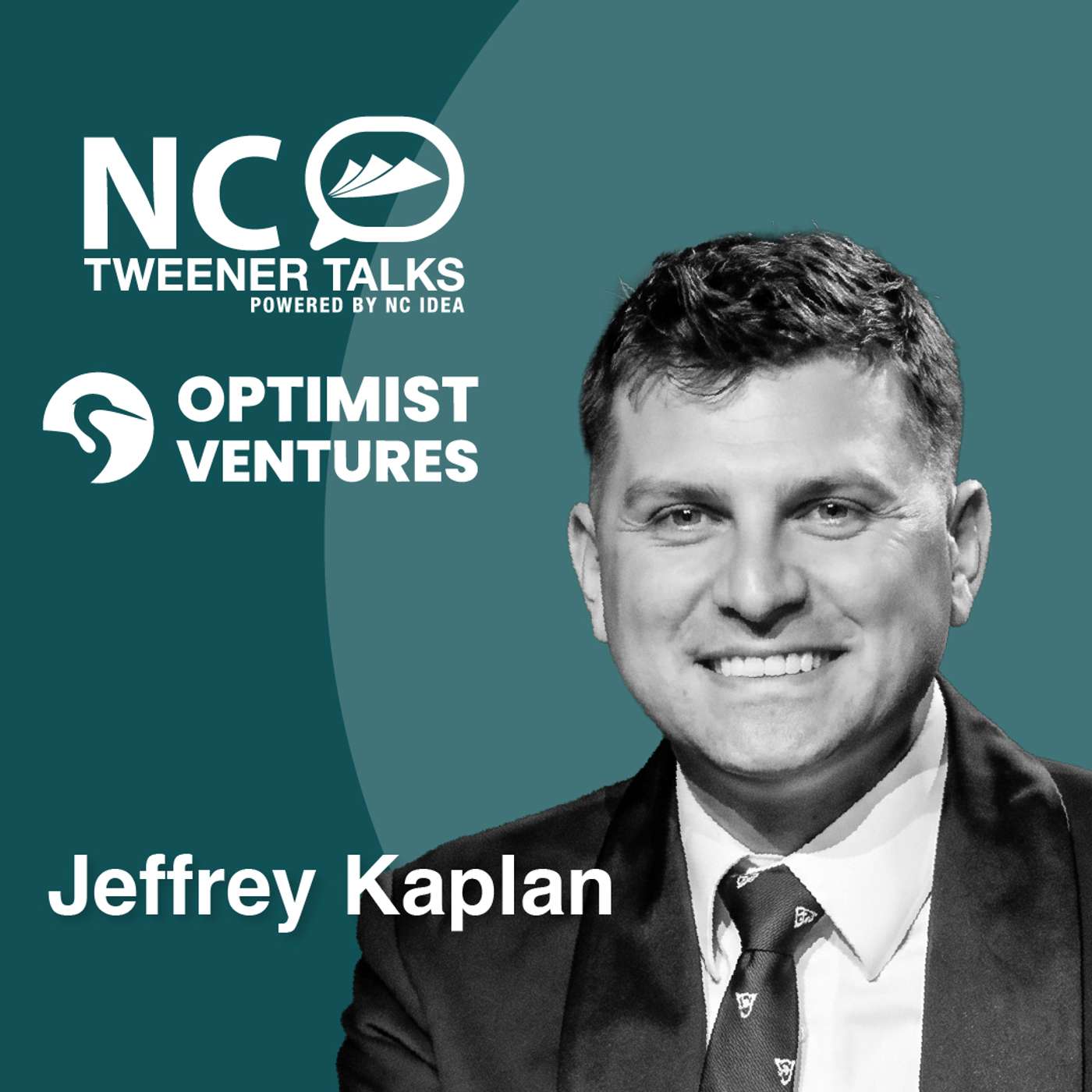
    Moneyball for Main Street: The Fund That Bets on Singles, Not Home Runs

    Most of us know Asheville as beer city, foodtopia, a playground for retirees and 14 million visitors a year. Jeffrey opens by updating that picture. Eighteen months out from Hurricane Helene, which hit on a Friday in late September 2024, the data is starting to come in. The long-term employment hit was about half that of COVID. Decades of population growth stopped in 2025 and even declined for the first time, but the in-migration that remains is now strongest among 25-to-34-year-olds: prime working-age professionals, not retirees. Jeffrey walks through what’s back (Biltmore Village, the River Arts District, High Wire’s new year-round pickleball courts) and what’s gone forever, and lands on a word he keeps coming back to: optimism. From there, we steer into the heart of the episode: Optimist Ventures and the funding mechanism Jeffrey invented, the SPA note. The origin story is its own lesson in adaptation. Optimist began as a half-million-dollar grant from the Dogwood Health Trust. Then Helene hit, and within the same week a founder in the program, Ginger Frank of Poppy Popcorn, called wanting to commit $100,000, but to a grant program, not a fund. Rather than walk away, Jeffrey spent days thinking until he landed on a hybrid: half the capital as grants and philanthropy, half in a for-profit vehicle for accredited investors, with every for-profit dollar matched by a donation. Boom: enter the SPA or shared profit agreement. The conversation closes on what’s next, whether this model can scale to Charlotte or Raleigh, and a heartfelt ask about how the rest of the state can help Asheville finish its recovery. Highlights Moneyball the Portfolio: Instead of chasing one home run, Jeffrey set out to build a book of “singles and doubles”… companies that just need to survive six years. The VC / Ecosystem-Builder Dissonance: An ecosystem builder is measured on jobs and revenue creation, not outlier exits. The SPA Note, Decoded: A “Shared Profit Agreement” combines a SAFE capped at 3.6% of a $1M valuation with a shared earnings agreement. The Investor Pitch: Every LP dollar is matched by a donation. But the real sell is community impact. Applied Technology vs. Developing Technology: The program defines “tech-enabled” broadly. The Funding Runway: Approximately $225M is flowing into the region through HUD programs, with $17M dedicated to small-business grants. A Curriculum Built on Competencies, Not Basics: The accelerator is built around entrepreneurial competencies, including opportunity recognition, resilience, and network-building. The North Carolina Hallmark: “It’s not a zero-sum game. We’re all trying to grow the size of the pie.” The best founders, and the best fund builders, figure out the structure nobody else was willing to be patient enough to design. Jeffrey did exactly that. Enjoy the conversation. Timestamps 01:52 Scot's intro: SPAs, Asheville, and a new funding mechanism 04:31 Meet Jeffrey Kaplan 04:50 Asheville, the loading-dock office, and a Russian-nesting-doll of titles 06:31 Jeffrey's background: Florida, intrapreneurship, and Anthware 10:13 Eighteen months after Hurricane Helene 13:14 The economic data: jobs, population, and a younger in-migration 14:50 Is Biltmore Village back? 17:31 The River Arts District rebound 18:01 Asheville's startup ecosystem and why it's so CPG-heavy 21:21 The Fresh Market CEO and the "buy local" effect 22:42 Asheville's tech wins: Craft Peak, Sprin, Level.io, SDV 24:40 How Optimist Ventures came to be 25:19 The VC vs. ecosystem-builder cognitive dissonance 27:03 "Moneyball the portfolio": singles and doubles 27:36 The Dogwood grant and Ginger Frank's $100K call 29:41 Splitting the fund: grants plus a for-profit vehicle 30:26 The SPA note explained 31:42 The shared-earnings math and negative 10% interest 34:00 LP economics, the ~13% IRR, and private inurement 37:10 The $855K HUD grant: funded for four years 38:37 Inside the accelerator and "tech-enabled," broadly defined 39:37 Carolina Flowers and the $40K freezer 44:00 A curriculum built on entrepreneurial competencies 46:27 What's next: bigger cohorts, applications June 3 47:56 Can this model scale to Charlotte or Raleigh? 50:49 How the rest of the state can help Asheville 52:42 The connector: Asheville's collaborative ecosystem Where to Find Jeffrey: LinkedIn: https://www.linkedin.com/in/jeffdude/ Front Porch Optimist Ventures: https://www.optimistventures.co/ Where to Find Scot Wingo: LinkedIn: https://www.linkedin.com/in/thescotwingo/ Tweener Times: https://www.tweenertimes.com/ X: https://x.com/scotwingo --- This episode of Triangle Tweener Talks is hosted by Scot Wingo, presented and produced by NC Tweener Fund, with creative assets and design support from Walk West. We couldn’t share posts like this without our amazing sponsors: Platinum: NC IDEA: https://ncidea.org Gold Sponsors: - Balentine: https://www.balentine.com/triangle-entrepreneurs - EisnerAmpner: https://www.eisneramper.com - Robinson Bradshaw: https://www.robinsonbradshaw.com Silver Sponsors: - Automated Consulting Group: https://automated.co - Bank of America: https://business.bofa.com/en-us/content/technology-industry-group.html ------ Triangle Tweener Talks is sponsored by: Atomic Object: https://atomicobject.com/

Showing 1–20 of 20 episodes