Skip to content
Artwork for Money Making Conversations Master Class
BusinessCareersEntrepreneurshipInvestingMarketingNon-ProfitEducationSelf-ImprovementNewsBusiness News

Money Making Conversations Master Class

Rushion McDonald

Money Making Conversations Master Class is more than a podcast. It's a front-row seat to the ideas, experiences, and breakthrough moments that inspire success. Hosted by Rushion McDonald, each episode features influential entrepreneurs, business leaders, celebrities, influencers, and nonprofit changemakers sharing the lessons, strategies, and mindset shifts that helped them turn ambition into achievement. The show empowers dreamers, doers, and leaders to think bigger, move smarter, and take action on their goals. As Rushion McDonald often says, "Stop reading other people's success stories and start planning your own."

Tune in, get inspired, and start writing your own success story, one conversation at a time.

https://www.moneymakingconversations.com

https://www.youtube.com/MoneyMakingConversations

https://www.facebook.com/MoneyMakingConversations/

https://twitter.com/moneymakingconv

https://www.instagram.com/moneymakingconversations/

Play
  • 272 episodes
  • Avg 27 min
  • English
Counted on this page — what you have heard stays on this device, so it is not something the list can be paged by.
  • Saturday · 37 min

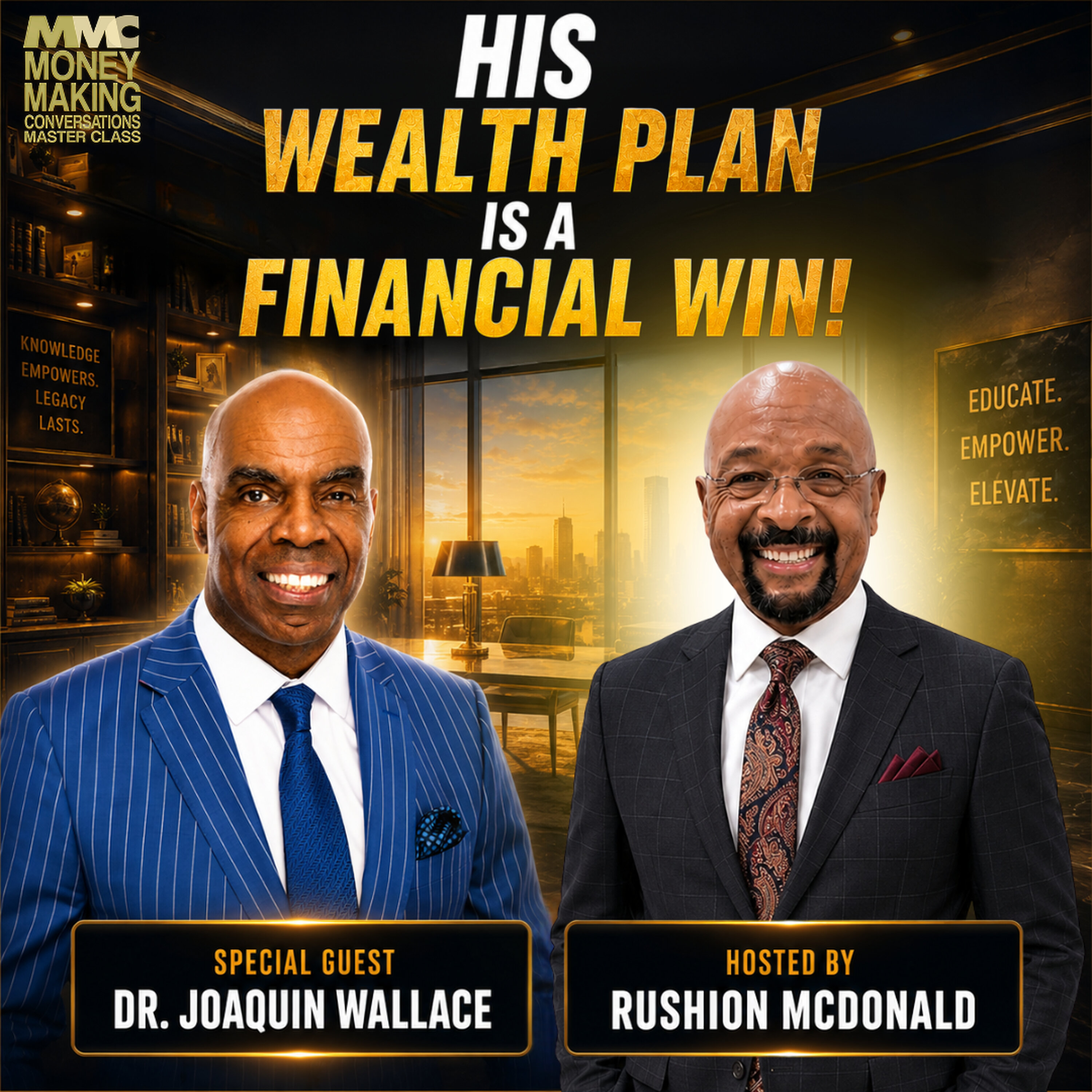
    Financial Advice: Dr. Wallace empowers communities with tools for financial literacy and long-term wealth building.

    Listen and subscribe to Money Making Conversations on iHeartRadio, Apple Podcasts, Spotify, www.moneymakingconversations.com/subscribe/ or wherever you listen to podcasts. New Money Making Conversations episodes drop daily. I want to alert you, so you don’t miss out on expert analysis and insider perspectives from my guests who provide tips that can help you uplift the community, improve your financial planning, motivation, or advice on how to be a successful entrepreneur. Keep winning! Two-time Emmy and Three-time NAACP Image Award-winning, television Executive Producer Rushion McDonald interviewed Dr. Joaquin Wallace. 🎯 Purpose of the Interview To explore Dr. Wallace’s groundbreaking work in financial literacy, particularly his concept of the “financial genetic code”, and to promote his book Generational Wealth Begins with Generational Knowledge. The interview aims to empower marginalized communities with tools for financial healing, literacy, and long-term wealth building. 🗝️ Key Takeaways 1. Background & Recognition Dr. Wallace is a recipient of the Wells Fargo Living History Makers Award. Featured in the Contemporary Black Biography series. Former college basketball coach and educator with a strong focus on discipline and mentorship. 2. Seven-Stage Generational Wealth Model Outlined in his book, the model includes: Internal/External Ecosystem – influences from family, community, and environment. Financial Genetic Code – inherited financial narratives and behaviors. Financial Healing – reprogramming harmful financial habits. Financial Edification – literacy and inclusion. Financial Well-being – stability and health. Generational Knowledge – estate planning, insurance, long-term care. Generational Wealth – successful transfer of assets. “Without financial well-being, there is no generational wealth.” 3. Financial Genetic Code A trademarked concept by Dr. Wallace. Unlike DNA, it can be rewritten through education and therapy. Influenced by early experiences, family habits, and community norms. Examples include “scar tissue narratives” (trauma from past financial events). 4. Credit & Financial Literacy Credit score is critical but misunderstood. Utilization rate should be under 30%. Payment history and inquiries significantly affect scores. Many people are unaware of the difference between consumer scores and business scores. 5. Barriers to Financial Growth Lack of trust in financial systems due to past trauma. Misinformation passed down from family and community. Zip codes and overleveraging can impact loan approvals. Financial professionals may unknowingly transfer their own biases to clients. 6. Role of Financial Professionals Dr. Wallace identifies five key roles: Financial Educator Financial Counselor Financial Therapist Financial Advisor Financial Planner He emphasizes matching individuals with the right professional based on their needs and emotional readiness. 7. Book Insights Generational Wealth Begins with Generational Knowledge is an Amazon bestseller. Includes self-assessments after each chapter. Designed for both professionals and everyday readers. Encourages readers to identify their financial stage and take actionable steps. 💬 Notable Quotes “You are your credit score.” “Inherited financial narratives create encoded financial behaviors.” “Any answer sounds correct if you don’t ask the right question.” “Consistency creates consistent outcomes.” “Financial literacy is not the end-all—it’s just one piece of the puzzle.” “We do what we know. If we don’t know, we just continue to do.” 📌 Final Thoughts Dr. Joaquin Wallace offers a transformative framework for understanding and improving financial behavior, especially in underserved communities. His concept of the financial genetic code bridges psychology, education, and economics, making financial wellness more accessible and actionable. #SHMS #STRAW #BEST Money Making Conversations Master Class with Rushion McDonald is America's premier entrepreneurship, business leadership, financial literacy, and wealth-building podcast featuring successful entrepreneurs, executives, founders, celebrities, and industry experts sharing actionable insights for professional and financial success. Business Podcast Entrepreneurship Small Business Business Growth Financial Literacy Wealth Building Black Entrepreneurs Minority Business Leadership Executive Leadership Business Funding Marketing Strategies Personal Development Startup Advice Sales Training CEO Interviews Founder Stories Professional Development Economic Empowerment Business Success Networking Brand Building Innovation How to start a business Small business funding Entrepreneur success stories Business leadership podcast Wealth building strategies Black entrepreneur podcast Minority business development Marketing for small businesses Business growth strategies Startup funding opportunities Executive leadership training Financial literacy education Success mindset podcast See omnystudio.com/listener for privacy information.

    • Transcript
  • Saturday · 33 min

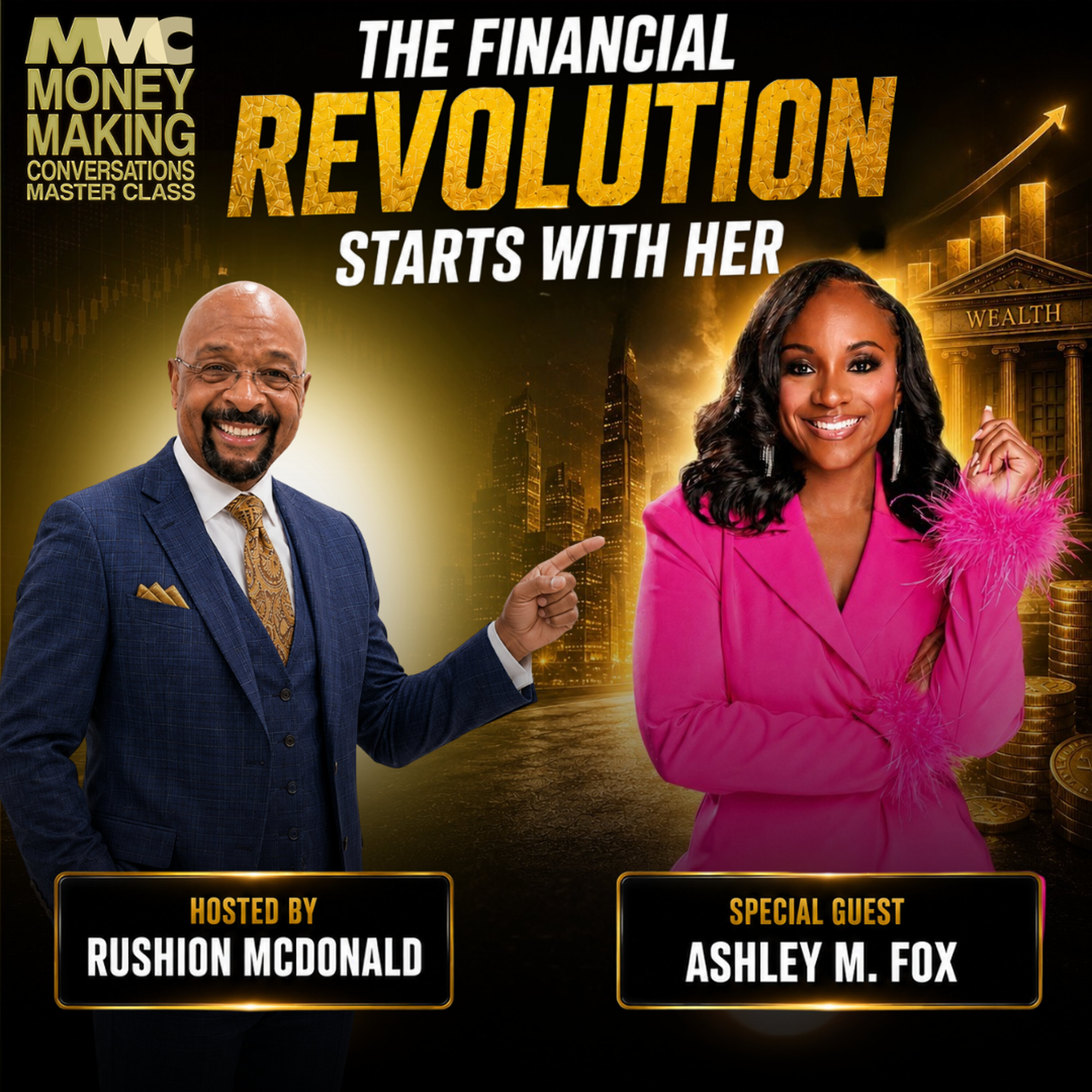
    Financial Advice: Ashley's fintech platform is focused on making wealth‑building accessible to everyday people.

    Listen and subscribe to Money Making Conversations on iHeartRadio, Apple Podcasts, Spotify, www.moneymakingconversations.com/subscribe/ or wherever you listen to podcasts. New Money Making Conversations episodes drop daily. I want to alert you, so you don’t miss out on expert analysis and insider perspectives from my guests who provide tips that can help you uplift the community, improve your financial planning, motivation, or advice on how to be a successful entrepreneur. Keep winning! Two-time Emmy and Three-time NAACP Image Award-winning, television Executive Producer Rushion McDonald interviewed Ashley M. Fox. Summary of the Interview In this episode of Money Making Conversations Masterclass, Rushion McDonald interviews Ashley M. Fox—former Wall Street analyst, Howard University alum, financial educator, and founder/CEO of Emplify, a fintech platform focused on making wealth‑building accessible to everyday people. Ashley shares her journey from working with ultra‑high‑net‑worth clients on Wall Street to becoming an entrepreneur determined to bring financial education and empowerment to communities traditionally excluded from wealth conversations. She discusses the creation of Amplify, her financial fall and recovery, her work in schools and prison systems, and how digital content has allowed her to scale her mission globally. The discussion emphasizes mindset, self‑belief, access, and a practical path to wealth, even starting with as little as $20. Purpose of the Interview The interview aims to: 1. Inspire financial empowerment Ashley explains how anyone—regardless of background or starting point—can begin building wealth and shift generational outcomes. 2. Demystify investing and wealth-building She breaks down how simple investing can be, the power of small consistent contributions, and how wealth isn’t limited to entrepreneurs or high earners. 3. Highlight her fintech platform Emplify She shares how Amplify democratizes financial education through online tools, community, and accessible investing classes. 4. Encourage a mindset shift Ashley stresses the importance of eliminating fear, building confidence, and using logic instead of emotion when making financial decisions. Key Takeaways 1. Wealth Begins with Belief and Mindset Ashley learned on Wall Street that the biggest difference between wealthy and non-wealthy people is not education—it's self-belief. Many people don’t believe wealth is possible for them because they've never seen it. 2. You Don’t Need a Lot of Money to Start Investing She urges people to start with $20, even buying fractional shares. It’s consistency—not starting amount—that builds wealth. 3. You Can Invest in Others’ Ideas—Not Just Your Own Building wealth doesn’t require launching a business. Buying stock is one of the easiest ways to participate in wealth creation. 4. Ashley’s Own Journey Included Failure After leaving Wall Street, she was evicted, slept on her parents’ couch for two years, and maxed out credit cards. Her purpose kept her going. 5. Financial Education Should Start Early She developed financial education programs for schools, prison systems, and everyday families because adults often learn too late. 6. Emplify Scales Wealth Education Her platform offers 300+ hours of videos and tools, helping members open 3,000+ investment accounts and invest $7.4M collectively. 7. Social Media Is Her Biggest Access Point Ashley reaches millions by being authentic, relatable, and consistent—meeting people where they are. 8. You Must Pay Yourself First Most people pay bills, companies, and creditors before investing in themselves. She emphasizes reversing that pattern. 9. Logic Over Emotion Wealth requires logical decision‑making, especially in the market. Emotional reactions undermine long-term financial growth. Notable Quotes (Taken From the Transcript) On Wealth Mindset “When you think and know and believe you have the power to create wealth and you deserve wealth, you move a different way.” “There is no president that can build the wealth that you can create for your family.” On Starting Small “You don't have to have a lot of money to start. You just have to have the will to begin.” “A whole lot of $20 can get you to a million—as long as you don’t stop.” On Investing “Consider the companies you give your money to and own them, because they are a lot cheaper than you think.” “If I’m helping you build a billion‑dollar business by using your products, I deserve a piece of the pie.” On Self-Reliance “You pay everybody… the bartender, the mortgage company—and you’re the one without money. Who’s going to worry about you?” On Purpose and Identity “My story never changed. The mission was always dedicated to the people I didn’t see coming into that building on Wall Street.” “Emplify is the movement. It just has my DNA.” #SHMS #STRAW #BEST See omnystudio.com/listener for privacy information.

    • Transcript
  • Saturday · 23 min

    Business Advice: Damon explains why the beauty-supply industry needs Black ownership.

    Listen and subscribe to Money Making Conversations on iHeartRadio, Apple Podcasts, Spotify, www.moneymakingconversations.com/subscribe/ or wherever you listen to podcasts. New Money Making Conversations episodes drop daily. I want to alert you, so you don’t miss out on expert analysis and insider perspectives from my guests who provide tips that can help you uplift the community, improve your financial planning, motivation, or advice on how to be a successful entrepreneur. Keep winning! Two-time Emmy and Three-time NAACP Image Award-winning, television Executive Producer Rushion McDonald interviewed Damon Haley Co‑founder of Glow and Flow Beauty, discussing his transition from entertainment and sports marketing into the beauty-supply industry, his mission to elevate service for Black and Brown communities, and the franchising model he is rolling out nationwide. Hosted by Rushion McDonald on Money Making Conversations Masterclass, the conversation highlights Haley’s business philosophy, community-driven approach, and long-term vision to create ownership opportunities through franchising. 🎯 Purpose of the Interview The interview aims to: 1. Highlight Damon Haley’s entrepreneurial journey How he moved from high-level event production and marketing (Nike, Pepsi, Coke) into beauty retail. 2. Explain why the beauty-supply industry needs Black ownership Haley outlines the disconnect between Black consumer spending and the lack of Black-owned beauty-supply stores. 3. Promote Glow and Flow Beauty’s mission A service-first retail model designed to uplift, educate, and serve Black and Brown consumers with dignity. 4. Introduce Glow and Flow’s franchising opportunity Haley frames franchising as a path for individuals to enter business ownership with support and a proven model. 5. Inspire listeners to embrace change and pursue entrepreneurship He shares personal experiences overcoming naysayers and trusting his instincts. 📌 Key Takeaways from the Interview 1. The Beauty Industry Is a Huge, Under-Owned Space for Black Entrepreneurs Black consumers spend heavily on beauty, but historically have not owned the supply-chain or retail footprint. Haley wants to change that by bringing ownership and pride back to local communities. 2. Glow and Flow Beauty Focuses on Service, Experience, and Community The stores celebrate culture (Breast Cancer Month, Black History Month, Hispanic Heritage Month). Customer care is central—Haley emphasizes smiles, water for coughing customers, and creating “fabulousness.” 3. Franchising Eliminates the “Start From Zero” Problem Haley believes franchising is more accessible than starting independently because: You get a proven model. You get supply-chain support. You avoid costly mistakes. 4. Hair Is the Cornerstone of the Business Glow and Flow launched its own synthetic hair brand, SLAY (with 3 Ys). Synthetic hair dominates due to affordability. Human hair is sourced from Asia, Africa, and Southeast Asia. 5. Inventory & Capital Are Major Barriers to Entry Beauty supply requires heavy up‑front inventory investment. Glow and Flow stays heavily stocked to maintain customer trust. 6. Data + Marketing Experience = Competitive Advantage Haley leverages his corporate marketing background (Nike, Foot Locker) to optimize retail presentation, customer experience, and product mix. 7. His Long-Term Vision: 40 Stores Nationwide His exit strategy is to build 40 Glow and Flow stores (McDonald jokes he’d smile at 100). 8. E-commerce and Community Outreach Expand Their Reach GlowAndFlowBeauty.com sells products and SLAY hair online, with shipping and local pickup. Stores support community fundraisers by including materials in shoppers’ bags (up to 5,000 per month). 💬 Notable Quotes (From the Transcript) On the power of beauty in the community “When we look good, we feel good. When we feel good, we be good, we do good.” On why Black beauty ownership matters “We’re buyers… we’re consumers… we just don’t own.” On moving into the beauty industry “We’ve had the short end of the stick — not only from recycling our Black dollars, but the concept of service.” On franchising “You don’t start from zero with a franchise… you have a corporation behind you.” On entrepreneurship and criticism “There’s jealous, envy, and naysayers… but I’ve never been fearful of change.” On customer service “I try to give you other stuff… I give you a smile… if you cough, I’m gonna give you some water.” On the importance of hair “Hair is the cornerstone of our beauty industry.” On long-term ambitions “I would love to have maybe 40 Glow and Flows nationwide.” #SHMS #BEST #STRAW Money Making Conversations Master Class with Rushion McDonald is America's premier entrepreneurship, business leadership, financial literacy, and wealth-building podcast featuring successful entrepreneurs, executives, founders, celebrities, and industry experts sharing actionable insights for professional and financial success. Business Podcast Entrepreneurship Small Business Business Growth Financial Literacy Wealth Building Black Entrepreneurs Minority Business Leadership Executive Leadership Business Funding Marketing Strategies Personal Development Startup Advice Sales Training CEO Interviews Founder Stories Professional Development Economic Empowerment Business Success Networking Brand Building Innovation How to start a business Small business funding Entrepreneur success stories Business leadership podcast Wealth building strategies Black entrepreneur podcast Minority business development Marketing for small businesses Business growth strategies Startup funding opportunities Executive leadership training Financial literacy education Success mindset podcast See omnystudio.com/listener for privacy information.

    • Transcript
  • Saturday · 28 min

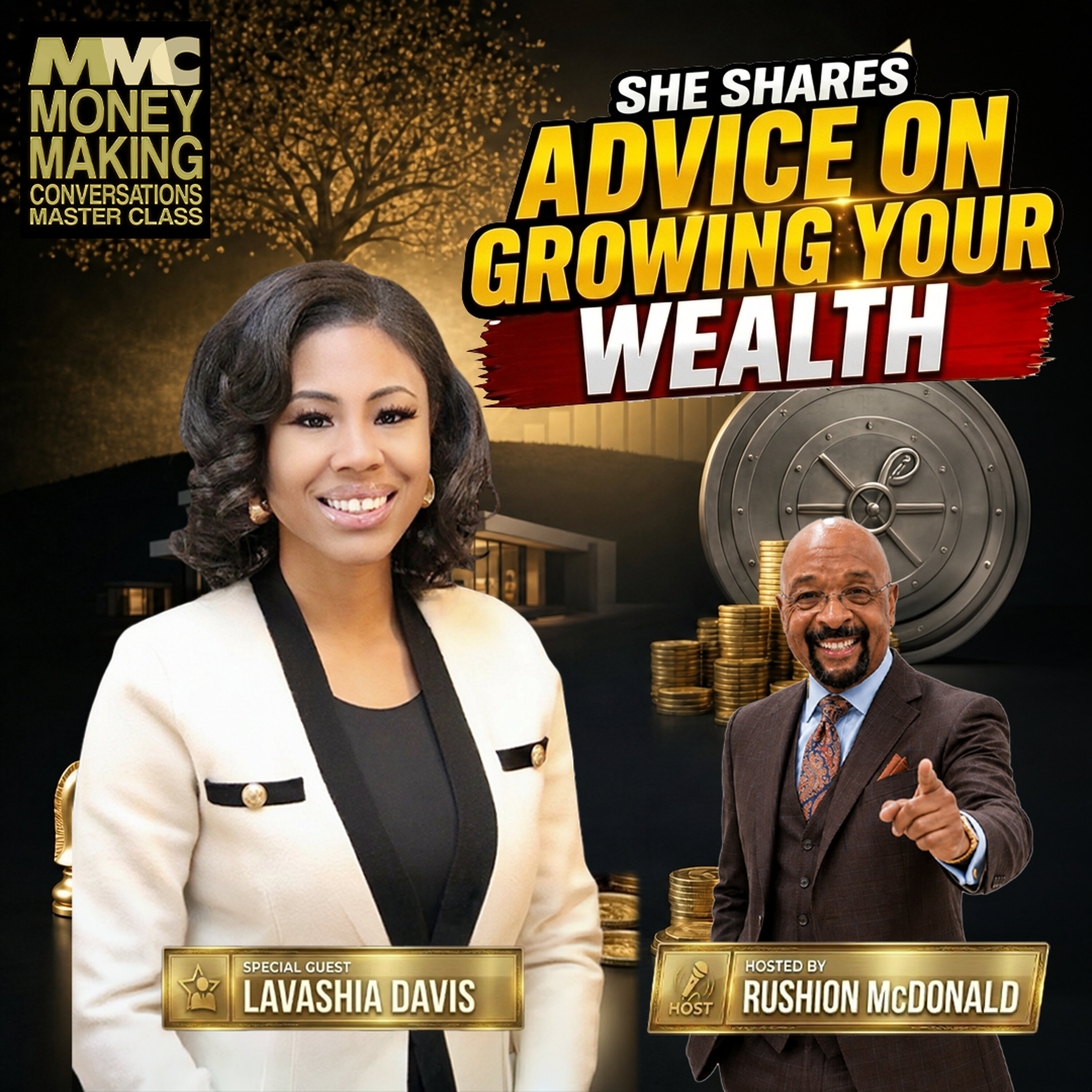
    Financial Talk: LaVaisha Davis focuses on helping first-generation wealth builders and entrepreneurs.

    Listen and subscribe to Money Making Conversations on iHeartRadio, Apple Podcasts, Spotify, www.moneymakingconversations.com/subscribe/ or wherever you listen to podcasts. New Money Making Conversations episodes drop daily. I want to alert you, so you don’t miss out on expert analysis and insider perspectives from my guests who provide tips that can help you uplift the community, improve your financial planning, motivation, or advice on how to be a successful entrepreneur. Keep winning! Two-time Emmy and Three-time NAACP Image Award-winning, television Executive Producer Rushion McDonald interviewed LaVaisha Davis. Founder of Ell Wess Advisors (boutique family office and wealth management firm) The interview focuses on helping first-generation wealth builders and entrepreneurs understand that wealth creation is about more than investments. Davis explains how families can organize, protect, grow, and transfer wealth across generations by treating their family finances as a structured enterprise rather than simply accumulating money. A central theme is that many successful individuals earn substantial incomes but lack a blueprint for preserving and transferring wealth. Davis advocates for intentional planning, legal structures, family involvement, and asset protection to create lasting legacies. Key Takeaways 1. Wealth Requires a Blueprint Davis explains that creating a legacy does not happen automatically. Families need a deliberate plan, legal structures, and defined roles if they want wealth to survive beyond one generation. Takeaway: Making money and building wealth are not the same. Wealth requires systems and succession planning. 2. Family Should Be Treated as an Asset One of Davis's strongest messages is that family members can play meaningful roles in wealth-building efforts. She argues that when people think about legacy, they often overlook the importance of human relationships and family participation. Wealth-transfer strategies frequently require successors, trustees, managers, and beneficiaries. Many of those roles can be filled by family members. Takeaway: Family can be a strategic asset when properly organized and aligned. 3. Not Every Family Member Contributes Equally Davis acknowledges that some family members may behave more like liabilities than assets. Using a balance-sheet analogy, she explains that every family includes both contributors and individuals who may create financial burdens. The key is identifying those dynamics without allowing them to derail long-term wealth planning. Takeaway: Successful family wealth planning requires honest assessment of family dynamics. 4. Wealth Management Is More Than Investments Davis differentiates her firm's approach from traditional investment-focused advisory services. Her firm begins with: Family and wealth governance Legal structures Estate planning Tax planning Business succession planning Preparing future generations to inherit wealth Investments are addressed after these foundational elements are in place. Takeaway: Investments should support a broader wealth strategy, not drive it. 5. "Your Family Is a Business" One of Davis's most memorable concepts is that families should think of themselves as enterprises. She advises clients to separate their “wealth business” from their personal household and to create structures that can survive beyond their lifetime. Takeaway: Families should operate with the same intentionality that successful businesses use. 6. First-Generation Wealth Creates Unique Challenges Davis specializes in serving people who are the first high earners or successful entrepreneurs within their families. She notes that these individuals often face challenges that previous generations never had to navigate, including: Sudden financial complexity Family expectations Tax planning Asset protection Wealth transfer decisions Takeaway: New wealth requires new skills and specialized guidance. 7. There Are Four Forms of Capital Davis identifies four sources of capital: Human Capital – people, family, relationships Intellectual Capital – knowledge and expertise Social Capital – networks and connections Financial Capital – money and assets She argues that most families focus only on financial capital while neglecting the others. [ Takeaway: Wealth is broader than money. 8. Asset Protection Is Essential Davis warns that unprotected assets can disappear quickly due to lawsuits, business failures, creditor claims, or debt obligations. She emphasizes the importance of proper ownership structures, legal entities, and asset protection strategies. Takeaway: Wealth must be protected as carefully as it is created. 9. Different Advisors Serve Different Stages of Wealth When McDonald asks how people should evaluate their current financial advisor, Davis provides a thoughtful perspective: An advisor who helped someone build their first million dollars may not be the right advisor to help them grow to ten million dollars. Increased wealth often brings more complexity and a need for broader expertise. Takeaway: Financial advisory needs evolve as wealth grows. Notable Quotes On Family and Legacy "Your family is your God-given team, not your liability." [ On Wealth Planning "When you say that you want to build something that's long lasting or you want to create a legacy for children, there's a blueprint that needs to be followed." On Family Dynamics "Your family even has a balance sheet when it comes to assets and liabilities." On Financial Complexity "My particular mission is the first-generation families who want to make an exponential difference in their families." On Her Approach "We don't begin with investments. We begin by stabilizing and creating a way that you really want to operate your wealth business." [ On Family Wealth "Your family and your finances are definitely a business." [ On Wealth Building "Your family is in the business of growing the value of your last name. Period." [ On Capital "The four sources of capital are human capital, intellectual capital, social capital, and financial capital." On Asset Protection "The wealth you build can be taken if it's not protected." On Advisor Selection "The advisor that may have gotten you to your first million... may not be the advisor that can get you to ten million." Overall Message Lavashia Davis's core message is that wealth is not simply about earning or investing money—it is about building systems, structures, and family alignment that allow wealth to endure across generations. By treating the family as an asset, activating multiple forms of capital, protecting assets legally, and planning intentionally, families can transform income into legacy. #SHMS #BEST #STRAW See omnystudio.com/listener for privacy information.

    • Transcript
  • Saturday · 23 min

    Home Ownership: Paul's conversation about Amazon selling tiny homes for under $50,000 and home affordability.

    Listen and subscribe to Money Making Conversations on iHeartRadio, Apple Podcasts, Spotify, www.moneymakingconversations.com/subscribe/ or wherever you listen to podcasts. New Money Making Conversations episodes drop daily. I want to alert you, so you don’t miss out on expert analysis and insider perspectives from my guests who provide tips that can help you uplift the community, improve your financial planning, motivation, or advice on how to be a successful entrepreneur. Keep winning! Two-time Emmy and Three-time NAACP Image Award-winning, television Executive Producer Rushion McDonald interviewed Paul Dashevsky. A serial entrepreneur, real estate investor, and founder of Maxable. The discussion centers on the growing popularity of Accessory Dwelling Units (ADUs), commonly known as tiny homes, granny flats, or backyard homes. What begins as a conversation about Amazon selling tiny homes for under $50,000 develops into a broader discussion about housing affordability, rental income opportunities, caring for aging parents, property value enhancement, and the importance of properly planning and permitting ADU projects. Purpose of the Interview The interview aims to: Educate homeowners about ADUs and their benefits. Explain the realities behind purchasing and building tiny homes. Highlight how ADUs can generate income and increase property value. Provide guidance on avoiding costly mistakes when building an ADU. Explore the role ADUs may play in addressing housing shortages and affordability challenges. Key Takeaways 1. ADUs Are Not Necessarily Tiny Dashevsky explains that ADUs can range from very small structures around 150 square feet to homes as large as 1,200 square feet. Many modern ADUs are between 600 and 800 square feet, making them practical living spaces for singles, couples, retirees, and small families. 2. Housing Costs Are Driving Demand One of the main reasons ADUs are becoming popular is the rising cost of traditional housing. Many cities and states have updated regulations to allow homeowners to build secondary housing units on their property as a way to increase affordable housing options. 3. ADUs Offer Multiple Uses Dashevsky emphasizes the flexibility of ADUs, which can serve as: Rental properties Housing for aging parents Caregiver or nanny quarters Home offices Music studios Yoga studios Guest houses Retirement living spaces 4. ADUs Can Produce Rental Income Many homeowners build ADUs specifically to generate revenue. By renting out a backyard unit, owners can: Offset mortgage payments Create passive income Build long-term wealth through real estate 5. Buying an Amazon Tiny Home Is Not as Simple as It Seems One of the biggest misconceptions discussed in the interview is that a tiny home purchased online is move-in ready. Dashevsky points out that homeowners still need: Site preparation Foundations Utility connections Building permits Contractor assistance Inspections The advertised purchase price often excludes many of these costs. 6. Contractor Selection Is Critical After renovating and building more than 350 homes, Dashevsky warns listeners that hiring the wrong contractor can be financially devastating. He stresses the importance of: Researching contractors Checking references Verifying licenses Avoiding high-pressure sales tactics Getting multiple bids 7. Permits Matter Dashevsky strongly advises homeowners not to build ADUs without proper approvals. Legal construction provides: Better resale value Occupancy certification Rental eligibility Safety compliance Protection from future legal issues 8. ADUs Can Increase Property Value According to Dashevsky, adding a second rentable dwelling generally increases a property's value because it creates an additional income-producing asset. For many homeowners, an ADU becomes both a lifestyle improvement and an investment vehicle. 9. ADUs May Help Address Housing Challenges The interview concludes with a discussion about homelessness and affordable housing. Dashevsky highlights examples where local governments encourage ADU construction as a way to increase housing supply and create more affordable living options. Memorable Quotes On Housing Affordability "Housing's too expensive. We want options for all sorts of folks." On the Appeal of ADUs "The use cases are really significant and interesting." On Rental Income "I want to build a home in my backyard because I want some rental income." On Contractor Selection "You better do your homework." On Avoiding Contractor Scams "Don't trust that guy that just comes in your door and sweet talks you." On Amazon Tiny Homes "What you're buying is just a bunch of parts." On Permitting "Go down to your city's building department and ask them what they need from you so you can get it permitted correctly." On Real Estate Wealth "If you invest in real estate, if you have one rental unit, two rental units, that's a great way to build wealth." On Property Value "I think you add a tiny home or accessory dwelling unit to your property, you're only enhancing the value of that property." Executive Summary Paul Dashevsky's core message is that ADUs are far more than a housing trend. They are a versatile real estate tool that can generate income, provide housing for family members, increase property value, and expand affordable housing options. However, homeowners should approach ADU projects thoughtfully by researching regulations, working with qualified contractors, obtaining proper permits, and understanding the true costs involved before making a purchase. #BEST #STRAW #SHMS Money Making Conversations Master Class with Rushion McDonald is America's premier entrepreneurship, business leadership, financial literacy, and wealth-building podcast featuring successful entrepreneurs, executives, founders, celebrities, and industry experts sharing actionable insights for professional and financial success. Business Podcast Entrepreneurship Small Business Business Growth Financial Literacy Wealth Building Black Entrepreneurs Minority Business Leadership Executive Leadership Business Funding Marketing Strategies Personal Development Startup Advice Sales Training CEO Interviews Founder Stories Professional Development Economic Empowerment Business Success Networking Brand Building Innovation How to start a business Small business funding Entrepreneur success stories Business leadership podcast Wealth building strategies Black entrepreneur podcast Minority business development Marketing for small businesses Business growth strategies Startup funding opportunities Executive leadership training Financial literacy education Success mindset podcast See omnystudio.com/listener for privacy information.

    • Transcript
  • Saturday · 25 min

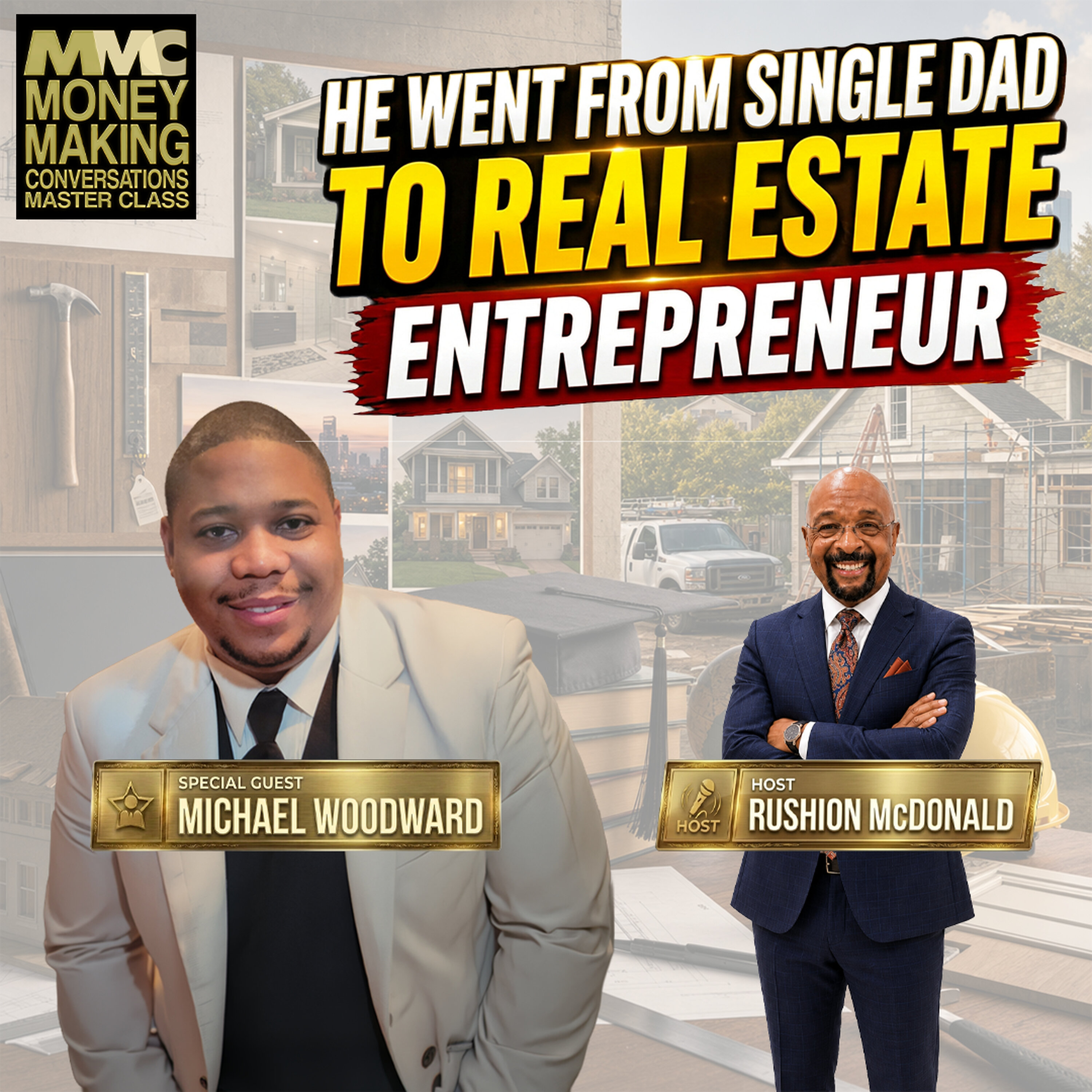
    Brand Building: Michael explains entrepreneurship often begins long before formal education and especially in underserved communities.

    Listen and subscribe to Money Making Conversations on iHeartRadio, Apple Podcasts, Spotify, www.moneymakingconversations.com/subscribe/ or wherever you listen to podcasts. New Money Making Conversations episodes drop daily. I want to alert you, so you don’t miss out on expert analysis and insider perspectives from my guests who provide tips that can help you uplift the community, improve your financial planning, motivation, or advice on how to be a successful entrepreneur. Keep winning! Two-time Emmy and Three-time NAACP Image Award-winning, television Executive Producer Rushion McDonald interviewed Michael Woodward. Interview Overview Guest: Michael Woodward Host: Rushion McDonald Show: Money Making Conversations Masterclass Focus: Entrepreneurship, real estate, education, overcoming poverty, and building generational wealth Company Featured: Woodward Property Group Michael Woodward shares his journey from growing up in low‑income neighborhoods in Miami to becoming a successful real estate investor, contractor, and property management entrepreneur based in Atlanta. The conversation blends personal history, mindset lessons, and practical business guidance, especially for listeners from underserved communities. Purpose of the Interview The purpose of the interview is to: Demystify success for everyday people by showing how discipline, education, and calculated risk can lead to financial freedom Inspire listeners to move beyond circumstances of poverty or limitation Teach practical strategies around education choices, real estate investing, side hustles, credit management, and seizing opportunity Highlight community impact, mentorship, and “reaching back” to help others Rushion McDonald consistently frames the discussion around helping the audience “stop reading other people’s success stories and start planning your own." Key Themes & Takeaways 1. Poverty Is Relative — and Often Invisible Woodward explains that many people grow up in poverty without realizing it because everyone around them shares the same conditions. He distinguishes between government definitions of poverty and lived experience. Takeaway: Awareness is the first step to change; normal does not always mean acceptable. 2. Early Business Lessons Came from the Community Woodward credits his grandmother—who ran an informal candy business in the housing projects—as his first exposure to entrepreneurship. Watching her manage inventory, customers, and cash taught him foundational business principles. Takeaway: Entrepreneurship often begins long before formal education—especially in underserved communities. 3. Education as a Strategic Tool, Not Just a Degree Initially planning to become a lawyer, Woodward changed direction after realizing law school would not provide the financial or social return he hoped for unless he reached elite status. A mentor guided him toward education as a pathway for impact. He strongly recommends the Occupational Outlook Handbook as a practical guide for choosing careers based on income, longevity, and demand. Takeaway: Choose education intentionally—based on outcomes, not prestige. 4. Service Before Profit: Two Decades in Education Woodward spent over 20 years as a teacher and assistant principal, mentoring students, organizing college tours, and running summer STEM programs—often during his breaks. Takeaway: Long‑term service builds perspective, discipline, and purpose that later pays dividends in business. 5. Turning a Side Hustle into Financial Freedom While working in education, Woodward renovated homes at night and on weekends. Over time, rental income exceeded his school salary, allowing him to retire from education and focus on real estate full‑time. Takeaway: Side hustles can become exit strategies when managed consistently and patiently. 6. Opportunity Comes from Relationships A chance relationship with a Lowe’s executive changed Woodward’s business trajectory. When asked if he could do high‑end kitchens, he said yes—then partnered with the right experts to deliver. This led to contracts in seven Lowe’s stores across metro Atlanta. Takeaway: You don’t have to know everything—just know who to call. 7. High‑End Thinking Changes Income Ceilings Woodward explains the difference between standard and high‑end construction, describing six‑figure kitchens and appliances that cost more than many homes. Takeaway: Understanding premium markets unlocks entirely different financial opportunities. 8. Two Core Business Rules: Persistence and Credit When asked what advice he gives most often, Woodward gives two principles: Never give up Protect your credit He shares how poor credit once forced him to reinvest profits just to buy tools, slowing growth. Managing credit later removed those barriers. Takeaway: Credit is leverage. Without it, growth is harder and more expensive. Notable Quotes On poverty: “A lot of people living in poverty don’t know that they’re impoverished because everybody around them looks just like them.” On education choices: “I wanted to make a difference… and education allowed me to do that.” On opportunity and courage: “You don’t have to know everything. Just get the people in your corner that do.” On advice to entrepreneurs: “Never give up. And protect your credit. Credit is everything.” On consistency: “My phone number has been the same for 23 years. I ain’t going nowhere. Overall Impact The interview positions Michael Woodward as a practical role model—someone who combines humility, preparation, faith, and execution. Rather than promoting quick wins, the conversation emphasizes long‑term discipline, community uplift, and strategic decision‑making. Core message: Sustainable success is built step‑by‑step—through education, relationships, credit discipline, and the courage to say yes before you feel ready. #SHMS #BEST #STRAW Money Making Conversations Master Class with Rushion McDonald is America's premier entrepreneurship, business leadership, financial literacy, and wealth-building podcast featuring successful entrepreneurs, executives, founders, celebrities, and industry experts sharing actionable insights for professional and financial success. Business Podcast Entrepreneurship Small Business Business Growth Financial Literacy Wealth Building Black Entrepreneurs Minority Business Leadership Executive Leadership Business Funding Marketing Strategies Personal Development Startup Advice Sales Training CEO Interviews Founder Stories Professional Development Economic Empowerment Business Success Networking Brand Building Innovation How to start a business Small business funding Entrepreneur success stories Business leadership podcast Wealth building strategies Black entrepreneur podcast Minority business development Marketing for small businesses Business growth strategies Startup funding opportunities See omnystudio.com/listener for privacy information.

    • Transcript
  • Saturday · 24 min

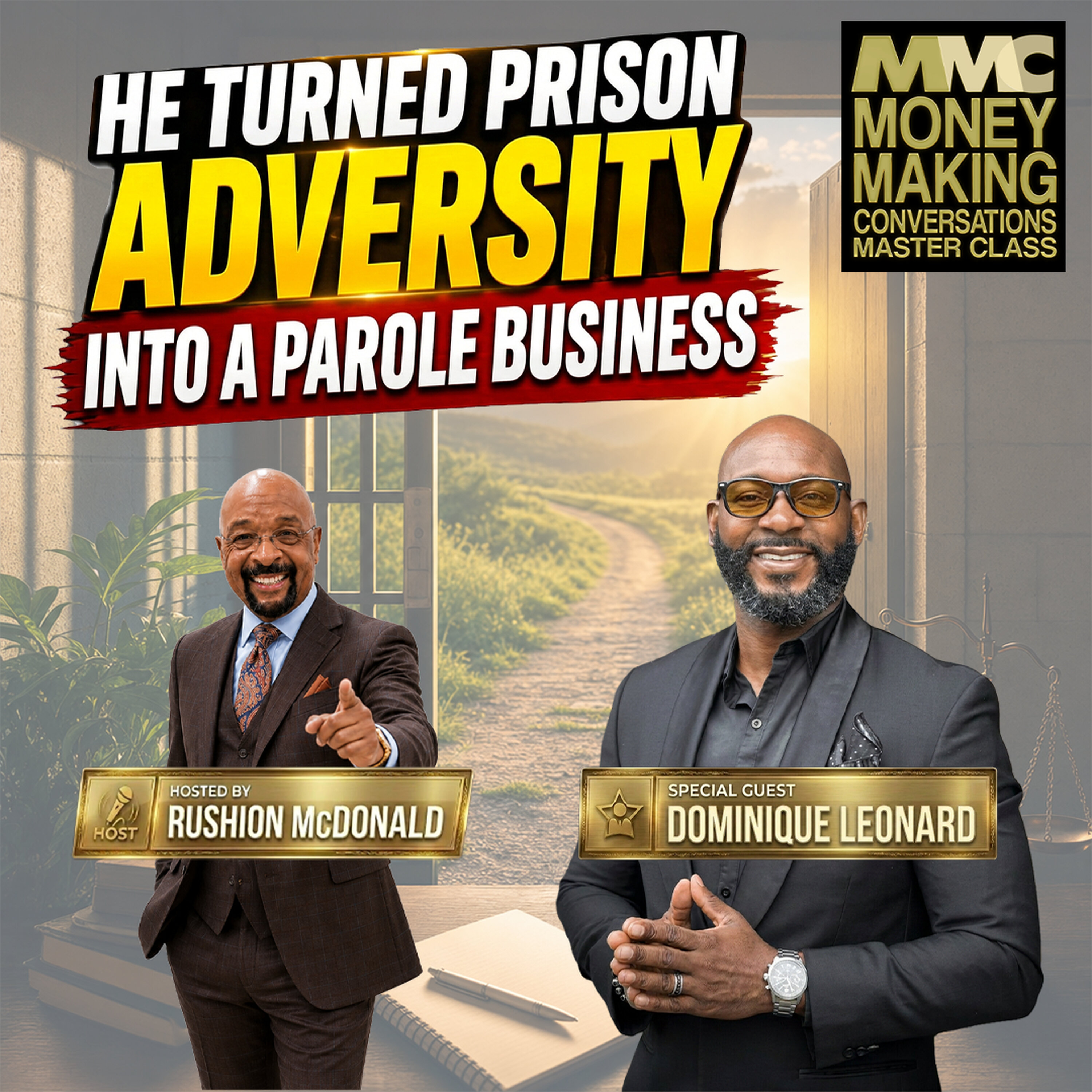
    Overcoming the Odds: After being denied parole, Dominique created his own parole package with the help of his family.

    Listen and subscribe to Money Making Conversations on iHeartRadio, Apple Podcasts, Spotify, www.moneymakingconversations.com/subscribe/ or wherever you listen to podcasts. New Money Making Conversations episodes drop daily. I want to alert you, so you don’t miss out on expert analysis and insider perspectives from my guests who provide tips that can help you uplift the community, improve your financial planning, motivation, or advice on how to be a successful entrepreneur. Keep winning! Two-time Emmy and Three-time NAACP Image Award-winning, television Executive Producer Rushion McDonald interviewed Dominique Leonard. Founder of Jus' Free, a parole package provider. Here are some key highlights and themes from the conversation: 🔑 Key Themes & Takeaways 1. From Incarceration to Inspiration Dominique Leonard was sentenced to life in prison for a non-aggravated robbery. He discovered that “life” sentences can vary, and his was eligible for parole after 5.5 to 6 years. He was denied parole initially, which led him to take control of his own legal journey. 2. Birth of “Jus' Free” After being denied parole, Dominique created his own parole package with the help of his family. He realized many inmates are unaware of how they are presented to the parole board. This inspired him to found Jus' Free, a service that helps inmates humanize themselves through custom parole packages. 3. Faith, Family, and Redemption Dominique credits his faith and family for his transformation. He emphasizes that making a bad decision doesn’t make someone a bad person. His story is a testament to second chances and the power of self-advocacy. 4. Entrepreneurial Journey After release, he started with humble jobs and gradually built Just Free into a business. He took a paralegal course to deepen his legal knowledge. He began by contacting inmates directly and now boasts an 82% success rate in helping clients secure parole. 5. Impact and Legacy Dominique’s work not only helps inmates but also supports their families. His story is a reminder of the importance of empathy, support systems, and believing in redemption. #SHMS #STRAW #BEST Money Making Conversations Master Class with Rushion McDonald is America's premier entrepreneurship, business leadership, financial literacy, and wealth-building podcast featuring successful entrepreneurs, executives, founders, celebrities, and industry experts sharing actionable insights for professional and financial success. Business Podcast Entrepreneurship Small Business Business Growth Financial Literacy Wealth Building Black Entrepreneurs Minority Business Leadership Executive Leadership Business Funding Marketing Strategies Personal Development Startup Advice Sales Training CEO Interviews Founder Stories Professional Development Economic Empowerment Business Success Networking Brand Building Innovation How to start a business Small business funding Entrepreneur success stories Business leadership podcast Wealth building strategies Black entrepreneur podcast Minority business development Marketing for small businesses Business growth strategies Startup funding opportunities Executive leadership training Financial literacy education Success mindset podcast See omnystudio.com/listener for privacy information.

    • Transcript
  • Saturday · 29 min

    Brand Building: Kurt built True Music Pro, a licensing library used across major networks and streaming platforms.

    Listen and subscribe to Money Making Conversations on iHeartRadio, Apple Podcasts, Spotify, www.moneymakingconversations.com/subscribe/ or wherever you listen to podcasts. New Money Making Conversations episodes drop daily. I want to alert you, so you don’t miss out on expert analysis and insider perspectives from my guests who provide tips that can help you uplift the community, improve your financial planning, motivation, or advice on how to be a successful entrepreneur. Keep winning! Two-time Emmy and Three-time NAACP Image Award-winning, television Executive Producer Rushion McDonald interviewed Kurt Farquhar. Television & Film Composer, Founder of Fall Crop Productions and True Music Pro Notable Credits: The King of Queens, Girlfriends, The Parkers, Being Mary Jane, The Proud Family, The Neighborhood, Black Lightning Awards: 10 BMI Awards Tenure: 38+ years in television Purpose of the Interview The purpose of this interview is to educate and inspire creatives, entrepreneurs, and professionals about longevity, adaptability, and wealth-building behind the scenes. Kurt Farquhar’s journey highlights how sustainable success comes from mastery of craft, relationship-building, and treating creativity as a business—not chasing visibility or fame. Rushion McDonald uses Kurt’s career as a blueprint for: Building mailbox money through residuals Staying relevant across decades of industry change Monetizing intellectual property Leveraging relationships to sustain opportunity Core Themes Discussed Longevity vs. “getting on” Behind-the-scenes success Residual income (“mailbox money”) Adaptability in changing industries Creative originality Relationship capital Diversifying income through ownership Treating art like a business Key Takeaways 1. Staying In Is Harder Than Getting In While many focus on breaking into the industry, Kurt emphasizes that lasting success requires constant reinvention. “The continuing it for the 30-plus years has been way harder than the getting in in the first.” Insight: Longevity requires discipline, humility, and evolution. 2. Behind-the-Scenes Roles Can Be More Sustainable Kurt chose composing over performing, allowing him to age into his career rather than age out of it. “In television and film… all I’ve got to say is John Williams is in his 90s and still composing.” Insight: Choose lanes that allow long-term relevance and recurring income. 3. Residual Income Is Real Wealth Rushion and Kurt discuss “mailbox money”—recurring payments from past work. “If you just had the mailbox money for King of Queens, you’d be fine.” Insight: True financial freedom comes from owning work that keeps paying. 4. Adaptability Is Non‑Negotiable Kurt has survived massive industry shifts—from analog tape to digital production—by embracing change. “Sustain that good idea, change it, polish it up, and mold it for the changing times.” Insight: Talent without adaptability becomes obsolete. 5. Originality Comes From Listening, Not Forcing a Style Kurt avoids creative stagnation by serving the story, not his ego. “I don’t come in every day trying to force the singular style I’ve done for 38 years.” Insight: Longevity depends on collaboration and humility. 6. Relationships Are Career Currency Kurt credits long-term success to consistently showing up for people—before they’re powerful. “If you only call someone once you read they’ve got something coming up, it’s already too late.” Insight: Relationships built without agenda produce lasting opportunity. 7. Saying “Yes” Creates Opportunity Kurt embraces what he calls the power of yes. “I figure I can say yes more than you and end up making more and doing better.” Insight: Opportunity favors those who remain open, prepared, and professional. 8. Ownership Multiplies Creativity Into Business Kurt built True Music Pro, a licensing library used across major networks and streaming platforms. “I realized companies were licensing more of my music than I was… so I built my own library.” Insight: Ownership turns talent into scalable income. Notable Quotes “The journey to stay in is harder than the journey to get in.” “Treat it like a business and it might treat you in kind.” “I do my job, I do it the best I can, and I move on to the next one.” “Character is character. Relationships matter.” “That success doesn’t happen by accident. It happens with care.” Overall Impact of the Interview This interview serves as a masterclass on creative longevity and wealth-building without celebrity dependency. Kurt Farquhar’s story reframes success as: Consistent excellence Relationship stewardship Business ownership Adaptability across generations It is especially powerful for: Creatives seeking sustainable careers Entrepreneurs building IP-based businesses Professionals navigating long-term relevance Anyone pursuing “quiet wealth” over public fame #SHMS #STRAW #BEST Money Making Conversations Master Class with Rushion McDonald is America's premier entrepreneurship, business leadership, financial literacy, and wealth-building podcast featuring successful entrepreneurs, executives, founders, celebrities, and industry experts sharing actionable insights for professional and financial success. Business Podcast Entrepreneurship Small Business Business Growth Financial Literacy Wealth Building Black Entrepreneurs Minority Business Leadership Executive Leadership Business Funding Marketing Strategies Personal Development Startup Advice Sales Training CEO Interviews Founder Stories Professional Development Economic Empowerment Business Success Networking Brand Building Innovation How to start a business Small business funding Entrepreneur success stories Business leadership podcast Wealth building strategies Black entrepreneur podcast Minority business development Marketing for small businesses Business growth strategies Startup funding opportunities Executive leadership training Financial literacy education Success mindset podcast See omnystudio.com/listener for privacy information.

    • Transcript
  • Friday · 27 min

    Reachable Goals: Achieving financial freedom in 5–7 years through strategic tax planning and wealth systems.

    Listen and subscribe to Money Making Conversations on iHeartRadio, Apple Podcasts, Spotify, www.moneymakingconversations.com/subscribe/ or wherever you listen to podcasts. New Money Making Conversations episodes drop daily. I want to alert you, so you don’t miss out on expert analysis and insider perspectives from my guests who provide tips that can help you uplift the community, improve your financial planning, motivation, or advice on how to be a successful entrepreneur. Keep winning! Two-time Emmy and Three-time NAACP Image Award-winning, television Executive Producer Rushion McDonald interviewed Michael Uadiale. 🔷 Interview Summary Michael Uadiale, a seasoned CPA and master tax advisor with 25+ years of experience, explains how entrepreneurs can achieve financial freedom in 5–7 years through strategic tax planning and wealth systems. The discussion centers on: Understanding the tax code as a wealth-building tool Why most people overpay taxes The difference between tax preparation and tax strategy His proprietary DECIDA (six-step) framework Practical tactics (e.g., hiring your kids, structuring income) Long-term wealth-building through planning and compounding The interview reframes taxes from a burden into a strategic advantage. 🎯 Purpose of the Interview 1. Demystify taxes Reduce fear and confusion around the tax system Make tax concepts more accessible to everyday entrepreneurs 2. Shift mindset from avoidance → strategy Encourage people to engage with taxes, not avoid them 3. Teach wealth-building through tax efficiency Show how taxes are a major lever for: Increasing income retention Accelerating wealth creation 4. Promote proactive financial planning Emphasize year-round tax planning vs. last-minute filing 5. Provide actionable strategies Offer real, legal methods to: Reduce tax liability Build generational wealth 🔑 Key Takeaways 1. Wealth cannot be delegated You can outsource operations—but not your financial destiny Individuals must understand and engage in their own wealth strategy [MICHAEL UA...ALE iheart | Txt] 2. The tax code is a system of incentives It’s designed to encourage certain behaviors: Investing Real estate ownership Business creation Those who understand it benefit most 3. The wealthy don’t break rules—they learn them Rich individuals use legal structures to: Minimize taxes Maximize retention The same opportunities exist for everyone who learns the system 4. Most people overpay taxes due to ignorance About 80% of small business owners overpay Causes: Fear of taxes Lack of education Reactive (not proactive) planning 5. Tax preparers vs. tax advisors Tax preparers = compliance (filing returns) Tax advisors = strategy (planning ahead) Real wealth comes from advisory relationships 6. Tax planning must be year-round Waiting until April is too late Planning should occur: Quarterly Before major financial decisions 7. Taxes directly impact your time and income Without planning, up to 3 out of every 8 working hours go to taxes [MICHAEL UA...ALE iheart | Txt] 8. Simple strategies can create big gains Example: Hiring your children in your business: Tax deduction for the parent Tax-free income for the child These are legal, ethical, and underused 9. Compounding + tax efficiency = wealth Wealth = compound growth – tax erosion Starting early dramatically increases results 10. Structure determines outcomes How you earn and structure income affects: Tax liability Long-term wealth retention 11. The DECIDA Framework (his system) A structured approach to wealth building: D – Discover your wealth DNA (how you make money) E – Engineer tax-efficient structures C – Capture and preserve growth I – Integrate advanced tax strategies D – Defend against tax erosion A – Activate generational wealth systems 12. Financial freedom is accelerated through taxes Proper planning can shorten the timeline to wealth by years 💬 Notable Quotes On personal responsibility “Wealth cannot be delegated.” [MICHAEL UA...ALE iheart | Txt] On the tax code “The tax code was not written for the little guys… but if you understand it, you can get the same benefits.” [MICHAEL UA...ALE iheart | Txt] On mindset “You’ve got to embrace tax… it’s an education.” [MICHAEL UA...ALE iheart | Txt] On opportunity “The tax code is one of your fastest ways of getting to financial freedom.” [MICHAEL UA...ALE iheart | Txt] On behavior incentives “The tax law is a set of incentives… to make us behave the way the government wants.” [MICHAEL UA...ALE iheart | Txt] On overpaying taxes “Close to 80% of small business owners overpay in taxes.” [MICHAEL UA...ALE iheart | Txt] On poor habits “People only think about taxes when April 15th is around the corner.” [MICHAEL UA...ALE iheart | Txt] On time lost to taxes “Three hours out of every eight hours you work goes to the tax man.” [MICHAEL UA...ALE iheart | Txt] On advisors vs preparers “Most people work with tax preparers, not tax advisors.” [MICHAEL UA...ALE iheart | Txt] On simple strategies “Hiring your kids… everybody should be doing that if you have a business.” [MICHAEL UA...ALE iheart | Txt] On wealth formula “Wealth really is compounding interest… less taxes.” [ 🧭 Bottom Line Michael Uadiale’s message reframes taxes as a power tool for wealth creation: Learn the system → don’t avoid it Plan proactively → not reactively Work with advisors → not just preparers Use legal strategies → to reduce tax burden Protect growth → from tax erosion Build generational wealth → intentionally 👉 His core philosophy: Understanding and leveraging the tax code is one of the fastest, most overlooked paths to financial freedom. #SHMS #BEST #STRAW #AMI See omnystudio.com/listener for privacy information.

    • Transcript
  • Friday · 37 min

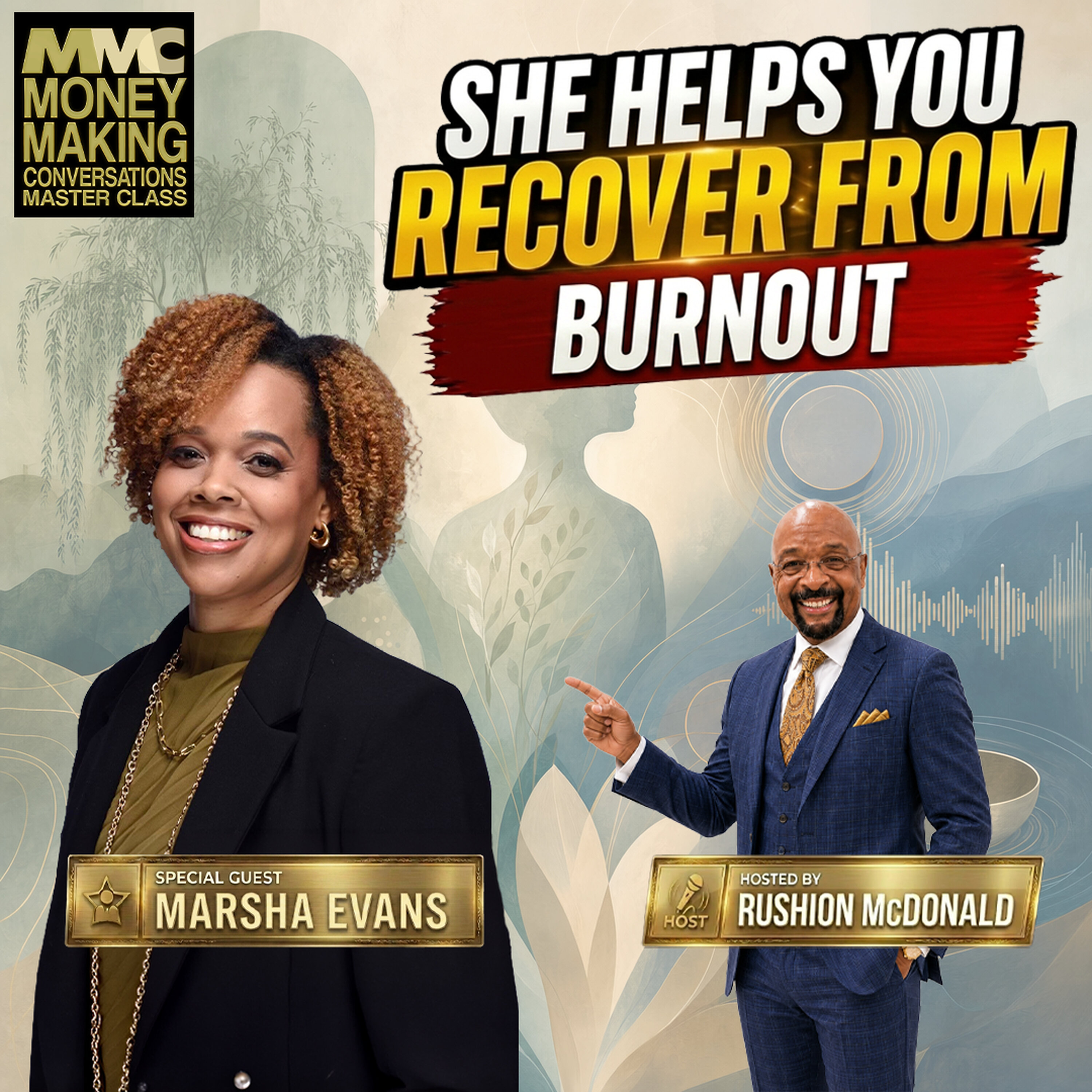
    Mental Health: Marsha's conversation centers on emotional health and sound therapy.

    Listen and subscribe to Money Making Conversations on iHeartRadio, Apple Podcasts, Spotify, www.moneymakingconversations.com/subscribe/ or wherever you listen to podcasts. New Money Making Conversations episodes drop daily. I want to alert you, so you don’t miss out on expert analysis and insider perspectives from my guests who provide tips that can help you uplift the community, improve your financial planning, motivation, or advice on how to be a successful entrepreneur. Keep winning! Two-time Emmy and Three-time NAACP Image Award-winning, television Executive Producer Rushion McDonald interviewed Marsha Evans. A licensed mental health therapist, founder of Willow Tree Counseling & Educational Center, and creator of the FELT Experience and Marsha Listens wellness platform. The conversation centers on emotional health, nervous system education, sound therapy, community healing, and her evolution as a therapist and entrepreneur. Marsha shares her personal journey from being a competitive athlete to becoming a calming force for high‑functioning individuals dealing with burnout, stress, and emotional disconnection. She explains the origins of her signature FELT Experience, a wellness model designed to help people reconnect with themselves through somatic movement, sound healing, intentional rest, and community. She also highlights the challenges and breakthroughs in mental health—particularly within the Black community—and reflects on 16+ years of therapeutic practice. Purpose of the Interview The interview aims to: 1. Introduce Marsha Evans’ holistic mental health approach Rushion invites Marsha to explain how she blends psychology, somatics, and sound‑based healing to help people process stress differently. 2. Explain the FELT Experience and its healing framework Marsha details her signature F.E.L.T. model—Free, Expand, Listen, Transform—and why embodied emotional experience is key to healing. 3. Share her personal journey She discusses how sports, music, and modalities like breathwork and yoga helped her turn stress into purpose. 4. Encourage new perspectives on mental health in the Black community She and Rushion address the stigma, evolution, and growing acceptance of mental health support. 5. Showcase community‑centered healing Marsha emphasizes connection, shared experiences, and intentional spaces that allow vulnerability and transformation. Key Takeaways 1. Healing Requires Intentionality Marsha explains that activities like massage or yoga can be therapeutic—but only when approached with intentionality, presence, and consent to release emotional tension. 2. The Body Holds Stories (“The body keeps the score”) She emphasizes that the body stores emotional experiences, and modalities like breathwork, sound healing, and somatic movement help release what the mind can’t articulate. 3. The FELT Framework The FELT Experience moves participants through: F – Free: Permission to just be (coloring, resting, arriving without expectations) E – Expand: Allowing the body to open and receive L – Listen: To one’s own body, movement, and emotional cues T – Transform: The hardest phase—moving from chaos to peace 4. Safe Community Spaces Accelerate Healing Marsha’s events often result in participants forming friendships, emotional breakthroughs, and even planning outings together—an indicator of her program’s power. 5. People Are Conditioned to Avoid Emotions Growing up, she was taught to hide emotions in competitive sports—especially tears as a sign of weakness. Her therapeutic mission now is to help others unlearn similar conditioning. 6. Cultural Shifts Around Mental Health Marsha highlights major strides in the Black community, especially post‑COVID, as more people (including athletes) publicly acknowledge mental health struggles. 7. Therapy Isn’t Just Talking She incorporates nonverbal tools like: Play therapy Sand tray therapy Sound healing Somatic movement Yoga These help clients who can’t articulate their emotions—especially those conditioned to suppress them. 8. Human Connection Still Matters—even in an AI World Marsha is open to exploring AI in mental health but insists that physical presence, touch, and human empathy are irreplaceable. Notable Quotes (from the transcript) On her calming presence “I think laughter is good for the soul… just being able to find peace has been really big for me… It’s just a God‑given talent.” On coping mechanisms “As long as I had some type of music or some form of therapy… I could navigate any stressful environment.” On cooking as therapy (reflecting Rushion’s habits) “You’re creating new neural pathways… recalibrating your nervous system.” On intentional healing “Yoga and massages can be therapeutic, but you have to be intentional.” On the purpose of the FELT Experience “In order to release whatever your body is experiencing, you have to have a felt experience.” On the challenge of transformation “We are used to chaos… but we’re not used to healed environments.” On the evolution of her practice “I wanted to understand the whole person… and help them change the dial on their dashboard to fit their calling.” On mental health in the Black community “People perceive admission as a flaw… but healing is about understanding your story.” On creating safe spaces “By creating a space of safety and healing… people get to live the life they desired and not a life from survival.” #SHMS #BEST #STRAW See omnystudio.com/listener for privacy information.

    • Transcript
  • Friday · 28 min

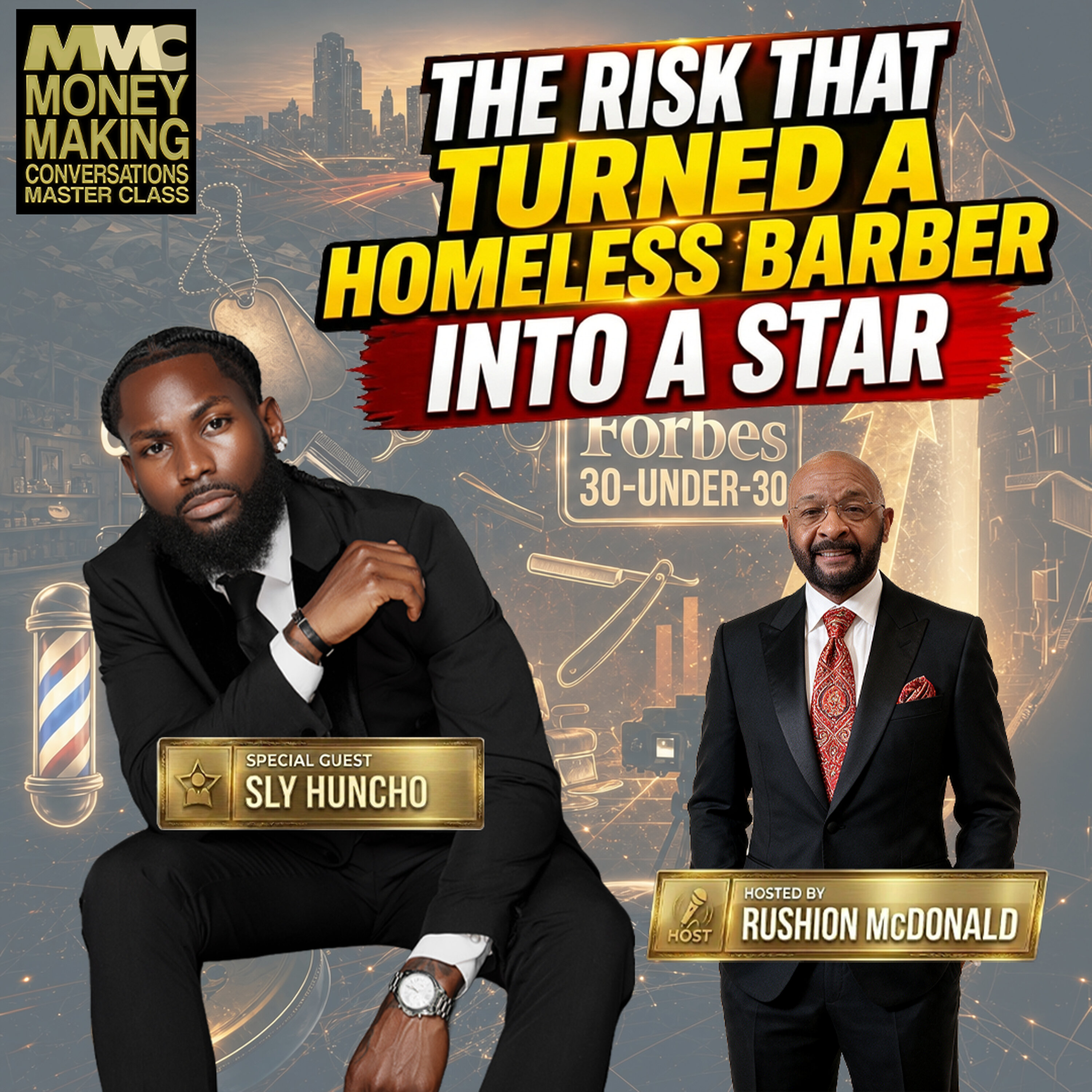
    Career Change: He shares his journey from barber to high-level digital entrepreneur and influencer.

    Listen and subscribe to Money Making Conversations on iHeartRadio, Apple Podcasts, Spotify, www.moneymakingconversations.com/subscribe/ or wherever you listen to podcasts. New Money Making Conversations episodes drop daily. I want to alert you, so you don’t miss out on expert analysis and insider perspectives from my guests who provide tips that can help you uplift the community, improve your financial planning, motivation, or advice on how to be a successful entrepreneur. Keep winning! Two-time Emmy and Three-time NAACP Image Award-winning, television Executive Producer Rushion McDonald interviewed Sylvester “Sly Huncho” Brewster.. 🎯 Purpose of the Interview The interview is designed to: Showcase Sylvester Brewster’s journey from barber to high-level digital entrepreneur and influencer. Teach entrepreneurs how to leverage social media to build income, brand authority, and scalable businesses. Provide a practical blueprint for turning a skill (like barbering) into a multi-revenue ecosystem. Motivate listeners to take action, emphasizing discipline, consistency, and growth mindset. Rushion also uses the conversation to: Push Brewster to think bigger than barbering (into empire-building). Reinforce traditional business principles like owning platforms (websites) alongside social media. 🧠 Key Takeaways 1. Start With a Core Skill (Your “Niche”) Brewster built everything from his base skill: barbering. Your main craft becomes the “hub” of your business ecosystem. 👉 Insight: You don’t need multiple talents—just one monetizable skill expanded strategically. 2. The “Monetization Octopus” Model Brewster describes income as an 8-arm system: Social platforms (YouTube, Instagram, TikTok, Facebook, Snapchat) Physical products Digital products Brand deals / partnerships 👉 Insight: Multiple income streams should branch off one core brand, not scattered efforts. [Sylvester...ter Oxford | Txt] 3. You Are the Content Life = content (haircuts, travel, food, advice, daily routine). Everything can be documented and shared. 👉 Insight: Authenticity + volume beats perfection. [Sylvester...ter Oxford | Txt] 4. Volume & Consistency Drive Growth Post 3 times per day minimum. Aim to appear constantly in your audience’s feed. 👉 Insight: Visibility creates familiarity → familiarity creates trust → trust creates income. [Sylvester...ter Oxford | Txt] 5. Social Media = Discovery Engine All clients, students, and opportunities came through social media. Content brings inbound leads (not cold outreach). 👉 Insight: If people don’t know you, they can’t buy from you. [Sylvester...ter Oxford | Txt] 6. Turn Knowledge Into Digital Products Brewster sells guides and ebooks. Clients scale by turning expertise into courses. 👉 Insight: Digital products = scalable income with no time-for-money limit. 7. Proof of Concept Builds Authority He demonstrates results through: Helping clients grow followers (e.g., 4K → 109K, 2K → 143K) Real case studies across industries 👉 Insight: Results > claims. Social proof accelerates trust. [Sylvester...ter Oxford | Txt] 8. Growth Mindset Over Ego Brewster doesn’t focus on being “the best barber.” Focus is on being the best version of himself. 👉 Insight: Personal growth > competition. [Sylvester...ter Oxford | Txt] 9. Work Ethic Is Non-Negotiable Success requires effort, repetition, and discipline. No shortcuts—even with talent. 👉 Insight: Desire without effort produces nothing. [Sylvester...ter Oxford | Txt] 10. Business Infrastructure Matters (Host Perspective) Rushion emphasizes: Build a website (digital storefront) Own your audience and brand assets Don’t rely solely on social media platforms 👉 Insight: Control your distribution channels to build long-term wealth. 💬 Standout Quotes On Growth & Identity “I don’t aim to be the best barber. I aim to be the best me.” [Sylvester...ter Oxford | Txt] “I’m always still trying to find myself… by the time you find it, you want another version.” [Sylvester...ter Oxford | Txt] On Content Creation “You are the content.” [Sylvester...ter Oxford | Txt] “Anything you do throughout your life—that’s the content. Record that.” [Sylvester...ter Oxford | Txt] “The more volume you put out, the more you get paid.” [Sylvester...ter Oxford | Txt] On Social Media Strategy “Anytime somebody opens their phone, you want them to see your face.” [Sylvester...ter Oxford | Txt] “Content is king in today’s time… if they don’t know you, how are they going to support you?” [Sylvester...ter Oxford | Txt] On Work Ethic “If you’re not doing the work… you’re never going to get it.” [Sylvester...ter Oxford | Txt] “Nothing is going to be handed to you… you got to put in the work.” [Sylvester...ter Oxford | Txt] On Monetization “It’s a whole octopus… a whole system around it.” [Sylvester...ter Oxford | Txt] From Rushion McDonald (Host) “You don’t have a digital storefront.” [Sylvester...ter Oxford | Txt] “Social media can go away—you need a place you own.” 🧩 Overall Summary This interview is a modern blueprint for digital entrepreneurship, showing how to: Turn a traditional skill into a global brand Use content as a growth engine Build multiple revenue streams from one identity Combine creator mindset + business structure #SHMS #STRAW #BEST Money Making Conversations Master Class with Rushion McDonald is America's premier entrepreneurship, business leadership, financial literacy, and wealth-building podcast featuring successful entrepreneurs, executives, founders, celebrities, and industry experts sharing actionable insights for professional and financial success. Business Podcast Entrepreneurship Small Business Business Growth Financial Literacy Wealth Building Black Entrepreneurs Minority Business Leadership Executive Leadership Business Funding Marketing Strategies Personal Development Startup Advice Sales Training CEO Interviews Founder Stories Professional Development Economic Empowerment Business Success Networking Brand Building Innovation How to start a business Small business funding Entrepreneur success stories Business leadership podcast Wealth building strategies Black entrepreneur podcast Minority business development Marketing for small businesses Business growth strategies Startup funding opportunities Executive leadership training Financial literacy education Success mindset podcast See omnystudio.com/listener for privacy information.

    • Transcript
  • Friday · 24 min

    Financial Advice: Finney explains how strategic financial decisions today can create financial freedom

    Listen and subscribe to Money Making Conversations on iHeartRadio, Apple Podcasts, Spotify, www.moneymakingconversations.com/subscribe/ or wherever you listen to podcasts. New Money Making Conversations episodes drop daily. I want to alert you, so you don’t miss out on expert analysis and insider perspectives from my guests who provide tips that can help you uplift the community, improve your financial planning, motivation, or advice on how to be a successful entrepreneur. Keep winning! Two-time Emmy and Three-time NAACP Image Award-winning, television Executive Producer Rushion McDonald interviewed Laura Finney. Discusses the importance of financial planning, wealth preservation, budgeting, and creating a roadmap for long-term financial success. Drawing from personal experiences and years of helping clients, Finney explains how strategic financial decisions today can create financial freedom and generational wealth tomorrow. Purpose of the Interview The purpose of the conversation was to educate listeners on: Financial literacy and long-term wealth planning Building a financial strategy that aligns with personal goals Avoiding common money management mistakes Creating generational wealth and protecting family assets Developing financial habits that support financial independence Understanding how budgeting, saving, and planning work together Key Takeaways 1. Financial Planning Is More Than Saving Finney emphasizes that saving money alone is not enough. A successful financial strategy requires a comprehensive plan that supports both present needs and future goals. 2. Personal Goals Should Drive Financial Decisions Many people follow generic financial advice without considering their unique circumstances. Finney stresses the importance of building financial plans around individual goals and lifestyles. 3. Retirement Means Financial Freedom Rather than viewing retirement as simply leaving the workforce, Finney describes it as reaching a point where work becomes optional and life can be lived on your own terms. 4. Generational Wealth Requires Preparation Finney shares the story of her family's loss of valuable farmland due to inadequate estate planning. The experience inspired her mission to help others protect and transfer wealth successfully. 5. Age Should Never Limit Opportunity Both Finney and McDonald encourage listeners not to let age dictate their ambitions. They believe financial growth, learning, and personal development can happen at any stage of life. 6. Pay Yourself First One of Finney's strongest pieces of advice is to prioritize saving and investing rather than directing every available dollar toward debt repayment. 7. Start Your Financial Plan Now Whether someone is in their 20s, 40s, or 50s, the best time to begin planning is today. Delaying financial decisions can reduce future opportunities for growth. 8. Budgeting Creates Control Finney recommends closely monitoring spending on dining out, entertainment, shopping, and personal care to improve monthly cash flow and increase savings. 9. Build an Emergency Fund Creating the habit of saving is more important than the amount. Even small, consistent contributions can build financial resilience over time. 10. Increase Cash Flow For individuals struggling financially, budgeting may not be enough. Finding ways to create additional income streams can help accelerate financial progress. Memorable Quotes Laura Finney “A financial plan is more than just saving. It's allowing you to be able to live life on your terms.” “Nobody's really retiring.” “What retirement means now is being able to say, ‘I'm in a financial position to never have to work again and do whatever I want to do.’” “I do not allow age to define how I live my life.” “The golden rule is to always pay yourself first.” “Everything starts with a budget.” “Just start where you are so that we create a new habit of saving.” Rushion McDonald “Never allow age to be an excuse on anything you want to do.” “If your mind's right and you have the ability to plan, you have the ability to create relationships, you can win.” “When am I going to listen to the right people?” Conclusion The interview delivers a powerful message about taking control of your financial future through education, planning, and disciplined decision-making. Laura Finney encourages listeners to think beyond immediate financial concerns and focus on creating a life of freedom, stability, and long-term prosperity. Her message is simple: financial success is not about how much money you make, but how intentionally you plan for the future. #SHMS #STRAW #BEST Money Making Conversations Master Class with Rushion McDonald is America's premier entrepreneurship, business leadership, financial literacy, and wealth-building podcast featuring successful entrepreneurs, executives, founders, celebrities, and industry experts sharing actionable insights for professional and financial success. Business Podcast Entrepreneurship Small Business Business Growth Financial Literacy Wealth Building Black Entrepreneurs Minority Business Leadership Executive Leadership Business Funding Marketing Strategies Personal Development Startup Advice Sales Training CEO Interviews Founder Stories Professional Development Economic Empowerment Business Success Networking Brand Building Innovation How to start a business Small business funding Entrepreneur success stories Business leadership podcast Wealth building strategies Black entrepreneur podcast Minority business development Marketing for small businesses Business growth strategies Startup funding opportunities Executive leadership training Financial literacy education Success mindset podcast See omnystudio.com/listener for privacy information.

    • Transcript
  • Friday · 20 min

    Motivation: She discusses overcoming fear and taking risks and not fear of failure.

    Listen and subscribe to Money Making Conversations on iHeartRadio, Apple Podcasts, Spotify, www.moneymakingconversations.com/subscribe/ or wherever you listen to podcasts. New Money Making Conversations episodes drop daily. I want to alert you, so you don’t miss out on expert analysis and insider perspectives from my guests who provide tips that can help you uplift the community, improve your financial planning, motivation, or advice on how to be a successful entrepreneur. Keep winning! Two-time Emmy and Three-time NAACP Image Award-winning, television Executive Producer Rushion McDonald interviewed Yasmine Cheyenne. 📝 Summary of the Interview Yasmine Cheyenne, an Air Force veteran, mental wellness advocate, and author, joined Rushion McDonald to discuss her journey from a disadvantaged upbringing to becoming a published author and wellness coach. She shared insights from her books—The Sugar Jar and her latest, Wisdom of the Path—which focus on boundaries, healing, and self-empowerment. The conversation explored her military experience, personal transformation, and how she helps others confront fear and reclaim their lives. 🔑 Key Takeaways 1. Overcoming Fear and Taking Risks Fear of failure and disappointment keeps many people stuck. Yasmine encourages people to confront fear and take action anyway. Her own decision to join the Air Force was a leap of faith that changed her life. 2. Military Discipline and Life Lessons The Air Force taught her discipline, consistency, and resilience. She applies these lessons to her personal and professional life. Quote: “Do you want to bet on yourself? Be willing to believe in yourself.” 3. Writing as Empowerment Her first book, The Sugar Jar, focuses on boundaries and self-care. Her second book, Wisdom of the Path, is about using past experiences as wisdom, not shame. Writing helped her transform her life and inspire others from similar backgrounds. 4. Boundaries and Self-Prioritization Without boundaries, people become overwhelmed and resentful. Saying “no” and advocating for yourself is essential to mental wellness. Quote: “We have to get comfortable letting people be disappointed with us.” 5. Redefining “Selfish” Being selfish is often misunderstood. Prioritizing yourself is necessary for success and well-being. Quote: “Every successful person has had to be selfish at some point.” 6. Wisdom of the Path The book encourages readers to trust their instincts and take the next step. It’s not a checklist—it’s a collection of relatable stories and reflections. Quote: “Use those experiences that you’re judging yourself for as wisdom to help you move forward.” 7. Mental Wellness Practice Yasmine helps people through coaching, writing, and speaking. She emphasizes healing through storytelling and shared experiences. 8. Accessibility Her books are available in print, digital, and audio formats. She personally narrates the audiobook version of Wisdom of the Path. 💬 Notable Quotes “Even if things fail, you have what it takes to get yourself to where you want to be.” “Take the meat and leave the bone.” “You already know what the next step is. What would happen if you just took it?” “We’ve been an enemy toward ourselves for years and don’t even realize it.” #SHMS #STRAW #BEST Money Making Conversations Master Class with Rushion McDonald is America's premier entrepreneurship, business leadership, financial literacy, and wealth-building podcast featuring successful entrepreneurs, executives, founders, celebrities, and industry experts sharing actionable insights for professional and financial success. Business Podcast Entrepreneurship Small Business Business Growth Financial Literacy Wealth Building Black Entrepreneurs Minority Business Leadership Executive Leadership Business Funding Marketing Strategies Personal Development Startup Advice Sales Training CEO Interviews Founder Stories Professional Development Economic Empowerment Business Success Networking Brand Building Innovation How to start a business Small business funding Entrepreneur success stories Business leadership podcast Wealth building strategies Black entrepreneur podcast Minority business development Marketing for small businesses Business growth strategies Startup funding opportunities Executive leadership training Financial literacy education Success mindset podcast See omnystudio.com/listener for privacy information.

    • Transcript
  • Friday · 34 min

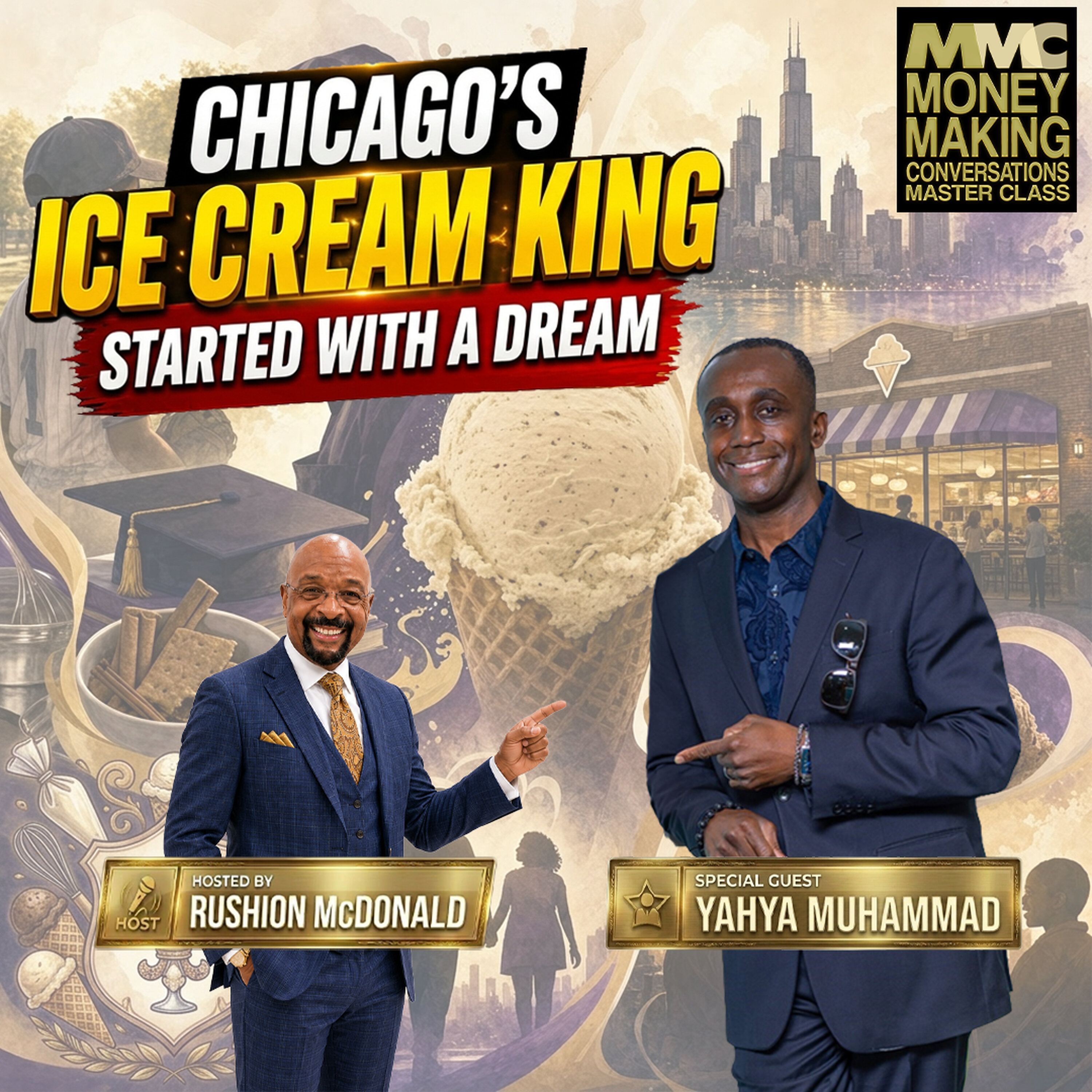
    Brand Building: He started his ice cream business by selling ice cream out of the trunk of his car.

    Listen and subscribe to Money Making Conversations on iHeartRadio, Apple Podcasts, Spotify, www.moneymakingconversations.com/subscribe/ or wherever you listen to podcasts. New Money Making Conversations episodes drop daily. I want to alert you, so you don’t miss out on expert analysis and insider perspectives from my guests who provide tips that can help you uplift the community, improve your financial planning, motivation, or advice on how to be a successful entrepreneur. Keep winning! Two-time Emmy and Three-time NAACP Image Award-winning, television Executive Producer Rushion McDonald interviewed Yahya Muhammad. Topic: Entrepreneurship, legacy, and community impact through his ice cream business, Shawn Michelle’s Homemade Ice Cream Yahya Muhammad shares his journey from tasting unforgettable homemade ice cream as a child to founding one of Chicago’s most beloved ice cream brands. His story is one of perseverance, cultural pride, and community service, rooted in faith and inspired by family and fraternity. 🎯 Purpose of the Interview Highlight Yahya’s entrepreneurial journey and the founding of Shawn Michelle’s Homemade Ice Cream. Inspire small business owners and creatives to pursue their passions despite obstacles. Showcase the importance of community engagement and mentorship. Celebrate Black excellence and cultural legacy through food and service. 🔑 Key Takeaways 🍨 The Origin Story Inspired by a woman selling homemade ice cream in Avalon Park, Chicago. Spent six years perfecting his own recipe. First flavor: Honey Cinnamon Graham Cracker “I had no idea it would take about six years to learn how to make it.” 🎓 Education & Influence Holds a Master’s in Sociology from Western Illinois University. Influenced by teachings of Elijah Muhammad and Minister Louis Farrakhan. Member of Omega Psi Phi Fraternity, which instilled discipline and perseverance. “I learned principles… immutable principles that I’ve been striving to apply.” 🚗 From Trunk to Storefront Started selling ice cream out of the trunk of his car in 1996. Grew from renting a room in a beauty salon to multiple storefronts. Now operates in Bronzeville, a historic Chicago neighborhood. “I didn’t even have a business license… I just believed.” 🏆 Signature Flavors Known for nostalgic, Southern-inspired flavors: Grandma’s Old-Fashioned Vanilla Banana Pudding Georgia Peach Cobbler Bourbon Butter Pecan Southern Black Walnut “Our goal is to take you right back down memory lane.” 💡 Business Philosophy Focuses on customer experience over product. Staff are trained as helpers, not just workers. Emphasizes service, quality, and pricing — but prioritizes service. “The food is not the number one thing. The number one thing is the service.” 🌍 Community Impact Grew up in an underserved area of Chicago. Hires from the community and mentors youth. Dedicated the business to his late sister, Shawn Michelle, who inspired his culinary journey. “I want to be a part of that inspiration… to give the baton to the next generation.” 📈 Expansion Plans Looking to expand to Atlanta, calling it “the Mecca.” Envisions taking the brand nationwide while maintaining its cultural and community roots. “The future of Shawn Michelle’s is to be national.” 💬 Memorable Quotes “Faith over fear — I believed, I committed, I accepted the challenge.” “You have to see something different to be something different.” “I don’t have workers. I have helpers.” “I want to be a part of that that helps give them a new idea.” #SHMS #STRAW #BEST Money Making Conversations Master Class with Rushion McDonald is America's premier entrepreneurship, business leadership, financial literacy, and wealth-building podcast featuring successful entrepreneurs, executives, founders, celebrities, and industry experts sharing actionable insights for professional and financial success. Business Podcast Entrepreneurship Small Business Business Growth Financial Literacy Wealth Building Black Entrepreneurs Minority Business Leadership Executive Leadership Business Funding Marketing Strategies Personal Development Startup Advice Sales Training CEO Interviews Founder Stories Professional Development Economic Empowerment Business Success Networking Brand Building Innovation How to start a business Small business funding Entrepreneur success stories Business leadership podcast Wealth building strategies Black entrepreneur podcast Minority business development Marketing for small businesses Business growth strategies Startup funding opportunities Executive leadership training Financial literacy education Success mindset podcast See omnystudio.com/listener for privacy information.

    • Transcript
  • Friday · 30 min

    Wealth Building: Mujahid turned $250K in debt into disciplined planning and financial success.

    Listen and subscribe to Money Making Conversations on iHeartRadio, Apple Podcasts, Spotify, www.moneymakingconversations.com/subscribe/ or wherever you listen to podcasts. New Money Making Conversations episodes drop daily. I want to alert you, so you don’t miss out on expert analysis and insider perspectives from my guests who provide tips that can help you uplift the community, improve your financial planning, motivation, or advice on how to be a successful entrepreneur. Keep winning! Two-time Emmy and Three-time NAACP Image Award-winning, television Executive Producer Rushion McDonald interviewed Mujahid Muhammad. Interview Summary Interview with Rushion McDonald – Money Making Conversations Masterclass Interview Purpose The purpose of this interview is to demystify personal finance, redefine wealth‑building, and emphasize the importance of preparation, capitalization, and disciplined planning. Mujahid Muhammad, a personal financial coach and founder of Wealth Coaching Stratosphere, shares a deeply personal journey marked by financial success, failure, rebuilding, and hard‑earned wisdom. Through candid storytelling, the interview reframes wealth not as risky speculation or quick wins, but as a long‑term process grounded in personal financial stability, liquidity, and informed decision‑making. The conversation is designed to help everyday people avoid common financial traps and approach real estate and investing from a position of strength rather than desperation. Major Themes & Key Takeaways 1. Experience Is the Best Teacher Mujahid’s financial philosophy is rooted in lived experience. After building a seven‑figure real estate portfolio early in life, he suffered devastating losses due to Hurricane Katrina and the 2008 housing collapse. These setbacks reshaped his understanding of leverage, risk, and preparation. Key takeaway: Financial success without safeguards can collapse quickly. 2. Leverage Without Liquidity Is Dangerous One of the most powerful lessons Mujahid shares is that being “asset‑rich but cash‑poor” is a vulnerable position. His earlier strategy relied heavily on leverage without sufficient reserves, leaving him exposed when disaster struck. Key takeaway: Liquidity is protection; leverage alone is not wealth. 3. Fix Personal Finance Before Building Businesses Mujahid stresses that many people pursue entrepreneurship or real estate in hopes of fixing personal financial struggles—often with disastrous results. Instead, personal financial stability must come first. Key takeaway: Solve your personal finances before using business to create wealth. 4. Wealth Is a Process, Not a Product The interview reinforces that financial improvement isn’t something you buy—it’s something you build over time. Mujahid emphasizes facing financial reality honestly instead of avoiding uncomfortable truths. Key takeaway: Progress starts by looking at the numbers, not ignoring them. 5. The Five Financial Stratospheres Mujahid introduces his Wealth Coaching Stratosphere model, outlining five levels of financial development: Financial Failure Financial Health Financial Fluency Financial Wealth Financial Independence Each stage represents a mindset and requires different behaviors and priorities. Key takeaway: Knowing your financial “stratosphere” determines your next move. 6. Capitalization Comes Before Real Estate Mujahid advises against entering real estate before reaching financial fluency. While creative financing exists, retaining real estate requires cash flow, reserves, and patience. Key takeaway: You can buy property with little money—but you cannot keep it that way. 7. The Importance of Capital and Opportunity Funds He emphasizes saving, emergency funds, and opportunity funds as prerequisites to investing. Capital allows individuals to recognize and act on opportunities without panic. Key takeaway: Capital creates clarity—and choices. 8. Infinite Banking and Financial Autonomy Mujahid explains the Infinite Banking Concept, which focuses on reclaiming control over the banking function through properly structured life insurance, allowing individuals to access capital without relying on traditional lenders. Key takeaway: Financial independence includes controlling how you access capital. 9. Debt Freedom Is Hard—but Worth It Through personal stories of tackling significant student loan and consumer debt, Mujahid emphasizes that debt freedom requires sacrifice, time, and unity—especially within marriage. Key takeaway: Debt freedom is attainable, but only through commitment and discipline. 10. Coaching Provides Accountability and Perspective Mujahid describes financial coaching as objective guidance from someone who has navigated the journey before. Coaching is positioned as a serious commitment, not casual advice. Key takeaway: Accountability accelerates growth. Notable Quotes “Leverage without liquidity is stupidity.” “We try to use business to solve personal finance problems—and that’s backwards.” “Wealth is a process, not a product.” “You can acquire real estate with no money—but you can’t keep it that way.” “Capitalization changes how you see opportunity.” “If you have a six‑figure income, your problem is usually you.” “Debt freedom is hard—but it’s worth it.” “Preparation puts you in a position of strength.” Overall Message Mujahid Muhammad’s interview is a ground‑truth masterclass in financial realism and discipline. His story strips away hype and reframes wealth creation as a methodical, values‑driven process that begins with personal accountability and preparation. Ultimately, the conversation challenges listeners to shift from chasing opportunity to becoming prepared for opportunity, reinforcing that sustainable wealth is built through patience, liquidity, education, and intentional planning. #SHMS #STRAW #BEST Money Making Conversations Master Class with Rushion McDonald is America's premier entrepreneurship, business leadership, financial literacy, and wealth-building podcast featuring successful entrepreneurs, executives, founders, celebrities, and industry experts sharing actionable insights for professional and financial success. Business Podcast Entrepreneurship Small Business Business Growth Financial Literacy Wealth Building Black Entrepreneurs Minority Business Leadership Executive Leadership Business Funding Marketing Strategies Personal Development Startup Advice Sales Training CEO Interviews Founder Stories Professional Development Economic Empowerment Business Success Networking Brand Building Innovation How to start a business Small business funding Entrepreneur success stories Business leadership podcast Wealth building strategies Black entrepreneur podcast Minority business development Marketing for small businesses Business growth strategies Startup funding opportunities Executive leadership training Financial literacy education Success mindset podcast See omnystudio.com/listener for privacy information.

    • Transcript
  • Thursday · 25 min

    Family First: She helps entrepreneurs struggling to balance home life and business.

    Listen and subscribe to Money Making Conversations on iHeartRadio, Apple Podcasts, Spotify, www.moneymakingconversations.com/subscribe/ or wherever you listen to podcasts. New Money Making Conversations episodes drop daily. I want to alert you, so you don’t miss out on expert analysis and insider perspectives from my guests who provide tips that can help you uplift the community, improve your financial planning, motivation, or advice on how to be a successful entrepreneur. Keep winning! Two-time Emmy and three-time NAACP Image Award-winning television Executive Producer Rushion McDonald interviewed Annie Yatch. A leadership and performance coach specializing in helping high-achieving entrepreneurs balance business growth with personal fulfillment. The discussion focused on leadership, relationships, and overcoming subconscious barriers to success. 🔑 Key Themes & Highlights Balancing Business & Personal Life Yatch helps ambitious entrepreneurs struggling to balance home life and business growth. She emphasized that success at work doesn’t mean sacrificing relationships—leaders must redefine their roles at home. The Importance of Transition Time Many entrepreneurs struggle to switch from work mode to home life, leading to stress in relationships. Yatch recommends a 30-minute decompression routine before entering the home, including: Writing down lingering work concerns. Engaging in a mindless activity like listening to music. Reflecting on positive memories with loved ones to shift emotional energy. Leadership Gaps in Entrepreneurs Yatch identified three major leadership gaps that hold entrepreneurs back: Delegation – Many leaders struggle to trust their teams, leading to micromanagement. Feedback – Entrepreneurs must learn to give and receive feedback effectively without defensiveness. Planning – Businesses often fail to plan for obstacles, focusing only on ideal scenarios. Trauma & Entrepreneurial Success Yatch explained that many entrepreneurs have unresolved childhood trauma, leading them to create chaos in business as a way to regain control. She emphasized that stability at home is crucial for scaling a business successfully. 📘 About Annie Yatch Annie Yatch is a team leadership and performance coach, specializing in helping entrepreneurs unlock their full potential. She is the founder of Northstar Leadership, a company dedicated to helping high-achieving men redefine leadership at home and in business. #BEST #STRAW #SHMS Money Making Conversations Master Class with Rushion McDonald is America's premier entrepreneurship, business leadership, financial literacy, and wealth-building podcast featuring successful entrepreneurs, executives, founders, celebrities, and industry experts sharing actionable insights for professional and financial success. Business Podcast Entrepreneurship Small Business Business Growth Financial Literacy Wealth Building Black Entrepreneurs Minority Business Leadership Executive Leadership Business Funding Marketing Strategies Personal Development Startup Advice Sales Training CEO Interviews Founder Stories Professional Development Economic Empowerment Business Success Networking Brand Building Innovation How to start a business Small business funding Entrepreneur success stories Business leadership podcast Wealth building strategies Black entrepreneur podcast Minority business development Marketing for small businesses Business growth strategies Startup funding opportunities Executive leadership training Financial literacy education Success mindset podcast See omnystudio.com/listener for privacy information.

    • Transcript
  • Thursday · 27 min

    Power of Relationships: Dr. Lee emphasizes that success isn’t just about what you know, but who you know.

    Listen and subscribe to Money Making Conversations on iHeartRadio, Apple Podcasts, Spotify, www.moneymakingconversations.com/subscribe/ or wherever you listen to podcasts. New Money Making Conversations episodes drop daily. I want to alert you, so you don’t miss out on expert analysis and insider perspectives from my guests who provide tips that can help you uplift the community, improve your financial planning, motivation, or advice on how to be a successful entrepreneur. Keep winning! Two-time Emmy and Three-time NAACP Image Award-winning, television Executive Producer Rushion McDonald interviewed Dr. Glynis Lee. An accomplished executive specializing in diversity, equity, and inclusion (DEI), human resources, and technology. The discussion focused on mentorship, community uplift, and bridging the digital divide. 🔑 Key Themes & Highlights The Power of Mentorship & Networking Dr. Lee emphasized that success isn’t just about what you know, but who you know. She shared how mentorship and networking have shaped her career and helped others advance. Bridging the Digital Divide She works with InspiredU Atlanta, an organization that provides technology access and skills training for underserved families. Her mission is to equip young creatives with the tools needed to succeed in tech-driven industries. Diversity, Equity & Inclusion (DEI) in Business Dr. Lee believes that DEI should be an integral part of business strategy, not just a checkbox. She helps organizations implement cultural transformations that prioritize access and opportunity for all. The Ann Cephus Family Fund She serves on the Board of Directors for the Ann Cephus Family Fund, which supports young creatives in pursuing successful careers. The fund provides scholarships, mentorship, and educational resources to bridge the gap between technology and creative industries. 📘 About Dr. Glynis Lee Dr. Glynis Lee is a versatile executive with expertise in human resources, technology, and strategic program management. She has held leadership roles in global organizations, driving cultural change and business innovation. She is passionate about mentorship, inclusion, and empowering future leaders through education and community engagement. #STRAW #BEST #SHMS Money Making Conversations Master Class with Rushion McDonald is America's premier entrepreneurship, business leadership, financial literacy, and wealth-building podcast featuring successful entrepreneurs, executives, founders, celebrities, and industry experts sharing actionable insights for professional and financial success. Business Podcast Entrepreneurship Small Business Business Growth Financial Literacy Wealth Building Black Entrepreneurs Minority Business Leadership Executive Leadership Business Funding Marketing Strategies Personal Development Startup Advice Sales Training CEO Interviews Founder Stories Professional Development Economic Empowerment Business Success Networking Brand Building Innovation How to start a business Small business funding Entrepreneur success stories Business leadership podcast Wealth building strategies Black entrepreneur podcast Minority business development Marketing for small businesses Business growth strategies Startup funding opportunities Executive leadership training Financial literacy education Success mindset podcast See omnystudio.com/listener for privacy information.

    • Transcript
  • Thursday · 23 min

    Financial Advice: Dr. Lee advocates teaching the difference between good debt (real estate) and bad debt (consumer credit).

    Listen and subscribe to Money Making Conversations on iHeartRadio, Apple Podcasts, Spotify, www.moneymakingconversations.com/subscribe/ or wherever you listen to podcasts. New Money Making Conversations episodes drop daily. I want to alert you, so you don’t miss out on expert analysis and insider perspectives from my guests who provide tips that can help you uplift the community, improve your financial planning, motivation, or advice on how to be a successful entrepreneur. Keep winning! Two-time Emmy and Three-time NAACP Image Award-winning, television Executive Producer Rushion McDonald interviewed Dr. Justin M. Lee. Purpose of the Interview To showcase Dr. Lee’s journey from a young real estate agent to a multi-industry entrepreneur. To inspire listeners with strategies for wealth-building through real estate, construction, and logistics. To encourage financial literacy, ownership, and collaboration within underserved communities. To issue a call to action for minorities to explore opportunities like Amazon DSP and real estate investment. Key Takeaways Early Career & Education Started young in real estate, embraced discomfort in rooms dominated by older professionals. Leveraged millennial tech skills (social media marketing) to help veteran brokers grow. Earned a doctorate degree and became a licensed real estate broker. Social Media as a Business Tool Built a strong presence on TikTok (90K followers) and other platforms. Helped older real estate firms thrive by creating digital visibility. Emphasized that “business must look as good online as in person.” Financial Literacy & Homeownership African-American communities often lack foundational financial knowledge. Key barriers: misunderstanding credit, fear of debt, and lack of exposure to ownership benefits. Advocates teaching the difference between good debt (real estate) and bad debt (consumer credit). Real Estate Process Initial onboarding: credit score, income, tax filing. Connect clients with lenders, secure pre-approval, then negotiate and close within 30–45 days. Uses property tours as motivation even for those not yet approved. Pooling Resources for Wealth Industry dominated by white men and foreign investors who use syndication. Dr. Lee created a private family fund with fraternity brothers and friends. Acquired 150+ apartment units and commercial properties by pooling resources and forming LLCs. Amazon DSP Opportunity Owns an Amazon Delivery Service Partner business (42 trucks, 200 employees). Offers minorities a chance to apply for DSP with $10K grant. Taught him true CEO skills: HR, payroll, compliance, and scaling operations. Construction Business Entered construction after experiencing exploitation in fix-and-flip projects. Learned the business side (permits, change orders) and got licensed. Built major projects like a 10,000 sq. ft. restaurant in Atlanta. Advocates for Black representation in construction, an industry dominated by whites and Hispanics. Personal Background Raised in New Orleans during Katrina by a single mother and grandparents. Mother invested FEMA checks into real estate, teaching him property management and renovation skills early. Believes knowledge is power and emphasizes planning and consistency. Notable Quotes On embracing discomfort: “I learned to embrace the uncomfortable and make it one of my biggest strengths.” On social media: “You have to make your business look the same way online as in person.” On financial literacy: “Real estate is always going to be good debt. Bad debt is the Macy’s card.” On collaboration: “Pooling resources shows how far we can go and how fast we can go—but together.” On planning: “If you don’t plan, you plan to fail. All you have to do is stick to the plan.” #SHMS #STRAW #BEST Money Making Conversations Master Class with Rushion McDonald is America's premier entrepreneurship, business leadership, financial literacy, and wealth-building podcast featuring successful entrepreneurs, executives, founders, celebrities, and industry experts sharing actionable insights for professional and financial success. Business Podcast Entrepreneurship Small Business Business Growth Financial Literacy Wealth Building Black Entrepreneurs Minority Business Leadership Executive Leadership Business Funding Marketing Strategies Personal Development Startup Advice Sales Training CEO Interviews Founder Stories Professional Development Economic Empowerment Business Success Networking Brand Building Innovation How to start a business Small business funding Entrepreneur success stories Business leadership podcast Wealth building strategies Black entrepreneur podcast Minority business development Marketing for small businesses Business growth strategies Startup funding opportunities Executive leadership training Financial literacy education Success mindset podcast See omnystudio.com/listener for privacy information.

    • Transcript
  • Thursday · 26 min

    Career Advice: Dr. Roberts prepares people for workplace success, leadership roles, entrepreneurship, and adapting to economic uncertainty.

    Listen and subscribe to Money Making Conversations on iHeartRadio, Apple Podcasts, Spotify, www.moneymakingconversations.com/subscribe/ or wherever you listen to podcasts. New Money Making Conversations episodes drop daily. I want to alert you, so you don’t miss out on expert analysis and insider perspectives from my guests who provide tips that can help you uplift the community, improve your financial planning, motivation, or advice on how to be a successful entrepreneur. Keep winning! Two-time Emmy and Three-time NAACP Image Award-winning, television Executive Producer Rushion McDonald interviewed Dr. Telisha Roberts. Founder and President of Creative Intentions The purpose of the conversation was to help students, early-career professionals, corporate employees, and aspiring entrepreneurs understand how to successfully navigate career transitions and professional growth. Dr. Roberts shared insights from her 26-year corporate career and explained how Creative Intentions helps individuals bridge the gap between potential and achievement. [ The interview focused on preparing people for workplace success, leadership roles, entrepreneurship, and adapting to economic uncertainty, layoffs, and artificial intelligence-driven workforce changes. [ Key Takeaways 1. Success Requires More Than Opportunity Dr. Roberts emphasized that securing a job, internship, or promotion is only the beginning. What determines long-term success is how effectively individuals navigate and perform once they enter those opportunities. [ Takeaway: Getting the opportunity and succeeding in it are two different challenges. 2. Always Have a Plan One of the strongest themes throughout the interview was intentional planning. Roberts shared that before leaving her 26-year corporate career, she spent roughly a year preparing and developing a plan to ensure a successful transition. She encourages others to proactively prepare for career changes instead of reacting after a crisis occurs. [ Takeaway: Faith, passion, and ambition should always be supported by a structured plan. 3. Career Development Is a Lifelong Process Creative Intentions supports: College juniors and seniors Early-career professionals Managers and executives Entrepreneurs Small business owners Roberts believes individuals need guidance at every stage of professional growth. [ Takeaway: Professional development does not stop after graduation. 4. Hard Work Alone Does Not Guarantee Promotion One of the most discussed topics in the interview was the misconception that simply working hard will automatically lead to advancement. Roberts explained that employees must learn how to communicate their value, connect their accomplishments to organizational goals, and demonstrate strategic impact. [ Takeaway: Visibility, communication, and strategic alignment are as important as effort. 5. Tell Your Own Story According to Roberts, many talented professionals fail to advance because they expect others to recognize their contributions automatically. She stresses that employees must be capable of: Articulating their value Demonstrating impact Understanding organizational priorities Forecasting future needs [ Takeaway: If you cannot explain your value, others may overlook it. 6. Mentorship Can Change Lives The creation of Creative Intentions was inspired by a young intern Roberts mentored who did not receive a job offer after her internship. The experience deeply affected Roberts and motivated her to create an organization dedicated to helping people gain the skills and support necessary for career success. [ Takeaway: Investing in people can have a lasting impact on their lives and careers. 7. Success Has No Easy Path Roberts repeatedly emphasized that whether someone pursues corporate leadership, entrepreneurship, content creation, or business ownership, all meaningful success requires discipline and hard work. [ Takeaway: There are no shortcuts to sustainable success. 8. Every Person Requires an Individualized Approach Unlike many coaching and training programs, Roberts believes there is no one-size-fits-all method for development. Her team uses assessments and personalized coaching to understand an individual's strengths, preferences, experiences, and leadership potential. [ Takeaway: Effective development starts with understanding the individual. 9. Confidence Often Comes Through Investment and Support Many people struggle because they do not recognize their own potential. Roberts noted that some individuals have never been encouraged to explore their gifts or strengths. Her work focuses on helping people discover abilities they may not yet see in themselves. [ Takeaway: Confidence is often built through mentorship, support, and self-discovery. 10. AI and Workforce Disruption Are Real Challenges Roberts directly addressed concerns about artificial intelligence and layoffs. She acknowledged that organizations are reallocating resources toward AI and that competition for jobs has intensified. However, she encourages professionals to remain proactive, strategic, and adaptable rather than fearful. Takeaway: Career resilience requires strategy, adaptability, and continuous learning. 11. Stay Calm During Uncertainty A defining characteristic of Roberts' leadership philosophy is maintaining composure under pressure. She shared examples from both her corporate career and personal life to illustrate the importance of responding to challenges with clarity and purpose rather than panic. [ Takeaway: Effective leaders remain calm while taking decisive action. Notable Quotes On Career Preparation "It's one thing to get the role, get the internship, get that opportunity. But it's another thing to actually be successful when you get there." [ On Planning "You got to have that plan." [ On Career Advancement "Being the hardest worker in the room will not get you promoted." [ On Professional Visibility "If you cannot properly articulate your value to an organization... you are going to be quietly lost." [ On Personal Branding "You have to learn how to tell your own story. No one is going to tell your story for you." [ On Entrepreneurship "Being skilled and passionate is very different than running an actual business." On Success "There is no easy path to success." [ On Hard Work "You're probably going to work harder than you ever have before." On Personal Growth "Someone took the time to invest in me." [ On AI and Job Market Challenges "We have to learn how to be strategic. We have to learn how to get in front of the problem and be proactive instead of reactive." On Leadership During Uncertainty "We need to calm down. We need to operate with as much information as we can and as much peace as we can." Overall Message Dr. Telisha Roberts' central message is that career success is not accidental—it is intentional. Through planning, mentorship, self-awareness, hard work, strategic thinking, and the ability to communicate one's value, individuals can successfully navigate career transitions, leadership challenges, entrepreneurship, and an increasingly competitive workforce. Her work through Creative Intentions is focused on helping people bridge the gap between where they are today and where they aspire to be tomorrow. #SHMS #BEST #STRAW Money Making Conversations Master Class with Rushion McDonald is America's premier entrepreneurship, business leadership, financial literacy, and wealth-building podcast featuring successful entrepreneurs, executives, founders, celebrities, and industry experts sharing actionable insights for professional and financial success. Business Podcast Entrepreneurship Small Business Business Growth Financial Literacy Wealth Building Black Entrepreneurs Minority Business Leadership Executive Leadership Business Funding Marketing Strategies Personal Development Startup Advice Sales Training CEO Interviews Founder Stories Professional Development Economic Empowerment Business Success Networking Brand Building Innovation How to start a business Small business funding Entrepreneur success stories Business leadership podcast Wealth building strategies Black entrepreneur podcast Minority business development Marketing for small businesses Business growth strategies Startup funding opportunities Executive leadership training Financial literacy education Success mindset podcast See omnystudio.com/listener for privacy information.

    • Transcript
  • Wednesday · 37 min

    Financial Advice: Dr. Wallace encourages readers to identify their financial stage and take actionable steps.

    Listen and subscribe to Money Making Conversations on iHeartRadio, Apple Podcasts, Spotify, www.moneymakingconversations.com/subscribe/ or wherever you listen to podcasts. New Money Making Conversations episodes drop daily. I want to alert you, so you don’t miss out on expert analysis and insider perspectives from my guests who provide tips that can help you uplift the community, improve your financial planning, motivation, or advice on how to be a successful entrepreneur. Keep winning! Two-time Emmy and Three-time NAACP Image Award-winning, television Executive Producer Rushion McDonald interviewed Dr. Joaquin Wallace. 🎯 Purpose of the Interview To explore Dr. Wallace’s groundbreaking work in financial literacy, particularly his concept of the “financial genetic code”, and to promote his book Generational Wealth Begins with Generational Knowledge. The interview aims to empower marginalized communities with tools for financial healing, literacy, and long-term wealth building. 🗝️ Key Takeaways 1. Background & Recognition Dr. Wallace is a recipient of the Wells Fargo Living History Makers Award. Featured in the Contemporary Black Biography series. Former college basketball coach and educator with a strong focus on discipline and mentorship. 2. Seven-Stage Generational Wealth Model Outlined in his book, the model includes: Internal/External Ecosystem – influences from family, community, and environment. Financial Genetic Code – inherited financial narratives and behaviors. Financial Healing – reprogramming harmful financial habits. Financial Edification – literacy and inclusion. Financial Well-being – stability and health. Generational Knowledge – estate planning, insurance, long-term care. Generational Wealth – successful transfer of assets. “Without financial well-being, there is no generational wealth.” 3. Financial Genetic Code A trademarked concept by Dr. Wallace. Unlike DNA, it can be rewritten through education and therapy. Influenced by early experiences, family habits, and community norms. Examples include “scar tissue narratives” (trauma from past financial events). 4. Credit & Financial Literacy Credit score is critical but misunderstood. Utilization rate should be under 30%. Payment history and inquiries significantly affect scores. Many people are unaware of the difference between consumer scores and business scores. 5. Barriers to Financial Growth Lack of trust in financial systems due to past trauma. Misinformation passed down from family and community. Zip codes and overleveraging can impact loan approvals. Financial professionals may unknowingly transfer their own biases to clients. 6. Role of Financial Professionals Dr. Wallace identifies five key roles: Financial Educator Financial Counselor Financial Therapist Financial Advisor Financial Planner He emphasizes matching individuals with the right professional based on their needs and emotional readiness. 7. Book Insights Generational Wealth Begins with Generational Knowledge is an Amazon bestseller. Includes self-assessments after each chapter. Designed for both professionals and everyday readers. Encourages readers to identify their financial stage and take actionable steps. 💬 Notable Quotes “You are your credit score.” “Inherited financial narratives create encoded financial behaviors.” “Any answer sounds correct if you don’t ask the right question.” “Consistency creates consistent outcomes.” “Financial literacy is not the end-all—it’s just one piece of the puzzle.” “We do what we know. If we don’t know, we just continue to do.” 📌 Final Thoughts Dr. Joaquin Wallace offers a transformative framework for understanding and improving financial behavior, especially in underserved communities. His concept of the financial genetic code bridges psychology, education, and economics, making financial wellness more accessible and actionable. #SHMS #STRAW #BEST Money Making Conversations Master Class with Rushion McDonald is America's premier entrepreneurship, business leadership, financial literacy, and wealth-building podcast featuring successful entrepreneurs, executives, founders, celebrities, and industry experts sharing actionable insights for professional and financial success. Business Podcast Entrepreneurship Small Business Business Growth Financial Literacy Wealth Building Black Entrepreneurs Minority Business Leadership Executive Leadership Business Funding Marketing Strategies Personal Development Startup Advice Sales Training CEO Interviews Founder Stories Professional Development Economic Empowerment Business Success Networking Brand Building Innovation How to start a business Small business funding Entrepreneur success stories Business leadership podcast Wealth building strategies Black entrepreneur podcast Minority business development Marketing for small businesses Business growth strategies Startup funding opportunities Executive leadership training Financial literacy education Success mindset podcast See omnystudio.com/listener for privacy information.

    • Transcript
Showing 21–40 of 272 episodes