Skip to content
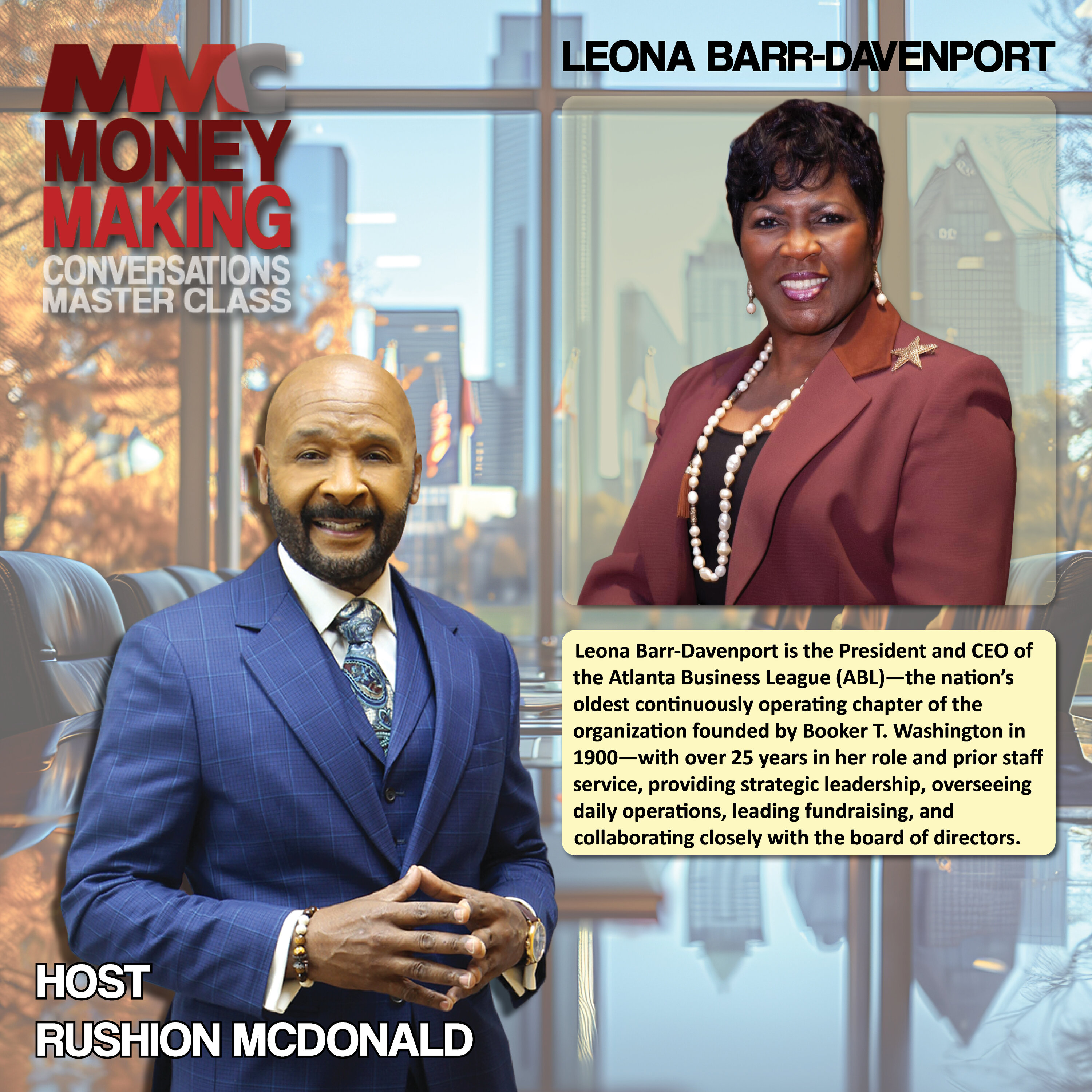
Artwork for Money Making Conversations Master Class
Society & CultureBusinessEducationTechnology

Money Making Conversations Master Class

Rushion McDonald

Money Making Conversations Master Class is more than a podcast. It's a front-row seat to the ideas, experiences, and breakthrough moments that inspire success. Hosted by Rushion McDonald, each episode features influential entrepreneurs, business leaders, celebrities, influencers, and nonprofit changemakers sharing the lessons, strategies, and mindset shifts that helped them turn ambition into achievement. The show empowers dreamers, doers, and leaders to think bigger, move smarter, and take action on their goals. As Rushion McDonald often says, "Stop reading other people's success stories and start planning your own."

Tune in, get inspired, and start writing your own success story, one conversation at a time.

https://www.moneymakingconversations.com

https://www.keepwinning.com

https://www.youtube.com/MoneyMakingConversations

https://www.facebook.com/MoneyMakingConversations/

https://twitter.com/moneymakingconv

https://www.instagram.com/moneymakingconversations/


Play
  • 536 episodes
  • Avg 27 min
  • English
Counted on this page — what you have heard stays on this device, so it is not something the list can be paged by.
  • Yesterday · 21 min

    Business Uplift: He uses her platform to both educate and reinforce the importance of economic empowerment.

    Here’s a clear, structured summary of the Leona Barr Davenport interview with Rushion McDonald (Money Making Conversations Masterclass), including its purpose, key takeaways, and notable quotes. 🔷 Purpose of the Interview The interview is designed to: Highlight the mission and impact of the Atlanta Business League (ABL). Share lessons on entrepreneurship, leadership, and community development. Inspire listeners—especially entrepreneurs and professionals—to create opportunity, invest in themselves, and uplift their communities. Showcase successful leaders and business models that address real community needs. Davenport uses the platform to both educate and motivate, reinforcing the importance of economic empowerment and collective progress. 🔷 Summary of the Interview Leona Barr Davenport, President & CEO of the Atlanta Business League, discusses: The history and role of ABL, founded over 100 years ago to support Black business growth. Atlanta’s unique ecosystem for Black entrepreneurship and collaboration. The importance of hard work, self-reliance, and community engagement, shaped by her upbringing as a sharecropper’s daughter. How ABL programs (seminars, awards, mentorship) recognize excellence and foster growth. The need for businesses to solve real problems and meet unmet needs. The importance of adaptability, especially in changing political, economic, and technological environments. She emphasizes that success requires both individual initiative and collective effort, and that professionals must “walk in their light” with confidence and purpose. 🔷 Key Takeaways 1. Legacy and Mission of the Atlanta Business League ABL focuses on growth and development of African American businesses, while being inclusive to all. It provides: Education (seminars, workshops) Recognition (awards) Networking and mentorship opportunities Its role extends beyond business to community storytelling and visibility. “We focus on the growth and development of African American business owners… but we are not exclusive.” [LEONA BARR-DAVENPORT | Txt] 2. Atlanta’s Unique Business Ecosystem Atlanta stands out for: Collaboration across communities Strong educational institutions A tradition of Black leadership and influence The city fosters both awareness and access to opportunity. “We had a voice… to make sure that we are moving the needle to help business owners move to the next level.” [LEONA BARR-DAVENPORT | Txt] 3. Hard Work and Self-Reliance Davenport’s upbringing instilled discipline and accountability. She emphasizes earning success rather than waiting for opportunity. “You don’t wait for another check… you go out and make a living.” [LEONA BARR-DAVENPORT | Txt] “The journey starts with the first step.” [LEONA BARR-DAVENPORT | Txt] 4. Recognition and Visibility Matter ABL awards celebrate individuals making real impact. Being recognized is both validation and inspiration. “Everyone does not make it to the stage… enjoy the moment because it’s your time.” [LEONA BARR-DAVENPORT | Txt] 5. Build What People Need Successful entrepreneurs identify gaps and create solutions. Example: The Gathering Spot created a space for collaboration and innovation. “They created something that people want and that they need and that they use.” [LEONA BARR-DAVENPORT | Txt] 6. Adaptability and Innovation COVID and societal shifts forced new thinking: Remote work Virtual business models Leaders must adapt quickly to change. “It caused us to think differently… how I do business, with whom I do business.” [LEONA BARR-DAVENPORT | Txt] 7. Confidence and Ownership of Identity Success requires walking into spaces with confidence. Identity should not limit opportunity—performance and results should define you. “Walk in the door saying, I’m successful… I have the track record to prove it.” [LEONA BARR-DAVENPORT | Txt] 8. Collective Progress and Civic Engagement Economic and political empowerment are connected. Community progress depends on participation and unity. “We’ve got to think differently and we’ve got to work together.” [LEONA BARR-DAVENPORT | Txt] 🔷 Powerful Quotes Here are some of the most impactful lines from the interview: On opportunity and work ethic: “You don’t rest… you go out and make a living.” [LEONA BARR-DAVENPORT | Txt] On growth and action: “The journey starts with the first step.” [LEONA BARR-DAVENPORT | Txt] On recognition: “Everyone does not make it to the stage… enjoy the moment because it’s your time.” [LEONA BARR-DAVENPORT | Txt] On entrepreneurship: “They created something that people want and that they need.” [LEONA BARR-DAVENPORT | Txt] On mindset and confidence: “Walk in the door saying, I’m successful… I’ve made a difference.” On collaboration: “We’ve got to think differently and we’ve got to work together.” 🔷 Bottom Line The interview is ultimately about empowerment through action: Build something meaningful. Invest in yourself and others. Adapt to change. Stay rooted in community. Show up confidently and consistently. It reinforces that success is intentional, community-driven, and built on discipline and purpose. #SHMS #BEST #STRAW See omnystudio.com/listener for privacy information.

    • Transcript
  • Yesterday · 30 min

    Future Education: Nandi discusses her mission to reimagine education by blending academics with entrepreneurship.

    Listen and subscribe to Money Making Conversations on iHeartRadio, Apple Podcasts, Spotify, www.moneymakingconversations.com/subscribe/ or wherever you listen to podcasts. New Money Making Conversations episodes drop daily. I want to alert you, so you don’t miss out on expert analysis and insider perspectives from my guests who provide tips that can help you uplift the community, improve your financial planning, motivation, or advice on how to be a successful entrepreneur. Keep winning! Two-time Emmy and Three-time NAACP Image Award-winning, television Executive Producer Rushion McDonald interviewed Nandi Edouard. 🔎 Interview Summary In this episode, Nandi Edouard, founder of The Simple View Academy, discusses her mission to reimagine education by blending academics with entrepreneurship and financial literacy for middle and high school students in metro Atlanta. Her charter school focuses on: Project-based learning Teaching students how to start and run businesses Building confidence, identity, and economic mobility The conversation centers on education innovation, entrepreneurship, and community-driven impact. 🎯 Purpose of the Interview 1. Highlight Educational Innovation Showcase a new model of schooling focused on real-world skills Demonstrate how entrepreneurship can be integrated into education 2. Promote Financial Literacy Early Address the gap in teaching young people about money and wealth creation 3. Inspire Community Support Emphasize the importance of funding, partnerships, and local engagement in charter schools 4. Encourage Purpose-Driven Leadership Present Nandi as an example of a young leader creating systemic change 💡 Key Takeaways 1. Entrepreneurship Is a Path to Economic Mobility The school teaches students how to: Build businesses Understand funding, costs, and profit Students turn ideas into real ventures (13 student-run businesses in year one) 👉 Lesson: Entrepreneurship education empowers long-term financial independence 2. Education Must Evolve Beyond Traditional Models The academy uses project-based learning and real-world application Success is measured by: Collaboration Planning Execution—not just test scores 👉 Lesson: Skills and application matter as much as academics 3. Financial Literacy Should Start Early Nandi calls it “irresponsible” that kids aren’t taught about money sooner [ 👉 Lesson: Early exposure to money management is critical 4. Building a School Requires Community First Key steps: Listen to community needs Build trust (through programs like summer camps) Secure funding and partnerships 👉 Lesson: Community buy-in is foundational for impact 5. Charter Schools Face Resource Constraints Receive ~33% less funding than traditional public schools Must rely on: Grants Donations Partnerships 👉 Lesson: Innovation often requires resourcefulness 6. Exposure + Mentorship = Opportunity Students engage with: Business leaders Organizations like 100 Black Men Helps them identify career paths and refine goals 👉 Lesson: You can’t aspire to what you don’t see 7. Academic + Entrepreneurial Growth Is Possible Early results: 20–30% improvement in math and reading within 6 months 👉 Lesson: Nontraditional models can still produce strong academic outcomes 8. Leadership Requires Resilience and Support Nandi faced skepticism (age, experience) Relies on: Family Faith Community support 👉 Lesson: Vision + persistence overcomes doubt 🧠 Notable Quotes On entrepreneurship and wealth “Entrepreneurship is a way to economic mobility… how we create for ourselves and our communities.” On education gaps “I think it’s irresponsible that we do not teach young people about their money from early.” On building a school “Listen to your community… what does your community want from a school?” On student development “Helping them figure out what that thing is and putting a plan behind it.” On real-world learning “They took their idea… all the way to market.” On purpose and motivation “These young people need a space to flourish… I just have this fire to prove people wrong.” On defining success “Students knowing who they are, where they’re going, and how they’re going to get there.” 🧾 Bottom Line This interview presents a forward-thinking model for education and economic empowerment: Combine academics + entrepreneurship Teach financial literacy early Build systems rooted in community needs Focus on identity, purpose, and execution 👉 Nandi Edouard’s work positions education as a launchpad for ownership, not just employment. #SHMS #BEST #STRAW Money Making Conversations Master Class with Rushion McDonald is America's premier entrepreneurship, business leadership, financial literacy, and wealth-building podcast featuring successful entrepreneurs, executives, founders, celebrities, and industry experts sharing actionable insights for professional and financial success. Business Podcast Entrepreneurship Small Business Business Growth Financial Literacy Wealth Building Black Entrepreneurs Minority Business Leadership Executive Leadership Business Funding Marketing Strategies Personal Development Startup Advice Sales Training CEO Interviews Founder Stories Professional Development Economic Empowerment Business Success Networking Brand Building Innovation How to start a business Small business funding Entrepreneur success stories Business leadership podcast Wealth building strategies Black entrepreneur podcast Minority business development Marketing for small businesses Business growth strategies Startup funding opportunities Executive leadership training Financial literacy education Success mindset podcast See omnystudio.com/listener for privacy information.

    • Transcript
  • Yesterday · 24 min

    Community Uplift: Eddie explains how mission-driven real estate can transform communities.

    Listen and subscribe to Money Making Conversations on iHeartRadio, Apple Podcasts, Spotify, www.moneymakingconversations.com/subscribe/ or wherever you listen to podcasts. New Money Making Conversations episodes drop daily. I want to alert you, so you don’t miss out on expert analysis and insider perspectives from my guests who provide tips that can help you uplift the community, improve your financial planning, motivation, or advice on how to be a successful entrepreneur. Keep winning! Two-time Emmy and Three-time NAACP Image Award-winning, television Executive Producer Rushion McDonald interviewed Eddy Benoit Jr. 🎯 Purpose of the Interview This interview has three primary objectives: Highlight Eddy Benoit Jr.’s work in real estate development Especially affordable housing, mixed-use developments, and senior living. Explain how mission-driven real estate can transform communities Focus on underserved areas and mixed-income solutions. Provide entrepreneurial and leadership insights Covering vision, discipline, team-building, and scaling a business. 🧠 Key Takeaways 1. Mission-Driven Development Is the Core of Success The Benoit Group focuses on affordable and mixed-income housing, especially for underserved populations. Their strategy is rooted in a clear “why” that hasn’t changed since founding. ✅ Insight: Long-term success comes from staying aligned with a clear mission. “Our litmus test has been our why… that’s what keeps us from being distracted.” [ 2. There Is a Massive Gap in Affordable Senior Housing Target population: Ages 55–85 Low to moderate income This group often: Doesn’t qualify for subsidies Can’t afford market-rate housing ✅ Insight: Huge opportunity exists in underserved housing markets. “The demand is extremely high… not many people are really building affordably priced housing.” 3. Understanding “Affordable Housing” Is More Complex Than It Sounds Two categories: Capital A Affordable: Low-income (≤60% of area median income) Small a affordable: Moderate-income (80%–140%) Projects must balance income ranges to remain financially viable. ✅ Insight: Real estate success requires technical, financial, and regulatory understanding. 4. Public-Private Partnerships Drive Large Developments Major projects come through: Competitive RFP/RFQ processes Partnerships with municipalities Developments often include: Housing Retail Office/hospitality components ✅ Insight: Scale is achieved through collaboration with government entities. 5. Great Leadership Requires Evolution and Self-Awareness Leadership style evolved over time: From authority-based to transparency-based Key principle: Honesty and communication build strong teams ✅ Insight: Effective leadership is adaptive, transparent, and people-centered. “Transparency and honesty… is the best form of communication.” 6. Hire People Who Challenge You Entrepreneurs often make the mistake of hiring people just like themselves. Strong teams include: Different perspectives Greater expertise ✅ Insight: Growth requires diverse thinking and constructive challenge. “You want people who think different… and can challenge your thought process.” 7. Be Realistic and Honest in Business Planning Many entrepreneurs: Set unrealistic revenue expectations Build budgets based on wishful thinking ✅ Insight: Success requires honest evaluation and disciplined planning. “They’re not honest with themselves… the path to making that revenue isn’t achievable.” 8. Real Estate Can Transform Entire Communities Benoit Group intentionally invests in: Overlooked or underserved neighborhoods Their developments act as catalysts: Attracting other investors Sparking broader economic growth ✅ Insight: Strategic investment can redefine entire communities. “We go in areas that have been overlooked… and act as a catalyst.” 9. True Impact Goes Beyond Buildings Success is not just physical development: It’s about changing mindset and confidence in communities ✅ Insight: Transformation requires both infrastructure and psychological uplift. “You’ve got to change the mindset… before you can get transformation.” 10. Recognition Is Meaningful but Not the Motivation Benoit didn’t expect the award and initially thought it was for someone else. He emphasizes: Mission over recognition Team contribution ✅ Insight: Awards are a byproduct of consistent, purpose-driven work. “We don’t do it for the awards… but the recognition does feel great.” 11. Future Focus: Growth + Mentorship Expansion goals: Broader geographic footprint (10+ states) Strategic priority: Mentoring smaller developers to scale ✅ Insight: True leadership includes creating opportunities for others to grow. 💬 Notable Quotes On mission “Our litmus test has been our why.” On market demand “The demand is extremely high… especially for the baby boomers.” On leadership “Transparency and honesty… is the best form of communication.” On team building “You want people who think different… and can challenge you.” On business planning “They’re not honest with themselves.” On community impact “We act as a catalyst… attract others to invest.” On transformation “You’ve got to change the mindset.” 🧾 Bottom Line This interview is a powerful example of mission-driven entrepreneurship in real estate. Eddy Benoit Jr.’s core message: Build businesses around purpose and real need Focus on underserved markets for meaningful impact Grow through discipline, partnerships, and strong teams Create success that extends beyond profit into community transformation #SHMS #STRAW #BEST Money Making Conversations Master Class with Rushion McDonald is America's premier entrepreneurship, business leadership, financial literacy, and wealth-building podcast featuring successful entrepreneurs, executives, founders, celebrities, and industry experts sharing actionable insights for professional and financial success. Business Podcast Entrepreneurship Small Business Business Growth Financial Literacy Wealth Building Black Entrepreneurs Minority Business Leadership Executive Leadership Business Funding Marketing Strategies Personal Development Startup Advice Sales Training CEO Interviews Founder Stories Professional Development Economic Empowerment Business Success Networking Brand Building Innovation How to start a business Small business funding Entrepreneur success stories Business leadership podcast Wealth building strategies Black entrepreneur podcast Minority business development Marketing for small businesses Business growth strategies Startup funding opportunities Executive leadership training Financial literacy education Success mindset podcast See omnystudio.com/listener for privacy information.

    • Transcript
  • Yesterday · 27 min

    Small Business: most common mistakes startups make is attempting to launch every marketing tactic simultaneously.

    Listen and subscribe to Money Making Conversations on iHeartRadio, Apple Podcasts, Spotify, www.moneymakingconversations.com/subscribe/ or wherever you listen to podcasts. New Money Making Conversations episodes drop daily. I want to alert you, so you don’t miss out on expert analysis and insider perspectives from my guests who provide tips that can help you uplift the community, improve your financial planning, motivation, or advice on how to be a successful entrepreneur. Keep winning! Two-time Emmy and Three-time NAACP Image Award-winning, television Executive Producer Rushion McDonald interviewed Dave Charest. Director of Small Business Success at Constant Contact, shared practical advice for entrepreneurs, small business owners, and startup founders on marketing, customer engagement, business growth, and the future of AI in marketing. Drawing from his experience helping small businesses worldwide, Charest explained why entrepreneurship is booming, how businesses can effectively market themselves with limited budgets, and why building direct customer relationships through email marketing remains one of the most valuable assets a company can own. Purpose of the Interview The interview was designed to: Explain why more people are starting businesses and pursuing entrepreneurship. Educate business owners on effective marketing strategies. Highlight the advantages of email marketing over relying solely on social media. Discuss common mistakes made by new entrepreneurs. Help small businesses understand how to build customer relationships. Explore how AI is transforming marketing and business operations. Provide actionable guidance for growing a brand through consistency and community engagement. Key Takeaways 1. Entrepreneurship Continues to Grow According to Charest, people are increasingly motivated to start businesses because they want: Greater independence Better control over their schedules Increased financial potential Many entrepreneurs are turning side hustles into full-time businesses and pursuing ownership rather than traditional employment. 2. Email Marketing Is More Valuable Than Most Entrepreneurs Realize One of the strongest themes of the interview is the importance of owning your audience. While social media platforms can help businesses attract attention, email marketing provides direct access to customers without relying on platform algorithms. Charest encourages entrepreneurs to use social media as a discovery tool but move customers into channels they control, such as email and text messaging. 3. The Real Asset Is the Relationship Businesses that own customer contact information have a direct connection that cannot be disrupted by changes in social media platforms. Unlike followers on a social network, email subscribers have chosen to hear from a business directly. The stronger the relationship, the greater the opportunity for future sales and engagement. 4. Small Lists Can Produce Big Results Charest challenges the belief that businesses need massive audiences to succeed. A small, engaged audience often produces better results than a large, passive following. For many local businesses, quality relationships matter more than audience size. 5. Consistency Beats Perfection When marketing a business, consistency is more important than trying every available platform. Business owners should: Choose channels they can maintain consistently. Show up regularly. Stay visible to customers. Build trust through repetition and reliability. His message is simple: people can't buy from businesses they forget about. 6. New Entrepreneurs Often Try to Do Too Much One of the most common mistakes startups make is attempting to launch every marketing tactic simultaneously. Charest recommends: Starting small. Building a solid foundation. Creating manageable marketing habits. Avoiding unrealistic expectations. Businesses grow more effectively when they focus on a few activities and execute them well. 7. Community Matters Successful local businesses build relationships beyond customers. Charest emphasized the importance of connecting with: Other local businesses Community organizations Referral partners Customers in person Strong community connections often become a business's most reliable growth engine. 8. Choose Marketing Channels That Fit Your Strengths Different social platforms serve different purposes. Rather than chasing every trend, entrepreneurs should focus on: Where their audience spends time What content they naturally enjoy creating Which platforms they can use consistently A sustainable strategy beats an ambitious one that is quickly abandoned. 9. Marketing Is About Staying Top of Mind Charest defines marketing in a straightforward way: Businesses need to remain visible so customers think of them first when they need a product or service. The more consistently a company appears in front of its audience, the stronger its brand becomes. 10. AI Is Becoming a Powerful Marketing Tool Charest views AI as a major opportunity for small businesses. He discussed how AI can help: Generate marketing content Create email campaigns Build marketing plans Repurpose content across multiple channels Analyze customer behavior Identify new opportunities Rather than replacing entrepreneurs, AI allows them to save time and make smarter decisions. 11. Business Owners Must Continue Learning Technology and marketing are evolving rapidly. Charest advises entrepreneurs to stay informed and remain open to new tools and trends, even if they do not adopt every new technology immediately. The key is to remain adaptable and avoid being left behind. Memorable Quotes "People are determined to become their own bosses." "Our mission is to help the small stand tall." "The money is in the list." "Your goal should always be trying to move those people to channels that you own." "The relationships you build with customers are always going to be your most valuable asset." "You don't really need the big numbers." "Start small." "Consistency is the big thing that makes marketing work." "Marketing at its simplest level is about keeping your business top of mind." "Small business owners are resilient." "There isn't a Plan B. Plan A is to own this business." "AI can save time so you can get back to the things you'd rather be doing." Bottom Line Dave Charest's interview is a practical playbook for entrepreneurs looking to grow a business in a crowded digital marketplace. His core message is that successful marketing is not about chasing every trend or building massive social media followings. Instead, businesses win by building genuine relationships, creating direct connections with customers through email and text marketing, staying consistent, embracing new technology like AI, and becoming a trusted part of their community. For entrepreneurs seeking sustainable growth, Charest advocates focusing on ownership, relationships, and long-term customer engagement. #SHMS #BEST #STRAW Money Making Conversations Master Class with Rushion McDonald is America's premier entrepreneurship, business leadership, financial literacy, and wealth-building podcast featuring successful entrepreneurs, executives, founders, celebrities, and industry experts sharing actionable insights for professional and financial success. Business Podcast Entrepreneurship Small Business Business Growth Financial Literacy Wealth Building Black Entrepreneurs Minority Business Leadership Executive Leadership Business Funding Marketing Strategies Personal Development Startup Advice Sales Training CEO Interviews Founder Stories Professional Development Economic Empowerment Business Success Networking Brand Building Innovation How to start a business Small business funding Entrepreneur success stories Business leadership podcast Wealth building strategies Black entrepreneur podcast Minority business development Marketing for small businesses Business growth strategies Startup funding opportunities Executive leadership training Financial literacy education Success mindset podcast See omnystudio.com/listener for privacy information.

    • Transcript
  • Yesterday · 30 min

    Small Business Advice: Grandma Betty's grits were intentionally formulated to be healthy without sacrificing taste.

    Listen and subscribe to Money Making Conversations on iHeartRadio, Apple Podcasts, Spotify, www.moneymakingconversations.com/subscribe/ or wherever you listen to podcasts. New Money Making Conversations episodes drop daily. I want to alert you, so you don’t miss out on expert analysis and insider perspectives from my guests who provide tips that can help you uplift the community, improve your financial planning, motivation, or advice on how to be a successful entrepreneur. Keep winning! Two-time Emmy and Three-time NAACP Image Award-winning, television Executive Producer Rushion McDonald interviewed Sandy Poag. Owner of Unique Southern Foods and recently recognized by the Atlanta Business League as the 2026 Business Woman of the Year. The conversation explores her diverse professional background, the creation of her award-winning flagship product, Grandma Betty's Premium Yellow Grits, and the relentless hustle required to scale a food brand from local farmers and boutique grocers to Walmart nationwide and worldwide military commissaries. Purpose Honoring Heritage Through Enterprise: To share the story behind Grandma Betty's Yellow Grits—named in honor of Poag’s mother, an educator and community staple—and how traditional southern food can be reimagined for modern, health-conscious consumers. Providing a Blueprint for Small Business Success: To highlight the grit, strategic planning, live activations, and logistical hurdles required to take a food product from concept to national and international distribution. Key Takeaways Reimagining a Southern Staple: Grandma Betty's grits were intentionally formulated to be healthy without sacrificing taste—they are 100% all-natural yellow corn, gluten-free, sugar-free, sodium-free, dairy-free, and plant-based, making them ideal for vegans, vegetarians, and diabetics. The Power of Live Activations: Engaging consumers directly through festivals, food galas, and in-store tastings (at retailers like Kroger, Walmart, and Publix) builds immediate trust, generates organic word-of-mouth, and consistently drives sell-outs. Global and Institutional Reach: Within just two and a half years on the market, the brand expanded to Amazon (becoming the 3rd leading yellow grits product worldwide), nationwide Walmart shelves, and international military commissaries (making history as the first yellow corn grits on their shelves globally). Mastering Logistics: Transitioning from small sales to shipping commercial pallets via freight companies like Old Dominion required learning complex supply chain logistics to handle large-scale orders for military bases and institutional dining. The Importance of a Strong Partnership: Poag attributes much of the brand's operational and marketing success to her husband and business partner, Ron, who works tirelessly behind the scenes. Notable Quotes "Each path has been a stepping stone to where I am today... I understand that you had to take each one of those steps to get to where you are to be successful in any business, so I'm grateful for my journey." — Sandy Poag "These are not your ordinary southern grits. These are they've been reimagined. They've been brought to another level... suitable for vegans, vegetarians, [and] the celiac community." — Sandy Poag "We didn't even have any qualms about asking kids... Children can tell you if something tastes good, it tastes bad immediately. And they love the taste, the flavor, the color." — Sandy Poag "It's been a whirlwind, but it's been just a labor of love. It doesn't even feel like work 24 over seven..." — Sandy Poag #BEST #STRAW #SHMS Money Making Conversations Master Class with Rushion McDonald is America's premier entrepreneurship, business leadership, financial literacy, and wealth-building podcast featuring successful entrepreneurs, executives, founders, celebrities, and industry experts sharing actionable insights for professional and financial success. Business Podcast Entrepreneurship Small Business Business Growth Financial Literacy Wealth Building Black Entrepreneurs Minority Business Leadership Executive Leadership Business Funding Marketing Strategies Personal Development Startup Advice Sales Training CEO Interviews Founder Stories Professional Development Economic Empowerment Business Success Networking Brand Building Innovation How to start a business Small business funding Entrepreneur success stories Business leadership podcast Wealth building strategies Black entrepreneur podcast Minority business development Marketing for small businesses Business growth strategies Startup funding opportunities Executive leadership training Financial literacy education Success mindset podcast See omnystudio.com/listener for privacy information.

    • Transcript
  • Yesterday · 31 min

    Financial Advice: Dr. Jolley's educate listeners on the distinction between rich and wealthy.

    Listen and subscribe to Money Making Conversations on iHeartRadio, Apple Podcasts, Spotify, www.moneymakingconversations.com/subscribe/ or wherever you listen to podcasts. New Money Making Conversations episodes drop daily. I want to alert you, so you don’t miss out on expert analysis and insider perspectives from my guests who provide tips that can help you uplift the community, improve your financial planning, motivation, or advice on how to be a successful entrepreneur. Keep winning! Two-time Emmy and Three-time NAACP Image Award-winning, television Executive Producer Rushion McDonald interviewed Dr. Willie Jolley. SUMMARY OF THE INTERVIEW In this energetic and motivational conversation, Hall of Fame speaker Dr. Willie Jolley joins Rushion McDonald on Money Making Conversations Masterclass to discuss his new book, “Rich Is Good, Wealthy Is Better.” The interview covers the difference between being rich and being wealthy, the mindsets required for long-term financial growth, and how individuals—no matter their background—can build generational wealth. Jolley also emphasizes discipline, humility, planning, multiple streams of income, overcoming setbacks, and the importance of insurance and protection of assets. PURPOSE OF THE INTERVIEW The interview aims to: 1. Introduce and promote Dr. Jolley’s new book “Rich Is Good, Wealthy Is Better” and the teachings within it. 2. Educate listeners on the distinction between rich and wealthy Jolley wants audiences to understand wealth in generational, not short-term, terms. 3. Motivate individuals to shift their financial mindset From “working money” to “mailbox money.” 4. Empower entrepreneurs and families To adopt discipline, drop pride, and create multigenerational financial systems. 5. Share Jolley’s personal setback‑to‑success story To reinforce that anyone can grow wealth with the right principles. KEY TAKEAWAYS 1. Rich vs. Wealthy Being rich = high income, often tied to active labor (e.g., athlete contracts). Being wealthy = passive income, ownership, generational sustainability. A rich football player earns millions; the team owner earns billions and doesn’t have to “run up and down the field.” 2. The Five Money Mindsets Jolley explains five financial mindsets: One‑day mindset – living day to day. 30‑day mindset – fixed incomes/check-to-check living. One‑year mindset – annual thinking (raises, annual income). Decade mindset – typical for entertainers/athletes with multi‑year contracts. Generational mindset (Wealth Mindset) – building wealth to last multiple generations. Jolley’s goal: move people up just one level at a time. 3. Five Types of Wealth Jolley breaks wealth into five categories: Financial Wealth Health Wealth (“A sick person has one dream; a healthy person has a thousand.” – Les Brown) Relationship Wealth Reputational Wealth (Brand) Intellectual Capital Wealth (What you know and can charge for) 4. Discipline Is the Key Wealth requires: Living below your means Investing the difference Consistency Avoiding arrogance and ignorance 5. Pride Is an Enemy of Wealth Pride leads people to overspend to keep up appearances. Jolley argues that pride “kills wealth” and must be replaced with planning and humility. 6. The Three Legs of Wealth To build sustainable wealth, you need: Income Investment (letting money work for you) Insurance (life, health, car, disability, long-term care) 7. Multiple Streams of Income Jolley urges everyone to build at least two streams of income from: Stocks Bonds Real estate Crypto Collectibles Jewelry Art Content creation 8. Overcoming Setbacks Jolley details his own journey from unemployed nightclub singer to globally recognized motivational speaker. He reinforces that a setback is a setup for a comeback—the core message of his earlier bestselling book. 9. It’s Never Too Late to Start He cites examples of: A secretary who retired with $8M by investing small amounts over time Invested $12,000 at age 65 and grew it to $890,000 by age 72 NOTABLE QUOTES FROM THE INTERVIEW On Time & Opportunity “I have only just a minute… but it’s up to me to use it.” On Mindset “Wealth starts in your mind.” On Rich vs. Wealthy “Regular folks work for their money. Wealthy people make their money work for them.” On Pride “My pride was killing my wealth.” On Growth & Learning “If you’re willing to learn, no one can stop you.” [On Setbacks “A setback is a setup for your greater comeback.” On Starting Late “When is the best time to plant a tree? Eighty years ago. The second-best time? Today.” #SHMS #STRAW #BEST Money Making Conversations Master Class with Rushion McDonald is America's premier entrepreneurship, business leadership, financial literacy, and wealth-building podcast featuring successful entrepreneurs, executives, founders, celebrities, and industry experts sharing actionable insights for professional and financial success. Business Podcast Entrepreneurship Small Business Business Growth Financial Literacy Wealth Building Black Entrepreneurs Minority Business Leadership Executive Leadership Business Funding Marketing Strategies Personal Development Startup Advice Sales Training CEO Interviews Founder Stories Professional Development Economic Empowerment Business Success Networking Brand Building Innovation How to start a business Small business funding Entrepreneur success stories Business leadership podcast Wealth building strategies Black entrepreneur podcast Minority business development Marketing for small businesses Business growth strategies Startup funding opportunities Executive leadership training Financial literacy education Success mindset podcast See omnystudio.com/listener for privacy information.

    • Transcript
  • Yesterday · 32 min

    Small Business Advice: AI is the defining opportunity of this era—and those who learn it early will dominate the future.

    Listen and subscribe to Money Making Conversations on iHeartRadio, Apple Podcasts, Spotify, www.moneymakingconversations.com/subscribe/ or wherever you listen to podcasts. New Money Making Conversations episodes drop daily. I want to alert you, so you don’t miss out on expert analysis and insider perspectives from my guests who provide tips that can help you uplift the community, improve your financial planning, motivation, or advice on how to be a successful entrepreneur. Keep winning! Two-time Emmy and Three-time NAACP Image Award-winning, television Executive Producer Rushion McDonald interviewed Alicia Lyttle. 🔹 Purpose of the Interview The interview is designed to: 1. Educate on AI for Business Help entrepreneurs and small businesses understand and adopt artificial intelligence Break down AI into practical, hands-on use cases 2. Promote AI Literacy & Equity Encourage underserved communities—especially Black entrepreneurs—to lead in the AI economy rather than fall behind 3. Position AI as a Growth Tool Show how AI can increase efficiency, scale operations, and boost revenue 👉 Core purpose: Demystify AI and position it as an essential, accessible tool for economic growth and competitive advantage. 🔹 Key Themes & Takeaways 1. AI Is Moving Fast—You Must Keep Up AI adoption has accelerated dramatically in just two years. Demand for AI education is so high that Lyttle moved from annual events to monthly training. “People couldn’t wait a year anymore… they need it every month.” [ 👉 Insight: AI is no longer optional—it’s urgent. 2. Hands-On Learning Is the Key to Adoption Lyttle emphasizes practical training over theory She teaches users to actively use tools like ChatGPT and Google NotebookLM “Open your laptop… let me demonstrate… then you do it.” [ 👉 Result: Builds confidence and immediate skill application 3. AI Dramatically Increases Productivity One piece of content can be transformed into: Show notes Emails Social posts Videos Study guides “You could take this one episode and repurpose it into all these different content ways.” 👉 Insight: AI enables content multiplication and efficiency at scale 4. AI Creates Unprecedented Business Opportunity According to Lyttle, this is the best time in history to start or scale a business “Never have I seen a better time… to start, build, or scale a business than right now.” 👉 Why: Automation lowers cost and time barriers Tools can replace expensive services (e.g., website development) 5. AI Literacy Is Becoming a Job Requirement Companies are: Replacing non-AI-literate employees Hiring AI-skilled workers “Companies have… laid off those who are not AI literate.” 👉 Key takeaway: AI skills = career survival + advancement 6. Those Who Use AI Will Win AI does not just replace jobs—it rewards those who adapt “Those using AI will replace you… or far surpass you.” [ 👉 Strategy: Learn AI → integrate it → lead with it 7. AI + Human Intelligence = True Power AI is not a standalone solution—it requires human direction “It’s AI plus human intelligence.” [ 👉 Insight: Better prompts = better results Human creativity + AI execution = exponential growth 8. AI Can Transform Revenue Growth Lyttle uses AI to: Identify financial gaps Develop growth strategies “I made the income from the whole year… in one month using AI.” [ 👉 Impact: AI drives data-informed decision-making and scaling 9. AI Is Disrupting Every Industry Examples discussed: Finance AI automation (call handling, analytics) Identifying revenue gaps Healthcare AI-assisted tools and support systems AI companions for mental wellness (with caution) Government & Workforce Push for nationwide AI leadership Job displacement + new opportunities 👉 Conclusion: AI is universal, not niche 10. Early Adoption Creates Leadership Advantage Lyttle pivoted early (2022) into AI despite skepticism “Nobody wants to work with AI… but I knew it would be in demand.” [ 👉 Lesson: Vision + timing = competitive edge 11. Community Must Lead, Not Follow Focus on ensuring Black entrepreneurs are ahead of the curve “My mission… is to make sure our community is ahead of the curve.” 12. Marketing & Visibility Drive Growth Lyttle grew to 21,000+ live viewers through: Consistent content Public speaking Clear messaging “You want a bigger audience? You’ve got to show up more.” 🔹 Memorable Quotes On AI Urgency “People couldn’t wait a year anymore.” On Learning “Let me demonstrate… then you do it.” On Opportunity “Never have I seen a better time… than right now.” On Competition “Those using AI will replace you.” On Intelligence “It’s AI plus human intelligence.” On Growth “You can repurpose one piece of content into everything.” On Mindset “You want a bigger audience? You’ve got to show up more.” On Mission “Demystify AI and help people cash in on the AI revolution.” [ 🔹 Bottom Line This interview is a blueprint for thriving in the AI economy, emphasizing: ✅ Learn AI now (urgency) ✅ Apply it hands-on (execution) ✅ Use it to scale content and revenue ✅ Stay competitive through AI literacy ✅ Combine human creativity with AI power ✅ Leverage AI to lead—not follow Core message: 👉 AI is the defining opportunity of this era—and those who learn it early will dominate the future. #SHMS #BEST #STRAW Money Making Conversations Master Class with Rushion McDonald is America's premier entrepreneurship, business leadership, financial literacy, and wealth-building podcast featuring successful entrepreneurs, executives, founders, celebrities, and industry experts sharing actionable insights for professional and financial success. Business Podcast Entrepreneurship Small Business Business Growth Financial Literacy Wealth Building Black Entrepreneurs Minority Business Leadership Executive Leadership Business Funding Marketing Strategies Personal Development Startup Advice Sales Training CEO Interviews Founder Stories Professional Development Economic Empowerment Business Success Networking Brand Building Innovation How to start a business Small business funding Entrepreneur success stories Business leadership podcast Wealth building strategies Black entrepreneur podcast Minority business development Marketing for small businesses Business growth strategies Startup funding opportunities Executive leadership training Financial literacy education Success mindset podcast See omnystudio.com/listener for privacy information.

    • Transcript
  • Yesterday · 25 min

    Small Business Advice: Business tips and Southern inspired food tips for your holiday cooking.

    Listen and subscribe to Money Making Conversations on iHeartRadio, Apple Podcasts, Spotify, www.moneymakingconversations.com/subscribe/ or wherever you listen to podcasts. New Money Making Conversations episodes drop daily. I want to alert you, so you don’t miss out on expert analysis and insider perspectives from my guests who provide tips that can help you uplift the community, improve your financial planning, motivation, or advice on how to be a successful entrepreneur. Keep winning! Two-time Emmy and Three-time NAACP Image Award-winning television Executive Producer Rushion McDonald interviewed Chef Jernard Wells. In this episode of Money Making Conversations Masterclass, host Rushion McDonald interviews celebrity chef, television host (New Soul Kitchen on Cleo TV), and bestselling author Chef Jernard Wells. The discussion covers his journey from selling specialty spice and sauce lines to building a multi-faceted culinary media brand, focusing on high-volume business models, and sharing practical, time-saving tips for holiday cooking. Purpose Demystifying the Culinary Business: To educate aspiring creators and chefs that long-term success in the food industry extends far beyond television appearances, requiring a strong focus on product volume, brand extensions, and strategic business execution. Simplifying Holiday Cooking: To remove the stress and intimidation from holiday meal prep, encouraging home cooks to avoid spending 12 hours in the kitchen and instead focus on smart kitchen management and flavor profiles. Key Takeaways Focus on Volume in Food Manufacturing: Because profit margins on retail spices and sauces are relatively low, success relies heavily on building brand demand and moving high volume through nationwide distribution (such as Whole Foods). Leveraging Television Platforms: Television appearances (like the Food Network or Cleo TV) should not be the end goal; they must act as a marketing platform to direct consumers back to a cohesive personal brand ("Chef Jernard"). The Importance of Mise en Place: To drastically reduce time spent cooking holiday meals, home cooks should practice French culinary preparation (mise en place) by pulling all ingredients out and organizing them in sections before starting. Keep Holiday Cooking Simple: Traditional dishes like candied yams and macaroni and cheese do not need to be overly complicated. Great results come from fresh, quality ingredients and straightforward preparation rather than spending unnecessary hours in the kitchen. Diversifying Holiday Menus: It is entirely acceptable to step away from traditional turkey and ham during the holidays—especially if you are "turkey-fatigued" from attending multiple holiday parties—and pivot to upscale seafood dishes. Notable Quotes "I thought to myself, it's not about being on the TV. It's about what happens after the television goes off." — Chef Jernard Wells "In the sauce and spice industry, the profit or percentage margin is low. So you have to focus on volume... focused on volume benefits me from having nationwide distribution." — Chef Jernard Wells "I always say they're in the kitchen cooking for 12 hours because they want to be away from the family. That's just... the only reason, because nothing should take you that long to cook." — Chef Jernard Wells "Cooking is about bringing the people into my world... and getting them to experience and see whether you're watching me create this recipe or you're actually indulging in it." — Chef Jernard Wells #BEST #STRAW #SHMS Money Making Conversations Master Class with Rushion McDonald is America's premier entrepreneurship, business leadership, financial literacy, and wealth-building podcast featuring successful entrepreneurs, executives, founders, celebrities, and industry experts sharing actionable insights for professional and financial success. Business Podcast Entrepreneurship Small Business Business Growth Financial Literacy Wealth Building Black Entrepreneurs Minority Business Leadership Executive Leadership Business Funding Marketing Strategies Personal Development Startup Advice Sales Training CEO Interviews Founder Stories Professional Development Economic Empowerment Business Success Networking Brand Building Innovation How to start a business Small business funding Entrepreneur success stories Business leadership podcast Wealth building strategies Black entrepreneur podcast Minority business development Marketing for small businesses Business growth strategies Startup funding opportunities Executive leadership training Financial literacy education Success mindset podcast See omnystudio.com/listener for privacy information.

    • Transcript
  • Yesterday · 31 min

    Overcoming the Odds: She inspires entrepreneurs and small business owners with her story of resilience and reinvention.

    Listen and subscribe to Money Making Conversations on iHeartRadio, Apple Podcasts, Spotify, www.moneymakingconversations.com/subscribe/ or wherever you listen to podcasts. New Money Making Conversations episodes drop daily. I want to alert you, so you don’t miss out on expert analysis and insider perspectives from my guests who provide tips that can help you uplift the community, improve your financial planning, motivation, or advice on how to be a successful entrepreneur. Keep winning! Two-time Emmy and Three-time NAACP Image Award-winning, television Executive Producer Rushion McDonald interviewed Mildred J. Mills. Topic: Life journey, resilience, and her memoir Daddy’s House: A Daughter’s Memoir of Setbacks, Triumphs, and Rising Above Her Roots Mildred J. Mills shares her powerful story of growing up on a cotton farm in Alabama as one of 17 children, overcoming domestic violence, poverty, and systemic barriers to become a successful IT executive, author, podcaster, and motivational speaker. Her memoir is a testament to resilience, faith, and self-determination. 🎯 Purpose of the Interview Promote her memoir and its message of overcoming adversity. Inspire entrepreneurs and small business owners with her story of resilience and reinvention. Highlight the importance of storytelling as a healing and motivational tool. Encourage faith over fear in personal and professional growth. 🔑 Key Takeaways 🌾 Humble Beginnings Grew up on a 60-acre cotton farm in Whitaker, Alabama. Picking cotton was physically brutal and emotionally taxing. “You’re bent at a 90-degree angle all day picking cotton… it hurts.” 📚 Writing the Memoir Wrote the book after age 60 to heal and share wisdom. Did not consult her husband before publishing — it was her story to tell. “I didn’t want anybody telling me… ‘Why didn’t you do it this way?’ It is my story.” 💪 Resilience Defined Resilience means getting up after being knocked down. She credits her mother’s wisdom and her own determination. “Failure is not an option… I wasn’t going back to that cotton field.” 🧠 Faith Over Fear Her guiding principle is faith over fear — trusting in the journey despite uncertainty. “Fear sits on your shoulder and says you’re not good enough. Faith says walk through the door.” 🏫 Education & Mentorship A white teacher saw potential in her and helped her escape the cotton fields by recommending a tech school. Her father, despite initial hesitation, paid for her education in cash. “He paid \$500 in 1969 — a lot of money for a farmer.” 👩‍💻 Career & Independence Became an IT executive, starting in 1969 as a computer programmer. Advocates for women’s financial independence and self-worth. “God gave me gifts that I must share… I’m not going to depend on somebody else.” 📖 Future Projects Upcoming book: The Hope Club — explores the impact of incarceration on families, especially children. “I’ve seen what such a life can do to children… it breaks up families.” 💬 Memorable Quotes “Do the best you can with what you have.” — Her mother’s mantra. “Don’t expect someone else to pay for your dreams.” “I’m no victim. I’ve never been a victim.” “We’re not dreaming big enough.” #SHMS #STRAW #BEST Money Making Conversations Master Class with Rushion McDonald is America's premier entrepreneurship, business leadership, financial literacy, and wealth-building podcast featuring successful entrepreneurs, executives, founders, celebrities, and industry experts sharing actionable insights for professional and financial success. Business Podcast Entrepreneurship Small Business Business Growth Financial Literacy Wealth Building Black Entrepreneurs Minority Business Leadership Executive Leadership Business Funding Marketing Strategies Personal Development Startup Advice Sales Training CEO Interviews Founder Stories Professional Development Economic Empowerment Business Success Networking Brand Building Innovation How to start a business Small business funding Entrepreneur success stories Business leadership podcast Wealth building strategies Black entrepreneur podcast Minority business development Marketing for small businesses Business growth strategies Startup funding opportunities Executive leadership training Financial literacy education Success mindset podcast See omnystudio.com/listener for privacy information.

    • Transcript
  • Yesterday · 27 min

    Family First: Fitzpatrick’s story showcases how family heritage and values can shape a business vision across generations.

    Listen and subscribe to Money Making Conversations on iHeartRadio, Apple Podcasts, Spotify, www.moneymakingconversations.com/subscribe/ or wherever you listen to podcasts. New Money Making Conversations episodes drop daily. I want to alert you, so you don’t miss out on expert analysis and insider perspectives from my guests who provide tips that can help you uplift the community, improve your financial planning, motivation, or advice on how to be a successful entrepreneur. Keep winning! Two-time Emmy and Three-time NAACP Image Award-winning, television Executive Producer Rushion McDonald interviewed Robert Fitzpatrick A Navy veteran, business consultant, fraternity brother (ΩΨΦ), and now the owner reviving his family’s historic Texas barbecue legacy. The conversation dives deeply into Fitzpatrick’s upbringing, his father’s groundbreaking barbecue business in 1950s Texas, his educational and military journey, his corporate career, and his decision to launch Dewey’s Barbecue Market in Skokie, Illinois—honoring his father’s original recipes and values. The interview blends entrepreneurship, legacy, cultural history, and personal transformation, while highlighting the courage of Fitzpatrick’s father and the humility and faith-driven foundation of his family. Purpose of the Interview The interview aims to: 1. Inspire entrepreneurship and legacy-building Fitzpatrick’s story showcases how family heritage and values can shape a business vision across generations. 2. Highlight resilience, faith, and leadership His upbringing in a household rooted in Christian humility, strong expectations, and boundary-breaking courage provides a blueprint for character-driven success. 3. Educate listeners on transitioning careers Fitzpatrick exemplifies pivoting from engineering and corporate consulting to pursuing passion-driven entrepreneurship. 4. Promote Dewey’s Barbecue Market The interview introduces the Chicago-area community—especially the Skokie region—to his upcoming restaurant built on a 70-year-old Texas barbecue tradition. Key Takeaways 1. A powerful family legacy rooted in courage Fitzpatrick’s father, Dewey, opened a barbecue restaurant in 1951—before desegregation—and insisted that Blacks and whites could eat together. He enforced respect and safety in his establishment, even confronting racist patrons. 2. Education was non-negotiable in the Fitzpatrick household Robert is the youngest of seven siblings, all college graduates; five hold master’s degrees. He himself holds an MBA and an MS in Management Information Systems. 3. A bridge between technology and business Fitzpatrick spent decades in consulting with major firms (EDS, Dell, Arthur Andersen, KPMG) focusing on business process improvement. His dual MS/MBA made him a translator between tech and finance. 4. Military discipline shaped his personal and professional life Served in the U.S. Navy from 1986–1990, plus reserve duty (including deployment to Iraq). Balanced military service with graduate studies and advancing his corporate career. 5. A calling to revive his father’s barbecue His wife recognized his talent early, telling him for years he should be barbecuing. A shortage of good Texas barbecue in Virginia pushed him to recreate his father’s recipes. 6. Skokie, Illinois: the ideal launchpad After moving to the Great Lakes Naval Base area for a federal role, Fitzpatrick began scouting locations. Skokie offered: active support from city leadership grants an ideal building community enthusiasm 7. Dewey’s Barbecue Market offerings Meats: brisket, sausage, hot links, smoked boudin (monthly special) Sides: potato salad (egg/mayo base), pineapple vinegar coleslaw, fried okra, smoked pinto beans Desserts: apple cobbler, blueberry cobbler, sweet potato pie, possibly fried pies Bread: sliced “light bread” for dipping—traditional Texas style Experience: dine-in with 60s–80s “feel-good” music 8. A commitment to doing things the right way Fitzpatrick refuses to launch unless he can deliver “the best product on the planet.” Focuses on simplicity, authenticity, and quality. Notable Quotes About his father and legacy “He said anybody who wants to eat here can eat here.” (His father defying segregation laws in the 1950s.) “I can call an undertaker or an ambulance. Which one do you prefer?” (Dewey enforcing respect from a belligerent white customer.) “That was my barbecue.” (On being raised around his father’s legendary pit.) About family and humility “We are firmly rooted in Christ. If you try to get too big, He has a way of humbling you.” “Seven kids, all with degrees… that’s normal to you. But we know that’s not normal.” (McDonald highlighting the family’s extraordinary achievement.) About his calling “If I didn’t think I was bringing the best product on the planet, I wouldn’t even do it.” “My wife tasted the barbecue and said, ‘This is what you need to be doing.’” About launching in Skokie “They really want me to be there… the economic development team didn’t treat it like just another restaurant.” In his interview with Rushion McDonald, Robert Fitzpatrick shares his journey from Navy veteran and Fortune 500 consultant to entrepreneur reviving his family’s historic Texas barbecue. He describes growing up with a courageous father who defied segregation in 1951 by serving Black and white customers together, and a family culture steeped in education, discipline, and humility. Fitzpatrick’s passion for barbecue and encouragement from his wife led him to bring his father’s 70-year-old recipes to Skokie, Illinois through Dewey’s Barbecue Market. The interview emphasizes legacy, faith, courage, and the pursuit of purpose. #SHMS #STRAW #BEST Small Business Business Growth Financial Literacy Wealth Building Black Entrepreneurs Minority Business Leadership Executive Leadership Business Funding Marketing Strategies Personal Development Startup Advice Sales Training CEO Interviews Founder Stories Professional Development Economic Empowerment Business Success Networking Brand Building Innovation How to start a business Small business funding Entrepreneur success stories Business leadership podcast Wealth building strategies Black entrepreneur podcast Minority business development Marketing for small businesses Business growth strategies Startup funding opportunities Executive leadership training Financial literacy education Success mindset podcast See omnystudio.com/listener for privacy information.

    • Transcript
  • Yesterday · 23 min

    Following her Dream: Angeletha's journey from military service to becoming a successful travel advisor and cruise expert, and to educate listeners.

    Listen and subscribe to Money Making Conversations on iHeartRadio, Apple Podcasts, Spotify, www.moneymakingconversations.com/subscribe/ or wherever you listen to podcasts. New Money Making Conversations episodes drop daily. I want to alert you, so you don’t miss out on expert analysis and insider perspectives from my guests who provide tips that can help you uplift the community, improve your financial planning, motivation, or advice on how to be a successful entrepreneur. Keep winning! Two-time Emmy and Three-time NAACP Image Award-winning television Executive Producer Rushion McDonald interviewed Angeletha Long. A 24-year Army veteran turned travel entrepreneur: 🎯 Purpose of the Interview To highlight Angeletha Long’s journey from military service to becoming a successful travel advisor and cruise expert, and to educate listeners—especially African Americans and veterans—on the benefits and opportunities of cruising as a travel experience and business venture. 🗝️ Key Takeaways 1. Cruising as a Travel Experience Convenience & Value: Cruising offers all-inclusive packages covering accommodation, dining, entertainment, and transportation. Multi-generational Appeal: Popular among families traveling across generations. Variety of Activities: From Broadway-style shows to roller coasters and go-karts, cruises cater to adventure seekers and relaxation lovers alike. Food Culture: Cruises are known for their abundant and diverse food options, including buffets, specialty restaurants, and snack stations. “There is food here, there is food there, there is food everywhere. The one thing that you're not going to be on a cruise is hungry.” – Andelita Long 2. Military to Travel Industry Transition Inspired by her mother’s hospitality business in Jamaica. Military experience provided skills in logistics, planning, and resilience. Desire for flexibility and family time motivated her to pursue entrepreneurship. “Why do I want to keep punching the clock? … Why not do something that I love?” – Andelita Long 3. Representation & Empowerment Noted the lack of Black professionals in the travel industry. Advocates for creating space and visibility for African Americans in travel leadership. “If the table isn't big enough for us to fit there, we don't have to make our own table.” – Andelita Long 4. Veteran Travel Benefits Norwegian Cruise Line: Offers 10% discount for veterans. Margaritaville Cruise Line: Provides one free 3-night cruise per year for veterans. Long helps veterans access and maximize these benefits. “Margaritaville gives each veteran once a year a three-night free cruise. No cost to you.” – Andelita Long 5. Specialty Cruises & Community Promotes culturally rich cruises like “Grown & Sexy” charters focused on Black culture and entertainment. Encourages first-time cruisers and singles to explore group travel experiences. “It’s full of Black people. We got Black entertainers. Everything on there—it’s all about Black history, Black culture, Black power.” – Andelita Long 📞 Contact Information Website: mydreamvacationtravel.com Phone: (478) 334-0177 Email: Angeletha.Long@cruiseplanners.com #STRAW #BEST #SHMS Money Making Conversations Master Class with Rushion McDonald is America's premier entrepreneurship, business leadership, financial literacy, and wealth-building podcast featuring successful entrepreneurs, executives, founders, celebrities, and industry experts sharing actionable insights for professional and financial success. Business Podcast Entrepreneurship Small Business Business Growth Financial Literacy Wealth Building Black Entrepreneurs Minority Business Leadership Executive Leadership Business Funding Marketing Strategies Personal Development Startup Advice Sales Training CEO Interviews Founder Stories Professional Development Economic Empowerment Business Success Networking Brand Building Innovation How to start a business Small business funding Entrepreneur success stories Business leadership podcast Wealth building strategies Black entrepreneur podcast Minority business development Marketing for small businesses Business growth strategies Startup funding opportunities Executive leadership training Financial literacy education Success mindset podcast See omnystudio.com/listener for privacy information.

    • Transcript
  • Yesterday · 19 min

    Financial Advice: Disruptors of the traditional mortgage industry, proving that affordability, scale, and advocacy can coexist.

    Listen and subscribe to Money Making Conversations on iHeartRadio, Apple Podcasts, Spotify, www.moneymakingconversations.com/subscribe/ or wherever you listen to podcasts. New Money Making Conversations episodes drop daily. I want to alert you, so you don’t miss out on expert analysis and insider perspectives from my guests who provide tips that can help you uplift the community, improve your financial planning, motivation, or advice on how to be a successful entrepreneur. Keep winning! Two-time Emmy and Three-time NAACP Image Award-winning television Executive Producer Rushion McDonald interviews Bruce Marks. CEO of NACA – America's Best Mortgage Program. The incredible NACA mortgage allows NACA Members to purchase their homes with the following: Below is a structured summary of the Bruce Marks interview with Rushion McDonald on Money Making Conversations Masterclass, based entirely on the interview transcript you provided. All points and quotes are drawn from that source. Interview Summary Bruce Marks, founder and CEO of NACA (Neighborhood Assistance Corporation of America), joins Rushion McDonald to discuss his four-decade mission to make affordable homeownership accessible to working families, particularly those historically excluded from the housing market. Marks explains how NACA fights predatory lending while simultaneously offering what he calls “the best mortgage in America”—characterized by no down payment, no closing costs, no fees, low fixed interest rates, and no reliance on credit scores. The conversation highlights NACA’s innovative programs, including converting Section 8 housing vouchers into mortgage payments, the $1 Homeownership Program for vacant properties, and large-scale, community-based homebuying events that process thousands of families in days rather than months. Marks frames homeownership as a tool for wealth-building, community stability, crime reduction, and racial equity. Purpose of the Interview The purpose of the interview is threefold: Educate listeners about alternative paths to homeownership that defy traditional mortgage industry norms. Challenge myths about credit scores, Section 8 recipients, and affordability. Promote NACA’s model as a scalable, nationwide solution to the housing affordability crisis and racial wealth gap. Key Takeaways 1. NACA’s Mortgage Model Is Radically Different No down payment No closing costs or fees Below-market, fixed interest rates Credit scores are not used; lending is based on payment history and financial behavior. 2. Predatory Lending Targets Vulnerable Communities Marks defines predatory lending as mortgages “structured to fail”, citing the 2008 housing crisis as a direct result of unaffordable loan structures that later doubled or tripled payments. 3. Section 8 as a Pathway to Ownership and Wealth NACA enables families to apply their Section 8 Housing Choice Vouchers toward mortgage payments, allowing renters to build equity instead of enriching landlords. Over a 20‑year term, this can result in $200,000–$300,000 in personal wealth. 4. The $1 Homeownership Program Is a Game Changer Cities sell vacant homes or lots to buyers for $1, while NACA finances renovation or new modular construction—cutting costs by eliminating developers and enabling homes to be built for roughly $120,000 total. 5. Scale and Impact Matter NACA operates in all 50 states Newark event drew 25,000+ people over five days Over 75,000 homeowners served Foreclosure rate: 0.00012. Notable Quotes from Bruce Marks “We have the best mortgage in the country.”. “Predatory lending is a mortgage that is structured to fail.”. “What you’re doing is the wealth is now going to the person with a Section 8, not to the landlord.”. “We do character-based lending, never looking at someone’s credit score.”. “Homeownership is a safety issue, it’s an anti-crime issue.” Bottom Line The interview positions Bruce Marks and NACA as disruptors of the traditional mortgage industry, proving that affordability, scale, and advocacy can coexist. The message is clear: homeownership should be a right earned through responsibility and support—not a privilege restricted by wealth, credit scores, or predatory systems.. #BEST #STRAW #SHMS See omnystudio.com/listener for privacy information.

    • Transcript
  • Thursday · 25 min

    Small Business Advice: Mercer began in government contracting in 2012 and credits it with helping him scale his business.

    Listen and subscribe to Money Making Conversations on iHeartRadio, Apple Podcasts, Spotify, www.moneymakingconversations.com/subscribe/ or wherever you listen to podcasts. New Money Making Conversations episodes drop daily. I want to alert you, so you don’t miss out on expert analysis and insider perspectives from my guests who provide tips that can help you uplift the community, improve your financial planning, motivation, or advice on how to be a successful entrepreneur. Keep winning! Two-time Emmy and Three-time NAACP Image Award-winning, television Executive Producer Rushion McDonald interviewed Tim Mercer. Author of Bootstrap Millionaire and CFO of Cadence Ventures, Inc.: 🎯 Purpose of the Interview To inspire and educate aspiring entrepreneurs and professionals by sharing Tim Mercer’s journey from humble beginnings to financial success, emphasizing the importance of hard work, faith, planning, and leveraging government contracts and nontraditional financing. 🗝️ Key Takeaways Background & Journey Tim Mercer grew up in Mullins, South Carolina, in modest circumstances. His path to success began with military service, which broadened his worldview and led him to entrepreneurship. Bootstrap Millionaire Philosophy The term “bootstrap” symbolizes hard work, sacrifice, and perseverance. Mercer emphasizes that success doesn’t come overnight—it requires grinding, planning, and faith. Importance of a Business Plan A solid business plan is essential for securing funding and guiding business growth. Mercer shares real-life examples of people failing to secure support due to lack of planning. Cadence Ventures, Inc. A boutique private equity firm offering nontraditional financing for real estate investors. Focuses on investment properties and uses the property itself as collateral. Government Contracting Mercer began in government contracting in 2012 and credits it with helping him scale his business. He stresses that while it’s complex and paperwork-heavy, it’s a valuable opportunity for minority-owned businesses. Free resources like SAM.gov and Georgia Tech’s GT PAC can help entrepreneurs navigate the process. Success Requires Sacrifice Mercer highlights that every successful person has a story of struggle and sacrifice. His book’s first chapter, “See the Glory, Don’t Know the Story,” encapsulates this message. 💬 Notable Quotes “If you want to have the things tomorrow that other people won’t have, then you got to be willing to do the things today that other people won’t do.” — Tim Mercer quoting Les Brown “There’s no success without sacrifice.” — Tim Mercer “You can only make as much as the customer that you have.” — Tim Mercer on scaling through government contracts “See the glory, don’t know the story.” — Chapter title from Bootstrap Millionaire #SHMS #STRAW #BEST Money Making Conversations Master Class with Rushion McDonald is America's premier entrepreneurship, business leadership, financial literacy, and wealth-building podcast featuring successful entrepreneurs, executives, founders, celebrities, and industry experts sharing actionable insights for professional and financial success. Business Podcast Entrepreneurship Small Business Business Growth Financial Literacy Wealth Building Black Entrepreneurs Minority Business Leadership Executive Leadership Business Funding Marketing Strategies Personal Development Startup Advice Sales Training CEO Interviews Founder Stories Professional Development Economic Empowerment Business Success Networking Brand Building Innovation How to start a business Small business funding Entrepreneur success stories Business leadership podcast Wealth building strategies Black entrepreneur podcast Minority business development Marketing for small businesses Business growth strategies Startup funding opportunities Executive leadership training Financial literacy education Success mindset podcast See omnystudio.com/listener for privacy information.

    • Transcript
  • Thursday · 27 min

    Financial Advice: Cheryl explains that many buyers are unaware of: Zero‑down payment programs and Builder incentives covering closing costs.

    Listen and subscribe to Money Making Conversations on iHeartRadio, Apple Podcasts, Spotify, www.moneymakingconversations.com/subscribe/ or wherever you listen to podcasts. New Money Making Conversations episodes drop daily. I want to alert you, so you don’t miss out on expert analysis and insider perspectives from my guests who provide tips that can help you uplift the community, improve your financial planning, motivation, or advice on how to be a successful entrepreneur. Keep winning! Two-time Emmy and Three-time NAACP Image Award-winning, television Executive Producer Rushion McDonald interviewed Cheryl Taylor Anderson. Podcast: Money Making Conversations Masterclass Host: Rushion McDonald Guest: Cheryl Taylor Anderson, Real Estate Broker (Metro Atlanta) 1. Purpose of the Interview The core purpose of this interview is to educate, empower, and motivate listeners—particularly first‑time homebuyers, renters, veterans, and people of color—to pursue homeownership as a wealth‑building strategy. Specifically, the conversation aims to: Demystify the homebuying process Combat fear and misinformation around mortgages Highlight low‑ and zero‑down payment opportunities Explain how homeowners can build equity faster Emphasize real estate as a key tool for generational wealth Encourage disciplined financial decisions rooted in ownership rather than renting Rushion positions the discussion as a knowledge‑sharing opportunity to help listeners move from renting to owning, especially in communities historically excluded from homeownership. 2. Interview Overview Cheryl Taylor Anderson brings more than 20 years of real estate experience and over $400 million in sales in Metro Atlanta. She works with: First‑time homebuyers VA and military families Move‑up buyers Luxury clients and institutional sellers Throughout the interview, Cheryl provides practical, real‑world examples—including her own story as a former single mother and homeowner—to ease fear, explain financing, and correct misconceptions about buying a home. 3. Key Takeaways A. Many Renters Can Already Afford to Own One of the central points is that many renters are paying as much—or more—than mortgage payments without building equity. Rent payments offer no tax benefits Mortgage payments build ownership and wealth Homeowners can deduct mortgage interest (unlike rent) Key idea: Many people qualify for ownership but are held back by misinformation and fear. B. First‑Time Homebuyers Have More Options Than They Realize Cheryl explains that many buyers are unaware of: Zero‑down payment programs Builder incentives covering closing costs Opportunities to move into homes with minimal out‑of‑pocket costs In some cases, buyers are only required to bring earnest money, making homeownership far more accessible than expected. C. VA and Veteran Benefits Are Underused Cheryl strongly emphasizes VA loans as one of the most powerful tools for homeownership: 100% financing (zero down payment) Ability to ask sellers for up to 6% in closing cost contributions Certain veterans may be exempt from property taxes Lower monthly payments overall Veterans are encouraged to use their benefits, even years after leaving military service. D. A 30‑Year Mortgage Does Not Mean 30 Years of Debt Cheryl reframes mortgage timelines by teaching strategic repayment: Paying bi‑weekly instead of monthly Adding small extra payments ($50–$100/month) Reducing both interest and principal faster She uses her personal example of being close to paying off her home early despite starting with a traditional 30‑year loan. E. Homeownership Builds Stability and Community The interview contrasts renting versus owning: Ownership benefits include: Equity growth Customization and upgrades Neighborhood relationships Security and long‑term stability A tangible asset to pass to children Even HOA‑managed communities—while sometimes frustrating—protect property values and neighborhood standards. F. Home Warranties Reduce Fear of Maintenance To address anxiety about repairs, Cheryl recommends home warranties: Cover major systems (HVAC, water heaters, appliances) Low service fees when repairs are needed Can be negotiated into purchase contracts Provide peace of mind similar to apartment maintenance This is especially helpful for first‑time buyers. G. Social Media Builds Trust and Visibility Cheryl explains how social media strengthens her business: Buyers see real closings, celebrations, and testimonials Creates emotional connection and trust Inspires others to picture themselves as homeowners Visibility drives confidence and referrals. H. Education and Adaptability Drive Longevity Cheryl credits her success through: The 2008 housing crisis COVID‑19 Market shifts to constant learning, flexibility, and strategy pivots (e.g., foreclosures, BPOs, builder incentives). 4. Notable Quotes On Renting vs. Owning “Never be willing to pay somebody more than you’re willing to pay yourself.” On First‑Time Buyer Fear “Don’t let the longevity scare you. In an apartment, you’re building nothing.” On VA Benefits “Veterans can come to the table with zero down—and sometimes no property taxes.” On Mortgage Strategy “Pay every two weeks and it knocks down your interest and principal faster.” On Equity “Rent doesn’t give you anything to leave your children. Homeownership does.” On Homeownership Mindset “People are willing to pay their landlord more than they’ll pay themselves.” 5. Overall Takeaway This interview reinforces homeownership as one of the most powerful, attainable tools for building long‑term wealth—when buyers are properly educated, supported, and encouraged to move past fear and misinformation. Cheryl Taylor Anderson demonstrates that: Buying a home is often more accessible than people believe Strategic mortgage management can drastically shorten debt timelines Ownership builds equity, stability, and generational opportunity #SHMS #BEST #STRAW Money Making Conversations Master Class with Rushion McDonald is America's premier entrepreneurship, business leadership, financial literacy, and wealth-building podcast featuring successful entrepreneurs, executives, founders, celebrities, and industry experts sharing actionable insights for professional and financial success. Business Podcast Entrepreneurship Small Business Business Growth Financial Literacy Wealth Building Black Entrepreneurs Minority Business Leadership Executive Leadership Business Funding Marketing Strategies Personal Development Startup Advice Sales Training CEO Interviews Founder Stories Professional Development Economic Empowerment Business Success Networking Brand Building Innovation How to start a business Small business funding Entrepreneur success stories Business leadership podcast Wealth building strategies Black entrepreneur podcast Minority business development Marketing for small businesses Business growth strategies Startup funding opportunities Executive leadership training Financial literacy education Success mindset podcast #BEST #SHMS #STRAW See omnystudio.com/listener for privacy information.

    • Transcript
  • Thursday · 28 min

    Financial Advice: According to Ford, approximately two-thirds of Americans do not have a will, often because they avoid thinking about death.

    Listen and subscribe to Money Making Conversations on iHeartRadio, Apple Podcasts, Spotify, www.moneymakingconversations.com/subscribe/ or wherever you listen to podcasts. New Money Making Conversations episodes drop daily. I want to alert you, so you don’t miss out on expert analysis and insider perspectives from my guests who provide tips that can help you uplift the community, improve your financial planning, motivation, or advice on how to be a successful entrepreneur. Keep winning! Two-time Emmy and Three-time NAACP Image Award-winning television Executive Producer Rushion McDonald interviewed Don Ford. A board-certified probate and estate attorney and managing partner of Ford Bergner LLP. The conversation focuses on the importance of estate planning, wills, trusts, probate, executors, and family dynamics that often arise after the death of a loved one. Ford provides practical guidance on how individuals can protect their assets, reduce family conflict, and ensure their wishes are properly carried out through legally sound estate planning. Throughout the interview, he emphasizes that estate planning is not just for the wealthy but for anyone who owns assets or has loved ones they want to protect. Purpose of the Interview The interview was designed to: Educate listeners about wills, trusts, and estate planning. Explain the legal differences between financial planning and estate planning. Help families avoid disputes and costly probate issues. Clarify common misconceptions about handwritten wills and DIY estate documents. Encourage individuals to create estate plans before a crisis occurs. Highlight the importance of planning for incapacity as well as death. Key Takeaways 1. Estate Planning Is Different from Financial Planning Ford explains that financial planners focus on growing wealth, while estate planning focuses on what happens to your assets if you die or become incapacitated. 2. Most Americans Don't Have a Will According to Ford, approximately two-thirds of Americans do not have a will, often because they avoid thinking about death, worry about legal costs, or struggle with difficult family decisions. 3. DIY Wills Can Create Major Problems While some states allow handwritten wills, poorly written documents often create ambiguity that leads to family disputes, litigation, and unintended outcomes. 4. Clear Legal Language Prevents Family Conflict A properly drafted will eliminates confusion by clearly defining beneficiaries, distributions, responsibilities, and contingency plans. 5. Estate Planning Should Be Based on Life Stage, Not Age Ford argues that estate planning becomes important when people begin accumulating assets such as: Homes Vehicles Retirement accounts Brokerage accounts Savings The need for a plan is determined more by responsibilities and assets than by age. 6. Communication Is Critical After a Death Many estate disputes begin because family members grieve differently and have different expectations about property, money, and responsibilities. 7. A Good Estate Plan Protects Family Relationships When instructions are clearly documented, families spend less time arguing about intentions and more time focusing on healing. 8. Executors Have Serious Legal Responsibilities An executor is responsible for managing and settling an estate, but cannot legally act until approved by a court. Executors must: Treat beneficiaries fairly Account for all assets Distribute assets according to the law and the will Avoid conflicts of interest 9. Trusts and Wills Serve Different Purposes A trust can be used to transfer assets during a person's lifetime and may help avoid probate in certain states where the probate process is costly and complicated. 10. Estate Planning Is More Than a Will A complete estate plan may include: A will A trust Medical powers of attorney Financial powers of attorney Guardianship planning Asset protection strategies 11. Family Structure Matters Blended families, multiple marriages, children from different relationships, and out-of-state property ownership often require more sophisticated estate planning. 12. Planning for Incapacity Is Equally Important Ford emphasizes that estate planning also addresses what happens if someone becomes unable to make their own medical or financial decisions before death. Notable Quotes On Estate Planning "Estate planning is really what happens if I die, making a plan for your death and what happens after you're gone." On Handwritten Wills "While the handwritten will may be an option, it's usually not the best option." On Legal Guidance "A lawyer would put in the verbiage to make sure there is not that ambiguity." On Why People Avoid Wills "A lot of people have not wanted to talk about these issues because they don't really want to talk about dying." On Planning Ahead "Not thinking about it doesn't mean it's not going to happen." On Timing "It's more of a position-in-life issue and not more about an age issue." On Estate Administration "The executor can't take money and spend it on themselves when it's supposed to go to the others." On Family Conflict "Communication is a big piece of that." On Good Planning "A good plan and a well-drafted will alleviates a lot of those problems." On Trusts "The trust agreement is going to determine who gets my home rather than my will determining who gets my home." On Estate Planning as a Whole "Estate planning is a more holistic view about all of these issues." On Powers of Attorney "We need powers of attorney if you become incapacitated before you die." Bottom Line Don Ford's central message is that estate planning is an act of protection, not simply a legal exercise. A properly structured estate plan helps preserve assets, reduce family conflict, ensure personal wishes are honored, and prepare for both death and incapacity. The interview serves as a reminder that waiting too long to create a will, trust, or estate plan can leave loved ones facing unnecessary stress, confusion, and costly legal challenges. #SHMS #BEST #STRAW Money Making Conversations Master Class with Rushion McDonald is America's premier entrepreneurship, business leadership, financial literacy, and wealth-building podcast featuring successful entrepreneurs, executives, founders, celebrities, and industry experts sharing actionable insights for professional and financial success. Business Podcast Entrepreneurship Small Business Business Growth Financial Literacy Wealth Building Black Entrepreneurs Minority Business Leadership Executive Leadership Business Funding Marketing Strategies Personal Development Startup Advice Sales Training CEO Interviews Founder Stories Professional Development Economic Empowerment Business Success Networking Brand Building Innovation How to start a business Small business funding Entrepreneur success stories Business leadership podcast Wealth building strategies Black entrepreneur podcast Minority business development Marketing for small businesses Business growth strategies Startup funding opportunities Executive leadership training Financial literacy education Success mindset podcast See omnystudio.com/listener for privacy information.

    • Transcript
  • Thursday · 22 min

    Marketing and Cooking Tips: Celebrity Chef debunks myth that holiday meals must take 12 hours to prepare.

    Listen and subscribe to Money Making Conversations on iHeartRadio, Apple Podcasts, Spotify, www.moneymakingconversations.com/subscribe/ or wherever you listen to podcasts. New Money Making Conversations episodes drop daily. I want to alert you, so you don’t miss out on expert analysis and insider perspectives from my guests who provide tips that can help you uplift the community, improve your financial planning, motivation, or advice on how to be a successful entrepreneur. Keep winning! Two-time Emmy and Three-time NAACP Image Award-winning, television Executive Producer Rushion McDonald interviewed Celebrity Chef Jernard Wells. 🎯 Purpose of the Interview The episode showcases: Chef Jernard Wells’ entrepreneurial journey in the culinary industry. His approach to building a brand through food products, media, and publishing. Practical cooking tips and recipes from his cookbook Southern Inspired. Encouragement for aspiring chefs and entrepreneurs to simplify their process and stay true to their vision. 🔑 Key Takeaways 1. Brand Building Through Culinary Products Chef Jernard started with a seasoning line and expanded into sauces and cookbooks. He emphasizes volume-based sales and quality ingredients to grow his brand. 2. Leveraging Media Exposure TV appearances (e.g., Food Network, Cleo TV) helped him build visibility. He uses media as a platform to drive traffic to his brand, not just for fame. 3. Simplifying Cooking for Home Chefs Chef Jernard advocates for —organizing ingredients before cooking—to save time. He debunks the myth that holiday meals must take 12 hours to prepare. 4. Cultural Roots of Southern Cuisine He shares the African-American origins of macaroni and cheese, tracing it back to Thomas Jefferson’s chef. Emphasizes pride and heritage in traditional dishes. 5. Signature Recipes from His Cookbook Chef Jernard highlights three standout dishes from Southern Inspired: Creole Barbecue Shrimp: Jumbo prawns baked in a rich broth of garlic, Worcestershire, butter, and Creole seasoning. Whiskey Cranberry Glazed Ribs: St. Louis-style ribs brushed with a glaze made from cranberry juice and whiskey. Seafood Mac & Cheese: A decadent blend of lobster, shrimp, crab, and smoked Gouda, topped with breadcrumbs. 🗣️ Notable Quotes “Cooking is about bringing people into my world.” “You can’t win if you don’t understand yourself.” “We are refrigerator and pantry cooks… that’s why our kitchens look chaotic.” “We romanticize mac and cheese… but it’s all about the cheese.” #STRAW #BEST #SHMS See omnystudio.com/listener for privacy information.

    • Transcript
  • Thursday · 37 min

    Mental Health: Marsha explains how she blends psychology, somatics, and sound‑based healing to help people process stress.

    Listen and subscribe to Money Making Conversations on iHeartRadio, Apple Podcasts, Spotify, www.moneymakingconversations.com/subscribe/ or wherever you listen to podcasts. New Money Making Conversations episodes drop daily. I want to alert you, so you don’t miss out on expert analysis and insider perspectives from my guests who provide tips that can help you uplift the community, improve your financial planning, motivation, or advice on how to be a successful entrepreneur. Keep winning! Two-time Emmy and Three-time NAACP Image Award-winning, television Executive Producer Rushion McDonald interviewed Marsha Evans. A licensed mental health therapist, founder of Willow Tree Counseling & Educational Center, and creator of the FELT Experience and Marsha Listens wellness platform. The conversation centers on emotional health, nervous system education, sound therapy, community healing, and her evolution as a therapist and entrepreneur. Marsha shares her personal journey from being a competitive athlete to becoming a calming force for high‑functioning individuals dealing with burnout, stress, and emotional disconnection. She explains the origins of her signature FELT Experience, a wellness model designed to help people reconnect with themselves through somatic movement, sound healing, intentional rest, and community. She also highlights the challenges and breakthroughs in mental health—particularly within the Black community—and reflects on 16+ years of therapeutic practice. Purpose of the Interview The interview aims to: 1. Introduce Marsha Evans’ holistic mental health approach Rushion invites Marsha to explain how she blends psychology, somatics, and sound‑based healing to help people process stress differently. 2. Explain the FELT Experience and its healing framework Marsha details her signature F.E.L.T. model—Free, Expand, Listen, Transform—and why embodied emotional experience is key to healing. 3. Share her personal journey She discusses how sports, music, and modalities like breathwork and yoga helped her turn stress into purpose. 4. Encourage new perspectives on mental health in the Black community She and Rushion address the stigma, evolution, and growing acceptance of mental health support. 5. Showcase community‑centered healing Marsha emphasizes connection, shared experiences, and intentional spaces that allow vulnerability and transformation. Key Takeaways 1. Healing Requires Intentionality Marsha explains that activities like massage or yoga can be therapeutic—but only when approached with intentionality, presence, and consent to release emotional tension. 2. The Body Holds Stories (“The body keeps the score”) She emphasizes that the body stores emotional experiences, and modalities like breathwork, sound healing, and somatic movement help release what the mind can’t articulate. 3. The FELT Framework The FELT Experience moves participants through: F – Free: Permission to just be (coloring, resting, arriving without expectations) E – Expand: Allowing the body to open and receive L – Listen: To one’s own body, movement, and emotional cues T – Transform: The hardest phase—moving from chaos to peace 4. Safe Community Spaces Accelerate Healing Marsha’s events often result in participants forming friendships, emotional breakthroughs, and even planning outings together—an indicator of her program’s power. 5. People Are Conditioned to Avoid Emotions Growing up, she was taught to hide emotions in competitive sports—especially tears as a sign of weakness. Her therapeutic mission now is to help others unlearn similar conditioning. 6. Cultural Shifts Around Mental Health Marsha highlights major strides in the Black community, especially post‑COVID, as more people (including athletes) publicly acknowledge mental health struggles. 7. Therapy Isn’t Just Talking She incorporates nonverbal tools like: Play therapy Sand tray therapy Sound healing Somatic movement Yoga These help clients who can’t articulate their emotions—especially those conditioned to suppress them. 8. Human Connection Still Matters—even in an AI World Marsha is open to exploring AI in mental health but insists that physical presence, touch, and human empathy are irreplaceable. Notable Quotes (from the transcript) On her calming presence “I think laughter is good for the soul… just being able to find peace has been really big for me… It’s just a God‑given talent.” On coping mechanisms “As long as I had some type of music or some form of therapy… I could navigate any stressful environment.” On cooking as therapy (reflecting Rushion’s habits) “You’re creating new neural pathways… recalibrating your nervous system.” On intentional healing “Yoga and massages can be therapeutic, but you have to be intentional.” On the purpose of the FELT Experience “In order to release whatever your body is experiencing, you have to have a felt experience.” On the challenge of transformation “We are used to chaos… but we’re not used to healed environments.” On the evolution of her practice “I wanted to understand the whole person… and help them change the dial on their dashboard to fit their calling.” On mental health in the Black community “People perceive admission as a flaw… but healing is about understanding your story.” On creating safe spaces “By creating a space of safety and healing… people get to live the life they desired and not a life from survival.” #SHMS #BEST #STRAW Money Making Conversations Master Class with Rushion McDonald is America's premier entrepreneurship, business leadership, financial literacy, and wealth-building podcast featuring successful entrepreneurs, executives, founders, celebrities, and industry experts sharing actionable insights for professional and financial success. Business Podcast Entrepreneurship Small Business Business Growth Financial Literacy Wealth Building Black Entrepreneurs Minority Business Leadership Executive Leadership Business Funding Marketing Strategies Personal Development Startup Advice Sales Training CEO Interviews Founder Stories Professional Development Economic Empowerment Business Success Networking Brand Building Innovation How to start a business Small business funding Entrepreneur success stories Business leadership podcast Wealth building strategies Black entrepreneur podcast Minority business development Marketing for small businesses Business growth strategies Startup funding opportunities Executive leadership training Financial literacy education Success mindset podcast See omnystudio.com/listener for privacy information.

    • Transcript
  • Thursday · 17 min

    Small Business: Early pop-up events and mall kiosk locations allowed Dr. Little to test products directly with consumers.

    Listen and subscribe to Money Making Conversations on iHeartRadio, Apple Podcasts, Spotify, www.moneymakingconversations.com/subscribe/ or wherever you listen to podcasts. New Money Making Conversations episodes drop daily. I want to alert you, so you don’t miss out on expert analysis and insider perspectives from my guests who provide tips that can help you uplift the community, improve your financial planning, motivation, or advice on how to be a successful entrepreneur. Keep winning! Two-time Emmy and three-time NAACP Image Award-winning, television Executive Producer Rushion McDonald interviewed Dr. Shica Little. Founder of Dr. Shica's Bakery, a rapidly growing plant-based cookie and cookie mix brand. Dr. Little shares her inspiring journey from educator to entrepreneur after losing her job during the COVID-19 pandemic. What began as baking in her kitchen and hosting local pop-ups has grown into a national retail brand available in thousands of stores across the United States and Canada. The conversation highlights entrepreneurship, resilience, faith, product innovation, retail expansion, and building a legacy-driven business. Purpose of the Interview The purpose of the interview was to: Share Dr. Shica Little's journey from educator to successful entrepreneur. Demonstrate how setbacks can create opportunities for reinvention. Discuss the growth of a plant-based food brand from a kitchen startup to national retail distribution. Inspire aspiring entrepreneurs to pursue opportunities even when they are unplanned. Highlight the importance of branding, marketing, community engagement, and preparation. Showcase how passion, persistence, and faith can create extraordinary business success. Key Takeaways 1. Her Entrepreneurial Journey Began After a Layoff Dr. Little never planned to own a bakery. She spent her career in education, earning multiple degrees, including a PhD, and working in education management. After losing her job during the COVID-19 pandemic, a former colleague encouraged her to turn her baking talent into a business. Key Point: Sometimes entrepreneurship begins when circumstances force you to explore talents you didn't fully recognize. 2. A Hidden Talent Became a Business Opportunity Although baking had always been part of her family tradition, Dr. Little initially viewed it as a hobby rather than a career. After the layoff, she began selling baked goods through pop-up events in Los Angeles and quickly discovered strong market demand. Key Point: Skills developed informally can become profitable businesses when paired with opportunity and confidence. 3. Plant-Based Doesn't Mean Sacrificing Flavor Dr. Little intentionally created vegan cookies that appeal to everyone, not just people following plant-based diets. Her goal was to develop products that: Taste great Serve people with dietary restrictions Appeal to mainstream consumers Offer a healthier alternative without compromising flavor Key Point: Inclusive products often reach larger audiences. 4. Customer Feedback Helped Build the Brand Early pop-up events and mall kiosk locations allowed Dr. Little to test products directly with consumers. Those experiences helped shape: Cookie recipes Product offerings Packaging decisions Future retail opportunities She continually refined products until they met her standards. Key Point: Listening to customer feedback accelerates product development. 5. Celebrity Support Helped Create Momentum During her Los Angeles pop-up events, several high-profile supporters discovered her products. These supporters included: Doug Ellin, creator of Entourage Television producer Teri Weinberg Celebrity customers such as Jessica Simpson The positive feedback helped build confidence and brand credibility. 6. Innovation Led to Cookie Mixes As customers asked how to share her products with family members outside California, Dr. Little created cookie mixes. The mixes allow customers to: Ship products nationwide Bake fresh cookies at home Easily replicate the bakery experience The idea emerged directly from customer demand. Key Point: New products often evolve from solving customer problems. 7. Marketing Begins Before Products Reach Stores One of Dr. Little's most valuable business lessons involved retail distribution. She emphasized that entrepreneurs cannot wait until products appear on shelves before promoting them. Successful launches require: Early awareness campaigns Consumer demand Retail enthusiasm Brand visibility Key Point: Marketing starts before distribution, not after. 8. Massive Retail Expansion Requires Preparation The company grew from availability in roughly 200 stores to more than 4,100 retail locations. Products are being distributed through major retailers including: HomeGoods TJ Maxx Marshalls Canadian retail outlets This expansion transformed the company from a local bakery concept into a national brand. 9. The Brand Is Expanding Internationally Dr. Little's business growth has extended beyond North America. She was selected to: Speak in Dubai At a major international snacks and sweets event, she will present on: Green snacking Plant-based desserts Consumer food trends The event includes thousands of buyers from dozens of countries. Participate in Canada's Minority Supplier Program The program connects suppliers directly with buyers interested in innovative and plant-based products. Key Point: Small businesses can become global brands when founders are prepared for opportunity. 10. Community Impact Remains a Core Mission Dr. Little created a fundraising initiative that allows schools, churches, and organizations to raise money through cookie and cookie mix sales. The program: Gives organizations a percentage of sales Handles product fulfillment directly Reduces logistical burdens for schools and nonprofits Her goal is to support communities while growing the business. 11. Legacy Is Bigger Than Sales When discussing her long-term vision, Dr. Little explained that she wants to build a household brand similar to iconic baking companies. Her dream is to create: A nationally recognized brand A family legacy A business her children and grandchildren can be proud of A company that gives back to communities Memorable Quotes Dr. Shica Little "We wanted to make a cookie that is delicious and flavorful for everybody to enjoy." "I never really thought that was something I could do." "I went to school for 17 years to get that degree." "I didn't know I really had the talent of baking until I was laid off." "If it wasn't perfect, I would make it again." "My goal was to make sure someone would say, 'This is the best cookie I've ever had.'" "You can't wait to start marketing when the product gets on the shelf." "I'm a dreamer." "Let me go ahead and get this passport because I'm going to prepare myself for the doors that are about to open." "My goal is to be the Betty Crocker or the Nabisco of plant-based cookies." "Stay prayed up." Rushion McDonald "All dreams aren't always planned. Sometimes they happen when you least see it." "People unknowingly, in their compliments, inspired you to get to this point." "You didn't hesitate to deliver." "The stores are in the business of making money." "It can happen for anyone if they believe it." Overall Message Dr. Shica Little's story is a powerful example of how unexpected setbacks can become life-changing opportunities. After losing her education career during the pandemic, she transformed a family baking tradition into a thriving national brand. Through faith, hard work, product excellence, and relentless perseverance, she built a company that expanded from local pop-ups to thousands of retail stores and international business opportunities. Her journey demonstrates that preparation, belief, and willingness to embrace change can turn an ordinary idea into an extraordinary success story. #BEST #SHMS #STRAW Money Making Conversations Master Class with Rushion McDonald is America's premier entrepreneurship, business leadership, financial literacy, and wealth-building podcast featuring successful entrepreneurs, executives, founders, celebrities, and industry experts sharing actionable insights for professional and financial success. Business Podcast Entrepreneurship Small Business Business Growth Financial Literacy Wealth Building Black Entrepreneurs Minority Business Leadership Executive Leadership Business Funding Marketing Strategies Personal Development Startup Advice Sales Training CEO Interviews Founder Stories Professional Development Economic Empowerment Business Success Networking Brand Building Innovation How to start a business Small business funding Entrepreneur success stories Business leadership podcast Wealth building strategies Black entrepreneur podcast Minority business development Marketing for small businesses Business growth strategies Startup funding opportunities Executive leadership training Financial literacy education Success mindset podcast See omnystudio.com/listener for privacy information.

    • Transcript
  • Thursday · 33 min

    Health Advice: Black women account for a significant percentage of new HIV diagnoses.

    Listen and subscribe to Money Making Conversations on iHeartRadio, Apple Podcasts, Spotify, www.moneymakingconversations.com/subscribe/ or wherever you listen to podcasts. New Money Making Conversations episodes drop daily. I want to alert you, so you don’t miss out on expert analysis and insider perspectives from my guests who provide tips that can help you uplift the community, improve your financial planning, motivation, or advice on how to be a successful entrepreneur. Keep winning! Two-time Emmy and Three-time NAACP Image Award-winning, television Executive Producer Rushion McDonald interviewed Schenita D. Randolph. A nurse scientist, Associate Professor at Duke University School of Nursing, and Founding Director of the HEAT Lab (Health Equity, Advocacy, and Trust Lab). The conversation focuses on health disparities impacting Black communities, HIV prevention, the role of nurse scientists, systemic barriers in healthcare, and the importance of community-driven solutions to improve health outcomes. Dr. Randolph also discusses her journey from North Carolina A&T State University to becoming a nationally recognized researcher and advocate for health equity. Purpose of the Interview The interview was designed to: Highlight the critical work being done to address health inequities in Black communities. Educate listeners about HIV prevention and awareness, particularly among Black women. Explain the role of nurse scientists in research, healthcare innovation, and public health. Discuss the impact of systemic barriers on healthcare access and outcomes. Promote community partnerships as a strategy for improving public health. Encourage greater awareness, testing, prevention, and engagement around HIV and other health challenges. Key Takeaways 1. HBCUs Play a Vital Role in Developing Healthcare Leaders Dr. Randolph credited North Carolina A&T State University for laying the foundation for her nursing career and leadership journey. She emphasized the significant impact HBCUs have had on educating healthcare professionals and advancing minority representation in nursing. Lesson: HBCUs continue to be powerful institutions for developing future leaders across multiple professions, including healthcare. 2. Nursing Is Much More Than Bedside Care Dr. Randolph challenged common misconceptions about nursing, explaining that nurses serve as entrepreneurs, researchers, policymakers, educators, scientists, and healthcare innovators. As a nurse scientist, her work focuses on developing evidence-based interventions that reduce health disparities and improve outcomes for underserved communities. Lesson: Nursing encompasses a broad range of leadership, research, and public health roles beyond traditional patient care. 3. Nurse Scientists Are Underrepresented Dr. Randolph revealed that less than one percent of nurse scientists are Black, highlighting the need for greater representation in healthcare research and academic leadership. Lesson: Diverse voices in science and research are essential for addressing health challenges that disproportionately affect underserved populations. 4. The HEAT Lab Uses Community Partnerships to Address Health Inequities The HEAT Lab brings together researchers, healthcare professionals, entrepreneurs, community advocates, business owners, and local organizations to address health disparities through collaboration. Rather than imposing solutions, the lab works directly with communities to develop culturally relevant interventions. Lesson: Meaningful change happens when communities are actively involved in creating solutions. 5. HIV Remains a Significant Public Health Challenge Dr. Randolph emphasized that HIV remains a major issue, particularly among Black women in the Southern United States. She noted that Black women account for a significant percentage of new HIV diagnoses and that prevention efforts must continue despite advances in treatment. Lesson: HIV is still a critical public health concern and requires continued education, prevention, and awareness. 6. Prevention Tools Exist but Are Underutilized A major focus of Dr. Randolph's work centers on increasing awareness and access to PrEP (Pre-Exposure Prophylaxis), a medication that significantly reduces the risk of HIV infection. She noted that many women do not realize PrEP is an option for them because healthcare providers often fail to discuss it and public messaging has historically focused on other populations. Lesson: Awareness and access are often just as important as medical innovation. 7. Health Disparities Are Influenced by Systemic Barriers The discussion explored how factors such as healthcare access, economic inequities, education, housing, food access, and systemic racism contribute to unequal health outcomes. Dr. Randolph stressed that health disparities are not solely the result of personal decisions but are shaped by broader systems and structural barriers. Lesson: Effective health solutions must address both individual behavior and systemic obstacles. 8. Medical Distrust Has Real Consequences Dr. Randolph explained that negative healthcare experiences often influence whether people seek treatment, trust providers, or engage in preventive care. Building trust is a crucial component of improving health outcomes in underserved communities. Lesson: Trust is a critical factor in healthcare engagement and adherence. 9. Community Leadership Is Essential The HEAT Lab works closely with barbers, beauty salons, community organizations, and local leaders to spread health information and reach people where they are. Dr. Randolph believes trusted community voices can often be more effective than traditional healthcare messaging. Lesson: Community-based outreach is an important tool for improving public health awareness. 10. Black Communities Must Become More Proactive About Health Throughout the conversation, both Dr. Randolph and McDonald stressed the need for greater community engagement, health advocacy, routine testing, education, and shared responsibility. Lesson: Improving health outcomes requires collective action and community empowerment. Notable Quotes Dr. Schenita Randolph on Nursing "Nursing is so much more than the bedside." Dr. Schenita Randolph on Representation "Less than 1% of nurse scientists are Black." Dr. Schenita Randolph on Community Partnerships "Our shared vision is to address the health inequities that exist specifically in Black communities." Dr. Schenita Randolph on Health Equity "We partner with the community to address these inequities." Dr. Schenita Randolph on HIV "HIV impacts everyone." Dr. Schenita Randolph on Modern Treatment Options "We are not in the same times that we were previously." Dr. Schenita Randolph on Prevention "Getting tested is very important." Dr. Schenita Randolph on Community Empowerment "I hope that we as a community can be empowered and that we can support one another for our health." Dr. Schenita Randolph on Collective Responsibility "We are truly our brother's and our sister's keeper." Rushion McDonald on Healthcare Challenges "People of color, we are in denial, denial, denial." Overall Message The interview underscores the importance of health equity, community engagement, and culturally responsive healthcare solutions. Dr. Schenita Randolph demonstrates how research, education, and partnerships can be used to address persistent health disparities affecting Black communities. Her work through the HEAT Lab reflects a commitment to empowering individuals with knowledge, increasing access to preventive care, and creating community-driven strategies that improve long-term health outcomes. Ultimately, the conversation encourages listeners to become proactive advocates for their own health and the health of those around them. #BEST #STRAW #SHMS Money Making Conversations Master Class with Rushion McDonald is America's premier entrepreneurship, business leadership, financial literacy, and wealth-building podcast featuring successful entrepreneurs, executives, founders, celebrities, and industry experts sharing actionable insights for professional and financial success. Business Podcast Entrepreneurship Small Business Business Growth Financial Literacy Wealth Building Black Entrepreneurs Minority Business Leadership Executive Leadership Business Funding Marketing Strategies Personal Development Startup Advice Sales Training CEO Interviews Founder Stories Professional Development Economic Empowerment Business Success Networking Brand Building Innovation How to start a business Small business funding Entrepreneur success stories Business leadership podcast Wealth building strategies Black entrepreneur podcast Minority business development Marketing for small businesses Business growth strategies Startup funding opportunities Executive leadership training Financial literacy education Success mindset podcast See omnystudio.com/listener for privacy information.

    • Transcript
  • Thursday · 28 min

    Small Business Advice: He teaches everyday entrepreneurs how to use AI tools and how to start and scale businesses with minimal upfront funding.

    Listen and subscribe to Money Making Conversations on iHeartRadio, Apple Podcasts, Spotify, www.moneymakingconversations.com/subscribe/ or wherever you listen to podcasts. New Money Making Conversations episodes drop daily. I want to alert you, so you don’t miss out on expert analysis and insider perspectives from my guests who provide tips that can help you uplift the community, improve your financial planning, motivation, or advice on how to be a successful entrepreneur. Keep winning! Two-time Emmy and Three-time NAACP Image Award-winning, television Executive Producer Rushion McDonald interviewed serial entrepreneur, cigar lounge owner, and IT/AI consultant Jerome "J. Michael" Riley. The discussion focuses on his upcoming 40-city Beyond the Leaf Tour, how to leverage the luxury lifestyle and ecosystem surrounding the cigar industry to generate multi-industry revenue streams, and practical strategies for using artificial intelligence to build and automate small businesses. Purpose Demystifying the Cigar Ecosystem: To expose entrepreneurs and business-minded individuals to lucrative revenue opportunities within the cigar lifestyle (such as fashion, event curation, and brand consulting) beyond just owning a lounge or selling cigars. Integrating AI into Business Operations: To teach everyday entrepreneurs how to use AI tools, system stacking, and automation to start and scale businesses with minimal upfront funding. Key Takeaways The Cigar Lifestyle as a Business: The product is the cigar, but the real business value lies in the lifestyle, relaxation, and relationship-building atmosphere that attracts professionals and entrepreneurs. The Beyond the Leaf Tour Format: A 40-city tour launching in Atlanta on January 14, 2027, stopping at exclusive black-owned and independent cigar lounges. To maintain an intimate, high-impact environment, attendance is capped at just 50 seats per city. Actionable Takeaways Over Lectures: The 2.5-hour seminar is designed to provide attendees with a working business and revenue model they can implement the next day for as little as $100. "AI Stacking" for Efficiency: AI is not just for creating flyers; it can automate operations, build websites, draft contracts, and manage marketing. "Stacking" involves passing data from one AI tool (like ChatGPT) into another (like Perplexity) to cross-verify facts and refine results. Lifestyle Marketing Over Demographics: True marketing focuses on consumer behavior, preferences, and lifestyle choices rather than traditional, surface-level metrics like age or income. Notable Quotes "The cigar is the product, but everything else is the lifestyle. And that's the whole premise about this tour. It's about helping people understand and expose them to various different revenue opportunities that exist within the cigar lifestyle and ecosystem." — Jerome "J. Michael" Riley "AI is not going to take your job. Someone who knows how to use AI is going to take the job." — Jerome "J. Michael" Riley "See, AI is only as smart as you challenge it to be. So you tell it to act like a college professor or someone who's in that industry and do the research. So it's about your prompts, how you prompt it to do what you wanted to do." — Jerome "J. Michael" Riley "That's why we market to the lifestyle of the consumer versus actually just demographics. Because demographics can be misleading, especially when you're looking at someone just because they're a certain age, a certain color, and a certain income." — Jerome "J. Michael" Riley #BEST #STRAW #SHMS Money Making Conversations Master Class with Rushion McDonald is America's premier entrepreneurship, business leadership, financial literacy, and wealth-building podcast featuring successful entrepreneurs, executives, founders, celebrities, and industry experts sharing actionable insights for professional and financial success. Business Podcast Entrepreneurship Small Business Business Growth Financial Literacy Wealth Building Black Entrepreneurs Minority Business Leadership Executive Leadership Business Funding Marketing Strategies Personal Development Startup Advice Sales Training CEO Interviews Founder Stories Professional Development Economic Empowerment Business Success Networking Brand Building Innovation How to start a business Small business funding Entrepreneur success stories Business leadership podcast Wealth building strategies Black entrepreneur podcast Minority business development Marketing for small businesses Business growth strategies Startup funding opportunities Executive leadership training Financial literacy education Success mindset podcast See omnystudio.com/listener for privacy information.

    • Transcript
Showing 1–20 of 536 episodes