Skip to content
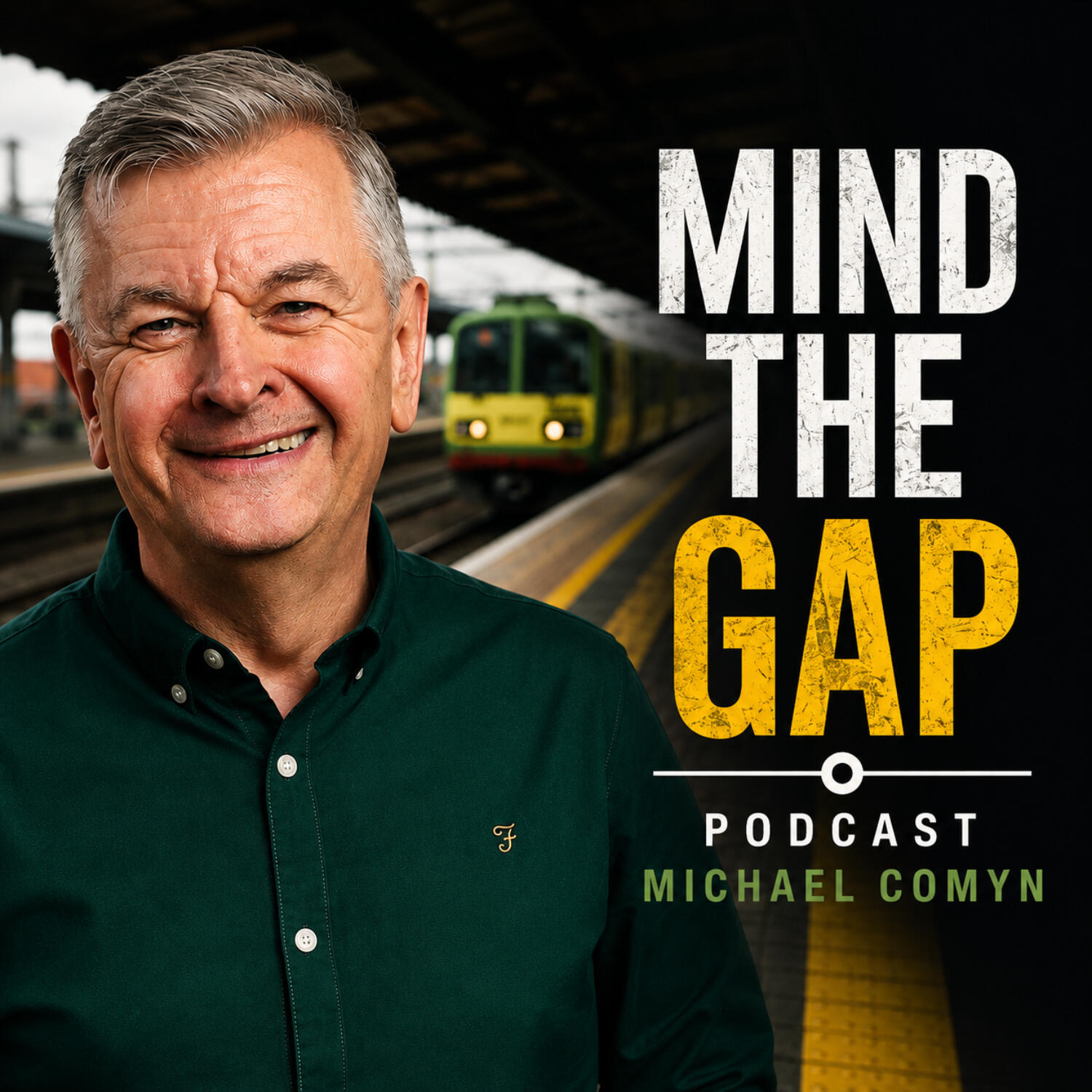
Artwork for Mind the Gap
EducationSelf-ImprovementBusinessHealth & FitnessMental HealthManagementSociety & CulturePhilosophy

Mind the Gap

Michael Comyn

You already know my voice.

For twenty-five years, I've been telling you to mind the gap on trains across Ireland. This is the same instruction. The gap is just different now.

Mind the Gap is a podcast about the space between what we think we're doing and what we're actually doing. Between intention and impact. Between the behaviour we display and the one we'd choose if we were paying attention.

Each episode is a short reflection — drawn from psychology, philosophy, and the texture of everyday life — on one of those gaps. Why do we give advice nobody asked for? Why do we lie more after the mistake than during it? Why do we perform contentment, perform listening, perform strength? And what it costs us when we do.

I'm Michael Comyn — coach, broadcaster, and the voice on the platform. New episodes weekly.

Play
  • 23 episodes
  • weekly
  • Avg 9 min
  • English
Counted on this page — what you have heard stays on this device, so it is not something the list can be paged by.
  • S2 · E8
    Saturday · 7 min

    The Effect Nobody Read Properly

    You know the Dunning-Kruger effect. "The dumbest people are the most confident." Except that's not what the 1999 study actually found — and the correction most people haven't heard is stranger than the myth itself. Michael Comyn traces the real finding, the statistical critique that's since called the famous graph into question, and — instead of handing you a tidier myth to replace the old one — lands somewhere more honest: we know less about this than either the popular version or its takedown would have you believe. A confession as much as an episode. Keywords/tags: Dunning-Kruger effect, cognitive bias, critical thinking, psychology myths, statistics, epistemic humility, self-assessment

  • S5 · E7
    August 22 · 6 min

    Not That Kind of Family

    "We're a family here." You've heard it, probably from someone who meant it warmly. This week, Michael Comyn takes the phrase more seriously than it usually gets taken — and asks the question nobody stops to ask first: which kind of family, exactly? Because not every family is the good kind. Every office has its golden child, its black sheep, its uncle nobody sits near at Christmas. And even the good kind offers something no employer legally can, or should try to: love that isn't contingent on output. Drawing on years spent moving between organisations rather than living inside one, Michael asks what's really being borrowed when a workplace reaches for the warmest word in the language — and what it usually means when that word shows up loudest. Gentle, a little mischievous, and not aimed at anyone who's ever said it sincerely. Keywords/tags: workplace culture, organisational psychology, leadership language, company culture, employee relations, corporate cliché

  • S5 · E6
    August 15 · 7 min

    Nobody Noticed the Bend

    The Space Shuttle Challenger disaster wasn't a surprise. Engineers had seen the same O-ring damage on earlier, successful flights — reviewed, discussed, waved through. Nobody hid it. Something quieter had happened first: sociologist Diane Vaughan called it normalisation of deviance — the process by which a rule bent once, safely, quietly resets what "normal" looks like, until the next bend doesn't register as a bend at all. Michael Comyn traces the same mechanism into a hospital corridor — how a routine scan becomes "stat" by drift rather than decision, how a diagnosis narrows without anyone deciding to skip a step — and asks the harder question underneath: how do you tell a bend worth making from one that's quietly rewriting your baseline? Not every shortcut is a countdown to disaster. That's what makes this one hard to see coming. Keywords/tags: normalisation of deviance, Diane Vaughan, Challenger disaster, patient safety, diagnostic error, organisational culture, quality improvement, decision-making

  • S5 · E5
    August 8 · 8 min

    The Shape of the Story You're In

    You already know the voice. This week, a different kind of gap — the one between the life you're living and the plot you never actually chose. Michael Comyn draws on psychiatrist Eric Berne's idea of the life script — the unconscious plan for how things are supposed to go, written long before anyone had a vote in it — and lays out six shapes that plot commonly takes. Not a diagnosis. A mirror, held up long enough to notice which shape you flinch at. Five episodes into Season 5, Michael turns from what we say to each other to the older question underneath it: who wrote the story you're currently running, and how far back? For more on the space between intention and impact, Michael's book Mind the Gap is out now on Amazon. https://amzn.eu/d/irNfaHO

  • S5 · E4
    August 1 · 12 min

    Can't You Take a Joke?

    The sentence arrives about a second and a half after the remark, and it is always delivered lightly: I'm only joking. Notice where it sits. It doesn't withdraw what was said — it leaves the remark exactly where it is and changes what you're allowed to do about it. Michael Comyn on deniable aggression: why a thirteenth-century West African institution got the rules right, what a linguist in Harlem discovered about the one thing a ritual insult is never allowed to be, and why the person doing the teasing and the person being teased are not in the same joke.

  • S5 · E3
    July 25 · 10 min

    The Authority Gradient

    Last week, Michael Comyn made the case for silence. This week, the exception — because there's a second kind of silence, the sentence that was formed, weighed, and then never said. Aviation has a name for the conditions that produce it: the authority gradient, the slope of rank and reputation that information has to climb to reach the person in charge. On a first officer who hinted four times instead of shouting once, on the three words a captain said that saved a hundred and eighty-five people, and on why we, in this country, are world-class at not quite saying the thing.

  • S5 · E2
    July 18 · 7 min

    Dead Air

    The voice that tells Ireland to mind the gap spent thirty years being trained never to let silence happen. In radio, they call it dead air — eight seconds of quiet and alarms sound in rooms you'll never see. Then Michael found himself in coaching rooms where the silence after a question turned out to be the only part that mattered. On studio clocks, Irish funerals, the forensic recall of two men avoiding one true sentence, and the answer that only arrives after eleven seconds.

  • S5 · E1
    July 11 · 8 min

    Two Takes

    Twenty-six years ago, a voice was recorded in a studio in Manchester. Two takes. The first was used. The second was a safety copy. Nobody thought it would matter. That voice now tells millions of people to mind the gap. Every day. Several thousand times. And still, people fall in the gap. In this Season 5 opener, Michael Comyn returns to the recording studio, to the moment a four-word warning was created almost by accident, and asks the uncomfortable question that the Irish rail network has been wrestling with: why does the most repeated instruction in someone's daily journey arrive when nobody's home? It's a season about the conversation underneath the conversation. About what's said versus what's heard. About the strange truth that the words you weigh the most are almost never the ones that carry the furthest. Welcome back to Mind the Gap.

  • S4 · E12
    April 11 · 6 min

    Shut Up. Let It Land.

    Sometimes the most intelligent thing in the room is the thing left unsaid. We had a friend called Bob. When someone was being foolish — not malicious, just foolish — Bob wouldn't argue, correct, or sigh. He would go quiet. And in that quiet, the person speaking would hear themselves. Really hear themselves. Be more Bob. In this season finale of Mind the Gap, Michael Comyn explores silence not as an absence but as one of the most powerful tools available to anyone who leads, communicates, or shares a room with others. The silence of restraint — the reply you don't send, the correction you swallow — is the gap between stimulus and response, finally being practised rather than just described. The silence of generosity — stepping back so someone else can step forward — is one of the most demanding things a leader can do. Eighty-one episodes. All of them words. This one is about what the words were always surrounding. Season 4 ends here. Back in June, with a new season and a different set of questions. #MindTheGap #Silence #Leadership #EmotionalIntelligence #Communication #Podcast #PersonalDevelopment #SelfAwareness #IrishPodcast #BeMoreBob

  • S4 · E12
    April 4 · 7 min

    The Good Student Leaves

    There’s a railway station in Ireland that exists for one purpose only, not to arrive, not to stay, but to move on. In this episode of Mind the Gap, Michael Comyn explores a moment that many of us recognise but rarely name. The point at which learning has done its job. The point at which guidance, coaching, or even a philosophy has taken us as far as it can. Drawing on the teachings of Epictetus and decades of experience in coaching and leadership development, this episode examines the subtle differences between growth and comfort, loyalty and dependency, and staying because it helps… and staying because it feels safe. It’s a reflection for anyone who has ever asked: Am I still growing here, or am I just comfortable? As Season 4 approaches its close, this episode also marks a quiet shift in direction for the podcast, moving beyond its Stoic foundations while keeping the core question at its heart, the gap between intention and action. In this episode: Why the best students eventually leave The hidden risk of staying too long in coaching or mentorship The difference between support and dependency What Epictetus really expected of his students Recognising when the work is complete Closing reflection: Who would you be, and what would you do, if you trusted that you’d already learned what you came to learn? Follow Mind the Gap to stay connected as we move toward the final episode of Season 4 next week.

  • S4 · E11
    March 28 · 10 min

    When Conversation Stops Being Shared- When bores bore each other.

    We’ve all met them. The person who can hold the floor without drawing breath. The one who doesn’t quite notice when someone else is trying to speak. The conversation that somehow becomes… one-sided. In this episode of Mind the Gap, Michael Comyn takes a thoughtful and quietly humorous look at what it really means to be “a bore.” Taking inspiration from a line in Dancing Queen by ABBA, “I’m nothing special… in fact, I’m a bit of a bore,” this episode moves beyond the joke to explore something more revealing. Because being a bore isn’t just about talking too much. It’s about awareness. Or the lack of it. It’s about what happens when conversation stops being a shared experience and becomes something more like a performance, with an audience that never quite agreed to be there. But rather than pointing outward, this episode turns the lens gently back on ourselves. Where do we miss the cues? Where do we hold the floor a little too long? And what does it take to bring a conversation back into balance? This also marks the 80th episode of Mind the Gap since the podcast began. A small milestone, and perhaps a fitting moment to reflect on something so central to the series itself, how we connect, how we listen, and how easily we can miss what’s right in front of us. There’s humour here, certainly. A moment of social theatre you may recognise. But there’s also something more useful underneath it. A reminder that good conversation isn’t about saying more. It’s about noticing more. In this episode: Why being “a bore” has less to do with talking, and more to do with awareness The subtle signals we miss in everyday conversation How one-sided dialogue quietly erodes connection Practical ways to rebalance conversations without confrontation A simple question to carry into your next interaction If you enjoy Mind the Gap, follow or subscribe and share the episode with someone who values thoughtful conversation. Michael’s books are also available on Amazon.

  • S4 · E10
    March 21 · 10 min

    When did we stop looking?

    You walk into a café. The coffee is perfect. The service is efficient. And not once does anyone look at you. This episode starts with that small absence — and follows it somewhere unexpected. Through the emotional labour of public-facing work, the quiet logic of the screen, and the generational shift in what an interaction is even supposed to contain. Eye contact is not a nicety. It never was. And its disappearance says something about all of us — not just the people behind the counter. Mind the Gap with Michael Comyn.

  • S4 · E9
    March 14 · 8 min

    You Know What You Should Do!

    Before offering advice, ask a quieter question “You know what you should do.” Five familiar words, usually offered with kindness, sometimes with genuine care. Yet when we hear them, something small inside us can quietly deflate. In this episode of Mind the Gap, Michael Comyn reflects on the hidden tension inside unsolicited advice. When someone brings us a problem, are they really asking for a solution, or are they asking to be heard? Drawing on his experience as a coach and communicator, Michael explores the difference between fixing and listening, and why the urge to solve someone else’s difficulty may sometimes be about easing our own discomfort. Before the advice arrives, there may be a better question to ask. What does this person actually need from me right now?

  • S4 · E8
    March 7 · 17 min

    Contentment in a Burning World

    In this episode of Mind the Gap, Michael Comyn explores a quiet but uncomfortable question. Is it acceptable to feel content while the world around us seems unsettled? With images of war, political unrest, and global tension constantly appearing in our news feeds, many people feel a subtle sense of guilt when moments of calm arise in their own lives. Does feeling steady mean we are disengaged? Or is contentment something else entirely? Drawing on the research of positive psychology pioneer Barbara Fredrickson and insights from Stoic philosophers such as Marcus Aurelius, Seneca, and Cleanthes, Michael reflects on how the human nervous system responds to uncertainty and why chronic agitation rarely produces wisdom or compassion. The episode also introduces a practical idea drawn from resilience research: creating moments of certainty when life feels unstable. Small routines, rituals, and predictable anchors can help restore psychological balance and allow clearer thinking when resilience is low. Along the way, Michael reflects on his own experience in broadcasting, where the simple certainty of announcing the time once helped bring order and structure to the rhythm of the day. This is not an episode about ignoring the world’s suffering. It is about understanding the difference between indifference and steadiness, and recognising that emotional regulation may be one of the most responsible ways we can show up for the people around us. In this episode: • Why contentment is often misunderstood • The Broaden and Build Theory of positive emotions • Stoic insights into control, acceptance, and emotional steadiness • Viktor Frankl on the space between stimulus and response • How creating small “moments of certainty” can restore resilience • The ripple effect of emotional tone in leadership and daily life Michael Comyn is an executive coach, broadcaster, and host of the Mind the Gap podcast, where philosophy, psychology, and emotional intelligence meet everyday experience. If you enjoy the podcast, you can also explore Michael’s books available on Amazon, where many of these ideas are developed further.

  • S4 · E6
    February 21 · 10 min

    When the System Decides You’re Old

    Mind the Age Gap | Retirement Age, Identity and the Psychology of Ageing What does retirement age really mean in modern life? In this episode of Mind the Gap, Michael Comyn explores the idea of the “age gap” — the gap between chronological age and how we actually experience ourselves. The reflection begins with a moment in a bank: an older couple being gently coached through online banking. They were not confused. They looked displaced. That observation opens a wider discussion about ageing, identity, and the subtle ways institutions categorise people after 65. Retirement age began as a 19th-century pension policy in Germany. Over time, it evolved into a powerful cultural label. Today, that label influences marketing, workplace perceptions, digital design, and even the tone of television advertising. In this episode, Michael explores: • The history of retirement age and its origins in public policy • The psychology of subjective age and why most adults over 60 feel younger than their years • The impact of marketing stereotypes, including the Werther’s Original “grandfather” campaign • Why certain UK television channels seem dominated by funeral and cremation advertising • The cultural reality that people now in their seventies once danced to The Rolling Stones • Why ageing is not the issue, dismissal is This episode blends psychology, leadership insight, cultural observation, and personal reflection to ask a simple question: Is the real gap between 50 and 65 — or between vitality and resignation? If you’ve ever felt younger than your demographic category, or sensed the system quietly repositioning you, this conversation will resonate. https://amzn.eu/d/irNfaHO

  • S4 · E5
    February 14 · 12 min

    Whatever the Mistake, It’s the Lie Afterwards That Hurts More

    This week, during a leadership course, a participant shared a line from her father that stopped the room: “Whatever the mistake, it’s the lie afterwards that hurts more.” In this episode of Mind the Gap, Michael explores why that simple sentence holds up across high-trust professions and high-pressure environments. From medical errors in hospital settings to cockpit decision-making in aviation, from financial oversight to corporate governance, the issue is rarely the original human error. The more serious damage often comes from concealment. This episode examines: • The difference between human error and reckless behaviour • What Just Culture really means in healthcare and aviation • Why psychological safety determines whether truth surfaces early • How fear of punishment drives cover-ups • Why timely honesty strengthens trust rather than weakens it Drawing on insights from leadership coaching, aviation training and emotional intelligence, Michael reflects on why cultures collapse not because people are imperfect, but because people feel unsafe admitting imperfection. If you lead a team, work in a regulated profession, or simply care about integrity in relationships, this episode asks a direct question: Do people around you believe they can survive being wrong? About Mind the Gap Mind the Gap is a leadership and emotional intelligence podcast hosted by Michael Comyn, broadcaster, author and executive coach. Each episode explores the space between intention and impact, and the small decisions that shape trust, culture and character. Michael’s books Mind the Gap, The Next Station Is… and Between the Lines are available on Amazon. Follow the podcast for weekly reflections on leadership, communication and the psychology behind how we show up.

  • S4 · E4
    February 7 · 9 min

    Living with Fewer Filters

    Here’s the thing. Most of us spend our lives editing ourselves in real time. Softening opinions. Swallowing reactions. Running everything through an internal risk assessment before it ever reaches our mouth. And then, occasionally, we meet someone who doesn’t do that. This episode was sparked by conversations with people on the autism spectrum, and by watching The Assembly. What struck me wasn’t shock value or bluntness for its own sake. It was the relief. The calm. The honesty of hearing what someone actually thinks, without the usual social varnish. So this isn’t an argument for saying everything that pops into your head. That’s not wisdom, that’s impulse. What this really explores is something subtler. Which filters serve kindness? Which filters serve fear? Which filters are about protecting a persona? And which filters help us stay aligned with who we actually are? We talk about non-standard communication, what it teaches us about clarity and presence, and why “social polish” can sometimes drift into quiet self-betrayal. We also look at the cost of constant self-monitoring, the exhaustion of performing, and the freedom that comes from choosing fewer, better filters rather than none at all. This is a reflective episode. No Stoic lectures. No tidy conclusions. Just an invitation to notice where you’re editing yourself unnecessarily, and what might happen if you eased off, just a little.

  • S4 · E3
    January 24 · 9 min

    How We Heal in Ordinary Ways

    How do people really heal? Not through dramatic breakthroughs, but through small, ordinary moments. In this episode, Michael Comyn reflects on personal recovery from a recent experience of gossip and intrusion, and explores how humans heal through connection, routine, purpose, and everyday emotional intelligence. A gentle, optimistic reflection on resilience, wellbeing, and the quiet work of becoming a little quicker to mend.

  • S4 · E2
    January 17 · 9 min

    Stoicism Is Not a Weapon

    In this episode of Mind the Gap, Michael Comyn returns to Stoic philosophy to address how Stoicism is being simplified and misused in some online spaces, particularly where grievance, emotional shutdown, and contempt are mistaken for strength. Drawing on the original teachings of Marcus Aurelius, Epictetus, Seneca, and Musonius Rufus, Michael reclaims Stoicism as a philosophy of self-governance, responsibility, and shared humanity, not dominance or detachment. This episode is a clarification, a return to source, and a challenge to examine whether the philosophy we claim to follow is shaping character or simply justifying anger. Michael’s books Mind the Gap, The Next Station Is…, and Between the Lines are available on Amazon. Follow the podcast, leave a rating, and share the episode if it resonates.

  • S4 · E1
    January 10 · 9 min

    Living in Permanent Alert Mode

    Why do so many people feel exhausted even when nothing obvious is wrong? In this opening episode of Season 4 of Mind the Gap, Michael Comyn explores what it means to live in permanent alert mode, a state of constant urgency driven by 24-hour news cycles, notifications, and global uncertainty. This episode looks at how the human nervous system reacts to modern life, why being informed is not the same as being emotionally overloaded, and how chronic low-grade stress quietly shapes our thinking, relationships, and leadership. Drawing on emotional intelligence, psychology, and neuroscience, Michael reflects on why we feel wired but tired, why reactivity has become the norm, and how to pause between stimulus and response in a world that never switches off. The episode references insights from Daniel Goleman on emotional reactivity, Viktor Frankl on choice and response, and Robert Kegan on our ability to live with uncertainty. If you feel tense, overwhelmed, or permanently on edge, this episode offers reassurance, perspective, and practical ways to regain calm without disengaging from the world. In this episode Why constant urgency exhausts the nervous system How news and notifications trigger stress responses The difference between being informed and being emotionally inflamed Why reactivity feels normal but costs us clarity A simple emotional intelligence pause practice Why calm is a form of discernment, not indifference Mind the Gap is a podcast by Michael Comyn exploring emotional intelligence, psychology, and modern life with clarity, warmth, and practical insight. New episodes are released regularly.

Showing 1–20 of 23 episodes