Skip to content
Artwork for MEER Media
ScienceEarth SciencesPhysics

MEER Media

MEER (Mirrors for Earth's Energy Rebalancing)

The MEER Podcast and MEERTalks are dedicated to science education, exploring the latest research, ideas, and solutions to some of the world's most pressing environmental challenges. Through expert interviews, in-depth discussions, and presentations from leading scientists, researchers, and thinkers, we examine climate change, Earth's energy imbalance, urban heat adaptation, climate restoration, and innovative approaches to planetary cooling, including passive radiative cooling and surface reflection technologies. Our mission is to make complex science accessible, inspire informed discussion, and advance practical solutions for a more sustainable and resilient planet.

Play
  • 20 episodes
  • monthly
  • Avg 48 min
  • English
  • S1 · E1
    Sunday · 1 hr 4 min

    MEERTalks | Dr Tom Harris – The Inversion Trap: How Carbon Sinks Are Becoming Sources as the Planet Warms

    What happens when Earth's natural carbon sinks begin turning into carbon sources, accelerating the very warming they once helped to slow? In this episode of MEERTalks, we welcome Dr Tom Harris, climate science writer and advocate, for an exploration of one of the most concerning feedback mechanisms in the climate system: the potential transformation of natural carbon sinks into sources of additional greenhouse gases. Forests, soils, oceans and other natural systems have historically absorbed a significant proportion of humanity's carbon dioxide emissions. However, as global temperatures rise, these systems face increasing pressures that could weaken their ability to absorb carbon and, in some cases, cause them to release more carbon than they take up. Topics explored include: How natural carbon sinks help regulate Earth's climate. Why rising temperatures threaten the stability of these systems. The mechanisms through which carbon sinks can become carbon sources. The risks of reinforcing climate feedback loops and accelerating global warming. The implications for agriculture, crop yields and global food security. Why understanding these changes is essential for assessing future climate risks. Drawing on scientific research and climate projections, Dr Harris examines how these processes may develop as the planet continues to warm, and why they deserve greater attention in discussions about climate change and planetary stability. About our guest Dr Tom Harris is a UK-based climate science writer and advocate who publishes Climate Uncovered on Substack, exploring climate science, environmental risks and the implications of global warming. Read his work: https://drtomharris.substack.com About MEER MEER (Mirrors for Earth's Energy Rebalancing) is dedicated to advancing scientific understanding and practical approaches to reducing heat stress and restoring Earth's energy balance. Through research, education and innovative surface cooling technologies, MEER explores solutions to climate change, urban overheating and environmental resilience. The MEER Podcast and MEERTalks bring together scientists, researchers and leading thinkers to explore the challenges facing our planet and the solutions needed to address them. Learn more: https://meer.org Recorded: 2 October 2026 Presented by: MEER – Mirrors for Earth's Energy Rebalancing Topics: Climate Change, Carbon Sinks, Climate Feedbacks, Global Warming, Carbon Cycle, Food Security, Earth System Science, Climate Restoration.
  • #20
    October 1 · 47 min

    MEER Podcast - 20. The Gargantuan Lie, Don't Look Up & Why We Still Aren't Listening with Adam McKay

    Description In this episode of the MEER Podcast, Academy Award-winning filmmaker Adam McKay, the creator of The Big Short, Vice, Don't Look Up, and founder of Yellow Dot Studios, joins us to discuss how storytelling, climate communication, his latest essay The Gargantuan Lie That Is Collapsing the Climate, and why telling the truth about climate has become one of society's greatest challenges. Adam reflects on his transition from comedy into political and climate-focused filmmaking, and how researching Vice profoundly changed his understanding of human-caused climate warming. The conversation explores Adam's belief that storytelling can connect empirical truth with human experience and make complex subjects more accessible and engaging. Drawing on The Big Short and Don't Look Up, he challenges the assumption that audiences do not want to engage with difficult or substantive issues. We also discuss the creation of Yellow Dot Studios with Stacy Robert Steele and its use of comedy, parody, and storytelling to challenge fossil-fuel disinformation. Adam reflects on the response to Don't Look Up, the challenges of competing with well-funded climate misinformation, and the importance of communicating climate realities in ways that resonate culturally and emotionally. Finally, we explore the role of humor in confronting difficult realities. For Adam, laughter can be a form of resilience, helping people remain engaged rather than overwhelmed. The episode asks how storytelling, humor, and popular culture can help us face difficult truths about the climate crisis and consider what we do next. Relevant Links: The Gargantuan Lie That is Collapsing The World’s Climate – https://www.currentaffairs.org/news/the-massive-climate-lie-that-will-destroy-human-civilization Yellow Dot Studios – https://yellowdotstudios.com/ Learn More at https://meer.org

  • #19
    August 28 · 1 hr

    MEER Podcast - 19. Deep Adaptation, Climate Risk, and What Comes Next with Jem Bendell

    Description In this episode of The MEER Podcast, we are joined by Professor Jem Bendell, author, researcher, and originator of the influential Deep Adaptation framework, for a wide-ranging conversation about climate risk, societal disruption, and how our understanding of the climate crisis has evolved. Jem reflects on the ideas behind his consequential 2018 Deep Adaptation paper and revisits some of its most disputed arguments in light of what has happened since. We discuss what Deep Adaptation got right, why its conclusions generated such intense controversy, and what the response to the paper can teach us about the way academia, institutions, and the wider climate movement engage with uncomfortable evidence and possibilities. The conversation explores the growing evidence of accelerating climate disruption, the lessons that can be learned from those who anticipated these risks earlier, and why acknowledging severe climate threats does not have to mean giving up on meaningful action. We also discuss Jem's wider work on the "metacrisis" — the interconnected ecological, economic, social, and political pressures facing societies — and the need to think beyond conventional approaches to climate change as the consequences become increasingly difficult to ignore. Rather than reducing the climate conversation to optimism versus pessimism, this episode asks a more important question: what can we learn from the warnings of the past, and how should that knowledge shape what we do next? Relevant Links: A Dozen Disputed but Now Demonstrable Facts About Climate Change from the Consequential Deep Adaptation Paper of 2018 – Prof Jem Bendell https://jembendell.com/ Jem Bendell – Website https://jembendell.com/ Deep Adaptation Forum https://www.deepadaptation.info/ The Metacrisis Initiative https://jembendell.com/metacrisis-initiative/ Learn More at meer.org

  • July 16 · 42 min

    18. Storytelling, Culture, and the Climate Narrative with Aria McKenna

    In this episode of The MEER Podcast, we are joined by writer, director, and climate advocate Aria McKenna to explore the powerful role of storytelling in shaping public understanding of the climate crisis. The conversation examines how film, television, and culture influence climate narratives, the origins of the Healthy Planet Action Coalition, the concept of the "climate triad," and Aria's upcoming project Revolution Earth. Together, we discuss what today's climate storytelling gets right and where it falls short, while exploring how compelling narratives can inspire action, hope, and meaningful change. Revolution Earth – https://www.revolutionearth.tv/ Saving Planet Us – https://www.savingplanetus.com/ Healthy Planet Action Coalition – https://healthyplanetaction.org/ Global Cooling Productions - www.globalcoolingproductions.com Safe Climate Alliance - https://www.safeclimatealliance.org/ Aria's Pre-Climate Work - http://www.ariamckenna.com/index.html Learn more about meer at meer.org

  • June 17 · 53 min

    17. Beyond Carbon: Forest Cooling & Planetary Regulation with Rob de Laet

    What if climate change cannot be understood through carbon emissions alone? In this episode of The MEER Podcast, we speak with Rob de Laet about planetary energy balance, forest cooling, biohydrology, latent heat transport, atmospheric moisture regulation, and the role of ecosystems in stabilizing Earth's climate. The conversation explores how forests, clouds, water cycles, and atmospheric processes interact within a connected Earth system, and whether climate science and policy may benefit from a broader framework that looks beyond carbon accounting alone. Learn more about Rob's work: EcoRestoration Alliance: https://www.ecorestorationalliance.org/ Global EverGreening Alliance: https://www.evergreening.org/ Cooling The Climate: https://www.coolingtheclimate.earth/ Read his book: https://books.google.com/books/about/Cooling_the_Climate.html?id=yicwEQAAQBAJ

  • May 27 · 49 min

    16. The Green Mirage — Truth, Hope, and Survival with Dr. Sofia Pineda Ochoa

    In this episode of The MEER Podcast, we speak with physician, environmental filmmaker, and activist Dr. Sofia Pineda Ochoa, director of Endgame 2050 and Greenwashed. Together, we explore the links between human and planetary health, the psychology of climate denial, the rise of greenwashing, and the role of storytelling in confronting ecological collapse. Sofia reflects on her transition from medicine to filmmaking, the making of her documentaries, and why honest conversations about the climate crisis are more important than ever. Despite the difficult realities discussed, the episode also highlights resilience, local action, and the quieter forms of hope emerging around the world. Watch Endgame 2050 and Greenwashed through the links below. Greenwashed: https://youtu.be/XjWUKFUaoL4?si=k9Il_VdTGV15XSfU Endgame 2050: https://youtu.be/o8YomEOExkc?si=Nj2sNvczbKoTRjaJ --- Learn more about MEER’s climate adaptation and cooling projects at https://www.meer.org.

  • April 17 · 51 min

    15. Forests as the Beating Heart: The Biotic Pump Theory with Dr. Anastassia Makarieva

    In this episode of The MEER Podcast, we speak with theoretical physicist Dr. Anastassia Makarieva, known for her work on the biotic pump theory — a framework that reexamines how forests influence Earth’s climate system. Rather than viewing forests solely as carbon sinks, Dr. Makarieva explains how they may actively drive atmospheric circulation and rainfall patterns across continents. Through the process of transpiration and condensation, forests can influence pressure systems, drawing moisture inland and sustaining hydrological cycles far beyond their boundaries. The conversation explores the origins of the biotic pump theory, its scientific implications, and why it challenges conventional climate models. The discussion also touches on the risks of deforestation, including the potential disruption of rainfall systems and large-scale drying of continental interiors. You can learn more on her Substack here: https://bioticregulation.substack.com/

  • March 13 · 39 min

    14. Brazil, the Amazon, and the Climate Story with Monica Piccinini

    Brazilian journalist Monica Piccinini joins the MEER Podcast to discuss the Amazon rainforest and the complex environmental, political, and economic forces shaping Brazil today. Drawing on her reporting on deforestation, indigenous rights, agribusiness, and environmental policy, she offers a sobering look at the realities on the ground and explains why the future of the Amazon has global implications for climate, water systems, and communities far beyond Brazil. Medium: https://monicapiccinini.medium.com/ Substack: https://substack.com/@yourvoiz Website: https://yourvoiz.org/ Learn more at meer.org

  • February 24 · 50 min

    13. The Climate Acceleration Debate: Could 3°C Arrive by 2050? with Dr. Klaus Ritcher

    In this episode we’re joined by Dr. Klaus Richter, physicist and President of the German Physical Society. Dr. Richter recently co-authored a joint statement with the German Meteorological Society that drew global attention, warning that the Earth could warm by as much as 3°C by 2050 if current trends continue. The statement — and the DIE ZEIT article that followed — sparked widespread debate about how fast the climate is changing and how society should respond. Read the article discussed in this episode: https://worldcrunch.com/focus/green-or-gone/global-warming-at-3c-by-2050-what-s-behind-the-new-german-climate-warning/ Read the statement here: https://www.dpg-physik.de/veroeffentlichungen/publikationen/stellungnahmen-der-dpg/klima-energie/klimaaufruf/ Learn more at meer.org

  • January 20 · 58 min

    12. Building a Climate-Ready Majority with Rupert Read & Liam Kavanagh

    In this episode of The MEER Podcast, we are joined by Rupert Read and Liam Kavanagh, co-directors of the Climate Majority Project and authors of the SAFER report. Together, they explore why climate adaptation must move from the margins to the center of climate action, how strategic adaptation can unite communities across political divides, and what it means to build a broad, inclusive “climate majority.” The conversation bridges science, psychology, policy, and practical examples of community-led resilience—offering listeners a grounded, actionable vision for adapting to a rapidly heating world. Read the SAFER Report HERE: https://usercontent.one/wp/climatemajorityproject.com/wp-content/uploads/2025/11/Action-for-the-Majority-November-2025-1.pdf?media=1764599038 Climate Majority Project: https://climatemajorityproject.com/

  • Dec 22, 2025 · 52 min

    11. A Climate Reality Check with Eliot Jacobson

    In this episode of The MEER Podcast, we speak with Dr. Eliot Jacobson about what the climate data actually shows behind global summits, temperature targets, and public narratives. The conversation moves from COP outcomes to Earth’s energy imbalance, declining planetary reflectivity, polar ice trends, and the risks of underestimating the pace of warming, with a focus on clarity, evidence, and physical reality over political optimism. Eliot Jacobson is a mathematician, retired professor, and widely followed independent climate analyst. Known for his rigorous, data-driven approach, he tracks global temperature trends, sea-ice loss, and Earth’s energy imbalance, translating complex climate science into clear insights while actively countering misinformation. Eliot's website: https://climatecasino.net/ Eliot's Social Media: X: https://x.com/EliotJacobson?s=20 Bluesky: https://bsky.app/profile/climatecasino.net Explore MEER's work: https://www.meer.org/

  • Nov 21, 2025 · 53 min

    10. The Nemesis of Planet A with Martin Palmer

    In this episode we’re joined by Martin Palmer, author of The Nemesis of Planet A: Is the Human Race Sleepwalking Towards Its Own Extinction? and founder of the Rotaract (Net Zero) initiative within Rotary International. Martin is a member of Rotary International and is helping launch a new wave of Rotaract Net Zero clubs, which place climate action at their core — Rotaract is a club format suited to young adults, ages 18 – 30 . Martin has partnered with MEER to help make this vision real. Link to Martin's book, "The Nemesis of Planet A - Is The Human Race Sleep Walking Towards Its Own Extinction?" : https://amzn.eu/d/elJ8Za8 Chelwood Bridge Rotary Net-Zero: https://www.chelwoodbridgerotary-netzero.org/ Explore MEER's work: https://www.meer.org/

  • Oct 30, 2025 · 36 min

    9. IPCC Three Years Later with Kyle Kimball

    Kyle Kimball returns to MEER 3 years after his talk “Faster Than Expected: The IPCC’s Role In Exacerbating Climate Change”. In that talk he presented evidence indicating that the IPCC plays a significant role in downplaying the impacts of runaway climate change, a role which serves to manufacture consent for a “do nothing” approach by state governments and the corporations controlling them. Kyle has a BA in EU and International Law from Tallinn University of technology and an LLM in International Migration and Refugee Law from Vrije Universiteit Amsterdam. He now lives in Olympia, Washington where he serves the public working in state government.

  • Sep 19, 2025 · 43 min

    8. Risk Realism: Cooling a Livable Planet w/ David Spratt

    David Spratt joins hosts Arjana and Kathy to talk climate risk, tipping points, and the case for surface-based, reversible cooling alongside deep decarbonization. Practical, people-first strategies to cut heat stress now—no silver bullets, just grounded engineering. Synopsis Why mainstream assessments underplay systemic risk; how optimism bias shapes policy; and a practical framework for surface reflectors & passive cooling as an urgent complement to decarbonization. Key points: Risk realism and cascading tipping points Overshoot: managing near-term heat Surface-based cooling: scalable, reversible, community-level Equity, governance, and measurement Calls to action Listen/share the episode • Explore MEER’s work meer.org

    • Transcript
  • Sep 21, 2024 · 38 min

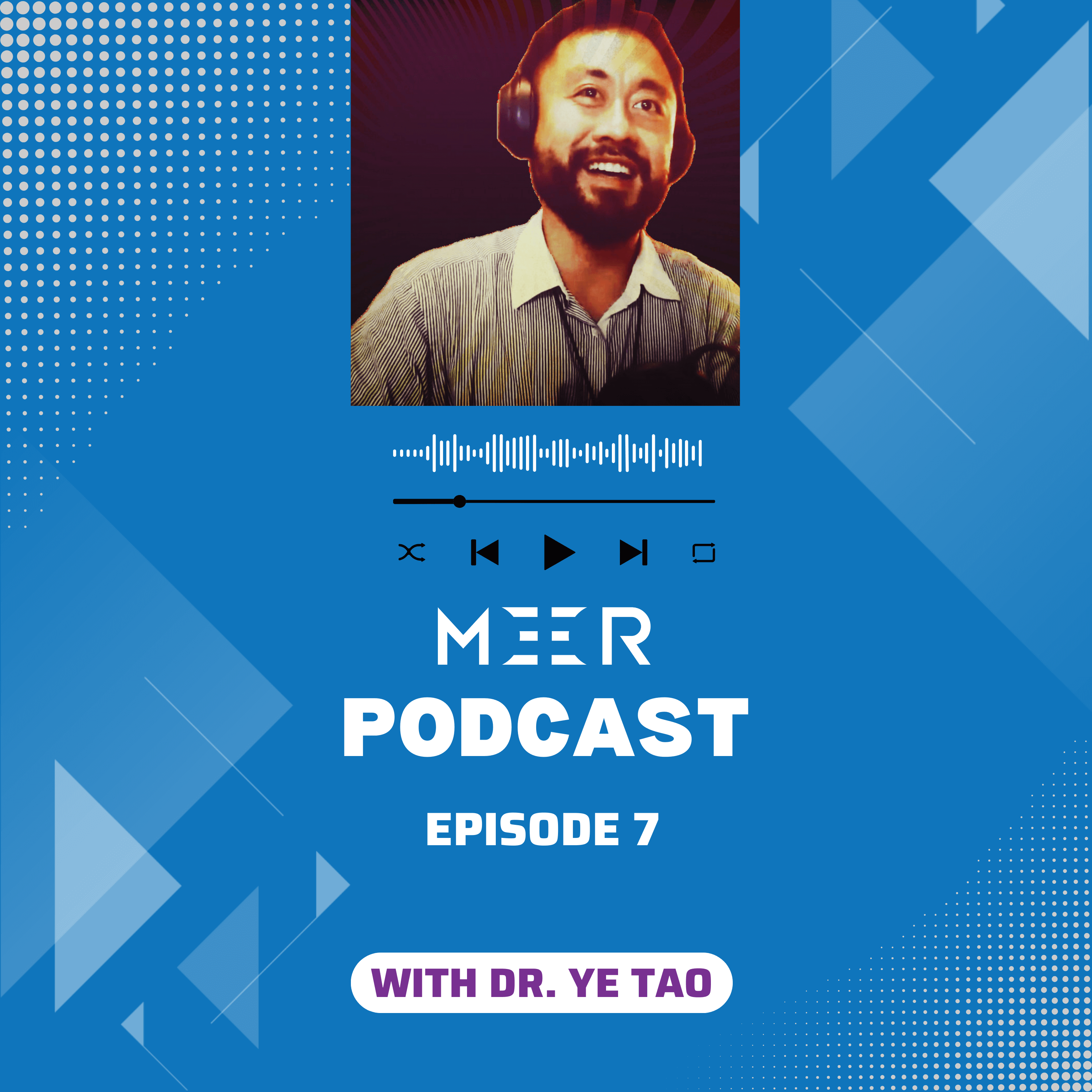
    7 Agriculture

    In this compelling seventh episode of the MEER Podcast, Dr. Ye Tao shares fascinating updates from his recent travels in China, delving into the state of climate, agricultural, and water resource research. Amidst exploring the potential for international collaboration, Dr. Tao sheds light on the challenges faced by Chinese researchers within the state-funded system and the implications for innovative climate solutions like MEER. The episode takes a deep dive into the impact of climate change on agriculture, highlighting recent studies that predict significant declines in crop yields due to increasing temperatures and changing precipitation patterns. Dr. Tao discusses how MEER's technologies could potentially mitigate these effects by improving water efficiency in agriculture through passive radiative cooling techniques. Join us as we explore the nexus of technology, policy, and climate action, examining both the challenges and transformative potential of MEER in addressing urgent global issues.

  • Jul 22, 2024 · 46 min

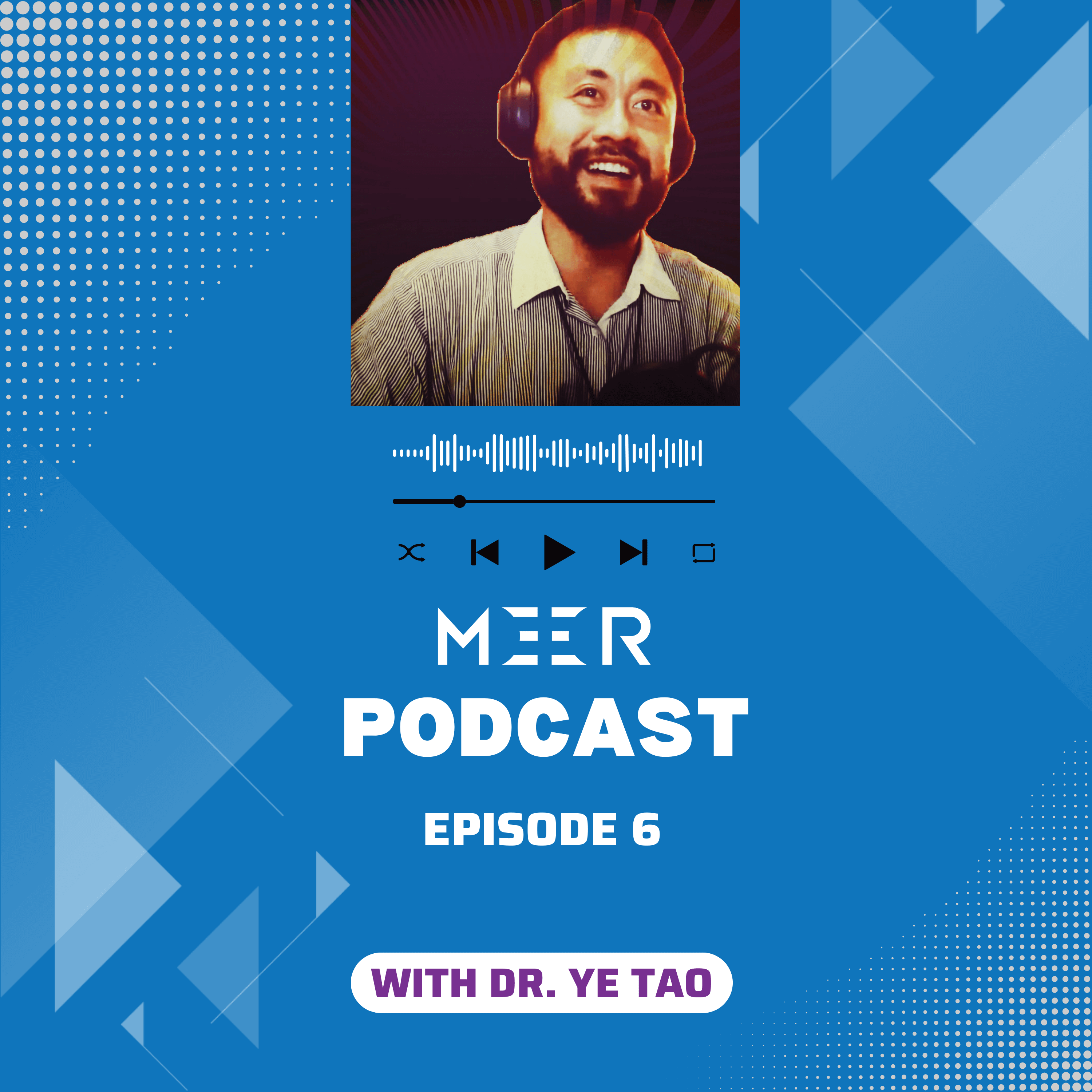
    6 Water Resources in a Warming Climate

    Join Dr. Ye Tao with host Peter Dynes as they discuss groundbreaking research on evaporation suppression, climate change impacts on lakes, and our exciting new collaboration for field experiments in Sierra Leone! Discover how MEER's innovative solutions aim to combat global droughts and protect our precious water resources. Stay informed on the latest advancements in environmental science!

  • May 28, 2024 · 42 min

    5 Earthshine

    In this episode, we delve into Dr. Ye Tao's fascinating trip to Makeni, where he plans to embark on groundbreaking water evaporation suppression experiments. Additionally, we engage in an in-depth discussion about the critical issue of the loss of planetary albedo, also known as our Earthshine.

  • Apr 22, 2024 · 44 min

    4 Courting Controversy

    Dr. Ye Tao discusses the ongoing heat waves in West Africa, as well as the issues they are having with power cuts in Sierra Leone. In addition, we revisit one of Dr. Tao's early symposium presentations and delve into the controversial topics he discussed and information he shared in 2020. He provides more detailed explanation on topics including the aerosol masking paradox that our civilization currently faces.

  • Mar 20, 2024 · 41 min

    3 Coming to Africa

    In this episode, Dr. Tao discusses the challenges of finding the right community to conduct cooling experiments and the overall economic and housing situation in Crab Town and Aberdeen. We also delve into the impact of humidity as a crucial environmental factor, with potentially serious consequences, particularly for the elderly. We explore how a massive dust storm affected the mirrors in the short and long run. Finally, we discuss the latest heat adaptation plans in Freetown. We hope you find the conversation enlightening.

    • Transcript
  • Feb 27, 2024 · 49 min

    2 Origins of MEER

    Welcome to the second episode of the MEER podcast, a show dedicated to science education that focuses on topics such as climate change, adaptation, and restoration. In this episode, Dr. Tao explains the origins of MEER and the framework he worked on with hundreds of students across the United States. He also talks about the framework's above other mitigation schemes. Additionally, he explains CROI (Cooling Return on Investment) and why it is so vital to factor in what is feasible in terms of mitigation. We hope you find this episode helpful and enlightening.

    • Transcript
Showing 1–20 of 20 episodes