Skip to content
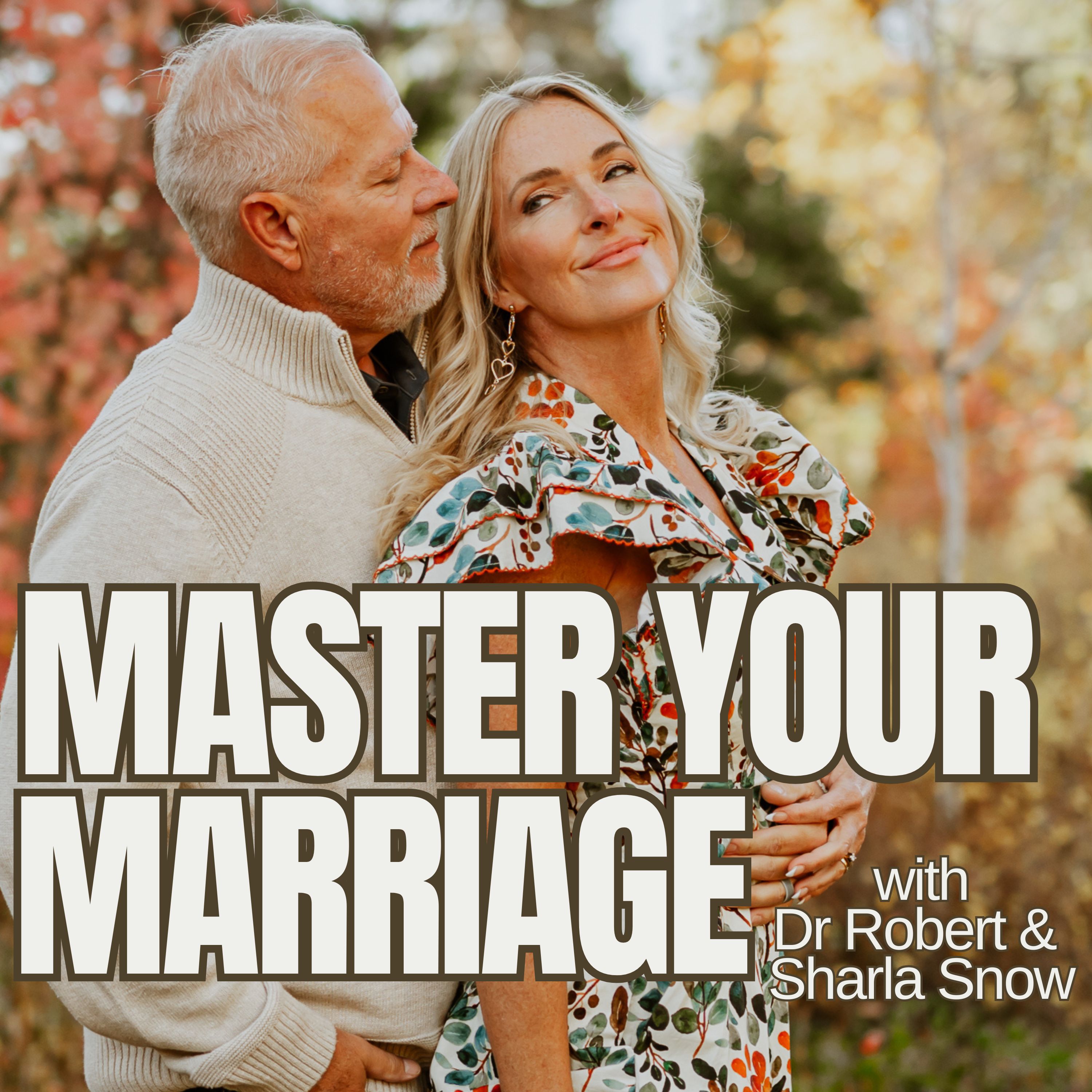
Artwork for Master Your Marriage
Society & CultureRelationshipsEducationSelf-ImprovementHealth & FitnessSexuality

Master Your Marriage

Sharla and Robert Snow

The average couple waits 6 years to get help in their marriage. That's 6 years of pain, hurt, frustration and lost opportunity.

This podcast is designed to help you NOT become a part of that statistic.

Hosted by Dr. Robert and Sharla Snow — themselves married for 31 years — The Master Your Marriage show is here with straight-talking guidance on how to fill your marriage with fun, friendship and love, without it ever feeling like "hard work."

No matter how long you've been struggling with your marriage, or how long it's been since you've felt that "spark," we promise you, there is hope!

Your MASTERFUL marriage starts here.

Play
  • 35 episodes
  • weekly
  • Avg 27 min
  • English
Counted on this page — what you have heard stays on this device, so it is not something the list can be paged by.
  • S1 · E167
    July 8 · 29 min

    How Adapting to Trauma Wires Us for Shame

    This is part two of our shame series. Be sure to listen to last week's episode for an introduction into shame and how it relates to self-esteem. In this episode, we go deeper into the real reason shame and grandiosity show up in our relationships. We explore how early childhood experiences shape a part of our psyche called the Adaptive Child — the part that learned to survive through fight, flight, or fix strategies. You’ll learn why these once-brilliant survival patterns often become the very thing that keeps us stuck in shame cycles as adults. We break down the three parts of the psyche, how trauma gets stored in the Adaptive Child, and what it actually takes to re-parent that younger part of ourselves with compassion and firmness. If you’ve ever wondered why your reactions feel so automatic and intense in relationships, or why “just loving yourself” hasn’t worked, this episode will give you the missing piece. In this episode, you’ll discover: The three parts of the psyche and why most of us spend our adult lives in the Adaptive Child How fight, flight, or fix becomes your default survival strategy Why the Adaptive Child carries and replays shame and grandiosity How childhood trauma (big or small) wires these patterns into your nervous system The powerful truth that shame and grandiosity are actually the same emotion pointed in two different directions How to begin re-parenting your Adaptive Child so it no longer runs your relationships Connect With Us: Website: MasterYourMarriage.us Instagram: https://www.instagram.com/masteryourmarriage Facebook: https://www.facebook.com/MasterYourMarriage/

  • S1 · E166
    July 2 · 25 min

    The Shame Cycle That’s Hurting Your Marriage

    Most of us are walking around with a relationship to ourselves that is pretty dysfunctional — and we don’t even realize it. We bounce back and forth between shame and grandiosity, sometimes minute by minute, and this constant internal cycle quietly damages our marriages. In this first episode of our new series, we unpack what real self-esteem actually is, how shame and grandiosity act as two sides of the same coin, and why so much of the disconnection in our relationships actually starts with the relationship we have with ourselves. We also introduce the three types of “outside-in” (or pseudo) self-esteem that many of us unknowingly rely on. If you’ve ever felt like you’re not enough one minute and superior the next — or wondered why connection with your partner sometimes feels so hard — this episode will give you language for what’s actually happening. What You’ll Learn in This Episode: Why shame and grandiosity are both distortions of real self-esteem (and how they show up in marriage) The difference between inside-out self-esteem and the “outside-in” versions we often rely on The three types of outside-in (pseudo) self-esteem: performance-based, others-based, and attribute-based Why we bounce between shame and grandiosity — and how this “cycle” affects the safety and closeness in our relationships The very first step to interrupting the pattern: building awareness through a simple noticing practice Your Practice This Week: Keep a simple Noticing Journal for the next 1–2 weeks. Each time you notice your internal state shifting (especially around your spouse), jot down: What just happened? (the trigger) What did you notice in your body first? What emotion was underneath? What thought ran through your mind? No fixing. No judgment. Just noticing. Next Week: In Episode 2, we go much deeper into the shame side of this equation — what it actually looks like in real marriage, how it shows up differently for different people, and what we can do when that one-down feeling takes over. Connect With Us: Website: MasterYourMarriage.us Instagram: https://www.instagram.com/masteryourmarriage Facebook: https://www.facebook.com/MasterYourMarriage/

  • S1 · E165
    June 24 · 23 min

    Why Therapy Often Falls Short - Even When It’s Good Therapy

    Many people do deep, sincere work in therapy and gain real insight into their patterns — yet they still find themselves repeating the same painful cycles in their relationships. In this episode, we explore why insight alone often fails to create lasting change and what actually helps us respond differently when we’re triggered. Drawing from the work of Terry Real and Relational Life Therapy, we unpack the three parts of ourselves that show up in moments of conflict and why building the capacity to shift between them is essential for real transformation. In This Episode Why so many people feel like therapy “didn’t work,” even after doing significant personal work The gap between knowing why we react and actually responding differently in the moment The three parts of you: the Wise Adult, the Wounded Child, and the Adaptive Child Why the Adaptive Child’s survival strategies often override our best intentions The difference between top-down and bottom-up approaches — and why both are often needed A simple, practical practice you can start using today to build “second consciousness” A personal story that illustrates what it looks like when someone finally chooses a different response Key Takeaways Insight is valuable, but it’s often not enough to interrupt deeply wired patterns when we’re activated. Many adults spend a large portion of their life operating from their Adaptive Child rather than their Wise Adult. Real change happens in the present moment — not while talking about the past. Recovery is active, moment-to-moment work that requires noticing when the Adaptive Child has taken over and gently inviting the Wise Adult back online. Both strengthening the Wise Adult and reducing the intensity of old trauma are important for lasting change. Practical Action Steps Try this simple practice the next time you notice yourself getting reactive: Take a slower, intentional breath (try the 4-7-8 breath: inhale for 4, hold for 7, exhale for 8). Gently ask yourself: Which part of me is running right now? Am I in my Adaptive Child, or is my Wise Adult available? What would my Wise Adult want to do differently? This week, keep a short journal and note moments when you noticed yourself in your Adaptive Child. Awareness is where choice begins. Resources Mentioned Work of Terry Real and Relational Life Therapy Viktor Frankl’s quote on the space between stimulus and response Thomas Hübl’s teaching: “To observe is to have choice” Get in Touch Website: MasterYourMarriage.us Instagram: https://www.instagram.com/masteryourmarriage Facebook: https://www.facebook.com/MasterYourMarriage/

  • S1 · E164
    June 18 · 31 min

    Don’t Run From Tension – Stephen Curry’s Marriage Wisdom

    What if the secret to a thriving marriage isn’t avoiding conflict… but learning to lean into it? In this episode, Sharla and Robert explore NBA superstar Stephen Curry’s powerful marriage advice from his recent interview with Michelle Obama: “We don’t run away from the tension on the daily.” They unpack why this simple idea is backed by decades of research from John and Julie Gottman, Terry Real, and divorce lawyers — and why so many couples still resist it. You’ll learn: Why 69% of relationship problems are perpetual (and why that’s actually good news) How the 5:1 positive-to-negative ratio works in real life — and what happens when it doesn’t over 5–10 years The compounding effect of small, unaddressed negatives (and how it leads to “falling out of love slowly, then all at once”) Practical ways to reframe tension, use soft startups, get underneath gridlocked issues, and repair quickly Whether you’ve been married 5 years or 25, this episode will shift how you see conflict in your relationship. Resources & Links Mentioned: Michelle Obama’s IMO Podcast with Stephen & Ayesha Curry (full episode) Medium Article: “Stephen Curry’s Best Marriage Advice Is Backed by Psychologists and Divorce Lawyers” John & Julie Gottman – Fight Right Terry Real – Relational Life Therapy Our Repair Mini-Series (previous episodes) Challenge This Week: The next time tension rises, name it gently: “I’m noticing some tension here, and I want us to lean into it together. What’s going on for you?” Stay in the conversation, listen openly, and make a repair if needed. Research Opportunity: We’re in the early stages of developing a new marriage program and would love your input. If you’ve ever felt successful in your career but struggled to connect at home, Sharla would love to hear your story. This is purely for research — no sales pitch. Schedule a quick interview here Call to Action: If this episode resonated with you, please share it with a friend who needs to hear it. Leave us a rating and review on Apple Podcasts — it helps other couples find the show. And be sure to subscribe so you never miss an episode. Until next time — choose each other, even in the tension.

  • S1 · E163
    June 12 · 17 min

    BONUS EPISODE: Ho’oponopono Forgiveness Meditation - Release Resentment and Free Yourself

    BONUS EPISODE - FORGIVENESS MEDITATION TOOL! This guided Ho’oponopono meditation is a powerful companion to Episode 162: “When Is It Okay Not to Forgive? (And When It’s Not)” — and is especially helpful for married couples and partners working to strengthen their relationship. We strongly recommend listening to Episode 162 first. It provides essential context on what forgiveness really means in marriage, the difference between forgiveness and reconciliation, and why this practice can be so transformative for your relationship. How to use this meditation in your marriage: Use this practice regularly — even daily — to gently release resentment and anger toward your spouse or anyone who has wronged you, whether the hurt is big or small. Save this episode so you can return to it whenever you need support. As you make forgiveness a regular part of your marriage, the benefits to your mental health, physical well-being, and connection with your partner are profound. Important Safety Note: Please do not listen while driving or doing anything that requires your full attention. Find a quiet, safe space where you can close your eyes and have at least 15 minutes of uninterrupted time. This practice is especially helpful for couples when: You’ve been hurt by your partner and need to release resentment You want to reconnect more deeply after a conflict or emotional rupture You’re processing the loss of a loved one and want to release them with peace Please note: This meditation focuses on forgiving others. A separate process for forgiving yourself may be shared in a future episode. Listen to the prerequisite episode first: Episode 162: When Is It Okay Not to Forgive? (And When It’s Not) If you and your spouse want more structured support, reach out at masteryourmarriage.us Thank you for doing this important inner work. Forgiveness is one of the greatest gifts you can give yourself and your marriage. Be kind to each other. Take care of each other. Put each other first.

  • S1 · E162
    June 10 · 22 min

    When Is It Okay Not to Forgive? (And When It’s Not)

    In this powerful episode of Master Your Marriage, Sharla and Robert Snow explore one of the most misunderstood topics in relationships: forgiveness. They revisit the subject with fresh insights, addressing common misconceptions, the crucial difference between forgiveness and reconciliation, and when it might actually be wise to move slowly on reconciliation — while still choosing internal peace. Through personal stories (including Sharla’s transformational experience with ho’oponopono), real client examples, and science-backed research, you’ll discover how forgiveness is something you do for yourself — not for the offender. Learn how to let go of resentment without losing your boundaries or compromising your safety. Whether you’re working through a small rupture or a deep wound, this episode offers clarity, hope, and practical tools to help you find freedom. Key Takeaways: Forgiveness is an internal process — it does not mean forgetting, excusing, or reconciling. You can forgive someone and still maintain strong boundaries (or even choose not to reconcile). Your peace does not have to wait for the other person to change — that’s living at cause. Unforgiveness carries real physical and mental health costs, but forgiveness offers powerful benefits. Resources Mentioned: Companion Episode: Ho’oponopono Forgiveness Meditation (available on Spotify & Apple Podcasts) and available here! Research & Further Reading: Toussaint, L. L., et al. (2016). “Forgiveness, Stress, and Health: A 5-Week Dynamic Parallel Process Study.” Annals of Behavioral Medicine. PubMed Abstract | Full Text (PMC) Toussaint, L. L., et al. (2016). “Effects of Lifetime Stress Exposure on Mental and Physical Health in Young Adulthood: How Stress Degrades and Forgiveness Protects Health.” Journal of Health Psychology. PubMed Abstract | PDF Enright’s Process Model of Forgiveness: International Forgiveness Institute Connect With Us: Website: masteryourmarriage.us Subscribe on your favorite podcast app and leave a 5-star review — it helps us reach more couples! Follow us on social media @MasterYourMarriage

  • S1 · E161
    June 3 · 28 min

    Making Repairs In The Moment (Conflict Strategies)

    In the final episode of our 3-part series on relationship repair, we’re focusing on one of the most practical and powerful tools for any relationship: quick, in-the-moment repairs. Even the happiest couples argue and experience moments of disconnection. What makes the difference isn’t avoiding conflict — it’s how quickly and effectively you repair those inevitable ruptures. In this episode, we explore the science behind why repairing early and often is one of the strongest predictors of long-term relationship success. You’ll learn: What a true “repair attempt” is (any statement or action that de-escalates negativity and moves you back toward connection) Simple, practical ways to reset in the heat of the moment instead of letting things spiral We also demonstrate real-life examples of in-the-moment repair language you can start using immediately. If you want even more tools, grab our Relationship Repair Quick Guide — packed with ready-to-use repair phrases for different situations (when you feel defensive, flooded, shut down, hurt, etc.). Instant download here: 👉 https://stan.store/masteryourmarriage/p/the-relationship-repair-quick-guide Remember: The best repairs are done early and often. Small moments of repair create massive trust and resilience over time. Get in Touch Website: MasterYourMarriage.us Instagram: https://www.instagram.com/masteryourmarriage Facebook: https://www.facebook.com/MasterYourMarriage/

  • S1 · E160
    May 27 · 24 min

    The Apology That Actually Heals

    Every conflict in your marriage gives you a choice: will you use it to deepen your connection and grow closer, or will you let it drive you further into resentment and disconnection? In this episode, we explore why genuine apologies are one of the most important repair tools in marriage. You’ll learn the science behind why apologies work, what happens when we refuse them or give fake ones, the negative feedback loop that can trap couples in disconnection, and a practical four-step apology process you can start using immediately. We discuss John Gottman’s research on repair, the difference between Masters and Disasters of relationships, Terry Real’s losing strategies, and how small, sincere repairs can build a rich “culture of repair” in your marriage. Key Resources & Studies Mentioned: Apologies in Close Relationships: A Review of Theory and Research (2015) by Jarrett T. Lewis, Gilbert R. Parra, and Robert Cohen Journal of Family Theory & Review APA PsycNet Link Refusing to Apologize Can Have Psychological Benefits (2013) by Tyler G. Okimoto and colleagues European Journal of Social Psychology Why Won’t You Apologize? Healing Big Betrayals and Everyday Hurts by Harriet Lerner Amazon The Gottman Institute – Research on repair attempts, culture of repair, Negative Sentiment Override, and emotional availability Gottman.com Terry Real’s work on Relational Life Therapy and losing strategies (highly recommended: The New Rules of Marriage) Action Step: Try the four-step apology process the next time conflict arises. Notice how it feels and what it does for your connection. If this episode resonated with you, share it with your partner and leave a review. Let us know in the comments: What’s one apology you’re committed to making this week? Tags: Marriage Advice, Healthy Relationships, Apologies, Conflict Resolution, Gottman Method, Terry Real, Relationship Repair, Emotional Intelligence Get in Touch Website: MasterYourMarriage.us Instagram: https://www.instagram.com/masteryourmarriage Facebook: https://www.facebook.com/MasterYourMarriage/

  • S1 · E159
    May 14 · 23 min

    It’s Not Conflict That Ends Relationships, It’s Lack of Repair

    Conflict isn’t the problem in relationships — it’s the hurt we cause and the lack of repair that slowly breaks them. In this first episode of our 3-part Repair Mini-Series, we’re breaking down why repair is the most important skill every couple needs. You’ll learn: Why avoiding conflict actually makes relationships more fragile How healthy couples actually have more conflict (and why that’s a good thing) The natural rhythm of all relationships: harmony, disharmony, and repair The powerful lesson from Ed Tronick’s Still Face Experiment Four game-changing beliefs that will shift how you see conflict forever Why repair starts with YOU (even when your partner is dysregulated) Featuring insights from Dr. John Gottman and Ed Tronick, this episode will completely reframe the way you think about arguments in your relationship. If you’ve ever wondered why some couples bounce back from conflict stronger while others slowly drift apart, this episode is for you. 🔥 Next week: Repair Attempts – How to do them well 🔥 Week after: Meaningful Apologies & Forgiveness If this resonated with you, please leave a 5-star review, subscribe, and share it with someone who needs to hear it. Your support helps us reach more people. Thanks for listening — take care of each other this week. Get in Touch Website: MasterYourMarriage.us Instagram: https://www.instagram.com/masteryourmarriage Facebook: https://www.facebook.com/MasterYourMarriage/

  • S1 · E158
    May 6 · 28 min

    How Withdrawal Slowly Ends Marriages

    In the final episode of our 8-week series on Losing Relationship Strategies, we explore withdrawal — one of the most subtle, sneaky, and destructive patterns couples fall into. Robert and Sharla unpack how disengaging from the relationship (emotionally, physically, sexually, digitally, or even at the level of choice) slowly erodes connection and can eventually lead to living parallel lives. You’ll learn: How withdrawal shows up in both extreme and everyday forms — from stonewalling and “fine” syndrome to digital escape, martyr mode, over-investment in kids/career/hobbies, and the especially sneaky pattern of withdrawing from choosing the marriage while still physically staying in it. The dangerous “Distance and Isolation Cascade” identified by John Gottman that often leads to divorce. Why the opposite of love isn’t hate — it’s apathy. The critical difference between unhealthy withdrawal and healthy mature acceptance (including Dr. Terry Real’s powerful reckoning question and the beautiful Phyllis & Doug story). How to practice responsible distance-taking instead of stonewalling or silent check-out. The #1 rule that reveals whether you’re truly accepting something or quietly withdrawing. This episode is filled with honest self-reflection, practical tools, and hope. If you’ve ever felt like you and your partner are just coexisting instead of truly connecting, this one is for you. Key Takeaways Withdrawal is disinvesting from the relationship — usually when we’re not getting what we want. You can’t get your needs met by pulling away. The presence of resentment is the clearest sign you’re in withdrawal, not acceptance. Responsible space-taking always includes an understanding + a promise of return. Awareness of your patterns is the first step to interrupting them. Journaling Questions Which losing strategies do you favor? Where might you be withdrawing from fully choosing the relationship? Where did you learn these strategies? Who modeled them growing up? In your opinion — which losing strategies does your spouse tend to use? How might your strategies feed into your partner’s (and vice versa)? Share your observations about yourself with your partner (not about them). Resources Mentioned The New Rules of Marriage by Dr. Terry Real The work of Drs. John & Julie Gottman The work of Dr. Jennifer Finlayson-Fife If this episode resonated with you, please take a moment to leave a rating and review — it helps us reach more couples who need this message. And if you know someone who might benefit, please share this episode with them. Thank you for joining us through this entire Losing Strategies series. Be kind and take care of each other this week. It really is the small things done often that make the biggest difference. Get in Touch Website: MasterYourMarriage.us Instagram: https://www.instagram.com/masteryourmarriage Facebook: https://www.facebook.com/MasterYourMarriage/

  • S1 · E157
    April 29 · 23 min

    The Half-In, Half-Out Marriage

    Are you physically in your relationship but emotionally somewhere in the middle? Torn between choosing in fully or choosing out, yet stuck in painful limbo? In this episode, we explore Dr. Jennifer Finlayson-Fife’s powerful insights on the losing strategy of indecision — that quiet, exhausting place of straddling that slowly erodes your happiness, self-respect, and connection. Drawing from her deep work with couples on intimacy and relationships, Dr. Finlayson-Fife explains why avoiding clear choice feels safer in the moment but becomes one of the most costly paths we can take. You’ll hear honest stories, research-backed truths, and practical wisdom about confronting our human limits and learning to choose with greater clarity and courage. What You’ll Learn: Why every decision (including not deciding) closes doors — and how facing that reality actually creates more meaning and joy The fantasy of “keeping options open” and why it quietly destroys marriages and personal well-being Real-life examples of straddling in dating, long-term marriage, and major life decisions like divorce How to know when you’ve gathered enough information and when it’s time to step fully in or out Practical ways to stop overthinking, calm the anxiety of indecision, and choose from your most honest self What choosing in with integrity looks like — even when the marriage isn’t perfect and intimacy has suffered The difference between a clear-eyed commitment and resentful limbo Featuring powerful ideas from Oliver Burkeman’s Four Thousand Weeks and Barry Schwartz’s The Paradox of Choice, this episode offers a compassionate but clear-eyed look at one of the most common patterns that keeps people stuck. If you’ve ever felt trapped between yes and no, this conversation will help you understand what’s really happening — and how moving out of the indecision trap can bring relief, clarity, and a more fulfilling life and relationship. Resources Mentioned: Four Thousand Weeks: Time Management for Mortals by Oliver Burkeman The Paradox of Choice by Barry Schwartz That We Might Have Joy: Desire, Divinity & Intimate Love by Dr. Jennifer Finlayson-Fife Listen now and take an honest look at where you might be half-in, half-out — and what choosing differently could open up for you. Get in Touch Website: MasterYourMarriage.us Instagram: https://www.instagram.com/masteryourmarriage Facebook: https://www.facebook.com/MasterYourMarriage/

  • S1 · E156
    April 23 · 22 min

    Defensiveness Is Blocking Real Intimacy

    Defensiveness feels so natural — like self-protection — but it quietly destroys connection and growth in marriage. In this episode, we unpack why defensiveness is one of the most corrosive behaviors in relationships, how it protects your ego at the expense of true intimacy, and what it really costs you and your partner. We explore: How marriage is designed to grow you up — and why defensiveness fights against that purpose The Gottman Institute’s “Four Horsemen” and why defensiveness is so dangerous The ego’s role in defensiveness and the powerful Byron Katie quote: “Defense is the first act of war” What defensiveness looks like in real life (one-up and one-down versions) The irony of pushing away the mirror while your spouse and kids clearly see your blind spots Brené Brown’s insights on armor, shame, and daring to take feedback from people who are “in the arena” with you Most importantly, we share practical tools to overcome defensiveness: Simple phrases that keep your mind open instead of closed How to shift from defending to truly listening and taking responsibility The courage required for real intimacy: being willing to know and be known If you’ve ever felt yourself getting defensive during a hard conversation, or wondered why connection feels blocked in your relationship, this episode will give you both awareness and hope. Journaling Questions for the Week: How does my functioning change when my ego gets hurt or criticized? What wisdom do I want to remember the next time I feel myself getting defensive? What do I want to remember to say or do the next time I feel myself getting defensive? If this episode resonated with you, please leave a 5-star review and share it with a couple who might need it. Small changes in how we respond can create big ripples in our marriages. Be kind to each other this week — it’s the small things done often that make the biggest impact. Resources Mentioned: The Gottman Institute Daring to Lead by Brené Brown Byron Katie’s work Get in Touch Website: MasterYourMarriage.us Instagram: https://www.instagram.com/masteryourmarriage Facebook: https://www.facebook.com/MasterYourMarriage/

  • S1 · E155
    April 15 · 27 min

    The Hidden Cost of Keeping the Peace in Marriage

    You smile, nod, and say “yes”… while inside you’re quietly dying a little. If you’ve ever kept the peace by biting your tongue, agreeing when you don’t really agree, or saying yes when you mean no, this episode is for you. Today we’re talking about appeasement — that sneaky losing strategy also known as people-pleasing, complying, or masking your true thoughts just to keep your spouse comfortable. In this episode, Sharla breaks down why being “nice” and avoiding conflict can actually create deep resentment over time. You’ll learn where the drive to people-please comes from (hint: it often starts in childhood), the six hidden ways it quietly damages your marriage, and why it blocks real intimacy and mutuality. Most importantly, you’ll discover how to move from masking and compliance into honest, responsible truth-telling — without swinging to the opposite extreme of rebellion or cold distance. Because real connection requires both people to show up as their actual selves. We also explore the important difference between genuine, loving sacrifice and fear-based people-pleasing — and why one strengthens your marriage while the other slowly erodes it. Homework for this week: Grab your journal and reflect on these questions: When was the last time I went along with something resentfully just to keep the peace? What has this cost our relationship? Make a list of the resentments I still hold toward my partner. How many stem from avoiding an honest conversation about my own needs or desires? When have I looked the other way while my partner was accommodating me at their own expense? What would it look like if we were more honest with each other about our individual desires? What’s one small change I can make today? If it feels safe, consider discussing one or two of these questions together as a couple. Key Takeaway: Being nice isn’t the problem. Masking your real thoughts and feelings to avoid discomfort is. When you learn to speak truthfully and own your choices (even when it’s uncomfortable), you create space for deeper trust, respect, and real intimacy in your marriage. New episodes drop every week. Subscribe so you don’t miss the next losing strategy we’re unpacking in this series. Get in Touch Website: MasterYourMarriage.us Instagram: https://www.instagram.com/masteryourmarriage Facebook: https://www.facebook.com/MasterYourMarriage/

  • S1 · E154
    April 8 · 24 min

    Retaliation in Marriage: Why ‘You Hurt Me First’ Never Works

    In this episode of Master Your Marriage, we continue our series on the losing strategies that quietly sabotage even the best relationships. Today we’re diving deep into the fourth one: retaliation (also called punishment). Retaliation sounds simple: “You hurt me, so I’m going to make you feel exactly what I’m feeling.” It shows up as overt criticism, sarcasm, yelling… or the more subtle, covert version—silent treatment, withholding affection, passive-aggression, or “Eh, it was fine.” Terry Real calls this a perverse form of communication—a twisted attempt at repair. Deep down, we’re hoping our partner will finally “get it,” feel remorse, and become accountable. But ironically, it always fails. Instead of creating understanding, it destroys connection and strips away our own sense of agency. We explore: The two main forms of retaliation: direct (mean) and indirect (mean-spirited) Why “offending from the victim position” feels so justified (“They started it!”) How almost all perpetrators see themselves as victims The surprising truth that retaliation costs us the two things we want most—connection and independence Real-life examples, including a powerful client story about self-deception The good news? You don’t have to stay stuck in this reactive pattern. Terry Real teaches us to shift from first consciousness (our automatic, ego-driven, hurt-child response) to second consciousness—our mature, wise adult self. This shift allows us to stay honest about our feelings while keeping connection alive. We share simple ways to pause, breathe, and respond from that calmer, more loving place instead of punishing. If you’ve ever caught yourself thinking “They deserve this” or “I’m only doing this because of what they did,” this episode is for you. It’s time to take retaliation off the table and move toward the choice-based marriage you truly want. Journaling Questions for This Week: When was the last time I withheld affection or approval from someone I love? How did I feel after? What was I trying to get by punishing the other person? How did that work out for me? Did I get what I really wanted? And if so, at what cost? Resources & Further Reading: Terry Real’s book: The New Rules of Marriage Relational Life Institute (Terry Real’s trainings and resources) Get in Touch Website: MasterYourMarriage.us Instagram: https://www.instagram.com/masteryourmarriage Facebook: https://www.facebook.com/MasterYourMarriage/

  • S1 · E153
    April 1 · 24 min

    Needing to Be Right: Just Because You Think You're Right, Doesn’t Mean You Get to Prove It!

    In this episode of Marriage 101, we’re unpacking Losing Strategy #3: Needing to Be Right. We’ve all been there — that looping argument where both people are convinced they’re right and neither will back down. Today we explore why the deep human need to be right can quietly destroy connection in marriage, even when we think we’re just “telling the truth.” We dive into: Why our brains are wired to need to be right (confirmation bias explained) How none of us have a “God camera” — our memories and perceptions are subjective, not objective The real-life cost of always needing to prove your point Sneaky ways this strategy shows up (collecting allies, acting morally superior, using “experts,” etc.) Why even when your intentions are good, fighting to be right pushes your partner away Robert and I share two practical rules we use in our own relationship to break the “who’s right” cycle, plus real-world examples of how this pattern plays out in everyday moments. Reflection Questions: When was the last time I was in a conversation with someone who needed to be right, and what was that like for me? When have I felt justified in proving that I was right? What might my best self do differently in those moments? What wisdom from this episode do I want to remember next time I feel the urge to prove my point? Here is the good news. Simply becoming aware of this losing strategy is the first step toward real change. Shifting from “I need to be right” to genuine curiosity about your partner’s experience can transform your relationship. If this episode hit home, please take a moment to leave a 5-star review and comment — it helps more couples find the show! Be kind to each other this week. Put each other first. It’s the small things done often that create the biggest impact. Next week: We continue the Losing Strategies series with Strategy #4. Subscribe so you don’t miss it! Get in Touch Website: MasterYourMarriage.us Instagram: https://www.instagram.com/masteryourmarriage Facebook: https://www.facebook.com/MasterYourMarriage/

Showing 21–35 of 35 episodes