Skip to content
Artwork for Marketecture: Get Smart. Fast.
BusinessInvestingMarketingTechnology

Marketecture: Get Smart. Fast.

Ari Paparo

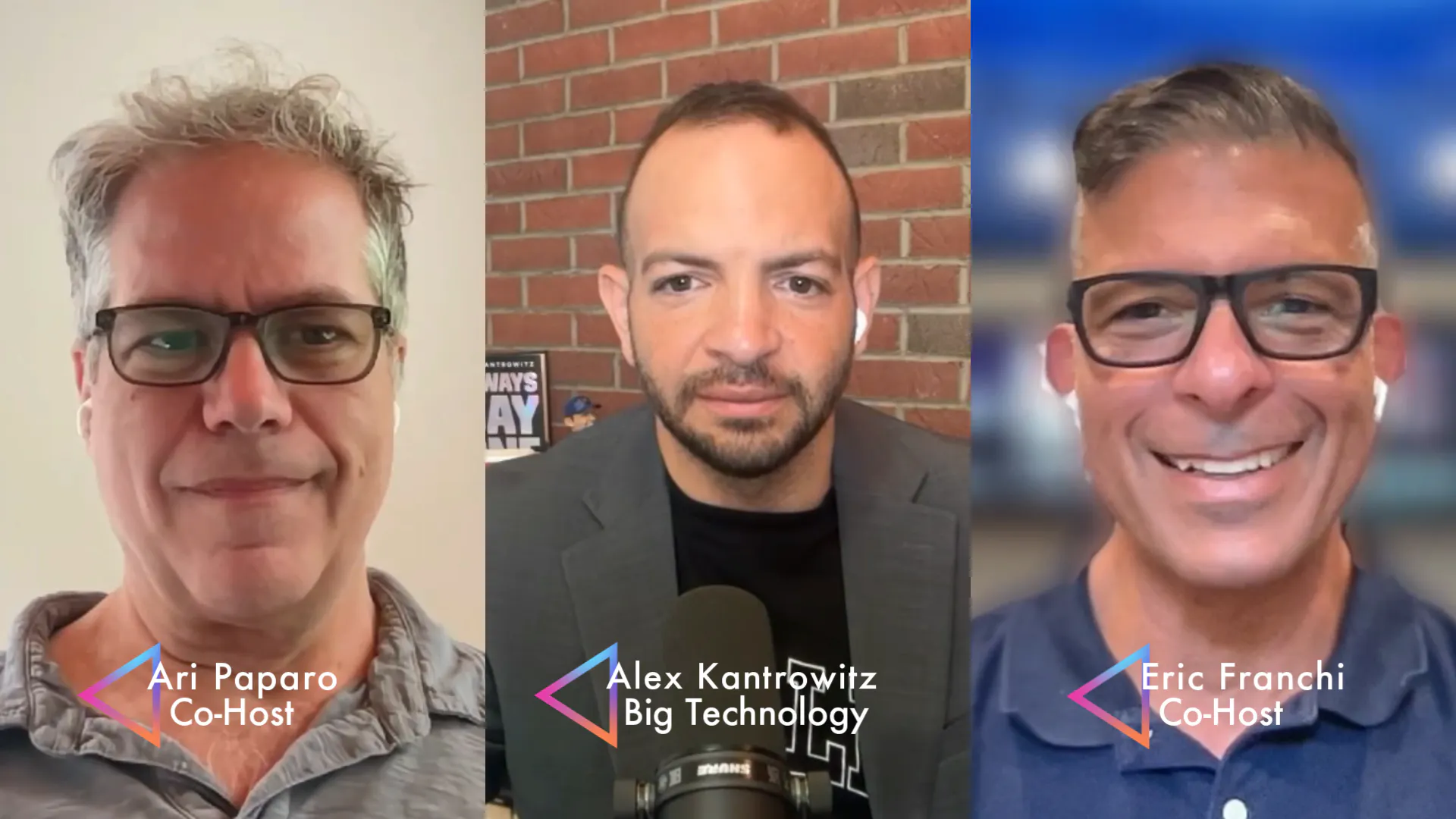
The Marketecture Podcast is hosted by industry experts Ari Paparo and Eric Franchi. Every Friday they publish an interview with an important thinker in the advertising and marketing industries, and cover that week's most important news. On Mondays there's an in-depth vendor interview where you learn about interesting companies.

https://www.marketecture.tv


Interested in sponsoring the show? Contact ⁠Marketecture Media.⁠


Marketecture® and AdTechGod® are registered trademarks of Marketecture Media, Inc. all rights reserved.

Play
  • 25 episodes
  • weekly
  • Avg 36 min
  • English
Counted on this page — what you have heard stays on this device, so it is not something the list can be paged by.
  • June 15 · 15 min

    Walmart Connect's Ryan Mayward on Their Big CTV Move: Yahoo, Magnite and Vizio Explained

    Ryan Mayward, SVP and GM of Walmart Connect, joins Ari Paparo to discuss Walmart's new partnership with Yahoo and Magnite, the role of Vizio in Walmart's CTV strategy, retail media measurement, incrementality, and the future of in-store advertising. Learn how Walmart is making its audience data more accessible while focusing on outcomes and advertiser flexibility. Takeaways Walmart Connect integrated its audience and measurement capabilities with Magnite, enabling Yahoo DSP advertisers to activate campaigns on Vizio inventory. The partnership aims to make Walmart data more accessible while maintaining control over audience targeting and measurement. Walmart plans to expand access to additional DSPs and buying paths over time. Vizio OS has become a major growth driver, powering a significant share of smart TVs sold in the U.S. Walmart Connect is focused on outcomes-based advertising, including customer acquisition, sales lift, and incremental return on ad spend (iROAS). Walmart is expanding in-store media opportunities through digital screens and retail media innovations. Chapters 00:00 Introduction & Walmart Connect Overview 00:36 Walmart, Yahoo, Magnite & Vizio Partnership Explained 03:34 Why Walmart Chose a Sell-Side Integration Strategy 04:25 Future DSP Expansion Plans 05:42 The Evolution of Connected TV Advertising 06:50 Outcomes-Based Measurement & Walmart DSP 08:56 Incrementality and iROAS in Retail Media 10:24 Measuring Online vs. In-Store Sales Impact 11:32 Walmart's In-Store Media & Digital Screen Strategy 13:28 Walmart Connect's Biggest Advantage 13:54 Walmart Connect's Biggest Challenge 14:20 Lightning Round: If Walmart Connect Were an Animal 15:17 Closing Remarks Guests: Ari Paparo, Ryan Mayward Learn more about your ad choices. Visit megaphone.fm/adchoices

  • #177
    June 12 · 58 min

    Episode 177: Scott Ensign of Butler/Till on Innovation at Indy Agencies

    Scott Ensign, Chief Strategy Officer at Butler/Till, joins Ari Paparo to discuss the advantages of being a 100% employee-owned agency, the rise of agentic AI in media buying, AdCP adoption, and the future of pharmaceutical advertising. Learn how Butler/Till is leveraging AI-powered workflows, healthcare expertise, mobile gaming inventory, and programmatic innovation to drive growth in a rapidly evolving media landscape. Takeaways Butler/Till operates as a 100% employee-owned ESOP, giving employees ownership stakes and allowing the agency to remain independent and agile. The agency is a women-owned and women-led business, with roughly two-thirds of employees being women. Thanks to its status as an independent agency, Butler/Till can operate with agility, making faster decisions and investing strategically without outside shareholder pressure. Butler/Till takes a product-focused approach, building technology and solutions around client needs rather than creating products solely for commercialization. Pharmaceutical advertising is shifting away from broad-reach TV campaigns toward addressable, data-driven digital media channels. Even if pharmaceutical advertising regulations change, opportunities will remain through disease-state education and targeted healthcare professional outreach. Mobile gaming remains an undervalued advertising channel, particularly for reaching healthcare professionals during everyday moments. Butler/Till participated in one of the industry's earliest agentic AI-powered media transactions using AdCP technology. Agentic AI can automate traditionally manual workflows such as RFPs, publisher negotiations, and media planning. The agency views AI primarily as a tool for accelerating work and solving talent shortages rather than replacing employees. Chapters 00:00 Introduction to Scott Ensign and Butler/Till 00:41 What makes Butler/Till unique as an employee-owned agency 01:24 The history behind Butler/Till's ESOP structure 02:25 Independent agencies vs. holding companies 03:47 Product development and technology investments at Butler/Till 04:33 Why Butler/Till hired a Chief Product Officer 05:08 How clients approach AI and workflow innovation 06:33 The changing landscape of pharmaceutical advertising 08:31 Regulatory concerns and the future of pharma marketing 10:44 Reaching healthcare professionals in the digital age 12:15 Why mobile gaming is an overlooked advertising opportunity 14:19 Butler/Till's early agentic AI and AdCP media transaction 16:25 How buyer and seller AI agents could negotiate media deals 19:28 Why pharma is a strong fit for agentic media buying 21:24 Expanding AdCP into audio and offline media channels 23:01 AI, efficiency, and the future of agency work 23:57 Butler/Till's growth, hiring plans, and closing thoughts Guests: Ari Paparo, Scott Ensign Learn more about your ad choices. Visit megaphone.fm/adchoices

  • June 8 · 18 min

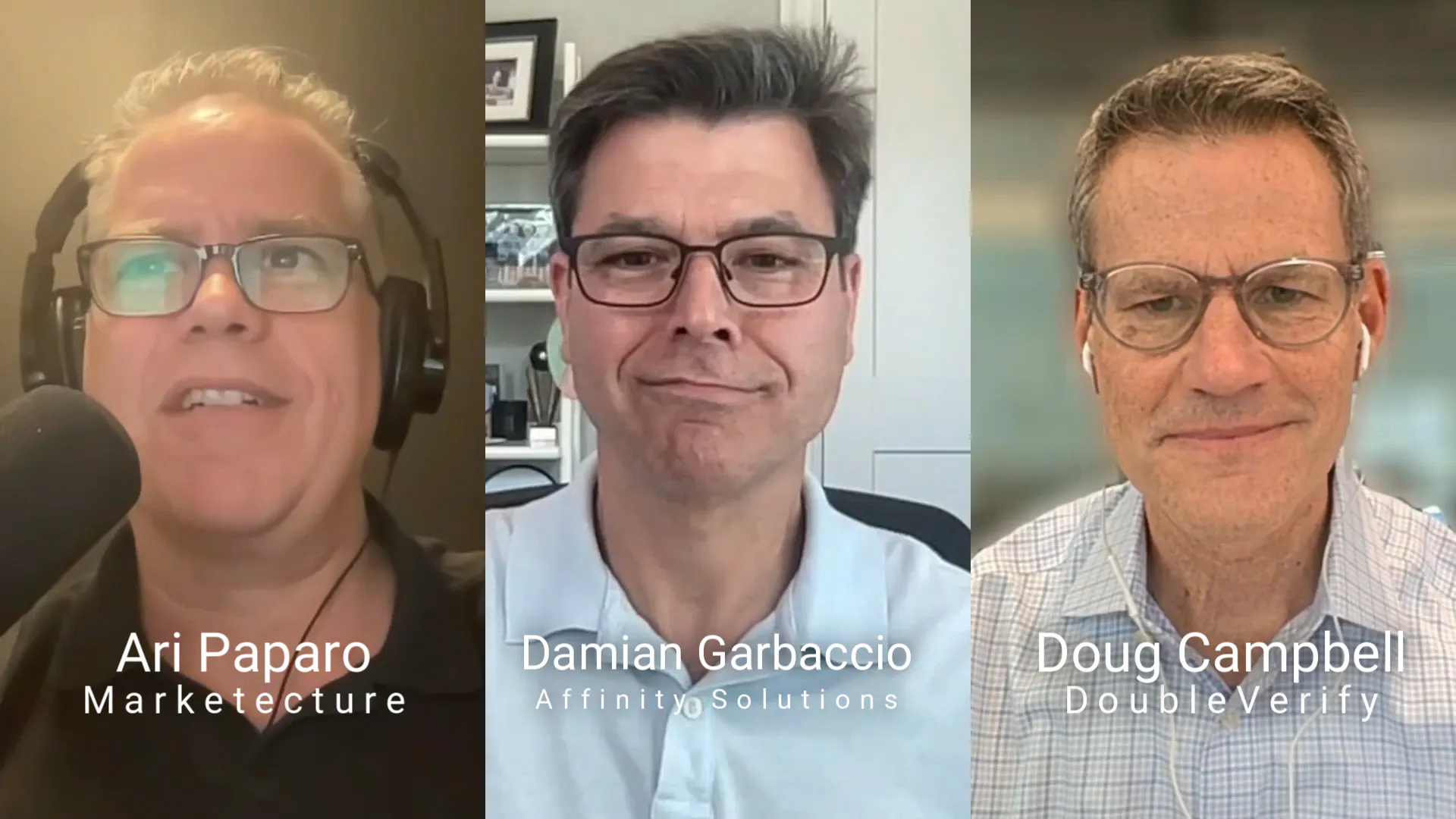
    Damian Garbaccio and Doug Campbell on Affinity's Outcomes Marketing Council

    Ari Paparo sits down with Damian Garbaccio, Chief Commercial and Marketing Officer at Affinity Solutions, and Doug Campbell, Chief Strategy Officer at DoubleVerify, to discuss why 91% of marketers distrust platform-reported results, the rise of outcome-based measurement, the role of verified purchase data, AI-driven optimization, media waste, and the future of advertising accountability. Takeaways 91% of marketers distrust platform-reported results, signaling a major measurement credibility gap. Brands want to optimize toward real purchase outcomes, but technical and organizational barriers remain. Verified transaction data and independent measurement are becoming essential for improving accountability. Reducing delays and complexity between purchase data and optimization systems can improve campaign performance. AI can enhance marketing outcomes, but its effectiveness depends on the quality of the data it receives. CMOs face growing pressure to prove measurable business results and justify marketing investments. Chapters 00:00 Introduction to the Affinity Solutions Outcome Marketing Council 00:29 Why the council was created and its mission 01:34 The new report: Measurement's Tipping Point 02:28 Challenges connecting ad exposure to purchase behavior 03:06 Key survey findings and marketer sentiment 03:19 Why 91% of marketers distrust platform-reported results 05:31 Why marketers still rely on proxy metrics 07:10 The value of real purchase and transaction data 08:21 Barriers preventing outcome-based optimization 09:17 Platform measurement challenges and attribution overlap 09:38 Speed, data paths, and optimization challenges 10:53 The importance of third-party measurement 11:10 How much waste exists in media measurement? 13:04 Best practices for verified outcomes and optimization 14:20 How far the industry has progressed in recent years 14:44 AI, data quality, and marketing performance 16:45 Advice for CMOs navigating measurement uncertainty 17:43 Organizational change and financial accountability 18:30 Why the opportunity for innovation remains strong Guests: Ari Paparo, Damian Garbaccio, Doug Campbell Learn more about your ad choices. Visit megaphone.fm/adchoices

  • #176
    June 5 · 53 min

    Episode 176: Alex Chatfield on How Influencers are Leveraging Data Technology

    Alex Chatfield, Co-Founder and President of Endorsable, joins Ari Paparo and Eric Franchi to discuss how data technology is transforming influencer and celebrity marketing. Drawing on his ad tech background from AppNexus, Alex explains how brands can move beyond traditional influencer metrics by leveraging fandom intelligence, audience data, and identity signals to build more effective endorsement partnerships. The conversation explores the growing intersection of influencer marketing, audience ownership, first-party data, programmatic advertising, and measurement. Takeaways Most creators and athletes don't truly own their audience data. Ticketing platforms, merch providers, social networks, and link-in-bio tools often control valuable fan information. Organic social reach continues to decline. Brands increasingly need paid amplification beyond social platforms to effectively reach a creator's fan base. Measurement remains a major challenge in influencer marketing. Many partnerships are still structured around content deliverables rather than business outcomes or audience performance metrics. Social platforms have an opportunity to improve influencer measurement. Platforms like Meta and YouTube could make campaign reporting more transparent and actionable for brands. Alex credits his AppNexus experience for shaping his entrepreneurial journey. His current business combines expertise in programmatic advertising, identity, and data with the entertainment and talent ecosystem. Chapters 00:00 Introduction and podcast preview 01:50 Meet Alex Chatfield and the story behind Endorsable 02:17 What is a "fandom intelligence engine"? 02:55 How Endorsable differs from traditional influencer marketing platforms 04:07 Understanding celebrity fandom and audience profiling 04:47 Why creators and athletes lack ownership of fan data 0 6:27 Lessons from fan databases and audience relationships 06:41 Building a modern fan database through digital platforms 07:44 How link-in-bio platforms generate audience identity signals 08:39 Why audience ownership matters for creators and athletes 09:10 How fandom data changes brand sponsorship negotiations 10:21 Extending influencer campaigns beyond social media 11:14 The impact of declining organic social reach 11:58 How brands and agencies currently discover influencers 13:20 The limitations of platform-native influencer discovery tools 14:06 The influencer negotiation process and talent representation 14:59 Audience data gaps in influencer marketing today 16:38 Why measurement remains difficult in influencer campaigns 17:36 Can Meta, YouTube, and social platforms solve measurement? 18:37 Lessons from AppNexus and becoming an entrepreneur 20:08 Bridging ad tech and Hollywood 20:50 Why talent should demand access to audience data 21:06 The significance of Ticketmaster data access for artists 21:32 Closing thoughts and where to learn more about Endorsable Guests: Ari Paparo, Eric Franchi, Alex Chatfield Learn more about your ad choices. Visit megaphone.fm/adchoices

  • June 1 · 17 min

    Deterministic? Prove It.

    In this Marketecture Live session, Keith Petri, SVP of Data, Identity, and Supply at Viant, and Sam Khoury of Marketecture Media discuss deterministic identity, supply path optimization (SPO), contextual targeting, attribution, and the challenges of measuring true advertising effectiveness in CTV. Learn why advertisers need proof, not promises, to maximize performance and incrementality. Takeaways - Deterministic Identity Requires Proof - Publisher Login Data Isn't Fully Available to Buyers - IP Addresses Are an Imperfect Identity Signal - Too Many Supply Chain Intermediaries Create Problems - Supply Path Optimization Is About Quality, Not Just Cost Savings - Identity and Context Must Work Together - Content-Level Context Remains Limited in CTV - Incrementality Is the Ultimate Goal - Identity Resolution Requires a Holistic View - Collaboration Across the Ecosystem Is Critical Chapters 00:00 Introduction and Session Overview 00:27 Why CTV Identity Is More Complicated Than Expected 01:43 The MacKenzie-Childs Case Study: The Ideal CTV Attribution Story 03:03 Why Publisher Data Doesn't Reach Buyers 04:25 What "Deterministic, Prove It" Really Means 05:35 Where Identity Breaks Down in Programmatic Advertising 07:23 The Real Purpose of Supply Path Optimization 09:05 Identity vs. Context: Why Both Matter 10:37 The Contextual Targeting Gap in CTV 11:58 The Measurement and Attribution Unlock 14:15 Advice for Advertisers and Buyers 16:00 Closing Remarks Learn more about your ad choices. Visit megaphone.fm/adchoices

Showing 21–25 of 25 episodes