Skip to content
Artwork for Marketecture: Get Smart. Fast.
BusinessInvestingMarketingTechnology

Marketecture: Get Smart. Fast.

Ari Paparo

The Marketecture Podcast is hosted by industry experts Ari Paparo and Eric Franchi. Every Friday they publish an interview with an important thinker in the advertising and marketing industries, and cover that week's most important news. On Mondays there's an in-depth vendor interview where you learn about interesting companies.

https://www.marketecture.tv


Interested in sponsoring the show? Contact ⁠Marketecture Media.⁠


Marketecture® and AdTechGod® are registered trademarks of Marketecture Media, Inc. all rights reserved.

Play
  • 23 episodes
  • weekly
  • Avg 36 min
  • English
Counted on this page — what you have heard stays on this device, so it is not something the list can be paged by.
  • #189
    Yesterday · 58 min

    Episode 188: Rich Greenfield on the Meta Settlement and TTD's Stock Woes

    Rich Greenfield, Co-Founder of LightShed Partners, joins Ari Paparo and Paul Knegten, CMO of Large, to break down the biggest shifts across media and ad tech, from Meta’s social media settlement and AppLovin’s next move to Fox’s Roku strategy and the growing pressure on The Trade Desk. Takeaways: Meta’s social media restrictions could reduce ad inventory and make younger audiences harder to reach. AppLovin’s biggest challenge is expanding its advertising technology beyond gaming into areas like e-commerce and CTV. Fox’s Roku acquisition could give it a powerful digital gateway into the streaming and CTV ecosystem. Rich argues that The Trade Desk’s reluctance to own first-party data is a major strategic weakness. AI-driven media buying could put DSPs under increasing pressure while creating new opportunities for SSPs. Chapters: 00:00 Intro and Corgi’s viral marketing strategy 05:49 Can higher ad prices offset declining web traffic? 07:17 Marketecture Live Chicago preview 08:28 Introducing Rich Greenfield, Co-Founder of LightShed Partners 09:48 Meta’s $17.1B settlement and the impact on advertisers 15:03 Ad scarcity, pricing and social media regulation 20:02 AppLovin’s next growth opportunity 24:44 Why Fox and Roku make sense together 30:48 AI’s potential impact on the future of television 32:33 What’s wrong with The Trade Desk’s strategy? 36:58 Walmart’s growing advertising ambitions 40:37 Meta restrictions and the news of the week 43:45 Scope3 teases its next product move 46:30 Netflix advertising leadership changes 48:09 The Taboola and NBC deal 50:57 AI-driven ad buying and the threat to DSPs 55:03 Reddit’s changing role in AI and AEO 56:54 Closing though Guests: Ari Paparo, Richard Greenfield Learn more about your ad choices. Visit megaphone.fm/adchoices

  • #187
    August 21 · 54 min

    Episode 187: Jack Raines Trolls LinkedIn and Ends Up with a Book Deal

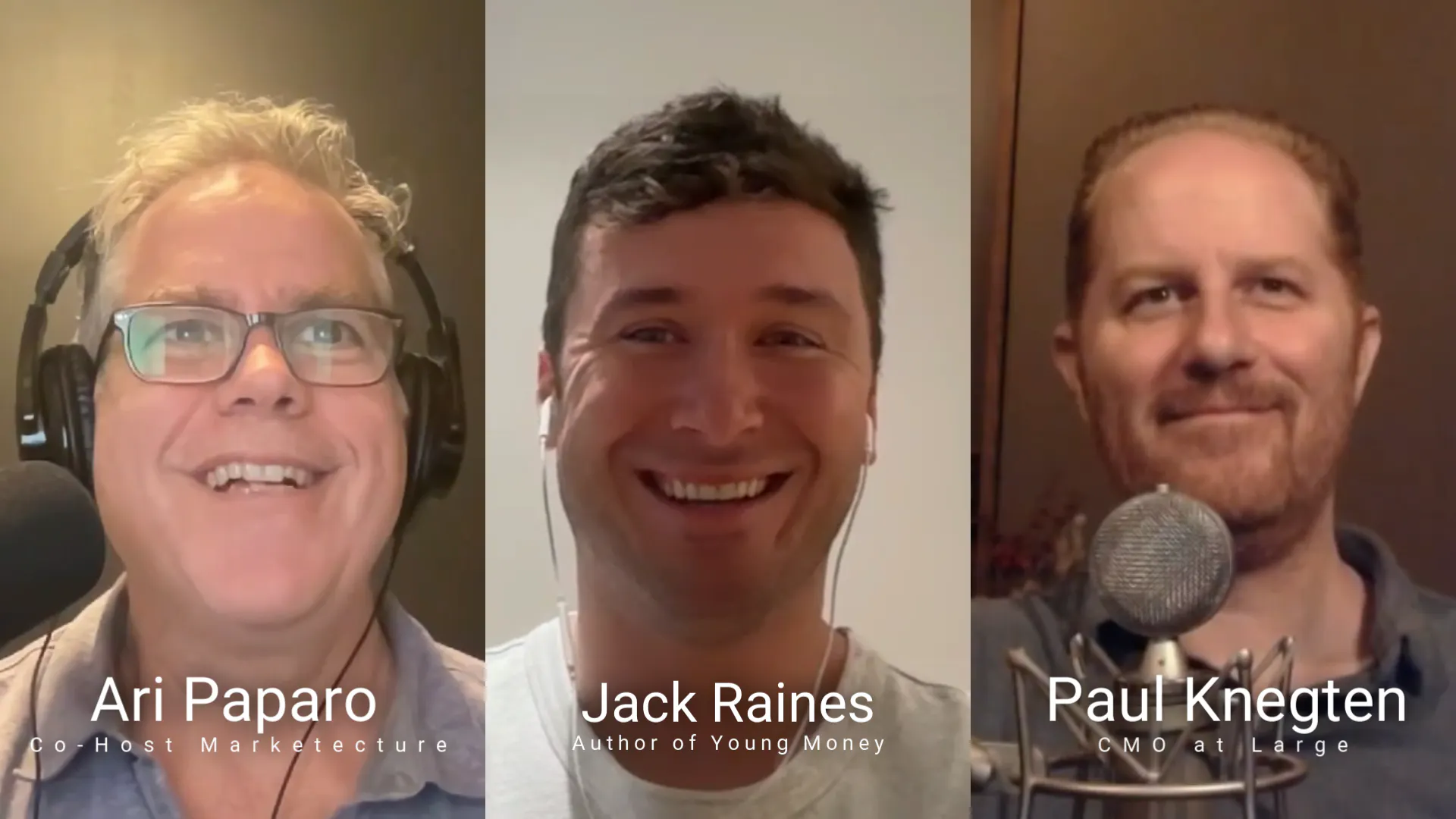
    Ari Paparo and guest co-host Paul Knegten sit down with Jack Raines, author of Young Money, to discuss how viral LinkedIn posts, humor, and attention-driven marketing helped him build a 61,000-subscriber newsletter, land a book deal, and create a personal brand. The episode also covers OpenAI, WPP, Walmart Connect, Taboola, Google’s AI advertising strategy, LiveRamp, and Higgsfield. Takeaways: Jack Raines turned provocative LinkedIn posts into a subscriber acquisition engine for his newsletter. Authentic personality and calculated controversy can generate attention, but the product still needs to deliver. Free content can create indirect value through book sales, consulting opportunities, and deal flow. Making a product or brand easy and fun to share can create an organic marketing flywheel. The episode also explores major developments across AI, retail media, ad tech, and the open web. Chapters: 00:00 Introduction with Ari Paparo and Paul Knegten 02:20 Meet Jack Raines, Author of Young Money 04:02 Turning LinkedIn Trolling Into a Growth Strategy 07:23 The Viral Hotel Breakfast Post 10:32 Is Shitposting a Real Marketing Strategy? 13:16 Knowing Where to Draw the Line 14:38 From Viral Posts to Newsletter, VC, and a Book Deal 18:00 Writing and Marketing Young Money 24:23 Building Buzz Around a Book Launch 27:03 The Marketing Lessons Behind Jack’s Strategy 29:17 What Brands Can Learn From Internet Personalities 31:47 OpenAI Leadership Shakeup 33:55 WPP Rebate Fraud Allegations 37:31 Walmart Connect’s Advertising Growth 40:55 Teads, Taboola, and NBCUniversal 44:56 Are Ad Networks Making a Comeback? 45:01 Google’s AI-Powered Advertising Strategy 47:44 LiveRamp Deal and Executive Pay 51:47 Higgsfield and the Future of AI Video Advertising 54:04 Closing Guests: Ari Paparo, Jack Raines, Paul Knegten Learn more about your ad choices. Visit megaphone.fm/adchoices

  • #188
    August 14 · 58 min

    Episode 186: Matt Drengler on Why Ari is Wrong About Podcasting

    Ari Paparo and Eric Franchi sit down with Matthew Drengler, Head of Partnerships at Podscribe, to unpack the messy reality of podcast measurement. They explore attribution, incrementality, the shift from audio to video, social clips, HLS, and why advertisers still need reliable performance data. The conversation then turns to the changing ad tech landscape, including the open web, Nielsen’s acquisition of DoubleVerify, measurement industry pressure, The Trade Desk’s earnings, PubMatic, Viant, and advertising to AI agents. Takeaways: Video is expanding podcast audiences, but it is also creating new measurement silos across YouTube, Spotify, Apple, and other platforms. Podcast attribution can use RSS prefixes, pixels, and listener-level signals, but those approaches become harder as consumption spreads beyond traditional RSS. Promo codes and vanity URLs capture only part of podcast-driven conversions, making more sophisticated attribution important for performance advertisers. Measurement can unlock more advertiser investment, while independent measurement and trust remain major industry concerns. Ad tech is shifting toward CTV, retail media, apps, creator channels, and AI while traditional open-web and measurement businesses face increasing pressure. Chapters: 00:00 Welcome and Episode Introduction 02:04 Marketecture Live Chicago 03:08 Meet Matthew Drengler, Head of Partnerships at Podscribe 04:43 What Podscribe Does 05:45 Why Podcasts Are Moving to Video 07:56 The Growing Podcast Platform Problem 08:32 Apple HLS and the Future of Video Podcast Measurement 09:58 What Actually Counts as a Podcast? 11:41 Should Social Clips Be Part of Podcast Ad Packages? 13:15 Why Social Podcast Clips Are Hard to Measure 15:07 How Podcast Attribution and Incrementality Work 18:02 Should Podcasts Be Treated Like Influencer Marketing? 20:27 Why Better Measurement Unlocks Advertising Budgets 20:47 Networks, Independent Podcasts and Performance 22:17 AI-Powered Podcast Ad Verification 23:55 Spotify's Podcast Ad Skip Discussion 26:07 Ad Tech News Begins 26:51 Is the Open Web Dying? 34:38 Phia and the Cookie-Stuffing Controversy 37:36 Nielsen Acquires DoubleVerify 40:19 Independence and Trust in Measurement 43:40 Comscore and the Measurement Market Shakeup 45:45 Viant's Measurement Layoffs and AI Push 46:33 The Trade Desk Earnings Breakdown 50:03 PubMatic's Growth and Agentic Opportunity 51:26 Viant, CTV and the MySpace Question 54:00 Perplexity, Mobian and Ads Targeted to AI Agents 55:47 Closing With Matthew Drengler Ari Paparo, Eric Franchi, Matt Drengler Learn more about your ad choices. Visit megaphone.fm/adchoices

  • #185
    August 7 · 50 min

    Episode 185: Nikhil Lai of Forrester on the State of AEO and Performance Marketing

    Ari Paparo and Eric Franchi are joined by Nikhil Lai, Principal Analyst at Forrester, to discuss the evolution of performance marketing, Answer Engine Optimization (AEO), connected TV, incrementality, AI-powered advertising, and the future of marketing measurement. They also examine the latest ad tech news, including ChatGPT advertising, Walmart's acquisition of Vibe, AppLovin, retail media, and Q2 earnings across the digital advertising industry. Takeaways Why Answer Engine Optimization (AEO) is fundamentally different from SEO and how brands should prepare. How marketers are redefining performance measurement with blended ROAS and incrementality. The opportunities and challenges of Performance TV, connected TV, and AI-driven advertising. What ChatGPT, AI agents, and creative automation mean for the future of marketing. Key insights from the latest ad tech acquisitions, earnings, and industry trends. Chapters 00:00 Introduction and Summer Catch-Up 01:24 Phishing Scam Warning for Advertising Professionals 03:42 Introducing Guest Nikhil Lai, Principal Analyst at Forrester 04:01 Nikhil Lai's Career Journey 05:22 Answer Engine Optimization (AEO) vs SEO 09:01 The Evolution of Performance Marketing 11:09 Measuring Brand Advertising Effectiveness 12:57 Incrementality and Modern Attribution 14:28 AppLovin and Performance Advertising 15:46 Performance TV and Connected TV 18:38 Walmart Acquires Vibe and Pinterest's TV Strategy 21:26 Is There an AppLovin for the Open Web? 22:17 The Future of Marketing Automation and Creative 23:59 Weekly Ad Tech News Begins 24:38 BMW, Spider-Man, and In-Car Advertising 30:31 Agentic Advertising and AI Search 34:32 ChatGPT Advertising and Brand Agents 40:02 Ad Tech Earnings Highlights 45:18 Is MySpace Making a Comeback? 46:50 Meta and LiveRamp Partnership 47:58 Closing Remarks Guests: Ari Paparo, Eric Franchi, Nikhil Lai Learn more about your ad choices. Visit megaphone.fm/adchoices

  • July 31 · 49 min

    Episode 184: Ben Edelman Will Send You to Affiliate Jail

    Ben Edelman, independent consultant and longtime ad fraud investigator, joins Ari Paparo and Eric Franchi to discuss the Phia affiliate controversy, the evolution of ad fraud, AppLovin's install practices, and what marketers should know about trust and attribution. They also cover Meta and Microsoft earnings, Google's Buyer Direct, creator marketing trends, FreeWheel's latest CTV update, and more. Takeaways: - Ben Edelman explains how affiliate fraud has evolved and why it remains a major issue. - A deep dive into the Phia browser extension controversy and affiliate attribution. - Lessons from the Blinkx adware scandal and AppLovin's forced install investigation. - Ari and Eric discuss Meta and Microsoft earnings, Google's Buyer Direct, and the future of creator marketing. - The latest updates from FreeWheel, Amazon, X, and the broader ad tech industry. Chapters: 00:00 Introduction 01:12 Podcast updates and industry news preview 02:19 Meet Ben Edelman 03:20 The Blinkx adware investigation 10:04 How Ben investigates ad fraud 13:28 The Phia affiliate controversy explained 19:02 Can affiliate marketing be trusted? 23:50 AppLovin's install practices 27:37 Where to follow Ben Edelman 27:51 Meta and Microsoft earnings 33:37 Amazon becomes the largest Fortune 500 company 36:06 Google's Buyer Direct and antitrust concerns 40:14 The rise of micro and nano creators 42:44 AI-generated content in programmatic advertising 43:59 FreeWheel's new CTV reporting capabilities 45:08 X and the WFA legal settlement 46:25 Final thoughts Learn more about your ad choices. Visit megaphone.fm/adchoices

  • #186
    July 24 · 52 min

    Episode 183: Ask Olivia Kory Whether AppLovin Ads Work & She Explains Attribution vs Incrementality

    Ari Paparo and Eric Franchi welcome Olivia Kory, Chief Marketing Strategy Officer at Haus, to unpack one of advertising's biggest questions: do ads actually work? Olivia explains the critical difference between attribution and incrementality, shares why AppLovin has become a standout performance channel. She discusses the future of media measurement, AI-driven optimization, and agentic media buying. The episode also covers Google's latest earnings, AI search trends, OpenAI's advertising ambitions, and the challenges of measuring podcast advertising. Takeaways: Olivia explains why incrementality measures causation while attribution measures correlation. AppLovin delivers strong short-term performance, particularly for lower-cost, impulse purchases. Incrementality testing is becoming essential for validating ad platform performance. AI is reshaping media measurement, budget allocation, and campaign optimization. The hosts discuss Google's AI investments, OpenAI's potential ad network, and why podcast measurement still needs major improvements. Chapters: 00:00 Introduction & Olivia Kory Returns 05:47 Attribution vs. Incrementality Explained 07:48 Do AppLovin Ads Really Work? 10:53 Which Products Perform Best on AppLovin? 12:30 Affiliate Marketing & Incrementality Challenges 16:04 CAPI vs. Pixels: The Future of Measurement 20:13 AppsFlyer, Attribution & Daily Optimization 23:30 AI-Powered Budget Allocation & Agentic Media Buying 28:48 Google's Earnings & AI Growth 32:36 AI Search and Google's Changing SERP 34:30 Is OpenAI Building an Ad Network? 41:51 Business Insider's FAST Channel Launch 43:50 Why Podcast Measurement Is Still Broken 49:16 Should Olivia Start Her Own Podcast? 50:19 Closing Remarks Guests: Ari Paparo, Eric Franchi, Olivia Kory Learn more about your ad choices. Visit megaphone.fm/adchoices

  • #182
    July 17 · 44 min

    Episode 182: Brian Quinn from AppsFlyer on the Billion Dollar Investment from Google and Meta

    AppsFlyer President and General Manager Brian Quinn joins Ari Paparo and Eric Franchi to discuss the company’s $1 billion funding round backed by Google, Meta, Unity, and Moloco. They explore independent measurement, mobile commerce, CTV attribution, and the future of AI advertising. Takeaways: - AppsFlyer’s strategic investors hold minority, non-controlling stakes, allowing the company to remain independent. - Google, Meta, Unity, and Moloco rely on independent measurement signals to improve advertising optimization. - E-commerce and retail are among AppsFlyer’s fastest-growing categories. - Connecting CTV, web, and app activity is essential for measuring the complete customer journey. - Last-click attribution remains vulnerable to manipulation and affiliate fraud. - AI advertising growth will depend on proving incremental returns for marketers. Chapters: 00:00 Introduction with Ari Paparo and Eric Franchi 01:09 Marketecture’s new MADDB MCP server 04:14 Brian Quinn joins the conversation 04:45 What is AppsFlyer? 05:39 Inside AppsFlyer’s $1 billion funding round 06:41 Why AppsFlyer selected strategic investors 07:19 Protecting independent measurement 08:34 Why Google and Meta invested 09:49 AppsFlyer as an optimization signal 11:28 How the unusual funding round came together 12:31 Strategic investors versus private equity 13:20 Competing with Adjust while partnering with AppLovin 15:56 Mobile advertising beyond gaming 17:35 Growth in retail and e-commerce apps 19:25 Connecting CTV, web, and mobile measurement 23:52 Ad tech news of the week 25:19 Fia and the affiliate attribution controversy 27:35 The problems with last-click attribution 31:13 Can AI advertising meet its revenue forecasts? 35:01 Questions around IP-based CTV targeting 37:03 Open-web ad supply falls sharply 38:35 The Trade Desk expands its leadership team 40:20 PubMatic exits the wrapper-management business 41:28 Closing thoughts Learn more about your ad choices. Visit megaphone.fm/adchoices

  • July 15 · 17 min

    How InMobi Is Reinventing Advertising with AI Agents

    What happens when AI agents become media buyers and shopping assistants? Ari Paparo sits down with Abhay Singhal, Co-Founder and CEO of InMobi Advertising, to discuss the future of agentic advertising, AI-powered commerce, and conversational ad experiences, and how InMobi is preparing for a world where AI makes purchasing decisions. They also explore Glance's expansion to Samsung TVs, InMobi's acquisition of MobileAction, and how traditional ad tech workflows are being reimagined through AI. Takeaways: - Why AI agents will fundamentally change digital advertising - How InMobi's Agentic Selling Platform works - The future of conversational advertising - Glance's expansion to Samsung TVs and AI-powered shopping - How AI is reshaping the customer journey - Why advertisers need to move closer to the point of transaction - What the MobileAction acquisition means for app marketers - How conversational CTV ads are improving engagement Chapters: 00:00 Introduction 01:07 InMobi's Agentic Advertising vision 01:58 Inside the Agentic Selling Platform 03:01 Why advertising is moving closer to conversion 04:27 AI agents, DSPs & the future of media buying 06:34 Glance explained 08:13 Samsung TV partnership 09:38 Measuring AI-powered commerce 11:07 Why InMobi acquired MobileAction 12:58 Conversational AI ads on Connected TV 15:36 Lightning Round 16:01 Closing Learn more about your ad choices. Visit megaphone.fm/adchoices

  • #184
    July 10 · 48 min

    Episode 181: Alex Kantrowitz on OpenAI and Big Tech's Latest Approach to Advertising

    Alex Kantrowitz, Founder of Big Technology, joins Ari Paparo and Eric Franchi to discuss how OpenAI, Google, Meta, Anthropic, Amazon, and other tech leaders are transforming digital advertising. They also dive into AI-powered media buying, agentic commerce, Criteo acquisition rumors, Cloudflare's monetization strategy, and the future of ad tech. Takeaways: - Why OpenAI is rapidly building an advertising business. - How Meta, Google, and Anthropic are approaching AI differently. - The future of AI-powered advertising and agentic commerce. - Why Criteo could become an attractive acquisition target. - How Cloudflare is changing publisher monetization with AI payments. Chapters: 00:00 Introduction & Marketecture Live Chicago 01:55 Meet Alex Kantrowitz 05:20 OpenAI's Advertising Strategy 12:07 Why Anthropic Is Avoiding Ads 14:45 Meta's AI and Advertising Future 17:45 Snap's Business Challenges 18:55 Pinterest's Advertising Opportunity 21:54 Amazon's Sports & AI Strategy 24:15 AppLovin's Rise in Mobile Advertising 25:15 Criteo Acquisition Rumors 30:57 AI Negotiating Media Deals (ADCP) 33:05 Cloudflare's AI Monetization Gateway 36:40 Warner Bros. Discovery's AI Ad Tech 38:40 WPP's AI Consulting Expansion 42:25 Leadership Changes at IAS 44:20 Final Thoughts Guests: Ari Paparo, Eric Franchi, Alex Kantrowitz Learn more about your ad choices. Visit megaphone.fm/adchoices

  • July 7 · 13 min

    How CMO at Locala, Grant Gudgel, Uses AI and Location Intelligence to Power Adaptive Advertising

    Ari Paparo speaks with Grant Gudgel, Chief Marketing Officer at Locala, about adaptive advertising, AI-powered planning, location intelligence, omnichannel marketing, privacy, and how brands can improve campaign performance through localized insights. Takeaways Locala helps brands optimize campaigns using market-level insights instead of national averages. AI agents analyze local data to improve campaign planning and performance. The platform supports omnichannel activation across CTV, DOOH, mobile, audio, and more. Adaptive advertising enables brands to adjust budgets, messaging, and channels by market. Privacy and location intelligence remain central to Locala's long-term strategy. Chapters 00:00 Introduction 00:21 Grant Gudgel joins Locala as CMO 00:37 What Locala does and its evolution 01:30 Planning platform vs. traditional DSPs 02:15 How brands optimize campaigns market by market 03:37 Measuring campaign performance and learnings 03:52 AI's role in campaign planning 05:42 Solving complex retail and QSR marketing challenges 07:08 What adaptive advertising means 08:07 Location intelligence beyond retail 09:30 Competitive analysis with location data 09:58 Omnichannel planning with DOOH and CTV 10:22 Privacy and location data 11:05 Locala's goals at Cannes 11:35 Competitive advantages and growth challenges 12:21 Lightning round: Why Locala is a narwhal Learn more about your ad choices. Visit megaphone.fm/adchoices
  • July 6 · 20 min

    How Criteo's Todd Parsons Is Reinventing Performance Marketing with AI

    Ari Paparo sits down with Todd Parsons, President of Performance Media and Chief Product Officer at Criteo, to discuss the launch of Criteo GO, an AI-powered performance platform that unifies cross-channel advertising across the open web, Meta, TikTok, and OpenAI. They explore AI-driven campaign automation, commerce data, retail media, agentic AI, GEO, and what the future of digital advertising looks like. Takeaways Criteo GO simplifies cross-channel performance marketing with AI. Commerce intelligence powers better campaign optimization and outcomes. AI reduces onboarding from weeks to just hours. Agentic AI is beginning to automate media planning and execution. GEO could reshape how brands compete for AI-driven discovery. Chapters 00:00 Introduction to Todd Parsons and Criteo 00:50 What is Criteo GO? 02:05 Who is Criteo GO built for? 03:12 Cross-channel performance marketing explained 04:00 Commerce data and retail media strategy 06:00 Measuring real performance outcomes 09:20 How AI powers Criteo GO 11:45 Agentic AI and the future of media buying 13:05 Self-service advertising and SMB growth 15:38 Lightning round: competition, roadmap, and GEO 18:08 Closing thoughts Guests: Ari Paparo, Todd Parsons Learn more about your ad choices. Visit megaphone.fm/adchoices

  • #180
    July 2 · 1 hr

    Episode 180: How PMG Is Scaling Creator Marketing With AI with Jennifer Quigley-Jones

    Ari Paparo talks with Jennifer Quigley-Jones of PMG, about the ins and outs of working with creators. Takeaways Why creator marketing has become a must-have channel for brands. How PMG uses AI and proprietary data to improve influencer campaigns. The importance of platform APIs, measurement, and creator relationships. Why authenticity consistently outperforms scripted influencer content. Industry updates on OpenAI, Comcast, Meta, and the evolving ad tech landscape. Chapters 00:00 Welcome Back From Cannes 02:55 Meet Jennifer Quigley-Jones, VP of Strategy & Innovation at PMG 04:39 Building Digital Voices and Selling to PMG 08:53 How Brands Approach Creator Marketing 11:54 Using Data and AI to Find the Right Creators 14:38 Why Authentic Content Beats Scripts 18:38 Creator Ads, Media Strategy, and Platform APIs 22:46 Creators Beyond Social Media 29:16 The Future of AI and Creator Marketing 32:06 Advertising News: OpenAI, Comcast, Meta & More Learn more about your ad choices. Visit megaphone.fm/adchoices

  • June 30 · 12 min

    How SQREEM's Large Behavioral Model Predicts Consumer Intent with René Raiss

    Live at Cannes, Ari Paparo sits down with René Raiss, Founder of SQREEM, to discuss how the company's Large Behavioral Model (LBM) analyzes real-world behavior instead of language to predict intent, improve advertising performance, and power AI-driven insights across industries. Takeaways - Why SQREEM built a Large Behavioral Model instead of a Large Language Model. - How behavioral data provides deeper consumer insights than keywords alone. - Why AI models, not proprietary data, are becoming the competitive advantage. - How brands use SQREEM to improve targeting and lower customer acquisition costs. - Real-world applications of behavioral AI across media, healthcare, finance, and government. - How AI libraries and MCPs are replacing traditional software platforms.- - - Why understanding intent is the future of marketing and advertising. Chapters 00:00 Introduction to René Raiss and SQREEM 00:49 The Story Behind the SQREEM Name 01:20 What Is a Large Behavioral Model (LBM)? 02:11 Why Consumer Behavior Matters More Than Keywords 04:21 How SQREEM Collects and Models Behavioral Data 05:44 AI Libraries vs Traditional Marketing Platforms 06:48 Using Behavioral AI for Better Ad Targeting 07:31 Campaign Performance and Lower CPA Results 08:11 Applications Beyond Advertising and Marketing 09:11 MCPs and the Future of AI Workflows 09:43 SQREEM's Growth Strategy and Competitive Advantage 10:24 Why the Model Matters More Than the Data 11:14 Lightning Round and Closing Remarks Learn more about your ad choices. Visit megaphone.fm/adchoices
  • June 29 · 24 min

    How Criteo Is Bringing Commerce Media to OpenAI with Michael Komasinski

    At Cannes Lions, Criteo CEO Michael Komasinski joins Ari Paparo to discuss the future of commerce media, OpenAI advertising, AI-powered discovery, retail media, agentic commerce, and how brands can measure success in the evolving AI ecosystem. Takeaways How Criteo's OpenAI partnership is reshaping AI advertising. Why commerce media is expanding beyond traditional retail media. The importance of measurement, incrementality, and AI-driven discovery. How retailers can stay competitive in the era of AI shopping assistants. Chapters 00:00 Welcome & Criteo's Evolution 01:31 Privacy Sandbox, AI & Industry Changes 04:31 Inside Criteo's OpenAI Partnership 06:16 How OpenAI Advertising Works for Brands 08:19 Where AI Ad Budgets Will Come From 10:17 The Reality of Agentic Commerce 11:40 AI Shopping Assistants & Retail Media 15:12 Measuring AI Advertising Success 17:46 Retail Media Challenges & Brand Expectations 19:13 Why Criteo's Buy & Sell Strategy Matters 20:51 The Future of Commerce Media 22:24 Why Retailers Can Win in the AI Era Guests: Ari Paparo Learn more about your ad choices. Visit megaphone.fm/adchoices

  • #179
    June 26 · 46 min

    Episode 179: The Good Vibe(s) at Cannes, Plus UTA's Michael Burke on the Creator and Influencer Takeover

    Set against the backdrop of UTA Beach at Cannes Lions, Ari Paparo sits down with Michael Burke, Principal at UTA and MediaLink, to discuss creator-led marketing, cultural relevance, AI adoption, brand discovery, and why human relationships matter more than ever in the AI era. Takeaways Culture and creators are becoming core media channels for brands. AI success depends on strong data, processes, and infrastructure. Brand discovery in AI is driven by reputation, reviews, and open web presence. Human relationships become more valuable as AI automates workflows. Curiosity and adaptability are critical skills for future marketing leaders. Chapters 00:00 Welcome from UTA Beach at Cannes Lions 01:14 Why UTA invests heavily in Cannes 02:23 The creator, media, and brand triangle 03:06 How brands should approach influencer strategy 04:05 The role of data and technology in culture marketing 05:30 Why cultural relevance is every marketer's priority 06:29 AI's biggest impact: workflow and discovery 07:16 Why AI requires better data foundations 08:07 GEO, AEO, and the future of brand discovery 10:09 Marketers' interest in OpenAI advertising 10:55 Publicis and LiveRamp industry implications 12:28 Why AI won't replace Cannes networking 13:10 The human skills that matter in an AI era 15:19 What Michael Burke is most excited about at Cannes Guests: Ari Paparo, Michael Burke Learn more about your ad choices. Visit megaphone.fm/adchoices

  • June 24 · 8 min

    Exclusive: Arthur Querou, CEO of Vibe, Talks about the Blockbuster Acquisition by Walmart

    From Cannes Lions, Ari Paparo sits down with Vibe.co CEO Arthur Querou, following the announcement that Walmart is acquiring Vibe.co. Arthur shares the company's journey from a French startup to a leading performance TV platform, how Vibe.co was funded after selling KMTX, and what the future of performance CTV looks like inside Walmart Connect. Takeaways Walmart announced plans to acquire Vibe.co, with reports valuing the deal at approximately $1.2 billion plus incentives. Vibe.co originated as a spin-off of KMTX, a QR-targeting company founded in France. The founders sold KMTX to fund and accelerate Vibe.co's growth. Vibe.co grew rapidly by focusing on performance-driven CTV advertising for SMBs and performance marketers. The company achieved a reported run rate of approximately $227 million ARR. Vibe.co operates primarily in the U.S., while maintaining its product and engineering team in France. Arthur credits France's strong ad tech ecosystem for helping produce global success stories. Walmart Connect and Vibe.co serve complementary customer segments, creating expansion opportunities. The entire Vibe.co team is expected to join Walmart following the acquisition. Arthur's focus remains on building technology that unlocks the full potential of performance TV advertising. Chapters 00:00 Introduction and Walmart Acquisition Announcement 00:23 Why Announcing the Deal at Cannes Was Special 01:00 The Origin Story of Vibe.co 01:12 Selling KMTX to Fund Vibe.co 01:49 Building a French Ad Tech Success Story 02:18 France's Impact on Global Ad Tech 02:30 Vibe.co vs. Mountain: Market Comparisons 03:22 Growth Metrics and ARR Discussion 03:40 What Happens Next at Walmart 04:18 The Future of Performance TV 05:10 Why Vibe.co Focuses on SMB Advertisers 05:47 How Vibe.co Complements Walmart Connect 06:01 The Entire Team Is Joining Walmart 06:16 Arthur's Walmart Story 07:01 Final Congratulations and Closing Remarks Guests: Ari Paparo, Arthur QUEROU Learn more about your ad choices. Visit megaphone.fm/adchoices

  • June 24 · 14 min

    Andy Schonfeld of Tatari on Taking Shots at DSPs and Why TV is Different

    Andy Schonfeld, CRO of Tatari, joins Ari Paparo from Cannes Lions to discuss Tatari’s bold message to the DSP ecosystem, why programmatic TV only captures a fraction of the market, the evolution of convergent TV buying, and how direct access to premium inventory is reshaping the future of television advertising. They also explore Tatari’s Upstream platform, the role of data and AI in media planning, recent industry shakeups involving Publicis, The Trade Desk, Fox, and Roku, and why transparency and supply paths are becoming table stakes in CTV. Takeaways Tatari’s Cannes campaign highlights the limitations of relying exclusively on programmatic TV buying. Major tentpole events like the Super Bowl, Olympics, and World Cup are still primarily bought through direct relationships. Convergent TV requires access to both linear and streaming inventory to maximize reach and outcomes. Data remains a key differentiator, but inventory access is equally important in a supply-constrained TV market. Tatari leverages more than a decade of performance data to optimize campaigns based on outcomes. Tatari’s Upstream platform enables direct publisher integrations, reducing intermediaries and improving transparency across CTV buying. Increased scrutiny around fees and transparency is prompting agencies and brands to reevaluate their supply chains. The Fox-Roku partnership signals a shift toward deeper integration between content owners and distribution platforms. AI is accelerating media planning and workflow automation, but its effectiveness depends on the quality of underlying data. Chapters 00:09 Introduction and Tatari’s Cannes Billboard Campaign 01:03 Why Tatari Says DSPs Are on the TV Sidelines 02:44 Can You Buy Sports and Premium TV Through a DSP? 03:56 Why Inventory Matters as Much as Data 06:14 What Is Tatari’s Upstream Platform? 07:15 Direct Publisher Integrations and Supply Path Optimization 08:12 Publicis and The Trade Desk Reconciliation Explained 08:54 Why Brands Are Reexamining Transparency and Fees 09:22 What the Fox-Roku Partnership Means for CTV 10:02 Why Direct Relationships Matter More in Streaming 11:11 AI, Automation, and Agentic Buying 12:00 How Tatari Uses Historical Performance Data 13:07 Tatari’s Biggest Advantage 13:10 Tatari’s Biggest Challenge 13:13 Lightning Round: If Tatari Were an Animal Guests: Ari Paparo, Andy Schonfeld Learn more about your ad choices. Visit megaphone.fm/adchoices

  • #178
    June 19 · 48 min

    Episode 178: Cannes Fashion Choices, Plus Patrick Dolan on the State of OOH Advertising

    Patrick Dolan, COO of the Out of Home Advertising Association of America (OAAA), joins Ari Paparo to discuss the rapid evolution of out-of-home advertising. From digital billboards and programmatic buying to retail media integration, CTV convergence, measurement challenges, and the growing role of AI, Patrick explains why out-of-home is experiencing renewed growth and how marketers can take advantage of its expanding capabilities. Takeaways OOH has grown for 19 consecutive quarters and continues to set revenue records. Digital OOH now represents 36% of total OOH revenue. Programmatic buying is making OOH more accessible to modern marketers. Retail media and OOH are increasingly converging around the path to purchase. Measurement standards continue to evolve with industry collaboration. CTV and OOH are creating new hybrid advertising opportunities. AI is improving workflows, planning, and campaign execution across OOH. National advertisers increasingly view OOH as part of omnichannel campaigns. Standardization and taxonomy remain key industry priorities. OOH benefits from strong real-world visibility and consumer attention. Chapters 00:00 Cannes Travel & AdTech Tuxedo Discussion 07:18 Introduction to Patrick Dolan and OOH Advertising 09:20 What OOH, DOOH, and Industry Acronyms Mean 10:54 Current State of the OOH Industry 12:11 Digital OOH Growth and Programmatic Adoption 15:02 How Advertisers Buy and Plan OOH Campaigns 15:58 Measurement Challenges and Attribution 18:03 The Convergence of OOH and Connected TV 19:48 Retail Media's Expanding Role in OOH 22:11 Connecting In-Store and Out-of-Store Media 24:11 AI's Impact on OOH Advertising 26:07 AI, Automation, and Workflow Improvements 28:03 Lessons from Digital Advertising's Early Days 30:01 The Future of AI and OOH 30:51 Final Thoughts and Closing Remarks Guests: Ari Paparo, Patrick Dolan Learn more about your ad choices. Visit megaphone.fm/adchoices

  • June 15 · 15 min

    Walmart Connect's Ryan Mayward on Their Big CTV Move: Yahoo, Magnite and Vizio Explained

    Ryan Mayward, SVP and GM of Walmart Connect, joins Ari Paparo to discuss Walmart's new partnership with Yahoo and Magnite, the role of Vizio in Walmart's CTV strategy, retail media measurement, incrementality, and the future of in-store advertising. Learn how Walmart is making its audience data more accessible while focusing on outcomes and advertiser flexibility. Takeaways Walmart Connect integrated its audience and measurement capabilities with Magnite, enabling Yahoo DSP advertisers to activate campaigns on Vizio inventory. The partnership aims to make Walmart data more accessible while maintaining control over audience targeting and measurement. Walmart plans to expand access to additional DSPs and buying paths over time. Vizio OS has become a major growth driver, powering a significant share of smart TVs sold in the U.S. Walmart Connect is focused on outcomes-based advertising, including customer acquisition, sales lift, and incremental return on ad spend (iROAS). Walmart is expanding in-store media opportunities through digital screens and retail media innovations. Chapters 00:00 Introduction & Walmart Connect Overview 00:36 Walmart, Yahoo, Magnite & Vizio Partnership Explained 03:34 Why Walmart Chose a Sell-Side Integration Strategy 04:25 Future DSP Expansion Plans 05:42 The Evolution of Connected TV Advertising 06:50 Outcomes-Based Measurement & Walmart DSP 08:56 Incrementality and iROAS in Retail Media 10:24 Measuring Online vs. In-Store Sales Impact 11:32 Walmart's In-Store Media & Digital Screen Strategy 13:28 Walmart Connect's Biggest Advantage 13:54 Walmart Connect's Biggest Challenge 14:20 Lightning Round: If Walmart Connect Were an Animal 15:17 Closing Remarks Guests: Ari Paparo, Ryan Mayward Learn more about your ad choices. Visit megaphone.fm/adchoices

  • #177
    June 12 · 58 min

    Episode 177: Scott Ensign of Butler/Till on Innovation at Indy Agencies

    Scott Ensign, Chief Strategy Officer at Butler/Till, joins Ari Paparo to discuss the advantages of being a 100% employee-owned agency, the rise of agentic AI in media buying, AdCP adoption, and the future of pharmaceutical advertising. Learn how Butler/Till is leveraging AI-powered workflows, healthcare expertise, mobile gaming inventory, and programmatic innovation to drive growth in a rapidly evolving media landscape. Takeaways Butler/Till operates as a 100% employee-owned ESOP, giving employees ownership stakes and allowing the agency to remain independent and agile. The agency is a women-owned and women-led business, with roughly two-thirds of employees being women. Thanks to its status as an independent agency, Butler/Till can operate with agility, making faster decisions and investing strategically without outside shareholder pressure. Butler/Till takes a product-focused approach, building technology and solutions around client needs rather than creating products solely for commercialization. Pharmaceutical advertising is shifting away from broad-reach TV campaigns toward addressable, data-driven digital media channels. Even if pharmaceutical advertising regulations change, opportunities will remain through disease-state education and targeted healthcare professional outreach. Mobile gaming remains an undervalued advertising channel, particularly for reaching healthcare professionals during everyday moments. Butler/Till participated in one of the industry's earliest agentic AI-powered media transactions using AdCP technology. Agentic AI can automate traditionally manual workflows such as RFPs, publisher negotiations, and media planning. The agency views AI primarily as a tool for accelerating work and solving talent shortages rather than replacing employees. Chapters 00:00 Introduction to Scott Ensign and Butler/Till 00:41 What makes Butler/Till unique as an employee-owned agency 01:24 The history behind Butler/Till's ESOP structure 02:25 Independent agencies vs. holding companies 03:47 Product development and technology investments at Butler/Till 04:33 Why Butler/Till hired a Chief Product Officer 05:08 How clients approach AI and workflow innovation 06:33 The changing landscape of pharmaceutical advertising 08:31 Regulatory concerns and the future of pharma marketing 10:44 Reaching healthcare professionals in the digital age 12:15 Why mobile gaming is an overlooked advertising opportunity 14:19 Butler/Till's early agentic AI and AdCP media transaction 16:25 How buyer and seller AI agents could negotiate media deals 19:28 Why pharma is a strong fit for agentic media buying 21:24 Expanding AdCP into audio and offline media channels 23:01 AI, efficiency, and the future of agency work 23:57 Butler/Till's growth, hiring plans, and closing thoughts Guests: Ari Paparo, Scott Ensign Learn more about your ad choices. Visit megaphone.fm/adchoices

Showing 1–20 of 23 episodes