
MM

Maritime Matters
German Maritime Centre
This podcast for the maritime industry brings the German perspective to the world and global insights to Germany. The host is Matthias Catón, the Managing Director of the German Maritime Centre. He interviews a wide variety of guests who provide interesting new perspectives, covering shipbuilding and suppliers, shipping, port operations, logistics and offshore business.
The podcast is geared towards business professionals in Germany and abroad and to those who want to learn more about the industry.
We publish new episodes every second Tuesday of the month. Maritime Matters is available on all major podcast platforms such as Spotify, Apple Podcasts, Amazon Music and Pandora.
- 13 episodes
- monthly
- Avg 41 min
- English
- MM
 #12September 10 · 41 min
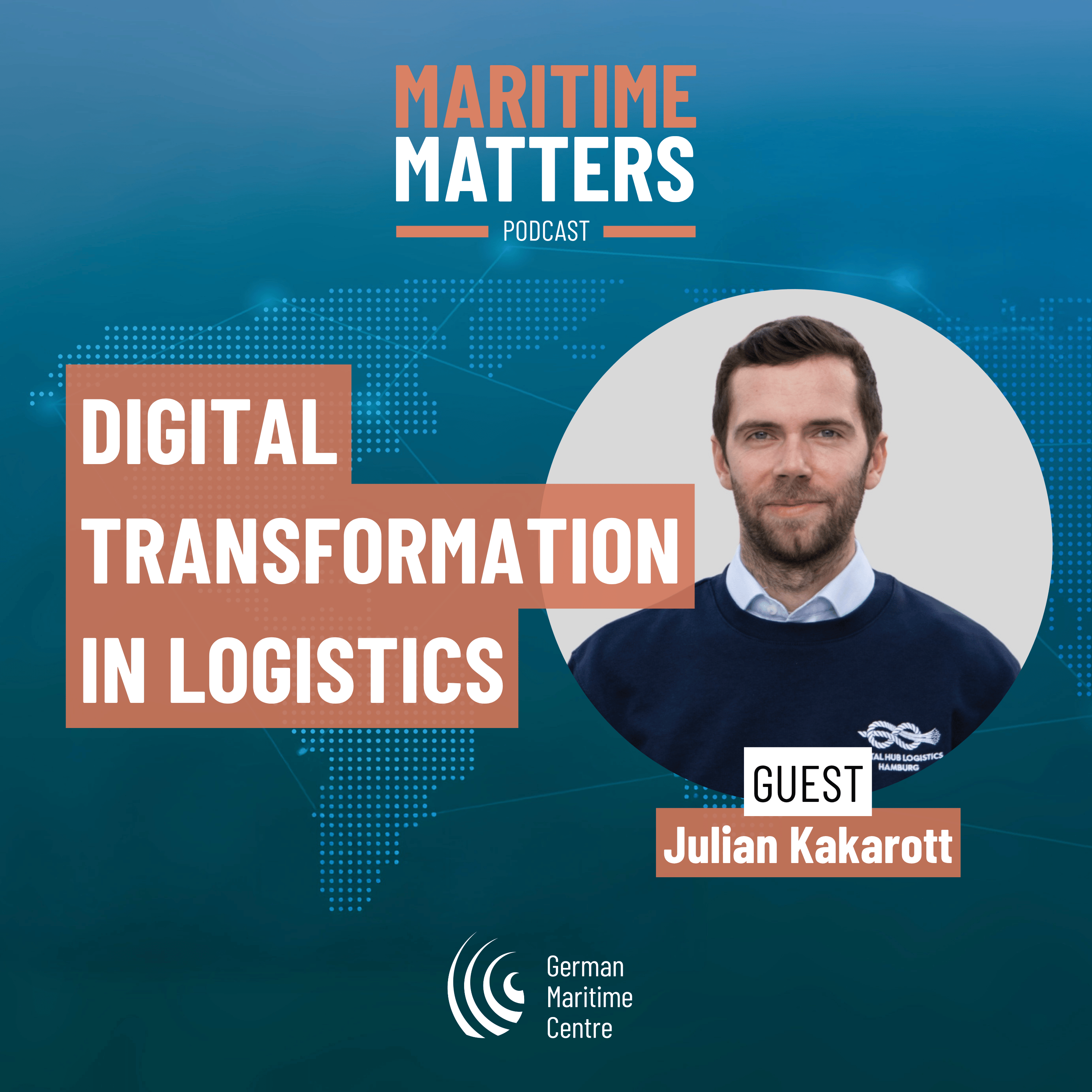
Digital Transformation in Logistics
In this episode, Dr Matthias Catón, Managing Director of the German Maritime Centre, welcomes Julian Kakarott, CEO of the Digital Hub Logistics and Commerce in Hamburg. Drawing on his experience as both an entrepreneur and innovation ecosystem builder, Julian Kakarott shares insights into how the Hub has become a catalyst for collaboration and digital transformation across logistics, retail, and maritime sectors. Their discussion explores why innovation works best through openness, peer exchange, and international partnerships, highlighting the practical realities and opportunities for companies of all sizes within and beyond the maritime value chain. Key Topics • Building an Innovation Ecosystem: Julian Kakarott explains the Digital Hub’s mission to connect startups, corporates, and scaleups. • Creating Value for Members: The conversation explores the Hub’s unique model as a “safe space” for companies to candidly share problems, encourage honest collaboration, and shape innovation projects. • Venture Clienting and Startup Engagement: Julian Kakarott discusses different approaches for corporate partners and explains how established firms, including those in the maritime sector, can become early clients of startups and scaleups, driving industry transformation with tailor-made solutions. • International Partnerships and Scaling: With a focus on the special relationship between Hamburg and Singapore’s Pier 71, the episode uncovers why cross-border collaboration is vital for maritime innovation, and how European startups can expand internationally despite regulatory hurdles. Guest Bio Julian Kakarott is CEO of the Digital Hub Logistics and Commerce, Hamburg. Trained as an industrial engineer, he has driven the Hub’s expansion into commerce, founded the climate tech company CarbonStack, and champions a “community-first” approach to innovation that bridges startups, corporates, and global partners. Nautical Number Julian Kakarott’s nautical number is 3.5, representing the 3.5 days it takes for Hub participants to move from a problem statement to a “pretotype”: a validated business concept pitched to company boards, proving that rapid innovation can be both effective and efficient. Navigator’s Table Julian Kakarott recommends the Speicherstadt Kaffeerösterei, a coffee roastery located in Hamburg’s historic Speicherstadt district. It is a favourite spot for informal innovation talks just steps from the Hub. Enjoyed this episode? Subscribe to Maritime Matters for leading voices on maritime innovation, sector trends, and global connections. Visit the German Maritime Centre’s website for further insights, research, and latest updates. If you found this episode valuable, please share it within your network.
- Transcript
- MM
- MM
 #10June 11 · 45 min
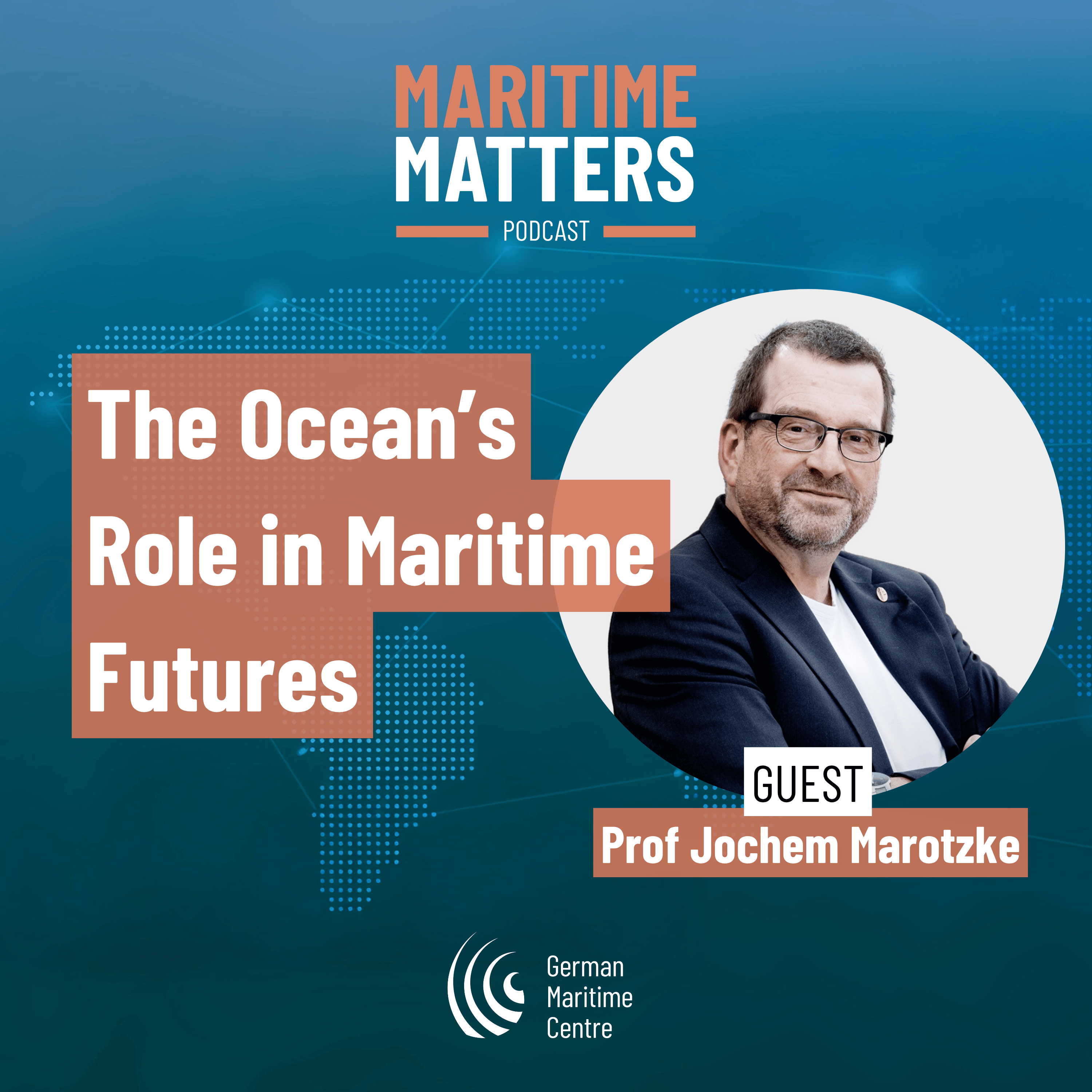
The Ocean's Role in Maritime Futures
In this episode of Maritime Matters, Dr Matthias Catón, Managing Director of the German Maritime Centre, is joined by Professor Jochem Marotzke, director at the Max Planck Institute for Meteorology and a leading authority on climate variability. With an academic journey spanning Germany, Denmark, the US, and the UK, and significant contributions to the Intergovernmental Panel on Climate Change (IPCC), Jochem Marotzke shares his expertise on the pivotal role of the oceans within the global climate system. Their conversation takes listeners from the ocean’s function as a vast buffer against climate change to the complexities of ocean observation and prediction. Together, they examine the limits of current climate models, the interaction between science and industry, and the importance of robust, innovative research to future maritime decision-making. Key Topics • The Ocean’s Role in Climate Regulation: The conversation investigates how the ocean absorbs over 90 % of excess heat and around a quarter of anthropogenic carbon dioxide emissions. They discuss the buffering and the price paid by oceans in terms of rising acidity, warming, and sea level rise, impacting billions worldwide. • Challenges in Ocean Observation and Climate Prediction: Jochem Marotzke highlights the sheer scale and logistical difficulty of oceanographic observation, using the example of a month-long Atlantic crossing for scientific measurements. The discussion delves into the risk of circulation changes (such as a weakened Gulf Stream), their implications for weather and sea levels, and the limitations faced by current predictive models. • Science and the Maritime Industry: Bridging the Gap. Reflecting on collaborations and opportunities, the episode explores the often limited exchange between climate scientists and maritime businesses. Jochem Marotzke argues for greater dialogue to ensure research addresses practical questions. • Preparing for an Uncertain Future: The conversation addresses both known and unknown unknowns. They discuss the evolving risk profile for extreme weather events, the prospects and uncertainties of decadal climate prediction, and the crucial need for adaptability as the maritime sector faces both threats and emerging Arctic opportunities due to disappearing sea ice. Guest Bio Jochem Marotzke is director at the Max Planck Institute for Meteorology in Hamburg, leading the Department of Climate Variability. His distinguished career includes professorships at the Massachusetts Institute of Technology and the Southampton Oceanography Centre, lead authorship for two IPCC assessment reports, and membership in both the German National Academy of Sciences Leopoldina and the German Academy of Science and Engineering. Awarded the European Geosciences Union’s Fridtjof Nansen Medal, his research focuses on physical oceanography, ocean circulation, and climate dynamics. Nautical Numbers Jochem Marotzke’s nautical number is “one month”: the time required for a research vessel to cross the Atlantic while conducting vital scientific measurements. This number poignantly illustrates the enormous scale of the oceans and the challenges involved in ocean observation – a reminder of both our knowledge gaps and the effort required to address them. Navigator’s Table For a maritime culinary experience, Jochem Marotzke recommends Louise, a restaurant at the Oslo port serving outstanding mussels with an Asian twist, chips, and a view over the fjord. Friendly staff, excellent cocktails, and the unbeatable harbour setting make it a perennial favourite for Oslo visits – not a tourist trap, but a true gem. Enjoyed this episode? Subscribe to Maritime Matters for more expert insights into shipping, ports, offshore, and the evolving world of maritime science. Visit the German Maritime Centre’s website for research, updates, and sector perspectives. If you found this discussion thought-provoking, share it with your network and keep listening for the latest from Germany and beyond.
- Transcript
- MM
- MM
- MM
 #7March 12 · 46 min
Law of the Sea in Transition: Governance and Regulation on the High Seas
In this episode of Maritime Matters, host Dr Matthias Catón, Managing Director of the German Maritime Centre, is joined by Professor Nele Matz-Lück, co-director of the Walter Schücking Institute for International Law at Kiel University and one of Europe’s foremost experts on the international law of the sea. Their discussion explores the legal frameworks governing the world’s oceans, how these adapt (or struggle to adapt) to modern challenges, and the implications for businesses, policymakers, and society at large. Professor Matz-Lück offers insights into evolving maritime governance, covering environmental considerations, the new high seas treaty, and the complexities of human rights protection at sea. Together, they consider the realities of enforcing the law on the high seas, the critical importance of legal order, and the outlook for future sustainability and cooperation. Key Topics: • The Evolution of the Law of the Sea: Professor Matz-Lück explains why the United Nations Convention on the Law of the Sea (UNCLOS) remains the central framework, even as new challenges demand supplementary treaties, dynamic interpretation, and ongoing reform. • Legal Challenges and Enforcement: The conversation explores the difficulties of addressing modern maritime issues such as the shadow fleet, substandard vessels, sanctions evasion, and deep-sea cable protection. Professor Matz-Lück outlines the limited powers coastal states possess to police international waters, and the perils of eroding legal norms. • Human Rights, Business Interests, and Environmental Dilemmas: The episode delves into the interface between commercial freedoms, human rights at sea, and environmental concerns. • The Future of Maritime Governance: Despite growing pressures on the rule-based order, which is exacerbated by geopolitical tensions and disregard for international law by some states, Professor Matz-Lück remains convinced of the law’s foundational value, while acknowledging the urgent need for multilateral cooperation and legal evolution. Guest Bio: Nele Matz-Lück is a professor of Public International Law, with a particular focus on the Law of the Sea, at Kiel University. She is co-director of the Walther Schücking Institute for International Law at Kiel University and a leading authority on international law of the sea. She has held posts at institutions such as the Arctic University of Norway, Dalhousie University in Canada, and the Max Planck Institute for Comparative Public Law and International Law in Heidelberg. In addition to her academic positions, she also serves as a judge at Schleswig-Holstein’s Constitutional Court. Her research bridges ocean governance, environmental law, and human rights. Nautical Numbers: Professor Matz-Lück’s chosen number is 31, which is the number of landlocked states that are parties to UNCLOS. This underlines how even states without a coastline see vital interests in the rule-based ocean order, with rights to high seas freedoms and responsibilities for maritime governance. Navigator’s Table: Professor Matz-Lück recommends Seebar in Kiel, a waterside restaurant built over the water with stunning harbour views. For those further afield, she suggests Cow’s Ice Cream at Halifax Waterfront, Canada – perfect for a stroll along the harbour, enjoying maritime sights and flavours. Enjoyed this episode? Subscribe to Maritime Matters for conversations with industry leaders shaping maritime Germany and the global sector. For more on upcoming events, cluster activities, and maritime perspectives through a German lens, visit the German Maritime Centre’s website. If you enjoyed this episode, please share it with colleagues in the industry and keep listening for more expert insights from Hamburg and around the world.
- Transcript
- MM
 #6February 12 · 33 min
Hamburg as a Maritime Conference and Exhibition Hub
In this episode of Maritime Matters, host Dr Matthias Catón, Managing Director of the German Maritime Centre, welcomes Claus Ulrich Selbach, Vice President Exhibitions Maritime & Energy at Hamburg Messe und Congress. The discussion centres on Hamburg’s role as a maritime hub, the city’s unique advantages for convening the international shipping and energy industries, and the future of trade fairs, innovation, and cluster development. Uli shares reflections from over 25 years in the events sector, offering insights into how Hamburg has grown its reputation as a global meeting place for maritime professionals. Key Topics: • Hamburg as a Maritime Hub: Uli describes the city’s central location, vibrant port, and its role in attracting maritime businesses and events. • Global Trade Fairs and Cluster Growth: The episode highlights major events such as SMM and Wind Energy Hamburg, as well as new initiatives like All About Ports. Uli explains how these fairs not only bring visitors but also foster cluster development and global partnerships. • Innovation and Industry Adaptation: Uli details the importance of constant innovation, feedback, and staying ahead of industry trends. • International Cooperation and Expansion: The conversation includes Hamburg Messe und Congress’s joint ventures and projects abroad, in places such as Mumbai and Singapore, illustrating the city’s global outlook and reach. Guest Bio: Claus Ulrich Selbach is Vice President Exhibitions Maritime & Energy at Hamburg Messe und Congress GmbH, overseeing a portfolio of leading international trade fairs including SMM and Wind Energy Hamburg. With a background in social sciences and history, and decades of sector experience, Uli is recognised for his strategic approach to networking, business development, and cluster growth in Hamburg and beyond. Nautical Numbers: Uli’s chosen figure reflects the diversity of future propulsion systems for shipping, emphasising the need for a blend of technologies: hydrogen, ammonia, methanol, LNG, wind, and more. He notes SMM as the only global event where all these solutions can be found together and discussed in depth. Navigator’s Table: Uli recommends the Hafen-Klub in Hamburg as his favourite maritime dining spot – an exclusive members’ venue offering stunning views of the port and Hanseatic flair. Events can be arranged there, or listeners can try to join as guests for a unique Hamburg experience. Enjoyed this episode? Subscribe to Maritime Matters for conversations with industry leaders shaping maritime Germany and the global sector. For more on upcoming events, cluster activities, and maritime perspectives through a German lens, visit the German Maritime Centre’s website. If you enjoyed this episode, please share it with colleagues in the industry and keep listening for more expert insights from Hamburg and around the world.
- Transcript
- MM
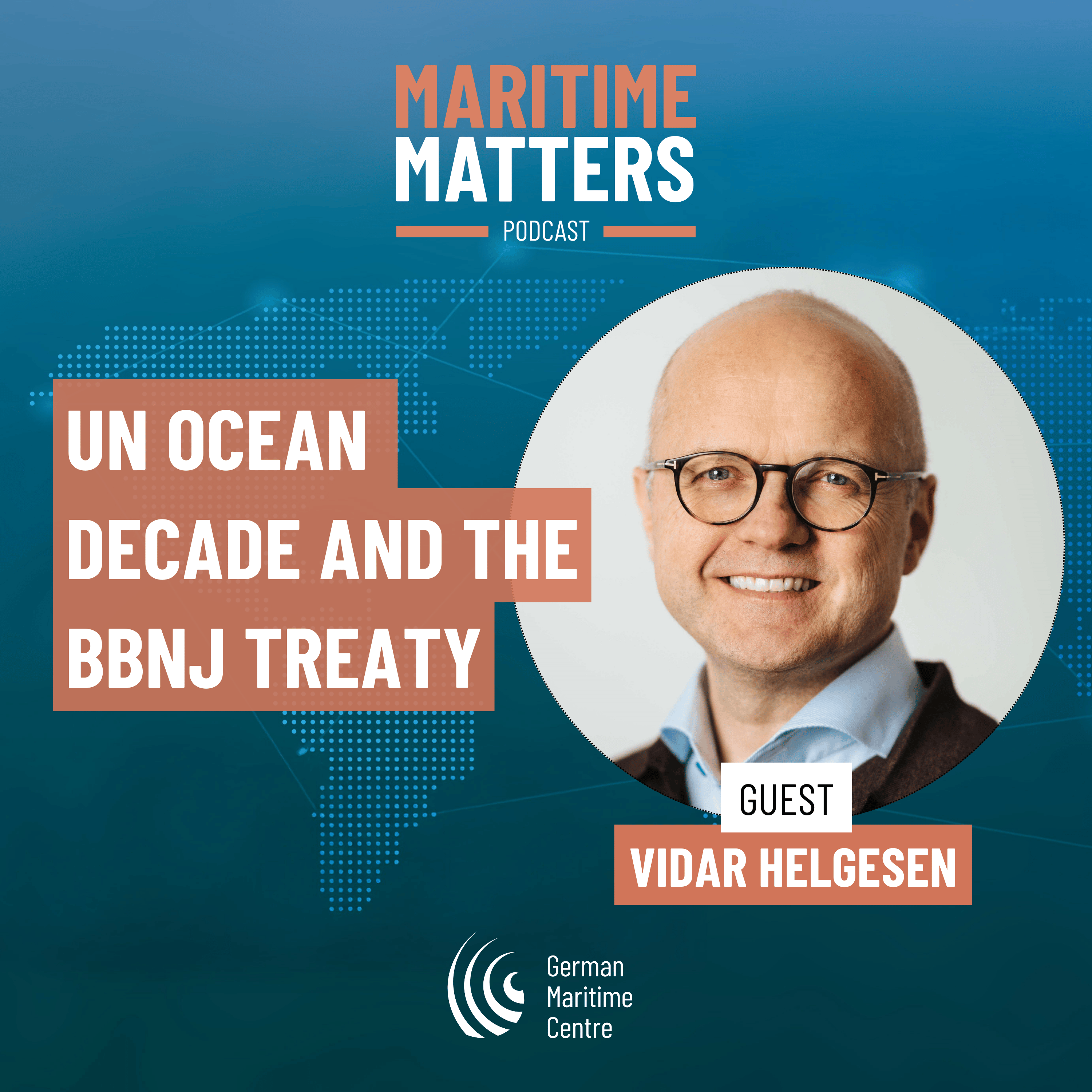 #5January 8 · 40 min
UN Ocean Decade Midway Review and the Impact of the BBNJ Treaty
In this episode of Maritime Matters, host Dr Matthias Catón, Managing Director of the German Maritime Centre, is joined by Vidar Helgesen, Executive Secretary of the Intergovernmental Oceanographic Commission at UNESCO. Drawing on his extensive experience in international ocean governance, including previous roles in the Norwegian government and the Nobel Foundation, Vidar Helgesen shares insights into global efforts to deepen our understanding of the ocean and protect its vital resources. The conversation covers the mission and achievements of UNESCO’s Intergovernmental Oceanographic Commission, the UN Ocean Decade and its key milestones, and the emerging importance of the private sector in data sharing. The episode also delves into the new BBNJ treaty governing biodiversity beyond national jurisdiction and explores how innovation, regulation, and collaboration are shaping the future of the blue economy. Key Topics: • The Work of the Intergovernmental Oceanographic Commission: Vidar Helgesen explains the Commission’s role as the UN’s body for ocean science, observation, and data coordination. • The UN Ocean Decade – Progress and Priorities: Midway through the Decade, more than 600 global projects are underway, focusing on urgent gaps in ocean knowledge. • Data Sharing and the Private Sector: The episode highlights the critical need for maritime businesses to contribute data – and how national regulation, as seen in Norway, can boost transparency and scientific breakthroughs. • The BBNJ Treaty – High Seas Governance: Vidar Helgesen outlines the significance and implementation challenges of the new treaty on biodiversity beyond national jurisdiction. • The Digital Twin of the Ocean and Public Awareness: The potential of digital twins to predict ocean events, bolster scientific inquiry, and strengthen society’s connection to the oceans. Guest Bio: Vidar Helgesen is Executive Secretary of UNESCO’s Intergovernmental Oceanographic Commission. With decades of leadership in international diplomacy, environmental policy, and democracy promotion, he has served as Norway’s Minister of Climate and Environment, Special Representative for the Ocean, and as Executive Director of the Nobel Foundation. His work today focuses on mobilising science, data, and global action for the sustainable management of the world’s oceans. Nautical Numbers: This episode’s standout figure is 3% – the proportion of ocean biodiversity data contributed by the private sector to UNESCO’s Ocean Biodiversity Information System, with half of that coming from Norway thanks to progressive data-sharing regulations. The discussion underscores the transformative potential if more companies shared their ocean data. Navigator’s Table: Vidar Helgesen recommends a small seafood shack in Arniston, a coastal village at the southern tip of Africa, as his most memorable maritime dining experience. With the freshest catch and simple hospitality, it serves as a reminder of both the richness of the ocean and the vital livelihoods it supports across the globe. Enjoyed this episode? Subscribe to Maritime Matters for more interviews with leaders and experts shaping the maritime sector. Visit the German Maritime Centre’s website for updates, events, and information about Germany’s maritime industry and global maritime developments. If you found this episode insightful, share it with colleagues and partners in the shipping world. Stay tuned for more global perspectives through a German lens.
- Transcript
- MM
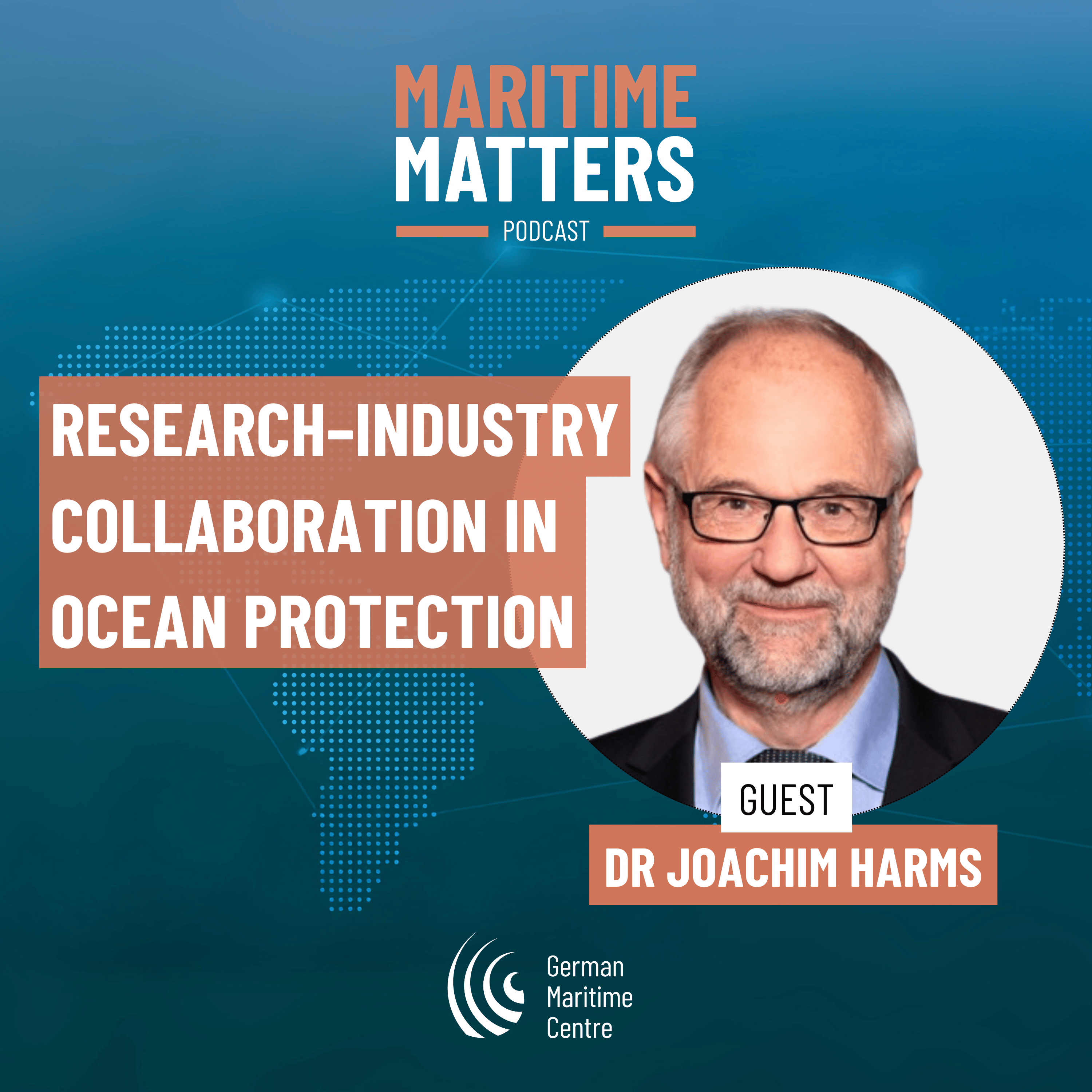 #4Dec 11, 2025 · 32 min
Research-Industry Collaboration in Ocean Protection
In this episode of Maritime Matters, host Dr Matthias Catón, Managing Director of the German Maritime Centre, is joined by Joachim Harms, Chairman of the Board at the German Marine Research Alliance (Deutsche Allianz Meeresforschung – DAM). Together, they explore why robust cooperation between marine research and the maritime industry is key to protecting our oceans in an era of rapid industrialisation and climate change. Joachim Harms draws on a distinguished career in marine biology and science policy to discuss the Alliance’s “mission-style” approach, bringing together researchers, industry, authorities, and civil society. This episode sheds light on DAM’s priority projects, the importance of including local communities, new tools for monitoring and innovation, and how German marine research is contributing to sustainable ocean use amid growing pressures. Key Topics: • The Role of the German Marine Research Alliance (DAM): Why it was founded, its structure, and how it unites research institutes, government, industry, and society to address urgent challenges such as biodiversity loss, climate change, and ecosystem health. • Mission-Style Research and Stakeholder Integration: The design and implementation of DAM’s flagship programmes • Local Communities and “Living Labs”: How involving coastal populations in research projects ensures transparency, relevance, and public understanding of vital decisions about ocean resources. • Innovation, Monitoring Tools, and Industry Partnership: Cutting-edge work in subsea CO2 storage, environmental monitoring (including the EDNA “coffee machine”), and the challenges of addressing legacy issues like dumped munitions, developed in close collaboration with industry and authorities. • Sustainable Development Goals in Action: DAM’s alignment with the UN SDGs, especially ‘Life below Water’ (Goal 14) and ‘Climate Action’ (Goal 13). Guest Bio: Joachim Harms is Chairman of the Board at the German Marine Research Alliance (DAM), leading the organisation’s efforts to integrate science, industry, and government for evidence-based decision-making in ocean management. With a background as a marine biologist, he has extensive experience in international marine research, coordination of federal and state initiatives, and advisory roles in European partnerships. His earlier career includes research on plankton larvae, coastal fauna, and international fellowships in Japan, Brazil, and France. Nautical Numbers: This episode’s standout number: 17 – representing the United Nations Sustainable Development Goals (SDGs). DAM focuses on fulfilling these interconnected goals, with a particular emphasis on ‘Life below Water’, ‘Climate Action’, and ensuring sustainable livelihoods from the oceans. Navigator’s Table: Joachim Harms recommends the fish bistro Sandviks Fisk och Hamnkök in the harbour of Sandvik, on Öland, Sweden – a rare place on the Baltic coast where you can enjoy truly fresh, locally-caught fish brought in by the harbour’s fishing vessels. A delicious and authentic maritime experience for any visitor. Enjoyed this episode? Subscribe to Maritime Matters for more interviews with leaders and experts shaping the maritime sector. Visit the German Maritime Centre’s website for updates, events, and information about Germany’s maritime industry and international connections. If you found this episode insightful, share it with colleagues and partners in the shipping world. Stay tuned for more global perspectives through a German lens.
- Transcript
- MM
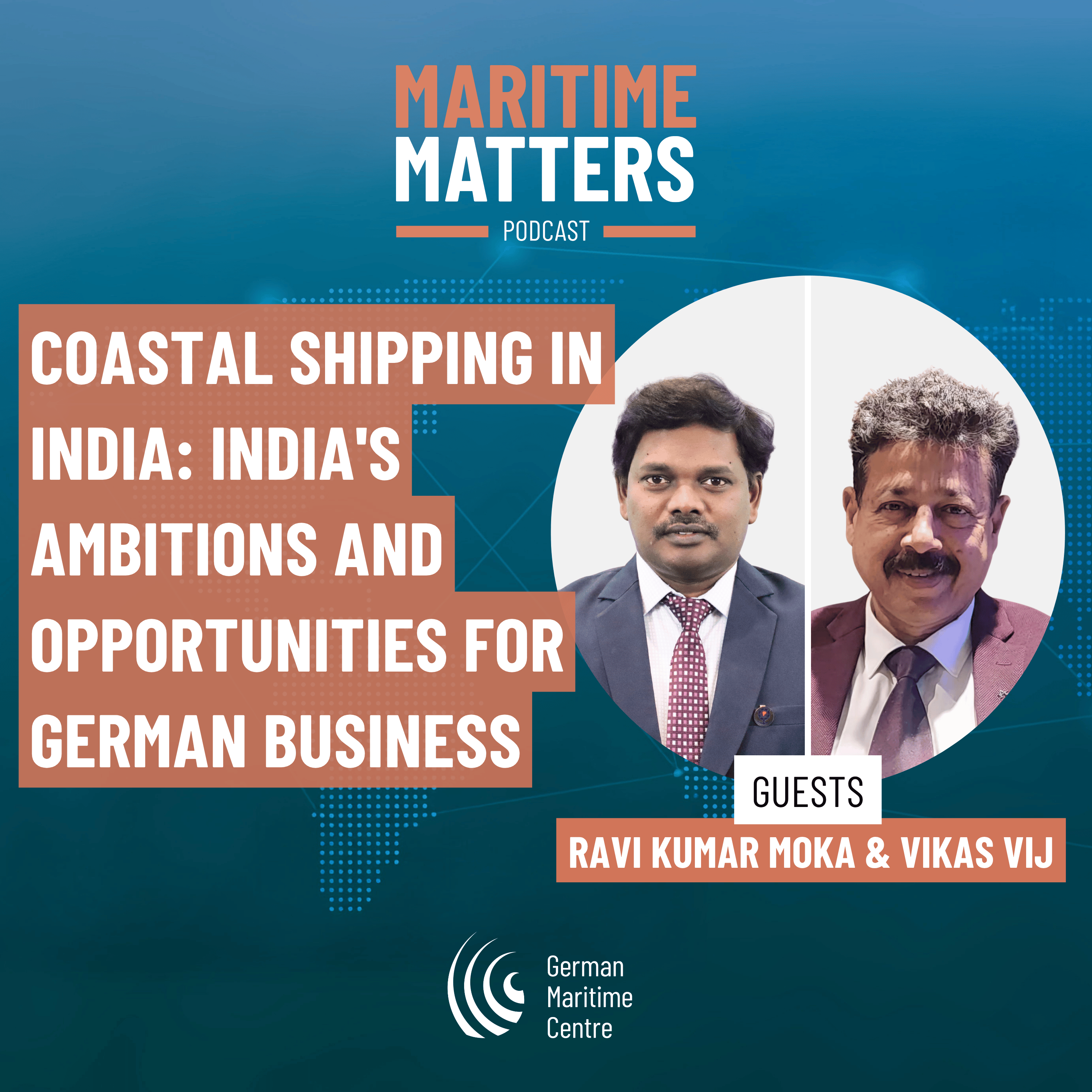 #3Nov 13, 2025 · 40 min
Coastal Shipping in India
India's Ambitions and Opportunities for German Business
- Transcript
- MM
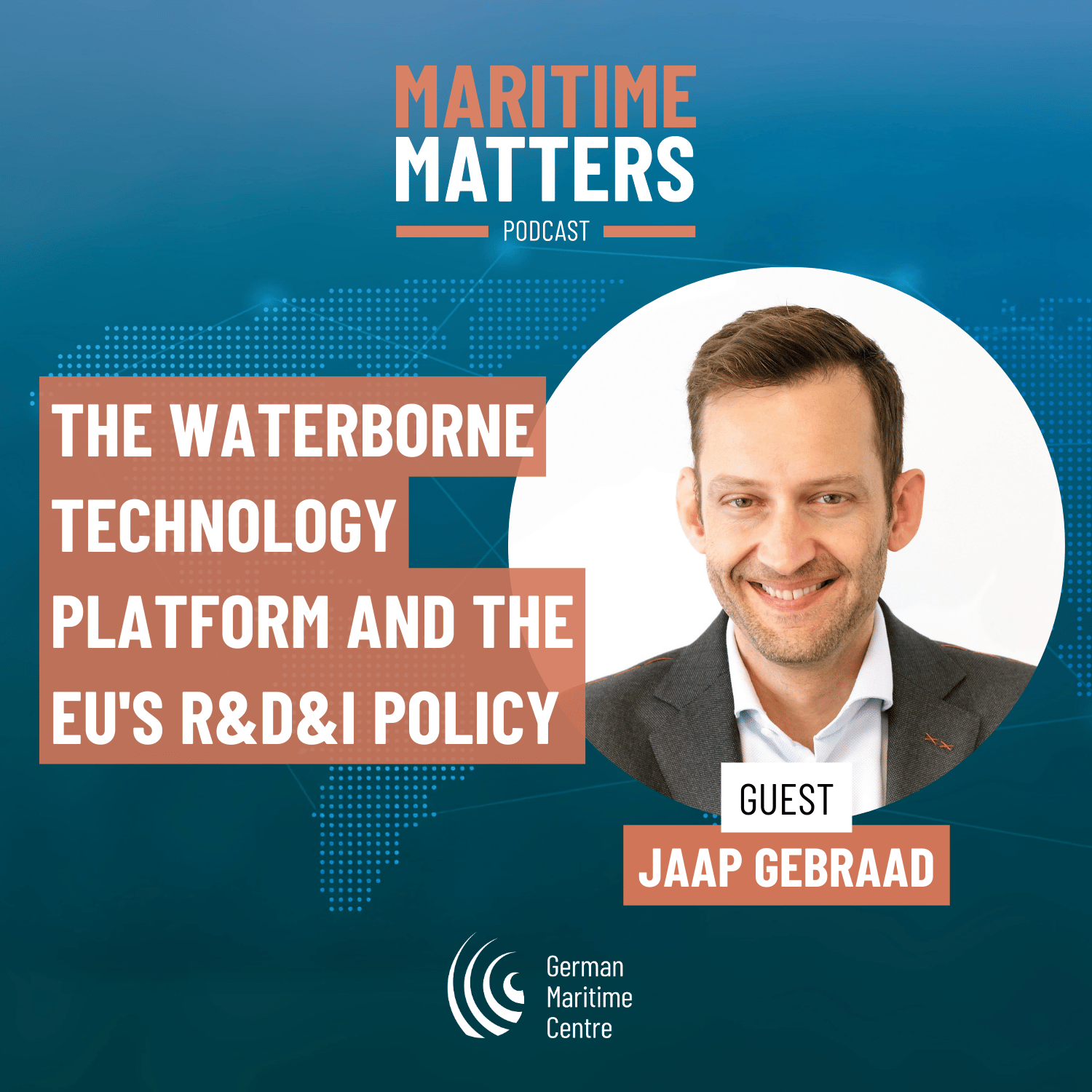 #2Oct 9, 2025 · 42 min
The Waterborne Technology Platform and the EU's R&D&I policy
The Waterborne Technology Platform and the EU's R&D&I policy In this episode of Maritime Matters, host Dr. Matthias Catón sits down with Jaap Gebraad, Secretary General of the Waterborne Technology Platform. Together, they explore the European waterborne sector’s strategies, collaborative efforts, and pathways to innovation, especially as the industry works towards zero-emission and digitalisation goals. Jaap Gebraad shares behind-the-scenes perspectives on how Europe organises research and development priorities for maritime and inland navigation, addresses the complexities of EU funding, fosters business collaboration, and boosts communication about the sector’s progress. The episode also features practical advice for organisations looking to get involved and discusses potential developments for the EU’s maritime sector within the upcoming years. Key Topics: -What Is Waterborne? Explaining the Waterborne Technology Platform and its comprehensive approach to both maritime and inland navigation sectors across Europe. -Engagement with EU Institutions: How the platform works together closely with multiple European Commission departments. -Membership and Working Groups: How organisations can join and participate in Waterborne’s three focused technical working groups. -German Lens: An overview of German participation, strengths, and areas for further involvement within the platform. -EU Funding for Maritime Innovation:A breakdown of key funding programs and tips for SMEs to access them. -Zero Emission Transition & Industry Challenges: A discussion of decarbonisation and possible public funding solutions to reach zero emission goals. -Digitalisation and the Future: Current focus on digital innovation, automation, and integration as critical factors for the European maritime sector’s long-term success. Guest Bio: Jaap Gebraad is the Secretary General of the Waterborne Technology Platform, Europe’s key forum for shaping research and innovation in maritime and inland waterborne transport. Previously, Jaap Gebraad held pivotal roles such as Director of Research and Development at Sea Europe, Executive Director of the Waterborne Technology Platform, and Board Secretary and Senior Project Manager at the Foundation STC Group. His background also includes a tenure as Daily Secretary for the European Association Edina. Renowned for his expertise in guiding collaborative strategies for a sustainable, innovative, and competitive European waterborne sector, he is at the forefront of projects driving zero-emission transport and digital transformation across the industry. Nautical Numbers: This episode’s striking nautical number: €530 million – the public budget for the Zero Emission Waterborne Transport Partnership via Horizon Europe, with private players simultaneously investing an impressive €3.3 billion, representing a leverage factor of 6 – the highest within Horizon Europe’s partnerships. This underscores the sector’s proactive, innovative spirit that’s too often underestimated. Navigator’s Table:Jaap Gebraad’s hidden gem recommendation: Varoulko Seaside, a standout fish restaurant nestled in the bay of Piraeus, Greece. It offers stunning ocean views and exceptional seafood, which makes it a perfect spot discovered thanks to business travel. If you find yourself in Athens, make sure to try out this unforgettable maritime dining experience. Enjoyed this episode? Make sure to subscribe to Maritime Matters for more insights and interviews with thought leaders shaping the maritime world. To learn more about Germany’s maritime sector or to engage with ongoing debates, visit the German Maritime Centre’s website – and share this episode with colleagues interested in the future of the European maritime industry. Stay tuned for more global perspectives through a German lens.
- Transcript
- MM
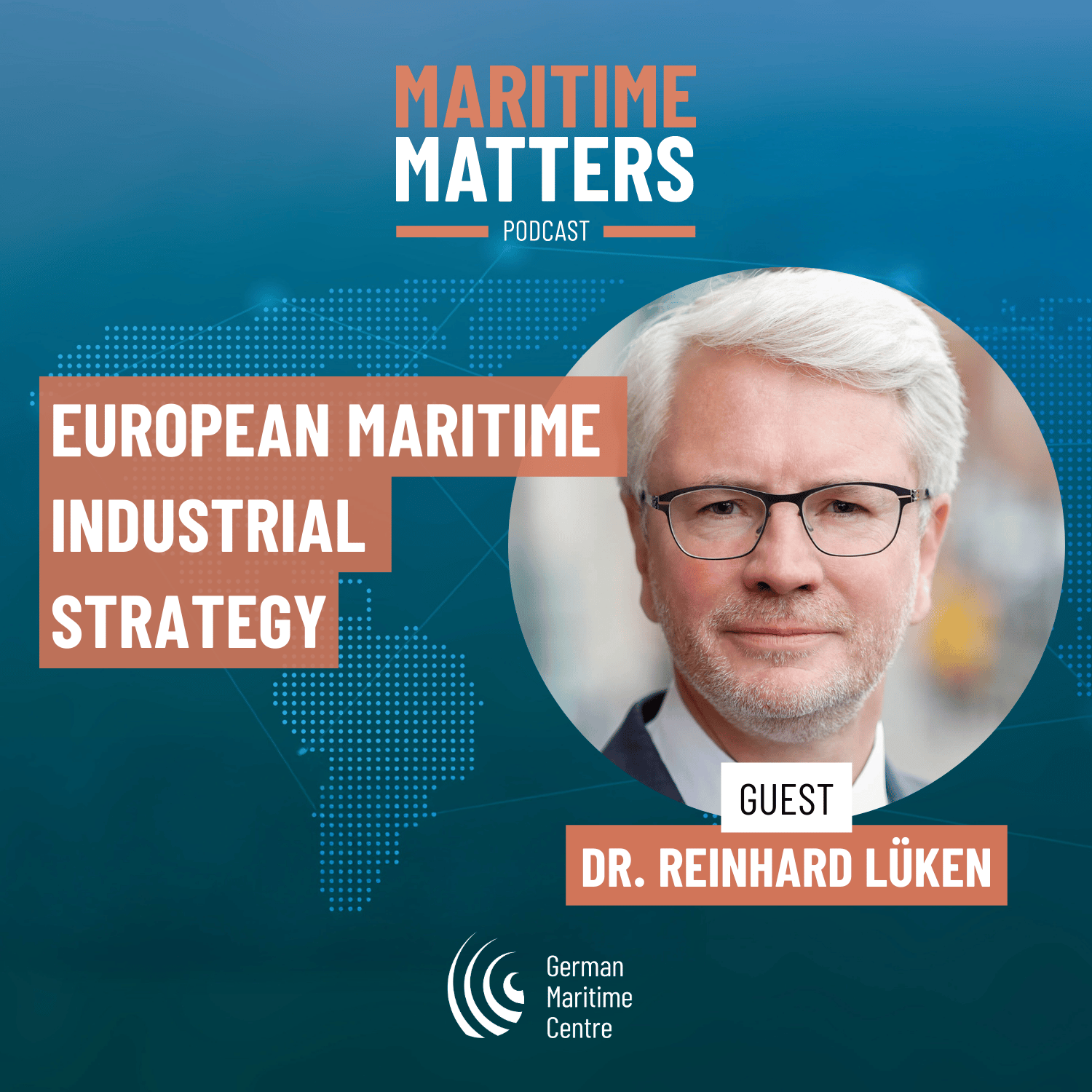 #1Sep 12, 2025 · 37 min
European Maritime Industrial Strategy
In this episode of Maritime Matters, host Dr. Matthias Catón is joined by Dr. Reinhard Lüken, Managing Director of the German Shipbuilding and Ocean Industries Association and Chairman of the German Maritime Centre. Their discussion explores whether Europe still has a strategically relevant maritime sector, delves into the continent’s global competitiveness, and questions the role of policy and collaboration amidst mounting competition from Asia, particularly China. Listeners gain an insider’s view of how industrial strategy, skills, and innovation will shape the future of European shipbuilding, and why action – and optimism – are needed now more than ever. Key Topics: • The enduring strategic importance of shipbuilding for Europe • Market share dynamics: Europe’s strengths in niche and high-end markets, and Asia’s dominance in volume production • The impact of state support and protectionism in global shipbuilding • Lessons from both the United States’ and China’s approaches to industrial policy • Regulatory and investment needs for Europe to maintain and grow its maritime industry • Future opportunities: technological leadership and green shipping • The critical importance of skills, education, and critical mass in the workforce • How Europe can effectively collaborate to advance its maritime interests Guest Bio: Dr. Reinhard Lüken is Managing Director of the German Shipbuilding and Ocean Industries Association (VSM), representing around 850 companies. His extensive career includes key roles at Meyerwerft shipyard, the Community of European Shipyards Associations, and long-standing involvement in shaping both German and European maritime policy. Nautical Numbers: For this episode’s “Nautical Numbers”, Dr. Lüken brings a striking figure: last year, China secured 70% of all new shipbuilding orders worldwide. This market share had grown from just 1.5 million CGT at the start of the century to 20 million CGT in just ten years, while Europe’s production halved. A clear signal of how rapidly the global landscape can shift. Navigator’s Table: Dr. Lüken shares his personal recommendation for anyone travelling to Tokyo: Tsukiji Ihachi Nigo in the old port area, a welcoming fish restaurant that he discovered during a business trip. He notes its great atmosphere and service – especially memorable thanks to the friendly staff and a visit with his daughter – making it a worthwhile spot for those seeking a maritime connection in Japan’s bustling capital. Enjoyed this episode? Make sure to subscribe to Maritime Matters for more insights and interviews with thought leaders shaping the maritime world. To learn more about Germany’s maritime sector or to engage with ongoing debates, visit the German Maritime Centre’s website – and share this episode with colleagues interested in the future of the European maritime industry. Stay tuned for more global perspectives through a German lens.
- Transcript