Skip to content
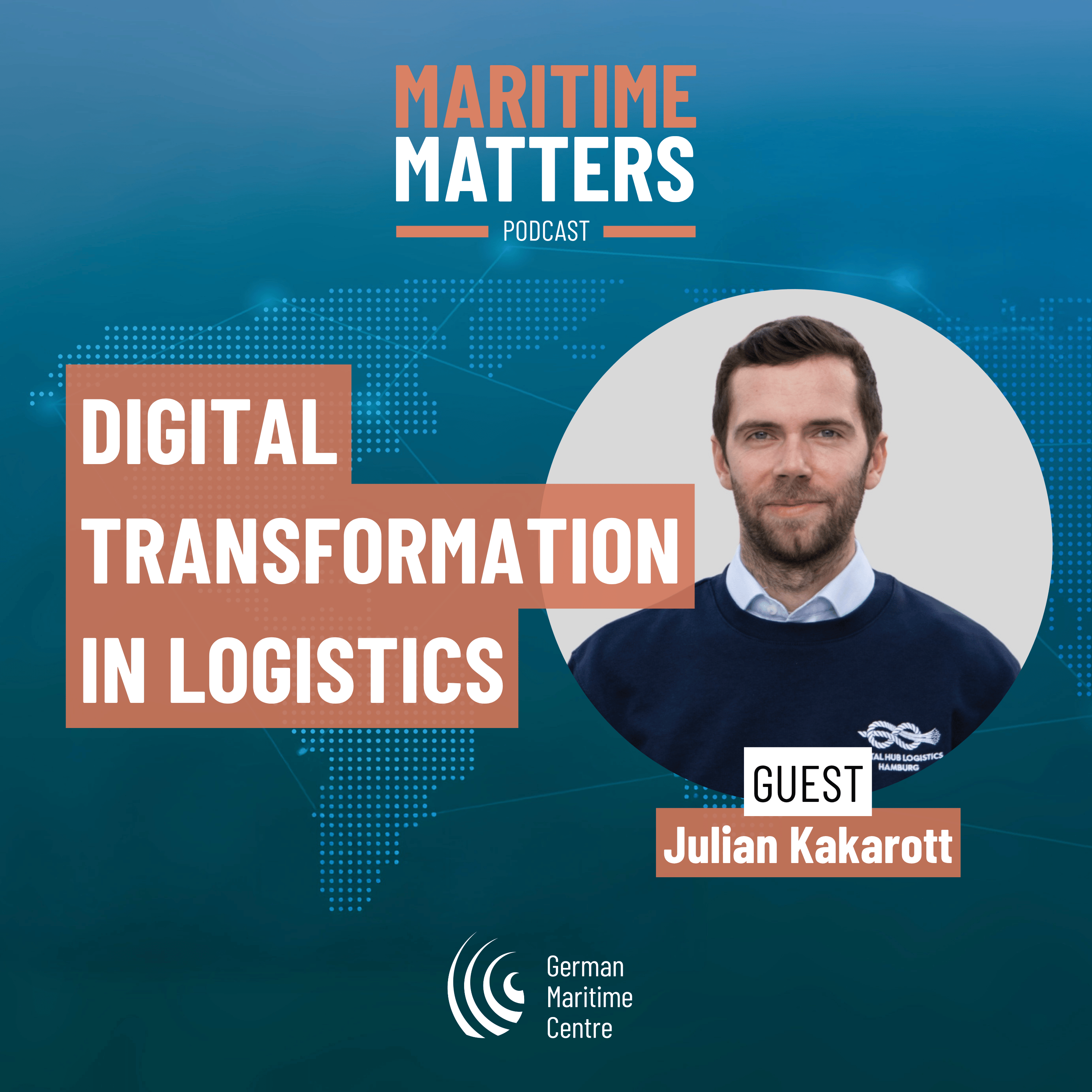
Artwork for Maritime Matters
Maritime Matters · September 10 · 41 min

Digital Transformation in Logistics

In this episode, Dr Matthias Catón, Managing Director of the German Maritime Centre, welcomes Julian Kakarott, CEO of the Digital Hub Logistics and Commerce in Hamburg. Drawing on his experience as both an entrepreneur and innovation ecosystem builder, Julian Kakarott shares insights into how the Hub has become a catalyst for collaboration and digital transformation across logistics, retail, and maritime sectors. Their discussion explores why innovation works best through openness, peer exchange, and international partnerships, highlighting the practical realities and opportunities for companies of all sizes within and beyond the maritime value chain. Key Topics • Building an Innovation Ecosystem: Julian Kakarott explains the Digital Hub’s mission to connect startups, corporates, and scaleups. • Creating Value for Members: The conversation explores the Hub’s unique model as a “safe space” for companies to candidly share problems, encourage honest collaboration, and shape innovation projects. • Venture Clienting and Startup Engagement: Julian Kakarott discusses different approaches for corporate partners and explains how established firms, including those in the maritime sector, can become early clients of startups and scaleups, driving industry transformation with tailor-made solutions. • International Partnerships and Scaling: With a focus on the special relationship between Hamburg and Singapore’s Pier 71, the episode uncovers why cross-border collaboration is vital for maritime innovation, and how European startups can expand internationally despite regulatory hurdles. Guest Bio Julian Kakarott is CEO of the Digital Hub Logistics and Commerce, Hamburg. Trained as an industrial engineer, he has driven the Hub’s expansion into commerce, founded the climate tech company CarbonStack, and champions a “community-first” approach to innovation that bridges startups, corporates, and global partners. Nautical Number Julian Kakarott’s nautical number is 3.5, representing the 3.5 days it takes for Hub participants to move from a problem statement to a “pretotype”: a validated business concept pitched to company boards, proving that rapid innovation can be both effective and efficient. Navigator’s Table Julian Kakarott recommends the Speicherstadt Kaffeerösterei, a coffee roastery located in Hamburg’s historic Speicherstadt district. It is a favourite spot for informal innovation talks just steps from the Hub. Enjoyed this episode? Subscribe to Maritime Matters for leading voices on maritime innovation, sector trends, and global connections. Visit the German Maritime Centre’s website for further insights, research, and latest updates. If you found this episode valuable, please share it within your network.

0:00-41:38

transcript

No transcript — this publisher did not publish one.

show notes

In this episode, Dr Matthias Catón, Managing Director of the German Maritime Centre, welcomes Julian Kakarott, CEO of the Digital Hub Logistics and Commerce in Hamburg. Drawing on his experience as both an entrepreneur and innovation ecosystem builder, Julian Kakarott shares insights into how the Hub has become a catalyst for collaboration and digital transformation across logistics, retail, and maritime sectors. Their discussion explores why innovation works best through openness, peer exchange, and international partnerships, highlighting the practical realities and opportunities for companies of all sizes within and beyond the maritime value chain.

Key TopicsBuilding an Innovation Ecosystem: Julian Kakarott explains the Digital Hub’s mission to connect startups, corporates, and scaleups. • Creating Value for Members: The conversation explores the Hub’s unique model as a “safe space” for companies to candidly share problems, encourage honest collaboration, and shape innovation projects. • Venture Clienting and Startup Engagement: Julian Kakarott discusses different approaches for corporate partners and explains how established firms, including those in the maritime sector, can become early clients of startups and scaleups, driving industry transformation with tailor-made solutions. • International Partnerships and Scaling: With a focus on the special relationship between Hamburg and Singapore’s Pier 71, the episode uncovers why cross-border collaboration is vital for maritime innovation, and how European startups can expand internationally despite regulatory hurdles.

Guest Bio Julian Kakarott is CEO of the Digital Hub Logistics and Commerce, Hamburg. Trained as an industrial engineer, he has driven the Hub’s expansion into commerce, founded the climate tech company CarbonStack, and champions a “community-first” approach to innovation that bridges startups, corporates, and global partners.

Nautical Number Julian Kakarott’s nautical number is 3.5, representing the 3.5 days it takes for Hub participants to move from a problem statement to a “pretotype”: a validated business concept pitched to company boards, proving that rapid innovation can be both effective and efficient.

Navigator’s Table Julian Kakarott recommends the Speicherstadt Kaffeerösterei, a coffee roastery located in Hamburg’s historic Speicherstadt district. It is a favourite spot for informal innovation talks just steps from the Hub.

Enjoyed this episode? Subscribe to Maritime Matters for leading voices on maritime innovation, sector trends, and global connections. Visit the German Maritime Centre’s website for further insights, research, and latest updates. If you found this episode valuable, please share it within your network.
links2